Categories
Market News Top 10 News Top Global News

Covid Vaccination begins in the U.K. – Top 10 Global News

1. Stocks Drop With U.S. Futures as Virus Cases Rise

Global stocks slid for a second day and U.S. futures fell, with investors focusing on a rise in virus infections and tougher restrictions. Travel shares led declines in Europe, following a slump in Asia after Hong Kong announced it would start implementing some of its strictest social distancing measures since the pandemic began. Oil fell toward $45 a barrel in New York on speculation that near-term demand is at risk. The pound pared losses after the U.K. agreed to withdraw law-breaking clauses in the government’s Brexit bill.

Futures on the S&P 500 Index decreased 0.4% as of early morning New York time.

The Stoxx Europe 600 Index declined 0.3%.

The MSCI Asia Pacific Index decreased 0.1%.

The MSCI Emerging Market Index dipped 0.1%.

2. All Eyes on U.K. for Western World’s First Covid Shots

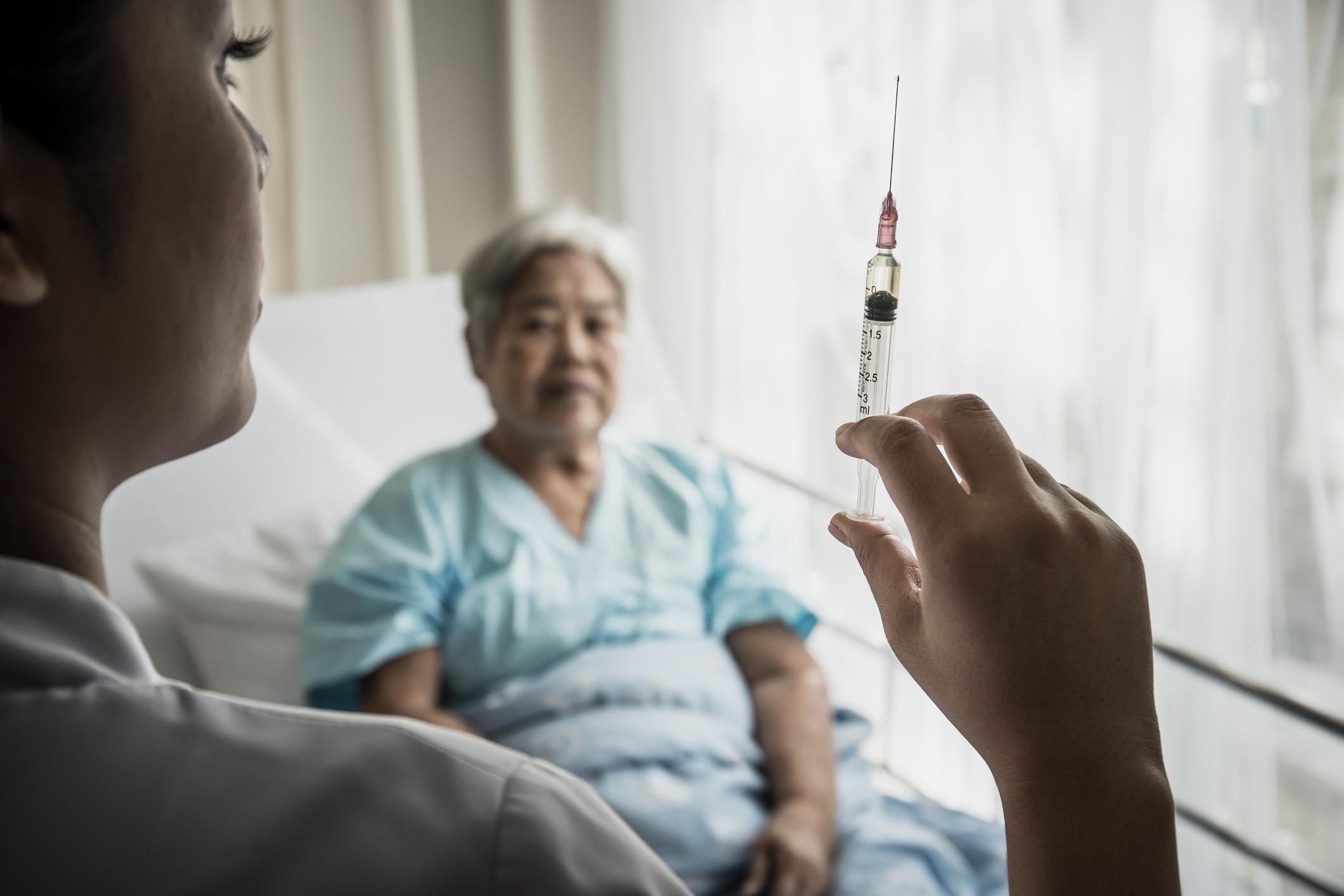
The U.K.’s National Health Service launched what it has called the biggest immunization campaign in its history, starting Covid vaccinations across the country. People over 80 are at the front of the line for the shot made by Pfizer Inc. and BioNTech SE on Tuesday, with tens of thousands expected to get vaccinated in the coming days. The U.K. is the first western nation to begin its program, having approved the vaccine last week. Margaret Keenan was the first person to get the vaccine at about 6:30 a.m., according to a statement. Receiving a shot at a hospital in Coventry was “the best early birthday present I could wish for,” said Keenan, who’s due to turn 91 next week, because it meant she’d be able to spend time with her family and friends in the new year after being on her own for most of 2020.

3. U.K. Scraps Law-Breaking Clauses in Deal Boost: Brexit Update

The U.K said it will withdraw the controversial clauses in its Internal Market Bill which would have given ministers the power to unilaterally override the Brexit divorce treaty, bringing to an end a dispute that threatened to derail negotiations on a future trade deal. Talks over the future trading relationship between the U.K. and the European Union remain deadlocked, with an agreement hanging in the balance. The Internal Market Bill may help ease the talks on trade. British Prime Minister Boris Johnson said he still wants and hopes for a trade deal but warned the time may be coming to recognize that the negotiations have failed.

4. Gates Calls India’s Digital Finance Approach a Global Model

Tech pioneer Bill Gates praised India’s policies for financial innovation and inclusion, saying his philanthropic foundation is working with other countries to roll out open-source technologies modelled on the country’s implementation. Indian digital payments took off after the government pushed demonetization in 2016, invalidating most of the country’s high-value banknotes. The Unified Payments Interface, or UPI, has been aided by booming smartphone use and wireless data rates that are among the lowest in the world. India mandates that companies use its UPI platform so payments can be sent easily among all services. Zero user fees are also required. Gates said those policies have drastically reduced the cost and friction of distributing aid to the poor, especially during the pandemic.

5. Thailand Approves $748 Million Plan to Boost Consumer Spending

Thailand’s cabinet approved a new phase of fiscal stimulus program to boost consumer spending worth 22.5 billion baht ($748 million). The program will allow 15 million people to spend money on consumer goods and services, with the government covering 50% of the bill, and is expected to add about 45 billion baht to the economy in the first quarter of next year. The current phase of the program, which lasts through the end of this month, and the upcoming phase will boost the gross domestic product growth by 0.32 percentage point.

6. China’s Financial Markets Start to Price In Deleveraging

China is bucking the global trend of greater economic stimulus amid the coronavirus, preferring instead to refocus on controlling its record debt burden. Multiple interest-rate cuts and cash injections from the central bank have helped keep Chinese companies afloat this year. But the quick buildup of leverage — on track for the biggest increase in five years — also poses a significant risk to the financial system. China’s big banks have been unwilling to lend to smaller financial firms after a string of defaults at some of the country’s safest borrowers. While deleveraging has been a key priority for President Xi Jinping since 2016, previous attempts were interrupted by the trade war and the crippling economic impact of this year’s global health crisis.

7. Tesla Raising Up to $5 Billion in Third Share Sale This Year

Tesla is taking advantage of its surging shares by going back to the capital markets for the third time in ten months and raising as much as $5 billion of common stock. The sale through an “at-the-market” offering program, according to a regulatory filing, meaning the stock will be sold over time at prevailing market prices. The raise could lead Tesla’s cash balance to approach $20 billion. Chief Executive Officer Elon Musk is again seizing on a rally that started as the maker of the Model 3 began to post quarterly profits in the second half of last year. The opening of a plant near Shanghai, the addition of the Model Y crossover to the lineup, advances in battery technology and anticipation of inclusion into the S&P 500 Index has led investors to assign Tesla a much richer valuation than any other auto manufacturer in the world.

8. Global Investors Keep Pouring Money Into Asia’s Red Hot Markets

Be it stocks, bonds or almost any other asset class, foreign cash is pouring into Asia on bets it will be the fastest-growing region as the world recovers from the coronavirus pandemic. The MSCI Asia Pacific Index rose to a record last week and a Bloomberg Barclays bond index is close to its highest in four years. The region’s currencies are, on aggregate, the strongest since 2018 and commodities are also climbing. The positive aftermath of the U.S. election, encouraging progress on vaccines, abundant liquidity and an “improving growth pulse” in Asia has driven demand for the region’s assets.

9. Abu Dhabi Wealth Fund Targets Africa, Renewables to Lift Returns

Abu Dhabi’s top sovereign wealth fund is looking to Africa and renewable energy to generate greater returns while relying more on artificial intelligence to mine data and spot new investment opportunities. With an abundance of natural resources and young, growing and increasingly educated populations, African countries are among those offering the greatest potential for long-term investors. The $710 billion fund, known as ADIA, this year started a climate-change equity portfolio aimed at boosting its green-economy exposure and is a shareholder in sustainable-energy projects that generate more than 20 gigawatts of power.

10. UAE Business Conditions Worsen for Second Straight Month

Business conditions in the United Arab Emirates deteriorated for a second straight month in November amid subdued demand. Non-oil private sector activity in the Gulf nation worsened last month partly due to the first decline in output since May, weak market conditions and lower customer numbers. Its Purchasing Managers’ Index was unchanged from October at 49.5, staying below the 50 mark that separates contraction from growth. The sector continued to suffer from weak demand which, despite partly recovering during the summer, is reportedly still much softer than prior to the Covid-19 pandemic.

Categories
Market News Top 10 News Top Global News

Now Trade Water Futures to hedge scarcity – Top 10 Global News

1. Futures Mixed Amid Stimulus Talks, Brexit Deadlock

Stock futures were mixed as traders await more details on a new stimulus package, with coronavirus infections sweeping across U.S. states. The pound fell on concern that Brexit talks could collapse. S&P 500 contracts signalled the equity benchmark would drop from an all-time high, while Nasdaq-100 futures rose. Intel, the world’s largest chipmaker, slid in premarket trading on news that Apple is planning a series of new Mac processors for introduction as early as 2021. 

Futures on the S&P 500 fell 0.2% as of early morning New York time.

The Stoxx Europe 600 Index slid 0.4%.

The MSCI Asia Pacific Index dropped 0.1%.

2. Water Futures to Start Trading Amid Growing Fears of Scarcity

Water is joining gold, oil and other commodities traded on Wall Street, highlighting worries that the life-sustaining natural resource may become scarce across more of the world. Farmers, hedge funds and municipalities alike will be able to hedge against — or bet on — potential water scarcity starting this week when CME Group launches contracts linked to the $1.1 billion California spot water market. According to Chicago-based CME, the futures will help water users manage risk and better align supply and demand. The contracts, a first of their kind in the U.S., were announced in September as heat and wildfires ravaged the U.S. West Coast. They are meant to serve both as a hedge for California’s biggest water consumers against skyrocketing prices and a scarcity gauge for investors worldwide.

3. $908 Billion U.S. Pandemic Relief Plan Set for Release

Bipartisan negotiators on a $908 billion pandemic relief package are planning to unveil more details of their proposal on Monday, aiming to settle on language that can satisfy enough Republicans and Democrats to secure passage of one final tranche of Covid-19 aid before Congress breaks for the year. The outline of the plan spurred a flurry of optimism last week when it won the endorsement of House Speaker Nancy Pelosi, Senate Minority leader Chuck Schumer and a number of Republican senators as a basis for fresh talks after a half-year of stalemate.

4. Europe, U.S. Economic Activity Slows Further on Virus Resurgence

The economic activity in several of the world’s largest advanced economies slid at the beginning of December, reflecting a surge in the rate of Covid-19 infections and stricter containment measures. After a temporary period of stability in Europe in November, activity slowed further in Germany, Italy and Spain, according to Bloomberg Economics metrics that integrate data such as mobility, energy consumption and public transport usage. France saw some pickup recently, likely reflecting gains from starkly retrenching infections, while activity in the U.S. decelerated.

5. Germany Eyes Tighter Curbs as Infection Rates Remain High

Germany is looking to impose tougher restrictions on movement after a nationwide partial shutdown failed to bring contagion rates down to manageable levels. Germany shut restaurants, gyms and cinemas, but allowed schools and most of the economy to keep running as it tried a softer approach than other European countries. The measures — in place since the beginning of November — have made little impact on the spread of the disease, even as the government spends more than 15 billion euros ($18 billion) a month to compensate affected businesses.

6. China’s Exports Surge in Year-End Rush as Pandemic Fuels Demand

China’s exports jumped in November by the most since early 2018, pushing its trade surplus to a monthly record high and underlining how global demand for pandemic-related goods is supporting a growth rebound in the world’s second-largest economy. Chinese companies shipped $268 billion in goods in November, the most for any single month and more than 21% higher than the same month last year. Import growth eased to 4.5%, leaving a trade surplus of $75.4 billion — the largest on record in data going back to 1990.

7. Airbnb, DoorDash Boost Price Ranges Ahead of Mega Week for IPOs

December is set to be the busiest year-end on record for initial public offerings in the U.S., with DoorDash Inc. and Airbnb Inc. ready to start trading this week in long-awaited listings. The two startups, which are aiming to raise a combined $6.2 billion at the top-end of their price ranges, will propel the month’s IPO volume to an all-time high. IPOs on U.S. exchanges have already raised a record $156 billion this year. Private companies that sat out the market chaos in the early days of the Covid-19 pandemic — and were awaiting a final outcome in the U.S. election — are now rushing to go public. Airbnb and DoorDash will quickly be followed by three other mega-listings that could add billions of dollars to the IPO tally.

8. Japan Set to Unveil $706 Billion Stimulus Package

Yoshihide Suga is set to unveil his first stimulus package as Japan’s prime minister on Tuesday amid an increase in virus cases and a dip in support for his cabinet that is an early test of his leadership. The measures put together by Suga’s government will have an overall value of 73.6 trillion yen ($707 billion). The package will include around 40 trillion yen in fiscal measures, such as loans, investment and direct expenditure. The spending will be partly financed by 19.2 trillion yen from a third extra budget.

9. Dubai’s Largest Developer Halts New Projects as Glut Hits Values

Dubai’s largest developer is temporarily halting new projects amid a property glut that, combined with the coronavirus pandemic, has shaved nearly a third off house prices in the past six years. “We don’t build anymore,” Emaar Properties PJSC Chairman Mohamed Alabbar said at a conference in Dubai on Monday. “The government entities decided to stop new developments almost a year back, but Covid definitely put the brakes on.” The comments marked a rare admission from Emaar, which for years has resisted calls to stop construction even as new properties flooded the market and drove down values.

10. Israeli Tech Funding Jumps 23% to $9.5 Billion on Virus Demand

Israeli technology companies raised $9.5 billion so far this year, a 23% increase over 2019, as the coronavirus outbreak spurred demand for innovative solutions to overcome challenges posed by the pandemic. Funding rounds ballooned in Israel along with the rest of the world, as the global economy relied more on technology to solve the disruptions caused by restrictions on the movement of goods and people. The biggest rounds this year include the $350 million raised by insurance tech company Hippo Insurance Services, $267 million garnered by cyber-security outfit SentinelOne, $200 million by customer analytics firm Gong.io Ltd., and a $150 million deal by the fintech startup Tipalti Solutions Inc.

Categories
Market News Top 10 News Top Global News

OPEC+ Clinches Oil Deal with Compromises – Top 10 Global News

1. Futures Rise as Jobs Miss Boosts Stimulus Bets

American equity-index futures gained and Treasury yields rose after a report showing U.S. employment gains slowed in November bolstered expectations for more federal stimulus. S&P 500 futures gained along with those on the Nasdaq 100 and Dow Jones. The dollar headed for its biggest weekly decline in five days. U.S. Labor Department figures showed non-farm payrolls increased by a less-than-forecast 245,000 from the prior month, as the unemployment rate dipped 0.2% to 6.7%. Energy companies led the Stoxx Europe 600 index higher, with U.K. equities outperforming as negotiators edged closer to a Brexit trade agreement. The euro strengthened for the fourth day after data signalled the German economy’s resilience to the coronavirus pandemic.

Futures on the S&P 500 Index increased 0.3% early morning New York time, the highest ever.

The Stoxx Europe 600 Index climbed 0.3%, the highest in a week.

The MSCI All-Country World Index rose 0.2%, the highest on record.

2. OPEC+ Finds Its Way to an Exhausting Compromise on Oil Cuts

After five days of difficult talks that exposed new rifts between core members, OPEC+ agreed to gently ease output cuts next year. The deal appeared to satisfy the oil market and most of the cartel’s members, but strained the group’s unity and set up testing times ahead. After a split emerged between Saudi Arabia and the United Arab Emirates, the cartel couldn’t agree on what had been widely expected before this week: a full three-month delay to the scheduled January output increase. Instead, ministers resolved to add 500,000 barrels a day of production to the market next month, then hold monthly meetings to decide on subsequent moves. The maximum change in any month will be 500,000 barrels a day in either direction.

3. U.S. Hiring Rebound Markedly Slows Amid Virus Surge

The U.S. labour-market rebound markedly slowed in November, indicating the surge in Covid-19 cases is hitting workers and curbing the broader economic recovery. Nonfarm payrolls increased by 245,000 from the prior month, as the unemployment rate dipped 0.2 percentage point to 6.7%, according to a Labor Department report Friday. The labour-force participation rate and employment-population ratio both declined, in negative signs for the economy. The data raise the chances that President-elect Joe Biden will inherit an even weaker labour market next year, with the recovery at risk of stalling during the wait for widespread vaccine distribution. With millions still enduring long-term joblessness, the report may also help push Congress to pass new fiscal aid and could make Federal Reserve officials more inclined to provide new stimulus when they meet Dec. 15-16.

4. Ant, Grab Win Singapore Digital Bank Licenses Along With Sea

Ant Group and a venture led by Grab Holdings won licenses to run digital banks in Singapore, paving the way for the technology giants to expand their financial services in the Southeast Asian hub. Sea Ltd. is also among the four winners announced Friday by the Monetary Authority of Singapore after almost a year of deliberation. A consortium involving China’s Greenland Financial Holdings Group is the other successful candidate. Singapore joins the U.K. and Hong Kong in opening up its banking system to purely digital entrants, as it seeks to inject innovation and competition into a market dominated by traditional lenders. The permits are coveted given the city’s status as a rapidly growing wealth management centre and a gateway to Southeast Asia, where the digital lending market is expected to quadruple in five years.

5. India’s Gold Imports Slump as Festival Fails to Light Up Demand

Gold imports by India tumbled last month as the festival of lights failed to revive demand in the world’s second-biggest consumer. Overseas purchases fell 41% in November from a year earlier to 33.1 tons. Still, imports showed an improvement from the 29 tons in October. Jewellers in India may be staring at one of their worst years for sales in 2020 as the coronavirus pandemic, high prices and a weak economy slam the ability of buyers to purchase gold. Demand during Diwali, the biggest occasion for the country’s more than 90 crore Hindus to purchase jewellery, was only about 70% of last year’s levels. India’s imports in the January to November period are down 63% from a year earlier to 220.2 tons.

6. Glaxo-Backed Vaccine Shows Strong Immune Response in Early Trial

A Covid-19 vaccine project supported by GlaxoSmithKline is headed for advanced trials after showing a strong immune response in early studies. Sichuan Clover Biopharmaceuticals Inc. of China said its shot induced neutralizing antibodies and proved to be safe in a study of 150 adults and elderly volunteers. The vaccine uses adjuvants — agents that boost a vaccine’s response — from both Glaxo and Dynavax Technologies Corp. Advanced-stage trials using Glaxo’s adjuvant are planned to begin this month, while studies using the Dynavax system will start in the first half of 2021, according to a statement Friday. The Clover vaccine showed long-term stability at refrigerator temperature. That would allow it to be used widely, including in developing nations.

7. U.K. Grants Five Passports a Minute to Hongkongers as China Tightens Grip

The U.K. is granting the most special travel documents to Hong Kong residents since the 1997 handover, bolstering predictions of a mass exodus as China tightens its grip over the former British colony. Some 216,398 Hong Kong residents received British National (Overseas) passports during the first 10 months of the year, higher than any annual figure stretching back to 1997. In October alone, the office issued 59,798 Hongkongers with BNOs, or 52% higher than in the same period last year, and the highest monthly figure since the Passport Office began readily compiling them in 2015. That translates to more than five every minute, based on an average eight-hour working day.

8. Europe Vaccination Plans; U.S. Sees Record Cases: Virus Update

European nations are rushing to draw up large-scale coronavirus vaccination programs, with the U.K. hoping to inoculate millions of Britons before the year is out. Sweden expects to get enough doses in the first quarter to immunize a fifth of the population and Norway sees its program starting in early 2021. Spain is aiming at vaccinating up to 20 million people by June. The U.S. posted another day of record Covid-19 infections and deaths, as overburdened hospitals around the nation brace for a surge in cases after Thanksgiving. In Asia, Japan’s Osaka prefecture raised its virus alert to the highest level following a rise in serious cases. South Korea’s number of newly confirmed cases climbed to the highest since early March.

9. BlackRock, Storebrand Pressure Indian Bank Over Coal Mining Loan

Shareholders of India’s largest bank are raising concerns about a proposed loan to Adani Enterprises Ltd. to help fund the opening of the controversial Carmichael coal mine in northern Australia. Officials from New York-based BlackRock Inc. and Norway’s Storebrand ASA have contacted the State Bank of India, which is majority-owned by the Indian government, about the loan. The loan’s value is expected to be as much as 5000 cr rupees ($678 million). The Carmichael mine has been the focus of environmental protestors since it was proposed in 2010, with demonstrations most recently at a Nov. 27 cricket match in Sydney between Australia and India. Adani changed its trading name in Australia to Bravus Mining and Resources last month, possibly to help dampen controversy about the mine, which is located in Galilee Basin in the northeastern Queensland province. The project has become a target of anger from climate-change activists in the country, which saw record temperatures and widespread wildfires this year.

10. Angry India Farmers Are ‘Ready to Die’ in Showdown With Modi

As India’s virus numbers swell and the economy stumbles, Prime Minister Narendra Modi has another crisis to deal with: Tens of thousands of angry farmers vowing to camp outside the capital for months. The farmers — mostly from Punjab, often called India’s bread-basket — want him to repeal three laws passed in September that allow them to sell crops directly to private firms instead of licensed middlemen at state-controlled markets. While Modi has said the laws will help them earn more cash, farmers fear those companies won’t give them minimum prices set by the government.

Categories
Market News Top 10 News Top Global News

U.S. economy rebounds with 33% growth in Q3 – Top10 Global News

1. U.S. Stocks Push Higher; Oil Tumbles on Virus Concerns

U.S. stocks rose a day after their biggest fall in four months, with investors encouraged by better-than-forecast GDP data even as they kept a wary eye on growing coronavirus infections. Oil plunged for a second day on concern lockdowns will sap demand. Automakers led the S&P 500 Index higher after reports showed record growth in the third quarter and a decline in weekly jobless claims. The tech-heavy Nasdaq 100 outperformed ahead of earnings reports from Apple, Amazon, Alphabet and Facebook due after the close. In Europe, stocks erased most of their losses after European Central Bank President Christine Lagarde said officials could look at new instruments for supporting the economy when they meet in December.

The S&P 500 Index rose 0.8% as of early morning New York time.

The Nasdaq 100 Index increased 1.5%.

The Stoxx Europe 600 Index rose 0.2%.

The MSCI Asia Pacific Index decreased 0.2%.

2. US economy turns in record Q3 growth, but the crisis is not over

The United States economy grew at its fastest pace on record in the third quarter, rebounding at an annual rate of 33.1%. The blockbuster reading follows on from a record-shattering 31.4% contraction in the Q2 and a -5% hit in Q1– when the economy officially entered recession in February.The balance signals that though the economy is crawling out of the deep hole dug by COVID-19 it still has a way to go to recapture its pre-pandemic strength. Moreover, some sectors of the economy are recovering faster than others and those disparities are rippling through the fabric of American society in the form of deepening inequalities. Those with a job and assets like stock portfolios and homes are doing well, while those who are jobless or own a business ravaged by virus restrictions are falling further behind. Racial wealth and income disparities are widening.  Women are dropping out of the workforce at an alarming rate as the demands of jobs and looking after children learning remotely force tough choices on parents.

3. Three killed in ‘terrorist attack’ on French church

An attacker armed with a knife killed three people inside a church Thursday in the Mediterranean city of Nice, prompting the country to raise its security alert status to the highest level. It was the third attack in two months in France that authorities have attributed to Muslim extremists, including the beheading of a teacher. It comes amid a growing furor over caricatures of the Prophet Muhammad that were republished by the satirical newspaper Charlie Hebdo — renewing vociferous debate in France and the Muslim world over the depictions that Muslims consider offensive but are protected by French free speech laws.

4. China aims for sustained, healthy growth in the five years to 2025

President Xi Jinping and members of the Central Committee, the largest of the ruling party’s elite decision-making bodies, met behind closed doors this week to lay out the 14th five-year plan, a blueprint for economic and social development. China’s external environment “is getting more complicated”, the state news agency said, adding, “There is a significant increase in instabilities and uncertainties.” However, the country’s development was still in a period of important strategic opportunities, despite new challenges, it said. It added that China aims to boost its gross domestic product (GDP) per person to the level of moderately developed countries by 2035, while GDP is due to cross $15 trillion by the end of 2020. China will also deepen reforms and let market forces play a decisive role in resources allocation.

5. Germany Imposes Toughest Restrictions Since Lockdown

Chancellor Angela Merkel will impose the toughest restrictions on Germany since a national lockdown earlier this year, closing bars and restaurants in Europe’s largest economy to regain control of the rapid spread of the coronavirus. The one-month partial shutdown, which will go into effect on Monday, is designed to keep most businesses operating. Officials will discuss again in two weeks to assess the impact of the measures. With the public weary of pandemic measures and protests increasing, the government sought to ease pressure by making available up to $11.7 billion (INR 88,600 cr) in aid for companies affected by the measures, including reimbursing as much as 75% of lost sales in November.

6. China Marks Another Step in Virus Rebound With Singapore Opening

Singapore will lift border restrictions on visitors from mainland China from Nov. 6, a further reminder that the nation where the coronavirus outbreak first began is firmly on the road to recovery as the pandemic rages elsewhere. Visitors will have to undergo a coronavirus PCR test upon arrival at Singapore’s Changi Airport. If the result is negative, they will be allowed to enter Singapore without having to serve a stay-home notice.

New cases in China have remained below 100 a day since mid-August, with travelers into the country subject to a mandatory 14-day quarantine. Masks and temperature checks are generally still required in public places.

7. Record 200 Days With No Local Case Makes Taiwan World’s Envy

While many countries around the world are hitting new highs in coronavirus cases, Taiwan has achieved a different kind of record — 200 days without a locally transmitted case. Taiwan holds the world’s best virus record by far and reached the new landmark on Thursday, even as the pathogen explodes anew in Europe and the U.S. Taiwan’s last local case came on April 12; there has been no second wave. What did this island of 23 million people do right? It has had 553 confirmed cases, with only seven deaths. Experts say closing borders early and tightly regulating travel have gone a long way toward fighting the virus. Other factors include rigorous contact tracing, technology-enforced quarantine and widespread mask wearing. Further, Taiwan’s deadly experience with SARS has scared people into compliance.

8. Central Banks Sell Gold for First Time in a Decade

Central banks became gold sellers for the first time since 2010 as some producing nations exploited near-record prices to soften the blow from the coronavirus pandemic. Net sales totaled 12.1 tons of gold bullion in the third quarter, compared with purchases of 141.9 tons a year earlier, according to a report by the World Gold Council. Selling was driven by Uzbekistan and Turkey, while Russia’s central bank posted its first quarterly sale in 13 years, the WGC said. 

9. Asian stocks extend global market sell-off as virus cases surge

Asian share markets fell on Thursday but not as sharply as Wall Street’s sell-off overnight, while oil bounced off lows and US stock futures jumped, as Asia’s brighter economic outlook offset investor worries about fresh COVID-19 lockdowns in Europe. MSCI’s broadest index of Asia-Pacific shares outside Japan fell 1 percent. Japan’s Nikkei fell 0.8 percent and drops in Hong Kong, Sydney, Shanghai and Seoul were smaller than 1.5 percent.  Those are heavy losses, but much less than the United States’s S&P 500 index’s 3.5-percent drop in New York or the 4.2-percent fall by Germany’s DAX, which led European shares to their lowest level since late May.

10. Abu Dhabi to issue FDI licences allowing 100% foreign ownership

Abu Dhabi, the capital of the United Arab Emirates, will issue foreign direct investment (FDI) licences to allow foreign investors to own 100% of projects in the emirate in sectors including agriculture, industry and services. The move implements a foreign investment law approved in 2018 allowing foreign investors to own more than 49% and up to 100% of some UAE businesses, as the country seeks to boost private sector activity. About 122 economic activities, which were approved by the UAE cabinet last year across 13 sectors, would allow 100% foreign ownership in Abu Dhabi.