1. U.S. Index Futures Rise as Europe Stocks Drift
U.S. equity futures climbed and European stocks fluctuated as investors assessed the prospects for additional government stimulus to help economies battered by soaring coronavirus cases. S&P 500 futures pointed to green at the open, while the Stoxx Europe 600 Index erased an earlier decline, with tech and banks among the winning sectors. The gains come a day after the U.S. benchmark fell 1% as New York prepared for the possibility of school closures and Chicago urged residents to stay at home. The U.S. recorded 145,000 new cases on Thursday, roughly double the figures from just two weeks earlier. Three of the world’s top central bankers warned on Thursday that the prospect of a vaccine isn’t enough to put an end to the economic challenges created by the pandemic.
Futures on the S&P 500 Index advanced 0.7% as of early morning New York time.
The Stoxx Europe 600 Index dipped 0.1%.
The MSCI Asia Pacific Index decreased 0.1%.
The MSCI Emerging Market Index gained 0.5%.
2. China’s State Grid Makes a $3 Billion Push Into Latin America
State Grid Corp. of China will pay INR 22,300 cr for an electricity network company in Chile, its first overseas deal in almost a year and a move that resumes its expansion abroad. The Spanish natural gas and power company Naturgy Energy Group SA said it agreed to sell its 96% stake in Chilean electricity networks unit Compania General de Electricidad SA. Chinese energy companies have strengthened their presence in Latin America in the last few years with a wave of investments that extend to logistics, services and telecommunications companies. For State Grid, the world’s largest utility, it’s part of an effort to give the company a broader footprint outside China and access to natural resources in a region traditionally under U.S. commercial influence.
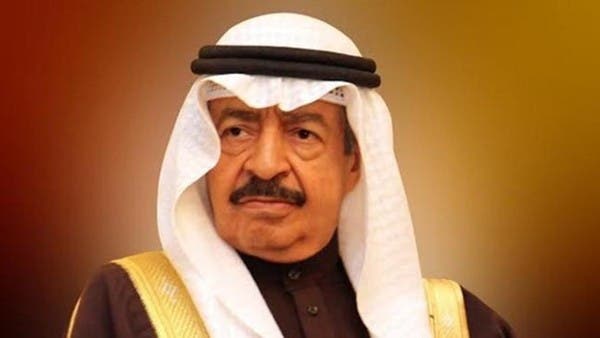
3. Bahrain buries world’s longest-serving prime minister Khalifa bin Salman al-Khalifa
Bahrain buried Prince Khalifa bin Salman al-Khalifa, the world’s longest-serving prime minister after his body returned from the United States where he died on Wednesday. Khalifa, 84, the uncle of King Hamad bin Isa al-Khalifa, had served as prime minister since independence from Britain in 1971. The al-Khalifa family has reigned since 1783. King Hamad on Wednesday appointed Crown Prince Salman bin Hamad Al Khalifa, 51, as the small Gulf state’s new prime minister.
4. China says will quicken special funds spending to support the economy
China will speed up the spending of special funds allocated to local governments to help support the economy, vice finance minister Xu Hongcai said on Thursday. By the end of October, local governments had spent 1.198 trillion yuan (INR 13.5 lakh cr), accounting for 70.9% of special funds actually allocated from the central government. “The move has effectively enhanced the grass-roots units’ financing capacity, strongly supported the epidemic prevention and control, economic and social development and poverty alleviation,” Xu said.
5. Vaccine alliance raises $2 billion to buy COVID shots for poor nations
A facility set up by the World Health Organization (WHO) and the GAVI vaccine group has exceeded an interim target of raising more than $2 billion (INR 15,000 cr) to buy and distribute COVID-19 shots for poorer countries but said it still needs more. The GAVI alliance said on Friday that the funds for an advance market commitment (AMC) will allow the COVAX facility to buy an initial 100 crore vaccine doses for 92 eligible countries which would not otherwise be able to afford them.
6. VW Boosts Tech Spending Within $177 Billion Investment Budget
Volkswagen will reserve a bigger slice of its 150-billion euro (INR 13.2 lakh cr) budget for electric cars and software in the next five years, stepping up technology spending to navigate a tectonic industry shift even as the Covid-19 pandemic continues to roil markets. Investments in battery-powered vehicles, autonomous driving and related future technologies will rise to about 73 billion euros, or half the company’s budget through 2025, VW said Friday.
7. Trump Silent on Virus Surge as Cases and Deaths Rise Sharply
President Donald Trump has stayed silent as the U.S. coronavirus outbreak rages anew, a leadership vacuum that leaves governors and health authorities to grapple with record numbers of new cases and hospitalizations. Trump hasn’t spoken publicly in a week, as the virus surges across the country and sets records for hospitalizations and daily new cases. He’ll receive a briefing Friday on vaccine development but has otherwise focused his public comments this week on circulating debunked allegations of voter fraud and criticizing Fox News on Twitter.
8. Indigo Airline on a $10 Billion Pandemic Shopping Spree
The airlines have seen more than their share of casualties during the pandemic, as travel stopped and carriers’ finances nose-dived which forced many survivors to concentrate on cutting costs, trimming payrolls, and walking away from aircraft orders, but IndiGo, the airline operated by InterGlobe Aviation Ltd., is doing something few of its peers would risk right now: going shopping. The airline is in talks with Pratt & Whitney and CFM International, a joint venture of General Electric and France’s Safran, to provide engines to power about 150 new Airbus A320neo jets. Based on the size of IndiGo’s last engine order—a $20 billion transaction with CFM covering 280 planes that was the largest engine order ever—the agreement could be worth about $10.7 billion, including service, repair, and maintenance.
9. Hong Kong Sees GDP Contraction Near Low End of Forecast Band
Hong Kong’s economy will probably contract 6.1% this year, close to the lower end of the government’s forecast range, amid signs the city is starting to emerge from a deep recession spurred by political protests and then the coronavirus outbreak. The government’s latest projection, released in a statement Friday, compares with August’s forecast range of -6% to -8%. It also revised data for the third quarter, showing gross domestic product declined 3.5% from a year ago, slightly worse than an earlier estimate of -3.4%. Hong Kong’s economy has shown nascent signs of revival alongside recoveries across the region as virus outbreaks are brought under control and China’s rebound drives demand. The city’s exports jumped the most in two years in September, with shipments to the mainland surging 17%.
10. South Korea Sounds Alarm on Stock Market Bubble Amid Retail Boom
South Korea issued a warning over signs of a bubble in the nation’s stock market, one of the world’s top performers this year amid a record surge in retail investing spurred by easy money and pandemic free time. The Kospi benchmark equity gauge is up 13% this year, surging more than 70% from its March low, with local retail traders pouring record amounts into the $1.8 trillion stock market. Now accounting for about 65% of total daily Kospi trading value, this host of millennial investors has shown a penchant for risky trades including microcaps and preferred stock, which generally pay higher dividends than common shares but lack the latter’s voting rights.
