Categories
Market News Top 10 News

Jio to Complete Pan-India 5G Rollout by 2023 – Top Indian Market Updates

Here are some of the major updates that could move the markets tomorrow:

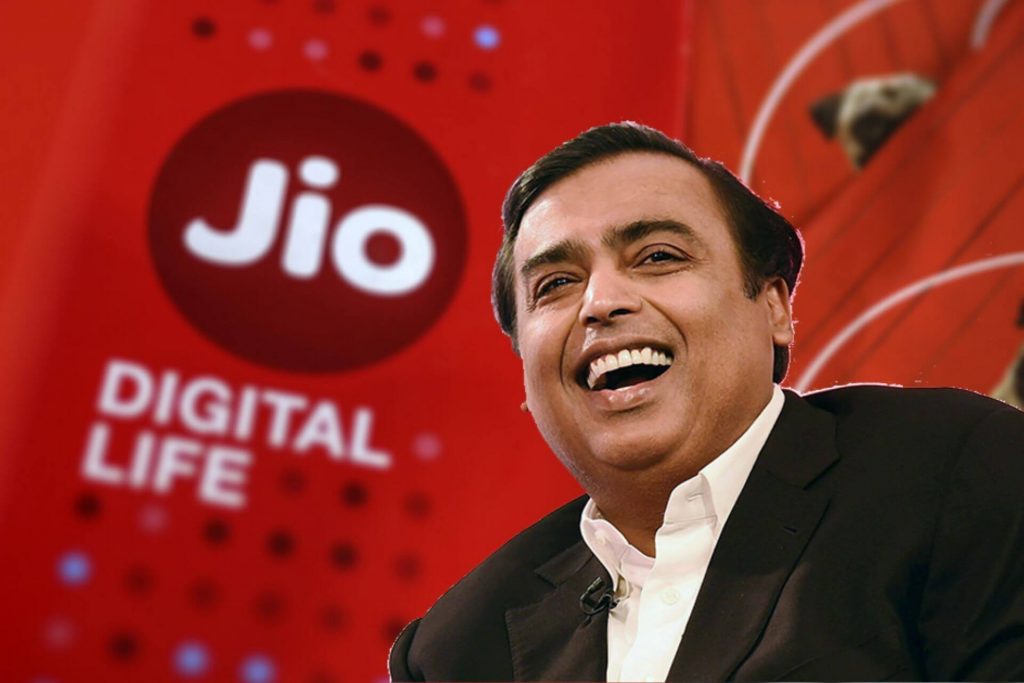
Jio to complete pan-India 5G rollout by 2023: Mukesh Ambani

Reliance Jio will complete the rollout of its 5G services in India by 2023, said Reliance Industries (RIL) chairman Mukesh Ambani at the company’s ‘Family Day’ celebrations. Jio Platforms will now develop digital solutions for the Indian and overseas markets. Ambani stressed the importance of 5G in bridging the urban-rural divide in India. Jio started a phased rollout of its 5G services under the Jio True 5G branding in Oct 2022.

Read more here.

Mamaearth’s parent company Honasa Consumer files for IPO

Honasa Consumer Ltd, the parent company of personal care brand Mamaearth, has filed its draft red herring prospectus (DRHP) with the Securities & Exchange Board of India (SEBI) for an initial public offering (IPO). The IPO will include a fresh issue of shares aggregating to ₹400 crore and an offer for sale (OFS) of up to 4.68 crore shares. Honasa was valued at $1.2 billion when it raised $52 million in January 2022.

Read more here.

Vedanta invites bids for natural gas from its Rajasthan block

Vedanta has invited bids for natural gas from its Rajasthan block at a floor price of $9.57 per metric million British thermal units (mmBtu). The company plans to sell 3 million metric standard cubic meters per day (mmscmd) of gas in an auction scheduled for January 18. The supply will be offered for a year beginning April 1 from the Raageshwari gas terminal at Barmer, Rajasthan.

Read more here.

JK Tyre aims to become carbon neutral by 2050

JK Tyre & Industries Ltd is working on becoming a carbon-neutral company by 2050. The company has commenced efforts to reduce energy consumption and has achieved 53% of energy through renewable sources. JK Tyre targets to increase this proportion to cross 75% in the next five years. It is also extensively evaluating greener and more sustainable materials and processes.

Read more here.

Proposed investments under PLI scheme in automobile sector overshoot target estimate

The Production-Linked Incentive (PLI) scheme for automobile and auto components has managed to attract a proposed investment worth ₹67,690 crore against the target estimate of investment of ₹42,500 crore (over five years). Out of 115 applicants, a total of 85 have been approved— 18 applicants for the Champion Original Equipment Manufacturing (OEM) incentive scheme and 67 under the Component Champion Incentive Scheme.

Read more here.

IT hardware makers seek tax clarity on routers after raids, duty demands

IT hardware makers have sought clarity on customs taxation of imported routers after six major companies were raided and issued show-cause notices by the Directorate of Revenue Intelligence (DRI) demanding differential duties of over ₹1,000 crore. The companies allege that the actions have led to business disruptions. IT hardware manufacturers say a lack of clarity on router classification has resulted in the authorities sending letters, emails, and summons.

Read more here.

India’s current account deficit rises to 4.4% of GDP in Q2

India’s current account deficit widened to 4.4% of the GDP in the quarter ended September 2022 (Q2) due to a higher trade gap, as per data released by the Reserve Bank of India.  The current account deficit stood at 2.2% of GDP during Q1. Services exports reported a growth of 30.2% year-on-year (YoY) on the back of rising exports of software, business, and travel services.

[A current account deficit occurs when the total value of goods & services a country imports exceeds the total value of goods & services it exports.]

Read more here.

Tata Consumer acquires 23% stake in South Africa-based Joekels

Tata Consumer Products Ltd (TCPL) has acquired a 23.3% additional stake in South Africa-based Joekels Tea Packers for ₹43.65 crore through a step-down subsidiary. As a result of the acquisition, the subsidiary’s holding in Joekels will increase from 51.7% to 75% of the equity share capital. Joekels is the 3rd largest tea business in South Africa.

Read more here.

Banks’ bad loans likely to remain stable by Sept 2023: RBI

The gross non-performing asset (NPA) ratio of domestic banks is likely to remain stable at 4.9% by September 2023, compared to 5% in September this year. “If all macroeconomic indicators remain stable, gross bad loans are unlikely to rise or fall much from current levels,” according to projections presented in the RBI’s latest Financial Stability Report. 

RBI said banks’ gross NPA ratio has fallen to a seven-year low of 5%, and the banking system remains sound and well-capitalised.

Read more here.

Categories
Editorial

Telecom Spectrum Auctions: Explained

Our government has conducted numerous telecom spectrum auctions over the past two decades. It is truly an interesting process by which major telecom companies attempt to expand their network capacities across India. The auctions also help the Centre to raise funds for various development activities. The much-awaited spectrum auction for a range of 4G airwaves took place between March 1-2. Let us have a detailed understanding of how this process actually works.

What are Telecom Spectrum Auctions?

Key Terms

Firstly, we need to learn certain important terms associated with telecom spectrum auctions. A spectrum is a range of radio waves used for communication purposes. It includes FM and AM radio broadcasts, as well as WiFi or Bluetooth. These waves are defined by important attributes such as wavelength (length of the wave), amplitude (height of the wave), and frequency (number of cycles per second). Radio waves are those that have a frequency of 3 kilohertz (3,000 cycles per second) to 300 gigahertz (3 billion cycles per second). Thus, different frequencies are used for different purposes.  

The Electromagnetic Spectrum (nm-  nanometer)

As we know, our smartphones also require signals to connect from one end to another. These signals are carried on airwaves, which must be sent at designated frequencies to ensure that there is no interference. The most commonly used range for cellular communication is 800 megahertz (MHz), 900 MHz, 1,800 MHz, 2,100 MHz, and 2,300 MHz. 

The Auction Process

The Central government owns all public assets that are available within the geographical boundaries of our country. This also includes airwaves. A spectrum auction is a process by which the government uses an auction system to sell the rights to transmit signals over specific bands of the electromagnetic spectrum. Due to the exponential rise in the number of cellphone and internet users, there is a need to provide more space for the signals. Thus, our government efficiently manages the spectrum available in India through these auctions. 

India has a total of 22 telecom circles. Any company that wishes to offer its services or operate in these circles must purchase a Unified Access Services (UAS) license. The spectrum, which is subdivided into bands with varying frequencies, is sold by the government for a fixed period. The Department of Telecommunications (DoT) conducts auctions of these licenses, which are valid for a period of 20 years. Telecos place their bids for the various frequency bands that are offered. 

The last auction was held in 2016. The government offered 2,354.55 MHz at a reserve price of Rs 5.60 lakh crore. However, it managed to sell only 965 MHz, which was about 40% of the spectrum that was put up for sale. The total value of bids received was just Rs 65,789 crore.

The March 2021 Spectrum Auction

Now, after 4-5 years since the last auction, there was a great need or demand for a new spectrum auction. This was because the validity of some airwaves bought by telecom companies is set to expire in 2021.

On March 1, 2021, the DoT kickstarted the auction of 2,251 MHz at a reserve price of Rs 3.92 lakh crore. The government offered spectrum across seven bands— 700 MHz, 800M Hz, 900 MHz, 1,800 MHz, 2,100 MHz, 2,300 MHz, and 2,500 MHz. Spectrum will be offered for a validity period of 20 years. The Earnest Money Deposit (EMD) amount by Reliance Jio was the highest among the bidders at Rs 10,000 crore. This was followed by Bharti Airtel at Rs 3,000 crore and Rs 475 crore by Vodafone Idea (Vi). An EMD is like a security deposit that a company puts down at the beginning of the auction.

The bidders have an option to pay 50% upfront of the final bid amount for the 1,800, 2,100, 2,300, and 2,500 MHz bands. The remaining amount can be paid in equated 16 installments over two years at an interest rate of 7.3%. For 700, 800, and 900 MHz bands, the upfront amount is 25% of the successful bid. Notably, the final bidders are also required to pay 3% of the Adjusted Gross Revenue (excluding wireline services) as spectrum usage charges for the spectrum won through this auction. 

marketfeed had prepared a detailed article on Adjusted Gross Revenue (AGR). As you may know, Bharti Airtel and Vi owe high AGR dues to the government. You can read more about it here

The Result

The spectrum auction received a great response right from the first day. As per official data released by DoT on March 2, the spectrum attracted bids worth Rs 77,814.80 crore. Bids were placed primarily on 800 MHz, 900 MHz, 1800 MHz, 2100 MHz, and 2300 MHz bands. However, there were no takers for airwaves in the premium bands of 700 MHz and 2,500 MHz (as it had high reserve prices).

  • Reliance Jio emerged as the biggest buyer in the auctions. It has placed orders for Rs 57,122.65 crore worth of spectrum. Jio had placed bids for 488.35 MHz spectrum in the auction.
  • Bharti Airtel has acquired 355.45 megahertz (MHz) spectrum across sub gigahertz (GHz), mid-band, and 2,300 MHz bands for Rs 18,699 crores. The company said the acquired spectrum will help improve its coverage in villages. It would also help them provide services to an additional 9 crore customers in India.
  • Vodafone Idea (Vi) bought spectrum worth Rs 1,993.40 crore in the auction. It had placed bids for 0.8 MHz spectrum in the auction. Vi said it had acquired spectrum in five circles, which would help boost its 4G coverage and capacity.

Conclusion

The Indian government has conducted over 14 spectrum auctions so far. The Centre has been able to generate significant revenue through these auctions as well. However, it has also been subject to alleged corruption and fraud. You may remember the 2G spectrum scam, which was ranked as the world’s second-biggest abuse of executive power by Time magazine in 2011. It was found that former Telecom Minister A Raja and other prominent politicians collected bribes from companies such as Swan Telecom, Reliance Telecommunications, and Uninor in exchange for licenses. Since then, the auction process has become more transparent and simpler as a result of technological advancements.

The response to the spectrum auctions conducted recently had beaten all estimates. It shows how telecom companies such as Reliance Jio and Bharti Airtel are committed to providing better services for their customers. Jio, with its deep pockets, clearly has the upper hand as it looks to further dominate the telecom industry. Financially stressed Vodafone Idea was unable to meaningfully participate in the bidding process. 

We would soon be able to see a spectrum auction for 5G airwaves. Interestingly, Bharti Airtel and Jio have already announced plans to launch 5G services soon- by using their recently acquired spectrum. The Indian telecom sector will surely witness a boom in the coming years. Let us look forward to seeing how these companies make use of their spectrum for the further growth of the telecom sector as a whole.

Categories
Editorial

With 5G Spectrum Rolling In, Here’s Where You Should Invest

“Jio will pioneer the 5G revolution in India in the second half of 2021”, said Mukesh Ambani at the Indian Mobile Congress(IMC) in December last year. With Jio as the torchbearer, 5G is expected to roll out soon in our country. Jio has said that instead of importing technology, it is building its in-house 5G technology under ‘Make In India’ and ‘Atmanirbhar Bharat’. Other network providers like Airtel, Vodafone-Idea, and BSNL will follow the trail.

The 5G technology will be a revolution for the world of networking. It will fuel market opportunities in India. Companies involved in telecom, optic fiber, technology, infrastructure, and much more. The question is, how do we profit off this revolution? Where should one invest to stay with the 5G wave? Let Us Find Out.

Sectors to Benefit

The 5G infrastructure will need resources from multiple sectors. For convenience, we have classified the sectors as follows:

  • Power
  • Tower Infrastructure
  • Cabling and Networking 
  • Mobile Service Provider

Power

5G Network is going to be a power-intentive project. 4G itself hasn’t managed to penetrate the rural areas due to the lack of availability of power and infrastructure in those areas. This is when Power Grid Corporation of India(NSE: POWERGRID) comes into the picture. NTPC and Adani Transmission can be additions. Adani Transmission(NSE: ADANITRANS)

Whenever there is a power outage, the diesel-generators would kick in to ensure seamless transmission. So far, Mahindra Powerol has majorly supplied diesel-generators to telecom majors like Reliance Jio, Indus Towers, Bharti Infratel, Viom Networks, American Tower, Telesonic Networks, Etisalat, Ooredoo, Tata Tele, Vodafone, Nokia, BSNL, and MTNL across India and globally. Cummins India(NSE: CUMMINSIND) is another major generator manufacturer.

Tower and Infrastructure

With 172,094 towers and 314,106 co-locations, Indus Towers is a major tower manufacturer that provides services to almost all telecom providers in the country.  Indus Towers was merged with Bharti Infratel. Indus Towers can expectedly see a spike in profits once 5G starts rolling out. Indian Telephone Industries Limited(NSE: ITI) is another central-government owned company that manufactures a range of telecom equipment.

Tech Mahindra(NSE: TECHM) is also foraying into the 5G world. Tech Mahindra in partnership with CISCO will provide network infrastructure assessment and consultancy services for 5G. It states that it also has the technology to build a full-fledged 5G infrastructure.  

Cabling and Networking 

Sterlite Technologies(NSE: STLTECH), provides FTTH (fiber-to-the-home) services. An example of FTTH is JioFiber. Sterlite had bagged a huge order from Reliance Jio for the same in November 2018. Sterlite CEO Anand Agarwal, in December 2020, said that the company is planning to spend Rs 300 crores to increase its capacity for optical fiber cables from 18 million to 33 million fiber kilometres. He also said that the company is planning to hire 300-400 people this fiscal to fuel the 5G project for the company.  Sterlite is slowly shifting space from being just a fiber optic cable company to a tech company. In December 2020, Sterlite launched a 5G indoor small cell called – ‘Garuda’. To Know More, Click Here.

HFCL or Himachal Futuristic Communications Ltd(NSE:HFCL) is also working with Jio to lay cables for their FTTH services. It is the largest manufacturer of FTTH cables in India with close to 6 lakh km per annum under its cover


Tejas Networks(NSE: TEJASNET) is another major company working at providing hardwares, tools and services along with consulting in 5G. To know more about what the company has to offer, check out their website over here.

Reliance Jio owns a majority stake in DEN Networks(NSE: DEN) and Hathway Cables(NSE: HATHWAY) which also deal in fiber optic-based services along with telecommunications and cable networking.

Service Providers

For 5G, Reliance Jio will be at the front of the race. Other telcos like Vodafone-Idea and Bharti Airtel are stuck in a financial crunch and are tied up by the spectrum dues worth thousands of crores to be paid to the Government. However, their improving financial positions and rebranding in the case of Vodafone Idea(to VI), has made the future a little optimistic for the companies. It won’t be before long that Vodafone-Idea and Airtel will also have their hands on the 5G spectrum. Airtel has been testing out 5G on their 4G spectrum, but this is not with real 5G speeds, rather just more faster 4G.


Conclusion

Unlike the US, India does not have stocks that are fully focused on 5G tech. As India comes out of the COVID-19 pandemic and the GDP growth rate normalizes, businesses get back to normal, you can expect more companies to get involved in the 5G project. From an investor’s perspective, one should look for those stocks that go into making ‘Network Infrastructure’. Areas like optic fibres, network cables, telecom consulting firms, companies making generators, tower infrastructure, and steel. Reliance Jio can be the focal point since it is expected to be the first company to roll in 5G in India.  

5G is going to be a long game, yet a game-changer. The 5th generation of telecommunication won’t just mean speed, it will mean a lot more than that. The 5G will bring with it a lot more like low latency, higher coverage, greater connectivity, and efficiency. 4G got along with it, Smart TVs, Smart Homes, Smart Speakers, and even Auto Driven Cars. Ever imagined what 5G with itself on the way?

Let us know about which stocks you think may benefit from 5G in the comments down below.