Categories
Market News Top 10 News Top Global News

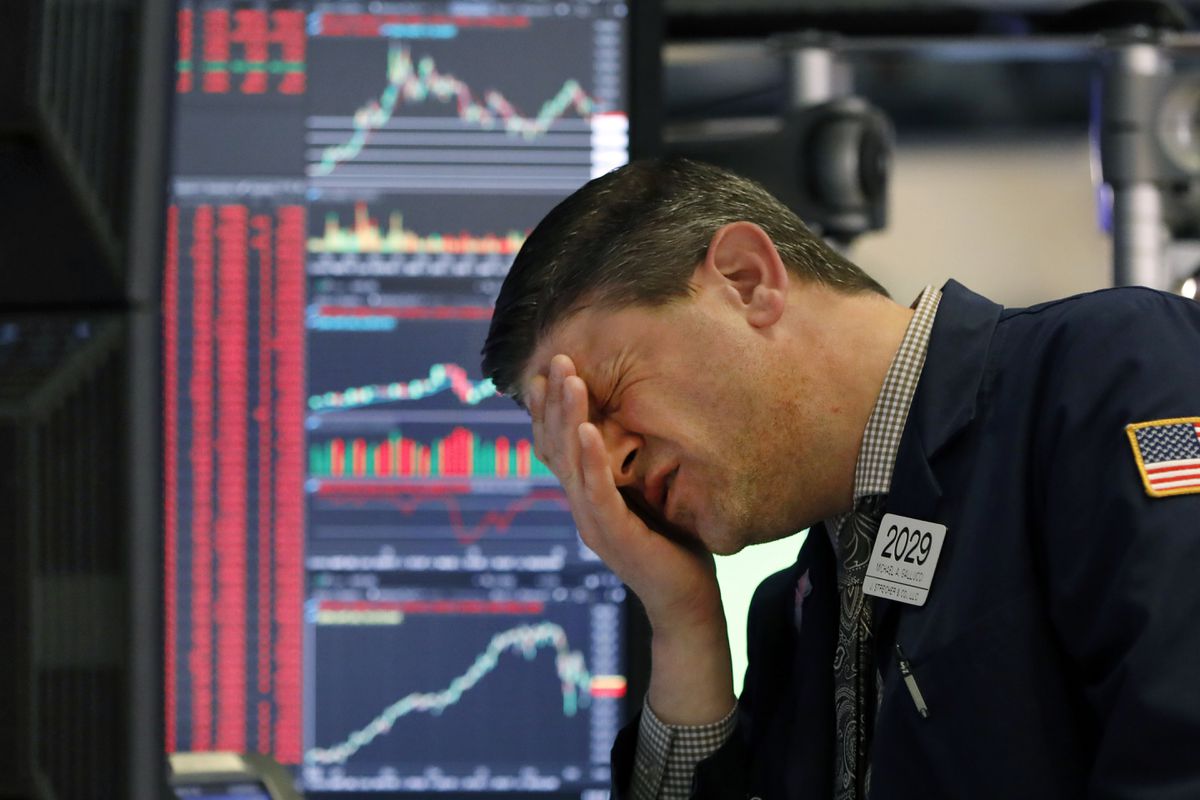
Bloodbath in Global Markets – Top10 Global News

1. S&P 500 Drops 2%, Europe Sinks to Five-Month Low

U.S. stocks dropped and European equities tumbled to a five-month low as rising coronavirus infections and tougher lockdowns added to worries about the economic hit from the pandemic.

The S&P 500 Index fell about 2% as earnings rolled in amid a surge in Covid-19 hospitalizations, especially in the Midwest. The Stoxx Europe 600 Index sank as much as 3% after German Chancellor Angela Merkel proposed closing bars and restaurants for a month to curb the spread of the virus. Auto and real-estate shares saw the steepest declines. The VIX Index, a measure of U.S. equity volatility, climbed to the highest level since June.

The S&P 500 Index dropped 2% as of early morning New York time.

The Stoxx Europe 600 Index decreased 2.9%.

The MSCI Asia Pacific Index fell 0.3%.

2. Europe fixates on tougher virus control measures

Losses accelerated across European stock markets on Wednesday, with the benchmark STOXX 600 tumbling to its lowest level since late May on fears of a new national lockdown in France and tighter curbs elsewhere to combat a surge in coronavirus cases. The pan-European STOXX 600 index fell 2.9%, while Germany’s DAX and France’s CAC 40 plunged 3.3% and UK’s FTSE 100 dropped 2.2%. The French government has been exploring a new, national lockdown from midnight on Thursday, albeit a slightly more flexible one than the two-month shutdown that began in mid-March. President Emmanuel Macron will give a televised address later on Wednesday, his office said. Meanwhile, German Chancellor Angela Merkel wants to close all restaurants and bars from November 4, while the British Prime Minister Boris Johnson is under pressure to implement a new lockdown.

3. Boeing to Cut 7,000 More Jobs in Airline Market’s ‘New Reality’

Boeing is deepening job cuts as a global pandemic and prolonged grounding of the 737 Max jetliner squeeze the planemaker’s finances. An additional 7,000 jobs are slated for elimination by the end of next year, bringing the total workforce reduction made through retirements, attrition and layoffs to 30,000 people, Boeing said in an email Wednesday after reporting earnings. The company had 160,000 employees at the start of the year before the coronavirus pandemic gutted air travel and airplane sales.

4. Hedge Funds That Planned for U.S. Election Chaos See a Blue Wave

For hedge fund managers, preparations for chaos in the U.S. elections are giving way to strategies to capitalize on a sweeping Democratic victory. Just six days away from final voting, several top funds see former Vice President Joe Biden winning the presidency as well as the possibility of a so-called blue wave in which Republicans also lose control of the Senate. Asset managers UBS O’Connor, Harvest Volatility Management and MKP Capital Management — with a total of more than $12 billion in assets — say the odds are that President Donald Trump will be unseated, and they have embraced an array of strategies from buying value stocks to betting on commodities to cash in on the outcome.

5. Saudi Arabia Plans to End ‘Kafala’ Labor System

Saudi Arabia is set to announce major labor reforms that could effectively end its controversial “kafala” system for foreign workers, a news outlet close to the government reported. Foreign employees will no longer require their work sponsor’s permission to change jobs, travel abroad or leave the country permanently. The new rules are scheduled to be unveiled as early as next week and will come into effect from the first half of 2021. In response to the report, the kingdom’s Ministry of Human Resources and Social Development said it was “working on a number of initiatives to organize and develop the labor market, and will announce them when they’re ready.” The ministry is set to hold a press conference next week to outline reforms to “increase the competitiveness, attractiveness, and flexibility of the Saudi labor market in accordance with international standards”.

6. Facebook, Twitter, Google CEOs will defend law protecting tech platforms before U.S. Senate panel

The chief executives of three large tech companies will defend a law protecting internet companies before a Senate panel on Wednesday – a topic that has split U.S. lawmakers on ways to hold Big Tech accountable for how they moderate content on their platforms. Facebook’s Mark Zuckerberg, Twitter’s Jack Dorsey and Google’s Sundar Pichai will tell the committee chaired by Republican Senator Roger Wicker that Section 230 of the Communications Decency Act – which protects companies from liability over content posted by users – is crucial to free expression on the internet.

7. Countries with low GDP, poor sanitation had lower COVID-19 death rate

Countries with poor hygiene and sanitation and low quality of water supply seem to have had lower COVID-19 Fatality Rates (CFR) compared to richer countries which do well on these parameters, Indian researchers have found. But they also cautioned that it does not mean that poor hygienic conditions are desirable. Rather, the findings can lead to exploration of “immune training with possibilities of microbiome therapies”, said Dr Shekhar Mande, Director General, Council of Scientific and Industrial Research (CSIR).

8. Rich nations try to take the reins at OECD, the world’s globalisation clubhouse

The OECD acts like an auditor for globalization, shaping policies and setting standards in areas from taxation to trade and education. It’s currently running contentious negotiations over digital taxes that are on the brink of imploding into a transatlantic trade war. Angel Gurria retires next year as Secretary General of the Paris-based Organisation for Economic Cooperation and Development, and the U.S. is proposing President Donald Trump’s Deputy Chief of Staff, Christopher Liddell, as a successor. Member countries have until Nov. 1 deadline to put forward a candidate. Liddell faces competition from European candidates on the other side of that issue, including former EU trade commissioner Cecilia Malmstrom. The race to fill a role at the heart of world economic policy making is turning into a new battleground for the future of globalization.

9. WTO set to make recommendation on their next leader

A group of World Trade Organization ambassadors is set to make a recommendation on Wednesday on who should lead the Geneva-based trade body. Nigerian former finance minister Ngozi Okonjo-Iweala and South Korean trade minister Yoo Myung-hee are the two remaining candidates to succeed Roberto Azevedo, who stepped down at the end of August. The winner will become the first woman to head the global watchdog in its 25-year history.

10. UK: young, non-white people likelier to lose jobs

Twice as many young and non-white British workers have lost their jobs after going on leave of absence compared with the average, largely because they are more likely to work in sectors hit hardest by the coronavirus pandemic, a study showed. The Resolution Foundation think-tank said 19 percent of workers aged 18-24 and 22 percent of ethnic minority staff had lost their jobs, compared with 9 percent of employees overall. Job losses were most common in the hospitality and leisure sectors and for those whose work was already insecure before the crisis – categories in which younger and non-white workers more commonly find themselves in the United Kingdom.

Categories
Market News Top 10 News Top Global News

No U.S. stimulus package before elections – Top10 Global News

1. Tech Shares Gain After Chipmaker M&A: Global Markets Update

Tech shares rose after Advanced Micro Devices (AMD) announced a $35 billion takeover of another chipmaker Xilinx, helping to blunt concern about the impact of growing coronavirus infections. Losses for shares in energy and financial companies were a drag on the S&P 500 as it struggled to bounce back from its worst loss in a month yesterday. The Stoxx Europe 600 Index headed toward its lowest close since June amid concern about the faster spread of the coronavirus on the continent.

The S&P 500 Index rose 0.1% as of early morning New York time.

The Stoxx Europe 600 Index decreased 0.5%.

The MSCI Asia Pacific Index was little changed.

2. U.S. Stimulus Hope On Hold: Senate Leaves for pre-election break

U.S. senators departed the Capitol for a pre-election break Monday, making the logistics for passing a fiscal stimulus package by next Tuesday practically impossible, leaving the economy more vulnerable to damage from a resurgent coronavirus pandemic. The Senate’s departure after the confirmation vote for Amy Coney Barrett to join the Supreme Court left House Speaker Nancy Pelosi and Treasury Secretary Steven Mnuchin to continue negotiating over the stimulus package. After their latest call on Monday, agreement remains pending on both the amount and language of the bill. 

3. Germany Plans Restrictions as Italy Boosts Aid

Germany is looking at closing restaurants and prohibiting large events as governments across Europe seek to tackle rising infections and fatalities while avoiding full-scale lockdowns. Italy, the continent’s original epicenter of the pandemic, is coming up with more aid for businesses hardest hit by restrictions. U.K. Prime Minister Boris Johnson faces growing discontentment within his party over lockdown measures imposed on northern regions. Many countries in Eastern Europe reported fresh daily records for cases and deaths. Hong Kong, meanwhile, will ease some social distancing rules and announced plans for mandatory testing of specific groups. India’s daily infections fell below 40,000 for the first time in more than three months.

4. Dubai to launch ‘Nasdaq’ market for emerging firms & SMEs

Dubai plans to launch a “Nasdaq Dubai Growth Market” to help emerging companies, and small and medium enterprises (SMEs) attract investors and finance their projects, crown prince of the emirate, Sheikh Hamdan bin Mohammed bin Rashid al- Maktoum, said on Tuesday. The Nasdaq Dubai Growth Market will allow SMEs to list if they are valued below $250 million, with a minimum operating history of one year, compared to three years for Nasdaq Dubai’s main market. Nasdaq Dubai is collaborating with government bodies, UAE free zones and expert advisory companies as partners to launch the growth market in early 2021.

5. ADNOC seeks Indian partners for $45 bn petro-chem expansion plans

Abu Dhabi National Oil Company (ADNOC), UAE’s biggest energy producer, is seeking Indian companies for partnership in its ambitious $45 billion (INR 3.3 lakh cr) downstream petrochemical expansion plans. ADNOC CEO Sultan Ahmed Al Jaber, during a virtual session Prime Minister Narendra Modi had with global energy chief executives on Monday evening, sought opportunities to strengthen the UAE-India energy relationships. Speaking at the roundtable, Al Jaber said India has always been and will always remain one of the UAE’s closest friends and one of its most important trading partners.

6. Global foreign direct investment halved in first six months of 2020

Global foreign direct investment (FDI) plunged by 49% in the first half of 2020 from the same period a year ago and is on course to fall by up to 40% for the year, driven by fears of a deep recession. FDI flows to European economies turned negative for the first time ever, falling to -$7 billion from $202 billion, while flows to the United States fell by 61% to $51 billion, the U.N. Conference for Trade and Development (UNCTAD) said in a report. Global FDI fell as multinationals postponed investments to preserve cash.

7. Russia Begins Producing Second Covid-19 Vaccine as Cases Spike

Russia has begun production of a second Covid-19 vaccine that hasn’t completed trials as the Kremlin rushes to develop a shield against the pandemic. Output of the vaccine, developed by former biological weapons lab Vector State Virology and Biotechnology Center in Novosibirsk, will ramp up by the end of the year. President Vladimir Putin announced the approval of Vector’s vaccine earlier this month, following a similar trajectory of the Sputnik V inoculation in August, which he claimed was the first to be registered in the world. Both were tested on a limited number of people before receiving provisional registration that will allow for widespread use as they undergo Phase 3 trials to prove they are safe and effective.

8. Pfizer not yet ready to release COVID-19 vaccine data from late-stage trial

Pfizer said on Tuesday it was not yet ready to release data from the late-stage trial of the COVID-19 vaccine candidate it is developing with Germany’s BioNTech. Pfizer’s CEO Albert Bourla has said the company could release data on whether or not the vaccine works as early as this month, but the company said in a presentation that the independent data monitoring board which will determine whether or not the trial has been successful has not conducted any interim efficacy analyses yet. This is a prime vaccine candidate touted by President Trump to be ready by November.

9. China Ramps Up Imports From U.S. as Trade Deal Target Looms

China ramped up purchases of American goods in September as its economy strengthened, though it still remains far from the full-year target set out under its Phase One trade deal with the U.S. The monthly value of U.S. goods that China bought under the trade agreement reached a monthly record high of $9.9 billion in September as oil, soybean and car imports surged. That still leaves China’s purchases at only 38.5% of a total target of more than $170 billion for the year. Under the agreement signed in January, China promised to buy an additional $200 billion of U.S. goods and services over the 2017 level by the end of 2021. The coronavirus pandemic upended some of those plans as demand crashed in the first quarter, but China’s recovery since then is gaining momentum, with imports gradually accelerating.

10. Rolls-Royce Gets Investor Approval for $2.6 Billion Equity Sale

Rolls-Royce shareholders backed a $2.6 billion equity raise, a key step toward shoring up the British jet engine maker’s finances to outlast the Covid-19 pandemic. Investors voted 99.5% in favour of the rights issue.  Rolls-Royce’s engine business has been dealt a heavy blow by the coronavirus, with both unit sales and maintenance revenue hurt by a mass grounding of widebody aeroplanes. The company announced a 5 billion-pound refinancing plan at the start of this month, funded through a combination of debt issuance, a rights offer and loans, and now has no pressing need to extend borrowings guaranteed by the U.K. government.

Categories
Market News Top 10 News Top Global News

Jack Ma to become 11th Richest Man after Ant IPO – Top10 Global News

1. Stocks Slump on Rising Covid Cases; Dollar Gains

U.S. equities slumped along with European shares on concern that rising coronavirus cases will weaken the global economy and as prospects dimmed for fiscal aid from Washington before the presidential election. Energy and materials companies were among the worst performers on the S&P 500 Index. In Europe, a gauge of tech stocks fell the most since March after German software maker SAP SE plunged 20% following a cut to its revenue forecast and warnings that the pandemic will hurt business through mid-2021. Boeing Co., Lockheed Martin Corp. and Raytheon Technologies Corp. slid on China’s plan to sanction the companies after the U.S. approved $1.8 billion in arms sales to Taiwan last week.

The S&P 500 Index decreased 0.9% as of early morning New York time.

The Stoxx Europe 600 Index fell 1.1%.

The MSCI Asia Pacific Index dipped 0.3%.

2. China to Sanction Boeing, Raytheon Over U.S. Arms Sales to Taiwan

China will impose unspecified sanctions on Boeing Co.’s defense unit, Lockheed Martin Corp. and Raytheon Technologies Corp. after the U.S. State Department approved $1.8 billion in arms sales to Taiwan last week. The sanctions will be imposed “in order to uphold national interests,” Chinese Foreign Ministry spokesman Zhao Lijian told reporters Monday in Beijing. The action follows the U.S. State Department’s approval last week of $1.8 billion in sales of new weapons for Taiwan and submission of the package to Congress for a final review. The deals, and an earlier one involving Lockheed F-16 fighters, are taking place amid rising tension between the superpowers ahead of the U.S. election next week. 

3. Pelosi Awaits Virus Stimulus Offer Today as Hope for Vote Fades

The three months of squabbling over a new round of virus relief moved no closer to a resolution over the weekend, all but extinguishing the prospects of a stimulus bill being written, voted on, and signed into law by President Donald Trump before the election. House Speaker Nancy Pelosi said she’s waiting for another counter-offer on Monday from Treasury Secretary Steven Mnuchin, as she and White House Chief of Staff Mark Meadows accused each other of “moving the goalposts” in negotiations. Much of the weekend was devoted to work by congressional committees with the goal of writing legislation, but aides in both parties said little progress was made despite the pledges from both sides that they want to quickly deliver $1,200 (89,000 INR) stimulus payments to most Americans along with aid to struggling businesses.

4. Europe Struggles to Regain Control from Second Covid-19 Wave

Europe took a step closer to the strict rules imposed during the initial wave of the pandemic, with leaders struggling to regain control of the spread while confronting growing opposition to restrictions. The Czech Republic — the European Union’s worst hot spot — and Poland signaled more curbs may be near, and Belgium is mulling a lockdown. AstraZeneca said its vaccine candidate produced a robust immune response in elderly people, while Johnson & Johnson said the first batches of its shot could be available in January. Both companies are resuming trials that had been paused due to safety concerns. U.K. Health Secretary Matt Hancock said his “central expectation” is there will be a vaccine to roll out in the first half of 2021. The World Health Organization’s director general said some countries in the northern hemisphere are facing a “dangerous moment.”

5. Dubai announces $136 million extra stimulus package

Dubai has announced a new 500 million dirhams (INR 1000 cr) stimulus package to support the local economy, taking Dubai’s total stimulus measures this year to 6.8 billion dirhams, the crown prince of the emirate said on Twitter on Saturday. “The private sector is a major partner in Dubai’s development process, and we have adopted a set of new exemptions for some fees and a reduction in rents for some sectors, as well as an extension of the validity of a previous set of exemptions from fees,” said Hamdan Bin Mohammed Al-Maktoum.

6. U.S. appeals WTO ruling on its multi-billion tariffs on China

The United States lodged an appeal on Monday against a WTO ruling last month that found U.S. tariffs imposed on China in 2018 breached global trade rules, a World Trade Organization (WTO) official said. A three-person panel had ruled that U.S. had not justified why the tariffs imposed after a Section 301 investigation against China were a justifiable exception to its obligations. The U.S. delegation, in a speech seen by Reuters announcing its appeal, said that the panel report “reflects a major, missed opportunity for the WTO to begin to address the most serious problem faced by every member that seeks a balanced and fair world trading system: namely, aggressive, state policies that seek to dominate broad industrial sectors.”

7. Fiat, PSA to win EU approval for $38 billion merger

Fiat Chrysler and PSA are set to win EU approval for their $38 billion (INR 2.8 lakh cr) merger to create the world’s fourth-largest carmaker, as they strive to meet the industry’s dual challenges of funding cleaner vehicles and the global pandemic. The green light from the European Commission would formalise the creation of Stellantis, a carmaking group that could tap hefty profits from selling RAM pickup trucks and Jeep SUVs to U.S. drivers to fund the expensive development of zero-emission vehicles for sale in Europe and China. The all-share merger announced late last year would unite brands such as Fiat, Jeep, Dodge, Ram and Maserati with the likes of Peugeot, Opel and DS.

8. Bond Defaults Deliver 99% Losses in New Era of U.S. Bankruptcies

Bankruptcy filings are surging due to the economic fallout of Covid-19, and many lenders are coming to the realization that their claims are almost completely worthless. While few could have foreseen the pandemic’s toll on the economy, the depth of investors’ pain from corporate distress was all too predictable. Desperate to generate higher returns during a decade of rock-bottom interest rates, money managers bargained away legal protections, accepted ever-widening loopholes, and turned a blind eye to questionable earnings projections. Corporations, for their part, took full advantage and gorged on astronomical amounts of debt that many now cannot repay or refinance. It’s a stark reminder of the long-lasting repercussions of the Federal Reserve’s unprecedented easy-money policies. Ultralow rates helped risky companies sell bonds with fewer safeguards, which creditors seeking higher returns were happy to accept. Now, amid a new bout of economic pain, the effects of those policies are coming to bear.

9. Jack Ma Wealth Surges Above Walmart Heirs’ With Record Ant IPO

Jack Ma, the former English teacher who co-founded Alibaba Group Holding Ltd. is poised to become the world’s 11th richest person after Ant Group Co. priced shares for a record IPO. Ma’s 8.8% stake is worth $27.4 billion based on the stock pricing in Hong Kong and Shanghai. That will take the 56-year-old’s fortune to $71.6 billion (INR 5.3 lakh cr) on the Bloomberg Billionaires Index, exceeding that of Oracle’s Larry Ellison, L’Oreal’s heiress Francoise Bettencourt Meyers and individual members of the Waltons, whose family own Walmart Inc. Ant’s mammoth listing is poised to boost the fortunes of a group of early investors and employees. The company has granted staff share-based awards since 2014 and at least 18 other people have become billionaires from the IPO.

10. Brexit decision entirely separate from U.S. election outcome

Britain’s decision on whether to agree a Brexit deal with the European Union is entirely separate to the outcome of the U.S. election next month, Prime Minister Boris Johnson said on Monday.

“The two things are entirely separate,” Johnson said, when asked about an Observer newspaper report that he was waiting to see the U.S. result before making a Brexit decision, and whether he was concerned about the prospect of a Joe Biden presidency.

Categories
Market News Top 10 News Top Global News

Goldman fined $3 billion in Malaysia 1MDB Scandal – Top10 Global News

1. Europe Stocks Climb on Earnings; US Futures Edge Up

European stocks advanced on the back of positive earnings and solid euro-zone economic data, putting them on track for the first increase this week. U.S. futures edged higher. Barclays jumped on an earnings beat, lifting banking shares. Car makers rose after Daimler raised its profit forecast and Renault topped revenue estimates, the latest signs the global auto industry is emerging from its worst slump in decades. The euro strengthened as regional manufacturing data exceeded estimates. In pre-market trading, U.S. chip giant Intel slumped after a surprise drop in data-center sales. Gilead Sciences jumped after its antiviral therapy remdesivir became the first drug formally cleared by FDA to treat Covid-19.

The Stoxx Europe 600 Index gained 0.6%.

Futures on the S&P 500 Index and Nasdaq 100 Index climbed 0.1%.

The MSCI Asia Pacific Index increased 0.2%.

2. US election debate does little to sway stock market investors

Global stocks barely budged on Friday as investors remained wary with less than two weeks to go before the United States presidential election and the final debate between President Donald Trump and his Democratic challenger Joe Biden on Thursday night presented no surprises for election watchers but slightly reinforced investor caution heading into the November 3 polls. US S&P 500 stock index futures had dipped slightly after the debate but were mostly flat by midday trade in Asia. 

3. US Readies for an Eye-Popping GDP Numbers

The Covid-19 pandemic caused the deepest U.S. recession since at least World War II. GDP shrank at an annual rate of 31.4% in the second quarter. Covid-19 is infecting more than 50,000 Americans a day, the most since early August. Somehow, though, the economy has roared back. On Oct. 29, the government is likely to report that GDP rose an annualized 30% in the third quarter—also a postwar record.Two things explain the economy’s rebound. States ended the general shutdowns that squelched growth in the second quarter. And Congress and the Federal Reserve came to the rescue with unprecedented fiscal and monetary relief.

4. China sends Warning by Remembering Its Only War With U.S.

China is going all out in remembrance of its participation against the U.S. in the Korean War, sending a message to the U.S. that it’s not intimidated by American military might. President Xi Jinping took part in a ceremony Friday in Beijing marking the 70th anniversary since its army took up fighting in a conflict China’s government describes as the “War to Resist U.S. Aggression and Aid Korea.” The war “shatters the legend that the U.S. Army is not defeatable,” Xi said in an address at the Great Hall of the People attended by party dignitaries, military representatives and veterans. “The Korean War shows that the Chinese people should not be provoked. If you make trouble, be prepared to bear the consequences.”

5. Goldman Sachs to pay billions in new 1MDB scandal penalties

Goldman Sachs Group Inc. admitted its role in the biggest foreign bribery case in U.S. enforcement history, reaching multiple international settlements to end probes into its fundraising for the scandal-plagued Malaysian fund known as 1MDB. Goldman officials helped spread $1.6 billion in illegal payments across Malaysia and the Middle East as part of a scheme that diverted money raised for development projects into an international spending spree on mansions and lavish parties, the bank said. Goldman agreed to pay $2.9 billion in penalties to settle criminal charges in the scandal.

6. Gilead’s remdesivir first to win US approval to treat COVID-19

The United States Food and Drug Administration has approved Gilead Sciences Inc’s antiviral drug Veklury – better known as remdesivir – for the treatment of COVID-19. Veklury is the brand name for remdesivir, which was previously authorised by the FDA for emergency use to treat patients who have been hospitalised with COVID-19. Gilead becomes the first and only company to receive approval for a COVID-19 treatment in the US. Remdesivir, which was developed by Gilead as a treatment for Ebola, works to stop the replication of SARS-CoV-2, the coronavirus that causes COVID-19. Gilead said in its press release that Veklury “shortened time to recovery by five days” in patients hospitalised with the virus.

7. US home sales and jobless claims underscore rising inequality

The National Association of Realtors said on Thursday that sales of previously owned homes grew for a fourth consecutive month in September, with completed transactions rising to an annual 6.54 million units – the highest level in 14 years. The report signals that the US housing market remains red hot – even in a month when housing sales traditionally start to slow down.

The rock bottom mortgage rates and people who can afford it upgrading to bigger and better digs are keeping the housing market hot. At the close of September, the U.S. economy had only recovered a little over half of the 22 million jobs lost during March and April. Many layoffs have turned into permanent job losses and as last week’s data demonstrate, showing rising inequality.

8. Philippines Lets Foreigners In, Eases Travel Rules for Citizens

The Philippines will welcome back foreign nationals starting Nov. 1 and allow Filipino travelers to leave without Covid-19 antigen tests as the Southeast Asian nation continues to reopen. Religious gatherings in areas under a looser form of quarantine will be allowed up to 30% of seating capacity from 10% previously. Early this week, the government shortened curfew hours in the capital region and eased stay-at-home order in response to a request from the Cabinet to allow more businesses to thrive.

9. Ant’s IPO Lures Fidelity, T. Rowe Price, UBS Asset

T. Rowe Price Group, UBS Asset Management and Fidelity Investments, are among the money managers angling for a piece of Ant Group’s blockbuster IPO. Each of the firms is considering investments worth several billion dollars in Ant’s Hong Kong-listed shares. Ant is expected to start taking orders for the Hong Kong portion of its dual listing on Oct. 26 and price shares as soon as Oct. 29, people familiar with the matter said. The company may raise about $35 billion in Hong Kong and Shanghai combined.

10. Vietnam’s Stocks Erase 2020 Losses Amid Optimism Over Economy

Vietnam’s stocks rallied the most in seven weeks on Friday, helping the benchmark gauge erase its year-to-date losses. The VN Index rallied 1.2%. The measure has rallied more than 12% over the past three months, the best performance in Southeast Asia, taking its rebound from this year’s low in March up by 46%. Vietnam’s economy is one of the few in Asia that are expected to expand this year after the country successfully curbed the pandemic.

Categories
Market News Top 10 News Top Global News

Elon Musk’s Tesla hits new high – Top10 Global News

1. European Stocks Drop; U.S. Futures Recovers

Global stocks retreated as worries about a delay to U.S. economic stimulus, the impact of surging virus cases across Europe and the possibility of American election interference weighed on market sentiment. U.S. futures recovered losses and Treasuries steadied as investors also considered earnings data. Tesla climbed in pre-market trading after beating analysts’ estimates. The Stoxx Europe 600 Index fell 0.5% to the lowest level since Oct. 2. 

The MSCI Asia Pacific Index slid 0.5%. 

The dollar was little changed, while gold declined.

2. AstraZeneca COVID-19 vaccine trial Brazil volunteer dies, trial to continue

Brazilian health authority Anvisa said on Wednesday that a volunteer in a clinical trial of the COVID-19 vaccine developed by AstraZeneca and Oxford University had died but added that the trial would continue. Oxford confirmed the plan to keep testing, saying in a statement that after careful assessment “there have been no concerns about safety of the clinical trial.” Brazilian newspaper O Globo reported that the volunteer had been given a placebo and not the trial vaccine, citing unnamed sources.

3. Tesla posts its most profitable quarter ever as it blows past analyst estimates

Tesla on Wednesday posted its fifth consecutive profitable quarter, putting the electric automaker on track to turn its first-ever annual profit this year. The company said it earned an adjusted $0.76 per share for the three months that ended September 31 on $8.77 billion in revenue. Wall Street analysts expected $0.55 of earnings per share on $8.26 billion in revenue. The company’s stock price rose about 3% in late trading following the release. Shares have soared nearly 400% higher this year as investors clamor for a piece of Tesla’s growth. Tesla is on track to deliver 500,000 cars this year, with factories in Shanghai and Berlin expected to begin production next year.

4. New Virus Records Across Europe; Spike in South Africa

Poland joined Germany and Hungary in reporting another record highs in coronavirus infections, while Spain and France became the first countries in Western Europe to pass 1 million cases. South Africa is concerned over a sharp resurgence after the country eased movement curbs at the beginning of the month. Hospitalizations in the U.S. have reached a two-month high, led by the Midwest. New York state’s new cases exceeded 2,000 for the first time since May. AstraZeneca Plc and Johnson & Johnson may resume U.S. trials as soon as this week for vaccines that are backed by the government’s Operation Warp Speed program. The companies previously halted testing for the shots because participants fell ill.

5. COVID & technology could disrupt 85 million jobs by 2025: WEF

The coronavirus pandemic has deepened inequalities across labour markets and accelerated the urgency with which the public and private sectors must act to ensure millions of people remain employable in a changing jobs market, the World Economic Forum (WEF) stressed yesterday. Within the next five years, automation and a new division of labour between humans and machines will disrupt 85 million jobs around the world, WEF’s Future of Jobs Report 2020 found. Remote work is here to stay and going forward, workers should expect to change careers and hone skills multiple times throughout their careers to adapt to new labour trends.WEF’s report found that the pace of technological adoption is expected to remain accelerated during the next five years with the continued adoption of cloud computing, big data and e-commerce. The pandemic-induced economic crisis has only accelerated the process and continued to clobber entire sectors on a far worse level than the 2008 global financial crisis.

6. More than half of small European firms fear closure: McKinsey

The finding comes as warnings multiply of an impending wave of business insolvencies and as the International Monetary Fund (IMF) and others urge the region’s governments to boost state support to help companies weather the coronavirus pandemic. The McKinsey survey of more than 2,200 companies in five countries – France, Germany, Italy, Spain and Britain – found that 55 percent expected to shut down by September next year if their revenues remained at current levels. In Europe, they employ more than 90 million people, but their small size makes them vulnerable to cash flow crisis. In Spain, for example, 83 percent of the 85,000 businesses that have collapsed since February employ fewer than five workers.

7. US approves USD 1.8 billion in arms sales to Taiwan amid tensions with China

In a move that will irk China, the United States on Tuesday approved the potential sale of three weapon systems to Taiwan, including missiles and artillery, that could have a total value of USD 1.8 billion. The move comes at a time when tensions between China and Taiwan are heightened. The relations between China and the US have also deteriorated in recent times due to various reasons including Indo-Pacific and coronavirus pandemic.China has repeatedly threatened Taiwan with invasion and has adopted an aggressive policy to intimidate the self-governing island.For decades, the Chinese government has claimed authority over Taiwan. Though Taiwan is not recognised by the UN, its government maintains a relationship with the US and does not accept the Chinese authority.

8. India to Restore Visas Despite Virus in Bid to Open Economy

India is reopening its borders to international visitors in a bid to revive economic growth even as the South Asian nation faces the world’s second-worst coronavirus outbreak. Prime Minister Narendra Modi is using a dip in new Covid-19 infections to prise open the economy from its strict lockdown, welcoming foreigners on business trips, but not tourists. While regular scheduled commercial flights remain off limits for the time being, overseas travelers can use other options, including flights under a government repatriation program, so-called air-bubble agreements, and private charters. Ships will also be permitted. All travelers must “strictly adhere” to the guidelines on quarantine and other rules.

9. Bitcoin soars to new 2020 high on PayPal shift to crypto

Bitcoin, the largest digital coin, soars after PayPal announced that it would allow customers to use cryptocurrencies.PayPal customers can use select cryptocurrencies including Bitcoin, Ether, Bitcoin Cash and Litecoin on the platform. This is considered the “biggest news of the year” in crypto. The news sparked an exuberant response from crypto fans who pointed to a string of recent announcements that suggest wider acceptance by old-school financial mainstays. Fidelity Investments announced in August that it’s launching its first Bitcoin fund, adding its establishment name and star power to the often-maligned asset class.

10. China to issue export control list at appropriate time: Commerce Ministry

China will issue a control list under its new export control law at the appropriate time, Gao Feng, commerce ministry spokesman, told reporters on Thursday. On Saturday, China passed a law restricting exports of controlled items, allowing the Chinese government to act against countries that abuse export controls in a way that harms China’s interests.

Categories
Market News Top Global News

EU to UK: “Don’t take the cake and eat it too” – Top10 Global News

1. Treasuries Slump With Dollar Amid Stimulus Bets

Treasuries slid alongside the dollar amid speculation that Washington lawmakers will make progress on talks for stimulus legislation to be financed by trillion-dollar borrowing. U.S. stocks were little changed. The U.S. 10-year treasury yield broke above 0.8% to the highest since June and European yields also rose after Democratic House Speaker Nancy Pelosi expressed hope for political compromise on a bill this week. The S&P 500 fluctuated. Netflix Inc. tumbled after missing subscriber estimates. Tesla Inc. was mixed before financial results later Wednesday, and social-media company Snapchat soared after an earnings beat. European stocks slumped for a third day.

The S&P 500 Index fell less than 0.1% as of early morning New York time.

The Stoxx Europe 600 Index decreased 0.9%.

The MSCI Asia Pacific Index rose 0.7%.

2. IMF cuts Asia’s growth forecast, warns of pandemic-driven risks

The International Monetary Fund slashed this year’s economic forecast for Asia, reflecting a sharper-than-expected contraction in countries like India, a sign the coronavirus pandemic continues to take a heavy toll on the region. While the IMF upgraded next year’s growth forecast, it warned the recovery will be sluggish and patchy with countries dependent on tourism seen taking a particularly hard hit.

The IMF said it expects Asia’s economy to contract 2.2% this year. That decline is 0.6% higher than its forecast in June, due to sharp slumps in countries like India, the Philippines and Malaysia. India’s economy is likely to shrink 10.3% this year in stark contrast to China, which is set to expand 1.9%.

3. EU to UK on Brexit talks: ‘You can’t have cake, eat it too’

The European Union took a defiant tone on Wednesday as the standoff over resuming post-Brexit trade negotiations with the United Kingdom intensified, telling London that “you cannot have your cake and eat it too.” European Council President Charles Michel refused to bow to British insistence for the EU to fundamentally change its negotiating stance and cede more to U.K. demands. Michel said instead that if Britain wants vast access to the 27-member bloc’s markets, it will equally have to keep its waters open to EU fishermen, something the UK government has said it doesn’t want to do.

4. China urges Sweden to reverse its Huawei, ZTE ban to avoid backlash on Swedish companies in China

Sweden should reverse its ban on Chinese telecommunications companies Huawei and ZTE from a planned 5G spectrum auction to avoid a “negative impact” on its own companies, said China’s foreign ministry. “China expresses strong dissatisfaction with Sweden,” said foreign ministry spokesman Zhao Lijian, speaking at a regular news briefing in Beijing on Wednesday.

“Sweden should uphold an objective and fair attitude, and correct its wrong decision, to avoid bringing a negative impact to China-Sweden economic and trade cooperation and the operations of Swedish enterprises in China,” said Zhao.

5. UK borrowing exceeds forecasts, debt highest since 1960

Britain’s government borrowing exceeded forecasts in September and over the first half of the financial year was more than six times higher than a year earlier, due to the huge cost of the coronavirus pandemic. Public sector net borrowing totalled 36 billion pounds  (3.5 lakh cr INR) last month.Driven by a surge in coronavirus-related spending and a fall in tax revenue after the biggest economic hit since at least the 1920s, borrowing in the first half of the financial year broke through the roof.

6. Australian watchdog considers its own Google antitrust case after US sues search giant

Australia’s competition watchdog will consider its own antitrust case against Google, the commission chairman said Wednesday after the U.S. Justice Department sued the company for abusing its dominance in online search and advertising. Sims is drafting legislation to address the imbalance in bargaining power between Google and the Australian media businesses that want the tech giant to pay for journalism. The bills, that will be ready to be introduced to Parliament by December, would empower an arbitrator to make binding decisions on how much Google and Facebook must pay media companies for news content.

Google has said the proposed laws would result in “dramatically worse Google Search and YouTube,” put free services at risk and could lead to users’ data “being handed over to big news businesses.” Facebook has warned it might block Australian news content rather than pay for it.

7. Dubai leads major Gulf markets higher in early trade

Most major Gulf stock markets were in positive territory early on Wednesday, led by financial stocks, with Dubai’s index boosted by gains in DAMAC Properties. Dubai’s main share index rose 0.7%, buoyed by a 14.4% surge in DAMAC Properties as investors hunted for bargains. There has been speculation about possible plans to take the company private but no final decision has been taken yet. Saudi Arabia’s benchmark index gained 0.3%, with Al Rajhi Bank rising 0.6% and petrochemical firm Saudi Basic Industries increasing 0.7%.

8. Israel, UAE agree to visa-free travel as ties deepen

Israel and the United Arab Emirates agreed to visa-free travel on Monday, an unprecedented arrangement between Israel and an Arab state, signed as the first ever official UAE delegation landed in Tel Aviv. The visit, hailed as a “glorious day for peace” by Prime Minister Benjamin Netanyahu, came after Israel and the UAE agreed to normalise ties in a deal inked at the White House last month. With their economies hard-hit by the coronavirus pandemic, the UAE and Israel are hoping for rapid dividends from the normalisation deal – which broke years of Arab consensus that there should be no relations with the Jewish state until it makes peace with the Palestinians.

9. Jack Ma’s Ant Receives China Approval for IPO in Shanghai

Jack Ma’s Ant Group got the green light from China’s securities watchdog for its initial public offering in Shanghai, clearing another hurdle as the Chinese fintech giant tries to complete its share sale before the U.S. election. China’s securities regulator approved the listing on Shanghai’s STAR market. Ant is said to have earlier won approval from the Hong Kong stock exchange for an IPO. Ant is seeking to raise $35 billion in a dual listing, with about half coming in Hong Kong and the other half in Shanghai. Ant’s IPO could be the world’s biggest, surpassing Saudi Aramco’s record $29 billion sale last year.

10. China Will Likely See Positive Economic Growth for 2020

China will likely post positive economic growth for the full year and the debt-to-GDP ratio is expected to stabilize in 2021 after debt climbed in the wake of the coronavirus pandemic, the Chinese central bank governor said. Data this week showed GDP rose 4.9% in the third quarter from a year ago, putting China in line to be the only major economy to expand this year after bringing the pandemic under control. At the same time, debt has climbed, reaching 269.2% of GDP last quarter. The macro leverage ratio — the percentage of debt in households, non-financial enterprises and governments to total gross domestic product — “has increased this year due to the fight against the pandemic.”

Categories
Market News Top 10 News Top Global News

Google faces Lawsuit for Abuse of Power – Top 10 Global News

1. U.S. Stocks Advance on Stimulus Hope

U.S. stocks rose as lawmakers race to finalize a stimulus deal before the Nov. 3 election. The S&P 500 rebounded from Monday’s selloff over reported differences in stimulus negotiations. Overnight gains faded after the U.S. Justice Department said it was poised to sue Google for allegedly abusing its power. In Europe, UBS rose with banking stocks after the Swiss firm’s traders performed better than most of their Wall Street rivals in the third quarter. Tech shares were among the biggest decliners.

The S&P 500 Index gained 0.6% early morning New York time.

The Nasdaq 100 Index advanced 0.6%.

The Stoxx Europe 600 Index decreased 0.3%.

The MSCI Asia Pacific Index dipped 0.3%.

2. American Justice Department to file landmark anti-trust case against Google on Tuesday

The U.S. Justice Department is expected to file a lawsuit Tuesday alleging that Google has been abusing its online dominance in online search to stifle competition, harm consumers and boost its profits. The litigation marks the government’s most significant act to protect competition since its groundbreaking case against Microsoft more than 20 years ago. Critics contend that multibillion-dollar fines and mandated changes in Google’s practices imposed by European regulators in recent years weren’t severe enough and that structural changes are needed for Google to change its conduct.

3. Singapore Wins Against COVID-19; Sees Last Phase of Pandemic Curbs

Singapore is looking to ease up more on pandemic curbs, with the size of social gatherings possibly raised to 8, in a further step toward normalized activity as new daily coronavirus cases reach near zero. Phase Three, which may start by year-end, would allow the following easing of measures, the Ministry of Health said in a release on Tuesday, while also outlining a pilot program for on-site testing of attendants at large-scale gatherings. Higher-risk settings like bars, karaoke lounges and nightclubs aren’t expected to reopen as activities pose a higher risk of transmission. The city-state will gradually allow more travel to resume, and is exploring ways to deploy more frequent testing to let more travelers enter Singapore without needing to quarantine.

4. Sweden Bans Huawei, ZTE From New 5G Infrastructure

Sweden has banned Huawei and ZTE from gaining access to its 5G wireless networks, adding to the increasing number of European governments forcing local telecom companies to shift away from Chinese suppliers. The Swedish Post and Telecom Authority said in a statement Tuesday that the “influence of China’s one-party state over the country’s private sector brings with it strong incentives for privately owned companies to act in accordance with state goals and the communist party’s national strategies.”

5. Cathay-Pacific to Cut 6,000 Jobs and Close Dragon Brand

Cathay Pacific Airways will cut 6,000 jobs and close its Cathay Dragon brand, as part of a strategic review to combat the deep damage caused by the coronavirus pandemic. The Hong Kong-based airline is expected to officially announce the plan after the market closes on Wednesday. It initially planned about 8,000 layoffs globally, but after government intervention reduced that to 18% of its total workforce, including some 5,000 jobs in Hong Kong. The company posted a $1.3 billion (INR 9500 cr) loss in the first half. Cathay said in September it wouldn’t survive unless it adapted its airlines for the “new travel market.”

6. EU May Shut Door to Travel But Allow Singapore Visitors

The European Union plans to shut inbound travel from most countries across the world amid the coronavirus pandemic. The EU intends at the same time to reopen its doors to travelers from Singapore as a result of improved virus trends there. The U.S. will remain blacklisted along with most other countries in the world. The changes would be the first in more than two months to the EU’s recommended travel “white list,” shrinking it from 11 foreign nations at present to nine. The other eight are Australia, China, Japan, New Zealand, Rwanda, South Korea, Thailand and Uruguay.

7. India Considers Taiwan Trade Talks as Both Fight With China

Support is growing within India’s government to formally start talks on a trade deal with Taiwan as both democracies see relations with China deteriorate. Taiwan has sought trade talks with India for several years, but Prime Minister Narendra Modi’s government has been reluctant to move ahead because it would involve a messy fight with China once any pact is registered at the World Trade Organization. A trade deal with Taiwan would help India’s goal of seeking greater investments in technology and electronics. It is unclear when a final decision would be made on whether to start talks.

8. Alibaba takes over China’s top hyper-mart chain for $3.6 billion

China’s e-commerce behemoth Alibaba has bought a controlling $3.6 billion (INR 26,400 cr) stake in Sun Art which runs hundreds of hypermarkets on the mainland for French shopping giant Auchan. The move to take a 72% ownership in Sun Art tightens Alibaba’s grip on China’s vast e-commerce sector as it looks to soak up the new customers pushed online to buy groceries, fresh food and healthcare products by the coronavirus. It also hands over control of 140 million square feet of retail space in scores of cities across the country.

9. Nokia and NASA are going to build a mobile network on the moon

Finland’s Nokia has been selected by NASA to build the first cellular network on the moon. The lunar network will be part of the U.S. space agency’s efforts to return humans to the moon by 2024 and build long-term settlements there under its Artemis programme. Nokia said the first wireless broadband communications system in space would be built on the lunar surface in late 2022, before humans make it back there. Nokia will partner with Texas-based private spacecraft design firm Intuitive Machines to deliver the network equipment to the moon on their lunar lander. After delivery, the network will configure itself and establish the first LTE (Long-Term Evolution) communications system on the moon. The network will provide critical communication capabilities for many different data-transmission applications, including vital command and control functions, remote control of lunar rovers, real-time navigation and streaming of high definition video.

10. Defeat for Trump Would Mean Some Other Leaders Also Lose Out

If Donald Trump is forced from the White House in the November election, he won’t be the only loser. Though many governments would likely celebrate the end of the most unconventional and chaotic U.S. presidency of modern times, others will have reason to miss it. For the leaders of Turkey, North Korea and Israel, the ledger has been almost entirely positive. Trump’s ejection would confront them with immediate challenges. The scorecard for countries like China is more nuanced. Even so, what the mostly authoritarian winners from Trump’s four years in office have in common is a fear his departure would spell the return of a more conventional U.S. foreign policy. That could see the U.S. mending alliances and promoting the universality of values such as democracy and human rights, or the fight against climate change.

Categories
Market News Top Global News

Yusuff Ali’s Lulu Group win $1 billion investment – Top10 Global News

1. U.S. Stocks Advance on Stimulus Hope

U.S. stocks rose on fresh optimism over stimulus talks in Washington, even as a grim milestone highlighted the pandemic’s threat to global economic growth. Treasuries slipped along with the dollar. The S&P 500 Index advanced for a second day today, boosted by apparent progress on a spending package and the latest data from China showing its economy continues to rebound. Technology shares led the rise. 

The S&P 500 Index gained 0.4% early today morning New York time.

The Stoxx Europe 600 Index lost 0.1%.

The MSCI Asia Pacific Index rose 0.8%.

The MSCI Emerging Market Index rose 0.5%.

2. Abu Dhabi’s ADQ to invest $1 billion to help retailer Lulu expand in Egypt

ADQ, a holding company owned by the Abu Dhabi government, said on Monday it has signed an agreement with Keralite Yusuff Ali’s Lulu International to help fund its expansion in Egypt with an investment of up to $1 billion (7,300 cr INR). ADQ and Lulu will work to develop up to 30 hypermarkets and 100 express mini-market stores, as well as logistics hubs, distribution and fulfilment centres to strengthen the retailer’s e-commerce business across Egypt, ADQ said in a statement.

3. China’s economy grows 4.9% in Q3, extending coronavirus recovery

China’s economy grew 4.9 per cent on-year in the third quarter, sustaining its rebound from bruising virus lockdowns and moving closer to pre-pandemic levels. But the world’s second-largest economy grew slightly below expectations in the July-September period, National Bureau of Statistics (NBS) data showed, which warned of uncertainty ahead as the international environment is still complicated. China’s recovery has so far put it on track to be the only major economy expanding this year, according to International Monetary Fund forecasts, while nations around the world continue to struggle with lockdowns and new waves of infections.

4. COVID-19 Cases Top 4 crores as Europe Readies New Curbs

Global coronavirus cases exceeded 4 crores, with the pandemic showing no signs of slowing. Record numbers of infections are rolling across Europe while the U.S. and India are averaging more than 50,000 cases a day. Millions of Europeans are facing tighter restrictions on movement, with London, Paris and Vienna enforcing stricter curbs and Ireland preparing some of the region’s toughest measures. Iran again reported a record number of daily deaths linked to the virus, while Wales announced a two-week ‘fire-breaker’ lockdown. China’s economic recovery accelerated, aided by aggressive virus containment that has allowed factories to quickly reopen.

5. Migration Plunges in Covid Crisis, Raising Global Economic Risks

International migration plummeted to an unprecedented degree during the Covid crisis, raising concerns over the longer-term outlook for a key driver of the global economy. Issuance of new visas and permits by the OECD’s 37 members fell 46% in the first half of 2020 compared with a year earlier, and the OECD warned that prolonged restrictions and more remote working and studying mean mobility will not return to pre-crisis levels for “some time.” Migrant workers play a crucial role in sectors including transport, domestic services, IT, and agriculture. Migration plays an important role in economic growth and innovation, as well as in responding to rapidly changing labour markets worldwide.

6. Airlines Working With WHO on Testing to Replace Quarantine

The International Air Transport Association is working to set up a testing system that will replace compulsory quarantine to help revive the airline industry that’s been broken by the coronavirus outbreak. IATA, which represents about 290 airlines globally, is working with the International Civil Aviation Organization and the World Health Organization to put in place scalable, affordable and fast testing systems. “We need testing because we need to get rid of quarantines,” said Conrad Clifford, IATA’s regional vice president for Asia-Pacific, in an interview. He added, “What we’ve seen so far is if there’s a 14-day quarantine, it’s the same as closing your borders.”

7. Tesla to Start Exporting China-Made Model 3 Cars to Europe

Tesla will start exporting Model 3 cars made at its gigafactory on the outskirts of Shanghai to Europe from later this month. The car will be shipped to more than 10 countries, including Germany, France and Switzerland. The company’s Shanghai factory — its first outside the U.S. — opened for local deliveries at the start of this year. The Shanghai factory has helped Tesla expand in China, and the company has said it has the capacity to produce 200,000 vehicles a year from there. It delivered nearly 11,000 locally-built cars in China in September.

8. China Finds Active Covid-19 Virus on Frozen Food Packaging

China’s Center for Disease Control and Prevention said it found active Covid-19 virus on the outer component of refrigerated food packaging, adding that it showed the possibility of infection via such contaminated surfaces. The virus was found on food packaging in the coastal city of Qingdao in Shandong province, the report said, without specifying the origin of the product. Qingdao has reported a dozen new virus cases this month, most linked to a hospital where infected travellers from overseas are being treated. 

China has said several times in recent months that imported refrigerated goods are risks for re-introducing the coronavirus into the country. It had previously tested product packaging from various countries and found positive cases of the virus. It subsequently banned imported products including seafood from Indonesia and chicken wings from Brazil following positive tests on shipping containers and food packaging.

9. Virus Resurgence Sees World Central Bankers Stick to Gloomy Tone

Global central bankers are under no illusion that they’re through the fallout from the coronavirus, issuing fresh warnings about new government restrictions, struggling recoveries and threats to jobs. Monetary chiefs from the Euro area, Japan and the U.K. were united in their concern about their economies in an online seminar hosted by the Group of 30. They all said risks to the outlook remain to the downside and signalled support is going to be needed for some time. Bank of Japan’s Governor even warned that his economy is at risk of a recession if things turn sour.

10. Hyundai and Kia to Take $2.9 Billion Hit on Engine Problems

South Korea’s two biggest automakers are taking a $2.9 billion (INR 21,000 crore) earnings hit because of costs related to a 2019 settlement of a U.S. class-action lawsuit linked to engine defects. Hyundai and its affiliate Kia is setting aside the amount from its third-quarter earnings to be reported next week. The lawsuit was brought by U.S. drivers over an alleged defect that could cause certain engines to catch fire. As part of the settlement, the two automakers pledged to provide a lifetime warranty on the engines in the U.S. and South Korea.

Categories
Market News Top Global News

iPhone 12 launch wins Praise – Top10 Global News

1. U.S. Stocks Advance as Earnings From Big Banks Roll In

Stocks rose as earnings from big banks showed the trend for bad loans has stabilized, tempering concern over dwindling prospects for a pre-election stimulus deal. The S&P 500 extended this week’s rally, led by energy, industrial and technology shares. The KBW Bank Index rebounded after Tuesday’s plunge as Goldman Sachs Group Inc. posted a surge in fixed-income revenue that pushed earnings per share to its highest record. Wells Fargo & Co. slumped after profit plunged 56%, while Bank of America Corp. slid on an increase in trading revenue that was just a fraction of its competitors’ gains. The S&P 500 rose 0.4% as of 9:51 a.m. New York time.

The Stoxx Europe 600 Index was flat today.

2. Apple launches IPhone 12 with 5G: Wins Praise for Lower Prices & New Sizes

Apple Inc.’s latest iPhones won Wall Street over by dint of lower prices and a major design overhaul, fueling expectations of a new cycle of sales growth for the world’s largest corporation.

At a virtual event on Tuesday, the company showed off the iPhone 12 and 12 Pro models in screen sizes from 5.7” to 6.7”, part of the biggest re-design of Apple’s signature device in three years. Analysts praised a pricing strategy that may entice users with older, smaller iPhones to upgrade, especially drive sales for the iPhone 12 mini. They were also bullish on Apple’s ability to take on rivals like Huawei in China, the world’s largest smartphone arena, where 5G networks are considerably more built-out than in Europe and the U.S.

3. Countries Start Hoarding Food as Prices Rise and Covid Worsens

Countries have been on a shopping spree since the Covid-19 pandemic disrupted supply chains. The early purchases reveal how nations are trying to protect themselves on concerns the coronavirus will disrupt port operations and wreak havoc on global trade. The pandemic has already upset domestic farm-to-fork supply chains that provided just enough inventory to meet demand, with empty store shelves across the world leading consumers to change their shopping habits.

4. U.S. Crop Report Signals Worsening Global Food-Insecurity Crisis

Fresh reports from the U.S. government showed that tighter crop supplies could worsen the food-inequality crisis that’s sweeping the globe. In its hotly watched monthly crop report, the U.S. Department of Agriculture on Friday said world soybean stockpiles will be smaller than expected, signaled growing competition over global wheat shipments and highlighted dry weather as a threat to crops in parts of South America and Europe. Taken together, the report indicated that global food prices could keep climbing, making adequate nutrition more expensive as millions are thrown out of work and economic woes deepen.

5. Xi Rallies China Behind Shenzhen as Tech Fight Heats Up

President Xi Jinping vowed to press ahead with plans to gain the global lead in technology and other strategic industries, despite expanding efforts from the U.S. and its allies to check China’s rise. The Chinese president reaffirmed his commitment to “opening up and reform” as a strategy for gaining economic advantage in a 50-minute speech Wednesday to mark the 40th anniversary of Shenzhen’s establishment as a Special Economic Zone. Such ambitions are at the center of growing bipartisan support in the U.S. to restrict Chinese access to the strategic technologies it needs to overtake the U.S. as the world’s leading innovation power.

6. U.S. Stimulus Standstill Triggers Rising Tensions With No Deal in Sight

House Speaker Nancy Pelosi and Senate Majority Leader Mitch McConnell have dug into their opposite viewpoints on pandemic relief, effectively killing off chances for a pre-election stimulus for the economy. The inability to bring months of negotiations to conclusion has sparked increasing tensions, with each camp seeing internal strains rise as it becomes clear there won’t be a spending bill to take to the public. President Donald Trump tweeted that Congress should “go big or go home”.

7. IMF sees debt soaring but stabilizing at 100% of GDP; if pandemic eases, growth resumes

Massive government spending to battle the coronavirus pandemic will push public debt to a record of nearly 100% of global economic output this year, but this may be a one-off event if economic growth rebounds next year, the International Monetary Fund said on Wednesday. The IMF said there was wide divergence among the fiscal outlooks for member countries, with advanced economies taking on the biggest increase in debt burdens, while poorer developing countries faced a tougher task of recovering from economic damage as more people fall into poverty.

8. Scotland Independence Support Rises to a Record in Divided U.K.

Support in Scotland for breaking away from the rest of the U.K. climbed to a record as the coronavirus pandemic and economic fallout harden political divisions in the country. The prospect of a renewed battle over the future of the U.K. is becoming increasingly likely for Prime Minister Boris Johnson, who is already juggling the need for tighter restrictions to curb Covid-19 and tense negotiations with the European Union on a trade deal. The pro-independence Scottish National Party is way ahead in the polls ahead of elections to the Scottish parliament in May and has said its victory will reinforce their mandate to push for another independence referendum and is preparing legislation.

9. World Bank approves $12 billion to finance virus vaccines

The World Bank has approved $12 billion (INR 88,000 cr) in financing to help developing countries buy and distribute coronavirus vaccines, tests, and treatments, aiming to support the vaccination of up to 1 billion (100 cr) people. The $12 billion “envelope” is part of a wider World Bank Group package of up to $160 billion to help developing countries fight the COVID-19 pandemic, the bank said in a statement late Tuesday.

10. Hyundai Motor’s heir takes over from father after 20 years in waiting

Hyundai Motor Group appointed Euisun Chung as group chairman on Wednesday, cementing his succession from his 80+year old father in a move likely to give a boost to the world’s fifth-largest automaker’s push into electric vehicles and flying cars. In the first-generation handover at the South Korean automobile giant in 20 years, Chung, 49, said he hoped to lead change at South Korea’s second-biggest conglomerate as it battles to stay ahead of the pack in a time of rapid technological innovation in the global auto industry. Chung identified autonomous driving, electrification, hydrogen fuel cell, robotics and Urban Air Mobility (UAM) – industry jargon for flying cars – as his initiatives for the future.

Categories
Market News Top Global News

COVID Vaccine Trials Cause Unexplained Illness – Top10 Global News

1. Futures Edge Lower as Earnings Roll In; Bonds Gain

U.S. futures drifted lower with European stocks as investors weighed a potential setback on progress toward a coronavirus vaccine ahead of a busy period for corporate earnings. The dollar and Treasuries advanced. S&P 500 futures and options traded lower after falling as much as 0.6% on a report that Johnson & Johnson’s Covid-19 vaccine study has been paused due to an unexplained illness in a participant. Futures on the Nasdaq were up nearly 1%.

Equities remained largely range-bound a day after the Nasdaq 100 surged to the biggest advance since April, powered by technology leaders including Amazon.com Inc., Apple Inc. and Twitter Inc. Amazon is gearing up for its Prime Day bonanza, and Apple for its event where it’s expected to unveil 5G iPhones today.

Meanwhile, prospects for a quick end to the stimulus stalemate in the U.S. may be fading with members of the House being told not to expect any action this week.

2. J&J Halts Covid-19 Vaccine Human Trial Due to Unexplained Illness

Johnson & Johnson halted clinical trials of its Covid-19 vaccine after a participant fell ill, the second time that a front-runner developer has paused testing in the race to create a viable immunization against the virus. The participant’s illness is being evaluated. J&J shares fell 2.4% in trading before U.S. exchanges opened. The vaccine is undergoing tests in as many as 60,000 volunteers from Peru to South Africa. J&J is racing along with rivals such as Moderna Inc., Pfizer Inc. and AstraZeneca Plc to deliver a shot to help blunt the pandemic. Drugmakers must balance time pressures — especially as coronavirus cases set new records — with safety considerations in the crucial last stage of testing.

3. China Bolsters Its Dominance of Global Trade

China is cementing its status as the world’s dominant trading nation, over warnings that a once in a century pandemic combined with simmering tensions with the U.S. would derail their status. Surging global demand for everything from hazmat suits to work-from-home technology has allowed China, which contained the virus months ago, to capture record market share of global exports by quickly reopening its factories while the rest of the world grappled with lockdowns. It’s a striking reversal from the first two months of the year when China’s exports contracted by 17.1%. It’s also an outcome that highlights the nation’s enduring role in manufacturing even amid trade tensions with the U.S. that have fueled talk of shifting supply chains to other Asian countries.

4. World economy in deep recession in 2020, growth to be -4.4 per cent: IMF

The IMF predicted a deep global recession this year and the world growth to be – 4.4 per cent, asserting that the global economic crisis is far from over mainly due to the impact of the coronavirus pandemic. In its latest World Economic Outlook report, the International Monetary Fund also said the swift recovery in China has surprised on the upside while the global economy’s long ascent back to pre-pandemic levels of activity remains prone to setbacks.

Employment has partially rebounded after having plummeted during the peak of the crisis. This crisis is however far from over. Employment remains well below pre-pandemic levels and the labour market has become more polarised with low-income workers, youth, and women being harder hit. The poor are getting poorer with close to 9 crore people expected to fall into extreme poverty this year.

5. BofA Survey Shows Investors Braced for Contested U.S. Election

Fund managers overseeing over $1 trillion are bracing for extreme market turbulence as they expect the result of the November U.S. election to be contested (challenged) even as the Democratic nominee Joe Biden holds a comfortable lead over President Donald Trump. Among investors surveyed in the week through Oct. 8 by Bank of America Corp., 61% believe the U.S. vote’s outcome will be challenged, causing maximum volatility in the final months of the year. The monthly survey took place at a time when Biden held a solid lead nationally over Trump.

BofA’s poll signals that investors remain on edge ahead of the Nov. 3 election and fear a delayed outcome as the Trump campaign continues to raise questions about the legitimacy of mail-in ballots.

6. Europe Tightens Curbs for Second COVID Wave

Investor confidence in the outlook for Germany’s economy plunged, in a sign of concern that resurgent infections could hurt the recovery. Germany had 6,541 new infections in the 24 hours through Tuesday morning, taking the total to 332,850, according to data from Johns Hopkins University. That’s the highest daily increase since April 3 and only slightly below the peak levels of almost 7,000 registered in spring this year. Chancellor Angela Merkel on Friday warned that Germany faces a crucial moment. She will meet the premiers of the country’s 16 states on Wednesday to decide on new measures.

Italian Prime Minister Giuseppe Conte imposed a series of new curbs on nightlife, social events and amateur sports as the pandemic intensifies, albeit at a slower pace than in other major European nations. Paris ICUs May Be 90% Full of Covid Patients by End-October. Russia and Hungary report record daily deaths due to the pandemic.

7. Singapore Marks Milestone in Virus Fight with No New Local Cases

Singapore recorded no new local cases of Covid-19 for the first time since February, as the city-state rebounded from an outbreak in migrant worker dormitories that at one stage contributed to more than a thousand infections a day. There were no cases in the community as well as in the foreign worker dormitories, according to a statement Tuesday from the Ministry of Health. This was the first time that no new cases were reported in the workers’ dorms since late March. The country still saw four new imported cases.

8. European Union imposes tariffs on aluminium products from China

The European Union will impose duties of up to 48% on imports of aluminium extrusions from China midway through an investigation into whether Chinese producers are selling at unfairly low prices. The EU official journal said on Tuesday that the duties, ranging from 30.4 to 48.0%, would apply from Wednesday. The duties are provisional, meaning they will apply until the investigation’s expected completion by April.

9. Israel sees commercial aviation deal with UAE within days

Israel and the United Arab Emirates will sign a commercial aviation deal imminently, an Israeli official said on Tuesday, as the countries cemented newly normalised relations ahead of reciprocal delegation visits expected next week. Direct air traffic between Tel Aviv and Abu Dhabi or Dubai would be a tourism and business boon for Israel and UAE, while also easing Israelis’ travel to Asia. Saudi Arabia has agreed to expedite such flights by letting them pass over its territory, but it has indicated it is not ready to establish formal ties with Israel, as the UAE and Bahrain did at a Sept. 15 ceremony in Washington.

10. Maldives considers scrapping Free Trade Agreement (FTA) with China

Maldives, which has been steadily restricting its ties with China, may scrap its Free Trade Agreement (FTA) with Beijing to safeguard trade relations with other countries including India. The FTA established between Maldives and China during the regime of former president Abdulla Yameen will hinder trade relations with other countries, stated Maldives’ economic minister Fayyaz Ismail recently.

Categories
Market News Top Global News

China to test 90 lakh people in 5 days – Top10 Global News

1. European Stocks Rise With U.S. Futures; Yuan Falls

Global stocks and U.S. futures rose as investors focused on the beginning of earnings season and the prospect for more economic stimulus. The Europe Stoxx 600 Index gained 0.7%, Nasdaq 100 Index futures added 1.4% and the MSCI Asia Pacific Index rallied to the highest since mid-2018. Chinese stocks advanced on optimism that President Xi Jinping is planning to further open parts of the economy to foreign investment. Crude oil and gold declined, while the dollar index strengthened.

Markets globally have marched higher in the past week with investors growing confident in the likelihood of more economic stimulus. Earnings season is also coming into focus as companies prepare to deliver third-quarter results in the coming days.

2. AstraZeneca’s Covid Antibody Drug Heads Into Advanced Trials

AstraZeneca started late-stage trials for an antibody medicine against Covid-19 with a large investment from the U.S., after President Donald Trump thanked a similar therapy for his recovery. The drug will be assessed for its ability to avoid infections for as much as a year in some people and as a precautionary medicine once patients have been exposed to the virus in others.

Astra is one of a number of companies exploring monoclonal antibodies as a way to prevent and treat Covid-19, which could be key for high-risk populations who may not respond well to a vaccine. The U.S. has already secured hundreds of thousands of doses of the experimental treatments.

3. China to test an entire city of 90 lakh people for Covid in ‘five days’

China reported a new cluster of coronavirus infections in the eastern port city of Qingdao, ending a streak of over two months without local transmission, showing the risk of second waves in countries that have achieved eradication of COVID-19. The city found three asymptomatic cases linked to a hospital which treats Covid-19 patients coming from abroad. Expanded testing of hospital patients and staff then found another nine infections — of the total of 12 in the cluster so far, six are asymptomatic. More testing is underway and aims to cover the entire city of 9.5 million within five days.

4. Saudi Arabia’s National Commercial Bank buys Samba Financial Group in $14.8 billion deal

Saudi Arabia’s National Commercial Bank said it will purchase rival lender Samba Financial Group in a deal valued at $14.8 billion (INR 1 lakh cr), creating what would become the Saudi’s largest bank. The bank will control some $223 billion in assets and a market capitalisation of $46 billion after the merger is completed.The new bank will control a quarter of all banking in the kingdom. This merger fits into the Saudi’s Vision 2030 plan, the brainchild Crown Prince Mohammed bin Salman. That plan calls for Saudi Arabia to reduce its reliance on oil exports while creating new jobs for its millions of young people.

5. China grants $90 million to Sri Lanka after visit by top official

China announced Sunday that it was providing a $90 million grant to Sri Lanka, two days after the island nation’s president sought help from China. This looks like a move to disprove a perception that China-funded megaprojects are “debt traps” of developing countries.

Calling the financial assistance a “timely grant,” the Chinese Embassy in Colombo said that it would be used for medical care, education and water supplies in Sri Lanka’s rural areas. and that it would contribute to the well-being of Srilankans.

6. Trump says in an interview he no longer has COVID-19 and is not a transmission risk

U.S. President Donald Trump said on Sunday his doctors had found he no longer had COVID-19 and would not be a transmission risk to others as he returns to holding big rallies during the final weeks of the race for the White House. Trump’s physician said on Saturday the president had taken a test showing he was no longer infectious and there was no evidence “of actively replicating virus,” but did not directly say whether Trump had tested negative. Trump said he was no longer on medications for the coronavirus. “I beat this crazy, horrible China virus,” he said, adding “it seems like I’m immune.

7. China Bans Australian Coal Imports as Political Relations Sour

China has suspended purchases of Australian coal as it continues to tightly control imports of the fuel amid soured political relations with Australia. Chinese power stations and steel mills have been verbally told to immediately stop using Australian coal. Ports have also been told not to offload Australian coal. The ban marks an escalation in tensions that have already jolted agricultural exports from China’s biggest supplier of commodities Coal is one of the few resources in which China is largely self-sufficient, as it mines and burns about half the world’s supply, and its utilities use lower-quality thermal coal for just a small fraction of their needs. Higher-quality coking coal is a different story – China produces less of it and the country’s steel-making giants are still reliant on overseas suppliers, where Australia is dominant.

8. Collapse of global tax discussions could cost $100 billion

The global economy could shed more than 1% of output if international talks to rewrite cross-border tax rules break down and trigger a trade war, the OECD said on Monday, after countries agreed to keep up negotiating till mid-2021. Nearly 140 countries agreed on Friday to extend talks after the pandemic outbreak and U.S. hesitation before the presidential election squashed hopes of reaching a deal this year. Public pressure is growing on big, profitable multinationals to pay their share under international tax rules after the COVID-19 pandemic strained national budgets. The aim is to update international tax rules for the age of digital commerce, in particular to discourage big Internet companies like Google, Facebook and Amazon from booking profits in low-tax countries like Ireland regardless where their customers are. In the absence of a new international rulebook, a growing number of governments are planning their own digital services taxes, which has resulted in threats of trade retaliation from the Trump administration.

9. Buffett-Led Boom Proves Short-Lived for Most Japan Trading Firms

A share-price surge in Japan’s trading firms triggered by Warren Buffett’s $6 billion investment is already fading, due to a lack of fresh catalysts and a downturn in commodity markets. Shares of two of the five “sogo shosha” — as the commodity-centric Japanese conglomerates are called — are now trading below levels before Buffett’s Berkshire Hathaway Inc. announced its stake purchase. The August announcement, among the largest-ever investments by Buffett in Japan, not only sparked a rally in stocks, but also boosted overall investor interest in the trading companies.

The failure of share prices to sustain the higher levels despite Buffett’s vote of confidence highlights the challenges faced by the shosha as the coronavirus pandemic erodes demand for commodities. It also speaks to the challenges for a Japanese equity market heavily weighted toward so-called value shares, with the benchmark Japanese indices lagging the global indices for a fifth straight year in 2020.

10. Singapore Airlines convert A380 Aircraft into A Restaurant: Tickets Sold in 30 Minutes

Singapore Airlines said all seats on its Airbus A380 pop-up restaurants were reserved within 30 minutes of bookings opening Monday. With flights largely grounded by the coronavirus pandemic, Singapore Airlines is trying novel ways to raise money, including using two A380 superjumbos parked at Changi Airport as temporary restaurants on Oct. 24 and 25.

The airline suffered a record $827 million net loss in the quarter through June and is laying off about 20% of its workforce, is also selling a range of first- and business-class meals and offering a service whereby a private chef reheats, plates and serves customers in their homes.

Categories
Market News Top Global News

U.S. Debt Now Larger than U.S. Economy – Top 10 Global News

1. China predicted to report 2.3% positive GDP growth

A European economic research report expects China to be the only major economy to report positive growth in 2020, while the global economy is predicted to shrink by 4.4%, signalling a steady recovery for the world’s second-largest economy in the post-pandemic era. The economies of the US and the European Union are expected to shrink by 6.5% and 8.4%, respectively. Experts believed that the global economic recovery could continue until at least 2022 before pre-COVID levels are reached.

2. The US debt is now larger than the US economy

New, eye-popping federal budget figures released Thursday show an enormous $3.1 trillion (INR 226 lakh crores) deficit in the just-completed fiscal year, a record swelled by coronavirus relief spending by the US government. (A budget deficit occurs when a government spends more than it receives in taxes and other revenue in one year. In layman terms, it can be considered as a yearly debt of the government). The deficit equalled 15% of the total U.S. economy, a huge gap that is the largest since the government took massive borrowing to finance the final year of World War II.

The country’s total debt owed to investors — which is essentially the sum of annual deficits that have accrued over the years — has outpaced the size of the economy, coming in at nearly 102% of GDP. The total debt hasn’t been that high since 1946, when the federal debt was 106.1% of GDP.

Debt is the size of the economy today, and soon it will be larger than any time in history. The problem with such high debt levels going forward is that they will be increasing restrictions on what the government can do to meet the country’s needs. Government spending is projected to continue rising and is greater than revenue, and interest payments alone on the debt — even if rates remain low — will eat up an ever-growing share of tax dollars. Given the risks of future disruptions, like a pandemic, a debt load that already is outpacing economic growth puts the country at greater risk of a monetary crisis, which in turn would require sharp cuts to the services and benefits on which American citizens rely.

3. IBM to split the company to focus on cloud computing and artificial intelligence

IBM says it is breaking off a $19 billion chunk of its business to focus on cloud computing. The 109-year-old tech company said Thursday it is separating its infrastructure services unit into a new public company, temporarily named NewCo. The separation is expected to take effect by late 2021. IBM CEO Arvind Krishna said the split will help IBM focus on its cloud platform and artificial intelligence, while the newly formed company will provide its existing services to manage the infrastructure of businesses and other organizations. IBM’s annual revenue was $77.1 billion last year. Krishna said in April at his first quarterly earnings call as CEO that the company will continue to eliminate software and services that don’t align with IBM’s top two focus areas for growth: cloud computing and artificial intelligence.

4. London may lose spot as Europe’s Stock Trading Hub in the Future

The approach of Brexit has London realizing the loss of its role as Europe’s undisputed stock-trading hub and, with it, billions of euros in daily trading. More than half the volume in London is in shares of European Union companies, and that’s at risk of migrating to the EU without a breakthrough in Brexit trade negotiations.

Companies based in the 27 European Union countries contribute more than half the value of all stocks traded in the U.K. In August, that averaged 7.2 billion euros ($8.5 billion), or about 60% of the 12.5 billion euros of equities that are traded daily are currently handled in the U.K. markets.

5. Dubai Company set sights on India’s Deadly Winter Smog Problem

Dubai-based Averda is making an entry into India for managing municipal and farm waste in the northern city of Amritsar to offer a solution to the deadly smog caused by stubble burning. The burning of crop residues is seen as a major contributor to the smog that shrouds most of north India during winter months, raising the risk of heart and lung diseases and harming the country’s economy. Even though the government has made the practice illegal, it still continues. 

The toxic air costs the country as much as 8.5% of its GDP besides shortening the lives of citizens. The pollution intensifies during winters as smoke rising from farm fires drifts and then hangs in the air because of low temperatures, covering the country’s land-locked capital and other adjoining areas in a thick blanket of smog.

Averda’s India is also setting its sight on India’s swelling heaps of household waste. It will bring in processes for segregating the waste and recycling it to produce energy. It plans to be present in as many as 20 Indian cities and inject $50 million to $100 million every year in the India business over the next three to five years

6. The UK to ban Huawei 5G earlier than expected

The UK is considering to ban Chinese technology giant Huawei from next-generation mobile phone networks two years earlier than planned. Prime Minister Boris Johnson’s government in July blocked Huawei from having any role in building the country’s new 5G networks, amid security concerns fueled by rising tensions between China and Western powers. British wireless carriers are prohibited from buying Huawei network equipment but had until 2027 to remove Huawei gear they’ve already installed in the new networks.

The British parliament’s defence committee said on Thursday that it had found clear evidence that Chinese telecom giant Huawei had colluded and conspired with the Chinese government and said Britain may need to remove and ban all Huawei equipment earlier than planned. These developments could prompt Britain to remove Huawei from 5G networks as early as 2025. The US and its allies say Huawei technology can be used to spy for China. Huawei has repeatedly denied this.

7. Russia expected to register second COVID-19 vaccine on Oct 15

Russia is expected to register a second potential vaccine against COVID-19 on Oct. 15, the vaccine’s developer said today. The vaccine has been developed by Siberia’s Vector Institute, which completed early-stage human trials of the vaccine last month.

8. China Joins WHO’s Vaccine Program, Filling Void Left by Trump

China will take part in a World Health Organization-backed effort to provide a coronavirus vaccine to developing nations, filling a void in global health leadership after U.S. President Donald Trump withdrew the US from the program. China on Thursday joined the $18 billion Covax initiative that aspires to give lower-income countries the same access to vaccines as wealthier nations. The move came when China is leading the world with several vaccines in advanced stages of R&D and with ample production capacity.

This move allows China to get a better image compared to the U.S. as tensions between the world’s two biggest economies increase on fronts from trade to technology and human rights. The US has withdrawn from the WHO and refused to join Covax, stating that the U.S. wouldn’t be part of multilateral organizations influenced by the corrupt World Health Organization and China.

9. Indonesia adds Microsoft, others to list of tech firms that must pay VAT

Indonesia has added eight more technology companies, including Alibaba Cloud (Singapore) Pte Ltd and Microsoft Corp, to a list of businesses that must pay a 10% value-added tax (VAT) on sales. The country’s tax authority has named 36 companies including the latest additions as liable to pay VAT since July 7 when it listed Netflix Inc and Alphabet Inc’s Google Asia Pacific among other tech firms.

10. Billionaires’ riches reach record highs during coronavirus pandemic

Billionaires across the globe saw their wealth reaching record highs in 2020 despite the pandemic. Innovators from the tech and health top the list. According to a study by Swiss bank UBS, by July-end, the total wealth of billionaires was $10.2 trillion, exceeding the previous high of $8.9 trillion in 2017. The list of the super-rich now also consists of “innovators and disruptors” in the tech, healthcare and industry sectors as they are giving hefty competition to traditional areas like entertainment. This has caused sharp criticism as the pandemic has led to a rise in debt, rise in unemployment, as well as businesses collapsing.