Categories
Editorial

Joe Biden becomes 46th President of The United States of America

Since last Wednesday, the whole world had been eagerly waiting for a final verdict on the US Presidential Election. Due to this, we were sure that our stock markets would be volatile last week. Here at marketfeed, we had analyzed how the elections would affect the stock markets. You can read more about it here

On 7th November, around 10 PM IST, we finally received a verdict on the US Elections. Democrat Joe Biden has beaten Donald Trump to become the 46th President of the United States. It was definitely a long and tiring wait for the result, and would most likely have an impact on our stock markets on Monday. Let us understand why the final result was delayed, and what the next steps would be.

Why was the Vote Count Delayed?

The main reason for the delay has been linked with the postal vote system. Due to the ongoing Covid-19 pandemic, many citizens took a firm decision to mail in their votes. These mail-in ballots had been sent in much before the actual election date. However, each state had received a different timeline and deadline for when they should be tallied. These postal votes usually take longer to count as they have to go through a strict process- to ensure that they are not fraudulent.

Another factor to be considered is that the number of voters has been much larger than ever seen before. It has been estimated that around 99 million people had registered to vote this year. We can imagine the time it would take for the officials to check each vote. Due to these reasons, it took four days to ensure that a clear winner had been announced.

The 46th US President

After two days of election day, it was found that the results which come from the states of Georgia and Nevada would be the final decider. On Friday, Georgia had even announced a recount of votes as the presidential race was too close to call. However, on Saturday, the Democratic party candidate took the lead in Pennsylvania with a very small margin. Soon after this, major channels such as CNN, NBC News, and CBS News called the presidential race in Biden’s favour. 

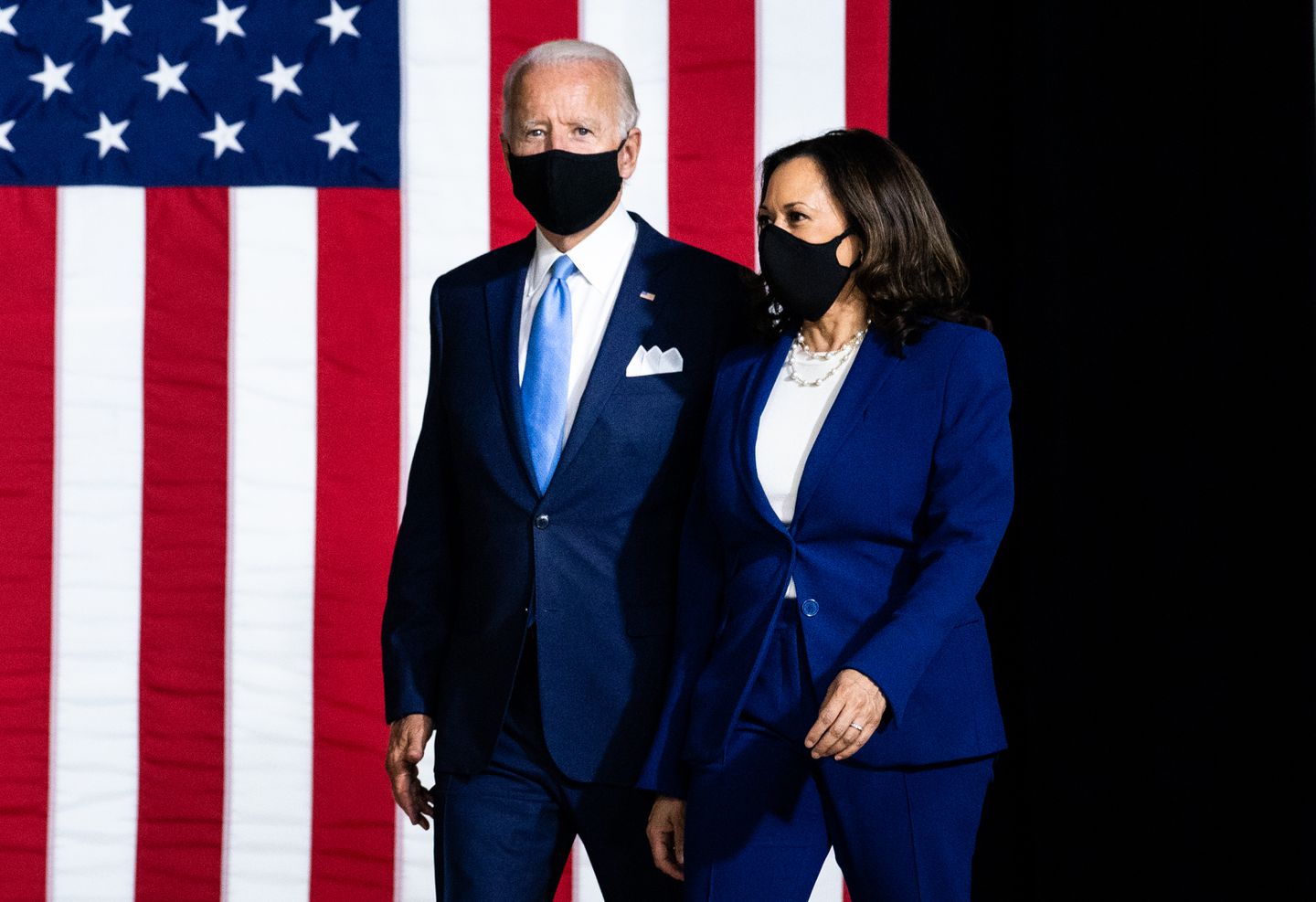
Thus, Joseph Robinette Biden Jr. has been formally elected as the 46th President of the United States of America. According to the latest updates, it has been estimated that a record 74 million people had voted for him. According to many, Joe Biden has now ended a presidency that had caused political unrest and caused division in the United States. The President-Elect, in his victory speech, has promised to ‘bring stability to the country after four turbulent years under Trump’.

Kamala Harris, who had been chosen by Biden as his running mate, would become the first woman Vice President. She is also the first person of Indian-origin to hold such a powerful position. This is truly a great moment in world history and would be an inspiration for future generations.

The Inauguration Day

Joe Biden is all set to be inaugurated on January 20, 2021. Inauguration Day marks the swearing in of the newly elected President and the Vice President. The newly elected representatives will take the Oath of Office. They would also make their first official address of the term- which is referred to as the inauguration address.

What are Joe Biden’s key policies?

  • Biden has set 2050 as the target year for a 100% clean energy economy and net-zero emissions.
  • He would seek to repair relations with key partner countries that ‘suffered’ in the Trump era. This would mean the re-establishment of treaties with allies in East Asia and NATO partners in Europe.
  • Biden has promised to make sure that corporations and the very wealthy pay ‘their fair share’. He has also stated that he ‘won’t ask a single person making under $400,000 per year to pay a penny more in taxes’.
  • Biden would try to reposition America as a country leading the global charge in confronting the world’s most pressing challenges such as climate change and arms control.

“With full hearts and steady hands, with faith in America and in each other, with a love of country — and a thirst for justice — let us be the nation that we know we can be.” – President-elect Joe Biden in his victory speech on Saturday. Let us hope to see ever better relations between US and India in the future.

Categories
Editorial

How Will the US Elections Affect Stock Markets?

The much-awaited U.S. Presidential Election is all set to take place on 3rd November. Over the past few months, this is one major topic that has been discussed extensively. People from all over the world are eagerly waiting to learn about the election’s final result. Who will be the next powerful individual in the world? Will Donald Trump remain in the White House for another four years? Or, will ex-Vice President Joe Biden emerge victorious?

Looking from the point of view of stock markets, it is sure that there would be high volatility. Most investors are worried about the outcome of this election, as they believe that their returns could be affected. Let us look at some important facts surrounding the U.S elections. We shall also find out if it would cause an effect on the stock markets.

What Happens During the Election Period?

High Volatility

Stock market volatility would increase during the election period. In cases where the election is highly competitive or tight, historical data from financial analysts has shown that stock markets are likely to become highly volatile. We had seen this during the last US election in 2016. Hillary Clinton and Trump had faced a very tight election. 

In this particular case, the factor that affects stock markets are the economic policies that are proposed by the two major parties- the Democrats and the Republicans. Interestingly, a research paper from the University of Pennsylvania has stated that stock markets have delivered higher returns when Democrats were in power. However, this keeps changing with time.

When we analyze the general political views amongst American citizens, many believe that stock markets would perform better if Donald Trump is re-elected. This is because his economic policies involve very loose regulations and fewer taxes for corporations. On the other hand, Joe Biden has proposed to raise taxes and put more cash in the hand of normal citizens. This would not work in favour of large businesses. So, we need to understand how these policies will ultimately bring a positive or negative effect on the stock market.

Political Biases

Every individual would have their own political biases or opinions. In the US, many people have shown their support for the views of the Republican Party. Those who do not agree with their policies or views are supporting the Democratic Party. A person who aligns with a particular set of views would think that their parties’ win would be good for the economy and the stock market. In the short run, these opposing views between individuals can have an impact on stock prices.

We have to consider another important factor here. The stock market aggregates the expectations of all participants. Many individuals are not aligned with any political views. Due to this reason, historical data has also shown that the election process or political views have not caused any deep impact on the long-term performance of the stock market.

When we look at past records, market volatility begins to rise about 45 days before the election. The volatility seems to be at its peak within one week before the election date. This was evident during the current election year as well. Global markets had crashed in the last few weeks, due to the uncertainty in the US elections. However, the fall in stock markets was also due to European countries reintroducing lockdowns, as coronavirus cases have been rising rapidly. 

What Happens After the Election?

In order to understand this part, let us look at historical data from the United States Bank. For more than a century, data has shown that bonds or debt instruments have performed better- immediately after an election. Regardless of which individual or party competes in an election, people are likely to take fewer risks in the stock market. They would use bonds to improve the safety of their returns.

Another historical data from the U.S Bank shows the following: if a new political party gets elected to power, there is likely to be a 5% growth in the stock markets. In case the same political party gets to remain in office, there would be a stock market growth of 6.5%. Even if the markets go down, there would be a very rapid rebound or recovery. Let us see if this would turn out to be true after the highly anticipated election result of 2020. 

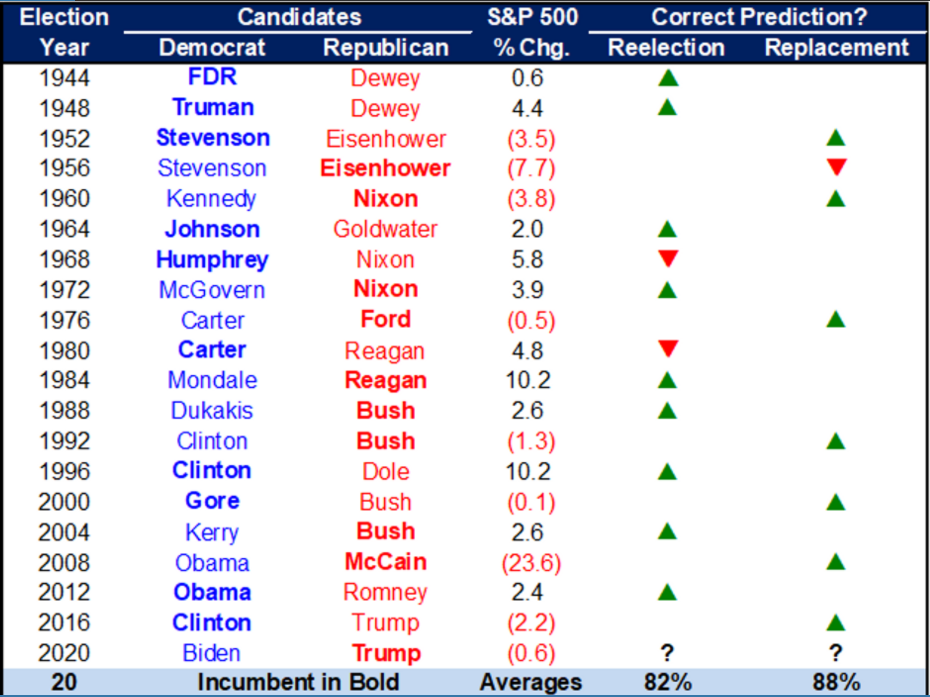
The table provided below shows how the S&P 500 Returns have changed when a new President was elected. The S&P 500 is an index that measures the stock performance of the 500 largest companies listed in American stock markets.
Important Facts about the US Election Day

The voting polls in all states open around 6 am. India is between 11-13 hours ahead of the United States. This means that by Tuesday night in India, around 96 million Americans would have already finished voting. 

Each state runs the election according to their own rules. Some states allow electronic voting methods, while most states use paper ballots. However, the actual counting of votes will not be finalized until weeks later. What happens on Election Night is that major US TV networks would “call” the election in favour of one of the candidates. This is based on the information from exit polls. An exit poll is an opinion poll of people leaving a polling station and asking how they voted. The estimated numbers from the exit polls are usually not contested, and the candidate projected to have lost concedes the election.

How Will This Affect Nifty?

Now, let us understand how our Indian stock markets could get affected. Donald Trump and Narendra Modi have had a love-hate relationship with each other. Trump definitely talks tough on India, regarding our sanctions and lack of action on climate change. He also calls PM Modi his friend, and welcomed our Prime Minister at rallies in the US. Another important fact is that he has imposed a lot of sanctions against China, which have acted as a boost to India’s long-term success. But still, his policies on tight restrictions for IT professionals and restrictive trade policies have not been favourable for India. President Trump may continue to face conflicts in securing a new economic stimulus, and this would not be good for the markets.

On the other hand, if Joe Biden becomes the next US President, many emerging economies could benefit (including India). With his equally tough stand on China, India is bound to benefit. His open approach to trade deals and inclusive plans on migration will greatly benefit Indian manufacturing, as well as IT sector. Biden’s clean-energy plan would deal a blow to the traditional petrochemical industry in America, and the subsequent price rises could help Indian manufacturers get better profits. But the change from fossil to green fuel is an inevitable, and necessary, future for our world. This is why huge corporations like Reliance, who have built their empire on oil, are planning to get into green energy. The big financial stimulus proposed by Team Biden will help push up US markets, along with global peers.

Under either President, Nifty will continue its uptrend in the long run.

Brace Yourself

From what we can understand, the US Presidential election, or any other political event, has very little impact on the share prices of large corporations. Regardless of who gets elected to power, the S&P 500 returns are fairly positive and do not go through big changes. This is even considering the possible tax increases proposed by Joe Biden on large corporations and wealthy individuals. Businesses will factor these increased taxes, and if Biden’s plan of reinvesting this extra tax revenue back to the economy then all will continue to be well and good in the long run.

At the same time, in case there are no clear winners in the election, or if there is any sort of complications arising, we could see a major fall in the global markets. If such a case happens, investors need to be careful. 

When we look at our very own Nifty 50, there have been some major signs of volatility due to global factors. What we can state is that the effects of the US election could be just a temporary issue. And, it would only last a week or so. The main concern we must all look into should be the rise in Covid-19 cases globally and the lockdown restrictions associated with it. We must understand that these are testing times, and market participants have to patiently wait and take safe actions so that losses can be reduced. Stay alert and always remember to follow the latest news!
Categories
Market News Top 10 News Top Global News

Red Pill or Blue Bill: US Elections – Top 10 Global News

1. Stocks Surge and Dollar Drops on U.S. Election Day

Stocks rallied with U.S. futures on Tuesday as a gust of optimism swept through global equity markets with millions of Americans headed to vote.While trades reflecting a Democratic sweep held firm, betting markets weren’t convinced. Traders hedged prospects of post-vote volatility, driving a measure of expected swings in China’s yuan to its highest level in more than nine years. In Europe, mining shares climbed, helped by the slumping dollar. Banks rallied and joined its European peers in posting lower-than-expected bad-loan provisions from the pandemic.

Futures on the S&P 500 Index climbed 1.2% as of early morning New York time.

Nasdaq 100 Index futures advanced 0.7%.

The Stoxx Europe 600 Index surged 1.7%.

The MSCI Asia Pacific Index climbed 1%.

2. Americans Face Stark Choice as Election Day 2020 Dawns

Election Day 2020 is underway and for American voters the choices couldn’t be more stark. Donald Trump was a novelty four years ago, a reality television star and real estate developer with a penchant for bombast and Twitter insults. The 74-year-old president has erased any notion that the Oval Office would tame him, thrilling Republicans by cutting regulations and taxes, restricting immigration and appointing three Supreme Court justices. Joe Biden, 77, passed on a chance to run in 2016 but said Trump’s reaction to racial protests in Virginia the following year convinced him to return to politics. After lagging in the primaries, the former vice president emerged as a unity candidate, portraying himself as a man of decency who would listen to scientists fighting the Covid-19 pandemic, restore America’s overseas alliances and confront climate change. The election entered its final day on Tuesday with a record-shattering 100 million votes already cast. It’s taking place amid a third deadly wave in the pandemic, warnings about renewed foreign interference and a political environment even more polarized than in 2016, with both sides warning that a vote for the other risks plunging the country into ruin.

3. China Suspends Jack Ma’s Ant Group Shanghai IPO

China has suspended the Shanghai leg of Ant Group Co.’s $35 billion offering, potentially derailing the world’s biggest IPO. The Shanghai stock exchange will suspend the listing amid changes in the regulatory environment.  The shock move comes after China’s regulators warned that Jack Ma’s firm faces increased scrutiny and will be subject to the same restrictions on capital and leverage as banks. Ma, Ant’s billionaire co-founder, was summoned to a rare joint meeting on Monday with the country’s central bank and three other top financial regulators.

4. China Wages Trade War to ‘Punish’ Australia

What started as a political spat between Beijing and Canberra has become a one-sided trade war that threatens serious disruption for an expanding number of Australian exporters. China won’t allow imports of a swathe of Australian commodities and foodstuffs from as early as this week. The curbs are a major escalation in Beijing’s pressure campaign following a two-year stand-off over issues from technology to the origins of coronavirus. China’s blacklist — delivered verbally to commodities traders — includes coal, barley, copper, sugar, timber, wine and lobster. It doesn’t cover materials, like iron ore or natural gas, where import curbs could unduly damage China’s own economy.

5. Billionaire Adani Set to Develop Sri Lanka’s Port Terminal

India’s Adani Group is the front-runner to develop Sri Lanka’s stalled East Container Terminal in Colombo port, helping billionaire Gautam Adani expand his port business overseas. Adani Ports and Special Economic Zone Ltd. and a local partner received an in-principle approval to sign a deal with Sri Lanka Ports Authority, which will hold majority stake in the project. Details of the stake-holding are still being worked out after a review of the project following labor protests that had stalled the deal before parliamentary elections in August. Adani, India’s biggest ports and logistics company, had signed a preliminary agreement for the project last year.

6. Microsoft to Join $100 Million Investment in Indonesia’s Bukalapak

Microsoft has agreed to join a $100 million investment in Indonesian online marketplace PT Bukalapak.com. The U.S. company confirmed it was making a strategic investment in Bukalapak in a joint statement on Tuesday, though it didn’t disclose the amount. Under the partnership, Bukalapak will adopt Microsoft’s Azure as its preferred cloud platform to support its more than 1.2 crore merchants and 10 crore customers. U.S. tech giants are increasingly turning their attention to Indonesia, seeking to tap a rapidly growing smartphone population in the world’s fourth most-populous country. 

7. Singapore Stocks Post Biggest Gain in Five Months on Biden Victory Hopes

One of Asia’s worst-performing stock markets got some respite on Tuesday ahead of the U.S. presidential poll as investors gear up for a Biden win. The Straits Times Index closed up 2.2%, its biggest rise in five months, and climbed the most among all major indexes in Asia Pacific. All 30 stocks were in the green, with industrials, property and banking shares among the top gainers as investors bought into the gauge dominated by old-economy sectors. All polls are predicting a Biden win so this is investors positioning themselves.

8. Slumping oil demand, prices drive Saudi Aramco profit 44.6% lower

Saudi state oil giant says it will maintain its quarterly dividend payment, most of which goes to the government. Aramco has reported sharply lower earnings as crude prices slide while countries once again impose measures to curb the spread of the coronavirus. The company, which launched the world’s biggest-ever public IPO sale last December, on Tuesday reported a 44.6% drop in third-quarter net profit. Weaker refining and chemicals margins have also hit the company’s net profit.

9. Cash-strapped Oman plans income tax on wealthy starting 2022

To tackle a growing budget deficit, Oman is to break with the long-standing practice among Gulf Arab states and tax the income of wealthy individuals starting 2022. Cash-strapped Oman plans to take a step unheard of in the Persian Gulf region: It’s going to start taxing the income of wealthy individuals beginning in 2022, as part of a broader program to tackle a budget deficit that’s ballooned due to low oil prices and the coronavirus pandemic. By reducing government spending while spurring investments, the plan is projected to bring the budget deficit – estimated to reach nearly 19% of gross domestic product in 2020 by the International Monetary Fund – to 1.7% by 2024, the Ministry of Finance said on Sunday.

10. UAE non-oil private sector shrinks for the second time in three months

The United Arab Emirates’ non-oil private sector slipped back into contraction in October for the second time in three months, stunting the country’s economic recovery from the coronavirus pandemic. Companies continued to shed jobs for the 10th consecutive month amid concerns that costs would eclipse revenues, though October’s fall in employment was softer than the average for the year to date. The seasonally adjusted UAE Purchasing Managers’ Index (PMI), which covers manufacturing and services, fell to 49.5 in October from 51.0 in September, slipping below the 50.0 mark that separates growth from contraction for the seventh month this year.

Categories
Market News Top 10 News Top Global News

The UK Goes into Lockdown, Oil Prices Tank – Top 10 Global News

1. U.S. Futures Climb as Oil Touches Five-Month Low

Equity markets started Monday with gains as investors prepared for a crucial week spanning the U.S. election and a Federal Reserve meeting. Futures on the S&P 500 climbed 1% following last week’s sharp selloff. Equity benchmarks across Europe and Asia were also higher, and investors took comfort in data that showed strength in China’s economic expansion. The picture wasn’t uniform across markets. Oil prices touched a five-month low after Libya accelerated production and the U.K. joined other European countries in toughening travel restrictions. 

Futures on the S&P 500 Index increased 1% as of early morning New York time.

The Stoxx Europe 600 Index surged 1.4%.

The MSCI Asia Pacific Index jumped 1.1%.

The MSCI Emerging Market Index increased 0.8%.

2. UK Locks Down as COVID-19 cases pass 10 lakhs

Prime Minister Boris Johnson ordered England back into a national lockdown after the United Kingdom passed the milestone of one million COVID-19 cases and the second wave of infections threatened to overwhelm the health service. The UK, which has the biggest official death toll in Europe from COVID-19, is grappling with more than 20,000 new coronavirus cases a day and scientists have warned the “worst case” scenario of 80,000 dead could be exceeded. In some of the strictest restrictions in the UK’s peacetime history, people will only be allowed to leave home for specific reasons such as education, work, exercise, shopping for essentials and medicines or caring for the vulnerable. Essential shops, schools, and universities will remain open, Johnson said, and while elite sports will continue, amateur sports for adults and children will be asked to stop. Pubs and restaurants will be shut apart from for takeaways. All non-essential retail will close.

3. Ant Group Trades over 50% Premium in Hong Kong Grey Market

Institutional investors are buying Ant Group Co.’s shares at a 50% premium, signalling the Chinese fintech giant is poised to soar in its debut this week following the world’s largest initial public offering. Billionaire Jack Ma’s Ant IPO has become the most anticipated in years, attracting at least $3 trillion in orders for its dual listing in Hong Kong and Shanghai ahead of its trading debut on Nov. 5. The stampede for shares is fueling predictions of a first-day pop, even as skeptics warn of risks including the U.S. election, tightening regulations in China and rising Covid-19 infections worldwide.

4. Strong China factory data show domestic demand driving recovery

China’s manufacturing activity kept up its steady expansion from a deep slump caused by the coronavirus pandemic. The main reason for the growth has been domestic demand as Chinese people spent on travel, leisure and shopping for consumer goods, helped by a long public holiday in October. But export activity remains weak, with analysts saying the continuing coronavirus pandemic in China’s main overseas markets of the United States and Europe is likely to suppress demand there for some time. The latest figure was the highest since January 2011. It had plunged to a historic low in March as most of China’s economy shut down to control the spread of the coronavirus.

5. Ryanair posts first summer loss in decades; cuts winter forecasts

Ireland’s Ryanair posted a loss for its key summer period for the first time in decades on Monday and said it may have to cut capacity further this winter as the second wave of COVID-19 infections sparks fresh lockdowns across Europe. Europe’s largest low-cost airline said COVID-19 restrictions pushed passenger numbers down 80% in the six months to Sept. 30, when it typically makes most of its annual profit. The airline, whose chief executive Michael O’Leary in September described the upcoming winter as a “write-off”, declined to forecast profit for the full financial year ending March 31, but said it expected a second-half loss greater than the first. Ryanair reaffirmed plans to fly 3.8 crore passengers this financial year compared with the 15 crore of the same period last year.

6. Italy Considers National Curfew: Government Still Divided

Italy’s government is opting for targeted regional restrictions amid the latest surge in Covid-19 cases, in a bid to avoid a new nationwide lockdown. Regions with the highest transmission levels will be subject to tougher curbs under a new three-tiered system, Prime Minister Giuseppe Conte said Monday. These will come on top of new nationwide measures including a night-time curfew. The newest plan includes shutting down museums across the country and closing shopping malls on weekends. The government will also impose movement restrictions to and from the hardest-hit regions.

7. China Issues Fresh Warning to U.S. in Spat Over Journalist Visas

China issued a new warning to the U.S. over journalist visas, after accusing the Trump administration of giving Chinese media staff new travel documents that would expire in a matter of days. Some Chinese journalists in the U.S. were notified last week that their long-delayed visa applications had been approved, Foreign Ministry spokesman Wang Wenbin told a regular briefing Monday in Beijing. China had expressed its concerns and demands through diplomatic channels made clear that it would take “firm countermeasures” should Washington continue with its “political persecution and suppression against Chinese journalists,” he said.

8. Hong Kong’s Retail Weakness Persisted in September

Hong Kong retailers continued to struggle in September even as other sectors in the economy, notably exports, started showing stronger signs of recovery. Retail sales by value fell 12.9% from a year earlier, according to a government report. The business environment of the retail trade will remain challenging in the near term, as inbound tourism is unlikely to see a swift rebound and the labour market is still under pressure. Sales across most categories continued to drop, led by purchases of food and alcoholic drinks, jewellery and electrical goods. Supermarket sales rose, along with department stores, motor vehicles, furniture, books and newspapers.

9. Xinjiang Covid Outbreak Is China’s Biggest Since Summer

A testing blitz in China’s far west region of Xinjiang uncovered the country’s worst Covid-19 outbreak since the summer, even as authorities said all infections have been found. Authorities in the region — the epicentre of Beijing’s crackdown on ethnic Muslim Uighurs — reported six new so-called asymptomatic infections on Monday. Xinjiang’s tally since the outbreak began with the detection stands at 57 infections and 223 asymptomatic cases, Xinjiang’s health commission reported. Nine people are in “severe condition,” authorities said. The new cases emerged after China tested millions of people across the region last week. 

10. World’s Top Hedge Fund Soars 275% With Bets on China Schools

Between January and September, QQQ Capital Management posted gains of 275%, making it the top hedge fund in the world, according to Eurekahedge data. QQQ says assets under management rose to about $1 billion last month, with most of the money coming from Qian, its founder. The gains have come with concentration risks that many fund managers would balk at: QQQ has more than a third of its assets invested in Chinese education companies. While those stocks had soared this year, they’ve been hit with concerns about regulatory crackdowns and allegations of accounting fraud, and one has plunged in recent weeks amid downgrades from analysts.

Categories
Market News Top 10 News Top Global News

Bloodbath in Global Markets – Top10 Global News

1. S&P 500 Drops 2%, Europe Sinks to Five-Month Low

U.S. stocks dropped and European equities tumbled to a five-month low as rising coronavirus infections and tougher lockdowns added to worries about the economic hit from the pandemic.

The S&P 500 Index fell about 2% as earnings rolled in amid a surge in Covid-19 hospitalizations, especially in the Midwest. The Stoxx Europe 600 Index sank as much as 3% after German Chancellor Angela Merkel proposed closing bars and restaurants for a month to curb the spread of the virus. Auto and real-estate shares saw the steepest declines. The VIX Index, a measure of U.S. equity volatility, climbed to the highest level since June.

The S&P 500 Index dropped 2% as of early morning New York time.

The Stoxx Europe 600 Index decreased 2.9%.

The MSCI Asia Pacific Index fell 0.3%.

2. Europe fixates on tougher virus control measures

Losses accelerated across European stock markets on Wednesday, with the benchmark STOXX 600 tumbling to its lowest level since late May on fears of a new national lockdown in France and tighter curbs elsewhere to combat a surge in coronavirus cases. The pan-European STOXX 600 index fell 2.9%, while Germany’s DAX and France’s CAC 40 plunged 3.3% and UK’s FTSE 100 dropped 2.2%. The French government has been exploring a new, national lockdown from midnight on Thursday, albeit a slightly more flexible one than the two-month shutdown that began in mid-March. President Emmanuel Macron will give a televised address later on Wednesday, his office said. Meanwhile, German Chancellor Angela Merkel wants to close all restaurants and bars from November 4, while the British Prime Minister Boris Johnson is under pressure to implement a new lockdown.

3. Boeing to Cut 7,000 More Jobs in Airline Market’s ‘New Reality’

Boeing is deepening job cuts as a global pandemic and prolonged grounding of the 737 Max jetliner squeeze the planemaker’s finances. An additional 7,000 jobs are slated for elimination by the end of next year, bringing the total workforce reduction made through retirements, attrition and layoffs to 30,000 people, Boeing said in an email Wednesday after reporting earnings. The company had 160,000 employees at the start of the year before the coronavirus pandemic gutted air travel and airplane sales.

4. Hedge Funds That Planned for U.S. Election Chaos See a Blue Wave

For hedge fund managers, preparations for chaos in the U.S. elections are giving way to strategies to capitalize on a sweeping Democratic victory. Just six days away from final voting, several top funds see former Vice President Joe Biden winning the presidency as well as the possibility of a so-called blue wave in which Republicans also lose control of the Senate. Asset managers UBS O’Connor, Harvest Volatility Management and MKP Capital Management — with a total of more than $12 billion in assets — say the odds are that President Donald Trump will be unseated, and they have embraced an array of strategies from buying value stocks to betting on commodities to cash in on the outcome.

5. Saudi Arabia Plans to End ‘Kafala’ Labor System

Saudi Arabia is set to announce major labor reforms that could effectively end its controversial “kafala” system for foreign workers, a news outlet close to the government reported. Foreign employees will no longer require their work sponsor’s permission to change jobs, travel abroad or leave the country permanently. The new rules are scheduled to be unveiled as early as next week and will come into effect from the first half of 2021. In response to the report, the kingdom’s Ministry of Human Resources and Social Development said it was “working on a number of initiatives to organize and develop the labor market, and will announce them when they’re ready.” The ministry is set to hold a press conference next week to outline reforms to “increase the competitiveness, attractiveness, and flexibility of the Saudi labor market in accordance with international standards”.

6. Facebook, Twitter, Google CEOs will defend law protecting tech platforms before U.S. Senate panel

The chief executives of three large tech companies will defend a law protecting internet companies before a Senate panel on Wednesday – a topic that has split U.S. lawmakers on ways to hold Big Tech accountable for how they moderate content on their platforms. Facebook’s Mark Zuckerberg, Twitter’s Jack Dorsey and Google’s Sundar Pichai will tell the committee chaired by Republican Senator Roger Wicker that Section 230 of the Communications Decency Act – which protects companies from liability over content posted by users – is crucial to free expression on the internet.

7. Countries with low GDP, poor sanitation had lower COVID-19 death rate

Countries with poor hygiene and sanitation and low quality of water supply seem to have had lower COVID-19 Fatality Rates (CFR) compared to richer countries which do well on these parameters, Indian researchers have found. But they also cautioned that it does not mean that poor hygienic conditions are desirable. Rather, the findings can lead to exploration of “immune training with possibilities of microbiome therapies”, said Dr Shekhar Mande, Director General, Council of Scientific and Industrial Research (CSIR).

8. Rich nations try to take the reins at OECD, the world’s globalisation clubhouse

The OECD acts like an auditor for globalization, shaping policies and setting standards in areas from taxation to trade and education. It’s currently running contentious negotiations over digital taxes that are on the brink of imploding into a transatlantic trade war. Angel Gurria retires next year as Secretary General of the Paris-based Organisation for Economic Cooperation and Development, and the U.S. is proposing President Donald Trump’s Deputy Chief of Staff, Christopher Liddell, as a successor. Member countries have until Nov. 1 deadline to put forward a candidate. Liddell faces competition from European candidates on the other side of that issue, including former EU trade commissioner Cecilia Malmstrom. The race to fill a role at the heart of world economic policy making is turning into a new battleground for the future of globalization.

9. WTO set to make recommendation on their next leader

A group of World Trade Organization ambassadors is set to make a recommendation on Wednesday on who should lead the Geneva-based trade body. Nigerian former finance minister Ngozi Okonjo-Iweala and South Korean trade minister Yoo Myung-hee are the two remaining candidates to succeed Roberto Azevedo, who stepped down at the end of August. The winner will become the first woman to head the global watchdog in its 25-year history.

10. UK: young, non-white people likelier to lose jobs

Twice as many young and non-white British workers have lost their jobs after going on leave of absence compared with the average, largely because they are more likely to work in sectors hit hardest by the coronavirus pandemic, a study showed. The Resolution Foundation think-tank said 19 percent of workers aged 18-24 and 22 percent of ethnic minority staff had lost their jobs, compared with 9 percent of employees overall. Job losses were most common in the hospitality and leisure sectors and for those whose work was already insecure before the crisis – categories in which younger and non-white workers more commonly find themselves in the United Kingdom.

Categories
Market News Top 10 News Top Global News

No U.S. stimulus package before elections – Top10 Global News

1. Tech Shares Gain After Chipmaker M&A: Global Markets Update

Tech shares rose after Advanced Micro Devices (AMD) announced a $35 billion takeover of another chipmaker Xilinx, helping to blunt concern about the impact of growing coronavirus infections. Losses for shares in energy and financial companies were a drag on the S&P 500 as it struggled to bounce back from its worst loss in a month yesterday. The Stoxx Europe 600 Index headed toward its lowest close since June amid concern about the faster spread of the coronavirus on the continent.

The S&P 500 Index rose 0.1% as of early morning New York time.

The Stoxx Europe 600 Index decreased 0.5%.

The MSCI Asia Pacific Index was little changed.

2. U.S. Stimulus Hope On Hold: Senate Leaves for pre-election break

U.S. senators departed the Capitol for a pre-election break Monday, making the logistics for passing a fiscal stimulus package by next Tuesday practically impossible, leaving the economy more vulnerable to damage from a resurgent coronavirus pandemic. The Senate’s departure after the confirmation vote for Amy Coney Barrett to join the Supreme Court left House Speaker Nancy Pelosi and Treasury Secretary Steven Mnuchin to continue negotiating over the stimulus package. After their latest call on Monday, agreement remains pending on both the amount and language of the bill. 

3. Germany Plans Restrictions as Italy Boosts Aid

Germany is looking at closing restaurants and prohibiting large events as governments across Europe seek to tackle rising infections and fatalities while avoiding full-scale lockdowns. Italy, the continent’s original epicenter of the pandemic, is coming up with more aid for businesses hardest hit by restrictions. U.K. Prime Minister Boris Johnson faces growing discontentment within his party over lockdown measures imposed on northern regions. Many countries in Eastern Europe reported fresh daily records for cases and deaths. Hong Kong, meanwhile, will ease some social distancing rules and announced plans for mandatory testing of specific groups. India’s daily infections fell below 40,000 for the first time in more than three months.

4. Dubai to launch ‘Nasdaq’ market for emerging firms & SMEs

Dubai plans to launch a “Nasdaq Dubai Growth Market” to help emerging companies, and small and medium enterprises (SMEs) attract investors and finance their projects, crown prince of the emirate, Sheikh Hamdan bin Mohammed bin Rashid al- Maktoum, said on Tuesday. The Nasdaq Dubai Growth Market will allow SMEs to list if they are valued below $250 million, with a minimum operating history of one year, compared to three years for Nasdaq Dubai’s main market. Nasdaq Dubai is collaborating with government bodies, UAE free zones and expert advisory companies as partners to launch the growth market in early 2021.

5. ADNOC seeks Indian partners for $45 bn petro-chem expansion plans

Abu Dhabi National Oil Company (ADNOC), UAE’s biggest energy producer, is seeking Indian companies for partnership in its ambitious $45 billion (INR 3.3 lakh cr) downstream petrochemical expansion plans. ADNOC CEO Sultan Ahmed Al Jaber, during a virtual session Prime Minister Narendra Modi had with global energy chief executives on Monday evening, sought opportunities to strengthen the UAE-India energy relationships. Speaking at the roundtable, Al Jaber said India has always been and will always remain one of the UAE’s closest friends and one of its most important trading partners.

6. Global foreign direct investment halved in first six months of 2020

Global foreign direct investment (FDI) plunged by 49% in the first half of 2020 from the same period a year ago and is on course to fall by up to 40% for the year, driven by fears of a deep recession. FDI flows to European economies turned negative for the first time ever, falling to -$7 billion from $202 billion, while flows to the United States fell by 61% to $51 billion, the U.N. Conference for Trade and Development (UNCTAD) said in a report. Global FDI fell as multinationals postponed investments to preserve cash.

7. Russia Begins Producing Second Covid-19 Vaccine as Cases Spike

Russia has begun production of a second Covid-19 vaccine that hasn’t completed trials as the Kremlin rushes to develop a shield against the pandemic. Output of the vaccine, developed by former biological weapons lab Vector State Virology and Biotechnology Center in Novosibirsk, will ramp up by the end of the year. President Vladimir Putin announced the approval of Vector’s vaccine earlier this month, following a similar trajectory of the Sputnik V inoculation in August, which he claimed was the first to be registered in the world. Both were tested on a limited number of people before receiving provisional registration that will allow for widespread use as they undergo Phase 3 trials to prove they are safe and effective.

8. Pfizer not yet ready to release COVID-19 vaccine data from late-stage trial

Pfizer said on Tuesday it was not yet ready to release data from the late-stage trial of the COVID-19 vaccine candidate it is developing with Germany’s BioNTech. Pfizer’s CEO Albert Bourla has said the company could release data on whether or not the vaccine works as early as this month, but the company said in a presentation that the independent data monitoring board which will determine whether or not the trial has been successful has not conducted any interim efficacy analyses yet. This is a prime vaccine candidate touted by President Trump to be ready by November.

9. China Ramps Up Imports From U.S. as Trade Deal Target Looms

China ramped up purchases of American goods in September as its economy strengthened, though it still remains far from the full-year target set out under its Phase One trade deal with the U.S. The monthly value of U.S. goods that China bought under the trade agreement reached a monthly record high of $9.9 billion in September as oil, soybean and car imports surged. That still leaves China’s purchases at only 38.5% of a total target of more than $170 billion for the year. Under the agreement signed in January, China promised to buy an additional $200 billion of U.S. goods and services over the 2017 level by the end of 2021. The coronavirus pandemic upended some of those plans as demand crashed in the first quarter, but China’s recovery since then is gaining momentum, with imports gradually accelerating.

10. Rolls-Royce Gets Investor Approval for $2.6 Billion Equity Sale

Rolls-Royce shareholders backed a $2.6 billion equity raise, a key step toward shoring up the British jet engine maker’s finances to outlast the Covid-19 pandemic. Investors voted 99.5% in favour of the rights issue.  Rolls-Royce’s engine business has been dealt a heavy blow by the coronavirus, with both unit sales and maintenance revenue hurt by a mass grounding of widebody aeroplanes. The company announced a 5 billion-pound refinancing plan at the start of this month, funded through a combination of debt issuance, a rights offer and loans, and now has no pressing need to extend borrowings guaranteed by the U.K. government.

Categories
Market News Top 10 News Top Global News

Jack Ma to become 11th Richest Man after Ant IPO – Top10 Global News

1. Stocks Slump on Rising Covid Cases; Dollar Gains

U.S. equities slumped along with European shares on concern that rising coronavirus cases will weaken the global economy and as prospects dimmed for fiscal aid from Washington before the presidential election. Energy and materials companies were among the worst performers on the S&P 500 Index. In Europe, a gauge of tech stocks fell the most since March after German software maker SAP SE plunged 20% following a cut to its revenue forecast and warnings that the pandemic will hurt business through mid-2021. Boeing Co., Lockheed Martin Corp. and Raytheon Technologies Corp. slid on China’s plan to sanction the companies after the U.S. approved $1.8 billion in arms sales to Taiwan last week.

The S&P 500 Index decreased 0.9% as of early morning New York time.

The Stoxx Europe 600 Index fell 1.1%.

The MSCI Asia Pacific Index dipped 0.3%.

2. China to Sanction Boeing, Raytheon Over U.S. Arms Sales to Taiwan

China will impose unspecified sanctions on Boeing Co.’s defense unit, Lockheed Martin Corp. and Raytheon Technologies Corp. after the U.S. State Department approved $1.8 billion in arms sales to Taiwan last week. The sanctions will be imposed “in order to uphold national interests,” Chinese Foreign Ministry spokesman Zhao Lijian told reporters Monday in Beijing. The action follows the U.S. State Department’s approval last week of $1.8 billion in sales of new weapons for Taiwan and submission of the package to Congress for a final review. The deals, and an earlier one involving Lockheed F-16 fighters, are taking place amid rising tension between the superpowers ahead of the U.S. election next week. 

3. Pelosi Awaits Virus Stimulus Offer Today as Hope for Vote Fades

The three months of squabbling over a new round of virus relief moved no closer to a resolution over the weekend, all but extinguishing the prospects of a stimulus bill being written, voted on, and signed into law by President Donald Trump before the election. House Speaker Nancy Pelosi said she’s waiting for another counter-offer on Monday from Treasury Secretary Steven Mnuchin, as she and White House Chief of Staff Mark Meadows accused each other of “moving the goalposts” in negotiations. Much of the weekend was devoted to work by congressional committees with the goal of writing legislation, but aides in both parties said little progress was made despite the pledges from both sides that they want to quickly deliver $1,200 (89,000 INR) stimulus payments to most Americans along with aid to struggling businesses.

4. Europe Struggles to Regain Control from Second Covid-19 Wave

Europe took a step closer to the strict rules imposed during the initial wave of the pandemic, with leaders struggling to regain control of the spread while confronting growing opposition to restrictions. The Czech Republic — the European Union’s worst hot spot — and Poland signaled more curbs may be near, and Belgium is mulling a lockdown. AstraZeneca said its vaccine candidate produced a robust immune response in elderly people, while Johnson & Johnson said the first batches of its shot could be available in January. Both companies are resuming trials that had been paused due to safety concerns. U.K. Health Secretary Matt Hancock said his “central expectation” is there will be a vaccine to roll out in the first half of 2021. The World Health Organization’s director general said some countries in the northern hemisphere are facing a “dangerous moment.”

5. Dubai announces $136 million extra stimulus package

Dubai has announced a new 500 million dirhams (INR 1000 cr) stimulus package to support the local economy, taking Dubai’s total stimulus measures this year to 6.8 billion dirhams, the crown prince of the emirate said on Twitter on Saturday. “The private sector is a major partner in Dubai’s development process, and we have adopted a set of new exemptions for some fees and a reduction in rents for some sectors, as well as an extension of the validity of a previous set of exemptions from fees,” said Hamdan Bin Mohammed Al-Maktoum.

6. U.S. appeals WTO ruling on its multi-billion tariffs on China

The United States lodged an appeal on Monday against a WTO ruling last month that found U.S. tariffs imposed on China in 2018 breached global trade rules, a World Trade Organization (WTO) official said. A three-person panel had ruled that U.S. had not justified why the tariffs imposed after a Section 301 investigation against China were a justifiable exception to its obligations. The U.S. delegation, in a speech seen by Reuters announcing its appeal, said that the panel report “reflects a major, missed opportunity for the WTO to begin to address the most serious problem faced by every member that seeks a balanced and fair world trading system: namely, aggressive, state policies that seek to dominate broad industrial sectors.”

7. Fiat, PSA to win EU approval for $38 billion merger

Fiat Chrysler and PSA are set to win EU approval for their $38 billion (INR 2.8 lakh cr) merger to create the world’s fourth-largest carmaker, as they strive to meet the industry’s dual challenges of funding cleaner vehicles and the global pandemic. The green light from the European Commission would formalise the creation of Stellantis, a carmaking group that could tap hefty profits from selling RAM pickup trucks and Jeep SUVs to U.S. drivers to fund the expensive development of zero-emission vehicles for sale in Europe and China. The all-share merger announced late last year would unite brands such as Fiat, Jeep, Dodge, Ram and Maserati with the likes of Peugeot, Opel and DS.

8. Bond Defaults Deliver 99% Losses in New Era of U.S. Bankruptcies

Bankruptcy filings are surging due to the economic fallout of Covid-19, and many lenders are coming to the realization that their claims are almost completely worthless. While few could have foreseen the pandemic’s toll on the economy, the depth of investors’ pain from corporate distress was all too predictable. Desperate to generate higher returns during a decade of rock-bottom interest rates, money managers bargained away legal protections, accepted ever-widening loopholes, and turned a blind eye to questionable earnings projections. Corporations, for their part, took full advantage and gorged on astronomical amounts of debt that many now cannot repay or refinance. It’s a stark reminder of the long-lasting repercussions of the Federal Reserve’s unprecedented easy-money policies. Ultralow rates helped risky companies sell bonds with fewer safeguards, which creditors seeking higher returns were happy to accept. Now, amid a new bout of economic pain, the effects of those policies are coming to bear.

9. Jack Ma Wealth Surges Above Walmart Heirs’ With Record Ant IPO

Jack Ma, the former English teacher who co-founded Alibaba Group Holding Ltd. is poised to become the world’s 11th richest person after Ant Group Co. priced shares for a record IPO. Ma’s 8.8% stake is worth $27.4 billion based on the stock pricing in Hong Kong and Shanghai. That will take the 56-year-old’s fortune to $71.6 billion (INR 5.3 lakh cr) on the Bloomberg Billionaires Index, exceeding that of Oracle’s Larry Ellison, L’Oreal’s heiress Francoise Bettencourt Meyers and individual members of the Waltons, whose family own Walmart Inc. Ant’s mammoth listing is poised to boost the fortunes of a group of early investors and employees. The company has granted staff share-based awards since 2014 and at least 18 other people have become billionaires from the IPO.

10. Brexit decision entirely separate from U.S. election outcome

Britain’s decision on whether to agree a Brexit deal with the European Union is entirely separate to the outcome of the U.S. election next month, Prime Minister Boris Johnson said on Monday.

“The two things are entirely separate,” Johnson said, when asked about an Observer newspaper report that he was waiting to see the U.S. result before making a Brexit decision, and whether he was concerned about the prospect of a Joe Biden presidency.

Categories
Market News Top 10 News Top Global News

Goldman fined $3 billion in Malaysia 1MDB Scandal – Top10 Global News

1. Europe Stocks Climb on Earnings; US Futures Edge Up

European stocks advanced on the back of positive earnings and solid euro-zone economic data, putting them on track for the first increase this week. U.S. futures edged higher. Barclays jumped on an earnings beat, lifting banking shares. Car makers rose after Daimler raised its profit forecast and Renault topped revenue estimates, the latest signs the global auto industry is emerging from its worst slump in decades. The euro strengthened as regional manufacturing data exceeded estimates. In pre-market trading, U.S. chip giant Intel slumped after a surprise drop in data-center sales. Gilead Sciences jumped after its antiviral therapy remdesivir became the first drug formally cleared by FDA to treat Covid-19.

The Stoxx Europe 600 Index gained 0.6%.

Futures on the S&P 500 Index and Nasdaq 100 Index climbed 0.1%.

The MSCI Asia Pacific Index increased 0.2%.

2. US election debate does little to sway stock market investors

Global stocks barely budged on Friday as investors remained wary with less than two weeks to go before the United States presidential election and the final debate between President Donald Trump and his Democratic challenger Joe Biden on Thursday night presented no surprises for election watchers but slightly reinforced investor caution heading into the November 3 polls. US S&P 500 stock index futures had dipped slightly after the debate but were mostly flat by midday trade in Asia. 

3. US Readies for an Eye-Popping GDP Numbers

The Covid-19 pandemic caused the deepest U.S. recession since at least World War II. GDP shrank at an annual rate of 31.4% in the second quarter. Covid-19 is infecting more than 50,000 Americans a day, the most since early August. Somehow, though, the economy has roared back. On Oct. 29, the government is likely to report that GDP rose an annualized 30% in the third quarter—also a postwar record.Two things explain the economy’s rebound. States ended the general shutdowns that squelched growth in the second quarter. And Congress and the Federal Reserve came to the rescue with unprecedented fiscal and monetary relief.

4. China sends Warning by Remembering Its Only War With U.S.

China is going all out in remembrance of its participation against the U.S. in the Korean War, sending a message to the U.S. that it’s not intimidated by American military might. President Xi Jinping took part in a ceremony Friday in Beijing marking the 70th anniversary since its army took up fighting in a conflict China’s government describes as the “War to Resist U.S. Aggression and Aid Korea.” The war “shatters the legend that the U.S. Army is not defeatable,” Xi said in an address at the Great Hall of the People attended by party dignitaries, military representatives and veterans. “The Korean War shows that the Chinese people should not be provoked. If you make trouble, be prepared to bear the consequences.”

5. Goldman Sachs to pay billions in new 1MDB scandal penalties

Goldman Sachs Group Inc. admitted its role in the biggest foreign bribery case in U.S. enforcement history, reaching multiple international settlements to end probes into its fundraising for the scandal-plagued Malaysian fund known as 1MDB. Goldman officials helped spread $1.6 billion in illegal payments across Malaysia and the Middle East as part of a scheme that diverted money raised for development projects into an international spending spree on mansions and lavish parties, the bank said. Goldman agreed to pay $2.9 billion in penalties to settle criminal charges in the scandal.

6. Gilead’s remdesivir first to win US approval to treat COVID-19

The United States Food and Drug Administration has approved Gilead Sciences Inc’s antiviral drug Veklury – better known as remdesivir – for the treatment of COVID-19. Veklury is the brand name for remdesivir, which was previously authorised by the FDA for emergency use to treat patients who have been hospitalised with COVID-19. Gilead becomes the first and only company to receive approval for a COVID-19 treatment in the US. Remdesivir, which was developed by Gilead as a treatment for Ebola, works to stop the replication of SARS-CoV-2, the coronavirus that causes COVID-19. Gilead said in its press release that Veklury “shortened time to recovery by five days” in patients hospitalised with the virus.

7. US home sales and jobless claims underscore rising inequality

The National Association of Realtors said on Thursday that sales of previously owned homes grew for a fourth consecutive month in September, with completed transactions rising to an annual 6.54 million units – the highest level in 14 years. The report signals that the US housing market remains red hot – even in a month when housing sales traditionally start to slow down.

The rock bottom mortgage rates and people who can afford it upgrading to bigger and better digs are keeping the housing market hot. At the close of September, the U.S. economy had only recovered a little over half of the 22 million jobs lost during March and April. Many layoffs have turned into permanent job losses and as last week’s data demonstrate, showing rising inequality.

8. Philippines Lets Foreigners In, Eases Travel Rules for Citizens

The Philippines will welcome back foreign nationals starting Nov. 1 and allow Filipino travelers to leave without Covid-19 antigen tests as the Southeast Asian nation continues to reopen. Religious gatherings in areas under a looser form of quarantine will be allowed up to 30% of seating capacity from 10% previously. Early this week, the government shortened curfew hours in the capital region and eased stay-at-home order in response to a request from the Cabinet to allow more businesses to thrive.

9. Ant’s IPO Lures Fidelity, T. Rowe Price, UBS Asset

T. Rowe Price Group, UBS Asset Management and Fidelity Investments, are among the money managers angling for a piece of Ant Group’s blockbuster IPO. Each of the firms is considering investments worth several billion dollars in Ant’s Hong Kong-listed shares. Ant is expected to start taking orders for the Hong Kong portion of its dual listing on Oct. 26 and price shares as soon as Oct. 29, people familiar with the matter said. The company may raise about $35 billion in Hong Kong and Shanghai combined.

10. Vietnam’s Stocks Erase 2020 Losses Amid Optimism Over Economy

Vietnam’s stocks rallied the most in seven weeks on Friday, helping the benchmark gauge erase its year-to-date losses. The VN Index rallied 1.2%. The measure has rallied more than 12% over the past three months, the best performance in Southeast Asia, taking its rebound from this year’s low in March up by 46%. Vietnam’s economy is one of the few in Asia that are expected to expand this year after the country successfully curbed the pandemic.