Categories
Editorial

How to Deal With a Recession in 2023?

2022 was a rollercoaster of a year for the global economy! Most sectors had just started showing signs of recovery after two pandemic-hit years. Unfortunately, Russia’s invasion of Ukraine, a cost-of-living crisis triggered by inflationary pressures, and the slowdown in China have hurt economic sentiments again. As we approach 2023, there are talks of an economic recession heading our way. 

In today’s article, we’ll discuss what a recession is, whether we’re really in one, and how we can deal with it intelligently.

What is a Recession?

A recession is a prolonged period of economic downturn. It’s typically indicated by a fall in the gross domestic product (GDP), an increase in unemployment, and a decline in consumer spending. GDP is the total market value of all the finished goods and services produced within a country’s borders during a specific period.

Economists generally agree that a technical recession happens when the real GDP growth (or inflation-adjusted GDP) declines for two quarters consecutively. It can be caused by a decline in consumer confidence, a fall in business investment, or an increase in interest rates. [When interest rates are hiked or the cost of borrowing rises, people will have to pay more to repay debts, thereby reducing their purchasing power. There will be less money in the hands of people to spend, and thus, businesses get less revenue.]

So during a recession, businesses may struggle to stay afloat. It can be difficult for people to keep their jobs or find new ones. Governments may have to provide extra support to citizens and businesses through financial assistance or stimulus packages. Like most countries, India entered a recession in FY21 due to strict lockdowns imposed by the government to curb surging Covid-19 cases. 

Will There Be a Recession in 2023?

Many financial experts and institutions (including the Centre for Economics & Business Research) have predicted a global recession to begin in 2023. WHY? Well, multiple factors such as rising interest rates (to curb inflation), trade tensions, and global political uncertainty can contribute to a prolonged economic downturn.

In fact, the International Monetary Fund’s (IMF) annual economic forecast has predicted sluggish global growth in 2023. It gives attention to three issues: Russia’s invasion of Ukraine and its impact, the long-term effects of the Covid-19 pandemic (especially in China), and high inflation & tight monetary policies. We could be paying the price for trying to bring down inflation to more comfortable levels!

Impact on the Stock Market

Stock prices tend to fall during a recession as companies struggle to maintain profitability and investors quickly withdraw their funds from the market. Such a bear market can help you buy stocks of fundamentally-strong companies at cheap prices! You could essentially take a look at your investment portfolio now and make the necessary adjustments for such a scenario.

How to Deal With a Recession in 2023:

Now, many of you might be freaking out about losing your jobs and life savings. But don’t panic! Here are some simple tips for surviving a recession in 2023:

  • Build an emergency fund: We can’t stress how important this is! An emergency savings fund can provide a buffer against unexpected job losses, expenses, and other financial setbacks that may occur during a recession. Aim to save up to 4-6 months’ worth of living expenses, or more if possible.
  • Manage your debt wisely: High levels of debt are like having a giant weight strapped to your back during a recession. They’ll make it harder to stay afloat if your income takes a hit. So pay down as much debt as possible before the recession hits, and prioritize the debts with the highest interest rates.
  • Cut unnecessary expenses: Look for ways to reduce extravagant expenses ​​ (such as dining out) and find ways to save on necessities like groceries and utilities. 
  • It may become necessary to explore alternative sources of income to help make ends meet during a recession. Consider taking on part-time or freelance work or starting a side hustle. You could even learn to trade and make money consistently from the stock market! (Visit marketfeed.com 🚀)
  • Seek financial assistance: If you’re struggling to make ends meet during a recession, don’t be afraid to ask for help. There are government programs and other resources that can provide financial assistance, such as unemployment benefits and food/grocery stamps.
  • Keep an eye on economic conditions and be ready to adjust your financial plan whenever required. This includes reassessing your budget, adjusting investments, or finding new ways to generate income.

These are just a few pointers on our survival guide for the next recession. It may not be an easy ride for many. But with a little bit of preparation and some flexibility, you’ll be able to weather the economic storm and come out stronger on the other side! 

Are you prepared to face an economic recession? Let us know in the comments section of the marketfeed app!

Categories
Jargons

What is Short Selling?

In the normal course of investing in stocks, the primary objective is to buy low and sell high. You buy a certain stock when you anticipate that its price would go up (based on fundamental and technical analysis). However, there could be a situation where markets are bearish, and you anticipate a fall in the price of a stock. This is where the concept of short selling comes in. In this article, we explain what short selling is and how it works with an example. We will also discuss the pros and cons of short selling and the risk associated with it.

Basics of Short Selling

Short selling is a technique in which an investor/trader borrows securities (like stocks) from a broker and sells it in the market, with the intention of buying them back at a lower price in the future.

Those who expect share prices to fall on a future date can capitalise on their predictions. The method of shorting stocks is very interesting. Firstly, an individual can sell shares that they do not own. Traders would need to borrow these shares from a broker, thus opening a position. Brokers lend the shares to a trader with a promise that they will be delivered back at the time of settlement. The trader would sell these borrowed stocks at the prevailing market rate and wait for prices to fall. This is referred to as shorting the position. When the prices drop, the traders buy back those shares to close the position. Thus, the objective behind short selling is to “sell high and buy low”.

If the share prices fall, traders make a profit based on the difference between the selling price and purchasing price. However, if the trader’s study or prediction fails and the share prices go up, they incur a loss.

How Does Short Selling Work?

Short selling is an activity that allows market participants to profit from the fall in the price of a financial instrument. It involves borrowing an asset from a broker, selling it in the market, and then repurchasing it later at a hopefully lower price to return it to the lender. Here’s how the process generally works:

1. Borrowing the Asset

The trader borrows the asset (usually stocks) from a broker or another trader. This borrowed asset is typically done through a margin account, where the investor agrees to certain terms and pays a fee or interest for the borrowed amount.

2. Selling the Asset

After obtaining the borrowed asset, the trader immediately sells it on the market. This is where they take advantage of their belief that the asset’s price will decrease.

3. Waiting for Price Drop

The trader waits for the price of the asset to fall. If the price drops as anticipated, the investor can buy back the asset at a lower price.

4. Repurchasing the Asset

Once the price has dropped, the trader uses the proceeds from the initial sale to repurchase the same asset at a lower price.

5. Returning the Borrowed Asset

Finally, the trader returns the borrowed asset to the lender, typically the broker, from whom they originally borrowed it.

6. Profit or Loss

The profit or loss in short selling is the difference between the price at which the asset was sold and the price at which it was repurchased, minus any borrowing fees, interest, or transaction costs.

what is short selling?

Short selling can be a risky strategy because there’s a potentially unlimited downside. If the price of the asset increases instead of decreasing, the short seller could incur substantial losses. In the worst-case scenario, if the price rises significantly, the losses can be substantial and may even exceed the initial investment.

However, brokers have an automatic liquidation system in place that automatically squares off the position if the required margin is not maintained.

An Example of Short Selling

Suppose a trader speculates or predicts that the stock price of XYZ is bound to decline after a deep fundamental and technical analysis. He feels that the firm has not performed well during a particular quarter. The current share price of XYZ is Rs 100. He borrows 10 stocks of XYZ from a broker and sells them in the market at Rs 100 each. (He receives Rs 1,000 from this sale). Thus, he is getting “short” by 10 stocks. As predicted, the share price of XYZ falls to Rs 75. He then purchases those 10 shares back at the lower rate of Rs 75 per share. Thus, the overall profit from this transaction is Rs 250 (ie, Rs 750 subtracted from the Rs 1,000 he received initially by selling the shares). He then returns those 10 shares to his broker.

Now, what if the trader’s analysis failed, and XYZ’s share price went up to Rs 125? He would then have to spend Rs 1,250 (Rs 125 per share x 10) to buy back the shares that he owes to the brokerage. He gets to keep the Rs 1,000 he earned from selling the shares initially. But, he has lost Rs 250 in this scenario.

How to Short Futures?

One could also short a stock in the futures segment. In the Indian stock markets, if you want to hold a short position for more than a day, the easiest way is to short a future. Futures represent an agreement to buy or sell a specific quantity of a stock at a set price on a specified date in the future. It derives its value from the actual stock. If the underlying value (stock price) is going down, so would the futures. 

If you have a bearish view on a stock, you can initiate a short position on its futures and hold on to the position overnight. Similar to depositing a margin while initiating a long position, entering a short position would also require a margin deposit. 

What are the Advantages of Short Selling?

  • Traders would be able to make significant profits if their predictions become true. It helps you make money in falling (or bearish) markets.
  • Short selling can be used to hedge against any downside risks associated with a stock. Traders can use this method to secure their long-term positions in the market and reduce losses.

What are the Disadvantages of Short Selling?

  • As mentioned earlier, if the trader’s prediction fails, they are exposed to infinite risk. We would recommend that you stay away from short selling if you are new to trading.
  • In short selling, a trader would have to borrow shares from a broker. There is an interest levied on these borrowed stocks, and the trader also has to maintain a margin. If the margin is not maintained, the trader might need to increase funding or liquidate (exit) their position.
  • Timing is a very important aspect of short selling. If a trader shorts stocks long before the prices drop, they would have to bear the costs associated with short selling for a longer period. If a trader shorts a stock late, they would not be able to catch the fall that was initially predicted.
  • Traders who short stocks could be prone to a short squeeze. This is a situation wherein highly shorted stocks are targeted by certain investors. They would buy these stocks and drive up their prices. Thus, the short sellers would make huge losses when this happens. This is what happened with GameStop, AMC shares in the US. You can read more about it here.

What are the Risks of Short Selling?

A few of the risks of short selling are:

1. Potential for Unlimited Losses

2. Margin Calls – A margin call is a demand from a broker for an investor/trader to deposit additional funds to cover potential losses in their account.

3. Limited Availability of Borrowed Shares

4. Regulatory Restrictions and Market Manipulation

5. Squeeze Risk

6. Timing Risk

Long Position vs Short Position

  • A long position means that the investor has bought the shares and is expecting the price to go up. 
  • A short position means that the investor has short-sold a share and is expecting the prices to fall.
  • A long position makes a profit when the price rises while a short position makes a profit when the price falls.

Regulations for Short Selling in India

In order to short stocks, traders need to have a margin account through which they can borrow stocks from a broker. They would need to maintain the margin amount in that account to continue or retain a short position. This margin acts as a security deposit with your broker.

Traders can place a Margin Intraday Square (MIS) order for short selling. This means that selling and buying the stock (short selling) happens during the market hours (9:15 am to 3:30 pm). Brokers will automatically square off your short position towards the end of market hours.

The Securities and Exchange Board of India (SEBI) allows traders to short-sell securities only in intraday trade. The entire process of short selling has to take place within the same day. Due to the Covid-19 pandemic and the negative sentiments surrounding it, global markets crashed in March-April 2020. In order to stabilise markets, SEBI imposed a temporary ban on short selling and increased margin requirements. This ban was lifted in November 2020.

Categories
Editorial

Rakesh Jhunjhunwala: The Big Bull

The “Warren Buffett of India”, “King of Bull Market”, and the “Investor with a Midas touch”. These are all used to describe one of the most successful investors in our country today— Rakesh Jhunjhunwala. From a humble beginning in Mumbai to becoming a self-made billionaire through investments and trading, he has inspired many to start a career in the stock markets. Most of us follow his recommendations and advice religiously. In this article, learn more about Rakesh Jhunjhunwala and his investment strategies.

Rakesh Jhunjhunwala – A Brief Profile

Rakesh Jhunjhunwala (RJ) was born in 1960 into a middle-class family in Mumbai. Ever since he was a teenager, RJ used to constantly hear his father discussing the stock market with his friends. He became curious about the world of stocks and how people made money from them. Soon after his schooling, RJ expressed his wish to pursue a career in the stock market. However, his father suggested he get a graduate degree and secure his career. Thus, in 1985, Rakesh Jhunjhunwala graduated as a Chartered Accountant. He was still passionate about the stock markets and wanted to try his luck.

At the age of 25, he entered Dalal Street with an investment of just Rs 5,000. At that time, Sensex was at 150 points! He was not permitted to ask for initial capital from his father or any of his friends and relatives. Nevertheless, RJ was able to generate sufficient returns from the small capital and build confidence. Around the same time, he approached some of his close friends to raise funds with the promise of generating higher returns compared to fixed deposits.

In 1986, RJ got his first “big” profit. He was able to catch a good momentum in Tata Tea. He bought 5,000 shares of the company at Rs 43 per share. Within just three months, the stock surged to Rs 143, giving him a profit of Rs 5 lakh. Over the next few years, he was able to make good profits on multiple stocks. He was able to earn Rs 20-25 lakh between 1986 and 1989 by investing in Tata Power at a time when the market had gone into a depression.

Major Stocks in His Portfolio

Over his 36-year career in the stock market, Rakesh Jhunjhunwala has invested in several multi-bagger stocks. Interestingly, he bought Titan Company Ltd at an average price of just Rs 3 in 2002-’03. It is currently trading at Rs Rs 2,435! As per the latest corporate shareholding reports, Rakesh Jhunjhunwala and Associates publicly hold 39 stocks with a net worth of over Rs 24,237.8 crore. 

According to Forbes, Rakesh Jhunjhunwala’s net worth stands at $5.9 billion (~Rs 44,340 crore). He is the 48th richest person in India as per Forbes’ Rich List. RJ is also on the Board of Directors of large companies such as Viceroy Hotels, Geojit Financial Services, Praj Industries, and Concord Biotech. His privately owned stock trading firm, Rare Enterprises, derives its name from the first two initials of his name and his wife Rekha’s name. Rakesh Jhunjhunwala is also well-known for his love for Bollywood films and has even produced multiple movies.

Earlier this year, the ace investor announced plans to launch his own airline— Akasa Air.  He will invest $35 million (~Rs 260 crore) and hold a 40% stake in the company. Akasa Air aims to be India’s most dependable, affordable, and greenest airline. You can read more about it here.

Important Lessons from His Life & Career 

Rakesh Jhunjhunwala is highly bullish on India’s growing economy and its success as an emerging market. In fact, he credits his entire success in wealth creation to his strong belief in our country’s growth potential. In a recent interview, he said India is in a long bull market, and retail investors should invest at home and not in the US markets for better returns. Currently, he is bullish on the Indian metal, banking, and pharma sectors.

RJ often advises investors not to go for stock recommendations in the newspapers and media. People buy shares of a company when it becomes popular and often end up in losses. Instead, one must study the fundamentals of different businesses and take responsibility for their own actions. More importantly, always make a deliberate effort to learn from the mistakes you make in the stock market. Never worry about short-term corrections as they are natural. Never let emotions be your enemy. Simply buy in dips and wait patiently! Seek investments for longer time horizons, and let your investment mature.

We would advise our readers not to jump into buying a particular stock just because Rakesh Jhunjhunwala has added it to his portfolio. Instead, we can analyse the logic and reasoning behind why he chose that company and find its true potential. This will help us become intelligent stock market participants. 

“Whatever you can do or dream you can, begin it. Boldness has genius, power, and magic in it.” –  Rakesh Jhunjhunwala.

Categories
Editorial

The Evergrande Crisis Explained

One of the biggest real estate companies in China is on the brink of collapse. There is speculation whether it could lead to a similar crisis as that of the Lehman Brothers downfall in the US in 2008. Stock markets around the world have already registered significant corrections as a result of the news from China. In this article, we take a closer look into the Evergrande crisis and how it could cause a ripple effect across global economies.

The Story

The Evergrande Group is China’s second-largest real estate developer. The company employs nearly 1.2 lakh people and has a presence in more than 280 cities. It has reportedly established over 1,300 projects across the country. Evergrande also has an electric car unit and investments in the sports, tourism, insurance, and health sectors. It is a Fortune Global 500 group enterprise and is listed on the Stock Exchange of Hong Kong. The real estate company reported sales of $110 billion last year. It was a company that aimed at providing affordable housing to the Chinese working class.

Unfortunately, Evergrande has now become synonymous with an imminent global financial crisis. Trouble has been brewing at the company over the past few months. It has piled up more than $300 billion in debt. Their liabilities are equivalent to 2% of China’s gross domestic product (GDP)! The company is now scrambling to raise funds to pay its lenders and suppliers. Evergrande was downgraded multiple times by credit rating agencies due to poor cash flow. Its shares have plummeted more than 80% this year. Their offices are now swarmed with investors, employees, and suppliers that want to claim what is owed to them.

Evergrande made headlines last week when Chinese authorities reportedly told banks not to expect the company to clear its interest dues. The real estate developer is likely to default on all upcoming payment obligations. The company makes up ~4% of total property sales in China. However, it has been pointed out that a slowdown in sales is the primary reason behind its present troubles.

What Led to the Crisis?

Over the past decade or so, the Chinese government has facilitated easy financing options to support real estate groups across the country. Borrowing costs have declined considerably, which allowed these companies to acquire a large number of land parcels. However, with a limited land stock in China, the buying spree of real estate firms created artificial scarcity. This ultimately led to a significant rise in property prices. Chinese citizens are now finding it difficult to afford houses and apartments. Moreover, real estate firms such as Evergrande have collectively piled up hundreds of billions of dollars in debt.

Recently, China’s regulators imposed new limits on real-estate borrowing as part of the Communist Party’s campaign to reduce dependency on debt. This crackdown on real estate developers is what damaged liquidity from Evergrande’s bonds.

Various analysts have also attributed the crisis at Evergrande to its ambitious expansionary moves. Within a few years, the company had diversified into the electric vehicles, sports, theme parks, food and beverage, groceries, and dairy products segments. It borrowed billions to acquire assets and fund new projects. They even sold apartments at low margins to raise capital quickly.

How Will Evergrande’s Collapse Affect Markets?

Evergrande Group’s suppliers, bondholders, and banks are hoping to receive repayments. The company’s customers have been waiting for years to move into their new homes. The realty firm is sitting on top of nearly 800 unfinished residential projects. The collapse of Evergrande will cause a ripple effect across the entire real estate industry in China. This is because one in five of the largest property developers in the country has breached all debt limits imposed by Chinese regulators. Property prices could crash if these companies try to get rid of unsold homes. Nearly 70% of the total wealth of the Chinese population is held in real estate, and a sharp decline in prices will adversely affect them.  

The global economy will also be impacted as foreign financial institutions and businesses have exposure to Evergrande. The Indian metals, steel, iron ore, textiles, garments, chemicals, and tyres sectors are likely to be severely affected if the Chinese government is not too keen on a timely bailout of Evergrande, according to analysts. We saw that our metal stocks fell sharply on Monday (Sept 20) due to rising fears that the housing sector slowdown may hit commodity demand in China— the world’s largest consumer of metals.

Recent Updates

Experts state that the Communist Party of China has the necessary resources and political power to mitigate the collapse of its real estate industry. The Evergrande situation is unlikely to develop into a full-blown decline of the global markets. As per a BloombergQuint report, China’s central bank has infused nearly $17 billion in short-term liquidity (cash) into the country’s financial system. This move is aimed at calming the markets amidst the Evergrande crisis. Further, the company has offered to repay debt in the form of property and parking spaces. 

The focus will now turn to whether the developer can pay $83.5 million (~Rs 615 crore) of interest due Sept 23 (Thursday) on a five-year dollar bond. Interestingly, Evergrande’s shares jumped more than 30% today on reports that one of its subsidiaries has negotiated interest payments on yuan bonds. Let us look forward to seeing how the situation unfolds in the days to come. 

Stock markets around the world will continue to keep a close watch on the events that transpire in China. What are our views on the Evergrande crisis? Let us know in the comments section of the marketfeed app.

Categories
Editorial

NSE VS BSE | How NSE Beat BSE to Become India’s Top Stock Exchange

Stock exchanges are the powerful platforms or marketplaces that allow us to invest or trade in securities. Most beginners in the stock market have a doubt regarding the exchange they should transact in— whether it should be BSE or NSE. In this article, we dive into the two prominent stock exchanges of India. We shall also analyse the factors that helped NSE become our country’s largest stock market exchange.

A Brief Profile on NSE and BSE

The Bombay Stock Exchange (BSE) was established way back in 1875. Located in Dalal Street, Mumbai, it is the oldest stock exchange in Asia. There are more than 5,400 companies listed on the BSE. Its benchmark index, the S&P BSE Sensex, is widely tracked by investors across the globe. The Sensex (Sensitive Index) tracks the performance of 30 of the largest and most actively traded stocks on the BSE. As of 2020, BSE is the 10th largest exchange in the world in terms of the cumulative market capitalisation of all companies listed on its platform.

The National Stock Exchange (NSE) was incorporated in 1992. It is also located in Mumbai. NSE is ranked the third-largest stock exchange globally in terms of the total number of trades in equity shares. There are more than 1,600 companies listed on the NSE. It is the first bourse in India to implement electronic or screen-based trading. The Nifty 50 is NSE’s benchmark index that represents the weighted average of 50 of the largest companies listed on its platform.

Both NSE and BSE provide a platform for companies to raise funds efficiently. The exchanges allow investors to trade in equities, currencies, debt instruments, derivatives (F&O), and mutual funds. Moreover, they provide services such as risk management, clearing and settlement, and investor education. The exchanges operate under the strict guidelines of the Securities and Exchange Board of India (SEBI).

Factors That Led to the Rise of NSE

For more than a century, BSE had complete dominance over stock trading in India. To break this monopoly and improve transparency in the capital market, our government decided to create the NSE. It was India’s first computer-driven stock exchange and was promoted by some of the leading financial institutions at that time. NSE was given the right to set up trading terminals across the country, while BSE was not allowed to do so. [Trading terminals are intermediary software that allows investors and traders to place buy/sell orders without having to call their brokers]. Meanwhile, it took a few years for BSE to receive permission for the same.

Thus, NSE was able to capture a significant portion of share trading across India. They used state-of-the-art technologies to ramp up the performance of trading systems. NSE was the pioneer of automated and paperless trading in the Indian market. It set up the first depository— the National Securities Depository Ltd (NSDL), which initiated the demat revolution in the country. NSE was also the first stock exchange to establish a clearing corporation (NSE Clearing Limited), which helps reduce trading and settlement risks in the market. 

With the arrival of NSE, investing and trading in stock markets became highly transparent, efficient, and less costly.

High Liquidity

Ever since NSE was established in 1992, there has been fierce competition between the two bourses for attracting more trading volumes. Higher volumes would ultimately allow exchanges to obtain more revenue. More importantly, it would lead to better liquidity, an aspect that is vital while trading in shares and derivatives. Higher liquidity allows traders to quickly and easily buy or sell shares at the exact price specified by them. 

As a result of its revolutionary offerings, NSE has the highest average daily turnover for equity shares than any other stock market in India. The turnover for an exchange refers to the overall value of shares traded during a certain period. 

Let’s look at an example. On July 12, 2021, around 15.76 lakh shares of Reliance Industries were traded on the BSE. At the same time, ~39.6 lakh shares of RIL were traded on the NSE— more than double! Since NSE has high trading volumes, the price a buyer offers per share (bid price) and the price the seller is willing to accept (ask price) will be fairly close to each other. This helps intraday and swing traders enter and exit a trade at the exact price specified by them and realise their targets.

Trading in Derivatives

For those who are not aware of what derivatives trading really is, here’s a quick explanation:

A derivative is an instrument whose value is derived from an underlying asset. The underlying can be a stock, commodity, index, etc. Derivatives are used by large institutions or traders to hedge risk and to speculate on price changes in the underlying asset. Futures and options (F&O) are the most common types of derivatives trading.  An agreement (or contract) can be formed between a buyer and seller to buy/sell a predetermined quantity of the underlying asset at a specified price on a specified date. You can learn more about basic options terms here.

Coming back to the point, NSE has always been the most liquid exchange for derivatives. It is the undisputed leader when it comes to futures and options (F&O) trading. This is clear when you compare the volumes (options chain) of F&O activated stocks on NSE and BSE. In most instances, there are zero contracts formed in BSE. On the other hand, NSE’s Nifty 50 and Bank Nifty are traded heavily in the stock market.

Conclusion

Despite its exceptional growth, NSE lags behind BSE on one aspect: the brand. Sensex is still widely used across the world to measure the health of the Indian markets and the economy. 

To summarise, NSE is the preferred exchange for intraday, swing, and derivatives trading due to high liquidity. If you are a long-term investor, it does not really matter where you buy/sell shares. However, BSE gives access to more than 5,000 stocks across various sectors. There could be a minor/insignificant difference in the prices of scrips in NSE and BSE. The costs related to investing and trading are similar for both exchanges.

Over the past few years, stock exchanges have come under the scanner due to frequent technical glitches. You may recall the four-hour-long halt in NSE’s trading system that occurred in February 2021. The exchange informed that the instability of telecom links from two of its service providers had affected the functioning of its risk management system. Unfortunately, it resulted in heavy losses for investors. There was a complete lack of accountability from NSE.

Recently, SEBI came out with a standard operating procedure (SOP) to curb technical glitches in stock market operations. NSE and BSE could face a penalty of up to Rs 2 crore or more if they fail to respond to technical disruptions within 30 minutes and restore operations within 45 minutes. Stock exchanges and other market infrastructure institutions (MIIs) will have to submit a root cause analysis report within 21 days of an accident.

Let us hope such events do not occur in the future!

Categories
Editorial

The Impact of Rising US Treasury Bond Yields: Explained

The United States Treasury Bond Yield has been showing a significant rise over the past week or so. On Thursday (March 4), the bond yield (or returns) rose to its highest level since 2015— 1.57%. The Dow Jones Industrial Average fell by more than 1% on the same day, while the S&P 500 nearly erased all of its gains made in 2021. As soon as the yield rates increase, we see markets crashing globally. You may recall that our Nifty fell by over 500 points last Friday (Feb 26) due to the same reason. Let us have a detailed understanding of this phenomenon.

A Breakdown of Events

Bonds are debt instruments that are issued by governments and corporations when they require funds. Bond yield is the fixed return that an investor gets on a bond or any particular government security. Amidst the Covid-19 pandemic, the US Federal Reserve had cut interest rates (on loans) to near-zero levels in March 2020. This meant that people could borrow more money from banks at cheaper rates. They could use this money for basic consumption and other requirements, and thus, kick the economy out of recession. 

Once the US Fed cut interest rates, bonds became more attractive as they gave fixed returns. There was more demand for bonds, which led to an increase in bond prices. The higher a bond’s price, the lower will be its yield. This is because an investor who is buying a bond will now have to pay more for the same returns. As we know, people had also turned away from the stock market as panic had led to a collective sell-off during March-April.

The Current Scenario

In recent months, the situation has more or less turned for the better. The rate of infections has fallen and people are receiving Covid-19 vaccines. The $1.9 trillion stimulus package in the United States will also provide a well-needed boost for all economic activities. Due to these positive sentiments, investors had moved away from treasury bonds to riskier assets such as stocks (as it provided higher returns). This ultimately led to a fall in treasury bond prices and an exponential rise in bond yields to their recent highs.

Since the beginning of 2021, bond yields have surged from 0.9% levels to 1.57%. Higher yields in the US signal that the Federal Reserve might start to increase the interest rates to contain inflation. When economic growth starts to take off in the US, inflation will surely rise. The rise in interest rates will discourage people from taking loans, and there will be less market liquidity. If this happens, investing in stock markets can become riskier. Due to this fear, global investors started to panic and pulled out money from emerging economies such as India— where the economy is recovering at a relatively slower pace.

1-Day Chart of US Government Bond 10-Year Yield and Nifty 50. Source: TradingView

Large institutions felt it was time to invest more money into low-risk securities and balance their portfolios. They started to sell off their stocks and infuse more money into US Treasury bonds, which are now providing them with high/safe returns. This is why we have been seeing a huge sell-off in our Indian stock markets when there is a spike in bond yields. 

Conclusion

The general mood in the Indian stock market was quite positive after the Union Budget 2021 presentation on February 1. We saw benchmark indices (Nifty and Sensex) hit record highs. However, the rising bond yields have now become a major concern for investors. We can also see bond yields rising in the United Kingdom and India as well. Markets have become highly volatile and unpredictable. The increase in bond yields has also impacted the currency market. The rupee closed at 73.47 against the US Dollar on March 1. This was the biggest single-day fall since March 2020. Gold prices have fallen heavily due to the same reason.

In the US, the Federal Reserve has outrightly stated that the recent rise in bond yields would not affect their existing policies. The Fed said that interest rates would be kept near-zero levels until the economy reaches full employment. This is positive news for stock markets, as lower interest rates for borrowings leads to better liquidity. 

Many financial analysts have warned that markets could crash further if bond yields continue to rise. However, the recent GDP numbers show that India has made a strong economic recovery. All major sectors such as manufacturing, services, and real estate are showing rapid growth. These are very positive sentiments that would encourage investors to infuse more money into our stock markets (which is already in a bullish phase). Thus, the correction we are witnessing now will most probably be a short-term phenomenon. Do keep a close watch on both domestic and global developments while entering into trades.

Categories
Editorial

Indian Railway Finance Corporation Limited IPO: All You Need to Know

2020 was unmemorable for a lot of reasons but Initial Public offers (IPO) is not one of them. Out of the 16 IPO launched in 2020, 12 IPO gave investors the much-desired listing gain. You can read about the top 5 IPOs of 2020 here. 

The Indian Railway Finance Corporation (IRFC) has decided to take the public route. They will be the first company coming with its IPO in 2021. The IPO will hit the market on 18th January 2021. Let’s dig deeper and understand what it is all about.

About the Company

The Indian Railway Finance Corporation (IRFC) was incorporated in 1986. It is fully owned by the Government of India. The main role of IRFC is to act as a borrowing arm of Indian Railways. It is responsible for raising funds for the Ministry of Railways (MoR). The primary business of IRFC is to finance the acquisition of rolling stock assets. These stock assets consist of wagons, trucks, electric multiple units, containers, cranes and more.

India has a huge railway network with approximately 13,452 trains every day. In fact, India holds the largest rail network in Asia as it transports 22.70 million passengers per day (FY18). IRFC has financed almost 40% of the total expenditures carried out by Indian Railways in 2019-20. 

About the IPO

https://twitter.com/SecyDIPAM/status/1349218668316540928

The IPO of this state-run company will open on 18th January and will close on 20th January. The total issue size of the IPO is Rs 4,600-crore. A total of 178.2 crore equity shares will be offered by IRFC as their move to go public. It comprises a fresh issue of up to 118.8 crore shares and an offer for sale of up to 59.4 crore equity shares. The price band of the IPO is Rs 25-Rs 26 per equity share.

Anchor investors have been allocated 60% of the total portion reserved for qualified institutional buyers (QIBs). As the price of the shares is low, you are required to buy at least 575 equity shares as one lot. Further bids can be made in multiples of 575 shares. That means an investor who is looking to invest in this IPO has to at least pay Rs 14,950 (Rs 26 x 575). The maximum a single investor can invest is Rs 1,94,350. But since the IPO will be oversubscribed anyway, there is no point in applying for more than one lot.

Mostly, there are two reasons why IRFC has decided to take the public route. Firstly, to increase the company’s equity capital base and make it more robust. This will help them to meet business future growth requirements. Secondly, to meet general corporate purposes. 

Financial Overview

30 September 202031 March 202031 March 201931 March 2018
Total Assets2,91,986.582,75,504.122,06,438.291,61,451.04
Total Income7,384.0013,421.0911,133.599,268.38
Profit after Tax1868.843192.092139.932,001.46
(Values in Rs Crore)

As you can see from the table, the revenues and profits have increased consistently for the last three years. IRFC recorded a 20% increase in revenues in FY20 as compared to FY19. Their profits rose by a stunning 50% from Rs 2139.93 crore to Rs 3192.09 crore in just one year. This tells us that the company has done well in recent times. Till the first half of 2020-21, we can see that the company has also accumulated revenue worth Rs 7,384 crore. With this trend, they will easily surpass their numbers of the previous year.

The biggest strength of IRFC is its pivotal role in the growth of Indian Railways. Most of the Indian population, especially the lower-middle class population, travels through trains. They find travelling through the air very costly. Thus, Indian Railways, which is still very cheap, is their preferred option. Indian Railways will only expand from where they are right now. This expansion will involve a significant amount of financing, thus giving more business prospects to the company.

Risk Factors

  • As a borrowing arm of the Indian Railways, IRFC derives a large part of their revenues from them. This comes by leasing Rolling Stock Assets to the Indian Railways. In 2019, 99.81% of the total operating revenue came from Lease income, interest on loans and pre-commencement lease interest income. If there is any shift from the funding requirement or reduced demand for Rolling Stock Assets will adversely affect the company’s business.
  • Any slowdown in Indian Railways or government initiatives to move away from traditional railway format will affect IRFC’s business.
  • IRFC meets their funding requirements from taxable/tax-free bonds, term loans from banks, internal accruals and lease financing. Their lending projects can be severely impacted if the cost of funds, coming to them, increases.
  • IRFC could witness a rise in their financing cost if there is a downgrade in their credit ratings. A downgrade in India’s debt rating can also decrease the operational efficiency of the company.

IPO Details in a Nutshell

IPO DateJan 18, 2021 – Jan 20, 2021
Issue TypeBook Built Issue IPO
Face ValueRs 10 per equity share
IPO PriceRs 25 to Rs 26 per equity share
Lot Size575 Shares
Offer for Sale(goes to promoters)594,023,000 Equity Shares
Fresh Issue(goes to the company)1,188,046,000 Equity Shares
Issue Size1,782,069,000 Equity Share
Listing AtNSE, BSE

Conclusion

An NBFC is not a reliable bet in our opinion but IRFC’s business model is very safe. IRFC lends to the Indian Railways, which is a government agency. Thus, the risk of non-repayment of loans is very low, if not zero. As the lending margin increases, net interest income(NII) will increase, and it is more profitable for IRFC. Still, do consider the risk associated with this company as explained above and then come to your own conclusion. IRFC had filed draft papers for its IPO last January. You can find it here. What are your opinions on this IPO? Will you be applying for it? Let us know in the comments section below!

Categories
Editorial

IndiGo: Should you invest in India’s largest airline?

Aviation Industry was pushed into one of its gloomiest times by the coronavirus. Almost every country suspended any kind of commercial flights for a brief amount of time. Even a restart wasn’t helpful as costs increased cost due to additional safety and several other restrictions. To know more about how the Indian airline industry performed during the pandemic, check out this article. One airline which managed to survive was IndiGo.

The Indian airline industry has been in stress for a while now. As this business is highly leveraged(high debt), often the airlines find it tough to survive due to price war. One airline which has pushed all the concerns aside is IndiGo. InterGlobe Aviation’s IndiGo is looking very strong under the leadership of their CEO Rono Dutta. The recent news and commentaries have certainly boosted the sentiments of its shareholders. Here, we bring you the details about India’s largest airline and how it has performed lately.

IndiGo on the Road of Recovery

IndiGo is running at 70% of its pre-covid capacity already. They expect that before the end of this year, they will take this number to 80%. They also expect to reach 100% of normal domestic capacity by the early part of 2021. By the end of the previous quarter, IndiGo reported a robust cash balance of Rs 20,400 crore. This is a great number keeping in mind that airlines often find themselves under a huge pile of debt.

In July, IndiGo asked some of its staff to take mandatory leave without pay (LWP) for 10 days. Last month, they reduced this mandatory LWP to 3 days. At the start of December, the company announced that they will be removing the LWP program for senior employees from 1st January 2021. This comes as they anticipate business to move on a measured recovery path, at least when it comes to domestic aviation business.

Maintaining Customer Loyalty

IndiGo has committed that they will be refunding all the customers for flight ticket cancellations before 31st January 2021. Since restarting its operations, IndiGo is rapidly returning the amount owed to customers whose flights were cancelled during the lockdown implemented in March. Till date, the airline has processed refunds worth Rs 1,000 crore. This is equivalent to almost 90% of the total amount owed. This shows how well the biggest Indian airline is treating its customers.

In the aviation business, a customer’s loyalty has huge importance. Thus, giving customers a refund easily without forcing them to do a million things will help IndiGo to earn their loyalty points. Probably, this is one of the reasons why IndiGo deals with virtually very less number of complaints. The graph below shows the number of complaints per ten thousand passengers. Indigo has this number to almost a 0 in comparison to Air India and Spicejet who have 7.5 and 0.5 complaints respectively. 

Source: DGCA Report

“The sudden onset of Covid-19 and the resulting lockdown, brought our operations to a complete halt by the end of March of this year. As our incoming cash flow dried up, we were unable to immediately process refunds for cancelled flights and had to create credit shells for the refunds that were due to our customers. However, with the resumption of operations and a steady increase in demand for air travel, our priority has been to refund the credit shell amounts in an expedited manner.” said Ronojoy Dutta, Chief Executive Officer, IndiGo.

Source: DGCA Report | Reasons for Passenger Complaints

Not Shy to Invest in a Pandemic!

Airlines worldwide, and not only in India, have halted to take deliveries of new planes to cut costs. IndiGo is on a completely different tangent. On 9th December, IndiGo stated that they will continue to take delivery of Airbus SE A320neo planes. They even gave a positive commentary that they have “no plans” to slow down their deliveries. This can only come when the company has strong financial protection and robust management to back in any situation. 

Last month, marketfeed reported that IndiGo is buying more engines even when the European markets were being hit with the second wave of the coronavirus. Both of these are examples of how IndiGo has fared in the pandemic. Between July to September, they added eight new aircraft and retired around 10 older aircraft to save maintenance cost. Rather than focussing on just surviving like other airlines, IndiGo has concentrated on development and growth.

IndiGo is speeding up recruitment and training processes while also addition to existing employees being called back to work.

Where is IndiGo’s Competition?

Apart from IndiGo, there are several other airlines present in the Indian aviation business. You all must be familiar with the names like Air India, Air Asia, GoAir, SpiceJet and Vistara. IndiGo’s business model is different from other players. They put a lot of focus on their pricing strategies. They aim to deliver high-quality services at a lower cost. None of IndiGo’s flights has business-class or first-class seating arrangements.

As a low-cost carrier, they offer only economy class seating. Also, they don’t offer complimentary meals in any of its flights, unlike Air India. This is where they save their cost and sell tickets at a cheaper price to the customers. They focus on having a high passenger load factor % so that they can service a larger number of customers at the same fixed cost. (Passenger load factor % measures the capacity utilization of the flights.)More the customers, higher the revenue which results in larger profits.

Source: Author’s own creation | Data as of October 2020

Air India

Air India has been badly very hit by the pandemic. A major chunk of revenue for Air India comes from the international commercial flights which are suspended till 31 December 2020. Vande Bharat has helped the airline to do some business, yet it is way far from being satisfactory. There’s a little hope that commercial flights will be allowed fully till the mid of 2021. Government is also planning to sell its stake, and Tata Sons may return as the owners after 61 years.

AirAsia

Air Asia is another low-cost carrier present in India. But, the airline has failed to generate profits in good numbers as fluctuations in fuel cost and increase in service cost keep on hurting Air Asia’s financials. AirAsia is planning to exit its Indian arm, and end its joint venture with Tata Sons. Tata Sons is also supposedly bidding for Air India through AirAsia India.

SpiceJet

SpiceJet offers good competition to IndiGo but the airline is operated between a very limited number of destinations. The airline flies to a total of 64 destinations whereas IndiGo covers almost 90 destinations. Thus, the market at which SpiceJet is trying to fight becomes smaller. This gives IndiGo a better and bigger brand name which helps in gaining people’s trust. The following chart depicts the market share percentage (as of Q2 FY21). As we can see, IndiGo is clearly the market leader with almost 60% of the market share. The closest airline to IndiGo is SpiceJet with a market share of just 14.1%. This shows IndiGo’s dominance in the current aviation market. 

Source: Author’s own creation

A Quick Look at the Financials of IndiGo

Only three of the major airlines are listed on the Indian stock markets. They are IndiGo, SpiceJet and Jet Airways. IndiGo and SpiceJet are still operating but Jet Airways halted its operations on April 17, 2019. A detailed analysis of why Jet Airways failed is done by marketfeed. You can read about it here. This leaves us with only two options; IndiGo and SpiceJet. 

The chart given below shows the operating profit margin (OPM). OPM shows the efficiency of the company in converting revenue to operating profits. The blue and orange line indicates OPM% for IndiGo and SpiceJet respectively. IndiGo has managed to do better than its competitor when the Indian airline industry has not been doing great. Apart from 2019, IndiGo has managed to maintain an OPM% of 10% and above. 

Source: Author’s own creation

Since 2008, IndiGo’s revenue has constantly increased. This year that pattern might break but the only reason behind it will be the lockdown implemented due to pandemic. This constant uptrend says a lot about their work. FY19-20 proved to be IndiGo’s most profitable year as they recorded profits worth Rs 4,064 crore. Their profit has grown at a CAGR of 5.43% from 2016 to 2020.

Source: Author’s own creation

Is IndiGo a Good Buy?

With news of vaccines coming out daily, it will be fair to say that the industry which struggled the most will be the preferred destination for the investors. IndiGo’s dominance in the aviation market and weak competition from other players gives them more opportunity to shine. Also, Indigo’s major chunk of revenue comes from domestic flights and not international flights. Thus, an international ban, which is expected to stay for a few months more won’t be affecting the company massively.

They are trying to improve their operations and invest in their growth during a pandemic. At the same time, their competitors are focussing on survival in these difficult times. A huge market share speaks volumes of their dominance.

What are your views on IndiGo? Let us know in the comment section. Until next time.

Categories
Editorial

Burger King IPO: All you Need to Know

One of the most awaited IPOs of 2020 is going to be launched in the first week of December. The quick-service restaurant, Burger King India, will launch its initial public offer on 2nd December 2020. The issue will open for subscription on 2nd December and close on 4th December. It will consist of fresh issuance of shares worth Rs 450 crore and an offer for sale worth Rs 360 crore. 

About Burger King

Burger King is India’s fastest-growing quick-service restaurant chain. Its huge network of chains includes 216 Burger King restaurants and 7 Sub-Franchised Burger King restaurants. You may have seen a Burger King outlet in your nearby mall too! Founded in 1954 in Florida, it currently holds the position of second-largest fast-food hamburger chain in the world. Burger King entered the Indian market in 2014. Currently, 99.39% of the total stake is owned by the promoters. Post issue, promoters’ holding will fall to 52.9%.

The current CEO of Burger King India, Rajeev Varman, is an experienced individual. He worked at Taco Bell for more than 5 years before joining Burger King. For the next 13 years, he worked for Burger King in the US, Canada and North-West Europe. Since 2013, he has been working for Burger King India. Working in India has been a different experience for him. This is because the menu and the product line which has to be used in India is completely different from what is used in other countries. Beef is highly used in western countries but using beef in India would not have been a wise choice, as noted by Rajeev. Thus, all the decisions have to be taken from scratch, yet Rajeev Varman has been able to deal with all the issues comprehensively.

The Indian subsidiary of US-based Burger King focusses on India-centric offerings, the growing millennial population and premium product offerings to generate demand. Also, they use online food orderings, home delivery and social media to attract more customers of younger age. According to the company, increasing nuclearisation of families, rising disposable incomes and urbanisation have led people to eat out.

31-Mar-2031-Mar-1931-Mar-18
Total Assets1,197.70920.47730.35
Total Revenue846.82644.13388.73
Profit After Tax-76.57-38.27-82.23
(Values are in Rs crores)

As we can see, the company is not able to make profits even with growing revenue numbers. In fact, losses are widening mainly due to the company’s competitive pricing model.

About the IPO

Burger King aims to raise Rs 810 crore via the issue. The company has reserved 10% and 15% portions of IPO for retail investors and non-institutional investors. Rest 75% is for qualified institutional investors. Even though the IPO issue ends on 4th December, equity shares of Burger King will debut on the markets around December 14, 2020.

The price band for the IPO has been fixed at Rs 59-60 per share. Burger King’s promoter QSR Asia Pte Ltd will be selling up to 60 million shares as a part of Offer for Sale. Proceeds from Offer for Sale go to the pockets of the promoters, as their exit. The retail investors can apply for a maximum of 3,250 equity shares, that is 13 lots. The minimum amount to be spent to by an individual would range between Rs 14,750-Rs 15,000 for a lot (Rs 59 x 250 = Rs 14,750 to Rs 60 x 250 = Rs 15,000).

The proceeds from the IPO will be used to finance the roll-out of new company-owned Burger King Restaurants. Burger King plans to expand by setting-up new restaurants in various cities across India with the focus to meet the growing demand. They aim to open at least 700 restaurants by December 31, 2025.

Other than this, the proceeds from the IPO will also be used for general corporate purposes. These general purposes include brand building, marketing efforts, strengthening of the marketing capabilities, partnerships, tie-ups, joint ventures and more. The money will also be spent on meeting long-term and short-term working requirements.

IPO DateDec 2, 2020 – Dec 4, 2020
Issue SizeAggregating up to Rs 810 crore
Issue TypeBook Built Issue IPO
Offer for SaleAggregating up to Rs 360 crore
Fresh IssueAggregating up to Rs 450 crore
Face ValueRs 10 per equity share
IPO PriceRs 59 to Rs 60 per equity share
Lot Size250 shares
Listing AtBSE, NSE

Book running lead managers for this IPO are Kotak Mahindra Capital Company, CLSA India, Edelweiss Financial Services and JM Financial.

Risk Factors for Burger King

  • Just like for any food-chain business, Burger King is susceptible to health concerns arising from food-borne illness. Negative food-related incidents could diminish the brand value of the company as well as lose the trust of the customers. A possibility of an outbreak of a food-borne illness or a health epidemic cannot be dismissed as well.
  • The development of Burger King depends on the policies of the government who can impose certain restrictions on the operations.
  • Demand for burgers will see a significant fall if the food preferences of the people changes in the coming future.
  • Any lapse in the quality control systems of the third-party delivery aggregators, suppliers or distributors can hurt their business and reputation.
  • Inflation, seasonality, global supply and demand and demand in local and international markets will increase the prices of raw materials. If this happens, Burger King will find it hard to cut costs and increase the prices of its products across the country. With this, they can even lose market share.
  • The quick-service restaurant industry in India is very competitive. Burger King competes with the likes of McDonald’s, KFC, Domino’s Pizza, Subway, Pizza Hut and more.
  • EPS stands for Earnings per Share. You can read about EPS here. NAV is computed as the closing net worth divided by the closing outstanding number of equity shares.
Name of Company Face ValueTotal Income FY19(in crores)EPSNAV
Burger King IndiaRs 10Rs 644.13-1.449.42
Jubilant FoodworksRs 10Rs 3,610.5024.2395.45
Westlife DevelopmentRs 2Rs 1,417.672.5937.47
Westlife Development holds the master franchisee for McDonald’s in western India and South India.

Conclusion

Burger King is one of the favourite fast-food chains in India. It is especially loved by the people of younger generations. Other QSRs also took the public route to generate funds so that they open more stores across the country. This approach will help Burger King to spread their wings in different states and reach out to more customers.

Indian FMCG sector has allowed many participants to shine over the years. Let’s look at Jubilant Foodworks’ share price was around Rs 110 in January 2010. Currently, it is trading at more than Rs 2,500. The younger population of India offers a huge potential to these Quick Service Restaurants(QSRs) to attract customers. Urbanization and increasing disposable income have helped people to move out of their homes and eat. This massive potential of the Indian market will only increase from here. Thus, offering a big opportunity to companies like Burger King. It depends on the company that how better they can understand the Indian market and offer products suitable to them. Burger King looks all set to grow and conquer the Indian organised fast-food industry.

The company filed its red herring prospectus with SEBI, which you can find here

Categories
Editorial

Muhurat Trading 2020 – All You Need to Know

Diwali, the Festival of Lights, is widely celebrated all over India. The festival symbolises the spiritual victory of light over darkness, or good over evil. It is believed to be an auspicious time and many traditions are followed during this period. One such special tradition in our own stock markets is Muhurat Trading. This is a very interesting concept that has been followed for nearly six decades. Let us understand how this tradition was introduced, and the specific details regarding it.

What is Muhurat Trading?

The term ‘Muhurat’ means ‘an auspicious time’. According to Hindu customs, Muhurat is a time when planets are aligned favorably to ensure positive results. Muhurat Trading is a one-hour special trading session on the day of Diwali, that has been approved by both the NSE and BSE. Muhurat is an occasion in which the investing and trading communities pay tribute to goddess Lakshmi, the deity of wealth and prosperity. It also marks the celebration of ‘Samvat’ or the New Year. 

Thus, according to traditions, people who trade during the Muhurat period have a better chance of earning wealth and gaining prosperity throughout the year. This type of tradition is unique to our Indian stock markets only.

History of Muhurat Trading

When we look at the history of stock markets in India, many stockbrokers started their New Year from the day of Diwali. They would open new settlement accounts for their clients on the Muhurat, or the auspicious time.

The concept of Muhurat Trading was officially established in India in 1957 when it was approved by the Bombay Stock Exchange. The main factor for this has been attributed to two prominent business communities- the Gujaratis and the Marwaris. Interestingly, these communities have a century-old tradition of performing pooja of their ledgers and ‘wealth chest’ on the day of Diwali. Ever since the National Stock Exchange was established in 1992, it has also permitted trading for one hour on every Diwali evening.

Today, we can state that Muhurat Trading has become more of a symbolic gesture, and investors even conduct prayers when they purchase shares. It has also been found that during this period, people buy shares of strong companies that can generate good returns in the long-run.

The Muhurat Trading Timings for 2020

The Muhurat Trading session for this year will be held on 14th November 2020 (Saturday). The table below shows the Muhurat Trading Session Timings. The timings are applicable on both NSE and BSE.

Block Deal Session 5:45 pm to 6:00 pm
Pre-Open Muhurat Session6:00 pm to 6:08 pm
Muhurat Trading Session6.15 pm to 7:15 pm
Call Auction6:20 pm to 7:05 pm
Post-closing Muhurat Session7:25 pm to 7:35 pm

1. Block Deal Session – This is when two parties agree to buy/sell a security at a fixed price and inform the stock exchange about it.

2. Pre-Open Session – This is when the stock exchange determines the ideal opening price of a stock for the trading session.

3. Normal Market session – This refers to the one-hour session where the actual trading takes place.

4. Call Auction Session – This is a period when illiquid securities are traded. These are stocks that investors cannot find ready buyers because of their limited trading. 

5. Closing session – The period when traders can place a market order at a closing price.

Factors to Keep in Mind During Muhurat Trading

When we look at past records, the market has been usually bullish during Muhurat Trading. However, investors have to be careful while trading during this period. We must understand that most investors would prefer to buy stocks that have a potentially high return on investment (ROI). As always, investors need to make sure that the fundamentals of a company are strong, before investing in its stock.

Past records have shown that FMCG (fast-moving consumer goods) firms and two-wheeler segments have a probability to show very high growth. This is mainly seen in rural areas, as the festive season is an auspicious time to buy new products. Offers and other incentives would also encourage a high demand for these goods. 

At the same time, investors need to keep a close watch on resistance and support levels of stocks. Historically, it has been noticed that markets could be volatile during Muhurat Trading with no specific direction. Hence, better trading decisions can be made when the resistance and support levels are given high importance.

There could also be a lot of fraudulent activities such as free stock tip scams, which are very common during this period. Marketfeed has prepared a very detailed article on this issue as well. You can read more about it here. Make sure that you do not fall into any trap!

As intelligent stock market participants, make sure you watch out for those stocks which could show a potential boom during the festive season. Marketfeed wishes all our readers a very Happy and Prosperous Diwali!

Categories
Editorial Editorial of the Day

Gland Pharma IPO: All you need to know

India’s biggest pharmaceutical Initial Public Offer will hit the primary market on 9th November. Hyderabad-based Gland Pharma has received the (SEBI) Securities and Exchange Board of India’s approval to launch its Rs 6,000 crore IPO. This will give birth to India’s largest IPO in the pharmaceutical sector to date. This IPO will include a fresh issue of Rs 1,250 crore. The company filed its draft red herring prospectus with SEBI in July 2020. You can find it here.

About Gland Pharma

Gland Pharma was founded in 1978 to manufacture and market Heparin injection for the domestic market. It entered the US market in 2007. In 2013, its Oncology formulations facility at Visakhapatnam received USFDA acceptance which is very crucial for pharmaceutical companies.

Gland Pharma has seven manufacturing facilities in India. Out of the seven, four facilities are for finished formulations and the rest three are Active Pharmaceutical Ingredient (API) facilities. The company is present in sterile injectables, oncology and ophthalmic segments.

It follows a business-to-business model (B2B) and is present in over 60 countries such as the US, India, Russia, etc. It has a portfolio of products across various therapeutic divisions such as anti-malaria, anti-diabetic, anti-infectives and more.

Strong fundamentals

66% of the company’s presence is in the US market and only 18% of the total revenue comes from the Indian market. The company looks fundamentally robust. The following images tell you the growth story of the company.

Source: Annual Report

Gland Pharma’s revenue from operations increased by 28.81% to Rs 2,633.24 crores in FY20. This rise was driven by 51 new product launches in the United States, Europe, Canada and Australia. Higher revenues boosted their bottom line. Their profit after tax (PAT) increased by 71.02% to Rs 772.95 crores in FY20. The company EBITDA Margin has increased from 34.9% to 40% in two years.

Company net worth has increased by more than 1.5 times in the last two years. This shows that the company is fundamentally sound and can be a great opportunity for investors. The money generated from the primary market will be used to fund capital expenditure and an increase in working capital. This is another signal that the pharma company has more plans to expand in the near future.

Source: Annual Report

About the IPO

Investors have a keen eye on this company because it is one of the first companies with a Chinese parent to go for a public listing. It is majority-owned by China’s Shanghai Fosun Pharma. In 2017, private equity firm KKR got an amazing opportunity to exit from Gland Pharma. They sold their stake to Shanghai Fosun Pharmaceutical Group for over $1.2 billion. In return, Fosun Pharma acquired around 74% of the total stake in Gland Pharma.

The factor of a Chinese parent in the Pharma company is important to discuss because of two reasons. Firstly, this IPO is talked about at a time when there is huge uncertainty in Indo-China relations. Both the neighbouring countries were involved in the military standoff at the borders which led to casualties on both sides. India followed their stance with a digital strike by banning 250 Chinese apps.

Secondly, the pharma sector has seen large investments during Covid times. The companies are supported with good valuations due to the optimistic future of the industry. We have already seen a bunch of companies launching their IPOs this year. But no pharma companies have taken this road in 2020. Gland Pharma will be the first pharma company in India to take the primary market route this year.

The Details

IPO DateNov 9, 2020 – Nov 11, 2020
Price BandRs 1,490-1,500 per share
Issue SizeAggregating up to Rs 6,479.55 crore
Issue TypeBook Built Issue IPO
Offer for SaleAggregating up to Rs 5,229.55 crore
Fresh IssueAggregating up to Rs 1,250.00 crore
Face ValueRs 1 per equity share
Market Lot10 shares
Listing AtNSE, BSE

Kotak Mahindra Capital, Citi, Nomura and Haitong Securities are the book running lead managers for the issue.

Categories
Editorial

How Will the US Elections Affect Stock Markets?

The much-awaited U.S. Presidential Election is all set to take place on 3rd November. Over the past few months, this is one major topic that has been discussed extensively. People from all over the world are eagerly waiting to learn about the election’s final result. Who will be the next powerful individual in the world? Will Donald Trump remain in the White House for another four years? Or, will ex-Vice President Joe Biden emerge victorious?

Looking from the point of view of stock markets, it is sure that there would be high volatility. Most investors are worried about the outcome of this election, as they believe that their returns could be affected. Let us look at some important facts surrounding the U.S elections. We shall also find out if it would cause an effect on the stock markets.

What Happens During the Election Period?

High Volatility

Stock market volatility would increase during the election period. In cases where the election is highly competitive or tight, historical data from financial analysts has shown that stock markets are likely to become highly volatile. We had seen this during the last US election in 2016. Hillary Clinton and Trump had faced a very tight election. 

In this particular case, the factor that affects stock markets are the economic policies that are proposed by the two major parties- the Democrats and the Republicans. Interestingly, a research paper from the University of Pennsylvania has stated that stock markets have delivered higher returns when Democrats were in power. However, this keeps changing with time.

When we analyze the general political views amongst American citizens, many believe that stock markets would perform better if Donald Trump is re-elected. This is because his economic policies involve very loose regulations and fewer taxes for corporations. On the other hand, Joe Biden has proposed to raise taxes and put more cash in the hand of normal citizens. This would not work in favour of large businesses. So, we need to understand how these policies will ultimately bring a positive or negative effect on the stock market.

Political Biases

Every individual would have their own political biases or opinions. In the US, many people have shown their support for the views of the Republican Party. Those who do not agree with their policies or views are supporting the Democratic Party. A person who aligns with a particular set of views would think that their parties’ win would be good for the economy and the stock market. In the short run, these opposing views between individuals can have an impact on stock prices.

We have to consider another important factor here. The stock market aggregates the expectations of all participants. Many individuals are not aligned with any political views. Due to this reason, historical data has also shown that the election process or political views have not caused any deep impact on the long-term performance of the stock market.

When we look at past records, market volatility begins to rise about 45 days before the election. The volatility seems to be at its peak within one week before the election date. This was evident during the current election year as well. Global markets had crashed in the last few weeks, due to the uncertainty in the US elections. However, the fall in stock markets was also due to European countries reintroducing lockdowns, as coronavirus cases have been rising rapidly. 

What Happens After the Election?

In order to understand this part, let us look at historical data from the United States Bank. For more than a century, data has shown that bonds or debt instruments have performed better- immediately after an election. Regardless of which individual or party competes in an election, people are likely to take fewer risks in the stock market. They would use bonds to improve the safety of their returns.

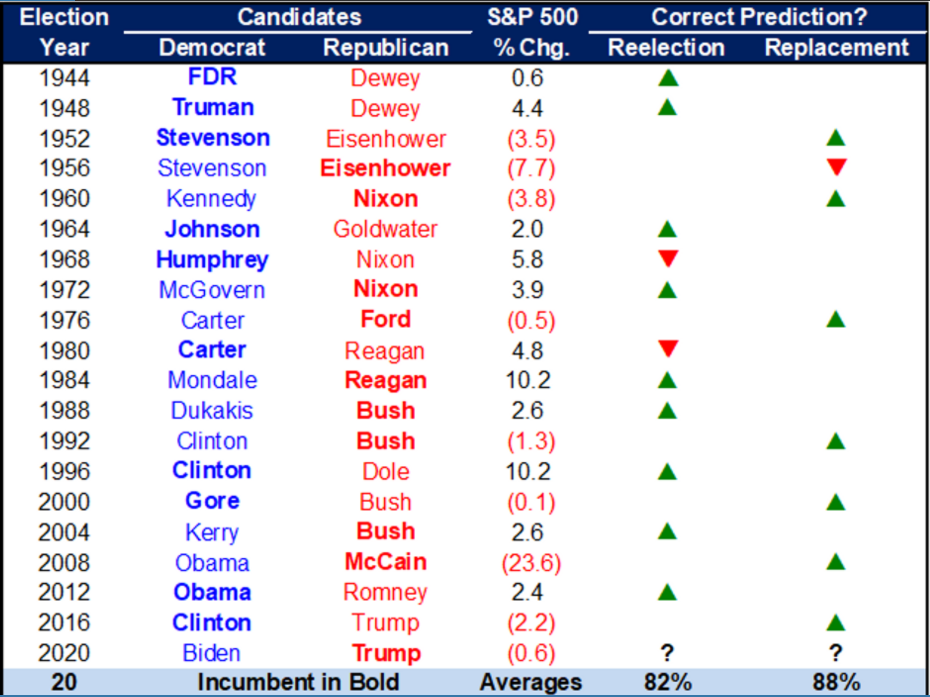
Another historical data from the U.S Bank shows the following: if a new political party gets elected to power, there is likely to be a 5% growth in the stock markets. In case the same political party gets to remain in office, there would be a stock market growth of 6.5%. Even if the markets go down, there would be a very rapid rebound or recovery. Let us see if this would turn out to be true after the highly anticipated election result of 2020. 

The table provided below shows how the S&P 500 Returns have changed when a new President was elected. The S&P 500 is an index that measures the stock performance of the 500 largest companies listed in American stock markets.

Important Facts about the US Election Day

The voting polls in all states open around 6 am. India is between 11-13 hours ahead of the United States. This means that by Tuesday night in India, around 96 million Americans would have already finished voting. 

Each state runs the election according to their own rules. Some states allow electronic voting methods, while most states use paper ballots. However, the actual counting of votes will not be finalized until weeks later. What happens on Election Night is that major US TV networks would “call” the election in favour of one of the candidates. This is based on the information from exit polls. An exit poll is an opinion poll of people leaving a polling station and asking how they voted. The estimated numbers from the exit polls are usually not contested, and the candidate projected to have lost concedes the election.

How Will This Affect Nifty?

Now, let us understand how our Indian stock markets could get affected. Donald Trump and Narendra Modi have had a love-hate relationship with each other. Trump definitely talks tough on India, regarding our sanctions and lack of action on climate change. He also calls PM Modi his friend, and welcomed our Prime Minister at rallies in the US. Another important fact is that he has imposed a lot of sanctions against China, which have acted as a boost to India’s long-term success. But still, his policies on tight restrictions for IT professionals and restrictive trade policies have not been favourable for India. President Trump may continue to face conflicts in securing a new economic stimulus, and this would not be good for the markets.

On the other hand, if Joe Biden becomes the next US President, many emerging economies could benefit (including India). With his equally tough stand on China, India is bound to benefit. His open approach to trade deals and inclusive plans on migration will greatly benefit Indian manufacturing, as well as IT sector. Biden’s clean-energy plan would deal a blow to the traditional petrochemical industry in America, and the subsequent price rises could help Indian manufacturers get better profits. But the change from fossil to green fuel is an inevitable, and necessary, future for our world. This is why huge corporations like Reliance, who have built their empire on oil, are planning to get into green energy. The big financial stimulus proposed by Team Biden will help push up US markets, along with global peers.

Under either President, Nifty will continue its uptrend in the long run.

Brace Yourself

From what we can understand, the US Presidential election, or any other political event, has very little impact on the share prices of large corporations. Regardless of who gets elected to power, the S&P 500 returns are fairly positive and do not go through big changes. This is even considering the possible tax increases proposed by Joe Biden on large corporations and wealthy individuals. Businesses will factor these increased taxes, and if Biden’s plan of reinvesting this extra tax revenue back to the economy then all will continue to be well and good in the long run.

At the same time, in case there are no clear winners in the election, or if there is any sort of complications arising, we could see a major fall in the global markets. If such a case happens, investors need to be careful. 

When we look at our very own Nifty 50, there have been some major signs of volatility due to global factors. What we can state is that the effects of the US election could be just a temporary issue. And, it would only last a week or so. The main concern we must all look into should be the rise in Covid-19 cases globally and the lockdown restrictions associated with it. We must understand that these are testing times, and market participants have to patiently wait and take safe actions so that losses can be reduced. Stay alert and always remember to follow the latest news!