Categories
Editorial

Mamaearth Files for Rs 2,400Cr IPO: Here’s its Story

There has been a healthy/positive shift in the market for baby care, beauty, and personal care products over the past few years. People are now more cautious about the products they use and are on the lookout for essential items that are free of toxins and dangerous chemicals. Major brands have embraced this shift by promoting healthy beauty and eco-ethical products. 

There’s a Gurugram-based brand that has taken India by storm since 2016. It has redefined standards for baby care products and grown into a manufacturer of organic skin care products loved by Indians.

In today’s article, we look into a brand that has solved a common problem among Indian parents— Mamaearth! Its parent company, Honasa Consumer Ltd, recently filed its papers to launch an IPO.

Mamaearth’s Origin 

When Ghazal Alagh and Varun Alagh were looking for products to treat their infant son’s skin condition, they were shocked to find the Indian market flooded with generic products filled with harmful toxins. Most of the ingredients in such products were banned in the west! They eventually had to order baby care products from the US, which turned out to be costly and inconvenient. They realised that a lot of parents were extremely unhappy with the quality of products available in our country.

The duo set out to create a line of baby care products that were safe, reliable, and affordable. In December 2016, Varun and Ghazal invested ₹90 lakh out of their own pockets to establish Mamaearth! They formed a dedicated research & development (R&D) team that initially looked into natural and toxin-free products for babies. After a rocky start, the team had to revamp some of its marketing strategies to get visible results.

From just six products in the initial phase, Mamaearth offers over 140 toxin-free and natural baby care, skincare, and hair care products. The brand caters to over 50 lakh customers across 500 cities. You can buy Mamaearth products from e-commerce platforms like Amazon, Flipkart, Nykaa, and 30,000 points of sales (PoS) stores in India.

Apart from Mamaearth, Honasa Consumer Ltd (HCL) houses digital-first brands like The Derma Co., Aqualogica, and Ayuga.

Funding & Investors

Honasa Consumer made headlines when it became the first unicorn of 2022. It raised $52 million from leading investors like Sequoia and Sofina Ventures at a valuation of $1.2 billion. As per Crunchbase, the company has raised a total of $111.6 million over 8 funding rounds so far. HCL is also backed by Shilpa Shetty and Evolvence India Fund.

Varun Alagh holds the majority stake (38.72%) in HCL, while Sequoia Capital holds a 15.22% stake.

Mamaearth’s Strong Growth

  • Mamaearth became Asia’s first brand to offer “MadeSafe” certified products that are toxin-free and loaded with natural ingredients.
  • The brand has introduced unique products such as India’s India’s first bamboo-based baby wipes and 100% natural plant-based toothpaste for kids between 0-10 years. It also developed a stretch mark removal serum and the widely popular onion range of products for mothers.
  • The company has been able to focus on customer-specific needs and launch products based on thorough research. Their digital marketing initiatives have worked wonders to drive sales.
  • Mamaearth emerged as the fastest-growing beauty and personal care brand in India to reach an annual revenue of ₹1,000 crore within six years of launch.
  • Honasa Consumer became profitable in FY22 with net earnings of ₹14 crore, compared to deep losses of ₹1,332 crore in FY21 and ₹428 crore in FY20. In the first half of FY23, the company registered a net profit of ₹4 crore. Its gross profit margin (GPM) improved from 66.5% in FY20 to 69.96% in FY22. 

Major Challenges

  • Mamaearth faces heavy competition from large corporations like Himalaya, Johnson & Johnson, Procter & Gamble, and Unilever.
  • Digital-first brands like Mamaearth depend heavily on social media marketing campaigns and e-commerce marketplaces. In fact, the brand’s ad expenses jumped 120% YoY to ₹391 crore in FY22. Its sales commission to e-commerce firms more than doubled to ₹29 crore.
  • They depend on a select few products (around 10) for a significant portion of their sales revenue. So a decline in quality or manufacturing issues will prove costly for the brand.
  • As per its DRHP, Honasa Consumer and its subsidiaries have four criminal and civil litigations active against various individuals/entities. 

The Way Ahead

On Dec 30, Honasa Consumer Ltd filed a Draft Red Herring Prospectus (DRHP) with SEBI to launch an IPO. The company aims to raise ₹2,400 crore, which includes a fresh issue of shares worth ₹400 crore and an offer for sale (OFS) of 4.2 crore shares. It is seeking a valuation of $3 billion (~₹24,000 crore) through the IPO! The IPO proceeds will go towards ad expenses to improve brand visibility and awareness. They will also open new salons through BBlunt (a subsidiary) and plans more inorganic acquisitions.

However, market experts are deeply concerned about the high valuations that HCL is seeking through its IPO. The valuation target is more than 1,000x its profits, which has left many shocked and confused. The failure of Paytm’s IPO comes to mind! An overvalued IPO can only sustain in a bull run. When the bears kick in, the fall can be bloody.

Going forward, HCL and Mamaearth hope to bring new solutions to recurring problems of young parents with safe, toxin-free, and international standard products.

What are your thoughts on Mamaearth? Have you used their products? Let us know in the comments section of the marketfeed app.
Categories
Editorial

Sah Polymers Ltd IPO: All You Need to Know

It’s the last IPO of the year! Rajasthan-based Sah Polymers Ltd has launched its initial public offering (IPO) today— Dec 30. In this article, we shall analyse the company and its IPO.

Company Profile – Sah Polymers Ltd 

Established in 1992, Sah Polymers Ltd (SPL) offers customized bulk packaging solutions to business-to-business (B2B) manufacturers that cater to the agro-pesticides, cement, chemical, fertiliser, textile, and steel industries. They manufacture and sell Polypropylene (PP) or High-Density Polyethylene (HDPE) Flexible Intermediate Bulk Container (FIBC) bags, woven sacks, and HDPE/PP woven fabrics of various weights, sizes, and colors. The company makes customised products based on customers’ requirements. 

SPL has a presence in six states and one union territory in India. It also exports products to 14 countries, including Portugal, France, Italy, Ghana, the United Arab Emirates, USA, and Ireland. The company is a Del Credere Associate cum Consignment Stockist (DCA/CS) of Indian Oil Corporation Ltd (IOCL) and also operates a dealer-operated polymer warehouse of IOCL for its polymer division.

Sah Polymers is promoted by SAT Industries Ltd, which is listed on the NSE and BSE. It has a manufacturing facility at Udaipur, Rajasthan, with an installed production capacity of 3,960 million tonnes per annum (MTPA).

About the IPO

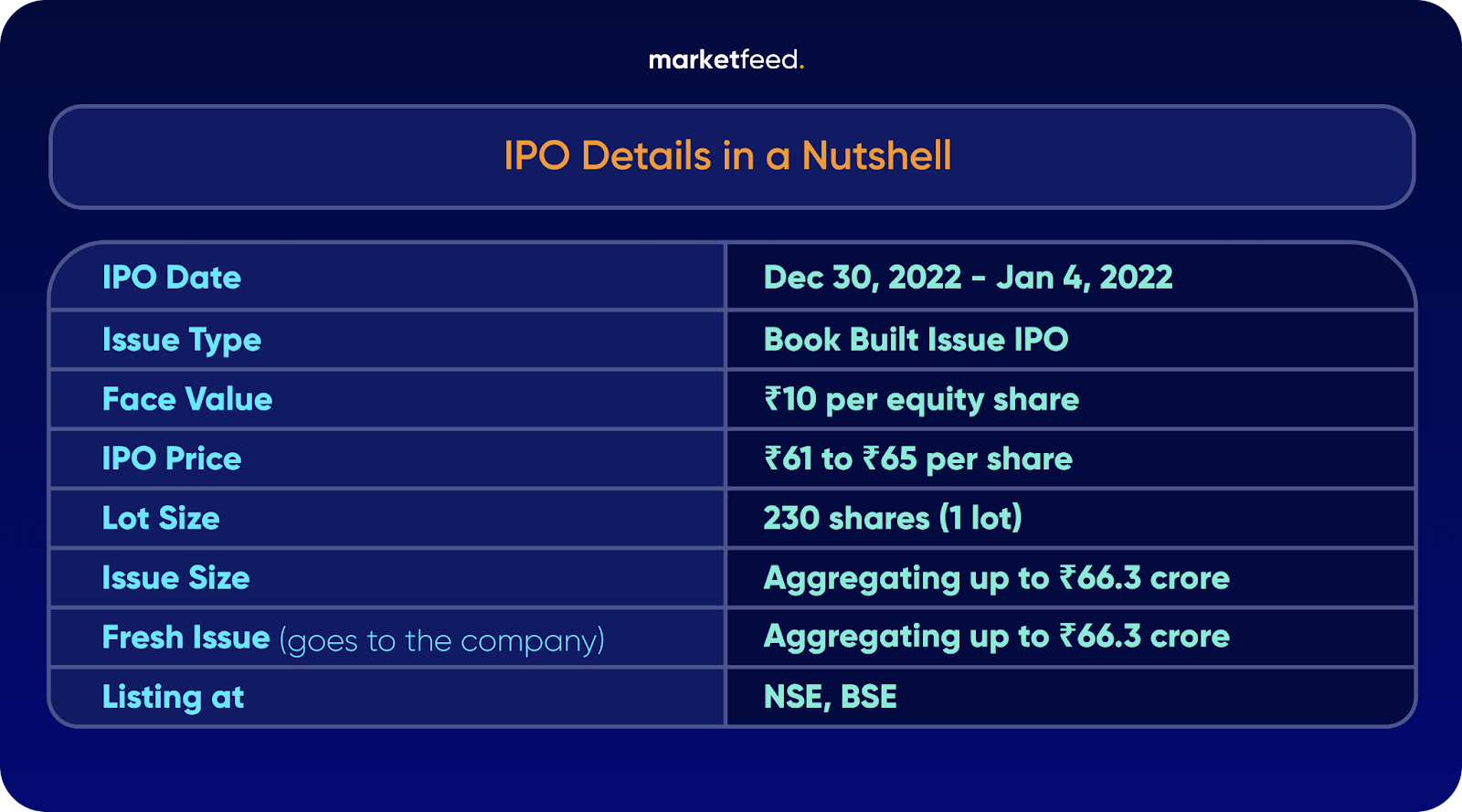
Sah Polymers Ltd’s public issue opens on Dec 30 and closes on Jan 4. The company has fixed ₹61-65 per share as the price band for the IPO.

The fresh issue of shares (of the face value of ₹10 each) aggregates to ₹66.3 crore. Individual investors can bid for a minimum of 230 equity shares (1 lot) and in multiples of 230 shares thereafter. You will need a minimum of ₹14,950 (at the cut-off price) to apply for this IPO. The maximum number of shares that can be applied by a retail investor is 2,990 equity shares (13 lots).

SPL will utilise the net proceeds from the IPO to:

  • Set up a new facility to manufacture a new variant of Flexible Intermediate Bulk Containers (FIBC) – ₹8.18 crore
  • Repayment or prepayment of certain borrowings availed by the company and its subsidiary – ₹19.66 crore
  • Funding working capital requirements – ₹14.95 crore
  • General corporate purposes

The total promoter holding in the company will decline from 100% to 60.46% post the IPO.

Financial Performance

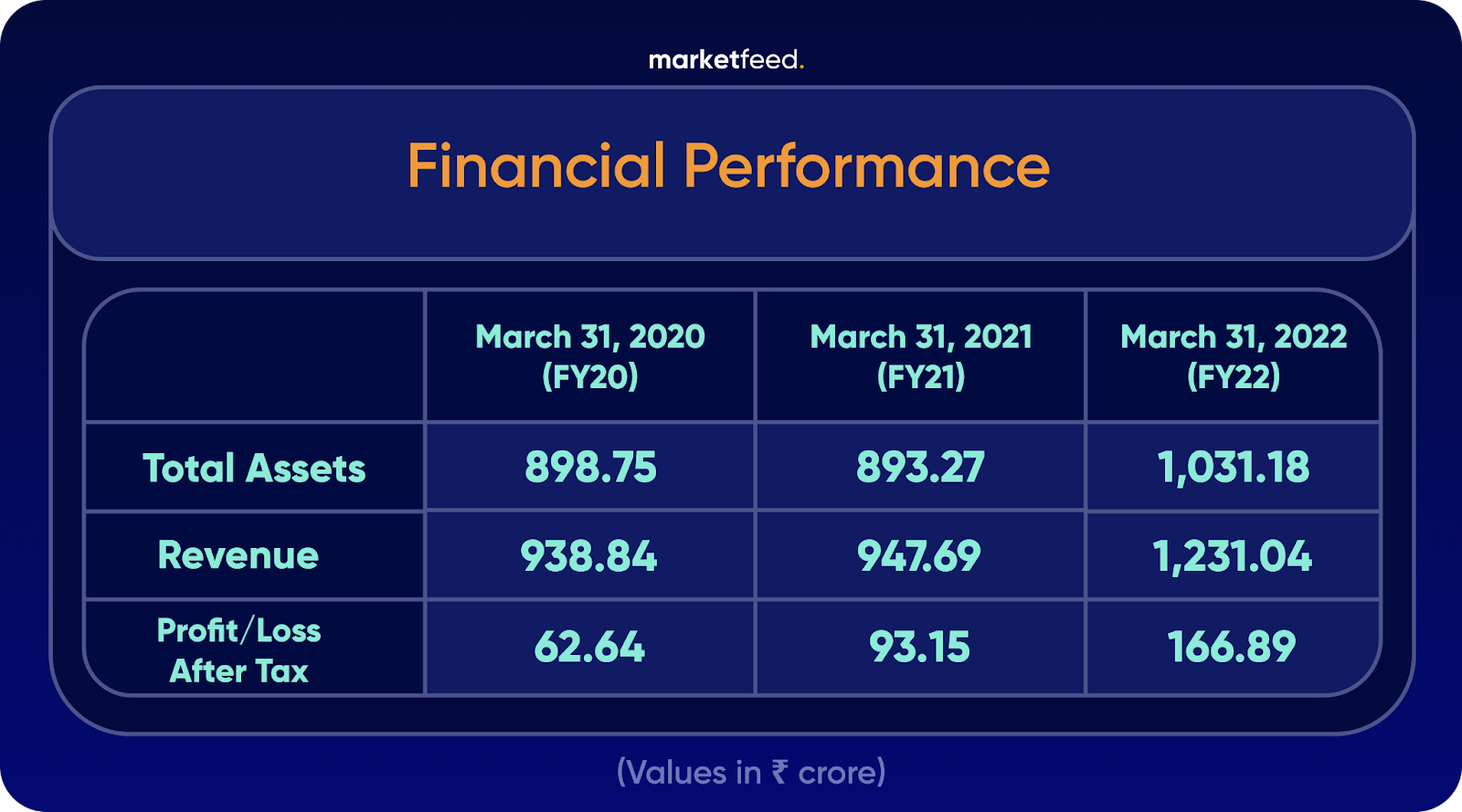
Over the past three financial years (FY20-22), SPL has reported consistent growth in revenue and profits. Its revenue has grown at a CAGR of 27.75% during this period, while profit after tax (PAT) has increased at a CAGR of 284%. EBITDA margins have improved from 3.7% in FY20 to 8.7% in FY22. Meanwhile, total borrowings have increased from ₹10.37 crore in FY20 to ₹30.54 crore in FY22.

The company posted a net profit of ₹1.25 crore and total revenue of ₹27.59 crore for the quarter ended June 2022 (Q1 FY23).

Risk Factors

  • The company has experienced negative cash flow from operations (or cash outflows) in the recent past and may face the same in the future.
  • SPL derives a significant portion of its revenue (~65.83% as of FY22) from its top 10 customers. The loss of any of these customers or a decline in demand from them will adversely affect its business.
  • They face heavy competition from numerous large and small players in the segment.
  • The company requires significant amounts of working capital for trade receivables and inventories. Its inability to meet working capital requirements may harm SPL’s overall business.

IPO Details in a Nutshell

SPL filed the Red Herring Prospectus (RHP) for its IPO on December 20. You can read it here. Out of the total offer, 75% is reserved for Qualified Institutional Buyers (QIBs), 15% for Non-Institutional Investors (NIIs), and 10% for retail investors.

Ahead of the IPO, Sah Polymers raised ~₹30 crore from anchor investors. The marquee investors include Leading Light Fund VCC, Saint Capital Fund, and Maven India Fund.

Conclusion

The packaging industry is one of the largest and most vital sectors of India’s economy. It has reported steady growth over the past several years and shows high potential for expansion, especially in the export market. To meet the growing demand from its existing customers and gain new clients, SPL will expand its manufacturing capacities by establishing a new facility. They also claim to be well-positioned to grow inorganically within their industry and improve customer networks. 

SPL will be directly competing with listed peers such as Rishi Techtex, Jumbo Bag, Emmbi Industries, and Commercial Syn Bags Ltd once it gets listed.

The company has not received much interest in the grey market. SPL’s IPO shares are trading at a premium of ₹6 in the unofficial market today. Before applying to this IPO, we will wait to see if the portion reserved for institutional investors gets oversubscribed. Do consider the risks associated with the company and come to your own conclusion.

What are your opinions on Sah Polymers Ltd’s IPO? Will you be applying for it? Let us know in the comments section of the marketfeed app.
marketfeed wishes all our readers a VERY HAPPY NEW YEAR! Let’s have a profitable year ahead! 🚀

Categories
Editorial

KFin Technologies Ltd IPO: All You Need to Know

Bengaluru-based KFin Technologies Ltd has launched its initial public offering (IPO) today— Dec 19. The firm was incorporated just five years ago! In this article, we’ll look into the company and its IPO.

Company Profile – KFin Technologies Ltd

Established in 2017, KFin Technologies Ltd (KTL) is a technology-driven financial services platform. It offers comprehensive solutions and services to the Indian capital markets ecosystem, including asset managers and corporate issuers across asset classes (equities, fixed-income securities like bonds, etc). They also provide transaction origination and processing services for mutual funds and private retirement schemes in Malaysia, Hong Kong, and the Philippines.

Here’s how KFin Tech classifies its products and services:

  1. Investors Solutions: Account Setup, Transaction Origination, Redemption of Funds, and Brokerage Calculations.
  2. Issuer Solutions: Transaction Processing for IPOs, Corporate Action Processing, Folio Creation & Maintenance, Customer Communication Management (e-voting systems), and Compliance or Regulatory Reporting.
  3. Value Added Services: Distributor Platforms, Investor Platforms, IT Infrastructure, Web Hosting, and Data Analytics.

Factsheet:

  • KTL is one of the largest investor solutions providers to Indian mutual funds. As of Sept 30, 2022 (Q2 FY23), they provide services to 24 out of 41 asset management companies (AMCs) registered in India.
  • The company services 301 funds of 192 asset managers in India, which represents a 30% market share based on the number of alternative investment funds (AIFs) being serviced.
  • KFin Tech is one of the three operating central record-keeping agencies (CRAs) for the National Pension System (NPS) in India.
  • They provide services to 18 AMC clients in Malaysia and 3 clients across the Philippines and Hong Kong.

About the IPO

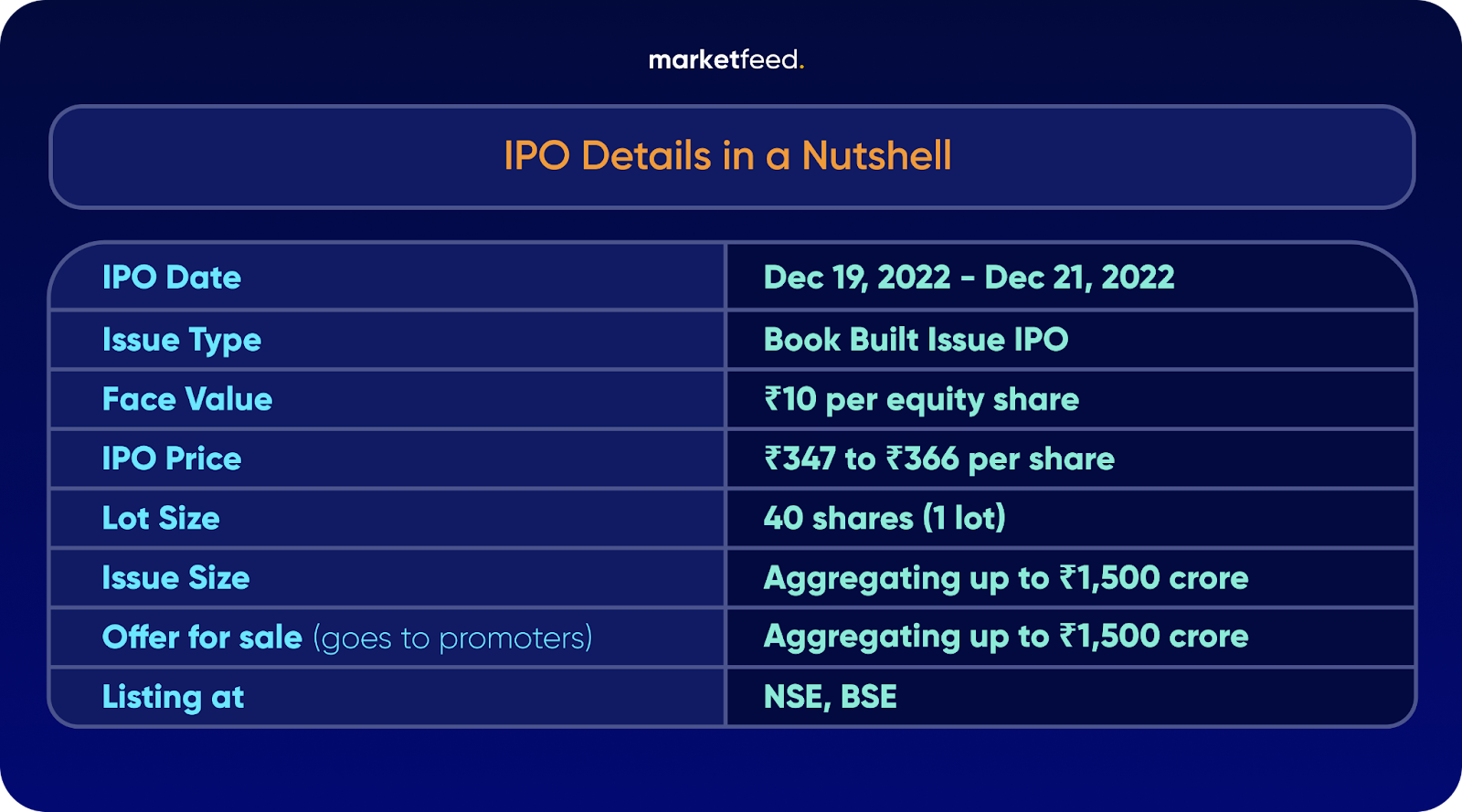
KFin Technologies Ltd’s public issue opens on December 19 and closes on December 21. The company has fixed ₹347-366 per share as the price band for the IPO.

The IPO is purely an offer for sale (OFS) of 4.09 crore equity shares by promoters and early investors, aggregating to ₹1,500 crore. Individual investors can bid for a minimum of 40 equity shares (1 lot) and in multiples of 40 shares thereafter. You will need a minimum of ₹14,640 (at the cut-off price) to apply for this IPO. The maximum number of shares a retail investor can apply is 520 equity shares (13 lots).

The primary objective of the IPO is to provide an exit strategy (or liquidity) for promoters. The company aims to achieve the benefits of listing the equity shares on NSE and BSE. The total promoter holding in KFin Technologies will decline from 74.37% to 49.91% post the IPO.

Financial Performance

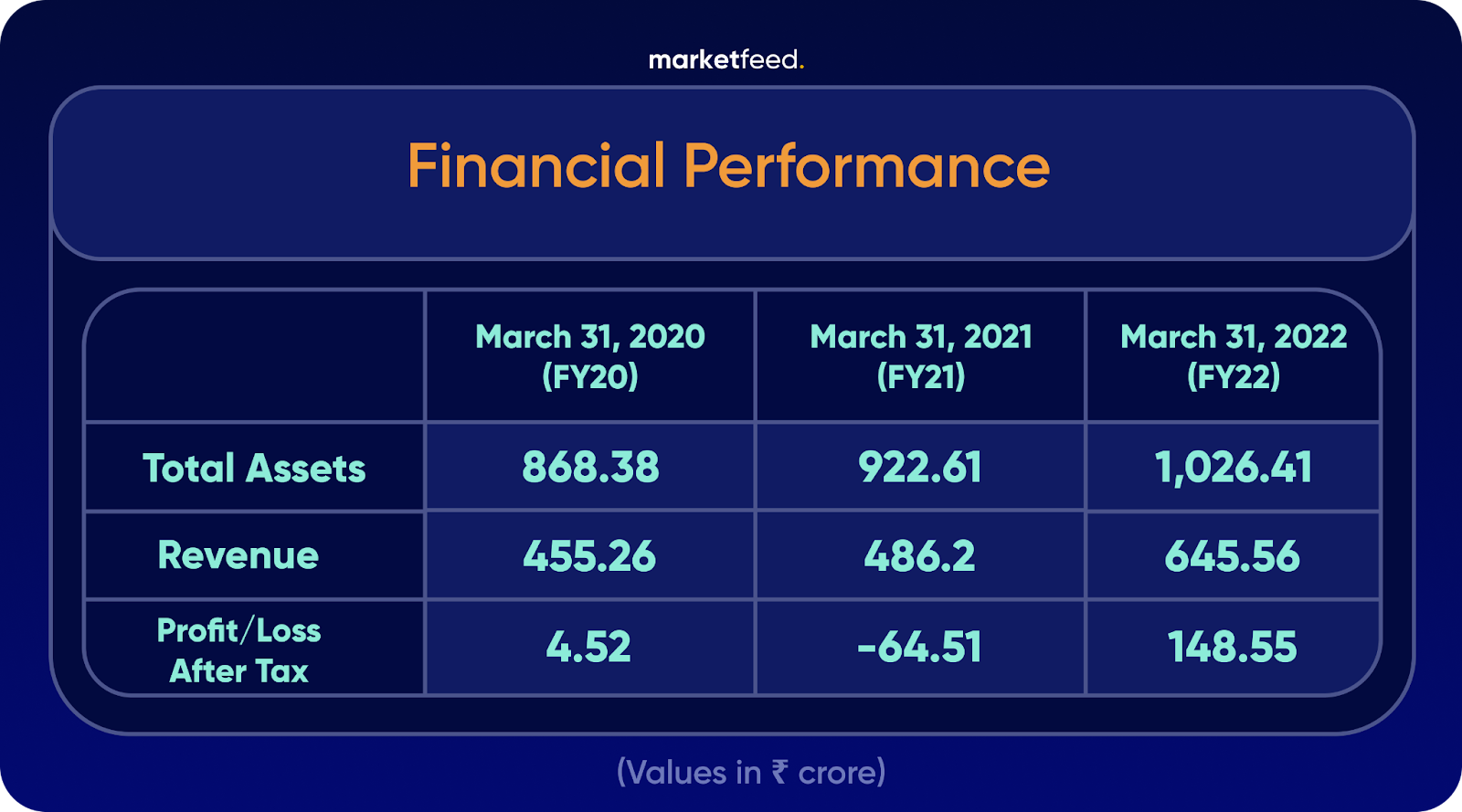
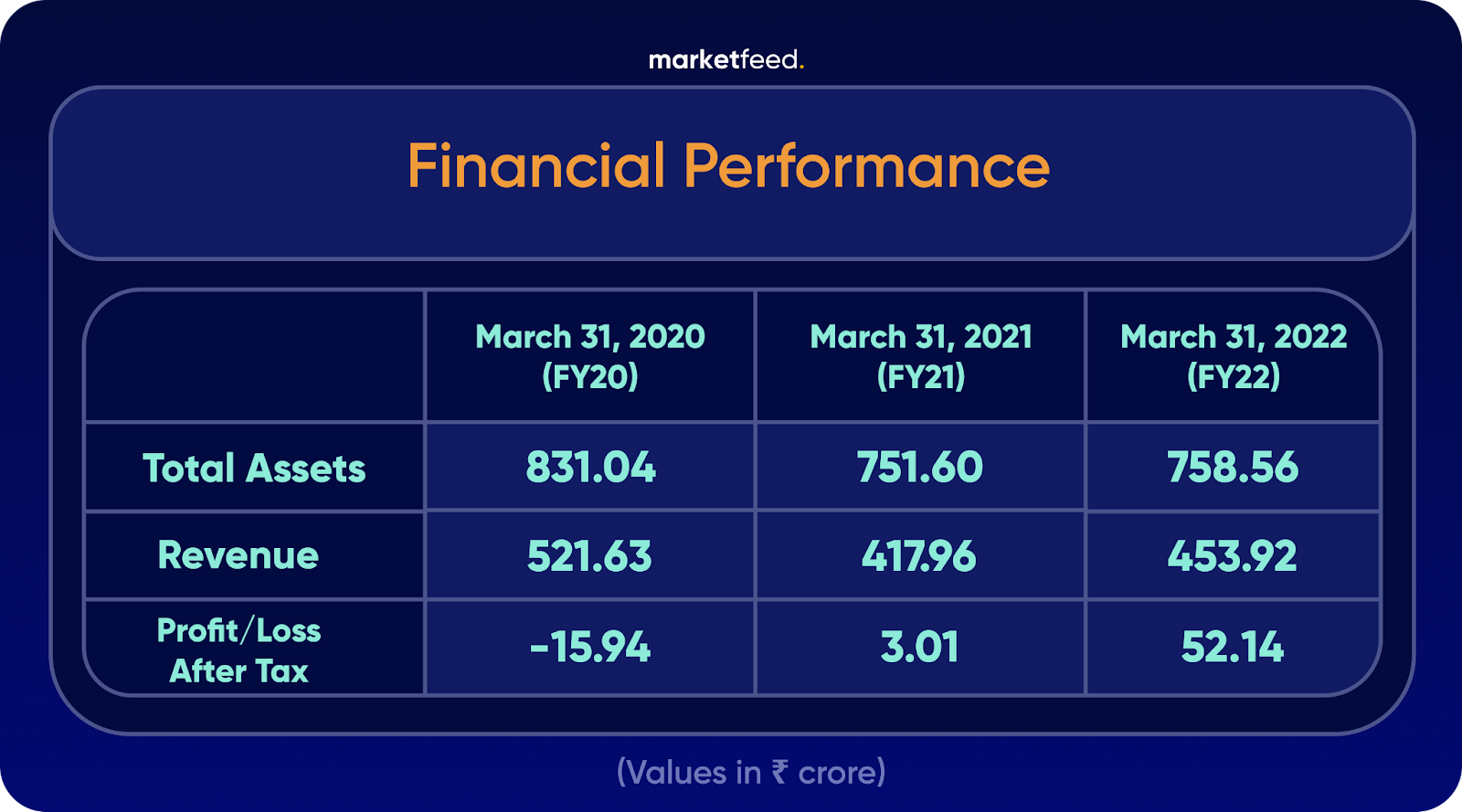
  • KFin Tech suffered a financial setback in FY21 but made a strong comeback in FY22 with a net profit of ₹148.55 crore. 
  • Between FY20 and FY22, the company’s revenue grew by 19.16%. 
  • KTL derives ~65% of its revenues from the domestic mutual fund business, where it earns fees based on average assets under management (AAUM). 
  • The company became debt-free in FY22.

Risk Factors

  • KTL’s promoters are subject to ongoing investigations by the Enforcement Directorate, the Finance Ministry, and the Central govt. The outcome of such investigations may adversely impact the company and its stock price. [SEBI imposed a fine of ₹1.5 crore on KTL for redeeming its units in a mutual fund based on privileged info.]
  • Significant disruptions in information technology (IT) systems or data security breaches could adversely affect the company’s business and reputation.
  • In FY22, KFin Tech derived nearly 55% of its revenue from its top five customers. The loss of any of these clients could severely affect its overall business.
  • A decline in the growth, value, and composition of assets under management (AUM) of the mutual funds managed by KTL’s clients may adversely impact their average revenue from mutual funds. It would also affect the company’s future revenue and profit.

IPO Details in a Nutshell

KFin Technologies Ltd filed the Red Herring Prospectus (RHP) for its IPO on Dec 5. You can read it here. Out of the total offer, 75% is reserved for Qualified Institutional Buyers (QIBs), 15% for Non-Institutional Investors (NIIs), and 10% for retail investors.

Ahead of the IPO, KTL raised ₹675 crore from 44 anchor investors. The marquee investors include Goldman Sachs Funds, Aberdeen Standard SICAV, Pinebridge Global Funds, Citigroup Global Markets Mauritius, Nippon Life India, Axis Mutual Fund, etc.

Conclusion

The average AUM of the Indian mutual fund industry has grown at a healthy pace over the past 10 years. It grew at a CAGR of 18% from ₹6.65 lakh crore as of March 31, 2012, to ₹39.05 lakh crore as of Sept 30, 2022. With better disposable incomes, a large proportion of Indians are increasing their financial savings and investing in stocks and mutual funds. The growth in savings will lead to more investments, which will benefit companies like KFin Tech.

Going ahead, KTL aims to grow the overall share of revenues from the sale of different services to new and existing clients. The company will continue to invest in technological innovations in line with its business growth and to meet client requirements. They plan to develop a co-innovation laboratory with key industry players in exchange-traded funds (ETFs) and index funds to drive research and development in this area. 

KTL will compete directly with Computer Age Management Services (CAMS) once it gets listed.

The company has not received much interest from investors in the grey market. KTL’s IPO shares are trading at a premium of ₹5-8 in the unofficial market. Before applying to this IPO, we will wait to see if the portion reserved for institutional investors gets oversubscribed. Do consider the risks associated with the company and come to your own conclusion.

What are your views on KFin Technologies Ltd’s IPO? Will you apply for it? Let us know in the comments section of the marketfeed app!

Categories
Editorial

Sula Vineyards Ltd IPO: All You Need to Know

Here’s a special IPO for all you wine lovers out there! Popular winemaker Sula Vineyards Ltd has launched its initial public offering (IPO) today— Dec 12. In this article, we’ll dive into the company and its IPO.

Company Profile – Sula Vineyards Ltd

Sula Vineyards Ltd (SVL) is India’s largest wine producer and seller as of March 31, 2022 (FY22). It’s been a market leader (with >50% share) in our country’s wine industry in terms of volume and sales value since the financial year 2008-09. The company’s business can be classified into two:

  1. Production, distribution, and import of wines & spirits.
  2. Sale of services from its wine tourism venues, including vineyard resorts & tasting rooms.

Factsheet:

  • SVL distributes white, red, and sparkling wines under its flagship brand ‘SULA’. It also offers wines under the RASA, Dindori, The Source, Satori, Madera, and Dia brands. 
  • The company produces 56 different wine labels at four owned and two leased production facilities in Maharashtra and Karnataka. [These states offer subsidies for grape production and tax rebates on wine.]
  • The company leads the market in all four price segments: ‘Elite’ (₹950+), ‘Premium’ (₹700-950), ‘Economy’ (₹400-700), and ‘Popular’ (₹400). In FY22, it had a market share of nearly 61% in the ‘Elite’ and ‘Premium’ segments (in terms of sales value).
  • It has built the largest distribution network among Indian wine companies, with nearly 13,000 retail touchpoints
  • They have entered into long-term supply arrangements (of up to 12 years) with grape growers for 2,290 acres as of September 30, 2022.
  • SVL offers its services across 8,000 hotels, restaurants, and caterers.

Sula’s wines and vineyards have a huge fan following on social media!

About the IPO

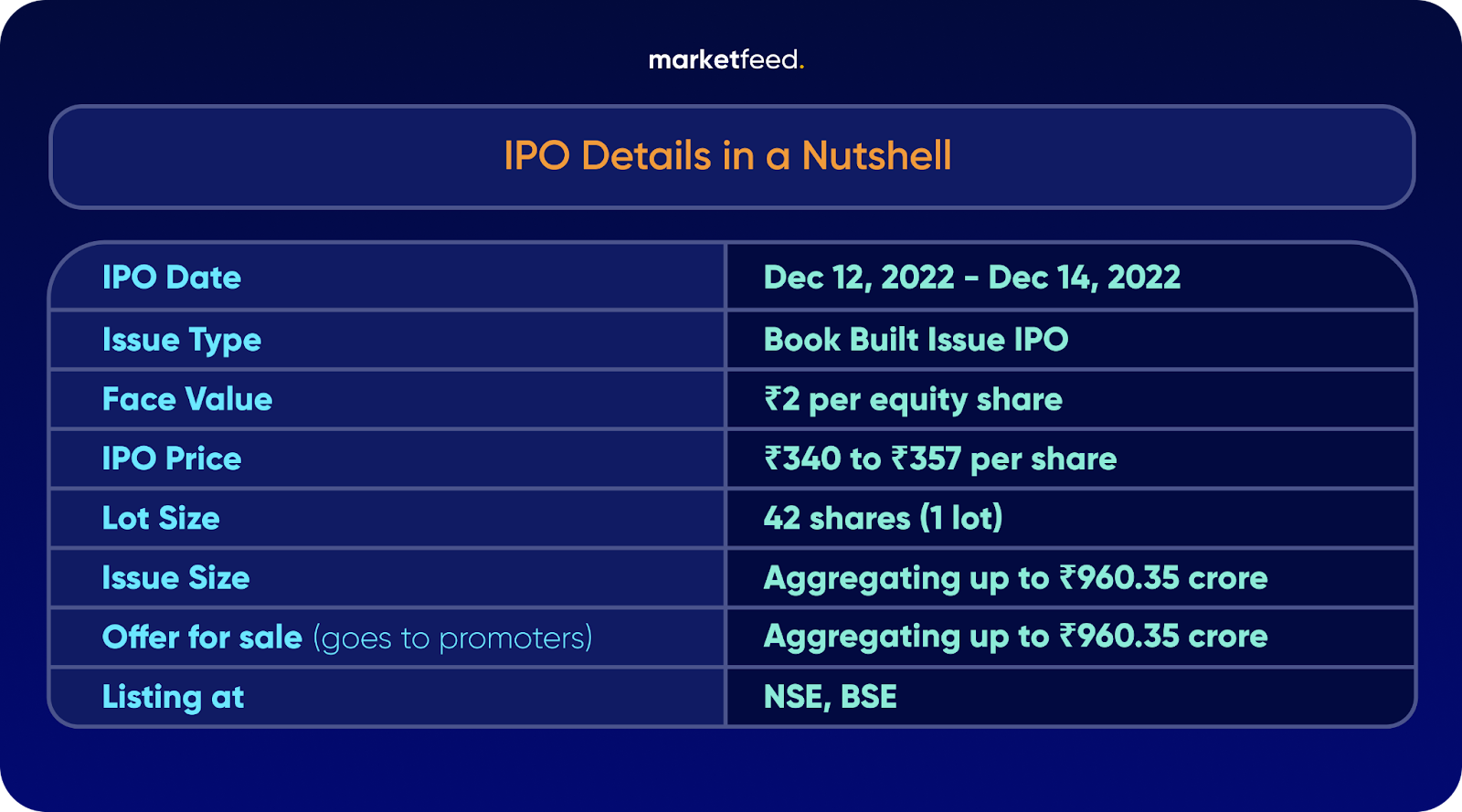
Sula Vineyards Ltd’s public issue opens on December 12 and closes on Dec 14. The company has fixed ₹340-357 per share as the price band for the IPO.

The IPO is purely an offer for sale (OFS) of 2.69 crore equity shares by promoters and early investors, aggregating to ₹960.35 crore. Individual investors can bid for a minimum of 42 equity shares (1 lot) and in multiples of 42 shares thereafter. You will need a minimum of ₹14,994 (at the cut-off price) to apply for this IPO. The maximum number of shares a retail investor can apply is 546 equity shares (13 lots).

The primary objective of the IPO is to provide an exit strategy (or liquidity) for SVL’s promoters. The company aims to achieve the benefits of listing the equity shares on NSE and BSE. The total promoter holding in Sula Vineyards will decline from 28.44% to 27.33% post the IPO.

[The low promoter holding is quite concerning— could indicate that promoters may not have much faith in the company’s future prospects.]

Financial Performance

After posting a loss of ₹15.94 crore in FY20, Sula Vineyards turned profitable with healthy EBITDA margins over the next two years. Its revenue fell nearly 20% YoY in FY21 and increased by 8.6% YoY in FY22. Off-trade sales contributed 72.25% of SVL’s secondary sales during FY22, compared to 61.33% in FY20. SVL has been able to reduce its total borrowings from ₹368.24 crore in FY20 to ₹228.93 crore in FY22.

In the half-year period ended September 2022 (H1 FY23), profit jumped 577% YoY to ₹30.5 crore, and revenue rose 40.8% YoY to ₹224 crore.

Risk Factors

  • All companies operating in India’s alcohol industry are subject to strict licensing and excise regimes. SVL’s business and financial performance could be severely affected due to changes in regulations, tax laws, and legal uncertainties.
  • Any adverse climatic conditions may impact the quality of wine grapes (SVL’s key raw material). 
  • Consumers’ tastes and preferences may change, and they may not prefer wines in the future. SVL’s sales could decline if it fails to adapt to changing market trends and consumer spending patterns. The company may also not be able to maintain its competitive position in the alcohol/wine industry. 
  • The company benefits from high duties imposed on imports of international wines in India. These duties could be reduced or eliminated in the future, adversely impacting SVL’s wine business.
  • SVL depends heavily on its brand portfolio. The success of its business strategy depends on its ability to enhance brands.

IPO Details in a Nutshell

Sula Vineyards filed the Red Herring Prospectus (RHP) for its IPO on Dec 5. You can read it here. Out of the total offer, 50% is reserved for Qualified Institutional Buyers (QIBs), 15% for Non-Institutional Investors (NIIs), and 35% for retail investors.

Ahead of the IPO, SVL raised ₹288.10 crore from anchor investors. The marquee investors include Abu Dhabi Investment Authority (ADIA), Goldman Sachs, Morgan Stanley, BNP Paribas Arbitrage, and Citigroup Global Markets Mauritius.

Conclusion

Let’s look at some facts: Of the ₹2.4 lakh crore alcoholic beverage market, wine only has a mere 1% share! The per capita consumption of wine in India is just 40 ml per year. Even then, Sula has been able to make its wines appealing to Indians, mostly millennials. They’re the pioneer of wine tourism in India. It launched the first wine tasting room in India, the first vineyard resort, the first wine music festival, and the first winery tours at its facility in Nashik! 

Going forward, SVL will continue to focus on its own brands over third-party brands that they import and distribute. It will leverage its distribution capability to launch new products under the ‘Elite’ and ‘Premium’ categories to increase revenue and market share in the Indian wine market.

SVL will be facing competition from listed peers such as United Spirits, Radico Khaitan, and United Breweries. Fratelli and Grover Zampa are two of Sula Vineyards’ unlisted domestic rivals.

The company has received some interest from investors in the grey market. SVL’s IPO shares are trading at a premium of ₹34 in the unofficial market. Before applying to this IPO, we will wait to see if the portion reserved for institutional investors gets oversubscribed. Do consider the risks associated with the company and come to your own conclusion.

What are your views on Sula Vineyards Ltd’s IPO? Will you apply for it? Let us know in the comments section of the marketfeed app!

Categories
Editorial

Uniparts India Ltd IPO: All You Need to Know

New Delhi-based Uniparts India Ltd has launched its initial public offering (IPO) today— Nov 30. Interestingly, the company has been trying to launch its IPO since 2014! In this article, we’ll dive into the company and its IPO. 

Company Profile – Uniparts India Ltd

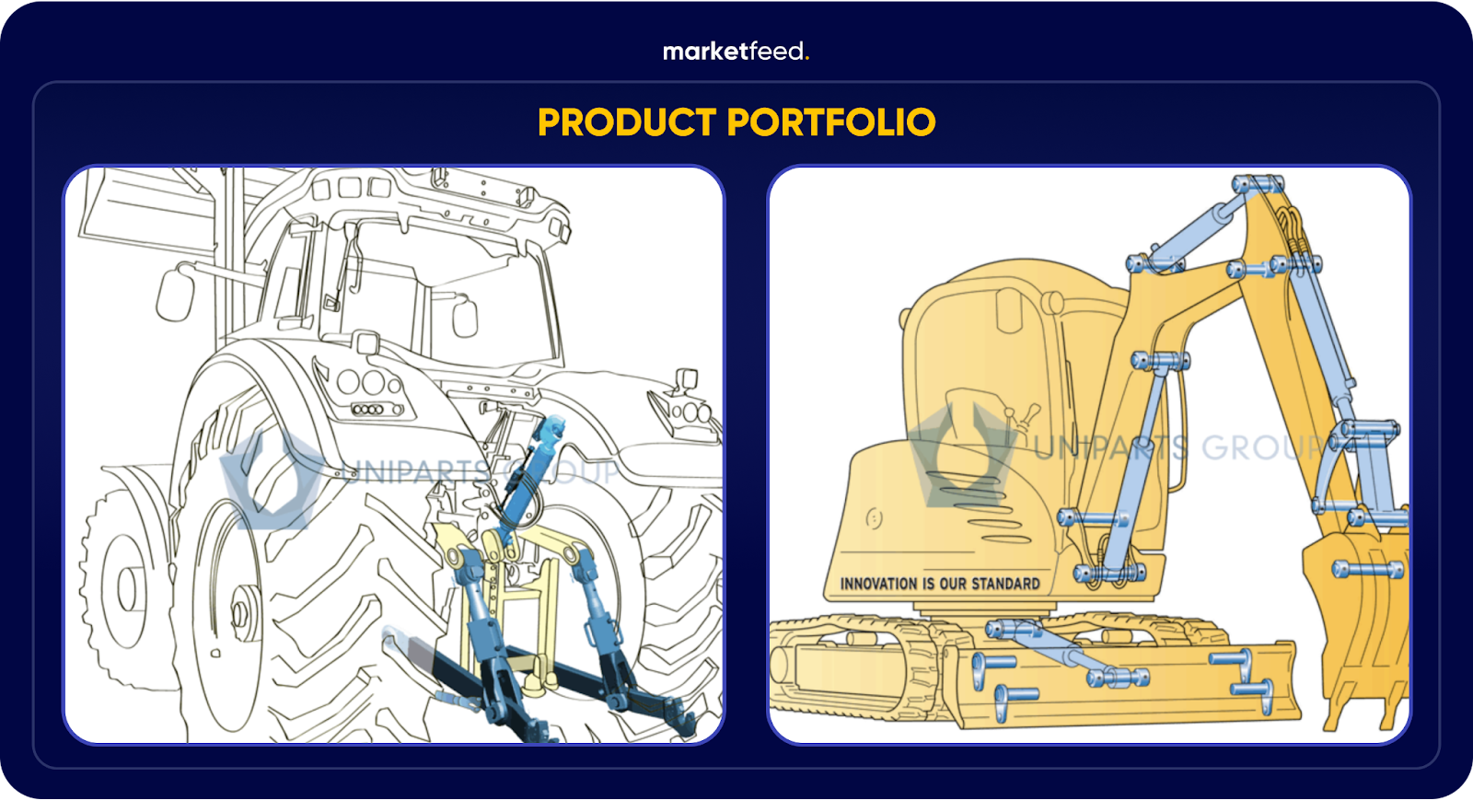
Uniparts India Ltd (UIL) is a global manufacturer of engineered systems and solutions. It is one of the leading suppliers of off-highway systems and components in the agriculture, construction, forestry & mining (CFM), and aftermarket sectors. They design, develop, and manufacture customised products based on each customer’s requirements. The company’s product portfolio includes: 

  1. 3-point linkage systems (3PL) – It is a standardised system used to attach ploughs (a farm tool used for loosening or turning the soil before sowing seed) and other such devices to tractors. 
  2. Precision machined parts (PMP) – These include pins, bushes, and similar components used in articulated joints of various equipment.
  3. Adjacent product verticals of power take-off (PTO), fabrications, and hydraulic cylinders.
Source: Uniparts Group

Most of UIL’s products are structural and load-bearing parts of the equipment and are subject to strict specifications and process controls. The company had an estimated 16.68% market share of the global 3PL market in FY22 in terms of value. It also held a 5.92% market share in the global PMP market in the CFM sector in terms of value in FY22. It has long-term relationships with key global customers, including prominent original equipment manufacturers (OEMs). 

The company has a customer base of over 125 customers across 25 countries. It provides replacements of 3PL parts to organized aftermarket retailers and distributors in North America, Europe, South Africa, and Australia. UIL has five manufacturing facilities: one at Visakhapatnam (Andhra Pradesh), two at Ludhiana (Punjab), and two at Noida (Uttar Pradesh). 

About the IPO

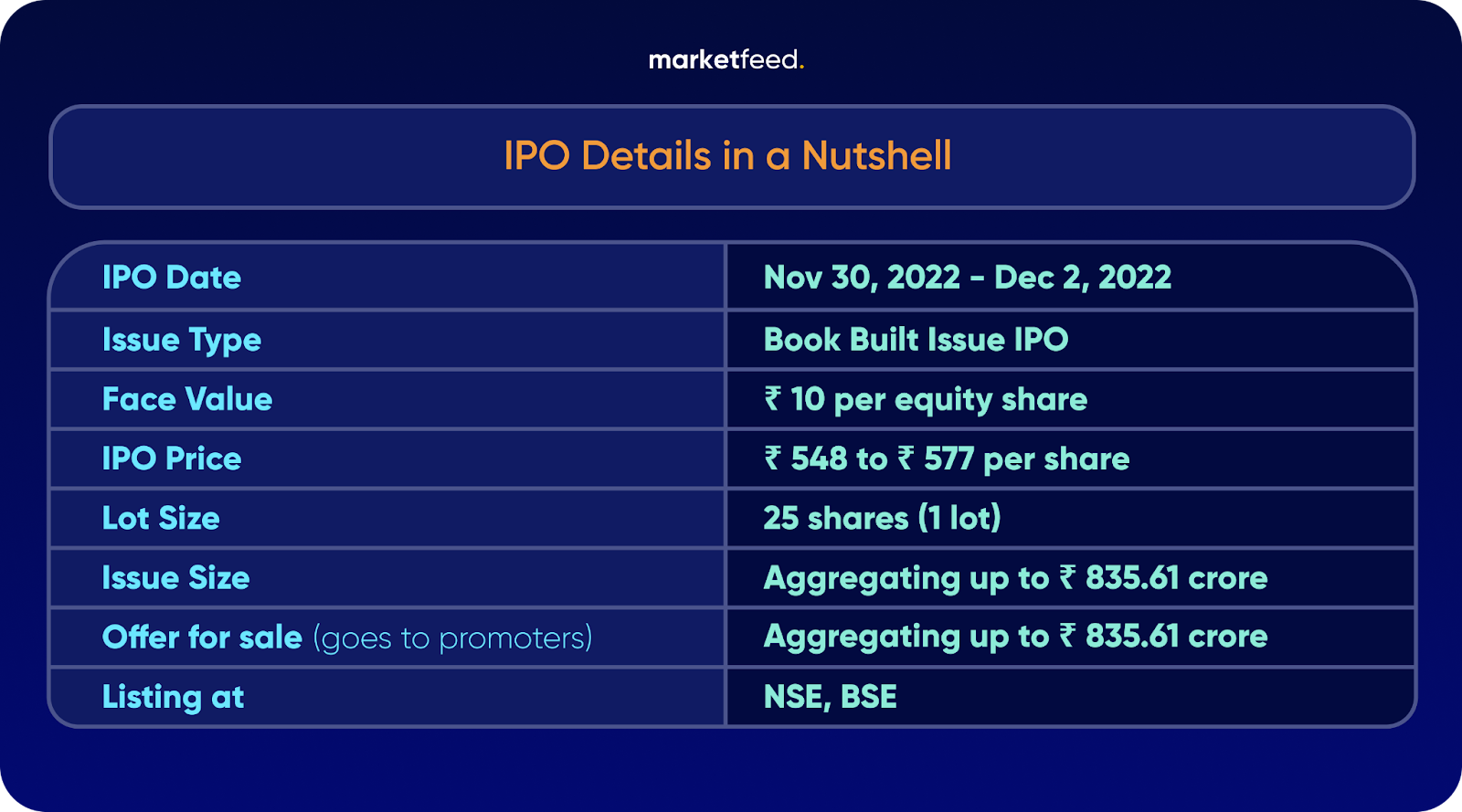
Uniparts India Ltd’s public issue opens on Nov 30 and closes on December 2. The company has fixed ₹548-577 per share as the price band for the IPO.

The IPO is purely an offer for sale (OFS) of 1.44 crore equity shares by promoters and early investors, aggregating to ₹835.61 crore. Individual investors can bid for a minimum of 25 equity shares (1 lot) and in multiples of 25 shares thereafter. You will need a minimum of Rs 14,425 (at the cut-off price) to apply for this IPO. The maximum number of shares that a retail investor can apply is 325 equity shares (13 lots).

The primary objective of the IPO is to provide an exit strategy (or liquidity) for UIL’s promoters. The company aims to achieve the benefits of listing the equity shares on NSE and BSE. The total promoter holding in Uniparts India will decline from 75.54% to 65.79% post the IPO.

Financial Performance

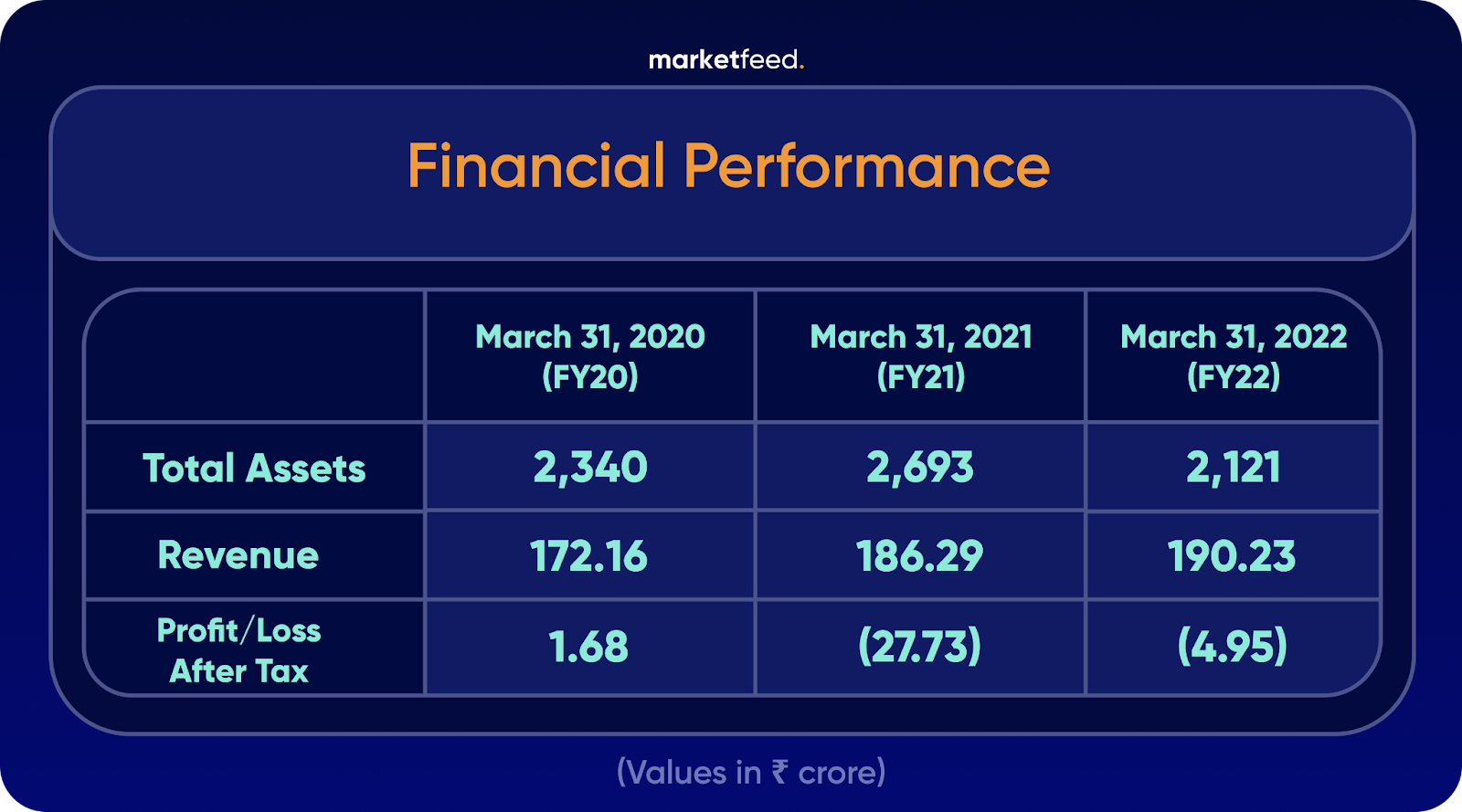
UIL has registered strong growth in both revenue and profits over the past three financial years (FY20-22). The revenue has grown at a CAGR of 16.31% during this period. The company derives nearly 85% of its revenue from exports to international markets, while only 15% is from India. It has also been able to reduce its finance costs substantially.

Consolidated profit stood at ₹50.5 crore for the quarter ended June (Q1 FY23) and revenue at ₹346.84 crore. Meanwhile, total debt declined to ₹114.65 crore in Q1, compared to ₹127.3 crore in March 2022.

Risk Factors

  • Uniparts India derives a significant portion of its revenue (~76.67% as of FY22) from a limited number of customers. Their financial results could be adversely affected if they lose these clients or face a decline in demand from them.
  • The company’s overall business may get severely impacted if they are unable to accurately forecast demand for its products.
  • UIL’s financial condition is heavily influenced by the availability and cost of raw materials, including steel, power, and fuel.
  • They are exposed to foreign exchange rate fluctuations as a result of foreign currency-denominated borrowings and currency mismatches between revenue & expenses.

IPO Details in a Nutshell

UIL filed the Red Herring Prospectus (RHP) for its IPO on Nov 22. You can read it here. Out of the total offer, 50% is reserved for Qualified Institutional Buyers (QIBs), 15% for Non-Institutional Investors (NIIs), and 35% for retail investors.

The company allotted 43.44 lakh shares to anchor investors to raise ₹250.7 crore. The marquee investors include Nomura, Morgan Stanley, BNP Paribas, Nippon Life, and HDFC Mutual Fund.

Conclusion

The global market for three-point linkage (3PL) systems stood at $360-370 million in 2021 and is estimated to grow by 6-8% between 2021 and 2026. Meanwhile, the market for PMP was ₹648 million in 2021, with 80% demand from China, Japan, Europe, and North America. UIL aims to leverage its manufacturing & warehousing infrastructure and global footprint to expand into new geographies and product verticals. The company hopes to acquire new customers and improve revenue from existing customers.

UIL faces heavy competition from listed peers such as Balkrishna Industries, Bharat Forge, and Ramkrishna Forging.

The company has received significant interest from investors in the grey market. UIL’s IPO shares are trading at a premium of ₹71 in the unofficial market. Before applying to this IPO, we will wait to see if the portion reserved for institutional investors gets oversubscribed. Do consider the risks associated with the company and come to your own conclusion.

What are your views on Uniparts India Ltd’s IPO? Will you apply for it? Let us know in the comments section of the marketfeed app!

Categories
Editorial

Inox Green Energy Services IPO: All You Need to Know

The IPO mania continues in Dalal Street! Inox Green Energy Services Ltd has launched its initial public offering (IPO) today— Nov 11. It is the fourth IPO to hit the markets this week. In this article, we dive into the company and its IPO.

Company Profile – Inox Green Energy Services Ltd

Inox Green Energy Services Ltd (IGESL) is one of the leading wind power operation and maintenance (O&M) service providers in India. It is a subsidiary of Inox Wind Ltd (a listed company) and part of the Inox GFL Group. Established in 2012, IGESL provides long-term O&M services for wind farm projects.

IGESL exclusively operates and maintains all wind turbine generators (WTG) sold by Inox Wind by entering into contracts with WTG purchasers. These contracts range between 5 to 20 years. The company also offers O&M services for common infrastructure facilities such as electrical substations and transmission lines that support wind farms. They have a dedicated onsite team to provide 24×7 operation services for their customers’ wind farms to help ensure that their WTGs are generating the highest yield possible.

As of June 30, 2022, IGEL’s O&M services portfolio consists of an aggregate of 2,792 megawatts MW) of wind farm capacity and 1,396 WTGs. The company has a presence in Gujarat, Rajasthan, Maharashtra, Madhya Pradesh, Karnataka, Andhra Pradesh, Kerela, and Tamil Nadu.

About the IPO

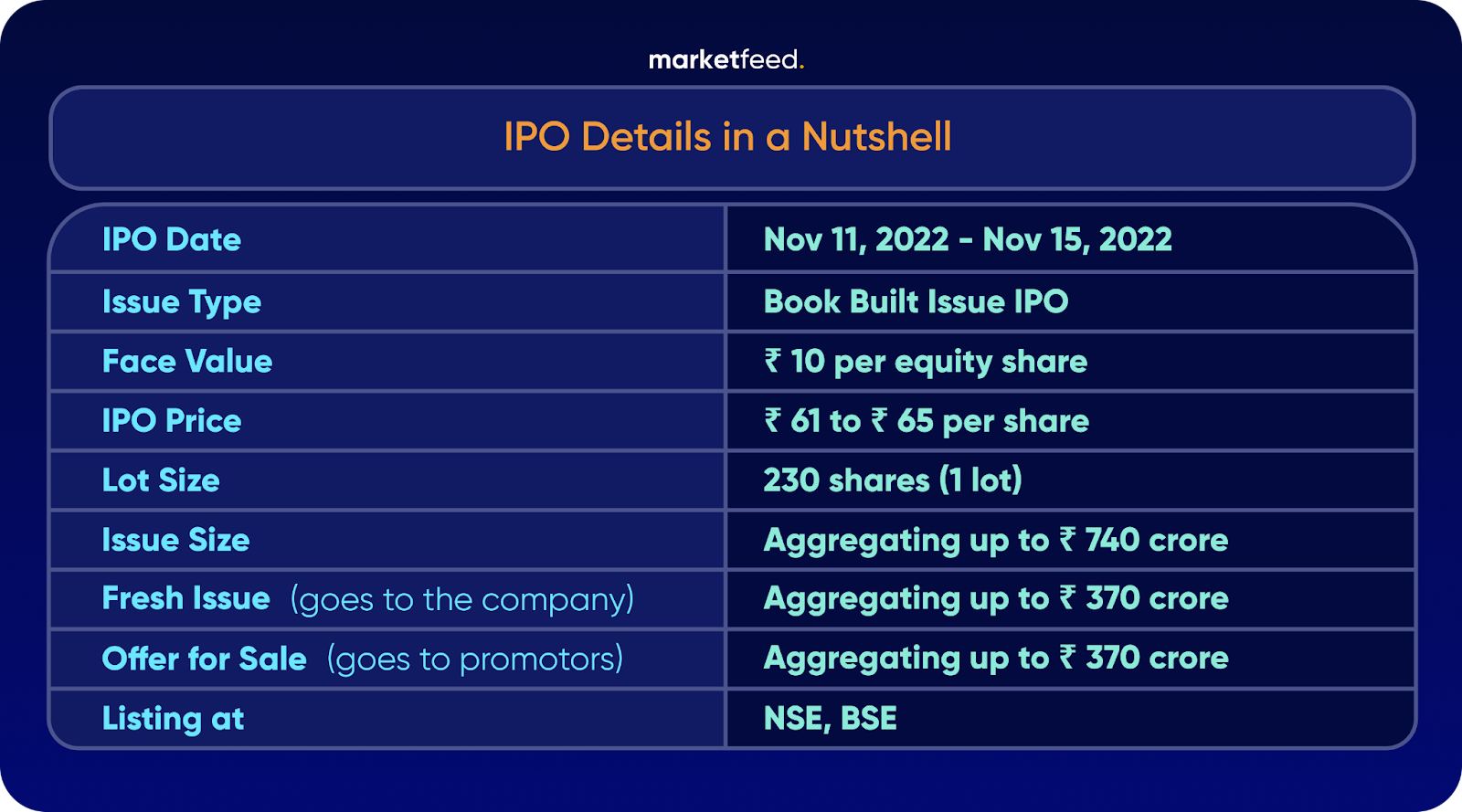
Inox Green Energy’s public issue opens on Nov 11 and closes on Nov 15. The company has fixed ₹61-65 per share as the price band for the IPO.

The fresh issue of shares (of the face value of ₹10 each) aggregates to ₹370 crore. The IPO also includes an offer for sale (OFS) of 5.6 crore shares by promoters and early investors, aggregating to ₹370 crore. Individual investors can bid for a minimum of 230 equity shares (1 lot) and in multiples of 230 shares thereafter. You will need a minimum of ₹14,950 (at the cut-off price) to apply for this IPO. The maximum number of shares that can be applied by a retail investor is 2,990 equity shares (13 lots).

IGESL will utilise the net proceeds from the IPO for the following purposes:

  • Repayment or prepayment of certain borrowings, including redemption of non-convertible debentures (NCDs) in full – ₹260 crore.
  • General corporate purposes.

The total promoter holding in the company will decline from 93.84% to 56.04% post the IPO.

Financial Performance

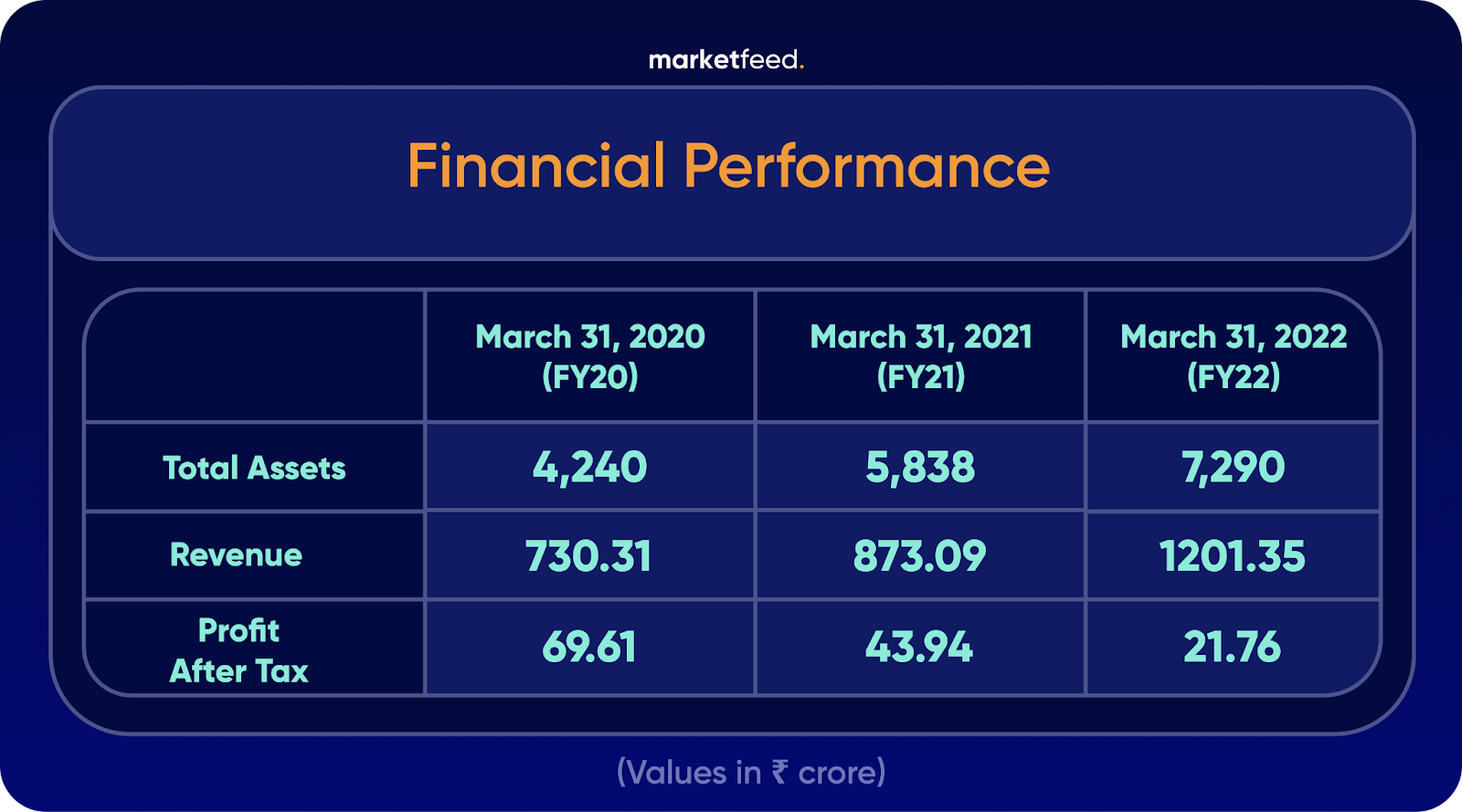
Inox Green Energy Services has posted losses for the last two financial years (FY21-22). The management clarified that the company’s losses were due to increased interest burden and amortisation provisions. [Amortisation is an accounting strategy used to regularly reduce the book value of a loan or an intangible asset over a certain period.] Through the proceeds of this IPO, IGESL will be able to reduce its loan and interest burden, which should result in an improvement in its margins. Moreover, the company has stable/reliable cash flows supported by long-term O&M contracts.

During the quarter ended June 30, 2022 (Q1 FY23), it reported a loss of ₹11.58 crore and a total revenue of ₹63.16 crore.

Risk Factors

  • The company is entirely dependent on the promoter (Inox Wind) for its business. If IWL chooses any other service provider for operation & maintenance services of wind turbine generators, IGESL’s financial performance would be adversely affected.
  • Orders from IWL may get delayed, modified, or cancelled, which may impact future O&M revenue.
  • The sale of services and renewal rate of service contracts may decline in the future. 
  • IGESL is liable for penalties under its maintenance contracts in case of any deficiencies in the services provided.
  • There are outstanding legal proceedings involving IGESL, its subsidiaries, directors, and group firms.

IPO Details in a Nutshell

IGESL filed the Red Herring Prospectus (RHP) for its IPO on Nov 3. You can read it here. Out of the total offer, 75% is reserved for Qualified Institutional Buyers (QIBs), 15% for Non-Institutional Investors (NIIs), and 10% for retail investors.

Ahead of the IPO, the company raised ₹333 crore from anchor investors. The marquee investors include Morgan Stanley Asia (Singapore), Nomura Singapore, HDFC Mutual Fund (MF), ICICI Prudential MF, etc.

Conclusion

According to the International Energy Agency (IEA), India is the third-largest energy-consuming country in the world and has become one of the largest sources of energy demand growth globally. The Central govt. aims to add 30 gigawatts (GW) of offshore wind projects by 2030. The key strengths of IGESL include its strong/diverse portfolio, established track record, and reliable cash flows

Going forward, the company plans to expand its portfolio and scale operations while transitioning to an asset-light model with minimal capital expenditure. The favourable national renewable energy policy also provides strong visibility for growth.

The company has not received much interest in the grey market. IGESL’s IPO shares are trading at a premium of ₹9-10 in the unofficial market. Before applying to this IPO, we will wait to see if the portion reserved for institutional investors gets oversubscribed. As always, do consider the risks associated with the company and come to your own conclusion.

What are your opinions on this IPO? Will you be applying for it? Let us know in the comments section of the marketfeed app.
Categories
Editorial

Fusion Micro Finance IPO: All You Need to Know

The second IPO of the week is here! Financial services firm Fusion Micro Finance has launched its three-day initial public offering (IPO) today— Nov 2. In this article, we shall analyse the company and its IPO.

Company Profile – Fusion Micro Finance Ltd

Established in 1994, Fusion Micro Finance Ltd (FMFL) provides financial services to women entrepreneurs belonging to the economically and socially deprived section of society. Its network and services have improved accessibility to formal credit (loans) at affordable rates, thereby positively impacting the lives of people in rural India. Apart from financial support, FMFL also offers financial literacy sessions.

FMFL’s business runs on a joint liability group-lending model— a small number of women form a group (comprising 5-7 members) and guarantee each other’s loans. The company has primarily focused on strategic geographic diversification with a rural focus, embracing technology for growth, nurturing & developing personnel, and careful risk management.

Factsheet:

  • The microfinance institution (MFI) currently has nearly 29 lakh active borrowers
  • Its total assets under management (AUM) grew from ₹4,673.84 crore in FY21 to 6,785.97 crore in FY22. As of June 30, 2022 (Q1 FY23), the company’s AUM stands at ₹7,389.02 crore
  • Bihar, Uttar Pradesh, Odisha, Madhya Pradesh, and Tamil Nadu cumulatively account for 66.12% of its AUM.
  • As of Q1 FY23, FMFL has 966 branches and 9,262 permanent employees spread across 377 districts in 19 states and Union Territories in India
  • The company had the fourth fastest gross loan portfolio CAGR of 53.89% between FY17 and FY21 among the 10 largest NBFC-MFIs in India.

About the IPO

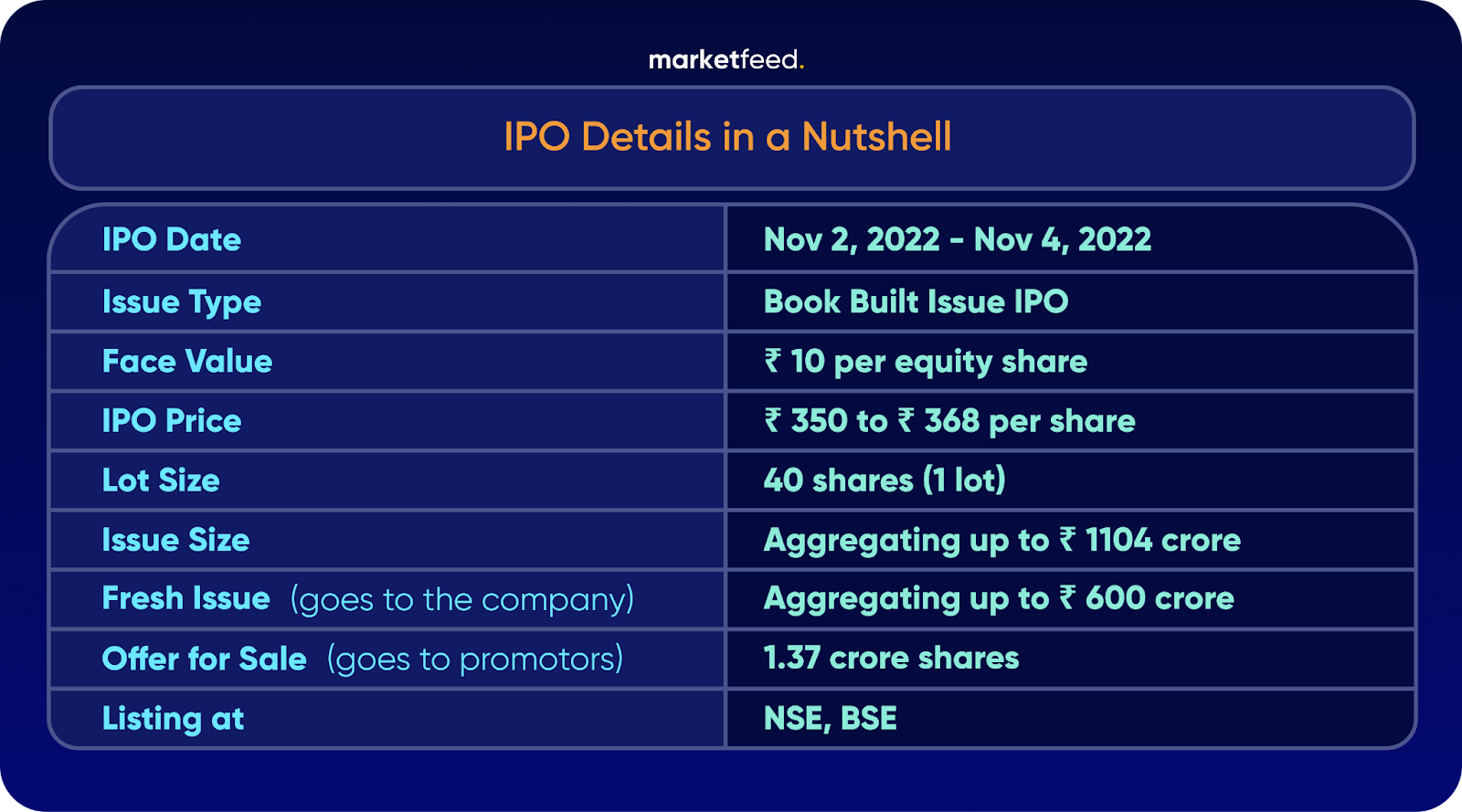
Fusion Micro Finance Ltd’s public issue opens on Nov 2 and closes on Nov 4. The company has fixed ₹350-368 per share as the price band for the IPO.

The fresh issue of shares (of the face value of ₹10 each) aggregates to ₹600 crore. The IPO also includes an offer for sale (OFS) of 1.37 crore shares by promoters and early investors. Individual investors can bid for a minimum of 40 equity shares (1 lot) and in multiples of 40 shares thereafter. You will need a minimum of ₹14,720 (at the cut-off price) to apply for this IPO. The maximum number of shares that can be applied by a retail investor is 520 equity shares (13 lots).

FMFL will utilise the net proceeds from the IPO to augment its capital base.

The total promoter holding in the company will decline from 85.57% to 58.1% post the IPO.

Financial Performance

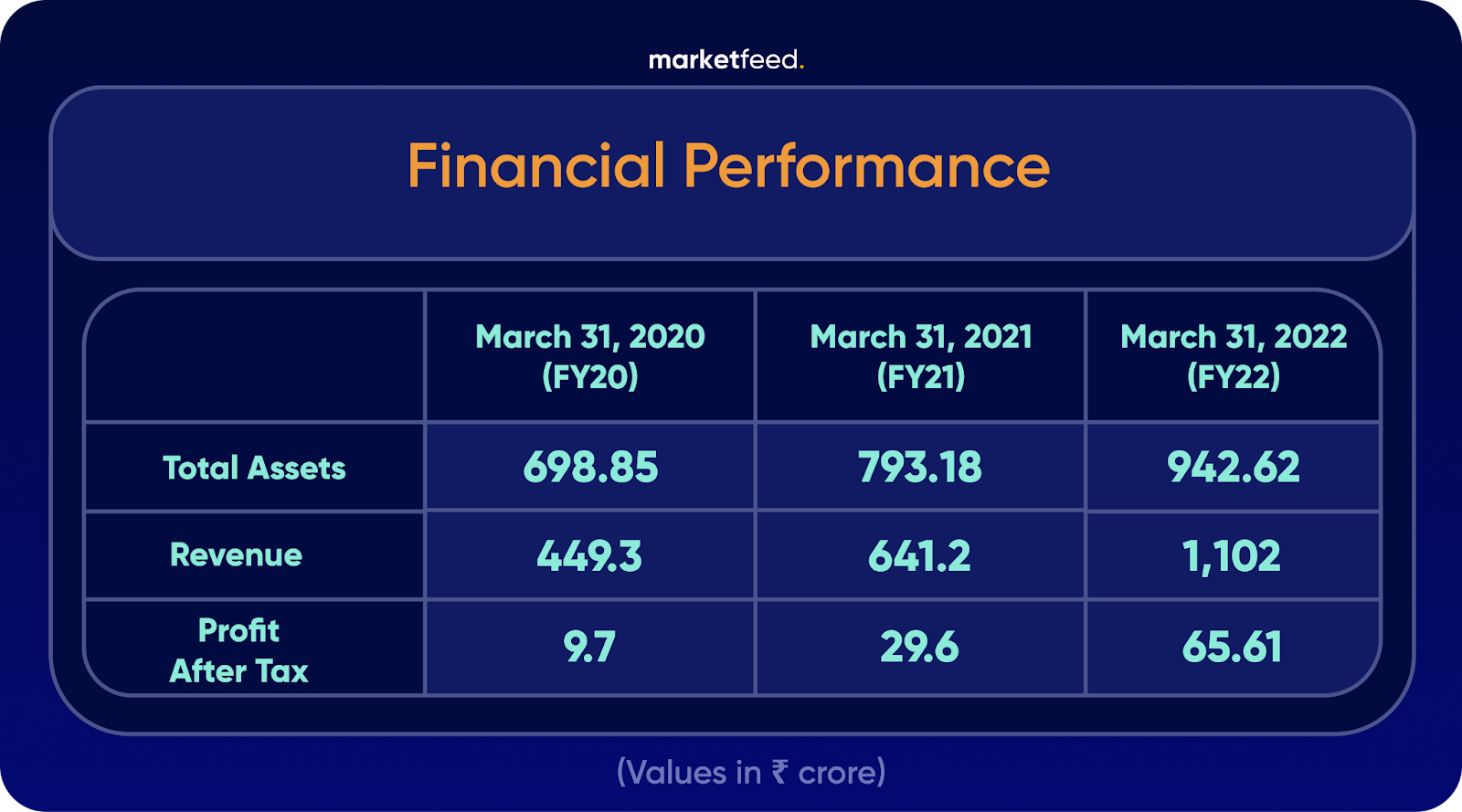
Fusion Micro Finance’s profitability was impacted by higher provisioning due to the Covid-19 pandemic and branch expansions. However, the company’s net profit improved from ₹4.41 crore in Q1 FY22 to ₹75 crore in Q1 FY23, owing to higher interest income and lower provisions. Its revenue has increased at a compound annual growth rate (CAGR) of 26.44% over the past three financial years (FY20-22).

Between March 31, 2016, and June 30, 2022, the number of active borrowers grew at a healthy CAGR of 33.63%, while the number of branches grew at a CAGR of 31.92%. 

FMFL’s capital adequacy ratio (CAR) has remained strong. It stood at 21.13% as of Q1 FY23. [Higher CAR indicates that the bank is in a better position to deal with unexpected losses due to availability of adequate capital.]

Risk Factors

  • An increase in the level of non-performing assets (bad loans) or provisions may adversely affect FMFL’s business and financial performance.
  • A significant portion of the company’s customers is located in rural markets. It may face difficulties in conducting operations and implementing technical measures in such markets due to limited infrastructure.
  • The inability to manage its growth effectively or sustain historical growth rates may severely impact FMFL’s overall business.
  • Any failure or security breach in the firm’s information technology systems could harm its reputation and credibility.
  • Any downgrade of Fusion Micro Finance’s credit ratings may constrain its access to capital and debt markets. It may affect its cost of borrowing and financial condition.

IPO Details in a Nutshell

The book-running lead managers to the public issue are ICICI Securities, CLSA India, IIFL Securities, and JM Financial. FMFL filed the Red Herring Prospectus (RHP) for its IPO on Oct 25. You can read it here. Out of the total offer, 50% is reserved for Qualified Institutional Buyers (QIBs), 15% for Non-Institutional Investors (NIIs), and 35% for retail investors.

Conclusion

Going forward, Fusion Micro Finance plans to grow its business by attracting new customers in existing markets that remain relatively untapped. It has a social vision to provide economic opportunities to underprivileged women and transform their quality of life. FMFL will also enter new regions with lower penetration of microfinance firms. They will continue to automate and digitise various aspects of the business. In terms of financial performance, FMFL is on a recovery path as indicated by Q1 FY23 results.

CRISIL Research expects the MFI industry to grow at 18-20% CAGR between FY22 and FY25. During the same period, NBFC-MFIs are predicted to grow at a much faster rate of 20-22%.

FMFL faces stiff competition from listed peers such as Credit Access Grameen Ltd, Spandana Sphoorty Financial Ltd, Bandhan Bank, Ujjivan Small Finance Bank (SFB), Equitas SFB, and Suryoday SFB.

The company has received some interest in the grey market. FMFL’s IPO shares are trading at a premium of ₹35 in the unofficial market. Before applying to this IPO, we will wait to see if the portion reserved for institutional investors gets oversubscribed. As always, do consider the risks associated with the company and come to your own conclusion.

What are your opinions on this IPO? Will you be applying for it? Let us know in the comments section of the marketfeed app.
Categories
Editorial

DCX Systems Ltd IPO: All You Need to Know

Bengaluru-based DCX Systems Ltd will launch its initial public offering (IPO) next Monday— October 31. It is one of the fastest-growing companies in the Indian defence sector. In this article, we analyse the company and its IPO.

Company Profile – DCX Systems Ltd

Incorporated in 2011, DCX Systems Ltd (DCXSL) is one of the leading Indian manufacturers of electronic sub-systems and cable harnesses for the defence and aerospace sectors. It provides product assembly and system integration services as per customers’ requirements.

Key Products:

  • System Integration: They undertake system integration in areas of radar systems, sensors, electronic warfare, missiles, and communication systems.
  • Cable and Wire Harness Assemblies: It manufactures a wide range of cables and wire harnesses assemblies for the aerospace and defence industries.
  • Fine Wire Cable Assemblies: These are lightweight and high-temperature resistant cables used in aerospace, marine, space, and medical applications.
  • Wired Enclosure: The company produces high-reliability backplane assemblies and wired enclosures for the defence and aerospace markets.

DCXSL is one of the largest Indian Offset Partners (IOPs) for ELTA Systems Ltd and Israel Aerospace Industries Ltd, System Missiles & Space Division of Israel, for executing defence & aerospace manufacturing projects. The company operates through its manufacturing facility at Hi-Tech Defence & Aerospace Park SEZ in Bengaluru, Karnataka.

As of June 30, 2022 (Q1 FY23), DCX Systems had 26 customers across Israel, the United States, Korea and India. Their clients include Fortune 500 companies, multinational corporations and start-ups. The company’s prominent clients include Bharat Electronics Ltd, Astra Rafael Comsys, Alpha-Elsec Defence & Aerospace Systems, and Kalyani Rafael Advanced Systems.

About the IPO

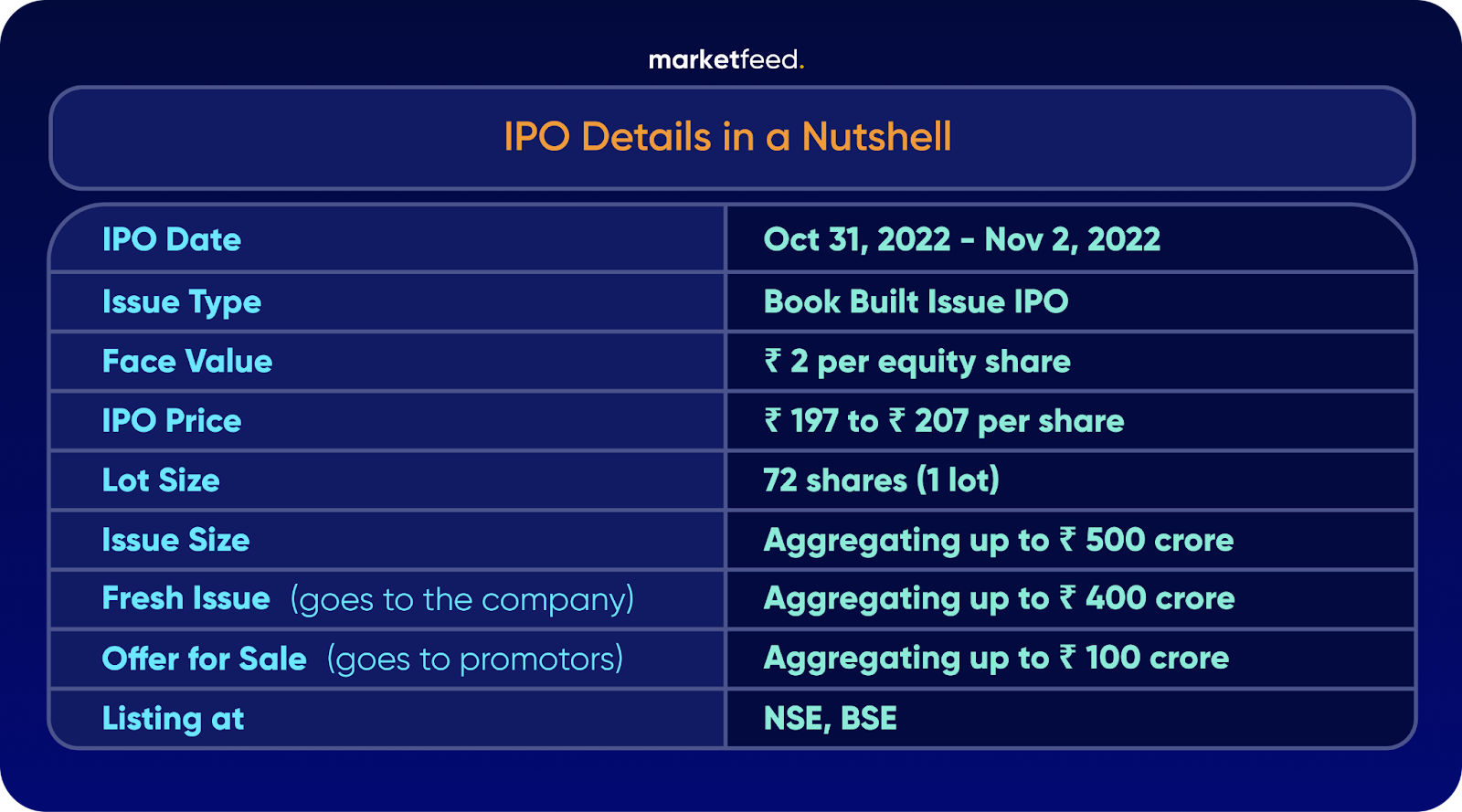
DCX Systems Ltd’s public issue opens on October 31 and closes on November 2. The company has fixed ₹197-207 per share as the price band for the IPO.

The fresh issue of shares (of the face value of ₹2 each) aggregates to ₹400 crore. The IPO also includes an offer for sale (OFS) by promoters and early investors, aggregating to ₹100 crore. Individual investors can bid for a minimum of 72 equity shares (1 lot) and in multiples of 72 shares thereafter. You will need a minimum of ₹14,904 (at the cut-off price) to apply for this IPO. The maximum number of shares that can be applied by a retail investor is 936 equity shares (13 lots).

DCX Systems will utilise the net proceeds from the IPO for the following purposes:

  • Repayment/prepayment of certain borrowings – ₹110 crore
  • Funding working capital requirements – ₹160 crore
  • Investment in its subsidiary, Raneal Advanced Systems Pvt. Ltd, to fund its capital expenditure expenses – ₹44.88 crore
  • General corporate purposes

The total promoter holding in DCXSL will decline from 98.2% to 73.58% post the IPO.

Financial Performance

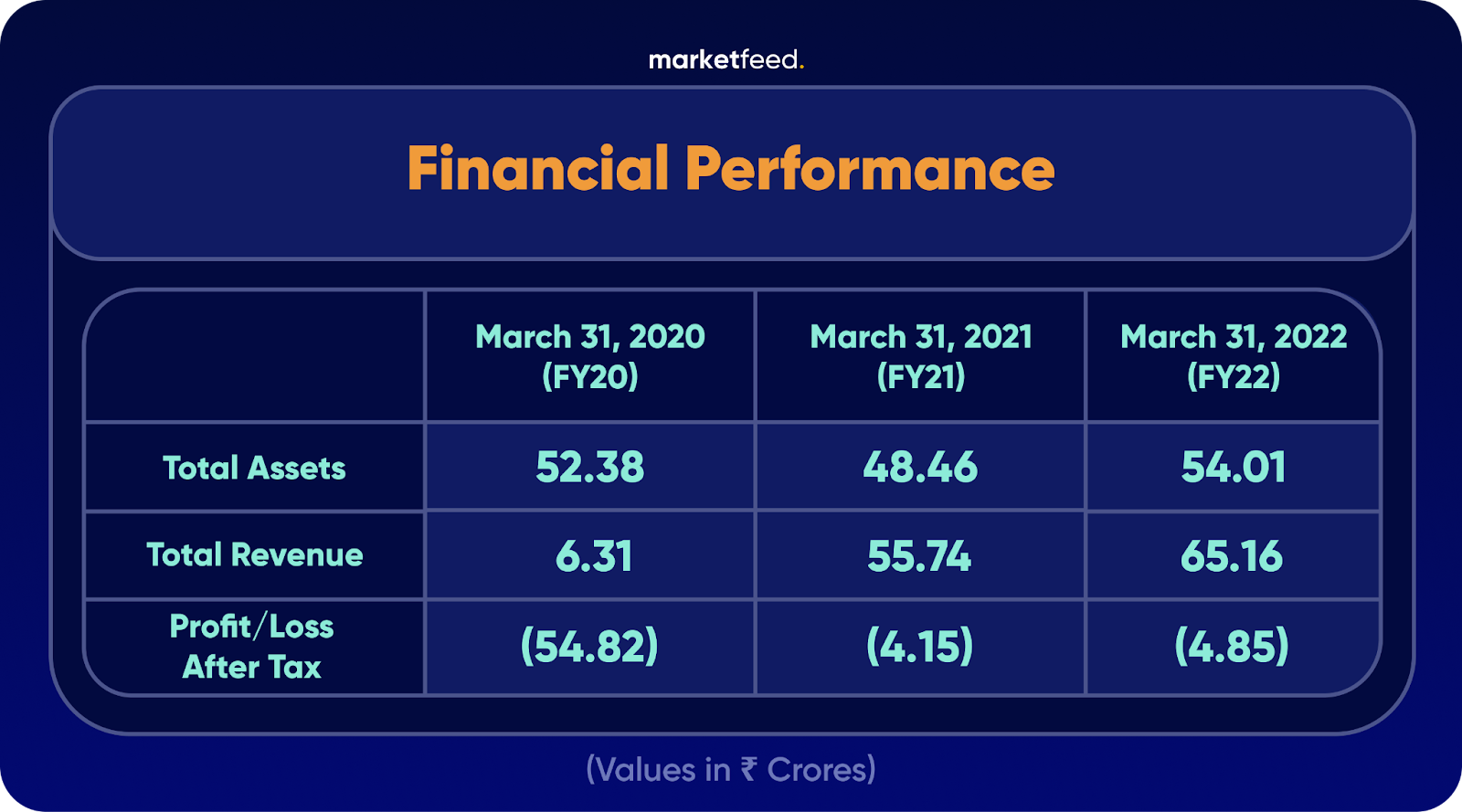
The company has posted healthy growth in both revenue and profits over the past three financial years (FY20-22). Its revenue has increased at a compounded annual growth rate (CAGR) of 56.64% during the same period! They generate a significant portion of the revenue from exports. In FY22, they exported $76 million worth of equipment, accounting for 4.7% of the overall defence exports from India. 

The company’s order book has grown from ₹1,941.31 crore in FY20 to ₹2,369 crore in FY22. All these metrics indicate that the firm is growing rapidly in the Indian defence space.

Risk Factors

  • DCXSL derived nearly 85.7% of its total sales revenue from its top 3 clients as of FY22. The loss of any of these customers or a fall in demand from them will severely affect the company’s overall business.
  • The company depends significantly on offset defence contracts for a majority of its revenue. Any changes in the offset defence policy or a decline in defence funding by the govt will adversely impact its ability to grow or maintain sales.
  • DCX System’s current order book may not necessarily translate into future income in its entirety. Some customers may modify, cancel, or put orders on hold.
  • Significant shortages or delays in the supply of raw materials could severely impact DCXSL’s estimated costs, expenditures, and timelines.

IPO Details in a Nutshell

The book-running lead managers to the public issue are Edelweiss Financial Services, Axis Capital, and Saffron Capital Advisors. DCX Systems filed the Red Herring Prospectus (RHP) for its IPO on Oct 19. You can read it here. Out of the total offer, 75% is reserved for Qualified Institutional Buyers (QIBs), 15% for Non-Institutional Investors (NIIs), and 10% for retail investors.

Conclusion

India’s military spending in 2021 stood at $76.6 billion, rising 5% from 2020. This rise can be attributed to India’s existing tensions with Pakistan and increasing border tensions with China. Moreover, the market size for the Global Defence Electronics Market is estimated to be $142 billion in 2022. It is expected to grow at a CAGR of 6.6% to ₹237 billion by 2030. With its technology-enabled and scalable end-to-end solutions, DCXSL is well-positioned to capitalise on industry trends.

However, the company faces stiff competition from listed peers such as Bharat Electronics Ltd (BEL), Data Patterns, Paras Defence & Space Technologies, and Astra Microwave Products. To learn more about Indian defence stocks, click here.

The company has received some interest in the grey market. DCXSL’s IPO shares are trading at a premium of ₹80 in the unofficial market. Before applying to this IPO, we will wait to see if the portion reserved for institutional investors gets oversubscribed. As always, do consider the risks associated with the company and come to your own conclusion.

What are your opinions on this IPO? Will you be applying for it? Let us know in the comments section of the marketfeed app.
Categories
Editorial

Tracxn Technologies Ltd IPO: All You Need to Know

Market intelligence provider Tracxn Technologies Ltd has launched its three-day initial public offering today— October 10. Fun fact: the company is backed by Ratan Tata and the promoters of Flipkart, Delhivery. In this article, we analyse the company and its IPO.

Company Profile – Tracxn Technologies Ltd

Tracxn Technologies Ltd (TTL) provides global market intelligence for private company data. The Bengaluru-based firm ranks among the top five players globally in terms of the number of companies profiled. TTL offers detailed information on funding rounds, global competitor benchmarking, valuations, employee counts, financial records, and sector-specific reports. Clients use their data for deal sourcing, identifying mergers & acquisition targets, deal diligence, analysis, and tracking emerging themes across various sectors. 

TTL has an asset-light business model and operates as a software-as-a-service (SaaS)-based platform (called Tracxn). As of June 30, 2022 (Q1 FY23), the platform has scanned over 662 million web domains and profiled over 1.84 million entities across 2,003 feeds— categorized across industries, sectors, sub-sectors, geographies, affiliations, and networks globally. 

The subscription-based platform has 3,271 users, across 1,139 customer accounts, in over 58 countries as of Q1. Its customers include Fortune 500 companies, private equity players, and fund managers. More than 70% of TTL’s revenue comes from outside India, primarily from Europe, the Middle East, and Africa.

About the IPO

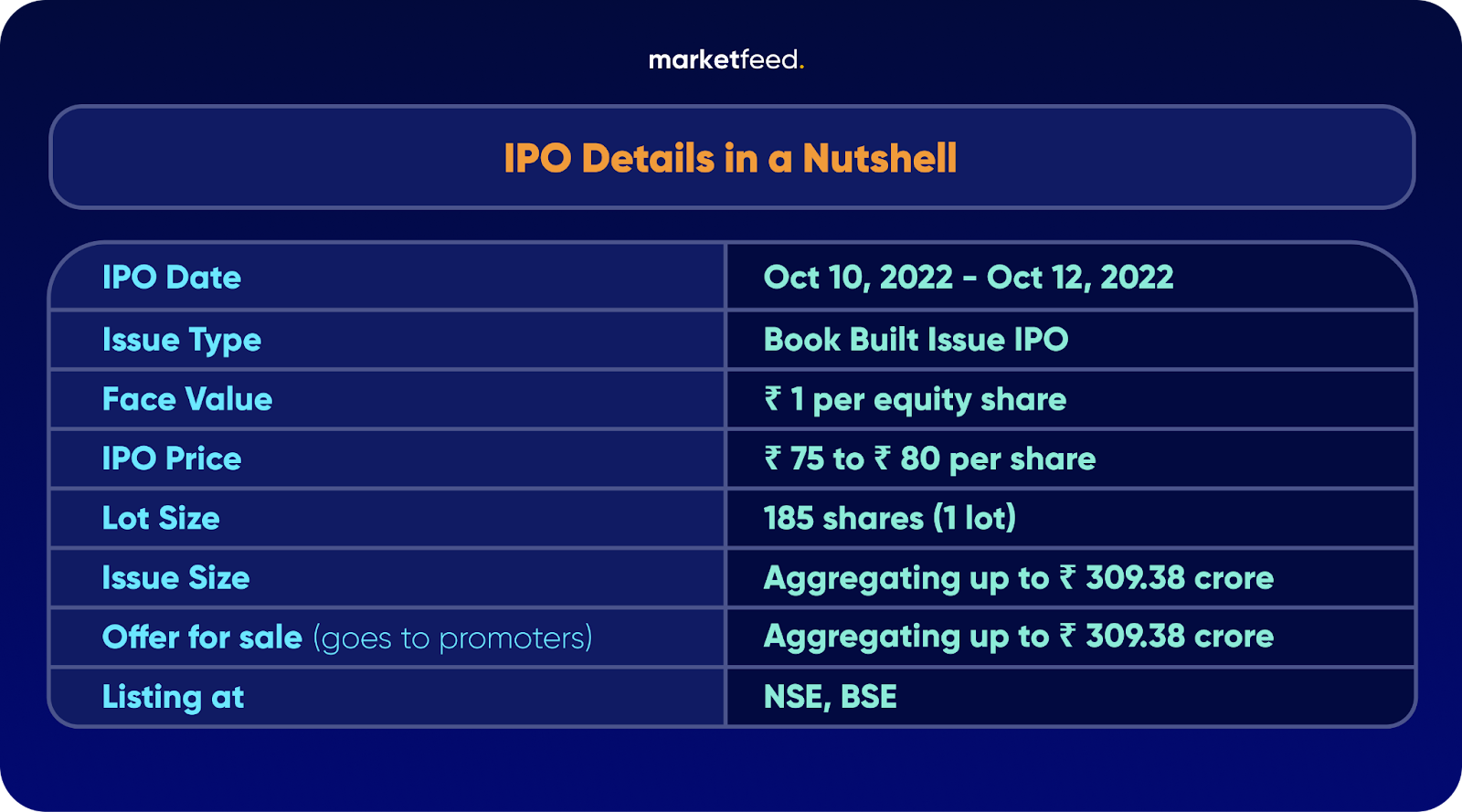
Tracxn Technologies’ public issue opens on October 10 and closes on October 12. The company has fixed ₹75-80 per share as the price band for the IPO.

The IPO is entirely an offer for sale (OFS) of 3.86 crore equity shares by promoters and early investors, aggregating to ₹309.38 crore. Individual investors can bid for a minimum of 185 equity shares (1 lot) and in multiples of 185 shares thereafter. You will need a minimum of ₹14,800 (at the cut-off price) to apply for this IPO. The maximum number of shares that can be applied by a retail investor is 2405 equity shares (13 lots).

The primary objective of the IPO is to provide an exit strategy (or liquidity) for TTL’s promoters. The company aims to achieve the benefits of listing its equity shares on NSE and BSE. The total promoter holding in Tracxn Technologies will decline from 50.93% to 35.65% post the IPO.

Financial Performance

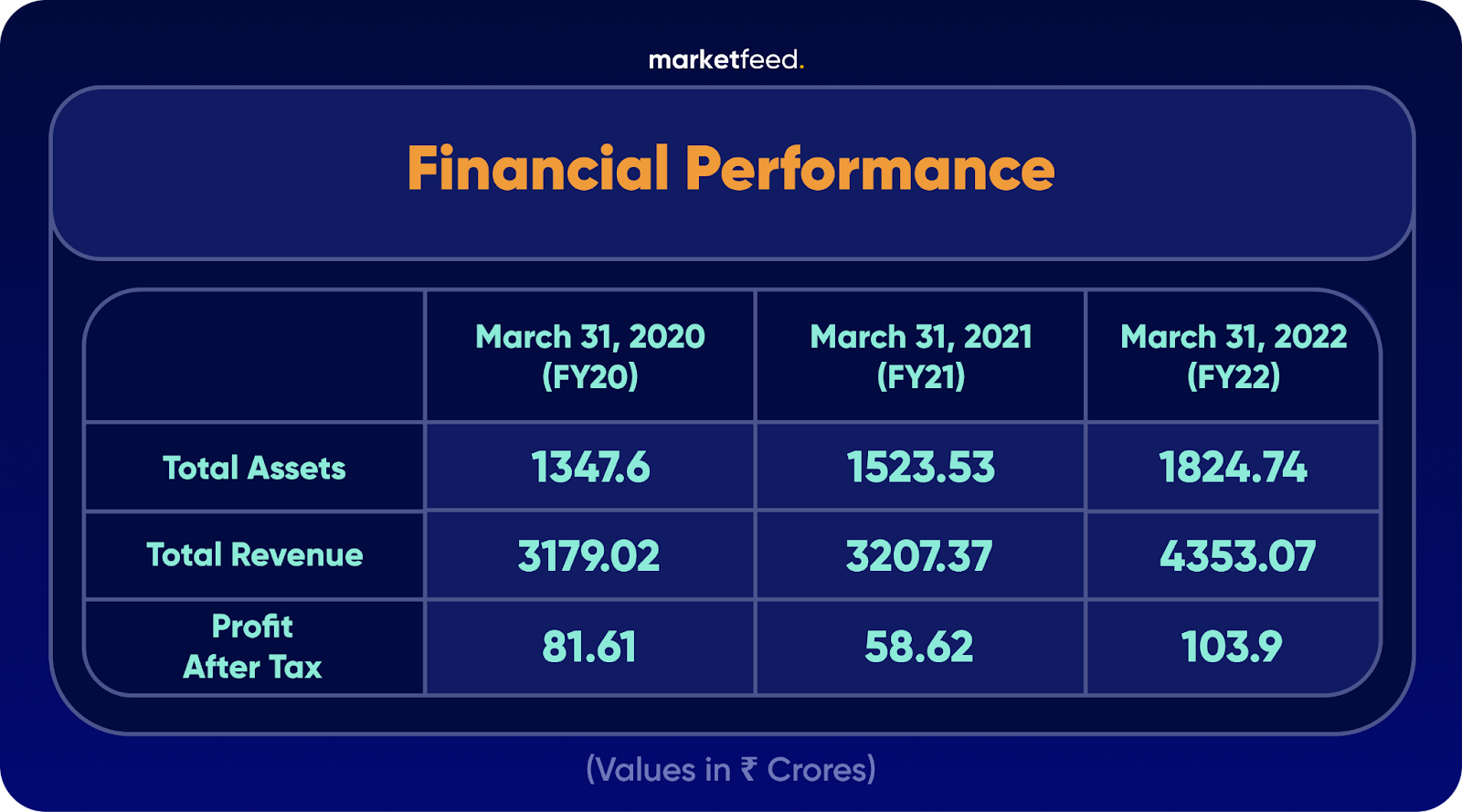
TTL has reported losses over the past three financial years (FY20-22). Revenue has improved and grew at a CAGR of 38.17% during the same period. Tracxn Tech reported negative operating cash flows during FY19 & FY21 and a cash inflow of ₹0.6 crore in FY22. Meanwhile, the company’s customer accounts have increased from 642 in FY20 to 1,092 in FY22. 

The company turned profitable in the first quarter of FY23. Its profit stood at ₹0.92 crore and total revenue at ₹19.08 crore (compared to a loss of ₹0.83 crore and revenue of ₹15.44 crore in Q1 FY22). During Q1 FY23, TTL posted a 22.9% YoY growth in the business, primarily supported by a 20.4% higher customer base. 

Risk Factors

  • The inability to attract new customers or maintain its existing customer base on its platform will severely impact TTL’s revenue growth and profitability.
  • Tracxn Tech’s financial condition may be adversely affected if there are interruptions or performance issues associated with its platform.
  • The company derives most of its operating revenues from customer subscriptions. If customers do not renew or expand their subscriptions or if they renew on less favourable terms, TTL’s future revenue and operating results may be adversely affected.
  • TTL faces heavy competition from its competitors such as Crunchbase, CB Insights, PrivCo, and PitchBook, which are well-established and enjoy better resources.
  • Tracxn Tech’s success mostly depends on its ability to expand its reach to customers globally. Thus, the business is prone to risks associated with international operations and security breaches.

IPO Details in a Nutshell

The book-running lead manager to the public issue is IIFL Securities. TTL filed the Red Herring Prospectus (RHP) for its IPO on October 1. You can read it here. Out of the total offer, 75% is reserved for Qualified Institutional Buyers (QIBs), 15% for Non-Institutional Investors (NIIs), and 10% for retail investors.

Conclusion

The market for business-to-business (B2B) information services is witnessing a gradual evolution. A report from Frost & Sullivan says that the total addressable market for private market data stood at $1,322 million in 2021. It is expected to grow at a CAGR of 12% to reach $2,097 million by FY25. TTL’s growth prospects are likely to continue as businesses are looking to consolidate and investors are exploring new start-ups, private firms, and geographies that align with their business strategies.

However, many analysts feel that investors are likely to avoid the IPO due to its disappointing financials. TTL’s IPO shares are trading at a premium of just ₹6-7 in the grey market. Before applying to this IPO, we will wait to see if the portion reserved for institutional investors gets oversubscribed. As always, consider the risks associated with the company and come to your own conclusion.

What are your views on Tracxn Technologies Lt’s IPO? Will you be applying for it? Let us know in the comments section of the marketfeed app.
Categories
Editorial

Electronics Mart India Ltd IPO: All You Need to Know

Electronics Mart India has launched its initial public offering (IPO) today— October 4. It is one of the fastest-growing consumer durables and electronics retailers in India. In this article, we take a closer look into the company and its IPO.

Company Profile – Electronics Mart India Ltd

Established in 1980, Electronics Mart India Ltd (EMIL) is the fourth largest consumer durables and electronics retailer in India as of FY21. It is also the largest regional organized player in South India in terms of revenue, with dominance in Telangana and Andhra Pradesh. EMIL offers a diversified range of products such as air conditioners, televisions, washing machines, refrigerators, mobile phones, and small electronic appliances.

So What’s EMIL’s Business Model?

  • The company focuses on securing retail spaces that ensure high visibility and easy accessibility to customers
  • Under the ownership model, EMIL owns the underlying property, including the land and building.
  • In the lease rental model, they enter into long-term lease agreements with property owners.
  • The company operates business activities across three channels: retail, wholesale, and e-commerce.

As of August 31, 2022, EMIL operates 112 stores across 36 cities with a retail business area of 1.12 million sq. ft. The company offers more than 6,000 stock-keeping units (SKUs) from more than 70 consumer durable and electronic brands. EMIL owns brands like Bajaj Electronics, iQ (an authorised Apple reseller), Kitchen Stories, and Audio & Beyond.

About the IPO

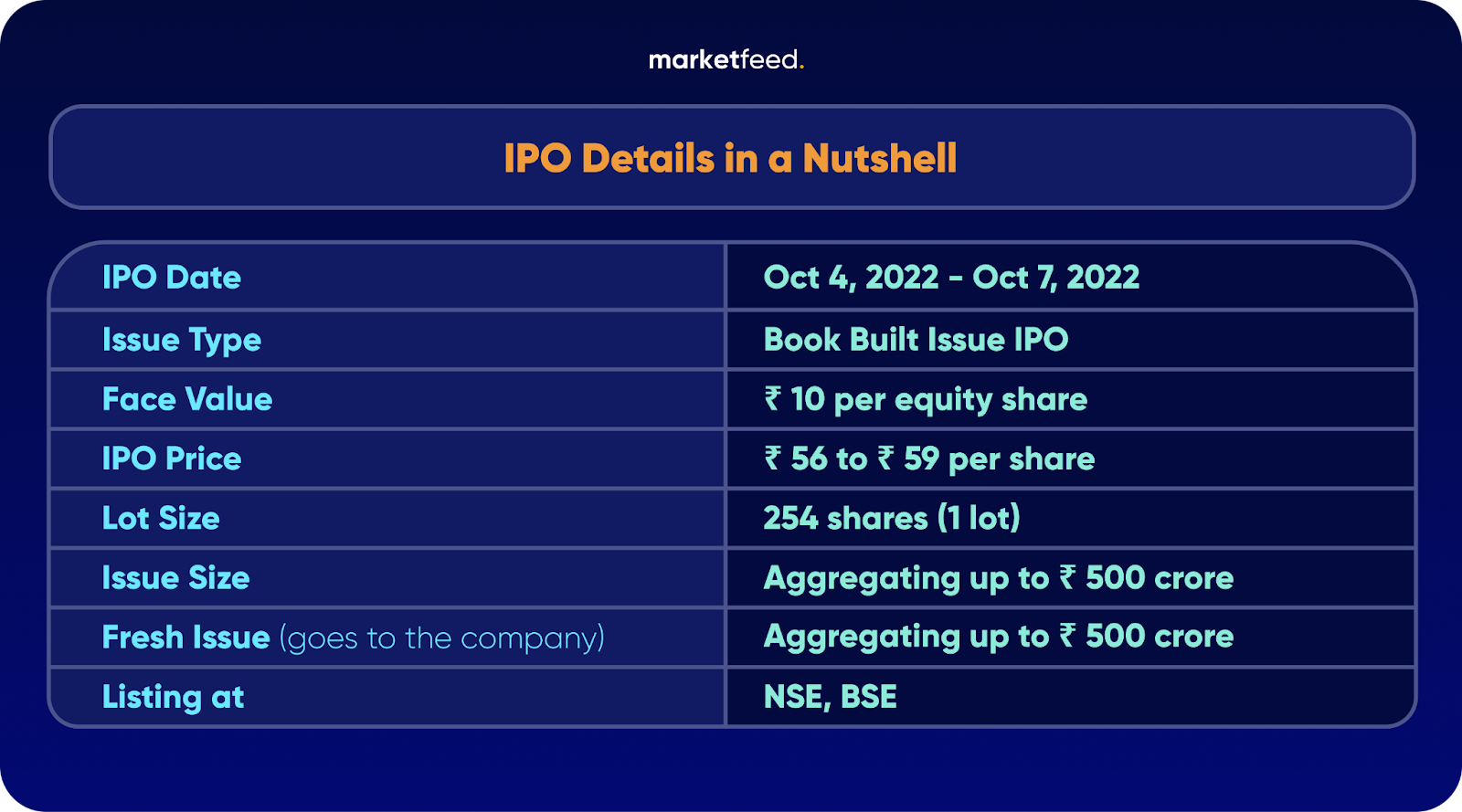
Electronic Mart India’s public issue opens on October 4 and closes on October 7. The company has fixed ₹56-59 per share as the price band for the IPO.

The fresh issue of shares (of the face value of ₹10 each) aggregates to ₹500 crore. Individual investors can bid for a minimum of 254 equity shares (1 lot) and in multiples of 254 shares thereafter. You will need a minimum of Rs 14,986 (at the cut-off price) to apply for this IPO. The maximum number of shares that can be applied by a retail investor is 3,302 equity shares (13 lots).

EMIL will utilise the net proceeds from the IPO for the following purposes:

  • Expansion and opening of stores and warehouses – ₹111.44 crore  
  • Funding incremental working capital requirements – ₹220 crore 
  • Repayment or prepayment of borrowings – ₹55 crore
  • General corporate purposes. 

The total promoter holding in the company will decline from 100% to 77.97% post the IPO.

Financial Performance

Like most firms, the Covid-19 pandemic severely impacted the company’s sales and operations. However, EMIL has been profitable over the past three financial years. Its revenue grew at a healthy CAGR of 17.9% between FY16 and FY21. Net profit in FY22 rose 78% YoY to ₹81.6 crore, while its EBITDA margin increased marginally from 6.4% in FY21 to 6.7% in FY22. E-commerce accounts for nearly 1% of its total sales.

Electronics Mart reported a total income of ₹1410.2 crore and a net profit of ₹40.65 crore in Q1 FY23. It anticipates that margins will remain between 6.5% and 7% in the upcoming quarters.

Risk Factors

  • While Electronics Mart has a strong presence in Telangana and Andhra Pradesh, it is planning to expand to new geographies. This may expose the firm to significant liabilities.
  • The company faces tough competition from online retailers who are able to offer a wide range of products at competitive prices.
  • EMIL derives a majority of its revenues (61%) from its top five brands. The loss of any of these brands or a decline in their supply or volume could adversely affect its financial performance.
  • Any delay or failure from external suppliers or third parties in delivering its products could severely impact the company’s business.
  • The inability to promptly identify and respond to changing customer preferences and trends may lead to a decline in the demand for EMIL’s merchandise. 

IPO Details in a Nutshell

The book-running lead managers to the public issue are JM Financial Ltd, IIFL Securities Ltd, and Anand Rathi Advisors Ltd. EMIL filed the Red Herring Prospectus (RHP) for its IPO on September 23. You can read it here. Out of the total offer, 50% is reserved for Qualified Institutional Buyers (QIBs), 15% for Non-Institutional Investors (NIIs), and 35% for retail investors.

Conclusion

A recent report from CRISIL Research estimated that the size of India’s consumer durables industry (including large consumer durables, mobile phones, and small appliances) stood at ₹2.4 lakh crore as of FY21. The organized segment’s share in this market is likely to grow from 58% in FY21 to 76-78% by FY26. Electronics Mart India is well positioned to benefit from this growth with its diversified portfolio of essential electronics.

EMIL recently entered the National Capital Region (NCR) market with 8 outlets. It plans to open 60+ stories over the next three years with an average size of 10,000-12,000 sq. ft. The company also aims to improve its operating efficiency and ensure efficient supply chain management.

EMIL’s IPO shares are trading at a premium of ~₹31-33 in the grey market today. Before applying to this IPO, we will wait to see if the portion reserved for institutional investors gets oversubscribed. As always, do consider the risks associated with the company and come to your own conclusion.

What are your opinions on this IPO? Will you be applying for it? Let us know in the comments section of the marketfeed app.
Categories
Editorial

DreamFolks Services Ltd IPO: All You Need to Know

Airport service aggregator platform DreamFolks Services Ltd has launched its three-day initial public offering (IPO) today— August 24. In this article, we dive into the company’s business model and its IPO.

Company Profile – DreamFolks Services Ltd

DreamFolks Services Ltd (DSL) is India’s largest airport service aggregator platform. The Gurugram-based firm offers enhanced airport experiences to passengers with the help of its technology-driven platform. They facilitate customers’ access to services like lounges, food & beverage, spa, airport transfer, transit hotels, and baggage transfer.

So what do they actually do?

DSL has partnered with card networks operating in India, including Mastercard, Visa, Diners/Discover, and RuPay. They have also tied up with leading card issuers such as ICICI Bank, HDFC Bank, Axis Bank, and SBI Cards. The company has essentially crafted a service proposition and tech platform to help clients (card networks & issuers) offer a wide range of services as part of their customer engagement and loyalty programs.

Factsheet

  • DreamFolks Services has a global footprint extending to 1,416 touch-points across 121 countries. It has nearly 244 touch-points in India and 1,172 touch-points overseas as of March 31, 2022 (FY22). 
  • The company holds more than 80% market share in the domestic lounge access market in our country. 
  • DSL enjoys a market share of ~95% of all India-issued credit and debit card access to the airport lounges! 

DSL’s first-mover advantage and asset-light business model have helped them dominate the airport service aggregator industry.

About the IPO

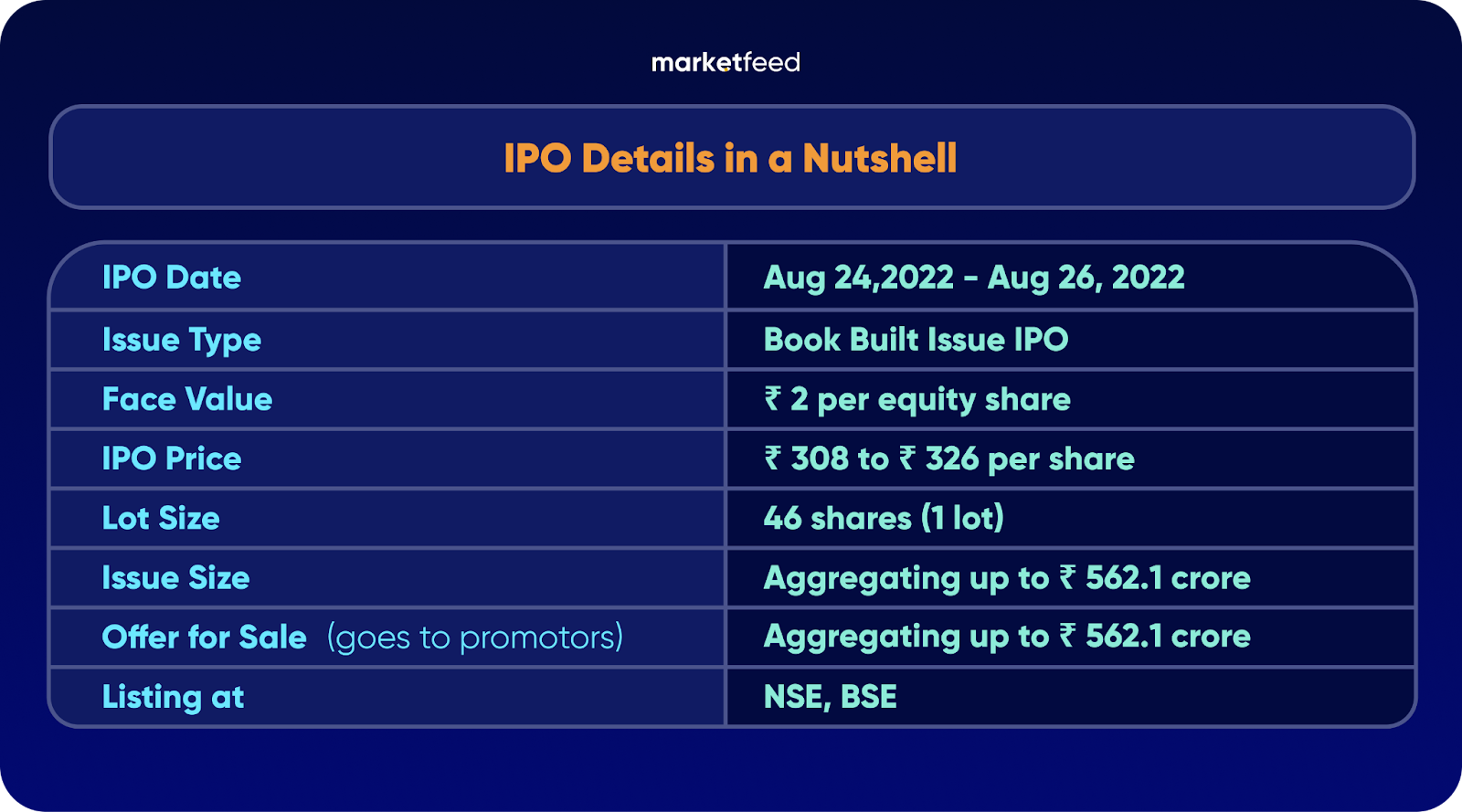
DreamFolks Services’ public issue opens on August 24 and closes on August 26. The company has fixed Rs 308-326 per share as the price band for the IPO.

The IPO is entirely an offer for sale (OFS) of 1.72 crore equity shares by promoters and early investors, aggregating to Rs 562.10 crore. Individual investors can bid for a minimum of 46 equity shares (1 lot) and in multiples of 46 shares thereafter. You will need a minimum of Rs 14,996 (at the cut-off price) to apply for this IPO. The maximum number of shares that can be applied by a retail investor is 598 shares (13 lots).

The primary objective of the IPO is to provide an exit strategy (or liquidity) to DSL’s promoters. The company aims to achieve the benefits of listing the equity shares on NSE and BSE. The total promoter holding in the company will decline from 100% to 67% post the IPO.

Financial Performance

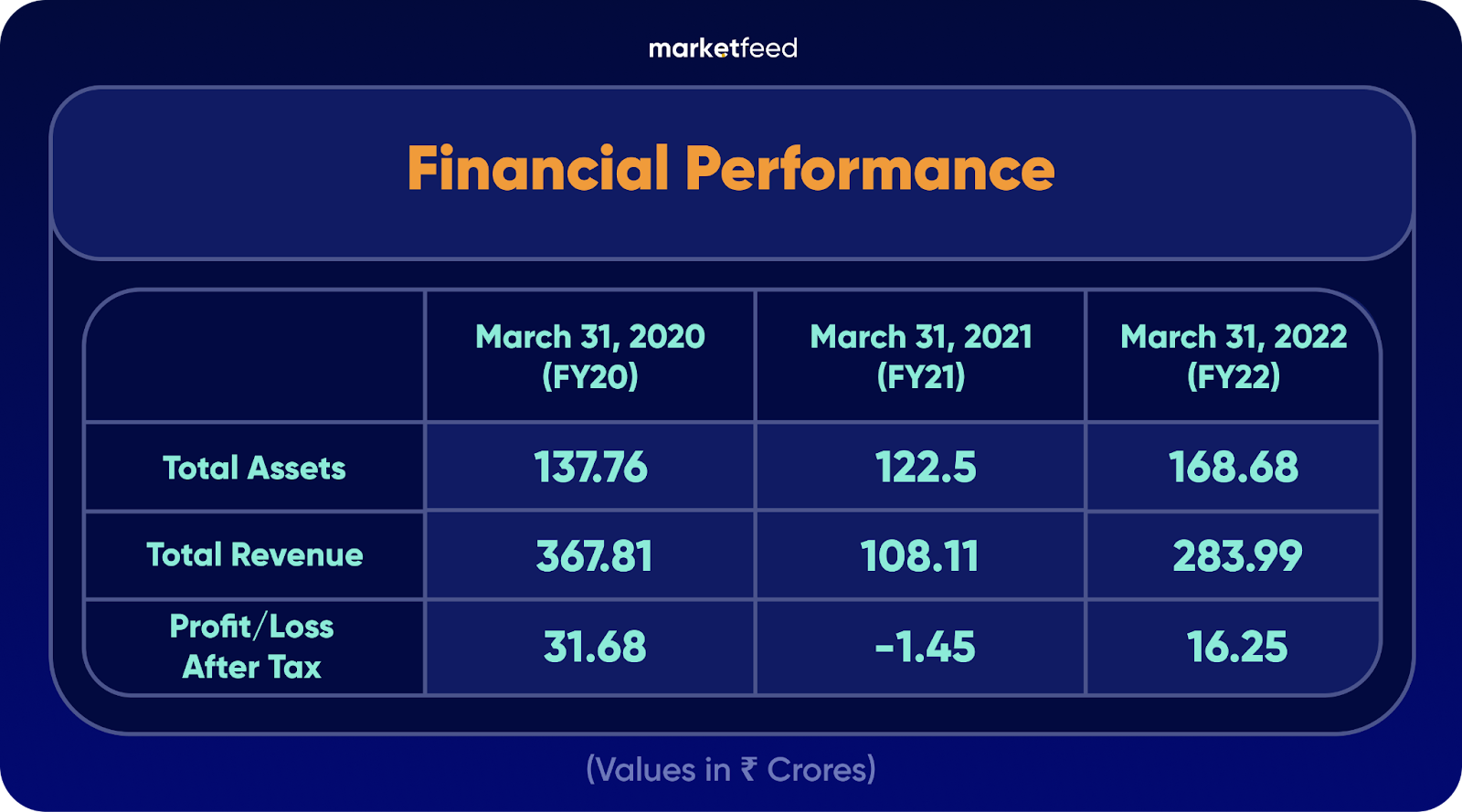
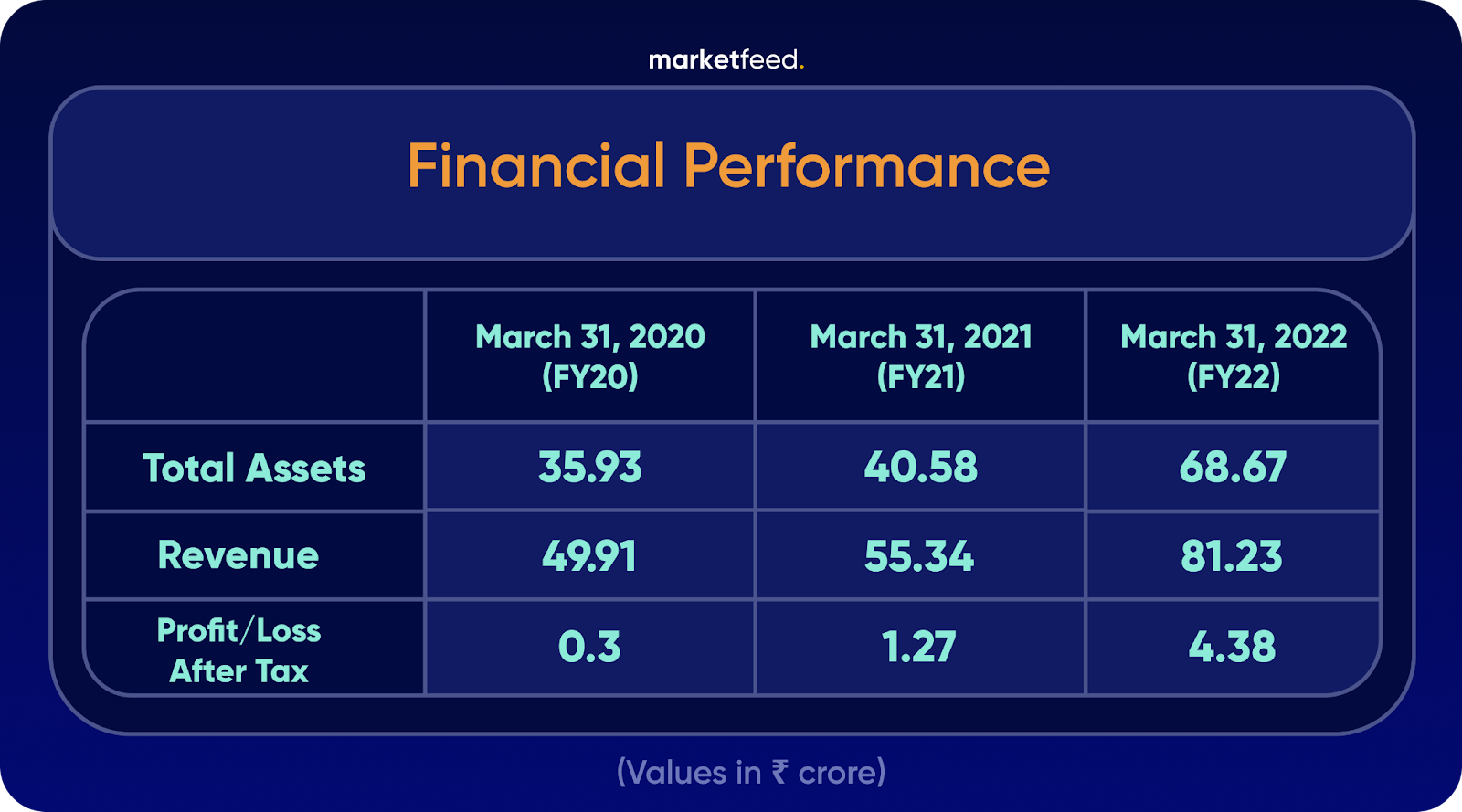
DSL’s revenue had been on a downward trend due to the severe impact of the Covid-19 pandemic on the airline industry. In FY21, revenue declined 70.6% YoY to Rs 108.11 crore, while it reported a net loss of 1.45 crore. However, the company’s financial performance improved in FY22 as lockdown restrictions eased and airports saw more footfall.

Over the past three financial years (FY20-22), the average revenue from lounge fees stood at 98.55%. They have witnessed an annual average growth rate (CAGR) of 90.7% in the number of touch points over FY18-22. 

The company is now on a path to recovery and expects to cross above pre-pandemic levels in the near term.

Risk Factors

  • DSL is highly dependent on its long-term relationship with card networks and issuers. The inability to retain them as clients could severely impact the company’s overall business.
  • Almost all of their revenue is derived directly from the use of various services at airports. Thus, any downturn in the air travel industry will adversely affect DSL’s financial performance.
  • The company relies heavily on its top five clients for a majority of its revenue (~84.91% on average). If any of these clients terminate their contract with DSL, it could significantly impact their revenue.
  • Any adverse regulatory order or monetary penalty against card networks and issuers could harm the company’s operations and financial condition.
  • Airport lounge operators could partner with card networks and issuers directly, which will severely affect DSL’s business.

IPO Details in a Nutshell

The book-running lead managers to the public issue are Equirus Capital and Motilal Oswal Investment Advisors. DreamFolks Services filed the Red Herring Prospectus (RHP) for its IPO on August 17. You can read it here. Out of the total offer, 75% is reserved for Qualified Institutional Buyers (QIBs), 15% for Non-Institutional Investors (NIIs), and 10% for retail investors.

Conclusion

The Covid-19 pandemic had a severe impact on the aviation/air travel industry. Fortunately, the air passenger traffic has been gradually increasing over the past few months. The number of lounges is expected to grow at a CAGR of 7% in the next two decades. There were 54 airport lounges in India in FY22. This figure is expected to grow to ~204 by 2040! Currently, DreamFolks Services is enjoying a virtual monopoly in this segment with a 95% market share!

DSL aims to grow its business by expanding access across India and overseas. They are also likely to benefit from government initiatives like UDAN, which will help increase access to more regional airports. The firm believes it is well-positioned for the upcoming growth opportunities due to its market dominance.

The company has received some interest in the grey market. DSL’s IPO shares are trading at a premium of Rs 62 in the unofficial market today. Before applying to this IPO, we will wait to see if the portion reserved for institutional investors gets oversubscribed. As always, consider the risks associated with the company and come to your own conclusion.

What are your views on this IPO? Will you be applying for it? Let us know in the comments section of the marketfeed app!

Categories
Market News Top 10 News

Adani Group Gets SEBI Nod for Open Offer to Buy Stake in ACC, Ambuja – Top Indian Market Updates

Here are some of the major updates that could move the markets on Monday:

Adani Group gets SEBI nod for open offer to buy stake in ACC and Ambuja

The Adani Group has made offers of Rs 385 per share for Ambuja Cements and Rs 2,300 a share for ACC. The company intends to buy a 26% stake in both cement companies respectively for an amount totalling ~Rs 31,160 crores. Adani will acquire the stake from Holcim Ltd after it announced to buy a controlling stake in Holcim’s India businesses. 

Read more here.

IRCTC shares surge ~12% in two days after floating data monetisation tender

Indian Railway Catering & Tourism Corporation’s shares surged by nearly ~12% in the last two trading sessions after it floated a tender to hire a consultant to help it monetize its digital assets. The tender drew controversy as users questioned if IRCTC intended to sell private user data.

In response, IRCTC clarified as follows: “As a commercial entity, the company explores the business opportunities for new areas. As other business tenders, this tender has also been floated merely to appoint a consultant. The consultant will guide IRCTC and Indian Railways on monetization activities and advise on monetization value of Digital Assets by observing various Acts or laws, including IT Act 2000 and its amendments, User data privacy laws including GDPR (General Data Protection Regulation), and current Personal Data Protection Bill 2018 of India.”

Read more here

India’s inflation target breach for first time in six years

India’s inflation has breached the upper tolerance limit of 6% for three consecutive quarters for the first time in six years. The RBI has decided to call a meeting after October 12 to discuss a report to be submitted to the Union Government explaining the breach. The limit of the inflation target is fixed every five years jointly by the RBI and the Union Government. Currently, the upper limit is fixed at 6%, while the lower limit is at 2% until March 31, 2026. 

Read more here

Syrma SGS Technologies IPO: GMP jumps 28% ahead of listing 

Syrma SGS Technologies’ Rs 840 crore IPO got subscribed 32.61 times, whereas its retail portion was subscribed 5.53 times. The company’s shares are trading at a premium of 28% in the grey market, standing at Rs 35 per share. The tentative date for allotment of shares is August 23, 2022. 

Read more here

BSE’s market cap hits a new peak of Rs 283.5 lakh crore

Bombay Stock Exchange’s market cap has hit a new peak of Rs 283.5 lakh crore, with the SENSEX ending at 60,289 points at the day’s end. In January, the exchange had hit its last peak with a market cap of Rs 283.2 lakh crore. The rally in the previous two months is due to the net buying of Indian stocks by foreign portfolio investors

Read more here.

Government reviews windfall profit tax, RIL shares dip

On Thursday, the government increased the windfall profit tax on diesel exports to Rs. 7 per litre and reinstated a tax on jet fuel exports, although it decreased the tax on locally produced crude oil in line with softening rates. The tariff on domestic crude oil has been reduced from Rs 17,750 to Rs 13,000 per tonne.

Read more here.

Zomato-backed BlinkIt announces printout delivery to doorstep in 10 minutes

Zomato-owned quick delivery app Blinkit has started services to deliver printouts to your doorstep in just 10 minutes. Currently, the service is available in select areas of Delhi-NCR. It will charge an amount of ₹9 per page for black and white printouts, while ₹19 for colored. The service will now help users to get their documents printed and delivered quickly to their location by just uploading them on the Blinkit application

Read more here.

SBI shares dip after it sells KSK Mahanadi Power loan account to Aditya Birla ARC for Rs 1,622 crore

Aditya Birla ARC has purchased the KSK Mahanadi Power Company’s non-performing loan account from SBI for Rs 1,622 crore, taking an almost 58% haircut off the total outstanding balance in the process. As of April 2022, the total amount of loans still owed to the State Bank of India (SBI) by KSK Mahanadi Power Company was Rs 3,815.04 crore.

Read more here.