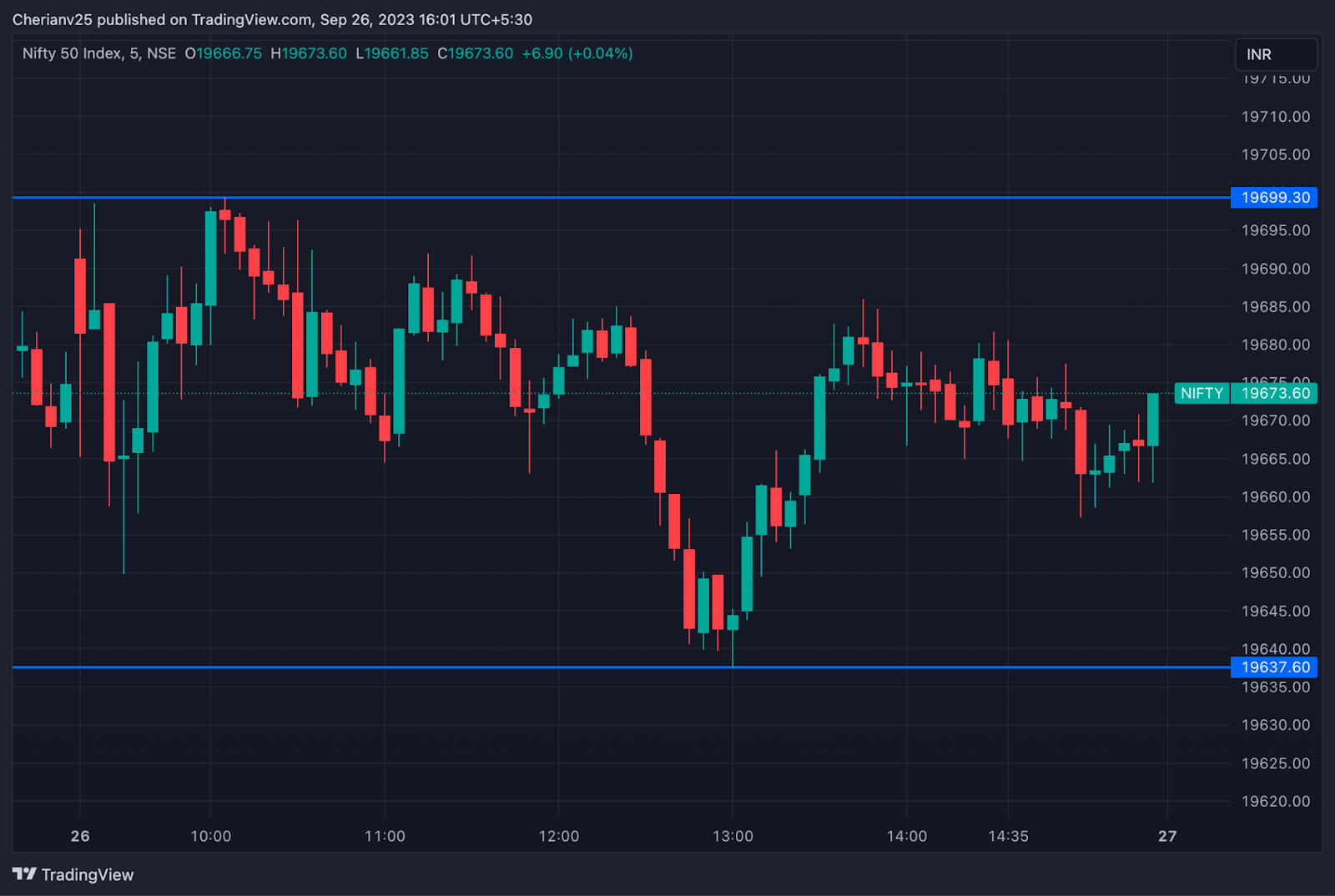
NIFTY started the day flat at 19,682. The index consolidated within a 60-point range throughout the day between 19,640 and 19,700. Nifty closed at 19,664, down by 9.85 points or 0.05%.
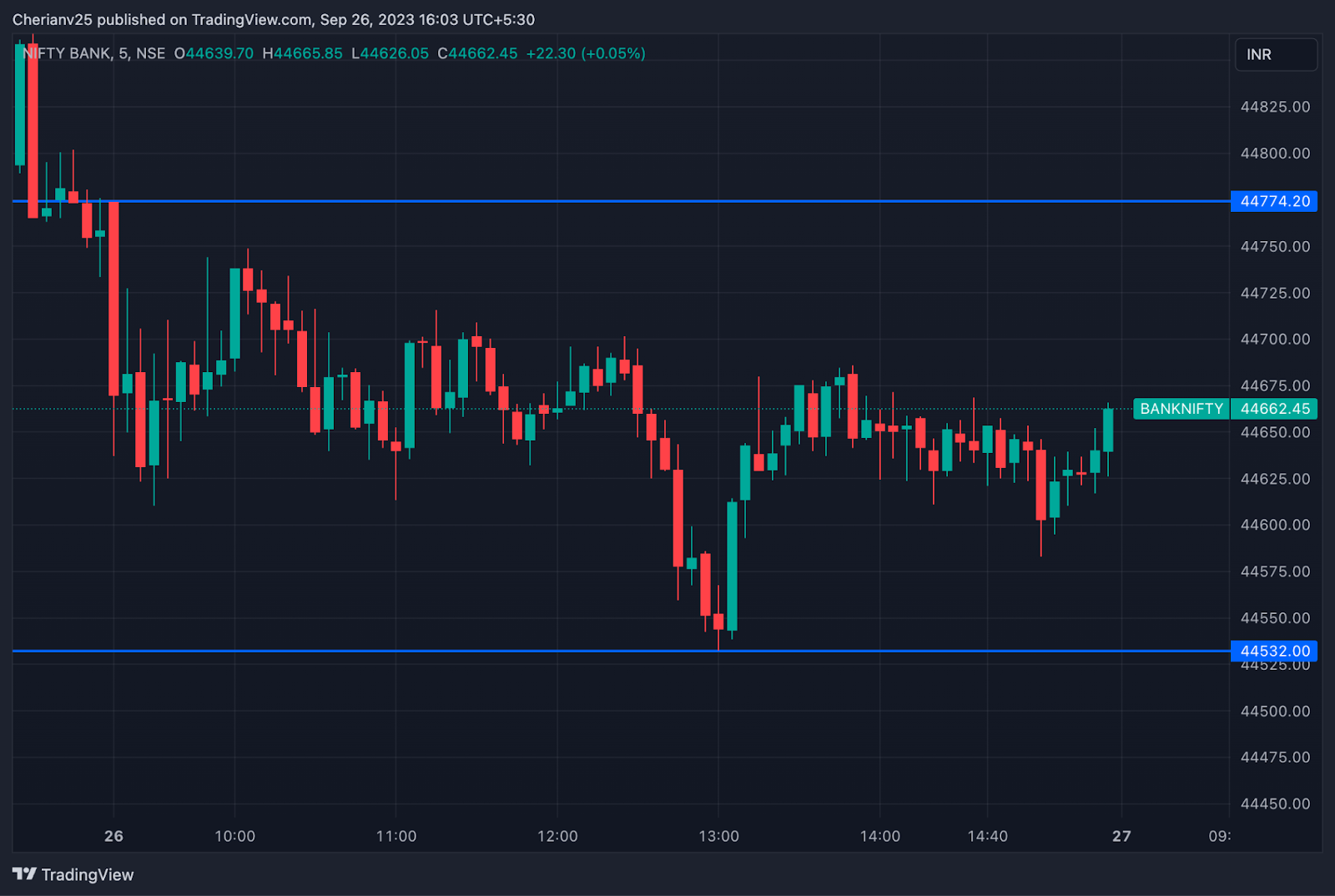
BANK NIFTY (BNF) started the day flat at 44,722 with a small gap-down of 43 points. The index consolidated in a 130-point range with a bearish bias— moving in a channel. BNF closed at 44,624, down by 141 points or 0.32%.
All indices except Nifty FMCG (+0.52%), Nifty Auto (+0.35%), Nifty Metal (+0.31%), and Nifty Realty (+0.31%) closed in the red. Nifty Media (-0.86%) fell the most.
Major Asian markets closed up to 1.4% in the red. European markets are currently trading in the red.
Today’s Moves
Eicher Motors (+2.61%) was NIFTY50’s top gainer. Brokerage firm Jefferies maintained its ‘Buy’ rating on the stock while raising its price target from ₹4,000 to ₹4,150.
Cochin Shipyard (+11.07%) surged on the back of strong volumes. Defence stocks Garden Reach Shipbuilders and MTAR Tech gained up to 14%.
As per a report from ICRA, private sector firms are likely to get defence contracts worth ₹60,000 crore in FY25.
Shares of Vodafone Idea (+6.98%) closed at a 20-month high. The company’s shares have been rising since it announced a 50% payment of its license fees and spectrum usage charge (SUC) dues for the March quarter.
Tech Mahindra (-1.3%) was NIFTY50’s top loser.
Indiabulls Real Estate (-3.46%) fell after Creditcorp Investment Advisors sold 30.95 lakh shares of the company in a bulk deal.
Markets Ahead
Markets continued to stay at lower levels, and no signs of strength were seen. Two consecutive Doji candles have been formed in the major indices. And depending on the highs and lows getting breached, we can expect the indices to move further in that direction.
Nifty: The current support to watch out for is near 19,630 levels. A breakdown from here could give us a target of 19,500. The important resistance is near the 19,700 levels, and a breakout from there may give us a target of 19,800 on the upside.
Bank Nifty: The immediate support to look out for is near 44,600. A breakdown from this level can give us a target of 44,300. On the other hand, a major resistance for BNF is near 44,800. A breakout from this round level can give us a target of 45,000 and 45,200
It was a relatively easy FIN NIFTY expiry for non-directional option sellers as the markets consolidated. However, option buyers might have had a bad day because of the quick moves in both directions.
The overall sentiment in the Indian markets remains weak as investors exercise caution in the wake of weak global cues and increased selling activity by FIIs.
How did FIN NIFTY expiry go? Let us know in the comments section!
Don’t forget to tune in to The Stock Market Show at 7 PM on our YouTube channel!
The Indian defence and aerospace sector is about to undergo a transformation that would allow it to firmly establish a position among other global industries. Our government is now favouring domestic defence equipment development over imports. Indian companies have been encouraged and assisted in designing, developing, and producing a wide range of military systems and platforms. This is thanks to the policy framework that our government has put in place over the past ten years. In this article, we provide insight into the defence sector of India and the best defence stocks to watch out for.
An Overview of India’s Defence Sector
India is on its way to becoming self-sufficient in the large-scale production of military aircraft, vehicles, missile systems, arms and ammunition, etc.
The Defence Ministry’s budgetary allotment was increased by 13% to ₹5.94 lakh crore in Budget 2023–24. This shows a very large potential for growth in the defence sector.
Our government is all set to spend nearly ₹6 lakh crore on defence equipment in Financial Year 2024. And 99% of this equipment will be sourced from Indian industries. Much to the US and Russia’s dismay, India’s defence imports are shrinking due to the emergence of the Indian defence industry.
India is also close to procuring weapons for the Indian Armed Forces worth ₹70,500 crore ($8.7bn), which will all be Made in India. India’s defence imports declined by 11% between 2013-17 and 2018-22, and this decline was linked to a complex procurement process.
India bagged an export order worth $155 million for 155-mm artillery guns and another deal for supplying Teevra 40-mm guns to the Indonesian Navy. Armenia signed a $250 million contract for India’s Pinaka missiles.
The govt continues to promote joint ventures between Indian and international businesses to carry out co-development, share innovations, and manufacture goods for both domestic use and export.
India is very close to becoming a defence manufacturing hub as it supplies equipment and ammunition to the world.
Top Defence Stocks in India to Watch Out For:
Sl. No
Defence Companies
5-Year Stock Return
1
Hindustan Aeronautics Ltd.
385%
2
Bharat Electronics Ltd
270%
3
Bharat Dynamics Ltd
242%
4
Mazagon Dock Shipbuilders Ltd.
982%.
5.
Cochin Shipyard Ltd.
56%
(Returns as of July 20, 2023)
1. Hindustan Aeronautics Ltd.
Established in 1940, Hindustan Aeronautics Limited (HAL) is engaged in the design, development, manufacture, repair, and servicing of aircraft, helicopters, aero engines, and aerospace structures in India. It falls under the administrative control of the Ministry of Defence. HAL has designed and manufactured some of the most advanced Light Combat Aircraft (such as “Tejas”) and helicopters for the Indian Armed Forces. The company gets exclusive contracts from the space, defence, and civil industries around the world.
HAL has delivered good profit growth of 23.9% CAGR over the last 5 years and maintained a healthy dividend payout of 26.8%. This defence stock has given a healthy return of 385% in 5 years.
2. Bharat Electronics Ltd.
Bharat Electronics Ltd. (BEL) meets the specialised electronic equipment requirements of the Indian Armed Forces. The company designs, manufactures, supplies, and exports electronic equipment and systems for the defence and civilian markets. BEL’s defence products include communication systems, land-based radars, naval systems, electronic warfare systems, tank & armoured fighting vehicle electronic systems, and much more. The company has partnered with DRDO laboratories to design and produce customised defence systems.
BEL has been maintaining a healthy dividend payout of 40.5% The company is also nearly debt free. The stock has given a return of 270% in 5 years. However, it has seen a very slow growth in its sales, ranging only about 11% in the past five years.
The Defence Ministry has also inked two contracts worth over Rs 3,700 crore with the public sector undertaking (PSU) for radars and receivers that will enhance the operational capabilities of the Indian Air Force.
3. Bharat Dynamics Ltd.
Bharat Dynamics (BDL) is a Government of India Enterprise. It is engaged in the manufacturing of guided missiles and allied defence equipment. The company’s product portfolio includes surface-to-air missiles, anti-tank guided missiles, underwater weapons, launchers, countermeasures, and mechanised infantry weapons.
The business is expected to deliver a strong quarter and is almost debt-free. The corporation has continued to pay out a solid 41.7% in dividends. However, it has delivered a poor sales growth of -11.5% over the past five years and a low return on equity of 13.1% over the last 3 years. The stock return has been 242% over the past 5 years.
The state-owned aerospace and defence company said it entered into 10 deals with several foreign and Indian companies during Aero India, 2023.
4. Mazagon Dock Shipbuilders Ltd.
Mazagon Dock Shipbuilders Ltd is primarily engaged in building & repairing ships, submarines, and various types of vessels and related engineering products for various domestic and international clients. It began operations in 1934 as a private corporation and was taken over by the Indian government in 1960.
The company is expected to give a good quarter and has delivered good profit growth of 19.5% CAGR over the last 5 years. This defence stock has given a 5-year return of 982%. Shipbuilding accounted for around 89% of the company’s sales as of 2020, followed by the sale of base and depot supplies (8%) and ship maintenance (3%).
5. Cochin Shipyard Ltd.
Cochin Shipyard Ltd (CSL) manufactures and repairs boats for the Indian Navy, Coast Guard, and private entities. In 2013, this shipyard launched INS Vikrant, the nation’s first indigenous aircraft carrier.
The company has been maintaining a healthy dividend payout of 27.6%. It has delivered a poor sales growth of -0.21% over the past five years. CSL’s stock has gained 56% over the past 5 years.
CSL has signed a contract for building six Next Generation Missile Vessels (NGMV) for the Indian Navy for Rs 9,805 crore with the delivery of ships set to begin in 2027.
More Defence Stocks in India:
Other prominent defence stocks in India include:
Ashok Leyland – It is one of the top suppliers of trucks or armoured vehicles for the Indian army.
Larsen & Toubro – Over the years, L&T has designed, developed, and manufactured arms, military equipment, and even submarines.
Astra Microwave Products – The company supplies microwave-based high-value radio frequency super components.
Bharat Forge – As per reports, the company may start supplying artillery guns to the Indian army.
Apollo Microsystems – The company provides custom-built electronics and electro-mechanical solutions to the defence sector.
Reliance Naval & Engineering – The company has entered into a warship repair agreement with the Ministry of Defence.
In conclusion, the Indian defence sector offers potential investors a favourable environment. By examining the top defence stocks, we have explored companies with strong financial performance, market reputation, and growth potential. The sector is on the rise, fueled by more expenditure on defence and favourable government policies, and this presents appealing investment prospects. With careful consideration, investing in the best defence stocks in India can be a strategic move with significant potential for long-term gains.
Disclaimer: The defence stocks mentioned in the article are solely for educational purposes. Please do your own research before investing.
Bengaluru-based DCX Systems Ltd will launch its initial public offering (IPO) next Monday— October 31. It is one of the fastest-growing companies in the Indian defence sector. In this article, we analyse the company and its IPO.
Company Profile – DCX Systems Ltd
Incorporated in 2011, DCX Systems Ltd (DCXSL) is one of the leading Indian manufacturers of electronic sub-systems and cable harnesses for the defence and aerospace sectors. It provides product assembly and system integration services as per customers’ requirements.
Key Products:
System Integration: They undertake system integration in areas of radar systems, sensors, electronic warfare, missiles, and communication systems.
Cable and Wire Harness Assemblies: It manufactures a wide range of cables and wire harnesses assemblies for the aerospace and defence industries.
Fine Wire Cable Assemblies: These are lightweight and high-temperature resistant cables used in aerospace, marine, space, and medical applications.
Wired Enclosure: The company produces high-reliability backplane assemblies and wired enclosures for the defence and aerospace markets.
DCXSL is one of the largest Indian Offset Partners (IOPs) for ELTA Systems Ltd and Israel Aerospace Industries Ltd, System Missiles & Space Division of Israel, for executing defence & aerospace manufacturing projects. The company operates through its manufacturing facility at Hi-Tech Defence & Aerospace Park SEZ in Bengaluru, Karnataka.
As of June 30, 2022 (Q1 FY23), DCX Systems had 26 customers across Israel, the United States, Korea and India. Their clients include Fortune 500 companies, multinational corporations and start-ups. The company’s prominent clients include Bharat Electronics Ltd, Astra Rafael Comsys, Alpha-Elsec Defence & Aerospace Systems, and Kalyani Rafael Advanced Systems.
About the IPO
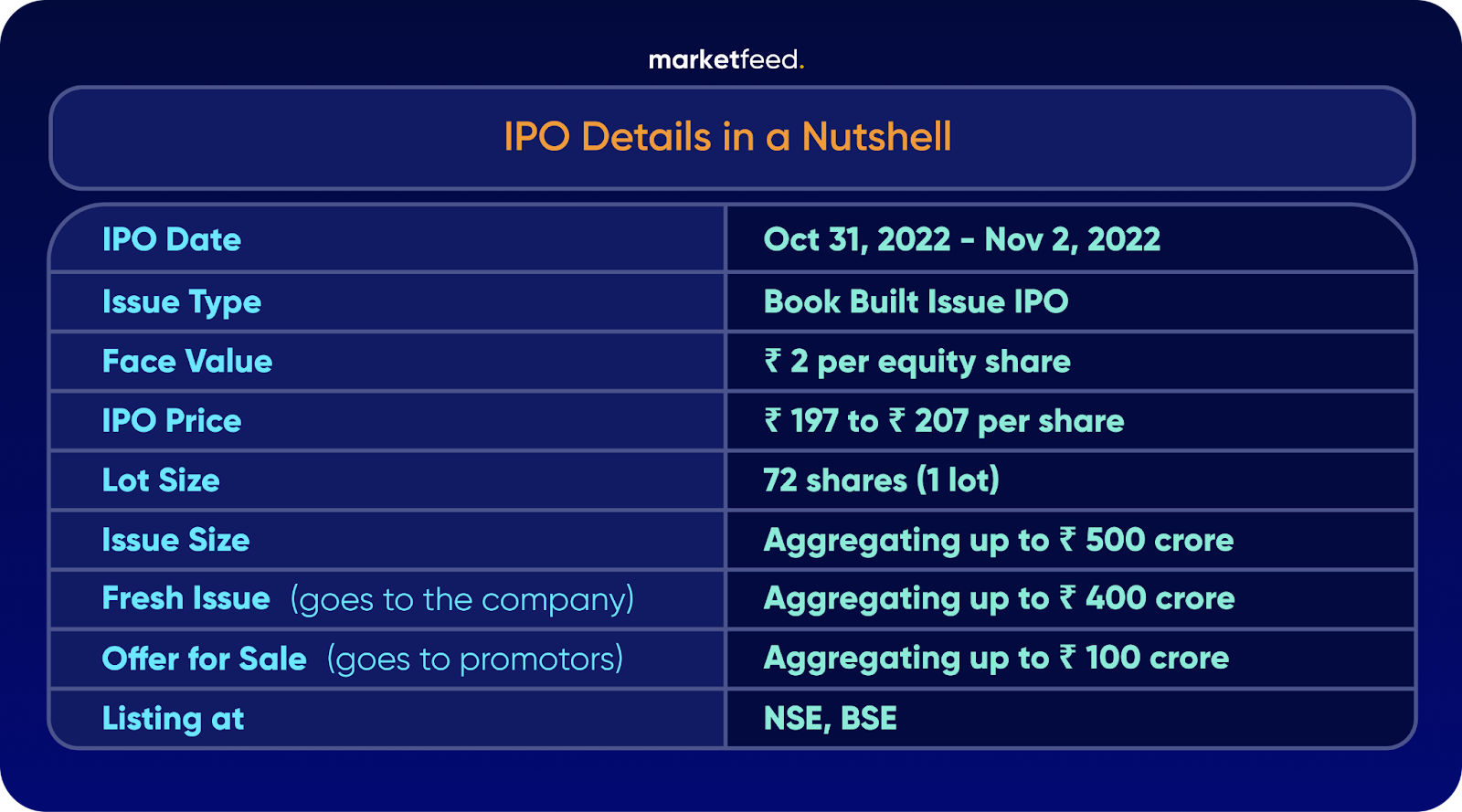
DCX Systems Ltd’s public issue opens on October 31 and closes on November 2. The company has fixed ₹197-207 per share as the price band for the IPO.
The fresh issue of shares (of the face value of ₹2 each) aggregates to ₹400 crore. The IPO also includes an offer for sale (OFS) by promoters and early investors, aggregating to ₹100 crore. Individual investors can bid for a minimum of 72 equity shares (1 lot) and in multiples of 72 shares thereafter. You will need a minimum of ₹14,904 (at the cut-off price) to apply for this IPO. The maximum number of shares that can be applied by a retail investor is 936 equity shares (13 lots).
DCX Systems will utilise the net proceeds from the IPO for the following purposes:
Repayment/prepayment of certain borrowings – ₹110 crore
Funding working capital requirements – ₹160 crore
Investment in its subsidiary, Raneal Advanced Systems Pvt. Ltd, to fund its capital expenditure expenses – ₹44.88 crore
General corporate purposes
The total promoter holding in DCXSL will decline from 98.2% to 73.58% post the IPO.
Financial Performance
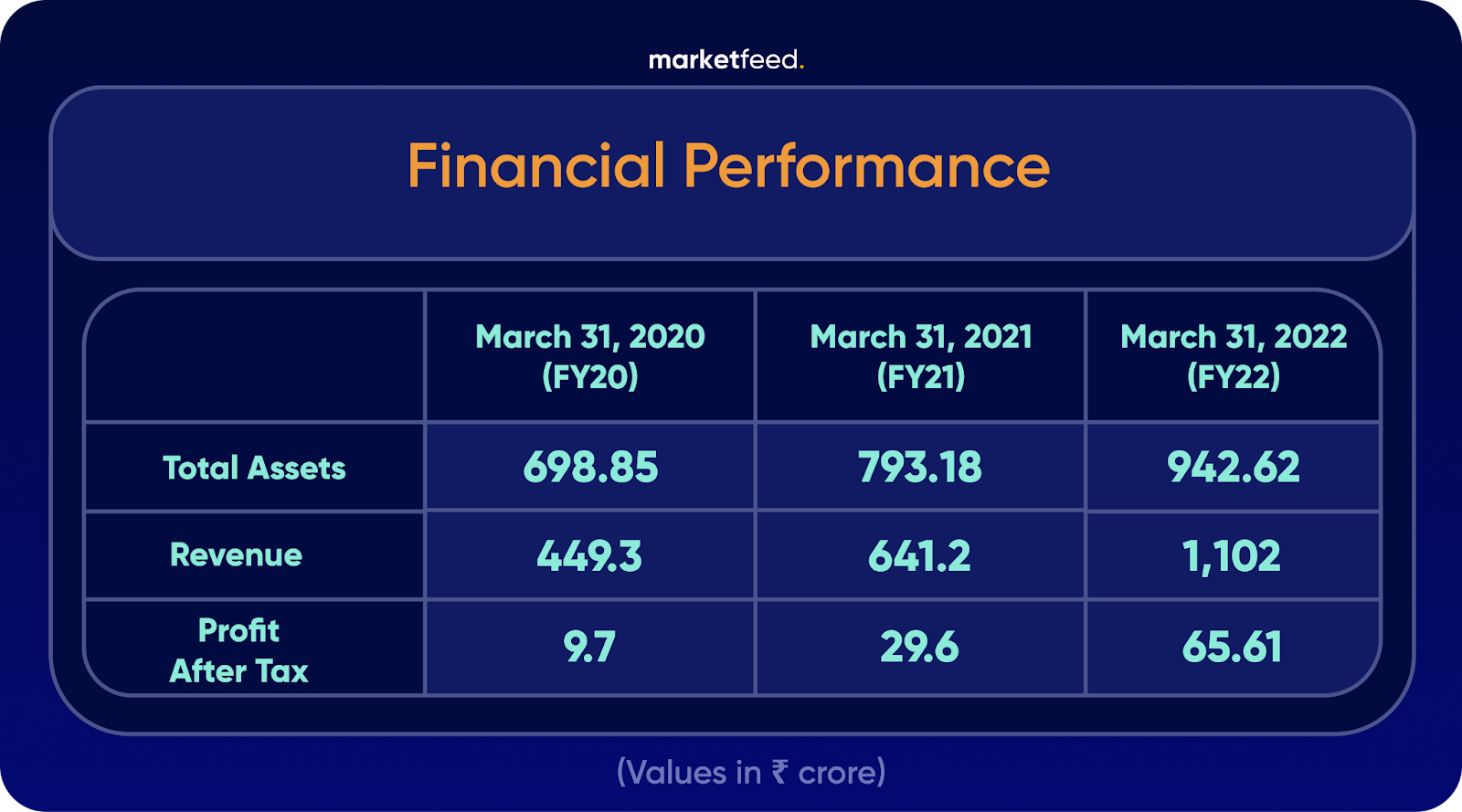
The company has posted healthy growth in both revenue and profits over the past three financial years (FY20-22). Its revenue has increased at a compounded annual growth rate (CAGR) of 56.64% during the same period! They generate a significant portion of the revenue from exports. In FY22, they exported $76 million worth of equipment, accounting for 4.7% of the overall defence exports from India.
The company’s order book has grown from ₹1,941.31 crore in FY20 to ₹2,369 crore in FY22. All these metrics indicate that the firm is growing rapidly in the Indian defence space.
Risk Factors
DCXSL derived nearly 85.7% of its total sales revenue from its top 3 clients as of FY22. The loss of any of these customers or a fall in demand from them will severely affect the company’s overall business.
The company depends significantly on offset defence contracts for a majority of its revenue. Any changes in the offset defence policy or a decline in defence funding by the govt will adversely impact its ability to grow or maintain sales.
DCX System’s current order book may not necessarily translate into future income in its entirety. Some customers may modify, cancel, or put orders on hold.
Significant shortages or delays in the supply of raw materials could severely impact DCXSL’s estimated costs, expenditures, and timelines.
IPO Details in a Nutshell
The book-running lead managers to the public issue are Edelweiss Financial Services, Axis Capital, and Saffron Capital Advisors. DCX Systems filed the Red Herring Prospectus (RHP) for its IPO on Oct 19. You can read it here. Out of the total offer, 75% is reserved for Qualified Institutional Buyers (QIBs), 15% for Non-Institutional Investors (NIIs), and 10% for retail investors.
Conclusion
India’s military spending in 2021 stood at $76.6 billion, rising 5% from 2020. This rise can be attributed to India’s existing tensions with Pakistan and increasing border tensions with China. Moreover, the market size for the Global Defence Electronics Market is estimated to be $142 billion in 2022. It is expected to grow at a CAGR of 6.6% to ₹237 billion by 2030. With its technology-enabled and scalable end-to-end solutions, DCXSL is well-positioned to capitalise on industry trends.
However, the company faces stiff competition from listed peers such as Bharat Electronics Ltd (BEL), Data Patterns, Paras Defence & Space Technologies, and Astra Microwave Products. To learn more about Indian defence stocks, click here.
The company has received some interest in the grey market. DCXSL’s IPO shares are trading at a premium of ₹80 in the unofficial market. Before applying to this IPO, we will wait to see if the portion reserved for institutional investors gets oversubscribed. As always, do consider the risks associated with the company and come to your own conclusion.
What are your opinions on this IPO? Will you be applying for it? Let us know in the comments section of the marketfeed app.
It’s raining IPOs in India! Data Patterns (India) Ltd has launched its initial public offering (IPO) today— December 14. It is currently the fastest-growing electronic systems supplier to the defence and aerospace sector in India. In this article, we take a closer look into the company and its IPO.
Company Profile – Company Profile – Data Patterns (India) Ltd
Data Patterns (India) Ltd (DPIL) is a defence and aerospace electronics solutions provider.It caters to the indigenously developed defence products industry. The company offers products to the entire spectrum of defence and aerospace platforms— space, air, land, and sea.
DPIL’s core capabilities include the design and development of electronic hardware, software, firmware, and product prototype. They cover a wide range of strategic defence and aerospace electronics solutions such as processors, power, radio frequencies, and embedded software. Their products have been used for the Tejas Light Combat Aircraft, Light Utility Helicopter, BrahMos missile program, precision approach radars, and communications intelligence systems. It also offers services such as functional testing and validation, environment testing and verification, and engineering services.
The company’s order book stood at Rs 581.29 crore as of Sept 30, 2021. Nearly 70% of total orders are based on production contracts on a single-vendor basis, and 20% are based on developmental contracts it undertakes for the Defence Research & Development Organisation (DRDO) and other defence agencies. The remaining 10% are services contracts.
DPIL has a manufacturing unit in Chennai that consists of a 1 lakh square feet factory space. It has facilities for design, manufacturing, qualification, and life cycle support of high-reliability electronic systems used in defence and aerospace applications.
About the IPO
Data Patterns (India) Ltd’s public issue opens on December 14 and closes on December 16. The company has fixed Rs 555-585 per share as the price band for the IPO.
The fresh issue of shares (of the face value of Rs 2 each) aggregates to Rs 348.22 crore. The IPO also includes an offer for sale (OFS) by promoters and early investors, aggregating to Rs 240 crore. Individual investors can bid for a minimum of 25 equity shares (1 lot) and in multiples of 25 shares thereafter. You will need a minimum of Rs 14,625 (at the cut-off price) to apply for this IPO. The maximum number of shares that can be applied by a retail investor is 325 equity shares (13 lots).
DPIL will utilise the net proceeds from the IPO for the following purposes:
Prepayment or repayment of all or a portion of certain outstanding borrowings availed by the company – Rs 60.8 crore
Funding working capital requirements – Rs 95.2 crore
Upgrading and expanding the company’s existing facilities at Chennai – Rs 59.8 crore
General corporate purposes
The total promoter holding in the company will decline from 58.63% to 45.62% post the IPO.
Financial Performance
Data Patterns (India) has posted a consistent increase in revenues and profits over the past three financial years. Between FY19-21, the company recorded the highest revenue growth of 71% amongst all defence and aerospace companies in India. The revenue for FY21 stood at Rs 224 crore, an increase of 43.5% YoY. Net margins have grown from 13.1% in FY20 to 24.5% in FY21. Meanwhile, revenue for the six months ended Sept 30, 2021 (H1 FY22) jumped 117% YoY to Rs 96.5 crore.
With a net profitability growth of ~164%, DPIL is one of the fastest-growing companies in India’s Defence and Aerospace Electronics sector. In FY21, the company’s operating margins, return on capital employed (ROCE), and return on equity (ROE) were the highest compared to its peers. These metrics show the company’s strong operational efficiency and the resulting potential for future value growth.
Risk Factors
DPIL’s business is highly dependent on contracts from the Government of India (GoI) and associated entities. A decline in the defence or space budget, reduction in orders, and termination of existing contracts could have an adverse impact on the company’s overall operations.
Data Patterns (India) Ltd depends on a limited number of customers such as DRDO Defence PSUs for more than 50% of its total revenue. The loss of any of its key customers or a decline in orders from them could severely affect its financial conditions.
The failure to comply with provisions of contracts entered with customers (particularly GoI entities) could have an adverse effect on the company’s reputation and operational results.
DPIL is subject to strict quality requirements, customer inspections, and audits. The failure to comply with quality standards may lead to the cancellation of existing and future orders.
The shutdown or slowdown of the company’s Design & Engineering and manufacturing facility could harm its financial performance.
Insufficient cash flow from operations or the inability to borrow funds could have a severe impact on DPIL’s business.
IPO Details in a Nutshell
The book-running lead managers to the public issue are IIFL Securities and JM Financial Consultants. Data Patterns (India) Ltd had filed the Red Herring Prospectus (RHP) for its IPO on December 2. You can read it here. Out of the total offer, 50% is reserved for Qualified Institutional Buyers (QIBs), 15% for Non-Institutional Investors (NIIs), and 35% for retail investors.
Ahead of the IPO, DPIL raised Rs 176 crore from anchor investors. The marquee investors include Nomura Funds, White Oak Capital, Enam, HDFC Mutual Fund (MF) ICICI Prudential MF, etc.
Conclusion
As a strategic defence and aerospace electronic solutions provider, Data Patterns (India) is well-positioned to benefit from India’s Make in India initiative. The company continues to receive large orders from several prestigious firms and agencies in the Indian defence ecosystem. With the government’s focus on domestic production, firms now have a larger role to play as defence imports will be restrained. However, DPIL faces risks due to a limited client base, stiff competition, and significant working capital requirements.
DPIL will be directly competing with MTAR Technologies, Bharat Electronics Ltd, Paras Defence & Space Tech, Astra Microwave Products, and Centum Electronics once it gets listed.
The company has received significant investor interest in the grey market. DPIL’s IPO shares are trading at a premium of ~Rs 610 in the unofficial market. Before applying to this IPO, we will wait to see if the portion reserved for institutional investors gets oversubscribed. As always, consider the risks associated with the company and come to your own conclusion.
What are your opinions on this IPO? Will you be applying for it? Let us know in the comments section of the marketfeed app.
The defence industry is one of the most strategically important sectors of India. Our military forces are known to be one of the best in the world. But for years, our government was heavily dependent on countries like Russia, USA, and France for military equipment. This is soon about to change.
The Ministry of Defence has launched initiatives to reduce the import of military equipment or weapons from foreign countries. India is on its way to becoming self-sufficient in the large-scale production of military aircraft, vehicles, missile systems, arms and ammunition, etc. The steps taken by our government have provided a significant boost to the companies that manufacture defence equipment.
At the recent Aero India 2021, these firms entered into large contracts with our government, as well as major defence and aerospace companies around the world. Once this happens, there are many companies that will benefit from this strategic shift.
In the Aero India show, Defence Minister Rajnath Singh also said the domestic manufacturing of bigger and complex defence platforms has now become the focus of our policy under the Atmanirbhar Bharat Abhiyan. India also plans to spend $130 billion (Rs 9.46 lakh crore) on military modernisation.
Along with self-reliance, exports are also a cash minting opportunity for India’s defence companies. Let us take a look at some of the prominent firms that primarily cater to the defence sector in India.
Hindustan Aeronautics Limited
Hindustan Aeronautics Limited (HAL) is engaged in the design, development, manufacture, repair, and servicing of aircraft, helicopters, aero-engines, and aerospace structures in India. Thecompany was incorporated in 1940 and is based in Bengaluru. It falls under the administrative control of the Ministry of Defence. HAL offers materials such as castings, general and precision forgings, rubber products, and composites. The company also provides avionics, such as navigation systems, head-up displays, laser range systems, flight data recorders, communication equipment, and missile navigation systems. HAL has designed and manufactured some of the most advanced Light Combat Aircraft (such as “Tejas”) and helicopters for the Indian Armed Forces.
HAL gets exclusive contracts from the space, defence, and civil industries around the world. It has a comprehensive Design and Development capability in the field of aerospace. The company has set up 11 research centers across India to cater to the rising demand of the defence industry.
Recent Announcements/Deals
On February 3, the Central Government formally sealed a deal with HAL to procure 83 Tejas MK1A Light Combat Aircraft (LCA) for the Indian Air Force (IAF). The estimated cost of this deal is Rs 48,000 crore. It has been dubbed as the “Biggest Make-in-India” contract till date. The delivery of the Tejas aircraft to IAF will begin in March 2024. This will significantly enhance the capabilities of IAF.
Recently, HAL and Rolls Royce agreed to expand their partnership in India for collaboration in two significant areas. This includes expanding the supply chain for both Civil and Defence Aerospace and establishing an authorized maintenance centre for specific engines to support Rolls-Royce’s global customers. HAL has signed a Memorandum of Understanding (MoU) with French firm Safran Aircraft Engines for a strategic corporation on high-thrust aero-engines. Similarly, the company entered into a large number of deals with prominent global companies during Aero India 2021.
Financial Performance
As a result of bulk orders and exports, HAL has been able to consistently increase its profits and revenues. Over the last 5 years, the company’s revenue has grown at a yearly rate of 4.44%, whereas the industry average stood at 3.73%. HAL posted its highest-ever turnover of Rs 21,218 crore for the financial year ended March 31, 2020. It also recorded a 21% YoY jump in net profit to a whopping Rs 2,832 crore during the same period. The company is yet to post its financial results for the October-December quarter (Q3 FY21). It has secured a market share of 87.19%, and thus, continues to dominate the Aerospace and Defence Equipment industry.
Since April 2020, HAL’s share price has surged by more than 98% so far. The company offers very attractive dividends.
Bharat Dynamics Limited
Bharat Dynamics Limited (BDL) is engaged in the manufacture and sale of guided missiles and allied defence products in India. It is a Public Sector Undertaking (PSU) under the Ministry of Defence. The company’s product portfolio includes surface-to-air missiles, anti-tank guided missiles, underwater weapons, launchers, countermeasures, and mechanized infantry weapons. BDL has emerged as a complete solution provider for the Indian Armed Forces. The PSU has collaborated with the Defence Research & Development Organisation (DRDO) to design and develop state-of-the-art missile and torpedo systems.
BDL has four manufacturing units located across the states of Telangana and Andhra Pradesh. As a part of its expansion plan, the company is setting up a unit at Amravati in Maharashtra to cater to the growing demands of the Armed Forces. BDL has also focused extensively on research & development (R&D) activities. It has partnered with educational institutions and startups for the joint development of AI-based technologies.
Recent Announcements/Deals
At Aero India 2021, Bharat Dynamic launched two products— the Dishani and Garudastra. Garudastra is an advanced anti-submarine, self-guided, state-of-the-art homing torpedo (underwater missile). BDL has partnered with the Naval Science and Technological Laboratory (NSTL) and DRDO for the same. Dishani is an expendable, air-deployed anti-submarine warfare (ASW) sonobuoy system.
BDL entered into strategic partnerships with around 10 major domestic and international firms at the event.
The Akash Missile System- developed by DRDO and produced by Bharat Dynamics. BEL, L&T, and Tata Power were also involved in the production of the surface-to-air defence system. (Source: ANI News)
Financial Performance
Despite large orders from the Armed Forces and the international market, the company’s overall revenue and profit have been on a decline. Over the past 5 years, BDL’s revenue has grown at a yearly rate of -0.42%, whereas the industry average stood at 3.73%. It has been able to secure a market share of 12.81%. The company is yet to post its Q3 results.
BDL’s stock price has surged by 84% since April 2020. The company offers fairly attractive dividends as well.
Bharat Electronics Limited
Bharat Electronics Limited (BEL) designs, manufactures, supplies, and exports electronic equipment and systems for the defence and civilian markets in India. The company was established in 1954 and is based in Bengaluru. BEL’s defence products include communication systems, land-based radars, naval systems, electronic warfare systems, tank & armored fighting vehicle electronic systems, and much more. The company has partnered with DRDO laboratories to design and produce customised defence systems.
BEL’s non-defence products include e-governance systems, homeland security products, civil radars, integrated traffic management systems, solar power solutions, and telecom and broadcast systems. The company has a wide network of offices, production units, and service centres across India.
Recently, the Ministry of Defence signed a contract with Bharat Electronics for the procurement of Software Defined Radio Tactical (SDR-Tac). The estimated contract value is Rs 1,000 crore. SDR-Tac is a radio system primarily used in ships. BEL will deliver the product to the Indian Armed Forces within three years.
Financial Performance
Due to a large demand for its products and services, BEL’s turnover and profit have been on a constant rise. The company’s revenue has grown at a yearly rate of 11.45%, whereas the industry average stood at 8.47%. (The company comes under the Electronics Equipment industry).
BEL reported a 25% YoY increase in consolidated net profit to Rs 278.50 crore for the quarter ended December (Q3). Its revenue rose by 1.4% YoY to Rs 2,343.90 crore during the same period. The company said its performance in the current financial year (FY21) had been impacted by the Covid-19 pandemic. However, it expects to show a strong operational recovery in the months to come. BEL has been able to obtain a market share of 65.94%.
BEL’s share price has surged by 90% since April 2020.
More Companies in Focus
The other prominent listed companies that come under the category of ‘Defence Sector Stocks’ include:
Ashok Leyland – It is one of the top suppliers of trucks or armored vehicles for the Indian army.
Larsen & Toubro – Over the years, L&T has designed, developed, and manufactured arms, military equipment, and even submarines.
Astra Microwave Products – The company supplies microwave-based high-value radio frequency super components.
Bharat Forge – There are reports which state that the company may start supplying artillery guns to the Indian army.
Apollo Microsystems – The company provides custom-built electronics and electro-mechanical solutions to the defence sector.
Reliance Naval & Engineering – The company has entered into a warship repair agreement with the Ministry of Defence.
Conclusion
According to a report by India Brand Equity Foundation (IBEF), the Indian aerospace and defence market is projected to reach $70 billion (~Rs 5.10 lakh crore) by 2030. Over the years, our government has increased its military expenditure. The manufacturers of defence equipment have received a boost through strong initiatives such as Atmanirbhar Bharat. Certain reforms have also led to an increase in foreign direct investment (FDI) in the defence sector. We are now witnessing a significant rise in the production and exports of various defence products. The dominant firms in this industry, backed by DRDO, are focussing on creating new aerospace opportunities.
With ever increasing tensions from neighbouring countries, India needs to have much stronger forces. Phasing out old equipment and ushering in the new era of technology will help our forces perform duties better and with more confidence. Hoping that our defence companies will be at the forefront of this change.
All these factors prove to be highly favourable for the companies mentioned above. For the long term, these stocks have great potential for profit. Let us look forward to seeing how these firms cater to the future requirements of our Armed Forces.
Govt approves 74% FDI in defence sector under automatic route
The Indian Government has now permitted up to 74% foreign direct investment (FDI) in the defence sector, under the automatic route. The automatic route means that investments can be made even without prior approval from the government. The earlier limit for FDIs in the sector was 49%. The increased limit would help firms in the defense sector (HAL, BEML, BDL) to seek new industrial licences. The government has also stated that FDI in this sector will be subject to security clearance by the Ministry of Home Affairs.
RBL Bank, ICICI Prudential Life Insurance form bancassurance partnership
RBL Bank Ltd and ICICI Prudential Life Insurance have entered into a bancassurance partnership to offer an array of life insurance products to the bank’s customers. The lender will distribute ICICI Prudential Life’s products through its network of 398 branches, which is spread across 28 states. For the insurance firm, the partnership will help to further strengthen its multi-channel distribution network.
Heritage Foods sells holding in Future Retail for Rs 132 crore
Heritage Foods Ltd has sold its entire shareholding in Future Retail for Rs 131.94 crore, in the open market. The company held a 3% stake or 1.78 crore equity shares in the Kishore Biyani-led Future Retail. Heritage Foods said that the sale proceeds will be mainly utilized for the repayment of its long term loans.
Zydus Cadila gets USFDA Fast Track Designation for Saroglitazar
Zydus Cadila has received Fast Track Designation (FTD) from the US Food and Drug Administration (USFDA) for its investigational drug candidate- Saroglitazar Mg. The drug is indicated for the treatment of a serious liver disease known as primary biliary cholangitis (PBC). A drug that receives FTD is eligible for accelerated approval and priority review, if the relevant criteria are met.
Maruti Suzuki launches online car financing platform in Nexa
Maruti Suzuki Ltd has announced the launch of Smart Finance service for Nexa customers across 30 cities in India. The online service seeks to provide end-to-end and real-time car finance facilities to prospective customers. To offer multiple financier options, Maruti has also tied up with HDFC Bank, Yes Bank, ICICI Bank, IndusInd Bank, and many more.
Aurobindo Pharma gets USFDA approval for sedative drug
Aurobindo Pharma Ltd said it has received final approval from the US Food & Drug Administration for its generic version of Precedex injection. This injection is used for the sedation of patients. The drug major stated that the product will be launched in January 2021 and has an estimated market size of $228 million (~ Rs 1,677 crore).
The Board of Directors of Hindustan Aeronautics Ltd (HAL) has declared an interim dividend of Rs 15 per equity share of Rs 10 each fully paid up, for FY21. The record date for the payment of interim dividend will be December 19, 2020. This is the first interim dividend to be declared by HAL for the financial year ended 2021.
Dr. Reddy’s ADRs listed at NSE International Exchange
The American Depository Receipts (ADRs) of Dr. Reddy’s Laboratories has been listed at the NSE International Exchange (NSE IFSC). The secondary listing of Dr. Reddy’s ADRs at NSE IFSC would provide global investors an additional venue to transact in their ADRs. Participants holding depository accounts with the International Central Securities Depository (Euroclear Bank, Clearstream) or Depository Trust Company (DTC) shall be able to transact on these ADRs.
Amazon eyes potential $100 million investment in Apollo Pharmacy: Report
According to a report from Economic Times, Amazon.com, Inc. is considering a $100 million (~Rs 736 crore) investment in Apollo Pharmacy. The report states that Amazon’s potential investment would help it to compete with Reliance Industries and Tata Group, in India’s fast-growing drug market. Apollo Pharmacy is India’s largest branded pharmacy network, with over 3,000 outlets in key locations.
Firstsource Solutions partners with Celonis to accelerate digital transformation for enterprises
Firstsource Solutions Ltd has partnered with Germany-based Celonis GmbH to help businesses to improve agility and optimize their outcomes. The strategic partnership combines Firstsource’s deep domain expertise with Celonis’ AI-powered technologies to accelerate digital transformation for enterprises. Firstsource Solutions is a provider of business process outsourcing (BPO) services, based in Mumbai.