Categories
Editorial

Syrma SGS Technology Ltd IPO: All You Need to Know

An IPO has arrived at Dalal Street after nearly three months! Chennai-based Syrma SGS Technology has launched its initial public offering (IPO) today— August 12. In this article, we take a closer look into the company and its IPO.

Company Profile – Syrma SGS Technology Ltd

Syrma SGS Technologies Ltd (SSTL) is an engineering and design company engaged in electronics manufacturing services (EMS). They offer high-value integrated design and production solutions for the automotive, industrial appliances, healthcare, IT, railways, and consumer products industries.

SSTL’s product portfolio includes:

  • Printed circuit board assemblies (PCBAs)
  • Radio frequency identification (RFID) products – Uses frequency to search, identify, track, and communicate with items/platforms and people.
  • Electromagnetic and electromechanical parts
  • Motherboards
  • Memory products – Dynamic Random Access Memory (DRAM) modules, solid state, and USB drives

The company boasts of hundreds of prominent clients, including TVS Motor Company, Hindustan Unilever, AO Smith India Water Products, Eureka Forbes, and Total Power Europe B.V. They are currently focusing on a high-margin product portfolio for these customers.

SSTL operates 11 state-of-the-art manufacturing facilities across Himachal Pradesh, Haryana, Uttar Pradesh, Tamil Nadu, and Karnataka. Four of these facilities collectively contribute more than 75% to the company’s revenue. It also has dedicated research & development (R&D) facilities in Chennai and Stuttgart, Germany.

About the IPO

Syrma SGS Technology’s public issue opens on August 12 and closes on August 18. The company has fixed Rs 209-220 per share as the price band for the IPO.

The fresh issue of shares (of the face value of Rs 10 each) aggregates to Rs 766 crore. The IPO also includes an offer for sale (OFS) by promoters and early investors, aggregating to Rs 74 crore. Individual investors can bid for a minimum of 68 equity shares (1 lot) and in multiples of 68 shares thereafter. You will need a minimum of Rs 14,960 (at the cut-off price) to apply for this IPO. The maximum number of shares that can be applied by a retail investor is 884 equity shares (13 lots).

SSTL will utilise the net proceeds from the IPO for the following purposes:

  • Funding capital expenditure requirements for the development of an R&D facility. Also for expanding or setting up manufacturing facilities – Rs 403 crore
  • Funding long-term working capital requirements – Rs 131.58
  • General corporate purposes.

Financial Performance

(Values in Rs crore)

SSTL’s net profit has declined in the last two years, but revenue has grown at a healthy CAGR of 27.56%. Unfortunately, their margins have been under pressure due to Covid-led cost increases in raw materials. Net debt has declined significantly from Rs 801.2 crore in FY19 to Rs 259.15 crore in FY21.

The company’s revenue from operations jumped 132.64% (year-on-year) YoY to Rs 1,019.7 crore for the financial year ended March 2022 (FY22). EBITDA rose 50.4% YoY to Rs 46.8 crore during the same period. The share of exports to the total revenue stood at 54.77%. They sell their products in over 24 countries, including the US, Germany, and Australia.

Risk Factors

  • SSTL’s customers do not make long-term commitments with the company and may cancel or change their production requirements. This could adversely impact its business and financial condition.
  • The failure to identify and understand evolving industry trends and develop new products could severely impact the company’s overall performance.
  • The global nature of SSTL’s operations exposes it to risks such as foreign currency exchange rate fluctuations, strict import/export regulations, etc.
  • They depend on third parties for the supply of raw materials and delivery of products. SSTL’s operations will be severely affected if such providers fail to meet their obligations.
  • The failure to keep technical knowledge confidential could destroy the company’s competitive advantage.
  • There are certain outstanding legal proceedings against SSTL, its directors, and promoters.

IPO Details in a Nutshell

The book-running lead managers to the public issue are IIFL Securities, ICICI Securities, and DAM Capital Advisors. Syrma SGS Technology filed the Red Herring Prospectus (RHP) for its IPO on August 4. You can read it here. Out of the total offer, 50% is reserved for Qualified Institutional Buyers (QIBs), 15% for Non-Institutional Investors (NIIs), and 35% for retail investors.

Ahead of the IPO, DPIL raised Rs 252 crore from anchor investors. The marquee investors include Nomura, Kuber India Fund, BNP Paribas Arbitrage, ICICI Prudential Mutual Fund (MF), Tata MF, etc.

Conclusion

The electronics industry is one of the largest and fastest-growing in the world. India is becoming a popular manufacturing hub for key electronic components. Our government has committed more than $15 billion over the next six years across Production-Linked Incentive (PLI) schemes related to semiconductors, IT hardware & components, and large-scale electronics manufacturing. The Indian EMS market is also expanding due to the China+1 strategy and import substitution. With its strong product portfolio and R&D capabilities, Syrma SGS Technology is well-positioned to capitalise on domestic and global opportunities.

Once it gets listed, SSTL will be directly competing with leading players in the EMS industry such as Dixon Technologies and Amber Enterprises.

The company has not received major interest in the grey market. SSTL’s IPO shares are trading at a premium of ~Rs 20 in the unofficial market. Before applying to this IPO, we will wait to see if the portion reserved for institutional investors gets oversubscribed. As always, do consider the risks associated with the company and come to your own conclusion.

What are your opinions on this IPO? Will you be applying for it? Let us know in the comments section of the marketfeed app.
Categories
Editorial

Aether Industries Ltd IPO: All You Need to Know

The IPO ‘may-hem’ continues in the Indian stock markets! Gujarat-based speciality chemical manufacturer Aether Industries Ltd has launched its three-day initial public offering (IPO) today— May 24. In this article, we analyse the company and its IPO. 

Company Profile – Aether Industries Ltd

Established in 2013, Aether Industries Ltd (AIL) is one of the fastest-growing speciality chemical manufacturing companies in India. It produces advanced intermediates and chemicals involving complex, differentiated chemistry and technology core competencies. They started building an in-house research & development (R&D) team in 2013 and commenced commercial operations in FY17. 

The company operates through three business models:

  1. Large-scale manufacturing of its own intermediates and speciality chemicals.
  2. Contract research and manufacturing services.
  3. Exclusive manufacturing

AIL’s portfolio consisted of over 25 chemical products as of March 31, 2022. Their key customers are based in North America, Europe, and India. Prominent clients include Adama Ltd (Israel), BYK Group (Germany), UPL Limited, Divi’s Labs, and Dr. Reddy’s Labs. The company derives 62.6% of its revenue from the pharma segment and 22.9% from the agrochemical segment. Exports make up ~49% of its total revenue, which also acts as a natural hedge against volatility in raw materials sourced from overseas. It owns and operates two manufacturing facilities in Surat, Gujarat.

Aether Industries grew at an annualized rate (CAGR) of 49.5% between 2019 and 2021. The company’s vision is to create a niche in the global chemical industry with a creative approach to chemistry and technology systems. 

About the IPO

Aether Industries Ltd’s public issue opens on May 24 and closes on May 26. The company has fixed Rs 610-642 per share as the price band for the IPO.

The fresh issue of shares (of the face value of Rs 10 each) aggregates to Rs 627 crore. The IPO also includes an offer for sale (OFS) by promoters and early investors, aggregating to Rs 181.04 crore. Individual investors can bid for a minimum of 23 equity shares (1 lot) and in multiples of 23 shares thereafter. You will need a minimum of Rs 14,766 (at the cut-off price) to apply for this IPO. The maximum number of shares that a retail investor can apply is 299 equity shares (13 lots).

The company will utilise the net proceeds from the IPO for the following purposes:

  • Repayment/prepayment of borrowings – Rs 138 crore
  • Funding capital expenditure requirements (greenfield project in Surat) – Rs 163 crore
  • Funding working capital requirements – Rs 165 crore
  • General corporate purposes.

The total promoter holding in Aether Industries will decline from 96.96% to 87.09% post the IPO.

Financial Performance

AIL has posted a consistent increase in total revenue and profits over three financial years (FY19-21). The three part-business model works in perfect synergy. Its revenue from exports increased at a CAGR of 58.5% from Rs 100.09 crore in FY19 to Rs 251.6 crore in FY21.

The company reported a 32.5% YoY increase in revenue from operations to Rs 442.5 crore during the 9 months ended December 2021 (9M FY22). Net profit rose 72.7% YoY to Rs 82.9 crore during the same period. EBITDA stood at Rs 126 crore, up 64% YoY.

Risk Factors

  • Aether Industries faces various risks associated with operations involving the manufacture, usage, and storage of hazardous substances.
  • The company derives ~73% of its total revenue from top 20 customers (as of Dec 31, 2021). Its operations will be adversely affected if these customers choose not to source their requirements from AIL or if they terminate long-term contracts.
  • Non-compliance with safety, health, and environmental laws will severely harm AIL’s business.
  • The company does not have long-term agreements with suppliers of raw materials. A surge in the cost of raw materials or any shortfall in supply could adversely impact its overall operations.
  • All of AIL’s manufacturing facilities are located in Gujarat, exposing them to regulatory or geography-specific risks.

IPO Details in a Nutshell

The book-running lead managers to the public issue are HDFC Bank and Kotak Mahindra Capital. AIL filed the Red Herring Prospectus (RHP) for its IPO on May 16. You can read it here. Out of the total offer, 50% is reserved for Qualified Institutional Buyers (QIBs), 15% for Non-Institutional Investors (NIIs), and 35% for retail investors.

Ahead of the IPO, AIL raised Rs 240 crore from anchor investors.

Conclusion

The chemical industry is one of the most vital and fastest-growing industries in our country. Numerous companies thrive in this sector, which makes it highly competitive. They have flourished mainly due to the surge in demand from the agricultural, pharmaceutical, material science, and paint industries. As per a report from India Brand Equity Foundation (IBEF), the specialty chemicals sector is expected to grow at an annual growth rate of 12.4% to $64 billion within the next three years. The strong R&D capabilities and differentiated portfolio of products will help Aether Industries effectively compete in this sector.

AIL will be competing with leading players like Clean Science & Technology Ltd, Navin Fluorine International, Vinati Organics, PI Industries, and Fine Organics Ltd once it gets listed. You can read our in-depth analysis of India’s chemical industry here.

AIL’s IPO shares are trading at a premium of Rs 4 in the grey market. Before applying to this IPO, we will wait to see if the portion reserved for institutional investors gets oversubscribed. Do consider the risks associated with the company and come to your own conclusion.

What are your views on Aether Industries Ltd’s IPO? Will you be applying for it? Let us know in the comments section of the marketfeed app!

Categories
Editorial

Ethos Limited IPO: All You Need to Know

Luxury watch retailer Ethos Limited launched its three-day initial public offering (IPO) on May 18. The company sells some of the best-in-class premium watches in the world today. In this article, we analyse the company and its IPO.

Company Profile – Ethos Limited

Ethos Limited is one of the largest luxury and premium watch retailers in India. It had a 13% market share of the total retail sales in the premium & luxury watch segment as of FY20. Moreover, the company had a 20% market share exclusively in the luxury watch segment during the same period. Ethos sells 50 watch brands, including Omega, TAG Heuer, Rado, Longines, Tissot, Oris SA, and Rolex. These brands use expensive materials and delicate craftsmanship to create unique timepieces.

The company currently operates 50 physical stores across 17 cities in India. The stores are categorised into: 14 Ethos Summit stores and one airport store, 14 multi-brand outlets and 10 Ethos boutiques, 10 luxury segment mono-brand boutiques offering a single luxury watch brand, and one Certified Pre-Owned (CPO) luxury watch lounge. Its top three stores are located in the National Capital Territory of Delhi and Bengaluru (Tier-1 cities), accounting for one-third of its revenue.

Ethos also provides an omnichannel experience to customers through its website and social media platforms. Their online sales accounted for 37.64% of the total sales in FY21. The company’s loyalty program, called Club Echo, is a key source of repeat sales. They had access to a high net-worth Individual (HNI) base of over 2,83,300 at the end of March 31, 2022.

The company is a subsidiary of KDDL Limited, a leading manufacturer of watch components and high-quality precision stamped components.

About the IPO

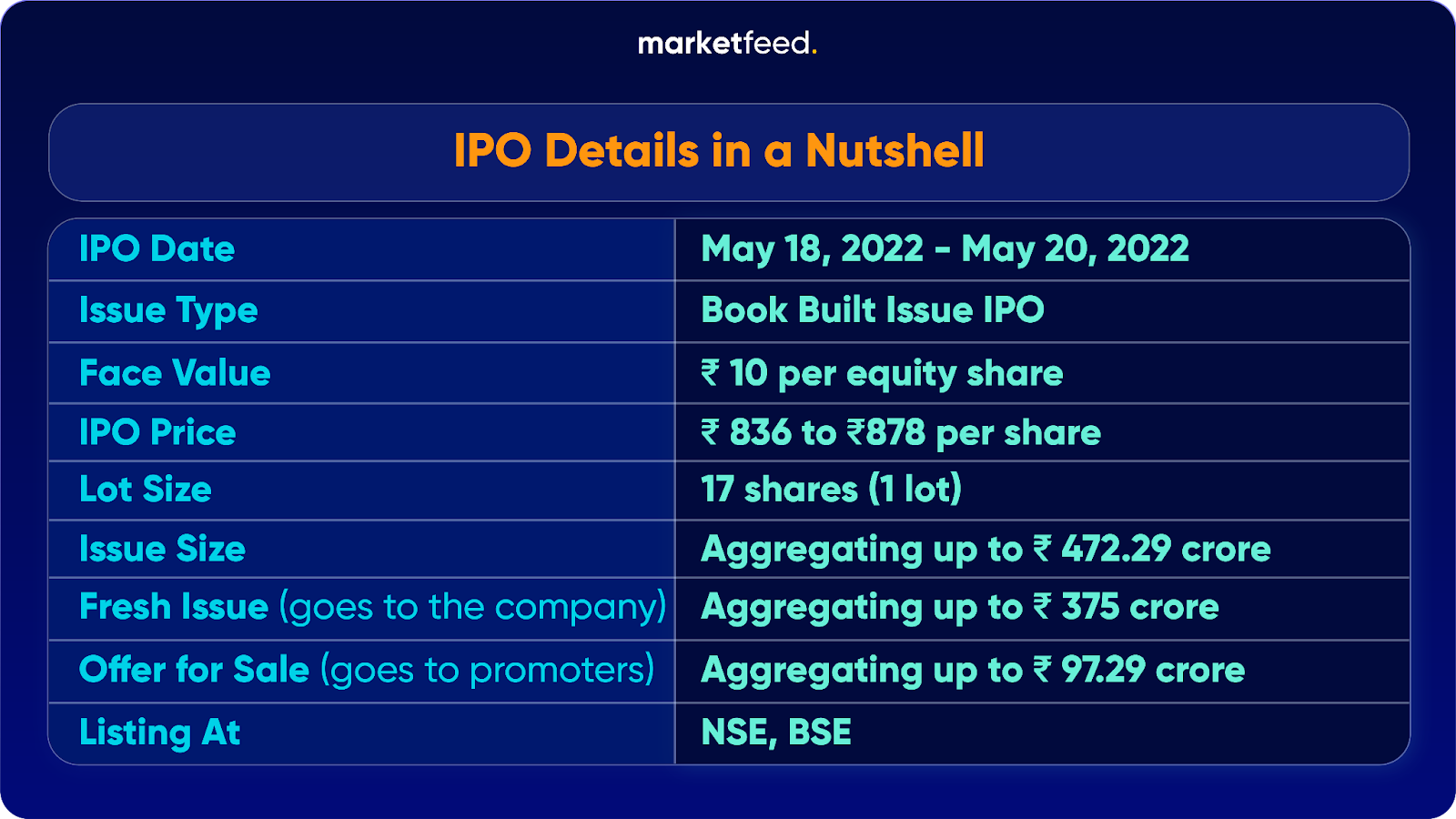
Ethos Ltd’s public issue opens on May 18 and closes on May 20. The company has fixed Rs 836-878 per share as the price band for the IPO.

The fresh issue of shares (of the face value of Rs 10 each) aggregates to Rs 375 crore. The IPO also includes an offer for sale (OFS) by promoters and early investors, aggregating to Rs 97.29 crore. Individual investors can bid for a minimum of 17 equity shares (1 lot) and in multiples of 17 shares thereafter. You will need a minimum of Rs 14,926 (at the cut-off price) to apply for this IPO. The maximum number of shares that can be applied by a retail investor is 221 equity shares (13 lots).

Ethos will utilise the net proceeds from the IPO for the following purposes:

  • Repayment/prepayment of borrowings – Rs 29.89 crore
  • Funding working capital requirements – Rs 234.96 crore
  • Establishing new stores – Rs 33.27 crore 
  • Renovating existing stores and upgrading enterprise resource planning (ERP) software – Rs 1.98 crore
  • General corporate purposes.

The total promoter holding in the company will decline from 81.01% to 61.65%.

Financial Performance

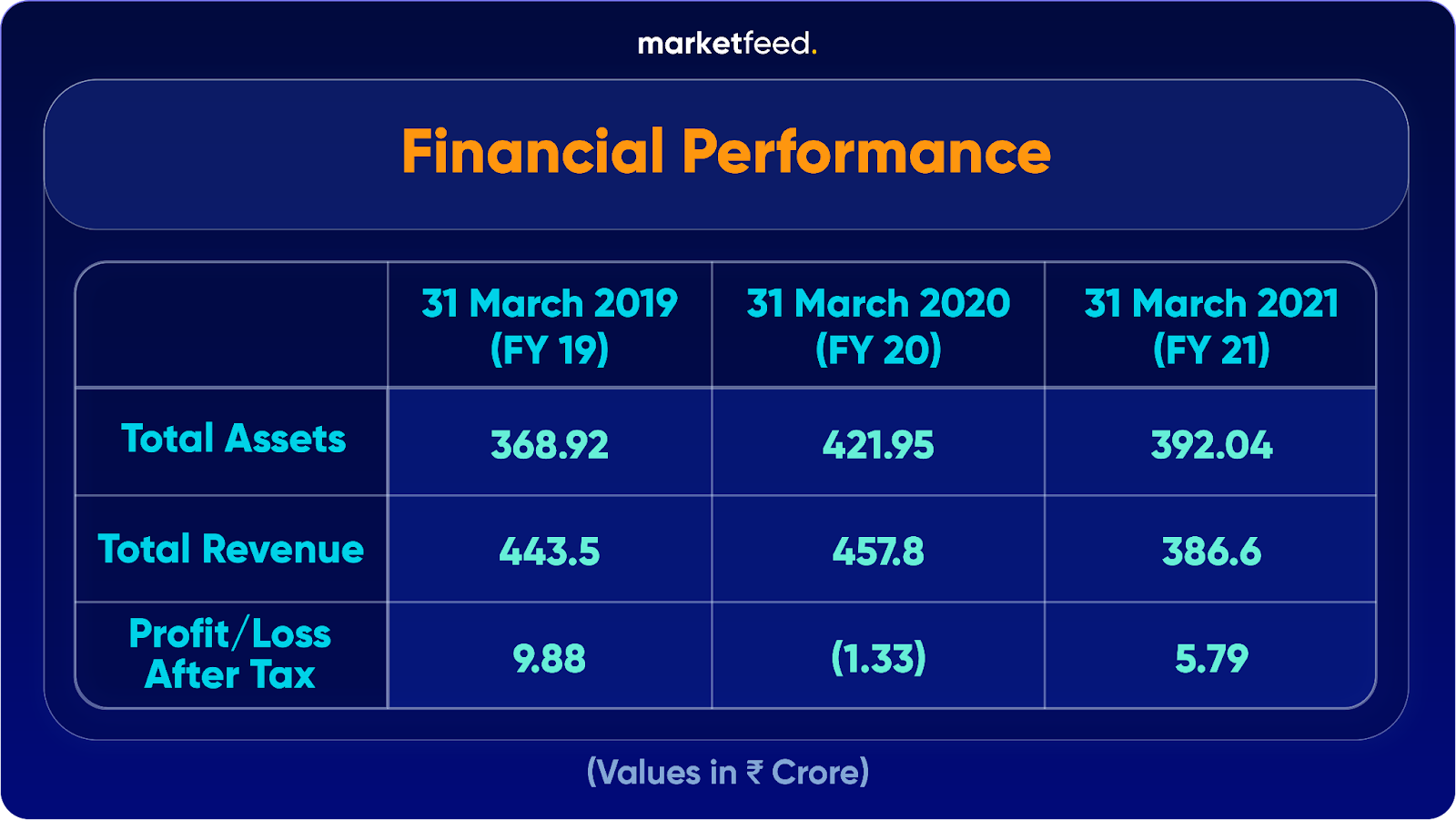
Ethos’ revenue figures are inconsistent. It posted a 15.5% YoY decline in revenue to Rs 386.6 crore for the financial year 2020-21 (FY21). Net profit stood at Rs 5.79 crore in FY21, compared to a loss of Rs 1.33 crore in FY20. EBITDA fell 23% YoY to Rs 39.7 crore in FY21. The luxury and high luxury watch segment sales constituted ~58% of the total sales in FY21. Going forward, the growth of online retailers could create pricing pressures.

Interestingly, the company reported a revenue of Rs 418.59 crore during the first nine months of FY22 and the net profit jumped to Rs 15.99 crore.

Risk Factors

  • Ethos does not have definitive agreements for the supply of products or fixed terms of trade with a majority of its suppliers. The failure to successfully leverage supplier relationships and networks could adversely affect the company.
  • The company’s business partly depends on the continued success and reputation of third-party brands across the globe. Any negative impact on these brands or the failure to protect intellectual property rights may severely affect Ethos’ operations.
  • Most of the company’s suppliers work with them on a non-exclusive basis. In the absence of exclusivity with suppliers, Ethos may be subject to stiff competition from entities that have more resources.
  • Ethos is dependent on watch brands for the manufacturing of all the products it sells. Any disruptions in third-party manufacturing facilities or the failure to adhere to relevant quality standards could harm the company’s reputation.
  • The inability to identify customer demand accurately or maintain an optimal level of inventory in stores may adversely impact its operations.

IPO Details in a Nutshell

The book-running lead managers to the public issue are Emkay Global Financial Services and InCred Capital Wealth Portfolio Managers. Ethos Ltd filed the Red Herring Prospectus (RHP) for its IPO on May 6. You can read it here. Out of the total offer, 50% is reserved for Qualified Institutional Buyers (QIBs), 15% for Non-Institutional Investors (NIIs), and 35% for retail investors.

Ahead of the IPO, Ethos raised Rs 141.68 crore from nine anchor investors.

Conclusion

According to ICICI Securities, the premium and luxury watch market is expected to grow at a ~12% CAGR from Rs 6,600 crore in FY20 to Rs 11,900 crore in FY25. The high luxury watch market is expected to grow at a CAGR of 14% to Rs 1,040 crore over the next five years. Ethos plans to increase its store count by 13 over the next few years. Its business model requires access to high working capital to stock up inventory. A significant portion of the IPO proceeds will be used for this purpose. They also aim to improve the assortment of existing brands and bring new brands to India through exclusive partnerships. 

Before applying to this IPO, we will wait to see if the portion reserved for institutional investors gets oversubscribed. Do consider the risks associated with the company and come to your own conclusion.

What are your views on Ethos Ltd’s IPO? Will you be applying for it? Let us know in the comments section of the marketfeed app.

Categories
Editorial

Delhivery Limited IPO: All You Need to Know

The IPO frenzy within the Indian startup ecosystem resumes! Logistics and supply chain startup Delhivery has launched its three-day initial public offering (IPO). In this article, learn all about the company and its IPO.

Company Profile – Delhivery Limited

Delhivery Ltd is the fastest-growing fully integrated player in the logistics services market in India in terms of revenue as of FY21. The Gurgaon-based firm offers a wide range of logistics services, including express parcel delivery, heavy goods delivery, truckload freight, warehousing, cross-border express, and supply chain software. They also offer value-added services like e-commerce return services, payment collection & processing, installation & assembly services, and fraud detection.

Delhivery’s customers primarily include e-commerce marketplaces, direct-to-consumer (D2C) e-tailers, and small & medium enterprises (SMEs)

As of December 31, 2021 (Q3 FY22), the company’s total active customer base stood at 23,113. It posted a Rate Automated Sort Capacity of 3.70 million shipments per day during the same period. Delhivery has built a pan-India network. It services 17,488 PIN codes, covering 90.6% of the total 19,300 PIN codes in India! Its network infrastructure includes 124 gateways, 20 automated sort centres, 83 fulfillment centres, 35 collection points, 24 returns processing centres, and 2,235 direct delivery centres.

The size of the company’s active customers has grown four times in the last three financial years. They have also seen significant growth in PIN code reach and delivery points. Since its inception, Delhivery has invested heavily in cutting-edge engineering and technological capabilities to drive growth. They are backed by prominent venture capital firms like SoftBank and Tiger Global.

About the IPO

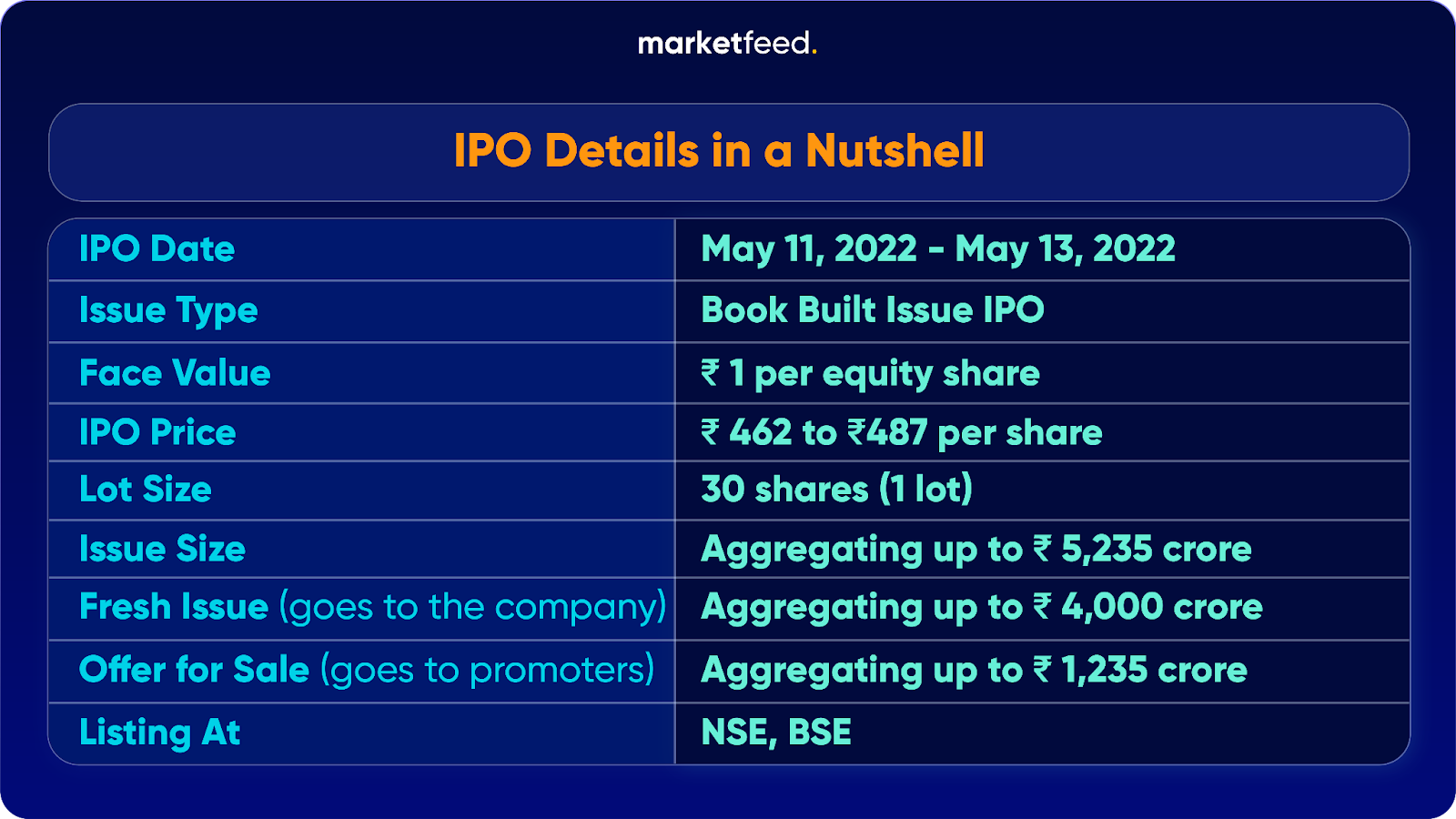
Delhivery Ltd’s public issue opens on May 11 and closes on May 13. The company has fixed Rs 462-487 per share as the price band for the IPO.

The fresh issue of shares (of the face value of Rs 1 each) aggregates to Rs 4,000 crore. The IPO also includes an offer for sale (OFS) by promoters and early investors, aggregating to Rs 1,235 crore. Individual investors can bid for a minimum of 30 equity shares (1 lot) and in multiples of 30 shares thereafter. You will need a minimum of Rs 14,610 (at the cut-off price) to apply for this IPO. The maximum number of shares that can be applied by a retail investor is 390 equity shares (13 lots).

Delhivery will utilise the net proceeds from the IPO for the following purposes:

  • Funding organic growth.
  • Funding inorganic growth through acquisitions and strategic initiatives.
  • General corporate purposes.

Financial Performance

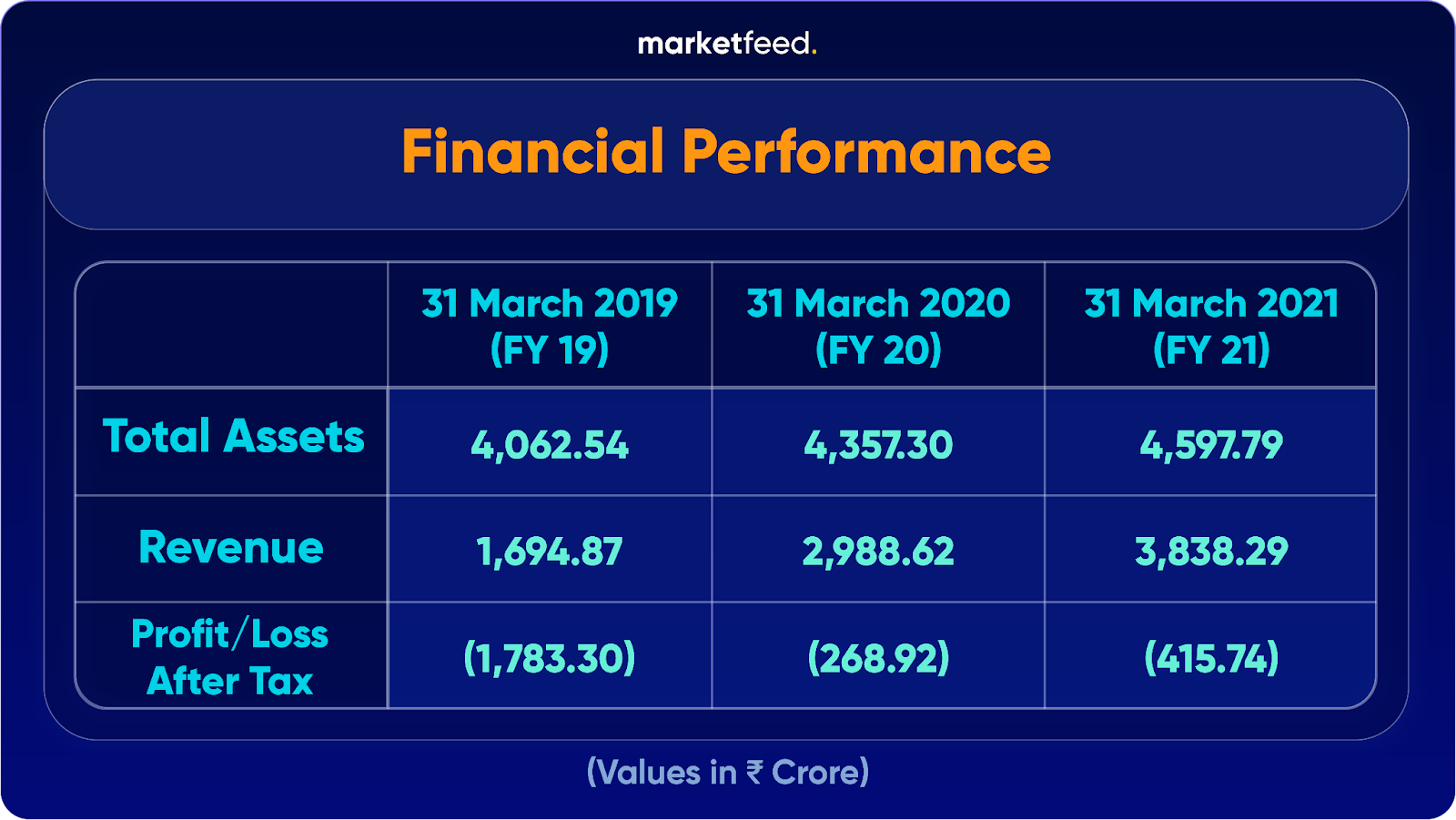
Delhivery Ltd is yet to post profits. However, its revenue growth has been impressive. The company’s topline has grown at a CAGR of 48% from FY19 to FY21. Revenue from contracts rose 31% YoY to Rs 3,647 crore in FY21. Like most startups, Delhivery has been burning cash to focus on scaling its operations. It posted a negative free cash flow of Rs 246 crore in FY21, compared to Rs 848 crore in FY20. It may take them a few years to achieve profitability.

Freight, handling, and servicing costs surged to Rs 3,480 crore during the first nine months of FY22 from Rs 2,026 crore in FY21.

Risk Factors

  • Delhivery has a history of losses and negative cash flows from operating and investing activities. 
  • The company relies on a scaled, automated, and unified network infrastructure for its business operations. The inability to maintain or expand its network infra will adversely affect its overall performance.
  • Any disruptions in Delhivery’s logistics and transportation facilities will severely impact its financial condition.
  • The company faces risks associated with shipments handled and transported through its network, which may not be fully covered by insurance policies.
  • Delhivery’s business and growth are highly correlated with the growth of India’s e-commerce industry. The inability to efficiently diversify into other industry verticles could harm its overall operations.

IPO Details in a Nutshell

The book-running lead managers to the public issue are Kotak Mahindra Capital, Morgan Stanley India, BofA Securities India, and Citigroup Global Markets India. Delhivery Ltd filed the Red Herring Prospectus (RHP) for its IPO on April 30. You can read it here. Out of the total offer, 75% is reserved for Qualified Institutional Buyers (QIBs), 15% for Non-Institutional Investors (NIIs), and 10% for retail investors.

Ahead of the IPO, Delhivery raised Rs 2,347 crore from 64 anchor investors.

Conclusion

The Indian logistics sector has been progressing at a rapid pace as a result of the constant growth of e-commerce platforms. It has become vital to our country’s overall economic growth. According to Delhivery’s RHP, the logistics sector is expected to grow at a CAGR of 9-10% to ~Rs 28.1 lakh crore by FY26! Delhivery’s long-term growth is heavily dependent on its ability to control costs. It may also need to pass on any increase in operating expenses to customers. The company has planned to use the issue proceeds to scale up its existing business by setting up offices and expanding the support team.

Delhivery will be directly competing with leading firms such as Blue Dart Express, TCI Express, Allcargo Logistics, and Mahindra Logistics once it gets listed.

The company’s IPO shares are trading at a premium of Rs 7 in the grey market. Before applying to this IPO, we will wait to see if the portion reserved for institutional investors gets oversubscribed. As always, consider the risks associated with the company and come to your own conclusion.

What are your views on Delhivery Ltd’s IPO? Will you be applying for it? Let us know in the comments section of the marketfeed app.

Categories
Editorial

Life Insurance Corporation of India (LIC) IPO: All You Need to Know

The biggest initial public offering (IPO) in the history of the Indian stock market is here! Life Insurance Corporation of India has launched its IPO today— May 4. The Central Government aims to raise up to Rs 21,000 crore by divesting a 3.5% stake in the country’s largest life insurer. In this article, learn all about LIC and its IPO.

Company Profile – Life Insurance Corporation of India Ltd

Life Insurance Corporation of India was formed on September 1, 1956, by merging and nationalizing 245 private life insurance companies in India. It offers unit-linked insurance products, saving insurance products, term insurance products, health insurance, and annuity & pension products. LIC is currently the largest entity in the Indian insurance space, with a market share of above 61.6% in terms of premiums

They also hold a 61.4% market share in terms of new business premiums (NBS) and a 71.8% market share based on the number of individual policies issued. [NBS is the premium acquired from new policies during a particular year.] More importantly, LIC is the fifth-largest insurer in the world in terms of gross written premiums (GWP).

LIC is a trusted brand in our country and has a customer-centric business model. It has been a security net for Indians. Over the years, the company has harnessed technological capabilities to support policyholders and drive operational efficiencies. 

Fact Sheet:

LIC’s total assets under management (AUM) stood at a whopping Rs 40.1 lakh crore as of December 31, 2021 (Q3 FY22). Interestingly, this figure is more than 3.2 times the total AUM of all private life insurers in India. It is more than 1.1 times the AUM of the entire Indian mutual fund industry’s AUM!

The company has a strong omnichannel distribution network, consisting of over 0.13 crore agents, 2,128 micro insurance agents, and 215 alternative channels. LIC operates through an extensive network of 2,048 branches and 1,559 satellite offices. [A satellite office is a branch of a larger company that is physically separate from the organization’s main office.] The insurer also operates in the UAE, Singapore, Fiji, Mauritius, Qatar, and the United Kingdom. 

The embedded value (EV) of LIC was estimated at Rs 5.4 lakh crore as of Q3 FY22. The EV of a life insurance company is the sum of the adjusted net asset value (NAV) and the present value of future profits. It is essentially the industry standard for valuing an insurance company. As per reports, the market valuation of LIC could be around 3-4 times the EV.

LIC is also the biggest player in India’s equity markets. As of Dec 31, 2021, its investments in listed shares represented ~4% of the total market capitalization of NSE! 

About the IPO

Life Insurance Corporation’s public issue opens on May 4 and closes on May 9. The company has fixed Rs 902-949 per share as the price band for the IPO.

The IPO is entirely an offer for sale (OFS) of 22.13 crore equity shares by the promoter (Government of India), aggregating to Rs 21,008.48 crore. Individual investors can bid for a minimum of 15 equity shares (1 lot) and in multiples of 15 shares thereafter. You will need a minimum of Rs 14,235 (at the cut-off price) to apply for this IPO. The maximum number of shares that can be applied by a retail investor is 210 equity shares (14 lots).

The government has announced a discount of Rs 60 per share for policyholders and Rs 45 for employees.

If you are a LIC policyholder and wish to apply for the IPO:

  1. Your PAN must be updated in LIC’s records.
  2. The PAN used for LIC policies has to be the same as that registered with your broker account.

The primary objective of the IPO is to provide an exit strategy (or liquidity) for LIC’s promoters. The company aims to achieve the benefits of listing the equity shares on NSE and BSE. The total promoter holding in LIC will decline from 100% to 96.5% post the IPO.

Financial Performance

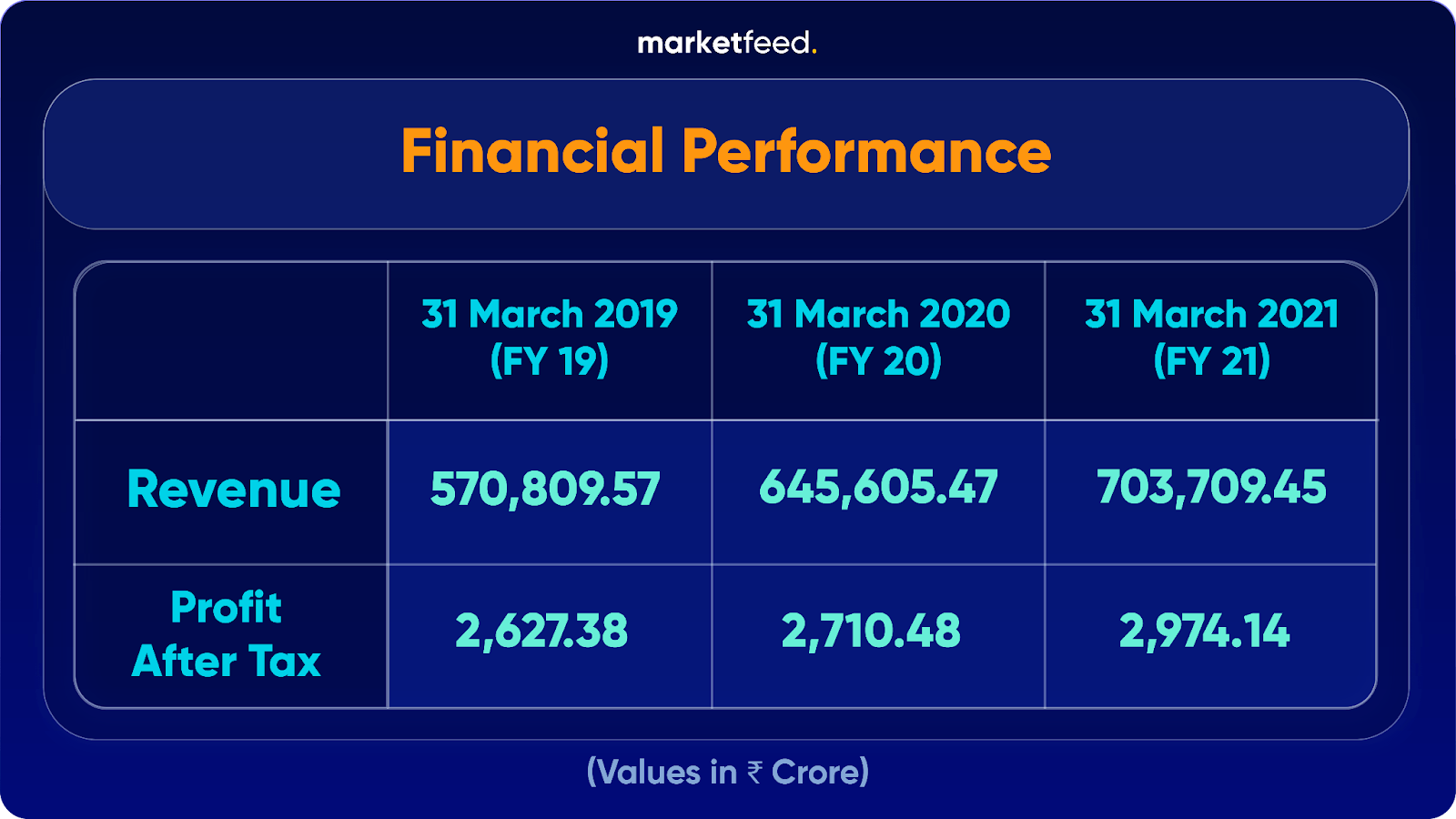
LIC has posted strong growth in revenue and profits from FY 2019-21. The company’s total income increased by 9% YoY to Rs. 7,03,732.43 crore in fiscal 2021. It was due to higher net earned premiums and investment income. Meanwhile, net profit rose 9.73% YoY to Rs 2,974.14 crore in FY21. The net profit on sale/redemption of policyholders’ investments jumped 105% YoY to Rs 39,809.61 crore during the same period. 

The gross written premium (GWP) increased at a CAGR of 9.21% on a consolidated basis between FY19 and FY21. [GWP is the total premium an insurer writes during a specific period before deductions like reinsurance and ceding commissions.] Moreover, LIC’s 13-month persistency ratio increased from 66% in FY19 to 67% in FY21. This suggests growth in policyholders who renewed their policies.

It has an investment of Rs 38.4 lakh crore towards policyholders’ funds and is debt-free as of Dec 31.

Risk Factors

  • The ongoing Covid-19 pandemic could adversely affect LIC’s business aspects like agents’ abilities to sell products and increased expenses due to changes in mortality and investment portfolio.
  • The insurance industry is highly competitive. The company will be directly competing with leading private entities such as SBI Life, HDFC Life, and ICICI Prudential once it gets listed.
  • Volatility in capital markets, loss of customer confidence in the insurance industry, or a decline in customers’ financial positions could severely affect LIC’s overall performance.
  • Any unfavourable publicity concerning the insurance giant can harm its brand name and reputation.
  • The inability to retain and recruit individual agents at a reasonable cost and time could adversely impact LIC as individual agents procure most individual new business premiums.

IPO Details in a Nutshell

The book-running lead managers for the public issue are Axis Capital, Kotak Mahindra Capital, BofA Securities, Goldman Sachs (India), J.P. Morgan, etc. LIC filed the Red Herring Prospectus (RHP) for its IPO on April 26. You can read it here. Out of the total offer, 50% is reserved for Qualified Institutional Buyers (QIBs), 15% for Non-Institutional Investors (NIIs), and 35% for retail investors.

Ahead of the IPO, LIC raised a massive Rs 5,627 crore from 123 anchor investors! The anchor investor portion of the IPO was also oversubscribed.

Conclusion

Insurance is not too popular in India, especially when it comes to life insurance. Only a marginal portion of the country holds life insurance. The total insurance coverage in India stood at a mere 3.76% in 2019. There can be a massive scale of development in this sector. Amidst the Covid-19 pandemic, the awareness towards securing insurance policies has increased. Whether it be health insurance or life insurance, more people are actively looking for the best products that can safeguard their future. Thus, LIC can capitalise on the high growth opportunities in the Indian life insurance sector. 

LIC’s maiden offer is expected to help the central government meet its disinvestment target of Rs 78,000 crore for FY22.

LIC’s IPO shares are trading at a premium of Rs 63 in the grey market. Before applying to this IPO, we will wait to see if the portion reserved for institutional investors gets oversubscribed. As always, consider the risks associated with the company and come to your own conclusion.

What are your views on LIC’s IPO? Will you be applying for it? Let us know in the comments section of the marketfeed app.

Categories
Editorial

Campus Activewear Ltd IPO: All You Need to Know

Leading sports & athleisure footwear manufacturer Campus Activewear Ltd has launched its three-day initial public offering. In this article, we analyse the company and its IPO.

Company Profile – Campus Activewear Ltd

Campus Activewear Ltd (CAL) is the largest sports and athleisure footwear brand in India in terms of value and volume as of FY21. Incorporated in 2005, the company manufactures and distributes a wide range of running shoes, walking shoes, casual shoes, floaters, slippers, flip-flops, and sandals. It offers multiple choices across styles and colour palettes. Their products target different price points, geographical locations, and demographics. As of Dec 31, 2021 (Q3 FY21), CAL sold 1,433 active styles of footwear for men, 241 styles for women, and 485 styles for children.

Interestingly, CAL’s products cover 85% of the addressable market of shoes with a price range of Rs 500-3,500 a pair. It sold 1.3 crore pairs in FY21 and 1.36 crore pairs during the nine months ended Dec 2021

The company owns and operates five manufacturing facilities across India, with an installed annual capacity of 2.88 crore pairs as of Q3 FY21. It has strong in-house manufacturing and assembling capabilities. CAL’s retail operations are carried out through offline stores and online channels (Flipkart, Myntra). They have a network of over 425 distributors and ~19,200 retailers across 664 cities in India

CAL secured a ~17% market share in the branded sports & athleisure (S&A) footwear industry in India in the financial year 2020-21 (FY21). The company aims to emerge as the most preferred sports and athleisure brand in India and touch the daily active lifestyle of every citizen. 

About the IPO

Campus Activewear Ltd’s public issue opens on April 26 and closes on April 28. The company has fixed Rs 278-292 per share as the price band for the IPO.

The IPO is entirely an offer for sale (OFS) of 4.79 crore equity shares by promoters and early investors, aggregating to Rs 1,400.14 crore. Individual investors can bid for a minimum of 51 equity shares (1 lot) and in multiples of 51 shares thereafter. You will need a minimum of Rs 14,892 (at the cut-off price) to apply for this IPO. The maximum number of shares that can be applied by a retail investor is 663 equity shares (13 lots).

The primary objective of the IPO is to provide an exit strategy (or liquidity) for CAL’s promoters. The company aims to achieve the benefits of listing the equity shares on NSE and BSE. The total promoter holding in Campus Activewear will decline from 78.21% to 74.1% post the IPO.

Financial Performance

*FY19FY20FY21
Total Assets505.55719.22684.75
Total Income596.69734.11715.08
Profit After Tax38.662.3626.86
(Values in Rs crore)

Campus Activewear Ltd posted a 57% year-on-year (YoY) decline in net profit to Rs 26.86 in FY21. Its revenue declined 2.6% YoY to Rs 715.08 crore during the same period. The temporary shutdown of CAL’s manufacturing facilities during the Covid-19 pandemic adversely affected its gross margins. It incurred higher staff welfare with payments during a period with no production and for nearly five months.

However, the company posted impressive results for the nine months ended December 2021 (9M FY22). They reported a 403% YoY jump in net profit to Rs 84.80 crore, while revenue grew 93% YoY to Rs 841.8 crore. EBITDA surged 204% YoY to Rs 165.2 crore in 9M FY22. The average selling price per pair came higher at Rs 615 during the same period, compared to Rs 533 in 9M FY21. Their total borrowings stood at Rs 174.1 crore as of December.

CAL is back on track and ready for bright prospects with rising demands for its products in Tier-1 and Tier-2 cities.  

Risk Factors

  • Campus Activewear Ltd is reliant on its trade distribution and direct-to-consumer (D2C) channels for a majority of its sales. Any disruptions in the operations of these channels or the inability to expand/grow them may adversely affect sales and cash flows.
  • The sports and athleisure footwear industry is extremely competitive. The failure to compete effectively or develop successful products will affect CAL’s business and financial condition.
  • The company’s sales will be severely affected if they are unable to anticipate popular trends and consumer preferences.
  • CAL often experiences moderate fluctuations in its average selling price (ASP) based on seasonality. Historically, revenues in the first and second quarters have been lower when compared to those in the third and fourth quarters.
  • Any disruptions in warehousing and logistics will severely impact the company’s overall business.
  • Pricing pressure from customers could affect gross margin, profitability, and the ability to increase prices.

IPO Details in a Nutshell

IPO DateApril 26, 2022 – April 28, 2022
Issue TypeBook Built Issue IPO
Face ValueRs 5 per equity share
IPO PriceRs 278 to Rs 292 per equity share
Lot Size51 shares (1 lot)
Issue SizeAggregating up to Rs 1,400.14 crore
Offer for Sale (goes to promoters)Aggregating up to Rs 1,400.14 crore
Listing AtNSE, BSE

The book-running lead managers of the public issue are JM Financial, BofA Securities, CLSA India, and Kotak Mahindra Capital. CAL filed the Red Herring Prospectus (RHP) for its IPO on April 18. You can read it here. Out of the total offer, 50% is reserved for Qualified Institutional Buyers (QIBs), 15% for Non-Institutional Investors (NIIs), and 35% for retail investors.

Conclusion

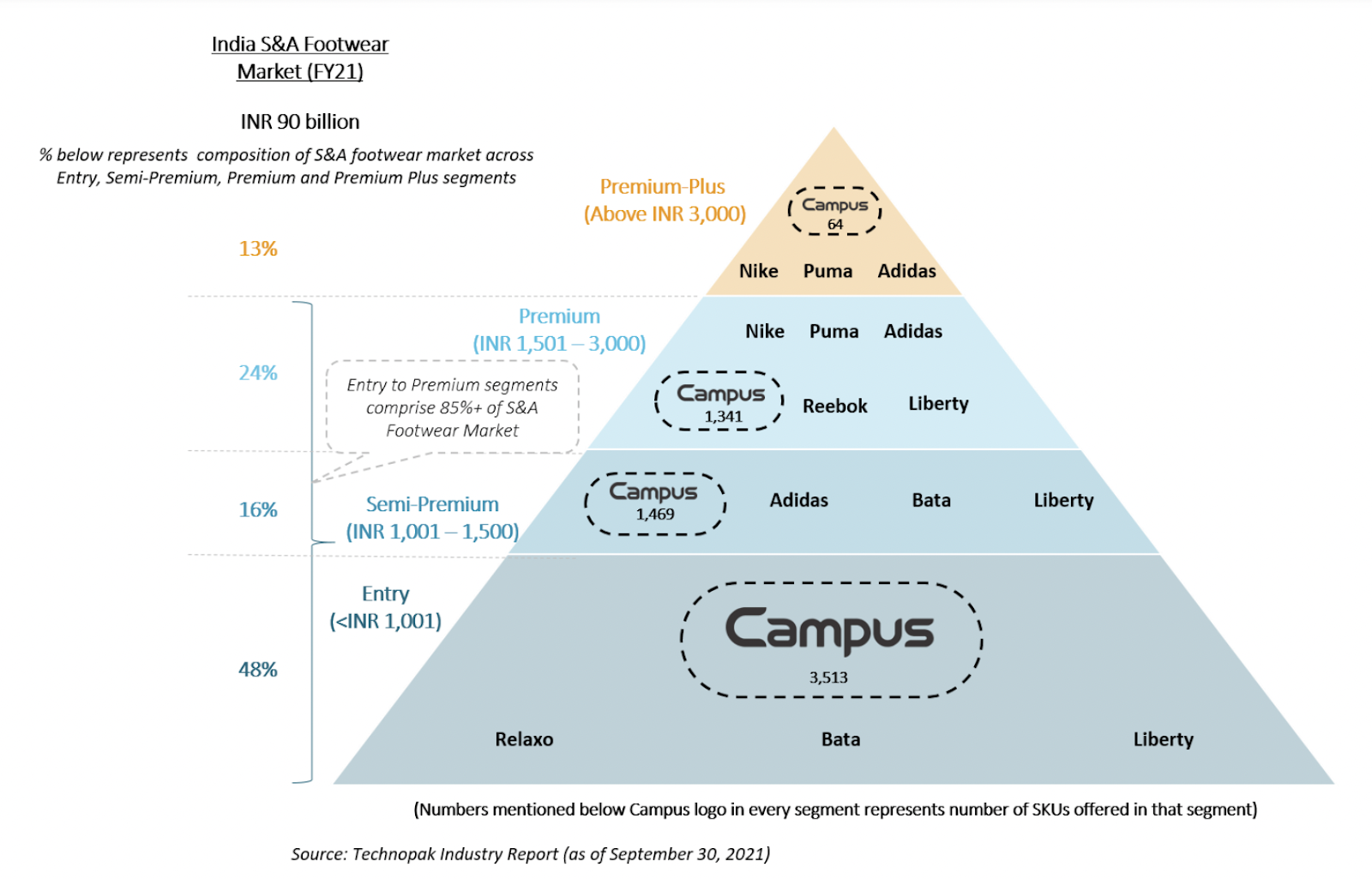
According to a Technopak report, the sports & athleisure (S&A) footwear market is expected to grow at a CAGR of 21% to Rs 22,000 crore! Many are now focusing on improving their general health and well-being. Campus Activewear’s products cover a large portion of our country’s S&A footwear market at various price points. The company’s in-house manufacturing and assembly capabilities allow them to ensure all-round availability and quality of products.  

However, the market is dominated by international brands like Nike, Addidas, Puma, and much more. CAL also faces competition from Indian brands such as Bata India, Relaxo Footwear, Metro Brands, etc. It will be difficult for the company to grow and expand in any pricing segment of the S&A footwear market.

Source: Campus Activewear RHP

CAL’s IPO shares are trading at a premium of Rs 100 in the grey market. So far, the portion reserved for NIIs has been subscribed 3.37 times and that of retail investors 3.2 times. As always, consider the risks associated with the company and come to your own conclusion.

What are your views on Campus Activewear Ltd’s IPO? Will you be applying for it? Let us know in the comments section of the marketfeed app.

Categories
Editorial

Vedant Fashions Ltd IPO: All You Need to Know

Vedant Fashions Ltd, owner of the popular ethnic wear brand Manyavar, has launched its initial public offering (IPO) today— Feb 4. This will be the third public issue of 2022. In this article, learn about the company’s business and its IPO.

Company Profile – Vedant Fashions Ltd

Incorporated in 2002, Vedant Fashions Ltd (VFL) offers a wide range of ethnic wear. Its ‘Manyavar’ brand is a category leader in the branded Indian wedding and celebration wear market with a pan-India presence. They have established a strong multi-channel network and launched various brands to serve this specific market. Mohey (women’s ethnic wear), Mebaz, Manthan, and Twamev are four other brands of the company. VFL focuses on spreading India’s vibrant culture and traditions through these brands.

As of Sept 30, 2021, Vedant Fashions’ retail footprint stood at 1.2 million sq. ft., covering 535 exclusive brand outlets (EBOs) across 212 cities and towns in India. You may have seen its EBOs at major malls in your locality. VFL also operates 11 EBOs across the United States, Canada, and UAE. Most of these EBOs are owned and operated by franchisees. Its sales network also includes 825 multi-brand outlets (MBOs), 145 large-format stores (LFS), and online platforms.

The company also runs impressive advertising campaigns. They have roped in Amitabh Bachchan, Virat Kohli, Ranveer Singh, Alia Bhatt as its brand ambassadors.

About the IPO

Vedant Fashions’ public issue opens on February 4 and closes on February 8. The company has fixed Rs 824-866 per share as the price band for the IPO.

The IPO is entirely an offer for sale (OFS) of 3.6 crore equity shares by promoters and early investors, aggregating to Rs 3,149.19 crore. Individual investors can bid for a minimum of 17 equity shares (1 lot) and in multiples of 17 shares thereafter. You will need a minimum of Rs 14,722 (at the cut-off price) to apply for this IPO. The maximum number of shares that can be applied by a retail investor is 221 equity shares (13 lots).

The main objective of the IPO is to provide an exit strategy (or liquidity) to VFL’s promoters. The company aims to achieve the benefits of listing the equity shares on NSE and BSE. The total promoter holding in the company will decline from 92.4% to 84.9% post the IPO.

Financial Performance

Vedant Fashion’s financial performance has been severely impacted by the Covid-19 pandemic. The company reported a 43.8.% YoY decline in net profit to Rs 132.9 crore in FY21. Its revenue from operations fell 38% YoY to Rs 564.8 crore during the same period. VFL derived 90.14% of its sales from franchise-owned exclusive brand outlets (EBOs) in FY21. It has posted average gross margins of above 60% over the past three years. 

However, revenue has recovered significantly in the first half of the current financial year (H1 FY22) as mobility improved and state-wide restrictions eased. In H2 FY22, revenue jumped 401% YoY to Rs 359.8 crore. ~88.09% of its sales revenue was derived from EBOs. Net profit stood at Rs 98.4 crore in H1 FY22, compared to a loss of Rs 17.65 crore in H1 FY21. 

VFL has a strong balance sheet with no debt and an asset-light model.

Risk Factors

  • VFL primarily depends on a single discretionary product category— Indian wedding and celebration wear. Thus, the demand for its products is highly dependent on the frequency and volume of weddings. The company’s business is also characterised by rapidly-changing customer preferences.
  • The inability to maintain or enhance the recognition and reputation of its brands may adversely affect the company’s business.
  • Vedant Fashions outsources a significant proportion of its production processes and activities to third parties. A slowdown or disruption in the operations and performance of third parties (or inability to retain them) could severely impact VFL’s business. 
  • The company’s warehouse, factory, and a majority of its third-party suppliers are exclusively based in a single geographical location- Kolkata. This exposes VFL’s supply chain to regional risks.
  • Any failure in quality control processes may adversely impact the company’s overall operations.

IPO Details in a Nutshell

The book-running lead managers to the public issue are Axis Capital, Edelweiss Financial Services, ICICI Securities, Kotak Mahindra Capital, and IIFL Securities. Vedant Fashions Ltd had filed the Red Herring Prospectus (RHP) for its IPO on Jan 22. You can read it here. Out of the total offer, 50% is reserved for Qualified Institutional Buyers (QIBs), 15% for Non-Institutional Investors (NIIs), and 35% for retail investors.

Ahead of the IPO, VFL raised Rs 944.75 crore from anchor investors. The marquee investors include the Government of Singapore, Fidelity, Nomura, Morgan Stanley Asia (Singapore) Pte. It also includes HDFC Life Insurance Company, SBI Mutual Fund (MF), Axis MF, and Aditya Birla Sun Life MF.

Conclusion

According to CRISIL, India’s branded wedding wear market is estimated to grow at a CAGR of 18-20% to reach Rs 8.2 lakh crore by FY25. This is primarily due to an increase in the availability of brands catering to celebratory occasions and rising disposable income. Vedant Fashions will continue to focus on growth by doubling its footprint in the domestic and international markets in the near term. The company aims to penetrate deeper into the existing markets and also identify inorganic growth opportunities.

However, it would be difficult to maintain margins due to heavy competition from local retailers, online retailers, and non-branded products. Inflationary pressures have also weighed in. Since VFL’s business is highly concentrated on wedding and celebration wear, it is vulnerable to demand variations.

The company has not received much interest in the grey market. VFL’s IPO shares are trading at a premium of just Rs 40-45 in the unofficial market. Before applying to this IPO, we will wait to see if the portion reserved for institutional investors gets oversubscribed. As always, consider the risks associated with the company and come to your own conclusion.

What are your views on this IPO? Will you be applying for it? Let us know in the comments section of the marketfeed app.
Categories
Editorial

Adani Wilmar Ltd IPO: All You Need to Know

Another mainstream IPO has hit the Indian stock markets! Adani Wilmar Ltd, the company behind the popular “Fortune” brand of edible oils, has launched its IPO today. In this article, we take a close look into the company and learn more about its IPO.

Company Profile – Adani Wilmar Ltd

Adani Wilmar Ltd (AWL) is a fast-moving consumer goods company (FMCG) that offers essential kitchen commodities. Incorporated in 1999, it is a joint venture between the Adani Group and Wilmar Group (a multinational agribusiness group).

AWL offers a diverse range of products across three categories: 

  1. Edible oils such as soya oil, palm oil, sunflower oil, groundnut oil, cottonseed oil, mustard oil, rice bran oil, and specialty fats. The company’s flagship brand, Fortune, is the largest selling edible oil brand in India.
  2. Packaged food and FMCG products: This segment includes wheat flour, basmati rice, soya nuggets, pulses. AWL is among the top five fastest-growing packaged food companies in India in terms of revenue.
  3. Industry essentials such as de-oiled cakes, oleochemicals, castor oil & derivatives.

The company has a well-established operational infrastructure and strong manufacturing capabilities. It operates 22 plants across ten states in India, comprising 10 crushing units and 19 refineries. Its refinery in Mundra (Gujarat) is one of the largest single-location refineries in India, with a capacity of 5,000 metric tonnes (MT) per day. As of Sept 30, 2021 (Q2 FY22), the company had 88 depots in India, with an aggregate storage space of ~1.8 million square feet.

Adani Wilmar claims to have the largest distribution network among all branded edible oil companies in India. They had 5,590 distributors across 28 states and 8 Union Territories, catering to over 16 lakh retail outlets as of Q2. 

About the IPO

Adani Wilmar Ltd’s public issue opens on January 27 and closes on January 31. The company has fixed Rs 218-230 per share as the price band for the IPO.

The IPO includes a fresh issue of about 15.65 crore shares, aggregating to Rs 3,600 crore. Individual investors can bid for a minimum of 65 equity shares (1 lot) and in multiples of 65 shares thereafter. You will need a minimum of Rs 14,950 (at the cut-off price) to apply for this IPO. The maximum number of shares that can be applied by a retail investor is 845 equity shares (13 lots).

AWL will utilise the net proceeds from the IPO for the following purposes:

  • Funding capital expenditure for expansion of existing manufacturing facilities and developing new facilities – Rs 1,900 crore
  • Repayment or prepayment of borrowings – Rs 1,058.9 crore
  • Funding strategic acquisitions and investments – Rs 450 crore
  • General corporate purposes – Rs 191.1 crore

The total promoter holding in the company will decline from 100% to 87.92% post the IPO.

Financial Performance

Adani Wilmar Ltd has posted a consistent increase in revenue and net profit over the past three financial years (FY19-21). It reported revenue growth of 13.5% year-on-year (YoY) to Rs 37,090 crore in FY21. The FMCG company’s EBITDA grew at a CAGR of 8.2% to Rs 1,325 crore over the same period. Nearly 73% of their revenue came from edible oil and packaged food & FMCG sales in FY21. However, its margins have been affected by higher input costs.

AWL’s revenue from operations for the six months ended September 30, 2021 (H1 FY22) rose 53.65% YoY to Rs 24,874.51 crore. Net profit stood at Rs 357.13 crore in H1 FY22, up 23.6% YoY. 

Risk Factors

  • AWL is dependent on the regular supply of large amounts of raw materials, including unrefined palm oil, soybean oil, wheat, paddy, etc. Unfavourable local and global weather patterns may have an adverse effect on the availability of raw materials.
  • The inability to manage its diversified operations could have a severe impact on the company’s business and financial conditions.
  • AWL derives a significant portion of its revenue (~82%) from its edible oil business segment. Any reduction in demand for such products can harm the company’s financial performance.
  • Import restrictions by other countries on Adani Wilmar’s products could have an adverse impact on its business.
  • Improper handling, processing & storage of raw materials and products or any damage/contamination of products could subject AWL to legal actions.
  • Certain companies within the Adani Group (including its promoters) are involved in legal proceedings.

IPO Details in a Nutshell

The book-running lead managers to the public issue are BNP Paribas, BofA Securities India, Credit Suisse Securities, HDFC Bank, ICICI Securities, J.P. Morgan India, and Kotak Mahindra Capital. Adani Wilmar Ltd had filed the Red Herring Prospectus (RHP) for its IPO earlier this month. You can read it here

Ahead of the IPO, AWL raised Rs 940 crore from anchor investors. The marquee investors include the Government of Singapore, Jupiter India Fund, Societe Generale, and Volrado Venture Partners Fund. It also includes HDFC Mutual Fund, Nippon Life India Trustee, Sun Life Excel India Fund, etc.

Conclusion

Adani Group is coming out with an IPO after 12 years! Adani Wilmar aims to capture a large share of kitchen spends across India with its differentiated and diversified product portfolio with market-leading brands. The strong brand value and raw material sourcing capabilities will augment its future growth. The company seeks to acquire manufacturing units or brands in the food staples business such as wheat flour, rice, ready-to-cook, and ready-to-eat segments. They have also been focusing on value-added products (rice bran oil, besan, pulses) and healthy superfoods to diversify revenue streams and generate higher margins. Thus, one could invest in AWL for the long term based on its future prospects.

AWL will be directly competing with major FMCG players such as Hindustan Unilever Ltd, Britannia Industries, Tata Consumer Products, Marico, and Patanjali Ayurved once it gets listed.

Adani Wilmar’s IPO shares are trading at a premium of just Rs 45-50 in the grey market. Before applying to this IPO, we will wait to see if the portion reserved for institutional investors gets oversubscribed. Do consider the risks associated with this company and come to your own conclusion.

What are your views on this IPO? Will you be applying for it? Let us know in the comments section of the marketfeed app.
Categories
Editorial

AGS Transact Technologies Ltd IPO: All You Need To Know

AGS Transact Technologies Ltd’s three-day IPO has gone live today! The IPO closes on January 21, 2022.  In this article, learn more about the company’s business model and its IPO.

The Business Model

According to the company’s Red Herring Prospectus (RHP), AGS Transact offers the following services:

  • Payment Solutions – Includes ATM and Customer Relationship Management (CRM) outsourcing and managed services, cash management services,  transaction switching services, POS machine services, and agency banking. As of August 31, 2021, the company offers 14,099 ATMs and CRMs under its outsourcing business and 19,161 ATMs and CRMs in India. It also provides outsourcing solutions for 1,273 ATMs and kiosks in Sri Lanka.
  • Banking Automation Solutions – It sells ATMs and CRMs, currency technology products, self-service terminals, and related services and upgrades. As of August 31, 2021, it had had approximately 50 banking customers, including ICICI Bank Ltd, HDFC Bank Ltd, and Axis Bank Ltd.
  • Other Automation Solutions – Includes sale of machines and related services to customers in the retail, petroleum, and colour segments like system automation products, system integration, remote management, and other service offerings.
Source: Company Prospectus

The company also has certain businesses overseas in Sri Lanka, Singapore, Cambodia, the Philippines, and Indonesia. The overseas business contributes to nearly ~4% of the company’s total revenue. 

Source: Company Prospectus

As of August 31, 2021, AGS Transact had installed a network of 221,066 merchant POS, 17,924 petroleum outlets. It had installed nearly 72,000 ATMs and CRMs offering cash management services, 46,800 cash billing terminals, and 88,521 colour dispensing machines. The business serves customers in 2200 cities and towns through 446,000 machines or customer touchpoints.

To sum it up, AGS manufactures ATMs and other machines that exist in the retail banking business. AGS also manages and replenishes the cash in it and maintains these machines. It also provides automation solutions for payments at retail outlets, petrol stations, etc.

Financial Performance

Source: Company Prospectus

AGS Transact Tech’s cash flows and financial condition has been affected by the Covid-19 pandemic. The company’s revenue fell 2% YoY to Rs 1,797.15 crore for the financial year 2020-21 (FY21). Its net profit fell 33.7% YoY to Rs 54.79 crore during the same period. Its Return on Net Worth (RoNW) stood at 10.29% in FY21, which is quite low compared to its peers CMS Info Systems Ltd, Radiant Cash Management Services Ltd. In the first five months ended August 2021, AGS Transact stood at a loss of Rs 18.10 crore. 

The company’s outstanding gross debt stood at Rs 1,654.4 crore as of August 31, 2021.

IPO Details in a Nutshell

How the company will utilise its proceeds is tricky. Mr. Ravi B. Goyal, the founder, chairman, and promoter, will offload his shares for nearly Rs 650 crore. He will use this money to buy Compulsory Convertible Preference Shares (CCPS) of Vineha Enterprises Private Ltd (VEPL) from his own company AGS Transact. VEPL owns a 44% stake in AGS Transact and is also a promoter. In the end, AGS Transact gets Rs 650 crore which it will use to redeem/buy back its Non-Convertible Debentures (NCDs) or bonds that it had issued. Essentially, AGS Transact gets the money that it will use to offset the debt. 

The Way Ahead

AGS Transact Technologies has had a lukewarm reaction before its debut. In the grey market, the company is trading at Rs 15-17 more than its issue price. The company has stable financials and a sustainable outlook in terms of business. Its business is impacted by the flow of cash. With digital payments blocking the way for cash, the company’s business could get impacted. As of August 31, 2021, the company had trade payables of Rs 392 crore and pending statutory dues worth Rs 155 crore. The company receives most of its business from a small set of customers. It earns ~64% of its revenue from the top ten customers. Moreover, any changes in the banking sector could affect its business.

The way AGS Transact Technologies is raising funds through the IPO is something that is seldom seen in the market. It does indicate that the management means business and knows its way around through trick and trade. It is advised that investors research thoroughly before investing in any IPO.

What are your views on this IPO? Will you be applying for it? Let us know in the comments section of the marketfeed app.
Categories
Editorial

CMS Info Systems Ltd IPO: All You Need to Know

CMS Info Systems Ltd, a cash management and payment solutions company, has launched its three-day initial public offering (IPO) yesterday— Dec 21. In this article, learn more about the company’s business model and its IPO.

Company Profile – CMS Info Systems Ltd

CMS Info Systems Ltd (CMS) is India’s largest cash management company based on the number of ATM points and the number of retail pick-up points (as of FY21). It installs, maintains, and manages assets and technology solutions on an end-to-end outsourced basis for banks and financial institutions. The company also caters to organised retail and e-commerce firms in India.

In FY21, CMS’ total currency throughput stood at Rs 9,15,886 crore. Currency throughput is the total value of cash passing through all its ATM and retail cash management businesses. The company has a pan-India fleet of 3,965 cash vans and a network of 238 branches and offices as of August 31, 2021.

Business Segments:

  • Cash Management Segment: This includes end-to-end ATM replenishment services, cash pick-up & delivery, network cash management & verification services, and cash-in-transit services for banks. The company derives ~66.74% of its revenue from operations from this segment (as of August 2021).
  • Managed Services: This segment includes banking automation product sales, deployment, and associated annual maintenance. It also offers common control systems and software solutions, including multi-vendor, security, and automation software solutions. The segment accounts for 30.64% of the company’s total revenue. CMS has an order book of Rs 2,000 crore to be executed over the next 5-7 years.
  • Others: CMS Info Systems provides end-to-end financial cards issuance and management services for banks. They also offer card personalisation services.

About the IPO

CMS Info Systems’ public issue opens on December 21 and closes on December 23. The company has fixed Rs 200-216 per share as the price band for the IPO.

The IPO is entirely an offer for sale (OFS) of 5.09 crore equity shares by promoters and early investors, aggregating to Rs 1,100 crore. Individual investors can bid for a minimum of 69 equity shares (1 lot) and in multiples of 69 shares thereafter. You will need a minimum of Rs 14,904 (at the cut-off price) to apply for this IPO. The maximum number of shares that can be applied by a retail investor is 897 equity shares (13 lots).

The main objective of the IPO is to provide an exit strategy (or liquidity) to CMS’ promoters (Sion Investment Holdings). The company aims to achieve the benefits of listing the equity shares on NSE and BSE. The total promoter holding in the company will decline from 100% to 65.59% post the IPO.

Financial Performance

CMS Info Systems has posted a consistent increase in net profit over the past three financial years. The company suffered a minor decline in revenue in FY21 due to the Covid-19 pandemic. EBITDA increased to Rs 293.6 crore in FY21, compared to Rs 253.89 crore in FY20. For the first five months of FY22, it registered a net profit of Rs 84.4 crore and a revenue of Rs 629.72 crore. The revenue derived from its top five customers stood at 57.01% as of August 31, 2021.

They reported positive operating cash flow during the last three years. The company is also virtually debt-free.

Risk Factors

  • A decline in the availability or use of cash as the predominant mode of payment in India can have a severe impact on the company’s business and financial condition.
  • CMS’ business has significant expenses in relation to employee benefits, cash vans, and transportation. An increase in these expenses could affect its ability to offer competitive prices or maintain profitability.
  • They derive a substantial portion of the total revenue from a limited number of clients. The loss of any of its key customers or a decline in business from them could adversely affect the company’s reputation and cash flows.
  • CMS Info Systems’ business is exposed to operational risks (such as third-party fraud, embezzlement by employees, armed robbery, etc) for which it has incurred and might continue to incur risk costs and penalties. 
  • The failure of its information technology systems could have an adverse impact on its overall operations.
  • Any adverse developments concerning Indian banks that affect their demand for cash management services or utilisation of ATMs could harm CMS Info Systems’ financial performance.

IPO Details in a Nutshell

The book-running lead managers to the public issue are Axis Capital, DAM Capital Advisors, JM Financial Consultants, and Jefferies India. CMS Info Systems Ltd had filed the Red Herring Prospectus (RHP) for its IPO on December 14. You can read it here. Out of the total offer, 50% is reserved for Qualified Institutional Buyers (QIBs), 15% for Non-Institutional Investors (NIIs), and 35% for retail investors.

Ahead of the IPO, CMS Info Systems raised Rs 330 crore from anchor investors. The marquee investors include Goldman Sachs, BNP Paribas Arbitrage, SBI Life Insurance, ICICI Prudential Mutual Fund (MF), SBI MF, etc.

Conclusion

CMS Info Systems has a strong product portfolio and long-standing customer relationships. It has an integrated business platform that offers a wide range of tailor-made products and services. As per a Frost & Sullivan report, the market for cash management services stood at Rs 8,500 crore in FY21. It is estimated to reach a market size of Rs 21,400 crore by FY27, growing at a CAGR of 16.6%. Being the largest player in the industry, CMS Info Systems is well-positioned to scale further.

However, the company’s business model primarily depends on cash being the predominant mode of payment in India. As we know, our country is witnessing a shift to cashless payment methods with the adoption of UPI and other systems. As an investor of CMS, you will need to keep an eye on the trend in digital transactions and their impact on the cash management business in the long term. 

The company has not received much interest in the grey market. CMS’ IPO shares are trading at a premium of just Rs 30 in the unofficial market. Before applying to this IPO, we will wait to see if the portion reserved for institutional investors gets oversubscribed. As always, consider the risks associated with the company and come to your own conclusion.

What are your views on this IPO? Will you be applying for it? Let us know in the comments section of the marketfeed app.
Categories
Editorial

Supriya Lifescience IPO: All You Need To Know

Supriya Lifescience Limited is a company that manufactures Active Pharmaceutical Ingredients (APIs). APIs are raw materials used in making drugs, medicines, vaccines, and other pharmaceutical products. Supriya Lifescience has filed for an Initial Public Offering (IPO) that goes live on December 16, 2021, and closes on December 20, 2021. The company plans to raise close to Rs 700 crore through the IPO. In this piece, we discuss the company’s business model, its finances, and what makes this IPO stand out from others. 

Business Model

  • Headquartered in Mumbai, Supriya Lifescience Ltd produces 38 APIs focused on diverse therapeutic segments such as antihistamine, analgesic, anaesthetic, vitamin, anti-asthmatic and antiallergic. It is the largest exporter of Chlorpheniramine Maleate (CPM) and Ketamine Hydrochloride from India. CPM is used to treat hay fever, allergy and the common cold, whereas Ketamine Hydrochloride is used to make anaesthetic to induce a loss of consciousness and relieve pain. 
  • According to a CRISIL report, the company was the largest exporter of Salbutamol Sulphate in India, contributing to 31% of the API exports from India in FY 2021 in terms of volume. Salbutamol Sulphate is used to treat asthma, bronchospasm, and reversible airways obstruction.
  • Ketamine Hydrochloride contributed the most to the revenue stream. In FY21, it contributed to 27.42% of total revenue, followed by Chlorpheniramine Maleate and Salbutamol Sulphate, which contributed 18.17% and 9.86%, respectively.
  • The company has a manufacturing plant in Lote in Ratnagiri District of Maharashtra. The main manufacturing plant at Lote is spread across 23,806 sq. mts, having a reactor capacity of 547 KL/ day and seven cleanrooms. The company has also acquired a plot of land of 12,551 sq. mt, near the present manufacturing facility for expanding capacity. The manufacturing plant has been approved by international drug agencies like USFDA, EDQM, TGA Australia, KFDA-Korea, PMDA-Japan, NMPA (previously known as SFDA)- China, Health Canada.
  • The company is export-oriented, with only 22.53% of total revenue coming from India for FY21. Its products were exported to 86 countries to 1,296 customers including 346 distributors. In all, Asia (excluding India) contributed to 29.3% of the total revenue, followed by Latin America at 19.2%, Europe at 17.4%, and North America at 4.8%. 
  • At present, the company is entirely owned by the Wagh Family. Chairman Satish Wagh, his mother Asha Waman Wagh, wife Smita Satish Wagh, daughters Shivani and Saloni Wagh are the sole promoters in the company. 

Financial Performance

  • The company has witnessed consistent growth in Total Revenue, Profit After Tax, and Total Asset holdings. 
  • The company’s total income, EBITDA, and profit after tax grew at a CAGR of 17.73 %, 56.47%, and 77.23%, respectively, from Fiscal 2019 to Fiscal 2021.
  • As of September 30, 2021, the company had total borrowings of Rs 70.9 crore, down from a debt of Rs 89.8 crore in FY19. 

IPO Details in a Nutshell

The company plans to raise a total of Rs 700 crore through the IPO. It would get Rs 200 crore in hand, and the remaining Rs 500 crore would go to the promoter Satish Waman Wagh. According to the company’s ‘Objects of the Offer’, it plans to use the money for the following purposes:

  • Rs 92.3 crore to be used for funding capital expenditure requirements of the company.
  • Rs 60 crore would be used for repayment or prepayment of borrowings or debt.

The Way Ahead

Supriya Lifescience will be one of the many pharmaceutical companies that get listed this year. The company’s diversified product portfolio and global market reach make it a relatively safer bet than others. It has even managed to diversify geographically, ensuring that geopolitical instability in a particular region does not impact the company’s performance. The company has shown strong growth in terms of Revenue, Net Profit, and Asset Holdings. 

Through this IPO, the company plans to pay off ~85% of its total borrowings and still have a great amount for capital expenditure. Supriya Lifesceinces’s IPO shares are trading at a Grey Market Premium (GMP) of 91%. This means that the shares are trading at 91% more than their upper issue price band of Rs 247. It is advised that investors do thorough research before investing in all IPOs. You can check the official Red Herring Prospectus over here.

Categories
Editorial

Data Patterns (India) IPO: All You Need to Know

It’s raining IPOs in India! Data Patterns (India) Ltd has launched its initial public offering (IPO) today— December 14. It is currently the fastest-growing electronic systems supplier to the defence and aerospace sector in India. In this article, we take a closer look into the company and its IPO.

Company Profile – Company Profile – Data Patterns (India) Ltd

Data Patterns (India) Ltd (DPIL) is a defence and aerospace electronics solutions provider. It caters to the indigenously developed defence products industry. The company offers products to the entire spectrum of defence and aerospace platforms— space, air, land, and sea.

DPIL’s core capabilities include the design and development of electronic hardware, software, firmware, and product prototype. They cover a wide range of strategic defence and aerospace electronics solutions such as processors, power, radio frequencies, and embedded software. Their products have been used for the Tejas Light Combat Aircraft, Light Utility Helicopter, BrahMos missile program, precision approach radars, and communications intelligence systems. It also offers services such as functional testing and validation, environment testing and verification, and engineering services.

The company’s order book stood at Rs 581.29 crore as of Sept 30, 2021. Nearly 70% of total orders are based on production contracts on a single-vendor basis, and 20% are based on developmental contracts it undertakes for the Defence Research & Development Organisation (DRDO) and other defence agencies. The remaining 10% are services contracts.

DPIL has a manufacturing unit in Chennai that consists of a 1 lakh square feet factory space. It has facilities for design, manufacturing, qualification, and life cycle support of high-reliability electronic systems used in defence and aerospace applications.

About the IPO

Data Patterns (India) Ltd’s public issue opens on December 14 and closes on December 16. The company has fixed Rs 555-585 per share as the price band for the IPO.

The fresh issue of shares (of the face value of Rs 2 each) aggregates to Rs 348.22 crore. The IPO also includes an offer for sale (OFS) by promoters and early investors, aggregating to Rs 240 crore. Individual investors can bid for a minimum of 25 equity shares (1 lot) and in multiples of 25 shares thereafter. You will need a minimum of Rs 14,625 (at the cut-off price) to apply for this IPO. The maximum number of shares that can be applied by a retail investor is 325 equity shares (13 lots).

DPIL will utilise the net proceeds from the IPO for the following purposes:

  • Prepayment or repayment of all or a portion of certain outstanding borrowings availed by the company – Rs 60.8 crore
  • Funding working capital requirements – Rs 95.2 crore
  • Upgrading and expanding the company’s existing facilities at Chennai – Rs 59.8 crore
  • General corporate purposes  

The total promoter holding in the company will decline from 58.63% to 45.62% post the IPO.

Financial Performance

Data Patterns (India) has posted a consistent increase in revenues and profits over the past three financial years. Between FY19-21, the company recorded the highest revenue growth of 71% amongst all defence and aerospace companies in India. The revenue for FY21 stood at Rs 224 crore, an increase of 43.5% YoY. Net margins have grown from 13.1% in FY20 to 24.5% in FY21. Meanwhile, revenue for the six months ended Sept 30, 2021 (H1 FY22) jumped 117% YoY to Rs 96.5 crore. 

With a net profitability growth of ~164%, DPIL is one of the fastest-growing companies in India’s Defence and Aerospace Electronics sector. In FY21, the company’s operating margins, return on capital employed (ROCE), and return on equity (ROE) were the highest compared to its peers. These metrics show the company’s strong operational efficiency and the resulting potential for future value growth. 

Risk Factors

  • DPIL’s business is highly dependent on contracts from the Government of India (GoI) and associated entities. A decline in the defence or space budget, reduction in orders, and termination of existing contracts could have an adverse impact on the company’s overall operations.
  • Data Patterns (India) Ltd depends on a limited number of customers such as DRDO Defence PSUs for more than 50% of its total revenue. The loss of any of its key customers or a decline in orders from them could severely affect its financial conditions.
  • The failure to comply with provisions of contracts entered with customers (particularly GoI entities) could have an adverse effect on the company’s reputation and operational results.
  • DPIL is subject to strict quality requirements, customer inspections, and audits. The failure to comply with quality standards may lead to the cancellation of existing and future orders. 
  • The shutdown or slowdown of the company’s Design & Engineering and manufacturing facility could harm its financial performance.
  • Insufficient cash flow from operations or the inability to borrow funds could have a severe impact on DPIL’s business.

IPO Details in a Nutshell

The book-running lead managers to the public issue are IIFL Securities and JM Financial Consultants. Data Patterns (India) Ltd had filed the Red Herring Prospectus (RHP) for its IPO on December 2. You can read it here. Out of the total offer, 50% is reserved for Qualified Institutional Buyers (QIBs), 15% for Non-Institutional Investors (NIIs), and 35% for retail investors.

Ahead of the IPO, DPIL raised Rs 176 crore from anchor investors. The marquee investors include Nomura Funds, White Oak Capital, Enam, HDFC Mutual Fund (MF) ICICI Prudential MF, etc.

Conclusion

As a strategic defence and aerospace electronic solutions provider, Data Patterns (India) is well-positioned to benefit from India’s Make in India initiative. The company continues to receive large orders from several prestigious firms and agencies in the Indian defence ecosystem. With the government’s focus on domestic production, firms now have a larger role to play as defence imports will be restrained. However, DPIL faces risks due to a limited client base, stiff competition, and significant working capital requirements.

DPIL will be directly competing with MTAR Technologies, Bharat Electronics Ltd, Paras Defence & Space Tech, Astra Microwave Products, and Centum Electronics once it gets listed. 

The company has received significant investor interest in the grey market. DPIL’s IPO shares are trading at a premium of ~Rs 610 in the unofficial market. Before applying to this IPO, we will wait to see if the portion reserved for institutional investors gets oversubscribed. As always, consider the risks associated with the company and come to your own conclusion.

What are your opinions on this IPO? Will you be applying for it? Let us know in the comments section of the marketfeed app.