Categories
Market News Top 10 News

India Achieves 166GW of Renewable Energy Capacity Till Oct – Top Indian Market Updates

Here are some of the major updates that could move the markets tomorrow:

India achieves 166GW of renewable energy capacity till October

India has achieved 165.94 gigawatts (GW) of renewable energy capacity till October, compared to the target of 175GW by the end of 2022. A capacity of 76.13 GW (of renewables) is under various stages of implementation. A 36.44 GW capacity is under various stages of bidding. The Ministry of New & Renewable Energy is working towards achieving 500 GW of installed electricity capacity from non-fossil sources by 2030.

Read more here.

USFDA lists Sun Pharma’s Halol unit under ‘import alert’

The US Food & Drug Administration (USFDA) has placed Sun Pharmaceuticals Ltd’s Halol unit under ‘import alert’. All future shipments of products manufactured at this facility are subject to refusal of admission to the US market until it becomes compliant with Current Good Manufacturing Practice (CGMP) standards. The USFDA has excluded 14 products from this import alert subject to certain conditions.

Read more here.

JSPL acquires debt-ridden Monnet Power for ₹410 crore

Jindal Steel & Power Ltd (JSPL) has acquired debt-ridden Monnet Power for ₹410 crore through the insolvency route. The transaction for the Odisha-based 1,050-megawatt power asset was completed on Wednesday. The new asset will provide power to JSP’s steel plant in Angul (Odisha).

Read more here.

HUL to acquire stake in Oziva and Wellbeing Nutrition

Hindustan Unilever Ltd (HUL) will invest in Zywie Ventures and Nutritionalab to enter the ₹30,000 crore health & wellness market. Zywie Ventures sells plant-based supplements under the Oziva brand, while Nutritionalab sells nutritional products under “Wellbeing Nutrition”. HUL will acquire a 51% equity stake in Oziva for ₹264 crore in the first round. The company will also buy a 19.8% equity stake in Wellbeing Nutrition for about ₹70 crore.

Read more here.

IndusInd Bank signs co-lending pact with SV Credit Line

IndusInd Bank has partnered with SV Credit Line for a co-lending agreement for a ₹500 crore loan exclusively to women borrowers. The agreement will help rural women access affordable loans that can be used for a wide range of economic activities like agriculture, animal husbandry, trading, and local manufacturing. SV Credit Line lends only to women customers. It has a customer base of 3.5 lakh across 10 states and 130 districts.

Read more here.

Power deficit declines from 2% in April to 0.1% in October

The power deficit (or the gap between electricity required and supplied) has fallen from 2% in April to 0.1% in October 2022. The data showed that the deficit was 2,752 million units (units) in April this year, which came down to 124 MU in October. The Compound Annual Growth Rate (CAGR) for electrical energy requirements from 2021-22 to 2026-27 is 6.67% and for peak electricity demand is 6.42%.

Read more here.

Reliance, Ashok Leyland in talks for engines running on hydrogen

According to an Economic Times (ET) report, Reliance Industries Ltd (RIL) is in advanced talks with Hinduja Group’s Ashok Leyland Ltd (ALL) for the development and supply chain of hydrogen-powered engines. ALL will retrofit an existing fleet of 45,000 trucks with fuel-cell engines so that these vehicles can use green hydrogen instead of diesel. RIL has contracted these trucks to ferry refined products and other marketing goods.

Read more here.

Protests against Adani port called off, construction resumes at Vizhinjam

Protesters have called off a 130-day-long agitation against the Vizhjinjam seaport for now. The Adani Group resumed construction of the seaport on Thursday, with trucks full of material rolling into the project site. APSEZ will prioritize completing the construction of the 2,960-meter-long breakwater, of which around 1,400 metres have already been completed.

Several fishermen have demanded an end to the construction work and have asked authorities to conduct a coastal impact study in connection with the multi-crore project.

Read more here.

TCS partners with Barclays to help specially-abled children

Tata Consultancy Services (TCS) and Barclays in India have expanded their partnership to help children with neuro-muscular disabilities become self-reliant. TCS will bring its Virtual Habilitation (VHAB) solution to Bal Kalyan Sanstha in Pune. VHAB is a digital assistive solution that improves the physiotherapy regimen for children with locomotor disabilities due to cerebral palsy or autism. Barclays will provide hardware and equipment support for the project.

Read more here.

Kalyan Jewellers plans to add 52 showrooms in 2023

Kalyan Jewellers plans to expand its retail footprint by over 30% in the next calendar year by adding 52 showrooms. The expansion will mainly focus on the non-South region, which currently contributes 35% to its Indian business. This project will be fuelled by franchisees. The company operates on Franchise Owned Company Operated (FOCO) model.

Read more here.

Categories
Editorial

Inox Green Energy Services IPO: All You Need to Know

The IPO mania continues in Dalal Street! Inox Green Energy Services Ltd has launched its initial public offering (IPO) today— Nov 11. It is the fourth IPO to hit the markets this week. In this article, we dive into the company and its IPO.

Company Profile – Inox Green Energy Services Ltd

Inox Green Energy Services Ltd (IGESL) is one of the leading wind power operation and maintenance (O&M) service providers in India. It is a subsidiary of Inox Wind Ltd (a listed company) and part of the Inox GFL Group. Established in 2012, IGESL provides long-term O&M services for wind farm projects.

IGESL exclusively operates and maintains all wind turbine generators (WTG) sold by Inox Wind by entering into contracts with WTG purchasers. These contracts range between 5 to 20 years. The company also offers O&M services for common infrastructure facilities such as electrical substations and transmission lines that support wind farms. They have a dedicated onsite team to provide 24×7 operation services for their customers’ wind farms to help ensure that their WTGs are generating the highest yield possible.

As of June 30, 2022, IGEL’s O&M services portfolio consists of an aggregate of 2,792 megawatts MW) of wind farm capacity and 1,396 WTGs. The company has a presence in Gujarat, Rajasthan, Maharashtra, Madhya Pradesh, Karnataka, Andhra Pradesh, Kerela, and Tamil Nadu.

About the IPO

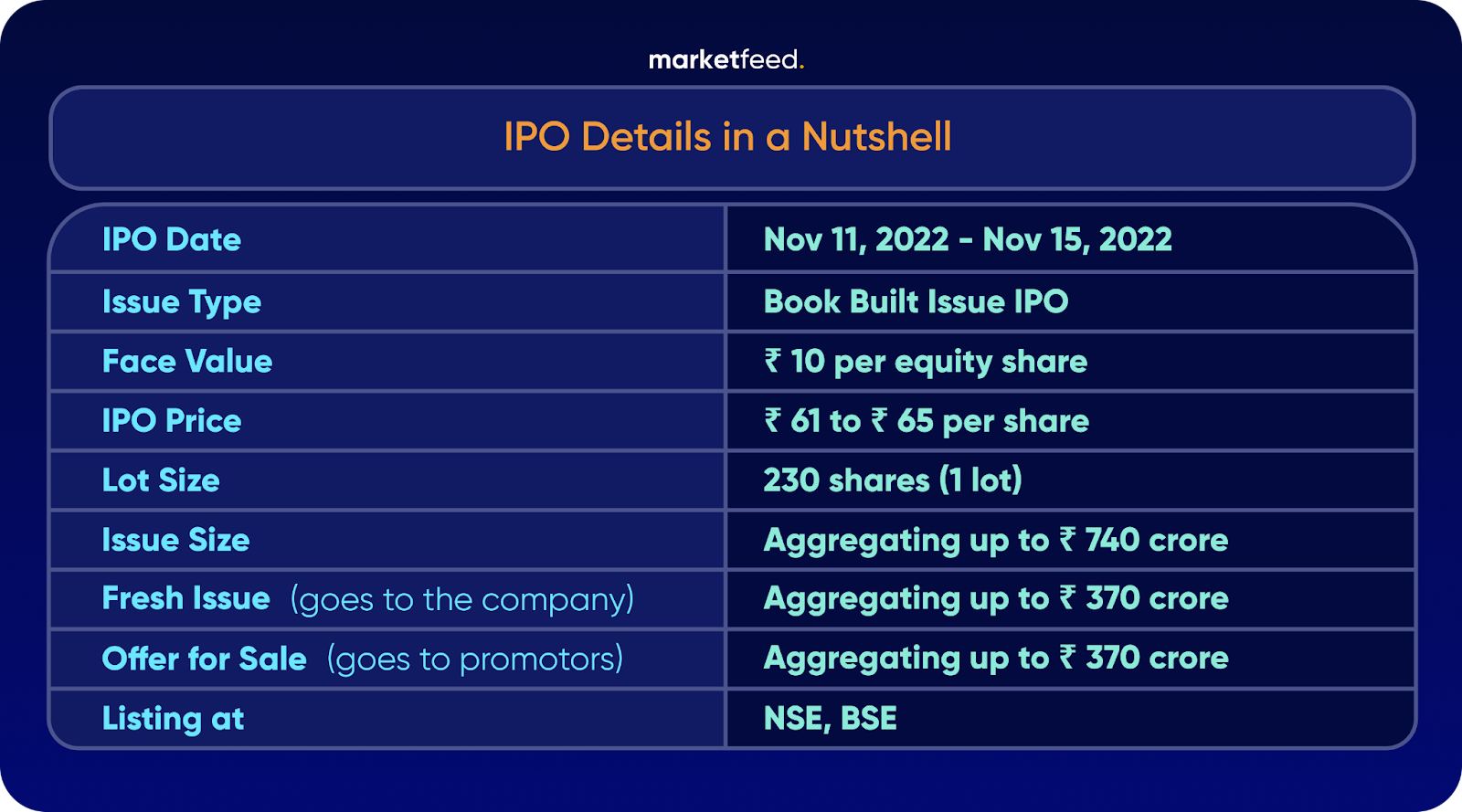
Inox Green Energy’s public issue opens on Nov 11 and closes on Nov 15. The company has fixed ₹61-65 per share as the price band for the IPO.

The fresh issue of shares (of the face value of ₹10 each) aggregates to ₹370 crore. The IPO also includes an offer for sale (OFS) of 5.6 crore shares by promoters and early investors, aggregating to ₹370 crore. Individual investors can bid for a minimum of 230 equity shares (1 lot) and in multiples of 230 shares thereafter. You will need a minimum of ₹14,950 (at the cut-off price) to apply for this IPO. The maximum number of shares that can be applied by a retail investor is 2,990 equity shares (13 lots).

IGESL will utilise the net proceeds from the IPO for the following purposes:

  • Repayment or prepayment of certain borrowings, including redemption of non-convertible debentures (NCDs) in full – ₹260 crore.
  • General corporate purposes.

The total promoter holding in the company will decline from 93.84% to 56.04% post the IPO.

Financial Performance

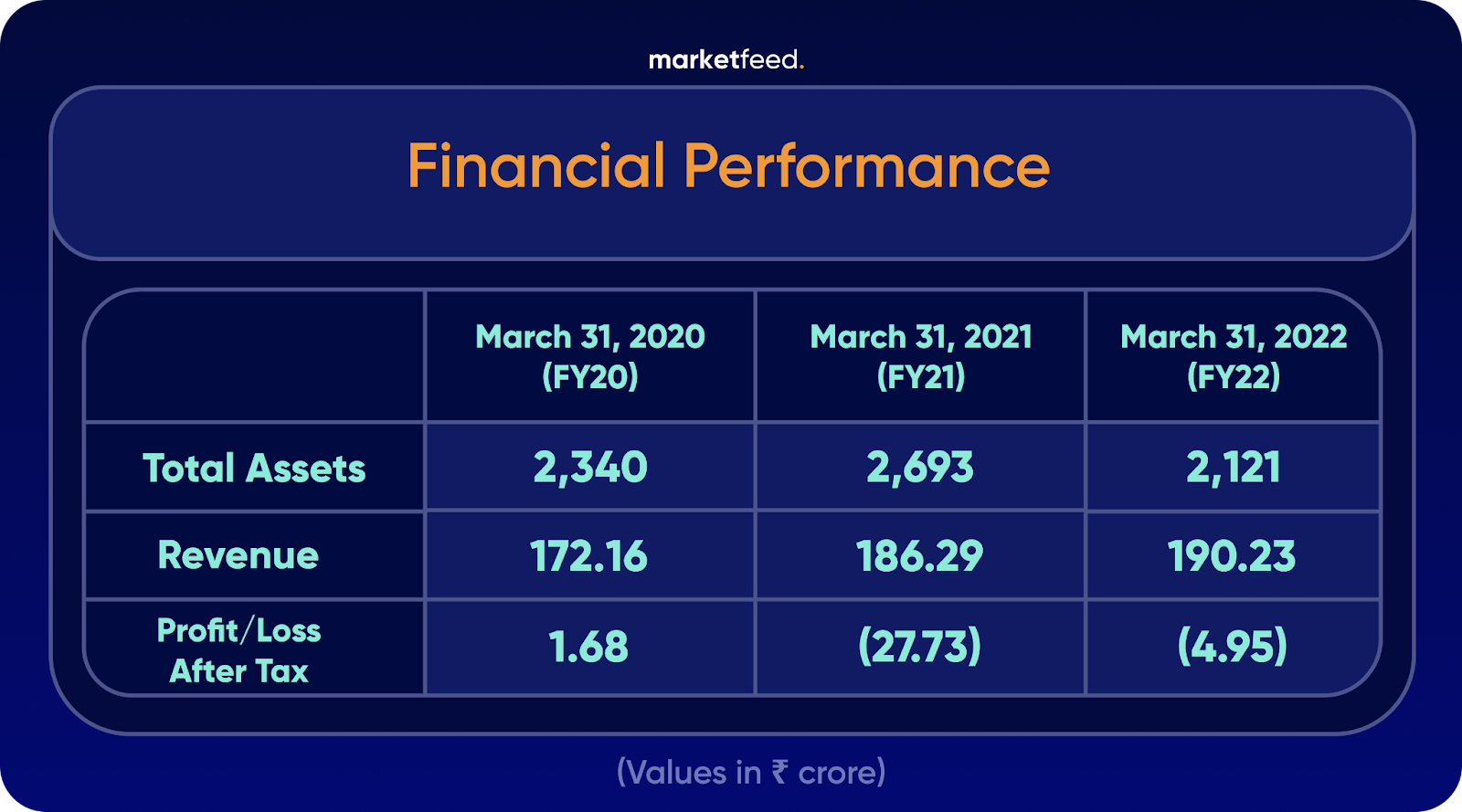
Inox Green Energy Services has posted losses for the last two financial years (FY21-22). The management clarified that the company’s losses were due to increased interest burden and amortisation provisions. [Amortisation is an accounting strategy used to regularly reduce the book value of a loan or an intangible asset over a certain period.] Through the proceeds of this IPO, IGESL will be able to reduce its loan and interest burden, which should result in an improvement in its margins. Moreover, the company has stable/reliable cash flows supported by long-term O&M contracts.

During the quarter ended June 30, 2022 (Q1 FY23), it reported a loss of ₹11.58 crore and a total revenue of ₹63.16 crore.

Risk Factors

  • The company is entirely dependent on the promoter (Inox Wind) for its business. If IWL chooses any other service provider for operation & maintenance services of wind turbine generators, IGESL’s financial performance would be adversely affected.
  • Orders from IWL may get delayed, modified, or cancelled, which may impact future O&M revenue.
  • The sale of services and renewal rate of service contracts may decline in the future. 
  • IGESL is liable for penalties under its maintenance contracts in case of any deficiencies in the services provided.
  • There are outstanding legal proceedings involving IGESL, its subsidiaries, directors, and group firms.

IPO Details in a Nutshell

IGESL filed the Red Herring Prospectus (RHP) for its IPO on Nov 3. You can read it here. Out of the total offer, 75% is reserved for Qualified Institutional Buyers (QIBs), 15% for Non-Institutional Investors (NIIs), and 10% for retail investors.

Ahead of the IPO, the company raised ₹333 crore from anchor investors. The marquee investors include Morgan Stanley Asia (Singapore), Nomura Singapore, HDFC Mutual Fund (MF), ICICI Prudential MF, etc.

Conclusion

According to the International Energy Agency (IEA), India is the third-largest energy-consuming country in the world and has become one of the largest sources of energy demand growth globally. The Central govt. aims to add 30 gigawatts (GW) of offshore wind projects by 2030. The key strengths of IGESL include its strong/diverse portfolio, established track record, and reliable cash flows

Going forward, the company plans to expand its portfolio and scale operations while transitioning to an asset-light model with minimal capital expenditure. The favourable national renewable energy policy also provides strong visibility for growth.

The company has not received much interest in the grey market. IGESL’s IPO shares are trading at a premium of ₹9-10 in the unofficial market. Before applying to this IPO, we will wait to see if the portion reserved for institutional investors gets oversubscribed. As always, do consider the risks associated with the company and come to your own conclusion.

What are your opinions on this IPO? Will you be applying for it? Let us know in the comments section of the marketfeed app.

Categories
Editorial

Reliance vs Adani Group: Spearheading India’s Green Energy Revolution

At the recent United Nations Climate Change Conference at Glasgow (COP26), India pledged to achieve net-zero carbon emissions by 2070. The Centre has committed to installing a non-fossil fuel electricity generation capacity of 500 gigawatts (GW) and sourcing 50% of India’s energy requirement from renewable sources by 2030. The government also aims to reduce 1 billion tonnes of projected emissions within the same time frame. As India continues to rely heavily on fossil fuels, it will be a mammoth task to reach these green targets.

Two of our country’s largest conglomerates, Reliance Industries and Adani Group, are now competing to dominate the gradually developing green energy sector. In this article, we explain how both business houses are working to push green energy in India.

The Strategic Plans of Reliance Industries Ltd

Reliance Industries Ltd (RIL) has entered the green energy sector with highly ambitious plans. Chairman Mukesh Ambani had revealed a roadmap to invest $10 billion (~Rs 74,400 crore) in solar, green hydrogen, batteries, and fuel cells over the next three years. A significant portion of the investment will go towards setting up four “giga factories”. This move will boost domestic production of solar photovoltaic modules, fuel cells, and energy storage batteries. They will also work towards strengthening the value-chain partnerships and future technologies.

In June, Ambani announced that RIL has started developing the Dhirubhai Ambani Green Energy Giga Complex in Jamnagar, Gujarat. Spread across an area of 5,000 acres, the complex will turn into one of the largest integrated renewable energy manufacturing facilities in the world. RIL is also attempting to manufacture solar modules and essential components indigenously to bring down the overall cost of production. This initiative will also help reduce the reliance on Chinese products.

Acquisitions and Targets

One of RIL’s subsidiaries, Reliance New Energy Solar (RNES), recently acquired Norway-based REC Solar Holdings for $771 million (~Rs 5,740 crore). REC is a leading manufacturer of solar cells and modules, along with solar-grade raw polysilicon. RNES has also acquired a 40% stake in Sterling & Wilson Solar for Rs 2,755 crore.

Reliance aims to generate 100 gigawatts of solar energy by 2030. They will also invest in carbon fibre plants for sustaining their hydrogen and solar ecosystems. This whole ecosystem will be developed and operated by a dedicated Renewable Energy Project Management and Construction Division. These factors will help the company meet its goal of becoming net carbon-zero by 2035. As a company that still generates ~60% of its revenue from oil refining and petrochemicals, it will be interesting to see how RIL executes its strategic plans.

Adani Group’s Green Energy Roadmap

The Adani Group had recently announced plans to invest $20 billion (~Rs 1.4 lakh crore) over the next ten years in solar, wind, green hydrogen, and energy infrastructure. The group aspires to triple the share of renewable power generation capacity in its total portfolio to 63% from the present 21%. It aims to make Adani Ports a net-zero carbon emitter by 2025 and power all data centers with renewable energy by 2030. Moreover, the Adani Group will spend 75% of its planned capital expenditure (capex) until 2025 on green technologies.

In October 2021, Adani Green Energy Ltd completed the acquisition of SB Energy India for $3.5 billion (~Rs 26,000 crore). SB Energy India was a joint venture between Japan-based SoftBank Group and India’s Bharti Group. It is the largest acquisition in the renewable energy sector in India so far!

The Market Potential

India was ranked fourth in wind power and renewable power in terms of installed capacity as of 2020. It obtained the fifth position in solar power. The Centre and state governments are providing subsidies and benefits for boosting clean energy. It is anticipated that around 49% of the total electricity will be generated by renewable energy by 2040. Green hydrogen also has immense potential to grow in India.

Source: Ministry of New & Renewable Energy

According to reports, the Indian renewable energy sector received a total investment of about Rs 5.2 lakh crore over the last seven years. By 2028, this sector could reportedly see investments worth $500 billion (~Rs 37.25 lakh crore). As two of India’s biggest business tycoons enter into the green energy sector, we will be able to witness more competition, investments, and job opportunities. Ambani and Adani have aligned their business strategies with PM Narendra Modi’s green energy targets.

However, it will be a tedious task for India to implement its green energy commitments. The Centre and state governments, large corporations, and the general public will have to take coordinated actions to reduce carbon emissions. We need to recognise the urgency of climate action and advocate it on a wider scale. India needs to rapidly increase its renewable energy deployment to meet the rising energy demands.

The stage is set for India’s green energy revolution. Can Reliance Industries and Adani Group become giants in the global renewable energy space? What are your views on the future of green energy in India? Let us know in the comments section of the marketfeed app.