Categories
Market News Top Crypto News

Investors Shorting BTC, ETH in Record Numbers – Top Crypto Updates

Investors are shorting BTC, ETH in record numbers: Report

According to a report from CoinShares, a large number of institutional investors are betting on the price of Bitcoin, Ethereum, and other cryptos to go down. Institutional investor sentiment was deeply negative last week, as short product inflows represented 75% of the total inflows— the largest inflow on record. [Short products allow investors to bet on the price of an asset going down.]

Crypto prices today: Bitcoin down 2.5%, ETH falls 3.5%

Bitcoin is currently trading at $15,721.15, a decline of 2.5% over the previous day. Ethereum fell 3.5% over the last 24 hours to $1,090.11. Solana is down 2.9% to $11.46, while Cardano is trading lower by 1.35% at $0.302. Avalanche (AVAX) fell 3% to $11.61. The global crypto market cap stands at $780.37 billion, a 2.48% decline over the previous day.

Genesis Trading warns of possible bankruptcy: Report

According to a Bloomberg report, crypto firm Genesis Trading has warned that it may be facing bankruptcy. The company’s lending arm suspended services last week and failed to raise funds. Due to the collapse of FTX, the company was facing “abnormal withdrawal requests” and requested for a $1 billion bailout last week.

Lawmakers urge Fidelity to drop Bitcoin Retirement Plan

U.S. Senators sent a letter to investment giant Fidelity Investments, warning it against offering Bitcoin to customers following the collapse of FTX. Fidelity is America’s largest provider of 401(k) savings accounts. [A 401(k) plan is an employer-sponsored personal pension account.] In April, the firm launched a new product offering companies and their participating employees access to Bitcoin. 

Bitget registers in Seychelles, eyes global expansion

Singapore-based crypto derivatives exchange Bitget has registered in Seychelles as it looks to expand its services. The company plans to set up more regional hubs on its expansion roadmap. Last week, the exchange started operations in Brazil and will allow users to make crypto purchases in Brazilian reals.

Categories
Jargons

What is Short Selling?

In the normal course of investing in stocks, the primary objective is to buy low and sell high. You buy a certain stock when you anticipate that its price would go up (based on fundamental and technical analysis). However, there could be a situation where markets are bearish, and you anticipate a fall in the price of a stock. This is where the concept of short selling comes in. In this article, we explain what short selling is and how it works with an example. We will also discuss the pros and cons of short selling and the risk associated with it.

Basics of Short Selling

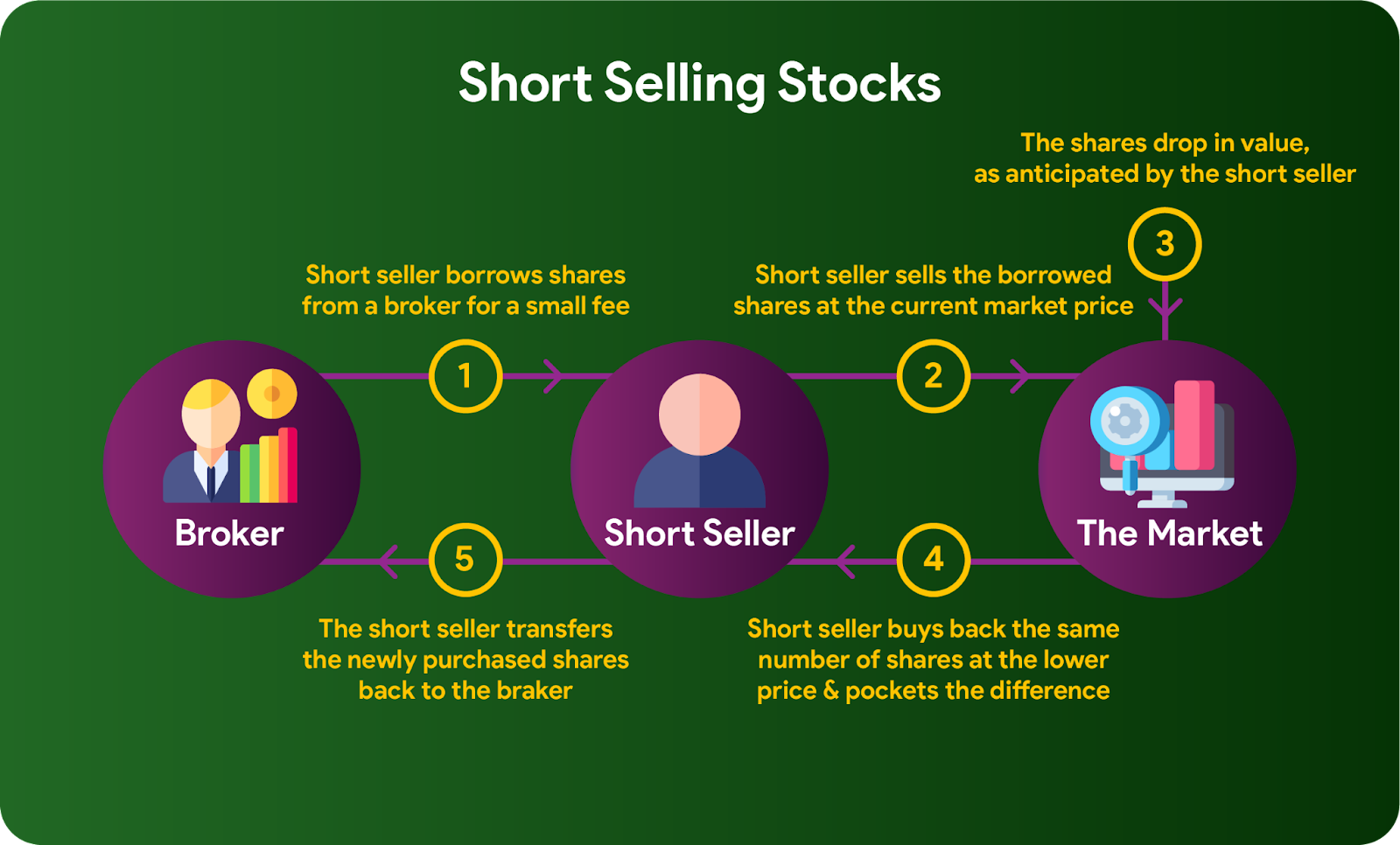
Short selling is a technique in which an investor/trader borrows securities (like stocks) from a broker and sells it in the market, with the intention of buying them back at a lower price in the future.

Those who expect share prices to fall on a future date can capitalise on their predictions. The method of shorting stocks is very interesting. Firstly, an individual can sell shares that they do not own. Traders would need to borrow these shares from a broker, thus opening a position. Brokers lend the shares to a trader with a promise that they will be delivered back at the time of settlement. The trader would sell these borrowed stocks at the prevailing market rate and wait for prices to fall. This is referred to as shorting the position. When the prices drop, the traders buy back those shares to close the position. Thus, the objective behind short selling is to “sell high and buy low”.

If the share prices fall, traders make a profit based on the difference between the selling price and purchasing price. However, if the trader’s study or prediction fails and the share prices go up, they incur a loss.

How Does Short Selling Work?

Short selling is an activity that allows market participants to profit from the fall in the price of a financial instrument. It involves borrowing an asset from a broker, selling it in the market, and then repurchasing it later at a hopefully lower price to return it to the lender. Here’s how the process generally works:

1. Borrowing the Asset

The trader borrows the asset (usually stocks) from a broker or another trader. This borrowed asset is typically done through a margin account, where the investor agrees to certain terms and pays a fee or interest for the borrowed amount.

2. Selling the Asset

After obtaining the borrowed asset, the trader immediately sells it on the market. This is where they take advantage of their belief that the asset’s price will decrease.

3. Waiting for Price Drop

The trader waits for the price of the asset to fall. If the price drops as anticipated, the investor can buy back the asset at a lower price.

4. Repurchasing the Asset

Once the price has dropped, the trader uses the proceeds from the initial sale to repurchase the same asset at a lower price.

5. Returning the Borrowed Asset

Finally, the trader returns the borrowed asset to the lender, typically the broker, from whom they originally borrowed it.

6. Profit or Loss

The profit or loss in short selling is the difference between the price at which the asset was sold and the price at which it was repurchased, minus any borrowing fees, interest, or transaction costs.

what is short selling?

Short selling can be a risky strategy because there’s a potentially unlimited downside. If the price of the asset increases instead of decreasing, the short seller could incur substantial losses. In the worst-case scenario, if the price rises significantly, the losses can be substantial and may even exceed the initial investment.

However, brokers have an automatic liquidation system in place that automatically squares off the position if the required margin is not maintained.

An Example of Short Selling

Suppose a trader speculates or predicts that the stock price of XYZ is bound to decline after a deep fundamental and technical analysis. He feels that the firm has not performed well during a particular quarter. The current share price of XYZ is Rs 100. He borrows 10 stocks of XYZ from a broker and sells them in the market at Rs 100 each. (He receives Rs 1,000 from this sale). Thus, he is getting “short” by 10 stocks. As predicted, the share price of XYZ falls to Rs 75. He then purchases those 10 shares back at the lower rate of Rs 75 per share. Thus, the overall profit from this transaction is Rs 250 (ie, Rs 750 subtracted from the Rs 1,000 he received initially by selling the shares). He then returns those 10 shares to his broker.

Now, what if the trader’s analysis failed, and XYZ’s share price went up to Rs 125? He would then have to spend Rs 1,250 (Rs 125 per share x 10) to buy back the shares that he owes to the brokerage. He gets to keep the Rs 1,000 he earned from selling the shares initially. But, he has lost Rs 250 in this scenario.

How to Short Futures?

One could also short a stock in the futures segment. In the Indian stock markets, if you want to hold a short position for more than a day, the easiest way is to short a future. Futures represent an agreement to buy or sell a specific quantity of a stock at a set price on a specified date in the future. It derives its value from the actual stock. If the underlying value (stock price) is going down, so would the futures. 

If you have a bearish view on a stock, you can initiate a short position on its futures and hold on to the position overnight. Similar to depositing a margin while initiating a long position, entering a short position would also require a margin deposit. 

What are the Advantages of Short Selling?

  • Traders would be able to make significant profits if their predictions become true. It helps you make money in falling (or bearish) markets.
  • Short selling can be used to hedge against any downside risks associated with a stock. Traders can use this method to secure their long-term positions in the market and reduce losses.

What are the Disadvantages of Short Selling?

  • As mentioned earlier, if the trader’s prediction fails, they are exposed to infinite risk. We would recommend that you stay away from short selling if you are new to trading.
  • In short selling, a trader would have to borrow shares from a broker. There is an interest levied on these borrowed stocks, and the trader also has to maintain a margin. If the margin is not maintained, the trader might need to increase funding or liquidate (exit) their position.
  • Timing is a very important aspect of short selling. If a trader shorts stocks long before the prices drop, they would have to bear the costs associated with short selling for a longer period. If a trader shorts a stock late, they would not be able to catch the fall that was initially predicted.
  • Traders who short stocks could be prone to a short squeeze. This is a situation wherein highly shorted stocks are targeted by certain investors. They would buy these stocks and drive up their prices. Thus, the short sellers would make huge losses when this happens. This is what happened with GameStop, AMC shares in the US. You can read more about it here.

What are the Risks of Short Selling?

A few of the risks of short selling are:

1. Potential for Unlimited Losses

2. Margin Calls – A margin call is a demand from a broker for an investor/trader to deposit additional funds to cover potential losses in their account.

3. Limited Availability of Borrowed Shares

4. Regulatory Restrictions and Market Manipulation

5. Squeeze Risk

6. Timing Risk

Long Position vs Short Position

  • A long position means that the investor has bought the shares and is expecting the price to go up. 
  • A short position means that the investor has short-sold a share and is expecting the prices to fall.
  • A long position makes a profit when the price rises while a short position makes a profit when the price falls.

Regulations for Short Selling in India

In order to short stocks, traders need to have a margin account through which they can borrow stocks from a broker. They would need to maintain the margin amount in that account to continue or retain a short position. This margin acts as a security deposit with your broker.

Traders can place a Margin Intraday Square (MIS) order for short selling. This means that selling and buying the stock (short selling) happens during the market hours (9:15 am to 3:30 pm). Brokers will automatically square off your short position towards the end of market hours.

The Securities and Exchange Board of India (SEBI) allows traders to short-sell securities only in intraday trade. The entire process of short selling has to take place within the same day. Due to the Covid-19 pandemic and the negative sentiments surrounding it, global markets crashed in March-April 2020. In order to stabilise markets, SEBI imposed a temporary ban on short selling and increased margin requirements. This ban was lifted in November 2020.

Categories
Editorial

Reddit Users vs Hedge Funds: The Entire GameStop – WallStreetBets Saga

The shares of GameStop Corp, a struggling game retailer in the US, have surged by more than 1,600% since December 31. The reason behind this phenomenal rally can be attributed to the collective power of small investors and social media platforms. It has caused quite a stir in Wall Street and made us realize the importance of having well-defined regulations in stock markets. To understand the logic behind this huge rally in GameStop, we need to learn the concepts of short-selling and short-squeezing. We shall also look into recent developments surrounding this controversial topic.

What is Short Selling?

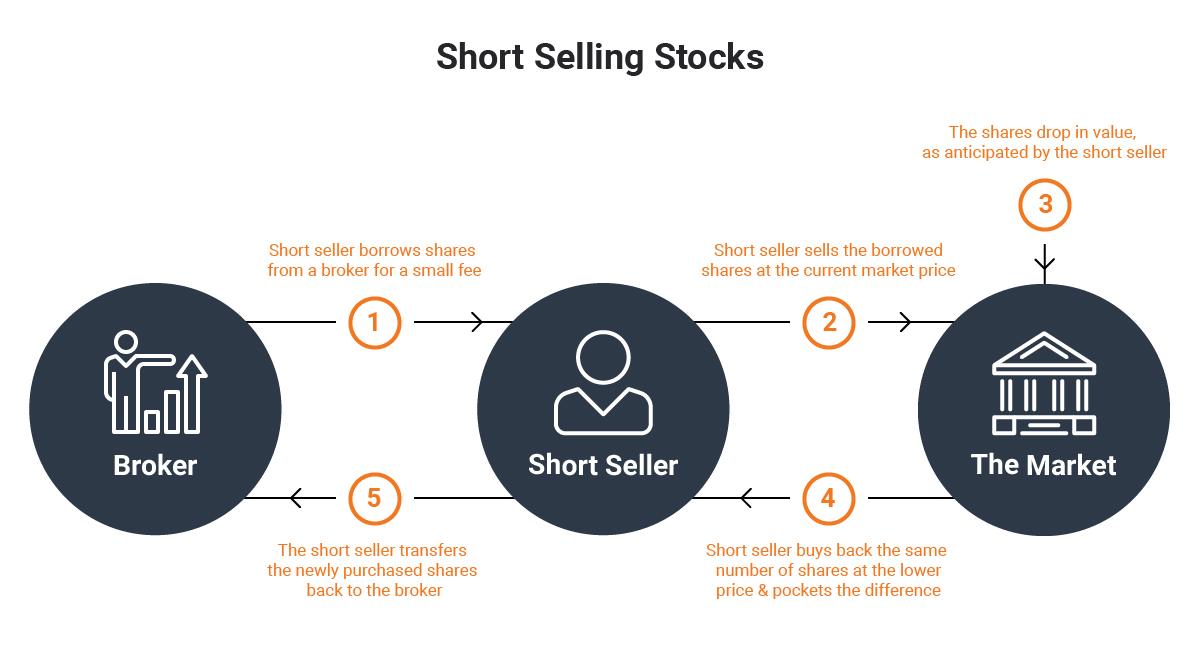
Short selling or ‘shorting’ refers to when investors try to make money by betting that a company’s share price will fall. In this method, a trader borrows shares of a particular company from a broker and sells them at market price- with the hope that prices will fall. He has an obligation to return these shares to the broker at a future date. The proceeds from the sale of these borrowed shares get credited to the trader’s account.

If the share prices of that company fall, the trader would be able to purchase back the shares from the market at a lower price. Profit is made on the difference between the price at which the shares were borrowed and the price when they are returned. Short selling is primarily conducted by large investment firms (such as hedge funds) and experienced investors. Also, the number of short positions in a company’s stock can be higher than the total number of shares available. The concept of shorting is made easier with the example given below.

An Example 

Suppose a trader expects the stock price of a company named XYZ to crash sometime soon. This assumption could be based on the fundamental and technical analysis he conducts on that particular stock. He would then decide to borrow 10 shares of XYZ stock from a broker and sell them in the market for Rs 50 each. Thus, he receives Rs 500 in cash. He has an obligation to purchase and return the 10 shares of ABC stock at some point in the future. 

In case the stock price of XYZ falls to Rs 10, the trader can purchase the 10 shares (that he owes to the broker) for Rs 100 and make a total profit of Rs 400. [Ie, Rs 100 subtracted from the Rs 500 he received initially by selling the shares]

What if the trader’s analysis failed and the share price of XYZ went up to Rs 250? He would have to spend Rs 2,500 to buy back the 10 shares that he owes to the brokerage. He still gets to keep the Rs 500 he earned from selling the shares initially. However, the trader has lost Rs 2,000 in this scenario. 
What is Short Squeezing?

When a company’s share price starts rising, shorts would panic and be forced to close their position. [Shorts are those traders who bet that the company’s stock would fall] They would buy up the shares that they owe their brokers and return them. More individual investors will start buying shares of that particular company, which leads to a further increase in its share price. Shorts who were too late to act on this would end up facing huge losses. This is referred to as short squeezing. 

Why are GameStop’s shares surging?

Gamestop Corp (GME) is an American video game, consumer electronics, and gaming merchandise retail chain. The company had been struggling since 2016 due to stiff competition from online retailers. As we know, most games can be purchased and downloaded online. Amidst the Covid-19 pandemic, it faced huge losses last year. These factors led the company’s stock to crash. The share price of GME stood at $18.84 as of December 31.

Towards the beginning of January, several amateur day traders on a Reddit group r/wallstreetbets– noticed that America’s top hedge funds were heavily short-selling the GME stock. The shorts included a big hedge fund- Melvin Capital Management LP. The Reddit group managed to convince other people on the thread to join forces and buy as much GameStop stock as possible. There were a lot of memes and posts circling through social media platforms, which made people aware of how they could bring down large hedge funds. These firms had been using the shorting method for ages and were benefiting from low-valued stocks.

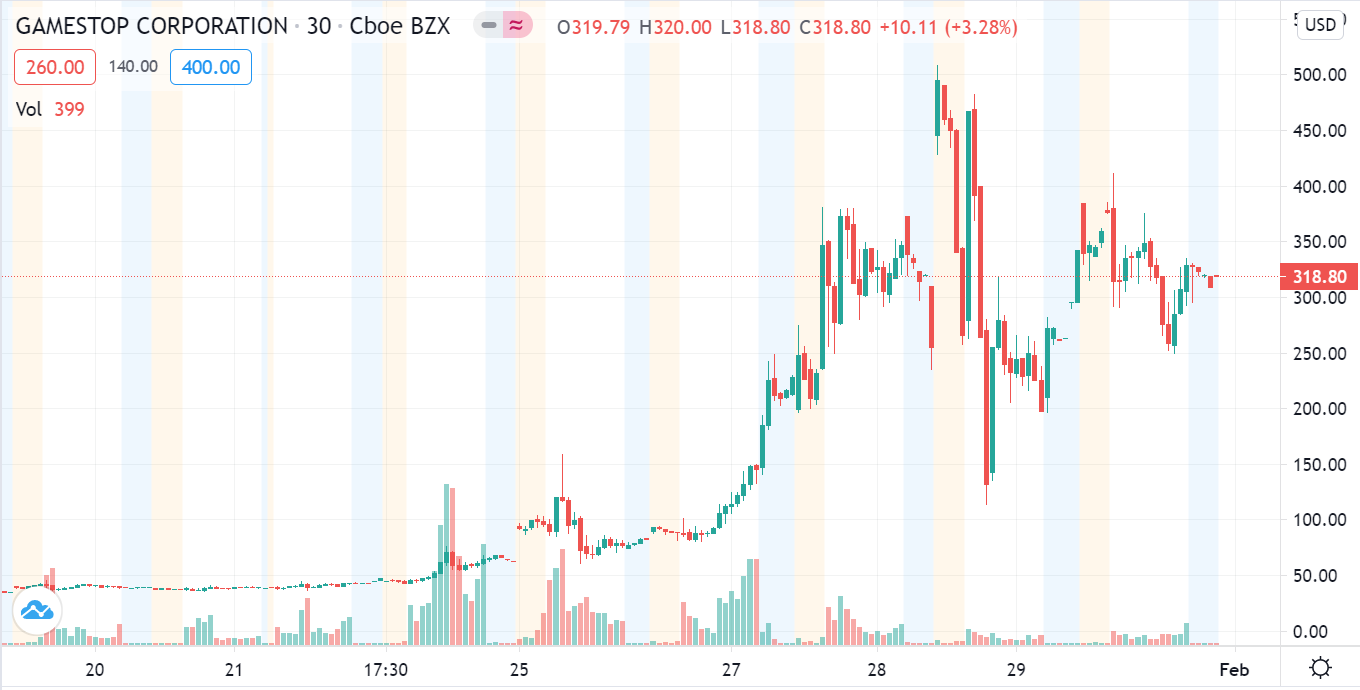
This ultimately made the share prices go up astronomically. On January 28, GME’s stock touched an all-time high of $483! GameStop has secured its position in the Fortune 500 list of companies, alongside Alphabet, Apple, Tesla, etc.
The coordinated attack eventually saw hedge funds facing losses of around $19 billion! It had even reached a point where some firms went bankrupt and had to close down. This encouraged investors to look into more stocks that had been shorted by large investment firms. Thus, the share prices of companies such as AMC Entertainment Holdings, BlackBerry, and Tootsie Roll Industries saw a similar rally. And, hedge funds were trapped in the short squeeze. The Reddit Group has also turned to Dogecoin, a cryptocurrency that was started as a joke. Last day, the value of Dogecoin surged 800% in 24 hours. 

Recent Developments

Melvin Capital, who had lost billions of dollars from the GME stock surge, was rescued by Citadel and Point72 Asset Management on Jan 25 (Monday). Both these hedge funds invested $2.75 billion into Melvin. A few days later, popular trading apps such as Robinhood restricted trading for stocks such as GameStop and AMC on their platforms. They only provided an option to sell these stocks, thereby preventing retail investors from purchasing more shares. The officials of NASDAQ (the exchange on which GME is listed) even suggested that trading could be temporarily halted on stocks that were targeted by ‘internet users’. All these factors led GME stock to fall to $231 on Jan 29 (Thursday).

Millions of people turned to social media platforms to show their dissent against Robinhood. They alleged that the broking app and large hedge funds were manipulating the stock market. Many people started questioning the motive behind the platform, which claimed to “democratize finance for all”. Interestingly, several reports started flying around, stating that $39 million of Robinhood’s revenues from equities and options order flow came from Citadel. This meant that Citadel is one of the largest customers of the trading platform. Thus, a connection between Robinhood, Melvin Capital, and Citadel was now clear.

If more solid evidence points to market manipulation, these companies would be in big trouble. The US House of Representatives has conducted discussions on the matter. Three lawmakers have called out an investigation into Robinhood’s actions. Two class-action lawsuits have been filed against the trading platform in New York and Illinois federal courts. The US President’s Office also put out a statement saying it was monitoring the situation.

On Thursday evening, Robinhood announced it was restoring “limited buys” for the restricted stocks, allowing fans of the stock to buy more. This led to a further rally in GME, AMC on Friday. The company also said it has raised $1 billion from its existing investors. The firm had been struggling to handle a surge in trading on the platform.

Conclusion

Now, you may be wondering if such a situation could occur in our Indian stock markets. We have been reading reports of several online forums such as ‘IndianStreetBets’, which aims to send Suzlon Energy’s stock “to the moon”. The group consisting of around 12,000+ members plans to pump up share prices through coordinated buying.

However, financial experts believe that such attempts at buying and holding stocks to trigger short squeezes in our Indian market would not produce any result. This is mainly because investors in India do not hold such large naked positions in an individual stock. The Securities and Exchange Board of India (SEBI) has also introduced several regulations that restrict the shorting of stocks. Traders are allowed to short a stock, but the position cannot be held for more than one trading session. This is why most traders and institutions in our country restrict their short positions to stocks that are part of the derivative segment. [Derivatives are securities that derive their value from an underlying asset or benchmark. Common derivatives include futures contracts, forwards, and options]. Even within the F&O segment, traders would have to pay a high price for holding short positions.

Nithin Kamath, the co-founder of Zerodha, recently posted a blog that gives us a clear idea of why a GameStop-like phenomenon would not happen in Indian stock markets. You can read it here. So long story short, we would not be able to drive up the prices of stocks like how our American counterparts did.

However, this whole situation has brought to light the wide disparity between large financial institutions and normal retail investors. Hedge funds have been constantly trying to outsmart their competitors and get away with billions of dollars from Wall Street. These same investment firms are crying foul over what has happened with GME shares. A market that was meant to be free is heavily influenced by large players. Let us look forward to seeing how this situation unfolds in the days to come.