Categories
Editorial

BlackRock: The World’s Largest Asset Manager

The Gross Domestic Product (GDP) of Germany is around $3.6 trillion, and that of India and the United Kingdom is ~$2.7 trillion each. Even if we combine the GDP of these three countries, it will be less than the total Assets Under Management (AUM) of BlackRock. The company is so huge that it is the largest shareholder in some of the largest banks in the world, including JPMorgan, Bank of America, Citigroup, Deutsche Bank, and even India’s HDFC Bank. In today’s editorial, learn more about BlackRock.

BlackRock – A Brief Profile

Before starting BlackRock, Laurence Douglas Fink was an active participant in Wall Street. His expertise in mortgage-backed securities (MBS) made his investment company (First Boston) a profit of $1 billion in the early 1980s. MBS is a collection or pool of home loans. An investment bank aggregates these loans and sells them to investors as they give fixed income similar to a Fixed Deposit. Also, banks receive their credit amount much earlier that can be synthesised for new loans. It was in 1986 when his miscalculations on interest rates led to a $100 million loss, leading to the loss of his job.

In 1988, Fink, along with 7 co-founders, set up BlackRock backed by the Blackstone Group. It started as an investment and advisory firm for institutional clients such as banks and insurance companies. Initially, their parent company Blackstone Group infused just $5 million as working capital into the company. However, BlackRock was able to generate an AUM of $2.7 billion in a short span of time. In 1994, the parent company exited BlackRock, which they later termed a “heroic mistake”. It was in the same year BlackRock went public.

BlackRock’s Investment Journey

BlackRock saw exponential growth in its AUM since its inception. From $2.7 billion in 1989, the AUM skyrocketed to $165 billion by 1999. The company also acquired various financial service providers:

2004 – Acquired holding company of State Street Research & Management (SSRM) from Metlife. SSRM assets mainly included mutual funds.

2006 – Merged with Merril Lynch Investment Managers.

2009 – Barclays sold its global investors unit that includes the Exchange Traded Fund (ETF) business named iShares.

BlackRock has a strong relationship with the US Government. The asset management company (AMC) had helped government agencies during the financial crisis of 2008. Currently, the senior management at BlackRock also has a high influence in the White House. This relationship gives them early access to the decisions made by the Federal Reserve as well as the government on key policies.

The company generates more than 70% of its revenue from investment advisory fees. Also, they manage exchange-traded funds (ETFs), through which they charge a fixed commission. It is interesting to note that BlackRock has almost every S&P 500 company in its portfolio. In total, they have 5,454 positions in their global portfolio, in which the top five stocks represent 13.2% of the total portfolio.

Horizontal bar graph showing top holdings of Black rock. lead by Apple with 137 billion followed by microsoft, meta, google
Source: Stockzoa

ALADDIN – BlackRock’s Guide

Asset, Liability, Debt, and Derivative Investment Network (ALADDIN) keeps eye on the markets and manages more than $20 trillion worth of assets. Aladdin helps BlackRock as well as other clients in taking major investments and risk management decisions. It also tracks climate across the globe and calculates the risk it can cause to their portfolio.

BlackRock’s Presence in India

The AMC launched a dedicated fund for India in 2006. Currently, the fund invests 73% in large-cap companies. After the massive Rs 18,000 crore IPO of Paytm, BlackRock has bought the company’s stake after the exit of existing anchor investors.

BlackRock’s recent investment themes are based on Environmental, Social, Governance (ESG) methodologies. There were rumours spreading around regarding the AMC investing up to Rs 5,600 crore in Tata Power’s green business. However, both Tata Group and BlackRock did not respond to queries.

Blackrock's holding in India , lead by infosys reliance and ICICI bank
Source: BlackRock

BlackRock has grown multifold that it now has access and control over major businesses across the world. The chairman’s letter to all CEOs to consider climate change as a barrier and to take collective action shows how influential BlackRock is. The AMC has become an inevitable force for various governments by acting as an advisor and taking action in an economic crisis.

What do you think about the power of BlackRock? Let us know your views in the comments section of the marketfeed app.

Categories
Editorial

Aditya Birla Sun Life AMC IPO: All You Need to Know

Another week, another IPO! Aditya Birla Sun Life AMC has launched its three-day initial public offering (IPO) today— Sept 29. It will be the fourth major fund house to list on the Indian stock exchanges. Let us dive into the details surrounding the company and its IPO.

Company Profile – Aditya Birla Sun Life AMC Ltd

Aditya Birla Sun Life AMC is the largest non-bank affiliated asset management company (AMC) in India in terms of quarterly average assets under management (QAAUM). It is a joint venture between Aditya Birla Capital Ltd and Sun Life (India) AMC Investments Inc. An AMC pools funds from clients and invests them into various financial instruments such as stocks, bonds, real estate units, etc. Established in 1994, ABSL AMC has a well-diversified product portfolio with innovative schemes. It manages equity schemes, debt schemes, liquid schemes, exchange-traded funds (ETFs), and domestic fund-of-funds (FoFs).

ABSL AMC has automated and digitised several aspects of its operations, including customer onboarding, online payments, fund management, accounting, and data analytics. However, the company is highly dependent on third-party channels for the distribution of its mutual funds. It is a well-recognized and trusted brand with experienced promoters. You may have come across their offerings while analysing mutual fund schemes.  

Factsheet

  • The company had a total AUM of Rs 2.93 lakh crore under its suite of mutual funds (excluding domestic FoFs), portfolio management services, offshore and real estate offerings as of June 2021.
  • Since its inception, ABSL AMC has established an extensive pan-India presence, covering 284 locations. It has over 240 national distributors and ~100 bank/financial intermediaries.
  • As of June 30, 2021, the AMC managed a total of 118 schemes— 37 equity schemes, 68 debt schemes, two liquid schemes, five ETFs, and six domestic FoFs. In addition, the company manages a total AUM of ~Rs 11,515 crore as part of its portfolio management services and offshore real estate offerings. 
  • The company’s monthly average assets under management (MAAUM) from institutional investors stood at Rs 1.503 lakh crore as of June 30, 2021, and was the fourth-largest amongst its peers.

About the IPO

Aditya Birla Sun Life AMC’s public issue opens on September 29 and closes on October 1. The company has fixed Rs 695-712 per share as the price band for the IPO. 

The offer for sale (OFS) of up to 3.88 crore equity shares from existing shareholders aggregates to Rs 2,768.26 crore. Individual investors can bid for a minimum of 20 equity shares (1 lot) and in multiples of 20 shares thereafter. You will need a minimum of Rs 14,240 (at the cut-off price) to apply for this IPO. The maximum number of shares that can be applied by a retail investor is 280 equity shares (14 lots). 

The main objective of the IPO is to provide an exit strategy (or liquidity) to ABSL AMC’s shareholders and early investors. Thus, the company is not raising any funds through the public issue. It aims to achieve the benefits of listing the equity shares on NSE and BSE. The total promoter holding in the company will decline from 100% to 86.5% post the IPO.

Financial Performance

From the table, it is clear that ABSL AMC has been reporting growth in profits despite declining revenues. The surge in profits can be attributed to declining fees and commission expenses every once in a while. The company’s revenue from operations rose 29.85% quarter-on-quarter (QoQ) to Rs 333.24 crore in the April-June quarter (Q1 FY22). Meanwhile, the profit attributable to owners increased by 59.15% QoQ to Rs 154.94 crore during the same period. 

The company’s market-leading position across categories, product mix, and scale have contributed to a strong financial performance. Aditya Birla Sun Life AMC is the third-largest AMC in terms of total income and had the highest Return on Net Worth (RoNW) of 30.87% in FY21. RoNW signifies how well the company uses shareholders’ capital to generate profits.

Risk Factors

  • The company’s revenue and profits are dependent on the assets under management (AUM) of their schemes. Any adverse changes in AUM can result in poor financial performance.
  • The extent of the impact of Covid-19 on its operations is highly uncertain and unpredictable. High volatility in stock markets could cause investors to reduce their investments in the funds managed by ABSL AMC and eventually reduce its AUM.
  • The underperformance of ABSL AMC’s investment products could lead to loss of investors and a reduction in AUM. The company’s business would be severely affected if they are unable to retain investors.
  • Unfavourable interest rates, defaults, and credit risk related to the debt portfolio of funds may expose the company’s funds to losses. Similarly, any unfavourable investment opportunities and poor economic conditions could restrict AUM growth. 
  • ABSL AMC’s historical growth rates may not be indicative of its future growth. The company’s overall performance would be adversely affected if it does not successfully implement business plans. 
  • The company’s business is subject to extensive regulation, including periodic inspections by SEBI. Non-compliance with existing regulations or the failure to obtain and renew regulatory approvals could expose ABSL AMC to penalties.

IPO Details in a Nutshell

The book-running lead managers to the public issue are Axis Capital, BofA Securities India, Citigroup Global Markets India, HDFC Bank, ICICI Securities. Other lead managers include Kotak Mahindra Capital, Motilal Oswal Investment Advisors, SBI Capital Markets, and IIFL Securities. Aditya Birla Sun Life AMC Ltd had filed draft papers for its IPO in November 2020. You can read it here.

Ahead of the IPO, the company raised Rs 788.95 crore from anchor investors. The marquee investors include HSBC, International Monetary Fund, Abu Dhabi Investment Authority, Morgan Stanley Asia, BNP Paribas, and Societe Generale.  

Conclusion

Aditya Birla Sun Life AMC caters to a wide range of retail investors, high net-worth individuals (HNIs), and institutions through its vast network. It has maintained a market-leading position in B-30 (beyond top 30 cities) penetration over the years. This factor has contributed to the growth of its investor base as well as improvement in profitability. The Indian mutual fund industry’s overall AUM is projected to sustain a higher growth trajectory of 11-13% CAGR to reach Rs 57 lakh crore by 2026. The industry is witnessing a significant increase in net inflows from investors every month. The company is well-positioned to attract a large segment of the Indian mutual fund market that varies across customer requirements and risk profiles. 

ABSL AMC will be directly competing with leading players such as HDFC AMC, Nippon Life AMC, and UTI AMC once it gets listed. There is scope for asset management companies to grow even further.

Before applying for the IPO, we will wait to see if the portion reserved for institutional investors gets oversubscribed. The company’s IPO shares were trading at a premium of Rs 27 in the grey market today. As always, make sure you carefully weigh out the pros and cons of the company and come to your own conclusion. 

What are your opinions on this IPO? Will you be applying for it? Let us know in the comments section of the marketfeed app.

Categories
Editorial

Reddit Users vs Hedge Funds: The Entire GameStop – WallStreetBets Saga

The shares of GameStop Corp, a struggling game retailer in the US, have surged by more than 1,600% since December 31. The reason behind this phenomenal rally can be attributed to the collective power of small investors and social media platforms. It has caused quite a stir in Wall Street and made us realize the importance of having well-defined regulations in stock markets. To understand the logic behind this huge rally in GameStop, we need to learn the concepts of short-selling and short-squeezing. We shall also look into recent developments surrounding this controversial topic.

What is Short Selling?

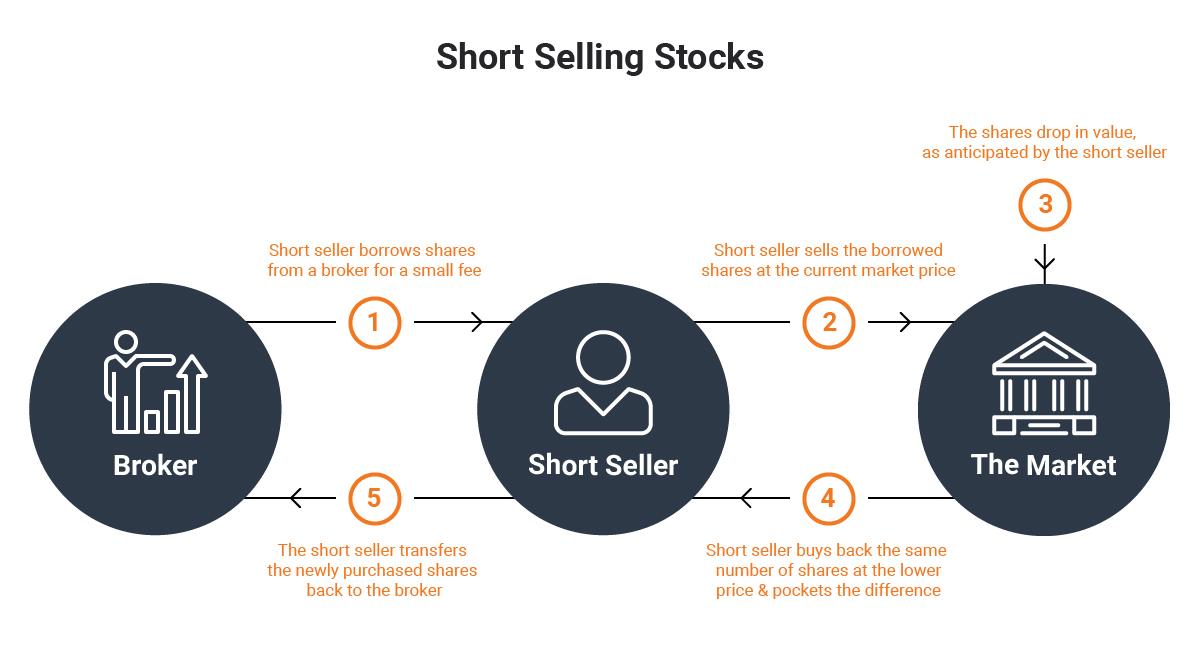
Short selling or ‘shorting’ refers to when investors try to make money by betting that a company’s share price will fall. In this method, a trader borrows shares of a particular company from a broker and sells them at market price- with the hope that prices will fall. He has an obligation to return these shares to the broker at a future date. The proceeds from the sale of these borrowed shares get credited to the trader’s account.

If the share prices of that company fall, the trader would be able to purchase back the shares from the market at a lower price. Profit is made on the difference between the price at which the shares were borrowed and the price when they are returned. Short selling is primarily conducted by large investment firms (such as hedge funds) and experienced investors. Also, the number of short positions in a company’s stock can be higher than the total number of shares available. The concept of shorting is made easier with the example given below.

An Example 

Suppose a trader expects the stock price of a company named XYZ to crash sometime soon. This assumption could be based on the fundamental and technical analysis he conducts on that particular stock. He would then decide to borrow 10 shares of XYZ stock from a broker and sell them in the market for Rs 50 each. Thus, he receives Rs 500 in cash. He has an obligation to purchase and return the 10 shares of ABC stock at some point in the future. 

In case the stock price of XYZ falls to Rs 10, the trader can purchase the 10 shares (that he owes to the broker) for Rs 100 and make a total profit of Rs 400. [Ie, Rs 100 subtracted from the Rs 500 he received initially by selling the shares]

What if the trader’s analysis failed and the share price of XYZ went up to Rs 250? He would have to spend Rs 2,500 to buy back the 10 shares that he owes to the brokerage. He still gets to keep the Rs 500 he earned from selling the shares initially. However, the trader has lost Rs 2,000 in this scenario. 
What is Short Squeezing?

When a company’s share price starts rising, shorts would panic and be forced to close their position. [Shorts are those traders who bet that the company’s stock would fall] They would buy up the shares that they owe their brokers and return them. More individual investors will start buying shares of that particular company, which leads to a further increase in its share price. Shorts who were too late to act on this would end up facing huge losses. This is referred to as short squeezing. 

Why are GameStop’s shares surging?

Gamestop Corp (GME) is an American video game, consumer electronics, and gaming merchandise retail chain. The company had been struggling since 2016 due to stiff competition from online retailers. As we know, most games can be purchased and downloaded online. Amidst the Covid-19 pandemic, it faced huge losses last year. These factors led the company’s stock to crash. The share price of GME stood at $18.84 as of December 31.

Towards the beginning of January, several amateur day traders on a Reddit group r/wallstreetbets– noticed that America’s top hedge funds were heavily short-selling the GME stock. The shorts included a big hedge fund- Melvin Capital Management LP. The Reddit group managed to convince other people on the thread to join forces and buy as much GameStop stock as possible. There were a lot of memes and posts circling through social media platforms, which made people aware of how they could bring down large hedge funds. These firms had been using the shorting method for ages and were benefiting from low-valued stocks.

This ultimately made the share prices go up astronomically. On January 28, GME’s stock touched an all-time high of $483! GameStop has secured its position in the Fortune 500 list of companies, alongside Alphabet, Apple, Tesla, etc.
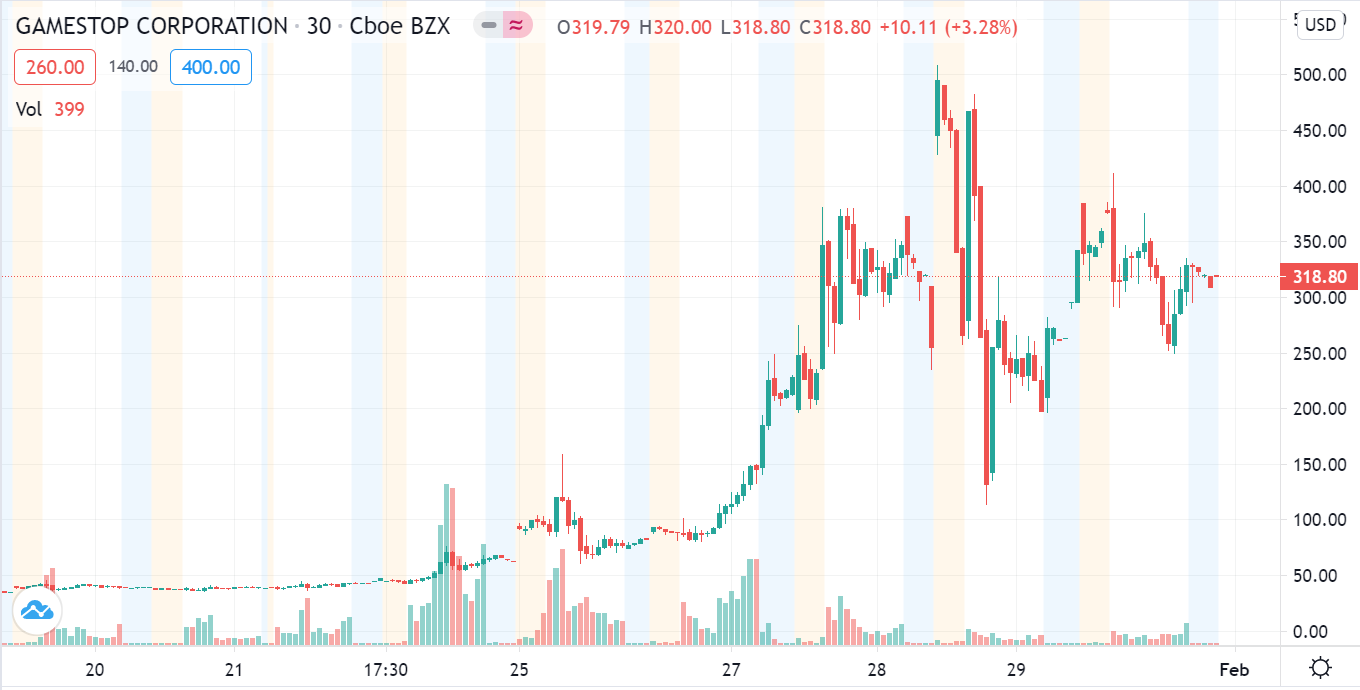
The coordinated attack eventually saw hedge funds facing losses of around $19 billion! It had even reached a point where some firms went bankrupt and had to close down. This encouraged investors to look into more stocks that had been shorted by large investment firms. Thus, the share prices of companies such as AMC Entertainment Holdings, BlackBerry, and Tootsie Roll Industries saw a similar rally. And, hedge funds were trapped in the short squeeze. The Reddit Group has also turned to Dogecoin, a cryptocurrency that was started as a joke. Last day, the value of Dogecoin surged 800% in 24 hours. 

Recent Developments

Melvin Capital, who had lost billions of dollars from the GME stock surge, was rescued by Citadel and Point72 Asset Management on Jan 25 (Monday). Both these hedge funds invested $2.75 billion into Melvin. A few days later, popular trading apps such as Robinhood restricted trading for stocks such as GameStop and AMC on their platforms. They only provided an option to sell these stocks, thereby preventing retail investors from purchasing more shares. The officials of NASDAQ (the exchange on which GME is listed) even suggested that trading could be temporarily halted on stocks that were targeted by ‘internet users’. All these factors led GME stock to fall to $231 on Jan 29 (Thursday).

Millions of people turned to social media platforms to show their dissent against Robinhood. They alleged that the broking app and large hedge funds were manipulating the stock market. Many people started questioning the motive behind the platform, which claimed to “democratize finance for all”. Interestingly, several reports started flying around, stating that $39 million of Robinhood’s revenues from equities and options order flow came from Citadel. This meant that Citadel is one of the largest customers of the trading platform. Thus, a connection between Robinhood, Melvin Capital, and Citadel was now clear.

If more solid evidence points to market manipulation, these companies would be in big trouble. The US House of Representatives has conducted discussions on the matter. Three lawmakers have called out an investigation into Robinhood’s actions. Two class-action lawsuits have been filed against the trading platform in New York and Illinois federal courts. The US President’s Office also put out a statement saying it was monitoring the situation.

On Thursday evening, Robinhood announced it was restoring “limited buys” for the restricted stocks, allowing fans of the stock to buy more. This led to a further rally in GME, AMC on Friday. The company also said it has raised $1 billion from its existing investors. The firm had been struggling to handle a surge in trading on the platform.

Conclusion

Now, you may be wondering if such a situation could occur in our Indian stock markets. We have been reading reports of several online forums such as ‘IndianStreetBets’, which aims to send Suzlon Energy’s stock “to the moon”. The group consisting of around 12,000+ members plans to pump up share prices through coordinated buying.

However, financial experts believe that such attempts at buying and holding stocks to trigger short squeezes in our Indian market would not produce any result. This is mainly because investors in India do not hold such large naked positions in an individual stock. The Securities and Exchange Board of India (SEBI) has also introduced several regulations that restrict the shorting of stocks. Traders are allowed to short a stock, but the position cannot be held for more than one trading session. This is why most traders and institutions in our country restrict their short positions to stocks that are part of the derivative segment. [Derivatives are securities that derive their value from an underlying asset or benchmark. Common derivatives include futures contracts, forwards, and options]. Even within the F&O segment, traders would have to pay a high price for holding short positions.

Nithin Kamath, the co-founder of Zerodha, recently posted a blog that gives us a clear idea of why a GameStop-like phenomenon would not happen in Indian stock markets. You can read it here. So long story short, we would not be able to drive up the prices of stocks like how our American counterparts did.

However, this whole situation has brought to light the wide disparity between large financial institutions and normal retail investors. Hedge funds have been constantly trying to outsmart their competitors and get away with billions of dollars from Wall Street. These same investment firms are crying foul over what has happened with GME shares. A market that was meant to be free is heavily influenced by large players. Let us look forward to seeing how this situation unfolds in the days to come. 
Categories
Market News

HDFC AMC Q1 Results Declared. How it went and what to expect?

The HDFC AMC (Housing Development Finance Corporation Asset Management Company) declared its Q1 results today. With its total revenue at Rs 491.3 Cr as compared to 449.6 last quarter, it has witnessed a total revenue growth at 9.27% QoQ, this is a considerable growth keeping the COVID situation in mind.

The company declared a net profit of Rs.302.4 Cr. as compared to Rs. 249 Cr with Net Profit Qtr Growth at staggering 21.3% QoQ and 3.62% YoY . Since PBT(Profit Before Taxes) saw a dip at 12%. The tax expenses too reduced this Quarter(YoY) by 44% this can be attributed to the moratoriums announced by the Finance Ministry as a relief for corporates.

The market opened at 2,510.00 followed by frequent spikes in the price and closed at 2,495.00.

Q1 FY21
Rs Cr.
Q4 FY20
Rs Cr.
Q1 FY20
Rs Cr.
QoQ%YoY%
Revenue491.3449.6552.89.27%-11.12%
Profit302.4249.8291.821.03%3.62%

Current Asset Under Management(AUM) USD 46 Billion with 39% equity oriented and 61% Non-Equity Oriented.

HDFC AMC Vs Industry Segmentation

“Since the revenue of the company is ultimately dependent on the value of the assets under management (AUM) it manages, changes in market conditions and the trend of flows into mutual funds may have an impact on its operations. Since the situation is still evolving and it seems likely that there will be a material impact on the economy, the effect on the operations of the company may be different from that estimated as at the date of approval of these financial results,” HDFC AMC said in a release

You can read the detailed quarterly result by clicking here