Categories
Market News Top Crypto News

Binance US Launches High-Yield ETH Staking – Top Crypto Updates

Binance US launches high-yield Ethereum staking

Binance US is the latest major crypto exchange to launch Ethereum staking on its platform. Users can now stake the second-largest crypto by market cap and earn rewards at a starting rate of 6% annual percentage yield (APY). The company’s competitors Lido and Coinbase currently offer 3.5% and 3.25% APY, respectively, on staked ETH.

Crypto prices today: Bitcoin up 2.4%, ETH rises 7%

Bitcoin is currently trading at $19,255.34, an increase of 2.4% over the previous day. Ethereum is up 7.04% over the last 24 hours to $1,626.24. Solana rose 4.32% to $32.44, while Cardano is trading higher by 2.39% at $0.474. Uniswap (UNI) rose 4.3% to $6.10. The global crypto market cap stands at $975.66 billion, a 3.75% increase over the previous day.

Celsius has been insolvent since 2019: Vermont Regulator

Vermont state officials have asked for broader powers to investigate Celsius. They have alleged that the troubled crypto exchange artificially inflated the price of its CEL token at the expense of retail investors going back over three years. “Excluding the company’s Net Position in CEL, liabilities would have exceeded its assets since at least February 28, 2019,” said Vermont assistant general counsel Ethan McLaughlin.

Voyager Digital to auction off assets next week

Bankrupt crypto broker Voyager Digital will auction off its remaining assets next week (Sept 13). Around 22 parties were in meaningful discussions to place a bid for Voyager’s assets as of early August, according to the group’s legal team. Voyager has also been working to return some money to customers. On August 5, the New York bankruptcy court handling the case approved a proposal to return $270 million to affected customers.

GameStop partners with crypto marketplace FTX

GameStop Corp announced a partnership with crypto exchange FTX US to increase its presence in the cryptocurrency space. The company will start selling FTX gift cards at some of its stores as part of the partnership. Earlier this year, GameStop launched a digital wallet and said it would enable transactions in a marketplace it is building for gamers to buy, sell, and trade non-fungible tokens (NFTs).

Crypto lender Nexo introduces spot, futures trading

Crypto lender Nexo has launched a spot, margin, and futures trading platform for retail clients with the launch of Nexo Pro. The platform aims to offer retail clients access to institutional-grade aggregated liquidity with no minimum funding requirement. The product has been rolled out to the five million Nexo clients with up to a 50% discount on standard fees.

Categories
Market News Top Crypto News

GameStop Opens Ethereum NFT Marketplace – Top Crypto Updates

GameStop launches Ethereum NFT marketplace

Video game retailer GameStop has launched its Ethereum-based NFT marketplace. The marketplace currently hosts an array of artwork projects that run on the Ethereum mainnet. GameStop aims to become a major player in the NFT gaming space, wherein NFTs are interactive items used within video games. NFTs can represent unique avatars, weapon designs, virtual land plots, and more.

Crypto prices today: Bitcoin down 1%, ETH falls 1.8%

Bitcoin is currently trading at $19,679.91, a decline of 1.1% over the previous day. Ethereum fell 1.84% over the last 24 hours to $1,066.35. Solana fell 1.2% to $33.4, while Cardano is trading lower by 1.69% at $0.43. XRP fell 2% to $0.309. The global crypto market cap stands at $878.61 billion, a 3.52% decline over the previous day.

Founders of crypto hedge fund Three Arrows Capital go missing

The founders of bankrupt crypto hedge fund Three Arrows Capital (3AC) have reportedly vanished. The officials charged with liquidating the company are looking for their whereabouts. The mega fund, founded by Credit Suisse traders  Zhu Su and Kyle Davies, once managed an estimated $10 billion in assets. Its liquidators (or creditors) have not received “any meaningful cooperation” from the duo.

Brazilian fintech PicPay to launch crypto exchange, stablecoin

Brazil-based digital payments app PicPay plans to launch a crypto exchange and a Brazilian real-tied stablecoin in 2022. The exchange will provide access to Bitcoin, Ether, and Paxos’ USDP stablecoin. PicPay has also created a dedicated crypto business unit and plans to hire new crypto and Web3 talent.

G20 regulator to present global crypto rules in October 2022

The Financial Stability Board (FSB), a global financial regulator including all G20 countries, is preparing to propose international regulations for crypto and stablecoins in October. The FSB stated that recent turmoil in crypto markets has highlighted their volatility, structural vulnerabilities, and increasing links to the wider financial system.

Categories
Editorial

Reddit Users vs Hedge Funds: The Entire GameStop – WallStreetBets Saga

The shares of GameStop Corp, a struggling game retailer in the US, have surged by more than 1,600% since December 31. The reason behind this phenomenal rally can be attributed to the collective power of small investors and social media platforms. It has caused quite a stir in Wall Street and made us realize the importance of having well-defined regulations in stock markets. To understand the logic behind this huge rally in GameStop, we need to learn the concepts of short-selling and short-squeezing. We shall also look into recent developments surrounding this controversial topic.

What is Short Selling?

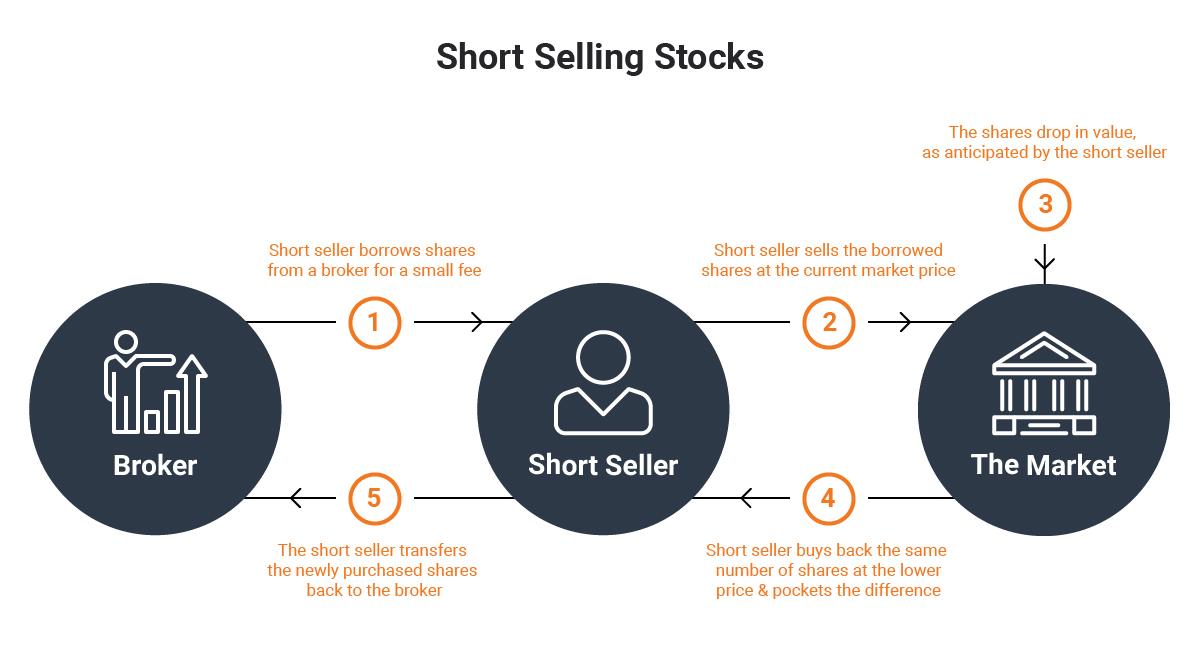
Short selling or ‘shorting’ refers to when investors try to make money by betting that a company’s share price will fall. In this method, a trader borrows shares of a particular company from a broker and sells them at market price- with the hope that prices will fall. He has an obligation to return these shares to the broker at a future date. The proceeds from the sale of these borrowed shares get credited to the trader’s account.

If the share prices of that company fall, the trader would be able to purchase back the shares from the market at a lower price. Profit is made on the difference between the price at which the shares were borrowed and the price when they are returned. Short selling is primarily conducted by large investment firms (such as hedge funds) and experienced investors. Also, the number of short positions in a company’s stock can be higher than the total number of shares available. The concept of shorting is made easier with the example given below.

An Example 

Suppose a trader expects the stock price of a company named XYZ to crash sometime soon. This assumption could be based on the fundamental and technical analysis he conducts on that particular stock. He would then decide to borrow 10 shares of XYZ stock from a broker and sell them in the market for Rs 50 each. Thus, he receives Rs 500 in cash. He has an obligation to purchase and return the 10 shares of ABC stock at some point in the future. 

In case the stock price of XYZ falls to Rs 10, the trader can purchase the 10 shares (that he owes to the broker) for Rs 100 and make a total profit of Rs 400. [Ie, Rs 100 subtracted from the Rs 500 he received initially by selling the shares]

What if the trader’s analysis failed and the share price of XYZ went up to Rs 250? He would have to spend Rs 2,500 to buy back the 10 shares that he owes to the brokerage. He still gets to keep the Rs 500 he earned from selling the shares initially. However, the trader has lost Rs 2,000 in this scenario. 
What is Short Squeezing?

When a company’s share price starts rising, shorts would panic and be forced to close their position. [Shorts are those traders who bet that the company’s stock would fall] They would buy up the shares that they owe their brokers and return them. More individual investors will start buying shares of that particular company, which leads to a further increase in its share price. Shorts who were too late to act on this would end up facing huge losses. This is referred to as short squeezing. 

Why are GameStop’s shares surging?

Gamestop Corp (GME) is an American video game, consumer electronics, and gaming merchandise retail chain. The company had been struggling since 2016 due to stiff competition from online retailers. As we know, most games can be purchased and downloaded online. Amidst the Covid-19 pandemic, it faced huge losses last year. These factors led the company’s stock to crash. The share price of GME stood at $18.84 as of December 31.

Towards the beginning of January, several amateur day traders on a Reddit group r/wallstreetbets– noticed that America’s top hedge funds were heavily short-selling the GME stock. The shorts included a big hedge fund- Melvin Capital Management LP. The Reddit group managed to convince other people on the thread to join forces and buy as much GameStop stock as possible. There were a lot of memes and posts circling through social media platforms, which made people aware of how they could bring down large hedge funds. These firms had been using the shorting method for ages and were benefiting from low-valued stocks.

This ultimately made the share prices go up astronomically. On January 28, GME’s stock touched an all-time high of $483! GameStop has secured its position in the Fortune 500 list of companies, alongside Alphabet, Apple, Tesla, etc.
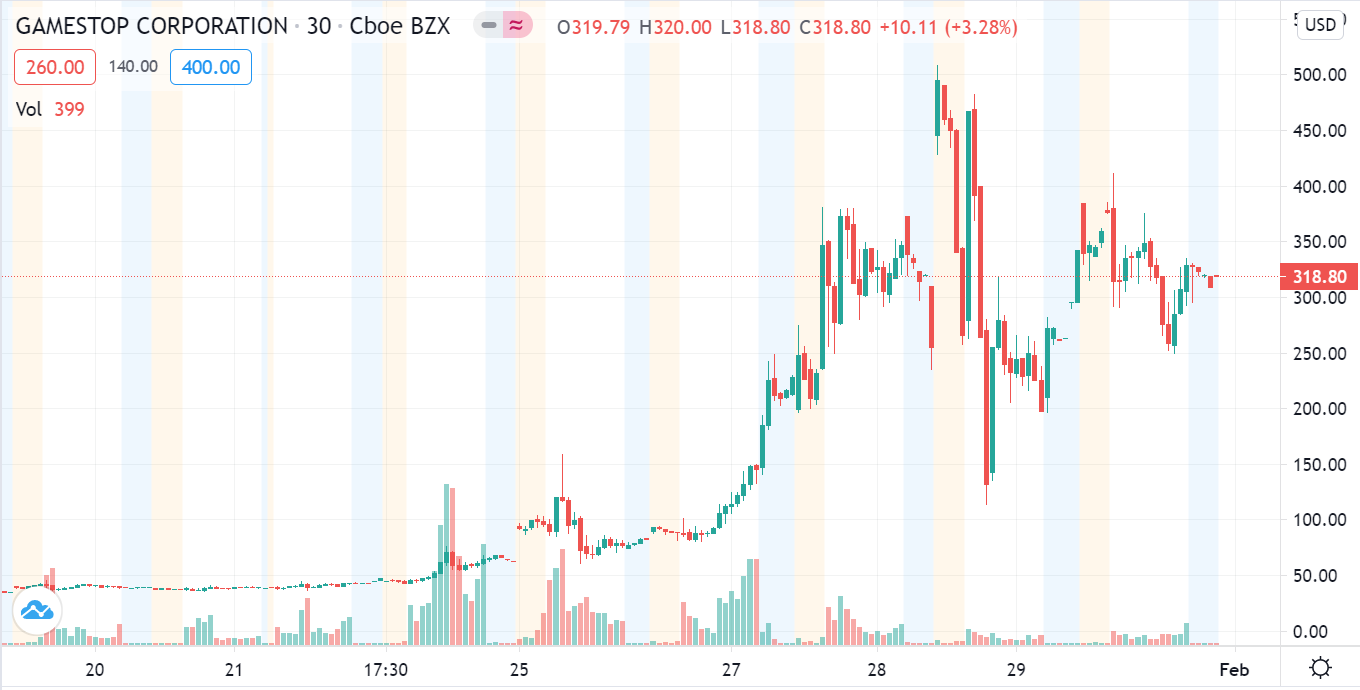
The coordinated attack eventually saw hedge funds facing losses of around $19 billion! It had even reached a point where some firms went bankrupt and had to close down. This encouraged investors to look into more stocks that had been shorted by large investment firms. Thus, the share prices of companies such as AMC Entertainment Holdings, BlackBerry, and Tootsie Roll Industries saw a similar rally. And, hedge funds were trapped in the short squeeze. The Reddit Group has also turned to Dogecoin, a cryptocurrency that was started as a joke. Last day, the value of Dogecoin surged 800% in 24 hours. 

Recent Developments

Melvin Capital, who had lost billions of dollars from the GME stock surge, was rescued by Citadel and Point72 Asset Management on Jan 25 (Monday). Both these hedge funds invested $2.75 billion into Melvin. A few days later, popular trading apps such as Robinhood restricted trading for stocks such as GameStop and AMC on their platforms. They only provided an option to sell these stocks, thereby preventing retail investors from purchasing more shares. The officials of NASDAQ (the exchange on which GME is listed) even suggested that trading could be temporarily halted on stocks that were targeted by ‘internet users’. All these factors led GME stock to fall to $231 on Jan 29 (Thursday).

Millions of people turned to social media platforms to show their dissent against Robinhood. They alleged that the broking app and large hedge funds were manipulating the stock market. Many people started questioning the motive behind the platform, which claimed to “democratize finance for all”. Interestingly, several reports started flying around, stating that $39 million of Robinhood’s revenues from equities and options order flow came from Citadel. This meant that Citadel is one of the largest customers of the trading platform. Thus, a connection between Robinhood, Melvin Capital, and Citadel was now clear.

If more solid evidence points to market manipulation, these companies would be in big trouble. The US House of Representatives has conducted discussions on the matter. Three lawmakers have called out an investigation into Robinhood’s actions. Two class-action lawsuits have been filed against the trading platform in New York and Illinois federal courts. The US President’s Office also put out a statement saying it was monitoring the situation.

On Thursday evening, Robinhood announced it was restoring “limited buys” for the restricted stocks, allowing fans of the stock to buy more. This led to a further rally in GME, AMC on Friday. The company also said it has raised $1 billion from its existing investors. The firm had been struggling to handle a surge in trading on the platform.

Conclusion

Now, you may be wondering if such a situation could occur in our Indian stock markets. We have been reading reports of several online forums such as ‘IndianStreetBets’, which aims to send Suzlon Energy’s stock “to the moon”. The group consisting of around 12,000+ members plans to pump up share prices through coordinated buying.

However, financial experts believe that such attempts at buying and holding stocks to trigger short squeezes in our Indian market would not produce any result. This is mainly because investors in India do not hold such large naked positions in an individual stock. The Securities and Exchange Board of India (SEBI) has also introduced several regulations that restrict the shorting of stocks. Traders are allowed to short a stock, but the position cannot be held for more than one trading session. This is why most traders and institutions in our country restrict their short positions to stocks that are part of the derivative segment. [Derivatives are securities that derive their value from an underlying asset or benchmark. Common derivatives include futures contracts, forwards, and options]. Even within the F&O segment, traders would have to pay a high price for holding short positions.

Nithin Kamath, the co-founder of Zerodha, recently posted a blog that gives us a clear idea of why a GameStop-like phenomenon would not happen in Indian stock markets. You can read it here. So long story short, we would not be able to drive up the prices of stocks like how our American counterparts did.

However, this whole situation has brought to light the wide disparity between large financial institutions and normal retail investors. Hedge funds have been constantly trying to outsmart their competitors and get away with billions of dollars from Wall Street. These same investment firms are crying foul over what has happened with GME shares. A market that was meant to be free is heavily influenced by large players. Let us look forward to seeing how this situation unfolds in the days to come. 
Categories
Market News Top 10 News Top Global News

Weak Market Sentiments Continue – Top 10 Global News

1. Futures Drop With Stocks; Bond Yields Rise

American equity futures slid along with stocks in Europe Friday amid lingering concerns about volatile retail-trader speculation in the U.S. and a cash squeeze in China. Treasury yields ticked higher and the dollar erased gains. S&P 500 futures dropped after the U.S. gauge rebounded Thursday from its worse loss since October. Crude oil inched higher and gold rose. The Stoxx Europe 600 index declined, though it pared losses after data from three of the euro area’s largest economies suggested the region can avoid a deeper recession, while still facing headwinds from extended coronavirus lockdowns. 

The Stoxx Europe 600 index dropped 0.8% by 7:04 a.m. in New York.

S&P 500 futures slipped 0.6%.

The MSCI Asia Pacific index fell 1.4%.

The MSCI Emerging Markets index dropped 0.9%.

2. Oil Holds Steady Amid Economic Data, Fears Over Demand

Oil steadied amid surprisingly robust economic data from Europe, while the spread of a new Covid-19 variant and lockdowns raised concerns about the near-term recovery in fuel demand. WTI futures held above $52 a barrel after the biggest decline in almost a week on Thursday. Three of the euro area’s four largest economies — Germany, France and Spain — rounded off the pandemic year suggesting the region can avoid a deeper recession. The virus variant identified in South Africa has reached the U.S. just as Europe is set to tighten its rules on the export of vaccines. Stay-at-home orders to combat the spread of the disease have hit travel and crimped consumption of fuels from China to Los Angeles. India’s demand for diesel, the country’s most-used fuel, is also struggling to shake off the pandemic’s crippling effects on its economy. The crawl back to pre-virus levels will be slow.

3. Biden Covid Team Derides Trump Plan Using Its Old Playbook

President Joe Biden and his top advisers have derided the Trump administration’s playbook for distributing coronavirus vaccines, but so far have made only modest changes to the plan that’s meeting their target pace of more than one million shots a day. Biden has said vaccine distribution was in “worse shape than we anticipated.” White House Chief of Staff Ron Klain said a Trump administration plan “did not really exist.” Adviser Cedric Richmond said they “didn’t leave a plan.” Xavier Becerra, Biden’s choice for health secretary, said it was like taking over a plane in a nosedive. But while Biden’s approach to the virus — frank warnings about the pandemic, mask mandates on federal property — is a reversal from Trump’s policies, his administration’s distribution of vaccines so far looks little different from that of its predecessor.

4. Bitcoin Investors May Lose Everything, Central Banker Warns

Bitcoin investors need to be prepared to “lose all their money,” European Central Bank governing council member Gabriel Makhlouf said, the latest warning from a central banker on the cryptocurrency. Makhlouf’s comments echo scepticism from ECB leaders. The cryptocurrency is a “highly speculative asset,” President Christine Lagarde said this month. Bitcoin prices have more than doubled since November and topped $40,000 earlier this month. Large movements in its value are common, with four daily swings of more than 5% in the past nine days.

5. Robinhood Raises $1 Billion in Dash for Cash After Trader Revolt

New York markets had just fired up, and the investing world was tuning in for Thursday’s episode of the continuing drama: Legions of Robinhood Markets investors versus hedge-fund Goliaths. But within minutes, a shock wave invisible to the outside world rattled the mechanics of Wall Street — sending Robinhood rushing for more than $1 billion of additional cash. The stock market’s central clearing hub had demanded large sums of collateral from brokerages including Robinhood that for weeks had facilitated spectacular jumps in shares such as GameStop. The Silicon Valley venture with the wildly popular no-fee trading app came to a crossroads. It reined in the risk to itself by banning certain trades and unwinding client bets — igniting an outcry from customers and even U.S. political leaders. By that night, word was emerging that Robinhood had raised more than $1 billion from existing investors and drawn hundreds of millions more from bank credit lines to weather the storm. 

6. Mexico Deaths Surpass India’s; WHO Team in Wuhan: Virus Update

Mexico overtook India as the country with the third-highest number of fatalities after the U.S. and Brazil. The virus variant identified in South Africa reached the U.S. with two cases found in South Carolina. Struggling to keep up in the vaccination drive, the European Union is poised to tighten rules on vaccine exports, while European Commission President Ursula von der Leyen slammed AstraZeneca for cutting the number of doses it would deliver to the bloc in the first quarter. In China, a team from the World Health Organization began meetings in Wuhan to try to understand the genesis of the coronavirus.

7. GameStop Shows Rising Power of Retail Traders: Reddit CEO

Reddit Inc. Chief Executive Officer Steve Huffman said on Thursday that the WallStreetBets forum is “by no means perfect but they’ve been well in the bounds of our content policy.” He said anyone who thinks the users of the forum are “idiots” should spend more time reading the discussions. “It’s this idiot swagger that masks what I think is this charming intelligence,” Huffman said. The forum’s unprecedented influence on GameStop’s stock shows that markets must adapt to a world where retail investors are gaining some of the power big financial firms have long held, according to Alexis Ohanian, co-founder of the online forum.

8. Taiwan’s GDP Growth Outpaces China’s for After 30-Year Gap

Taiwan’s economic growth outpaced that of China’s for the first time in 30 years, helped by its early control of the virus and stellar export performance. Gross domestic product expanded 2.98% last year, compared with China’s 2.3% rise. Taiwan was able to avoid the strict lockdowns last year that brought most other economies to a halt. With a few exceptions, Taiwanese businesses, offices and schools stayed open throughout the year and there was something of a boom in domestic travel as people opted to vacation at home rather than head overseas. 

9. Pfizer, BioNTech Covid Vaccine Safe for the Elderly, EMA Says

Pfizer and BioNTech’s vaccine for Covid-19 is safe for older people, a Europe-wide review found, with no link between the shot and the deaths of elderly vaccinated people. The review found no new side effects as the vaccine has been rolled out. The European Medicines Agency’s safety panel analyzed deaths in light of other medical conditions the people had, as well as the fatality rate for corresponding age groups in the general population, the EMA said in a statement. Reports of deaths in Norway earlier this month caused concern around the world, with people watching for signs of potential side effects from the vaccines being introduced with unprecedented speed.

10. U.K. Bans Flights From Dubai, Rest of UAE to Stop New Strain

The U.K. banned direct passenger flights from the United Arab Emirates to stop the spread of a new virus strain originally identified in South Africa, putting one of the world’s busiest international air routes on ice. Starting 1 p.m. U.K. time, passengers who’ve been in or transited through the UAE in the previous 10 days will also no longer be allowed to enter the country. Visitors from Burundi and Rwanda in Africa are barred as well. Exemptions usually in place, including for business travel, will no longer apply.

Categories
Market News Top 10 News Top Global News

Global Retail Investors Bleed Hedge Fund Titans – Top 10 Global News

1. Stocks Rebound From Worst Rout in Three Months

U.S. stocks rebounded from their worst loss since October as investors found the reason for optimism in strong labour data and a solid set of corporate earnings. Volatility continued in pockets of the market where retail traders have taken on an outsize role, whipsawing stocks such as GameStop Corp., American Airlines Inc. and AMC Entertainment Holdings Inc. The Stoxx Europe 600 Index slipped. Also weighing on sentiment is an ongoing dispute between AstraZeneca Plc and the European Union over vaccine supplies.

The S&P 500 Index rose 0.7% as of early morning New York time.

The Stoxx Europe 600 Index dipped 0.2%.

The MSCI Asia Pacific Index fell 1.9%.

The MSCI Emerging Market Index fell 1.5%.

2. U.S. Economic Growth Moderated to 4% in Final Quarter of 2020

The U.S. economy downshifted in the final three months of 2020 after record third-quarter growth, as the pandemic battered the labour market and limited Americans’ ability and willingness to spend. GDP expanded at a 4% annualized rate in the fourth quarter. While the output of goods and services was far slower than the record 33.4% rate in the previous three months, the growth pace still exceeded the average of the decade-long expansion that ended early last year. The deceleration in overall growth largely reflected a sudden moderation in consumer spending after a third-quarter splurge. Personal consumption, the biggest part of the economy, increased at a 2.5% rate, trailing projections for a 3.1% rise.

3. Tesla Slumps After First Results as a Blue Chip Disappoint

Tesla reported a lower-than-expected profit and record revenue, mixed results that disappointed investors used to razzle-dazzle from the newly minted member of the S&P 500 Index. The electric-vehicle market leader reported an adjusted fourth-quarter profit of 80 cents a share Wednesday, falling short of analysts’ consensus for $1.03. The results marked a sixth straight profitable quarter but also the first time the company missed Wall Street’s estimate for earnings per share since July 2019. Tesla shares fell as much as 8.1% before the start of regular trading Thursday. The stock had soared 933% since the beginning of last year.

4. Hedge-Fund Titans Lose Billions to Reddit Traders Running Amok

In a matter of weeks, two hedge-fund legends — Steve Cohen and Dan Sundheim — have suffered bruising losses as amateur traders banded together to take on some of the world’s most sophisticated investors. Driven by the frenzied trading in GameStop and other stocks that hedge funds have bet against, the losses suffered recently would rank among the worst in some of these money managers’ storied careers. Cohen’s Point72 Asset Management declined 10% to 15% so far this month, while Sundheim’s D1 Capital Partners, one of last year’s top-performing funds, is down about 20%. Melvin Capital, Plotkin’s firm, had lost 30% through Friday.

5. German Inflation Jumps by Record After Tax Cut Phased Out

German inflation surged by a record in January after the government phased out a temporary sales-tax cut and introduced a new emissions-pricing scheme. Consumer prices rose 1.4% from the previous month, pushing the annual inflation rate to 1.6%, more than three times economists’ forecasts. Prices were also boosted by an increase in the minimum wage. Inflation slowed sharply last year amid the pandemic crisis and turned negative in August as a result of a reduction in value-added taxes to stimulate demand. 

6. 20% of U.K. Workforce Furloughed with the Third Lockdown

Almost one in five of the U.K. workforce was on furlough leave as a third national lockdown to combat the spread of the coronavirus got under way. The report will raise concerns that removing government lifelines for jobs could wreak havoc on the economy following the worst slump in three centuries last year. Pulling the plug would threaten to decimate consumer spending, the engine of growth. The Office for National Statistics data shows 17% were reliant on Treasury wage support in early January, the highest proportion since July after the government ordered the public to stay home and retail and hospitality businesses were closed. The program pays as much as 80% of an employee’s wage if they’re kept on the payroll.

7. Tech Stocks Drive $123 Billion Gain at Norway Wealth Fund

Norway’s sovereign wealth fund returned $123 billion last year as soaring technology stocks added to market gains fattened by crisis support packages. The result is the fund’s second-highest in over two decades, and Chief Executive Officer Nicolai Tangen has already said it will be “very difficult to replicate.” The increase was driven by a more than 12% bounce in the $1.3 trillion fund’s equity portfolio. Bonds returned 7.5% while real estate lost 0.1%. Tech stocks alone delivered a 42% return, led by the fund’s holdings in Apple and Amazon.com. Tangen said the huge gain in tech stocks was “mainly due to the pandemic resulting in a massive increase in the demand for products for online working, education, trade and entertainment.”

8. China Trucking Startup Eyes $1 Billion U.S. IPO After Profit

Uber-like Chinese startup Full Truck Alliance is preparing for a U.S. initial public offering that could raise at least $1 billion as soon as this year, after eking out a slim 2020 profit thanks to a pandemic-era shipping surge. The startup backed by Tencent Holdings Ltd. is working with Morgan Stanley and China International Capital Corp. on its American debut. The talks are preliminary and details could still change but the company aims to raise $1 billion to $2 billion. China’s economy roared back to pre-pandemic growth rates in the fourth quarter after its industrial engines fired up to meet surging demand for exports. That boom is straining a domestic logistics network already taxed by a Covid 19 resurgence in e-commerce.

9. More Share Offerings Planned by Saudi Aramco: Crown Prince

Saudi Aramco plans to sell more shares to the public in the coming years, Saudi Crown Prince Mohammed bin Salman said at a conference Thursday. “There are going to be IPOs by Aramco in the following years,” Prince Mohammed said in Arabic at the Future Investment Initiative in Riyadh. The kingdom’s de facto ruler didn’t specify if the world’s biggest oil company would list more shares locally, sell them on a foreign exchange, or both. Aramco listed shares for the first time in Riyadh’s Tadawul exchange in late 2019 in the world’s largest initial public offering. The Saudi government still owns around 98% of the company, which has a market value of $1.9 trillion, second only to Apple.

10. Dubai Stocks Tumble Amid More Virus-Linked Curbs on Travel

Dubai’s stock index slumped as the city imposed further restrictions on air travel and hospitals amid another record surge in coronavirus cases. The Middle East business hub reduced the validity of PCR virus tests to three days from four “irrespective of the country they are coming from”. It is also now mandatory to have prior appointments for hospital visits. The United Arab Emirates, of which Dubai is the second-largest emirate, is battling a rise in infections as it opened up for air travel and eased movement restrictions.