Categories
Editorial

The Evergrande Crisis Explained

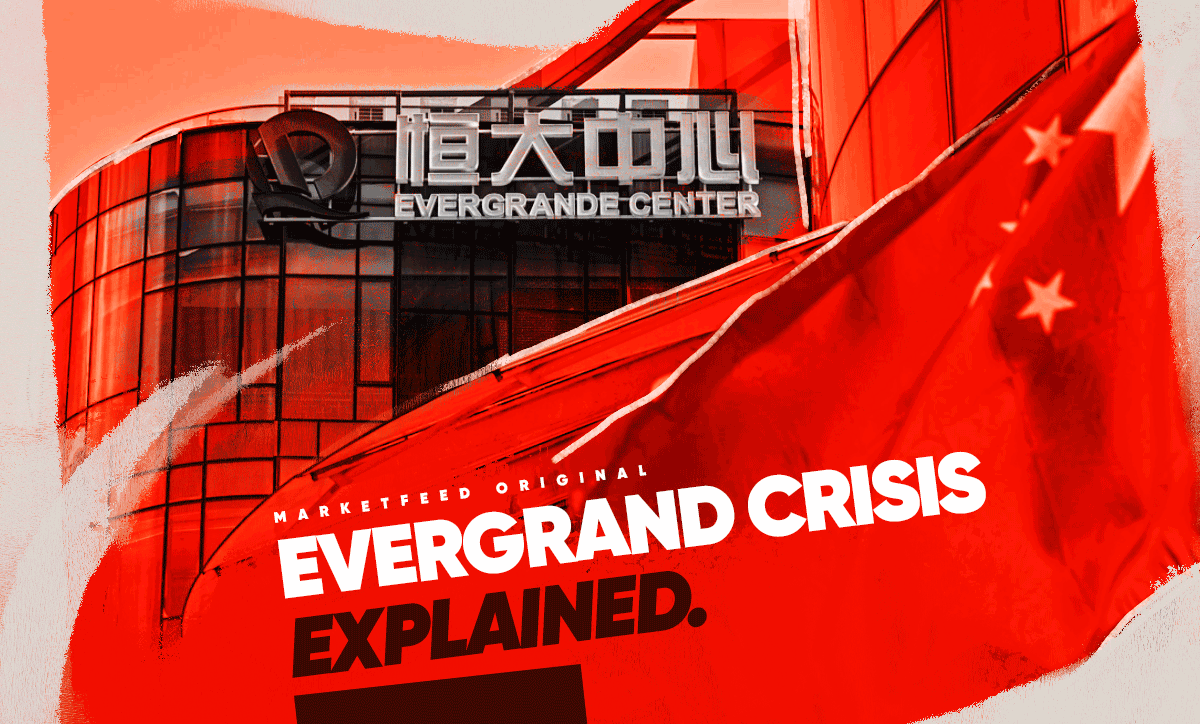
One of the biggest real estate companies in China is on the brink of collapse. There is speculation whether it could lead to a similar crisis as that of the Lehman Brothers downfall in the US in 2008. Stock markets around the world have already registered significant corrections as a result of the news from China. In this article, we take a closer look into the Evergrande crisis and how it could cause a ripple effect across global economies.

The Story

The Evergrande Group is China’s second-largest real estate developer. The company employs nearly 1.2 lakh people and has a presence in more than 280 cities. It has reportedly established over 1,300 projects across the country. Evergrande also has an electric car unit and investments in the sports, tourism, insurance, and health sectors. It is a Fortune Global 500 group enterprise and is listed on the Stock Exchange of Hong Kong. The real estate company reported sales of $110 billion last year. It was a company that aimed at providing affordable housing to the Chinese working class.

Unfortunately, Evergrande has now become synonymous with an imminent global financial crisis. Trouble has been brewing at the company over the past few months. It has piled up more than $300 billion in debt. Their liabilities are equivalent to 2% of China’s gross domestic product (GDP)! The company is now scrambling to raise funds to pay its lenders and suppliers. Evergrande was downgraded multiple times by credit rating agencies due to poor cash flow. Its shares have plummeted more than 80% this year. Their offices are now swarmed with investors, employees, and suppliers that want to claim what is owed to them.

Evergrande made headlines last week when Chinese authorities reportedly told banks not to expect the company to clear its interest dues. The real estate developer is likely to default on all upcoming payment obligations. The company makes up ~4% of total property sales in China. However, it has been pointed out that a slowdown in sales is the primary reason behind its present troubles.

What Led to the Crisis?

Over the past decade or so, the Chinese government has facilitated easy financing options to support real estate groups across the country. Borrowing costs have declined considerably, which allowed these companies to acquire a large number of land parcels. However, with a limited land stock in China, the buying spree of real estate firms created artificial scarcity. This ultimately led to a significant rise in property prices. Chinese citizens are now finding it difficult to afford houses and apartments. Moreover, real estate firms such as Evergrande have collectively piled up hundreds of billions of dollars in debt.

Recently, China’s regulators imposed new limits on real-estate borrowing as part of the Communist Party’s campaign to reduce dependency on debt. This crackdown on real estate developers is what damaged liquidity from Evergrande’s bonds.

Various analysts have also attributed the crisis at Evergrande to its ambitious expansionary moves. Within a few years, the company had diversified into the electric vehicles, sports, theme parks, food and beverage, groceries, and dairy products segments. It borrowed billions to acquire assets and fund new projects. They even sold apartments at low margins to raise capital quickly.

How Will Evergrande’s Collapse Affect Markets?

Evergrande Group’s suppliers, bondholders, and banks are hoping to receive repayments. The company’s customers have been waiting for years to move into their new homes. The realty firm is sitting on top of nearly 800 unfinished residential projects. The collapse of Evergrande will cause a ripple effect across the entire real estate industry in China. This is because one in five of the largest property developers in the country has breached all debt limits imposed by Chinese regulators. Property prices could crash if these companies try to get rid of unsold homes. Nearly 70% of the total wealth of the Chinese population is held in real estate, and a sharp decline in prices will adversely affect them.  

The global economy will also be impacted as foreign financial institutions and businesses have exposure to Evergrande. The Indian metals, steel, iron ore, textiles, garments, chemicals, and tyres sectors are likely to be severely affected if the Chinese government is not too keen on a timely bailout of Evergrande, according to analysts. We saw that our metal stocks fell sharply on Monday (Sept 20) due to rising fears that the housing sector slowdown may hit commodity demand in China— the world’s largest consumer of metals.

Recent Updates

Experts state that the Communist Party of China has the necessary resources and political power to mitigate the collapse of its real estate industry. The Evergrande situation is unlikely to develop into a full-blown decline of the global markets. As per a BloombergQuint report, China’s central bank has infused nearly $17 billion in short-term liquidity (cash) into the country’s financial system. This move is aimed at calming the markets amidst the Evergrande crisis. Further, the company has offered to repay debt in the form of property and parking spaces. 

The focus will now turn to whether the developer can pay $83.5 million (~Rs 615 crore) of interest due Sept 23 (Thursday) on a five-year dollar bond. Interestingly, Evergrande’s shares jumped more than 30% today on reports that one of its subsidiaries has negotiated interest payments on yuan bonds. Let us look forward to seeing how the situation unfolds in the days to come. 

Stock markets around the world will continue to keep a close watch on the events that transpire in China. What are our views on the Evergrande crisis? Let us know in the comments section of the marketfeed app.

Categories
Editorial

China’s Attack on Edtech Companies: Explained

As part of their continued crackdown on tech companies, the Chinese government has asked after-school tutoring institutions in the education technology (ed-tech) sector to convert into not-for-profit entities. Ed-tech companies would also be barred from raising funds, launching a public issue (IPO), or acquiring other educational services. This has led to a massive sell-off of popular tech stocks in the Asian markets over the past few days. Chinese tech companies have collectively lost nearly $1 trillion in market cap!

In this article, we shall understand why China has introduced such severe measures that could ultimately wipe out the country’s $100 billion ed-tech industry. 

Reasons Behind China’s Crackdown on Edtech Firms

Over the past year, Chinese authorities have asked all private educational institutions to scale back on operations. They are being forced to cap fees and suspend tutoring programs during the weekends and holidays. Many institutions were also fined for false advertising. Now, the government wants to limit the influence of ed-tech companies on the Chinese population. All these restrictions were formed as a result of changes in perceptions around education in China.

The country’s labour force is shrinking rapidly. Unfortunately, most college graduates are unemployable as there are very few white-collar jobs (lawyers, accountants, bankers, etc) available. China has been promoting vocational training for creating a skilled blue-collar workforce. These are practical courses that impart skills and knowledge on a specific trade or occupation (such as technician, machine operator, electrician). However, most people do not opt for such jobs as it is considered ‘inferior’ and the pay is terrible.

Edtech Firms Causing Social Inequalities?

The Chinese government has started questioning the very existence of private tutoring services. The ed-tech industry primarily targets students who are appearing for China’s main university entrance exam— the gaokao. It is a nine-hour-long test (spread over two days) that determines whether a student will attend an undergraduate institution or not. Similar to the IIT-JEE and NEET exams in India, the gaokao is considered a high-stakes exam. It is one of the most brutal educational assessments in the world. 

The Chinese strongly believe that passing the gaokao is the ultimate pathway to success. Students spend years preparing for it. As a result, ed-tech firms have capitalised on this opportunity to a large extent.

According to reports, major ed-tech companies have been accused of triggering social inequality among urban and rural citizens of China by providing additional coaching to those who can afford it. Moreover, excessive tutoring has led to increased pressure and anxiety among the country’s youth. It has also burdened parents with expensive fees. Now, the government authorities feel that the ed-tech industry does not serve any real purpose and may actually limit the country’s true potential.

The new regulations on ed-tech are also said to be in line with Chinese President Xi Jinping’s top priority at the moment— boosting the declining birth rate in the country. They had recently announced a three-child policy to counteract its aging population and declining workforce. The concerned authorities believe that restricting large ed-tech firms and providing affordable education is likely to encourage citizens to have more than one child. 

Similar Events That Have Transpired

Over the past year, Chinese officials have been suppressing large and upcoming tech companies. Jack Ma, the founder of the Alibaba Group, had alleged that Chinese regulators have been restraining innovation. Soon after making certain comments against the government’s anti-development policies, he disappeared from the public eye. His company, Ant Financial, was all set to launch a record-breaking ~$35 billion IPO during this period. Unfortunately, the IPO was called off as Chinese regulators tightened rules for companies to go public in American markets. 

In a more recent case, Didi (a cab-hailing company in China) launched a $4.4 billion IPO in the US, which received a great response from investors. Within two days of its listing, Chinese regulators launched a full-fledged investigation into the company. The Didi app was pulled off from all app stores as Chinese officials alleged that Didi was illegally collecting and using the personal data of its users.

Tencent, a well-known multinational technology conglomerate, was ordered to give up exclusive music licensing rights by China’s antitrust regulator. They also slapped a fine on the company for anti-competitive behavior. On July 26, the country’s State Administration for Market Regulation issued new guidelines for food delivery platforms as well.

These are all part of China’s efforts to minimise the interaction between Chinese companies and the Western markets. According to experts, President Xi Jinping and the Chinese Communist Party are sending messages to corporates and entrepreneurs to show them “who’s boss”. They simply do not want data collected from their citizens to fall into foreign hands. China will continue to introduce new policies and regulations that suppress all forms of innovation and development.  

Conclusion

Now you know why China has started an all-out war against tech companies to limit their influence. The country is returning to state-controlled capitalism in a holistic manner. It has caused quite a stir amongst global investors of these firms. As per the draft rules issued by the government, ed-tech companies will not be able to issue stock or raise money in the stock markets. Thus, large equity investors such as Tiger Global Management and Temasek Holdings Pte will not be able to get their desired exits. This has turned out to be one of the major factors for the bearishness in stock markets across the globe. 

There is another interesting point to be noted here. Currently, China is the largest education market in the world. Out of 28 edtech unicorns (valued at more than $1 billion) in the world, eight are Chinese companies. If their government enforces strict restrictions on the operations of edtech firms, global investors may turn to countries such as India. This would benefit our country’s popular edtech unicorns, BYJUS and Unacademy. As the saying goes, one man’s loss is another man’s gain.

Let us look forward to seeing how the situation unfolds in the days to come. Let us know your views on this topic in the comments section of the marketfeed app.