Categories
Market News Top 10 News

Cabinet Approves Relief Package for Telecom Sector – Top Indian Market News

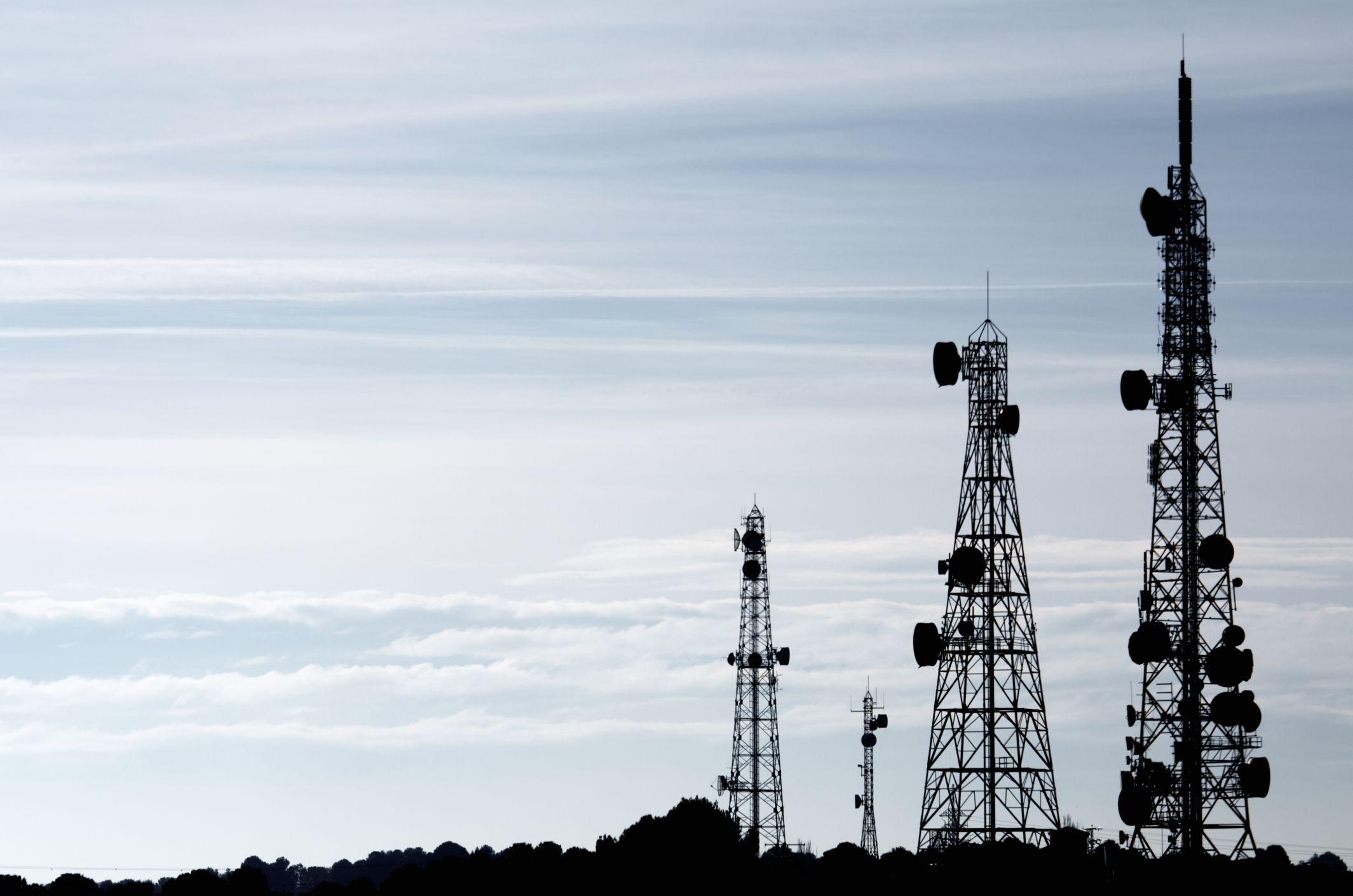
Cabinet approves 4-year moratorium on AGR dues, 100% FDI in telecom sector

The Union Cabinet has approved a four-year moratorium on payment of spectrum dues by telecom companies. The government has also decided to allow 100% foreign direct investment (FDI) in the telecom sector. The Centre has decided to rationalise the definition of Adjusted Gross Revenue (AGR). These measures are aimed at providing relief to companies such as Vodafone Idea and Bharti Airtel, who have to pay thousands of crores in unprovisioned past statutory dues. 

In other news, the Cabinet has also approved a Production Linked Incentive (PLI) scheme for the automobile and auto components sector with a budgetary outlay of Rs 25,929 crore. They have also approved a PLI scheme for the drone industry.

Read more here.

Tata Consumer signs pact with IIMR to strengthen R&D efforts on millets

Tata Consumer Products (TCP) has partnered with the Indian Institute of Millet Research (IIMR)-Hyderabad to unlock the full potential of millets as a healthier and more sustainable alternative to traditional grains. The two entities will combine research and development (R&D) expertise and drive the innovation of millets. This partnership will help TCP strengthen its product portfolio in the area of millets. TCP has identified pantry and mini-meals segments as some of the key areas of focus in its growth strategy.

Read more here.

Lupin launches generic Duexis tablets in the US

Lupin Limited has launched generic Duexis (ibuprofen and famotidine) tablets in the US market. The drug is used to treat symptoms of rheumatoid arthritis and osteoarthritis (inflammation or swelling of the joints). Duexis is also used to decrease the risk of developing upper gastrointestinal ulcers. According to IQVIA data, the generic version of the drug had sales of $765 million (~Rs 5,620 crore) in the US market for the 12-months ended July 2021.

Read more here.

SpiceJet to launch 38 new domestic and international flights

SpiceJet Limited will start 38 new domestic and international flights between September 15-25. The airline has launched flights on the Delhi-Surat, Bengaluru-Varanasi, Mumbai-Jaipur, Mumbai-Jharsuguda, Chennai-Pune, Chennai-Jaipur routes. Spicejet will also resume flights to and from Dubai, connecting Mumbai, Delhi, Ahmedabad, Kochi, Kozhikode, Amritsar, and Mangaluru.

Read more here.

USPTO approves Subex’s patent application that seeks to maximise revenue of telecom firms

The US Patent and Trademark Office (USPTO) has approved a patent application of Subex Ltd. The new patent extends the revenue maximisation capabilities of telecom firms, helping operators and subscribers to take proactive actions. Subex will set standards for telecom operators to identify monetisation opportunities. It will also help in detecting risks such as digital fraud to prevent damage before it occurs. Subex is a leading telecom analytics solutions provider.

Read more here.

Dabur hikes prices of hair oil brands by 2-7.5%

FMCG major Dabur Limited has hiked the prices of its hair oils across brands by 2.3-7.5% within the past 1-2 months. According to sources in trade and distributors, the hikes have been seen in the Amla, Vatika, and Anmol Gold Coconut hair oil brands. The maximum retail price (MRP) of the 275 ml Dabur Amla hair oil bottle has been hiked by 2.9% to Rs 138, while the MRP of the 450 ml bottle is costlier by 5% at Rs 209. The price hikes come on the back of rising raw material prices, especially of crude oil and crude derivatives such as Light Liquid Paraffin (LLP).

Read more here.

NCC declared lowest bidder for all 3 packages of Bangalore Metro’s Airport Line

NCC Limited was declared as the lowest (L-1) bidder to construct all three packages of Bangalore Metro’s 37 km Airport Line (Blue Line). The Airport Line will link Bengaluru’s Kempegowda International Airport (KIA) with KR Puram. The ORR-Airport Metro project will comprise two new metro lines (with a total length of 56 km) along Outer Ring Road (ORR) and National Highway 44— between Central Silk Board and KIA. It includes 30 new metro stations that will offer multimodal facilities, including bus bays, taxi stands, pedestrian walkways, and bridges.

Read more here.

KNR Constructions receives LoA for order worth Rs 1,041.5 crore 

KNR Constructions Ltd has received a Letter of Acceptance (LoA) for an order worth Rs 1,041.5 crore. The order includes the development of a six-lane Chittor-Thatchur Highway in Andhra Pradesh and Tamil Nadu on Hybrid Annuity Mode (HAM). The project is expected to be completed within two years. KNR Construction will also be in charge of operation and maintenance for 15 years from the date of commercial operation.

Read more here.

Categories
Editorial

Royal Enfield – Eicher Motors’ Golden Baby

Have you ever desired to travel cross-country in a Royal Enfield? Each model of RE has a unique and aspirational value attached to it. The Royal Enfield Classic, Standard, and Himalayan have established themselves as benchmarks in the motorcycle industry. The company holds more than 90% market share among motorcycles that have engine displacement within 250-750cc. 

In this article, we shall analyse how well the motorcycle brand is growing under its parent company. How does it compete with other cafe racer brands across the globe?

Royal Enfield – A Brief Profile

RE started its operations in England at the end of the 19th century. In 1932, the company introduced the evergreen model “Bullet” at a motorcycle show in London. It received an order from the Indian Army in 1952 for 800 350cc Bullets. The initial success in India made the foreign company partner with Madras Motors to form Enfield India. Eventually, they introduced Continental GT and the Interceptor, which hit good sales volumes. Towards the end of the 90s, the automaker was in serious financial trouble. Moreover, the parent company in London had already closed its operations in 1967. 

Around the same period, a family-run business in India was finding it difficult to find its momentum. They first tried importing trucks to India back in 1948. This was followed by a partnership with Mitsubishi for manufacturing commercial vehicles (CV). All these businesses were not showing exponential growth. They were unable to attain a significant market share in the CV segment. Thus, the company made a bold decision in 1994 to acquire the financially wrecked Enfield India. That saviour is the current parent company of the two-wheeler manufacturer— Eicher Motors Ltd

Eicher saw a huge market for two-wheelers in India. It divested other businesses and started to concentrate on the newly acquired vertical. The introduction of the RE Classic was a great success in India, followed by the release of Himalayan in FY17. The company also relaunched the 650cc twins (Continental GT, Interceptor) and Meteor 350 in FY21. There was also an uplift of the Classic 350 recently. 

The main trump card of RE models is that they are affordable when compared to similar segment models. Let us take an example of Continental GT, which is tagged at a starting price of Rs 3 lakh. Similar cafe racer models such as the Honda CB650r start at Rs 7.7 lakh, while the Suzuki SV650 starts at Rs 7.5 lakh. RE’s affordability factor has led to the growth of a strong customer base in developing markets like Latin America and several countries in Southeast Asia. 

Global Presence

Royal Enfield started its North America division in 2015, followed by a research and development centre (R&D) in the United Kingdom in 2017. The two-wheeler manufacturer currently has 140 stores beyond the borders of India. In developing markets in the Asia-Pacific region, Enfield has 48 exclusive stores, with Thailand leading from the front. In Latin America, RE holds a significant share in the markets of Argentina, Brazil, and Colombia.

Domestic Sales

In the financial year 2015-16 (FY16), the automaker recorded total domestic sales of 4,98,791 units. It grew to 8,05,273 units in FY19, at a CAGR of 17.2%. In FY20, the manufacturer recorded a sharp decline in sales. Total sales stood at 5,73,728 units at the end of FY21. This can be attributed to the Covid-19 pandemic and the lockdowns imposed in various parts of the country.

Interestingly, 91% of the total sales are derived from the sale of 350cc models. The company has a 27% market share in the above 125cc segment as well. Royal Enfield has a 94% market share in the 250-750cc mid-size motorcycle segment.

Profitability

By analyzing the financial reports of Eicher Motors, we see that RE’s total revenue from operations stood at Rs 8,619 crore in FY21, which has grown at a CAGR of 5.2% from Rs 7,038 crore in FY17. The decrease in sales of two-wheelers has resulted in negative growth in revenue as well.

Now, let us analyze the profitability of the brand with other major two-wheeler manufacturers in India. 

Return on Equity (ROE) is a financial ratio that measures the company’s efficiency to generate profits with respect to shareholders’ equity. In FY21, Royal Enfield reported an ROE of 14%, which means that for every Rs 100 invested in the company, it can generate Rs 14 as profit. 

Here, we can see that all automakers have been facing serious issues even before the onset of the Covid-19 pandemic. Royal Enfield’s ROE has almost halved in 5 years. 

Eicher – A Consolidated Profile

As mentioned earlier, Eicher divested their operations in other business verticals like tractors and started to concentrate on two main branches— Royal Enfield and a commercial vehicle joint venture with Volvo Group (Volvo-Eicher Commercial Vehicle or VECV).

VECV primarily concentrates on Light & Medium Duty (LMD) trucks, buses. In 2020, VECV acquired Volvo Buses India (VBI). The automaker produced 41,268 CVs in FY21. In the LMD segment across India, the company enjoys a market share of 30%.

The Earnings before Interest, Tax, Depreciation, and Amortisation (EBITDA) margin of RE’s verticals are shown below: 

We can see that Eicher’s commercial vehicle (CV) vertical is a low-margin business compared to the two-wheeler vertical. Royal Enfield was able to retain 21% of total revenue as income, while the figure stood at 7% for the CV segment. It is interesting to note that both Enfield and the CV vertical generated revenue of around Rs 8,700 crore in FY21, in which RE retained higher profits.

Conclusion

The increase in the total working population in India, along with high disposable income and decreasing interest rates on vehicle loans, has fueled Royal Enfield’s sales. As per rumours, Hunter 350, Roadster 650, and Scram are some of the company’s upcoming models. The arrival of the facelifted Classic 350 shows that Enfield is updating their models at regular intervals, which will help improve sales. RE is constantly working towards establishing a strong global presence as well. The company has been able to generate an aspirational value for its brand in countries such as Thailand, Argentina, Brazil, and Columbia. However, there is heavy competition from international players such as Honda and Suzuki. The slowdown in the global automobile sector is also weighing down on the company.

The shares of Eicher Motors have rallied by ~29.7% over the past year. Currently, it is trading at Rs 2,852, 6% below its 52-week high. 

Let us look forward to seeing how Royal Enfield implements its strategic plans. What are your thoughts about the company? Let us know in the comments section of the marketfeed app.

Categories
Editorial

Automobile Price Hikes in 2021: Explained

Since the beginning of 2021, major automobile companies have resorted to hiking the prices of their vehicles. Most automakers raised prices by nearly 3-4% across all categories during the first week of January. There was another round of price increases in April. The automotive industry is reportedly planning to introduce a further round of price hikes for their offerings in the coming months. 

Unfortunately, Indian consumers continue to be at the receiving end of inflating vehicle prices and high fuel costs. In this article, we analyse the various factors that have led to the sharp increase in automobile prices.

Factors That Led to Price Hikes

  • Raw material costs continue to surge because of the relentless increase in iron ore, steel, and precious metal rates. Domestic steel prices had increased sequentially by about 19% in Q3 FY21 and by another 19% quarter-on-quarter (QoQ) in Q4 FY21. The price of plastic has gone up by 60-80% over the past year. Aluminium, copper, lead, and rubber prices have also increased rapidly. It has become difficult for auto companies to sustain the prices of their commodities for a long period as it would impact their operating margins.
  • The entire automobile industry is facing a sluggish recovery in terms of demand and sales. The ongoing Covid-19 pandemic and localised lockdowns are major factors that are hurting the sector.
  • Bharat Stage (BS) VI emission norms came into effect on April 1, 2020. It is the most advanced emission standard for automobiles and is equivalent to Euro-VI norms that are currently in place across Europe. Unfortunately, BS VI-compliant vehicles are more expensive as the materials required to keep emissions down (such as rhodium) are scarce. Diesel vehicles and economic-segment two-wheelers saw a sharp increase in prices, which kept buyers away from the market.
  • Fuel prices have surged over the past year. Petrol prices have crossed the Rs 100 per litre market in most cities and are continuously rising. This has caused a direct impact on total vehicle ownership costs. 
  • The limited availability of semiconductors has created a supply-demand crisis globally. Original equipment manufacturers (OEMs) across the world had made wrong predictions with respect to the necessity of essential chips for their vehicles.

Price Hikes vs General Inflation

Let us now compare the extent of automobile price hikes with the general inflation in our country. India’s retail price inflation rate eased to 5.59% year-on-year (YoY) in July 2021, from 6.26% in the previous month.

The ex-showroom price of the Maruti Suzuki Swift (base model) stood at Rs 5,19,000 in August 2020. Currently, its price stands at ~5,81,000. This is an increase of 11.95%! We have chosen Swift as it is the best-selling car in India.

Similarly, we can see that the price hike across most prominent passenger vehicles, two-wheelers, and even commercial vehicles exceeds the general inflation rate of India. This is more or less the same case in the global markets as well.

Major Price Revisions in 2021

India’s largest carmaker, Maruti Suzuki India Ltd, was one of the first companies to initiate a price hike in 2021. They announced an upward revision of up to Rs 34,000 in January. MSIL announced a further hike for select models in April and another revision across its entire range in June.

Hero MotoCorp announced a price hike of up to Rs 3,000 across its entire range of two-wheelers in June. The hike was effective from July 1. Tata Motors increased its passenger vehicle prices and Mahindra & Mahindra hiked the prices of all its cars by up to Rs 49,000 in May. Kia announced a price hike in the range of Rs 20,000 and Rs 35,000 for its popular models. Hyundai, Renault, Nissan, and Mercedes-Benz also announced price hikes multiple times this year.

Many auto industry executives believe that the earlier price hikes may not be sufficient to counter or offset high production costs. At the same time, frequent increases in prices could severely impact the sluggish recovery in consumer sentiments. The average Indian consumer is extremely price-sensitive, and higher ownership costs can make customers delay purchases of new vehicles. It seems that the auto sector is bound for an extended period of slowdown. 

The announcement of the Vehicle Scrappage Policy has brought some cheer to the auto industry. It will help boost overall sales and reduce imports of essential metals. Now, the concerned officials must give utmost importance to the efficient implementation of the policy.

What are your thoughts on the frequent hikes in vehicle prices? Let us know in the comments section of the marketfeed app.