Categories
Market News Top 10 News

Adani Group to Get Control of NDTV – Top Indian Market Updates

Here are some of the major updates that could move the markets tomorrow:

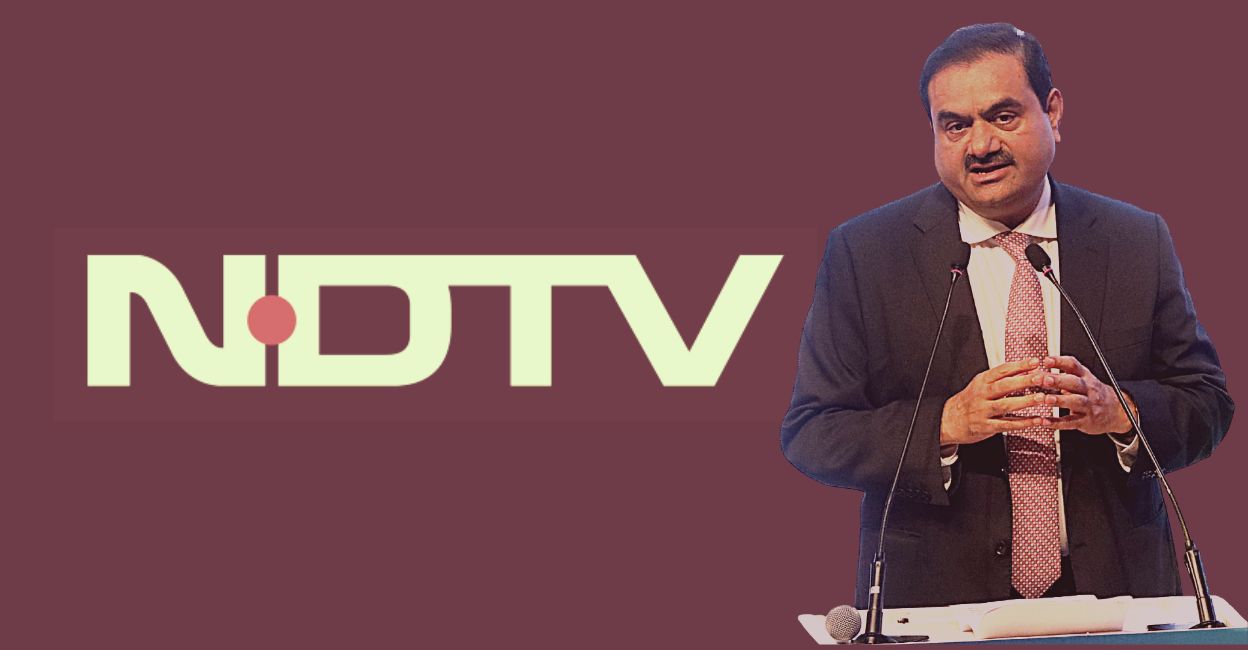
Adani Group to get NDTV control as promoters decide to sell bulk of their stake

New Delhi Television Ltd’s (NDTV) founders Prannoy Roy and his wife Radhika Roy have decided to transfer most of their shares in the company to the Adani Group. This will give Gautam Adani’s conglomerate control of about 65% of the news broadcaster. The founders will sell a 27.26% stake of their remaining 32.26% shareholding in NDTV to an entity owned by Adani.

Read more here.

Puravankara, Purva Real Estate Fund acquires 100 acres of land in Chennai

Puravankara Ltd and Purva Real Estate Fund have acquired more than 100 acres of land for plotted development in a deal valued around ₹200 crore in Chennai. The proposed project at Guduvanchery is expected to have a total revenue potential of over ₹900 crore. Guduvanchery is an upcoming real-estate hub for Chennai. Puravankara plans to launch three more plotted development projects by March 2023.

Read more here.

Tata Power secures ₹450 crore sustainable trade finance from Japan’s MUFG

Japan’s MUFG Bank has executed a ₹450 crore sustainable trade finance facility for Tata Power. This credit facility was extended for solar projects under TP Kirnali Limited (TPKL). TPKL is a wholly-owned subsidiary of Tata Power Renewable Energy Ltd (TPREL), a clean energy platform.

Read more here.

Godrej Properties to develop residential project on 14.27 acres in Gurugram

Godrej Properties Ltd (GPL) has entered into an agreement to develop 14.27 acres of land in Gurugram, Haryana, with an estimated revenue potential of ₹3,000 crore. The development will comprise predominantly premium residential apartments. This will be one of GPL’s largest residential developments in Gurugram and significantly strengthen its presence in the city.

Read more here.

Vedanta declared as preferred bidder for Bicholim mineral

Vedanta Ltd has been declared as the preferred bidder for the Bicholim mineral block in Goa. The iron ore mines had resources of 84.92 million tonnes. Goa government has earlier invited tenders to participate in the electronic auction for granting mining leases in respect of iron ore mines in the state. 

Read more here.

NCLT approves merger of Jindal Stainless and Jindal Stainless (Hisar)

Jindal Stainless has received regulatory approval for its merger with Jindal Stainless (Hisar) from the National Company Law Tribunal (NCLT). The two companies had been demerged in 2015 as part of a financial and operational restructuring exercise to bring down the cost of borrowing. Jindal Stainless had a debt of over ₹8,500 crore, which prompted the restructuring.

Read more here.

Bharat Highways InvIT files draft papers with SEBI for IPO

Bharat Highways InvIT has filed a draft prospectus with the capital markets regulator SEBI to raise ₹2,000 crore through an initial public offering. Proceeds of the issue will be used to repay certain loans obtained by the project special purpose vehicles (SPV) and for general corporate purposes. As per the draft papers, Bharat Highways InvIT would issue units aggregating up to ₹2,000 crore.

Read more here.

2,613 air incidents reported in India during five years; IndiGo tops the list: Govt

The Ministry of Civil Aviation (MoCA) said there has been a long list of air incidents reported in the last five years involving domestic airlines and added that 12 of these airline companies are presently operating in India. There were a total of 2,613 air incidents reported due to technical snags in the five years in which IndiGo airlines topped the list. IndiGo reported 215 incidents so far in 2022 and 885 incidents over five years.

Read more here.

Categories
Editorial

What are Infrastructure Investment Trusts (InvITs)?

An Infrastructure Investment Trust (InvIT) is an investment scheme (similar to a mutual fund) that enables individual and institutional investors to directly invest funds in infrastructure projects. These investors, who collectively invest small amounts of money in income-generating assets, receive a small portion of the income in return. These ‘assets’ could include road projects, power transmission lines, gas pipelines and much more.

We know that infrastructure firms require a steady cash flow to complete their projects. In most cases, they borrow large amounts of money from financial institutions. Thus, companies monetise their income-generating assets (through InvITs) to repay their debt obligations quickly and effectively. The funds raised through InvITs are used to pay off interest on loans and other substantial expenses. The primary objective of InvITs is to promote the infrastructure sector of a country by encouraging more individuals to invest in it. 

An InvIT is established as a trust and must be registered with the Securities and Exchange Board of India (SEBI). The SEBI (Infrastructure Investment Trusts) Regulations, 2014 provides specific details regarding the registration and regulation of InvITs. Once registered, InvITs can raise funds through public or private placement and issue units to investors. In return, investors obtain a share of the annual distribution of dividends and interests. The units of such trusts are listed on the stock exchanges as a combination of both equity and debt instruments. 

The minimum amount required to invest in an InvIT IPO is Rs 10 lakh. Thus, large financial institutions or high net worth individuals (HNIs) find InvITs as a profitable investment opportunity. Small retail investors would struggle to apply for such IPOs.  

Types of InvITs

  1. The first type of InvIT allows investment in revenue-generating completed projects. Firms invite investors to invest in finished projects through an InvIT IPO.
  1. The second type of InvIT allows investors to invest in projects that are both completed or under construction. 

Structure of InvITs in India

  1. Trustee – A trustee inspects the performance of an InvIT and is certified by market regulator SEBI. They are required to invest at least 80% into infrastructure assets that generate steady revenue.
  1. Sponsor(s) – This refers to promoters, institutions, or companies— that have a net worth of at least Rs 100 crore— which establishes an InvIT. They must hold a minimum of 25% in the InvIT with a minimum lock-in period of 3 years or as notified by any regulatory requirement. When it comes to public-private partnership (PPP) projects, sponsors serve as a Special Purpose Vehicle (SPV). [An SPV is a subsidiary company that facilitate the parent company’s financial arrangements, including leverage and speculative investments, without compromising the entire group]
  1. Investment Manager – This refers to a limited liability partnership (LLP) or an organisation that manages investments and supervises all the operational activities surrounding the InvIT.
  1. Project Manager – They are responsible for the execution and completion of infrastructure projects.

Prominent InvITs in India

As of February 2021, there are 13 Infrastructure Investment Trusts registered with SEBI. Let us take a look at some of the most prominent ones:

India Grid Trust

India Grid Trust (IndiGrid) is India’s first listed power sector infrastructure investment trust. It is sponsored by American global investment firm KKR & Co. and Sterlite Power Grid Ventures Ltd (SPGVL). The InvIT owns 12 operating assets, spanning over 30 transmission lines, spread across 6,740 circuit kilometers. IndiGrid also owns 9 substations with 12,290 mega-volt ampere (MVA) transformation capacity across 15 states and one Union Territory, The entity’s assets under management (AUM) are currently worth ~Rs 15,000 crore.

IRB InvIT Fund

IRB InvIT Fund is the first listed InvIT focused on toll-road assets in India. The sponsor of the trust is IRB Infrastructure Developers Ltd, one of the largest infrastructure development and construction companies in India. IRB InvIT Fund owns, operates, and maintains a portfolio of six toll-road assets in the states of Maharashtra, Gujarat, Rajasthan, Karnataka, and Tamil Nadu. These toll roads are operated and maintained through concession agreements granted by the NHAI.

National Highways Infra Trust

It has been reported that the National Highways Authority of India (NHAI) will come out with an InvIT by March 2021. It will be the first InvIT sponsored by a government entity in our country. Around six road assets worth Rs 5,000 crore have been given in-principle approval for transfer to the InvIT. This will enable NHAI to monetise its completed National Highways that have a toll collection track record of at least 1 year.

Assets to be transferred to the InvIT include the 32.6 km Kotha-Kata Bypass to Kurnool (Telangana), the 75 km-long Palanpur-Abu Road in Gujarat, the 31 km-long Abu Road-Swaroopganj in Gujarat, the 160 km Chittorgarh Kota and Chittorgarh Bypass in Rajasthan, and the 77 km Maharashtra-Karnataka border to Belgaum. 

Power Grid Infrastructure Investment Trust

On January 28, 2021, Power Grid Corporation of India Ltd filed draft papers with SEBI for issuing an InvIT. The company seeks to raise more than Rs 5,000 crore to fund new and under-construction projects. This will be the first InVIT in the country to be floated by a public sector company. The offer includes a fresh issue as well as an offer-for-sale (OFS).

The trust’s initial portfolio will have transmission assets worth around Rs 7,000 crore. This includes PowerGrid Vizag Transmission Ltd, PowerGrid Kala Amb Transmission Ltd, PowerGrid Parli Transmission Ltd, PowerGrid Warora Transmission Ltd, and PowerGrid Jabalpur Transmission Ltd. The proceeds from the offer will be utilised for providing loans to the initial portfolio assets for repayment or pre-payment of debt and general expenses.

Other InvITs registered with SEBI include India Infrastructure Trust, Indian Highway Concessions Trust, IndInfravit Trust, MEP Infrastructure Investment Trust, Digital Fibre Infrastructure Trust, Oriental Infra Trust, Tower Infrastructure Trust, and Roadstar Infra Investment Trust.