Categories
Editorial

Biden or Trump: Why is it Taking Time?

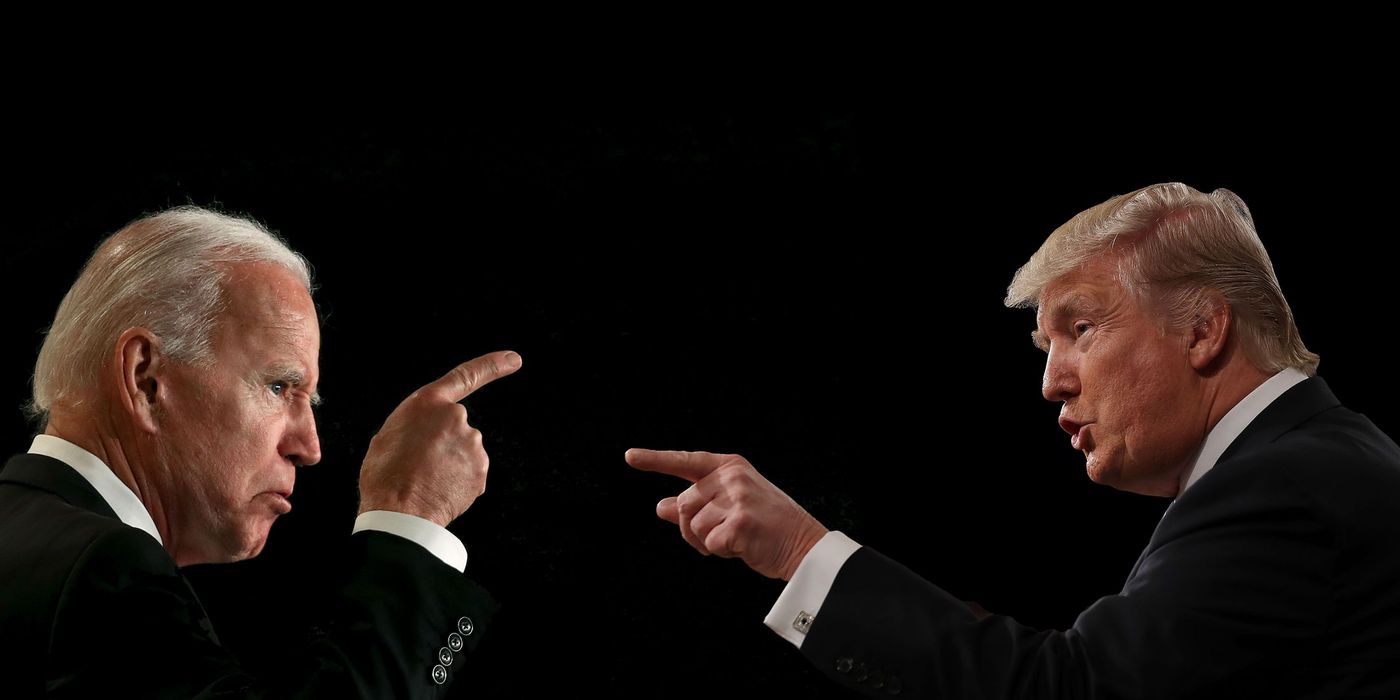
The US Presidential Election has been one hell of a ride. The two candidates have their horns locked. An entire nation is divided based on two opinions, one supporting Donald Trump and the other supporting Joe Biden. There is absolutely no certainty as to who would be the next President of the United States of America. There are some serious allegations of rigged elections and malpractices in the voting process. The elections matter a lot to the global markets as both Trump and Biden have opposing policy, agenda, and political prospects. What would happen if Donald Trump fails to accept defeat?

Has he actually lost? Have the results been declared officially? Can the Supreme Court have a say? 

  1. Current Situation of US Election
  2. Who Wins? Trump or Biden?
  3. What Now?

Current Situation of US Election

  • Donald Trump is adamant and refuses to concede. He is still the President of The United States of America. He says that the elections were tainted/rigged and has approached the courts in certain states like Pennsylvania, Michigan, Georgia, Nevada, Arizona, Wisconsin, Michigan, and possibly more in the future. Trump is likely to approach the Supreme Court of the US
  • Trump’s Secretary Of State Mike Pompeo has announced that he is embarking on a seven-nation tour to Europe and Asia to strengthen political, diplomatic, and administrative ties. 
  • Trump’s members of staff have refused to cooperate with the transition team of Joe Biden, which would help in transferring the administrative charge from the Trump Administration to Joe Biden’s Administration.
  • Trump has fired Mark Esper, the Defence Secretary of the United States along with some other senior defense officials. Moreover, there are rumors that he may fire FBI boss Christopher Wray, CIA Director Gina Haspel. Trump is considering planting ‘loyalists’ in their place. Are we looking at the possibility of a Military Coup?
  • Recounting of ballots is currently in progress in some of the disputed states. A thorough scrutiny of postal ballots has been ordered in many states.

Who Wins? Trump or Biden?

Well, Trump is adamant. He is less likely to concede and won’t back out for long. It is made clear from his public announcements and social media posts that he is in for a long brawl. On the other hand, Joe Biden is the president-elect, since he has managed to secure more than 270 electoral votes, which is the requirement to become President. Trump meanwhile is still at 217 electoral votes. Considering this, the following are the possibilities:

  1. Biden Wins: Trump is the President, but only till 20th January 2021, the Presidential Inauguration Day. If Trump fails to prove his claims of a tainted election till then or he decides to concede, he will cease to be the President and Biden will be sworn-in. If a new President is not elected by January 20 noon, the House Speaker, Democrat Nancy Pelosi would become the acting President.

2) Trump Wins: Let us say Trump approaches the Supreme Court and gets it to order a major recounting of votes. If Trump gains a majority in the vote recount and not Biden then there are chances that Trump might be re-elected

If for some reason Biden decides to concede, even then Trump can become President. However, the chances of that happening are very less.

3) Contingent Elections: If none of the candidates win a complete majority in the electoral college after the recounting or a president cannot be determined, there would be a Contingent Election. In a Contingent Election, the members of the Upper House or the House of Representatives vote for and elect the President while the Lower House or the House of Senate elects the Vice-President. Currently, The Republicans dominate the Senate and The Democrats dominate the House of Representatives. 

What Now?

Joe Biden is the official ‘President-Elect’, yet there is high uncertainty as to who would become president in the US. Biden has the majority but Trump isn’t totally wrong about a ‘mismanaged’ election. There were indeed instances of Postal Ballots being rejected because they ‘reached late’, while some postal ballots were even reported misplaced. Some voters suggest that they were given ‘sharpie pens/markers’ which would ‘easily get smudged’ and therefore invalidate their votes.

The current election isn’t the first time that the Presidential Election in America has faced a turbulent patch. In 2000, Republican candidate George W. Bush and Democrat Al Gore faced a very similar situation. Eventually, Al Gore ended up conceding and George Bush became President, all of this with a margin of just 600 votes. There are many similarities between the 2000 Presidential Race and the 2020 Presidential Race. 

America has been the flag bearer for Democracy, in the sense that other countries look up to it in terms of the implementation of fundamental democratic rights. However, Trump’s actions have made its democratic spirit questionable for the first time.

America as of this moment is bitterly divided on the political axis. Neither sides’ victory will fetch a significant positive or negative sentiment. It is advised that market participants actively look into the agenda and strategy of both Trump and Biden. Both have entirely different insights to offer to the global market. 

To know more about how the US Elections can affect the stock market, check out our article over here.

Categories
Editorial

The Onion Futures Act of USA and How India can Solve its Onion Crisis

Onion prices keep popping up in the news once in a while for their skyrocketing prices. Mostly, this happens because of poor storage facilities, crop damage, too much or too little rainfall, delay in logistics and transportation, high demand for onions during festive seasons, shortage of supply, and many other factors that take place. To curb the shortage, India often bans the export of onions. This ban causes a rise in onion prices globally as India is the third-largest exporter of onion in the world. This volatility in onion prices proves to be catastrophic for the farmers many times. There are no risk management mechanisms against which farmers hedge themselves.

There used to be a tool in the United States to hedge the risk, which was made illegal in the year 1958. The ‘Onion Futures Act’ banned the dealing in onion derivatives, which could be used to hedge the risks associated with it.

What is the Onion Futures Act?

In the early 50s in the US, onions were traded in the open market alongside the Chicago Mercantile Exchange, where onion derivatives or onion future contracts were traded

A derivative is a security which traces its value from an underlying asset. As an example, NIFTY Futures derive their value from the underlying asset which is NIFTY itself. A ‘futures contract’ is a contract where a person agrees to buy/sell something in the future at a predetermined price and time. You can find index, stock, and commodity futures on your broker’s terminal.

A futures contract allows a person to hedge or offset the risk involved. In this case, the product was onion and the risks associated were droughts, floods, changes in supply, and demand which could lead to a huge rise or fall in onion prices.

So let’s get into the story. Two gentlemen; Vincent Kosuga and Sam Siegel, were onion farmers who also traded in onion derivatives. Onion derivatives was a hot product in 1950. They made up for 20% of Chicago Mercantile Exchange’s trades. 

In early 1955, Kosuga and Siegel bought enough onion and onion futures to control close to 90% of Chicago’s onion market. This meant that they had a higher bargaining power and could set the price very very high. A million pounds of onions were shipped to Chicago and stored at facilities. By late 1955, Kosuga and Siegel had hoarded 14,000 tonnes of onions. They had these onions stored at storage facilities all across the country to prevent suspicion. The shortage of supply caused the prices to increase.

They profited in two ways:

Firstly, Kosuga and Siegel threatened the other small traders to buy onions from them stating that if they didn’t comply they would flood the market with onions and drive the price down. They profited from this since traders were buying onions from them, that too at a high price.

Secondly, Kosuga and Siegel bought short-positions on onion derivatives beforehand. When you hold a short position, you benefit from the fall in the price of the underlying stock or product, in this case, it was onions. What they did with these short-positions made them millionaires.

Kosuga and Siegel dumped the onions in the market and there was an excess supply. This caused futures traders to think that there was an excess supply of onions, they too started holding short positions which further drove down onion prices. Onion prices sunk from $2.75 a bag (23 Kg) to 10 cents a bag. At one point the onions were cheaper than the bags in which they were packed. However, since Kosuga and Siegel had held a short-position on onion futures, they benefitted massively from the fall in onion prices. They made millions of dollars.

Then-Congressman Gerald Ford of Michigan sponsored a bill called the ‘Onion Futures Act’, which banned futures trading on onions. President Dwight D. Eisenhower signed the bill in August 1958. The bill was very unpopular amongst traders. E.B. Harris, the president of the Chicago Mercantile Exchange, lobbied hard against the bill. The Chicago Mercantile Exchange also filed a lawsuit against the act, but the ban stood.

Does India Need Onion Derivatives?

Every time there is a certain spike in onion prices, the government invokes restrictive measures like a stock limit or an export ban. This has failed to resolve the agony that a farmer has faced for centuries, the uncertainty of prices. Such spikes and dips in prices affect both the consumer as well as the farmer. If a farmer enters into a futures contract, then he/she will surely get the amount per unit as promised in the contract after a successful yield. This is already being implemented in the form of contract farming, where corporates like McDonald’s and Reliance get into agreements with farmers before yield season.

Futures can be the future for farmers. MCX and NCDEX are the two primary commodity exchanges that allow you to trade in commodity derivatives. Commodities such as Cotton, Guar Seeds, Wheat, Maize, Turmeric, Castor, and many other commodities can be traded on these platforms. These exchanges also allow for physical delivery of the commodities. Farmers can get connected through these platforms. NCDEX has onboarded close to 258 Farmer-Producer Organizations(FPOs) which represent close to 5,23,000 farmers and MCX has onboarded close to 78 such FPOs.

When a farmer gets into a futures contract, he sets a fixed ‘lock-in’ price for his crops. The futures market gives a farmer two pros- Price Discovery and Risk Management. As for Risk Management, it means that there is no possibility that his ‘selling’ price will fall in the future. This is called ‘hedging’ the risk. The risk of price changes gets transferred to speculators who are willing to accept the risk in hope of making a profit out of it. As far as price discovery is concerned, the futures market reflects the price expectation of buyers and sellers in the future, this allows the farmer to estimate the selling price and plan the harvest or sowing accordingly. 

Onion Futures in India

India’s Agricultural Economy is liberalized with three agricultural bills passed in late September 2020. This allows farmers to become entrepreneurs. This gives them great flexibility in making decisions that best suit their economic interests along with risks. Onion derivatives were planned by NCDEX thrice. Once in 2003, another in 2006 and 2013. The proposition however didn’t pass through despite getting a go-ahead from the FMC or Forward Markets Commission. 

Onions have been the lead topic of dozens of political campaigns throughout the country. Considering the lack of education amongst farmers, onion derivatives might seem like a scam to them and might become the centre of another political stir. Farmers must be imparted financial knowledge to elevate their economic situation.

Categories
Editorial

The Real Reason behind Nifty Crash. Why is Media hiding the FinCEN leaks?

You must have heard about the FinCEN leaks through marketfeed. Not many news outlets have given clear information about this major scandal, here is what we found.

FinCEN Leaks are a set of documents and data that have been collated by ICIJ or International Consortium of Investigative Journalists. These documents have flagged a number of transactions made through huge international markets like HSBC, Deutsche Bank, JP Morgan, Bank of New York Mellon, Barclays etc.

These transactions were made on behalf of politicians, corporations, shell companies, businessmen, and others. They are mostly fraudulent in nature and were used to sponsor political campaigns, sporting events, corporate transactions, terrorist organizations, and many illegal and corrupt activities as well. The total amount of transactions in these papers sums up to Rs 1.46 crore crores, yes crore crores. You can try counting the number of zeroes.

Share prices for the listed banks and companies began to fall all across the world once the news was out. Let us find out what exactly was wrong with these transactions.

What was wrong with these transactions?

  • If one of us needs to transfer money from one bank in India to another bank in a different country, it cannot happen directly. If the transaction happens in US dollar, it HAS to go through a US Bank.
  • All suspected or confirmed fraudulent transactions in the US need to be reported to FinCEN or Financial Crimes Enforcement Network, a part of US Department of the Treasury. Banks or Financial institutions report these suspected transactions in the form of SAR or Suspicious Activity Report.
  • Enforcement Agencies in the USA like the FBI, use this data from the SAR to track fraudulent transactions and flag these wrongdoers, or so they say.
  • Banks that fail to report fraudulent transactions or file a SAR on time are penalized by the US Government. Keeping this in mind, the banks made it a point to keep a track of fraudulent transactions and file SARs when needed.
  • HERE’S THE CATCH! The banks can charge a transaction fee, even on these fraudulent transactions that they report. The banks kept reporting the fraudulent transactions and kept charging the transaction fee. Essentially, the banks made money for “reporting” the crime, when they should have “blocked” such a fraudulent transaction.
  • The banks kept filing SARs on these fradulent transactions and kept charging transaction fees when the right thing to do was to block or deny such a transaction.
  • The SARs report kept piling up until they were leaked by internal sources. These international group of journalists kept connecting the dots based on the transactions, linking them to powerful people around the world.
  • This leak showed how certain the banking system all across the world facilitated fraudulent transactions from right under the system’s nose.

What about India?

Around 44 banks were listed in the data dump, including the country’s largest bank, State Bank of India. The fraudulent transactions reported shows that Indian banks received more than ₹3,500 crores ($482 Million) from outside the country and transferred ₹2,900 crores ($406 Million) from India. Investigative journalists are trying to connect the dots of these transactions.

So far they have found Jindal Steel, IPL Sponsoring, Gangster Dawood Ibrahim and some terrorist organisations linked to the leaked papers. Shares of Indian banks have fallen strongly, and are continuing to fall. Jindal Steel has lost almost 20% of its market cap in the last 2 trading days alone.

FinCEN files: Major Indian banks figure in suspicious transactions list

Also, shares of major banks around the world have fallen. Stock prices of HSBC, one of the world’s largest banks, have hit a 22-year low because of this scandal, falling even below COVID-crash levels. Global markets are falling.

How was this made possible and what can be the future course of action?

The FinCEN links were made by a dedicated group of investigative journalists at ICIJ, Buzzfeed News and 108 other agencies all across the world. The project spanned over 16 months involving partners from 88 countries.

In all, an ICIJ analysis found, the documents identify more than $2 trillion in transactions between 1999 and 2017 that were flagged by financial institutions’ internal compliance officers as possible money laundering or other criminal activity — including $514 billion at JPMorgan and $1.3 trillion at Deutsche Bank.” read the ICIJ website.

There is no official statement by either of the companies or FinCEN itself with respect to the leaks. HSBC was fined multiple times previously for similar fraudulent transactions earlier, yet it played a major part in the FinCEN leaks. Fines may be imposed, licenses may be cancelled, those held responsible may be prosecuted, but will things get better from here? That is something only the respective Governments can answer.

To know more about the figures, people involved, processes in FinCEN leaks, Click Here.

Categories
Market News

SpiceJet to operate flights to the US

Budget carrier SpiceJet on Thursday said it has been designated as the “Indian scheduled carrier,” to operate flights to the US. SpiceJet would be the first Indian budget carrier to operate services to the United States.

All international commercial air passenger services are suspended since March 22, in the wake of travel restrictions due to the coronavirus pandemic.

This is to inform you that in terms of the Air Services Agreement between the Government of India and the Government of the United States of America, SpiceJet has been designated as Indian scheduled carrier to operate on agreed services between India and the USA. This is for dissemination to all stakeholders,” SpiceJet said in its statement to the exchanges on July 23.

SpiceJet Chairman & Managing Director Ajay Singh said the designation as an Indian scheduled carrier to operate between India and the US would help the airline in planning its international expansion in a much better and calibrated manner.

I have always maintained that there is an opportunity in every adversity and the present crisis situation has seen SpiceJet rise to the occasion and play a pivotal role,” he said.

Shares of SpiceJet were trading at Rs 49.65, up 4.6 per cent over its previous close on the Bombay Stock Exchange.

Currently, Air India is the only Indian airline that operates on the India-US route, which has seen substantial traffic since the onset of the Vande Bharat flights.

In the case of outbound passengers on Vande Bharat flights, the sector of India-US and Canada gained the maximum passengers or nearly 60 per cent of the outbound traffic as 46,170 passengers boarded flights for the US on these 159 flights.

In conclusion, to be able to fly to the US, Spicejet will need wide-body aircraft. As SpiceJet does not have any wide-body aircraft, it will have to get such a plane on lease. This will surely deter the slowdown in the aviation sector and likely propel the growth in forwarding direction