Categories
Market News Top 10 News

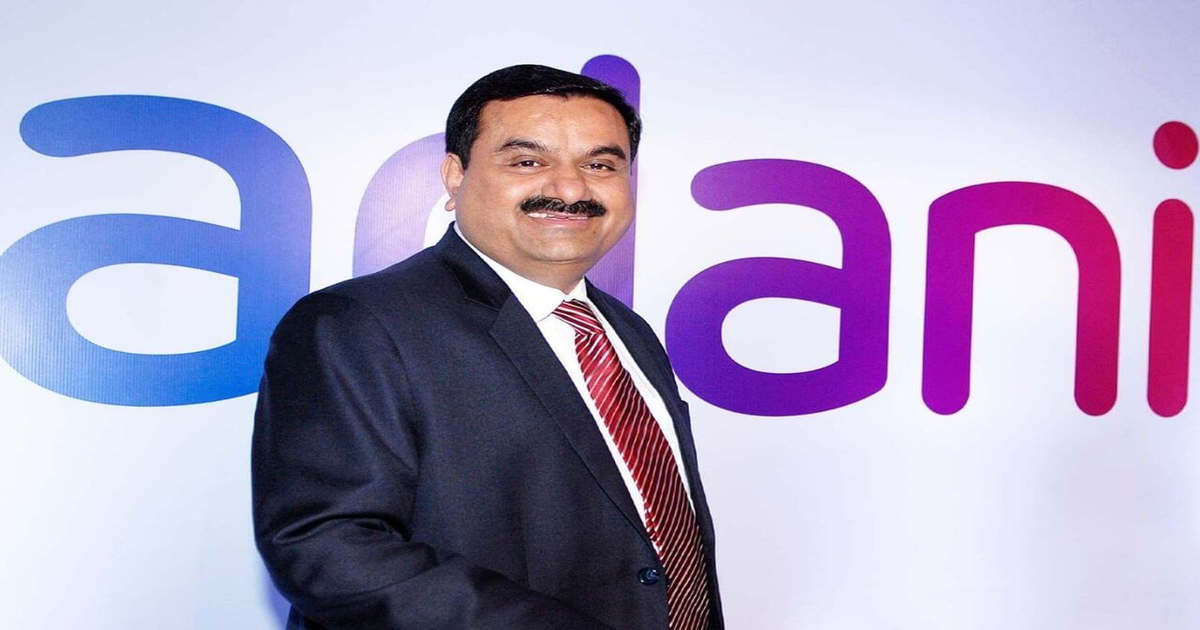
Adani Group Pre-Pays Over Rs 7,350cr Worth Share-backed Financing – Top Indian Market Updates

Here are some of the major updates that could move the markets tomorrow:

Adani Group pre-pays over Rs 7,350cr worth share-backed financing

Adani Group said it prepaid share-backed financing of ₹7,378 Crores ($901.16 mn) as part of its promoters’ commitment to cut overall leverage backed by shares of its listed companies. The group has been looking to ease concerns about its credit profile after US-based short seller Hindenburg Research noted high debt and alleged improper use of offshore tax havens and stock manipulation.

Read more here.

Dr Reddy’s Labs recalls over 4,000 bottles of generic drug in US

Dr Reddy’s Laboratories is recalling over 4,000 bottles of a generic drug in the US due to a packaging error. The company is recalling 4,320 bottles of Tacrolimus Capsules, which are used to prevent the body from rejecting a transplanted organ. The affected lot was produced at the company’s Bachupally-based manufacturing plant and marketed in the US by its American subsidiary.

Read more here.

IGL, Genesis, to invest Rs 110 cr to set up meter manufacturing plant

Indraprastha Gas Ltd (IGL) has signed an agreement with Genesis, an arm of Vikas Lifecare Ltd (VLF), to set up a meter manufacturing plant at an estimated cost of Rs 110 crore. The unit will be set up through a joint venture company. In the joint venture, IGL and Genesis will have equity participation in the ratio of 51:49. The unit is expected to be operational by April 2024 and will have a production capacity of one million meters per annum initially.

Read more here.

PowerGrid’s board approves investments of Rs 4,071 crore

Power Grid Corporation’s Board of Directors has approved investments of nearly Rs 4,071 crore for two transmission projects in India. The board has approved the transmission system for Kurnool Wind Energy Zone/ Solar Energy Zone (AP) at an estimated cost of Rs 3,546.94 crore and the Eastern Region Expansion Scheme at a cost of Rs 524.04 crore. These projects are scheduled to be commissioned by November 2024 and Nov 2025, respectively.

Read more here.

NCLT approves Suraksha plan for Jaypee Infratech

The Delhi bench of the National Company Law Tribunal (NCLT) has approved Suraksha Asset Reconstruction Company’s (ARC) takeover of the debt-laden Jaypee Infratech. A two-member principal bench of NCLT headed by president Ramalingam Sudhakar approved the resolution plan, more than three months after concluding the hearing and reserving the order in Nov 2022.

Read more here.

Credit card outstanding rises 29.6% to reach record high level in Jan

The credit card outstanding in January rose 29.6% to an all-time high of Rs 1.87 lakh crore on back of increased digitisation and rising consumer confidence in the post-Covid period. As per the latest data of the Reserve Bank of India (RBI), the credit card outstanding has recorded a growth of over 20% in the 10 months of the current fiscal. June recorded the highest growth of 30.7%.

Read more here.

Blue Star to take up expansion at Dadra, Sri City manufacturing facilities

Blue Star Ltd will undertake capacity expansion plans at its facilities in Dadra and Sri City. In Jan, the company commenced production at its unit in Sri City in Andhra Pradesh, which was set up at an investment of Rs 350 crore. Blue Star has manufacturing plants in Himachal Pradesh, Ahmedabad, Dadra, Wada (Maharashtra) and Sri City.

Read more here.

Jindal Stainless to invest Rs 120 crore to set up two rooftop solar projects

Jindal Stainless Ltd (JSL) will invest Rs 120 crore to set up rooftop solar capacities at its Jajpur and Hisar facilities. While a project of 21-megawatt peak (MWp) will be set up in Jajpur, another 6 MWp rooftop solar capacity will be installed at the company’s unit in Hisar. Both projects are scheduled to be completed by March 2024.

Read more here.

HAL and L&T sign deal with India defence for 70 HTT-40 trainer aircraft and cadet training ships

The Ministry of Defence signed a contract with Hindustan Aeronautics Ltd (HAL) for the procurement of 70 HTT-40 trainer aircraft worth over Rs 6,800 crore. It has also entered into agreements with Larsen & Toubro Ltd (L&T) for the acquisition of three Cadet Training Ships worth more than Rs 3,100 crore. These deals come as a big boost to India’s efforts to achieve ‘Aatmanirbharta’ in the defense sector.

Read more here.

Vedanta to buy 6% more stake in Hindustan Zinc for Rs 7,900 crore: Report

Vedanta, which currently owns 64.9% stake in Hindustan Zinc Ltd (HZL), is reportedly planning to acquire an additional 6% stake in the company as and when the government sells its holdings. The Indian govt is planning to sell its 15% stake in HZL by March-end. Sources say Vedanta is looking to raise about $1 billion from three foreign banks to fund the acquisition.

Read more here.

Categories
Editorial

Buy Now Pay Later: A Tough Rival for Credit Card Companies? 

What do you do when you want to purchase something outside your financial limit or face a sudden money crunch? Decades ago, people used to run to a nearby moneylender who charge high-interest rates. But things are much simpler now! Credit cards allow you to borrow money for almost a month at zero interest rates. But now, new-age fintech firms have taken things to a whole new level with Buy Now Pay Later (BNPL)!

In this article, we analyse the penetration of credit cards in India and how BNPL is disrupting the finance sector.

Credit Cards in India

The key eligibility criteria to obtain a credit card are a regular source of income and a decent CIBIL (or credit) score. You can conduct transactions within a fixed limit for over a month and only need to settle dues before the next billing cycle. Despite its attractive features, it is interesting to note that there are only three credit cards per 100 people in India! Credit card penetration is very low compared to other countries as shown below:

The low penetration is primarily due to strict credit score eligibility and lack of financial knowledge. The number of outstanding credit cards in our country is growing at a 5-year CAGR of 20%. It essentially means the credit card industry is doubling itself every five years.

The transaction value of these credit cards is way higher than debit cards in India. As of March 2022, there are 73 million credit cards and 917 million debit cards. Now, let us look into the transaction per card in March.

The chart shows that Rs 14,546 was spent per credit card, which is 20 times more than that of debit cards. There are two reasons for this trend:

  1. A credit card gives you an interest-free loan, and you can purchase products without cash.
  2. The arrival of UPI payment has disrupted the debit card transactions in shops, e-commerce, etc.

Major Credit Card Players – An Analysis

In India, HDFC Bank, SBI, ICICI Bank, and Axis Bank are the top issuers of credit cards. It is interesting to note that HDFC Bank still leads the chart even though it got a ban from RBI for issuing new credit cards in Dec 2020. The ban was removed in March 2022.

There are two major ways card issuers make money: one is the interest that the user has to pay when they fail to settle the credit bill. Annual fees, late fees, and commissions are the other source of income.

Let’s take a look at the customer base of credit card companies:

Credit cards majorly cater to people above 30. There is a large number of millennials and gen- z that are ready to spend. To tap this potential, BNPL was born.

Buy Now Pay Later –  A Brief Analysis

Buy Now Pay Later (BNPL) systems are offered by leading financial technology companies (fintech) in partnership with non-banking financial companies (NBFCs). In India, ZestMoney, Lazypay, Amazon Pay, MobiKwik, and Flipkart Pay Later are some of the key players in the BNPL industry. They provide users with a small-ticket credit that can be repaid without interest. It is basically a loan provided by the NBFC, and the fintech provides a user-friendly interface. 

For example, If you purchase an electronic gadget from Flipkart for Rs 10,000 and opt for Pay later in the payment section, you only need to pay the amount either within a month or through EMIs. In the backend, you are awarded a loan from a partnering NBFC. That means you are liable to pay back the loan to the NBFC through the interface (in this case, Flipkart).

The Way Ahead

BNPL is currently estimated to be a $4 billion industry and is expected to reach ~$40 billion by 2026!

You can easily get access to credit through BNPL options within just a few clicks, whereas there is a long and tedious procedure to get a credit card. Secondly, you don’t need to have a good credit score for BNPL. Usually, BNPL companies give you a fixed credit size of Rs 10,000-60,000. Credit cards demand a good credit score for a decent credit limit. 

However, BNPL has its share of disadvantages as well. When fintech firms partner with multiple lenders with better lending rates, there is a chance for your credit to transfer from one lender to another. So this can be reflected in your credit history. Secondly, BNPL is now only practical for online purchases. Companies are trying to enable offline purchases by publishing pay later cards. Lastly, even though the customer journey is much better in a BNPL service than in a credit card, reporting customer grievances regarding credit issues can be a daunting task.

What are your views on credit cards and BNPL? Do you use BNPL services? Let us know in the comments section of the marketfeed app.

Categories
Editorial

VISA vs Rupay. Who will the Indian Government Support?

According to a recent Reuters report, American multinational VISA has complained to the United States government that the Indian government is ‘promoting’ domestic rival RuPay, making it an uneven playing field for other foreign rivals. VISA believes that India’s formal and informal policies favour the National Payments Corporation of India (NPCI) against other payment networks. NPCI is a not-for-profit organisation that manages both UPI and RuPay Networks. Rupay is an Indian multinational financial services and payment service system, launched by NPCI on 26 March 2012. It matched with the Reserve Bank of India’s vision of having a domestic, transparent, and multilateral payment network.

In this piece, we explore the growth of domestic payment networks and how it concerns foreign payment giants like VISA, MasterCard, American Express, etc. 

The Background

  • Debit Cards, Credit Cards, and Unified Payments Interface (UPI) are the in-thing when it comes to payments. You can find a UPI QR code even at the remotest locations in India. Payment Networks are the intermediaries that process these payments. A Payment Network processes digital payments and ensures that money reaches from one point to another
  • We are well aware of the payment networks like American MasterCard, VISA, American Express, BHIM UPI, RuPay. While VISA, American Express, and MasterCard are based in the United States, payment networks like UPI, RuPay, IMPS, NEFT are India-based payment networks. The American payment networks command global dominance over global transactions, while the Indian payment networks haven’t paved the way outside India.
  • NPCI is a not-for-profit organisation that aims to promote financial inclusion, faster and safer payments. On the other hand, companies like VISA, MasterCard, American Express are private organisations that completely dominate the global payments market. Many people, entities, and organisations have vested interests in these card companies. 
  • NPCI has intensively promoted digital payments in India and set an example for the world. Even an unregistered fruit seller can accept digital payments to a large extent. UPI Payments are free. So far, the burden of charges lies with the bank and the merchant, not the customer. The scenario might change soon, where customers might pay a small transaction fee for making payments across UPI. 

Why Is VISA Complaining?

VISA executives, including CEO Alfred Kelly, met US Trade Representative (USTR) Katherine Tai, and raised concerns about a level playing field. According to a Reuters report, a memo prepared for USTR Katherine Tai read as follows,  “Visa remains concerned about India’s informal and formal policies that appear to favour the business of National Payments Corporation of India (NPCI), the non-profit that runs RuPay.”

In 2018, MasterCard had made a similar complaint in the US about Prime Minister Narendra Modi, stating that he associated the use of RuPay cards with nationalism, claiming it serves as a ‘kind of national service”.

India has indeed been pushing for domestic payment networks with a tinge of ‘nationalism’, encouraging citizens to use the local card RuPay. The Pradhan Mantri Jan Dhan Yojana (PM-JDY), a scheme to make banking available to all, offers RuPay with all bank accounts by default. Almost 50% of all RuPay cards are linked to PM-JDY. In November 2020, Finance Minister Nirmala Sitharaman pushed banks to issue only RuPay cards as the first alternative to customers.  

Furthermore, the Reserve Bank of India (RBI) had restricted MasterCard, American Express, and Diners Club International from issuing credit cards over violation of local data-storage rules. Domestic banks and card companies would eventually benefit since they would better penetrate their cards in the market while competition stays away.

The Way Ahead

While the government policies might be unfair for foreign payment networks favouring domestic networks, both serve different interests. VISA, MasterCard, and American Express generally cater to the wealthy or privileged class. These companies entered India when owning debit or credit cards exhibited financial status. These companies work for profit serving the interests of those working for or holding a stake in the company. 

UPI and RuPay were developed to serve the interests of the commoner. A decade ago, smartphones weren’t everywhere; India lacked financial literacy and coverage. The situation now is different. Financial literacy and access to technology have improved multi-fold. NPCI is a not-for-profit organisation; whatever it earns can be channelised for the welfare of the Indian citizens. India is not the first country trying to break the monopoly of specific payment networks. Russia had Mir, Europe has European Payments Initiative (EPI), etc. 

Do you think India is doing right by pushing for domestic payment gateways over foreign ones? You can let us know in the comment section available in the marketfeed app