Categories
Editorial

Buy Now Pay Later: A Tough Rival for Credit Card Companies? 

What do you do when you want to purchase something outside your financial limit or face a sudden money crunch? Decades ago, people used to run to a nearby moneylender who charge high-interest rates. But things are much simpler now! Credit cards allow you to borrow money for almost a month at zero interest rates. But now, new-age fintech firms have taken things to a whole new level with Buy Now Pay Later (BNPL)!

In this article, we analyse the penetration of credit cards in India and how BNPL is disrupting the finance sector.

Credit Cards in India

The key eligibility criteria to obtain a credit card are a regular source of income and a decent CIBIL (or credit) score. You can conduct transactions within a fixed limit for over a month and only need to settle dues before the next billing cycle. Despite its attractive features, it is interesting to note that there are only three credit cards per 100 people in India! Credit card penetration is very low compared to other countries as shown below:

The low penetration is primarily due to strict credit score eligibility and lack of financial knowledge. The number of outstanding credit cards in our country is growing at a 5-year CAGR of 20%. It essentially means the credit card industry is doubling itself every five years.

The transaction value of these credit cards is way higher than debit cards in India. As of March 2022, there are 73 million credit cards and 917 million debit cards. Now, let us look into the transaction per card in March.

The chart shows that Rs 14,546 was spent per credit card, which is 20 times more than that of debit cards. There are two reasons for this trend:

  1. A credit card gives you an interest-free loan, and you can purchase products without cash.
  2. The arrival of UPI payment has disrupted the debit card transactions in shops, e-commerce, etc.

Major Credit Card Players – An Analysis

In India, HDFC Bank, SBI, ICICI Bank, and Axis Bank are the top issuers of credit cards. It is interesting to note that HDFC Bank still leads the chart even though it got a ban from RBI for issuing new credit cards in Dec 2020. The ban was removed in March 2022.

There are two major ways card issuers make money: one is the interest that the user has to pay when they fail to settle the credit bill. Annual fees, late fees, and commissions are the other source of income.

Let’s take a look at the customer base of credit card companies:

Credit cards majorly cater to people above 30. There is a large number of millennials and gen- z that are ready to spend. To tap this potential, BNPL was born.

Buy Now Pay Later –  A Brief Analysis

Buy Now Pay Later (BNPL) systems are offered by leading financial technology companies (fintech) in partnership with non-banking financial companies (NBFCs). In India, ZestMoney, Lazypay, Amazon Pay, MobiKwik, and Flipkart Pay Later are some of the key players in the BNPL industry. They provide users with a small-ticket credit that can be repaid without interest. It is basically a loan provided by the NBFC, and the fintech provides a user-friendly interface. 

For example, If you purchase an electronic gadget from Flipkart for Rs 10,000 and opt for Pay later in the payment section, you only need to pay the amount either within a month or through EMIs. In the backend, you are awarded a loan from a partnering NBFC. That means you are liable to pay back the loan to the NBFC through the interface (in this case, Flipkart).

The Way Ahead

BNPL is currently estimated to be a $4 billion industry and is expected to reach ~$40 billion by 2026!

You can easily get access to credit through BNPL options within just a few clicks, whereas there is a long and tedious procedure to get a credit card. Secondly, you don’t need to have a good credit score for BNPL. Usually, BNPL companies give you a fixed credit size of Rs 10,000-60,000. Credit cards demand a good credit score for a decent credit limit. 

However, BNPL has its share of disadvantages as well. When fintech firms partner with multiple lenders with better lending rates, there is a chance for your credit to transfer from one lender to another. So this can be reflected in your credit history. Secondly, BNPL is now only practical for online purchases. Companies are trying to enable offline purchases by publishing pay later cards. Lastly, even though the customer journey is much better in a BNPL service than in a credit card, reporting customer grievances regarding credit issues can be a daunting task.

What are your views on credit cards and BNPL? Do you use BNPL services? Let us know in the comments section of the marketfeed app.
Categories
Editorial

Is Elon Musk’s Acquisition of Twitter a Mistake?

Twitter has been all over the news lately. It’s a widely popular platform for political leaders to address citizens and celebrities to update their fans. Twitter has even become the common man’s public grievance centre. You can simply share anything under the sun (well, sort of). A Tweet can start worldwide movements or stir up controversy. Nearly 330 million people use the platform every month!

Since March, the company has been under the pressure of a hostile takeover by the world’s richest person— Elon Musk! The Tesla CEO’s $44 billion acquisition is now on hold. Meanwhile, Twitter’s shares have crashed ~30% over the past month.

In this article, we discuss why the social media platform is in high demand. Are Twitter’s financials so impressive that Musk saw a huge business opportunity? Or is there any other intention for making it a private enterprise?

Twitter – Financial Analysis

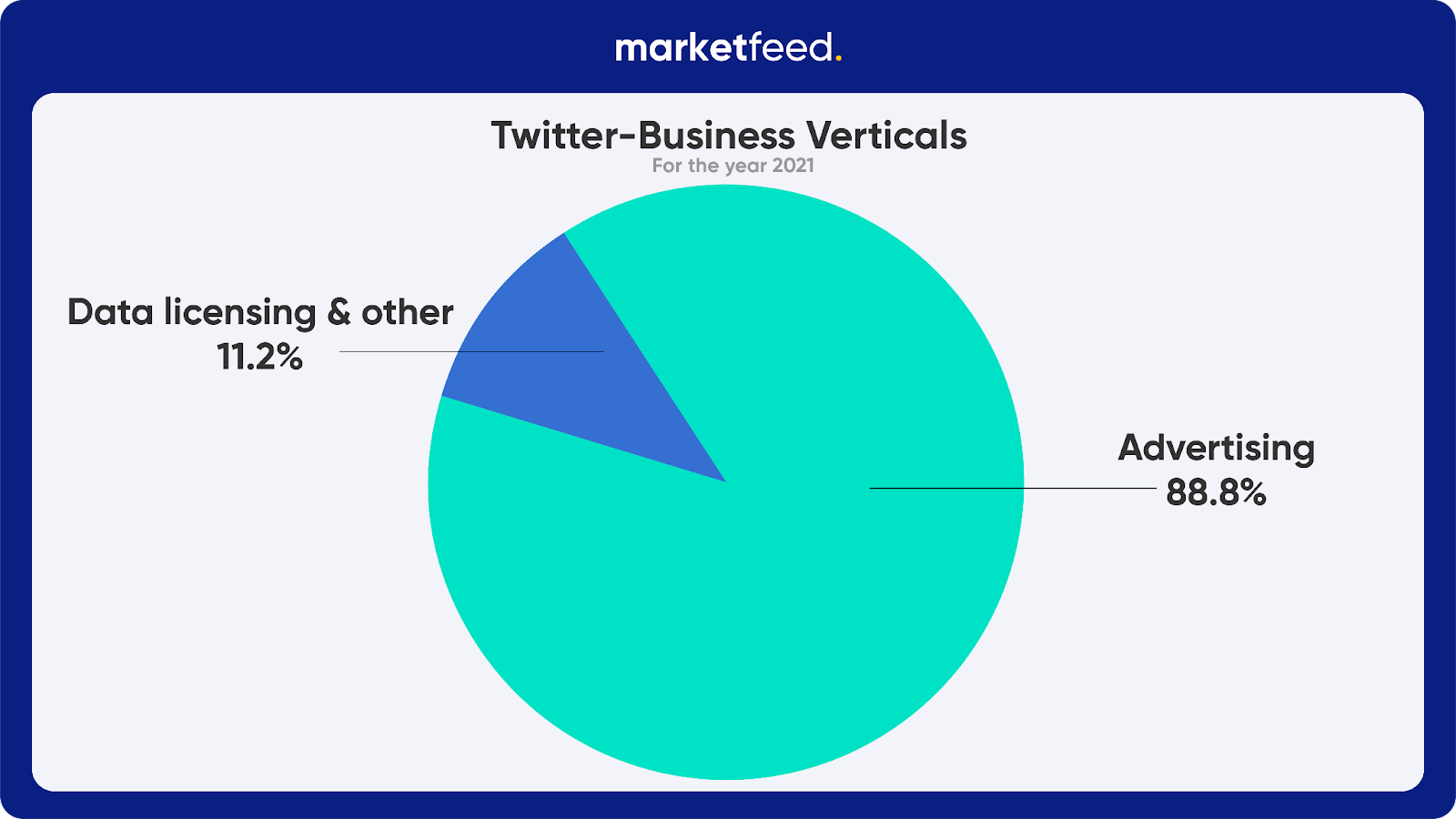
Twitter was established way back in 2006. Since then, the company operates through two business verticals:

Advertising: The platform allows brands, influencers, and companies to promote their products to a target audience. With 38 million monetizable daily active users (mDAU), Twitter is a perfect platform to create a digital presence and an active community for advertisers. Advertisement can be done in 3 ways:

1. Promoted tweets: Twitter recommends promoted tweets to users according to their interests. Advertisers can find their target audience with the help of analytical records on Twitter.

2. Promoted Accounts: Twitter recommends certain profiles under a “Who to follow” tab. It may also contain the accounts of advertisers.

3. Promoting a trending topic: Twitter helps to categorize tweets into a topic with the help of hashtags. Promoting these hashtags will help advertisers reach the audience who follow them.

Data licensing: Data is the new oil. Companies can directly analyse and learn the behaviour of users through their usage data. Twitter provides paid access to its data bank for various companies to analyse. However, over the past few years, Twitter has had no growth in this segment. It has only generated ~$500 million per year, contributing 11% to the total revenue.

Profitability

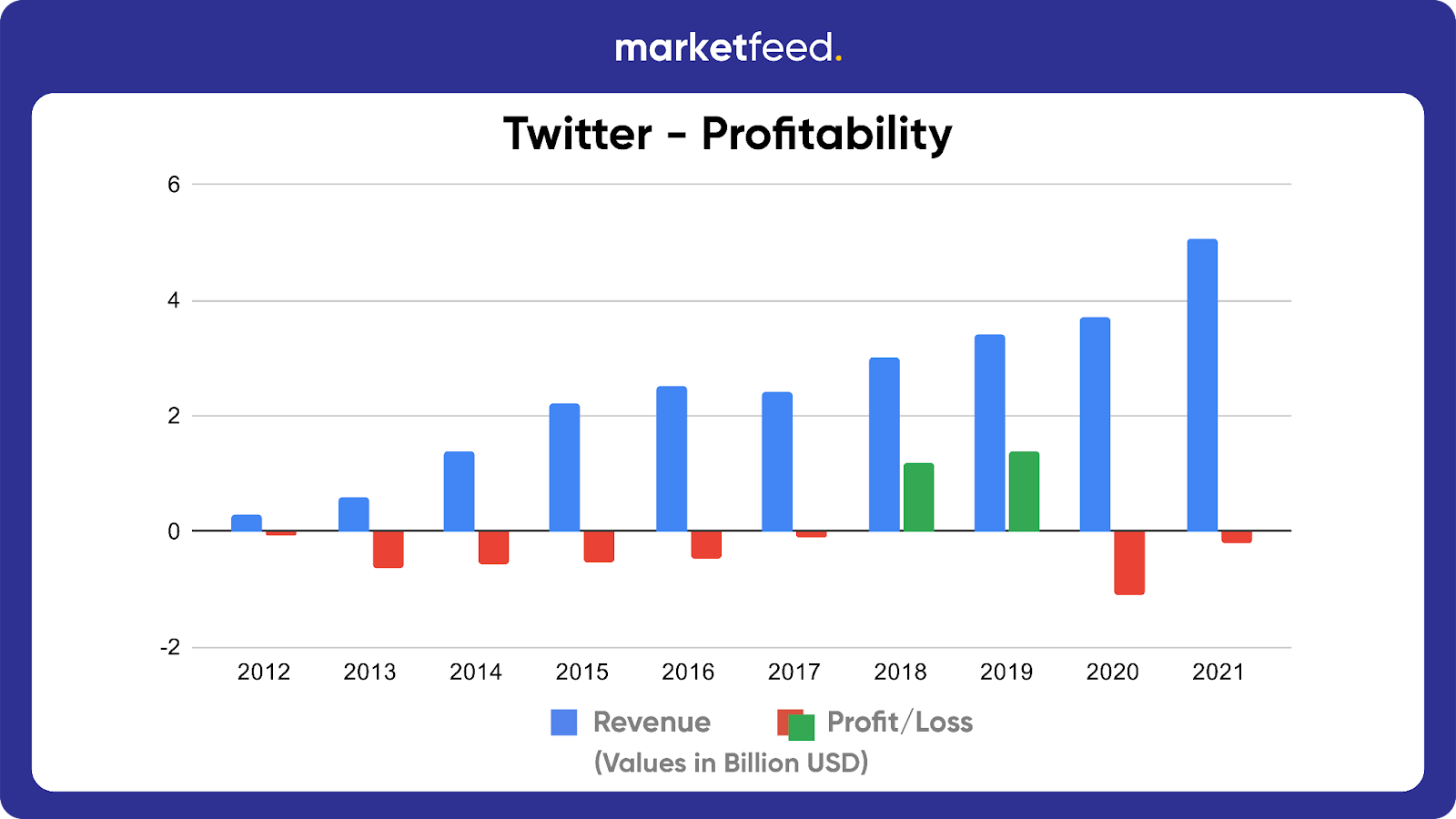
Let us now look at the profitability metrics of the company: 

Over the past decade, Twitter was only profitable twice. Meanwhile, revenue has increased at a CAGR of 36%. 

After the pandemic, many companies drastically reduced their advertising budgets, which has affected Twitter’s profitability.

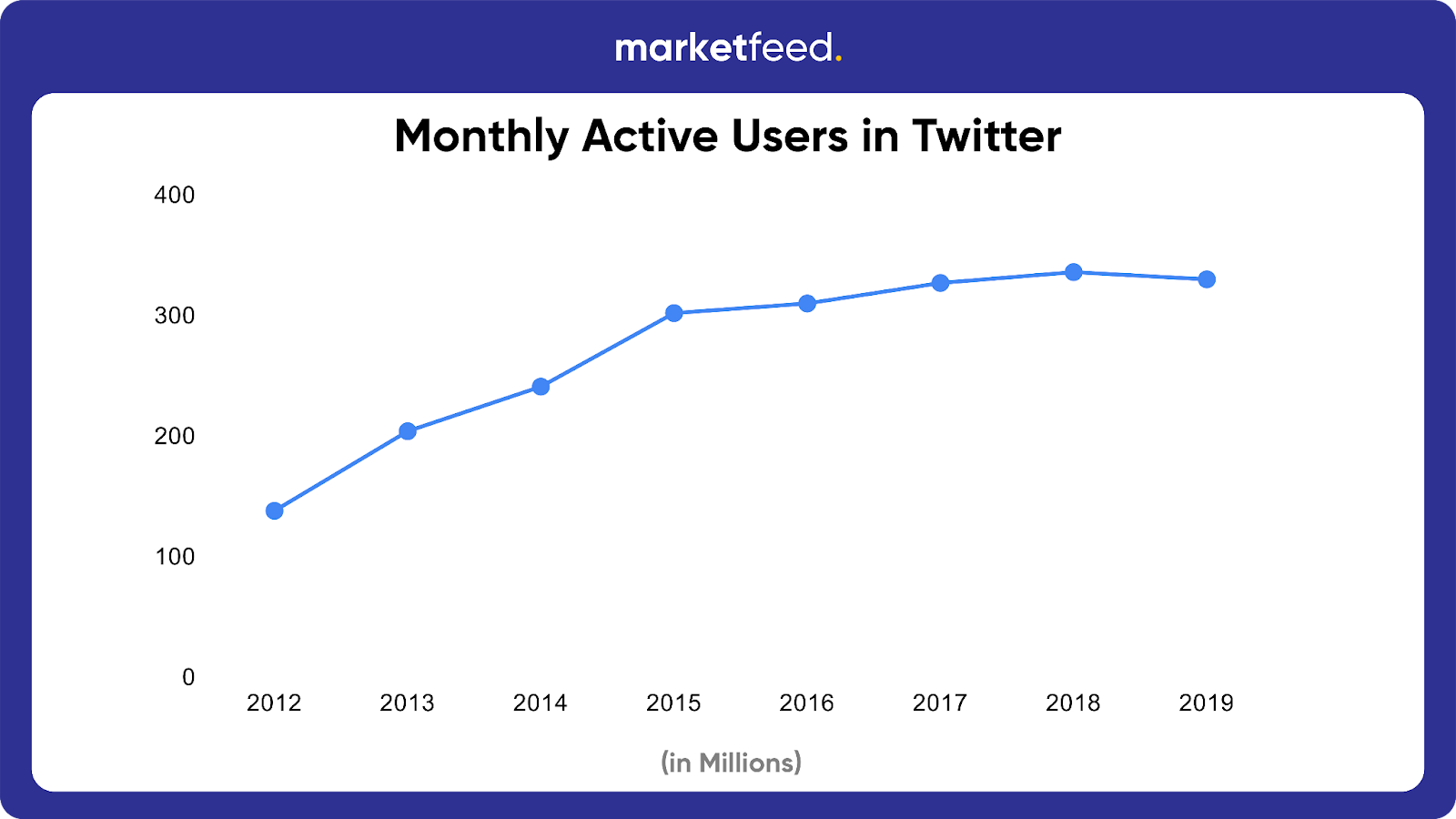
Since advertising is the backbone of Twitter, the company can only flourish if more users join the platform. Let us look at the current user base of Twitter:

Till 2015-16, there was an excellent addition in the number of users on the platform. However, in 2016, Twitter was not able to attract more users. Critics stated that Twitter may have reached its saturation point in its userbase.

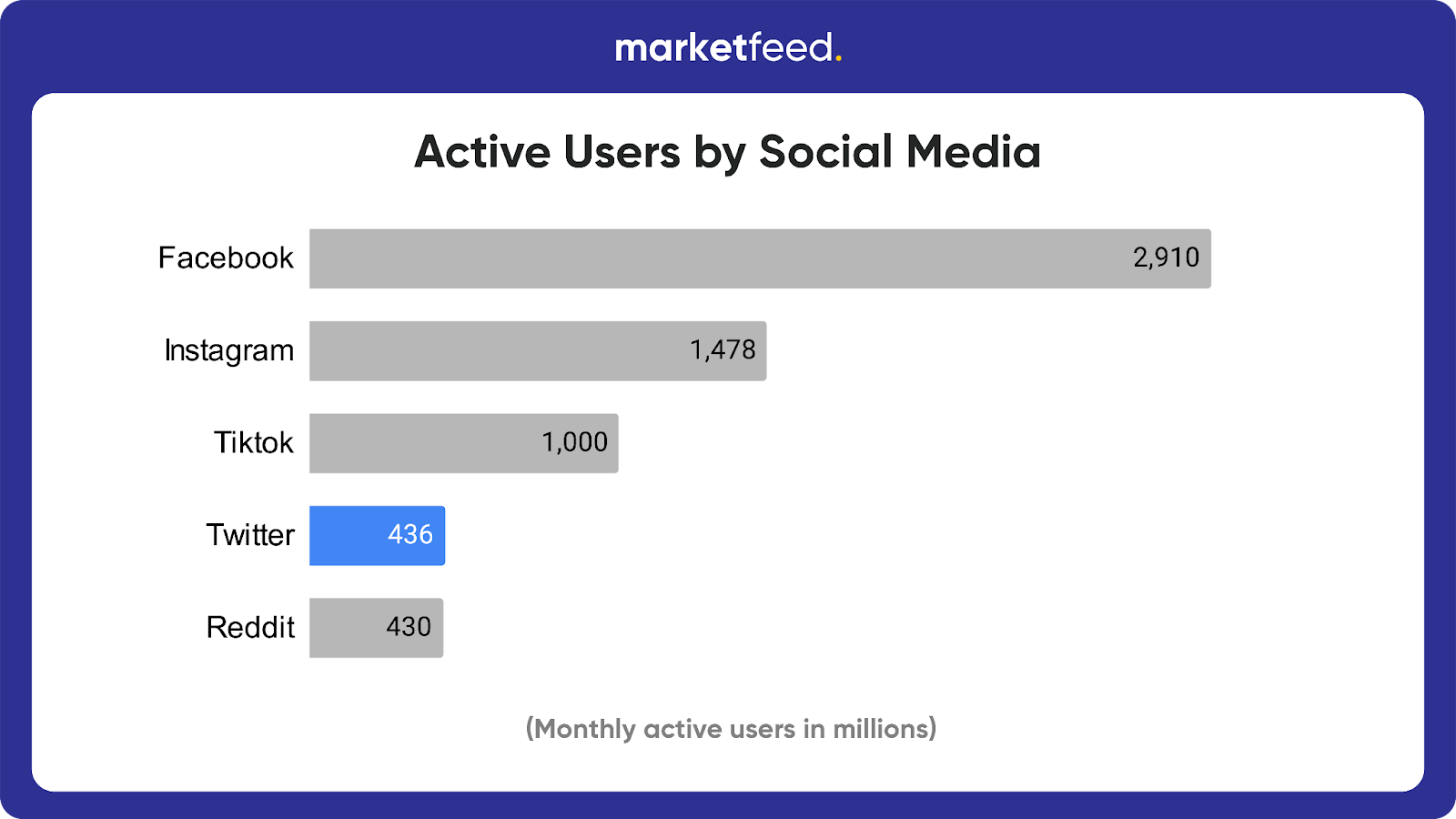
Interestingly, analysing Twitter’s user base with those of other social media platforms tells us another story:

Although Twitter has its own unique features, considering the other social media platforms like Facebook, and Instagram which also try to engage users with posts, photos, news, etc. This tells us that Twitter needs to attract more users to engage which will help them to be financially stable.

The Future of Twitter

Twitter is a well-known marketing engine among marketers, journalists, celebrities, and brands. Unfortunately, the platform is failing to retain its users. The arrival of social media platforms such as TikTok and Snapchat has severely affected them.

Ideally, Twitter cannot become a subscription-based platform where users pay monthly fees to read tweets. Such a move fundamentally violates the very existence of the platform.

Twitter has to remain a free platform and essentially introduce add-on paid features. Let us take a look at the acquisitions made by Twitter:

  • Spaces: A live audio platform competing with Clubhouse.
  • Revue: A newsletter provider
  • Sphere: A group chat app. It provides conversations around similar topics.

Catering to the audio, newsletter, and chat markets could improve Twitter’s financial performance.

Twitter & Musk: A New Begininng?

On March 14, Tesla CEO and billionaire Elon Musk bought a 9% stake in Twitter, becoming its largest shareholder. Fast-forward to April 14, Musk offered to buy 100% of the company for a whopping $44 billion at $54.23 per share! Twitter’s shares are trading at ~$38.29 at the time of writing.

Twitter’s board initially considered this hostile takeover as a threat to the company and its values. Thus, it introduced a Poison Pill Policy. It gives existing shareholders the right to purchase additional stocks at a discount if any individual or a group tries to acquire more than 15% of the company. If Elon Musk tries to acquire more than 15% of Twitter, all other shareholders will be provided new shares at great discounts. This move will dilute Musk’s holding in the company, and further acquisition of shares will be expensive.

On April 26, Twitter confirmed the takeover by Elon Musk for $44 billion. The all-cash deal is expected to be completed later this year. Musk will borrow $12.5 billion from banks by pledging his Tesla shares as collateral. He will receive $13 billion as loans from major banks, but this will be transferred to Twitter’s books (also called a leveraged buyout). Musk will spend an additional $21 billion to purchase shares of Twitter.

Musk commented that his acquisition is not merely about increasing the company’s profits. He wants to improve the platform as a whole and promote free speech. He aims to introduce an “Edit” button to modify published tweets and also Spambots to detect fake accounts. Elon Musk has also suggested that Twitter’s algorithm should be open source, giving users more options to arrange their feeds.

Cold Feet?

Last week, Elon Musk tweeted that his deal to buy Twitter is temporarily on hold. He has requested details on the volume of spam and fake accounts on the platform. In an SEC filing, Twitter had claimed that it has fewer than 5% fake accounts. But according to Musk’s calculations, there are nearly 4 times more spam/fake accounts than Twitter’s estimates! He said his initial offer was based on the company’s exchange filings being accurate.

Is Musk trying to get a cheaper deal or will he completely walk away from it? Has he realised that Twitter simply isn’t worth it?

What are your views on Twitter and its current situation? Let us know in the comments section of the marketfeed app!