Categories
Market News Top 10 News

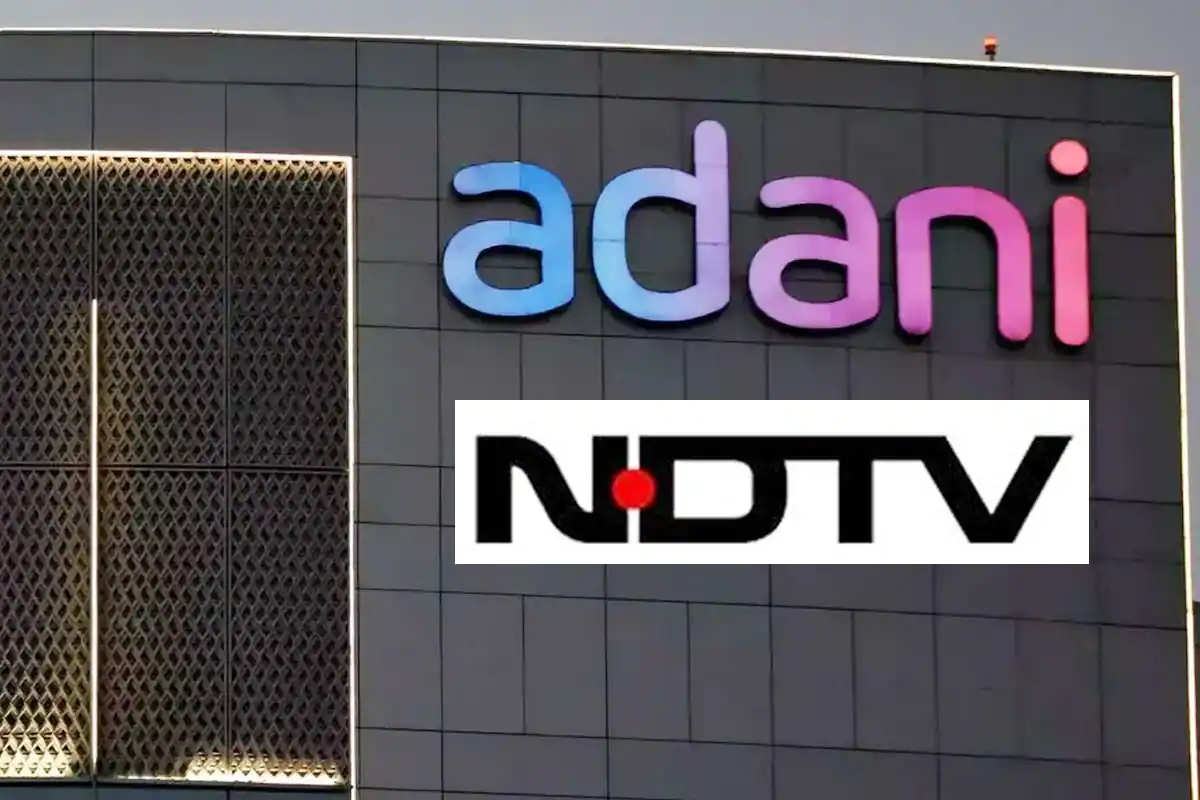
Adani Group to Acquire 29.2% Stake in NDTV – Top Indian Market Updates

Here are some of the major updates that could move the markets tomorrow:

Adani Group to acquire 29.2% stake in NDTV

Adani Group’s media arm announced it will indirectly acquire a 29.18% stake in New Delhi Television Ltd (NDTV) and launch an open offer for another 26% stake in the media house. Three firms, Vishvapradhan Commercial Pvt. Ltd., AMG Media Networks, and Adani Enterprises Ltd, will acquire up to 1,67,62,530 fully paid-up equity shares of NDTV (having a face value of Rs 4) at Rs 294 per share from the public shareholders.

Read more here.

India’s crude oil production falls 3.8% in July

India’s crude oil production fell 3.8% YoY in July on lower output from fields operated by state-owned ONGC and private sector firms. Production of crude oil fell from 2.54 million tonnes (MT) in July 2021 to 2.45 MT in July 2022. ONGC’s total production fell 1.7% YoY to 1.63 MT due to lower output from western offshore. The country’s 22 oil refineries processed 10.52% more crude oil at 21.43 million tonnes as demand for fuel picked up.

Read more here.

Godrej Agrovet signs MoU with 3 states on oil palm cultivation

Godrej Agrovet Ltd has signed Memorandum of Understandings (MoUs) with the governments of Assam, Manipur, and Tripura for the development and promotion of oil palm cultivation under the National Mission on Edible Oils-Oil Palm scheme. The company will be allotted land in the three states for developing sustainable palm oil plantations in the region. In August 2021, the Indian govt launched the National Mission on Edible Oils-Oil Palm scheme with a planned outlay of Rs 11,040 crore.

Read more here.

NHPC signs pact with BEL to set up solar equipment manufacturing facility

NHPC Ltd has signed a pact with Bharat Electronics Ltd (BEL) to set up a large-capacity solar equipment manufacturing facility. State-owned hydro power giant NHPC has an installation base of 7071.2 megawatts (MW) from 24 power stations. It is engaged in the construction of 11 projects aggregating to a total installed capacity of 7,539 MW.

Read more here.

SpiceJet plans to raise funds worth $251 million: Report

As per a report from ET Now, SpiceJet Ltd is looking to raise funds worth $250.53 million (~Rs 1,998 crore). The low-cost airline is pursuing multiple ways to raise funds, including government lending schemes or equity sales. SpiceJet has been under the scanner lately, following incidents of technical snags that prompted India’s aviation regulator to order a reduction in its approved fleet by 50% for eight weeks.

Read more here.

Ramco Systems partners with Australian freight and distribution service provider

Ramco Systems Ltd will implement its Logistics ERP Software at Freight Specialists to automate company-wide operations and services. The software will include modules for transportation, warehouse, and invoice management. It will offer superior user experience, end-to-end visibility, and control while enabling real-time operational excellence. Freight Specialists is a leading freight and distribution services provider based in Sydney, Australia.

Read more here.

India to become world’s number one producer of steel: Jyotiraditya Scindia

Union Minister Jyotiraditya M Scindia said India will become the number one producer of steel in the world in the days to come. He was of the view that our country has moved from becoming the net importer of steel to the net exporter of steel. Currently, India is the world’s second-largest producer of crude steel after China. The per capita steel consumption has increased from 57.8 kg in 2013-14 to 78 kg. The government intends to achieve 300 million tonnes (MT) of steel production target by 2030.

Read more here.

GMDC to hire consultants to set up modular lignite washery

Gujarat Mineral Development Corporation (GMDC) has invited requests for proposals (RFPs) for technology consultants for the dry beneficiation technology sulphur removal plant. The company aims to set up a modular lignite washery to remove pyrites/sulphur from lignite produced from the company’s Surkha (North) mines in Bhavnagar, Gujarat. This will help reduce sulphur dioxide emissions and improve boiler efficiency for the end users.

Read more here.

Tata Motors signs PPA with Tata Power to develop onsite solar project

Tata Motors has signed a Power Purchase Agreement (PPA) with Tata Power to develop a 7.25 megawatt-power (Mwp) onsite solar project at its commercial vehicle manufacturing facility in Jamshedpur. With this project, the onsite solar plant capacity of the facility will reach 14 MWp, which will generate 442 million units of green electricity having the potential to reduce carbon emission by 3.5 lakh tonnes.

Categories
Editorial

The Shale Oil Revolution: An Alternative To Conventional Crude Oil?

Petrol and Diesel in India have crossed Rs 100/litre. Crude oil is getting expensive and with prices refusing to fall, global oil-producing countries like Saudi Arabia, UAE, Russia, etc. are involved in a deadlock. While oil prices are in dismay, an alternative source to conventional crude oil is thriving in the US. It is the Shale Oil and Gas Industry. In 2020, the United States of America turned a net exporter of ‘petroleum’(not crude oil) for the first time since 1949. In this piece, we discuss the Shale Revolution in the US, the difference between Shale and Crude oil, and the economics around it. 

What is Shale Oil? How is it different from crude oil?

Speaking of conventional crude oil, it is a viscous liquid substance found beneath the surface of the earth. It can be found on land or the sea. Crude oil can be extracted directly, it is easy to transport, process, and refine. There is an abundance of crude oil reserves around the world. 

Coming to shale oil. Shale oil is mostly found on land, but sometimes also found underneath water basins. It is extracted from rocks called oil shales. These rocks are broken or fractured artificially in a process called fracking. A mixture of oil and gas erupts from these rocks which are later extracted and processed to form shale oil. It can also be used to produce a more gaseous form called shale gas. Shale oil and gas are pretty much the same as crude oil and natural gas. Just that they are obtained from special rock structures called ‘shales’.

The process is relatively new, stirring a debate on whether the oil is environmentally friendly or not. There has been a rising ‘anti-fracking moment’ in the US, whose supporters argue that the method is not environment friendly.

Shale Economics

America saw a huge jump in oil production between 2010 and 2015. This was the period when the US invested intensively in shale oil discovery. In 2020, shale oil accounted for a staggering 65% of the total crude oil produced in the US. That is a huge number. 

There are two major problems that shale oil poses. First, its extraction is a costly affair. Second, it poses a major environmental threat. Oil shales deposits are generally deeper than crude reserves. The only way to extract is to drill deep beneath the surface of the earth and extracting it. The next challenge is processing it to convert it into crude oil and petroleum.

The cost of producing one barrel of shale oil is anywhere between $35-$65. Shale oil companies would make money only when the global crude oil prices are greater than the cost of production, assuming that the demand remains intact. Essentially, higher prices would work in the best interests of the US.

There is a question that analysts pose. Are shale companies profitable? There is no black and white answer to that. Some shale companies that seized opportunity dug the right oil wells and cut down on costs, were profitable even when crude oil prices were at  $40 per barrel, much lower than the breakeven price

The shale oil industry saw tremendous growth under the Trump administration. Former US President Donald Trump followed an expansionist policy and believed that his country needed to be energy independent. Trump administration invested extensively in the oil and gas industry in the US. It pushed for discovering and setting up new oil fields. The current US President Joe Biden is rather conservative when it comes to the oil and gas industry. He is pushing for production cuts and lower prices because of its negative impact on climate change, the environment, and marine life. He is also in favor of renewable and cleaner sources of energy. This is something that should worry the shale oil industry. 

Speaking of the environmental impact of shale extraction. There has been a rising anti-fracking movement in the US, led by climate change and environmental activists. France, the Netherlands, Scotland, Ireland, Wales, Denmark, Bulgaria, and some other developed economies have ‘banned’ fracking for shale oil. Even in India, ONGC did start with shale gas exploration, but it yielded no results. Exploration projects in other countries have gone in vain and have been abandoned. The only country that seems to be successful in turning it into a profitable venture is the United States of America. 

Categories
Editorial

What is OPEC and How Does it Control Global Crude Prices?

Last year, the global demand for crude oil collapsed when almost all countries went into strict lockdowns amidst the Covid-19 pandemic. There was an excess supply of crude oil and a sharp decline in demand. We saw global crude prices plunge to record lows. This unfortunate situation was controlled by the coordinated efforts of the Organisation of the Petroleum Exporting Countries (OPEC) and its allies. They brought balance to global prices quite swiftly and with ease. In this article, learn more about OPEC and find out how it controls global crude oil prices.

What is OPEC? 

The Organization of the Petroleum Exporting Countries (OPEC) refers to a group of 13 of the world’s major oil-exporting nations. It was established in 1960 in Baghdad, Iraq. OPEC is essentially a cartel that manages the supply volumes of crude oil, thereby controlling oil prices in the global markets. The organisation uses various methods to ensure that oil rates are stabilised and price fluctuations are avoided

Iran, Iraq, Kuwait, Saudi Arabia, and Venezuela are the five founding members of OPEC. The other member countries include Libya, the United Arab Emirates (UAE), Algeria, Nigeria, Gabon, Angola, Equatorial Guinea, and Congo. The membership is open to any country that is a substantial exporter (or producer) of crude oil. OPEC protects the interests of its member nations and makes sure that they receive a steady flow of income from an uninterrupted supply of crude oil to other nations. The headquarters of the organization is in Vienna, Austria.

Over the past few years, OPEC has been working with other oil-producing nations such as Russia, Mexico, and Kazakhstan to coordinate production and support oil prices. While these countries do not wish to become a part of OPEC, they assist them in controlling the global supply of oil. This group consisting of OPEC and its allies are referred to as OPEC+.

How Does OPEC Control Oil Prices?

OPEC conducts meetings twice a year to establish specific quotas or targets for each member. Several ‘extraordinary’ meetings are also conducted throughout the year to address pressing issues. In these meetings, the production targets for each member country are assigned or adjusted based on current supply and demand, as well as expectations of future supply and demand. The basic norm is that all member nations have to follow these quotas. Since most of OPEC’s oil production comes from state-run oil companies, it is easy for officials to control output/supply.

According to estimates, ~79.4% of the world’s proven oil reserves are located in OPEC member countries. This gives them significant control over crude oil supply and prices in the global markets. If OPEC wishes to increase oil prices when there is sufficient demand, the production quotas can be lowered to limit supply. On the other hand, if they want to reduce oil prices, quotas can be raised to increase supply. (Both cases are based on the assumption that global oil demand remains constant).

Drawbacks of OPEC’s Quotas/Targets

The estimates for future supply and demand may not be accurate, especially when market conditions are uncertain or changing rapidly. Very often, there are significant lags in OPEC’s production target adjustments in response to market conditions. This can cause a severe impact on oil prices. Another major issue is that member nations repeatedly cheat on their quotas. They produce more oil than the target assigned to them. There are no provisions in place to punish these countries. When this happens, other nations often fight back by cheating on their respective quotas. 

OPEC is widely criticized for its dominance in the global markets. As a cartel, all member nations have a strong motive to keep oil prices as high as possible while maintaining their respective shares in the global market. They have been accused of anti-competitive practices, including profiteering by limiting supply. OPEC also deliberately creates crude oil surpluses to bring down prices.

OPEC vs the United States

In the past decade, many argue that OPEC’s ability to regulate oil prices has somewhat diminished. The United States has increased its domestic production of high-quality shale oil over the years, which has reduced overall demand for OPEC-produced oil. This has caused downward pressure on crude prices, even when global consumption has increased.

Recent Developments

In April 2020, OPEC agreed to a historic cut in overall oil production by 9.7 million barrels per day, as the coronavirus-induced lockdowns hit demand. The member countries largely complied with the limit in production and were able to quickly balance out the oversupplied global market. However, it was reported that several members such as Iraq and Nigeria did not commit to OPEC norms and started over-producing in May. Since there is no punishment or measures to tackle this issue, these countries were simply asked to produce less than their quota in the upcoming months.

Since the beginning of 2021, the demand for crude oil has been rising rapidly. Many countries have lifted their lockdown restrictions, and vaccination drives have been largely successful. People have begun to travel again, and industries have resumed production. As a result, oil prices have rallied by more than 30% since January. In a meeting held on June 1, OPEC and its allies (or OPEC+) agreed to gradually ease production cuts. Around 2.1 million barrels per day of supply will be brought back to the market between May and July.

Iran Causing Worries to Global Markets?

Several reports indicate that Iran (the fourth-largest producer of crude) has tens of millions of oil barrels on tankers that are waiting to go to prospective buyers. Countries such as China have been lining up to import this cheap oil from the Middle Eastern country. However, sanctions imposed by the United States restrict Iran from supplying or selling its crude oil to other nations. Iran, European Union, and the US are currently holding diplomatic talks to revive the 2015 nuclear deal, which could loosen restrictions on Iranian oil exports. If the talks are successful, Iran will supply large quantities of crude oil to net importers such as China and India. This could essentially bring down global oil prices.

Try to keep a track of OPEC meetings and important notifications published by them. You will be able to witness substantial changes or volatility in crude prices as a result of these vital discussions.