Categories
Editorial

Binary Options Are A Scam!

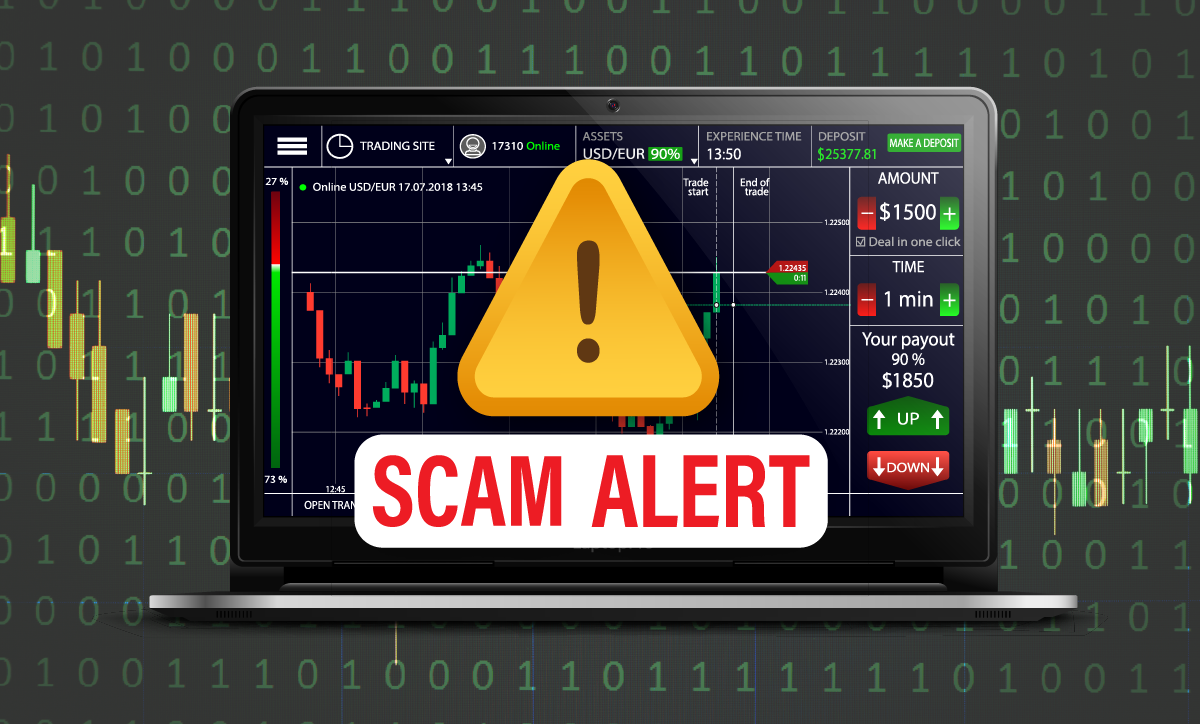
If you frequently browse YouTube, chances are that you might have come across ads that promote ‘Binary Options’. These ads look pretty authentic at the first. However, these ads turned out to be a menace. So much so, that YouTube decided to restrict any advertisement that promotes binary options. These ads promised clients a way to get rich quick while operating a scandalous operation in the underbelly. These ads look like something given below. 
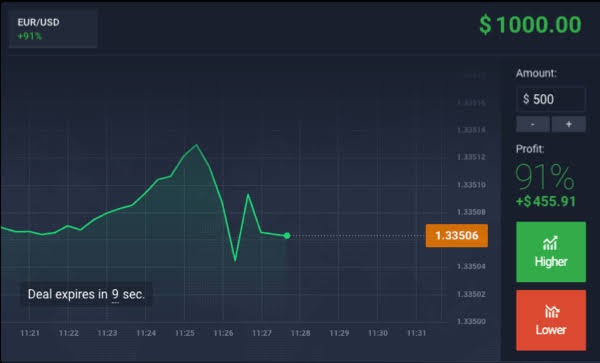
Well, if one trades on these platforms, chances are they might be in for some trouble and lose quite some money, Let’s find out why. 

What Are Binary Options?

First, let us understand binary options in the simplest way possible. Binary options use a simple ‘Yes or No’ proposition. In binary options, an investor predicts or bets whether the price of scrip will go up or down. If the prediction is true, the user retains the original amount invested plus an additional bonus on top. However, if the prediction is wrong, the investor loses money. 

Most of these companies that operate in India operate from outside of India in tax-havens or countries where the securities laws are favorable to binary options. They offer a high margin amount going up to 1000%. This means that you can double the money with a 0.1% change in the price. Additionally, one can wipe out their entire capital in a 0.1% change in price. 

Binary options have managed to catch prey in financially less sound countries, countries with poor financial regulation and countries with poor financial laws. The developed and technologically advanced countries have duly taken note and banned them from being traded.

The Scam

  1. Binary options are generally run by private brokers or companies and NOT on stock exchanges, unlike regular options. This means that prices can be manipulated by the company and not the normal market forces. Binary options generally derive value from globally traded scrips like Oil, Gold, or Forex.
  2. Binary options are an all-or-nothing proposition. This means that either you make a lot of money, or you lose all of it in one go.
  3. In most cases, binary options brokers hold positions against that of their clients. This means that if you lose money, they make money. The odds are in the favour of the brokers since they are the ones who influence the option pricing.
  4. Binary options offered high profits initially to encourage users to invest more capital on their platform. Once the user had invested a good amount, they would lose all their capital at once since the operators manipulate the price.
  5. There has been frequent news of binary options brokers being arrested and being sentenced for up to 22 years.

Legalities of Binary Options

Binary options are not traded on BSE, NSE or any other exchange in India. SEBI forbids trading of binary options in Indian exchanges. One may however use foreign platforms to trade binary options. 

Trading in binary options is a sticky subject when it comes to the legalities of it. Trading in binary options is a violation of the Foriegn Exchange Management Act(FEMA). There are no companies with a physical setup in India that can offer binary options.

The European Union has banned binary options. In most developed countries, trading in binary options is banned, officially. The gambling like nature of binary options has forced countries to take strict action against participants.

Binary options have been restricted from advertising by Google Ads. However, miscreants have been exploiting India’s financial illiteracy with a greed for quick money and now have taken to partnering with online web-series and youtube channels to promote their business.

Binary Options may not be scandalous always, but the intent with which it is operated in almost all cases is dishonest. It is advisable to market participants that they refrain from trading binary options since it can land them in jail for violating FEMA act and also make them lose a lot of money to fraudulent means with not much legal remedies.
Categories
Editorial

What is the Karvy Stock Scandal all about? Explained.

On 22nd November 2019, SEBI announced that it had prohibited Karvy Stock Broking Limited (KSBL) to add any more clients after NSE found some irregularities. This order meant, no new trader can open his/her account with Karvy Stock Broking.

After a year-long investigation, on 23rd November 2020, National Stock Exchange (NSE) declared Karvy stock broking limited as a defaulter. They also expelled the broking firm from its membership. NSE also stated that it has settled the claims of more than 2 lakh investors whose funds worth Rs 2,300 crore. Bombay Stock Exchange (BSE) followed NSE’s path and expelled Karvy stock broking limited from its membership. They asked the investors to file for their outstanding claims against Karvy before 22nd February 2021. These claims will be considered for compensation of up to Rs 15 lakh. KSBL in the response have decided to accept their wrongdoings and do not wish to present their case. 

What exactly happened with this very successful brokerage firm? Let’s find the whole story here.

The Process of Karvy Scam

To take loans from banks, people are required to submit some type of collateral. Higher the amount of loan demanded, more valuable the collateral required by the banks. This collateral can be the portfolio of stocks you hold as an investor or a trader. Just like an individual has a Demat account, the broker has a pool account. This pool account is nothing but the broker’s Demat account.

Whenever you buy or sell a share, that share comes from the opposite seller or buyer. It first goes into the broker’s pool account and from there it comes to your Demat account. Now, suppose that you want to get a loan against your shares. Then, those shares are transferred into the broker’s pool account, who gives it to the banks. Banks issue loans to the broker against the shares submitted to them as collateral. The broker increases the interest rate and passes the money borrowed to the individual whose stocks are submitted. The difference between the two interest rates is the brokers’ profit. 

How Karvy Scam Worked

There would be a doubt in your mind that how the stocks owned by the investors can suddenly be pledged by the broker. Here comes the entry of POA or Power Of Attorney. This Power of Attorney gives the authority to the brokers to take shares out of the individual’s Demat account. Shares are stored with NSDL and CDSL, who are the only two depositories in India. Their work is to keep the shares safe in an electronic form in the customer’s Demat account. Both NSDL and CDSL give weekly or monthly reports to the account holders about all the transactions done. Thus, brokerage companies have to be honest in their practices because any variation can be caught by the account holders. 

But, Karvy found a loophole here. They identify those accounts in which the holder is not very active. For example, some of the investors do not trade very often. Some of them buy shares and keep them in their account for 1-2 years doing no further activity. Karvy transferred some of the shares to their pool account from these dormant accounts with the help of PoA. They approached different banks and took loans against these loans. Imagine you are taking a loan by giving someone’s house as collateral just because they don’t live there for the previous 2-3 years. Is that legal? NO. To whom these loans were issued? No one, Karvy kept it with themselves.

Misuse of funds by Karvy

The loans taken from the banks were transferred to one of their subsidiaries, Karvy’s Realty private limited. This subsidiary is engaged in real estate and property services. They offer investments, financing and advisory services to the customers related to the realty sector. So the loans were taken against the shares of the individuals without their consent. Then, the sums acquired were transferred to their own business in another sector. When this scam came into notice for the first time in 2019, it was rumoured that Rs 1,100 crore has been transferred till then. This is when SEBI banned Karvy Stock Broking company to add any more clients. Later, the amount misused in the scam was calculated to be much more than Rs 2,000 crore.

What Now for Karvy?

A major chunk of the clients has received their funds back as they were not the one who defaulted. But that does not cover the system failure which happened just a year back. There are still plenty of unanswered questions.

How did NSDL/ CDSL fail to find an anomaly in the Demat accounts if Karvy was putting these stocks in their pool account? How did NSE, who keeps an eye on all the brokerage firms, not find any wrongdoings for four years? Did they do any checks? How did banks not do any background checks before taking the shares of a third-party as collateral? Shouldn’t they have cross-checked with the owner of those shares? For now, it is difficult to answer any of these questions. As an investor, your responsibility is to maintain regular checks of your Demat account. If there is something odd happening in your account, you should straightaway call your brokerage firm and ask for a reason. Until, next time.

Categories
Editorial

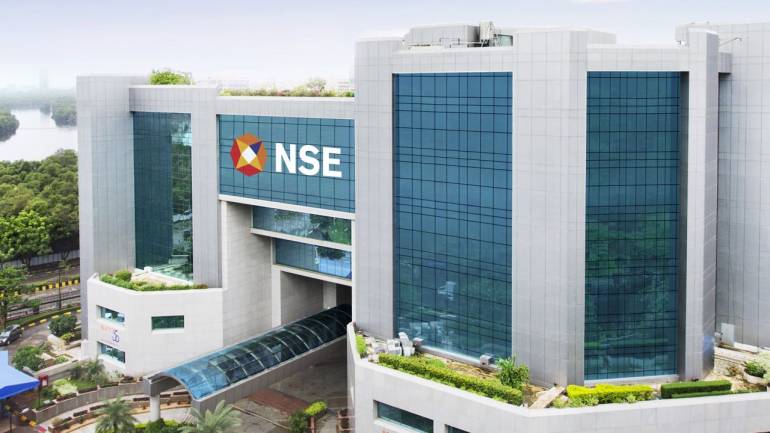
NSE Algo Scam, All About The National Stock Exchange(NSE) Co-Location Scam

Scams have taken place within exchanges and the stock market, but have you ever heard of a stock exchange itself scamming someone? The National Stock Exchange did exactly that in what is called the ‘NSE co-location Scam’. This scam involved close to 62 brokers, advisories, traders, and the employees of the National Stock Exchange. Here’s a quick brief on what the co-location scam was all about.

What is Co-location?

  • Generally, brokers and proprietary traders have machines at their offices which are connected to a primary server at the National Stock Exchange through which they place orders. Sometimes, because of too many people trading on this server and technical glitches, there was a delay in placing orders which caused losses to these brokers and proprietary trading firms.  
  • The National Stock Exchange, in the year 2009, started providing ‘co-location services’ to brokers for a fee. In this, brokers and firms were allowed to place their servers within the premises on the National Stock Exchange for a premium. This provided them tick-by-tick price data, faster than others and hence giving an advantage over them. A tick by tick data is the most detailed data available showing each and every trade, every second, that is made on the exchange.
  • Even though this was a question of a few seconds, this led to huge amounts of profits for the firms that availed of the co-location services. Most of these firms used algorithmic trading or high-frequency trading (HFT), where machines and computers buy and sell shares within a matter of seconds based on algorithms. A faster price feed caused them to profit almost every day out of this.
  • Co-location services are completely legal and NSE had done nothing wrong in offering these services. However, the Securities and Exchanges Board of India (SEBI) had decided to turn a blind eye to the regulation of this service. SEBI did not launch any ‘working paper’ or strict guidelines regarding these services. Some say that there was a political nexus behind this motive. 

The Co-location Scam

  • Secondary Server: There are two kinds of servers at NSE that process all the trades, primary servers and backup secondary servers. In co-location, broker’s servers were connected with a primary server and in case of a technical snag, they were connected with the backup servers.
  • Preferential Treatment: Some brokerages tied up with the employees of the National Stock Exchange (NSE) in order to know which secondary server would be switched on and when. These brokers would therefore be the first ones to connect to the secondary server and would later populate the server by connecting more than twice. This would cause the server to act slowly for other brokers due to increased traffic, giving an advantage to them. Mainly, one firm called OPG Securities is said to have taken advantage of the above-given situation. Many brokers were given preferential connections to the servers of NSE. It is said that the senior management of NSE plus some politicians had their personal interests in these firms.
  • A company named AlphaGrep with the help of a company named Sampark Infotainment set up ‘dark-fiber’ links connecting the NSE servers with its own. A dark-fiber is an unused optical fiber. There is no traffic or disturbance on the dark fiber, which means that AlphaGrep could get the tick-by-tick data faster than others. This was done with irregularities. The company, Sampark Infotainment did not have the necessary licenses from the Department of Telecommunications. 

How the Scam Got Public

  • A whistleblower by the name of ‘Ken Fong’ from Singapore wrote to SEBI in 2015 regarding irregularities in the co-location system in NSE and the use of dark fiber lines. As time passed, the whistleblower wrote more such letters to SEBI and business-media houses. Sucheta Dalal who exposed the Harshad Mehta scam published the first letter on her website MoneyLife, you can check it out here
  • Fun Fact: NSE filed a Rs 100 crore defamation suit against MoneyLife for the article regarding the co-location scam, but itself ended up paying 3 Lakhs to MoneyLife in restitution. They were also fined another Rs 47 lakhs to be paid to Tata Memorial Hospital and Masina Hospital in Mumbai.
  • SEBI formed an Expert Committee (EC) for the preliminary investigation of the claims. The Technical Advisory Committee (TAC) of SEBI investigated the technical matters of the claim. Ironically, the NSE formed a Disciplinary Action Committee(DAC) to act against brokers who were involved in the scam. 
  • Deloitte, Ernst and Young, and the Indian School of Business were appointed to perform a forensic audit of the scam. The Income Tax Department and CBI probed the co-location ‘scam’. 
  • In December 2016, NSE’s then CEO Ms. Chitra Ramakrishna and Vice Chairman, Ravi Narain, resigned. The National Stock Exchange’s IPO was stalled and still has not happened. The NSE was ordered to pay close to Rs 1,300 crores in fines which it tried to recover by fining other brokers and firms involved in the co-location scam.

The Current Situation

In January of this year, regulatory body SEBI dropped charges on nine current and former officials of the exchange, including ex-MD and CEO Ravi Narain, saying they cannot be held responsible for any misconduct or non-compliance in the so-called ‘dark-fibre issue’. Then who can be held responsible?

What happens when the people and institutions who are supposed to protect us turn villains? Are these fines enough to stop or scare them? Is this not comparable to cheating retail consumers? And why was no one sent to jail even after clearly profiteering and getting caught? A lot of questions remain unanswered. NSE is even saying that it has ‘strong grounds to contest the above orders including monetary liability raised by SEBI’.

Would certainly love to get more clarity on who actually are involved, with the top courts of the country taking strict action against officials trying to loot us.

You can read more about the co-location scam in the official SEBI order over here.

Categories
Editorial

The Real Reason behind Nifty Crash. Why is Media hiding the FinCEN leaks?

You must have heard about the FinCEN leaks through marketfeed. Not many news outlets have given clear information about this major scandal, here is what we found.

FinCEN Leaks are a set of documents and data that have been collated by ICIJ or International Consortium of Investigative Journalists. These documents have flagged a number of transactions made through huge international markets like HSBC, Deutsche Bank, JP Morgan, Bank of New York Mellon, Barclays etc.

These transactions were made on behalf of politicians, corporations, shell companies, businessmen, and others. They are mostly fraudulent in nature and were used to sponsor political campaigns, sporting events, corporate transactions, terrorist organizations, and many illegal and corrupt activities as well. The total amount of transactions in these papers sums up to Rs 1.46 crore crores, yes crore crores. You can try counting the number of zeroes.

Share prices for the listed banks and companies began to fall all across the world once the news was out. Let us find out what exactly was wrong with these transactions.

What was wrong with these transactions?

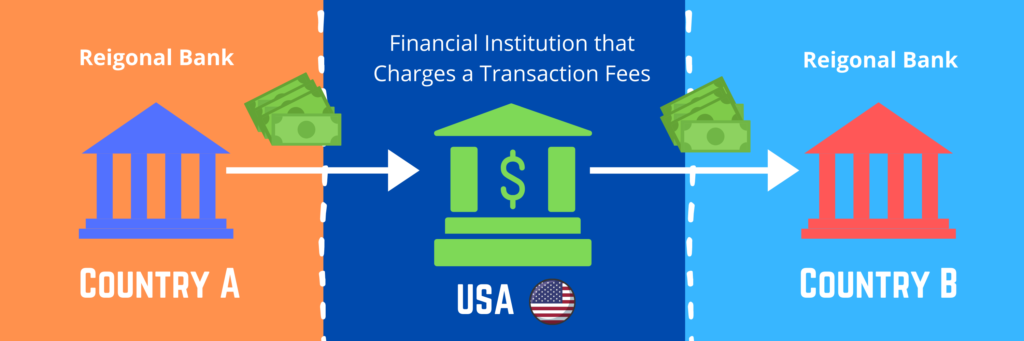
  • If one of us needs to transfer money from one bank in India to another bank in a different country, it cannot happen directly. If the transaction happens in US dollar, it HAS to go through a US Bank.
  • All suspected or confirmed fraudulent transactions in the US need to be reported to FinCEN or Financial Crimes Enforcement Network, a part of US Department of the Treasury. Banks or Financial institutions report these suspected transactions in the form of SAR or Suspicious Activity Report.
  • Enforcement Agencies in the USA like the FBI, use this data from the SAR to track fraudulent transactions and flag these wrongdoers, or so they say.
  • Banks that fail to report fraudulent transactions or file a SAR on time are penalized by the US Government. Keeping this in mind, the banks made it a point to keep a track of fraudulent transactions and file SARs when needed.
  • HERE’S THE CATCH! The banks can charge a transaction fee, even on these fraudulent transactions that they report. The banks kept reporting the fraudulent transactions and kept charging the transaction fee. Essentially, the banks made money for “reporting” the crime, when they should have “blocked” such a fraudulent transaction.
  • The banks kept filing SARs on these fradulent transactions and kept charging transaction fees when the right thing to do was to block or deny such a transaction.
  • The SARs report kept piling up until they were leaked by internal sources. These international group of journalists kept connecting the dots based on the transactions, linking them to powerful people around the world.
  • This leak showed how certain the banking system all across the world facilitated fraudulent transactions from right under the system’s nose.

What about India?

Around 44 banks were listed in the data dump, including the country’s largest bank, State Bank of India. The fraudulent transactions reported shows that Indian banks received more than ₹3,500 crores ($482 Million) from outside the country and transferred ₹2,900 crores ($406 Million) from India. Investigative journalists are trying to connect the dots of these transactions.

So far they have found Jindal Steel, IPL Sponsoring, Gangster Dawood Ibrahim and some terrorist organisations linked to the leaked papers. Shares of Indian banks have fallen strongly, and are continuing to fall. Jindal Steel has lost almost 20% of its market cap in the last 2 trading days alone.

FinCEN files: Major Indian banks figure in suspicious transactions list

Also, shares of major banks around the world have fallen. Stock prices of HSBC, one of the world’s largest banks, have hit a 22-year low because of this scandal, falling even below COVID-crash levels. Global markets are falling.

How was this made possible and what can be the future course of action?

The FinCEN links were made by a dedicated group of investigative journalists at ICIJ, Buzzfeed News and 108 other agencies all across the world. The project spanned over 16 months involving partners from 88 countries.

In all, an ICIJ analysis found, the documents identify more than $2 trillion in transactions between 1999 and 2017 that were flagged by financial institutions’ internal compliance officers as possible money laundering or other criminal activity — including $514 billion at JPMorgan and $1.3 trillion at Deutsche Bank.” read the ICIJ website.

There is no official statement by either of the companies or FinCEN itself with respect to the leaks. HSBC was fined multiple times previously for similar fraudulent transactions earlier, yet it played a major part in the FinCEN leaks. Fines may be imposed, licenses may be cancelled, those held responsible may be prosecuted, but will things get better from here? That is something only the respective Governments can answer.

To know more about the figures, people involved, processes in FinCEN leaks, Click Here.