Aesthetic background with abstract neon led light effect
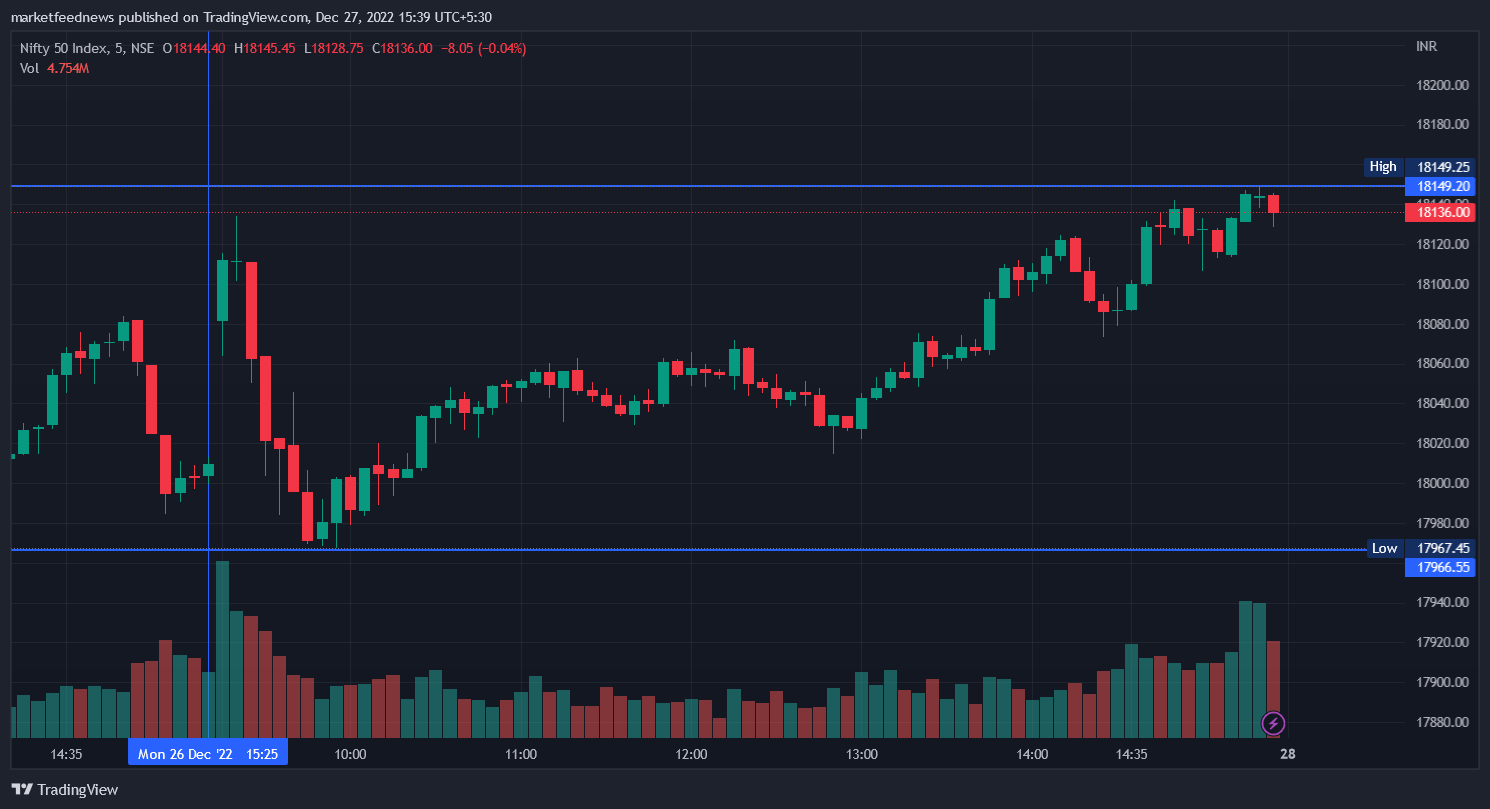
NIFTY opened the day at 18,089 with a gap-up of 75 pts. It was a sharp fall after the opening, nearly a 1% fall in just 30 mins. From there, the index slowly moved up, broke 18k and hit a day high of 18,149 towards the end. Nifty closed the day at 18,132, up by 117 points or 0.65%.
BANK NIFTY started the day at 42,827 with a gap-up of 197 pts. The index formed a double bottom and closed near the opening high. Bank Nifty closed the day at 42,859, up by 229 pts or 0.54%.
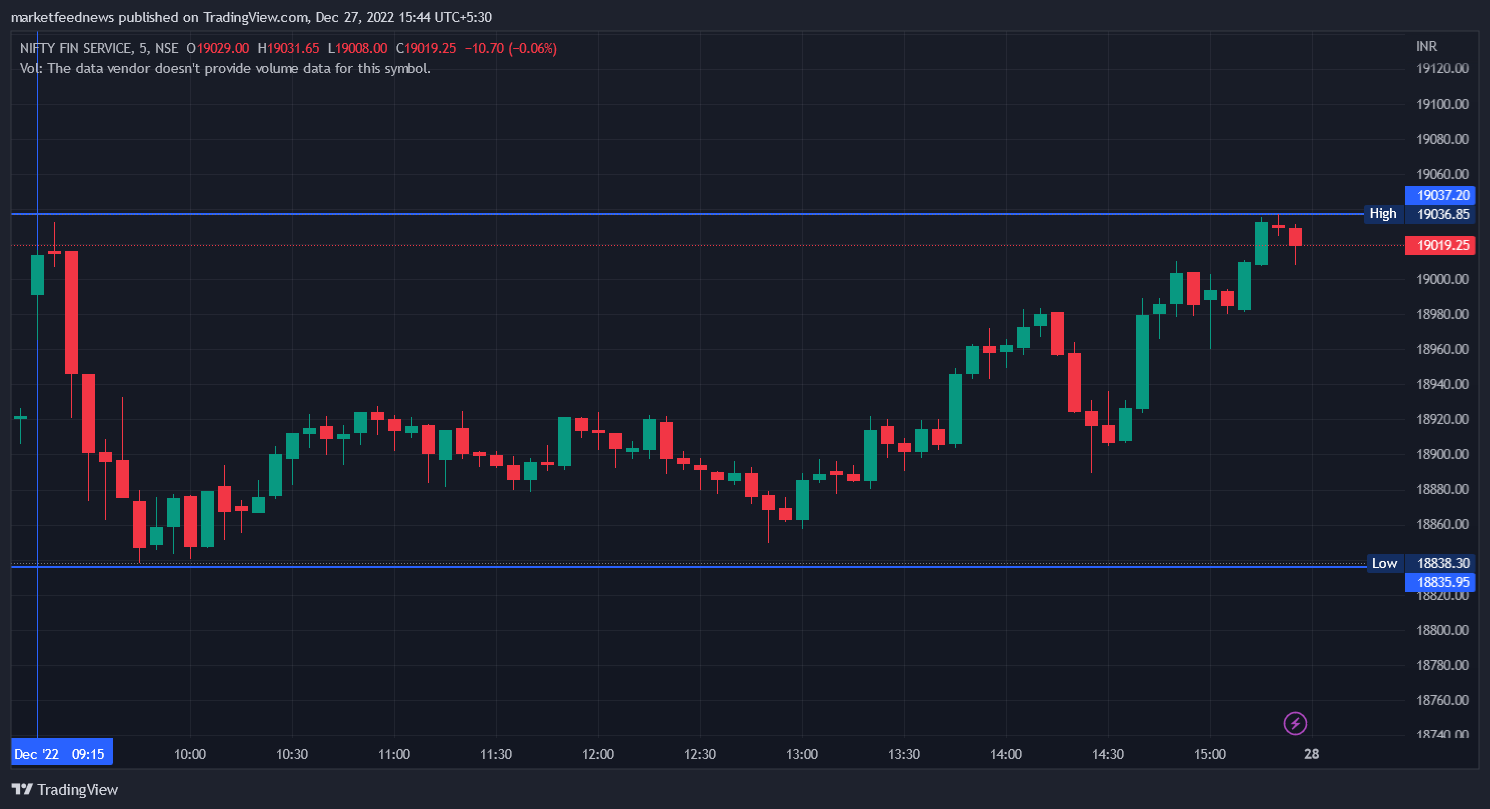
FIN NIFTY started the day at 19,002 with a gap-up of 73 pts. The initial fall was scary, but the index took support from 18,830 and moved back. Niftyclosed the day at 19,011, up by 82 pts or 0.44%.
Nifty Metal (+4.2%) outperformed everything. Nifty Auto (+0.86%), Nifty IT (+0.88%), Nifty Media (+1.1%), Nifty PSU Bank (+1.2%), and Nifty Realty (+1.2%) closed with good gains.
Major Asian Markets closed in the green. Hong Kong market is closed today. European Markets are trading in the green.
Today’s Moves
Metal stocks- Hindalco (+6.3%), Tata Steel (+5.8%), and JSW Steel (+4.4%) closed as Nifty 50 Top Gainers.
Jindal Steel (+9%), National Aluminum (+6.5%), Vedanta (+3.9%) and SAIL (+5.4%) also moved up.
The move happened after reports saying that metal companies are planning to hike prices from January. Also, it is said that metals will have more consideration in the Union budget.
IEX (+1.3%) incorporated a wholly owned subsidiary International Carbon Exchange for the trading of green products.
Laurus Labs (-1.8%) fell after a fire incident at its Vizag unit.
Central Bank of India (+5%-UC) Board gave the approval to acquire the remaining 35.60% stake from the existing shareholders in Central Bank Home Finance.
L&T’s (+1.5%) power transmission and distribution business secured multiple orders in India and overseas.
Markets Ahead
Interesting Fin Nifty expiry!
Nifty (18,130), Bank Nifty (42,900) and Fin Nifty (19k) were at resistance levels just after the opening and everyone suddenly started selling and a sharp fall happened.
Then, Nifty (17,960) and Fin Nifty (18,830) reached their demand zones and there was no reason for further fall.
If Nifty breaks 18130 and closes above 18,200 it will give confirmation of short-term recovery.
As we discussed yesterday, I will count on Bank Nifty’s 41,500 as support till this expiry.
Reliance would have more role to play in the coming days if it breaks the 2580 level. If it doesn’t happen my focus will be on HDFC Bank and HDFC’s breakout from consolidation.
China has officially announced that it will end quarantine for inbound travellers on Jan. 8
What would happen if everyone places market orders one day and there are no limit orders that day? Will there be any market movements? Will the orders get executed? Share your answers in the comment section below.
The Indian Metal and Mining Stocks are on a rally. NIFTY Metal, the benchmark index for metal and mining stocks, is trading at record levels. Amidst the Ukraine-Russia crisis, rising oil prices, damaged supply chain, and high inflation levels, metal and mining stocks have offered great returns in the last 3-4 months. What exactly could be the reason for such a rally?
The Big Picture
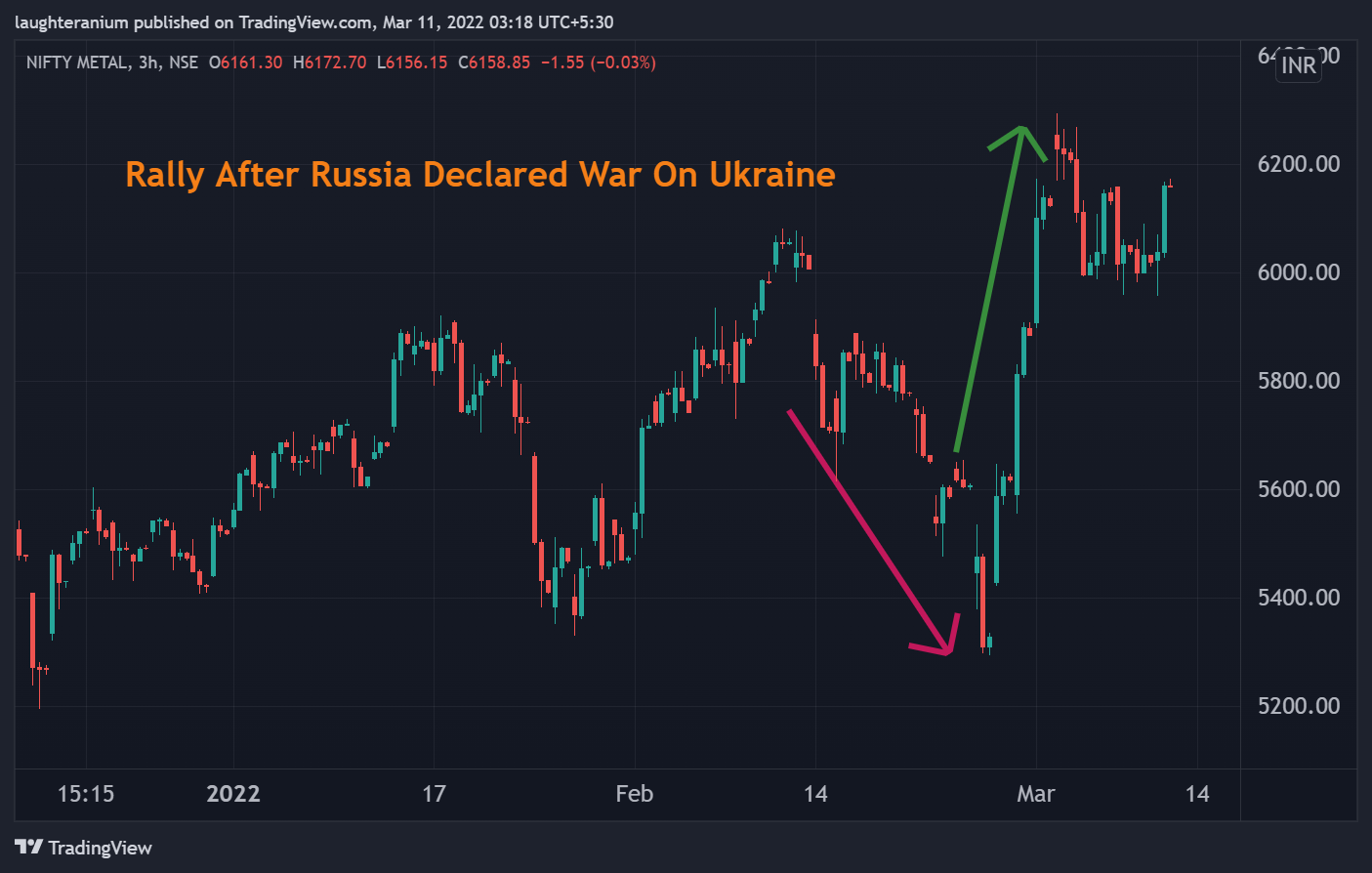
The NIFTY Metal index was off for a casual start after the beginning of CY2022. With two consecutive waves of rallies and subsequent profit bookings taking place, we did notice significant gap-down openings towards the end of February. This was around the time when the Ukraine-Russia escalations were fresh, and there was a bear run in the broader markets.
Consequently, we notice a steep hike in the NIFTY Metal index just a day after Russia declared war on Ukraine. Around this time, NIFTY Metal grew by nearly 16% in three consecutive trading sessions. After Russia declared war on Ukraine, the NIFTY Metal index moved against the broader NIFTY 50 index, i.e. Nifty Metal rallied but NIFTY 50 stocks tanked. After an abrupt rally, we notice a drop in NIFTY Metal, possibly due to profit booking.
Why Did The Metal Sector Rally Amidst Global Financial and Socio-Political Tensions?
Rising Metal Prices Would Mean Greater Margins
There was an inherent fear in the market that the Ukraine-Russia crisis would impact the supply chain of metals globally. Eventually, stock prices across the world started to soar. The cost of churning out a metal, be it steel, nickel, aluminum, or copper, remains in a fixed price range. If the market price is greater than the production cost, the producer makes a profit. The fact remains that metal prices have soared to record levels. Indian companies have managed to churn metal while demand was stable. An increase in metal prices can help them bag greater profit margins.
Weaker Rupee Helps Export-based Segments
A weaker rupee generally tends to benefit exporters. An exporter would get more rupees for every dollar worth of goods exported. The Indian National Rupee (INR) has hit its weakest of all times, crossing Rs 77 for every US Dollar. This means that for every dollar worth of metal that an Indian company exports, it would get more rupees in return. Even if metal prices were to subside, Indian metal players could benefit from exports if the rupee remains weak.
Potential Gain From Global Supply Shortage
Russia accounts for around 9-10% of global aluminum exports, ~11-12% of nickel exports, 20% of thermal coal exports, and 12% of global steel trade. The ongoing and increasing number of sanctions on Russia could significantly damage its ability to export crude oil, natural gas, and metals. India could potentially use this opportunity and hype its exports in the metal industry.
What Next?
In the first week of March, Ukraine and Russia organized a meeting in Turkey to discuss a ceasefire. Unfortunately, the talks failed. Oil prices crashed after reaching record highs as UAE pushed OPEC to increase oil production amidst a global call to boycott Russian oil. More production of oil would mean lower oil prices and therefore lower inflation rates. The fact that Ukraine and Russia have both agreed to make ‘compromises’ could have added to the crash in oil prices.
By now, Indian metal players would already be looking out for opportunities to pump up the export. A rise in international prices could eventually lead to an increase in metal prices in domestic markets. This could make infrastructure projects more expensive. Rising metal prices, a weak rupee, and the potential to capture a missing market seem to have fuelled the current bull run in the metal markets. Investors should look out for other factors like export volumes, sanctions, and the global supply chain to track the metal markets. It is advised that investors perform thorough research before investing in the markets.
India’s metal stocks and the NIFTY METAL index have been rallying. Steel prices are soaring and iron ore prices have started to slump. Iron ore is the key raw material used to manufacture steel, yet both are following opposite trends. In December 2020, we at marketfeed discussed the soaring steel prices and how it was impacting the Indian economy. While there have been some shortfalls that are globally driving down steel prices, one crucial factor is at play, China. This piece gives an overview of the steel market and how it could impact Indian metal stocks.
China’s Economic Turbulence Impacts Global Steel Prices
The last few weeks have been tough for the Chinese economy. It first faced the Evergrande Crisis and is now facing a severe power crunch. Even though we are amidst a global energy crisis, it seems to have impacted China more than other countries. Nevertheless, there is a weird trend that exists right now in the metal market. Iron ore, a key ingredient for making steel, has its prices falling while steel prices are soaring.
The story starts with China’s trade war with Australia. China produces ~51% of the world’s steel. To make this steel, it imports 60% of the iron ore from Australia, which controls ~38% of iron ore production. The trade war started in May 2020, when China restricted barley imports from Australia, accusing it of breaching WTO rules by subsidizing barley production in China below the domestic production cost.
Australia further angered China by asking for an independent inquiry into the origin of the coronavirus. Essentially, Australia was accusing China of deliberately creating the COVID-19 pandemic. China retaliated by disrupting the imports of seafood, wood, beef, wine, and coal from Australia. Eventually, Australia restricted the supply of iron ore to China. This meant that China wouldn’t be able to produce as much steel as before. This sent steel prices on a rollercoaster globally.
To correct the supply-demand mismatch of metals in China, it has decided to release metal reserves of copper, aluminium and zinc. It shall release 170,000 tonnes of this metal into the market and more depending on how the market reacts.
The iron ore that Australia would sell to China would go to other steel manufacturing economies like India, Brazil, the US, etc. Steel, aluminium, copper, and iron ore prices have slumped in India due to fears of weak demand from China amidst an economic crisis. Nevertheless, steel demand in India is healthy, since it has managed to revamp domestic production. India is boosting its economy with multiple infrastructure projects, which ultimately require a significant amount of steel.
In Q1 FY22, India turned net exporter of finished and semi-finished steel to China for the first time in years. This could mean soaring profits for domestic steel companies in India and for their shareholders. China is currently focussing on reducing carbon emissions and is therefore importing semi-finished and finished steel from India. This would mean better profit margins for Indian steel players.
India’s Metal Markets
International steel prices are much higher than domestic prices in India. This could mean a bumper export season for domestic steel and iron companies, eventually making good profits. For the past few days, the winds in the metal markets blew in favour of Indian companies. This caused a rally in the Indian metal stocks, followed by a major correction. Between September 1, 2021, and September 16, 2021, the NIFTY Metal Index rallied by 4% or 247 points before going down amidst uncertainties surrounding the US Interest rate hike and the Evergrande crisis.
Tala Steel, SAIL, NMDC, JSW Steel, APL Apollo Tubes are some big players that can benefit from the current situation in the global markets. These companies are players in the core steel industry. They have a replenished inventory of steel products and a large consumer base, both domestic and international
The government has advised SAIL and NMDC to sell off its ‘residual iron ore fines’ from all its mines. This will not only generate supply in the market but also add to revenue (even though a small amount) of the two companies. India’s domestic steel demand is likely to remain healthy as the government has announced many infrastructure projects and some incentive schemes for them.
Currently, Indian steel companies have two marketplaces to benefit from. First, there is the global market where there is a shortage of steel supply. Second is the Indian market which is seeing fast growth in the number of infrastructure projects.
In a December 2020 issue, we discussed how India’s steel production shortage caused domestic prices to cross the international prices. India could neither export steel because of the price gap nor import it because of the import duties imposed in the country. The situation is now much better as India has plenty of steel and iron ore reserves that can be exported and meet domestic demand at the same time. Price fluctuations in the international market are not likely to impact the domestic metal market. An investor should watch out for core steel companies with high export numbers and no production bottlenecks.
The IPO land has been barren in the past few weeks but now the IPO run is set to begin again. The company kicking it off is Shyam Metalics and Energy Limited who will be launching its IPO from June 14 to June 16. Let’s discuss what the IPO is all about.
About the Company
Shyam Metalics and Energy Limited (SMEL) is a leading integrated metal producing company in India. The company started commercial production almost two decades ago, in 2002, and is based in Kolkata. The main focus of the company is to produce long steel products and ferroalloys. They are one of the top companies in India in terms of pellet capacity. Over the years, it has used the backward integration model to expand its business.
While considering the sponge iron capacity in India, SMEL is counted as the fourth-largest player in the sponge iron industry. As of Dec 31, 2020, this company boasts an installed metal capacity of 5.71 million tonnes per annum. Currently, it has three manufacturing plants located at Sambalpur in Odisha and Jamuria and Mangalpur in West Bengal. The company is further planning to expand their capacity to 11.60 MTPA by 2025, that is, more than double in the next five years.
Shyam Metallics are building an aluminium foil rolling mill which will be operational in FY22. This is also situated in West Bengal and has a proposed installed capacity of 0.04 MTPA. The company has its customers both in India and abroad. Jindal Stainless Limited, Rimjhim Ispat Limited, JM Global Resources and Traxys North America LLC are a few of the well-known clients of the company.
They operate in various domains of steel, power, ferroalloys and aluminium foil. In the area of steel, they manufacture various products like billets, pellets, sponge iron, TMT, structural steel and wire rod. This tells that they are not restricted to just one kind of product but have a diversified mix of stock.
About the IPO
The IPO will open on 14th June 2021 and will close on 16th June 2021. The total issue size of the IPO is Rs 909 crore. The fresh issue and the Offer for sale aggregate up to Rs 657 crore and Rs 252 crore respectively. The price band of the IPO is Rs 303 – Rs 306 per equity share.
Shyam Metalics and Energy plan to use the net proceeds from the IPO to repay their debt fully or partially. The allotment date and listing date for the IPO are 21st June 2021 and 24th June 2021 respectively. You have to apply for a minimum of 45 shares which is the size of one lot. The maximum you can invest is 630 shares which sum up to the 14 lots. However, if the issue is oversubscribed, the maximum one investor can get is just one lot.
The minimum an investor has to pay for this IPO is Rs 13,770. Similarly, the upper limit to the investment is Rs 1,92,780. Currently, the promoters of the company have 100% of the total holdings. After the IPO, this will decrease to just 88.35%. This means that the promoters are still bullish about their entity. This is why they are still holding such a high stake in the company.
ICICI Securities, Axis Capital, IIFL Securities, JM Financial and SBI Capital Markets are the book running lead managers to the issue.
Financial Overview
Shyam Metalics and Energy failed to match the revenue number last year slightly due to the Covid-19 effects in the first three months of 2020. However, their profits fell to almost half of what they recorded in FY19. The company is yet to release its Q4 FY21 Financial data. Till December 2020, they have managed to out beat the profit numbers of last year which is a great sign. However, it has to be seen if they do better this year than they did in FY19. The assets have increased every year from FY18 to FY20. However, that increase seems to be at a halt for this year.
Their EPS (Earning per Share) is not on a consistent uptrend trend as per their financial data of the last three years. It was amassed to be Rs 18.17, Rs 25.86, Rs 14.57 in FY18, FY19 and FY20 respectively. This averages to be Rs 18.93 which is slightly below Rs 19.52 of Q3 FY21.
Risk Factors
Every coin has a flip side. Though financials offer hope, one cannot ignore the risk associated with the company. Some of their major risks are given below.
Their production is totally dependent on their suppliers of iron ore, iron ore fines, coal and chrome ore. Any issues with their suppliers can lead to raw material shortage and delay their production targets.
The steel industry’s demand and prices are highly volatile in nature. They are significantly affected by the cyclical nature of the sectors. Low steel prices or a sudden fall in them can decrease the various margins. Revenues accumulated by the company will also decrease with a decline in steel prices.
The Covid-19 pandemic forced them to impose a temporary lockdown of their business. Due to the suspension of transportation, their operations were affected. If these restrictions are placed again, the company will suffer.
All of their manufacturing plants and sources of their raw materials are located in the eastern part of the country. Thus, any issues in this region can adversely affect the company.
The industry in which they compete is highly competitive due to the presence of multiple established players. A special focus on product quality and capacity creation has to be given.
They are obliged to offtake a certain minimum percentage of raw materials every year from their suppliers. If they fail to do so, they will be liable to pay compensation or liquidated damages.
Conclusion
A few years back, steel prices fell drastically due to the global event. However, since then they have been increasing steadily and has skyrocketed during Covid-19. The steel demand gives a further boost to their industry as it increased by a CAGR of 5.4% from FY15 to FY20.The best part of this IPO is the timing of it. The steel companies are witnessing huge buying interest. The global prices of steel have also skyrocketed in recent weeks.
If you are not holding Tata Steel or SAIL or any other steel sector, you might have missed a very easy profit-making opportunity. It will be interesting to see if this IPO can also take benefits of the commodity cycle. The government also has a lot of infrastructure plans like metro constructions coming up as India tries to recover from the gruesome effects of Covid-19. As an IPO is launched after a brief while, there are chances that investors might get excited related to it.
Do your own analysis about the company and let us know in the comments section if you find any other interesting information. Shyam Metalics and Energy Limited filed its draft papers on February 26, 2021. You can find it here. Will you be applying for this IPO? Tell us in the comments section below!
Gold has a vague history. In times before the 1970s, many powerful countries backed their currency with gold. This was known as Gold Standard. In the United States, every dollar could be exchanged for 1.5g of gold. The world has gotten rid of the Gold Standard for good. Now, gold has become a tradable commodity instead of a currency. Had you bought Rs 1 lakh worth of gold in 2010, it would have been worth Rs 2.60 lakh today. Gold prices have increased by more than ~160% in the past decade. Investing in gold has its own benefits. With innovation and technology, you need not step outside your home to buy gold. In this piece, we explore what are the different ways one can invest in gold.
Types Of Gold Investments
1) Physical
One can use the good old way of walking into a jewelers shop and buying gold jewelry, biscuits, coins, etc. However, you might end up spending more on it since you’ll have to pay for the making charges and also account for a loss of quality with time. In the case of storing in a bank locker, one might end up spending on the locker charges as well. Physical gold might be misplaced, forgotten, or stolen. You might also need to buy a minimum significant amount of gold which might require a high capital investment.
2) Digital Gold
One can invest in digital gold for as little as Rs 1. Many entities like Digital Wallets, Brokerage Firms, and Proprietary Jewelers offer digital gold. These include – PayTM, PhonePe, Motilal Oswal, Groww, Kalyan Jewellers, Tanishq By Tata, and many others. One has the option of redeeming the digital gold into physical gold.
One should take note of the ‘spread %’ involved in buying digital gold. This can vary from 2-6% depending on the merchant. A spread is a difference between buying and selling price of digital gold at a given point in time. The buying price for digital gold is always more than its selling period at a given time. The spread amount is used for storage, insurance, trustee fee, etc.
A 3% GST is levied during the purchase as well as the sale of digital gold.
3) Gold ETFs
Gold Exchange Traded Funds or Gold ETFs are funds that are tradable on stock exchanges and require a Demat account. Unlike digital gold, they do not have a spread in buying and selling price at a given time. Units of a Gold ETF are backed by real gold. They can be bought and sold at their traded price during market hours. Unlike physical and digital gold, they do not attract GST at the time of buying and selling. Gold ETFs give an edge over digital or physical gold in terms of taxability and cost of holding.
4) Gold Mutual Funds
Gold Mutual Funds invest in Gold ETFs or gold-related equity shares. Unlike ETFs, they do not require a Demat account. The minimum ticket size of a gold mutual fund is lesser than that of a Gold ETF. If you exit a gold mutual fund before the lockin period, you might be charged an exit load. Gold Mutual Funds can be SIP-based, which means you can invest a small amount over a given period of time.
5) Sovereign Gold Bonds
Sovereign Gold Bonds are bonds issued by the Reserve Bank of India on behalf of the central government. These can be bought and sold on exchanges. Each unit of an SGB is backed by 1 gram of gold. An SGB pays a regular dividend of 2.50%-2.75% per year semi-annually. An SGB if held till maturity or between 5-8 years of the issue is tax-free. When investing long-term, an SGB as compared to other gold investments proves to be the most beneficial in terms of taxability. For premature redemption, a capital gains tax of 20% is applicable on SGBs.
Since pre-historic times, gold has been a safe haven asset. A person would accumulate gold and sell it in times of crisis to make things work. Once can expect gold prices to inflate during an economic crisis and slump during economic growth. Timing is a very crucial factor while investing in gold in order to maximize profit. Each gold investment type is linked to the market performance of gold. Factors such as liquidity, transferability, and taxability make them different from each other. One should diversify their investments even in gold depending on their short and long-term priorities. Until then, stay home, stay safe, and do thorough research before investing.
India’s steel prices are skyrocketing. They have increased by more than 55% over the last 6 months. Some major projects have been impacted by the hike in steel prices due to additional costs.
Transport Minister Nitin Gadkari has written to the Prime Minister’s Office(PMO) to check on the rising steel prices which are making projects ‘unviable’. India’s steel reserves were full during the lockdown, sufficient to meet India’s demand once everything opened up, yet the prices continue to surge. Is there a steel cartel? is this a failure on the part of the government? Or is this a trade war unleashed by other countries? Read on to know more.
Why Are Steel Prices Surging?
India Emptied Its Iron and Steel Reserves
Rewind to the beginning of the COVID-19 lockdown, the world had come to standstill, demand had slumped, Indian steel stores were full and at rock bottom prices. Steelmakers had to somehow make a living and therefore decided to export all their steel. They exported most of their iron-ore and steel to two countries, China and Vietnam. The Iron and Steel exported to China amounted to Rs 13,000 crores between April-August alone. All of this, amidst border tensions between India and China.
Blast furnaces that are used to make steel can’t be turned off unless you are getting rid of them for good. It will cost a lot to restart the blast furnace. So to manage costs China continued churning steel even when there was no demand.Once industries opened up, the Indian government announced new projects to boost growth and employment, steel demand went up but supplies weren’t enough, causing a rise in steel prices.
India Isn’t Able To Import Steel
To protect domestic steelmakers, India had imposed heavy anti-dumping duties on ‘cheap steel’ coming from China, Vietnam, South Korea, the European Union, Taiwan, and other countries till January 2021. In order to reduce the prices of steel, traders could have imported steel from these countries to bring down prices, this isn’t viable as of now.
What can be the Impact of Rising Steel Prices?
The automobile sector as a whole will be impacted because of the surging steel prices. In fact, Maruti Suzuki and some other automobile manufacturers are going to increase their prices from January 2021. Real estate prices and urban infrastructure projects will be impacted long term since the cost of steel, as well as cement, continue to rise. Some real estate companies are alleging cartelization of cement and steel by producers. Export of steel may take a hit.
When Will Steel Prices Normalise?
Bringing down the price of Steel involves basic economics. India needs to ramp up supply in the market. It can either increase the production of domestic steel or allow the import of steel from other countries. The latter will surely impact the domestic steel players. India has imposed anti-dumping duties on imported steel till January 31, 2021. Before this date importing steel will be expensive. Considering price and quantity, the only two countries India can import cheap and affordable steel from are Japan and China.
Is China Hoarding Global Steel?
China was once known for dumping steel products all across the world. However, things have changed recently. During June, it was for the first time in 11 years that China turned a net importer of steel. Even when steel plants were operating at 90% capacity in July, China continued importing steel. One of the reasons stated by economists is that China had deployed a huge fiscal and monetary stimulus package to increase demand and promote development. Many infrastructure projects have been summoned at the same time which is giving steel demand a push in China.
Global steel prices refuse to tank, China being the largest producer of steel, has an edge in supplying steel to the world. China produces close to ~51% of the world’s steel. In a world, which is still recovering from COVID-19 at the same time trying to boost production, China is the factor for deciding whether the steel prices will go up or down. China has been in the news earlier where it has allegedly hoarded Copper and even Nickel. Could this be a move by China to dominate the metal sector?
What can be the Impact of Rising Steel Prices?
The automobile sector as a whole will be impacted because of the surging steel prices. In fact, Maruti Suzuki and some other automobile manufacturers are going to increase their prices from January 2021. Real estate prices and urban infrastructure projects will be impacted long term since the cost of steel, as well as cement, continue to rise. Some real estate companies are alleging cartelisation of cement and steel by producers.
What does the Metal and Mining sector look like in India?
According to TradingEconomics, GDP from mining stood at USD 1052 Billion as of April 2020 which is about 10-11% of the GDP(PPP)
India produces 95 minerals – 4 fuel-related minerals, 10 metallic minerals, 23 non-metallic minerals, 3 atomic minerals and 55 minor minerals (including building and other minerals).
India ranks fourth in terms of iron ore production globally also India became the world’s second-largest crude steel producer in 2019 with production at 111.2 MT(Million Tonnes). India is the third-largest producer of coal standing at 55.4MT.
India’s iron and steel export in FY20 (till January 2020) stood at US$ 7.96 billion. India is the 14th largest exporter of steel, this leaves a huge potential for India to produce and meet global demand and pump up exports
India Exported $3357.61 Million worth of Aluminium in FY20. India Exported Zinc worth 360.24 USD Million in 2019
Steel and Economic Growth.
How does steel signify economic growth? Construction, Automobile and Spares, Transport and Logistics, Energy and Appliances are some of the industries that heavily rely on iron,steel and aluminium. A healthy crude steel consumption is a sign of growth in a developing economy.
Already developed economies, with low GDP growth rates do not indulge in mining activities for “domestic” consumption. Developing economies like India, China, Vietnam have high levels of domestic consumption as compared to other developed economies.
A COVID restrictions ease and economic activites begin normalizing, you can expect Heavy Industries and Capital Goods sector to reopen as well. Moreover, India is also expecting to meet global steel demands post-COVID period, with currently the importer of steel from India being China.
Metals and Mines on Dalal Street
NIFTY METAL is the benchmark for Metal and Mining Stocks on National Stock Exchange.
Following are the Top stocks by Market Capitalization in NIFTY METAL .
Company
Market Cap.
Hindustan Zinc Ltd.
106871.4
Coal India Ltd.
79961.4
JSW Steel Ltd.
57648
Tata Steel Ltd.
46261.7
Hindalco Industries Ltd.
39427.2
NIFTY METAL stocks by Market Cap
Following are the top gainers in NIFTY METAL in terms of annual(%) returns:
Company
Annual%
Jindal Steel & Power Ltd.
95.01%
Mishra Dhatu Nigam Ltd.
77.70%
APL Apollo Tubes Ltd.
64.09%
Hindustan Zinc Ltd.
21.44%
Ratnamani Metals & Tubes Ltd.
20.29%
Top Gainers in NIFTY METAL by Annual%
Following are the top losers in NIFTY METAL in terms of annual(%) returns:
Company
Annual%
Coal India Ltd.
-37.05%
National Aluminium Company
-18.93%
NMDC Ltd.
-12.30%
Welspun Corp Ltd.
-11.77%
Steel Authority of India
-3.46%
Top Losers in NIFTY METAL by Annual%
Metal Stocks Performance in COVID.
The COVID pandemic managed to jolt almost all stocks in the NIFTY METAL benchmark except for TWO. Steel Authority of India(SAIL) with Net Profit (+)383% YoY and Jindal Steel and Power(JSPL) with Net Profit (+) 406.16%YoY What is it that made these two companies exceptional?
SAIL and JSPL both adopted an export-oriented approach. SAIL’sexports increased by a staggering 349% in July(YoY) from 0.8 ton to 3.1 ton and JSPL’s exports increased by 203% in July(YoY). Naveen Jindal of JSPL announced aiming for 80% export of output for time being.
Last year Indian Iron and Steel Industry faced a de-growth of 6-7% however after the COVID restrictions eased Indian companies focused on increasing exports because of reduced domestic demand in the country.
According to EEPC India, Indian steel export increase two-fold in June. JSPL export sales contributed to 39% of the total standalone Sales in July 2020 to 2,50,000 tonnes.
Hindalco (Aluminium) is exporting over 80% of its output amid contracting domestic demand. Read More Here.
NMDC India’s prime iron ore producer reported increased production by 13% and increased sales by 7% in July post lifting of lockdown restrictions.
Nifty Metals index this year has gained nearly 6% so far in August
Future Prospects of Metal Stocks?
Despite 100% FDI through the automatic route introduced in 2019, Steel industry didn’t see much of it due to absence of domestic expertise, lack of MSMEs and inefficient productivity.
According to a Crisil report, steel companies with 22 MT capacity were referred to the National Company Law Tribunal (NCLT) in the RBI’s first round of resolution of stressed assets. The MSMEs in Steel Sectors are finding it difficult to get the Credit from Banks and thus impacting their production.
After a long slump, Metal prices, as well as demand, have started to pick up. Import demand exists in developing economies such as China and ASEAN countries(South East Asian Nations) where construction and infrastructure sectors have resumed show and the demand for capital goods has arisen.
China and Vietnam were top destinations of Indian steel exports accounting for nearly 63.5% of total steel exports during June 2020 as compared to only 6.2% in June 2019. Essentially, current global prices are China-driven.
Source: Ministry of Steel Monthly Report
Steel demand in the developing economies excluding China is expected to fall by 11.6% in 2020 but will see a substantial recovery of 9.2% in 2021 according to the World Steel Association. This leaves prospects for India to pump exports into already existing markets of ASEAN.
Base metal prices had slumped after the COVID lockdown, the price has started moving up as market normalises and global production gains momentum which is seen as a positive, however precious metals like Gold which crossed its highest-ever Rs. 57,000 mark this week adds to volatility surrounding markets which may continue till the vaccine isn’t obtained.
MSME, Small Cap and Secondary metal enterprises are unlikely to report any significant production anytime in the future as they are grappling with additional challenges of low working capital and depleting cash reserves under lock-down. The focus should be directed on larger and established metal or mining stocks until volatility doesn’t die down.
The gap between international domestic price was 7-8 per cent (source: Business Standard). This leaves Indian steel prices a potential to recover the gap. Domestic hot-rolled coil (HRC), a variety of steel sold, moved up by Rs 2,000 a tonne from end-July.
With projects pending all over the country, rising exports to developing economies and the declaration of Atmanirbhar Bharat, India plans to become a producer hub for the world. This goal will be fueled by all major industries in India, one such being the Iron and Steel Industry. You can expect a fair share of growth once the economy restarts to its full scale. As India continuously aims to increase its Net Export, the future for the Metal and Mining industry seems bright and shiny.