Categories
Market News Top 10 News

SpiceJet Plane Undershoots Runway in Guwahati – Top Indian Market News

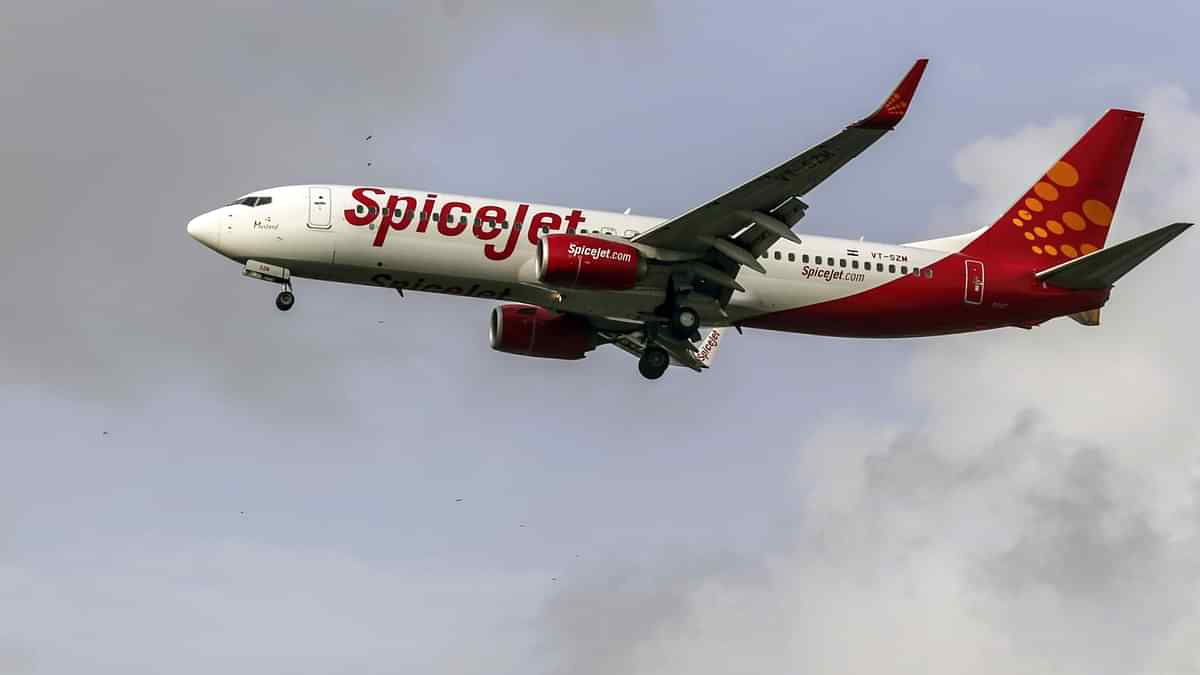
SpiceJet plane undershoots runway in Guwahati; DGCA grounds 2 pilots

A SpiceJet plane undershot the runway while landing at the Guwahati airport on Friday. The Directorate General of Civil Aviation (DGC) has grounded the two pilots who were operating the Bengaluru-Guwahati flight. Officials stated that none of the passengers was hurt in the incident. The DGCA is investigating the incident. 

Read more here.

Covaxin efficacy can be determined only after 2 doses, says Bharat Biotech after Haryana Minister tests positive

Haryana Home Minister Anil Vij, on Saturday, tested positive for Covid-19 despite taking a Covaxin trial shot. The vaccine’s developer, Bharat Biotech, clarified that Covaxin’s efficacy can only be determined after 14 days of the second dose. The minister was only administered the first trial dose two weeks ago. The company further said that 50% of the trial participants received the vaccine, while others were administered a placebo.

Read more here

Tata Consumer Products’ subsidiary to sell MAP Coffee Business for Rs 6 crore

Tata Consumer Products Ltd (TCPL) said that its Australian subsidiary, Earth Rules, is selling MAP Coffee Business to Buccheri Group Pty Ltd for Rs 6.74 crore. MAP Coffee supplies Australian cafes, restaurants, and bars with a range of Italian roasted coffee. It joined TCPL in 2014. Post completion of the transaction, Earth Rules will continue to be a step-down subsidiary of TCPL.

Read more here.

All states accept Centre’s borrowing plan to meet GST shortfall

All the 28 states and 3 Union Territories have accepted the Central Government’s Option-1 to meet the revenue shortfall arising out of GST implementation. The Centre has already borrowed an amount of Rs 30,000 crore on behalf of the states in five installments and has passed it on to the states and UTs. The next installment of Rs 6,000 crore will be released to the states/UTs on December 7.

Read more here.

NSE revises circuit limits of over 300 stocks

The National Stock Exchange has revised the circuit limits of 302 stocks with affect from Monday (December 7). The circuit limit of Adani Gas, Angel Broking, Arvind Fashions, Central Bank of India, Emkay Global, and Snowman Logistics has been revised to 20% from 10%. The circuit limits of Reliance Communications, Reliance Infrastructure, Reliance Home Finance and Shree Renuka Sugars has been revised to 10% from 5%.

Read more here.

Petrol price hits two-year high of Rs 83 a litre, diesel at Rs 73.32

Petrol price on Saturday crossed the Rs 83 per litre mark in Delhi for the first time in more than two years. The diesel price went up to Rs 73.32 per litre. The rally in international oil prices has forced the rates to increase for the 13th time in 2 weeks. The oil companies had resumed daily revision of fuel prices on November 20, after a break of 2 months.

Read more here.

ONGC Videsh strikes oil in Colombia block

Oil and Natural Gas Corporation (ONGC) announced that its overseas subsidiary, ONGC Videsh, struck commercial oil in one of its Colombian blocks. This is the fourth commercial find in the block by ONGC Videsh Ltd. The company’s oil well ‘Indico-2’ is flowing under short term testing for further evaluation.

Read more here.

Tata Motors supplies 26 electric buses to BEST

Tata Motors Ltd has delivered 26 all-electric buses to Brihanmumbai Electric Supply and Transport (BEST). These were delivered as a part of the larger order of 340 electric buses from BEST, under the Government of India’s FAME II initiative. The company stated that the rest of the units will be delivered in a phased manner as per schedule

Read more here.

Sobha Ltd to invest Rs 1,000 crore in Delhi and Gurgaon to develop 2.76 million sq fr

Sobha Ltd said it will invest close to Rs 1,000 crore in Delhi and Gurgaon to develop 2.76 million sq ft, to expand its presence in the Delhi-NCR region. The company recently entered into a joint development agreement with a Delhi-based builder to develop 1 million square feet in Delhi’s Badarpur. They are also in talks with developers to build 1.73 million sq ft in Gurgaon.

Read more here.

Categories
Editorial

Why are ONGC and GAIL Share Prices Going up?

The stock of GAIL Limited had been on the top gainers’ list for two consecutive days. From December 1st, its share price has jumped more than 12% and has closed at Rs 118.25 on December 3. A very similar surge was also seen in ONGC’s stock price.  It was mentioned that we will be bringing you a detailed analysis as to why such a rally has occurred. marketfeed always delivers on its promises. So, let us dive deep into the specific details regarding this particular stock. 

What Led to a Surge in GAIL and ONGC share price?

The reason for the rally is very interesting and it can be traced back to a PNGRB update that came out on 27 November 2020. The Petroleum and Natural Gas Regulatory Board (PNGRB) is a statutory body of the Indian government. The main aim of this board is to protect the interests of consumers and entities that are engaged in specified activities related to petroleum, petroleum products, and natural gas. They also have the power to regulate the refining, processing, storing, transportation, distribution, and sale of important resources mentioned above.

PNGRB, on 27 November, released a notification regarding a unified tariff structure for over a dozen pipelines that form the National Gas Grid. Currently, the tariff for natural gas is levied in proportion to the distance between the source and the consumers. The longer the distance, the higher will be the charges. The consumers who are away from the coast had to pay a very high charge.

The regulator has now notified a two-zone tariff structure: Zone-I will be 300-km from the source of gas (gas field or LNG import terminal) and Zone-II will be beyond that. This would lead to a 20-30% rise in transportation charges paid by users near the source (Zone-I). There will be a reduction in charges for consumers that are away from the source and will make it more affordable for them. Another major objective of this plan is to attract more investments for improving the gas infrastructure in India. 

GAIL has a network of seven pipelines in the National Gas Grid. And, the major highlight is that most of them fall under Zone-I. The pipelines that will be part of the unified tariff plan include GAIL India’s Hazira-Vijaipur-Jagdishpur (HVJ) and its supplementary Dahej-Vijaipur line. It also includes the Dahej (in Gujarat) to Uran-Dabhol-Panvel (in Maharashtra) pipeline. Many industries and consumer entities that fall closer to such a source of pipelines will have to pay a higher tariff. 

The pipelines of other companies such as the Oil and Natural Gas Corporation Ltd (ONGC), Gujarat State Petroleum Corporation (GSPL), Indian Oil Corporation (IOC), are included in the latest unified tariff structure. Reliance Industries’ subsidiary which operates pipelines in Madhya Pradesh and Uttar Pradesh are also included in PNGRB’s plan. Unified tariffs will encourage gas transmission companies to set up new pipelines and will result in long term volume growth. This has led to positive sentiments surrounding the stock of GAIL and ONGC. 

Graph showing the surge in GAIL’s stock price since December 1, 2020

You can check out the similar surge in ONGC’s share price, as well.

Conclusion

This particular rally of GAIL’s share price was something that we had been wondering about for the past 2 days. Such stock-specific movements are sometimes difficult to understand and comprehend. We were also able to see ONGC up on the top gainers’ list multiple times. And now, we have finally gotten an answer. However, do bear in mind that this could only be a part of the surge in its shares. There could always be a multitude of other factors that affect the stock prices of a company.

The new tariff structure is part of the government’s plan to raise the share of gas in India’s energy mix to 15% from the current level of about 6.3%. Thus, we will be able to cut down India’s carbon footprint by 2030. This is a wonderful initiative to ensure that our future economic growth is secure. Always remember to follow such specific news. At the same time, ensure that you understand how it could affect the stock prices.

Categories
Market News Top 10 News

Goldman Sachs Raises India’s GDP Forecast for FY21 – Top Indian Market News

Goldman Sachs raises India’s GDP forecast for 2020-21

Goldman Sachs has raised its GDP forecast for India to a 10.3% contraction, from the -14.8% it had projected in September. The global financial service provider has stated that it expects economic activity in the country to improve faster than anticipated. The firm has also stated that GDP growth is estimated at 13% in the next financial year (FY22).

Read more here.

Delhi plans to impose lockdown in potential Covid-19 hotspot markets

Delhi CM Arvind Kejriwal has sought power from the Central Government to impose lockdowns in those market areas which may emerge as Covid-19 hotspots. He stated that all government agencies are making double efforts to control the Covid-19 situation in the national capital. The Health Ministry has also warned that the effect of festivals on new cases may be seen in the coming weeks.

Read more here.

Pfizer sues AuroPharma, Dr. Reddy’s over generic version of cancer drug

Pfizer Inc. has filed a petition in a US court against Aurobindo Pharma Ltd and Dr. Reddy’s Laboratories Ltd. It has been alleged that both companies have separate plans to launch generic versions of Pfizer’s cancer drug Ibrance, before the expiration of its patent. Pfizer filed the possible patent infringement petition against both companies in the United States District Court in Delaware on two counts last week.

Read more here.

Lakshmi Vilas Bank brought under moratorium

Lakshmi Vilas Bank Ltd. has been brought under moratorium effective from 6 pm on November 17 until December 16, 2020. The payments to creditors have been capped at Rs 25,000 during the moratorium. As per a statement from the Central Government, borrowers can withdraw above Rs 25,000 only for unforeseen expenses including medical treatment and education. Meanwhile, the RBI has proposed the merger of Lakshmi Vilas Bank with DBS Bank India Limited (DBIL).

Read more here.

ONGC signs contracts for 7 blocks, Oil India wins 4 blocks

State-owned Oil and Natural Gas Corporation (ONGC) has signed contracts for seven oil and gas blocks in the country. Oil India Limited (OIL) has also signed contracts for acquiring four blocks. These 11 oil blocks have been awarded to both companies under the fifth bid round of the Open Acreage Licensing Policy (OALP) of the Indian Government. 

Read more here.

Industrial investments back to FY20 levels: Credit Suisse

Credit Suisse has stated that industrial investments in India are showing signs of recovery. Industrial investments had declined by 7% in the second quarter of FY21, but are now almost back to previous financial years’ levels. The firm has also retained its ‘Overweight’ stance on Larsen & Toubro (L&T), ABB, and Voltas. An overweight rating on a stock means that analysts expect the stock to outperform its industry in the market.

Read more here.

L&T delivers first launch hardware for Gaganyaan Mission

Larsen & Toubro said it has delivered the first launch hardware (a booster segment) for the Gaganyaan Launch Vehicle to ISRO, ahead of schedule. The booster segment will be used in the heavy rocket for launching India’s first manned mission into the earth’s lower orbit in 2021-2022. The segment was produced at L&T’s Powai Aerospace Manufacturing Facility, in Mumbai.

Read more here

Embassy REIT to acquire business park in Bengaluru for Rs 9,782 crore

Embassy Office Parks REIT announced that it has agreed to acquire Embassy TechVillage in Bengaluru from Embassy Group, Blackstone, and other investors. The cost of the acquisition has been estimated at Rs 9,782.4 crore. The proposed deal is subject to regulatory approvals. Embassy REIT is India’s first publicly-listed REIT (Real Estate Investment Trust). 

Read more here.

IIFL Finance raises Rs 100 crore via non-convertible debentures

IIFL Finance Ltd. announced that it has raised Rs 100 crore through the issuance of non-convertible debentures on a private placement basis. The company stated that the debentures will be listed on the Wholesale Debt Market segment of NSE. After this announcement, the share price of IIFL Finance hit the upper circuit of 20% in the afternoon session today.

Read more here.

NMDC hikes iron ore prices for second time in November

The National Mineral Development Corporation Ltd. (NMDC) has hiked prices of lump ore by approximately Rs 400 per tonne. It has also increased the price of fine ore by Rs 300 per tonne. This is the second price hike by the company in November 2020 because of iron ore supply constraints.

Read more here.

SSWL receives orders for over Rs 5.8 crore from the US &  Europe

Steel Strips Wheels Ltd. (SSWL) has received orders amounting to Rs 5.8 crore from the US and Europe markets. The company has confirmed that export orders of nearly 57,000 wheels will be executed in December 2020. The order will be fulfilled from its Chennai plant. The company also stated that it expects to obtain more orders from the same markets, as its business operations have picked up speed.

Categories
Editorial Market News

ONGC’s first-ever Quarterly loss amid COVID-19

Oil & Gas Industry

One of the eight core industries in India is the Oil and Gas industry. It has a huge influence on cost and decision making of all the important sections of the Indian economy. The growth of the Indian economy has high proximity with the energy demand which thus increases the importance of investment in this industry. Geopolitical tensions and the pandemic has had a huge impact on the oil & gas industry worldwide, and not only in India. Who can forget the stunning fall in the prices of crude oil when it traded at negative $40 per barrel on 20th April 2020?

Crude oil imports significantly affect the country’s oil import bill. With the fall in the prices, this import bill will reduce but the fluctuating prices become a sign of worry for domestic E&P (Exploration & Production) companies like ONGC, Petronet, Gail, etc. The graph below shows the decrease in domestic crude oil production over the years.

India registered their lowest level of crude oil production in 18 years.

Upstream Segment- E&P Sector

The whole industry is divided into three segments: Upstream segment (extraction and production of crude oil), Midstream segment (storage, processing and transportation) and Downstream segment (refining, marketing and distribution)

Upstream segment is also known as Exploration and Production (E&P) sector. This segment is responsible to find and produce crude oil and natural gas. This includes searching for potential oil and natural gas fields, drilling exploratory wells and see if they have the potential to give back a good amount of oil and at last, recovering crude oil and natural gas to the surface. ONGC predominantly operates under this segment. A company which operates in all the three segments is known as Integrated Oil Companies (IOC).

About ONGC

State-owned Oil and Natural Gas Corporation is termed as a leader in the E&P segment in India. It was set up way back in 1955 under the leadership of Pandit Jawahar Lal Nehru. In 2010, this corporation was conferred with the status of Maharatna. They produce 72% of India’s total production of crude oil. Apart from oil, they also produce half of the gas which is produced in the country.

They have multiple subsidiaries in the form of ONGC Videsh Ltd, Mangalore Refinery Petrochemicals Ltd and join ventures with ONGC Tripura Power Company Lt, Indradhanush Gas Grid Limited, etc. During COVID-19 outbreak, Moody’s Investors Service downgraded their long-term issuer rating and with a negative outlook.

Crashed Q4 FY20 results

On June 30, ONGC reported their Q4 FY20 results which came as a shock to everyone. For the first time since reporting their financials from the year 2000, ONGC declared a net loss of Rs 3,098 crore as compared to a profit of Rs 4,226.5 crore declared in the previous quarter. Not only the bottom line, but their operating profit also fell by 30% to Rs 8,588 crore.

The fall in net profit was due to the accounting of the one-time impairment cost of Rs 4,899 crore. An impairment loss is considered when there is a reduction in the carrying amount of an asset due to a fall in its fair value. This news was greeted with a 4% slip in ONGC’s share price the next day. Thus, showcasing investor’s fear to continue investing in the company.

“Our weighted average cost of gas production is USD 3.75 per mmBtu and for newer projects in the deepsea, it is north of USD 5 per mmBtu. At current gas prices, we are losing money.” – ONGC Director (Finance) Subhash Kumar.

ONGC earned a net realization of $49 per barrel of crude. This was much below $61.93 what they realized a year back. This decrease, coupled with lower sales in the quarter, has deeply impacted the company’s profitability. This effect was not only because of the nationwide lockdown which was implemented by the Indian government but also because of the rising tensions between Arabia-led OPEC and Russia.

Return of Equity is one of the most important measures of profitability. If ROE is one, it indicates that a shareholder is getting a dollar of return for every dollar he invested. From the past three years, ONGC’s ROE has been consistently above 10%. For the year 2019-20, their ROE stood at almost 14% but this year it fell drastically to just above 5%. Return on Equity is calculated with the help of three other measures.


ROE = Return on Sales X Asset Turnover Ratio X Leverage
Even though the asset turnover ratio remained constant to the previous year, the return on sales was reduced by more than half. In 2018-19, return on sales was about 7.5%. This year, the same ratio fell to 2.4%. This return on sales tells how much profit is being produced per dollar of sales. Thus, decreasing ROS is a signal of decreased operational efficiency faced by the company this year.

Conclusion

After the fall of crude oil prices in March-April, WTI crude oil prices have risen lately to $41.41. This rise can be taken positively by the oil companies but the prices are yet to reach the level it was previous year. As the countries are fighting with the virus globally, one can expect more lockdowns in the near future.

Any disruption for the capital-intensive companies like ONGC can be daunting. Switching off and on these heavy machines might decrease productivity which can hurt companies financially. It will be interesting to see how the government will help this sector. As the national lockdown is removed, demand for oil is expected to go up once again. This increase in demand won’t be as high as it was in pre-virus times. People are still willing to go out only if necessary and not for tourism. It will be interesting to see how things unfold in this quarter for companies like ONGC amidst the pandemic.