Ethereum will soon see a much-anticipated upgrade that could result in more institutional investors investing in the network. The goal is to make Ethereum more scalable, safe, and sustainable. It would make its crypto (Ether) mining obsolete and decrease the enormous amount of energy necessary to create new currencies. As per reports, this upgrade can cut energy consumption by at least 99.95%.
Crypto prices today: Bitcoin, ETH jumps 5%
Bitcoin is currently trading at $46,967.71, a 5% increase over the previous day. Ethereum is up 5.2% over the last 24 hours to $3,317.42. Solana rose 6.29% to $108.76, while Cardano is trading higher by 3.4% at $1.18. Meanwhile, Polkadot (DOT) jumped 8% to $22.81. The global crypto market cap stands at $2.12 trillion, a 4.73% increase over the previous day.
African Digital Art Network launches Nandi NFT marketplace on Celo
African Digital Art Network, a global collective of Black digital artists, is taking its first steps into Web3 by launching the NFT marketplace Nandi. The new platform allows Black artists and creators to showcase their talent. It is also a place where they can experience the financial benefits of Web3 across the African diaspora.
Crypto for Ukraine provides a flow of war-related assistance
People around the world have donated millions of dollars directly to Ukraine’s war effort via cryptos such as Bitcoin. The Ukrainian government says it has taken in almost $67 million of its $200 million target as of Saturday (March 26). The country has spent ~$34 million of the funds received as of last week. It has converted about 80% to traditional currencies and used the remainder with merchants that already accept crypto.
Govt recovered Rs 95.86 crore from 11 crypto exchanges for GST evasion
The Centre has recovered a total of Rs 95.86 crore, including interest and penalty, from 11 crypto exchanges for evading Goods and Services Tax (GST). The biggest evasion was detected at Zanmai Labs Pvt. Ltd, which operates under the brand WazirX. The quantum of evasion was Rs 40.51 crore. Coin DCX came second on the list with evasion of Rs 15.70 crore.
Russian national will use sales of her burning passport NFT to support Ukraine
Olive Allen, a Russian national and artist who has lived in the United States for more than 11 years, has burned her mother country’s passport in the hopes of raising awareness and funds related to the military conflict in Ukraine. The auction of her burning passport NFT went live on the SuperRare marketplace on Friday.
Crypto Prices today: Bitcoin is down by more than 3%
BTC is trading more than 3% in the red and Ethereum is more than 4% down. Meta Speed game price increased by 8 times over the last 24 hours.
The Sandbox Surpasses 2 Million Registered Users
Metaverse game The Sandbox has recently reached the 2 million registered users mark amid its play-to-earn season 2 Alpha launch.
Cointelegraph partners with Nitro Network to bring digital mining and decentralized internet to the masses
Cointelegraph has partnered up with Nitro Network, to pioneer the future of a decentralized internet through the Non-Fungible Miner. NFMs are a unique innovation — an NFT that provides all users the ability to digitally mine Nitro’s native token, NCash, from anywhere in the world.
Waves risks ‘death cross’ plunge after price rallies 88% in six days
A major rally in Waves’ price this week that saw it nearly double risks faltering in the coming sessions due to a “death cross” technical pattern. A death cross measure appears when an asset’s long-term moving average closes above its short-term moving average.
Fed Chair calls for congressional action on crypto amid Ukraine-Russia conflict
Federal Reserve Chairman Jerome Powell said there is a growing need for crypto regulations during testimony before the House Financial Services Committee. He said recent events in Ukraine have “underscored the need for Congressional action on digital finance, including cryptocurrencies.”
Crypto prices today: Bitcoin down 1%, ETH falls 1.7%
Bitcoin is currently trading at $43,451.8, a 1% decline over the previous day. Ethereum fell 1.7% over the last 24 hours to $2,915.5. Solana fell 2.7% to $99.7, while Cardano is down 3.5% to $0.92. Polygon (MATIC) declined by 1.16% to $1.61. The global crypto market cap stands at $1.90 trillion, an 1.87% decline over the previous day.
Ukraine now accepts Dogecoin donations amid Russian invasion
Ukraine is now accepting Dogecoin donations, said Vice Prime Minister Mykhailo Fedorov. This is the latest crypto-related move on behalf of the Ukrainian government to raise funds amid Russia’s invasion. Last week, the government’s official Twitter account shared Bitcoin and Ethereum addresses when it announced Ukraine would accept crypto donations.
SEC targets NFT creators, marketplaces over ICO-like sales: Report
According to a Bloomberg report, the US Securities and Exchange Commission (SEC) is probing NFT creators and marketplaces for regulatory violations. The probe is looking into whether NFTs are being utilized to raise money like traditional securities. The SEC has reportedly sent subpoenas related to the investigation. It is particularly interested in information about fractional NFTs.
US Treasury to monitor crypto, for sanctions evasion
In response to a letter from 4 Senate Democrats raising concerns about crypto’s potential use by Russia to avoid sanctions, Treasury Secretary Janet Yellen has said that the US will monitor the situation. The department would make sure crypto couldn’t be used to bypass sanctions against Russia.
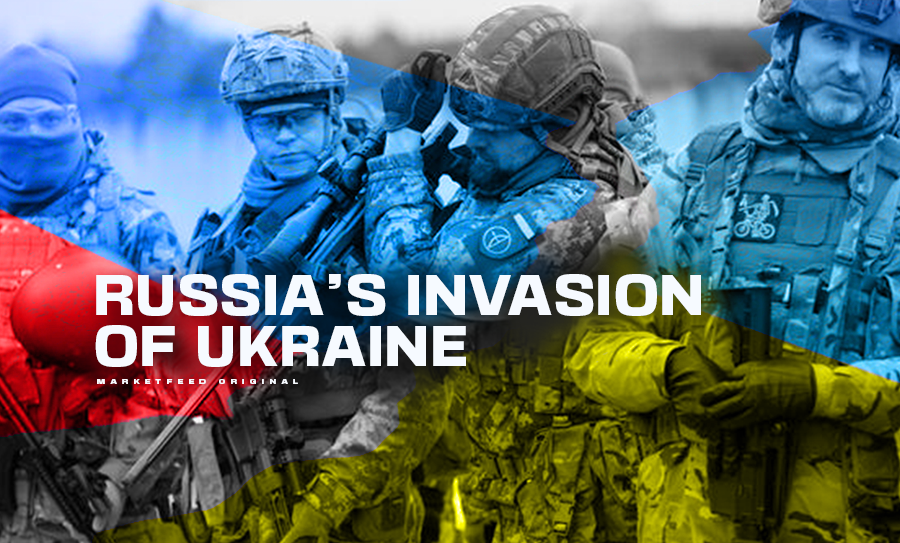
As the rest of the world watches helplessly, Russia continues its brutal invasion of Ukraine. Global tensions have been rising ever since President Vladimir Putin began a full-scale military operation against his neighbouring country on February 24. He sent troops by land, water, and sea, surrounding Ukraine from three fronts. Russian forces are using missiles and tanks to attack key cities of Kyiv and Kharkiv, killing many innocent citizens. The war has displaced over 7 million people. Several pro-Russian separatist forces in Ukraine are fighting from the inside.
As the situation escalates and negotiations fail, there seems to be no end in sight. In this article, we analyze some of the recent developments of the crisis and its impact.
A Timeline of the Russia-Ukraine Crisis
Ever since the collapse of the Soviet Union in 1988-1991, the Russian Federation has been looking to bring it back and expand its territory. Ukraine, an independent nation since 1991, aligned itself with several western countries to prevent such an uprising.
In 2014, Russia illegally annexed Ukraine’s Crimea region under the pretext of protecting Russians and Russian-speaking citizens from abuse or ill-treatment. This action led to major geo-political tensions between Russia, Ukraine, and many western nations that condemned the attack.
In January 2021, Ukraine’s President Volodymyr Zelenskyy urged US President Joe Biden to allow his country to be a part of the North Atlantic Treaty Organisation (NATO). [NATO is an inter-governmental alliance between American and European countries that ensures the security and freedom of its members using military and diplomatic means.]
Putin disliked the fact that NATO was extending its reach into Eastern Europe. He wanted the alliance to stop offering memberships to former Soviet Union countries. Moreover, Putin demanded that NATO pull back its military deployments in Central and Eastern Europe. Russia claimed that NATO promised it wouldn’t expand to the east in the 1990s and had cheated them. Diplomatic talks did not yield positive results.
As Ukraine showed interest to join NATO, the Russian President started to send hundreds of thousands of military troops to Ukraine’s borders in the name of training exercises. At the end of 2021, many countries and international organizations raised concerns about a war-like situation between Russia and Ukraine. Meanwhile, Putin had assured that his country would not attack Ukraine.
Latest Developments
On Feb 21, 2022, Putin recognised the independence of Donetsk and Luhansk in Ukraine as independent states. He sent troops into these areas to “keep the peace”. These territories had been broken away from Ukraine by alleged Russian-backed separatist forces in 2014.
Three days later, Putin launched a full-scale invasion of Ukraine. His actions were condemned across the world, and even within Russia. There were multiple reports of missile strikes and bombings in the capital city of Kyiv and Kharkiv. The Russians took control over several regions. Gas pipelines & terminals, power stations, and airports were attacked and destroyed. Nearly 137 were confirmed dead on the first day of the Russian siege.
President Zelenskyy ordered a full mobilization of the Ukrainian military for 90 days. The armed forces fought bravely against Russian troops and stopped their advance deep into the country. They also shot down Russian Air Force planes. Meanwhile, many Ukrainian citizens stayed back and learned how to handle guns and ammunition. Various allies of Ukraine have shown their support by providing military and humanitarian aid.
On Feb 27, Zelenskyy agreed to send delegations for ceasefire negotiations with Russia on the Belarusian border. Unfortunately, the peace talks ended with no resolution. The Russians continue to fire missiles in key cities. Putin has even threatened to execute a nuclear attack. He has kept Russia’s nuclear arsenal on high alert. Meanwhile, innocent citizens who had no role in geopolitical issues are dying every day.
The Economic Impact
Following the ruthless attack on Ukraine, the US, UK, the European Union, Japan, and other allies have imposed a series of sanctions against Russia. They have primarily targeted Russia’s banks, oil refineries, and military exports. The international community aims to freeze the assets of President Putin and his foreign minister, Sergei Lavrov. Russian banks will be removed from the SWIFT international payments system to harm their ability to operate globally. The US has cut off Russia’s largest banks and their subsidiaries from its system. Such measures will disconnect Russia from the international financial system. The Russian Ruble has crashed and is now worth less than 1 US cent!
Crude oil prices have surged to $109-110 per barrel as the war triggered supply fears. Prices of metals, natural gas, and other essential commodities are shooting up across the globe. Flights continue to be cancelled or rerouted, putting pressure on cargo capacity and shipping costs. Inflation will become a key concern. You can learn more about the devastating economic effects of the war on India’s economy here.
The unfortunate events that unfolded in Ukraine led stock markets to fall significantly. There will be uncertainty in the market as long as the war continues. In the event of a nuclear attack, we could see a major correction. However, if the Russian President sees reason and stops the attack (which is highly unlikely), there could be a good recovery in the markets. Let us hope for successful diplomatic/peace talks between world leaders to bring an end to the bloodshed.
Let us look forward to seeing how this situation unfolds in the days to come. Our thoughts go out to Ukraine, its people, and all those who have been affected by the tragic attacks.
According to CNBC, Ukraine’s government has raised more than $10 million in cryptocurrency donations. The official Twitter account of the Ukrainian government had posted addresses for two crypto wallets: one accepting only bitcoin and the other taking Ether and Tether. About $1.86 million of the money donated to the government was generated through the sale of non-fungible tokens (NFTs). The development shows how Ukraine is turning to crypto for assistance during Russia’s military aggression.
Crypto prices today: Bitcoin falls 1.2%, ETH down 3.6%
Bitcoin is currently trading at $38,342, a 1.27% decline over the previous day. Ethereum fell 3.6% over the last 24 hours to $2,641.40. Solana fell 0.7% to $88.4, while Cardano is up 0.3% to $0.88. Polygon (MATIC) is down 1.76% to $1.47. The global crypto market cap stands at $1.73 trillion, a 1.92% increase over the previous day.
Blockchain-based storage app ArDrive raises $17.2 million
ArDrive, a blockchain-based permanent storage application, has raised ~$17.2 million in a seed round of 13 investors. The application houses over 6 million files from across the globe, including text, articles, photos, and videos. ArDrive allows users to maintain ownership and control of their data on the Arweave blockchain.
Ukraine asks exchanges to freeze Russian, Belarusian crypto accounts
Ukraine’s Vice Prime Minister Mykhailo Fedorov has asked all major crypto exchanges to block the addresses of Russian users. Dmarket, a Ukrainian-born digital assets company that works as a crypto exchange, has accepted the request. Fedorov explained that it is crucial to freeze not only the addresses linked to Russian and Belarusian politicians but also to sabotage ordinary users.
Crypto trading platform CoinSwitch rolls out recurring buy plan
CoinSwitch has rolled out a recurring buy plan in order to simplify investments in digital assets, making them systematic and disciplined. The new facility will enable users to beat market volatility and avoid making impulsive buying or selling decisions. It lets users keep aside a fixed sum to buy crypto assets each month over a long period of time.
Ukraine and Russia are on the brink of war. Russia has positioned nearly 100,000 troops on its border with Ukraine. Ukraine is backed by the US and some other western countries. This is one of the most gripping international crises since the cold war. Ukraine’s President Volodymyr Zelenskyy even announced publicly that Russia would invade Ukraine on February 16, 2021.
Ukraine has several internal pro-Russia separatist forces that have waged war against Ukrainian troops, while Russia denies supporting these forces. Russia intends to weaken Ukraine’s military and diplomatic clout through its demands, such as taking off NATO support to Ukraine. The situation is getting worse by the day and global tensions are rising.
In the Russian-Ukraine crisis, taking sides could prove a diplomatic mishap for countries like India. While India has had an excellent relationship with Russia since the formation of the USSR, it has excellent bilateral relations with Ukraine as well. It is a sensible move for India not to opine in a conflict that wouldn’t do any good for the country.
In this piece, we explore the possible impact of the entire conflict on the Indian economy.
Sunflower Oil Prices Could Touch Roof
Russia and Ukraine are the largest exporters of sunflower oil in the world. India imports most of its oil from these two countries. India’s edible oil prices have risen by around 60% in the past year. In India, sunflower oil isn’t consumed as much as Palm or Soya oil, yet it remains the largest importer of sunflower oil in the world. A price increase could hit many kitchens in the subcontinent.
Defense and Military Equipment Could Take A Hit
According to Stockholm International Peace Research Institute (SIPRI), Russia is the largest exporter of arms and military equipment in the world, where the most significant proportion of exports are to India. The US could impose sanctions on Russia and those in ‘support’ of the ‘aggressor’. It could possibly build pressure on India to taper its trade, military, and diplomatic relations with Russia. India has had good ties with both the US and Russia. Choosing between the two could be a tedious task.
Inflation and Oil Prices Could Rise
US Crude Oil prices hit a record high of $95.82 a barrel, while Brent Crude hit $95.75 when the Russia-Ukraine crisis was at its peak. The price contracted when Russia announced that it was withdrawing some of its positions on line with Ukraine. India has signed many deals with Russia to buy oil and gas. GAIL has signed a 20-year deal with Russian state-owned energy company Gazprom to buy 2.5 million tonnes (MT) of LNG a year. Indian Oil Corporation has signed a deal to buy up to 2 MT of oil from Russia’s Rosneft.
Moving on, the COVID-19 stimulus has sent inflation skyrocketing across the globe. India is on the same boat as any other country. High excise duties and an increase in oil prices could eat into the pockets of many households.
Volatility In Indian Markets
Both NIFTY and SENSEX have gone haywire amidst the Ukraine-Russia conflict. On Valentine’s Day, NIFTY had the biggest fall in 10 months, where NIFTY lost 532.95 points or 3.06% at 16,842.8 and SENSEX lost 1747 points or 3.00% at 56,406. India VIX is an indicator of volatility in markets. We see a sudden spike in VIX after Feb 10, which could be because of the Ukraine Russia conflict and other market forces.
Source: TradingView
What Lies Ahead
In today’s times, diplomacy isn’t led by a particular ideology but by a nation’s selfish interests. Nobody knows what’s going on in Putin’s mind. US President Joe Biden has agreed ‘in principle’ to meet Putin if he agrees to not attack Ukraine. The diplomatic gambit was brokered by French President Emanuel Macron. It is expected that the two might discuss terms on various issues like NATO, OPEC oil price, etc.
On Feb 21, Putin ordered Russian troops to “maintain peace” in two separatist-held regions in eastern Ukraine. He recognised the cities of Donetsk and Luhansk as independent entities. This move has been met with widespread criticism from the West due to fears that it could provide a pretext for a Russian invasion of Ukraine.
In a swift response, the US imposed economic sanctions on the two regions. The order restricts new investment, trade, and financing by US persons to, from, or in Donetsk and Luhansk. Meanwhile, Ukrainian President Volodymyr Zelenskiy has accused Russia of wrecking peace efforts and violating the sovereignty and territorial integrity of his country.
The world isn’t truly polarised like it was during the cold war. While the conflict can impact India’s military ties with the US and Russia if the matter intensifies, India does not face any long-term economic risk. India has strengthened ties with other nations to fulfill its economic necessities if it falls on bad terms with either the US or Russia. Moreover, it could be in the best economic and diplomatic interest for both Russia and the US to maintain ties with India.