Categories
Editorial

TATA Takes Back Air India. What’s Next?

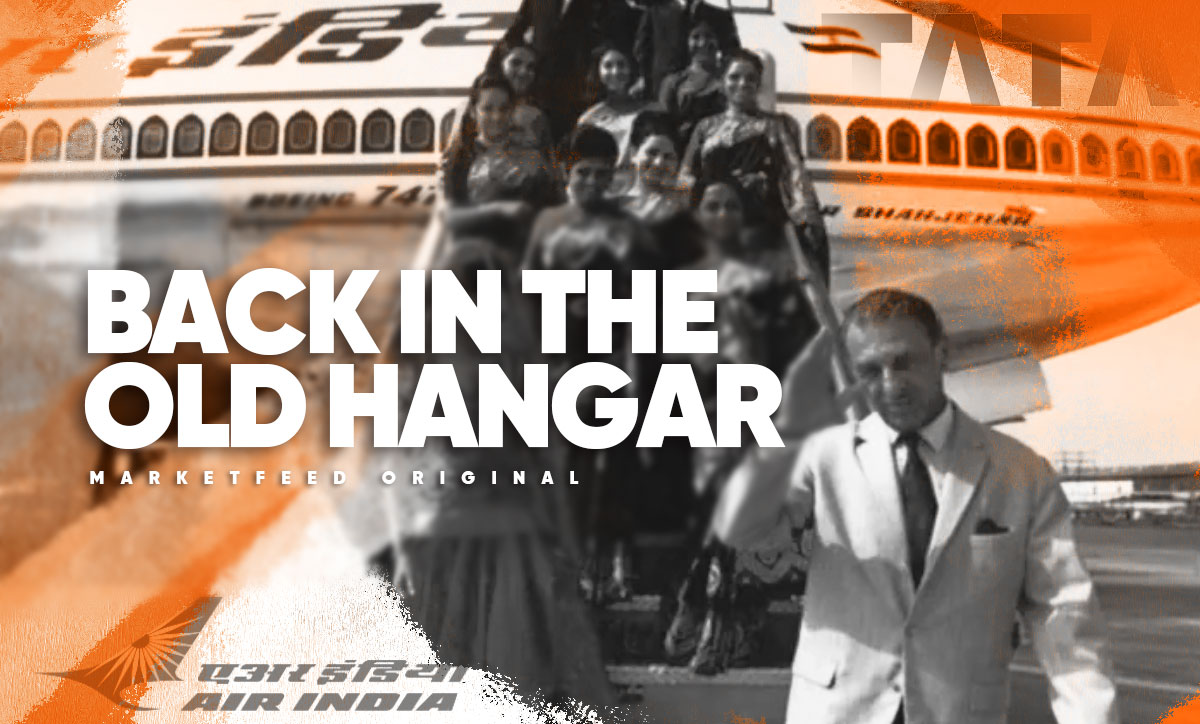
On October 8, Puhin Kent Pandey, Secretary of the Department of Investment and Public Asset Management (DIPAM) announced that Tata Sons had won the bid for debt-laden Air India. The news has taken the aviation industry by storm. The airline has returned to the Tata Group after 68 years! In this editorial, we dive into the details of the acquisition and what lies ahead for the airline. 

Air India – A Brief Profile

India’s first civil aviation pilot, Jahangir Ratanji Dadabhoy (JRD) Tata, set up the first domestic airline— Tata Airlines in April 1930. In the pre-independence era, princes of different states enjoyed the new mode of transport and the hospitality it offered. Thus, the group redesigned the airline with the iconic ‘Maharaja’ style. 

After India’s independence, the Tata Group proposed the launch of ‘Air India International’, a new overseas air service. This new entity became the first Asian airline that connected the east with the west. In 1953, with the heat of nationalisation spreading across the nation, Tata Airlines and nine other domestic carriers were merged and rebranded as Indian Airlines. Air India International was also taken over and merged with Air India. This move was opposed by JRD Tata and other players in the airline industry, but as a consolation, JRD was appointed as the Chairman of Air India and one of the directors of Indian Airlines. With his leadership, the new entity found its pace for the next 25 years.

With liberalization and the entry of private low-cost carriers, Air India started to lose its feet in the industry. Various governments tried versatile steps to make the airline profitable, including measures to privatize it. Due to various political circumstances, none of these measures was successful. In 2007-08, a decision was taken by the government for the merger of the domestic carrier Indian Airlines with Air India. The merged entity had a very stressed balance sheet, and the management was in deep trouble.

In March 2018, the government invited bids for acquiring a 76% stake in Air India. At that time, not even a single bid was received. Finally, the state again revised its invitation for a 100% stake in the airline. The Tata Group was declared the winning bidder for the national carrier on October 8th 2021.

Details of the Deal

Talace Pvt Ltd, a subsidiary of the Tata Sons, will be paying Rs 18,000 crore for a 100% stake in Air India and its low-cost arm Air India Express. They will also acquire a 50% stake in the ground handling company of Air India (AISATS).

Currently, Air India has an aggregated debt of Rs 61,562 crore. Out of this, Rs 46,262 crore will be handled by Air India Asset Holding Ltd (AIAHL), a special purpose vehicle (SPV) created to manage its debt. An amount of Rs 15,000 crore will be paid off by Talace. The government will be left with Rs 2,700 crore as cash equivalent after the deal.

It is interesting to note that Air India has generated a total debt of Rs 20,000 crore in the last two years. Additionally, the Centre has infused more than Rs 1 lakh crore into the airline since 2009 to make it operational. 

Origin of Vistara & Air Asia India

The Tata Group always had the intention to get into the airline business. In 2013, the Government of India allowed Foreign Direct Investment (FDI) of up to 49% in the civil aviation sector. A joint venture (JV) by Tata Group and Singapore Airlines (which was rejected in the early 1990s) came into the limelight again, giving life to TATA-SIA Ltd or Vistara Airlines. Tata Sons have a 51% shareholding in the entity, and the remaining stake is held by Singapore Airlines.

Currently, Vistara has a fleet of 47 aircraft and a market share of 8.1% in the Indian civil aviation industry. However, the airline is not profitable. From a loss of Rs 400 crore in FY16, it has ended up in a loss of Rs 1,612 crore in FY21. The company has raised fresh capital of Rs 1,835 crore in FY21 as a result of the high capital requirements of the industry.

In 2013, Malaysian global low-cost airline, AirAsia, was also interested in starting its Indian subsidiary. They created a JV with Tata Sons in India. AirAsia India currently has a market share of 6.7%, with a fleet size of 33 aircraft. The Tata Group has an 83.6% stake in this airline. Similar to Vistara, Air Asia India is also a loss-making company. The company reported a loss of Rs 1,533 crore in FY21, almost double compared to the previous year.

The Airline Industry – An Analysis

Before the Covid-19 pandemic hit the airline industry, nearly 16 crore Indians utilized air travel as a major mode of transport. The United States tops the chart by carrying 92 crore travellers, followed by China with 65 crores. This report indicates the scope of penetration of airlines in India. 

IndiGo Airlines tops the chart with a share of more than 58%. The combined market share of the 3 companies led by the Tata Group will be only 25%. 

We can see the magnitude of the fleet size of IndiGo compared to Vistara and AirAsia. Even though Air India has witnessed a lot of selling pressure on its fleet to manage debt, the company still manages to have a fleet strength of 172.

Conclusion

The arrival of well-experienced management is positive news for the stressed airline. The expertise of the Tata Group in managing and collaborating with international air carriers will help the new entity find its path. In 2019, N Chandrasekaran (Chairman of Tata Sons) said that they are not interested in running a third airline unless all are merged. Thus, there are a lot of rumours surrounding the merger of the three entities. However, such a merger can be a double-edged sword. If not managed properly, we may see a similar situation of the Air India-Indian Airlines merger or a similar case of the recent unification of Vodafone-Idea.

It is important to note that none of the existing airlines is profitable. Increasing competition, high capital requirements, debt, and the Covid-19 pandemic are some of the major concerns for this business. In this scenario, it is an advantage for new airline players to start from scratch and keep their balance sheet strong. One such move has been made in the industry by the Stock Market Big Bull Rakesh Jhunjhunwala. He has announced a new airline venture, Akasa. The lack of penetration of air travel in India, as well as being a comparatively cheaper mode of transport for long distances, is the fuel that drives these airlines in the long term.

Categories
Trending

The $113 Billion Tata Group faces Tough Decisions Over Their Airlines

Tata Group’s two airlines – AirAsia India and Vistara, were struggling before the coronavirus pandemic. Tata Sons owns a 51% stake in each airline. 

“The Tata’s are caught between a rock and a hard place,” said Mukund Rajan, a former member of the group’s executive council who’s now the chairman of an investment advisory firm focused on the environment, social, and governance issues. “The only option to run a successful airline is to seek scale. This would require the Tatas to deploy significantly more capital than they have done this far. Absent ambition and scale, the prospects for success are probably very remote.”

The airline was founded by J.R.D. Tata, named as Tata Airlines in 1932. In 1953, the Government of India passed the Air Corporations Act and purchased a majority stake from Tata Sons. The company was renamed as Air India International Limited and the domestic services were transferred to Indian Airlines as a part of a restructuring.

In 1994, the group came up with an ambitious plan to start an airline with 100 planes in partnership with Singapore Airlines, but the government refused a foreign entrant, and the project was rejected. Later in the year 2000, Tata again teamed up with Singapore Air to bid for a stake in Air-India, but the plan was dropped due to political opposition. 

Tata Group is concentrating on making an airline work at any cost. Vistara and AirAsia India have never made money and have lost around $845 million (~Rs 8,450 lakhs), according to estimates from the Centre of Aviation. They have to make a decision on whether to sell the loss-making business or to further scale it up and make it a profitable one. 

Categories
Editorial Editorial of the Day

Why is IndiGo Buying More Engines in Between A Pandemic?

The Story

As per the reports, IndiGo is planning to buy engines when the Covid-19 has paralysed the aviation sector globally. India’s biggest airline, IndiGo, is betting on a robust future of the industry. They are in talks with Pratt & Whitney and CFM International Inc. to buy its next batch of engines.

Pratt & Whitney and CFM International Inc. are two rival manufacturers. Reportedly, the new set of order for jet engines power around 150 new Airbus SE A320neo jets. This new deal could be worth around $10.7 billion. There is no given timeline up to which this deal can conclude.

Rumours of this big investment by an airline are surprising in these times. Last year, IndiGo placed a $20 billion (Rs 1.4 lakh crore) order for LEAP-1A engines. This was the largest ever single-engine order in history which covered 280 planes. Airline and tourism industry are the two most severely hit industries during the pandemic. Several airlines around the globe have either deferred or cancelled hundreds of plane orders due to the Coronavirus slump. To understand how badly the aviation sector has been hit by Covid-19, click here. Yet, IndiGo is rumoured to make another big investment. Is that feasible for the company?

Why now?

Any airlines investing such heavily during the pandemic does raise the question “why now?” The fears of coronavirus are still present, if not more than earlier. Governments are easing restrictions but with rising cases, another shutdown like that in Europe cannot be ruled out. IndiGo, like every other airline, has been impacted massively. Yet, India’s biggest airline wants to take this opportunity and solidify its dominance in the Indian market.

All of Indigo’s competitors are equally hurt, if not more badly. Overall market conditions also give them an opportunity to buy materials at a lower cost. Thus, IndiGo has no reason to shy away from any lucrative deal. India has one of the world’s fastest-growing aviation market. A low-cost carrier like IndiGo competes on a pricing model to attract more customers. A higher passenger load factor helps them to improve their top and bottom line. As compared to other Indian airlines, IndiGo has robust cash support. In their Q2 FY21 results, the airline reported a $2.4 billion (~Rs 18,000 crores) of cash and cash equivalents. This number was higher than $1.9 billion they reported in the same quarter previous year.

Are People Confident with Flying Again?

Indian government suspended domestic and international flight operations in the last week of March. From the last week of May, a limited number of domestic airlines were given a nod to operate. But again, with several restrictions from both the central and state governments. According to DGCA (Directorate General of Civil Aviation), air traffic plummeted by 85% year-on-year in June 2020.

Like other airlines, IndiGo has to announce a pay cut to restrict their expenses. In June, the airline asked some of its staff to take mandatory leave without pay (LWP) for 1.5 to 5 days. Next month, pilots were told to take an additional 5.5 days of LWP. They also laid off 10% of staff and cut the salaries of its senior employees. With the recent uptick in demand for air travel, Indigo has reduced the 10 days of LWP in July to 3 days in November.

The data of DGCA for September showed 39.4 lakh people taking the air route for domestic travel. It was a significant increase from 28.3 lakh people reported in August. Keeping the change in the mind, the government has also airlines to operate at 65% of their capacity. Earlier, they were restricted to operate at a mere 45% of their capacity.

Even in the pre-Covid times, IndiGo had a substantial market share in the domestic segment. The September data showed that their grip became stronger in the domestic market. They had a market share of 48.1% by the end of March 2020. Currently, they have a market share of 58.8%. At the same time, Air India, Air Asia, Vistara and SpiceJet all have faced a reduction in market share.

In these tricky times, do you think IndiGo should invest in their growth or should they be more cautious and focus on just survival?

Categories
Editorial

Jet Airways: Jet, Set, Gone? Or Can it Succeed?

Jet Airways is back in the news, this time with some positivity. A group of investors, Murari Lal Jalan (stay tuned for his bio), and UK-based financial services company Kalrock Capital have won the bid to buy Jet Airways in a vote by the CoC or Consortium of Creditors. The CoC consists of all the creditors to whom Jet Airways owes money. The duo would have to invest close to Rs 1,000 crores to get the operations up and running in its initial stage. However, the company won’t be operational before next year. Let’s take a peek into what caused Jet to shut down in the first place.

Jet Airways halted its international as well as domestic operations on April 17, 2019. It was once a symbol of luxury, customer loyalty, and service par excellence. Moreover, Air India was its only competitor for a long time in the ‘90s. Later, Jet was faced with debts, competition by low-cost carriers, tax evasion notices, poor top management, and money mismanagement allegations. Jet Airways was on the verge of closure in the past but got back on its feet when Etihad bought a 24% stake in 2013 for more than Rs 2,100 crores. Despite this, the airline fell into deeper losses.Let’s dig into what caused Jet Airways to shut shop.

Why Jet Airways failed

Irrational Spending

Experts believe that Jet Airways’ account of irrational spending dates back to 2006 when it purchased Air Sahara, the low-cost carrier for $500 Million in cash. This acquisition was considered over-valued by most market watchers considering Air Sahara’s budget business model and fleet size as compared to Jet Airways’ full-service model.

Jet Airways dominated the industry after the acquisition of Air Sahara, but the acquisition came with its own set of problems. These were mostly about due diligence, legalities, regulatory matters, compensation, human resource issues, leadership, and integration strategies.

Competition

Jet Airways needed a MASSIVE restructuring in its company. It was a full-service airline venturing into low-cost flying. However, by the time it could restructure, market players like Spicejet, Indigo, and Go-Air had started a fiercely competitive price war. Their aircrafts and engines were brand-new and fuel-efficient. They adopted a budget-friendly strategy.

Fun Fact: Indigo and GoAir employ only female cabin crew since on average they are 15-20 kg lighter than their male counterparts. This helps them save close to Rs 30 crores every year in terms of fuel cost. Every extra-kilogram on the flight costs airlines Rs 5 per flight hour.

It was getting difficult for Jet Airways in this fiercely competitive market where flying wasn’t just a luxury anymore, it was a necessity.

Poor Management

Both Jet Airways and Jet Lite (later Jet Konnect)  had a single team headed by Naresh Goyal, the founder and chairman. It was this one team; that was handling both the full-service carrier as well as the budget carrier, Jet Konnect. The operation of a budget carrier and a full-service airline is different. Jet Airways used the same tool or mechanism to run both. When Jet Konnect merged with Jet Airways after a financial crisis, Jet Airways continued to hold two operating licenses while technically operating a single airline. This added to cost and caused some operational problems.

The Tatas had offered to buy a stake(undisclosed) in Jet Airways in 2018, chairman Naresh Goyal refused to dilute his share of stake for Tata. Shortly after this, two of Jet’s independent directors, two independent directors – Vikram Mehta Singh and Ranjan Mathai – resigned in November 2018, the same month the Tatas were in talks with the board. The promoters and chairman put their interests before the minority stakeholders’ interest. The cash flow and debt management of Jet Airways were pretty mediocre in popular opinion.

The fluctuation of Oil Prices

Oil prices have been all over the place in the past few years. Crude oil prices affect the ATF(Aviation Turbine Fuel) prices. Moreover, ATF is much more expensive in India than around the world. India continues to be a major importer of oil. The rising crude oil prices coupled with the depreciating rupee is a burden for many airlines.

The Scavenging Effect

After Jet ceased operations, the entire aviation industry benefited from it. Other airlines captured Jet Airways’ market share by leasing their aircraft, obtaining their airport slots, hiring the laid off staff of Jet Airways and capturing the lost customer base . 

Airfares increased shortly after Jet Airways ceased operations. Spicejet and Vistara leased Jet’s aircraft. IndiGo acquired more slots from Mumbai’s Terminal 2 and Delhi’s Terminal 3. Many airlines acquired Jet Airways’ aircraft, terminal slots, and routes. Spicejet absorbed much of Jet’s staff and its older aircraft variant, the B737 NG. It even added a premium ‘Business Class’ to its fleet. 

Vistara managed to expand its focus from Mumbai and Delhi. It obtained slots of Mumbai – Bangalore, Mumbai – Chennai, Mumbai – Hyderabad, and other such routes establishing Pan-India operations. All the airlines at a major scale absorbed much of Jet’s assets, routes, and employees.

How Much More?

  • There is a lot of work to be done before the first flight takes off like charting out a plan for the new fleet that the airline will have, deciding on key positions of the company, figuring out the routes, and other paperwork involved.
  • Jet Airways owes a lot of money to investors and banks, roughly close to Rs 14,000 croresCrores. However, Jet doesn’t have much liquidity to offer to the creditors. The sale of assets won’t fetch the creditors much money. Some of the debt will be converted to equity which might bring relief to some creditors. As far as debt is concerned Jet is indeed in a puddle. Bank stocks went up as well, after the revival of Jet Airways was announced.
  • There is a lot of work to be done before the first flight takes off like charting out a plan for the new fleet that the airline will have, deciding on key positions of the company, figuring out the routes, and other paperwork involved.
  • Jet Airways before it opens up will have to be firm on the following aspects:
    1. What routes is Jet Airways going to fly?. International operations might be tricky given the COVID-19 situation
    2. How many airport slots will it be able to get back? It will have to use
    3. What will be its fleet like? Currently, it owns only 6 old fleets.
    4. How does it intend to cover the debt that it owes?
    5. Who is going to be the CEO? Murari Lal Jalan hasn’t operated an airline before and Kalrock is a financial services firm.
    6. A plan on how and when Jet Airways will hit break-even and turn a profitable airline where even established players are struggling.
    7. A strategy to recapture its brand value. A rebranding could be a possibility.
  • Finally, on a positive note for Jet Airways, it might be easier than it seems to revive it. COVID-19 has pushed many airlines to vacate airport slots. The aircraft lessors have reduced their prices, therefore Jet Airways can get the fleet for cheap. The fuel costs for aircraft too have gone down considering reduced demand. Jet Airways has been operational for close to 3 decades, which gives it a name and repute in the market. Considering that there are not many full service carriers in India and not many airlines that offer wider international connectivity, Jet Airways seemingly can fill the void.
Categories
Editorial

Indian Airline Industry under the lens of COVID-19

We are in unprecedented times with COVID-19 having a lasting effect on every industry. And then there is the aviation industry and tourism industry which has hit rock bottom, and not recovered. Today, we are going to talk about how the Indian aviation industry has fared during these unusual times.

The aviation industry might be facing the worst turbulence in its history. To reduce the spread of the virus, the domestic airline industry came to a screeching halt in March. After a month and a half, the airline’s services were given the nod to continue subject to numerous conditions. Data from DGCA (Directorate General of Civil Aviation) showed that air traffic has plummeted by 85% year-on-year in the month of June. It is expected that the airline traffic in the Asia-Pacific region will be the hardest hit during these times.  

Competition based on Price

India had 650 aircraft in service last fiscal year. The industry generated employment for more than 75 lakh individuals. India’s business model in the aviation sector is very different from other countries. Flights like Indigo, Air India or GoAir does not offer a lot of premium services. An average Indian passenger would want to travel from X destination to Y destination safely and at a cheap price. International carriers like Etihad offer more services and charge additional fees for those services. Thus, the Indian airline sector competes on the basis of price and not on the basis of luxury service.

Here comes the component of success for this strategy : Passenger load factor. 

Passenger load factor measures the capacity utilisation of an airline. The more the passengers on a flight, the more beneficial it is for an airline. This is because, with the limited number of crew members and no luxury services, the additional cost of adding one more passenger is not much. Thus, the money which comes from additional passenger adds more to the company’s profit. This passenger load factor has decreased to 50%-60% for almost all the airline during the recent months. Last December, this factor varied between 80%-90%. As the number of passengers decreased, airlines failed to break-even and earn profits. 

Recent Numbers

Indigo is the biggest airline in India. It has a market share of over 40%. Their Q1 FY21 was below what market estimated and dismal, to say the least. Their revenue fell by 91% and net losses of Rs 2844 crore were recorded. To get more idea, read here.  SpiceJet is yet to declare their results for the first quarter. In Q4 FY20, SpiceJet reported losses worth Rs 807.1 crore and the results for the subsequent quarter is expected to be worse. 

The demand for air travel is already very low and reports suggest that the overall demand for air travel this fiscal year might fall by 45%-50%. According to ICRA ( a credit rating agency), India’s aviation sector is losing Rs 75 crore per day. It is further expected that the sector will lose Rs 17,000 crore in the current fiscal year. According to the report of Crisil (an Indian rating agency), this loss might stretch till Rs 25,000 crore for this year.

In order to conserve cash flow, Indigo has already announced 35% pay cuts for its senior employees. This was the second pay cut for the company in as many months as they had announced a 25% pay cut in May. The company has also announced to lay-off 10% of its workers. 

Spicejet has not announced any lay off till now, but will not be paying full salary to 92% of their employees. Vistara also announced a pay cut of 5% to 20% for its 40% of employees till the end of this year.

One of the main reasons why the airlines are still able to stay afloat is the low prices of crude oil. Jet fuel is recovered from refining the crude oil. The prices of crude oil have consistently declined over the past 6 months due to a sharp fall in demand amid COVID. This has helped the airline by cutting their fuel expenses sharply and giving some space to their bottom line to breathe.

How can the government help?

The airlines have been forced to cut shifts, ground their fleets and reduce the workforce. Even after desperately trying to cut costs, the industry has been forced to pay for fixed costs with cash. This is a very grim sign for any business.

The airline industry is highly leveraged. It needs heavy investment and regular cashflows so that the company do not default from their payments. Their primary source of cash flows is blocked. Thus, the chances of bankruptcy for the companies belonging to this industry is very high.

One thing is clear that the airlines cannot survive on their own and they need help from outside. This leaves the responsibility on the national government to roll out friendly schemes for the revival of the industry. The national government should look to waive off taxes and other charges of landing and parking. They should also think to let the airlines take loans at a very low rate and ask the banks to be lenient during the restructuring of the loans.

Companies are also pondering over the idea to switch passenger planes into cargo planes as the demand for the latter is higher. SpiceJet also showed their intent to increase the number of aircraft flying (cargo+cargo on the seat) to more than 50%.

Can the situation change any time soon? No one knows till when this pandemic will last. There is a huge uncertainty on how the things will fold for this sector. It is fair to say that airlines are set to continue their struggle for survival. The government and the aviation ecosystem should take this pandemic as a learning event and proceed to build a robust, efficient and viable structure for the industry.

Categories
Market News

Indigo Q1 results: YoY Revenue falls by 92%

InterGlobe Aviation owned Indigo declared their Q1 FY21 results on Wednesday. They have reported a net loss of Rs 2,844 crore in the quarter ended June 30. This is 336% less than what they reported in the same quarter previous year. Airlines industry is one of the most severely hit industries due to the COVID-19 pandemic.

It was already expected that the company will be reporting a huge fall in revenues and profits. A net loss was always on cards. Yet, the numbers declared by the airline company is below than what analysts estimated.

Q1 FY21Q4 FY20Q1 FY20QoQYoY
Revenue76682989420-90.7%-91.9%
Profits-2,844-8711,203-226.5%-336.4%
Values in Crore Rupees

Apart from its bottom line, the top line of the company has crashed massively. Revenue from operations has seen a slump of 92% from Rs 9420 crore to Rs 766 crore.

“The aviation industry is going through a crisis of survival and therefore, our cash balance remains our number one priority. However, we also recognize that major disruptions offer companies opportunities for improvement in product, customer preference, costs and employee engagement. We have built a strong team which is working on multiple fronts to ensure that we emerge from this crisis stronger than ever,” – Ronojoy Dutta, CEO of the company.

EBITDAR stands for Earnings before interest, tax, depreciation, amortization and aircraft and engine rental is calculated at Rs -14,212 million which is way below than the EBITDAR of INR 27,785 million reported in the same quarter previous year.

As per their filling, Indigo has a fleet of 274 aircraft which is 12 more than what was reported in the quarter ending March. The company also stated that they have resumed their operations in 56 domestic destinations. The company declared total cash of INR 184,498 million which is 6.4% higher than what was reported the previous year.

To stop the spread of the virus, the Indian government suspended domestic and international flight operations in the last week of March. The domestic flights were allowed to run since May 25 but there are a huge number of restrictions, from both the central and state governments. The restriction has now been extended till November 24. The flights running are told to operate at 45% capacity. It is clear to say that this is one of the toughest time an airline company can ever face. More than earnings and revenues, this is a time for them to fight for their survival.