Categories
Market News Top 10 News

India’s 4th Omicron Case Detected Near Mumbai – Top Indian Market News

India’s fourth Omicron case detected near Mumbai

A 33-year-old man from Maharashtra who travelled to Mumbai from South Africa late last month has tested positive for the Omicron variant of the coronavirus. It is the fourth such case confirmed in India. Cases of the Omicron variant have already been detected in Karnataka and Gujarat. The Omicron strain has been marked as a “variant of concern” by the World Health Organization (WHO).

Read more here.

Lupin signs distribution agreement for Pegfilgrastim with Brazil-based Biomm 

Lupin Ltd has entered into an exclusive distribution and marketing agreement with Biomm SA in Brazil. Under the terms of the agreement, Biomm will distribute and market biosimilar Pegfilgrastim in Brazil. The drug is indicated to reduce the duration of neutropenia (an abnormally low count of a type of white blood cell) and the incidence of febrile neutropenia in patients receiving chemotherapy.

Read more here.

Future beyond 2025 belongs to only electric two and three-wheelers: Niti Aayog’s Amitabh Kant

The business model for combustion vehicles will not work beyond 2025 as young people will not buy such vehicles, Niti Aayog CEO Amitabh Kant. At a time when India has set the target to become net-zero by 2070, Kant said that there is no future for companies that do not go green. According to him, the period beyond 2025 belongs to only electric two and three-wheelers. He termed renewables, battery storage, clean mobility, electrolysers, and green hydrogen as sunrise sectors, which will grow at a fast pace.

Read more here.

Public shareholders of HG Industries decline to tender shares in the open offer by Greenlam Industries

The public shareholders of HG Industries Ltd (HGIL) have declined to tender shares in an open offer by Greenlam Industries Ltd. Greenlam has acquired 34.70 lakh equity shares representing 74.9% of the total paid-up equity share capital of HGIL at Rs 40.10 per equity share. Further, an open offer was made for the acquisition of the entire public shareholding of HGIL up to 11.62 lakh equity shares (representing 25.06% share capital) at Rs 41 per share. However, none of the public shareholders have tendered equity shares in the open offer.

Read more here.

Eris Lifesciences enters India’s insulin market

Eris Lifesciences Ltd has announced its entry into India’s Rs 35-40 billion insulin and GLP1 agonists market through Eris MJ Biopharm Ltd. The company expects significant growth in these segments, considering that diabetes is a progressive disease and insulin/GLP1 therapy is the proven gold standard in diabetes management in the developed markets. Eris MJ Biopharm is a special purpose joint venture (JV) between Eris and Mumbai-based MJ Biopharm Pvt Ltd.

Read more here.

Four IPOs to hit the markets next week

RateGain Travel Technologies, Shriram Properties, CE Info Systems (MapmyIndia), and Metro Brands will launch their initial public offerings (IPOs) between December 7th and 10th. RateGain Travel Technologies is the largest Software as a Service (SaaS) company in the hospitality and travel industry in India. It has fixed a price band for its Rs 1,336 crore IPO at Rs 405-425 per share.

South India-based residential real estate development company Shriram Properties is set to launch its Rs 600 crore-IPO on December 8 at a price band of Rs 113-118 per share.

CE Info Systems, popularly known for its brand MapmyIndia, will launch its initial public offer on December 9.

Rakesh Jhunjhunwala-backed Metro Brands will launch its maiden public offer for subscription on December 10. It is one of the largest Indian footwear speciality retailers that operates stores under the Metro, Mochi, Walkway, and Crocs brands.

Viacom18 picks up NBA media rights for three years

The National Basketball Association (NBA) and private broadcasting group Viacom18 have entered into a multi-year partnership to live-broadcast NBA games and programming across television and over-the-top streaming. Under the agreement, Viacom18 will distribute live NBA games in English and Hindi on its channels like Vh1, MTV, Voot, and Jio TV for three years. The deal with Viacom18 will kick-start with the NBA’s 75th Anniversary Season in 2021-22.

Read more here.

IGL hikes retail CNG prices in Delhi, Haryana, and Rajasthan

Indraprastha Gas Ltd (IGL) has hiked compressed natural gas (CNG) prices in Delhi, Haryana, and Rajasthan, effective 6 AM on December 4. CNG in the National Capital Territory (NCT) of Delhi was hiked to Rs 53.04 per kg, whereas the price in Gurugram stood at Rs 60.40 per kg.

Read more here.

Categories
Editorial

The Impact of China’s Port Shutdown on Global Trade

Last week, the Meishan Terminal at Ningbo-Zhoushan Port in China halted its operations after a worker tested positive for Covid-19. It is one of the busiest and strategically located ports in the world. The Chinese port services vital shipments to Europe and North America. There have been rising global concerns over the consequences of this shutdown over the past few days. 

In today’s article, we shall discuss the potential impact of the partial shutdown of China’s Ningbo-Zhoushan Port on global trade. 

The Ningbo-Zhoushan Port

The Ningbo-Zhoushan Port in China is the third busiest in the world in terms of total container volume. The port is located in Ningbo and Zhoushan in Zhejiang Province (south of Shanghai), on the coast of the East China Sea. It is part of the 21st Century Maritime Silk Route that connects China, the rest of Asia, Africa, and Europe. The port is primarily engaged in the economic trade of cargo shipment, raw materials, and manufactured goods. It services shipments from as far as North and South America and Oceania (Australia, New Zealand, Fiji, etc).

According to the World Shipping Council, the port handled 27.49 million twenty-foot equivalent units (TEUs) of container throughput in 2019. Container volume in 2020 rose nearly 5% year-on-year (YoY) to 28.72 million TEUs. [TEU is the standard measure for freight container volume]. During the first half of 2021, the Ningbo-Zhoushan Port handled the most cargo among all Chinese ports at 623 million tonnes. 

Electronic goods, textiles, low and high-end manufactured goods are exported through Ningbo Port. Items imported via the port include crude oil, electronics, raw chemicals, and agricultural products. Thus, it is clear that Ningbo Port plays a vital role in facilitating global trade.

The Shutdown of Meishan Terminal

Last Wednesday (August 11), a 34-year-old employee at the Meishan Terminal of Ningbo-Zhoushan Port tested positive for coronavirus, despite receiving both doses of the Sinovac vaccine. He was asymptomatic. As per reports, the worker was infected with the highly contagious Delta strain. An epidemiological investigation (or contact tracing) revealed that the worker had come into close contact with sailors of foreign cargo ships. Chinese authorities immediately initiated a lockdown in the Meishan area, including the terminal and bonded warehouse

According to reports, China has a zero-tolerance policy for Covid-19. One person testing positive was enough to shut down an entire port terminal. The country is witnessing a resurgence of Covid-19 cases. Chinese officials have enforced strict measures that prioritise pandemic mitigation over everything else. Over the past month, they have ordered mass testing in a few areas and imposed restrictions on movement across major cities.

Now, cargo ships that are headed to Meishan Terminal are being redirected to other terminals/ports in that area. Port authorities are actively negotiating with shipping companies and releasing information on a real-time data platform. Certain vessels docked at the Meishan Terminal before the shutdown have temporarily suspended cargo operations.

The Impact of the Shutdown

Over the past year, global supply chains have become extremely weak due to closures and lockdowns amidst the Covid-19 pandemic. The shortage of shipping containers and the crisis at the Suez Canal in March led to further disruptions in global trade. A surge in Covid-19 cases in June also triggered disruptions at certain shipping hubs in Southern China. There is a severe delay of shipments across the world, and freight charges have increased exponentially.

According to Freightos Baltic Global Container Freight Index, container shipping rates from China and East Asia to the west coast of North America have surged ~270% in 2021 to $15,800 per TEU. The manufacturing and logistics sectors are yet to recover from the initial impact of the Covid-19 pandemic. The global chip shortage has also been a result of the slowdown in maritime trade.

An extended shutdown of one of the largest port terminals in the world could cause further stress on supply chains. Despite the diversion of shipments, industry experts are anticipating a backlog of consignments, and average wait times are likely to increase. All major ports around the world are bracing for a sharp decline in cargo volumes. Shipping companies are likely to pass on the extra costs to consumers, which could lead to a further hike in global inflation.

Moreover, there are rising fears of outbreaks of the Delta variant of Covid-19 at key ports. With economies reopening and manufacturing activities growing to pre-Covid levels, the global shipping system will struggle to handle an unprecedented rise in demand.

Let us look forward to seeing how the situation unfolds in the days to come. Let us know your views on the topic in the comments section of the marketfeed app.

Categories
Editorial

Bulls vs Bears: Is the Market Set to Fall Soon?

As we know, India is witnessing a devastating surge in Covid-19 infections. Our healthcare systems have collapsed, and the vaccination rate is extremely low. The strict localised lockdowns and curfews imposed across the country have led to disruptions in economic activities. The overall state of affairs in our country has become very grim.

So far, stock markets seem to be largely unaffected by the ground reality of our economic conditions. Nifty had even registered strong weekly gains despite major uncertainties or negative sentiments. In this article, we shall analyse major factors that threaten the economic recovery of our country. Let us also look at some of the factors that have made stock markets immune to the impact of the second wave. More importantly, will this sustain? 

Triple-Mutant Variant of Covid-19 in India

On May 10, the World Health Organisation (WHO) classified the highly contagious triple-mutant Covid-19 variant spreading in India as “a variant of concern”. This indicates that it has become a global health risk. The variant, known as ‘B.1.617’, has proved to spread more easily than the original virus. The WHO believes it is this variant that is driving the deadly second wave of the Covid-19 pandemic in India. Several reports indicate that the triple-mutant variant might not get detected by an RT-PCR test. Moreover, there is no concrete evidence that the current Covid-19 vaccines and medicines are effective against the deadly variant. 

However, vaccines help prevent people from getting really sick and from going to hospitals. It protects us from getting a serious illness from all types of Covid-19 variants. Thus, it is vital that all citizens get vaccinated as soon as possible.

Our country continues to record over 3 lakh daily infections, and our healthcare infrastructure is completely overwhelmed. According to data compiled by John Hopkins University, only ~2.52% of the entire population is fully vaccinated. These are truly worrying figures indeed. To curb the spread of the virus, almost all states of India are under total or partial lockdown.

Economic Indicators

India was on a great path towards economic recovery until the second wave of Covid-19 hit the country. While the Centre has not announced a nationwide lockdown, close to 98% of India is under some form of lockdown or strict curfew. As a result, economic conditions have been worsening gradually. Businesses are forced to be shut down. Lakhs of people are being admitted to hospitals across the country, and our healthcare system has been compromised. There are major disruptions in the supply of essential items, including medicines. Corporates have been diverting their industrial resources towards the production of medical oxygen. Many companies have temporarily shut down production, which would affect the livelihood of contract workers.

On May 11, rating agency Moody’s slashed India’s gross domestic product (GDP) forecast for the financial year 2021-22 (FY22) to 9.3% from the earlier projection of 13.7%. They have reported that the second wave of Covid-19 could slow the country’s near-term growth recovery.

There were several positive economic indicators such as strong GST revenue collections and exports in April. Manufacturing PMI for the month also remained stable at 55.5, which is in the expansion zone. Overall domestic vehicle sales declined 30% in April when compared to March. However, with strict lockdown restrictions, these figures are likely to come down further in May.

Strong Q4 Results and High Optimism

While most economic activities have been deeply affected by lockdowns, sentiments in the stock markets have remained confident and optimistic. Nifty had even shown healthy gains for four consecutive trading sessions (May 5-May 10). A primary reason for this could be due to strong Q4 results being posted by major companies. Many blue-chip companies posted better-than-expected results for the January-March quarter. Some of these firms are confident that their financial performance would improve even further in the upcoming quarters. Stock market participants have placed their bets on certain strong companies and are hoping that they will perform well in the future. Due to these factors, many investors have looked beyond the distressing Covid-19 crisis in India. We have seen many fundamentally strong stocks showing a rally before/after their Q4 FY21 results being announced.

On the other hand, prices of major commodities such as steel and copper have been surging due to high demand. Investors have been pumping huge amounts of money into companies in the metal sector due to the prospects of better returns in the future. This is why the Nifty Metal Index (and the stocks included in it) had rallied to record highs over the past month.

Boost from RBI

On May 5, the Reserve Bank of India (RBI) announced a series of measures that brought cheer to the stock markets. These were primarily aimed at supporting individuals and small businesses, as well as those entities in the healthcare sector. The central bank announced a Rs 50,000 crore Term Liquidity Facility to ease access to emergency health services. Banks would provide loans at low interest rates to essential services that are working to mitigate the Covid-19 pandemic. This includes vaccine and drug makers, testing labs, producers of medical oxygen, and hospitals. The RBI has also announced measures that boost lending to Micro, Small, and Medium Enterprises (MSMEs). 

Banks and financial institutions have also been allowed to modify and extend the moratorium period for loans under RBI’s Resolution Framework 1.0 for up to two years. This will help lenders to keep non-performing assets (NPAs) off their balance sheets for the time being. As per reports, banks will be protected against asset quality issues for the next 12-24 months.

Stocks in the banking and financial services sector showed strong gains after RBI Governor’s speech. The Nifty Bank index was up 2% on the same day. You can read our detailed coverage of the measures introduced by RBI here.

DIIs Showing Strength in the Market

Over the past month, Foreign Institutional Investors (FIIs) have been pulling out money from the Indian markets. This has been due to the negative sentiments regarding the sharp rise in Covid-19 cases in India. Most states have imposed strict lockdowns and curfews, which has ultimately impacted overall economic activity. Market experts have warned that if the situation persists, FIIs could continue to sell.

However, even though FIIs have been selling continuously, Nifty has not witnessed a significant fall. This is because Domestic Institutional Investors (DIIs) have helped the markets to stay afloat. They have continued to buy even as FIIs sell. While FIIs net sold shares worth Rs 12,039.43 crore in April 2021, DIIs net bought shares worth Rs 11,359.88 crore. Markets have been remaining in a tight range in May, with both FIIs and DIIs taking an opposite stance. 

Conclusion

The triple-mutant variant of the novel coronavirus formed in India poses a major threat to all economic activities. According to experts, our country is yet to witness a peak in daily cases. Lockdowns are likely to be extended in those states that have a higher positivity rate. We are going through highly uncertain times, and the situation is likely to become worse in the coming months. 

Stock markets do not like uncertainty, and the level of 15,000 continues to be a strong resistance in Nifty. Any positive sentiments shown by investors would ultimately depend on whether India’s Covid-19 infections decline. The rate of vaccinations would also have to improve significantly for businesses and industries to reopen. We would have to wait patiently to see if the measures introduced by RBI to support banks and essential services are implemented effectively. On the other hand, if DIIs also start selling (or book their profits), we could observe a fall in our markets. 

Let us look forward to seeing how the situation unfolds in the days to come. Until then, take safe trades after a deep analysis or understanding of the markets. Keep a close watch on global cues as well. On a more important note, make sure you stay safe and stay home.

Categories
Editorial

Explained: RBI Governor Shaktikanta Das’s Speech

The Reserve Bank of India(RBI) Governor Shaktikanta Das’s speech yesterday came as a shock since it was at such short notice. While things around the country seem gloomy, the announcements made by the RBI Governor were a ray of sunshine. This is not only for the small and medium enterprises that have suffered due to the second wave of coronavirus but also for pharma companies, vaccine makers, and state governments. In this piece, we summarize and highlight the speech made yesterday and its possible consequences on the economy. 

Highlights Of The Speech

  1. The RBI announced a Rs 50,000 crore Term Liquidity Facility to Ease Access to Emergency Health Services. To put it up in simple words, the RBI will lend Rs 50,000 crore to banks who would intern have to lend it to Emergency Health Care services working to mitigate the COVID-19 pandemic. These services include vaccine makers, COVID-19 drug makers, testing labs, oxygen plants, healthcare services, hospitals, etc. The banks can borrow from the RBI at the repo rate and for a maximum period of three years with some special benefits as well. They will also have to maintain a COVID loan book in order to avail benefits from the RBI.
  1. On April 15, 2021, the RBI induced Rs 25,000 crore of liquidity into the market by buying G-Sec or Government securities. This programme was called Government Securities Acquisition Programme 1.0 or G-SAP 1.0. Similarly, the RBI announced a G-SAP 2.0, where the RBI will induce liquidity of Rs 35,000 crore into the market by procuring G-Secs. 
  1. Small Finance Banks or SFBs play an important role when it comes to giving credit to rural areas, small businesses and individuals. The RBI, therefore, has announced a three-year Special Long Term Repo Operation(SLTRO) of Rs 10,000 crores at repo rate. SFBs will thereby gain liquidity effectively which will help stimulate Micro, Small, and Medium Enterprises(MSMEs) and the rural economy. To know more about how a Long Term Repo Operation works, check out the article at marketfeed over here
  1. Banks had to fulfil a target set by RBI for Priority Sector Lending. A Priority Sector includes Agriculture, Micro Enterprises, Marginal Farmers, Weaker Sections. These sectors promote credit growth in underdeveloped and rural areas. So far, Small Finance Banks lending to Microfinance Institutions(MFIs) were not counted as Priority Sector Lending. They will now be counted in as Priority Sector Lending till March 31, 2022. 
  1. Banks need to keep liquid cash as a precautionary measure with the RBI known as Cash Reserve Ratio or CRR. The CRR is a percentage share of net demand and time liabilities (NDTL). We need not go into detail about it. The RBI has announced that any lending made to MSMEs(up to Rs 25 lakh) need not be counted into their NDTL. This means that banks will have to keep less liquid cash with the RBI as a reserve. This shall boost lending to MSMEs. 
  1. During the first wave of the COVID-19 pandemic in India, the RBI had announced restructuring schemes and a moratorium for stressed assets or bad loans under Resolution Framework 1.0. To know how a loan is restructured, click here. With Resolution Framework 2.0, a one-restructuring is permitted for those businesses or individuals with loans less than ₹25 crores who had not availed for the first scheme. Additionally, banks have been allowed to modify and extend the moratorium period for loans under Resolution Framework 1.0 for up to two years. 
  1. When the economy is running well, banks are required to set aside ‘countercyclical/floating provisions’ above the mandatory provision requirements. These provisions are used only in contingencies or emergencies, which is a pandemic in this case. Banks are now allowed to use these countercyclical provisions for making provisions for bad loans. This means that  Banks need not necessarily draw money from profits to make provisions. 
  1. The RBI has given a relaxation in the Overdraft (OD) facility for state governments. State governments can borrow money from the RBI using what is called the Overdraft (OD) facility. They need to pay the RBI back with interest(at repo rate) under a limited time period called the Overdraft. The RBI has permitted states to be in Overdraft for a maximum of 50 days( from the earlier limit of 36 days) and 21 days consecutively( from the earlier limit of 14 days).

The Impact

The announcement had a positive impact on the stock markets. SENSEX was up 424 pts where NIFTY 50 was up 121 pts. NIFTY PHARMA, the benchmark index for pharmaceutical companies, climbed 3% yesterday after the RBI decided to give it a liquidity facility of Rs 50,000 crore. The top gainers for yesterday were pharma companies like Dr. Reddy, Sun Pharma, and Banks like IndusInd Bank, Axis Bank, and Kotak Mahindra Bank. NIFTY Bank Index was up 2% led by mostly Small Finance Banks after RBI announced a support system for them. 

The RBI’s announcement has relieved certain distressed sections of the society. It has not only created a support system for businesses that have shut shop, but also for healthcare services. The announcement can ensure that the Banks’ Bad Loans remain under check. One can expect a boost in oxygen production, drug and vaccine production. Meanwhile, businesses and individuals could stand strong till the time India gets back up on its feet again, with a better healthcare system and vaccination drive this time. Until then, Stay Home, Stay Safe.

Categories
Editorial

How Remdesivir Became A Matter of Life And Death

A group of angry people picketed a chemist at a big hospital in Pune when he said that the injection Remdesivir was out of stock. 6 individuals in Chandigarh,2 in Pune, and probably hundreds of such individuals all across India were arrested by the police after they were caught selling Remdesivir in the black market. There are reports of a single vial of Remdesivir selling for 10x the MRP. So what is this magical drug? Why is there a shortage? Why is there a black market thriving around it? And What is the government doing to solve its shortage? Let’s find out.

About Remdesivir

Remdesivir is an anti-viral medication currently being used to treat the COVID-19. It is originally created and developed by Gilead Sciences. Remdesivir was developed in 2009, to treat hepatitis C and respiratory syncytial virus(RSV) but failed to treat these diseases. In 2015, it was later found effective against Ebola and Marburg Viruses. The drug has currently been given an Emergency Use Authorization(EUA) by the United States Food and Drug Administration(US FDA) as well as Central Drugs Standard Control Organization in India.

The drug is quite expensive and is currently facing a shortage in India. This has caused a vicious cycle of panic-buying, hoarding, and black marketing where people are having to pay more than ten times the MRP for the medication. After the first wave of COVID-19 subsided in India pharma companies cut down on production. After the number of reported cases started to decline in September 2020, the demand for Remdesivir slumped. Companies that were left with excess stockpiles were forced to destroy them. The volume of infections and the severity in the second wave was unprecedented and the demand for the drug went up.  The already expensive Remdesivir was now being hoarded and people had to resort to the black market to buy it. 

The Economics Behind Remdesivir

  • Remdesivir currently is manufactured by 7 major pharmaceutical companies apart from other smaller ones. The companies being Mylan, Hetero, Jubilant Life Sciences, Cipla, Dr. Reddy’s, Zydus Cadila, and Sun Pharma. Hetero is the largest manufacturer of Remdesivir by numbers. India currently has a production capacity of ~38-40 lakh vials per month.
  • According to a statement by Mansukh Manadaviya, the Minister of State for Chemical and Fertilizers,  Hetero produces 10.50 lakh vials a month, Cipla makes 6.20 lakh vials, 5 lakh vials are produced by Zydus Cadila and Mylan produces 4 lakh vials. The remaining drugmakers produce vials in the range of 1 lakh and 2.5 lakh a month. He also stated that the production will be increased to around 78 lakh vials per month soon.  

  • There was a recent ‘voluntary’ reduction in price for the drug by major pharma companies. Since the distribution of Remdesivir is a haywire affair where there is uneven distribution, black marketing, and shortage of the drug, certain state governments have restricted its sale ONLY to hospitals. This move is aimed to reduce the black market of the drug where people end up paying ten times more for the drug. The government has also banned its export and cut down all import duties on the drug.
  • In the past month, the stir around the drug has definitely benefitted the share price of pharma companies. Cadila’s share price has been up by 28% in the past 1 month, CIPLA has been up by 24%, Dr. Reddy’s Laboratories has been up by 19%.
  • There is also a shortage of another drug Tocilizumab. In India, the drug is manufactured only by Cipla in partnership with Swiss-pharma company Roche Holdings AG. Similar to the case of Remdesivir, an excess demand for the drug might positively impact Cipla’s share price and revenue. 
  • While Jubilant Pharmova has been up 16%, its share price surged 8% when it announced that it had developed an oral form of Remdesivir apart from the regular injection administered. Jubilant Pharmova’s share gained special attention a month ago when ace-investors Rakesh Jhunjhunwala and his wife Rekha Jhunjhunwala increased their stake in the company.

The Hidden Picture

So far there hasn’t been a strong clinical trial report that supports the use of Remdesivir. What remains unknown is the sudden spike in usage of this one particular drug. World Health Organisation(WHO) had approved the drug for emergency usage only in the case of patients with high symptoms. For patients with mild symptoms, other drugs were prescribed. Dexamethasone is another recommended drug that costs just about Rs 6- Rs 12 in the retail market as against the few thousands paid for Remdesivir. There are other drugs prescribed for patients with mild to moderate symptoms that are cheaper than Remdesivir. 

In November 2020, WHO advised AGAINST the use of Remdesivir for treatment of COVID-19 patients. Excess use of Remdesvir can lead to a severe immunogenic reaction called the Cytokine Storm which can be fatal. The body starts to attack its own cells and tissues instead of just the virus. Even the European Union decided not to go ahead with authorizing Remdesivir after it had stockpiled the drug. Despite the global negative outlook, Indian doctors have continued to prescribe the relatively expensive drug. There might be a false demand being created over here since patients with mild symptoms are prescribed other drugs like Fabiflu, Hydroxychloroquine, Favipiravir. Treating COVID-19 might not be an expensive case after all. 

The director of AIIMS Delhi, Dr. Randeep Guleria has said that Remdesivir isn’t a magic bullet. He also said that ”Giving treatment when it is not required, you may be doing more harm than good”.

Drug Regulators, Health ministers, and agencies have advised doctors to judiciously prescribe Remdesivir, that too only for patients with severe symptoms. While pharma companies struggle to meet demand, they are facing flack from government bodies. Major Remdesivir manufacturers have companies of political pressure, calls from local corporators MLAs, and MPs. 

Pharma companies need to assess ramping up production of these vials as they face the risk of a glut/overproduction. The second wave of the deadly coronavirus has hit with an unprecedented magnitude. Individually, states have started to impose lockdowns. One can expect an increased production of Remdesivir by respective pharma companies. It won’t be before one month that we get a clearer picture of the second wave of COVID-19. Until then, Stay Home, Stay Safe!

Categories
Editorial

Increase in Covid-19 testing helping Dr Lal PathLabs

The second wave of Covid-19 has hit India very hard. The cases are not just increasing but increasing exponentially. The situation needs to be controlled as soon as possible. As the cases around the nation are rising, the uncertainty in the stock market is growing.

We have seen many stocks hitting their all-time high in recent months. But, now they are falling. Increasing Covid-19 cases, night curfews and semi-lockdowns have brought the spotlight on Pharma share once again. One such stock which has seen a lot of interest by investors lately is Dr Lal PathLabs.

Dr Lal PathLabs – Profile

Dr Lal PathLabs Limited is a consumer healthcare brand that specialises in diagnostic services in India. It has a national network that provides a wide variety of diagnostic and related healthcare testing and services to patients and healthcare providers. They are into various domains like core testing, patient diagnosis and the prevention, monitoring and treatment of disease and more.

They have 455 test panels, ~2,500 pathology tests and ~2,000 radiology and cardiology tests. From individual patients to the healthcare providers (hospital), they serve everyone. Dr Lal PathLabs is concentrated mostly in North India. 40% of their total revenue is generated from the Delhi & NCR region. The rest of North India (Amritsar, Dehradun, Jammu and more) contributes to a further 29% of the total revenues. The graph below shows their revenues accumulation based on Geography. Apart from this, they are not only in India but also in other countries like Bangladesh, Nepal and Kenya.

Bumper Returns During the Pandemic

(Weekly chart of Dr Lal PathLabs)

It took a pandemic for us to give pharma stocks the importance they deserve. Dr Lal PathLabs is just one of the many stocks which have been extremely gifting for the investors. The chart above shows how Dr Lal PathLabs has risen in the last year. It is one of those companies which conducts the Covid-19 test. As Coronavirus cases are increasing in the country, states are focussing on more and more test to happen. 

Delhi is one of the most severely hit states in the country. Currently, the national capital is facing its fourth wave of Covid-19 when the country is facing its second wave. This shows badly the state has been impacted by this virus. The only way you can keep the cases under control is by testing more population and isolating them who are positive. A large chunk of these test is done by Dr Lal PathLabs. Around 70% of their revenue comes from North India, and all of these states have increased their number of test. The company also supports the home collection of samples from its clinical labs.

As the business is expanding for the company, investors are happy to infuse their money in this stock. The stock has surged in the last four weeks. And, the cases around the country has increased rapidly in these weeks. A heavy correction is seen on 13th April but that is expected when the stock has increased by more than Rs 1,000 in the last seven trading sessions.

Will the stock grow even further?

The experts are still tight-lipped when they are asked if we have hit the peak of the second wave. This wave started just a few weeks back but its exponential rise has been startling. Maharashtra has imposed a “break the chain” movement which is very similar to the lockdown last year. Many other states like Chhattisgarh, Delhi, Ahmedabad, Baroda, etc have imposed strict guidelines or night curfews. Still, the cases are increasing by huge numbers every day. This is a concerning figure for all.

As the cases will increase, more tests will be performed by Dr PathLabs. Also, if we follow the pattern of last year, pharma stocks like Dr PathLabs might have a long way to go. On the other side, this stock also already saw a massive rally. It might not have another rally under its belt. Here, I invite your thoughts to come in. As a market participant, what do you think about Dr PathLabs? Do you feel that this stock still has the potential to deliver more returns or do you feel it is time for this stock to calm down? Let us know your opinions in the comments section of the marketfeed app.

Categories
Editorial

Why Are Gold Prices Falling After Touching A Record High last September?

In September 2020, gold prices touched a record high of Rs 58,000 per 10 gram. In times of crisis and uncertainty, people tend to buy more gold as it is a risk-haven and comparatively less volatile. There were many reasons why gold prices hit record highs in 2020. The US-China Trade War, negative US bond yield, geopolitical tensions, and uncertainty around the COVID-19 pandemic to name a few. 

Fast-forward to a few months later, gold prices have come down significantly to a 10 month low. As of 6th April 2020, gold is trading close to Rs 45,500 per 10-gram level, which is around Rs 13,000 less than the record high of Rs 58,000. The way the gold prices were soaring, a correction was definitely expected but there is much more to it. There are some economic factors, market factors, and other global factors that have come into play. 

Reason 1: Investors Have More Risk Appetite

During the COVID-19 lockdown, businesses were shut, unemployment was high, global economies were down, households did not have money to spend and had to depend on government support for expenses.

Once things were a little better, governments all across the world release stimulus packages. Central banks across the world reduced interest rates to put money into the system. Loans were offered at low-interest rates and moratoriums were given on NPAs. All of a sudden, markets were flooded with liquidity.

Gold, on one hand, is a risk haven. People invest in gold during times of uncertainty, since gold is globally accepted and can be sold during times of crisis.  When there is too much money in people’s hands, they are likely to invest it in more risky assets. The stock market is one of them. The global stock markets managed to touch record highs. NIFTY and SENSEX touched their record highs as well.

Reason 2: Dollar Zooming 

For the past few years, gold and the US Dollar have had an inverse relationship. The current increase in the US dollar with respect to other global currencies has caused gold prices to decrease. This is because if the US dollar becomes stronger, gold will become relatively more expensive in other currencies causing demand to reduce and therefore the price. Conversely, if the US dollar gets weaker, gold becomes relatively cheaper to buy in other currencies, and the demand increases, and therefore the price. However, it must be noted that gold and the US dollar CAN move together in some cases. 

Reason 3: Rising Bond Yield

In August 2020, the US 10-Year bond yield was ~0.52%. The yield has now risen threefold to ~1.6% in March 2020. When bonds return a higher yield, the cost of holding gold becomes higher. Investors will prefer holding stocks and bonds over gold, as these would give a better return than gold. Investors will start diluting their gold holdings and start pouring that money into the bond and stock market. This will cause gold prices to decline.

Reason 4: India cuts custom duty from 12.5% to 7.5%

In the 2021 Budget Session, the import duties on gold were slashed from earlier 12% to 7.5%. An additional 2.5% cess was proposed in the form of Agricultural and Infrastructure Development Cess(AIDC). After the announcement, gold futures on MCX slumped 3% or about ₹1,500 per 10 gram.

The decrease in gold prices has seen a lot of accumulation happening which helped in price recovery. Prices are up by almost Rs 2000-Rs 2500 from the low of Rs. 45,500 per 10 gm. The second wave of COVID-19, rising lockdown measures, uncertainties over vaccines, rising debt, and liquidity are supporting factors of gold price rise. A question remains, should you invest in bonds over gold? The US 10-year bond yield has been at its peak recently, bond prices are low, yields are high. One can either choose to profit from the volatility of the gold market or choose to invest in a rather consistent instrument like bonds. Investors should watch out for inflation numbers, long-term bond yields, US Fed Reserve Rate, and other global factors that might affect the spot price of gold. 

So the next time you see a family member wondering why gold prices are moving like it is, you will know the answer!

Categories
Market News Top 10 News

Covid-19 Second Wave Poses Increased Risk For India’s Economic Recovery: Top Indian Market News

Covid-19 Second Wave Poses Increased Risk For India’s Economic Recovery: Fitch

Credit rating agency Fitch on Friday said that the second wave of COVID-19 currently soaring in India poses an increased risk for its economic recovery. It cited concerns regarding the MSME sector and the Banking Sector, both of which are still recovering from the shocks of the first. As of April 9, India is hitting more than 1 lakh COVID cases daily as compared to 9600 in February.

Read More Here

L&T’s Arm Bags Order To Setup 1.5Gw Plant In Saudi Arabia

The Renewable arm of Larsen & Toubro’s Power Transmission & Distribution business had bagged an engineering, procurement, and construction (EPC) contract from Saudi Arabia to construct the Sudair Solar PV Project of 1.5 Gigawatts. This project is considered the

Largest Solar Plant in Saudi Arabia with PPA signed. It is also one of the largest such plants in the world.

Read More Here

SII Repays South Africa For Undelivered Covid-19 Vaccines

Serum Institute of India, which was to supply the COVIshield vaccine for COVID-19 to South Africa has refunded the amount for the same after the country decided not to go ahead with the deal. This was because the COVIshield vaccine is not effective against the new variant of the coronavirus in South Africa.

Read More Here

India Gifts 100,000 Covid-19 Vaccines To Bangladesh Army

Indian Army Cheif General Gen MM Naravane handed over around 100,000 vaccines to the Bangladesh Army in an official visit to the capital Dhaka on Thursday, close to 2 weeks after PM Narendra Modi was in Bangladesh. Bangladesh Army Cheif Gen Ahmed Aziz thanked India for its commendable cooperation in helping Bangladesh tackle the coronavirus pandemic. 

Read More Here

Macrotech Developers IPO Goes Through On Final Day: Subscribed 1.4 Times

Macrotech Developers IPO which ended at 5:00 pm on Friday was subscribed 1.4 times by the end of the final day of the bidding process. It attracted bids for 4,94,64,480 shares against the issue size of 3,64,18,219 shares. It was subscribed 35% the previous day. 

Read More Here

DoT Issues Show-Cause Notice To Vodafone-Idea Over Non-Payment Of Dues

The Department of Telecommunications has issued a show-cause notice to Vodafone Idea for non-payment of the license fee for the fourth quarter of the previous financial year (Q4FY21). As per the notice, the Vodafone-Idea failed to pay the license fee for seven circles namely  – Bihar, Kerala, Maharashtra, Gujarat, Jammu & Kashmir, Uttar Pradesh (East), and Orissa in addition to other pending charges.

Read More Here

SREI Infra Shares Zoom 20% over Rs 1869 Crore Capital Infusion Bid

Shares of Srei Infrastructure Finance Limited, on Friday surgery 20% and hit the upper circuit after its subsidiary Srei Equipment Finance Limited (SEFL) said that it had received an expression of interest(EoI) for a capital infusion of $250 million or Rs 1869 crore from US-based Arena Investors and Singapore’s Makara Capital,

Read More Here

Direct Tax Collection Exceeds Revised Estimate in FY21

Central Board of Direct Taxes (CBDT) has said in a release that the net direct tax collection for the fiscal ended March 31 was Rs 9.45 lakh crore, an increase of 5 percent over the revised estimates despite the inherent challenges brought by the COVID-19 pandemic.

Read More Here

India’s Fuel Consumption Contracts 9.1% For The First Time In Two Decades

According to the latest data released by the oil ministry’s Petroleum Planning and Analysis Cell (PPAC), India has consumed 194.63 million tonnes of petroleum products in 2020-21 as compared to 214.12 million tonnes in the previous year. This is the first time that India has witnessed a reduction in petroleum consumption since 1998-99. 

Read More Here

Centuryply Hires BCG For Operational And Cost Efficiency

Plywood manufacturer CentrutyPly has decided to engage consultancy firm Boston Consultancy Group(BCG) to handle operational efficiency and cost management for the company. In 2019-20, Century Ply had reported Rs 2,282 crore revenue and a profit of Rs 158 crore. As of April 9, 2021, the shares of CenturyPly surged 0.55% in a day, closing in at Rs 311.95 per share. 

Read More Here

Categories
Editorial

Vaccine Wars: Can India Come Out on Top?

The world is now searching all over for COVID-19 vaccines. Vaccines have become a diplomatic tool for countries to expand their domain and improve ties with other countries. Countries like India, China, Russia, UK have been ahead in the race for vaccine production and have now started using their vaccines as a tool for diplomacy. The European Union(EU) and the UK have locked horns with each other, India and China are competing fiercely in what is being termed as a ‘Vaccine War.’ What is the whole ‘Vaccine War’ all about? Let’s find out. 

EU vs Britain: Bad Blood on Brexit Still On?

The UK and European Union haven’t been on good terms since they parted ways, and the UK stopped being a part of the European Union. In the COVID-19 situation, European Union and the UK depend on the same source for their vaccine, the British-Swedish Pharma company AstraZeneca. AstraZeneca is manufactured in the UK and the Netherlands. The UK, apart from domestic production, also ‘imports’ vaccines from Europe. AstraZeneca had earlier promised 12 crore vaccines to the European Union. It could not meet its commitment to Europe and reduced the pledge to 3 crore vaccines in the first quarter.

European Union says that the UK had imported vaccines from Europe and had reciprocated by exporting them. This had led to a shortage of vaccines in Europe. So much so that some countries like Hungary inoculated Russia’s Sputnik-V vaccine, even when the European Union had stated that it had no intention of doing so.

The EU has said that if the vaccine shortage continues and the UK does not reciprocate by exporting vaccines, there might be a ban on the export of vaccines from the EU. The UK is leading the way in Europe in terms of the number of people vaccinated. Likewise, countries in the European Union are way behind in the race. 

India and China’s Vaccine Wars

India has come up with two vaccines so far – COVAXIN by Bharat Biotech, COVISHIELD manufactured by Serum Institute of India. On the other hand, China has three vaccines – CoronaVac, CanSino, and BBIBP-CorV. India has the upper hand in vaccine production since, even before the COVID-19 pandemic, India manufacture 60% of all vaccines across the world. India is using this as a tool for diplomacy. Seeing this, Chinese Manufacturers like Sinopharm, Sinovac, and many other vaccine producers have started ‘ramping up’ their annual production capacity. 

India has so far donated eight crore vaccines to developing countries. Developing countries do not have that kind of money to buy these vaccines and vaccinate their citizens extensively. India and China are trying to win the goodwill of these very countries. China has donated vaccines to more than 52 countries globally, mostly middle and low-income in the Asia-Pacific and Carreibian Region.

Both China and India are trying to generate popularity through vaccines. India is doing so through its Vaccine MAITRI program, wherein it donates vaccines to friendly developing nations.

While some countries awaited vaccines from China, India had already delivered the vaccines to them. Sri Lanka was awaiting Chinese vaccines in January when it put the Chinese vaccines on hold and got its first lot of vaccines from India as a part of the Vaccine MAITRI program. At the same time, India has also bagged orders for exporting several million vaccines on a commercial basis.

A question remains, is India compromising on its citizens while making an applaudable humanitarian and political move? While India is facing a surge in COVID-19 cases, it has already exported a few crore vaccines in the form of grants. Delhi High Court has questioned this move. 

“We are not utilizing it fully. We are either donating or selling it to foreign countries and are not vaccinating our own people. So there has to be that sense of responsibility and urgency,” a bench led by Justices Vipin Sanghi and Rekha Palli said.

While developed countries like the USA have managed to vaccinate close to 16% of their population, countries like India and China that have the upper hand in vaccine production barely managed to vaccinate even 2% of their citizens. China has only recently started vaccinating its citizens above the age of 60; before that, the vaccine was available to only critical COVID-19 frontline workers. 

India’s Advantage In Vaccine Diplomacy

India has managed to earn goodwill among countries that could not rely on US or UK-based vaccines, which might be expensive. India’s ‘Neighbourhood First Policy’ has ensured that it provides its neighbours like Bangladesh, Bhutan, Sri Lanka, Seychelles, and Mauritius with the vaccine before delivering it to other countries. Such a move will strengthen India’s geopolitical position with the neighbouring countries. 

India will have an advantage over China in terms of diplomacy. China did offer vaccines to India’s neighbouring countries, but India’s efficiency in producing these vaccines ensured that its vaccine reached them first. 

While the west is dealing with its own political and economic problems, India’s vaccines act as a support system for countries that cannot afford expensive vaccines. India’s Pharmaceutical sector will see a boost.

Since India produces 60% of the world’s vaccines, with increasing demand for the COVID-19 vaccine, even western countries will start importing vaccines from India. India’s vaccines do not have a good brand value in highly developed countries. However, this reputation is changing in the global markets gradually.  If India becomes the global production and supply centre, India’s GDP will benefit from vaccine production.

Categories
Market News Top 10 News

AstraZeneca-Oxford Covid Vaccine Cleared By UK – Top Indian Market News

AstraZeneca-Oxford Covid Vaccine Cleared By UK, Fights Mutant Virus

The UK Government has approved the new COVID-19 vaccine developed by AstraZeneca and Oxford University as it is proved to fight the new mutated version of the virus found in UK. The vaccine has been approved for emergency supply and the UK Government has already ordered 100 million doses of the vaccine.

Read More Here

Jindal Stainless Hisar to merge into parent company Jindal Stainless

Jindal Stainless Hisar(NSE:JSHL) has merged with its group company (NSE:JSL). The merged comoany will be listed on the National Stock Exchange as JSL Shareholders of JSHL will get 195 shares of JSL for every 100 shares held in JSL. The merged entity will fetch a revenue of close to Rs. 20,000 Crores.

Read More Here

Jack Ma loses close to $11 Billion in 2 Months Due to Increased Scrutiny

The Chinese government has been scrutinizing Jack Ma’s companies for the past two months. It started with the stalling of Jack Ma-owned Ant Group’s Initial Public Offering. The Chinese regulators’ scrutiny has caused Jack Ma to lose $11 Billion in the past two-months.

Read More Here
To Know More About The Ant Group IPO debacle, Click Here.

India extends Flight Ban From UK till 7th January, 2021

A new mutated strain of COVID-19 virus was found in United Kingdom. In order to curb the spread of the virus, India had banned flights coming in from the United Kingdom till 31st December, which has now been extended till 7th January. So far, 20 people who returned to India from Britain have tested positive for the new UK variant.

Read More Here

JMC Projects Bags Order Worth Rs.698 Crores

Kalpataru Group’s engineering arm JMC Projects has bagged an order worth Rs.698 Crores. JMC Projects is a subsidiary of Kalpataru Power Transmission Ltd. Its projects include highways, expressways, bridges, flyovers, townships, high-rise buildings, hospitals, industrial units, and power plants.

Read More Here

Yes Bank Appoints New CFO, CHRO

Yes Bank has appointed new positions for the post of Chief Financial Officer and Chief Human Resource Officer. Anurag Adlakha who was currently the CFO would now be appointed as the CHRO. Niranjan Bodkar has been appointed as the new CFO. Niranjan has an experience of 17 years of experience in Banking, Risk Management, Capital Markets, Financial Planning, and Strategy.

Read More Here

Gujarati Govt Introduces New Solar Power Policy

The Gujarat state government has announced a new solar energy policy to encourage its use among the small and medium scale solar projects on residential, commercial, and industrial premises. The state government has scrapped the condition that the installed capacity of a solar project needs to be 50% of the sanctioned load or contract demand. Now, an individual or industry can produce solar power in their premises as per their requirements and without any limit.

Read More Here

14 More UK Returnees in India Found With New COVID Strand. Total Count Rises To 20

A total of 14 more returnees from the United Kingdom have been tested positive for the new strain of COVID-19. The total count in India for the patients who tested positive for the new strain is 20. The new strain is said to be far more infectious than the original strain and is spreading fast despite travel restrictions.

Read More Here.

Reliance And Bharat Petroleum invite bidders for gas from KG D6 basin

Krishna Godavari Dhirubhai 6 (KG-D6) was Reliance’s first offshore gas field discovered. RIL and Bharat Petroleum who have the rights for the offshore gas field are now looking to sell it off.

Read More Here.


Categories
Editorial

How Will the Global Container Shortage Affect India?

One of the major problems caused by the Covid-19 pandemic is the disruption of global supply chains. Strict lockdowns that were imposed at the beginning of the year led to restrictions in important economic activities. The supply of essential commodities was affected at both the national and international levels.

Now, we see that countries are still facing difficulties in conducting their export activities. A major reason for this has been attributed to the shortage of shipping containers! Currently, there are not enough containers to meet the flow of global trade. Let us understand the specific details regarding the global container shortage, and how India is being affected.

The Disruption in Global Supply Chains

As the whole world entered into a lockdown in March-April, we saw that exports and imports of essential food items and manufacturing components took a big hit. The suppliers and logistics firms had no option but to stop or cut down their operations, due to restrictions imposed by their governments. The number of labourers who worked at ports had reduced drastically. This ultimately led to a huge reduction in the speed of cargo handling.

To reduce costs, shipping or logistics firms began to cut down on the number of cargo vessels. Such companies would otherwise make huge losses if they continue to send their ships without any cargo. This meant that exporters would have to pay very high freight charges for shipping their products to other countries.

What Led to a Shortage of Shipping Containers?

Since shipping lines were closed for a certain period, exporting companies were not able to collect empty containers that were held up in ports. In most countries, the containers are stored further away from the ports. These could not be returned to the ports at the required time. The reason for such a lag was because of a lack of manpower and a shortage of drivers- which was due to the lockdown restrictions. Thus, a large number of shipping containers were kept idle in countries around the world. Ultimately, the waiting time for the delivery of containers started increasing. 

Manufacturers, trading companies, retail businesses, and logistics firms all around the world are now facing container shortages. The cost of shipping goods has increased rapidly. In the case of India, the current waiting time for shipping containers is two weeks or more. Normally, it would have only taken 1-2 days. This is a very alarming situation indeed.

The Chinese Connection

Most countries started to remove lockdown restrictions around July-August. Global economies started to slowly recover. However, one country managed to show a much better recovery than others – China. As per reports, we know that coronavirus started in China in late 2019, and they did not disclose the information to other countries. At the same time, the country prepared strategic plans at an early stage and was able to manage Covid-19 very quickly. The Chinese Government provided support to their factories to ramp up production just after Covid. Do bear in mind that all factories around the world were closed during this period. Thus, China was able to increase its exports at a rapid pace.

Some industry experts have even raised concerns about a ‘Container Mafia’ that is present in China and various other South-East Asian countries. They state that these groups are hoarding containers and driving up global shipping costs. We will have to wait for more clarifications on these claims.

How Has India Been Affected?

According to the latest data from the World Trade Organisation, India’s exports fell 8.7% YoY in November. The total imports contracted by 13.3% YoY in the same month. These export figures are quite shocking. We are aware that most Indian sectors have shown a great rebound in their production activities since August-September. So, the fact remains that Indian exporters are finding it difficult to ship their products- as a result of the global container shortage.

As we all know, India is now reducing its imports from China due to the ongoing geopolitical tensions. Thus, our country will now have to pay a huge price for importing essential commodities from other countries.

Let us find out how the freight charges have increased for India over the last few months. [Freight charges refers to the price that is charged by a carrier for sending out cargo from the source location to the destination location]: The freight charges for a 20-foot container for shipments from Mumbai to Dubai has increased 25 times (from $10 to $250) in five months. The prices have surged 282% and 117% for Australia and Qatar, respectively. On average, the freight cost has gone up by 190% for West Asia and 159% for Europe. No wonder companies like SpiceJet are planning to focus more on cargo!

Specific Sectors that Could be Affected

We saw that the shipments of packaged foods and electronic items had surged in recent months. This had boosted expectations of a busy and profitable Christmas season. However, the Indian companies that manufacture these goods are facing major hurdles due to the global container shortage. These firms are unsure whether their orders will be shipped on time. As mentioned earlier, Indian firms will have to wait more than 2 weeks for the delivery of containers.

The automobile industry in India is witnessing a revival. It is currently a very booming sector. The domestic sales of all types of vehicles are seeing high growth. However, the industry is now facing a major problem with its exports due to the ongoing container shortage. There are also reports which state that certain automobile manufacturers are finding it difficult to import essential manufacturing components.

India is one of the largest exporters of agricultural products. The farm product exporters are also facing major cost-related issues. There had been reports stating that Diwali orders, that were received by Indian agro firms from various countries, reached only after the festival due to container shortage.

The Way Ahead

As we can see, all countries are facing difficulties with respect to the global container shortage. It is the logistics companies and exporters that have been the most affected due to the ongoing pandemic. The surge in shipping costs is a cause of worry for Indian exporters, who were already struggling with the adverse effects of the pandemic. As the Christmas season is upon us, these exporters have already received a major demand for certain products. However, they are worried that such orders will not be able to reach the specified countries on time. The Indian exporters have also stated that customers are not ready to obtain goods if prices are increased. 

Our country could be deeply affected if we do not find a solution to tackle this problem at the earliest. The revenue from exports, which are a major source of income for the country, could see a huge decline. 

Recently, the Indian government has asked shipping lines to ensure the capacity of 1,00,000 available containers per week. However, it is sure that this could take time to be enforced. Certain experts have stated that the global trade situation is expected to be back to normal only by February-March 2021. Let us hope that the container shortage problem is given more importance, and countries work hand-in-hand to solve this issue.

Categories
Editorial

The Atmanirbhar Bharat Abhiyan 3.0 Explained

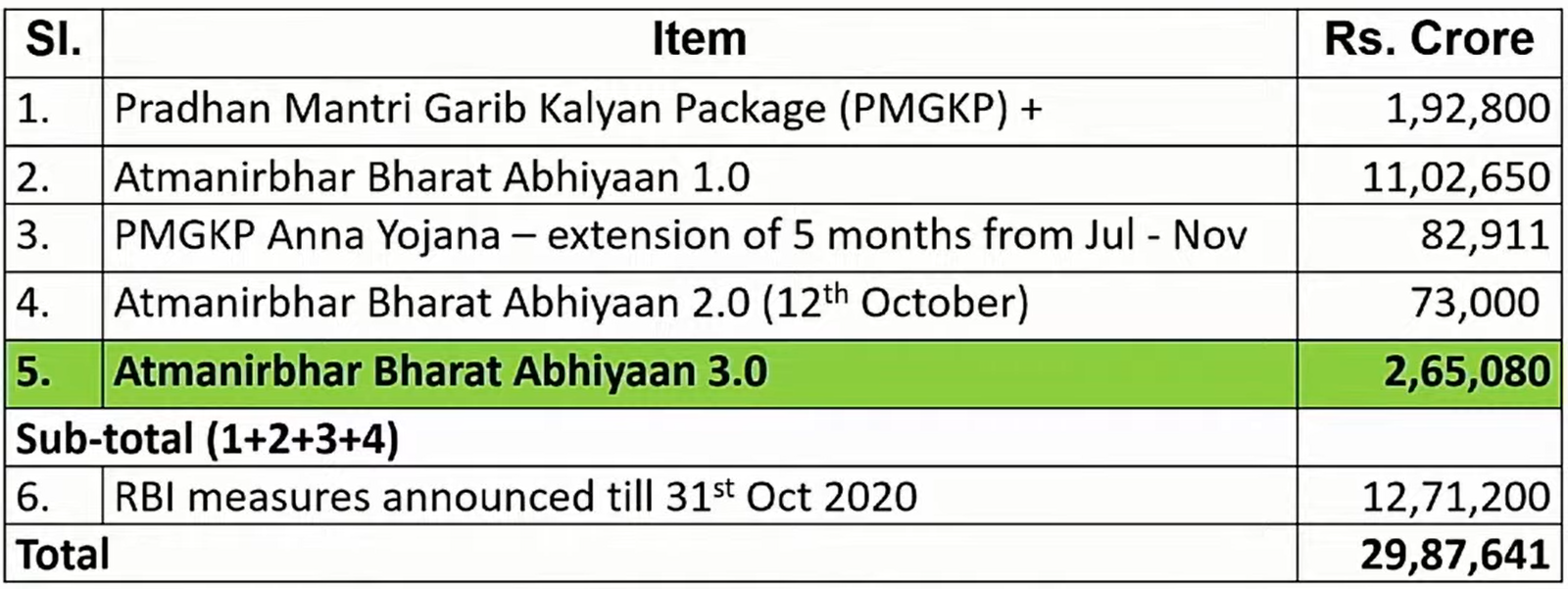
The Finance Ministry on Thursday (November 12) made a series of announcements with respect to a new stimulus package. Named as the Atmanirbhar Bharat Abhiyan 3.0, the package has allocated significant amounts to vital sectors of our economy. The total package has been estimated at Rs 2.65 lakh crore. With a focus on boosting production and becoming self-reliant, the latest economic package has addressed concerns regarding the sectors which need the most support. Let us look at the 12 important announcements that were made by the Finance Minister, Smt. Nirmala Sitharaman.

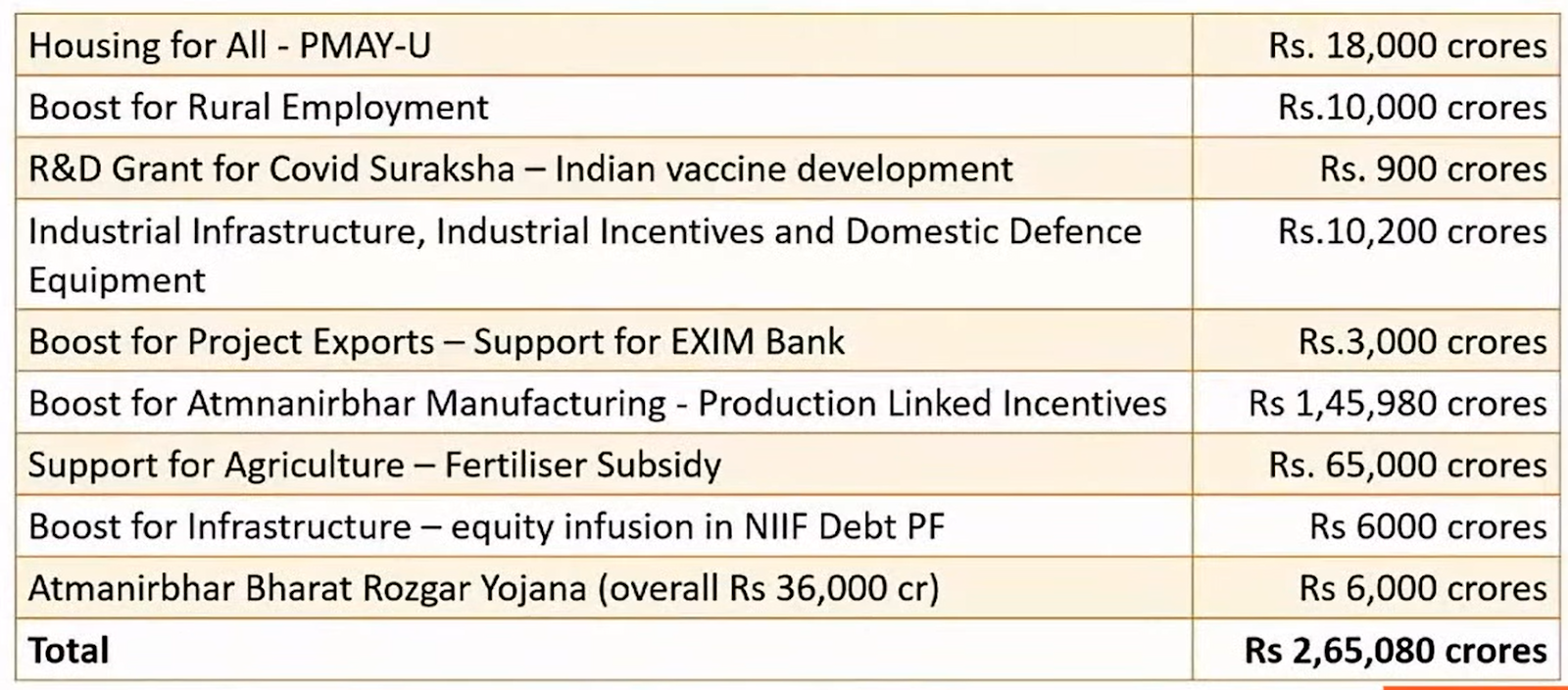
1. The Atmanirbhar Bharat Rozgar Yojana

In order to boost employment in India, a new scheme by the name of Atmanirbhar Bharat Rozgar Yojana (ABRY) has been created. The main aim of this program would be to create new employment opportunities during the Covid-19 recovery phase. An amount of Rs 6,000 crores has been allocated towards ABRY

Under this scheme, benefits would be given to any new employee that joins an establishment that is registered with the Employees’ Provident Fund Organisation (EPFO). The employees’ monthly salary should be less than Rs 15,000. Any member who had lost their job due to the Covid-19 pandemic between 1st March and 30th September, and is now entering into a new job would also benefit from the scheme. The ABRY scheme would be operational till 30th June 2021.

2. Launch of the ECLGS 2.0

The Emergency Credit Line Guarantee Scheme (ECLGS), worth Rs 3 lakh crore has been extended till 31st March 20201. This scheme provides fully guaranteed, collateral-free loans to business enterprises, MSME units, and individuals for business purposes. According to the new ECLGS 2.0, loans will be provided to an additional 26 “stressed sectors”. These are specific sectors in India that were affected by the Covid-19 pandemic, such as power, steel, and real estate. The scheme would provide support by helping businesses to retain their employees and meet certain liabilities.

3. Production Linked Incentive (PLI) Scheme

On 11 November, the Union Cabinet had approved this particular scheme for an additional 10 key sectors. The main purpose of the PLI scheme is to boost domestic production, by encouraging foreign companies to start their production activities in India. Domestic companies would also get the necessary push to expand their manufacturing units. This scheme will be worth Rs 1.46 lakh crore and would be applicable for 5 years.

The sectors that will benefit from the scheme include automobiles, pharmaceuticals, electronic products, etc.

4. Additional amount for PM Awaas Yojana- Urban

The Prime Minister’s Awaas Yojana- Urban (PMAY-U) is a scheme to revive the Housing and Real Estate Sector. The Finance Ministry has stated that Rs 18,000 crore will be provided over and above the Budget Estimates for 2020-2021 for this particular scheme. This would help around 18 lakh houses to complete construction. It is also expected to generate around 78 lakh additional jobs in urban areas. This scheme is also part of the government’s “Housing for All” mission.

5. Support for Construction & Infrastructure

To provide support to contractors, the performance security on contracts has been reduced to 3%, instead of 5%-10%. Performance security is commonly used in the construction industry. It is a means of insuring a client against the risk of a contractor failing to fulfill contractual obligations to the client. This relaxation will be applicable till 31 December 2021.

6. Income Tax Relief for Developers & Home Buyers

The economic slowdown due to the Covid-19 pandemic has led to a decline in the prices of residential units. At the same time, taxes for these units are significantly higher. To provide a demand boost for residential real estate, new relaxations on the income tax regulations have been introduced. The differential between circle rate and agreement value has been increased from 10% to 20% till June 30, 2021, under the Income Tax Act. This would be applicable only on a primary sale of residential units worth up to Rs 2 crore. This particular move will help middle-class families to buy real estate properties.

7. Equity Infusion in NIIF Debt Platform

The Government will invest Rs 6,000 crore in the National Investment and Infrastructure Fund’s (NIIF) Debt Platform. The NIIF attracts a lot of sovereign funds from other countries and provides major support for the infrastructure activities in our country. It has a target of raising Rs 1.10 lakh crore by 2025 through the debt market, for various infrastructure projects.

8. Fertilizer Subsidies for the Agriculture Sector

The Government has announced Rs 65,000 crore for providing fertilizer subsidies to Indian farmers. This would help farmers to meet the ever-growing consumption needs of our country’s population. According to this particular scheme, 140 million farmers would be provided with subsidized fertilizer. It would be ensured that all farmers receive the proper resources before the upcoming crop season.

The Expenditure Secretary has also clarified that Rs 65,000 crore for this subsidy is over and above the last budget estimate. Total expenditure in this financial year would be in the order of Rs 1.38 lakh crores for fertilizer subsidy.

9. Boost for Rural Employment

Prime Minister Garib Kalyan Rozgar Yojana (PMGKRY) is a very successful scheme that provides guaranteed employment opportunities for members of the rural population in India. It is active in almost 116 districts in India. The Government has allocated an additional amount of Rs 10,000 crore to the PMGKRY scheme. This would help to accelerate the growth of the rural economy.

10. Boost for Exports

The Export-Import Bank of India (EXIM Bank) is a specialized financial institution, wholly owned by the Government of India. It was set up in 1982 for financing, facilitating, and promoting foreign trade in India. The EXIM Bank provides Lines of Credit (LOC), on behalf of the Government, to certain developing countries. A line of credit is a flexible loan from a financial institution that consists of a defined amount of money that you can access as needed, and repay either immediately or over time. This scheme allows Indian exports to receive a boost, as the developing countries must import items worth 75% value of the LOC.

The Government has allocated Rs 3,000 crore to the EXIM Bank for the promotion of exports through the LOC scheme. The sectors that would benefit are railways, power, automobile & auto components, sugar projects, etc.

11. Capital and Industrial Stimulus

The Government believes that public expenditure on infrastructure is important at this period of time. An additional amount of Rs 10,200 crore will be provided towards the Capital and Industrial Expenditure. This amount would be used for domestic defense equipment, industrial incentives, industrial infrastructure, and green energy initiatives.

12. R&D Grant for Covid Vaccine Development

An amount of Rs 900 crore will be provided for Covid Suraksha Mission for research and development activities. This particular mission is headed by the Department of Biotechnology to develop the Covid vaccine in India. This does not include the cost for distribution of the vaccine, once developed.

The following table shows the amount that has been allocated for each scheme that has been announced by the Finance Ministry on November 12, 2020.

The following table shows the total amount that has been allocated for various stimulus packages announced by the Government in the current financial year. 

 “We are yet again proving that the policy that we are taking up even in PLI through which we want manufacturers to come to India is clearly to say we want to build on our strength but yet link with the global value chains.”- Finance Minister Nirmala Sitharaman.

India’s Future

The series of measures included in Atmanirbhar Bharat 3.0 will definitely provide a boost to India’s Covid-hit economy. The most important feature of the package is that it would help towards creating new jobs in India. It has also provided a major push towards the target of ‘housing for all’. Infrastructure activities will also receive adequate incentives. The Government has focused on those sectors that essentially need support for a major recovery, amidst the Covid-19 pandemic. The Production Linked Incentive(PLI) Scheme is also going to give a push to India’s dream of becoming the world’s manufacturing hub.

Pushing rural housing and job creation, along with subsidies on fertilisers is also sure to give a boost to the rural economy. And as we all know, if the rural economy is doing well, it is definitely good for an agriculture-driven economy of India. Tractor sales and two-wheeler sales are expected to go up as the life of a rural Indian gets better.

As investors, we need to keep a close watch on how the measures would be implemented. Also, make sure you take up the mission to find all the listed companies that would benefit from these schemes, both directly and indirectly.