Categories
Editorial

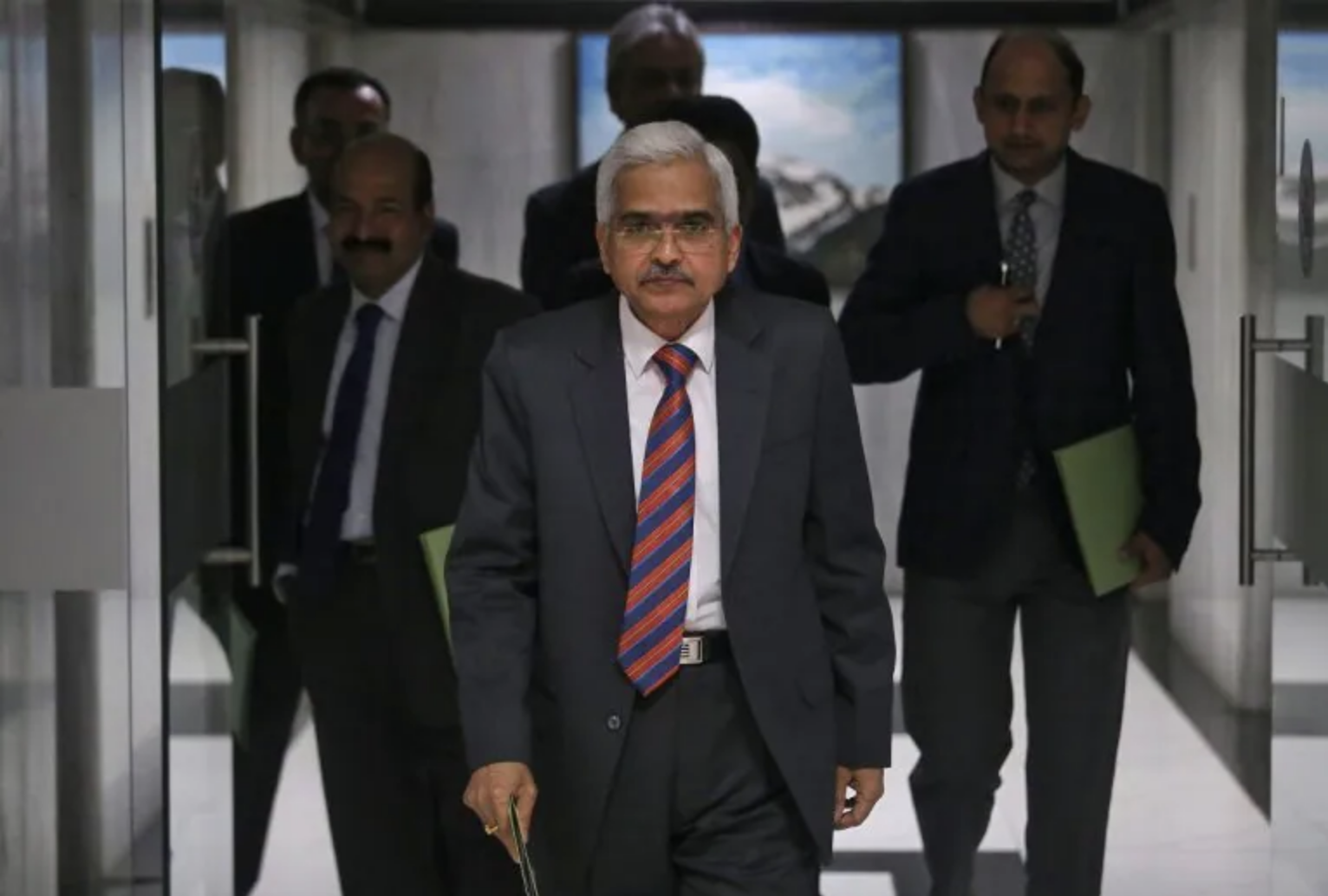
Explained: RBI Governor Shaktikanta Das’s Speech

The Reserve Bank of India(RBI) Governor Shaktikanta Das’s speech yesterday came as a shock since it was at such short notice. While things around the country seem gloomy, the announcements made by the RBI Governor were a ray of sunshine. This is not only for the small and medium enterprises that have suffered due to the second wave of coronavirus but also for pharma companies, vaccine makers, and state governments. In this piece, we summarize and highlight the speech made yesterday and its possible consequences on the economy. 

Highlights Of The Speech

  1. The RBI announced a Rs 50,000 crore Term Liquidity Facility to Ease Access to Emergency Health Services. To put it up in simple words, the RBI will lend Rs 50,000 crore to banks who would intern have to lend it to Emergency Health Care services working to mitigate the COVID-19 pandemic. These services include vaccine makers, COVID-19 drug makers, testing labs, oxygen plants, healthcare services, hospitals, etc. The banks can borrow from the RBI at the repo rate and for a maximum period of three years with some special benefits as well. They will also have to maintain a COVID loan book in order to avail benefits from the RBI.
  1. On April 15, 2021, the RBI induced Rs 25,000 crore of liquidity into the market by buying G-Sec or Government securities. This programme was called Government Securities Acquisition Programme 1.0 or G-SAP 1.0. Similarly, the RBI announced a G-SAP 2.0, where the RBI will induce liquidity of Rs 35,000 crore into the market by procuring G-Secs. 
  1. Small Finance Banks or SFBs play an important role when it comes to giving credit to rural areas, small businesses and individuals. The RBI, therefore, has announced a three-year Special Long Term Repo Operation(SLTRO) of Rs 10,000 crores at repo rate. SFBs will thereby gain liquidity effectively which will help stimulate Micro, Small, and Medium Enterprises(MSMEs) and the rural economy. To know more about how a Long Term Repo Operation works, check out the article at marketfeed over here
  1. Banks had to fulfil a target set by RBI for Priority Sector Lending. A Priority Sector includes Agriculture, Micro Enterprises, Marginal Farmers, Weaker Sections. These sectors promote credit growth in underdeveloped and rural areas. So far, Small Finance Banks lending to Microfinance Institutions(MFIs) were not counted as Priority Sector Lending. They will now be counted in as Priority Sector Lending till March 31, 2022. 
  1. Banks need to keep liquid cash as a precautionary measure with the RBI known as Cash Reserve Ratio or CRR. The CRR is a percentage share of net demand and time liabilities (NDTL). We need not go into detail about it. The RBI has announced that any lending made to MSMEs(up to Rs 25 lakh) need not be counted into their NDTL. This means that banks will have to keep less liquid cash with the RBI as a reserve. This shall boost lending to MSMEs. 
  1. During the first wave of the COVID-19 pandemic in India, the RBI had announced restructuring schemes and a moratorium for stressed assets or bad loans under Resolution Framework 1.0. To know how a loan is restructured, click here. With Resolution Framework 2.0, a one-restructuring is permitted for those businesses or individuals with loans less than ₹25 crores who had not availed for the first scheme. Additionally, banks have been allowed to modify and extend the moratorium period for loans under Resolution Framework 1.0 for up to two years. 
  1. When the economy is running well, banks are required to set aside ‘countercyclical/floating provisions’ above the mandatory provision requirements. These provisions are used only in contingencies or emergencies, which is a pandemic in this case. Banks are now allowed to use these countercyclical provisions for making provisions for bad loans. This means that  Banks need not necessarily draw money from profits to make provisions. 
  1. The RBI has given a relaxation in the Overdraft (OD) facility for state governments. State governments can borrow money from the RBI using what is called the Overdraft (OD) facility. They need to pay the RBI back with interest(at repo rate) under a limited time period called the Overdraft. The RBI has permitted states to be in Overdraft for a maximum of 50 days( from the earlier limit of 36 days) and 21 days consecutively( from the earlier limit of 14 days).

The Impact

The announcement had a positive impact on the stock markets. SENSEX was up 424 pts where NIFTY 50 was up 121 pts. NIFTY PHARMA, the benchmark index for pharmaceutical companies, climbed 3% yesterday after the RBI decided to give it a liquidity facility of Rs 50,000 crore. The top gainers for yesterday were pharma companies like Dr. Reddy, Sun Pharma, and Banks like IndusInd Bank, Axis Bank, and Kotak Mahindra Bank. NIFTY Bank Index was up 2% led by mostly Small Finance Banks after RBI announced a support system for them. 

The RBI’s announcement has relieved certain distressed sections of the society. It has not only created a support system for businesses that have shut shop, but also for healthcare services. The announcement can ensure that the Banks’ Bad Loans remain under check. One can expect a boost in oxygen production, drug and vaccine production. Meanwhile, businesses and individuals could stand strong till the time India gets back up on its feet again, with a better healthcare system and vaccination drive this time. Until then, Stay Home, Stay Safe.

Categories
Jargons

What is Monetary Policy?

Monetary Policy refers to the actions undertaken by a nation’s central bank to control the money supply in the system to achieve macroeconomic goals that promote sustainable economic growth.

Monetary Policy are largely of two types.

  • Contractionary Monetary Policy- Decreased money supply in the system.
  • Expansionary Monetary Policy- Increased money supply in the system.

Tools

The government uses certain instruments to control the supply of money in the economy. They are as follows.

  • Interest Rates: The RBI can influence the interest rates by controlling the base rate or the repo/reverse repo rate. If RBI increases the base rate, so will the banks and therefore money supply will decrease. Likewise, if RBI decreases the base rate, so will the banks, thereby increasing the money supply.
  • Reserve Requirement– Central banks usually set up the minimum amount of reserves that a commercial bank must hold. By changing the required amount, the central bank can influence the money supply in the economy. Example- Cash Reserve Ratio (CLR) and the Statutory Liquidity Ratio (SLR). Read More Here.
  • Open market operations- Open Market Operations is when the RBI involves itself directly and buys or sells government securities in the open market. This effectively affects interest rates.

Objectives

Inflation: A Contractionary Monetary Policy curbs high inflation by decreasing the supply of money. This decreases the demand for goods or basket of goods or consumer expenditure. Hence curbs inflation

Unemployment: An Expansionary Monetary policy curbs unemployment rates due to the increase in money supply which stimulates economic activity and thereby helps businesses flourish.

Exchange Rates: The central bank can influence foreign exchange rates by either increasing or decreasing supply in the economy. When the supply of money increases, the currency becomes cheaper and vice-versa.

There can be side effects of a change in monetary policy as well. For Example- When the government reduces the money supply in the economy to curb interest rates, the economic activity also goes down, which causes unemployment to go up. As you can see, the monetary policy is a very important tool for the economy. A slight change in monetary policy can have a huge impact on the economy and therefore needs to be dealt with caution.

Categories
Editorial

What is LTRO? Know The “Operation Twist” by the RBI

The Reserve Bank of India has been in news lately for the implementation of the Operation Twist and/or LTRO(Long Term Repo Operations) in order to boost and infuse liquidity into the economy. The RBI did this so to recover from the economic downturn caused by COVID pandemic. However, they have been doing something similar since November 2019, when COVID was not even around. The liquidity crunch made RBI undertake multiple Open Market Operations(OMO) and Repo rate cuts. Let’s find out the story behind this.

Where It All Started…

The story goes back to when the IL&FS fraud and credit default which shook the country’s vigilance and credit system. The rising number of loan defaults caused the banks to restrict the supply of cash into the economy, that is, the banks became more cautious and vigilant while giving out credit. When the supply of money stopped in the economy so did economic progress. This caused RBI to undertake multiple repo rate cuts and Open Market Operations. To find out more about how repo rate works, click here.

Essentially, before implementing LTRO, the Reserve Bank implemented two liquidity tools namely LAF(Liquidity Adjustment Facility) and MSF(Marginal Standing Facility). So what do these terms mean exactly?

LAF or Liquidity Adjustment Facility is a monetary policy tool used to induce liquidity in the market wherein the RBI lends money to all banks(Private and Otherwise) at the repo rate for a short period( Overnight upto 7 days) depending on the situation in exchange for government securities or bonds.

MSF or Marginal Standing Facility is the rate at which scheduled banks can borrow funds from Reserve Bank of India (RBI) overnight at repo rate + 3%(300 basis points).

However, neither MSF nor LAF did any good. The RBI’s intention was to put money into the system, and the money did reach the banks. However, it failed to reach the market. People refused to borrow money. The rate cuts only reduced the interest received on bonds, whereas the banks couldn’t reduce their interest rates. This failed to drive up investments. The problems of LAF and MSF were:

  1. Lack of Policy Transmission. Even though RBI had rate cuts, this didn’t reflect in the banking system which failed to deploy the funds into the market.
  2. Credit Flow was inadequate, the market’s borrowing didn’t increase substantially.
  3. Liquidity Issues.

Coming to LTRO or Long Term Repo Operations

After the LAF and MSF failed to boost the economy. The RBI decided to come up with LTRO or Long Term Repo Operations and the Operation Twist.

Fun Fact: Operation “Twist” was implemented for the first time in the USA by the Kennedy Administration in the mid-1960s. It was named after a dance form which was a craze back in the day.

LTRO is a tool that lets banks borrow funds for one to three years from the central bank at a fixed repo rate, by providing government securities with similar or higher tenure as collateral. Essentially, instead of a repo operation for a short term, RBI is lending money to the banks for a longer-term (greater than 1 year).

The government implemented the LTRO in three stages:

  1. LTRO. Notified on Feb 07. Read Here.
  2. TLTRO I (Targeted Long Term Repo Operation).
  3. TLTRO II.

In the first LTRO, RBI had deployed ₹50,000 crores worth of funds. By 18th March, RBI had lent out ₹1.5 Lakh crores worth of funds banks for a period of one to three years. To RBI’s dismay, the COVID-19 pandemic forced the entire nation to go under a lockdown. This meant banks had no reason to deploy funds. Banks held on the funds instead of deploying them.

RBI couldn’t get the banks to deploy funds in the market even through LTRO

The RBI had to figure out a way to ensure that the banks deployed the funds in the market instead of holding on to them. Therefore, RBI came up with Targeted LTRO (TLTRO).

Under TLTROs the banks had to invest the amount received in TLTROs in primary and secondary markets. This involved corporate bonds, commercial paper, debentures, NBFCS, MFIs and other securities. Thereafter, In TLTRO 2.0 banks had to :

  1. Invest at least 50% of the total funds in bonds issued by small NBFCs of asset size of Rs 500 crore and below
  2. Invest in Mid-sized NBFCs of asset size between Rs 500 crore and Rs 5,000 crore
  3. Invest in MFIs or Micro Finance Institution

    However, TLRTO was a no show with very few bidders participating in it. Essentially, it wasn’t a success as well.

Operation Twist

There were certain pre-conditions set by banks to avail TLTROs by banks. It involved banks requiring to invest a certain amount of borrowed amount in the primary and secondary markets. On 25th August 2020, the RBI announced that it was going to conduct the second stage of Operation Twist to induce liquidity into the market.

Let’s understand a few terms before understanding Operation Twist.

  • Operation Twist– Operation Twist is an Open Market Operation(OMO) by the central bank where it sells short term bonds and buys more long term bonds. These are mostly government securities(G-Sec)
  • Long Term Bonds– These bonds are redeemable in the far future or are far from maturity.
  • Short Term Bonds– These bonds are redeemable in the near future or closer to maturity.
  • LiquidityMoney supply for an individual or a group of individuals or the market.
  • Yield – A bond yield is the return an investor realizes on a bond.

What goes on in Operation Twist

In Operation Twist, the central bank sells short term bonds. The proceeds received from selling short term bonds are used to buy more of long term bonds.

Operation Twist

What this does is that it creates a shortage of long term bonds, which in turn increases its price. This brings down its yield or interest rate. Likewise, the opposite holds true for short term bonds.

Note: Price and Yield of a bond are inversely proportional.

When the RBI sells the short term bonds, the supply of it increases, which in turn decreases the price of the bond, which in turn increases yield, which then drives up short term interest rates.

When the short term bonds mature and its payout time, the ones who own the bonds will get a higher payout than usual. This increases the ‘supply of money‘ in the system. Which brings down overall interest rates. The lower interest rates encourage the market to borrow more and invest in market activity. This way the economy starts to prosper.

Summing it up

The Operation Twist in recent times was first adopted post the 2008 economic crisis to lift the country out of recession. The RBI had been trying its best to revive the Indian money market after the IL&FS fraud and default case. It had tried various different monetary policy tools, LAFs, MSFs, OMOs and LTROs all to its dismay. This move has been praised by many as a masterstroke. Well, many such operations were in the past. Whether or not the Operation Twist turns out to be a masterstroke, only time can tell.

Categories
Jargons

What is Repo-Rate and Reverse Repo-Rate?

What is Repo-Rate?

Repo-Rate is the interest rate at which a central bank (like RBI) lends money to all the other banks in the country. Essentially, all banks give out loans, pay their employees, maintain systems and perform other functions for which they need money.

There are many ways in which a bank earns money, one of them is borrowing from a central bank at a lower interest rate and lending it out in the market at a higher interest rate. The difference between these interest rates becomes their profit.

For example,

1. The Reserve Bank of India (RBI) lends money to banks at 2% and these very same banks lend out money to the market, which consists of consumers, suppliers, businesses etc.

2. The market uses the money to flourish the economy by scaling up production, increasing revenue and profits and other such activities.

3. Once the market has managed to earn sufficient money, it reciprocates by giving the money back to the banks with an interest of 8% (i.e. 8% more than the money they borrowed from the bank).

4. The bank then goes on to pay back the money to the central bank at 2% interest. The difference between 8% and 2% = 6% is essentially the bank’s profit, which it can further lend to the market.

what is repo rate | marketfeed
Repo Rate and Interest

When the central bank increases the repo-rate the interest rate also goes up and the supply of money decreases

When the repo rate decreases the interest rates also decrease and the supply of money in the market increases.

What is Reverse Repo-Rate?

There can always arise a need when there is excess surplus money lying in the market and/or the central bank itself is in need of money, The bank decides on the reverse repo rate or the rate at which other banks lend money to the central bank.

what is reverse repo rate | marketfeed

Why is Repo Rate Higher than Reverse Repo Rate?

Banks can park their money with the RBI at a lower interest rate than the Repo Rate or Repurchase Rate. The Reverse Repo Rate is lower than the Repo Rate. The spread between the two is the RBI’s income.