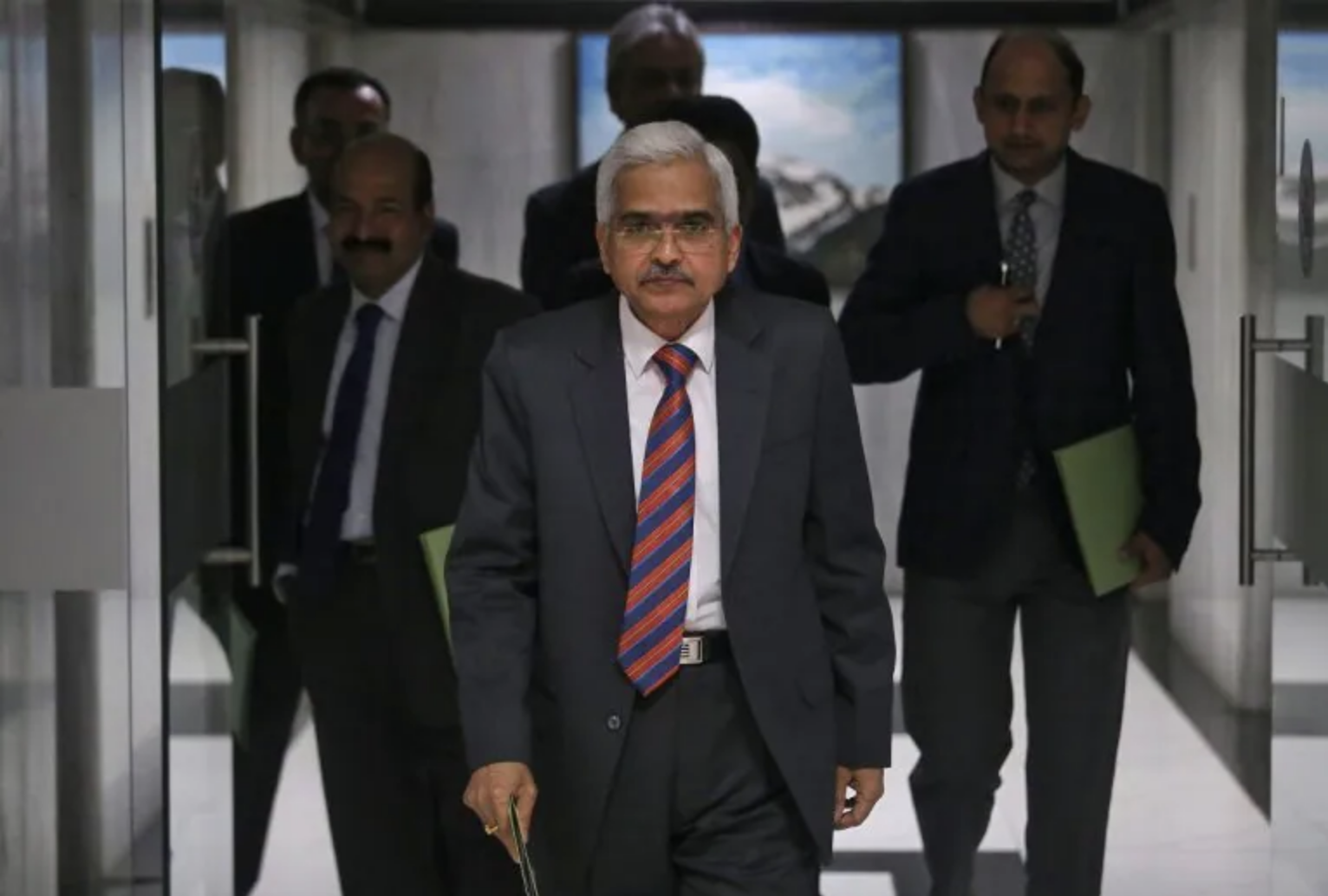
The Reserve Bank of India(RBI) Governor Shaktikanta Das’s speech yesterday came as a shock since it was at such short notice. While things around the country seem gloomy, the announcements made by the RBI Governor were a ray of sunshine. This is not only for the small and medium enterprises that have suffered due to the second wave of coronavirus but also for pharma companies, vaccine makers, and state governments. In this piece, we summarize and highlight the speech made yesterday and its possible consequences on the economy.
Highlights Of The Speech
- The RBI announced a Rs 50,000 crore Term Liquidity Facility to Ease Access to Emergency Health Services. To put it up in simple words, the RBI will lend Rs 50,000 crore to banks who would intern have to lend it to Emergency Health Care services working to mitigate the COVID-19 pandemic. These services include vaccine makers, COVID-19 drug makers, testing labs, oxygen plants, healthcare services, hospitals, etc. The banks can borrow from the RBI at the repo rate and for a maximum period of three years with some special benefits as well. They will also have to maintain a COVID loan book in order to avail benefits from the RBI.
- On April 15, 2021, the RBI induced Rs 25,000 crore of liquidity into the market by buying G-Sec or Government securities. This programme was called Government Securities Acquisition Programme 1.0 or G-SAP 1.0. Similarly, the RBI announced a G-SAP 2.0, where the RBI will induce liquidity of Rs 35,000 crore into the market by procuring G-Secs.
- Small Finance Banks or SFBs play an important role when it comes to giving credit to rural areas, small businesses and individuals. The RBI, therefore, has announced a three-year Special Long Term Repo Operation(SLTRO) of Rs 10,000 crores at repo rate. SFBs will thereby gain liquidity effectively which will help stimulate Micro, Small, and Medium Enterprises(MSMEs) and the rural economy. To know more about how a Long Term Repo Operation works, check out the article at marketfeed over here.
- Banks had to fulfil a target set by RBI for Priority Sector Lending. A Priority Sector includes Agriculture, Micro Enterprises, Marginal Farmers, Weaker Sections. These sectors promote credit growth in underdeveloped and rural areas. So far, Small Finance Banks lending to Microfinance Institutions(MFIs) were not counted as Priority Sector Lending. They will now be counted in as Priority Sector Lending till March 31, 2022.
- Banks need to keep liquid cash as a precautionary measure with the RBI known as Cash Reserve Ratio or CRR. The CRR is a percentage share of net demand and time liabilities (NDTL). We need not go into detail about it. The RBI has announced that any lending made to MSMEs(up to Rs 25 lakh) need not be counted into their NDTL. This means that banks will have to keep less liquid cash with the RBI as a reserve. This shall boost lending to MSMEs.
- During the first wave of the COVID-19 pandemic in India, the RBI had announced restructuring schemes and a moratorium for stressed assets or bad loans under Resolution Framework 1.0. To know how a loan is restructured, click here. With Resolution Framework 2.0, a one-restructuring is permitted for those businesses or individuals with loans less than ₹25 crores who had not availed for the first scheme. Additionally, banks have been allowed to modify and extend the moratorium period for loans under Resolution Framework 1.0 for up to two years.
- When the economy is running well, banks are required to set aside ‘countercyclical/floating provisions’ above the mandatory provision requirements. These provisions are used only in contingencies or emergencies, which is a pandemic in this case. Banks are now allowed to use these countercyclical provisions for making provisions for bad loans. This means that Banks need not necessarily draw money from profits to make provisions.
- The RBI has given a relaxation in the Overdraft (OD) facility for state governments. State governments can borrow money from the RBI using what is called the Overdraft (OD) facility. They need to pay the RBI back with interest(at repo rate) under a limited time period called the Overdraft. The RBI has permitted states to be in Overdraft for a maximum of 50 days( from the earlier limit of 36 days) and 21 days consecutively( from the earlier limit of 14 days).
The Impact
The announcement had a positive impact on the stock markets. SENSEX was up 424 pts where NIFTY 50 was up 121 pts. NIFTY PHARMA, the benchmark index for pharmaceutical companies, climbed 3% yesterday after the RBI decided to give it a liquidity facility of Rs 50,000 crore. The top gainers for yesterday were pharma companies like Dr. Reddy, Sun Pharma, and Banks like IndusInd Bank, Axis Bank, and Kotak Mahindra Bank. NIFTY Bank Index was up 2% led by mostly Small Finance Banks after RBI announced a support system for them.
The RBI’s announcement has relieved certain distressed sections of the society. It has not only created a support system for businesses that have shut shop, but also for healthcare services. The announcement can ensure that the Banks’ Bad Loans remain under check. One can expect a boost in oxygen production, drug and vaccine production. Meanwhile, businesses and individuals could stand strong till the time India gets back up on its feet again, with a better healthcare system and vaccination drive this time. Until then, Stay Home, Stay Safe.
