Categories
Editorial

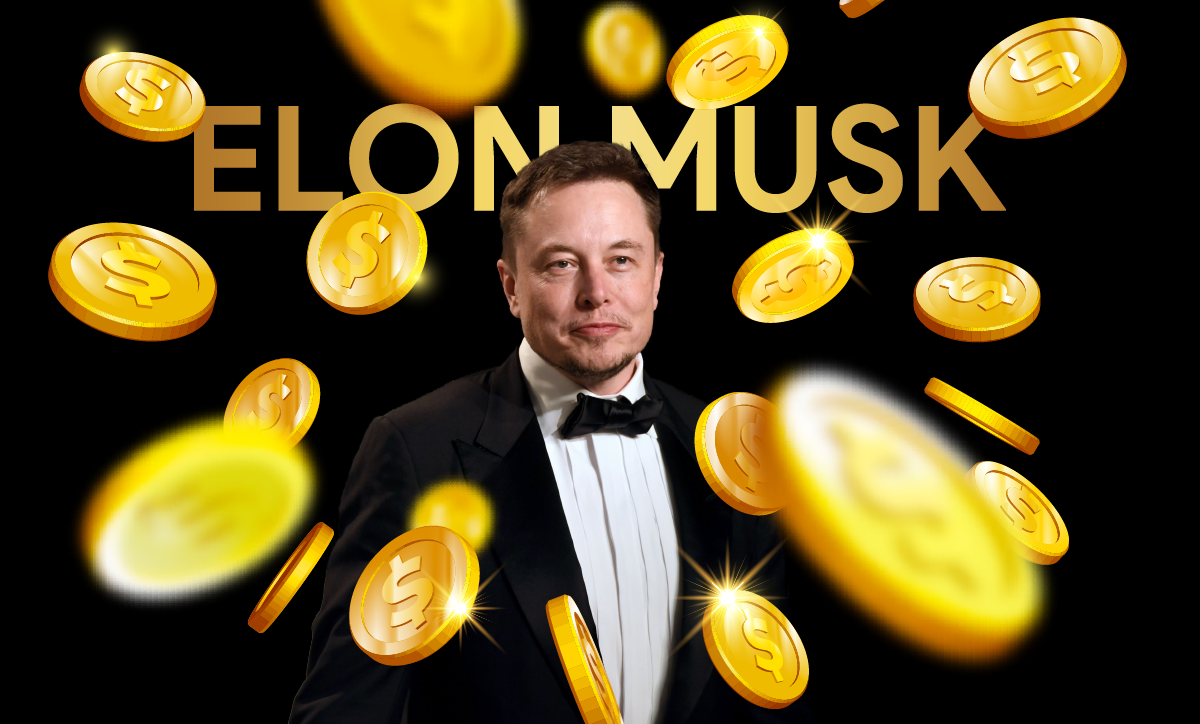
Elon Musk – The World’s Richest Person

It’s official. According to the Bloomberg Billionaires Index, Elon Musk is the richest person in the world. His total worth has increased to $194.8 billion, surpassing Jeff Bezos’ net worth of $185 billion. There are two indexes in the world which are the most important to calculate a person’s net worth. One is the Bloomberg Billionaires Index and the other is the Forbes Richest People List.

Even though the numbers are staggering, it does not mean that Elon Musk has $190 billion in his bank account in the form of cash. The number is the summation of the total worth of assets, shares and all the other investments. At the start of the year, Elon Musk was not even one of the likely individuals who could top the list inside in just one year. So, how did Elon Musk get to the top of the chart? Let’s find out.

Elon Musk’s Journey to Becoming the Richest Person

One of the biggest reasons behind Elon Musk’s rise is Tesla’s unprecedented rally in 2020. Tesla’s stock has rallied at a break-neck speed last year. It has surged by more than 700% in one year alone. To give you a perspective, Tesla’s stock was traded at just $88.60(adjusted for 5:1 stock split) on 3rd January 2020. Today, on 8th January 2020, it is being traded at an astonishing $880.02. Assume that you had invested Rs 6,424 to buy one share of Tesla on 3rd January 2020. Today, that small investment would have been worth Rs 64,240. How stunning is that, right? Elon Musk holds 20% of the total shares of Tesla. The stock’s recent outburst in the prominent reason that Musk is now declared as the world’s richest person. 

The truth is, Tesla, is an automobile company but not “just a normal automobile company.” Elon Musk and his team at Tesla build revolutionary automobiles. They are one of the biggest companies in the world which leverage technology to the fullest and manufacture products which no one can really imagine!

Most of the success of Tesla hinged on its electric vehicle car ‘Model-3’, which was their most affordable car yet. Their business model is very unique. Elon Musk states “The strategy of Tesla is to enter at the high end of the market, where customers are prepared to pay a premium, and then drive down market as fast as possible to higher unit volume and lower prices with each successive model.” 

Tesla turned into a profit-making company only in 2018. Before that, they were unable to produce a high volume of cars. Thus, their cost of production was always very high. After the launch of Model 3, Tesla managed to produce 5,000 cars in a week. This is where they achieved their break-even point. That quarter, they reported $312 million in profits. Since then, the company has never looked back. 

Elon Musk’s Performance-Based Bonus Package

Big companies reward you for good performances. This is what happened with Elon Musk as well. Just that, rewards awarded to him are something which no CEO has ever been offered! Musk set 10 lofty ambitions with Tesla. If he reaches those goals and sustains the company’s performance, he will get a total of $56 billion worth of stock options over 10 years. Musk has already achieved 4 out of 10 goals inside two years. This has helped him earn $11.8 billion already. 

His first payout came when Tesla’s six-month trailing average market capitalization surpassed $100 billion. He was rewarded with 1.69 million Tesla shares at $350 each. Musk profited around $750 million from this first payout. Tesla awarded him with his second payout after just 1.5 months when the company’s value increased by $50 billion more. He instantly exercised all the stock options provided to him, thus, earning a profit of $2.1 Billion.

Tesla’s unstoppable rally meant that Musk will receive another 8.44 million stock options. They were valued at $2.9 billion. Tesla’s CEO got his fourth tranche of bonus in October last year. He received another 8.44 million stock options which were valued at $3 billion again. It’s quite clear that if Tesla can sustain this unique rally, Elon Musk’s net worth will increase by many more billions.

Tesla’s Dominance

Visionary, charismatic, imaginative, creative, leader. All of these terms describe who Elon Musk is. And, this vision and imagination are what he has imparted to Tesla. The recent rally took their market capitalization to over $830 billion. This had aided the company to enter into the prestigious S&P 500 index. This index measures the performance of 500 large companies listed on stock exchanges in the United States. Not only have they entered, but Tesla has become the biggest company ever to join the S&P 500. The previous biggest entrant to this index was Berkshire Hathaway. Tesla joined the S&P 500 at three times the value of Berkshire Hathaway.

The following chart shows the market capitalization of Tesla with respect to the biggest automakers around the globe. 

Source: Author’s own creation

All of these factors have played a huge role in making Elon Musk the richest person in the world. Many analysts believe that Tesla is highly overvalued. That might be true as well. But what we understand here is, Elon Musk is selling dreams and people back him to fulfil those dreams! And the hidden gems in Musk’s arsenal, including SpaceX and Boring Company are yet to go public. When they do go public, he will be getting a lot richer. Will Elon Musk be the world’s first-ever trillionaire?

Categories
Market News Top 10 News Top Global News

Elon Musk World’s Richest Man – Top 10 Global News

1. Stocks Rise as Dismal Jobs Data Spur Stimulus Bets

Stocks rose after data showing a sharp slowdown in U.S. hiring bolstered speculation on further stimulus to revive economic growth as the pandemic ravages the country. The S&P 500 climbed toward another record, led by energy producers, retailers and technology companies. While economists expect vaccinations will lead to a faster pace of job growth in the second quarter, the intervening months could bring more labour-market pain until many more Americans are inoculated.
The S&P 500 gained 0.4% as of early morning New York time.

The Stoxx Europe 600 Index advanced 0.6%.

The MSCI Asia Pacific Index gained 2%.

2. Elon Musk Surpasses Bezos to Become World’s Richest Person

On Thursday, Tesla’s shares surged 7.9%, boosting Musk past Amazon.com founder Jeff Bezos on the Bloomberg Billionaires Index, a ranking of the world’s 500 wealthiest people. Musk is worth $194.8 billion, or $9.5 billion more than Bezos, whose Blue Origin is a rival to Musk’s Space Exploration Technologies Ltd., or SpaceX, in the private space race. Tesla’s ascent thrusts its brash founder into a role occupied by only a handful of other people in recent decades and underscores the dramatic stock moves that have upended the global wealth rankings of late. Over the past year the South Africa-born engineer has added more than $165 billion to his fortune in what’s probably the fastest bout of wealth creation in history. 

3. Apple Supplier TSMC’s Revenue Hits Record on iPhone Sales

Taiwan Semiconductor Manufacturing Co. reported record quarterly revenue, joining other Apple Inc. suppliers in signalling strong demand for the new 5G iPhones. The world’s largest contract chipmaker said Friday that December sales totalled $4.2 billion. Shares of Apple’s main chipmaker have rallied more than 70% over the past 12 months and reached a record high on Friday. The company has predicted that the industry “megatrends” of 5G and high-performance computing-related products will continue to drive growth over the long term.

4. U.S. Daily Deaths Surpass 4,000; London Crisis: Virus Update

The U.S. suffered more than 4,000 coronavirus deaths in a single day for the first time, as the pandemic picks up pace. London declared a “major incident” due to a surging number of cases. The U.K. toughened rules for inbound travellers, while the European Union secured an extra 300 million doses of the Pfizer Inc.-BioNTech SE shot. Germany reported the most daily fatalities since the start of the pandemic. Israel agreed to a data deal with Pfizer that will allow all citizens over 16 to be inoculated by the end of March. Moderna Inc.’s vaccination won U.K. emergency approval. Iran banned U.S. and U.K. coronavirus vaccinations, even as it contends with rising numbers of cases.

5. Brent Oil Hits $55 With Saudi Cuts Adding Fuel to Vaccine Rally

Brent oil topped $55 a barrel for the first time since February as gains in broader markets added to investor optimism already buoyed by Saudi Arabia’s unilateral plan to cut output. The move caps a stellar few months for the oil market, with crude emerging as a favoured play to bet on coronavirus vaccines and global reflation. Saudi Arabia’s pledge earlier in the week to cut production by 1 million barrels a day in February and March added vigour to the rally, while Democrat gains in the U.S. have spurred broader markets higher in expectation of additional stimulus.

6. Gold Tumbles Back Below $1,900 as Technicals Drive Selling

Gold dropped below $1,900 as technical selling took over after an earlier recovery in the dollar sent prices falling. Bullion slipped as much as 2% in London, erasing gains made at the start of this year, as stock futures rose after data showed a sharp slowdown in U.S. hiring, bolstering speculation on further stimulus. Gold’s initial drop was exacerbated after prices broke below the 100-day moving average, a key technical level. “The move lower is technically driven,” triggered by a stronger U.S. dollar and higher Treasury yields, said Georgette Boele, an analyst at ABN Amro Bank NV. The metal should now test support at $1,870 an ounce, she added.

7. Fastest Rally in History Takes Emerging-Market Stocks to Record

The emerging-market equity benchmark rose to a record Friday, topping its previous high reached before the 2008 financial crisis, as a flood of liquidity and optimism over a global economic rebound fuel risk appetite. The MSCI Emerging Markets Index rose 1.8%, extending its recovery from the March fall to 79%. The milestone comes after stock valuations and market capitalization both reached record highs in a rally that’s added $10.6 trillion in a little over nine months, the fastest bout of wealth creation in the history of emerging markets. While the flurry of records underscores the strength of the risk-on shift in global markets since Joe Biden’s victory in U.S. elections, it is already sparking nervousness among some investors that emerging equities are overheating. Even though earnings estimates continue to rise, the index has surged so fast that technical indicators are flashing red.

8. White-Knuckle Bitcoin Rally Powers Crypto’s Best Week Since 2017

Cryptocurrencies are on course for their biggest weekly surge since the last bubble in Bitcoin peaked about three years ago, ahead of a spectacular crash. The Bloomberg Galaxy Crypto Index, which includes Bitcoin, Ether and three other digital coins, has rallied 52% this week, the most since December 2017. Bitcoin jumped to a new record on Friday, with prices approaching $42,000. Cryptocurrencies are becoming emblematic both of the exuberance in financial markets as well as of the concern that the pace of gains is unsustainable. Believers in Bitcoin see it as a maturing asset that provides a hedge against dollar weakness and inflation risk. 

9. Google Ads Changes Face U.K. Review

U.K. regulators are investigating whether a Google privacy initiative will hurt publishers’ ability to generate revenue, in the first big post-Brexit antitrust probe. The Competition and Markets Authority said it will review Google’s move to curb the ways in which advertising data is collected because the move could “undermine competition in digital advertising, entrenching Google’s market power.” The British investigation adds to Google’s legal headaches around the world. The Mountain View, California-based company faces lawsuits from the U.S. Department of Justice and multiple states over allegedly anti-competitive practices. The increasingly tech-focused CMA is preparing to unveil a new digital regulator later in the spring with powers to rein in firms designated as holding strategic market status.

10. U.K. House Prices Climb to Record as Tax Cut Stokes Market

U.K. house prices rose to a record high last month as a government incentive to buy and a desire to move out of big cities boosted demand. Prices rose 6% from a year earlier in December to an average 253,374 pounds ($340,000). In one month alone, they gained 0.2%. The property boom is being fueled by a tax cut on transactions worth as much as 15,000 pounds to buyers. The Covid-19 pandemic is also boosting interest in moving to larger properties and those outside of city centres as remote working becomes increasingly common. The number of Britons working from home will rise five-fold by 2025, according to a separate survey of chief financial officers published by Deloitte.

Categories
Market News Top 10 News Top Global News

Elon Musk World’s 2nd-Richest Man now – Top 10 Global News

1. Cyclicals Lead Global Stocks Higher; Dollar Drops

Cyclical companies are powering global equities higher for a second day as investors cheered the start of U.S. President-elect Joe Biden’s formal transition and the prospect for more economic stimulus. Futures on the S&P 500 outpaced contracts on the tech-heavy Nasdaq as investors doubled down on economically sensitive sectors such as travel and energy. Oil and gas shares led the Stoxx 600 Index higher. EasyJet and International Consolidated Airlines Group SA rose after England planned to cut its quarantine period for arrivals from high-risk countries.

Futures on the S&P 500 Index rose 0.8% as of early morning New York time.

The Stoxx Europe 600 Index rose 0.6%.

The MSCI Asia Pacific Index rose 0.9%.

The MSCI Emerging Market Index was little changed.

2. Bitcoin Pierces $19,000 for First Time Since 2017

Bitcoin surpassed $19,000 (INR 14 lakh) for the first time since 2017 as the mania over digital currencies continues to grip Wall Street. Bitcoin climbed as high as $19,103 before paring the advance, trading up 2.2%. Prices are approaching an all-time high with many pointing to the wider acceptance of cryptocurrencies among traditional investors as the catalyst behind the surge. PayPal Holding Inc.’s October decision to allow customers to access cryptocurrencies led the coin to spike above $13,000 for the first time in over a year. And Fidelity Investments launched a Bitcoin fund over the summer.

3. Elon Musk Overtakes Bill Gates to Grab World’s Second-Richest Ranking

Elon Musk’s year of dizzying ascents hit a new apex Monday as the Tesla co-founder passed Bill Gates to become the world’s second-richest person. The 49-year-old entrepreneur’s net worth soared from $7.2 billion to $127.9 billion (INR 9.5 lakh cr), driven by yet another surge in Tesla’s share price. In January he ranked 35th. His advance up the wealth ranks has been driven largely by Tesla, whose market value is approaching $500 billion. About three-quarters of his net worth consists of Tesla shares, which are valued more than four times as much as his stake in Space Exploration Technologies Corp., or SpaceX.

4. Biden Begins Formal Transition After Trump Yields on GSA Process

President-elect Joe Biden and his team will begin to delve into Donald Trump’s coronavirus vaccine planning and assess the condition of federal agencies after the president relented and allowed the transition planning to begin. After weeks of inaction, the chief of the General Services administration acknowledged Monday that Biden was the “apparent winner” of the Nov. 3 election. The shift came after the key swing state of Michigan certified Biden as the winner, at least nine Republican senators called for the transition to begin and the Trump legal team suffered fresh setbacks.

5. UAE Allows Full Foreign Ownership of Firms to Boost Economy

The United Arab Emirates abolished the need for companies to have Emirati shareholders, in a major shake-up of foreign ownership laws aimed at attracting investment into an economy reeling from the coronavirus and a decline in oil prices. The amendments to the 2015 commercial companies’ law remove key provisions requiring that a company be chaired by an Emirati national and for the board of directors to be majority Emirati, citing changes issued by the country’s president. The rules come into effect on Dec. 1 and are the latest in a series of measures aimed at liberalizing business activity in the UAE, where foreigners comprise more than 80% of the population. The amendments are designed to reduce costs for companies and attract foreign entrepreneurs often put off by regulations demanding they hand 51% of their business to locals in order to operate onshore.

6. Millions of Americans Expect to Lose Their Homes as Covid Rages

Millions of Americans expect to face eviction by the end of this year, adding to the suffering inflicted by the coronavirus pandemic raging across the U.S. About 58 lakh adults say they are somewhat very likely to face eviction or foreclosure in the next two months, according to a survey completed Nov. 9 by the U.S. Census Bureau.  The CARES Act, signed into law last March, allows homeowners to pause mortgage payments for up to a year if they experience hardship as a result of the pandemic. Borrowers who signed up at the start of the program could face foreclosure by March. The Centers for Disease Control and Prevention’s nationwide temporary suspension on evictions — aimed at stemming the spread of coronavirus — is slated to end Dec. 31. The timing is far from ideal given millions of people are also set to lose their unemployment benefits at year-end without an extension from Congress.

7. Boris Johnson Ends England Lockdown But Tougher Regional Rules Follow

Prime Minister Boris Johnson confirmed England’s national lockdown will end next week, to be replaced by a tougher three-tier system of regional restrictions designed to last until spring next year. Ministers are drawing up plans to allow rules to be relaxed across the U.K. in time for Christmas and Johnson said if all goes well with the roll-out of vaccines, “the vast majority” of people who need a shot will get one by April. Under the new rules for England, from Dec. 2 shops, hairdressers and gyms will reopen across the country, but bars and restaurants will be take-away only in areas under the tightest restrictions. The government will announce on Thursday which tiers regions are being placed in after looking at the latest data on infections.

8. Xiaomi’s Sales Grows Fastest in Two Years After Huawei Slide

Xiaomi posted its fastest pace of revenue growth in more than two years after the Chinese smartphone giant grabbed market share from Huawei when American sanctions deepened. China’s No. 2 smartphone name reported a stronger-than-anticipated 34.5% rise in sales in the September quarter. More than half of that originated beyond its home country for the first time as Xiaomi took advantage of Huawei’s retreat to delve deeper into markets from Western Europe to India, where it widened its lead. The company has been among the biggest beneficiaries of the Trump administration’s campaign to ban Huawei and contain China’s technological ascendancy.

9. Russian COVID-19 vaccine to cost less than $20, free for citizens

Russia’s two-shot Sputnik V COVID-19 vaccine will cost less than $20 per person on international markets and will be free of charge for Russian citizens, according to a statement on the official Sputnik V Twitter account. Kirill Dmitriev, head of Russia’s RDIF sovereign wealth fund, told the Reuters news agency Sputnik V earlier on Tuesday that it would be priced significantly lower than rivals with similar efficacy levels. Sputnik V vaccine is 95 percent effective according to second interim analysis of clinical trial data, developers say.

10. Japan and China Agree to Restart Two-way Travel by End November

The foreign ministers of China and Japan agreed at a meeting in Tokyo to lift some virus-related travel restrictions by the end of the month, while also re-stating their differences over disputed islands in the East China Sea. Foreign Minister Wang Yi is the first senior Chinese official to visit Japan since Prime Minister Yoshihide Suga took office in September. The two men are set to meet Wednesday, as China seeks to recalibrate its ties with key American allies ahead of U.S. President-elect Joe Biden’s inauguration next year. Suga, who has little experience of diplomacy, must strike a delicate balance between the U.S., Japan’s only formal military ally, and China, its biggest trading partner.

Curated from Bloomberg.com