Categories
Editorial

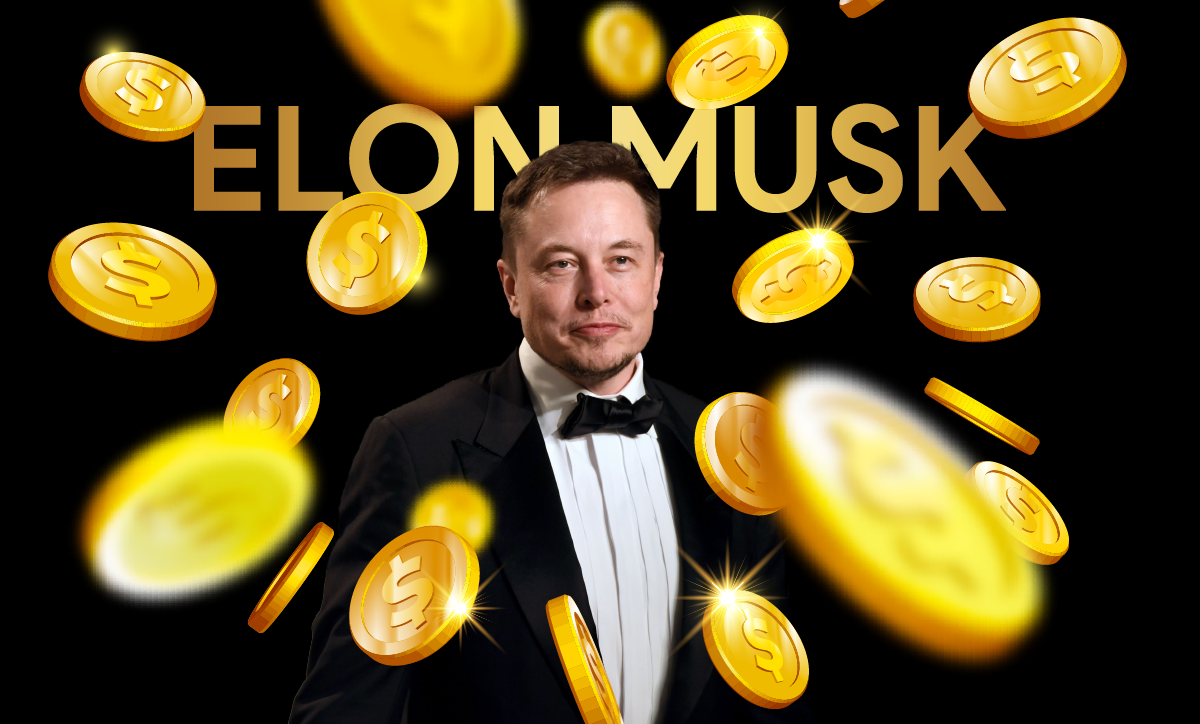
Elon Musk – The World’s Richest Person

It’s official. According to the Bloomberg Billionaires Index, Elon Musk is the richest person in the world. His total worth has increased to $194.8 billion, surpassing Jeff Bezos’ net worth of $185 billion. There are two indexes in the world which are the most important to calculate a person’s net worth. One is the Bloomberg Billionaires Index and the other is the Forbes Richest People List.

Even though the numbers are staggering, it does not mean that Elon Musk has $190 billion in his bank account in the form of cash. The number is the summation of the total worth of assets, shares and all the other investments. At the start of the year, Elon Musk was not even one of the likely individuals who could top the list inside in just one year. So, how did Elon Musk get to the top of the chart? Let’s find out.

Elon Musk’s Journey to Becoming the Richest Person

One of the biggest reasons behind Elon Musk’s rise is Tesla’s unprecedented rally in 2020. Tesla’s stock has rallied at a break-neck speed last year. It has surged by more than 700% in one year alone. To give you a perspective, Tesla’s stock was traded at just $88.60(adjusted for 5:1 stock split) on 3rd January 2020. Today, on 8th January 2020, it is being traded at an astonishing $880.02. Assume that you had invested Rs 6,424 to buy one share of Tesla on 3rd January 2020. Today, that small investment would have been worth Rs 64,240. How stunning is that, right? Elon Musk holds 20% of the total shares of Tesla. The stock’s recent outburst in the prominent reason that Musk is now declared as the world’s richest person. 

The truth is, Tesla, is an automobile company but not “just a normal automobile company.” Elon Musk and his team at Tesla build revolutionary automobiles. They are one of the biggest companies in the world which leverage technology to the fullest and manufacture products which no one can really imagine!

Most of the success of Tesla hinged on its electric vehicle car ‘Model-3’, which was their most affordable car yet. Their business model is very unique. Elon Musk states “The strategy of Tesla is to enter at the high end of the market, where customers are prepared to pay a premium, and then drive down market as fast as possible to higher unit volume and lower prices with each successive model.” 

Tesla turned into a profit-making company only in 2018. Before that, they were unable to produce a high volume of cars. Thus, their cost of production was always very high. After the launch of Model 3, Tesla managed to produce 5,000 cars in a week. This is where they achieved their break-even point. That quarter, they reported $312 million in profits. Since then, the company has never looked back. 

Elon Musk’s Performance-Based Bonus Package

Big companies reward you for good performances. This is what happened with Elon Musk as well. Just that, rewards awarded to him are something which no CEO has ever been offered! Musk set 10 lofty ambitions with Tesla. If he reaches those goals and sustains the company’s performance, he will get a total of $56 billion worth of stock options over 10 years. Musk has already achieved 4 out of 10 goals inside two years. This has helped him earn $11.8 billion already. 

His first payout came when Tesla’s six-month trailing average market capitalization surpassed $100 billion. He was rewarded with 1.69 million Tesla shares at $350 each. Musk profited around $750 million from this first payout. Tesla awarded him with his second payout after just 1.5 months when the company’s value increased by $50 billion more. He instantly exercised all the stock options provided to him, thus, earning a profit of $2.1 Billion.

Tesla’s unstoppable rally meant that Musk will receive another 8.44 million stock options. They were valued at $2.9 billion. Tesla’s CEO got his fourth tranche of bonus in October last year. He received another 8.44 million stock options which were valued at $3 billion again. It’s quite clear that if Tesla can sustain this unique rally, Elon Musk’s net worth will increase by many more billions.

Tesla’s Dominance

Visionary, charismatic, imaginative, creative, leader. All of these terms describe who Elon Musk is. And, this vision and imagination are what he has imparted to Tesla. The recent rally took their market capitalization to over $830 billion. This had aided the company to enter into the prestigious S&P 500 index. This index measures the performance of 500 large companies listed on stock exchanges in the United States. Not only have they entered, but Tesla has become the biggest company ever to join the S&P 500. The previous biggest entrant to this index was Berkshire Hathaway. Tesla joined the S&P 500 at three times the value of Berkshire Hathaway.

The following chart shows the market capitalization of Tesla with respect to the biggest automakers around the globe. 

Source: Author’s own creation

All of these factors have played a huge role in making Elon Musk the richest person in the world. Many analysts believe that Tesla is highly overvalued. That might be true as well. But what we understand here is, Elon Musk is selling dreams and people back him to fulfil those dreams! And the hidden gems in Musk’s arsenal, including SpaceX and Boring Company are yet to go public. When they do go public, he will be getting a lot richer. Will Elon Musk be the world’s first-ever trillionaire?

Categories
Market News Top 10 News Top Global News

New Covid Strain Shakes Global Markets – Top 10 Global News

1. Stocks, Futures Slump on Virus Curbs; Bonds Rally

Stocks and futures were a sea of red on Monday as a new variant of the coronavirus in the U.K. caused chaos ahead of the Christmas holiday, with regional neighbours suspending travel. Energy and travel shares dragged the Stoxx 600 Index down 2.5% as Italy, the Netherlands, Belgium and France closed their borders to the U.K. The dollar gained the most since June. In the U.S., equity futures pointed to sharp declines at the open even after Congressional leaders reached a deal on spending to support the economy. Losses were concentrated in energy producers and stocks that would benefit from a return to more normal economic activity.  The pound slumped by the most since March as an official said “significant differences” remain in Britain’s trade talks with the European Union. Crude oil fell by more than 3%.

Futures on the S&P 500 Index sank 1.8% as of early morning New York time.

The Stoxx Europe 600 Index sank 2.6%.

The MSCI Asia Pacific Index dipped 0.6%.

The MSCI Emerging Market Index dipped 1.1%.

2. Congress Poised for Vote on $900 Billion Pandemic Relief Plan

The House and Senate are set to vote Monday on a roughly $900 billion pandemic relief bill that would be the second-biggest economic rescue measure in the nation’s history. The aid package will be attached to a $1.4 trillion measure to fund government operations through the end of the fiscal year, and congressional leaders said they expect the legislation to easily pass both chambers. The White House said President Donald Trump would sign it. The deal followed more than a week of furious negotiations sparked by a group of Democratic and Republican senators who drew up their own compromise proposal and urged their leaders to act.

3. Tesla Slides in First Day of Trading on the S&P 500 Index

Tesla’s shares fell as much as 6.4% in premarket trading on its first day after being added to the S&P 500 Index, as the broader market slid and the stock retraced gains from Friday when tens of millions of shares were purchased by index-fund managers. Futures contracts on the S&P 500 plunged 2.5%, following European stocks lower after several major countries moved to suspend travel from the U.K. amid concerns about a new strain of Covid-19. Tesla has catapulted 731% this year in anticipation of the historic inclusion, making it the biggest company ever to be added to the benchmark.

4. Biden Will Inherit a Strong Hand Against Xi, Thanks to Trump

Joe Biden will be sworn in as president after Trump’s administration spent years ramping up pressure on China, including levying tariffs on $370 billion in imports, getting Canada to place a Chinese executive for Huawei Technologies Co. under house arrest, threatening access to U.S. capital markets and blaming the Communist Party for the scale of the Covid-19 outbreak. President Trump’s pressure campaign continued last week, as the administration blacklisted more than 60 Chinese companies, limiting their ability to get U.S. technology, in order “to protect national security”.

5. JPMorgan Says Flows to Into Major Crypto Fund Are Key to Bitcoin’s Outlook

The odds of a Bitcoin correction would increase if the flows into the world’s largest traded cryptocurrency fund slow significantly, according to strategists at JPMorgan Chase & Co. The Grayscale Bitcoin Trust’s assets under management have climbed to $13.1 billion from $2 billion at the start of December last year, amid a tripling in the digital currency’s price so far in 2020. Inflows into the fund are running at about $1 billion per month, the strategists wrote in a note Friday. Bitcoin reached an all-time high of $24,291.38 on Sunday. The cryptocurrency’s backers argue it’s gaining ground among longer-term investors as a hedge against dollar weakness and risks such as higher inflation. Others claim an unsustainable speculative fervour, exacerbated by trend-following quant funds, lies behind much of the rally in Bitcoin and other digital assets.

6. Hong Kong May Consider Unprecedented Virus Curbs, Including Curfews

Unprecedented virus control measures including curfews and shutdowns of non-essential businesses may be considered in Hong Kong, according to a government health adviser, as the city continues to see a high number of locally-transmitted cases and the holiday season looms. Limiting the number of people per household allowed to shop for groceries, shuttering all businesses deemed non-essential and shortening mall operating hours are among the curbs that may have to be imposed to prevent another Covid-19 wave.

7. France Halts U.K. Freight Over Virus Alarm, Rocking Supplies

Britain’s biggest port stopped all traffic heading to Europe, triggering delays to food supplies after the discovery of a new variant of the virus prompted a wave of countries to ban travel from the U.K. The escalating crisis prompted Boris Johnson to convene a meeting of the government’s emergency committee on Monday in a bid to keep goods flowing. The concern is focused on links with France, which suspended inbound travel from the U.K., including freight, for 48 hours starting midnight Sunday. The disruption comes at a critical time for Johnson’s government, which is still negotiating the terms of post-Brexit trade with the European Union. It’s also battling a surge in coronavirus infections which forced ministers to put London and much of southeast England into lockdown over the weekend, heaping more misery on businesses in the critical pre-Christmas period.

8. Pound Plummets as Virus Threatens U.K.’s Supply Chains With EU

The pound had its worst day since the coronavirus roiled global markets in March, as a new strain of the pathogen disrupted the U.K.’s supply chains with Europe. Sterling tumbled 2.5% to as low as $1.3188 as Britain’s biggest port in Dover stopped all traffic heading to the continent, and after another Brexit deadline went past without results. The currency’s one-week implied volatility is the highest for a Christmas period in more than a decade. Expectations of monetary easing by the Bank of England mounted, with money markets bringing forward bets for a 10-basis-point interest-rate cut to September, compared with March 2022 on Friday. Ten-year bonds rallied, with yields slipping as much as nine basis points, and the FTSE 100 share index fell as much as 3.3%. 

9. Saudi Arabia, Oman Suspend Foreign Travel Over Mutant Virus

Saudi Arabia and Oman halted international flights and closed their borders for a week over fears about the fast-spreading new strain of the coronavirus. State-run Saudi Press Agency said the kingdom may extend the suspension for another week depending on the nature of the virus spread. Oman halted passenger traffic through its air, land and seaports for a week starting Tuesday, but freight services are exempt from the ban. The U.K. has warned that the new virus strain is “out of control,” prompting countries including France and Germany to suspend travel from Britain. 

10. Dubai Stocks Fall Most in Seven Months on Travel Worries

Stocks in Dubai slumped the most since May on fears of further travel restrictions after a new variant of the coronavirus was found in the U.K. A travel corridor between Britain and Dubai was expected to help air traffic on the route to climb by a third this month. Any anticipated boost to the city’s struggling tourism sector could also be threatened by several countries including neighbouring Saudi Arabia imposing fresh curbs.

Categories
Market News Top 10 News Top Global News

TESLA to join S&P 500 – Top 10 Global News

1. Global Stocks Fall on Virus Fears

A global stock rally powered by hopes that new Covid-19 vaccines will bolster economic growth halted on Tuesday as investors weighed the near-term spread of the virus. S&P 500 futures retreated a day after the underlying benchmark closed at an all-time high on Monday. Contracts on the tech-heavy Nasdaq 100 outperformed. Travel shares and banks led a decline in the Stoxx Europe 600 Index. The pound rose on signs the U.K. and European Union are nearing a breakthrough on Brexit as early next week.

Futures on the S&P 500 Index fell 0.5% as of early morning New York time.

The Stoxx Europe 600 Index declined 0.4%.

The MSCI Asia Pacific Index increased 0.2%.

The MSCI Emerging Market Index fell 0.2%.

2. America Locks Down From Atlantic to Pacific as Covid Rages

In a matter of days, America’s long effort to revive its virus-battered economy has been put on pause — or thrown into reverse — as new infections soar at the fastest pace since the pandemic’s earliest days. California on Monday reinstituted bans on many indoor businesses, and its governor warned he may impose a curfew. Michigan has ordered a three-week partial shutdown, while states including Oregon, Washington and New Jersey tightened curbs.  The new restrictions follow a rapid surge in cases — with the country adding a million infections in the first 10 days of November alone — that has led health officials to issue dire warnings about the prospect of uncontrollable outbreaks as the Thanksgiving holiday approaches.

3. France’s Bars, Restaurants May Stay Closed Until Mid-January

French bars and restaurants will remain closed until mid-January as the government tries to tamp down the resurgent coronavirus outbreak. The government closed non-essential businesses at the end of October as the number of virus cases surged, with a goal to reopen shops on Dec. 1 if health conditions permit. Prime Minister Jean Castex made clear that didn’t apply to bars and restaurants, however, government spokesman Gabriel Attal said Tuesday in an interview on France 2 television. Government officials will review the situation for bars and restaurants next month, he said when asked about the France Info report of a Jan. 15 re-opening.

4. America’s Zombie Companies Have Racked Up $1.4 Trillion of Debt

From Boeing, Carnival and Delta Air Lines to Exxon Mobil and Macy’s, many of the nation’s most iconic companies aren’t earning enough to cover their interest expenses (a key criterion, as most market experts define it, for zombie status). Almost 200 corporations have joined the ranks of so-called zombie firms since the onset of the pandemic. In fact, zombies now account for nearly 20% of publicly-traded firms. Even starker, they’ve added almost $1 trillion (INR 75 lakh cr) of debt to their balance sheets in the span, more than double zombie companies owed at the peak of the 2008 financial crisis. The Federal Reserve’s effort to stave off a rash of bankruptcies by purchasing corporate bonds might very well have prevented another depression. But in helping hundreds of ailing companies gain virtually unfettered access to credit markets, policymakers may inadvertently be directing the flow of capital to unproductive firms, depressing employment and growth for years to come.

5. Brexit Negotiators Zero In on a Deal as Soon as Next Week

The U.K. and European Union could strike a deal on their future trading and security relationship early next week as the two sides edge closer to an agreement on the biggest sticking points. As talks continue in Brussels, officials are planning for the possibility of a breakthrough to be announced as soon as Monday, although no precise day has been settled on. They also warned that there was still the potential for the negotiations to collapse, with the two sides still some way apart on the familiar stumbling blocks that have plagued the talks since they started in March. Getting a deal will still need the U.K. to make big political decisions over whether it is prepared to compromise, particularly on the thorny topic of access to British fishing waters.

6. Tesla to Join S&P 500 Next Month as Largest-Ever New Member

Tesla, Elon Musk’s 17-year-old upstart carmaker, took a giant step toward blue-chip respectability on Monday, getting named to one of the world’s most famous stock indexes in an action that will greatly broaden its investor base. The announcement that Tesla will enter the S&P 500 on Dec. 21 follows months of speculation. The anticipation has helped drive a nearly fivefold rally in the stock this year to almost $390 billion. It will also be one of the index’s most influential constituents with a weighting that falls around those of Berkshire Hathaway, Johnson & Johnson and Procter & Gamble. Tesla shares jumped 12% in premarket trading.

7. China Gives Long Explanation for Pummeling Australia on Trade

China gave one of its most detailed explanations yet for souring ties with Australia, calling on the nation to stop trying to impose its will on others. “Looking back on China-Australia relations in the past few years, we see some people in Australia adhere to a Cold War mentality and harbour ideological prejudice, regard China’s development as a threat, and have then made a series of wrong moves related to China,” Chinese Foreign Ministry spokesman Zhao Lijian told. Ties between the two key trading partners have been strained since 2018 when Australia banned Huawei from building its 5G network. But relations have really been in the deep freeze since Prime Minister Scott Morrison’s government in April led calls for an inquiry into the origins of the coronavirus outbreak — a move that bruised China’s pride and unleashed a torrent of criticism that Australia is a puppet of the U.S.

8. BofA Says Market Is So Bullish It’s Time to Sell on Vaccine News

Fund managers overseeing $526 billion are the most bullish they’ve been this year following the U.S. election outcome and progress on a vaccine, prompting a call from Bank of America Corp. strategists that it’s time to start selling risk assets. Cash holdings plunged to the lowest level since April 2015, while economic growth expectations surged to a 20-year high. Investors snapped up more volatile assets, such as small-caps, value, banks and emerging-market stocks, while shifting away from bonds and staples. But with the S&P 500 hitting a record high, fund managers face a moment of reckoning on whether it’s worth taking profit or staying invested for potentially even more returns.

9. Amazon opens online pharmacy, shaking up another industry

The company opened an online pharmacy Tuesday, giving Amazon shoppers the chance to buy their medication and order refills on their phones and have it delivered to their doorsteps in a couple of days. The move propels Amazon into a new business, potentially shaking up the pharmacy industry as it has done to everything from booksellers to toy stores and grocers. Big chains like CVS and Walgreens rely on their pharmacies to bring them a steady flow of shoppers who stop by frequently to pick up their medications. Amazon said it will offer commonly prescribed medications starting Tuesday, including creams, pills, as well as medications that need to stay cold, like insulin. Shoppers have to set up a profile on Amazon’s website and have doctors send prescriptions to the Seattle-based e-commerce giant. Most insurance is accepted, Amazon said. But Prime members who don’t have insurance can also buy generic or brand name drugs from Amazon for a discount.

10. DBS to Allow Employees to Work Remotely for up to 40% of Time

All employees at DBS Group will be granted the flexibility to work remotely up to 40% of the time to address the “massive changes” brought about by the Covid-19 pandemic. The company’s Future of Work task force found that more than four in five of its 29,000 staff were able to work seamlessly remotely. However, some expressed that they preferred a hybrid work arrangement, which allowed them to stay engaged with colleagues. The bank will also introduce a formal job-sharing scheme to give greater support to employees who need more flexibility. Under the scheme, two employees will be able to share the responsibilities of one full-time role. More part-time work arrangements will also be introduced.