Categories
Editorial

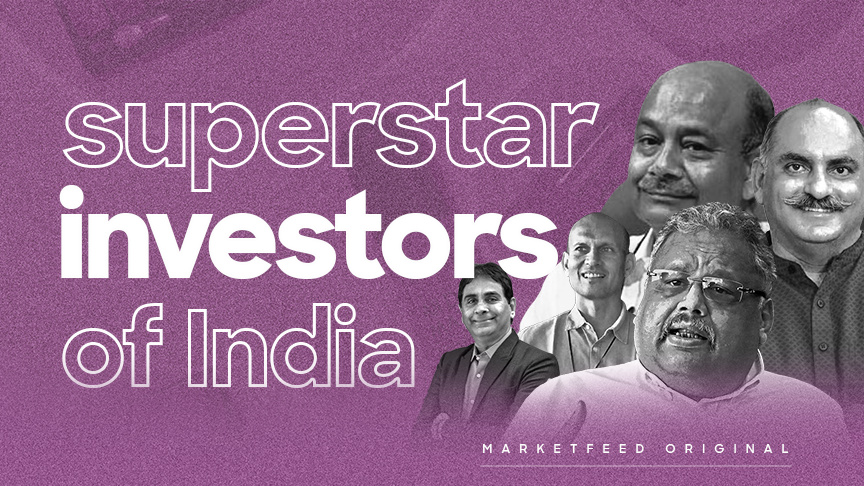
Meet the Top 5 Succesful Investors in India!

The Indian stock market has evolved into one of the most dynamic business environments, with all parties involved sharing the same hopes and aspirations. The way it operates and reaps losses & gains has always always been a site of great interest for all budding investors. In fact, the market capitalisation of all listed firms on BSE hit a new record high of ₹280.5 lakh crore this August!

With the proper strategy and tactics, a ₹10,000 investment per month can turn into a portfolio worth crores over a few years. 

The above statement might seem unbelievable or absurd, but superstar investors like Rakesh Jhunjhunwala, Vijay Kedia, and R.K. Damani have truly turned the tide and have created phenomenal fortunes from the market. 

In today’s article, we will highlight some of the most successful stock market investors in India, in addition to their overall merits and investment strategies!

Rakesh Jhunjhunwala 

  • The late Rakesh Jhunjhunwala, known as the Warren Buffet of India, was admired as a market god. He mastered the art of beating the markets consistently.
  • This billionaire business magnate started investing with merely ₹5,000 in 1985.
  • In 1999, he launched Hungama Digital Media with four other partners. As of 2021, Hungama Music and Hungama Play are available in the OTT market.
  • He held several positions of authority as the chairman and a member of the board of directors of numerous reputable firms.
  • His Titan holdings alone are valued at ₹11,000 crore as of 2022. 
  • Rakesh Jhunjhunwala & Associates (Rare Enterprises) publicly hold 30 stocks with a net worth of over ₹34,320.2 crore.
  • Jhunjhunwala invested $35 million in 2021 for a nearly 40% stake in Akasa Air. He was the co-founder of this new ultra-low-cost Indian airline. 
StocksHolding Value (in ₹ crore)Shareholding (%)
Titan Company Ltd1,3047.105.5
Star Health & Allied Insurance Company Ltd6,982.8017.4
Metro Brands Ltd3,130.5014.4
Tata Motors Ltd1,556.401.1
Crisil Ltd1,193.405.5
(Source: Trendlyne. Holdings as of Q2 FY23)

Radhakishan Damani

  • Radhakishan Shivkishan Damani is a billionaire investor hailing from Bikaner, Rajasthan. He is also the founder of Avenue Supermarts, which operates the DMart chain of supermarkets.
  • He is an astute investor in the Indian stock market with 13 stocks and a portfolio net worth running up to ₹185,782.4 crore. 
  • He manages his portfolio through his investment firm called Bright Star Investments Ltd.
  • In 2022, he was ranked the 98th richest person in the world.
  • His prudence as an investor is evident in the way his stocks have grown over the years. In the previous year, the value of his stocks increased from ₹157.65 crores to ₹322.65 crores.
  • This doubling occurred right after the Russia-Ukraine war when the Indian stock market was at its lowest point. 
  • As per Forbes, Damani has held stakes in an array of businesses, including the 156-room Radisson Blu Resort in Alibag, tobacco firm VST Industries, beer maker United Breweries, and others like India Cements, Sundaram Finance, Blue Dart, and Spencer’s Retail.
StocksHolding Value (in ₹ crore)Shareholding (%)
Avenue Supermarts Ltd1,80,592.5067.5
VST Industries Ltd1,760.4032.3
India Cements Ltd1,566.8020.8
Trent Ltd769.301.5
Sundaram Finance Ltd610.702.4
(Source: Trendlyne. Holdings as of Q2 FY23)

Mohnish Pabrai

  • An ardent follower of Warren Buffet, Mohnish Pabrai is an Indian-American investor.
  • He founded an investment firm named Pabrai Investment Funds in 1999.
  • His firm has generated a staggering 517% return till now.
  • The focus of Pabrai’s investing strategies is considered to be on low-risk, high-certainty stocks, and well-managed businesses with minimal downsides.
  • Mohnish Pabrai publicly holds 3 stocks with a net worth of over ₹1,260.3 crore.
  • With the goal of giving back to society, Monish Pabrai and his wife started the Dakshana Foundation. It helps poor students from rural and semi-urban government schools to crack competitive exams.
StocksHolding Value (in ₹ crore)Shareholding (%)
Rain Industries Ltd517.608.8
Sunteck Realty Ltd379.706.7
Edelweiss Financial Services Ltd3636.4
(Source: Trendlyne. Holdings as of Q2 FY23)

Vijay Kedia 

  • Popularly known as the “Market Master”, Vijay Kishanlal Kedia is an Indian investor hailing from Kolkata.
  • He has been in the market since he was 19 years old. 
  • The commonly used acronym SMILE, which stands for Small in size, Medium in experience, Large in aspiration, and Extra-large in market potential, refers to Kedia’s investment strategy. 
  • As per the latest corporate filings, Vijay Kedia publicly holds 16 stocks with a net worth of over ₹765.9 crore.
  • He invests only after doing a deep study of the management of the respective company and how it functions. 
  • Kedia believes that in order to reap greater rewards, it is crucial to wait and invest for a long period. 
  • From 2000 to 2022, some of his shares have grown by over 47,150%, which shows the vision with which he invests in every stock. 
StocksHolding Value (in ₹ crore)Shareholding (%)
Tejas Networks Ltd246.102.6
Vaibhav Global Ltd103.302
Elecon Engineering Company Ltd97.401.9
Cera Sanitaryware Ltd72.201
Mahindra Holidays & Resorts India Ltd55.501
(Source: Trendlyne. Holdings as of Q2 FY23)

Ashish Kacholia

  • Ashish Kacholia is one of the most prudent investors in the Indian stock market and has built a reputation for being the “whiz-kid” of stocks.
  • The media refers to Kacholia as the “Big Whale”. He began his career with Prime Securities and Edelweiss. Kacholia established his own broking firm, Lucky Investment Managers, in 1995.
  • His investment strategy includes investing in small and mid-size companies.
  • In 1999, he co-founded Hungama Digital (along with Rakesh Jhunjhunwala) and began assembling his portfolio in 2003.
  • Ashish Kacholia publicly holds 41 stocks with a net worth of over ₹1,900.3 crore.
  • Recently, he bought a multi-bagger stock named Best Agrolife that has had a 6000% increase in just five years!
StocksHolding Value (in ₹ crore)Shareholding (%)
Safari Industries (India) Ltd1152.6
Fineotex Chemical Ltd97.202.6
Shaily Engineering Plastics Ltd96.906.5
NIIT Ltd91.202.2
PCBL Ltd91.101.9
(Source: Trendlyne. Holdings as of Q2 FY23)

The stock market is a volatile platform that can swing in either direction at any time. It is not the place to make a rash, uninformed choice. Many people keep a close eye on prominent investors, their investment strategies, and the performance of each stock they own. The methods used by these investors to profit from the equity market provide immense inspiration to aspiring investors.

The tales of wealthy investors convey many vital messages. First and foremost, it’s critical to have a solid investing plan built on thorough observation, and secondly, diversification is key. It is also important to acknowledge the possibility of losses. Keeping that in mind, there is absolutely no doubt that the Indian equity market is a fantastic sector to learn, grow and develop. 

Happy Investing!

Categories
Editorial

Meet the Top 10 Richest Indians!

A recent report from Forbes showed that the total number of billionaires in India rose to a record 166 in the financial year 2021-22 (FY22). The combined net worth of these billionaires grew 26% to 750 billion! Their business empires have played a significant role in the economic growth of our nation. In this article, meet the top 10 richest Indians!

Gautam Adani

Gautam Adani, chairman of the Adani Group, has a net worth of $122.3 Billion (~Rs 9.31 lakh crore). With a meteoric rise in shares of group firms, Adani’s wealth grew by Rs 6,000 crore every week over the past year! He is currently the sixth richest person in the world!

The Adani Group has interests in the infrastructure, logistics, power generation & transmission, and real estate sectors via Adani Enterprises, Adani Ports, Adani Green Energy, Adani Transmission, and other group firms. The group also operates some of the major airports in our country. Adani has announced plans to become the world’s largest producer of green energy. They will invest up to $20 billion in renewable energy projects over the next decade.

Mukesh Ambani

Mukesh Ambani is the chairman of Reliance Industries Ltd (RIL), India’s largest company. RIL’s subsidiaries are involved mainly in petrochemicals, oil & gas, telecom (Jio Platforms), and retail (Reliance Retail). Reliance is also pivoting into green energy. The company aims to invest $80 billion over the next 10-15 years in renewable energy.

With a net worth of $98 Billion (~Rs 7.46 lakh crore), Ambani is the 10th richest person in the world!

Shiv Nadar

Shiv Nadar co-founded HCL Technologies, one of India’s largest IT companies. He is also known for his philanthropic activities. In July 2020, Nadar stepped down as chairman of HCL Technologies, handing over the position to his daughter, Roshni Nadar Malhotra. He is currently the Chairman Emeritus and strategic advisor of HCL Tech.

Shiv Nadar’s net worth stands at $28 Billion (~Rs 2.12 lakh crore). 

Cyrus Poonawalla

Also known as the ‘Vaccine King’, Cyrus Poonawalla is the world’s richest billionaire in the healthcare industry. His company, Serum Institute of India (SII), manufactured the Covishield vaccine last year. SII produces over 1.5 billion doses of vaccines per annum, including those for measles, polio, and flu. Poonawalla’s assets include a majority stake in listed financial services firm Poonawalla Fincorp.

Cyrus Poonawalla’s net worth stands at $26 Billion (~Rs 1.98 lakh crore).

Radhakishan Damani

Veteran investor and founder of Avenue Supermarts (popularly known as DMart), Radhakishan Damani has a net worth of $20 Billion (Rs 1.52 lakh crore). His company operates over 250 DMart stores across India. Also known as the ‘Retail King’, Damani holds stakes in VST Industries, India Cements, and Tata Trent.

Savitri Jindal & Family

The Jindal Group is chaired by Savitri Jindal, widow of founder Om Prakash Jindal. Their four sons run the business empire now. The conglomerate has interests in mining, power, industrial gases, cement, and steel manufacturing. The group’s listed firms include Jindal Steel & Power, Jindal Steel, JSW Steel, and JSW Energy.

Savitri Jindal and her family have a net worth of nearly $20 Billion (~1.52 lakh crore).

Lakshmi Mittal

Lakshmi Mittal serves as the executive chairman of ArcelorMittal, one of the world’s largest steel and mining companies in terms of output. The company operates steel manufacturing units in 17 countries. Even though he is based out of London, Mittal holds an Indian passport. His net worth stands at $18 Billion (~Rs 1.37 lakh crore).

Kumar Mangalam Birla & Family

Kumar Birla is the fourth generation head of the Aditya Birla Group. The group companies include UltraTech Cement, Hindalco, Aditya Birla Fashion & Retail, Aditya Birla Capital, and even the failed Idea Cellular. Birla’s net worth stands at $17 Billion (Rs 1.29 lakh crore).

Dilip Shanghvi 

Dilip Shanghvi founded Sun Pharmaceutical Industries, one of India’s most valuable pharma companies having significant sales across the world. He grew Sun Pharma through a series of acquisitions, including the 2014 purchase of rival Ranbaxy Laboratories for $4 billion. He has personally invested in renewable energy and oil & gas projects. His net worth stands at $16.2 Billion (~Rs 1.23 crore).

Uday Kotak

Uday Kotak is the executive vice-chairman and managing director of Kotak Mahindra Bank. His company is now among India’s top four banks in the private sector. The company offers banking products and financial services for corporate and retail customers in the areas of personal finance, investment banking, life insurance, and wealth management. Kotak’s net worth stands at $14.7 Billion (Rs 1.12 lakh crore).

Source: Forbes Real-Time Billionaires List (as of 13/4/2022)

Categories
Editorial

India’s Richest Investor: Radhakishan Damani

The Indian stock market is passing through a golden era. It has moulded sharp, disciplined, and inspiring investors over the years. Radhakishan Damani is one such individual who has taught us the beauty of value investing. He has applied analytical skills to build India’s largest retail supermarket chain, DMart. From living at a one-bedroom apartment in Bombay to owning 156 rooms at a Radisson Blu resort in Alibaug, his journey is inspiring for all stock market participants. In this editorial, we shall analyse Damani’s investment journey and his current portfolio.

Journey to Dalal Street

Radhakishan S Damani was born on January 1, 1954, into a Marwari family in Mumbai. His father, Shivkishanji Damani, worked as a stockbroker in Dalal Street. It is interesting to note that Damani was not enthusiastic about joining his father’s path. Instead, he pursued a Bachelor’s Degree in Commerce at the University of Mumbai. He always had a strong business acumen, which resulted in him dropping out of college and starting an enterprise in the field of ball bearings. Unfortunately, the passing of his father forced Damani into the world of the stock market in his late 20s.

Investment Journey

Damani was never satisfied with being a stockbroker. He started to analyse trading and investing activities in the Bombay Stock Exchange (BSE). During this period, the Indian stock market was controlled by a few powerful players. It was not open to foreign investors. He started getting exposure and insights from well-known personalities in Dalal Street such as Manu Manek (the Black Cobra) and Harshad Mehta (the Big Bull). Interestingly, Damani entered into short-sell positions in stocks that were manipulated by Harshad Mehta. He firmly believed that the stocks backed by Mehta were highly overvalued and would go through decent corrections.

In the l990s, Damani’s roots in value investing got deeper after meeting Chandrakant Sampat (a legendary value investor, started his investment career during the 1950s). VST Industries, HDFC Bank, Sundaram Finance, 3M India, Gillette, ITC, ICRA, CRISIL, Blue Dart are the stocks that were added to his initial portfolio. Damani found huge potential in HDFC Bank, at a time when public sector undertaking (PSU) banks such as State Bank of India (SBI) ruled the banking sector.

The Birth of DMart

Damani always wanted to start and grow his own venture. At the age of 45, he established a franchisee of Apna Bazar Supermarkets in 1999. After acquiring more knowledge of the Indian retail space and having disagreements with Apna Bazar’s master franchisor, he decided to start a single-store supermarket named DMart in 2002. The company bought parcels of land to commence its operations. Now, DMart enjoys the benefits of land appreciation, which directly makes the balance sheet strong. Damani always focused on building the fundamental aspects of the business. From 2002 to 2010, there were 25 DMart stores across India.

DMart launched its initial public offering (IPO) in 2017 to raise Rs 1,870 crores at an issue price of Rs 299. The shares were listed on the exchanges at Rs 600. Currently, the company has a presence in 238 locations across 11 states in India. DMart is trading at ~Rs 3,970 in the NSE, giving the investors a Compounded Annual Growth Rate (CAGR) of 45% over the past 5 years.

Portfolio Analysis

Now, let us look at Damani’s current portfolio and look for some key patterns.

Damani is the major promoter of DMart. His holdings are worth around Rs 1,66,800 crore, which makes up 97% of his total portfolio. We can exclude it from our analysis as it will make other constituents negligible.

radhakishan damani portfolio | marketfeed

We can see that Damani is a conservative investor. Currently, mid-cap companies contribute 55% to his total portfolio, followed by large-cap at 42%, and small-cap at less than 2%.

Portfolio Diversification

Let us look at the segments he is betting big on:

StockSegment
Avenue SupermarketsRetail – Department Stores
VST IndustriesFMCG – Tobacco
India CementsCement
Sundaram FinanceConsumer Finance
Trent LtdRetail – Apparel
United BreweriesAlcoholic Beverages
3M IndiaStationery
Blue DartLogistics
Metropolis Health careHospitals & Diagnostic Centres
Sundaram Finance holdingsDiversified Financials
BF UtilitiesRenewable Energy
Astra MicrowaveCommunication & Networking
Mangalam OrganicsChemicals
Andhra PaperPaper Products
Diversification of Damani’s portfolio

He has followed the same principle as his mentor Chandrakant Sampat:

“I will only buy those companies that are in a business that even fools can understand, have very little debt, have free cash flows, or do not have much capital expenditure”

Damani’s portfolio stocks have a low debt-to-equity ratio (debtless companies). Also, most of the mid-cap and large-cap companies mentioned above have a strong moat.

However, his holdings are highly sensitive to market conditions. The portfolio has a beta of just 0.7, which means that if NIFTY500 moves either upside or downside by 1%, his portfolio will react in the same direction with a lower magnitude of 0.7%.

Recent Purchases

Damani added a few stocks to his portfolio after the stock market crashed in March-April 2020 due to the Covid-19 pandemic. India Cements, Sun Pharma, Vodafone Idea, HPCL, Delta Corp, and DLF were purchased in March 2020. He also added Cochin Shipyard, India’s leading shipbuilding company in October 2020.

Portfolio Performance

It is interesting to see how Damani’s portfolio has performed over the past year. Let us take NIFTY500 as the benchmark to do a comparison.

radhakishan damani portfolio performance | marketfeed

Over the past year, NIFTY500 has surged 56%, while Damani’s portfolio grew 40%. Interestingly, the benchmark and portfolio have performed identically over the last 5 years.

Conclusion

There are a lot of takeaways from Damani’s journey in the stock market. He is conservative, patient, and disciplined. With the knowledge he acquired from large investors, he has been able to accurately analyse the financial performance and other fundamental aspects of companies. He has developed skills for identifying multi-bagger stocks. We can compare his portfolio with ours, and adopt essential features such as diversification and position sizing.

However, never jump into buying a particular stock just because Damani has added it to his holdings. Instead, we should understand the logic and reasoning behind why he chose that company and find its true potential. This will help us become intelligent investors. 

Is your portfolio similar to Damani’s? Let us know in the comments section of the marketfeed app.