Categories
Market News Top Crypto News

Ukrainians Buy Record Sums of Crypto on Binance – Top Crypto News

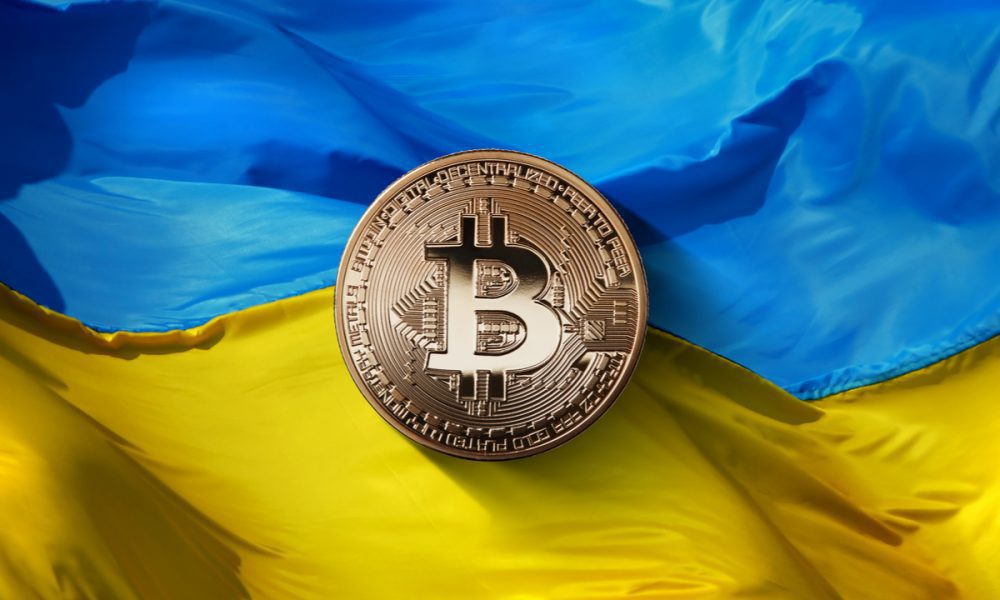
Ukrainians buy record sums of crypto on Binance after Russian invasion

Ukrainian citizens are buying record sums of Bitcoin to protect their holdings as they hold off an attack from Russia. An Arcane Research report showed Ukrainians were using crypto exchange Binance to buy stablecoin Tether and Bitcoin with the hryvnia. (One Ukrainian hryvnia currently is worth about $.033). Data shows that 24-hour Tether-hryvnia trading volume shot up from $6 million right before the invasion to ~$8.5 million.

Crypto prices today: Bitcoin rises 1.8%, ETH up 2.6%

Bitcoin is currently trading at $44,200, a 1.75% increase over the previous day. Ethereum rose 2.6% over the last 24 hours to $2,996.87. Solana jumped 8% to $104.1, while Cardano is down 0.1% to $0.96. Polygon (MATIC) is up 2.9% to $1.64. The global crypto market cap stands at $1.94 trillion, an 1.6% increase over the previous day.

US can regulate crypto without new law, says think tank

According to the Center for American Progress (CAP), US regulators can use existing laws to bring digital assets such as cryptocurrencies under their supervision without new congressional legislation. The Securities and Exchange Commission (SEC) and the Commodity Futures Trading Commission (CFTC) could use the CAP report to inform their decisions on how to govern crypto.

18% of super-rich Indians invested in cryptos, NFTs in 2021: Report

According to Knight Frank’s Wealth Report, ~18% of Indian ultra high-net worth individuals (UHNWIs) invested in crypto assets in 2021 amidst rising popularity of crypto and non-fungible tokens (NFTs). UHNWIs are those who have a net worth of $30 million (about Rs 226 crore) or more. The global value of crypto assets was $2.4 trillion at the end of 2021, a 12-fold increase since early 2020.

Crypto exchange Bitbns to roll out IC15 index products

CryptoWire and Bitbns exchange have entered into an agreement for listing IC15, India’s first global crypto index. Trading of IC15 on Bitbns exchange will begin from April 1, 2022. CryptoWire claims to be a global crypto super app, while Bitbns is a homegrown crypto exchange.

Categories
Market News Top 10 News

WPI Inflation Hits Five-Month High of 12.54% in October – Top Indian Market News

WPI inflation hits five-month high of 12.54% in October

India’s wholesale inflation accelerated to a five-month high at 12.54% in October 2021. The wholesale price index (WPI) grew 10.66% in September and 1.31% in October 2020. The high rate of inflation is primarily due to the rise in prices of mineral oils, basic metals, food products, crude petroleum & natural gas. Food inflation contracted 1.69% in October, compared to a 4.69% contraction seen in September. The inflation in manufactured products stood at 12.04% in October from 11.41% a month ago.

Read more here.

HCC-KEC JV wins Rs 1,309 crore Chennai Metro order

Hindustan Construction Company (HCC), in consortium with KEC International Ltd, has secured a Rs 1,309 crore order as a part of the second phase of Chennai Metro Rail. The order entails the construction of an 11.61 km elevated viaduct section and 11 elevated stations on corridor-5 of the second phase of Chennai Metro. The order is scheduled to be completed in 36 months.

Read more here.

Vodafone Idea clarifies on reports of getting SBI loan after govt’s relief measures

Debt-ridden Vodafone Idea Ltd issued a clarification on a Bloomberg report that suggested that the company may get fresh loans from State Bank of India (SBI) after the government’s relief measures. “The company keeps discussing with various banks its funding and other requirements in the ordinary course of its business, including with SBI who is one of our main bankers. As of now, there is no development, which would require disclosure under the SEBI Listing Regulations,” Vodafone Idea informed in an exchange filing. 

Read more here.

Power Mech Projects secures orders worth Rs 725.17 crore

Power Mech Projects Ltd (PMPL) has secured two orders worth Rs 725.17 crore. The company has bagged an order worth Rs 645 crore from the National Highways Authority of India (NHAI). The order is for four-laning of NH-365A from Kodad to Khammam in Telangana under the Centre’s Bharatmala Pariyojana project. PMPL has received another order worth Rs 80.17 crore from Howe India to design and build a coal handling plant in Odisha.

Read more here.

Ashok Leyland in talks with investors to raise funds for EV arm

Ashok Leyland Ltd is in talks with strategic and financial investors to raise funds for Switch Mobility, its newly formed electric vehicle (EV) subsidiary. The trucks and bus manufacturer has hived off its EV division to better tap growth opportunities through the onboarding of partners.  The company also plans to roll out CNG-fitted commercial vehicles during the later part of this financial year.

Read more here.

Dixon Tech partners with BSH for manufacturing of fully automatic washing machine

Dixon Technologies (India) Ltd has commenced production of fully automatic washing machines for BSH Household Appliances Manufacturing Pvt Ltd. The product will be manufactured at Dixon’s state-of-the-art manufacturing facility at Tirupati. Germany-based BSH is the largest manufacturer of home appliances in Europe.

Bharti Airtel forms ESG Committee to strengthen its focus on sustainable business

Bharti Airtel has formed a Committee of Board of Directors, called the ESG Committee, to sharpen the company’s focus towards its Environmental, Sustainability, and Governance (ESG) agenda. The committee will provide strategic guidance and oversight to the company’s progress on ESG targets, initiatives, and best practices. The telecom operator has named Manish Kejriwal, Lead Independent Director on the Board, as the Chairman of the ESG Committee.

Read more here.

Delhi HC rules in favour of Britannia over Good Day brand

The Delhi High Court has ruled in favour of Britannia Industries after it had challenged oral care maker Good Day over its brand name, which is identical to one of Britannia’s mainstay biscuit brands Good Day. The court has directed the oral care maker to stop manufacturing, selling, and advertising Good Day toothpaste. ‘Good Day’ is a known trademark of Britannia and protected across all product categories.

Read more here.

Parliamentary panel stresses on cryptocurrency regulation in meeting: Report

A Parliamentary Standing Committee on Finance, led by former union minister Jayant Sinha, held a meeting today with industry associations and experts on cryptocurrency. During the meeting, there was a consensus that crypto can’t be stopped, but must be regulated, news agency ANI reported. The meeting saw the participation of representatives of crypto exchanges, Blockchain and Crypto Assets Council (BACC), among others.

Read more here.

Tata Steel revives plans to sell its Thailand business

Tata Steel Ltd (TSL) has revived plans to sell its Thailand business. The company looks to exit less profitable overseas units in the ongoing supercycle. The proposed sale, coming on the heels of TSL’s move to offload its Singapore business NatSteel Holdings, will aid the company cut its debt further. Bangkok-listed Tata Steel Thailand has a market value of over $410 million (~Rs 3,049 crore).

Read more here.

Categories
Editorial

Bitcoin Is Now Legal Tender In El Salvador. What Next?

Bitcoin is now legal tender in El Salvador. One can now use Bitcoins to make day-to-day transactions. There was quite some stir in the crypto market after the announcement was made. There are some aspects of this move by El Salvador that are of serious concern. In this piece, we talk about why cryptos crashed after Bitcoin was legalized in El Salvador, how this move could affect the country’s economy, and if this move is possible in other countries. 

El Salvador, Crypto Crash, and More

El Salvador made Bitcoin legal tender on Tuesday, September 7, 2021. The crash was anticipated, as the announcement was made way back in June 2021. After the decision was finalised, the entire crypto market came tumbling down. Bitcoin, which had hit $52,000 on Tuesday, tumbled close to ~11% after a sporadic bull run lasting months. Bitcoin’s rivals Ethereum (ETH) was down ~10%, Cardano was down ~11%, XRP by Ripple tumbled ~17%, Dogecoin slumped by ~15%. 

All currencies tumbled, but there was ONE that defied the crash. Solana, another cryptocurrency, defied odds and rose by ~5% after the move was announced. Solana token has zoomed by ~400% in 30 days. Solana is a blockchain network (similar to Ethereum) that seeks to develop crypto-based products and services with more than 400 projects under it. 

Social media handles were anticipating the crash a day before El Salvador finalized its bid to legalize Bitcoin. The crash was triggered by traders booking profits in a move powered by overpriced crypto markets. Additionally, uncertainty arose on the implementation of the system in the country. Chivo, a widely used crypto wallet in El Salvador, crashed after the announcement was made. Right after global cryptos crashed, Salvador’s President Nayib Bukele tweeted that the country is buying 150 Bitcoins. ‘Buying the Dip. 150 new coins added’, read Bukele’s tweet. As of September 9, 2021, El Salvador holds 550 Bitcoins in total. 

Sustainability and Suspicion

El Salvador’s move to make Bitcoin a legal tender was seen with suspicion. According to a Central American University (CAU) survey, close to 70% of Salvadorians has opposed the move. The sustainability of the move is also questionable. El Salvador uses the US Dollar as its official currency. In a country where only 30% of the total population has bank accounts, Bitcoin benefits only the rich and not the marginalized. 

The World Bank had rejected El Salvador’s request for implementing the Bitcoin system in the country, citing ‘environmental and transparency concerns’. 

El Salvador’s Gross Domestic Product (GDP) relies on foreign remittances from Salvadorians living abroad who send back money home. In 2020, Salvadorians sent back $6 billion home in the form of remittances. President Bukele argues that sending money home in Bitcoins will help Salvadorians save on ‘remittance fees.’

The country has budgeted $203 million for the implementation of Bitcoin in the country. It has also set aside incentives for its citizens to use bitcoins. It has set aside $150 million to guarantee the convertibility of Bitcoin into US dollars and close to $23 million for financing the rollout. The country has set aside $30 million for a $30 bonus for new users of Bitcoin.   

Conclusion

The idea of a cryptocurrency as an asset or an investment class is widely accepted. Yet, the use of cryptos as a mode of payment is seen as a blunder. First is the problem of cryptos being widely used to finance illicit or illegal activities. Second, comes the issue of taxation of cryptos. A currency that cannot be tracked or regulated cannot be taxed efficiently. The third issue is the volatility of cryptos. They are an extremely volatile asset class, and one might risk losing their savings in case an unprecedented change comes in its exchange value. The latest news is that Ukraine has also legalized and regulated Bitcoins in a law passed by the parliament. Only six lawmakers opposed the implementation of Bitcoin. 

Coming to the crypto trading space. Cryptos managed to bounce back as traders across the globe ‘bought the dip’. Bitcoin currently has a support level of $45,000 and a resistance at $50,000. Its fall from $52,000 has eased selling pressure off the market. The next big move that crypto traders need to watch out for is the quantitative easing or interest rate cuts that the US Fed plans to introduce by October-end or November-mid. 

Categories
Editorial

Why Did The Cryptocurrency Markets Crash? What Next?

Cryptocurrencies have crashed. This time in a manner never seen before. The last time we saw Bitcoin was down ~32%, Ethereum down by ~40%, and Dogecoin down by ~41%. 

The crash has wiped out nearly USD 1 trillion of investor wealth globally. That is nearly Rs 73 lakh crore to speak in Indian Rupee(INR) terms. Let’s dig right into what caused the global crypto market to crash and find out how investors around the world perceive the future of cryptocurrencies.

Why Did The Crypto Market Crash?

To summarize, the crash happened because of a bunch of tweets by Elon Musk, and restrictions by China on cryptocurrencies.

  • Over the last year, cryptocurrencies all around the world were having a ball. Bitcoin gained more than ~400%, Ethereum gained ~1300%, Dogecoin came into the picture and doubled in less than a month. Other small-time cryptos came into the picture with Initial Coin Offerings, which is the crypto version of an IPO. Throughout the period, cryptos around the world gained clout on social media and some volatility in the markets. Major institutional investment firms started investing in Bitcoin. The bull run was never-ending, while the crypto prices refused to correct themselves. This seemingly never-ending bull run induced fear in the market which led to frequent ups and downs. 
  • Speaking of Elon Musk, who has been in the news for the popularity of a popular meme-based cryptocurrency, Dogecoin. While Musk made some tweets on Dogecoin, the price of the meme coin went skyrocketing until his appearance in the US talk show Saturday Night Live. Then, his comments on the coin sent Dogecoin crashing. Musk was publicly supportive of cryptocurrencies and continues to be so.

    Musk’s company Tesla Motors even had a sizable investment in Bitcoin. Tesla has announced that they were going to start accepting payment in Bitcoin but later changed their position. According to Musk, Bitcoin mining requires electricity which mostly comes from fossil fuels. This might be unsustainable for the environment. A series of tweets by Musk and Tesla’s decision to not accept Bitcoin payments contributed to the crash. All this information about high energy consumption was previously known as well.
  • Now coming to the major reason behind the crash. China has always moved its policy towards restricting cryptocurrencies in the country. The People’s Bank of China, National Internet Finance Association of China, the China Banking Association, and the Payment and Clearing Association of China released a joint statement restricting the trade of cryptocurrencies almost completely. The directive said that companies offering crypto-related information, saving or pledging services stood banned. Additionally, any company offering crypto-related trading, insurance, and derivatives services would also be banned. China had previously almost completely banned crypto mining along with Initial Coin Offerings(ICOs) in 2017. 

What is surprising about China’s lockdown on cryptocurrency is that almost a month ago People’s Bank of China Deputy Governor, Li Bo had given a progressive statement on cryptocurrencies as an ‘investment alternative’. The associations responsible for the ban, justify the move by stating that cryptocurrencies are risky due to the volatility.

Exit Or Stay?

Cryptocurrency like any other traded security has the strategy of ‘Buy The Dip’, in which a trader accumulates cryptocurrencies after a fall in price. This is what would happen soon after the crypto crash, as is the case with any other traded security. 

Zerodha Co-Founder Nikhil Kamath tweeted on the crash saying “Averaging down or buying more of an asset, be it stock or crypto, as the price keeps going down and hoping that the price bounces to recover losses or make profits faster is a common behaviour among retail investors. While it is tempting to average down, the odds of this strategy working are significantly low in the long run.” He went on in saying, “I have zero knowledge or exposure to Crypto, but the rules for investing are the same: Reduce % exposure if the risk is high, & don’t Average down.

There is also a high chance that institutions will rethink their exposure to cryptocurrency as the high volatility continues.

The crypto market right now is in chaos, from Tesla not accepting Bitcoins, to China restricting cryptocurrency trade and operations. In a market like this, one should neither be too optimistic nor be too pessimistic, one should stick to the fundamental rules of trading. Which in this case would be reducing exposure to cryptocurrencies as they get riskier and increasing it only as they get more stable. In case a majority of your portfolio is just cryptos, all it would take is one crash to wipe out a significant portion of your wealth, so give rebalancing a thought.

Categories
Market News Top 10 News Top Global News

Facebook-Instagram-Whatsapp to be Broken Up – Top 10 Global News

1. U.S. Futures Drop After Tech Slide; Pound Slumps

U.S. stock futures turned lower with European equities as investors assessed a dimmer outlook for fiscal stimulus and for any tech-stock rebound after Wednesday’s tumble. Nasdaq 100 contracts signalled the gauge may fall further after its biggest drop in a month on news that Facebook was being sued by U.S. antitrust officials. In Europe, German bonds dropped and the euro turned higher after the European Central Bank boosted its emergency bond-buying program by 500 billion euros ($605 billion). The pound sank further after a report that talks between the EU and the U.K. are on course to end without a trade deal, barring a dramatic last-minute intervention.

The Stoxx Europe 600 Index dropped 0.2%

Nasdaq 100 Index futures sank 0.5%.

Futures on the S&P 500 Index sank 0.2%.

The MSCI Asia Pacific Index gained 0.6%.

2. Facebook Breakup Would Demolish Zuckerberg’s Social Media Empire

The U.S. Federal Trade Commission took a major step toward the possible breakup of Facebook by formally filing an antitrust lawsuit against the technology giant, accusing it of abusing its monopoly powers in social networking to stifle competition. Whatsapp and Instagram acquisitions were meant to erase competition. Now, the FTC wants Facebook to divest the two businesses — an idea that poses an existential threat to the empire built by CEO Mark Zuckerberg. Because much of the company’s revenue growth is already coming from Instagram, and WhatsApp is central to Facebook’s bet on digital commerce, losing the two platforms would threaten to erase much of Facebook’s long-term value.

3. EU Leaders to Unlock Budget & Stimulus Deal at Major Summit

European Union leaders gathering in Brussels are expected to sign off on the bloc’s landmark $2.2 trillion stimulus package after a compromise struck with Poland and Hungary was set to unblock the flow of rescue funds to the continent’s battered economies. The governments in Warsaw and Budapest vehemently opposed making funding conditioned on rule-of-law standards and threatened to torpedo the EU’s 750 billion-euro pandemic aid fund and the 2021-2027 budget. But after long negotiations with Germany, which holds the bloc’s rotating presidency, they agreed on a statement clarifying the way the link would work.

4. Airbnb Reaches $47 Billion Value in Above-Range IPO

Airbnb priced its long-awaited initial public offering above a marketed range to raise about $3.5 billion, seizing on investor demand for a home-rental business roaring back from a pandemic-fueled slump. The company’s IPO came just hours after DoorDash almost doubled from its listing price in its debut trading session, adding to a flurry of consumer-facing web-based companies going public this month. Airbnb and its investors sold about 52 million shares Wednesday for $68 each after marketing them for $56 to $60 apiece. At that price, Airbnb has a fully diluted value of about $47 billion, which includes employee stock options and restricted stock units.

5. Morgan Stanley to Shift About $120 Billion of Assets to Germany

Morgan Stanley plans to move about 100 billion euros ($120 billion) of assets to Frankfurt, the latest Wall Street bank to shift business away from the U.K. The U.S. lender expects to transfer the bulk of the assets in the first quarter of next year when the transition period for Britain’s exit from the European Union will likely have elapsed. They will sit in the Frankfurt-based subsidiary Morgan Stanley Europe SE. The move is in line with efforts by several other U.S. banks such as JPMorgan Chase & Co. and Goldman Sachs Group Inc. to beef up their EU operations amid Brexit. 

6. Fidelity Digital to Hold Bitcoin as Collateral for Cash Loans

Fidelity Digital Assets will allow its institutional customers to pledge Bitcoin as collateral against cash loans in a partnership with blockchain startup BlockFi. The unit of Boston-based asset manager Fidelity Investments will hold the digital asset and not make loans itself. The target is Bitcoin investors who want to turn their digital stash into cash without selling, and potential customers include hedge funds, crypto miners and over-the-counter trading desks. The new service from Fidelity comes after Bitcoin beat its 2017 highest price earlier this month before retreating in recent days. The world’s most valuable digital asset has risen 164% this year, hitting a high of $19,462 on Dec. 3. Other cryptocurrencies like Ether and Litecoin have also seen gains.

7. World’s Second-Largest Cigarette Market Raises Levy by 12.5%

Indonesia will raise the excise duty on cigarette products by an average of 12.5% as the country seeks higher earnings from the industry. The world’s second-largest cigarette market, after China, boosted the levy as it seeks to earn $12 billion in state revenue from tobacco products in 2021, a 5% increase from this year’s target. The industry accounts for a majority of the government’s excise revenue. The higher levies are effective Feb. 1, 2021. While Indonesia seeks to reduce the number of smokers, it’s also mindful of workers who rely on the tobacco industry, which is why it isn’t raising the levy for hand-rolled cigarettes.

8. U.K.-Singapore Sign Free Trade Agreement to Replace EU Deal

The U.K. and Singapore signed a free trade agreement on Thursday, under which companies from both countries will continue to enjoy the same benefits on about $23 billion worth of goods and services they receive under an existing EU-Singapore deal. The signing sustains the two nations’ trade relationship beyond the U.K. departure from the European single market. Under the agreement, duties will remain eliminated on 84% of tariff lines for Singapore’s exports to the U.K.

9. China to Sanction U.S. Officials, Curb Some Diplomat Travel

China said it will sanction more U.S. officials and place new travel restrictions on American diplomats in retaliation for measures taken by the Trump administration over Hong Kong. Chinese Foreign Ministry spokeswoman Hua Chunying didn’t provide specific names of those sanctioned but said they included people in the executive and legislative branches and their immediate families, as well as non-government organizations. China would also revoke visa-free entry to Hong Kong and Macau for U.S. diplomatic passport holders.

10. JPMorgan Says Gold Will Suffer for Years Because of Bitcoin

The rise of cryptocurrencies in mainstream finance is coming at the expense of gold, says JPMorgan Chase & Co. Money has poured into Bitcoin funds and out of gold since October, a trend that’s only going to continue in the long run as more institutional investors take a position in cryptocurrencies, according to the bank’s quantitative strategists. JPMorgan is one of the few Wall Street banks that’s predicting a major shift in gold and crypto markets as digital currencies become increasingly popular as an asset class. The trend poses a problem for bulls in precious metals markets over the coming years if investors move, even a small slice, of their allocations away from gold and into crypto.

Categories
Market News Top 10 News Top Global News

Disney Cuts 32,000 Jobs this year – Top 10 Global News

1. Stock Rally Pauses as European Cyclicals Retreat

European stocks dipped and U.S. futures were mixed as sobering economic data deflated a spirited rally in global risk assets. Bitcoin tumbled 8%. Cyclical companies including banks and energy firms that had led the post-vaccine surge retreated while more defensive tech shares gained. That was mirrored by equity futures in the U.S., where contracts on the main gauge were flat while those on the tech-heavy Nasdaq 100 rose. Even with three successful vaccines on the table, sentiment turned cautious Thursday as the virus toll continued to rise in Europe and the U.S. The task of vaccinating the world’s population is rife with logistical problems, all while the virus gains ground and economic recoveries wobble.

Futures on the S&P 500 Index were unchanged as of early morning New York time.

The Stoxx Europe 600 Index dipped 0.1%.

The MSCI Asia Pacific Index gained 0.7%.

The MSCI Emerging Market Index rose 0.8%.

2. Bitcoin Plunges Along With Other Coins

Bitcoin plunged on Thursday in a sell-off that saw other digital assets fall as much as 27%, a slide likely to stoke speculation about the durability of the latest boom in cryptocurrencies. The largest token slumped as much as 13%, potentially heading for its worst day since the pandemic was declared in March, ending the culmination of a 250% surge in the past nine months. Fears over tighter crypto regulation and profit-taking after a massive rally were among the reasons cited for the sudden drop. The sell-off gathered pace after Coinbase Inc. Chief Executive Officer Brian Armstrong tweeted about speculation the U.S. is considering new rules that would undermine anonymity in digital transactions.

3. Disney Cuts 4,000 More Jobs, Blaming Virus Hit to Theme Parks

Walt Disney Co. announced another 4,000 job cuts after virus lockdowns forced the closure of its theme parks. It takes the number of layoffs in the first half of 2021, mostly at Disney’s parks, experiences and products divisions to 32,000 — more than 10% of its total workforce. The company’s parks in California remain closed due to a standoff with the state over lockdown measures. Results earlier this month revealed how the coronavirus pandemic has hammered Disney’s traditional businesses like studios, parks and cruises while accelerating a pivot to streaming. The theme parks showed a loss of $1.1 billion in quarterly results this month.

4. London Avoids Toughest Covid Curbs After England Lockdown

London will avoid the toughest coronavirus restrictions when England’s partial lockdown ends next week, Boris Johnson’s government announced. The U.K. capital has been placed into tier 2 — which means pubs, restaurants and bars can open for business, but alcohol can only be served as part of a meal. Households will not be allowed to mix indoors. The regional three-tier system is tougher than earlier lockdowns because ministers want to make sure they get a grip of the virus before people are allowed a five-day relaxation of the rules during the Christmas holidays.

5. IBM Planning 10,000 Job Cuts in Europe Ahead of Unit Sale

International Business Machines Corp. is planning to cut about 10,000 jobs in Europe in an attempt to lower costs at its slow-growth services unit and prepare the business for a spinoff. The wide-ranging losses will affect about 20% of staff in the region. The U.K. and Germany are set to be most impacted, with cuts also planned in Poland, Slovakia, Italy and Belgium. IBM announced the job cuts in Europe earlier in November during a meeting with European labour representatives. Hardest hit will be IBM’s legacy IT services business, which handles day-to-day infrastructure operations, such as managing client data centres and traditional IT support for installing, operating and repairing equipment.

6. AstraZeneca Faces More Vaccine Questions After Manufacturing Error

AstraZeneca and the University of Oxford, in the quest to deliver a Covid-19 vaccine, face mounting questions about their trial results after acknowledging a manufacturing error. Astra and Oxford said their vaccine was 90% effective when a half-dose was given before a full-dose booster, and that two full doses showed an efficacy of 62%. But the head of the U.S. vaccine program known as Operation Warp Speed said the next day that the dose showing the higher level of effectiveness was tested in a younger population and that the half-dose was given to some people because of an error in the quantity of vaccine put into some vials. None of this was disclosed in Astra’s original statement.

7. UAE Halts New Visas for Citizens of 13 Mostly Muslim Countries

The United Arab Emirates has stopped issuing new employment and tourist visas for citizens of 13 mostly Muslim-majority nations. The broad suspension, which covers visa applications made outside the country, took effect on Nov. 18 and would run until further notice. Reuters reported the step was triggered by security concerns without giving details. Countries included in the ban are Yemen, Syria, Iraq, Libya, Afghanistan, Pakistan, Somalia, Lebanon, Kenya, Tunisia, Algeria, Turkey and Iran. The restrictions will be another blow for the country’s aviation industry, which is only beginning to emerge from Covid-induced hibernation that starved airlines of revenue.

8. U.K. to End Lockdown; Merkel’s Skiing Warning

Global coronavirus cases topped 60 million. German Chancellor Angela Merkel urged Germans to do more to rein in the pandemic as the nation saw a record daily jump in new cases and virus-related deaths reached a seven-month high. Merkel also called on Europe’s ski resorts to close this winter to halt the spread of the illness. In the U.S., the Supreme Court blocked New York Governor Andrew Cuomo from imposing attendance caps at synagogues and Roman Catholic churches in Covid hotspots. California and Texas broke daily infection records. Meanwhile, the White House is considering lifting entry restrictions on non-U.S. citizens arriving from Europe.

9. Foxconn to Move Some Production of iPads and MacBooks to Vietnam

Foxconn will move the manufacturing of some Apple iPads and MacBooks to Vietnam from China, as the company aims to mitigate the risk that a trade war with the U.S. could continue after the U.S. President Donald Trump leaves the White House. The company is building assembly lines for Apple’s tablet and notebook products at its plant in the northern Vietnamese province of Bac Giang, which will come online in the first half of 2021. During the Trump era, many manufacturers have been shifting production capacity from China to countries including Vietnam, Mexico and India to avoid being slapped with punitive tariffs and to hedge against geopolitical risks.

10. Netanyahu, UAE Leader Nominated for Nobel Peace Prize

Israeli Prime Minister Benjamin Netanyahu and Abu Dhabi Crown Prince Mohammed bin Zayed have been nominated for the Nobel Peace Prize by laureate Lord David Trimble. Under the rules of the Nobel Prize Committee, a nomination made by a recipient must be discussed. Trimble, the former First Minister of Northern Ireland, won the prize in 1998 for his efforts to find a peaceful solution to the conflict in Northern Ireland. Israel and the United Arab Emirates agreed in September to normalize relations after decades of conflict in the Middle East.