Categories
Market News Top 10 News Top Global News

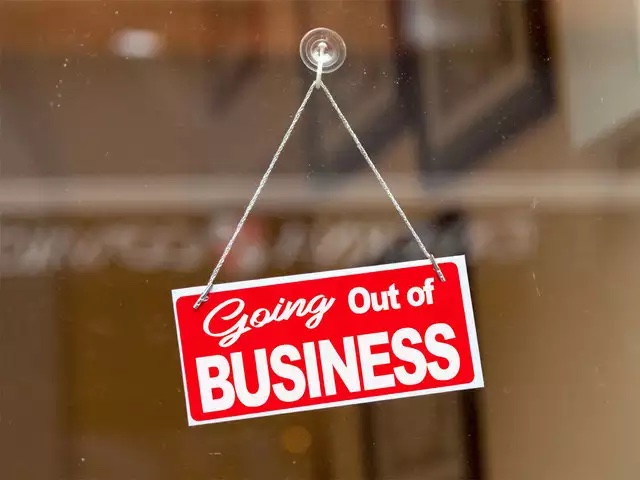
Giant U.K. Retailers go Bankrupt – Top 10 Global News

1. Stocks Bounce Back With U.S. Futures; Dollar Slips

Global stocks and U.S. futures are starting December on a bullish note with a rebound from Monday’s retreat. Cyclical shares led the Stoxx Europe 600 Index higher as banks, miners and energy firms climbed. U.K. stocks were up almost 2% after Goldman Sachs strategists called them a buy ahead of a Brexit trade deal. The risk-on mood carried across other markets. Bitcoin is approaching $20,000 and futures on the Russell 2000 Index of small-cap stocks outperformed the tech-heavy Nasdaq 100 Index. The dollar weakened against most of its major peers.

Futures on the S&P 500 Index increased 0.8% as of morning London time.

The Stoxx Europe 600 Index gained 0.9%.

The MSCI Asia Pacific Index rose 1%.

The MSCI Emerging Market Index rose 1.2%.

2. Pfizer, BioNTech Seek EU Clearance for Covid-19 Vaccine

Pfizer and BioNTech sought regulatory clearance for their Covid-19 vaccine in the European Union, putting the shot on track for potential approval there before the end of the year. The European Medicines Agency said it could issue an opinion within weeks, with a meeting on the assessment scheduled for Dec. 29 at the latest. Submitted on Monday, the formal application caps a rolling review process that started on Oct. 6 and allowed Europe’s drugs regulator to examine data on the vaccine as it emerged. Governments around the world are eager to start vaccinating their populations to curb the pandemic. Rival Moderna requested clearance in the U.S. and Europe on Monday. The U.K. invoked a special rule to allow its regulator to bypass its EU counterpart and maybe the first to sign off on the Pfizer-BioNTech product. The U.S. isn’t far behind, with a Food and Drug Administration panel set to meet on Dec. 10 to discuss the vaccine.

3. Exxon Faces Historic Writedown After Energy Markets Implode

Exxon Mobil is about to incur the biggest writedown in its modern history as the giant U.S. oil and gas producer reels from this year’s collapse in energy prices. Exxon — traditionally far more reluctant to cut the book value of its business than other oil majors — on Monday disclosed it will write down North and South American natural gas fields by $17 billion to $20 billion. That could make it the industry’s steepest impairment since BP’s 2010 Gulf of Mexico oil spill that killed 11 workers and fouled the sea for months. Meanwhile, capital spending will be drastically reduced through 2025. The announcement comes in the waning days of a gruelling year for Chief Executive Officer Darren Woods, who’s resorted to laying off thousands of employees, curtailing retirement benefits and cancelling ambitious growth projects. 

4. Two U.K. Retail Collapses Threaten 25,000 Jobs in 24 Hours

The U.K. retail industry suffered one of the harshest blows yet after two of the country’s best-known retailers collapsed, putting 25,000 jobs at risk in less than 24 hours. Debenhams said Tuesday morning it’s preparing to close its doors for good after failing to find a buyer. Late Monday, Philip Green’s Arcadia Group, which owns brands including Topshop and Dorothy Perkins, began insolvency proceedings. Both retailers have anchored malls and main streets across Britain for decades and operate about 600 stores combined. U.K. retailers have suffered a double whammy: the pandemic hit as many were struggling to adjust to online competition. The industry is set to lose 235,000 retail jobs this year, according to the Centre for Retail Research.

5. European Central Bank Warns Against Hopes for Blockbuster Stimulus

The European Central Bank should focus on keeping financial conditions at current levels through the crisis rather than announcing a blockbuster stimulus package that beats market expectations, according to Executive Board member Isabel Schnabel. Just over a week before the ECB Governing Council’s policy decision, Schnabel confirmed that more support is likely because the pandemic will be more protracted than expected. But she also noted that borrowing costs have dropped to record lows because of monetary and fiscal aid, and what is most important is sustaining that state of affairs until the crisis is past.

6. Pound Rises as Traders Bet on Brexit Breakthrough Within Days

The pound advanced to the highest level in three months as anticipation grew that the U.K. and European Union may strike a trade deal soon. Pound sterling rose as much as 0.6%, sending the currency above September-highs. Irish Prime Minister Micheal Martin told the Irish Times he’s hopeful for a Brexit deal by the end of the week, echoing similar comments by French European Affairs Minister Clement Beaune. With time running short to ratify any agreement before the transition period ends on Dec. 31, momentum is building for a pact. It was spurred by relief the U.K. and EU seemed willing to negotiate a deal and on optimism over the developments of several Covid-19 vaccinations.

7. Xiaomi Seeks Up to $4 Billion in Shares, Convertible Bonds

China’s No. 2 smartphone maker Xiaomi Corp. is seeking to raise as much as $4 billion from a combined share placement and sale of convertible bonds, adding to a war chest aimed at expanding its market share from competitor Huawei. Xiaomi is selling 100 crore shares in a top-up placement to raise as much as $3.2 billion. Xiaomi is also seeking $855 million through a seven-year, zero-coupon convertible bond. Xiaomi shares had been on a rally this year, rising 146% from a year ago. However, its stock slipped after it disclosed that its internet services revenue had grown at its slowest pace in three years in the September quarter. It grabbed market share from Huawei when American sanctions deepened particularly in overseas markets from Europe to India.

8. OPEC+ Talks Delayed as Split Deepens Between Key Gulf Allies

OPEC+ talks were delayed for two days to give ministers more time to reach a deal, after a long and tense meeting on oil production broke down without an agreement. The move was the most dramatic sign yet of the deep division inside the cartel after hours of talks on Monday yielded no result. Oil prices, which have rallied on vaccine hopes as well as expectations that OPEC will maintain its current output curbs, slipped on the news. OPEC ministers met on Monday and had been scheduled to talk to their non-OPEC partners on Tuesday. At one point, there had appeared to be a consensus building between ministers yesterday, but the meeting then became unusually fraught. The run-up to the meeting saw new cracks emerge in the relationship between the United Arab Emirates — a core part of the group — and other members. The UAE’s national long-term strategy to crank up production is clashing with the cartel’s current restrictions.

9. Oyo Has $1 Billion to Fund Operations Until IPO, CEO Tells Employees

Ritesh Agarwal, founder and CEO of Oyo Hotels, told employees the Indian startup is making progress in recovering from the coronavirus fallout and has about $1 billion (INR 7500 cr) to fund operations until an IPO. The 27-year-old entrepreneur made the comments in a fireside chat with Oyo board member Troy Alstead, after the once high-flying company endured months of layoffs and losses as Covid-19 hammered its business. Oyo is one of the largest startups in the portfolio of SoftBank Group, reaching a valuation of $10 billion (INR 75,000 cr) before the downturn. Agarwal said the company’s focus is on getting revenue per available room to 60% to 80% of pre-pandemic levels across all markets. India, China, Japan and Southeast Asia are making progress in reaching that range, he added.

10. Wendy’s to Open 250 Cloud Kitchens in India as Virus Hits

Wendy’s has struck a deal with India’s Rebel Foods to open about 250 cloud kitchens across the country, one of the most ambitious efforts yet to serve customers through delivery rather than the traditional fast-food stores as the industry adapts to the coronavirus pandemic. The U.S. company is experimenting with a new format as the Covid-19 outbreak makes many consumers unwilling or unable to visit traditional stores. Cloud kitchens, which derive their name from cloud computing, are remote facilities without seating or cashiers that prepare food exclusively for delivery. Wendy’s, with nine brick-and-mortar outlets in India, said it believes its cloud kitchen alliance is the largest yet in the industry. Rebel Foods, backed by Sequoia Capital and Goldman Sachs Group is the world’s largest cloud-kitchen operator with more than 300 locations.

Categories
Trending

Moderna Vaccine Submitted for Approval

Moderna submitted its 95% success rate vaccine for approval from USFDA(United States Food and Drug Administration). The company said that they have enough information on the trials conducted, and they are proceeding with their application. The clinical trials from more than 30,000 volunteers showed the vaccine prevented virtually all symptomatic cases of Covid-19.

Moderna expects that on December 17, the FDA will be ready for a public meeting to discuss this data. They will also seek approval from the European Medicines Agency. Moderna shares price went up by 20% in the US as a reaction to the news. The vaccines may be available for commercial use this month and the supply will also be limited.

To know more about the stocks that could benefit from Covid-19 vaccines, click here.

Moderna received more than $1 billion in U.S federal government funding to develop and produce its vaccine. They have also received $1.5 billion to supply it to the American public as soon as it is available in the market. India is also likely to get Moderna’s vaccine through the COVAX facility, which is a global initiative to bring together governments and manufacturers to ensure and accelerate the development and manufacturing of Covid-19 vaccines. India hasn’t signed any advance purchase agreement for Moderna’s vaccine.

For more details about the approval of Moderna’s vaccine visit here.

Categories
Market News Top 10 News Top Global News

Moderna Vaccine 95% Effective – Top 10 Global News

1. U.S. Futures Rise on Vaccine News; Bonds Decline

More positive news on a Covid-19 vaccine delivered a jolt to U.S. equity futures, sending stocks tied to an economic reopening higher while erasing a rally in tech companies where investors had parked money during the lockdown. S&P 500 contracts jumped alongside those on the Russell 2000 Index after Moderna’s vaccine was shown to be 94.5% effective in a preliminary analysis of a large late-stage clinical trial. The vaccine news adds yet another driver to global stocks after optimism last week spurred a rotation into value and cyclical sectors, and out of more defensive industries.

Futures on the S&P 500 Index climbed 1% as of early morning New York time.

The Stoxx Europe 600 Index rose 1.5%.

The MSCI Asia Pacific Index surged 1.4%.

The MSCI Emerging Market Index rose 1.3%.

2. Moderna Vaccine Found Highly Effective at Preventing Covid

Moderna said its Covid-19 vaccine was 94.5% effective in a preliminary analysis of a large late-stage clinical trial. The highly positive readout comes just a week after a similar shot developed by Pfizer and BioNTech was found to be more than 90% effective in an interim analysis. Both shots rely on a technology called messenger RNA that has never been used to build an approved vaccine. A preliminary analysis of data from more than 30,000 volunteers showed Moderna’s vaccine prevented virtually all symptomatic cases of Covid-19.

3. RCEP: Asia-Pacific nations sign the world’s biggest trade pact

China and 14 other countries have agreed to form the world’s largest free trade bloc, encompassing nearly a third of all economic activity, in a deal many in Asia are hoping will help hasten a recovery from the shocks of the coronavirus pandemic. The Regional Comprehensive Economic Partnership, or RCEP, was signed virtually on Sunday on the sidelines of the annual summit of the 10-nation Association of Southeast Asian Nations (ASEAN). In the online ceremony, leaders of RCEP countries took turns standing behind their trade ministers who, one by one, signed copies of the agreement, which they then showed triumphantly to the cameras. It will account for 30% of the global economy, 30% of the global population and reach 220 crore consumers. RCEP will help reduce or remove tariffs on industrial and agricultural products and set out rules for data transmission.

Officials said the accord leaves the door open for India, which dropped out due to fierce domestic opposition to its market-opening requirements, to rejoin the bloc.

4. S&P hits all-time closing high as Biden says no US shutdown

Wall Street jumped as encouraging earnings stoked risk appetite and United States President-elect Joe Biden’s COVID advisory team said it was not considering a nationwide shutdown, but oil prices slid as Libyan output rose and investors worried the resurgent pandemic could hurt global demand. The bellwether S&P 500 and the small-cap Russell 2000 both reached record closing highs.

5. Crackdowns Everywhere Show Xi Strengthening Party Grip on China

The past few weeks have shown that Chinese President Xi Jinping can move extremely fast when he hones in on long-term threats to the Communist Party. And right now they revolve around the convergence of technology, finance and Hong Kong. Since unveiling a goal last month to double the size of the economy by 2035, China has embarked on a sweeping crackdown of some of its most valuable companies. The shock suspension of Ant Group’s $35 billion IPO was quickly followed by more anti-monopoly rules to rein in former tech darlings Tencent and Alibaba, leading to a $290 billion equity sell-off last week. At the same time, he’s moved to further snuff out any opposition in Hong Kong’s legislature, the most democratic institution under Chinese rule. The moves reflect an increased urgency among China’s top leaders to stem growing threats to their rule, whether it be a 2008-style financial crisis, a colour revolution or a new class of billionaires becoming more powerful by the day. And while some of the measures are prudent steps to de-risk the economy, one common thread runs through them all: The need for the Communist Party to control all the levers of power.

6. Hong Kong’s Exchange Unveils Proposal to Speed Up IPO Process

Hong Kong’s stock exchange unveiled a proposal to shorten the time gap between IPO pricing and trading to as little as one day, a move that will bring one of the world’s busiest listing venues in line with rival bourses. Hong Kong Exchanges & Clearing Ltd. proposed an electronic platform called FINI (Fast Interface for New Issuance) that would allow IPO market participants, advisers and regulators to interact digitally. The web-based service will shorten the time gap between pricing and trading to as little as one business day from the current average of five days, reducing market risk.

7. Morgan Stanley Says Go Risk-On and ‘Trust the Recovery’ in 2021

Morgan Stanley strategists said an expected “V-shaped” economic recovery, greater clarity on Covid-19 vaccines and continued policy support offer a favourable environment for stocks and credit next year. Their outlook for 2021 recommended investors overweight equities and corporate bonds against cash and government debt, and sell the U.S. dollar. Volatility is set to decline, and investors should be “patient” in commodity markets. “This global recovery is sustainable, synchronous and supported by policy, following much of the ‘normal’ post-recession playbook,” said the strategists, “Keep the faith, trust the recovery.”

8. Macron Says EU Can’t Go Back to Relying on U.S. Under Biden

French President Emmanuel Macron said the European Union must push on with its efforts to develop the capacity to act independently in technology, international finance and defense, even after President-elect Joe Biden takes over in the U.S. Macron said that EU leaders mustn’t let the defeat of Donald Trump persuade them that they can return to relying on the U.S. to underwrite European security and to defend the bloc’s interests. As examples of EU vulnerabilities, Macron pointed to recent developments in cloud computing services that could leave European data subject to U.S. law and the tensions over the Iran nuclear accord, in which the Trump administration had leverage over the Europeans because of the dollar’s status as a global reserve currency.

9. Over 90% of U.K. Workers Lack Skills Needed in Next Decade

More than 90% of the U.K. workforce lack all the skills they need to do their job well in 2030, underscoring the challenge as the country seeks to reshape its economy following Covid-19 and Brexit. About 3 crore workers need to upskill or retrain, according to an analysis published by McKinsey. 9 out of 10 employers already say they are struggling to recruit people with the skills they need. Skills are climbing up the U.K. agenda as workers seek to remain relevant amid rising unemployment in the wake of the coronavirus pandemic and companies adapt to new demands. Many Britons have not undertaken training in years, with a government survey showing just 62% of employees received any form of workplace instruction — even health and safety or new hire inductions — in 2017. Almost half of the people in the lowest socioeconomic group have had none since they left school.

10. The American Consumer Is Flush With Cash After Paying Down Debt

Eight months into the pandemic, Americans’ household finances are in the best shape in decades. It’s a seemingly incongruous thought, what with the widespread business lockdowns earlier in the year and a coinciding surge in unemployment — and it certainly doesn’t apply to all families equally. But it points to just how strong the U.S. economy was going into the virus outbreak, and how powerful the combined monetary and fiscal response was from the Federal Reserve, Congress and the Trump administration. Record-low mortgage rates, reflecting the ultra-easy Fed policy, have prompted a steady wave of refinancing and allowed homeowners to reduce monthly payments or tap equity. Americans are also holding more cash, helped in part by stimulus from the government.

Categories
Market News Top 10 News Top Global News

India out of China Trade Deal with 15 Asian Countries- Top 10 Global News

1. Global Equity Rally Slows After Days of Consecutive Rises

The rally that’s added $6 trillion to global stocks this month slowed on Thursday, as investors assessed whether markets had overheated amid a deteriorating coronavirus situation in many large economies. European stocks headed toward their first drop of the week on disappointing earnings reports tied to the pandemic. Tech shares outperformed, as some investors perceive them to be defensive. Fears that an intensifying pandemic will curb the economic rebound threaten this month’s almost 10% surge in global equities. The International Energy Agency on Thursday cut forecasts for global oil demand amid new lockdown measures.

Futures on the S&P 500 Index dipped 0.5% as of early morning New York time.

Nasdaq 100 Index futures climbed 0.1%.

The Stoxx Europe 600 Index dropped 1%.

The MSCI Asia Pacific Index was little changed.

2. China and 14 Asian Nations to Sign World’s Biggest Free-Trade Deal

Fifteen Asia-Pacific nations including China aim to clinch the world’s largest free-trade agreement this weekend, the culmination of Beijing’s decade-long quest for greater economic integration with a region that accounts for nearly one-third of the global GDP. The Regional Comprehensive Economic Partnership (RCEP), which includes countries stretching from Japan to Australia and New Zealand, aims to reduce tariffs, strengthen supply chains with common rules of origin, and codify new e-commerce rules. Its passage may disadvantage some U.S. companies and other multinationals outside the zone. Following the withdrawal of India from RCEP negotiations last year, the remaining 15 nations sought to announce the agreement by the end of this week’s ASEAN Summit, which Vietnam is hosting virtually. 

3. Merkel Warns Germany’s Curbs May Get Extended Through Christmas

Chancellor Angela Merkel opened the door to extending coronavirus restrictions into December as Germany struggles to regain control of the pandemic. While rapid increases in new cases have slowed, levels are still too high, Merkel said on Thursday. Germany is looking to reduce cases to 50 per 100,000 people over seven days from 138 currently. Germany is in the midst of a partial lockdown, with bars, restaurants and gyms closed in a bid to regain control of the outbreak while keeping most of the economy operating. Merkel had raised hopes that the measures could be eased again in time for Christmas.

4. U.S. Initial Jobless Claims Decline by the Most in Five Weeks

Applications for U.S. state unemployment benefits fell by the most in five weeks, signalling the gradual improvement in the labor market is continuing despite a record surge in Covid-19 infections. Initial jobless claims in regular state programs totaled 709,000 in the week ended Nov. 7, down 48,000 from the prior week, Labor Department data showed Thursday. On an unadjusted basis, the figure decreased by about 21,000. Continuing claims — the total number of Americans claiming state unemployment assistance for multiple weeks — fell by 436,000 to 6.79 million in the week ended Oct. 31.

5. UK economy rebounds 15.5% in third quarter

Britain’s economy rebounded by 15.5% in the third quarter, emerging from a historic recession as initial coronavirus lockdown measures were relaxed. The economy, however, was still 9.7% smaller than before this year’s coronavirus-induced recession after a massive contraction in the second quarter. Output in services, the production and construction sectors increased by record amounts in the third quarter, but the reports cautioned that they were still below their pre-pandemic levels seen late last year. The nation entered a painful recession after shrinking by a record 19.8% in the second quarter after 2.5% in the first.

6. Netherlands lender Rabobank is set to close half its branches to cut costs

Netherlands-based lender Rabobank will close roughly half its local branches in coming years to cut costs. There will be an unspecified number of job cuts, but most employees will be relocated. Rabobank, best known internationally as an agriculture lender, did not immediately respond to a request for comment. In 2016, the company said it would trim 9,000 jobs, or a fifth of its workforce as part of cost-cutting measures. The number of local branches will be reduced from around 335 to “100 to 150” in coming years, the newspaper said. It said the decision was prompted by prolonged low-interest rates, digital banking and the COVID-19 pandemic. In July, leading Dutch bank ING said it would close a quarter of its bank branches in the Netherlands as the pandemic has accelerated the switch to digital banking.

7. Saudi Red Sea project plans 16 hotels by 2023 to boost tourism

Saudi Arabia’s flagship tourism project, The Red Sea Development Co (TRSDC), plans to have 16 hotels ready by the end of 2023, two more than initially planned in the first phase. The project’s chief executive, John Pagano, said that he expects a V-shape recovery in global tourism once the coronavirus pandemic abates. Owned by a Saudi sovereign fund, and backed by Crown Prince Mohammed bin Salman, the multibillion-dollar project entails developing luxury resorts on 50 islands off the coral-fringed Red Sea coast, where tourists can dive, visit a nature reserve and see heritage sites. TRSDC plans to finalise a 15-year loan from banks worth 14 billion riyals (INR 28,000 cr) by the end of the year to partly fund its 30bn-riyal capital spending by 2023, and it expects to end 2020 with around 15 billion riyals worth of committed contracts.

8. Moderna Poised to Take Vaccine Spotlight With Data Due

The same U.S. explosion of Covid-19 cases that helped Pfizer get results for its vaccine trial earlier this week is helping speed along Moderna’s trial. Moderna said Wednesday its study has accumulated more than 53 infections, allowing a preliminary analysis of the shot’s effectiveness to begin. The shares jumped. Moderna didn’t predict how long it could take an independent monitoring committee to analyze the data but said the company could get the data to the committee within days. The company said it is still blinded to the data. The bet among top experts in the field is that Moderna’s therapy, which uses a similar mRNA technology to Pfizer’s, will likely prove to be highly effective, perhaps mirroring Pfizer’s announcement earlier this week that its shot appears to be more than 90% effective.

9. Xi Challenges Biden With Move to Snuff Out Hong Kong Dissent

President Xi Jinping effectively defeated the most democratic institution under China’s rule, sending a message to Joe Biden that no amount of pressure will prompt him to tolerate dissent against the Communist Party. China’s top legislative body on Wednesday passed a resolution allowing for the disqualification of any Hong Kong lawmakers who aren’t deemed sufficiently loyal. Chief Executive Carrie Lam’s government immediately banished four legislators, prompting the remaining 15 in the 70-seat Legislative Council to resign en masse.

10. Singapore to Introduce New Visa to Draw Top Global Tech Talent

Singapore is rolling out the red carpet for top talent, launching a program to initially attract 500 individuals with a proven track record of contributing to the global technology ecosystem. Under the so-called “Tech.Pass” program, qualified individuals will be able to secure a new type of visa allowing them to start and operate more than one company and become an investor, consultant or mentor for local startups. This offers more flexibility than current government regulations, which require companies to sponsor an employment pass for workers they want to bring in. The two-year visa isn’t designed for mid-tier tech workers who might compete with locals for jobs, a political issue that has prompted the government to tighten its framework for issuing employment passes to foreigners this year. It’s targeted at highly accomplished entrepreneurs and technical experts who can bring in capital, networks and knowhow, as Singapore aims to become the region’s technology and innovation hub.