Categories
Market News Top 10 News

Jet Airways Relaunch Faces Delays – Top Indian Market Updates

Here are some of the major updates that could move the markets tomorrow:

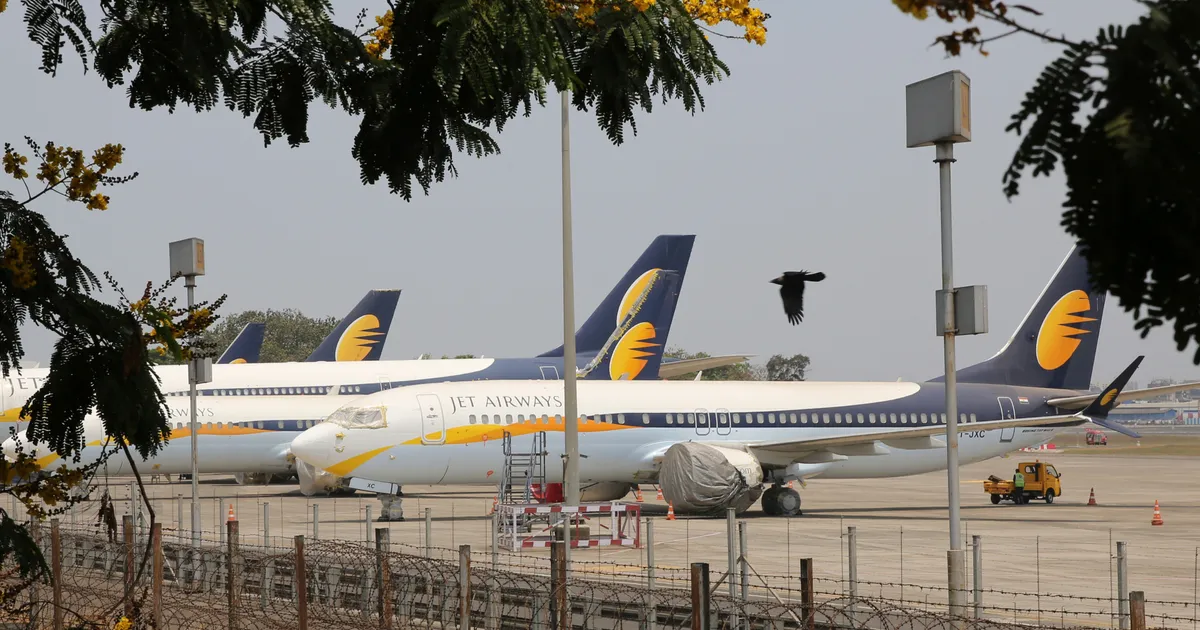
Jet Airways facing more delays: CEO Sanjiv Kapoor

Jet Airways Ltd’s potential new owners, the Jalan-Kalrock consortium, have been trying to relaunch operations this month. However, the airline faces more delays due to unresolved negotiations between the management and engine makers on more favourable terms in its proposed leasing contracts. 

“We will start operations in a planned and phased manner and share details of our fleet, customer value proposition, and business model when we open for sale,” said CEO Sanjiv Kapoor.

Read more here.

AGEL commissions 325 MW wind power project in Madhya Pradesh

Adani Green Energy Ltd (AGEL) has commissioned a 325 megawatts (MW) wind energy plant in Dhar, Madhya Pradesh. The plant has two 25-year Power Purchase Agreements (PPAs) with Solar Energy Corporation of India (SECI) at a tariff of Rs 2.83 per kilowatt hour (kwh). The Adani Group will manage the newly commissioned plant via its ‘Energy Network Operation Centre’ platform.

Read more here.

NARCL to buy 18 distressed accounts totalling ₹39,921 crore by Oct 1: Report

As per an ET Now report, the National Asset Reconstruction Company of India Ltd (NARCL) is preparing to acquire 18 distressed accounts worth ₹39,921 crore by October 31. The bad bank informed lenders that it has created two lists– Phase 1 comprised eight accounts with a debt of ₹16,744 crore. Phase 2 has 10 accounts with a debt of ₹18,177 crore.

Read more here.

Welspun Corp secures order for pipeline project in the US

Welspun Corp has secured a significant order for a carbon capture pipeline project in the United States. The company will supply 785 miles (1,256 km) or 100,000 MT of high-frequency induction welding pipes. The pipes for the order will be produced at the company’s manufacturing plant in Little Rock, Arkansas, and executed in FY23-24.

Read more here.

Delhi HC allows Natco Pharma to launch Chlorantraniliprole

The Delhi High Court has allowed Natco Pharma to launch Chlorantraniliprole (CTPR) and its formulations through its non-infringing process. CTPR technical is formulated into broad-spectrum insecticides for pest management on a wide range of crops. Natco Pharma estimates the current market size of products containing CTPR in India to be over ₹2,000 crore.

Read more here.

Hatsun Agro Products’ board approves rights issue of ₹400 crore

The Board of Directors of Hatsun Agro Products Ltd has approved the proposal for a rights issue aggregating to ₹400 crore. The issue will be available for all existing shareholders. The eligible shareholders will be determined on the record date, which the company will announce in due course. 

Read more here.

Olectra secures order to supply 123 e-buses to Thane Municipal Transport Undertaking

A consortium formed by Olectra Greentech and EVEY Trans has secured an order for 123 electric buses from the Thane Municipal Transport Undertaking. EVEY Trans will procure these e-buses from Olectra Genentech and deliver them in nine months. Meanwhile, Olectra will maintain the buses during the contract period of 15 years. The total value of the order is ₹185 crore.

Read more here.

Dixon Tech signs deal with Ibahn for advanced lighting technology

Dixon Technologies (India) Ltd has entered into a binding term sheet with Delhi-based Ibahn Illumination, whereby Ibahn has agreed to transfer its cutting-edge technologies of smart lighting solutions. Ibahn’s BLE Mesh Smart Lighting (app, firmware, hardware, and cloud-hosted database) provides consumers with Wi-Fi-based technology solutions for its lighting products.

Read more here.

PSP Projects secures work orders worth ₹167 crore

PSP Projects Ltd has secured orders worth ₹167.35 crore in the industrial, precast and residential segments. This includes a major order to construct Phase 2 of a Noodle Factory from a repeat client. With receipt of the above orders, the total order inflow for FY2022-23 till date amounts to ₹1,511.58 crore.

Read more here.

SEBI introduces framework to prevent misuse of clients’ securities by brokers

The Securities & Exchange Board of India (SEBI) has introduced a new framework that will prevent the misuse of clients’ securities and funds by their stock brokers. Under the framework, depositories need to validate the transfer instruction for pay-in of securities from client Demat accounts to trading member pool accounts against obligations received from the clearing corporations.

In other news, SEBI is looking to boost surveillance of social media and other platforms through a web intelligence tool. Using data analytics, the tool will help to investigate violations of various securities laws by individuals, groups, and other entities.

Read more here.

Categories
Editorial

Will a Bad Bank Save India’s Banking Sector?

The Central government has come up with a vital measure to tackle the looming bad loans crisis in India’s banking sector. They have established a bad bank to take over bad debts worth Rs 2 lakh crore from public sector banks. There has been a lot of hype regarding the institution lately. In today’s article, we discuss the concept of a bad bank and how it could reduce the burden of India’s banking industry.

The Rising NPA Crisis in India

Banks are the backbone of any modern economy. They provide the necessary credit (loans) to empower citizens and develop core sectors of the country. As we know, lenders earn income through the interest they receive on loans. Thus, banks need to recover their loans (along with interest) on time to run their core business. 

Unfortunately, India has been facing a severe crisis with respect to bad loans for a while now. Non-performing assets (NPAs) or bad loans have increased multifold across all prominent banks in India over the past decade in the aftermath of the global financial crisis (2007-’08). [NPAs are those assets on which interest has not been received for at least three months]. Simply put, individuals and businesses are unable to pay back their loans due to unfavourable economic conditions. The situation has deteriorated further amidst the Covid-19 pandemic. 

Once unpaid loans start piling up, banks and other financial institutions would face losses. They won’t be in a position to extend new loans. Outside investors will not be willing to infuse money into such institutions. Ultimately, small businesses will suffer as they cannot borrow essential capital at reasonable interest rates. 

According to a report from the Reserve Bank of India (RBI), the total value of bad loans in the Indian banking system stood at Rs 8.35 lakh crore as of March 2021! And this figure excludes NPAs of private sector banks. The volumes of NPAs are not only large but also fragmented across various lenders. These stressed assets have been sitting on the financial books of state-owned banks. This essentially means that the Centre has been continuously using taxpayer money to re-capitalise and support them.

What is a Bad Bank? How Does it Work?

To tackle this serious issue, Finance Minister Nirmala announced the creation of the National Asset Reconstruction Company Ltd (NARCL) or a “bad bank” in her Budget speech for 2021-22. This entity will take the form of an asset reconstruction company (ARC). It will adopt bad debts of public sector banks (typically below their book values). This measure will help the Indian banking sector to get rid of a large sum of NPAs. 

All poorly performing loans will be moved to the NARCL. Thus, commercial banks will be left with loans that are likely to be paid in full. As the balance sheets will be cleaned up, outside investors might be willing to infuse some cash into such banks. When a bank receives more capital, it can increase its reserves and extend new loans.

Important Facts on NARCL

  • The NARCL aims to acquire total stressed assets worth up to Rs 2 lakh crore from the lenders’ balance sheets. The process will be completed in phases based on the framework and regulations of the RBI.
  • The NARCL will be supported by the India Debt Resolution Company Ltd (IDRCL). This entity will manage the acquired assets (bad loans) and allow market professionals to add value to them. It will essentially recover the NPAs. The IDRCL is nothing but an asset management company (AMC).
  • Upon resolution, the bad bank will pay up to 15% of the agreed value for cash loans to the banks. The remaining 85% would be government-guaranteed security receipts (SRs). On Sept 15, the Cabinet approved a government guarantee of up to Rs 30,600 crore to back SRs to be issued by NARCL.
  • Public sector banks will hold a 51% stake in NARCL and a 49% stake in IDRCL. The remaining stake in both entities will be held by private-sector lenders. The State Bank of India, Union Bank of India, and Punjab National Bank have picked up over 12% stake each in NARCL. Indian Bank has acquired 13.27% in the proposed bad bank.

Conclusion 

Bad banks are not a new concept. The first bad bank in the world was created way back in 1988 by US-based Mellon Bank to hold its stressed assets. Following its success, bad banks became a widely recognised model in several countries such as Finland, Sweden, Indonesia, and Belgium. However, such a measure has been unsuccessful in countries such as China, Mexico, and Italy due to improper planning and execution.

On Sept 4, the RBI granted a license to the Rs 6,000 crore NARCL. This move will kickstart the operations of the bad bank. The creation of the NARCL and IRDCL would help accelerate the resolution process of NPAs. Banks in our country will benefit from improvement in the value of NPAs through the IRDCL. However, a crucial challenge would be to sell the stressed assets to prospective buyers to resolve the crisis. Even if the stressed assets fail to be resold in the market (or if they are sold at a discount when compared to their fair market values), banks can invoke the government guarantee to make up for any shortfalls. 

The removal of a large sum of toxic loans from the lenders’ balance sheets will allow them to expand their lending activities. It would also free up the funds that had been allocated for addressing losses associated with NPAs. More funds will be available to cater to the productive sectors of their lending businesses. The bad bank will also bring an improvement in the valuation of PSU banks and enhance their ability to raise capital. 

Banks in our country will have to collectively move towards better resolution of NPAs. There is hope that NARCL will finally be able to alleviate the bad loan crisis in India. What are your views on the proposed bad bank? Let us know in the comments section of the marketfeed app.

Categories
Market News Top 10 News

Cabinet Clears Rs 30,600 crore Govt Guarantee for Bad Bank – Top Indian Market news

Cabinet approves Rs 30,600 crore govt guarantee for bad bank

The Union Cabinet has cleared a proposal to provide a Rs 30,600 crore government guarantee for security receipts issued by the National Asset Reconstruction Company Ltd (or bad bank) as part of the resolution of bad loans. NARCL will aggregate the non-performing assets (bad loans) from banks’ balance sheets and manage and dispose of them professionally. The bad bank will pay up to 15% of the agreed value for the bad loans in cash, and the remaining 85% would be government-guaranteed security receipts. Nearly 90,000 crore worth of NPAs will be transferred to NARCL in the first phase.

Read more here.

BHEL commissions India’s largest floating solar PV plant

Bharat Heavy Electricals Ltd (BHEL) has commissioned India’s largest floating solar photovoltaic (PV) plant in Andhra Pradesh. Located at NTPC Simhadri, the 25 megawatt (MW) floating SPV project covers an area of 100 acres. BHEL’s scope of work in the project included design, engineering, procurement, and construction of the solar project. The project will help in saving valuable land resources and conserving water by reducing evaporation. 

Read more here.

Easy Trip Planners to expand presence to Philippines, Thailand, and the US

Easy Trip Planners has expanded its international footprint by incorporating wholly-owned subsidiaries in the Philippines, Thailand, and the United States. The company has forayed into these countries as part of the second phase of a global expansion strategy. They are anticipating a huge pent-up global demand for the travel and tourism sector in the coming months. The new subsidiaries will replicate the cost-effective operating model that EaseMyTrip has successfully adopted in India for over 13 years. 

Read more here.

Dilip Buildcon secures order worth Rs 1,060 crore from NHAI

Dilip Buildcon Ltd has received a Letter of Acceptance (LoA) from the National Highways Authority of India (NHAI) for a road project in Andhra Pradesh. The scope of work includes the construction of a four-lane Bangalore-Chennai Expressway from Bangarupalem to Gudipala section in Andhra Pradesh. The bid project cost is Rs 1,060 crore. Dilip Buildcon has to complete the project within two years.

Read more here.

NCLT approves amalgamation of Lincoln Pharma and Lincoln Parenteral

The National Company Law Tribunal (NCLT)-Ahmedabad Bench has approved the scheme of amalgamation of Lincoln Pharmaceuticals Ltd and Lincoln Parenteral Ltd. This move will boost synergies in terms of operational efficiency, enhance competitive strength, cost-effectiveness, and productivity for the combined entity. The scheme will be effective upon the filing of a certified copy of the order of NCLT with the Registrar of Companies, Gujarat.

Read more here.

M&M Finance enters vehicle leasing, subscription business

Mahindra & Mahindra Financial Services Ltd has forayed into the vehicle leasing and subscription business. The new vertical will operate under the brand name ‘Quiklyz’. Consumers can pay a monthly fee to access the vehicle of their choice across all car brands at a lower price point when compared to regular car ownership. Mahindra Finance said Quiklyz will add substantial value to its existing business portfolio as it aspires to tap all emerging opportunities in the vehicle leasing space.

Read more here.

Saregama India’s board approves raising up to Rs 750 crore

The Board of Directors of Saregama India Ltd has approved the raising of funds by issuing securities for an aggregate amount not exceeding Rs 750 crore. The securities will be issued by way of a private placement, preferential issue, or public issue. The board has also approved the appointment of Deepak Jain as interim Chief Financial Officer (CFO) of the company. Saregama India is India’s oldest music label owned by the RP-Sanjiv Goenka Group of companies. 

Read more here.

Centre receives investment proposal of Rs 6,000 crore for PLI scheme for AC, LED lights

Nearly 52 companies have applied for availing production linked incentives (PLI) for white good makers, proposing an investment of ~Rs 6,000 crore in the manufacturing of components for ACs and LED lights. The Centre has received applications from firms such as Daikin, Blue Star, Panasonic, Dixon Tech, Amber Enterprises, and Lloyd. This PLI scheme will help save foreign currency, as a majority of the components in AC and LED lights are now imported from China and Taiwan. It will also create job opportunities in the country.

Read more here.

Aptech enters edtech segment with ‘ProAlley.com’ 

Aptech Limited has entered the educational technology (edtech) segment with its latest brand— ‘ProAlley.com’. The brand intends to reach out to a new set of users that are self-paced learners who want to learn and make a career in the growing media & entertainment industry. ProAlley.com comes with hi-tech features and a quick, user-friendly interface. Mumbai-based Aptech is a pioneer in the non-formal vocational training business in India.