Categories
Editorial

5 Critical Mistakes SIP Investors Must Avoid

Investing through Systematic Investment Plans (SIPs) can be a powerful way to grow your wealth over time. However, many investors unknowingly make mistakes that can severely limit their returns. These mistakes often allow brokers or banks to benefit at your expense, leaving you with lower profits than expected. In this article, we’ll explore five common mistakes SIP investors make and how to avoid them. Learn how to maximise your profits and safeguard your financial future!

1. Choosing Regular Mutual Funds Over Direct Mutual Funds

One of the most common mistakes investors make is not understanding the difference between regular and direct mutual funds. Regular mutual funds involve a middleman—often an agent or broker—who takes a commission on your investments. This commission can range from 1% to 1.5% or even higher, depending on the mutual fund scheme. Over time, this seemingly small percentage can have a massive impact on your returns.

For example, if you invest ₹10,000 every month in a regular mutual fund with a CAGR (Compound Annual Growth Rate) of 22.8%, your returns after 20 years could amount to ₹4.63 crores. However, if you had chosen a direct mutual fund with a slightly higher CAGR of 24.6%, your returns would have increased to ₹6.33 crores— a difference of ₹2 crores!

Solution: Always opt for direct mutual funds when possible. You can easily switch from regular to direct funds by stopping your regular SIPs and starting new ones with direct funds. While there may be a small tax implication, the long-term benefits are worth it.

How to Identify Regular and Direct Mutual Funds?

When investing, look for clear indicators on the mutual fund’s platform. Most reputable mutual fund houses will display both regular and direct options. If you’re approached by a bank or broker, they will likely recommend regular funds. If you prefer to manage your investments independently, opt for direct mutual funds to enhance your returns.

2. Selecting IDCW Mutual Funds Instead of Growth Plans

Another common mistake is choosing Income Distribution cum Capital Withdrawal (IDCW) mutual funds instead of Growth Plans. IDCW funds distribute dividends to investors, which might seem attractive for those seeking regular income. However, this option can hinder the compounding benefits of your investment, ultimately reducing your long-term returns. In contrast, growth mutual funds reinvest profits back into the fund, allowing your investment to compound over time.

For instance, an HDFC Flexi Cap mutual fund with an IDCW option might yield a 12% CAGR, whereas the same fund with a growth option could yield over 23% CAGR. The difference in returns can be substantial over time. Moreover, the taxation on IDCW could further reduce your net gains.

Solution: Always choose the growth option if your goal is long-term wealth creation. This allows your returns to compound within the fund, leading to higher gains over time.

3. Lack of Diversification: Investing Solely in Small-Cap Funds

Diversification is a fundamental principle of investing that many SIP investors overlook. Investors often get swayed by the impressive returns of small-cap funds, leading them to allocate all their investments into these high-risk funds.

While small-cap funds may have outperformed the market recently, they can also be highly volatile. Investing all your money in small caps without diversifying into large-cap or mid-cap funds exposes you to increased risk. During market downturns, small-cap funds often underperform, which can lead to significant losses.

Solution: Diversify your investments across large-cap, mid-cap, small-cap, and flexi-cap funds. You can also consider a portfolio that includes various asset classes, such as gold and debt instruments. For example, gold often performs well during market crashes. This provides a safety net that can be leveraged when equity investments decline in value. This strategy allows you to capitalise on different market conditions and helps mitigate risks.

Identifying Overlap in Mutual Funds

Even when diversifying, it’s crucial to ensure that your funds are not investing in the same underlying stocks. Use platforms to check the fund’s holdings and understand their investment philosophy. If multiple funds have significant overlaps in their holdings, it reduces the effectiveness of your diversification strategy.

4. Not Having an Emergency Fund

Investing in SIPs without first establishing an emergency fund is a mistake that can jeopardise your financial goals. Life is unpredictable, and an unexpected event, such as job loss or a medical emergency, could force you to sell or liquidate your SIP investments prematurely. This could result in losses, as you may need to sell your holdings during a market downturn.

Solution: Before starting any long-term investments, ensure you have an emergency fund in place. This fund should be easily accessible and sufficient to cover at least six months of living expenses. You can keep this fund in a high-interest savings account or a liquid mutual fund.

5. Ignoring Health and Term Insurance

Many individuals are eager to grow their wealth through SIPs but overlook the importance of protecting themselves and their families against unforeseen events. Health emergencies can arise at any time. Without proper insurance, you may be forced to dip into your investments to cover medical expenses.

For instance, let’s say you’ve been investing ₹10,000 monthly in SIPs, targeting ₹6.33 crores over 20 years. However, a health emergency after five years forces you to withdraw from your SIPs, leaving you with only ₹11.8 lakhs—far below your goal.

Solution: Ensure you have a comprehensive health insurance plan and a term insurance policy before committing to long-term SIP investments. If you have limited funds, it’s better to reduce your SIP contributions to allocate some funds towards insurance premiums. This safety net will protect your investments and help you stay on track to achieve your financial goals.

Conclusion

Investing in SIPs can be a rewarding strategy for wealth accumulation, but it’s essential to avoid common mistakes that can undermine your efforts. By understanding the differences between regular and direct mutual funds, choosing the right fund type, diversifying your investments, establishing an emergency fund, and securing adequate insurance, you can enhance your investment outcomes significantly.

Take the time to review your current investment strategy and make necessary adjustments to avoid these mistakes. By doing so, you will not only protect your wealth but also maximise your potential returns over the long term. Start today by addressing these critical areas and watch your investments flourish!

Watch the full video on marketfeed’s YouTube channel: SIP Mistakes to Avoid in 2024 | marketfeed

Categories
Daily Market Feed Post Market Analysis

Sideways Weekly Closing! Where Will Nifty Go Next? – Post-Market Analysis

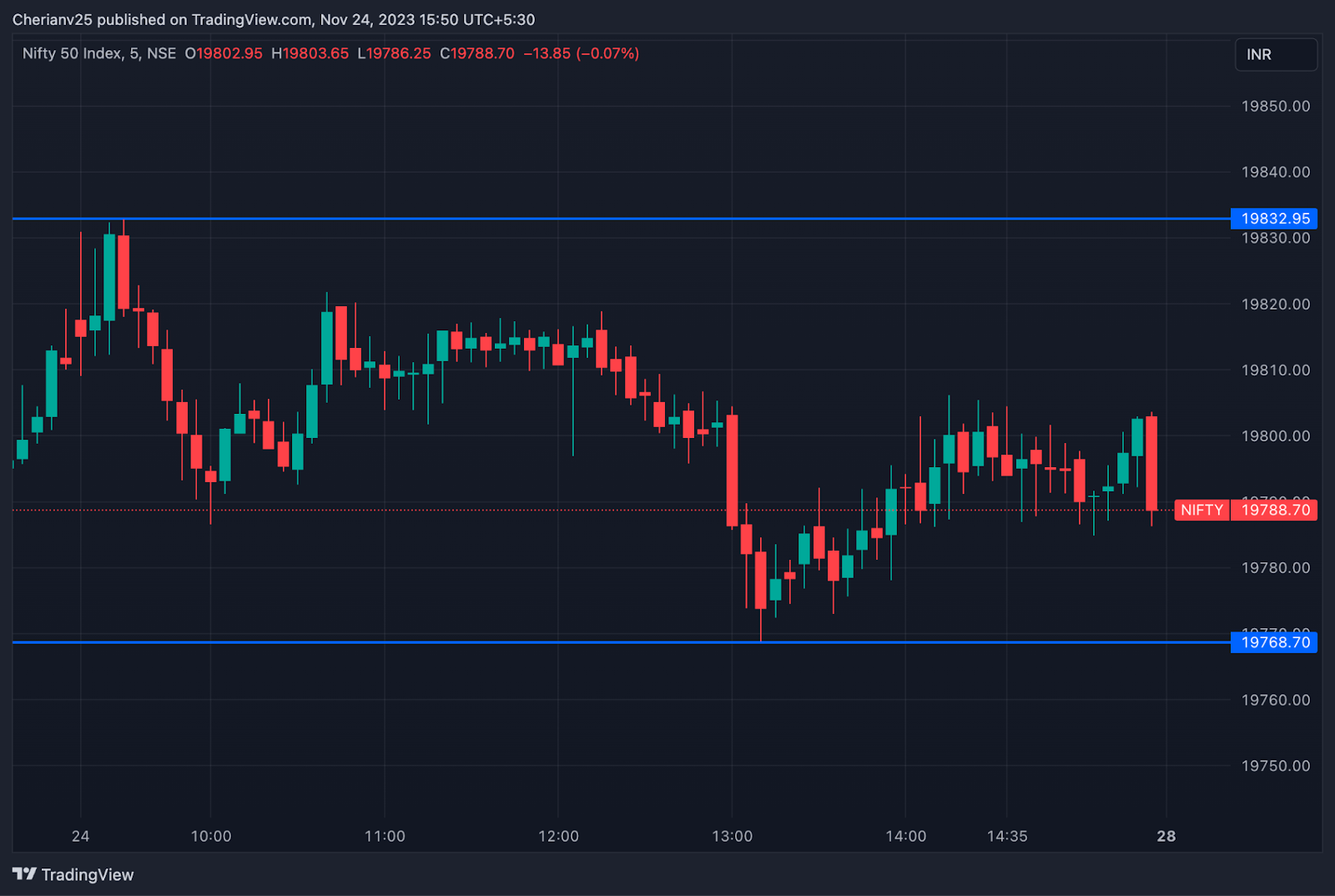
NIFTY started the day flat at 19,809. The index mostly moved in a small range of 40 points throughout the day between 19,780 and 19,820. Nifty closed at 19,794, down by 7 points or 0.04%.

Nifty chart November 24- post-market analysis | marketfeed

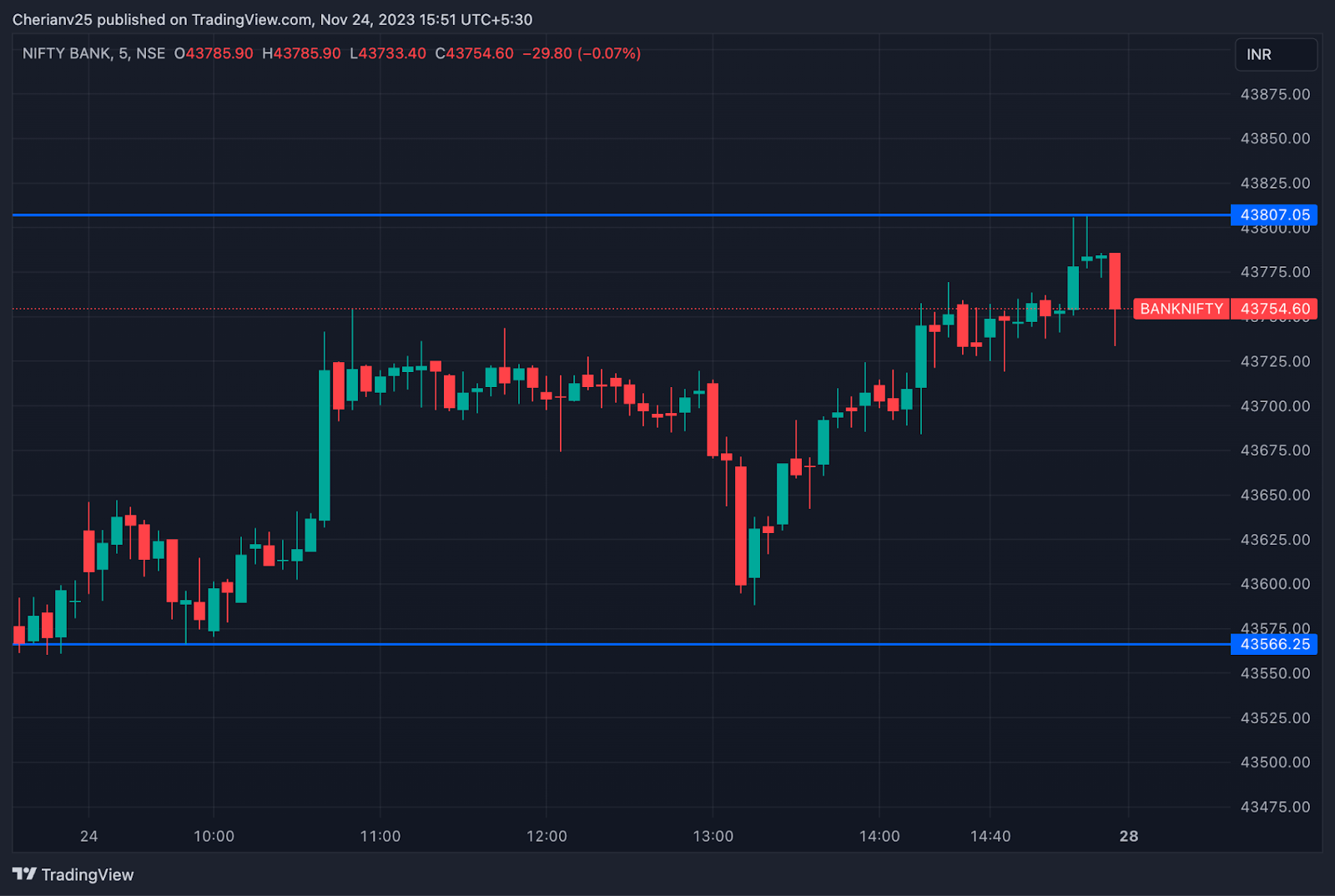
BANK NIFTY (BNF) started the day flat at 43,607. After a small consolidation initially, the index moved up to the 43,700 resistance level, consolidated again, gave a breakdown and fell till opening levels. It again shot up and crossed the day’s high to 43,800. BNF closed at 43,769, up by 191 points or 0.44%.

Other indices except Nifty IT (-0.97%), Nifty FMCG (-0.47%), and Nifty PSU Bank (-0.34%) closed in flat-to-green. Nifty Pharma (+0.87%) moved up the most.

Major Asian markets closed mixed. UK’s FTSE100 is currently trading in the red, while Germany’s DAX and France’s CAC40 are trading in the green.

Today’s Moves

Cipla (+2.39%) was NIFTY50’s top gainer. HSBC maintained a “Buy” rating on the stock.

Shares of public sector insurance firms New India Assurance (+19.98%), General Insurance Company (+16.46%), and LIC (+9.71%) surged today amid a strong outlook.

HCL Tech (-1.49%) was NIFTY50’s top loser. 

Shares of CG Power (-6.7%) came under selling pressure today. Earlier this week, the company announced plans to set up an outsourced semiconductor assembly & test facility in India.

Warren Buffet’s Berkshire Hathaway has sold its stake in Paytm (-3.34%).

Markets Ahead

The indices had a week marked by volatility and consolidation. There was buying observed at lower levels and rejection at higher levels. The direction of the market’s future movement will likely be determined by a breakout or a breakdown on Tuesday. The Indian stock markets will be closed on Monday (November 27) on account of Gurunanak Jayanti.

Nifty: The index currently has immediate support around 19,800. A breakdown from this level could potentially lead to a decline to 19,700 and 19,630 levels. On the other hand, the resistance to keep an eye on is approximately 19,860. A breakout from this level might pave the way for targets of 20,000.

Bank Nifty: A significant resistance level to monitor in BNF is 43,800. A breakout from this level could potentially trigger targets around the round level of 44,000. Meanwhile, the immediate support is situated near 43,600 levels. If there’s a breakdown from this support, the index may decline to 43,500 and 43,200 levels.

Please join The Stock Market Show at 7 PM on our YouTube channel.

Categories
Market News Top 10 News

NTPC Group Crosses 3 GW Operational Renewable Energy Capacity – Top Indian Market Updates

Here are some of the major updates that could move the markets tomorrow:

NTPC Group crosses 3 GW operational renewable energy capacity

NTPC Group (including joint ventures and subsidiaries) has crossed 3 gigawatts (GW) of operational renewable energy (RE) capacity. The group achieved this milestone with the commissioning of Phase 1 of the 300 megawatts (MW) Nokhra Solar PV Project at Bikaner, Rajasthan. The company now has 36 operational RE projects spread across 12 states with a cumulative capacity of 3,094 MW.

Read more here.

Delhivery to acquire supply chain solutions provider Algorhythm Tech

Delhivery Ltd will acquire Pune-based supply chain solutions provider Algorhythm Tech (AT) to strengthen its offerings in this space. Post completion of this transaction, AT will operate as a wholly-owned subsidiary of the company. Algorhythm Tech offers end-to-end supply chain planning and execution products to clients across various sectors such as FMCG, pharma, steel, auto, and telecom.

Read more here.

Adani Group company VCPL has picked up 8.27% stake via open offer: NDTV

NDTV has disclosed that Adani Group firm Vishvapradhan Commercial Pvt. Ltd. (VCPL) has acquired an 8.27% stake in the company in the recently concluded open offer. Adani’s total shareholding in the media company has increased to 37.45% with the closure of the open offer. The open offer was triggered after VCPL acquired a 99.5% stake in RRPR Holding Pvt. Ltd. (RRPR), which translated to 29.18% of the shareholding in the TV news company. To learn more about the takeover, click here.

Read more here.

Shyam Metalics enters stainless steel business with Mittal Corp buyout

Shyam Metalics & Energy Ltd (SMEL) seeks to conclude its acquisition of Mittal Corp to strengthen its metal portfolio by entering the stainless steel/wire rod & bar mill business. The company has embarked on a ‘diversification approach’ in the metal space to chart its growth journey and proposes to further invest ₹7,500 crore over the next five years. SMEL aims to increase its capital expenditure (capex) to ₹10,000 crore in the next five years for organic and inorganic expansion.

Read more here.

Banks write off loans worth ₹11.17 lakh crore in last 6 years

Banks have written off bad loans worth ₹11.17 lakh crore from their books in the last six years till the financial year 2021-22, said Minister of State for Finance Bhagwat Karad. The non-performing assets (NPAs), including those in respect of which full provisioning has been made on completion of four years, are removed from banks’ balance sheets by way of write-offs. Banks write off NPAs as part of their regular exercise to clean up their balance sheet, avail tax benefits, and optimise capital.

Read more here.

Tata Motors migrates dealer management system to Oracle Cloud Infrastructure

Tata Motors announced the migration of its entire Dealer Management System (DMS) to Oracle Cloud Infrastructure (OCI). The move is expected to boost the automaker’s operational efficiencies with deeper business insights, greater security, increased flexibility, and cost optimisation. The DMS supports Tata Motors’ pre-sales, sales, and after-sales market touchpoints across all segments of passenger and commercial vehicles.

Read more here.

Bharti Airtel acquires strategic stake in Lemnisk

Bharti Airtel has acquired a strategic stake in Lemnisk (Immensitas Private Limited) under its StartUp Accelerator Program. Airtel will work towards creating a customer data platform (CDP) across its digital business, including ad-tech (Airtel Ads), Digital Entertainment (Wynk Music and Airtel Xstream) and Digital Marketplace (Airtel Thanks App) through this acquisition.

Read more here.

Capacit’e Infraprojects bags Rs 117 crore order from DLF

Construction firm Capacit’e Infraprojects Ltd has bagged an order worth ₹117.20 crore from DLF Ltd for the construction of a mall in Goa. The contract amount excludes GST and labour cess. The company said the order inflow for the current fiscal, along with the existing order book, gives it confidence to deliver good growth in the coming quarters.

Read more here.

CCI approves Brookfield’s minority stake buy in UPL Sustainable Agri Solutions Ltd

The Competition Commission of India (CCI)  has approved Woodhall Holdings Ltd’s acquisition of a minority stake in UPL Sustainable Agri Solutions Ltd (UPL SAS). The deal has been cleared under the green channel route. Under this framework, a transaction which does not raise any risk of an appreciable adverse effect on competition is deemed to be approved on being intimated to the fair trade regulator.

Read more here.

Care Ratings predicts 12-15% growth in general insurance premium

Care Ratings expects the gross direct premium of general insurance companies to grow by 12-15% in the medium term, with private insurers continuing to outperform government-owned insurers. Lower health insurance payouts post Covid, increase in prices of group insurance and easing of solvency requirements for crop insurance will support growth for general insurance companies in the next financial year, said the rating agency.

Read more here.

Categories
Jargons

What are Unit-Linked Insurance Plans (ULIPs)?

Buying an insurance plan/policy is essential to make yourself financially secure to face any unexpected or sudden problems in life. It provides a cover against any sudden loss. But did you know that there’s a financial product that combines insurance and investment benefits in a single plan? Unit-Linked Insurance Plans (ULIPs) provide a mix of both life insurance and investment. Insurance companies offer ULIPs so that their clients can get life cover and also reap the benefits of investing in equity and debt funds. It creates a habit of regular and disciplined savings.

ULIPs vs Traditional Insurance Plans 

Traditional insurance plans focus solely on providing life insurance coverage. On the other hand, ULIPs have an investment component and allow the policyholder to have some control over the investment allocation within the policy. They provide a combination of wealth creation and life insurance benefits. This makes ULIPs popular among individuals looking for protection and investment opportunities in a single package.

Here are a few notable differences between ULIPs and traditional insurance plans:

ULIPsTraditional Insurance
PurposeInsurance cover along with investment benefits.Insurance cover only
ObjectiveLong-term plans that offer insurance and investment benefit.To avail fixed returns in the long term.
Return on InvestmentVariable returns as it is equity-linkedGuaranteed returns as the investment in risky instruments are low
Lock-in Period3-5 yearsLocked till maturity
SIPAvailableUnavailable
How is your money utilised?The premium payment towards ULIP goes towards meeting the expenses, insurance cover and equity mutual fund.The premium payment towards Traditional insurance plans goes towards expenses, insurance cover and low-risk instruments.

How Do ULIPs Work?

ULIPs work by combining insurance coverage with investment opportunities. Here’s a simplified explanation of how ULIPs typically work:

1. Premium Payment

When you buy and hold a ULIP policy, you’ll have to make regular premium payments. A part of this premium is utilized to provide life insurance coverage. The remaining amount is pooled with the money received from other policyholders and then invested in equity, debt, or even hybrid funds. [A hybrid or balanced fund is a financial instrument that invests in a mix of both equity and debt segments in a specific ratio].

2. Insurance Component

A portion of the premium gets allocated towards providing life insurance coverage. In the event of the policyholder’s demise during the policy term, the nominee will receive a death benefit.

3. Investment Component

The remaining premium gets invested in various investment funds, such as equity, debt, or balanced funds. Policyholders can choose the funds based on their risk appetite and investment goals. A professional fund manager looks after the investments made by all policyholders.

ULIPs give investors the option to switch between equity and debt funds based on market conditions and their risk-taking capacity. The gains from such schemes will be taxed the same way as most mutual funds are taxed

4. Unit Allocation

The insurance company will utilise the investment component of the premium to purchase units in the chosen investment funds. The number of units allocated depends on the prevailing unit price at the investment time.

5. Fund Performance

The value of the units invested fluctuates with the performance of the underlying investment funds. If the funds perform well, the unit value increases, potentially leading to higher returns.

6. Flexibility

ULIPs typically offer flexibility in managing investments. Policyholders can switch between different funds based on their changing investment preferences. Some ULIPs also allow partial withdrawals or top-ups to the investment amount.

7. Charges

ULIPs involve charges such as premium allocation charges, policy administration charges, and fund management charges. These charges get deducted from the premium before it allocates insurance coverage and investments. 

8. Policy Term and Maturity

ULIPs have a defined policy term. On maturity, the policyholder receives the maturity benefit, which is the current value of the investment units. The performance of the chosen funds influences the value of this amount.

Advantages of Investing in ULIPs

ULIPs offer several advantages to policyholders. Here are some key benefits of ULIPs:

1. Insurance Coverage

ULIPs provide life insurance coverage, ensuring financial protection for the policyholder’s family in the event of an untimely demise.

2. Investment Opportunities

ULIPs allow policyholders to invest in a variety of funds, such as equity, debt, or balanced funds. This provides the potential for wealth creation and capital appreciation over the long term.

3. Flexibility

ULIPs offer flexibility in managing investments. Policyholders can switch between different funds based on market conditions or their changing investment objectives. Some ULIPs also provide options for partial withdrawals or additional contributions.

4. Goal-based Investing

ULIPs enable policyholders to align their investments with specific financial goals, such as education, retirement, or wealth accumulation. The investment flexibility allows for customised strategies based on individual objectives.

5. Tax Benefits

ULIPs offer tax benefits under Section 80C of the Income Tax Act in India. Policyholders can claim deductions on the premium paid, subject to specified limits. Additionally, the maturity proceeds are tax-free under Section 10D, subject to certain conditions.

6. Wealth Transfer

ULIPs provide an efficient means of transferring wealth to the nominee(s) in the event of the policyholder’s demise. The death benefit received by the nominee is generally tax-free and can provide financial stability to the family.

Risks and Challenges of Investing in ULIPs

Investing in ULIPs comes with certain risks and challenges:

1. Market Risk

ULIPs are subject to market fluctuations. The value of the investment units can rise or fall based on the performance of the underlying investment funds. Poor market conditions may result in lower returns or even capital loss.

2. Investment Risk

The policyholder bears the investment risk in ULIPs. If the chosen investment funds do not perform well, it can affect the overall returns. The performance is dependent on various factors such as market conditions, economic stability, and fund management.

3. Charges and Fees

ULIPs involve various charges, which can impact the overall returns. It’s essential to understand and consider these charges before investing.

4. Lock-in Period

ULIPs typically have a lock-in period, which means that the policyholder cannot withdraw or surrender the policy before a certain period. Early withdrawal may attract penalties and impact the investment value.

5. Insurance Costs

A portion of the premium paid towards ULIPs gets allocated for insurance coverage. The insurance costs can be higher compared to standalone term insurance plans. It’s necessary to understand whether the insurance component adequately meets your coverage needs.

6. Surrender Charges

If the policyholder decides to surrender or exit the ULIP before the lock-in period, surrender charges may apply. These charges can impact the final payout or surrender value of the policy.

Before investing in ULIPs, individuals should carefully assess their investment objectives, and risk tolerance, and understand the terms and conditions of the policy. It’s advisable to review the performance of the chosen funds regularly and seek professional advice if needed.

How to Choose the Right ULIP?

When selecting a Unit-Linked Insurance Plan, it’s important to consider the following factors;

1. Investment Objectives

Determine your investment goals, whether they are long-term wealth accumulation, retirement planning, education funding, or any other specific financial objective. Aligning the ULIP with your investment objectives is crucial.

2. Risk Appetite

Assess your risk tolerance level. ULIPs offer different investment fund options with varying risk profiles, such as equity funds (higher risk), debt funds (lower risk), or balanced funds (moderate risk). Choose funds that match your risk appetite.

3. Fund Performance

Evaluate the historical performance of the investment funds offered within the ULIP. Analyse factors such as consistency, returns generated over different market cycles, and the fund manager’s track record. Consider funds that have delivered favourable returns over a reasonable period.

4. Charges and Fees

Understand the various charges associated with the ULIP. Compare the charges across different ULIPs to ensure they are reasonable and do not significantly impact your investment returns.

5. Flexibility

Assess the flexibility offered by the ULIP. Look for features such as the ability to switch between funds, make partial withdrawals, or increase/decrease the sum assured as per your changing needs.

6. Transparency

Evaluate the transparency of the ULIP provider. Ensure that you have access to regular updates on fund performance, policy-related documents, and information on charges and fees.

7. Insurance Coverage

Assess the adequacy of the insurance component of the ULIP. Consider factors such as the sum assured, riders (additional coverage options), and the policy’s ability to meet your insurance needs.

8. Company Reputation

Research the reputation and credibility of the insurance company offering the ULIP. Look for financial strength, claim settlement records, customer service, and reviews from existing policyholders. Choose a reputable and reliable insurer.

9. Policy Term and Lock-in Period

Evaluate the policy term and lock-in period of the ULIP. Longer policy terms provide more time for potential investment growth, while the lock-in period ensures commitment to the investment. Understand the implications of early withdrawals or surrenders.

10. Seek Professional Advice

Consider consulting a financial advisor or insurance expert who can provide personalised guidance based on your financial situation, goals, and risk profile. They can help you navigate the complexities of ULIPs and choose the most suitable option.

Tax Benefits of ULIPs

Interestingly, investments made in ULIPs can be used to claim a tax deduction of up to ₹1.5 lakh under Section 80C of the Income Tax Act. The returns from the policy are also exempt from taxation on maturity (up to Rs 2.5 lakh) under Section 10 (10D) of the IT Act. If the ULIP investor dies during the term of the ULIP, their nominee will be entitled to the death benefit specified in the ULIP policy, and the amount received on death is exempt from tax.

Lock-in Period & Charges of ULIPs

ULIPs come with a mandatory lock-in period of five years. It means that you can withdraw your ULIP policy only after five years from the date of investment. There are no provisions to make a premature exit. After five years, you can redeem the full amount. Since ULIPs are a combination of a life insurance policy and a mutual fund (which are long-term investments), it is advised that one should hold a ULIP policy for 15 years or more.

When a person subscribes to a ULIP, the insurer levies a charge for insurance protection upon his death and to cover other expenses. This is known as the mortality charge. It is usually deducted along with other charges before investing the policyholder’s money.

The expense ratio (or annual maintenance charge levied by fund managers) is mostly in the range of 1.05-2.25%. 

Disclaimer: Before investing in a ULIP, do proper research on the product and analyze all the charges levied.

Categories
Editorial

Star Health & Allied Insurance Company Ltd IPO: All You Need to Know

Health insurer Star Health & Allied Insurance Company has launched its initial public offering (IPO) today— Nov 30. It will be the sixth insurance company to go public in India. In this article, learn more about Star Health and its IPO. 

Company Profile – Star Health & Allied Insurance Company Ltd

Star Health & Allied Insurance Company Ltd is one of the largest private health insurers in India, with a market share of 15.8% as of FY21. It primarily focuses on the retail health and group health segments, which accounted for 89.3% and 10.7%, respectively, of its total gross written premium (GWP) in FY21. [GWP is the total premium (both direct and assumed) written by an insurer before deductions and remitting commissions]. 

Coverage Options Offered by Star Health:

  • Retail health insurance— Paid for by private individuals or families through out-of-pocket expenses or private insurance. 
  • Group health insurance— Paid for by employers, typically in the form of company health insurance plans. Such policies may involve co-payments by employees. 
  • Government health insurance— Paid for by the government, typically in the form of central or state government health insurance
  • Personal accident
  • Travel insurance

The Chennai-based company distributes its policies through individual agents and corporate agents. As of Sept 31, 2021 (Q2 FY22), its network distribution included 779 health insurance branches across 25 states and 5 union territories (UTs) in India. Star Health has also built one of the largest health insurance hospital networks in our country, with more than 11,778 hospitals.

Star Health’s promoters include ace investor Rakesh Jhunjhunwala and private equity firms Westbridge Capital, Safecorp Investments India LLP.

About the IPO

Star Health’s public issue opens on November 30 and closes on December 2. The company has fixed Rs 870-900 per share as the price band for the IPO.

The fresh issue of shares (of the face value of Rs 10 each) aggregates to Rs 2,000 crore. The IPO also includes an offer for sale (OFS) of 5.8 crore shares by promoters and early investors. Individual investors can bid for a minimum of 16 equity shares (1 lot) and in multiples of 16 shares thereafter. You will need a minimum of Rs 14,400 (at the cut-off price) to apply for this IPO. The maximum number of shares that can be applied by a retail investor is 208 equity shares (13 lots). 

Star Health will utilise the net proceeds from the IPO to augment/boost its capital base and maintain solvency levels. The company also aims to benefit from listing in terms of enhancing visibility and brand image. 

The total promoter holding in the company will decline from 66.22% to 58.42% post the IPO.

Financial Performance

Star Health has been facing setbacks amidst the Covid-19 pandemic and fared poorly in FY21 and even the half-year ended September 2021 (H1-FY22). The company reported a net loss of Rs 825.6 crore in the financial year 2020-21 (FY21), compared to a net profit of Rs 268 crore in FY20. Total income stood at Rs 7,568.8 crore in FY21, up 36.3% year-on-year (YoY). Star Health settled and paid 1.5 lakh Covid-19 claims amounting to Rs 1,528.6 crore last year.

The health insurer had a solvency ratio of 1.52 as of September 2021, compared to the Insurance Regulatory & Development Authority of India’s (IRDAI) prescribed level of 1.50. The solvency ratio tells us whether an insurance company has the money to settle all claims at the time of liquidation. Higher solvency ratios indicate more capability of paying insurance claims during uncertain times, which gives more confidence to an insuree. To learn more about vital ratios related to the insurance sector, click here. The company had Rs 650 crore of outstanding debt liabilities as of Q2 FY22.

The company posted a 27.5% CAGR growth in the number of policies issued in FY21. It also reported a 31.4% CAGR increase in gross premiums, which stood at Rs. 9,349 crore in FY21. Star Health stands out among other standalone health insurers in terms of size, strong growth in gross written premium, and better operational performance.

Risk Factors

  • The Covid-19 outbreak has severely affected the company’s business and operations. Any potential future waves and effects of the Covid-19 pandemic on customers in terms of infection and need for hospitalisation will result in higher claim payments.
  • Any negative publicity could have an adverse impact on Star Health’s business and financial condition. 
  • The unavailability or inaccuracy of data provided by customers could limit the functionality of insurance products and disrupt business.
  • The failure to develop and grow its distribution network of agents in a cost-effective manner could harm its overall operations. Moreover, the inability to maintain relationships with its existing hospital network could negatively impact its financial performance.
  • There are outstanding legal proceedings involving Star Health, its directors, and promoters.
  • Increased competition in the insurance sector could lead to aggressive pricing and adversely impact the company’s business.
  • Star Health will be forced to stop transacting any new business or change its strategies if it does not meet the solvency ratio requirements prescribed by IRDAI.

IPO Details in a Nutshell

The book-running lead managers to the public issue are Axis Capital, BofA Securities India, Citigroup Global Markets, CLSA India, Credit Suisse Securities (India), and more. Star Health & Allied Insurance Company Ltd had filed the Red Herring Prospectus (RHP) for its IPO on November 19. You can read it here. Out of the total offer, 75% is reserved for Qualified Institutional Buyers (QIBs), 15% for Non-Institutional Investors (NIIs), and 10% for retail investors.

Ahead of the IPO, Star Heath raised Rs 3,217.13 crore from 62 anchor investors. The marquee investors include the Monetary Authority of Singapore, The New Economy Fund, Baillie Gifford Pacific Fund, Abu Dhabi Investment Authority, Morgan Stanley, Edelweiss, IIFL Special Opportunities Fund, etc.

Conclusion

According to a report from CRISIL Research, the retail health market segment is expected to emerge as a key growth driver for the overall health insurance industry in India. Factors such as low penetration of health insurance and high out-of-pocket expenses for healthcare costs would ultimately lead to better business for insurance firms. Moreover, only 10% of the Indian population has insurance policies outside of government plans. Star Health could benefit from the growth in this sector with its diversified product portfolio, which has a strong focus on innovation and specialised products.  

However, the company has been reporting losses ever since the emergence of the Covid-19 pandemic (due to higher claims). A further impact of the pandemic could lead to higher claims. Moreover, an increase in competition could negatively impact its profitability. Star Health will be directly competing with leading players such as ICICI Lombard General Insurance Company and New India Assurance Co. once it gets listed.

Based on negative earnings and past losses, the issue price seems to be aggressively valued. Star Health’s IPO shares are trading at a Grey Market Premium (GMP) of just Rs 10 in the unofficial market. Before applying to this IPO, wait to see if the portion reserved for institutional investors gets oversubscribed. As always, consider the risks associated with the company and come to your own conclusion.

What are your opinions on this IPO? Will you be applying for it? Let us know in the comments section of the marketfeed app.

Categories
Editorial

Policybazaar IPO: All You Need to Know

With Diwali just around the corner, multiple companies are lining up to launch their IPOs. PB Fintech Ltd., the parent company of online platforms Policybazaar and Paisabazaar, has launched its IPO today— Nov 1. The issue is the biggest and most popular among the three IPOs hitting the primary market today. Let us take a closer look into the company and learn more about its IPO.

Company Profile – PB Fintech Limited

PB Fintech Ltd (PBFL) operates the largest online platform for insurance and lending products in India. The company provides easy access to insurance and credit (loan) products among Indian households. Through a consumer-centric approach, PBFL enables research-based purchases of insurance and lending products in a transparent manner. It also allows insurers and lending partners to design customised products for customers by leveraging PBFL’s extensive data analytics capabilities.

Policybazaar  

PBFL’s flagship platform, Policybazaar, allows users to compare and buy insurance plans. It is India’s largest digital insurance marketplace with a 93.4% market share based on the total number of policies sold (as of FY20). In the previous financial year (FY21), the platform constituted 65.3% of all digital insurance sales in India based on the number of policies sold. Policybazaar had over 12.65 crore visits in FY21 and 2.7 crore visits in Q1 FY22. 

Currently, 48 insurer partners offer 390 term, health, motor, home, and travel insurance products on the platform. The company’s technology solutions are focused on automation and self-service-driven consumer experiences. Policybazaar receives a percentage of commission from its insurer partners. Moreover, it also generates income from telemarketing, sales and post-sales, account management, and premium-collection services.

Policybazaar is registered with and regulated by the Insurance Regulatory and Development Authority of India (IRDAI) as a direct (life and general) insurance broker.

Paisabazaar

PB Fintech facilitates borrowing through its Paisabazaar platform. It has partnered with 54 large banks, non-bank, and fintech lenders to offer personal loans, business loans, home loans, credit cards, and loans against property. Paisabazaar receives a commission from the lending partners listed on its platform. It also obtains revenue from credit advisory and related services that are offered to consumers and lenders. As of FY21, Paisabazaar is the largest digital consumer credit marketplace in India, with a market share of 53.7%. The platform is also widely used to access credit scores.

Additionally, PB Fintech generates revenue from online marketing, consulting, and technology services to insurers and lending partners.

About the IPO

PB Fintech’s public issue opens on November 1 and closes on November 3. The company has fixed Rs 940-980 per share as the price band for the IPO. 

The fresh issue of shares (of the face value of Rs 2 each) aggregates to Rs 3,750 crore. The offer for sale (OFS) from existing shareholders aggregates to Rs 1,875 crore. Individual investors can bid for a minimum of 15 equity shares (1 lot) and in multiples of 15 shares thereafter. You will need a minimum of Rs 14,700 (at the cut-off price) to apply for this IPO. The maximum number of shares that can be applied by a retail investor is 195 equity shares (13 lots). 

PBFL will utilise the net proceeds from the IPO for the following purposes:

  • An amount of Rs 1,500 crore towards enhancing visibility and awareness of the company’s brands, including Policybazaar and Paisabazaar.
  • Rs 375 crore for new opportunities to expand growth initiatives and increase the company’s consumer base.
  • Funding strategic investment and acquisitions – Rs 600 crore
  • Expanding its presence outside India – Rs 375 crore
  • General corporate purposes

Financial Performance

PB Fintech has posted negative earnings till date. However, we can see that its losses are decreasing over the past few years. The company posted a net loss of Rs 150.24 crore for the financial year 2020-21, which is lower compared to a loss of Rs 304.03 crore seen in FY20. Meanwhile, revenue from operations rose 11.9% YoY to Rs 957.41 crore in FY21. The expenditure on advertising and promotional activities is high. The company may continue to incur losses in the future as they are focusing extensively on the growth of their business.

PBFL has posted negative cash flows from operating, investing, and financing activities over the past few years. Cash outflows over extended periods could affect the company’s ability to undertake its day-to-day operations and implement growth strategies.

Risk Factors

  • PBFL has a history of losses and anticipates increased expenses in the future.
  • The company may be unable to retain existing customers or attract new customers if the insurers or lending partners fail to offer insurance or credit products in sync with the evolving needs of consumers.
  • The failure to maintain and enhance PB Fintech’s brand recognition or reputation could adversely affect its business and financial performance. 
  • The company operates in the dynamic and highly competitive fintech landscape, which makes it difficult to predict future prospects.
  • PBFL may not be able to ensure the accuracy of product information and the effectiveness of its recommendation of insurance products on its platform.
  • The insurance broking business is subject to strict laws and regulations. The inability to comply with such norms could severely harm its overall operations.

IPO Details in a Nutshell

The book-running lead managers to the public issue are Citigroup Global Markets India, HDFC Bank, ICICI Securities, IIFL Securities, Jefferies India, and Morgan Stanley India. PB Fintech Ltd had filed draft papers for its IPO in November 2020. You can read it here.

Ahead of the IPO, PBFL was able to raise Rs 2,569 crore from anchor investors. The marquee investors include Fidelity, BlackRock, Dragoneer Group, HDFC Life, Bajaj Allianz Life, etc.

Conclusion

PB Fintech’s Policybazaar and Paisabazaar platforms address the highly underpenetrated online insurance and lending markets in India. The company has an asset-light capital strategy and does not underwrite any insurance or retain any credit risk on its books. As per a report from consulting firm Frost & Sullivan, the Indian insurance market is expected to grow at a CAGR of 17.8% to reach Rs 39 lakh crore by FY30. Despite heavy competition, PB Fintech could benefit from the growth in this sector, provided that they improve their offerings. Their focus on increasing consumer reach and boosting digital & technological infrastructure entails strong long-term growth prospects. They plan to expand and replicate platforms for small and medium enterprises (SMEs) and corporate clients.

Due to oversubscription and a favourable grey market premium (GMP), investors of the IPO could receive good listing gains. PBFL’s shares are available at a GMP of Rs ~150 in the grey market today. As always, do consider the risks associated with the company and come to your own conclusion.

What are your views on this IPO? Will you be applying for it? Let us know in the comments section of the marketfeed app.

Categories
Editorial

The General Insurance Business (Nationalisation) Amendment Bill, 2021: All You Need To Know

The parliament has had some fierce moments recently. There have been strong protests from the opposition parties against the ruling party. The brawl is so strong that the current government passed 25 bills in 21 minutes in Lok Sabha on a working day without any discussion whatsoever. One such bill was the General Insurance Business (Nationalisation) Amendment Bill, 2021. 

Since coming to power, the current government has been pushing for the privatization of certain government-owned or Public Sector enterprises. The government has now turned to privatize the public sector general insurance companies. Why is the government privatizing the General Insurance business? How will this impact the Indian Economy? Let us find out.

What is General Insurance?

All those insurance policies that are not Life Insurance fall under this category. Insurance for events like theft, motor vehicle accident, fire, loss of goods, floods, health insurance, etc, falls under this category. 

There are a few government-owned general insurance companies. Four companies fall under the General Insurance Business (Nationalisation) Amendment Bill 2021:

  1. National Insurance.
  2. New India Assurance.
  3. Oriental Insurance.
  4. United India Insurance

General Insurance Corporation (GICRE) and New India Assurance (NIACL) are listed companies on the NSE and BSE.

With the General Insurance Business (Nationalisation) Act 1972, the government ‘nationalized’ the insurance sector. In layman’s terms, the government took 100% ownership of the entire sector. The government, however, relaxed these rules and allowed foreign and private investment into these companies later. Before the bill, the government HAD to hold a majority stake (51%) in each of the companies mentioned above.

What is The General Insurance Business (Nationalisation) Amendment Bill, 2021? 

The bill seeks to make the following reforms in the government-owned general insurance business:

  • Remove Government Shareholding Threshold: It removes the requirement for the Centre to hold at least 51 percent of the equity in an insurance company. This means that the government can privatize the respective companies at any convenient time. 
  • Transfer Administrative And Operational Control From Government: The bill’s main objective is to transfer the administrative and operational responsibilities from the government to the directors or other stakeholders. There is another provision that states that as soon as a company becomes privatized, it will no longer fall under the provisions of the General Insurance Business (Nationalisation) Act 1972
  • Defines Responsibilities And Liabilities Of Directors Of Companies.

The bill specifies that a director, who is not a whole-time director,  will be held liable only for certain acts. These include actions that have been committed:

  1. With their knowledge and with their consent.
  2. With their consent or connivance or where they had not acted diligently.

Why Is There Opposition To The Bill?

Job Security

After total privatization, the company can change its employee policy and can make some major restructuring in the company. Essentially, it can fire some of its employees that aren’t effective. Employees’ unions will lose their power significantly since their private shareholders may not be as considerate as the government in accepting their demands.

Pensioners’ Dilemma

Some of the employees of the public sector insurance companies are liable for insurance after retirement. The policy, however, might change after privatization. The government hasn’t given an assurance that the pension fund will remain intact. 

Policyholders’ Dilemma

There is always a sense of security in buying insurance policies from a public sector insurance company. After privatization, the policyholders might see some changes in the insurance policies that they have applied for; this could work against their favor. 

Conclusion

The government wants to privatize certain companies to: 

  • Generate revenue. 
  • Improve efficiency of the companies
  • Desire a higher level of service. 
  • Get necessary expertise that otherwise might not be available. 
  • Allow flexibility in the functioning of the company. 
  • Get rid of the burden of loss-making companies. 

Privatization of these companies won’t be an easy task. The government will have to announce provisions for its former or current employees who might not want to be a part of the privatization process. This law has just given the government the power to privatize, it doesn’t hint that the process will happen soon. 

In the last parliament budget session, Finance Minister Nirmala Sitharaman said that the government plans to privatize at least one general insurance company and two public sector banks by the end of 2021. There are some reports suggesting the privatization of United India Insurance by year-end. 

For the two listed companies, General Insurance Corporation and New India Assurance, this could mean a fresh issue of shares or a sale of existing shares. This would eventually mean a higher public shareholding. 

Do you think that the privatization of the general insurance business would do any good for the companies? You can let us know in the comment section in the marketfeed app for Android and iOS.

Categories
Editorial

Indian Life Insurance Industry: Three Key Stocks

Insurance is not too popular in India. Especially, when it comes to life insurance, a marginal proportion of the country holds life insurance. Covid-19 will be bringing some radical changes to our society including an increase in number of individuals taking insurance. Unfortunately, many families have seen their breadwinners dying due to this cruel disease and it has left them with no or little source of income. 

It is at this point life insurance comes as a light of hope in everyone’s life. A typical life insurance agreement involves an insuree (customer) and the insurer (insurance company). This agreement asks the insurer to deposit regular premiums to the insurer in order to receive a lump sum amount at the death event of the insured person.

Life insurance involves paying today to receive benefits at the later stage of life. Many people are not able to invest in something like life insurance where they have to wait for decades to receive benefits. However, one should not ignore how important this policy can be. The Indian Millennials are understanding its value and this gives us the hope that the Indian insurance industry can grow massively in the long term.

We published a jargon where we mentioned the four key ratios related to the Insurance industry. Check out this article here. These metrics are the key to any insurance company as it tells how lucrative an option that organisation is for the customers. 

The Indian insurance industry is still dominated by the Life Insurance Corporation of India (LIC), with a market share of over 60%. The remaining market is shared by many private companies. Let’s take a look at the top three private companies in this sector which are listed on the Indian stock market. These organisations are the front-runners to get the benefit of the huge potential this industry holds.

HDFC Standard Life

HDFC Life Insurance Company was established in 2000 and is one of the companies under the arm of HDFC Limited. It is present with the partnership of Standard Life Aberdeen, a global investment company. It offers a range of individual and group insurance solutions that attracts various customers. 

As of FY21, the company had 36 individual and 12 group products in its portfolio. It operates through over 400 branches and many other distribution points. Currently, it has a market share of 11.25%, the second-highest by a private player in this industry. 

Financials

In the last five years, HDFC Life has seen its net income growing at an astounding rate of 10.56% against the industry average of -0.71%. In terms of life insurance companies, it has the highest market capitalization with Rs 1,43,410.19 crore (as of 20th June 2021). The company recorded an increase of 18% in premium earned in FY21 as compared to FY20. Their net income grew by 4.5% from Rs 1,297 crore to Rs 1,360 crore in the same time period. Their EPS has seen an increase from Rs 4.44 in FY17 to Rs 6.74 in FY21.

SBI Life

SBI Life is the biggest private player in the Indian life insurance industry in terms of market share with 16.76%. It was incorporated in 2000. As the name suggests, it comes from the house of SBI which is the largest commercial bank in terms of assets, deposits, branches and customers. SBI Life has 947 offices with a network of about 1,70,096 agents. From December 19 to December 20, the FIIs held a stake of around 25-26% but this has been boosted in the latest March quarter to 30.51%. This shows that even the FIIs are bullish about the company’s progress and the efforts they are putting in.

Financials

The company saw a robust 23% increase in net premium earned in the last year. During the same period, their net income noticed a meagre increase of 2.3% to Rs 1,455 crore from Rs 1,422 crore. The EPS of the company also shows that this company is reliable for investment purposes. In FY17, the EPS of the company was Rs 9.55 which increased to Rs 14.56 in FY21. SBI Life has a strong free cash flow of Rs 19,209.53 crore in FY20 which was recorded to be Rs 8,376.65 crore in FY17. The fundamentals are quite healthy, signally that if the industry keeps on moving in the right direction, SBI Life will surely benefit.

ICICI Pru Life

Just like the other two companies above, ICICI Prudential Life started its operation in the year 2000 in a partnership between ICICI Bank Limited and Prudential Corporation Holdings Limited. They are known for their high-quality assets with 96% of their fixed income in sovereign or AAA-rated assets. They also distribute their products through individual agents, corporate agents, banks, brokers and other sources.

Financials

Unlike the other two companies, the net income of ICICI Prudential Life fell in FY21 even after an improvement in revenues generated. For FY20, the net income was declared to be Rs 1,066 crore which fell to Rs 956.15 crore in FY21. In fact, there has been a decrease in net income every year since FY17. In that year, it was recorded to be Rs 1,650 crore which has been declining each year. This has heavily impacted market share which has shrunk to 8.54%. With profits going downwards, EPS has fallen steeply as well. It was Rs 11.73 in FY17, the highest among the private players. In FY21, it was recorded to be Rs 6.66.

Conclusion

The total insurance coverage in India was recorded to be just 3.76% in 2019. This shows that there can be a massive scale of development in this sector. After the Covid-19 pandemic, the awareness towards insurance has massively increased. 

Whether it is health insurance or life insurance, more people are actively looking for the best products that can safeguard their future. Having a long-term vision with these shares can be beneficial if the companies keep on operating on the right path. 

Do let us know about your expectations with the Indian insurance industry in the comments section of the marketfeed application below.

Categories
Jargons

Gross Premium vs Net Premium vs Earned Premium

Insurance is one of the major components of personal finance. Premium is something an insuree has to pay to the insurer to get the benefits when the norms of the policy are met. But, do you know premium as a term is itself very complicated? Here, we going to look at the term ‘premium’ and bifurcate it to get a better understanding.

Gross Premium

Quantum of new business done by an insurance company in one year is known as Gross Premium. This measures the new business’ amount earned by a company in one year. Another name of Gross Premium is Written Premium.

For example, suppose an insurance company, ABC Life, gets 1000 new customers in one year. All 1000 of them buy the same policy which requires them to pay Rs 100 each in a year. Then ABC Life’s Gross Premium of that particular year will be 1000 x 100 = Rs 1,00,000. 

Net Premium

Insurance is a risky business. An insurance company takes the risk of their insuree upon themselves in return for some pre-decided amount (premium). No one can predict perfectly that the insuree will meet the norms of the policy and raise a claim. Thus, an insurance company face various kinds of risks.

To limit their risk, these insurance companies take the help of a reinsurance company. These reinsurance companies charge a part of premium from insurance companies and take some part of the risk on themselves. If the insuree files a claim, both the reinsurance and insurance companies are liable to pay the benefits in a proportion decided earlier. 

Earned Premium

It represents premiums earned on the part of an insurance policy which has expired. Premiums which are collected for an active portion of an insurance policy are considered unearned premiums.

Earned premiums can be used to pay for expenses but unearned premiums still posses the risk that the insuree can file for a claim. Thus, the earned premium becomes a very important metric.

Categories
Editorial

Indian Life Insurance Industry under the lens of COVID-19

Life insurance is an agreement between the insuree (customer) and the insurer (insurance company). According to this contract, the insured person has to pay regular premiums to the insurance company. In return, the family of the insured person will receive a lump-sum amount in the event of the insured person’s death. New types of life insurance also provide you with periodic returns and a maturity benefit amount if the insured person remains alive until the expiry of the policy.

The Indian Life Insurance industry is dominated by the publicly-owned Life Insurance Corporation (LIC). It has a market share of 69.25%. The rest of 30.75% of the market is shared between 24 private life insurers. In the private sector, SBI Life and HDFC Standard are the two biggest players with a market share of 7.68% and 6.56% respectively. Till 1993, private players were not allowed in the industry but reforms in other sector provoked the government to bring reforms in this industry as well.

COVID-19 has impacted almost all the industries, mostly negatively. What about the life insurance industry? Let’s have a look.

The Impact on Investment mentality

COVID-19 has changed the way customers behave. Life Insurance demands that people need to invest more in the initial years. They have to wait for several years to get their benefits. The modern type of insurance helps you in gaining returns from year one. But those returns are way less than the premium which has to be paid by the customer for a first few years.

All in all, life insurance helps you to decrease your risk of income in future but for that one has to pay now. Currently, people want to reduce their risk exposure but are not ready to pay now for that. If the insured person has to invest right now, and that too, without getting any benefits, why would he do that in the middle of the pandemic when he has unstable cash inflow?

Many people have faced wage cuts, job losses and business failures. This has substantially decreased their income, though their expenses are still similar to pre-COVID times. Many of them have to use their savings to run their households. So, when you have a reduction in the inflow of money with similar outflow, one would think twice before investing his/her money at a place where he/she has to wait for years to get benefits. This is a case when we say that people are looking to fulfil their short-term needs and are avoiding to make any long-term plans for which they have to incur the cost right now. 

Numbers confirming the fall

New business premiums decreased by 32.6% in April of this year. Only Rs 6,728 crore was collected in April 2020 when compared to Rs 9,928 crore in April 2019. It is reported that the sector has faced a 12% fall in first-year premiums. First-year premiums were amassed to be Rs 72,321.5 crore from April to July 2020. This was Rs 82,146.5 in the same period last year. The overall sum assured also faced a steep reduction of 9.2% between April and July this year.

The state-owned LIC witnessed its new business premium dipped to 2/3rd in April 2020 of what was in the previous year. Life Insurance Corporation recorded Rs. 3,582 crore of new business premiums in April. This number was Rs 5,639 crore one year ago.

Among private insurers, HDFC Life insurance and ICICI Prudential Life Insurance saw a big fall in their new business premiums. The former recorded a decline of 53% whereas the latter recorded a decline of 60%.

Headache for the insurers?

Unfortunately, COVID has taken a lot of lives. With no vaccine out in the market, more people will succumb to this disease. Many of them will be insured as well. Thus, whenever their family files for mortality claims, these life insurance companies are liable to pay them. As the claims have increased, insurance companies’ outflow has also increased. This has added more pressure on these companies financially.

Claim settlement ratio is one of the most important metrics to judge any insurance company. It refers to the percentage of claims the company has paid out relative to the claims which were filed inside one year. A life insurance seeker is always advised to look at this percentage before choosing the life insurance entity.

If the insurance companies do not pay the claims which have been filed recently due to COVID, this ratio will face a fall which will give a negative outlook to the potential customers. Thus, companies will lose more business next year.

Positive output in the long-term?

Not many Indian are aware of life insurance benefits. A very few numbers of people might be knowing that paying insurance premiums also helps you in making tax savings. The people who have awareness about life insurance, don’t want to invest now and wait for benefits which will be received only after a few years. All this leads to a very less number of people insured in our country. According to the data, India has a life insurance penetration of mere 3.69%.

With Covid-19 pandemic, the awareness and the need for insurance have risen sharply. People are realising that they could have been better off if they have invested their money. This global crisis will make them understand that it is very important to have a safety cover because one cannot predict what can happen in future. Thus, the industry can hope for a revival once the people starting having a stable cash position. The insurance company leaders have a dual fight in front of them. Firstly, to manage their operations in these disrupted times and secondly, making new policies which can attract people after the spread of virus decreases.

Categories
Market News

ICICI Prudential Life Q1 results: 0.9% YoY rise in profits amid COVID-19

ICICI Prudential Life reported a rise in their net profits to Rs 286.86 crore for this quarter as compared to Rs 284.64 crore in the same quarter last year.

Net premium earned is calculated after deducting the reinsurance from the gross premium earned in that quarter/year. Insurers purchase reinsurance to decrease the risk from their head. This helps them in protecting themselves against sudden happenings and thus limit their losses. This net premium earned had a year-on-year fall of more than 10% to Rs 5,551 crore as the company filed in their results ending this quarter.

Q1 FY21Q4 FY20Q1 FY20QoQ%YoY%
Gross Premium Income(crore)5721061631-45%-9.3%
Net Premium Income(crore)5551047620-47%-10%
Profits(crore)28817828561%0.9%

On a bright side, asset under management registered a year-on-year rise of 3.6%, taking the total from 1,64,024 crore to Rs 1,70,006 crore.

MD & CEO NS Kannan said, “The Covid-19 pandemic has had an impact on the way consumers perceive life insurance and therefore protection products have seen increased demand. Customers trust us to help them achieve their long-term financial goals and, despite volatile markets, our assets under management grew by 3.6 per cent to Rs 1.7 trillion for the quarter ended June 2020.”

ICICI Prudential Life is the biggest private life insurance company in India in terms of market share. During the times of COVID -19, life insurance companies are facing more and more claims. Many analyst believe that the number of claims would only rise in the near future and many families will still be in the grief of their loved ones passing away. Also, the threat of catching the virus will be forcing them to stay at their home for the time being.

As people are focussing more towards their life and their health, products offered by life insurance companies are getting more attraction. VNB margin is calculated by dividing the Value of New Business by Annualized Premium Equivalent. It is an important measure to check the earnings of the insurer. A high VNB margin tells that that the company is performing well in terms of profitability. For example, if a company with 24% VNB margin underwrote new business premium worth Rs 1000, the expected profit of the company will be of Rs 240. More popularity and demand for insurance products has led to an increase in their VNB margin to 24.4% from 21% YoY.