Categories
Market News Top 10 News Top Global News

Bitcoin Crashes as Crazy Rally Ends – Top 10 Global News

1. Stocks Climb Toward Record While Bonds Decline

Stocks rose on speculation that widespread vaccine distribution and government stimulus will reignite economic growth and boost corporate profits. The dollar fell toward an almost three-year low. Markets shrugged off concern over a surge in global coronavirus cases and the threat of more stringent restrictions amid a rally in risk assets on the first trading day of 2021. The S&P 500 advanced toward another record, led by commodity, retail and technology companies.
The S&P 500 Index fell 0.1% as of early morning New York time.

The Stoxx Europe 600 Index surged 1.3%.

The MSCI Asia Pacific Index climbed 0.8%.

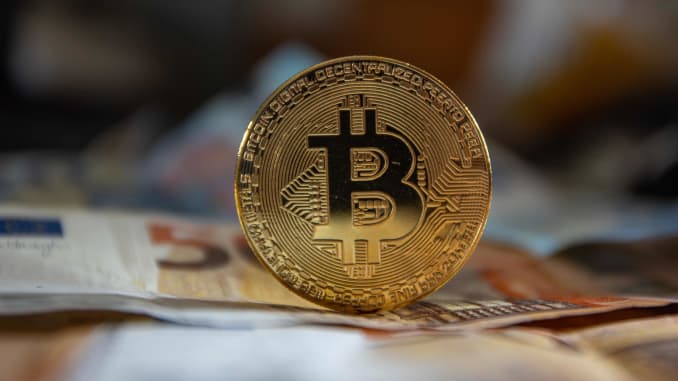
2. Bitcoin’s Rally Comes to a Halt as Prices Fall Most Since March

Bitcoin fizzled in Monday trading as the famously volatile cryptocurrency pulled back after a spectacular new-year rally. Prices fell as much as 17% in the biggest drop since March before recovering. The losses are small in the context of Bitcoin’s broader rally, with a 50% jump in December alone. After a parabolic 2020, the digital currency had started the new year with a bang, surging as high as $34,000 and hitting all-time highs on Sunday. As ever in the world of crypto, it’s hard to pinpoint the proximate cause for the latest bout of volatility.

3. Tesla Poised for Expansion After Just Missing 2020 Target

Tesla came close to meeting its 500,000 vehicle-deliveries goals for 2020, setting the stage for a new year in which it’s expanding in China and poised to open new factories in Texas and Germany. The electric-car maker said on Jan. 2 it handed over 180,570 vehicles in the year’s final three months, the most for any quarter but just 450 vehicles shy of the half-million mark Chief Executive Officer Elon Musk sought for the year. Tesla has been ramping up output of its more mass-market models to meet rising global demand for battery-powered cars, with 2020’s total jumping 36% from the prior year. Musk and Tesla had a remarkable year, with the company joining the S&P 500 Index in December after five consecutive quarters of profit. The shares rallied 743% in 2020, giving the carmaker a $668.9 billion stock-market capitalization. Musk ended the year as the world’s second-richest person.

4. Dollar Stumbles Into 2021 as Bets on Global Recovery Dominate

The U.S. dollar kicked off the new year with a weak start as expectations for a global economic recovery bolstered demand for riskier assets. It lost ground against almost every major currency on Monday, pushing a gauge of its strength to the lowest level in nearly three years, after purchasing managers indexes across Europe and Asia showed factory activity gathering pace. The euro rose as much as 0.7% against the dollar toward a high last seen more than two years ago, while the greenback touched the weakest level against the Chinese yuan since June 2018. 

5. U.K. Mortgage Approvals Surge to 13-Year High

U.K. mortgage approvals reached the highest since 2007 in November as housing continued to boom in spite of a broader economic downturn. The housing market is surging largely because of a tax cut on house purchases that is worth as much as 15,000 pounds ($20,000) to buyers. That’s pushed prices higher in a nation where demand has outstripped supply for decades, while measures to control the pandemic have also led to a change in working habits, boosting interest in larger properties and those outside of city centres. The jump also reflects pent-up demand from the first lockdown, when the market was largely shuttered and mortgage approvals collapsed.

6. Hong Kong Extends School Closures Until Lunar New Year

Hong Kong pushed back the re-opening of classrooms for more than a month as part of government measures to stamp out the spread of the coronavirus. The suspension of in-person classes at kindergartens through high school, a restriction originally scheduled to expire Jan. 10, will be extended until the lunar new year holidays, which begin on Feb. 12. The city reported 53 new cases for the day, 43 of which were local. Hong Kong has been one of the most aggressive places worldwide to close schools despite research from the likes of the United Nations warning about the adverse consequences of doing so.

7. Johnson Faces Third Lockdown as Virus Surges Across U.K.

Boris Johnson’s government is on the brink of another pandemic U-turn with a third national lockdown looking increasingly inevitable. A surge in infections threatens to overwhelm hospitals and throws his plan to get English children back into classrooms into disarray on a day the British prime minister had hoped to celebrate the delivery of the first shots of a Covid-19 vaccine developed by the University of Oxford and AstraZeneca. Instead, the government is back in crisis mode, with new virus cases exceeding 50,000 a day and hospital admissions soaring past the peak of the first wave in April. Johnson on Monday warned that a “surging epidemic” means stricter rules are coming.

8. Treasuries Inflation Gauge Exceeds 2% for First Time Since 2018

Traders see U.S. inflation averaging at least 2% per year over the coming decade, the first time that expectations have climbed that high since 2018. The 10-year breakeven rate — a measure that draws on pricing for inflation-linked Treasuries — rose as high as 2.0025% Monday, a level last seen more than two years ago. The gauge has gained momentum as traders prepare for an uptick in the world economy in the wake of a deal on Brexit and congressional approval for additional virus-relief aid. The roll-out of vaccinations against the coronavirus has also fueled the move higher. The Federal Reserve is setting the tone for markets, making a renewed push to revive inflation — which has been too low for years. 

9. Oil Fluctuates With OPEC+ Gathering to Decide on Feb Output

Oil swung between gains and losses ahead of an OPEC+ meeting to decide whether the group can keep lifting output as a surging virus threatens the global energy demand recovery. OPEC and its allies are gathering to gauge whether the market has the appetite to absorb another increase in supply after they raised output by 500,000 barrels a day for January. The demand outlook for the first half of this year is mixed and there are still many downside risks to juggle, OPEC Secretary-General Mohammad Barkindo said on Sunday. There are signs that lockdowns in some countries are set to be extended, potentially curbing oil demand. Germany is poised to prolong stricter lockdown measures beyond Jan. 10, while Japan is considering another state of emergency for the Tokyo area.

10. Israel Sets Pace on Vaccine Rollout; Schools Close: Virus Update

Global coronavirus infections climbed above 85 million, after daily cases in the U.S. soared to a record of nearly 300,000 following the New Year holiday. Germany is set to extend its lockdown, while Hong Kong won’t re-open classrooms for more than a month, as many nations opt to delay reopening schools. Japan’s prime minister is considering another state of emergency for the Tokyo area, with cases at records and a vaccine rollout more than a month away. Israel said it plans to vaccinate 70% to 80% of its population by April or May. The U.K. gave the first shots of AstraZeneca’s vaccine on Monday, in a race against a faster-spreading variant that’s prompted lockdowns across the country.

Categories
Market News Top 10 News Top Global News

Global Markets Rally on Vaccine and Aid Hopes – Top 10 Global News

1. Stocks Hold Gains as Lawmakers Debate Over Economic Aid

U.S. stocks held a modest gain that put them at all-time highs after data showing a further slowdown in the labour market stoked bets Congressional leaders will clinch a deal on federal spending. The S&P 500 climbed for a third day as lawmakers continued to negotiate details of almost $900 billion in coronavirus aid. The dollar slumped as weekly jobless claims rose to 885,000 versus an estimate of 818,000. Bitcoin breached $23,000 for the first time. In Europe, cyclical shares such as miners and retailers rose on news that the rollout of a Covid vaccine would begin this month.

The S&P 500 Index advanced 0.5% as of afternoon New York time, the highest on record.

The Dow Jones Industrial Average gained 0.4%.

The Nasdaq Composite Index climbed 0.5%.

2. U.S. Congress Struggles to Finish Economic Stimulus Details

Congressional leaders are working through the final sticking points of a coronavirus relief deal, although the agreement probably won’t come together in time for both chambers to vote before Friday. People briefed on the talks say the draft of the roughly $900 billion proposal includes $600 in payments for individuals, $300-per-week in supplemental unemployment insurance payments and aid for small businesses, as well as about $17 billion for airlines. But it omits aid to state and local governments and lawsuit liability protection, the two issues that stalled earlier attempts at an agreement.

3. India Rejoins US Watchlist in Possible Boost For Rupee & Bonds

India’s addition to the U.S. watchlist for currency manipulation is a trial for its central bank, and a possible boon for local currency- and bond markets. The U.S. Treasury Department’s latest foreign-exchange report cited India’s “significant” goods trade surplus with the U.S. and “sustained” net currency purchases through the year to June. Authorities should limit such intervention to periods of excessive volatility while allowing the rupee to adjust based on economic fundamentals. The central bank’s headache — which comes on top of above-target inflation and struggling growth — looks like a boost for the rupee. The currency has been Asia’s worst performer this year, as the Reserve Bank of India has countered relentless foreign investment inflows with dollar purchases that have pushed the country’s reserves to a record $579 billion.

4. London’s Economy Shaken With Covid Curbs and Brexit Fears

London enters the final days of 2020 with its position as the U.K.’s economic growth engine being whittled away by Brexit and the struggle to contain the coronavirus. The decision to place the capital under the toughest Covid-19 curbs caps a year that saw the virus inflict a bigger hit on London’s job market than other regions. The city, which accounts for more than one-fifth of the U.K. economy, is also seeing global banks shift some people and assets to other European countries. Figures published Thursday by the Institute for Fiscal Studies showed that consumer spending in London was still 10% below its pre-crisis level in November.

5. U.S. Jobless Claims Jump to Highest Levels in Three Months

Applications for U.S. state unemployment benefits unexpectedly jumped to the highest level in three months, suggesting the labour market’s recovery is faltering amid the surge in Covid-19 cases and widening business restrictions. Initial jobless claims in regular state programs rose by 23,000 to 885,000 in the week ended Dec. 12, Labor Department data showed Thursday. Continuing claims for state programs declined by 273,000 to 5.51 million in the week ended Dec. 5. That figure roughly approximates the number of people receiving state unemployment benefits but doesn’t include the millions of people who have already exhausted those benefits or are receiving assistance through federal pandemic jobless aid programs.

6. Credit Suisse Charged Over Money Laundering in Cocaine Ring

Credit Suisse Group and one of its former bank managers have been indicted by Swiss prosecutors over the lender’s alleged failure to prevent money laundering by a Bulgarian drug ring. The Zurich-based bank failed to take all the organizational measures that were “reasonable and required” to guard against the laundering of cash made from the sale of cocaine that was then used to buy real estate in Switzerland and Bulgaria. Swiss prosecutors can target banks criminally if they believe institutions didn’t do enough to screen clients for obvious ties to illicit activity.

7. China Lags as Thailand, Russia Rank Top Emerging Market Picks

Thailand and Russia are well placed to be among the emerging-market standouts that could beat expectations next year. That’s according to a Bloomberg study of 17 developing markets gauging their outlook for 2021 based on 11 indicators of economic and financial performance. Thailand topped the list, owing to its solid reserves and a high potential for portfolio inflows, while Russia scored No. 2 thanks to robust external accounts and a strong fiscal profile, in addition to an undervalued ruble. China scores fairly poorly given that high expectations are already baked in.

8. DoorDash Sinks After Citron Calls IPO ‘Most Ridiculous’ of 2020

DoorDash‘s shares fell on Thursday after short-seller Citron Research called its initial public offering the “most ridiculous” of the year and said the stock is worth a fraction of its current price. The stock is worth $40 a share, Citron said in a research report, citing intense competition in the market for food delivery, lack of brand loyalty from customers and potential government regulation. That would represent a 75% decline from Wednesday’s closing price. The stock fell as much as 5.1% following Citron’s comments.

9. Goldman Trading Bonus May Jump Nearly 20% This Year

Goldman Sachs is planning to boost bonuses for the trading division by up to 20% after the business reclaimed its stature as the firm’s golden goose. The fatter paychecks come on the back of a 49% jump in revenue following a sluggish decade for a group that was once the envy of Wall Street. Corners of trading, particularly in fixed income, could expect much bigger payouts. There will be a greater divergence in payouts than in previous years, with some people potentially getting pay cuts despite generating more revenue. Goldman’s bonus decisions have been a touchy topic ever since the firm’s success through the 2008 financial crisis drew public attention. But this year, banks all along Wall Street saw staggering gains, giving powerhouses more cover to share spoils.

10. U.S. to Limit Use of Chinese Power Equipment on Military Bases

The Trump administration is issuing new prohibitions on the use of Chinese power equipment on military bases, citing the need to protect the U.S. facilities from foreign adversaries. Utilities that supply military bases and other critical defence facilities will be barred from using high-voltage transformers and other so-called bulk power equipment from China under an order being issued Thursday by Energy Secretary Dan Brouillette. The order is another step in the Trump administration’s wide-ranging effort to restrict access by Huawei and other Chinese companies to Western networks and technology.

Categories
Market News Top 10 News Top Global News

London to lose Finance Capital Crown – Top 10 Global News

1. Stocks Slip After Record Rally; Oil Retreats

U.S. futures slipped and European stocks steadied on the last day of the month after a record-breaking rally in global equity markets. Oil extended a retreat on signs of discord among OPEC+ ministers. The rotation that sent stocks to all-time highs showed signs of a slight reversal, with technology companies holding firm, while small-caps, banks and energy producers were broadly lower. The MSCI Asia Pacific Index sank 1.6%, the biggest loss in a month. Investors have become cautious after big gains in the last few weeks that were driven by the vaccine news.

Futures on the S&P 500 Index declined 0.5% as of early morning London time.

The Stoxx Europe 600 Index was little changed.

The MSCI Asia Pacific Index declined 1.6%.

The MSCI Emerging Market Index fell 1.3%.

2. OPEC+ Heads Into Crucial Talks Still Split Over Output Plans

OPEC and its allies headed into a two-day meeting with ministers still split on plans to delay a production boost, after failing to reach consensus in talks on Sunday night. The 23-nation coalition led by Saudi Arabia and Russia is debating whether to maintain the output cuts at current levels, deferring the increase scheduled for January. Some members are concerned that global markets remain too fragile to absorb additional barrels, while others are keen to sell more crude.

3. London in Deep Trouble as Brexit Finance Deal Unlikely

The golden age of the City of London began with a big bang. It’s ending with a whimper. Fears that the finance powerhouse that emerged from Margaret Thatcher’s 1986 deregulation — known as the Big Bang – will gradually be dismantled have deepened with a recent flurry of announcements about some business heading to the European Union as Britain enters the last month of the Brexit transition period without a financial-services deal in sight. The latest shift comes Monday at 8 a.m. when London Stock Exchange’s stock trading platform Turquoise Europe goes live in Amsterdam. It joins other trading venues like Cboe Europe and Aquis Exchange setting up shop on the continent as part of their no-deal Brexit plans.

4. China Says Its Grain Imports Not to Blame for Global Price Surge

A Chinese government official rebuffed the idea that the nation’s massive corn and wheat imports are to blame for the jump in international prices, saying the coronavirus pandemic and uncertainty in global food trade drove “panic” in the industry. Grain prices have risen because of export restrictions by major suppliers and the stockpiling of food reserves by some countries. China’s grain imports only account for a 10th of global trade, with the majority being soybeans, and have a limited impact on international food prices. Crop prices have been on a rise as China’s buying gained pace in recent months amid tighter-than-expected world grain and oilseed supplies. The second-biggest economy surpassed for the first time ever an annual corn-import quota set by the World Trade Organization as purchases in October hit a record high.

5. Iran Pledges Payback at ‘Right’ Time Over Scientist Killing

President Hassan Rouhani said Iran will respond to the killing of its top nuclear scientist “when the time is right,” and accused Israel of an “act of terrorism” in a significant escalation of tensions in the Persian Gulf. Mohsen Fakhrizadeh, a senior nuclear scientist working for the Ministry of Defense, was assassinated Friday in a shootout and car bombing on the outskirts of Tehran. Promising “severe revenge,” officials also pointed the finger at the U.S., potentially complicating President-elect Joe Biden’s bid to revive the Iranian nuclear deal.

6. U.K. Mortgage Approvals Unexpectedly Jump to 13-Year High

U.K. mortgage approvals jumped to the highest since before the financial crisis in October as buyers rushed to take advantage of tax incentives. Lenders approved 97,532 loans in October, the most since 2007, the Bank of England said Monday. Net consumer credit fell by 590 million pounds (INR 5800 cr) as households paid down debt, mostly on credit cards. The housing market is defying a broader economic downturn because of pent-up demand from the Covid lockdowns and a temporary tax break on home purchases. The BOE expects the unemployment rate to climb higher than 7% next year from the current 4.8%. Economic output won’t recover to pre-pandemic levels until 2022, the central bank’s latest forecasts show.

7. ABN Amro to Cut About 2,800 Jobs as Investment Bank Shrinks

ABN Amro Bank plans to cut about 2,800 jobs over four years as the Dutch lender retreats from large parts of its investment bank and digitization allows it to operate with a smaller staff. The company plans to reduce costs by about $840 million (INR 6200 cr) by 2024. The workforce will shrink by about 15%, with most reductions to start in 2022, Chief Executive Officer Robert Swaak said in an investor update on Monday. In August, Swaak announced plans to cut a third of the lender’s business with corporate clients, dropping company finance outside of Europe and exiting trade and commodity financing altogether. 

8. Cyber Monday Projected to Hit Pandemic-Fueled $12.7 Billion in Sales

Online shoppers in the U.S. are expected to drop a record-busting $12.7 billion (INR 94,000 cr)  on Cyber Monday — the busiest e-commerce day of the year — presenting a valuable opportunity for retailers whose websites, customer service departments and delivery operations can withstand the period of crushing traffic. Amazon.com, Walmart, Target, Best Buy and others have been preparing for the 2020 holiday season for months. This week will be the ultimate test for their new investments in ramping up delivery capacity and adding features like parking lot pickup for digital orders. The Covid-19 surge kept crowd-averse shoppers away from physical malls on Black Friday, reinforcing predictions that online shopping will soar this year. Adobe Analytics predicts that Cyber Monday spending for 2020 will climb by 35% – more than double the growth rate in the years prior to the pandemic. That also means that any service interruptions on Cyber Monday — slow websites, payment processing problems, shopping carts that vanish before checkout – could be painful for companies.

9. China Oil Giant CNOOC Targeted by U.S. After Years of South China Sea Tension

China’s third-biggest oil company faces a U.S. blacklist, which could spur major outflows from its Hong Kong-listed unit, after years of involvement in offshore drilling in disputed South China Sea waters. China National Offshore Oil Corp., the nation’s main deepwater explorer, is among four companies to be added to a list of firms owned or controlled by the Chinese military. The move comes as the Trump administration plans several new hard-line moves against Beijing in the final weeks of its term. CNOOC hasn’t yet received any official notice or decision from any relevant U.S. government agency, the firm’s listed unit said in an exchange filing in Hong Kong.

10. China’s factories crank up output, but jobs, debt remain concerns

China’s factory activity expanded at the fastest pace in more than three years in November, while growth in the services sector also hit a multi-year high, as the country’s economic recovery from the coronavirus pandemic stepped up. Upbeat data released on Monday suggest the world’s second-largest economy is on track to become the first to completely shake off the drag from widespread industry shutdowns, with recent production data showing manufacturing now at pre-pandemic levels. But companies are still not expanding their payrolls, the figures show, and some analysts point to rising debt levels among state-owned firms as another possible headwind for the economy.