Categories
Editorial

A Deep Dive Into Relaxo Footwear Ltd

The footwear industry in India contributes nearly 2% to India’s overall GDP. It employs over 25 lakh workers, making the sector one of the top employment generators in our country. It is also an engine of growth for the entire Indian leather industry. 

India is only behind China as the largest producer of footwear globally, with 9% of the annual global production of 22 billion pairs. As per Invest India, India’s contribution to global footwear production is 10.7%. Nearly 90% of the footwear produced in India is consumed by the domestic market, and the rest is exported. The revenue in the footwear market in India stood at $23.73 billion in 2022, and the market is estimated to grow annually at a 6.77% CAGR between 2022-2027.

Having said that, let’s talk of an iconic brand synonymous with rubber slippers. It offers some of the most versatile footwear for all segments of society and reflects the attitude, style, dynamism, and spirit of young India. Yes, you guessed it right: it’s none other than Relaxo!

In today’s article, we throw light on how Relaxo monopolised the footwear industry in India and how it remains a trademark brand for most Indian households. 

Relaxo’s Origin Story

In the 1970s, two brothers, Mukand Lal Dua and Ramesh Kumar Dua, aspired to grow their father’s footwear business. With an initial deposit of ₹10,000, they established the venture in Delhi and gave birth to what Relaxo is today— one of the largest and most popular footwear manufacturers in India.

Relaxo initially manufactured both footwear and cycle components. However, it discarded the second segment in 1976 and decided to concentrate solely on footwear. Its most popular brands— Relaxo, Sparx, Flite & Bahamas are a leader in their respective categories. Relaxo’s range of footwear boasts a fine combination of comfort, style, and quality workmanship. The company offers a wide collection of fashionable, colorful, comfortable, and durable footwear. They have products for every age group and more than 6,000 Stock Keeping Units (SKUs).

With eight manufacturing units, Relaxo has the capacity to produce over 7.25 lakh pairs of footwear every day! It has a pan-India distribution footprint and a network of more than 50,500 stores. The company operates 50,000 multi-brand outlets (MBOs), and 402 exclusive brand outlets (EBOs). The company exports its products primarily to China and Sri Lanka.

Financial Performance

Over the years, Relaxo has consistently performed in a superior way. Even though Covid-19 restrictions severely impacted the sales of most footwear companies, Relaxo’s sales declined by just 2.13%. The company sold around 19 crore pairs in FY21! Coming to most recent figures, it sold 3.9 crore pairs in Q2 FY23, down from 4.6 crore pairs sold in Q2 FY22.

Relaxo’s sales have expanded remarkably faster than those of its competitors in terms of CAGR. The 3-year and 5-year sales CAGR growth of Relaxo Footwears was 6.7% and 6.6%, respectively. Meanwhile, CAGR sales growth was in the range of 1-3% for competitors Mirza International and Khadim India. Even in the past three years, Bata India, Liberty Shoes, and Sreeleather’s sales growth had fallen to negative double digits.

Relaxo Footwears has also posted healthy double-digit margins over the years, while other footwear manufacturers have struggled in maintaining healthy and constant EBITDA margins. 
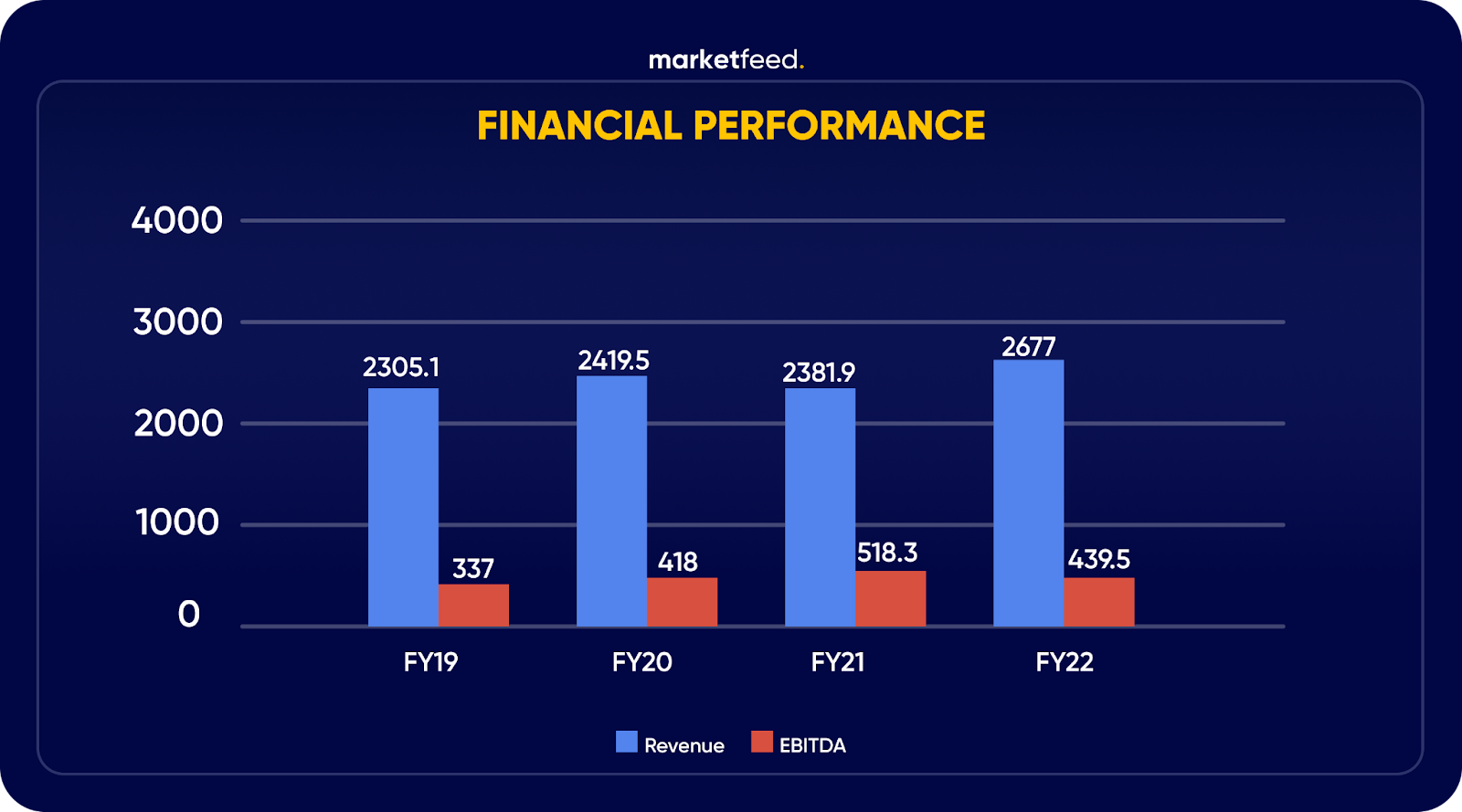
In the quarter ended Sept (Q2 FY23), revenue stood at ₹670 crore, compared to ₹714 crore in Q2 FY22. There was a decline in volumes of categories serving the mass segment, which was experiencing inflationary pressures with reduced affordability. EBITDA stood at ₹59 crore as compared to ₹117 crore in the corresponding period of the previous year. EBITDA was under pressure due to high raw material prices.

Peer Analysis 

Apart from organised and unorganised players, the market is now seeing listed players such as Metro Brands Ltd., Bata India, and Mirza International.

Regardless of high competition, Relaxo Footwears is able to maintain both quality and reasonable pricing. The organisation can sustain high profits because of a persistent focus on healthy margins, operational optimization, and capacity utilisation. This isn’t necessarily true for its competitors that utilise an asset-light model or a hybrid approach that combines asset-light and in-house manufacturing. Due to its substantial dependence on outside manufacturers, Relaxo had an advantage during the Covid-19 disruptions, while others were more negatively affected.

The Challenges

  • Intense competition: In addition to developed and developing competitors, the market also includes unlisted competitors. We can anticipate initial public offerings from these firms in the upcoming months/years. In this circumstance, Relaxo can experience price undercutting, which might impact its profitability and margins.
  • Volatility in Commodity Prices: The production of footwear requires several important raw materials, including ethylene vinyl acetate (EVA), polyurethane (PU), and natural and synthetic rubber. The company’s expenses are greatly impacted by the supply, volatility, and movements of prices of crude oil and its derivatives.  EVA and PU are typically imported by Relaxo for the manufacture of footwear products. As a result, the company also runs the risk of fluctuations in the exchange rate.
  • High MBO Dependency: Relaxo Footwears is highly dependent on its 50,000 MBOs or retailers. The MBOs channel is under significant liquidity stress, which might harm the company’s revenue trajectory.

The Way Ahead

The footwear industry is recognized by the Indian government as a priority sector under the Make In India mission. The Indian footwear industry expects to reach $27.84 billion by 2027, with the potential to grow 10-fold! Without a doubt, there is scope for footwear brands to flourish and strengthen leadership.

Relaxo Footwears seems to be ahead of its peers in this race. The firm has outperformed its competitors in terms of operational and capital efficiency as a result of strong internal manufacturing facilities, successful addition of higher value-added categories, and a solid distribution network. The company may benefit from these aspects in the years to come as well.

Do you think this multinational footwear manufacturer can continue to expand its market share and dominate the industry? Have you invested in Relaxo? Let us know your views in the comments section of the marketfeed app!

Categories
Market News Top 10 News

Passenger Vehicle Dispatches Dip 4% in April – Top Indian Market News

Passenger vehicle dispatches dip 4% in April: SIAM

Passenger vehicle (PV) dispatches from factories to dealers in the domestic market fell 4% YoY to 2,51,581 units in April. Two-wheeler sales increased by 15% YoY to 11.48 lakh units in April. Automakers are working hard to manage the supplier ecosystem with agility as supply-side challenges continue. The data was released by the Society of Indian Automobile Manufacturers (SIAM).

Read more here.

Dr. Reddy’s Labs to commercialise Tegoprazan in India

Dr. Reddy’s Laboratories Ltd. has entered into an exclusive partnership with South Korea-based HK inno.N Corporation for the supply and commercialisation of its patented novel molecule Tegoprazan. The drug is used to treat gastrointestinal diseases. Under this partnership, Dr. Reddy’s Labs will be responsible for local clinical development, registration, marketing, and sales of Tegoprazan in licensed territories.

Read more here.

Relaxo Footwear Q4 Results: Net profit falls 38% YoY to Rs 63 crore

Relaxo Footwear Ltd reported a 38.41% YoY decline in net profit to Rs 62.93 crore for the quarter ended March (Q4 FY22). Net profit fell 10.2% when compared to the previous quarter. Its revenue from operations fell 7% YoY to Rs 698 crore during the same period. EBITDA stood at Rs 111 crore in Q4, down 32% YoY. Relaxo Footwear’s board has declared a final dividend of Rs 2.5 per share.

LTI launches Innovation Studio for SAP Business Tech Platform

Larsen & Toubro Infotech (LTI) has launched its LTI Innovation Studio for SAP (System Applications & Products in Data Processing) Business Technology Platform. It helps global organizations accelerate their transformation journeys. The platform supports businesses in realizing the vision of an intelligent enterprise and enables them to amplify value from their digital core investments.

Read more here.

Orient Cement Q4 Results: Net profit falls 26% YoY to Rs 73 crore

Orient Cement Ltd reported a 26.67% YoY decline in net profit to Rs 73.23 crore for the quarter ended March (Q4 FY22). Net profit rose 67.7% when compared to the previous quarter. Its revenue from operations fell 3.34% YoY to Rs 803.86 crore during the same period. EBITDA stood at Rs 153 crore in Q4, down 24% YoY. The cement manufacturer’s board has declared a final dividend of Rs 1.75 per share.

Read more here.

Alembic Pharma gets final USFDA approval for Arformoterol Tartrate inhalation solution

Alembic Pharmaceuticals Ltd has received final approval from the US Food & Drug Administration (USFDA) for its generic version of Arformoterol Tartrate inhalation solution. The drug is indicated for long-term treatment of bronchoconstriction in patients with chronic obstructive pulmonary disease. As per IQVIA data, the inhalation solution had an estimated market size of $251 million for the 12 months ended December 2021.

Read more here.

Balaji Amines Q4 Results: Net profit rises 28% YoY to Rs 108 crore

Balaji Amines Ltd reported a 28.67% YoY increase in consolidated net profit to Rs 108.72 crore for the quarter ended March (Q4 FY22). Net profit rose 21.4% when compared to the previous quarter. Its total income rose 87% YoY (or 38% QoQ) to Rs 781.15 crore during the same period. The chemical manufacturer’s board has declared a final dividend of Rs 6 per share.

Texmaco Rail secures order worth Rs 6,450 crore

Texmaco Rail & Engineering Ltd received an order worth Rs 6,450 crore from the Indian Railways. The order entails the delivery of 20,067 wagons to be executed over a period of 39 months. Texmaco Rail is a multi-discipline, multi-unit engineering and infrastructure company based in Kolkata.

Read more here.

Kalyan Jewellers Q4 Results: Net profit falls 2.55% YoY to Rs 72 crore

Kalyan Jewellers Ltd reported a 2.55% YoY decline in consolidated net profit to Rs 72.29 crore for the quarter ended March (Q4 FY22). Net profit fell 46.2% when compared to the previous quarter. Its revenue from operations fell 6.53% YoY to Rs 2,857.06 crore during the same period. EBITDA stood at Rs 218 crore, down 4.39% YoY. The company’s e-commerce division Candere reported revenue of Rs 39 crore in Q4, registering a growth of 77% YoY.

Read more here.

BSE Q4 Results: Net profit jumps two-fold to Rs 71.5 crore

BSE Limited reported a two-fold YoY jump in net profit to Rs 71.52 crore for the quarter ended March (Q4 FY22). The exchange’s revenue from operations rose 34.4% YoY to Rs 204.59 crore during the same period. The company posted a 73% YoY increase in net profit to Rs 244.93 crore for FY 2021-22. Revenue stood at Rs 743.14 crore in FY22, up 48% YoY. BSE’s board has declared a final dividend of Rs 13.5 per share. 

Read more here.

OMCs sign purchase agreement for upcoming dedicated ethanol plants

Leading oil marketing companies (OMCs), including Bharat Petroleum Corporation Ltd, Indian Oil Corp Ltd, and Hindustan Petroleum Corp Ltd, have entered into a long-term purchase agreement (LTPA) for upcoming dedicated ethanol plants across India. Ethanol produced by these plants will be sold to OMCs for blending with petrol as per the Centre’s Ethanol Blended Petrol (EBP) program.

Read more here.

Categories
Market News Top 10 News

Tata Motors to Invest Rs 28,900 crore in JLR, Domestic Biz in FY22 – Top Indian Market News

Tata Motors to invest Rs 28,900 crore in JLR, domestic business in FY22

Tata Motors has announced plans to invest Rs 28,900 crore mostly for its British arm Jaguar Land Rover (JLR) and domestic business in the current financial year (FY22). The company is also looking to raise capital separately for its electric vehicle (EV) business. It is aiming for 25% sales from the EV segment in the medium to long term. Tata Motors had earlier announced that it will be launching at least 10 EV models before 2025. The automaker will also launch an EV platform for the last-mile commercial vehicles segment. They are investing in the development of hydrogen fuel cell vehicles as well. 

Read more here.

NTPC Q1 Results: Net profit rises 18% YoY to Rs 3,411 crore 

NTPC Limited reported an 18% YoY increase in consolidated net profit to Rs 3,411.56 crore for the quarter ended June (Q1 FY22). Net profit has declined by 24.9% when compared to the previous quarter. Its revenue from operations rose 14% YoY to Rs 29,888.02 crore during the same period. The company’s gross power generation increased to 71.74 billion units (BU) in Q1 FY22, compared to 60.18 BU in Q1 FY21. NTPC’s board has approved a proposal to raise up to Rs 18,000 crore through the issuance of non-convertible debentures.

Read more here.

Torrent Power to acquire 50-MW solar power plant from Lightsource India

Torrent Power Ltd has signed a share purchase agreement with Lighsource India and Lightsource Energy (India) for the acquisition of 100% of the share capital and all securities of LREHL Renewables India SPV 1. The special purpose vehicle (SPV) operates a 50 megawatt (MW) solar power plant in Maharashtra. It has a long-term Power Purchase Agreement with Solar Energy Corporation of India (SECI) for full capacity for a period of 25 years. The estimated enterprise value for this acquisition is ~Rs 317 crore.

Read more here.

IDFC First Bank Q1 Results: Net loss at Rs 630 crore

IDFC First Bank reported a net loss of Rs 630 crore for the quarter ended June (Q1 FY22). It had posted a net profit of Rs 93.55 crore in Q1 FY21 and Rs 127.81 crore in Q4 FY21 (previous quarter). The bank’s net interest income (NII) rose 25% YoY to Rs 2,185 crore in Q1 FY22. The gross non-performing assets (GNPA) ratio stood at Rs 4.61% in Q1 FY22, compared to 4.15% in the previous quarter. IDFC First Bank had created additional Covid-19 provisions of Rs 350 crore in Q1, taking the total Covid-19 provision pool to Rs 725 crore. 

Read more here.

CDSL Q1 Results: Net profit rises 37% YoY to Rs 64 crore

Central Depository Services Ltd (CDSL) reported a 37% YoY increase in consolidated net profit to Rs 64 crore for the quarter ended June (Q1 FY22). Net profit has increased by 23% when compared to the previous quarter. Its total income rose 51% YoY to Rs 130 crore during the same period. CDSL maintains and services ~3.9 crore demat accounts of investors or beneficial owners across India.

PI Industries Q1 Results: Net profit rises 29% YoY to Rs 187 crore

PI Industries Ltd reported a 28.6% YoY increase in consolidated net profit to Rs 187.2 crore for the quarter ended June (Q1 FY22). Net profit has increased by 4.12% when compared to the previous quarter. Its total income rose 14.3% YoY to Rs 1,221.5 crore during the same period. PI Industries has entered into a business transfer agreement with Ind Swift Laboratories Ltd (ISLL) and certain promoters of ISLL for the acquisition of its API business division for Rs 1,530 crore.

Read more here.

Krsnaa Diagnostics to launch IPO on August 4: price band fixed at Rs 933-954 per share

Krsnaa Diagnostics Ltd will launch its initial public offering (IPO) on August 4. The company has fixed a price band of Rs 933-954 per share for its public issue. The IPO consists of a fresh issue of shares aggregating to Rs 400 crore and an offer for sale (OFS) of up to 85.3 lakh shares. The proceeds from the issue will be used for establishing diagnostics centers in Punjab, Haryana, Karnataka, and Maharashtra. A part of the proceeds will also be used to repay debt.

Meanwhile, Devyani International will also launch its IPO on August 4. It is the largest franchisee of KFC, Pizza Hut, and Costa Coffee in India. The company has fixed a price band of Rs 86-90 per share for its IPO.

Read more here.

Relaxo Footwear Q1 Results: Net profit rises 27.8% YoY to Rs 30.96 crore

Relaxo Footwears Ltd reported a 27.8% YoY increase in net profit to Rs 30.96 crore for the quarter ended June (Q1 FY22). Net profit has declined by 69.7% when compared to the previous quarter. Its revenue from operations rose 36.7% YoY to Rs 497.13 crore during the same period. The company’s expenses increased by 36.67% YoY to Rs 462.15 crore in Q1. Relaxo Footwears’ operations were severely disrupted during April and May due to localised lockdowns across geographies.

Read more here.

Rain Industries Q1 Results: Net profit jumps 786% YoY to Rs 235.29 crore

Rain Industries Ltd reported a 786.8% YoY jump in consolidated net profit to Rs 235.29 crore for the quarter ended June (Q1 FY22). Net profit has increased by 14.07% when compared to the previous quarter. Its total income rose 54.17% YoY (or 20.64% QoQ) to Rs 3,680.59 crore during the same period. Rain Industries is a leading manufacturer of calcined petroleum coke, coal tar pitch, and other high-quality basic and specialty chemicals. 

Britannia Q1 Results: Net profit declines 29% YoY to Rs 387 crore

Britannia Industries Ltd reported a 28.7% YoY decline in consolidated net profit to Rs 387 crore for the quarter ended June (Q1 FY22). Its revenue from operation declined by 0.5% YoY (increased by 8.7% QoQ) to Rs 3,403.5 crore during the same period. EBITDA declined by 22.8% YoY to Rs 553.8 crore in Q1.

Read more here.