Categories
Editorial

How the Rural Economy Reflected on the Stock Market in COVID-19

The COVID-19 pandemic left economies devastated, and people without jobs. And as we all saw in the headlines of every newspaper, there was a rather difficult mass migration from urban to rural India. This left two dilemmas, what shall happen to the decreased urban demand? In the absence of income, how will consumer spending thrive in rural areas?

There was rising a rising sense of uncertainty. The suddenness of events left many confused. The lack of knowledge and research about the virus caused panic throughout caused by rumours. What many failed to notice in India was the resurgence of a rural economy in the underbelly of COVID-19 lockdown.

Many migrant workers started returning to their home states by every means possible and other Govt. initiatives like the shramik express. This would mean that urban consumption and demand for goods would go down whereas it would increase in the rural areas. To sustain in rural areas the most suitable source of income is Agriculture. How exactly was agriculture impacted in COVID-19 pandemic?

How do I catch the Rural Theme in markets?

  • There is almost no other reliable source of income in rural areas apart from agriculture and dairy. When the lockdown was imposed it was amidst the Rabi Crop Harvesting Season(April-May), the seizure of the supply chain and logistics served a major blow to it.
  • However, there were multiple stimulus packages aimed specially to benefit the rural areas. MNREGA(Mahatma Gandhi National Rural Employment Guarantee Act), Pradhan Mantri Garib Kalyan Anna Yojana (PMGKAY) and other direct benefit transfer schemes.
  • Spurt in rural spending will not only benefit a lot of agri-related equipment but also other aspirational products. Look out for greater demand for FMCG products, two-wheelers, entry-level cars etc. All these are aspirational products for the rural population and could see a distinct rise in demand in the coming month
  • Rural housing could be a big theme in the coming months. The government has already laid emphasis on low-cost housing by giving it infrastructure status. Companies that operate in this space with a credible and sustainable business model will be among the names to benefit from this development.
  • The rural population has managed to adapt and invest in its own setting. There has been an encouragement in enabling farmers to obtain long-term debt in order to kick start the agrarian economy.
  • As the monsoon season approaches, there has been more than normal sowing of “Kharif” crops to ensure a healthy income in the harvesting season in the coming winter season.
  • As many parts of India face a water crisis till date you can expect a fair share of a boost in the irrigation systems like motors, pipes, channels etc.

Automobile

As People started migrating to rural areas, there was a rise in rural population. 70% of rural household occupationally rely on agriculture as a source of livelihood. When the sales of a passenger vehicle, two-wheeler and commercial vehicles slumped, those of Farm Equipment Sector (FES) such as tractors and tillers rose. Some players in the industry include Mahindra and Mahindra, Escorts and VST Tillers.

OEMs

July 2020

July 2019

% change

Mahindra & Mahindra
24,463

19,174

+28%
Escorts4,9534,505+10%
VST Tillers10,84210,308+6%
Farm Equipment Sector (FES) Sales Figures

Read more about Automobile sector during COVID by clicking here.

Agro-Chemicals, Pesticides and Fertilizers.

The use of pesticides and agro-chemicals in agriculture increase marginally.

Kilpest India Ltd. showed an amazing performance, both in terms of Quarterly (1,093.2%) and Yearly (1814.86%) Net Profit. Kilpest India Ltd is one of India’s leading Agri based companies. Kilpest is an ISO certified company and has representation in India in the field of agriculture business comprising Crop Protection Products and Public Health Products, Bioproducts, Micro-Nutrients and Mix fertilizers.

United Phosphorus Ltd (UPL) and PI Industries (PIIND) are the two of the biggest players in the pesticide and agrochemical industry in India. United Phosphorus recorded 200% Net Profit Growth QoQ and PI Industries had a .

Price levels of KILPEST UPL and PIIND

Coming to fertilizers, government data states that fertilizer sales jumped 83% to 111.61 lakh tonnes in Apr-June. Read more over here.

Company NameQoQ Net Profit% YoY Net Profit% Market Cap
Coromandel Int.+6.1%+296.3%22,852.0
Khaitan Chemicals &
Fertilizers Ltd.
+197.4%+16.7%185.2
Madras Fertilizers Ltd.+3,174.2%+459.4%327.8
Growth in Fertilizers sector(Amount in Rs. Crores)

Another company that is worth taking note of is Rallis India Ltd. which is a subsidiary of Tata Chemicals, the company filed a quarterly Net Profit of 13,000%(Between April and June)! Rallis India Ltd. specialises in crop-care, pesticide, agrochemical and other agri-care products.

How have “rural themed” FMCG companies performed?

Dabur and Emami are two FMCG companies with a strong rural presence. While Dabur has a market cap of more than Rs.90,000 Crores and Emami has a market cap of Rs.14,860 Crores.

Dabur and Emami recorded Net Profit growth% of 21% and 60.8% each respectively. They are an essential bridge between rural areas and FMCG market considering that rural India accounts for 37 per cent of India’s FMCG spends, both these companies have a very strong rural presence.

Did the Rice Market Benefit?

India had the highest export volume of rice worldwide, at 9.8 million metric tons as of 2018/2019. India’s rice export fell due to slowdown and seized the supply chain but increased by 52.5% in April-May.

India handles 25% of global rice exports, However, rice contributes only 2 per cent to the Indian export basket. The COVID situation caused many non-agricultural and developing countries to put a cap on rice exports to meet local supplies. On the other side, India maintains a surplus of rice making exports of huge volumes possible.

We have taken two companies that benefited from this rising foreign demand.

Chaman Lal Setia Exports Ltd (Market Cap: Rs. 532 Cr)Chaman Lal Setia Exports Ltd. is an India-based manufacturer and exporter of basmati rice. Chaman Lal Setia Ltd declared a Net Profit growth of (+)21.6%

GRM Overseas Ltd (Market Cap: Rs. 122 Cr) – GRM Overseas Limited engaged in the business of manufacturing and trading of rice. The Company produces a range of rice items to its customers spread across the world. GRM Overseas Ltd declared a Net Profit growth of (+)351.7%

Sale of Seeds in India.

Kaveri Seed Company Ltd. and Mangalam Seeds are one of the top seed companies. Indian stock markets have had a long affair with monsoons. Although Mangalam Seeds Ltd. has not declared its quarterly result, there is a strong sentiment regarding the forecast due to rising agriculture and pre-monsoon sowing both on the rise. Kaveri Seeds’ QoQ Net Profit Growth was 3,794.67%

JK Agri Genetics Ltd. and Nath Bio-Genes are two other major companies that deal in GM(Genetically Modified) Seeds.

JK Agri Genetics Ltd. is an India-based seed company. The Company is engaged in growing of non-perennial crops. It provides Agricultural and allied products and isalso involved in research and development, production, processing and marketing. It showed growth of +308.1% in Net Profit QoQ with a +295.7 Revenue Growth QoQ.

Nath Bio-Genes (India) Limited is engaged in the hybrid seed business. The Company is engaged in the business of production, processing and marketing of hybrid and genetically modified (GM) seeds. The Company’s segments include agricultural activities (seed production) and trading activities. Nath Bio-Genes Ltd.’s Net Profit multiple over FOUR TIMES after the lockdown.(~+411%)

NIFTY FMCG outshines NIFTY 50

NIFTY FMCG is the index that is closest to the agriculture sector than other indices. We take a 6-month time frame to analyse which index has suffered from COVID-19. While NIFTY 50 overall faces an overall decline of -6.65% NIFTY, NIFTY FMCG managed to recover and shine 3.79% more.

Surge in Rural Area Usage.

Shortly after the lockdown, there was a dip in data usage for a very small period. Post this the amount of data usage surged massively. Such that a majority of these data users belonged to the rural area. Data consumption under BharatNet(Read More Here) across the country in the April-June quarter was 5.52 lakh gigabyte (GB) as compared to 2.47 lakh GB in January-March. Overall, rural areas accounted for 83.3 per cent of the total 6.58 lakh GB data consumed under BharatNet across India during April-June.

Sum and Substance

In a survey conducted, more than 68% of the population in rural India faced a monetary crisis. 78% suffered job losses because of stringent lockdown measures put in place to control the spread of the virus, said the survey, The Rural Report, conducted by news portal Gaon Connection and Delhi-based Centre for Study of Developing Societies.

As much as 23% of the respondents were forced to borrow money to manage their households, while 8% had to sell a valuable possession The survey said that 28% of migrant workers were not paid for the work they had done in cities.

Only 27% of the economically poor households, which did not have ration cards to access the central scheme for highly subsidized foodgrain, said they had received wheat or rice from the government.

The monetary crisis caused physical dismay, the government support and fiscal stimulus even though was the best case scenario made way only for Dalal Street to book profits in certain segments. The socio-economics scenario can’t be portrayed in numbers.

The Rural themed stocks showed great results due to lesser population densities in rural areas and therefore lesser chances of contracting COVID making economic activity possible. Despite that, there has been a rising pile of COVID-19 cases in tier 3 and tier 4 cities putting the FMCG as well in an expected dismay.

There is just one hinge around which Dalal Street is balancing itself and that is the COVID-19 Vaccine.

Categories
Editorial

Indian Airline Industry under the lens of COVID-19

We are in unprecedented times with COVID-19 having a lasting effect on every industry. And then there is the aviation industry and tourism industry which has hit rock bottom, and not recovered. Today, we are going to talk about how the Indian aviation industry has fared during these unusual times.

The aviation industry might be facing the worst turbulence in its history. To reduce the spread of the virus, the domestic airline industry came to a screeching halt in March. After a month and a half, the airline’s services were given the nod to continue subject to numerous conditions. Data from DGCA (Directorate General of Civil Aviation) showed that air traffic has plummeted by 85% year-on-year in the month of June. It is expected that the airline traffic in the Asia-Pacific region will be the hardest hit during these times.  

Competition based on Price

India had 650 aircraft in service last fiscal year. The industry generated employment for more than 75 lakh individuals. India’s business model in the aviation sector is very different from other countries. Flights like Indigo, Air India or GoAir does not offer a lot of premium services. An average Indian passenger would want to travel from X destination to Y destination safely and at a cheap price. International carriers like Etihad offer more services and charge additional fees for those services. Thus, the Indian airline sector competes on the basis of price and not on the basis of luxury service.

Here comes the component of success for this strategy : Passenger load factor. 

Passenger load factor measures the capacity utilisation of an airline. The more the passengers on a flight, the more beneficial it is for an airline. This is because, with the limited number of crew members and no luxury services, the additional cost of adding one more passenger is not much. Thus, the money which comes from additional passenger adds more to the company’s profit. This passenger load factor has decreased to 50%-60% for almost all the airline during the recent months. Last December, this factor varied between 80%-90%. As the number of passengers decreased, airlines failed to break-even and earn profits. 

Recent Numbers

Indigo is the biggest airline in India. It has a market share of over 40%. Their Q1 FY21 was below what market estimated and dismal, to say the least. Their revenue fell by 91% and net losses of Rs 2844 crore were recorded. To get more idea, read here.  SpiceJet is yet to declare their results for the first quarter. In Q4 FY20, SpiceJet reported losses worth Rs 807.1 crore and the results for the subsequent quarter is expected to be worse. 

The demand for air travel is already very low and reports suggest that the overall demand for air travel this fiscal year might fall by 45%-50%. According to ICRA ( a credit rating agency), India’s aviation sector is losing Rs 75 crore per day. It is further expected that the sector will lose Rs 17,000 crore in the current fiscal year. According to the report of Crisil (an Indian rating agency), this loss might stretch till Rs 25,000 crore for this year.

In order to conserve cash flow, Indigo has already announced 35% pay cuts for its senior employees. This was the second pay cut for the company in as many months as they had announced a 25% pay cut in May. The company has also announced to lay-off 10% of its workers. 

Spicejet has not announced any lay off till now, but will not be paying full salary to 92% of their employees. Vistara also announced a pay cut of 5% to 20% for its 40% of employees till the end of this year.

One of the main reasons why the airlines are still able to stay afloat is the low prices of crude oil. Jet fuel is recovered from refining the crude oil. The prices of crude oil have consistently declined over the past 6 months due to a sharp fall in demand amid COVID. This has helped the airline by cutting their fuel expenses sharply and giving some space to their bottom line to breathe.

How can the government help?

The airlines have been forced to cut shifts, ground their fleets and reduce the workforce. Even after desperately trying to cut costs, the industry has been forced to pay for fixed costs with cash. This is a very grim sign for any business.

The airline industry is highly leveraged. It needs heavy investment and regular cashflows so that the company do not default from their payments. Their primary source of cash flows is blocked. Thus, the chances of bankruptcy for the companies belonging to this industry is very high.

One thing is clear that the airlines cannot survive on their own and they need help from outside. This leaves the responsibility on the national government to roll out friendly schemes for the revival of the industry. The national government should look to waive off taxes and other charges of landing and parking. They should also think to let the airlines take loans at a very low rate and ask the banks to be lenient during the restructuring of the loans.

Companies are also pondering over the idea to switch passenger planes into cargo planes as the demand for the latter is higher. SpiceJet also showed their intent to increase the number of aircraft flying (cargo+cargo on the seat) to more than 50%.

Can the situation change any time soon? No one knows till when this pandemic will last. There is a huge uncertainty on how the things will fold for this sector. It is fair to say that airlines are set to continue their struggle for survival. The government and the aviation ecosystem should take this pandemic as a learning event and proceed to build a robust, efficient and viable structure for the industry.

Categories
Editorial

Debt Funds and Franklin Templeton Meltdown.

On 23rd April 2020, Franklin Templeton announced the shut down of its six Debt Mutual Funds with Rs.26000 Crore Asset Under Management(AUM) due to pressure and lack of liquidity in the bond market. Just after it shut shop it managed to secure liquidity of Rs 1,964 crore from its investments. The six debt mutual funds were:

Six Debt Funds of Franklin Templeton which Shutdown in April.

What is a Debt Fund?

A debt mutual fund is a fund which invests a majorly in fixed-income/low-risk securities like bonds, government securities, debentures, corporate bonds etc. Debt funds come with a lower degree of risk than equity funds. However, they are subject to market risk and do not guarantee fixed returns.

Debt funds come in various types depending on their maturity period, lock-in period or asset classification.

Companies/Government entities issue bonds to raise debt/funds for their activity, Mutual Funds buy these bonds and wait for the bonds to mature. The Mutual Funds and AMCs in return get the interest/payoffs on these bonds. The interest earned is the distributed amongst the investors.

Risks in Debt Funds

Debts funds fundamentally carry three types of risks:

  1. Credit Risk – which is the default risk of the issuer not repaying the principal and interest.
  2. Interest Rate Risk – which is the effect of changing interest rates on the value of the scheme’s securities. 
  3. Liquidity Risk – which is the risk carried by the fund house of not having adequate liquidity to meet redemption requests.

*Redemption- The process where an investor withdraws his money from a mutual fund is termed “redeeming” his fund and the process is called Redemption

Returns

Debt funds offer lower returns as compared to equity funds. Also, there is no guarantee of the returns. The NAV(Net Asset Value) of debt funds fluctuates with changes in the interest rate. If the interest rates rise, then the NAV(Net Asset Value) of a debt fund falls and vice-versa.

Why did Franklin Templeton Shut-down?

The story goes right back to November 2018. The ship that sank all around it, the IL&FS fiasco caused a credit crisis in India followed by a rise in the ocean of Bad-Debts, NPAs and defaults. Then came fraudulent activities of Vijay Mallya, Nirav Modi and Mehul Choksi adding to the crisis. This caused the enforcement agencies and NBFCs to tighten the taps. Many of the companies which sank in an around this period happened to have a not-so-good credit rating.

Credit ratings of a company’s bonds range from AAA(+/-), AA(+/-), A(+/-) to………. CCC, CC, C D. AAA is considered as the highest grade and D is considered the lowest grade.

For this case, we’ll consider any bond at A(+/-) and below to be a lower credit rating or a not-so-good credit rating. Franklin Templeton has HUGE exposure and had invested in these very high-risk instruments more than its other counterparts. Why did Franklin Templeton do that?

Asset Allocation of FT Debt Funds.

Higher risk means higher interest earned. This very method helped the fund manager Santosh Kamath earn big bucks previously at Franklin Templeton. Franklin Templeton’s strategy of investing in corporate bonds of lower-rated companies ensured that its debt funds stayed ahead of the competition for many years.

The fund house had invested in companies and corporate houses such as Dewan Housing Finance Corporation, Essel Group, Reliance Anil Dhirubhai Ambani group, Yes Bank and Vodafone-Idea. See a pattern?

All these companies have either defaulted huge loans, made fraudulent transactions or have undergone bankruptcy. Franklin Templeton had invested Rs. 560 crores in DHFL, Rs. 1009 Crores in Essel Group, Rs.960 Crores in Reliance ADAG Group Companies, Rs. 2058 Crores in Vodafone-Idea and 1088 in YES Bank.

The MAIN reason for the meltdown of Franklin Templeton were defaults made by these companies on interest payment obligations. This caused a certain amount of panic, to which COVID-19 was an additive, causing redemptions to rise, investors pulled out their money from the funds. This caused a liquidity crisis.

There has been a dramatic fall in liquidity in the Indian Bond Market due to the Covid-19 lockdown. The increasing redemption pressure on the funds has mounted additional pressure on the fund managers to sell the more liquid bonds and pay the investors back

Franklin Templeton MF: All you need to know about credit funds hit ...

Between March 31st and 20 April, the company faced a redemption(investors pulling our money) of almost Rs.14,000 Crores, this was fueled by the rising number of COVID-19 cases till the decisions to windup the mutual fund was made.

Who is to be blamed? Markets or Franklin Templeton?

A forest fire can be prevented by a glass of water, provided it is used at the right time.

Analysts’ opinion remains that having such a huge exposure to high-risk bonds without evaluating the position of the asset is uncalled for. The COVID-19 pandemic added fuel to the fire, people feared a credit default considering the lockdown. Debt funds and Credit risk became the lesser opted for instruments. The classification of assets was done in an unprecedented manner.

How are Debt Funds for Now?

Franklin Templeton Mutual Fund’s six closed schemes have received Rs. 4,280 crores from maturities, pre-payments and coupon payments since the announcement of their closure in April. This is 5 per cent of the remaining ~Rs.20,000 Crore.

Fixed income securities or debt funds witnessed an inflow of Rs 91,392 crore in the month of July as compared to Rs. 48,000 Crores in April. The recent RBI MPC meeting too had no effect on the bond market whatsoever.

Debt funds with fewer risks remain viable. Corporate bonds, banking, and PSU bond funds are among mutual funds that are generally known to carry the lowest risk. Liquid funds and overnight funds are also comparatively safe in this scenario. Some select low duration and short-term schemes may also be counted as low risk.

This has a lesson for many investors who simply look at the returns of a particular mutual fund before deciding to invest in it. It is necessary to go through the mutual fund’s fact sheet and profile which is published by every AMC publicly. And as they say,

Mutual funds are subjected to market risk, read all scheme related documents carefuly!

Categories
Editorial

Transparent Taxation Scheme – What is inside it?

Indian Prime Minister Narendra Modi launched a new tax scheme today via video conferencing. The unveiled scheme is named as ‘Transparent Taxation – Honoring The Honest’ and has been portrayed as a scheme that will benefit the honest and sincere taxpayers of the nation.

“In the last six years, banking the unbanked, securing the unsecured and funding the unfunded has been our focus. Today, it is the start of a new journey – Honoring The Honest. When the life of an honest taxpayer of the country becomes easy, he moves forward and develops, then the country also develops and leaps forward. Our effort is that our tax system should be seamless, painless, faceless.” – PM Narendra Modi. 

The virtual launch of the new platform was attended by big names in the business like Ratan Tata, Anand Mahindra and Uday Kotak.

Tax is one of the most important components of the government’s income. More taxes gives the government the space to launch more socially benefitting policies. The current number of taxpayers in the country is merely 1.5 crore. This is just 1% of the 135 crores of the Indian population. The focus on tax reforms is to motivate people to pay taxes. This can be done by decreasing the tax rate or simplifying the process for them to come out. 

About the new scheme

  • The new platform will consist of faceless assessment, faceless appeal, and taxpayers charter. 
  • To reduce the manual procedure, the faceless assessment will be decided randomly by a computer. Also, the pattern won’t be a fixed one and will be changed from time to time.
  • With the use of technology; machine learning and AI, geographical boundaries within the nation will be abolished. A tax officer of another state can overlook the transaction of the taxpayer of another state.
  • The service related to faceless appeal will start from September 25 but the faceless assessment and taxpayers charter will start from today.
  • Tax return security has been declined to one-fourth to 0.26% of all returns filed.

Easing the current process

Indian tax administration has often faced allegations of harsh treatment and their insensitivity towards the taxpayers. A high number of cases has witnessed taxpayers and tax administration locking horns with each other.

The issue of alleged tax harassment gathered a lot of attention last year. The founder of India’s largest coffee shop chain, VG Siddharta of Cafe Coffee Day, committed suicide under sustained pressure from the I-T department. He left behind a note accusing tax authorities of torturing and mentally harassing him. 

Review

Until now, if you were issued a notice, you would have to visit the tax office and answer their questions. These sessions could have gone for long. One of the main benefits of the scheme is to make the process more fair and courteous. This is done so that the Income Tax department give respect to taxpayer’s dignity.

A people-centric and public-friendly approach will be followed from now onwards. The faceless income tax assessment has been introduced to reduce the scope for corruption. If the income tax administration and the income taxpayers will not meet, the scope of pressurising will decrease significantly. As there is no communication, chances of corruption will also take a huge hit.

Making the process depend more on Artificial Intelligence will surely reduce the harassment faced by taxpayers. But, will it also reduce the tax collection? Many of the taxpayers are forced to pay tax then only they do it. Before that, they are unwilling to pay as they consider it as their income which should not be shared. Reduction of mental stress is important but how will it impact the tax collection is another point to keep an eye on. Until, next time.

Categories
Editorial

Vocal for Local: India bans imports of 101 defence goods

The “Big-push”

The national government of BJP has given us many slogans over the past 6 years. It started from “Ache din aane wale hai” in 2014. The latest is “Vocal for Local”. PM Narendra Modi urged the nation to move towards making an “Atmanirbhar Bharat” amid the pandemic.

Indian Defence Minister, Rajnath Singh, made a big announcement on Sunday. He announced that India will suspend the import of 101 defence items from December 2020 to December 2025. The reason behind this progressive ban is to bolster domestic defence manufacturing sector.

The items include high technology weapon systems like ammunition, sonars, radars, artillery guns, assault rifles, corvettes, missile destroyers, transport aircraft, light combat helicopter, long-range land-attack cruise missiles, communication satellites, wheeled armoured fighting vehicles, Shipborne Cruise Missiles, Shipborne Cruise Missiles and conventional diesel-electric submarines.

With this move, outright procurement of the 101 listed products from abroad is banned. Though, the Indian private and public companies can work with foreign companies to produce the items in India itself.

According to the current Defence Minister, this list wasn’t prepared randomly but after a lot of discussions which involved armed forces, DRDO state-owned and private companies. This list is not the final one. Every year, the production capability of the domestic companies will be reviewed. If the scope of expansion is found, this list will be extended.

The Numbers Behind

India has tense relations with almost all of its immediate neighbours. This forces the government to spend more. Last year, India accounted for 9.2% of the total global arms imports. They were the second-largest buyer of foreign weaponry and the third-biggest military spender in the world.

According to government estimates, around Rs 4 lakh crores worth of orders will now be placed with the domestic industry. This is bifurcated into two areas. Rs 1.3 lakh crore for the Army and IAF and 1.4 lakh crore for the Navy.

“The five pillars of Modi’s self-reliant India are economy, infrastructure, system, demography, and demand. Our aim is to appraise the Indian defence industry about the anticipated requirements of the Armed Forces so that they are better prepared to realise the goal of indigenisation.” – Rajnath Singh

Share Market Movement

The defence stocks rallied up after the announcement from the Defence Minister. Bharat Heavy Electronics Limited (BHEL), Larsen & Toubro (L&T), Bharat Forge, Hindustan Aeronautics Limited (HAL), all reaped benefits with a higher closing.

Hindustan Aeronautics Limited (HAL) stock price closed at Rs 944 on Friday. It opened at Rs 1019.20 on Monday morning. Overall, it gained over 8% and closed at Rs 1026. Bharat Forge’s stock price also increased by Rs 12.75 to close at Rs 420.55. It’s Friday closing price was Rs 407.15.

Bharat Heavy Electronics Limited (BHEL) rose by 3.12% to close at Rs 36.35 after Monday’s trading session. Larsen & Toubro (L&T) stock closed at Rs 916.05 on Friday and opened at Rs 946.10 after Sunday’s announcement. All in all, it rose by whooping 4.84% to close at Rs 959.95 after Monday’s trading session. 

Our say

This announcement has given a huge impetus to the defence stocks in the Indian market. This surge might continue for a few days as India aims to become self-reliant in the defence sector. Is this a good decision by the Indian government? Reaching a final answer will be a hasty conclusion. It has two sides. 

On a postive end, this will act as a stimulus to the domestic defence manufacturing companies. India aim’s that the manufacturing sector contributes up to 25% of Indian GDP by next few years. They are still languishing at around 16%. Thus, this announcement will surely boost up the domestic manufacturing numbers. 

On the other side, the quality of production still poses a huge question mark. The need for importing these products was because of cheaper production and quality output. Can India produce the high demand of arsenal at a similar low price? If they can, will they able to match or improve the quality of armoury? Both of these questions can be answered only with time. Until then, next time.

Categories
Editorial

The Tale of Metal and Mines in India.

What does the Metal and Mining sector look like in India?
  • According to TradingEconomics, GDP from mining stood at USD 1052 Billion as of April 2020 which is about 10-11% of the GDP(PPP)
  • India produces 95 minerals – 4 fuel-related minerals, 10 metallic minerals, 23 non-metallic minerals, 3 atomic minerals and 55 minor minerals (including building and other minerals).
  • India ranks fourth in terms of iron ore production globally also India became the world’s second-largest crude steel producer in 2019 with production at 111.2 MT(Million Tonnes). India is the third-largest producer of coal standing at 55.4MT.
  • India’s iron and steel export in FY20 (till January 2020) stood at US$ 7.96 billion. India is the 14th largest exporter of steel, this leaves a huge potential for India to produce and meet global demand and pump up exports
  • India Exported $3357.61 Million worth of Aluminium in FY20. India Exported Zinc worth 360.24 USD Million in 2019
Steel and Economic Growth.

How does steel signify economic growth? Construction, Automobile and Spares, Transport and Logistics, Energy and Appliances are some of the industries that heavily rely on iron,steel and aluminium. A healthy crude steel consumption is a sign of growth in a developing economy.

Already developed economies, with low GDP growth rates do not indulge in mining activities for “domestic” consumption. Developing economies like India, China, Vietnam have high levels of domestic consumption as compared to other developed economies.

A COVID restrictions ease and economic activites begin normalizing, you can expect Heavy Industries and Capital Goods sector to reopen as well. Moreover, India is also expecting to meet global steel demands post-COVID period, with currently the importer of steel from India being China.

Metals and Mines on Dalal Street
  • NIFTY METAL is the benchmark for Metal and Mining Stocks on National Stock Exchange.

Following are the Top stocks by Market Capitalization in NIFTY METAL .

CompanyMarket Cap.
Hindustan Zinc Ltd.106871.4
Coal India Ltd. 79961.4
JSW Steel Ltd. 57648
Tata Steel Ltd. 46261.7
Hindalco Industries Ltd.39427.2
NIFTY METAL stocks by Market Cap

Following are the top gainers in NIFTY METAL in terms of annual(%) returns:

CompanyAnnual%
Jindal Steel & Power Ltd.95.01%
Mishra Dhatu Nigam Ltd.77.70%
APL Apollo Tubes Ltd.64.09%
Hindustan Zinc Ltd.21.44%
Ratnamani Metals & Tubes Ltd.20.29%
Top Gainers in NIFTY METAL by Annual%

Following are the top losers in NIFTY METAL in terms of annual(%) returns:

CompanyAnnual%
Coal India Ltd.-37.05%
National Aluminium Company-18.93%
NMDC Ltd.-12.30%
Welspun Corp Ltd.-11.77%
Steel Authority of India -3.46%
Top Losers in NIFTY METAL by Annual%
Metal Stocks Performance in COVID.
  • The COVID pandemic managed to jolt almost all stocks in the NIFTY METAL benchmark except for TWO. Steel Authority of India(SAIL) with Net Profit (+)383% YoY and Jindal Steel and Power(JSPL) with Net Profit (+) 406.16% YoY What is it that made these two companies exceptional?
  • SAIL and JSPL both adopted an export-oriented approach. SAIL’s exports increased by a staggering 349% in July(YoY) from 0.8 ton to 3.1 ton and JSPL’s exports increased by 203% in July(YoY). Naveen Jindal of JSPL announced aiming for 80% export of output for time being.
  • Last year Indian Iron and Steel Industry faced a de-growth of 6-7% however after the COVID restrictions eased Indian companies focused on increasing exports because of reduced domestic demand in the country.
  • According to EEPC India, Indian steel export increase two-fold in June. JSPL export sales contributed to 39% of the total standalone Sales in July 2020 to 2,50,000 tonnes.
  • Hindalco (Aluminium) is exporting over 80% of its output amid contracting domestic demand. Read More Here.
  • NMDC India’s prime iron ore producer reported increased production by 13% and increased sales by 7% in July post lifting of lockdown restrictions.
  • Nifty Metals index this year has gained nearly 6% so far in August
Future Prospects of Metal Stocks?
  • Despite 100% FDI through the automatic route introduced in 2019, Steel industry didn’t see much of it due to absence of domestic expertise, lack of MSMEs and inefficient productivity.
  • According to a Crisil report, steel companies with 22 MT capacity were referred to the National Company Law Tribunal (NCLT) in the RBI’s first round of resolution of stressed assets. The MSMEs in Steel Sectors are finding it difficult to get the Credit from Banks and thus impacting their production. 
  • After a long slump, Metal prices, as well as demand, have started to pick up. Import demand exists in developing economies such as China and ASEAN countries(South East Asian Nations) where construction and infrastructure sectors have resumed show and the demand for capital goods has arisen.
  • China and Vietnam were top destinations of Indian steel exports accounting for nearly 63.5% of total steel exports during June 2020 as compared to only 6.2% in June 2019. Essentially, current global prices are China-driven.
Source: Ministry of Steel Monthly Report
  • Steel demand in the developing economies excluding China is expected to fall by 11.6% in 2020 but will see a substantial recovery of 9.2% in 2021 according to the World Steel Association. This leaves prospects for India to pump exports into already existing markets of ASEAN.
  • Base metal prices had slumped after the COVID lockdown, the price has started moving up as market normalises and global production gains momentum which is seen as a positive, however precious metals like Gold which crossed its highest-ever Rs. 57,000 mark this week adds to volatility surrounding markets which may continue till the vaccine isn’t obtained.
  • MSME, Small Cap and Secondary metal enterprises are unlikely to report any significant production anytime in the future as they are grappling with additional challenges of low working capital and depleting cash reserves under lock-down. The focus should be directed on larger and established metal or mining stocks until volatility doesn’t die down.
  • The gap between international domestic price was 7-8 per cent (source: Business Standard). This leaves Indian steel prices a potential to recover the gap. Domestic hot-rolled coil (HRC), a variety of steel sold, moved up by Rs 2,000 a tonne from end-July.

With projects pending all over the country, rising exports to developing economies and the declaration of Atmanirbhar Bharat, India plans to become a producer hub for the world. This goal will be fueled by all major industries in India, one such being the Iron and Steel Industry. You can expect a fair share of growth once the economy restarts to its full scale. As India continuously aims to increase its Net Export, the future for the Metal and Mining industry seems bright and shiny.

Categories
Editorial

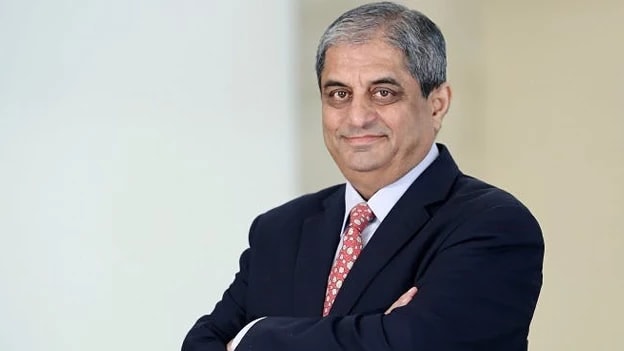
Meet Sashidhar Jagdeesan, the new CEO of HDFC Bank

The Reserve Bank of India has approved the appointment of Sashidhar Jagdishan as Managing Director and CEO of HDFC Bank for a period of three years from October 27, 2020, when he will take the charge from the outgoing MD Aditya Puri.

Who is Sasidhar Jagdisan? What does his appointment as MD mean for the future of HDFC?

  • A Mumbai-boy, Jagdishan grew up in the quiet suburban neighbourhood of Matunga where he studied in Don Bosco High School, after which he went on to pursue his bachelors in Physics from Mumbai University. He is also a qualified Chartered Accountant and holds a Master’s degree in Economics of Money, Banking & Finance from the University of Sheffield, UK.
Sashidhar Jagdishan
  • He worked as a senior officer in the country financial control division of Deutsche Bank in Mumbai. Post which he quit and joined HDFC Bank in 1996.
  • Sashidhar Jagdishan joined HDFC Bank in 1996 as a manager in the finance function. He became Business Head- Finance in 1999. Thereafter he became Cheif Financial Officer for HDFC in 2008.
  • Sashidhar is currently the Group Head of Finance, Human Resources, Legal & Secretarial, Administration, Infrastructure, Corporate Communications, Corporate Social Responsibility and the Strategic Change Agent of the Bank.
  • HDFC Bank’s stock price has been under pressure due to concerns around the succession and the recent attrition in the top management. The stake sale by Aditya Puri had also impacted the sentiment and raised uncertainty over the CEO finalization. The stock had corrected 12 per cent in two weeks before the finalization of CEO by RBI.
  •  HDFC Bank‘s share price rose nearly 6 per cent intraday on August 4 on the report of RBI approving Sashidharan Jagdishan as MD, CEO.
  • Sashidhar Jagdishan, Kaizad Bharucha, Executive Director at Operations(HDFC) and Sunil Garg, CEO, Citi Commercial Bank were the three final options to replace Aditya Puri as MD, CEO.
  • Certain board members and analysts saw Kaizad Bharucha as a better fit for MD/CEO since he was the face for investor relations, operations and wholesale banking. Whereas, Sashidhar’s domain is finance.
  • In an uncertain environment like this, we believe an internal candidate who is in sync with the outgoing CEO Mr Puri is the right choice.” – Suresh Ganapathy, Macquarie Securities
  • Considering the appointment of an internal candidate, who has been part and parcel of the team that built that kind of a legacy, I do not think there should be much of an issue,” – Dipan Mehta, Founder and Director, Elixir Equities
  • Keeping COIVD pandemic in mind you should expect slow growth in the short term. However, if Sasidhar’s term is extended from the signed three years you can expect continuity in the performance of the company.

The Legacy of Aditya Puri.

  • Aditya Puri was born in Gurdaspur District (Punjab) and studied at Punjab University, Chandigarh, gaining a bachelor’s degree in Commerce. He qualified as a Chartered Accountant with the Institute of Chartered Accountants of India. He has worked in the banking sector for 40 years, in India and other countries. He became CEO of CitibankMalaysia in 1992. In September 1994 he returned to India as Managing Director of HDFC Bank
News: HDFC Bank's MD Aditya Puri remains top-paid banker in India ...
  • Aditya Puri joined HDFC Bank in September 1994 with the vision of creating a world-class bank and became the longest-serving head of any private bank in the country. He presided over HDFC’s acquisitions of Times Bank Limited in 2000 and of Centurion Bank of Punjab in 2008
  • HDFC Bank became listed on BSE in May 1995. Since then, the stock has delivered 25,000 per cent returns to investors to date. Puri is the highest-paid CEO in the banking industry; his total remuneration was Rs 18.9 crore in 2019-20.
  • Puri left his cushy job in Citibank Malaysia to head back home to start a greenfield bank promoted by mortgage lender HDFC Ltd in the early 90s. In the next two and a half decades, Puri scaled up the bank organically and turned it into a profit-making machine with the lowest NPAs in the industry.
  • Puri, whose tenure ends in October 2020, held a 0.14% stake or 7.8 million shares as of 30 June. Recently, he sold nearly Rs 800 crores worth of shares, and thus, the veteran banker now holds 3.76 lakh shares or 0.01% stake in the bank.
  • Under Puri, the bank became the first in India to launch an International Debit Card in association with VISA (Visa Electron). In the year 2001, they started their Credit Card business. Subsequently, HDFC Bank became the first private sector bank to be authorized by the Central Board of Direct Taxes (CBDT) and RBI to accept direct taxes.
  • Under Puri, the Bank made a strategic tie-up with a Bangalore-based business solutions software developer Tally Solutions Pvt Ltd for developing and offering products and services facilitating on-line accounting and banking services to SMEs. Thereafter, On 20 July 2001 HDFC Bank’s American depositary receipt (ADR) was listed on the New York Stock Exchange under the symbol HDB.

The Sum and Substance.

In conclusion, Sashidhar’s appointment was a welcomed decision in the market with HDFC share price going up 6% shortly after the announcement. Aditya Puri’s legacy saw HDFC transitioning from infancy to once of India’s Largest Private Sector Bank by Assets as well as market capitalization.

With the effects of COVID-19 in the scenario, you can expect overall stunted growth in short-term for its Non-Banking entity. With optimism in the market about the new MD and the approval of Aditya Puri himself, one can take a backseat and wait for the COVID situation to clear out and most assuredly the appointment of Sashidhar Jagdishan shall bring prosperity to HDFC as an entity.

Categories
Editorial

RBI Monetary Policy Highlights – All you need to know

Reserve Bank of India (RBI) Governor and the head of the six-member Monetary Policy Committee (MPC), Shaktikanta Das addressed the media after the three-day MPC meeting. The MPC decided to keep the repo rate, the rate at which the central bank lends short term money to commercial banks, unchanged at 4% after 115 basis points reduction between March and May this year.

RBI Governor said that the real GDP growth will remain negative in FY21.

In order to understand the concept of Repo and Reverse Repo Rates better, please go through this article.

In short, an increase in Repo rate means that the banks will have difficulty in availing loans easily. This, in turn, reduces the money supply in the economy and helps in controlling inflation. On the contrary, a decrease in Repo rate means that the banks can easily get money from the Central Bank. This increases the money supply in the market and is associated with high economic growth.

Gold

RBI also eased the gold loan guidelines which will enable lenders to give more loan against jewellery. According to current RBI regulations, up to 75% of the value of the gold can be lent. According to new guidelines, 90% of the value of gold can be lent. This relaxation will be effective until March 31.

In simpler terms, if the value of the gold against which loan is issued is worth Rs 1000, then according to the previous regulation a loan amount of Rs 750 can be issued. But now a loan of Rs 900 can be issued.

Moratorium and Loan Restructuring

Reserve Bank of India (RBI) did not extend the moratorium in its monetary policy review on Thursday, it allowed banks to restructure the loans of borrowers who are in financial difficulty and are unable to repay them.

Once restructured, such loans would be considered as standard. This means that the lenders won’t report the borrower as a defaulter to credit bureaus if the borrower follows the new payment structure.

Personal loans include those given to individuals and include education loan, housing loan and loans given for investment in financial assets (shares, debentures, and so on).

According to RBI, the resolution of stressed personal loans will be available only to those borrowers who were repaying their loans regularly as on 1 March 2020.

RBI wants lenders to offer the resolution plan only to eligible borrowers. Institutions could, therefore, have the discretion to choose the borrower based on the facts of the case. The facility, hence, could be available to genuine borrowers who have lost their jobs or have faced a high pay cut, putting stress on their finances.

Rs 10,000 crores to NABARD and NHB

RBI in its monetary policy announced today announced an additional special liquidity facility (ASLF) of Rs 10,000 crore equally split between NABARD (National Bank for Agriculture and Rural Development) and the NHB (National Housing Bank) to help small financiers and home loan companies.

RBI said In order to shield the housing sector from liquidity disruptions under the prevailing conditions and augment the flow of finance to the sector, it has been decided to provide an additional standing liquidity facility (ASLF) of Rs 5,000 crore to NHB – over and above Rs 10,000 crore already provided – for supporting housing finance companies (HFCs).

In conclusion, the bi-monthly briefing by the RBI Governor provided some insight over the policies to maintain a financially sound ecosystem in the times of crisis. The Loan Restructuring process is a way to protect borrowers, in the time of COVID-19.

This highlights positive market sentiment as Sensex gained 362 points and Nifty 50 gained 99 points after the announcement.

You can view the RBI Governor’s statement here.

Categories
Editorial

Reliance: Where does the money come from?

Legacy

Dhirubhai Ambani, who gave birth to Reliance, started his mission in 1957 with a small 500 sq. ft. office. He developed a little yarn trading business but always dreamt of establishing India’s largest company.

In 1977, Reliance Textile Industries’ IPO was subscribed over 7 times thus, giving a major financial and morale boost to the company. Following the idea of backward integration, Reliance set up its first mega manufacturing plant at Patalganga under just 18 months. Reliance Industrial Infra was also launched in 1988.

With the idea to reap benefits of backward integration, the Hazira plant was started in 1991 which made them the world’s largest integrated producer of polyester. A huge breakthrough was found in 2000 as Reliance built the world’s largest grassroots refinery in Jamnagar, that too in just 36 months!

The year 2002 witnessed the launch of Reliance Communications as Reliance Infocomm Limited. The same year witnessed the death of Dhirubhai Ambani. From there on, reports of disagreement between the two brothers, Anil Ambani and Mukesh Ambani came to surface. When the feud became public in 2005, their mother Kokilaben intervened to split the Reliance empire.

Mukesh Ambani led Reliance got the soul of the business: Reliance Industries, along with IPCL. On the other hand, Anil Ambani got the responsibility to command Infocomm, Reliance Energy and Reliance Capital.

The oil & gas business took a massive upturn in 2009 when Reliance commenced production of hydrocarbons in its KGD6 block. This helped them to develop the world’s fastest green-field deepwater oil development project. After penetrating the retail business, Reliance Retail becomes the largest retailer by revenue in 2014.

Mukesh Ambani led Reliance ventured into the digital revolution of the country by launching wireless broadband 4G services and Jio. In just four decades, the company has grown from a small start-up to one of the biggest companies around the world. It has been some journey!

Reliance is dominating the current Indian market. Thus, it is no wrong that everyone is talking about this company. Yes, it is a huge empire, but do you know where the revenue and profits come from? Everything below will explain to you how the company makes money from and which segment helps them to achieve this consistent growth.

Revenue and Profit Distribution

Reliance reported a consolidated turnover of Rs 6,59,205 crore for FY20, a rise of 5% over the previous year. Consolidated net worth also increased by 15% to reach Rs 3,75,734 crore. Reliance operates in several markets. From trading yarn to oil and now to digital transformation, Reliance has ventured in many spaces. The tables below show which segment has contributed more to revenues and profits over the past four years.

2017201820192020
Refining63.7%56.4%50.9%47.8%
Organized Retail8.6%12.8%16.9%20.1%
Petrochemicals23.5%23.1%22.3%17.9%
Digital Services0.2%4.4%6.3%8.4%
Crude Petroleum2.7%2.3%2.9%5.2%
Percentage contribution of different segments to Total Revenue
2017201820192020
Refining65.5%49.4%33%30.1%
Organized Retail2.0%3.8%7.7%11.3%
Petrochemicals34%40%46.7%36%
Digital Services-0.1%6.1%12.6%20.3%
Crude Petroleum2.8%3.2%1.7%3.1%
Percentage contribution of different segments to Net Profits

Digital Services

Jio is an entire ecosystem which aims to help Indians enjoys digital life to the fullest. It aims to cover 90% of India’s population in the next year. Under the music stream, it acquired Saavn and turned it into Jio Saavn. To counter zoom’s dominance, it launched video conferencing app JioMeet. Reliance Jio became the number 1 ranked mobile telecom operator in the country by both Adjusted Gross Revenue (AGR) and subscribers.

India has around 450 million unique smartphone users, second only to China in the whole world. This gives them additional motivation to turn this segment into a cash cow and utilize the already dominated market.

Jio has been the driving force behind RIL in the past four months. With the world under lockdown, the oil & gas domain faced a drastic decline in demand. In these extreme times, sale of stake in Jio Platforms helped the company become net-debt free much before their targeted time.

Revenue from this domain has increased by a CAGR of 226% in the past four years. In 2017, the digital services made just 0.7% of the total revenues. This has increased to 8.4% in FY20, according to the recent annual report of the company. Digital services were accruing losses in 2017. But a well-planned strategy has made this segment the crown jewel of Mukesh Ambani. Jio contributed around 20% of profits for RIL this year.

Source: Author’s own creation

Refining and Marketing

Reliance R&M helps in making a wide range of products like Liquified Petroleum Gas, Propylene, Gasoline, Jet fuel, sulphur etc. These products are used widely as domestic and industrial fuel, transport fuel, feedstocks for fertilizer and pharmaceuticals, etc.

The global oil industry has been in turmoil since the spread of COVID-19. The demand for oil worldwide fell to the lowest level since 2011. From 2018 to 2019, this domain registered a growth of 29% but things were way different this year. FY2019-20 revenue from this segment fell by 1.6% y-o-y to 3,87,522 crore. Crude oil prices fell massively. This made the production more expensive for the company. Thus, their gross refining margin (GRM) fell to $6.3 per barrel from $8.1 per barrel.

The problem in this segment is not in the top line, but actually in the bottom line. Even though the revenue is decreasing at a gradual pace, the profits contributing to the total profits is decreasing even faster. In fact, in the space of four years, profits % contribution has fallen by more than half. Good time to switch from oil to telecom maybe?

Source: Author’s own creation

Retail

Reliance Retail is the retail segment of the Reliance group. The retail serves under the food and grocery, consumer electronics and fashion & lifestyle category. Reliance Trends, Trends Women, Reliance Fresh, Reliance Smart, Reliance Footprint and Reliance Jewels and some of the stores under which Reliance operates.

The general perception is that growth in digital services is helping the company to thrive. Here’s an eye-opener. The retail business of Reliance has grown with a CAGR of 382% during financial years 2017-’20. This is in contrast to digital services’ 226%.

The company has focussed on store expansion and increasing the number of product mix so that the consumers can consider it a one-stop-shop. Roll-out of the Digital Commerce initiative will further increase customer’s awareness and customer’s accessibility.

Recently, Reliance Retail and WhatsApp entered a partnership to support small businesses on WhatsApp via JioMart. And as many reports suggest, Reliance is inching closer every day to acquire Future Retail as soon as possible.

Source: Author’s own creation

Petrochemicals

Reliance is among the top ten largest producers of petrochemicals in the world and the biggest in India. Petrochemical is a chemical which is obtained from refining of petroleum and chemical. These chemical compounds are later used to manufacture a range of products which comes is the daily use of people. Few products are resins, synthetic fibres, plastics, detergents and pesticides. With the power of chemistry and innovation, the Reliance focuses on making several products across agriculture, automobile, housing, industrial and healthcare. The company produced a range of polymers, aromatics, polyesters, etc.

The disturbed global factors related to oil echoed in petrochemicals performance this year. Their overall contribution to the revenue decreased from 22.3% last year to 18% this year. Due to lower price realization and lower sales, revenues from this segment has decreased by 15.5%.

Last year, revenues amassed from petrochemicals was Rs 1,72,065 crore. This year, it fell to Rs 1,45,264 crore. Petrochemical has been the second most revenue generated area for a while but this changed in FY20. Organized retail leapfrogged the petrochemicals by almost 3% when it comes to revenue contribution.

Petrochemical has always been one of the biggest contributors to total net profits for Reliance. From 2017-19, it has increased from 34% to 46.7% but with the pandemic affecting half of the financial year, expenses shot up due to trade barriers. This has resulted in a decrease in contribution from 46.7% to 36%.

Source: Author’s own creation

Shortly, we will be knocking on your doors to explain each and every segment in detail. Until next time.

Categories
Editorial

Microsoft buying TikTok: All you need to know

TikTok and Microsoft have been in news recently as US President Donald Trump on Monday said Microsoft can buy the Chinese-owned video app TikTok. 15 September has been set as the ultimatum date for TikTok to close the deal, or to get banned in the United States.

Microsoft in a blog post on Sunday confirmed talks to buy TikTok’s operations in the United States, as well as in Canada, Australia and New Zealand. The Chinese Video app has come under scrutiny in Washington for its Chinese ownership.

Trump administration officials and lawmakers have argued that the app, which is known for dance videos and other fun viral clips, could pose a national security threat by potentially giving the Chinese government access to vast quantities of American user data. This is also a similar reason why the Indian Government recently banned TikTok in the country.

Microsoft outlined in their blog about how it would transfer and protect user data. The company said that it “would ensure that all private data of TikTok’s American users are transferred to and remains in the United States”. The blog added that “Any such data currently stored outside the U.S. would be deleted from servers overseas“.

ByteDance

First, let us understand the origin and the financials of the TikTok’s parent company ByteDance.

ByteDance is the world’s 2nd most valued startup, valued at $100 Billion above the likes of SpaceX ($33.3 Billion) and Airbnb ($18 Billion). Its investors include KKR, SoftBank, and Sequoia Capital China.

The Parent Company itself had revenue of $17 billion last year with profits of $3 billion. But that’s the entire company, with a stable of at least 20 apps including Douyin (the Chinese version of TikTok) and news feed Toutiao. According to The Information, TikTok’s revenue last year was around $300 million globally — that’s less than 2% of an entire company. This year, TikTok was aiming for $500 million in sales in the U.S.

Chinese Retaliation

“China will not accept United States’ attempts of acquiring TikTok and considers Microsoft’s pursuit of purchasing the company a “theft” of its technology, state-run China Daily said in an editorial on Tuesday. It said that China had “plenty of ways to respond if the administration carries out its planned smash and grab”.

China Daily, which is a mouthpiece of China’s ruling Communist Party, said that “such shilly-shallying” is a tactic the US administration employed during the trade deal negotiations with China.

What’s in it for Microsoft?

A deal like that would vault Microsoft into the social media and advertising markets dominated by Facebook Inc. and Google. Microsoft once paid $6.3 billion for Internet ad company aQuantive, the largest deal ever for the company at the time. The effort failed and the company ended up writing down almost the whole value of the deal.

Buying TikTok would give Microsoft “a crown jewel” in consumer social media at a time when Facebook and Google are under massive regulatory scrutiny over antitrust concerns.

With no consumer social media app, Xbox and Minecraft are pretty much its sole attention-getter among younger users. TikTok would help bolster that business, though it would also push Microsoft to confront controversial areas it has mostly avoided, such as censorship and disinformation.

Microsoft has added $77 billion in market value after confirming talks to buy TikTok in the US. Many legal hurdles remain in front of Microsoft ahead of the September 15 deadline. The exact the terms of the buyout and how the Chinese Administration will react to it are also yet to be seen.

Categories
Editorial

Auto Sales Up in July; Sector shows sign of recovery.

  • India is the 5th largest auto market in the world with market size estimated to be $118 Billion. Domestic automobiles production increased at 2.36 per cent CAGR between FY16-20 with 26.36 million vehicles being manufactured in the country in FY20 with the two-wheeler segment domination the sales.
  • The Indian Automobile along with Auto-Components industry slumped during the lockdown between March 2020 and June 2020. According to Society of Indian Automobile Manufacturers(SIAM), The total production of Passenger Vehicles, Three Wheelers, Two Wheelers and Quadricycle in the month of June 2020 was 1,094,363 as against 2,253,407 in June 2019 facing degrowth of (-)51.4%. Overall the industry has faced a 75.5% degrowth between Q1FY20 and Q1 FY21.
Passenger Vehicles
  • However, the story seems different for July, Passenger Vehicle sales were up 69% in July 2020 as compared to June 2020 falling short of just (-)1% as compared to July 2019 sales indicating a return to normalcy in the near future.
  • Maruti Suzuki logged an 88% growth in sales as compared to June 2020 along with making a 1.3% YoY Growth. Maruti sales were led by entry-segment Alto, WagonR and sPresso.
  • Tata Motors flew past Maruti-Suzuki in terms of sales growth. Tata Motors sold 15k units, 43 per cent up from 10,485 units sold in July 2019. Despite not-so-great Q1 results on 31st July Friday, Tata Motors shared zoomed at 6.5% after the market opened on 3rd August, Monday.
  • MG motor a comparatively new player in the market showed a rise of 40% in sales YoY selling 2,105 units in July 20 as compared to 1,508 in July 19
July 2020 Car Sales – Snapshot - Auto Punditz
Passenger Vehicle Sales
The Farm Equipment Sector and rise in Agriculture
  • Mahindra’s domestic vehicle sales of 11,025 units were 34.5 per cent down on last year’s numbers. However, it’s Farm Equipment Sector (FES) reported a 27% growth in the sales of tractors to 25,402 units which are by far the highest July sales according to company reports.
  • Escorts Ltd on Saturday reported a 9.5 per cent increase in tractor sales at 5,322 units in July. The manufacturer has also made a 21.1% YoY growth in terms of sale.
  • VST Tillers has reported total sales of 8226 power tillers and 2616 tractors during the period April-July 2020, as compared to 7904 power tillers and 2404 tractors amounting to 6% growth during the period April-July 2019.
  • The reason behind this is the rise in the rural market and an increase in agriculture as an occupation due to lockdown in most urban and metro areas causing a loss of occupation in cities.
OEMs
July 2020
July 2019
% change
Mahindra & Mahindra
24,463
19,174
28
Escorts4,9534,50510
VST Tillers10,84210,3086
Two Wheelers
  • Hero MotorCorp managed to sell over 514,509 units indicating a 14.4% growth Month-over-Month in sales (June-July 2020)
  • Suzuki Motorcycle India Pvt. Ltd. had a 37% appreciation in sales to 31,421 units in July 2020. Exports stood at 2,991 units in the month gone by.
  • Eicher Motors Owned Royal Enfield showed a 6% increase in sales Month-On-Month basis ending July. Royal Enfield claimed that its Interceptor 650 was the highest-selling motorcycle in the U.K. over the past 12 months, with the Himalayan coming in at fourth.
  • TVS Motor Company registered a sales growth of 27% in July 2020 with 252,744 units as against 198,387 units in June 2020. TVS Motor Company registered sales of 252,744 units in July 2020 as against 279,465 units registered in the month of July 2019.
Commercial Vehicle Sale
  • Ashok Leyland‘s sales might have declined 56% per cent YoY but have managed to double sales on a monthly basis with 4775 models in July 2020 as compared to 10,926 models in June 2020
  • In the Commercial Vehicles segment, Mahindra and Mahindra sold 13,103 vehicles in July 2020, as against 15,969 vehicles in July 2019.
Mahindra Tractor, Farm Equipment sales grow 10% - Car sales down 57%
Mahindra and Mahindra Total Sales Figures (Source:RushLane)
  • The commercial vehicle segment is impacted the most due to travel restrictions being imposed all across the country and limited passes being issued to transporters. Moreover, with reduced sales, the transporters are having to pay for road taxes, permits and other secondary charges.

The COVID-19 reduced the profits for transportation business while forcing many to shut shop. Although, transportation was of utmost importance in transporting essentials it couldn’t push demand for automobiles whatsoever.

Despite the reduction in Oil prices, the government increased tax on Oil which did no good to the automotive industry. With respect to commercial passenger vehicles, enforced social distancing norms has caused a reduction in the use of public transport/buses.

As the world recovers, you can expect a steady growth in automobile demand in in Light Commercial Vehicle(LCV) Category more than Heavy Commercial Vehicle (HCV) Category. Two wheeler sales and Passenger Vehicle segment should resume and can be expected correlate with the reduction in impact of COVID-19 and the implementation of Make-In-India along with the Atmanirbhar Bharat moment.

Categories
Editorial

The Big Techs are too Big!

Yesterday, after the market hours Apple, Alphabet, Amazon and Facebook reported their Q2 earnings of 2020. As millions of people have lost their jobs, it was interesting to see how the big tech giants of the US has fared during the worldwide pandemic.

Apple

Apple reported Q2 2020 results which destroyed the Wall Street estimates. Total net revenue of $59.7 billion was declared, which is a mighty 11% higher than what was recorded in the same period last year. Net profits also increased by 12% from $10.04 billion to $11.2 billion. The major chunk of the increase in revenue has come through the services domain. Revenue from the services segment has increased by 14% whereas from products segment has increased by 10%.

Better financial performance in the quarter has forced Earning per share to rise by almost 19% to reach $2.6. Again, the rise in EPS has beaten the estimates of Yahoo Finance data. 

“We’re conscious of the fact that these results stand in stark relief during a time of real economic adversity for businesses, large and small, and certainly for families. We do not have a zero-sum approach to prosperity, and especially in times like this, we are focused on growing the pie, making sure our success isn’t just our success.” – Chief Executive Officer Tim Cook.

Apple also delivered on its commitment to double its annual service revenue within four years. All this had a positive effect on the company’s stock price. Apple shares went up by 4.7% in after-hours trading. The booming performance in the stock market has prompted them to go for a stock split for the fifth time in their history.

The aim behind the stock split is to make the stock cheaply accessible to the investors who are interested to buy the stock. To know more about the stock split, click here. As coronavirus forced offices, schools and colleges to operate from home, demand for products like iPad and Mac surged. iPad had its best June quarter in eight years whereas the Mac had its second strongest quarter in its history.

Amazon

Amidst the global pandemic, when companies are reporting losses, Amazon has just declared the biggest profit in its 26-year history. As compared to the same quarter previous year, Amazon has reported an increase of 29% in their total revenues, from $63.2 billion to $88.9 billion. With the retail shops shut around the world and fears of stepping out in the mind of people has forced them to look for e-commerce to buy things. 

This has worked hugely in favours of Amazon whose Online grocery sales tripled year over year. Also, their streaming video platform has seen video hours doubled. The sales in online stores have increased exponentially by more than 48% to reach $45.9 billion in the second quarter. 

“Everyone was looking for masks; everyone was looking for gloves; everyone was buying groceries online. That mix is not super profitable,” he said. “What we saw in Q2 was not only did the mix start to shift back to a more normal mix” but that “we also were able to ship a lot more than we had originally thought.” – Brian Olsavsky, Amazon’s chief financial officer.

As the demand for online shopping increased, third-party merchants paid Amazon more to sponsor their products extensively. The companies worldwide are forced to shift to the online mode. Thus, Amazon’s cloud services also saw higher demand as the revenue from Amazon Web Services (AWS) increased by 28% $10.81 billion.

As the demand soared up, Amazon hired 175,000 people in recent months. The costs related to COVID-19 also increased as the company spent around $4 billion on protective equipment for staff. Yet, after incurring high operational expenses, Amazon was able to double in net profit from $26.2 billion to $52.4 billion in just one year.

Alphabet

Alphabet reported Q2 2020 earnings with a 2% dip in total revenue but still beating the street estimates. Total revenue and net income were amassed to be $38.3 billion and $6.96 billion in COVID-hit quarter. A big note of worry for the company is the falling revenue from Google ads for the second straight quarter. Revenue from google ads this quarter was $29.8 billion which is 8% less than what was amassed in the same quarter last year.

“We’re working to help people, businesses and communities in these uncertain times,” said Sundar Pichai, Chief Executive Officer of Google and Alphabet. “As people increasingly turn to online services, our platforms — from Cloud to Google Play to YouTube — are helping our partners provide important services and support their businesses.”

On a brighter side, revenue from Youtube ads and Google Cloud shot up by 5.4% and 43% respectively. The strong growth in both of these segments has aided Alphabet to beat the market estimates. With people putting in their home, video hours of Youtube platform increased which also forced merchants to pay more for their ads to come up. Similarly to AWS, Google Cloud grew massively as offices are switching to the work-from-home model.

Facebook

Just like the previous three tech giants, Facebook went past all the street estimates and registered an 11% rise in revenue from $16.9 billion last year to $18.7 billion. Due to the lower tax rate, their net income has shot up by more than 90%. Facebook daily active users (DAUs) has increased by 12% year-on-year to reach 1.79 billion in June 2020.

Facebook monthly active users (MAUs) also rose by 12% to stand at 2.70 billion. A 15% rise Family monthly active people (MAP) took the number to 3.14 billion as of June 30, 2020. The company has been under severe social pressure in this quarter. A public campaign was run against the company a while ago. Mark Zuckerberg failed to remove one of the comments of President Donald Trump which was deemed instigating by twitter and the public.

A worldwide ad boycott by more than 1,100 companies took place to support #StopHateForProfit campaign. Some of the major brands that have pulled their ads are Coca-Cola, Ford Motor, Puma, Unilever, etc. Even after so many issues, Facebook has managed to do well financially and overcome the street estimates.

Conclusion

The more this pandemic continues, more these tech giants are going to benefit as people shift to online medium for every reason. Whether they want to study or teach, whether they want to buy or sell, whether they want to talk or meet, all of this will be done via online medium. And, the business models of these tech giants readily support this movement of people during the pandemic.

The large tech giants have seen a huge surge in the demand for their products. The dependence of people has increased on them which has helped them to thrive during this pandemic. Every segment of the economy is depending on the tech facilities and this has created a huge boom for these companies. All in all, it has shaped a perfect Tech world.