Categories
Market News Top 10 News

Adani Group Gets SEBI Nod for Open Offer to Buy Stake in ACC, Ambuja – Top Indian Market Updates

Here are some of the major updates that could move the markets on Monday:

Adani Group gets SEBI nod for open offer to buy stake in ACC and Ambuja

The Adani Group has made offers of Rs 385 per share for Ambuja Cements and Rs 2,300 a share for ACC. The company intends to buy a 26% stake in both cement companies respectively for an amount totalling ~Rs 31,160 crores. Adani will acquire the stake from Holcim Ltd after it announced to buy a controlling stake in Holcim’s India businesses. 

Read more here.

IRCTC shares surge ~12% in two days after floating data monetisation tender

Indian Railway Catering & Tourism Corporation’s shares surged by nearly ~12% in the last two trading sessions after it floated a tender to hire a consultant to help it monetize its digital assets. The tender drew controversy as users questioned if IRCTC intended to sell private user data.

In response, IRCTC clarified as follows: “As a commercial entity, the company explores the business opportunities for new areas. As other business tenders, this tender has also been floated merely to appoint a consultant. The consultant will guide IRCTC and Indian Railways on monetization activities and advise on monetization value of Digital Assets by observing various Acts or laws, including IT Act 2000 and its amendments, User data privacy laws including GDPR (General Data Protection Regulation), and current Personal Data Protection Bill 2018 of India.”

Read more here

India’s inflation target breach for first time in six years

India’s inflation has breached the upper tolerance limit of 6% for three consecutive quarters for the first time in six years. The RBI has decided to call a meeting after October 12 to discuss a report to be submitted to the Union Government explaining the breach. The limit of the inflation target is fixed every five years jointly by the RBI and the Union Government. Currently, the upper limit is fixed at 6%, while the lower limit is at 2% until March 31, 2026. 

Read more here

Syrma SGS Technologies IPO: GMP jumps 28% ahead of listing 

Syrma SGS Technologies’ Rs 840 crore IPO got subscribed 32.61 times, whereas its retail portion was subscribed 5.53 times. The company’s shares are trading at a premium of 28% in the grey market, standing at Rs 35 per share. The tentative date for allotment of shares is August 23, 2022. 

Read more here

BSE’s market cap hits a new peak of Rs 283.5 lakh crore

Bombay Stock Exchange’s market cap has hit a new peak of Rs 283.5 lakh crore, with the SENSEX ending at 60,289 points at the day’s end. In January, the exchange had hit its last peak with a market cap of Rs 283.2 lakh crore. The rally in the previous two months is due to the net buying of Indian stocks by foreign portfolio investors

Read more here.

Government reviews windfall profit tax, RIL shares dip

On Thursday, the government increased the windfall profit tax on diesel exports to Rs. 7 per litre and reinstated a tax on jet fuel exports, although it decreased the tax on locally produced crude oil in line with softening rates. The tariff on domestic crude oil has been reduced from Rs 17,750 to Rs 13,000 per tonne.

Read more here.

Zomato-backed BlinkIt announces printout delivery to doorstep in 10 minutes

Zomato-owned quick delivery app Blinkit has started services to deliver printouts to your doorstep in just 10 minutes. Currently, the service is available in select areas of Delhi-NCR. It will charge an amount of ₹9 per page for black and white printouts, while ₹19 for colored. The service will now help users to get their documents printed and delivered quickly to their location by just uploading them on the Blinkit application

Read more here.

SBI shares dip after it sells KSK Mahanadi Power loan account to Aditya Birla ARC for Rs 1,622 crore

Aditya Birla ARC has purchased the KSK Mahanadi Power Company’s non-performing loan account from SBI for Rs 1,622 crore, taking an almost 58% haircut off the total outstanding balance in the process. As of April 2022, the total amount of loans still owed to the State Bank of India (SBI) by KSK Mahanadi Power Company was Rs 3,815.04 crore.

Read more here.

Categories
Editorial

5 Things Wrong With The Indian Startup and VC Ecosystem

Do you know what’s common between OYO, PayTM, BYJUS, and Swiggy? While they have a valuation of greater than $10 billion, none of them are profitable. Startups have for long aimed for valuation and growth. Profitability is far from visible for many unicorns. 

Speaking of India’s largest IPO turned fiasco, the PayTM IPO. The IPO was oversubscribed 1.89x and ended up listing at a discount, costing investors $900 million in just two days. The party seems to have ended with PayTM IPO, where investors have lost close to 60% of their wealth as of February 2022. Institutional investors and venture capitalists (VCs) offloaded shares right before PayTM’s IPO, while retail investors later bore the brunt. Even anchor investors exited the company as soon as their lock-in period ended.

Starting in 2022, there has been a lot of chatter on startups closing down, firing all of their workforces, employees being ill-treated, startup founders being fired for governance issues, and much more. This brings us to a question: what’s wrong with the Indian startup ecosystem?

Valuation is King! Not Profit

As of February 2022, India is home to 91 unicorns, and most aren’t profitable. While the ultimate aim of a firm used to be ‘profit maximization’, now it has become ‘increasing shareholder’s wealth’. It seems like profits are for businesses and startups earn valuation. While sky-high valuation (with no profitability) is something that helps VCs and founders grow their wealth and enterprises, it lays the groundwork for a bubble that could explode once the ecosystem runs out of liquidity.

Customer Is King…At The Cost Of Employees?

Recent startups have had reports of poor human resource (HR) practices. It seems that the entire ecosystem is following a single motto: ‘Hire To Grow, Fire To Sustain’. Unicorns like OYO, PayTM, and Byju’s have laid off employees without any benefits or even a notice period and violated essential labor laws. Gig workers for unicorns like Zomato and Swiggy often go on strikes and claim to be underpaid.

BYJUS and WhiteHat Jr were in the news after clips of management’s misbehavior with its employees surfaced on social media. Pradeep Poonia, a software engineer, exposed malpractices to startups like BYJUS and WhiteHat Jr. through social media.

LIDO, an edtech startup, shut its operations and fired all of its employees without a notice period or prior intimation. The startup closed down nearly 5 months after it raised $10 million. Tiger Global-backed OkCredit fired around 35% of its workforce. On the contrary, the company had planned to ‘double its workforce’ by the FY22 end. These are not the only reported cases. Most HR malpractices go unquestioned by the ecosystem, making ‘hire to fire’ a norm in the startup world.

High Customer Acquisition Cost (CAC)

Point blank, Indian startups have a very High Customer Acquisition Cost (CAC). At a seed or early stage, when resources are limited, startups tend to spend way too much on advertising, marketing, and promotion. Eventually, startups end up exhausting their capital on acquiring customers instead of spending more on customer service or product development.

Poor Product and Flawed Business Models

Looking around the startup ecosystem markets, it feels like any product + e-commerce = a million-dollar startup. While e-commerce is the backbone of most successful enterprises, startups fail to understand the backbone of the business. They fail to realize that a product is its best salesperson.

Startups Spread Fast and Fail Faster

Startups intend to spread like wildfire and end up getting engulfed by one. Most startups in today’s time want to expand across India. Each area in the country comes with a different set of social, cultural, economic, political, physical, and physiological challenges. Instead of focusing on one area at a time, startups scatter their locations, making it problematic to handle.

Startups have been a hot topic in our country ever since the business reality television series Shark Tank India aired. The general public is more aware that bootstrapped or seed-round startups face challenges. The startup bubbles have started popping, and VCs are now more conscious about practices that could drive a startup down. One can expect startups to have a more disciplined approach and a greater success rate in the next ten years.

What are your views on the current state of the Indian startup ecosystem? Let us know in the comments section of the marketfeed app.

Categories
Market News Top 10 News

Rupee Hits 80 per US Dollar At Record Lowest – Top Indian Market Updates

Here are some of the major updates that could move the markets tomorrow:

Rupee Hits 80 per US Dollar At Record Lowest

On July 19, 2022, Tuesday, the Indian Rupee to US Dollar conversion rate hit a new record low at Rs 80 per US Dollar in the interbank spot exchange. The rising trade deficit, continuous outflow of foreign portfolio investors, and rising crude oil prices are some of the reasons that are said to have kept the rupee under pressure.

HDFC Life Q1 Results: Net profit rises 21% YoY to Rs 365 crore

HDFC Life Insurance Company Ltd reported a 21% YoY increase in net profit to Rs 365 crore for the quarter ended June (Q1 FY23). Total premium rose 21% YoY to Rs 9,396 crore during the same period. The first-year premium collection grew 27% to Rs 4,776 crore in Q1. The company’s subsidiary, HDFC Pension, crossed the Rs 30,000 crore assets under management (AUM) mark and has almost doubled its AUM in just 15 months.

Read more here.

SpiceJet launches 26 new domestic flights

SpiceJet Ltd has announced the launch of 26 new domestic flights. The airline will connect Nashik with Hyderabad and Delhi with Khajuraho under the UDAN scheme with new and additional flights starting July 22, 2022. The airline will also reduce direct flights to Nashik from Delhi, Hyderabad to Jammu, Mumbai to Guwahati, Varanasi to Ahmedabad, and Kolkata to Jabalpur. SpiceJet will deploy Boeing 737 and Q400 aircraft on these routes.

Read more here.

DLF aims to double retail presence in 4-5 years, building new malls

DLF Chairman Rajiv Singh said the company has initiated the development of new shopping malls and looks to double its retail portfolio in the next five years. At present, DLF has a retail footprint of 42 lakh square feet comprising eight properties, including malls and shopping centres mainly across Delhi-NCR. The company would also scale up the development of housing and office projects.

Read more here.

Indian Oil, NTPC form JV to set up a renewable energy-based power plant for refineries

NTPC Ltd has signed an agreement with Indian Oil Corporation Ltd (IOCL) to form a joint venture (JV) to meet the power requirements of IOCL’s refineries. Through this JV, Indian Oil plans to meet the additional power requirement of its refineries using round-the-clock renewable energy of up to 650 megawatts (MW) by Dec 2024. NTPC Green Energy Ltd (NGEL) will form the JV company to supply RE-RTC power to IOCLl.

Read more here.

HUL Q1 Results: Net Profit Up 11%

For the quarter ended June 30, 2022, Hindustan Unilever recorded an 11% increase in standalone net profit at Rs 2,289 crore as compared to Rs 2,061 crore in the same quarter last year. Revenue from operations increased by 19.48% YoY to Rs 14,016 crore from Rs 11,730 crore in the same quarter last year. Home Care delivered 30% growth driven by strong Fabric Wash and Household Care performance. Both categories grew in high double-digits with all parts of the portfolio performing well. 

Read more here.

Reliance Jio adds 31 lakh new mobile users in May; Bharti Airtel adds 10.27 lakh users

Reliance Jio Infocomm gained 31 lakh mobile subscribers in May 2022, taking its total user base to 40.97 crore. Bharti Airtel added 10.27 lakh users, and its total mobile subscriber count rose to 36.21 crore. Vodafone Idea lost nearly 7.59 lakh mobile subscribers during May, and its total subscriber base fell to 25.84 crore.

Read more here.

Russia defaults on LNG supplies to India. 

As a result of Russia’s retaliatory sanctions against one of the gas suppliers to India, at least five cargoes or shiploads of LNG have not been delivered by Russia to India. India’s GAIL Limited, a government-owned natural gas explorer and producer, has a long-term agreement to purchase 2.85 million tonnes of LNG a year from a Singapore-based subsidiary of Russian gas producer Gazprom.

Read more here.

Jio deposits the highest earnest money in the race for 5G Spectrum

Competing against Airtel, VI and Adani, Reliance Jio has deposited Rs 14,000 crore, with the DoT as earnest money deposit (EMD). An EMD is an amount that a buyer gives to the seller to show an inclination to successfully complete a deal. Adani Data Networks has deposited just Rs 100 crore, suggesting that the giant might buy spectrum only for airwaves in a few circles for the enterprise or limited use. Airtel and VI both deposited Rs 5,500 crore and Rs 2,200 crore, respectively. 

Read more here.

Categories
Editorial

Alarming Govt Stake In Cigarette Companies: Does The Govt Support Smoking?

We often come across tobacco control programs and ‘Quit Smoking’ campaigns run mainly by the government. Yet we see PSUs and government-backed entities investing in tobacco players like ITC and VST Industries. A Right to Information (RTI) filed by Voice of Tobacco Victims (VoTV) in 2011 revealed that Life Insurance Corporation of India (LIC) had invested nearly Rs 3,600 crore in tobacco companies!

In this article, we address government and insurance companies’ shareholding in tobacco manufacturers. 

LIC and SUUTI Shareholding in ITC is Near ~24%

Life Insurance Corporation of India (LIC) is the largest life insurer in our country. The government holds a majority stake in it. LIC holds a nearly 16% stake in the Indian Tobacco Company (ITC). In fact, government-backed insurance companies like General Insurance Corporation of India (listed), New India Assurance (listed), United India Insurance, and Oriental Insurance are the largest investors in ITC, with a combined shareholding of ~21%. 

In the insurance business, charging higher premiums to individuals who smoke cigarettes is a norm. Nevertheless, these companies hold a larger stake in a company (ITC) whose business is mainly cigarettes. LIC charges up to ~40% more in premiums to smokers. 

SUUTI or Specified Undertaking of the Unit Trust of India, the government’s investment arm, holds a nearly 8% stake in ITC. Now the question is: Higher Cigarette Sales —> Increase In ITC Revenue —> Increase In Premium For LIC —> Tax Revenue for Government? I’ll let you answer that.

Indian Government vs British American Tobacco (BAT)

British American Tobacco (BAT) is a part of the Big Tobacco Cartel. Big Tobacco is an umbrella term for six global tobacco companies that hold a majority stake in at least one cigarette company in every country across the world. BAT holds ~28% stake in ITC and ~32% in VST Industries (another tobacco company). 

The government is indulging in a tiff with BAT over concerns of a hostile takeover. BAT has been a dormant shareholder for years, while ITC flourished into other businesses like FMCG, hotels, finance, fashion, IT, etc. All of a sudden, BAT made attempts to increase its stake in ITC. Other major shareholders like financial institutions and government-owned entities prevented BAT from increasing its shareholding in ITC. While ITC intends to flourish in different ‘non-tobacco’ verticals, the government wants to prevent a foreign entity from entering a lobbied business that brings millions to the government in tax revenue. 

Despite the government having large ‘divestment targets’, it has refrained from divesting in ITC for all these years. As of 2022, foreign direct investment (FDI) remains prohibited in the manufacturing of cigars, cigarettes, and tobacco substitutes. The plausible reason for the government’s move could be diplomatic/economic instead of moral/ethical. 

What are your views on the Indian government’s shrewd stance on tobacco? Let us know in the comments section of the marketfeed app.

Categories
Editorial

Why RBL Bank’s Share Price is Down 60% this Year?

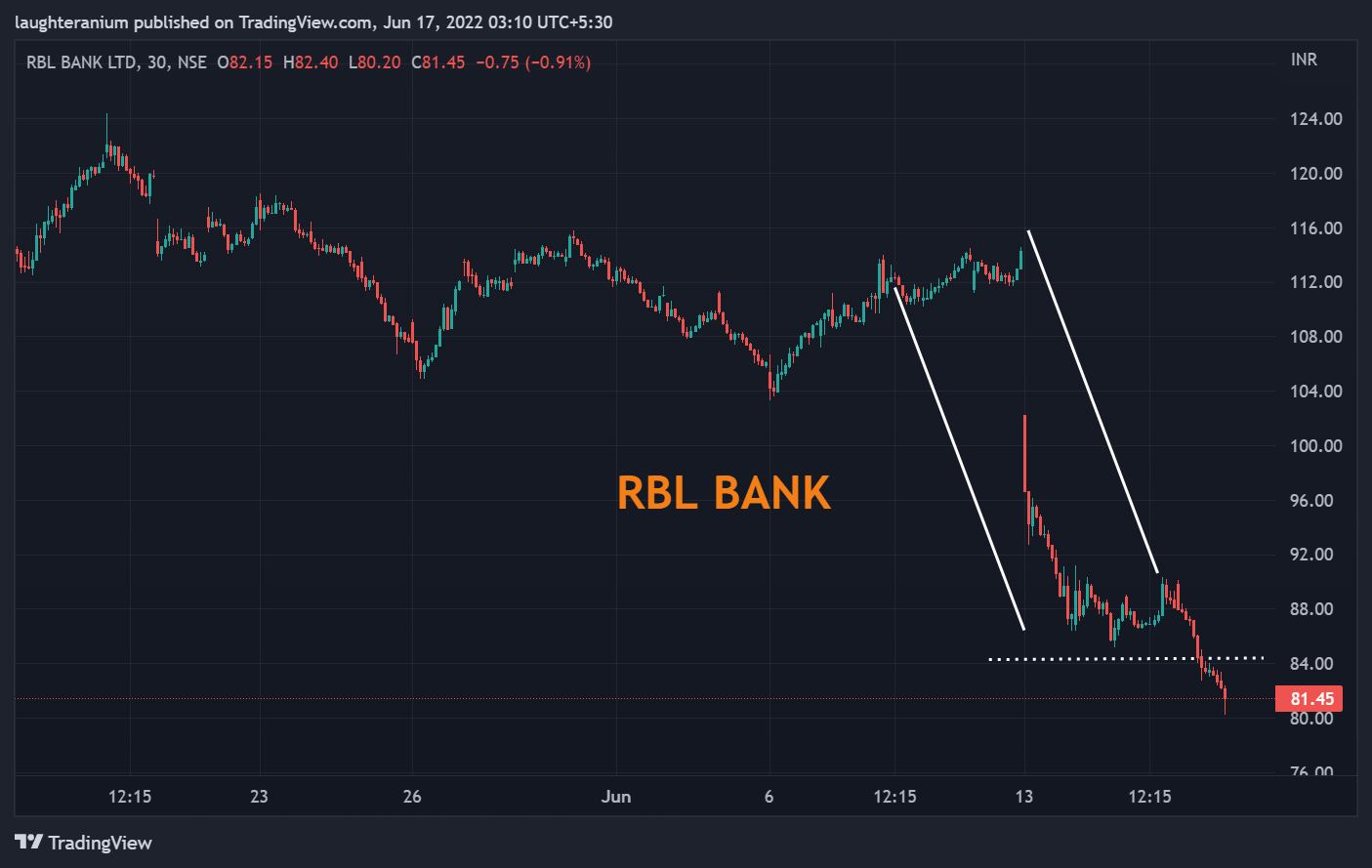
RBL Bank’s share price has tanked by nearly 60% in a year and ~30% in the second week of June! The bank’s top-level management, financials, and asset quality are being questioned. In this piece, we figure out what led to the price crash and if India’s central bank could possibly recover RBL Bank’s damaged share price while improving its financials and asset quality. 

Reshuffle Gone Wrong?

The #1 reason for the crash is due to a major management reshuffle. On June 10, 2022, R. Subramaniakumar was appointed as Managing Director and CEO of RBL Bank. His appointment came after the sudden and unexpected resignation of MD and CEO Vishwavir Ahuja. 

R. Subramaniakumar’s 40-year career started with Punjab National Bank (PNB) in 1980. He headed Business Transformation at PNB for three years and took over the Digital, HR, MSME, Retail, and Overseas operations. 

He was an Executive Director at Indian Bank and Indian Overseas Bank. Subramaniakumar also held the position of MD & CEO of Indian Overseas Bank. He was an Administrator at Dewan Housing Finance Corporation Ltd (DHFL) and achieved its resolution.

What stung the investors was Mr. Subramaniakumar’s association with DHFL. Over the past few years, the housing finance company has been in the news for all the wrong reasons. Regulatory and administrative authorities like SEBI, Enforcement Directorate, CBI, Maharashtra Police, and others are investigating the fraudulent activities committed by the Wadhwan Family that owns and runs DHFL. DHFL is currently undergoing insolvency proceedings under the Insolvency and Bankruptcy Code (IBC).

Bad Finances and Asset Quality. What Lies Ahead?

As of FY22, RBL’s Gross non-performing assets (NPA) stood at 4.4%, while Net NPA stood at 2.1%. Over the last five years, the bank’s Gross NPA was up 3.2%+, while Net NPA rose by 0.66%+. The bank’s Return on Asset (RoA) and Return on Equity (RoE) have tumbled into negative for the first time. For FY21-22, the RoA was -0.07% while its RoE was -0.59%. With negative cash flows and declining deposits, the lender also recorded its first loss of (-)Rs 74.7 crore for FY22. 

After the news was announced, RBL’s shares tanked ~7% on the same day. While the stock has lost ~62% of its value in one year, ~30% was lost in the last two weeks. Declining asset quality, combined with a perceived leadership crisis, could have led to such a steep drop in share price. Investors could see hope if and when the newly appointed CEO and MD focus on improving the bank’s asset quality, cashflows, and overall deposits. 

What are your views on RBL Bank and its current situation? Let us know in the comments section of the marketfeed app.

Categories
Market News Top 10 News

Govt Asks Coal India To Import 12 MT of Coal – Top Indian Market Updates

Here are some of the major updates that could move the markets tomorrow:

As Shortage Looms, Govt Asks Coal India To Import 12 MT of Coal

According to reports, the government has asked state-owned Coal India Ltd. (CIL) to be prepared to import 12 million tonnes (MT) of coal for power utilities. This comes in a day after a draft cabinet note was issued for listing of 25% shares of CIL’s subsidiary Bharat Coking Coal Ltd. (BCCL).

India is currently facing a shortage of coal and stares at a power shortage. According to an official notification, the government has given an ultimatum till Saturday to state and privately-owned power generation companies to place orders for import of coal, failing which they will be allocated only 70% of their requirement by the government. 

Adani to invest Rs 70,000 crore in Uttar Pradesh

Billionaire Industrialist Gautam Adani said that the Adani Group will invest Rs 70,000 crore in Uttar Pradesh, resulting in the creation of 30,000 jobs in the state. Prime Minister Narendra Modi, who was also present at the Uttar Pradesh Investors Summit 2022, laid the foundation stone for nearly 1,406 projects worth over Rs 80,000 crore.

Read more here.
Tata Projects to build Noida Intl Airport

Tata Projects has won the engineering, procurement, and construction (EPC) contract to build the Noida International Airport in Uttar Pradesh. Yamuna International Airport Private Limited (YIAPL) has chosen Tata Projects over two other bidders for the same project – L&T and Shapoorji Pallonji. Tata Project plans to complete the project within two years. It will deliver an airport terminal with an annual capacity of 1.2 crore passengers.

Read more here.

BSNL seeks spectrum worth Rs 61,000 crore for 5G

According to reports, state-run teleco BSNL has asked TRAI for a spectrum worth Rs 61,000 crore in the premium 700 Mhz frequency range and the medium frequency band for 4G and 5G services. The Department of Telecom (DoT) proposed reserving for BSNL 10 Mhz of paired spectrum.

Read more here.

Aether Industries lists on exchanges at a 20% premium. 

Share prices of Aether Industries, which got listed at a 10% premium from the issue price of Rs 642, further rallied 10% throughout the day. It touched a high of Rs 776.75 per share. NOT TO be confused with the EV-maker Ather, Aether Industries is a Gujarat-based company engaged in producing pharmaceutical, agrochemical, material science, coating, high-performance photography, additive, and oil and gas segments of the chemical industry.

MTAR Tech acquires Gee Pee Aerospace for Rs 9 crore, shares rally 5%

MTAR Technologies Limited has acquired a 100% stake in GEE PEE Aerospace & Defence Ltd for Rs 8.20 crore. The amount is payable in cash after the deduction of borrowings and liabilities. Manufactures high precision components for the defence and aerospace sectors. Gee Pee Aerospace manufactures components for companies such as Hindustan Aeronautics Ltd, Bharat Dynamics Ltd, and Bharat Electronics Ltd.

Read more here.

Indian exports up by ~15% to $37.3 billion in May; trade deficit widens to $23.33 billion.

According to the commerce ministry, India’s merchandise exports increased by 15.46% to $37.29 billion in May 2022. This is primarily due to a strong performance by sectors such as petroleum products, electronic goods, and chemicals. In the same month, trade deficit widened to $23.33 billion as imports too grew by 56.14% to $60.62 billion.

Read more here.

Categories
Editorial

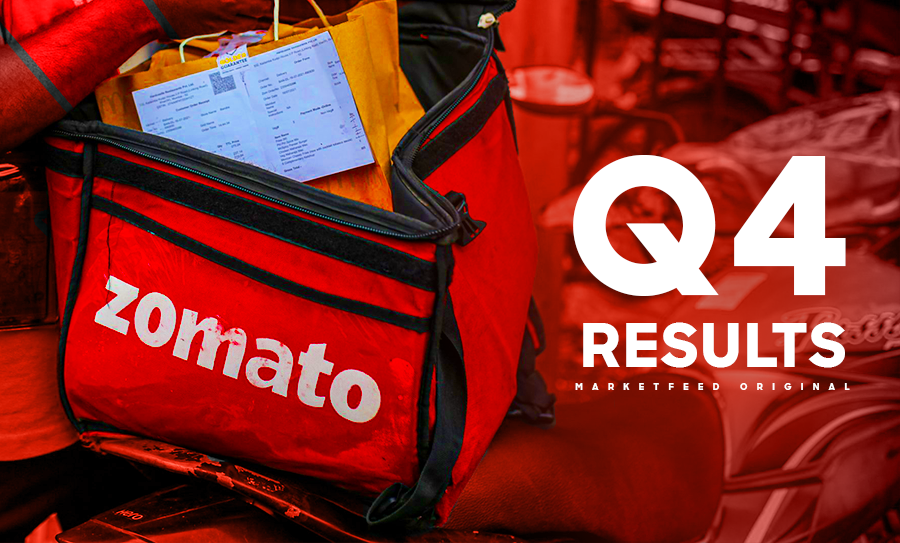
Zomato Q4 Results: How Has The Food and Delivery Platform Fared?

Zomato got listed in July 2021. The food delivery platform’s share price has tanked by nearly ~42% since then. Amidst tough economic conditions, the company is trying to expand into the B2B segment with Hyperpure, growing breakneck, and keeping up with peers like Swiggy, Zepto, and Dunzo. 

Zomato had recently announced its Q4 results for the quarter ended March 2022. The company has seen an 11-15% jump in share prices in the past few days. This article explores how the food delivery giant performed last quarter and how it plans to expand its wings. 

Q4 FY22 Results

  • In the quarter ended March 2022, Zomato’s consolidated net loss jumped 434% QoQ and 168% YoY to Rs 360 crore. The company had a net loss of Rs 134 crore in the previous fiscal year. In Q4 FY22, consolidated revenue from operations increased 75% YoY and 9% QoQ to Rs 1,212 crore, up from Rs 692 crore last year.
  • Zomato’s expenses outweighed its revenue. The company’s total expenses almost doubled to Rs 1,701 crore from Rs 880 crore in the same quarter the previous year.
  • Average monthly transacting customers were at an all-time high of 15.7 million in Q4 FY22, growing from 15.3 million in the previous quarter. The average monthly active restaurant partners and delivery partners were at all-time highs as well. The Average Order Value (AOV) for FY22 was Rs 398 as compared to Rs 397 for FY21. For the top 8 cities, AOV increased by 3% YoY. Gross Order Value (GOV) grew by 6% QoQ and 77% YoY to a record high of Rs 5,850 crore
Source: Zomato Company Filings

Business Segments

  • The company’s B2B segment (Hyperpure) saw an 18% QoQ increase in revenue to Rs 160 crore in Q4 FY22. Hyperpure delivers fresh, hygienic, high-quality ingredients and supplies to restaurants and other businesses.  
  • The e-commerce, last mile, and hyperlocal delivery platforms currently face a shortage of workers due to high fuel prices and the post-COVID effect. “We are seeing some stress on the availability of delivery partners in the current quarter in select large cities since the last week of April. This is short-term in nature, as the post covid economic recovery has brought back jobs in cities. We lost some delivery partners to such jobs”, said Deepinder Goyal, Founder & CEO of Zomato. 
Source: Zomato Company Filings
  • Labour-intensive companies worldwide are doubling employee benefits to retain employees who are resigning in a phenomenon known as “The Great Resignation”. Similarly, Zomato’s employee benefit expenses have nearly doubled, increasing by 92% YoY to Rs 406 crore in Q4 FY22. 

What Lies Ahead

Zomato has recovered measurably from the post-COVID lull. While we do see a jump in the company’s revenue, we also see increasing expenses led by rising fuel costs, delivery costs, and acquisition costs. The company has a negative working capital. Cash is collected upfront from customers and paid to delivery and restaurant partners in a few days. Zomato also has a small capital expenditure (CAPEX). 

The company has been acquiring minority equity investments in relevant businesses to expand its own horizons. According to Founder CEO Deepinder Goyal, “The rationale behind making minority investments has been twofold – 1) put the building blocks for a robust quick-commerce business in India, and 2) accelerate digitisation and growth of the food and restaurant industry which accelerates our core food business”.

While still being in loss, the company is on its way to growth and prosperity after a long period of doldrums. It could be in an investor’s best interest to look at the company’s growth in a positive light. Certain factors could drive Zomato towards profitable growth. These include a stable labour market, decreasing fuel costs, and declining marketing and customer acquisition costs. high expenses. 

Do you think Zomato might be profitable in the near future? Can it be a good investment bet? Let us know in the comments section of the marketfeed app.

Categories
Market News Top 10 News

Indonesia To Lift Palm Oil Export Ban – Top Indian Market News

Indonesia to lift palm oil exports ban from May 23

Following improvements in the local cooking oil supply situation, Indonesia will relax its prohibition on palm oil exports from May 23, said President Joko Widodo. The restriction on palm oil exports was implemented three weeks ago in an effort to boost domestic cooking oil supplies. The ban had a negative impact on several importing countries, causing an increase in cooking oil prices as well as supply globally.

Read more here.

Dr. Reddy’s Labs Q4 Results: Net profit falls 76% YoY to Rs 88 crore

Dr. Reddy’s Laboratories Ltd reported a 75.85% YoY decline in consolidated net profit to Rs 87.5 crore for the quarter ended March (Q4 FY22). Its revenue from operations rose 14.98% YoY to Rs 5,436.8 crore during the same period. The decline in net profit was largely driven by an impairment of non-current assets worth Rs 751.5 crore. The pharma company’s domestic business posted a 15% YoY growth in revenue to Rs 968.9 crore.

Read more here.

HPCL Q4 results: Net profit at Rs 1,795 crore

In Q4 FY22, Hindustan Petroleum Corporation Ltd (HPCL) declared a net profit of Rs 1,795 crore as against Rs 3,017.96 crore in the same quarter last fiscal (Q4 FY21) and Rs 868.86 crore in the previous quarter of this fiscal (Q3 FY22). HPCL’s total income climbed to Rs 1,06,886.35 crore in Q4 FY21 from Rs 85,748.12 crore the previous quarter.

Read more here.

Bosch Q4 Results: Net profit slips 27% to Rs 350.5 crore

Bosch Ltd reported a 27.28% drop in overall net profit in the fourth quarter ended March 2022 to Rs 350.5 crore. The company reported a consolidated net profit of Rs 482 crore during the same time last year. Total expenses in the fourth quarter stood at Rs 2,972.2 crore, up from Rs 2,693 crore a year ago. In FY22, the company’s consolidated income from operations was Rs 11,781.6 crore, up from Rs 9,716.2 crore in FY21.


Read more here.

Ashok Leyland Q4 Results: Net Profit Up 273% YoY to Rs 901 crore

Ashok Leyland Ltd’s net profit increased by 273.8% YoY to Rs 901 crore in the quarter ended March 31, 2022. In the same quarter of FY21, it made a net profit of Rs 241 crore. The company’s revenue was up by 25% YoY to Rs 8,744 crore, up from Rs 7,000 crore the previous year. Total Revenue for the full year FY22 stood at Rs 21,688 crore as against Rs 15,301 in FY21. In Q4 FY22, Ashok Leyland’s truck market share increased to 30.6%, up from 28.9% in Q4 FY21.

Read more here.

Edtech firm Vedantu lays off 400+ employees

Edtech startup Vedandu has decided to layoff 424 employees from the company, confirmed CEO- Founder Vamsi Krishna in a blog post. “Today I am writing about one of the toughest decisions we had to take in the past many years. It is days like these that are heartbreaking and I hope to never see them again.  There is no easy way to say this – out of 5900 Vedans, 424 of our fellow teammates i.e ~7% of our company, will be parting with us.” said Vamsi in a blog post. 

Read more here.

Paradeep Phosphates IPO: Issue subscribed 1.75 times

The Rs 1,501 crore Pradeep Phosphates initial public offering (IPO) was oversubscribed 1.75 times on the closing day, with investors bidding for 47.02 crore shares out of a total of 26.86 crore units. Retail portion was subscribed 1.37 times while non-institutional investors’ (NII) portion was subscribed 82%. Qualified institutional buyers have subscribed 3.01 times. India’s second largest manufacturer of non-urea fertilisers and di-ammonium phosphates (DAP) in the private sector.

Read more here.

Dhanlaxmi Bank net profit jumps 4x to Rs 23 crore

Dhanlaxmi Bank’s net profit jumped fourfold to Rs 23.42 crore in the quarter ending March 2022. In the previous financial year, the bank had a net profit of Rs 5.28 crore. Total income increased to Rs 302.58 crore in the fourth quarter FY22, up from Rs 233.43 crore in the same quarter last year. The Bank’s interest income increased by 10.4% to Rs 234.91 crore in the fourth quarter of FY22, up from Rs 212.77 crore the previous quarter. Gross NPA and Net NPA declined by 2.91% and 1.91%. Gross NPA stood at 6.32% and Net NPA at 2.85%.

Read more here.

Categories
Editorial

How Patanjali Bought Ruchi Soya For Free

Ruchi Soya Industries is a company that was technically valued at zero for a while but was soon valued at thousands of crores. The company faced extreme financial doldrums and was dragged to insolvency court by its creditors. Two companies placed bids to buy Ruchi Soya— Patanjali and Adani Wilmar. Patanjali won the bid and virtually bought the company for free. After the turbulent takeover, the company’s share price soared at unimaginable rates, filling the pockets of all investors. It is pretty rare to see such a comeback in the Indian business world. The story of the takeover is controversial and is a test case for SEBI. 

In this article, we discuss the story behind Ruchi Soya and why it has been in the news lately. 

Ruchi Soya and its Controversial Takeover By Patanjali

Ruchi Soya Industries manufactures oils, vanaspati, bakery fats, and soya. The company’s oil business faced problems because of cheaper imports from foreign countries and competition from other local players. There are dozens of reasons as to why Ruchi Soya faced a financial crunch. 

Moving on, Ruchi Soya’s lenders (the banks) dragged Ruchi Soya to bankruptcy court and was taken off the stock exchanges. The banks were unsure if Ruchi Soya would be able to pay back its dues. Therefore, they wanted to liquidate the company to clear the pending dues. Two companies were frontrunners in the bidding process— Adani Wilmar and Baba Ramdev’s Patanjali. Patanjali won the bid, acquiring Ruchi Soya for ~Rs 4,350 crore. 

Here’s the twist: out of the ~Rs 4,350 crore, around Rs 3,200 crore were lent to Patanjali by the very same banks that lent money to Ruchi Soya initially. Around Rs 1,200 crore from SBI, Rs 700 crore from Punjab National Bank, Rs 600 crore from Union Bank of India, Rs 400 crore from Syndicate Bank, and Rs 300 crore from Allahabad Bank.

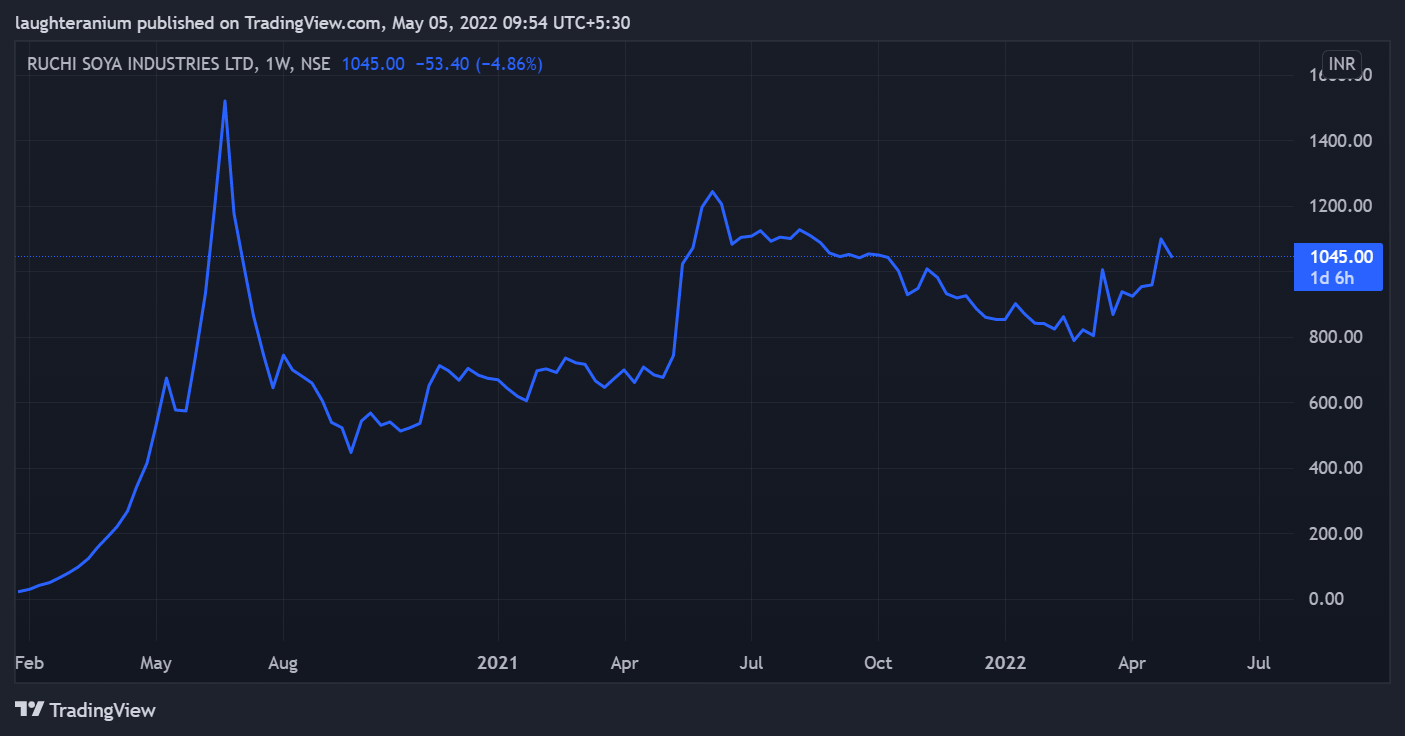
Shares Rally 8,000%!

After Patanjali’s takeover, the company relisted on the exchanges and its shares rallied by nearly ~8,000%! One of the reasons for such strong inflation in price is because only ~1% of the total shareholding is public, the rest being with Patanjali and other promoters. A small group of traders could have pumped the price of Ruchi Soya. Many investors questioned the sudden rally and accused Patanjali of foul play and manipulation. They demanded a SEBI probe. 

Now, Patanjali has a debt that it has to repay for having borrowed money to acquire Ruchi Soya. Ruchi Soya’s business continues as usual, but the company’s valuation has skyrocketed. This is when Patanjali decides to dilute its shareholding through a follow-on public offer (FPO) at a discount of around 30%. Patanjali decided to reduce its shareholding to around ~80% through the FPO, offloading around 18-19% stake for Rs 4,300 crore. This is practically the same amount it bought Ruchi Soya for. 

Crackdown by SEBI

Around the time of the FPO, suspicious emails and texts started circulating, nudging Patanjali consumers to invest in the FPO. In one of his speeches, Baba Ramdev stated that the secret to being a ‘crorepati’ was to invest in Ruchi Soya’s FPO. This didn’t go down well with SEBI. The market regulator stalled the FPO, allowing investors a window of three days to withdraw their bids from the FPO. They also asked Patanjali to put out advertisements in national newspapers, discrediting the SMS and e-mails. Nearly 97 lakh bids were withdrawn from the FPO in the meantime. 

In the end, Ruchi Soya managed to go debt-free and profitable from a once bankrupt company. Retail investors, who might have lost hope during the insolvency proceedings, earned humongous returns from the share. Patanjali managed to buy Ruchi Soya at virtually little to no cost, and creditors went back home with their respective money. Seemed like all in a day’s work!

Categories
Editorial

5 Things To Know About Sri Lanka’s Economic Crisis 

Sri Lanka is facing one of its worst economic crises in recent decades. Videos have surfaced on social media showing scores of protestors clashing against the army and the police. Even the army and police had a violent conflict against each other in one instance. After the entire Cabinet Ministry was dissolved, the newly appointed finance minister of the country resigned within a day of the appointment. 

India has close religious, cultural, and social ties with Sri Lanka, yet it has not been India’s best friend on economic grounds. The country is currently stuck in a financial crisis and an alleged debt trap laid by China. The economic crisis has been boiling over since 2018, and the incumbent government seems to have done nothing to contain it. What is the economic crisis all about? What does India have in store? Here are five things you need to know about the boiling economic crisis.

Sri Lanka Is Out Of Foreign Exchange Reserves. Retail Inflation Stands At 17.5%.

Sri Lanka has depleted 70% of its foreign exchange (forex) reserves in the past two years. As of February 2022, its forex reserves stood at USD 2.3 billion. The company has pending debt of around ~USD 4 billion in 2022, almost twice its forex reserves. Around ~ USD 1 billion of Sri Lanka’s debt is in the form of international sovereign bonds (ISB) maturing in July, most of which it owes to China, Japan, and the Asian Development Bank. The Total or Gross External Debt stands at around ~USD 50.7 billion as of Jan 2022. 

The country’s retail inflation stands at 17.5 percent, the highest in Asia. Food inflation stands at 25.7 percent. The President of Sri Lanka imposed an emergency on March 30, 2022, to contain protests due to the severe economic crisis. Such an emergency was imposed in August 2021 for similar reasons.

There Is Political Unrest. The Rajapaksa Clan Rules The Country. 

The island nation is led by the powerful Rajapaksa Clan. Nepotism seems to thrive, with the Rajpaksas holding influential positions in the cabinet, the government, and the judiciary. Mahinda Rajapaksa is the Prime Minister of Sri Lanka. His younger brother Gotabhaya Rajapaksa, who is now the President of Sri Lanka, was appointed as the Defence Secretary in the past without holding any elections for the post. He controlled the armed forces, the coast guard, and the police. Another brother, Basil Rajapaksa, was the Finance Minister until he was sacked by his own brother Gotabhaya Rajapaksa. 

Mahinda’s oldest brother, Chamal Rajapaksa, was appointed the Speaker of the Parliament of Sri Lanka between 2010-’15. He later became the Minister of Irrigation till April 2022, when the whole cabinet was dissolved. Mahinda’s nephew Shashindra Rajapaksa served as the Chief Minister of Uva from 2009 to 2015. Dozens in the Rajapaksa Clan have held many influential positions in Sri Lanka. Many of them hold citizenship (dual) from foreign countries and yet hold government positions. 

After the cabinet was dissolved, all 4 Rajpaksas who previously held ministerial positions refused them in the new government that was formed after the emergency. Reports suggest that there is an internal feud boiling in the family. It seems as if there is a distrust and a subsequent force that could mean an end for the powerful Rajapaksa family. 

Sri Lanka Is Running Out Of Power, Fuel, and Food

Sri Lanka has run out of power, fuel, and food. Thousands of people have queued up to buy essential goods. Prices of many commodities like kerosene, milk powder, rice, and sugar have doubled over a year. Sri Lanka has banned the import of fertilizers as well. The government is encouraging farmers to undertake ‘Organic Farming’. This fertilizer ban has caused a decline in crop production while impacting farmers’ financial conditions. Shortage of food has sent its prices skyrocketing. 

The country’s inability to generate electricity has resulted in day-long load shedding across Sri Lanka. While India has extended help by lending nearly 200,000 MT of fuel in the last 50 days by Line of Credit, it cannot sustain the country for long. 

Sri Lanka is in such a severe shortage of petrol that it has asked the armed forces to guard gas stations after two men collapsed and died while waiting in separate queues to secure fuel. 

Sri Lanka is a tourist economy. It depends on tourism and tea exports for dollars. It imports most of its essential items from other countries. After a two-year-long shutdown in terms of tourism because of the COVID-19 pandemic, the country’s forex inflow was severely impacted. This, coupled with poor governance and impractical debt overloading by the Rajapaksas, is a significant cause of the financial crunch. 

China Has Its Noose Around Sri Lanka. India At A Strategic Disadvantage

China has benefited immensely from Sri Lanka’s debt overloading. Close to 10% of Sri Lanka’s external debt is owed to China. In fiscal 2020, China beat India as Sri Lanka’s top import partner. Although Sri Lanka forms a tiny portion of India’s export basket, its location is strategically crucial. In a Sep 2021 issue, we have discussed how China has engulfed Sri Lanka in a debt trap. Read ‘Sri Lanka’s Economic Crisis And China vs India’ to know more.

India Could Be Sri Lanka’s Last Resort

India has extended a line of credit to Sri Lanka amounting to ~USD 1.5 billion. It has given a USD 500 million credit line to buy petroleum. It has also helped respond to the balance of payment crisis by extending a USD 400 million currency swap and deferred the USD 515 million Asian Clearing Union (ACU) settlement. Moreover, India agreed to increase its investment in Sri Lanka. While India has come to Sri Lanka’s rescue, its biggest partner and lender seem to be turning a blind eye to it. For years China has been giving out unsustainable debt to a country with one of the lowest revenues in the world– at around 8% of its GDP. With China turning a blind eye to the economically distraught country, the wave could favor India.

What do you think of Sri Lanka’s economic crisis? Let us know in the comment sections of the marketfeed app.

Categories
Editorial

How Has Inflation Impacted The FMCG Sector?

The Russia-Ukrainian crisis, rising fuel prices, and global interest rate hikes have fueled inflation. Many sectors of the worldwide economy are impacted by it. One such is the FMCG or Fast Moving Consumer Good sector.

In a December 2021 issue, we discussed the WPI-CPI divergence and how inflation wasn’t reflecting on retail prices. While manufacturers continued to produce goods, there wasn’t sufficient demand YET among consumers. Businesses had not yet started passing on the burden of inflation to consumers. The FMCG companies cannot sustain any longer and have now decided to hike prices and pass on the responsibility of inflation to consumers. In this piece, we discuss the outlook of the FMCG sector and the impact of inflation on it. 

Effects of Inflation 

Central banks across the globe have started hiking interest rates. Most are following a contractionary monetary policy, meaning they have started taking money out of the economy. If the tapering of liquidity impacts personal income, it could restrict consumers from spending, eventually stalling economic growth and causing a considerable output gap. 

High prices could mean the following for FMCG companies:

  • Lower Profit Margins
  • High Cost of Transportation/Supply Chain
  • Increased Cost of Storing 
  • Reduction In Volumes of Goods Sold 

Where do we see the impact of inflation around us? For the first time since 2007, the price of a matchbox has doubled from Rs 1 to Rs 2. Even the iconic, Maggi Noodles are now dearer by Rs 3 for a pack of Rs 140 gm. India has a long battle to fight against inflation.

How is Dalal Street Reacting To It? 

The NIFTY FMCG, a benchmark index consisting of the top four FMCG Companies,  was fueled by the COVID bull run till September 2021. The index has stalled ever since then, sliding by 12-15% since it hit an all-time high of 40,426. The market has been on a downtrend, and the reason is apparent. It is dimming investor sentiment due to inflationary pressures on the FMCG sector. 

Varun Beverages, Colgate-Palmolive, Proctor & Gamble (PGGH), and ITC have been the top gainers for the quarter, seeing around 4-16% gain in share price in the last three months. Top FMCG Players like Hindustan Unilever, Jubilant Foodworks, Bajaj Consumer Care, and Nestle India lost anywhere between 9-21% in share price in the last three months. 

The Way Ahead 

According to the latest reports, FMCG companies have decided to hike prices by around 10-15%. One can eventually expect the prices to go down with time. With events that folded after the COVID-19 pandemic, inflation was imaginable. 

There is one interesting paradigm that we can see in India’s case. India’s exports are at an all-time high, crossing $400 billion. Even the USD to INR conversion rate is fluctuating at higher levels. This means that we could make more in rupee terms for every commodity that we export. India hasn’t yet started to take advantage of the global shortage of certain commodities. If Indian FMCGs managed to tune the exports to get better realization and higher gross margins, they could use the surplus from exports to adjust domestic prices to improve domestic volumes. However, this remains a possibility until domestic FMCG companies act on it. 

Do you think FMCG stocks are likely to perform better in the coming months? Let us know in the comment section available in the marketfeed app

Categories
Editorial

Behind the Metal & Mining Stocks Rally: The Bigger Picture

The Indian Metal and Mining Stocks are on a rally. NIFTY Metal, the benchmark index for metal and mining stocks, is trading at record levels. Amidst the Ukraine-Russia crisis, rising oil prices, damaged supply chain, and high inflation levels, metal and mining stocks have offered great returns in the last 3-4 months. What exactly could be the reason for such a rally?

The Big Picture

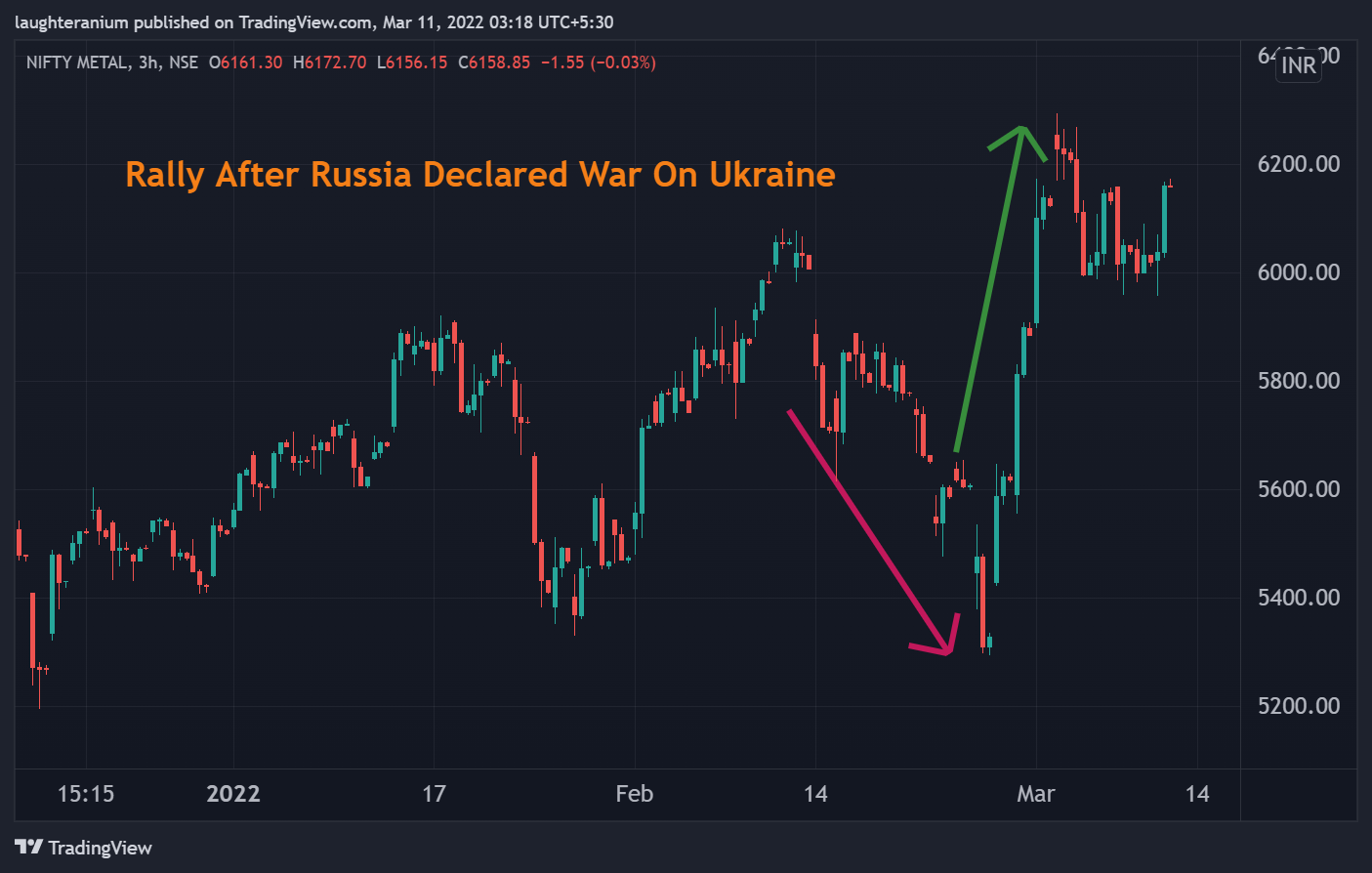
The NIFTY Metal index was off for a casual start after the beginning of CY2022. With two consecutive waves of rallies and subsequent profit bookings taking place, we did notice significant gap-down openings towards the end of February. This was around the time when the Ukraine-Russia escalations were fresh, and there was a bear run in the broader markets. 

Consequently, we notice a steep hike in the NIFTY Metal index just a day after Russia declared war on Ukraine. Around this time, NIFTY Metal grew by nearly 16% in three consecutive trading sessions.  After Russia declared war on Ukraine, the NIFTY Metal index moved against the broader NIFTY 50 index, i.e. Nifty Metal rallied but NIFTY 50 stocks tanked. After an abrupt rally, we notice a drop in NIFTY Metal, possibly due to profit booking. 

Why Did The Metal Sector Rally Amidst Global Financial and Socio-Political Tensions?

Rising Metal Prices Would Mean Greater Margins

There was an inherent fear in the market that the Ukraine-Russia crisis would impact the supply chain of metals globally. Eventually, stock prices across the world started to soar. The cost of churning out a metal, be it steel, nickel, aluminum, or copper, remains in a fixed price range. If the market price is greater than the production cost, the producer makes a profit. The fact remains that metal prices have soared to record levels. Indian companies have managed to churn metal while demand was stable. An increase in metal prices can help them bag greater profit margins. 

Weaker Rupee Helps Export-based Segments

A weaker rupee generally tends to benefit exporters. An exporter would get more rupees for every dollar worth of goods exported. The Indian National Rupee (INR) has hit its weakest of all times, crossing Rs 77 for every US Dollar. This means that for every dollar worth of metal that an Indian company exports, it would get more rupees in return. Even if metal prices were to subside, Indian metal players could benefit from exports if the rupee remains weak. 

Potential Gain From Global Supply Shortage

Russia accounts for around 9-10% of global aluminum exports, ~11-12% of nickel exports, 20% of thermal coal exports, and 12% of global steel trade. The ongoing and increasing number of sanctions on Russia could significantly damage its ability to export crude oil, natural gas, and metals. India could potentially use this opportunity and hype its exports in the metal industry. 

What Next?

In the first week of March, Ukraine and Russia organized a meeting in Turkey to discuss a ceasefire. Unfortunately, the talks failed. Oil prices crashed after reaching record highs as UAE pushed OPEC to increase oil production amidst a global call to boycott Russian oil. More production of oil would mean lower oil prices and therefore lower inflation rates. The fact that Ukraine and Russia have both agreed to make ‘compromises’ could have added to the crash in oil prices. 

By now, Indian metal players would already be looking out for opportunities to pump up the export. A rise in international prices could eventually lead to an increase in metal prices in domestic markets. This could make infrastructure projects more expensive. Rising metal prices, a weak rupee, and the potential to capture a missing market seem to have fuelled the current bull run in the metal markets. Investors should look out for other factors like export volumes, sanctions, and the global supply chain to track the metal markets. It is advised that investors perform thorough research before investing in the markets.