Categories
Editorial

Understanding Volume Profile: A Powerful Tool for Traders

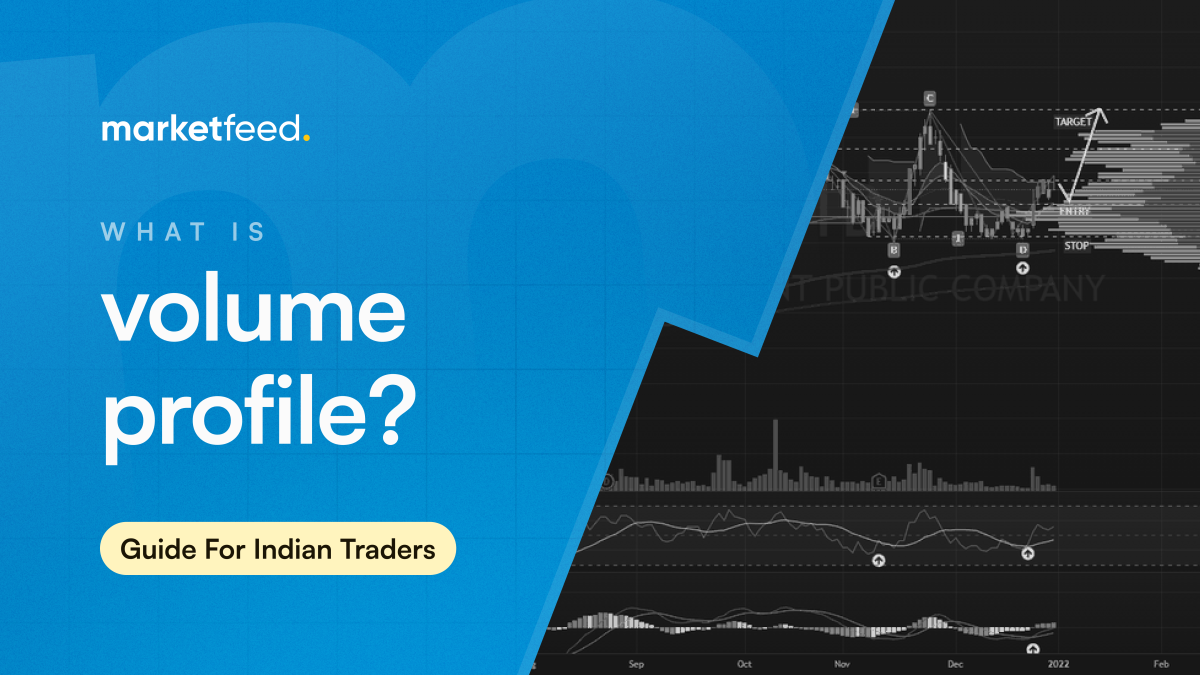
Volume is one of the most critical elements when analysing a stock’s price chart. Traditionally, traders analyse volume with respect to time. However, what if you could analyse volume with respect to price instead? This perspective unlocks a new layer of understanding in trading. Enter the Volume Profile—a versatile tool that gives traders insights into price levels with significant trading activity. In this article, we dive deep into understanding, using, and applying volume profile in trading.

What Is Volume Profile?

Volume Profile is a charting tool that plots trading volume against price rather than time. By doing so, traders can identify crucial price levels where significant activity has occurred. These levels often serve as strong support and resistance zones. Unlike traditional volume indicators, Volume Profile highlights areas of high liquidity where the price tends to gravitate and zones of low liquidity where the price can move rapidly.

Let’s Look at an Example:

Consider Raju, an onion wholesaler. Raju deals with highly volatile onion prices daily. He wants to know at what prices he sells the maximum and minimum quantities. By visualising onion prices and quantities sold on a chart, he discovers the most significant price levels. Similarly, traders can use Volume Profile to identify the most traded price levels for a stock, helping them understand key support and resistance zones.

Key Components of Volume Profile

1. Point of Control (POC): The price level where the highest volume of trades occurred. This level often acts as a pivot point for price action.

point of control - volume profile | marketfeed

2. High-Volume Zones: Zones with significant trading activity. These areas create a “gravitational pull,” slowing down price movement.

3. Low-Volume Zones: Zones with minimal trading activity. Prices can move quickly through these areas due to low liquidity.

volume zone - volume profile | marketfeed

4. Fair Value: The range where 70% of all trades occur. Prices often oscillate within this range, creating a balance zone.

fair value - volume profile | marketfeed

Volume Profile provides actionable insights by uncovering patterns hidden within price and volume data. Next, let’s discuss how traders can interpret various scenarios.

Candlestick Analysis with Volume Profile

1. Bullish Candle: If the price closes above the fair value zone, the candle is bullish. Buyers demonstrate strength by breaking out of high-liquidity areas, suggesting upward momentum. For example, if a green candle closes above its POC, the POC may act as a strong support level in subsequent sessions.

2. Bearish Candle: A red candle closing below the fair value zone indicates bearish sentiment. Sellers overpower buyers, pulling the price down. In this case, the fair value acts as a resistance zone.

3. Neutral Candle: When the price closes near the fair value, the candlestick is neutral, signalling indecision. Analysing multiple candles in such cases is essential to identify the prevailing trend.

4. Trend Reversal Candles: In some cases, the price moves strongly during the day but gets trapped in the fair value zone by the close. For instance:

(i) Bullish to Neutral Reversal: Price rises quickly in a low-liquidity zone but closes in the fair value range.
(ii) Bearish to Neutral Reversal: Price falls rapidly through low liquidity but closes in the fair value range.

These scenarios indicate potential reversals for the next trading session.

Intraday and Swing Trading with Volume Profile

  • Intraday Traders: Analysing the previous day’s Volume Profile helps anticipate trends for the next session. Key levels like POC and high-volume nodes provide critical zones for support and resistance.
  • Swing Traders: Longer-term trends can be identified by studying the Volume Profile over a week or month. Consolidation patterns and high-volume zones help traders understand upcoming support and resistance levels.

Step-by-Step Guide to Using Volume Profile

1. Open Your Charting Platform: On platforms like TradingView, navigate to the “Forecasting and Measurement Tools” section.

2. Select Fixed Range Volume Profile: This tool is ideal for analysing volume over two fixed price ranges.

3. Plot the Volume Profile: For instance, when analysing Cochin Shipyard stock, you can plot the day’s Volume Profile to identify key levels.

4. Adjust the Fair Value Range: By default, 70% of trades are highlighted. Reducing this to 35% narrows the focus, enabling better insights into key zones.

5. Analyse the Data: Use the plotted profile to identify the day’s fair value, POC, and high/low-volume zones.

    Example: Suppose Cochin Shipyard’s stock forms a red daily candle and closes inside its fair value zone. This indicates a potential reversal, as sellers couldn’t sustain their momentum. The next day’s trend might see the price bounce upward from this fair value zone.

    (Volume Profile in action in TradingView)

    Why Volume Profile is Essential

    1. Enhanced Market Understanding: By analysing volume at price levels, traders gain a clearer picture of market dynamics.

    2. Improved Accuracy: The tool helps pinpoint high-probability support and resistance zones.

    3. Combination with Other Tools: Volume Profile complements other technical analysis techniques, enhancing their effectiveness.

      Conclusion

      Mastering the Volume Profile can significantly improve your trading strategy. By understanding volume in relation to price rather than time, you unlock new dimensions of analysis. Whether you are an intraday trader or a swing trader, incorporating this tool into your arsenal will increase your trading success rate. So why wait? Start exploring Volume Profile today and take your trading skills to the next level!
      Categories
      Editorial

      A Guide to Commodity Trading in India

      Commodity trading is an exciting segment of financial markets that many traders in India are unaware of. While Indian equity markets operate from 9:15 a.m. to 3:30 p.m., the commodity market offers extended trading hours from 9:00 a.m. to 11:30 p.m., divided into two sessions. This is especially beneficial for working professionals who can trade after office hours. However, entering this market requires a clear understanding of its dynamics, benefits, and risks. In this article, we dive into everything you need to know about commodity trading in India.

      What is Commodity Trading?

      Commodity trading involves buying and selling commodities, such as natural resources or agricultural products, on exchanges. This can include energy sources like crude oil and natural gas, metals such as gold and silver, and agricultural products like wheat and cotton. The primary goal in commodity trading is to profit from fluctuations in the price of these commodities.

      Why Does Commodity Trading Exist?

      Unlike equity markets that exist for companies to raise funds, the commodity market primarily serves to allow businesses to hedge against price fluctuations. For example, consider a gold shop owner named Charlie. He holds 10 kg of gold, hoping to profit from making jewellery. If the price of gold falls significantly from ₹80,000 per 10g to ₹60,000, Charlie may incur losses that outweigh his profits from jewellery sales. But if the price of gold goes way up (say ₹1 lakh per 10g), he might earn more, but it will also cost him more to restock. Thus, commodity trading allows Charlie to hedge his risk by using futures contracts to balance potential losses or gains.

      [A futures contract is an agreement to buy or sell something (like gold, oil, or stocks) at a fixed price on a future date. It helps buyers and sellers protect themselves from price changes—buyers lock in lower prices if they expect a rise, while sellers secure higher prices if they expect a drop.]

      How to Get Started in Commodity Trading in India?

      To begin trading commodities, you need to understand the basics, including the types of commodities available, how trading works, and the exchanges involved.

      In India, there are two primary exchanges for commodity trading:

      • National Commodity & Derivatives Exchange Ltd (NCDEX): This platform primarily deals with agro-based commodities like wheat, spices, and cotton.
      • Multi Commodity Exchange (MCX): This is where non-agro commodities like gold, silver, zinc, and crude oil are traded.

      Both exchanges are regulated and provide a safe environment for trading. It is crucial to avoid unregulated platforms or apps that do not adhere to SEBI guidelines!

      All major brokers in India like Zerodha, Upstox, Fyers, etc. support commodities trading. You should activate the commodities segment separately in your broker/trading account.

      Types of Contracts

      Commodity trading mainly involves derivatives, specifically futures and options:

      • Futures Contracts: Agreements to buy or sell a commodity at a future date at a predetermined price.
      • Options Contracts: Rights to buy or sell a commodity at a specific price before a set date.

      Unlike stocks, commodities can’t be held forever. Every futures or options contract has an expiry (settlement) date. As a thumb rule, never let your commodity trades enter into a settlement phase. It’s better to square off your positions at least 2-3 days before the settlement date.

      Some of the most actively traded commodities include:

      • Gold: Available in various contract sizes, including 1 kg, 100 g, and 8 g.
      • Silver: Typically traded in contracts of 30 kg or smaller sizes.
      • Crude Oil: A significant commodity often influenced by global market conditions.
      • Natural Gas: Another volatile commodity that attracts traders.

      The capital needed to trade commodities depends on the type of commodity and the broker’s policies. Brokers often have specific margin requirements for commodities.

      Commodity trading offers high leverage. For example, a gold mini contract worth ₹7.2 lakh may only require ₹72,000 as margin. Leverage amplifies both profits and losses, so it’s essential to have proper risk management strategies in place!

      Commodity Indices in India

      Similar to equity indices like Nifty50, commodity markets also offer indices for trading:

      1. Bullion Index: Tracks gold and silver prices.
      2. Metal Index: Tracks aluminium, copper, lead, zinc, and nickel prices.
      3. Energy Index: Tracks crude oil and natural gas prices.

      These indices allow traders to speculate on overall market movements rather than individual commodities.

      Advantages of Commodity Trading

      Commodity trading offers several benefits that can attract both individual and institutional traders:

      • High Liquidity: Many commodities, especially gold and crude oil, have high trading volumes. These markets tend to follow price action well.
      • People who are unable to trade during the daytime (office-goers) can use the opportunity to make potential extra income!
      • Less Price Manipulation: Commodities are traded globally, reducing the chances of price manipulation compared to more localised markets.
      • Hedging Opportunities: Businesses can hedge against price fluctuations to stabilise costs and revenues.

      Disadvantages of Commodity Trading

      While there are many advantages, there are also significant risks and drawbacks to consider:

      • High Price Volatility: Commodity prices can change rapidly due to geopolitical factors or supply and demand shifts, which may result in substantial losses for unprepared traders.
      • Leverage Risks: Trading with leverage can amplify losses. Commodity traders must understand how to manage leverage effectively.
      • Liquidity Issues: Not all contracts have the same level of liquidity, which can complicate trades and lead to slippage.
      • Geopolitical Sensitivity: Commodity markets are often the first to react to global events, requiring traders to stay informed about international affairs.

      Conclusion

      Commodity trading presents a unique opportunity for investors looking to diversify their portfolios and take advantage of market fluctuations. Also, profits from commodity trading are treated as business income (same as F&O). You’ll have to pay tax based on your tax slab.

      Approach the commodities market only after a thorough understanding of the risks involved, the mechanics of trading, and the specific commodities you wish to trade. Always start small, educate yourself continuously, and consider consulting with financial advisors to navigate the commodities market effectively.

      As you venture into commodity trading, remember to keep your capital allocation conservative, especially if you’re new to the field. With the right strategies and knowledge, you can successfully navigate the volatile waters of commodity trading and potentially achieve significant returns. Happy trading!

      Categories
      Jargons

      What are Candlestick Charts & How to Read Them?

      A candlestick chart graphically represents a share/stock’s price and volume data. They help us visualise the price movement, making it easier to understand and analyse. In the past, traders had to constantly monitor the screen for hours and try to memorise significant price levels, which was practically impossible. Thankfully, the introduction of candlestick charts revolutionised how we interpret market data.

      In this article, we will learn how to read candlestick charts, the types of candlesticks, and a few candlestick patterns.

      What is a Candlestick Chart?

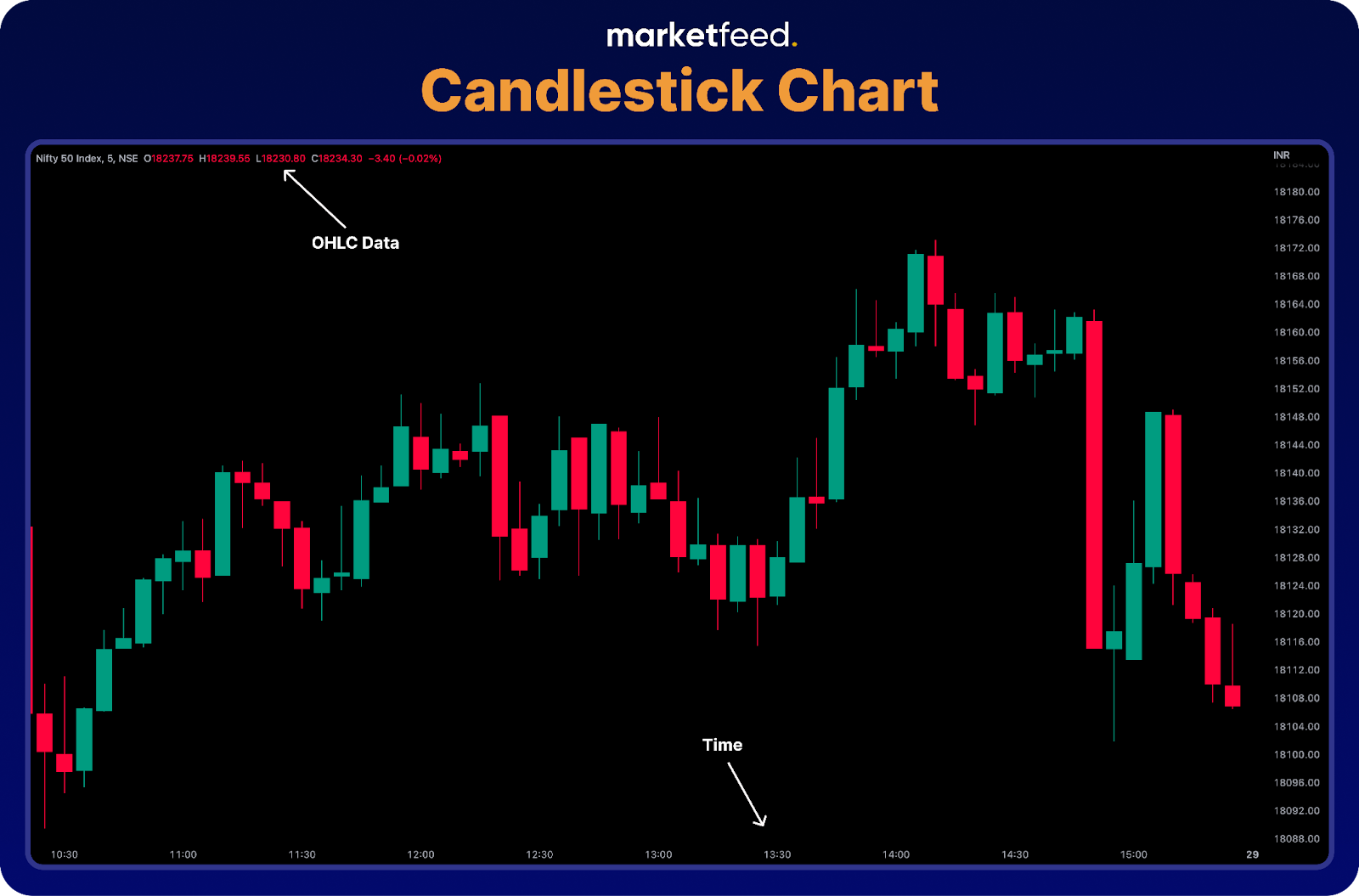
      A candlestick chart is a type of price chart that displays four prices per data point. It shows the opening and closing prices and the high and low prices during a period. These price points are known as the OHLC data in short, which stands for Open, High, Low, and Close, respectively. Furthermore, a candlestick chart also portrays the emotions of the investors and traders.

      Candlestick Chart

      Candlestick charts originated in Japan, where technical analysis has been in use for centuries. A Japanese rice trader, Homma Munehisa, developed a system of charting price movements using candlestick patterns and observations of market psychology. His work laid the foundation for candlestick charting methods.

      Structure of Candlesticks

      A candlestick chart is a collection of candlesticks. There are two types of candlesticks based on whether the price increases or decreases. They are bullish (green) and bearish (red) candles. A candlestick has three parts that depict four prices:

      • The central real body – It is a rectangular shape that connects the opening and closing prices.
      • Upper shadow – Indicates the high
      • Lower shadow – Indicates the low

      The four price points are:

      • Open – The price at which the asset started trading in the timeframe.
      • High – The highest price at which the asset got traded.
      • Low – The lowest price at which the asset got traded.
      • Close – The price at which the asset got traded at the end of the time frame. The Last Traded Price (LTP) of the timeframe will be the closing price.

      Both bullish and bearish candles have OHLC price points. However, the position of opening and closing prices in both are different.

      Candlestick Structure

      If the closing price is higher than the opening price, it is known as a Bullish or green candle. On the other hand, If the closing price is lower than the opening price, it is known as a Bearish or red candle. A green or bullish candle symbolises buying, while a red or bearish candle symbolises selling. Next, let’s look at some basic candlestick charts!

      Basic Candlestick Patterns

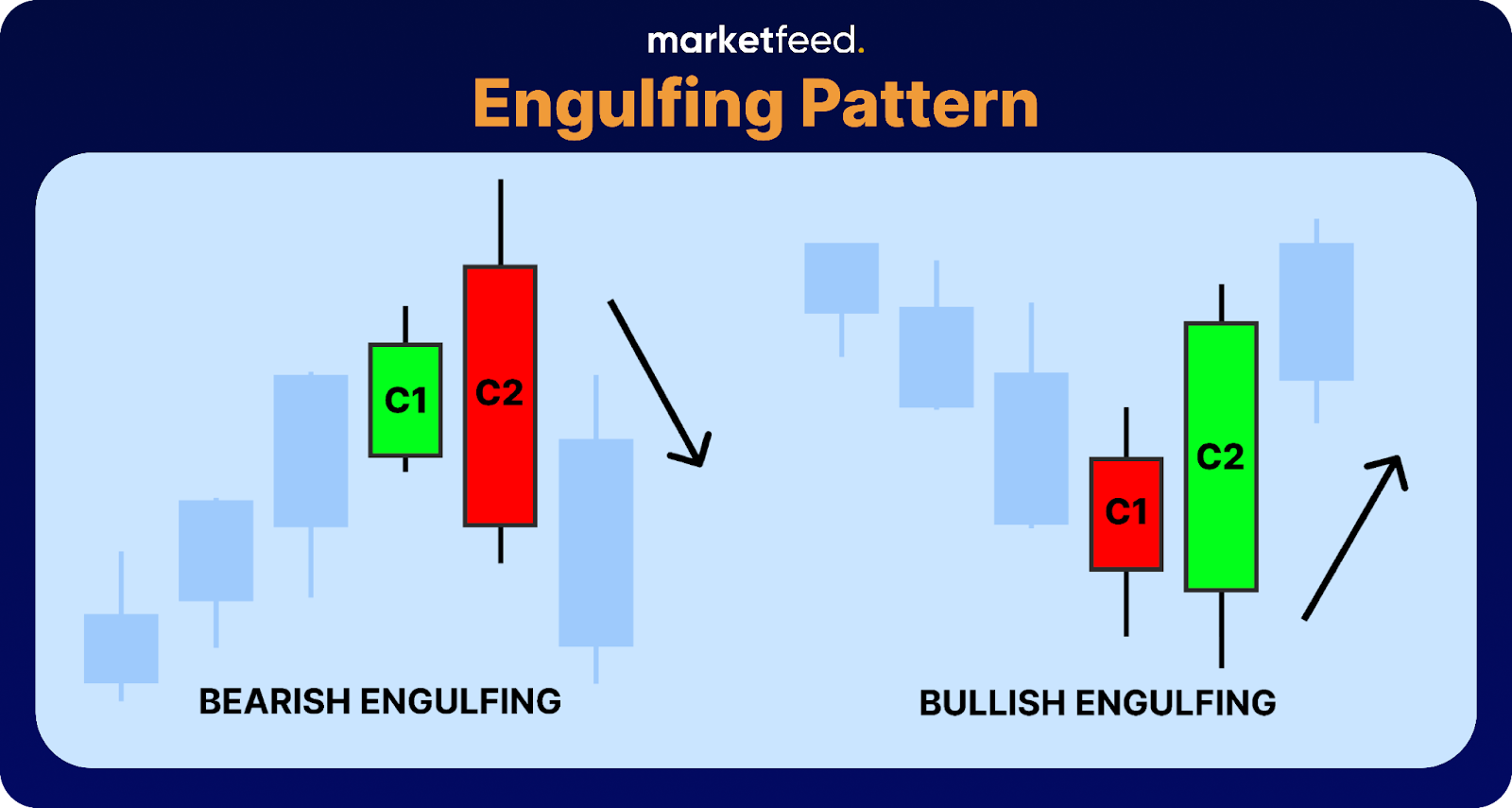
      1. Bullish and Bearish Engulfing Patterns

      Candlestick Patterns: Engulfing Pattern

      A bearish engulfing candlestick pattern occurs during an uptrend and consists of two candles. The first candle is a bullish (green) candle, followed by a larger bearish (red) candle that completely engulfs or covers the previous candle’s range. This pattern suggests that selling pressure has increased, overpowering the previous buying momentum, and indicates a potential shift toward a downward trend. Traders often interpret a bearish engulfing pattern as a bearish signal.

      On the other hand, a bullish engulfing pattern occurs during a downtrend. It also consists of two candles, but in the opposite configuration. The first candle is a bearish (downward) candle, followed by a larger bullish (upward) candle that completely engulfs the previous candle’s range. This pattern suggests that buying pressure has increased, overpowering the previous selling momentum, and indicates a potential shift toward an upward trend. Traders often interpret a bullish engulfing pattern as a bullish signal.

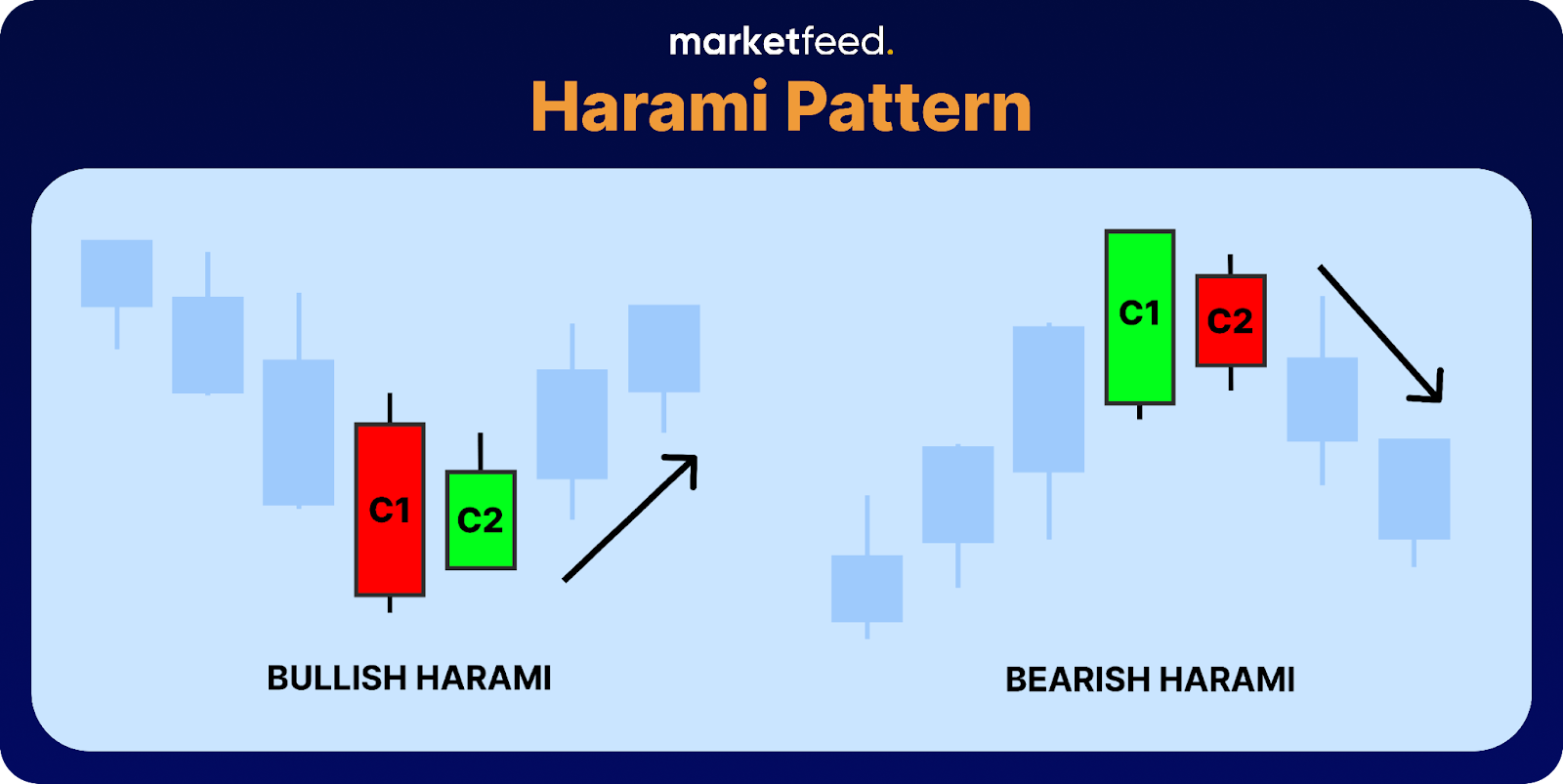
      2. Bullish and Bearish Harami Patterns

      Candlestick Patterns: Harami Pattern

      A bullish harami pattern consists of two candles. The first candle is a large bearish (red) one, indicating a prevailing downtrend. The second candle is a smaller bullish (green) candle that is completely engulfed or covered by the body of the first candle. This pattern suggests that selling pressure may be weakening, and a potential trend reversal towards an upward move could occur. Traders often interpret the bullish harami as a bullish signal.

      On the other hand, a bearish harami pattern also consists of two candles. The first candle is a large bullish (green) candle, indicating a prevailing uptrend. The second candle is a smaller bearish (red) candle that is completely engulfed by the body of the first candle. This pattern suggests that buying pressure may be diminishing, and a potential trend reversal toward a downward move could occur. Traders often interpret the bearish harami as a bearish signal.

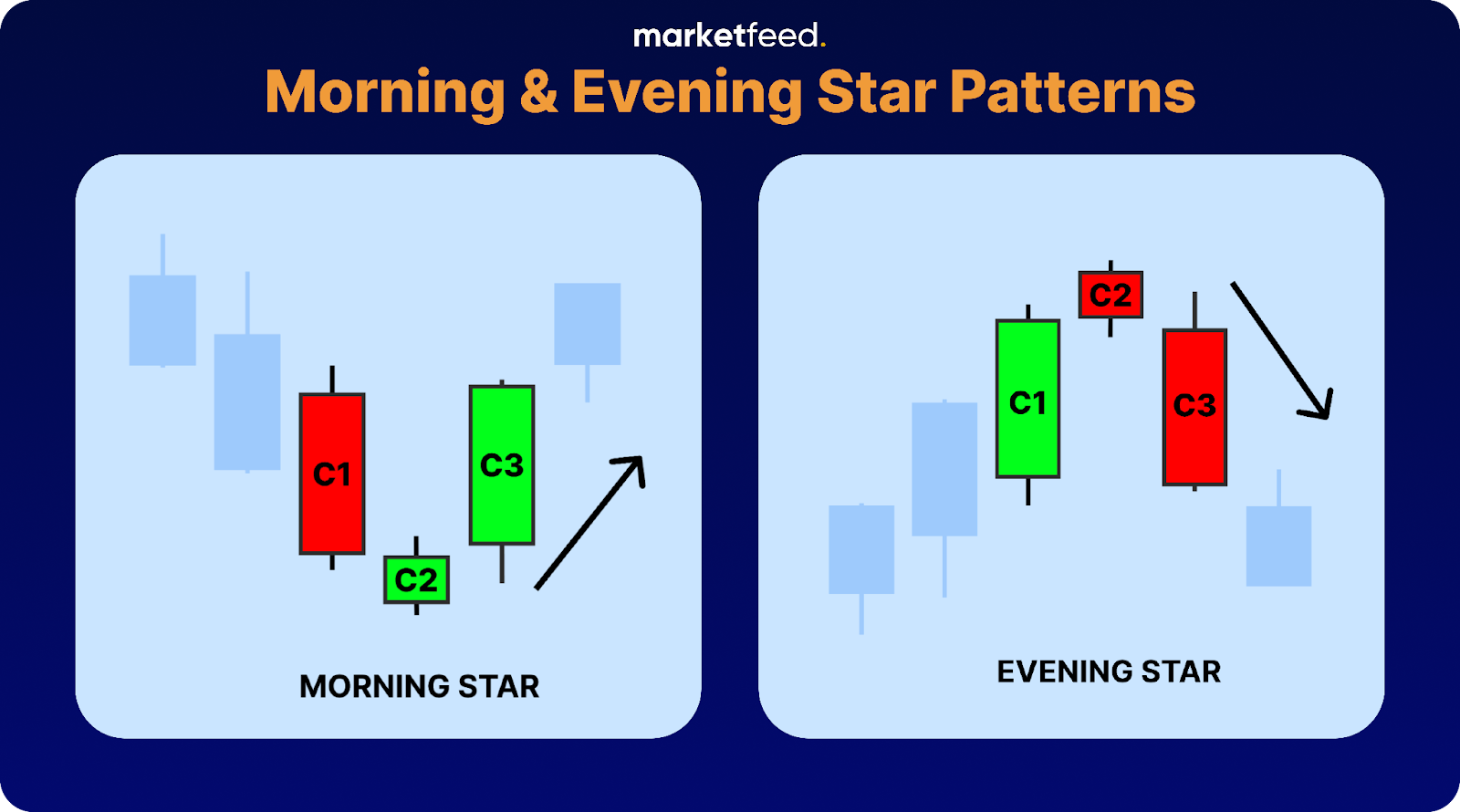
      3. Morning & Evening Star Patterns

      Morning and Evening Star Patterns

      A morning star pattern appears during a downtrend and consists of three candles. The first candle is a large bearish (red) candle, indicating the prevailing downtrend. The second candle is a smaller candle with a small body that may be bullish or bearish. This candle represents indecision in the market. The third candle is a large bullish (green) candle that closes near or above the midpoint of the first candle. This pattern suggests that the selling pressure is diminishing, and a potential trend reversal toward an upward move could occur. Traders interpret the morning star pattern as a bullish signal.

      On the other hand, an evening star pattern appears during an uptrend and also consists of three candles. The first candle is a large bullish (green) candle, indicating the prevailing uptrend. The second candle is a smaller candle with a small body that may be bullish or bearish. This candle represents indecision in the market. The third candle is a large bearish (red) candle that closes near or below the midpoint of the first candle. This pattern suggests that the buying pressure is diminishing, and a potential trend reversal toward a downward move could occur. Traders interpret the evening star pattern as a bearish signal.

      In conclusion, reading candlestick charts is not just about understanding the price and volume data. These candles provide insights into the underlying psychology and market sentiments. Identifying patterns and taking the right action at the right time can only get better with time and practice. Make sure to practice identifying patterns on historic charts to get your game on for actual trading.

      Categories
      Jargons

      What are the Best Ways to Make Money From the Stock Market?

      The stock market is where shares of public companies are bought and sold. A share represents ownership in a company, and shareholders are entitled to a portion of the company’s profits. People have different perspectives on the stock market. Some consider it a great method to generate wealth, while others perceive it as a risky financial gamble. We firmly believe that the stock market can serve as an incredible opportunity for wealth generation and passive income. You need to gain a deep understanding of how it works to make money from the stock market.

      Making money from the stock market is not a walk in the park. While the potential for making money is high, it also has an equally high risk of making losses. In this article, we will take a closer look at a few of the ways by which one can make money from the stock market.

      1. Investing in Index Funds or Exchange-Traded Funds (ETFs)

      An index fund is a type of mutual fund that tries to replicate the returns made by a stock market index such as Nifty 50 by investing in the constituent stocks of that index. These funds are passively managed. This means that the fund manager invests your money in the same securities that constitute the index and in the same proportion. The portfolio composition will remain unchanged.

      An Exchange Traded Fund (ETF) is a type of fund that tracks the performance of a certain basket of assets such as an index and can be traded on the stock exchange. Unlike mutual funds, ETFs have low transaction costs, can easily be traded through any broker, and requires very low minimum investment.

      2. Investing in Blue-Chip Stocks or Dividend-Paying Stocks

      Blue-chip stocks are stocks of large well-established companies with an impeccable reputation and track record of stable earnings and performance. They are fundamentally strong companies with very high market capitalisations. Investing in these stocks is an easy and low-risk way to make money from the stock market. 

      Companies that make a profit may choose to share a portion of those profits with shareholders as dividends. As a shareholder, you will receive dividends based on the number of shares you own. Dividend payments can be quarterly, annually, or semi-annually. Investing in dividend-paying stocks can be a way to earn money from the stock market, as dividends provide returns in the form of cash to your bank account.

      3. Investing in International Stocks or Emerging Market Funds

      International funds are mutual funds that invest in the stocks of global multinational companies. Meanwhile, an emerging market fund is a fund that provides investors access to countries and regions that are undergoing economic transition. One can invest in such funds like any other mutual fund.

      4. Investing in Initial Public Offerings (IPOs)

      An Initial Public Offering (IPO) is a method by which a company raises equity capital from the public. Equity represents the ownership of a company. Once a company’s IPO is completed, its shares get listed in a stock exchange, i.e. BSE & NSE. You can invest in IPOs of fundamentally strong companies after thorough research. If the public response is positive, you also stand a chance to make money through listing gains. 

      5. Trading in Options & Futures Contracts

      Futures and options are derivative contracts that derive their value from an underlying asset. These underlying assets can be indices, equities, currencies, commodities, etc. Although derivative contracts were originally invented to hedge risk, it is popularly used as a speculative instrument these days. With the right knowledge and skill, it can be a great way to make money from the stock market. However, derivatives trading is considerably hard and requires practice and learning. This makes it unappealing for beginners.

      6. Day Trading or Swing Trading

      Day trading or intraday trading refers to the buying and selling of equities or derivatives in a day. For example, if you buy a stock at 10 AM after the market opens and sell the stock at 2 PM before the market closes, it is intraday trading. The trader exploits the small price movements in the stock to make a profit. Features such as short-selling and leverage help to enhance returns and make profits even in falling markets.

      Swing trading is a style of trading in which the trader buys and holds the stock for two or more days to capture the short to medium-term price movements in the stock. The trader takes delivery of the stocks and no leverage will be available. Short selling is also not possible in equity swing trading.

      7. Investing in Value Stocks or Growth Stocks Based on Market Trends

      Value stocks and growth stocks represent different investment philosophies: value investing and growth investing. In value investing, the focus is on finding stocks with intrinsic values higher than their current market value. In growth investing, the emphasis is on companies with strong growth prospects, regardless of their current valuation. Value investors like Warren Buffet and Rakesh Jhunjhunwala are known for their approach to buying undervalued stocks. Growth investors prioritise companies with good fundamentals and growth potential even if their current market value is higher than their anticipated or calculated value.

      8. Investing in Socially Responsible Stocks or Funds that Align with Your Value

      Investing in socially responsible stocks or funds that align with your value is a way to make money from the stock market. Here, you support companies that are committed to social, environmental, and governance (ESG) principles, while seeking returns. You can start by defining your values and researching funds or stocks that align with those values. Then you can move to invest in these funds or stocks.

      Powerful Investment Hacks:

      1. Approach a Financial Advisor to Manage Your Portfolio

      Seeking professional advice can be beneficial, especially if you’re new to investing or prefer a hands-off approach. A financial advisor can provide personalized guidance based on your risk tolerance, financial goals, and investment horizon. These professionals can help construct and manage a well-diversified portfolio while ensuring it aligns with your individual circumstances.

      2. Avoid Common Mistakes Such as Emotional Investing, Overtrading

      Always have a solid investment plan, diversify your portfolio, avoid overtrading and chasing hot stocks, manage your emotions, regularly review and evaluate your portfolio, and seek professional advice if needed. Discipline and mindfulness can increase your chances of achieving long-term investment success.

      3. Learn Technical Analysis to Make Trading Decisions

      Technical analysis is a technique that uses historical price and volume data to form analysis and forecast the direction of prices that can be used for decision-making. Technical analysis can be applied to securities in any freely traded market around the globe. Utilising technical analysis and charting can be a helpful tool for making trading decisions, especially for short-term traders who rely on technical indicators and price patterns.

      4. Start SIPs

      Systematic Investment Plans or SIPs are a smart and hassle-free way to invest in stocks. It. involves investing a fixed amount of money at regular intervals (monthly or quarterly) regardless of market conditions. Whether you’re a beginner or a seasoned investor, SIPs provide discipline, convenience, and the potential for long-term wealth creation. 

      5. Analyse Financial Statements to Pick Stocks

      Analysing financial statements and earnings is fundamental to stock picking. Consider reviewing financial health and performance, assessing profitability and growth prospects, and comparing with peers. Thorough research, considering economic and industry factors, and risk awareness are crucial. Fundamental analysis equips you with the right knowledge for analysing financial statements and company earnings.

      In conclusion, making money from the stock market requires thorough research, planning, and risk management. Align your investments with your financial goals, risk tolerance, and time horizon, and regularly review and adjust your strategy. Start with small investments and gradually increase over time, staying informed about the market. A financial advisor can be valuable for beginners to avoid mistakes and make informed decisions.

      Disclaimer: This article is only for educational purposes. Please do your own research before investing or trading in the stock market!

      Categories
      Editorial

      Why Basic Stock Market Education Must be Free & Accessible to All

      Indian parents have high hopes and expectations for their children’s education and careers. They use all their resources to help their kids excel in academics, get good grades, join a prestigious institution, and get well-paying jobs. Moreover, we Indians have a reputation for being frugal with our money. We’re taught to spend less and save more. All in good intentions, but there’s a lot more to life than just saving money.

      Unfortunately, our current education system does not include theory or practical sessions on essential life skills. We’re not trained to handle our hard-earned incomes and make financial decisions. Young professionals find it difficult to understand the basic principles of investing or even filing their taxes. These vital “life subjects” are still not being taught in schools or colleges. Instead, there’s always been a perception among Indians that investing in stocks is risky and you’ll lose all your money.

      The Current Scenario

      A majority of Indian households prefer to “invest” their hard-earned money in fixed deposits (FDs) even now. Returns from FDs can never beat the rising inflation rate (the general rise in prices of goods). Gold, post-office savings, and real estate are given more priority over stock trading and investment. These are decent options but might not be sufficient in today’s economic climate. 

      Thus, future generations will be extremely doubtful and cautious of going the “unconventional route” when it comes to growing their wealth and achieving financial freedom. They’re not getting the proper education or awareness!

      According to a Bloomberg Intelligence report in 2021, Indian households invest a meager 7% of their financial assets into stocks compared to an average of 30% in other major emerging markets. More than 55% of adults in the United States invest in the stock market. While saving is the safe way to go, Indian citizens need to understand that the purchasing power of cash in hand or their bank account continuously reduces with time. So, investing in the top-performing firms in the nation can help you become more financially secure

      Time to Change Mindsets! 

      There is an urgent need for education in financial planning in our country. We need to initiate training sessions around stock investment and trading. The concepts of compounding and portfolio diversification must be ingrained in everyone’s minds so that they become more financially savvy. Having a basic knowledge of personal finance can help an investor make money work for them! Investing in stocks after thorough research will allow your money to outpace inflation and potentially build wealth.

      If you’re in your 20s, try to start investing early as it’ll help you make small and calculated risks without the fear of affecting your livelihood and family. In fact, it’ll give you an insight into stock selection and investment risks and allow you to make smart choices in the future. There are plenty of opportunities for you to make money in the stock market. You just need to figure out what works for you!

      Still confused about how to start your journey in the stock market? Don’t worry, we’ve got you covered!

      marketfeed’s founder, Sharique Samsudheen, has made it his life’s mission to democratize the stock markets and help Indians become financially independent. To that extent, we are proud to launch our Free and Structured Stock Market A-Z Series on YouTube. The series will cover everything from the basics of the stock market to advanced trading strategies. We’ll also teach you proven strategies, tips, and tricks used by our team so you can make consistent profits! marketfeed will help you make informed decisions in the beautiful world of finance!

      All you have to do is subscribe to our YouTube channel and turn on notifications! Join the Revolution and be part of the best Stock Market Community that we’re building here at marketfeed!

      Categories
      Jargons

      What is Short Selling?

      In the normal course of investing in stocks, the primary objective is to buy low and sell high. You buy a certain stock when you anticipate that its price would go up (based on fundamental and technical analysis). However, there could be a situation where markets are bearish, and you anticipate a fall in the price of a stock. This is where the concept of short selling comes in. In this article, we explain what short selling is and how it works with an example. We will also discuss the pros and cons of short selling and the risk associated with it.

      Basics of Short Selling

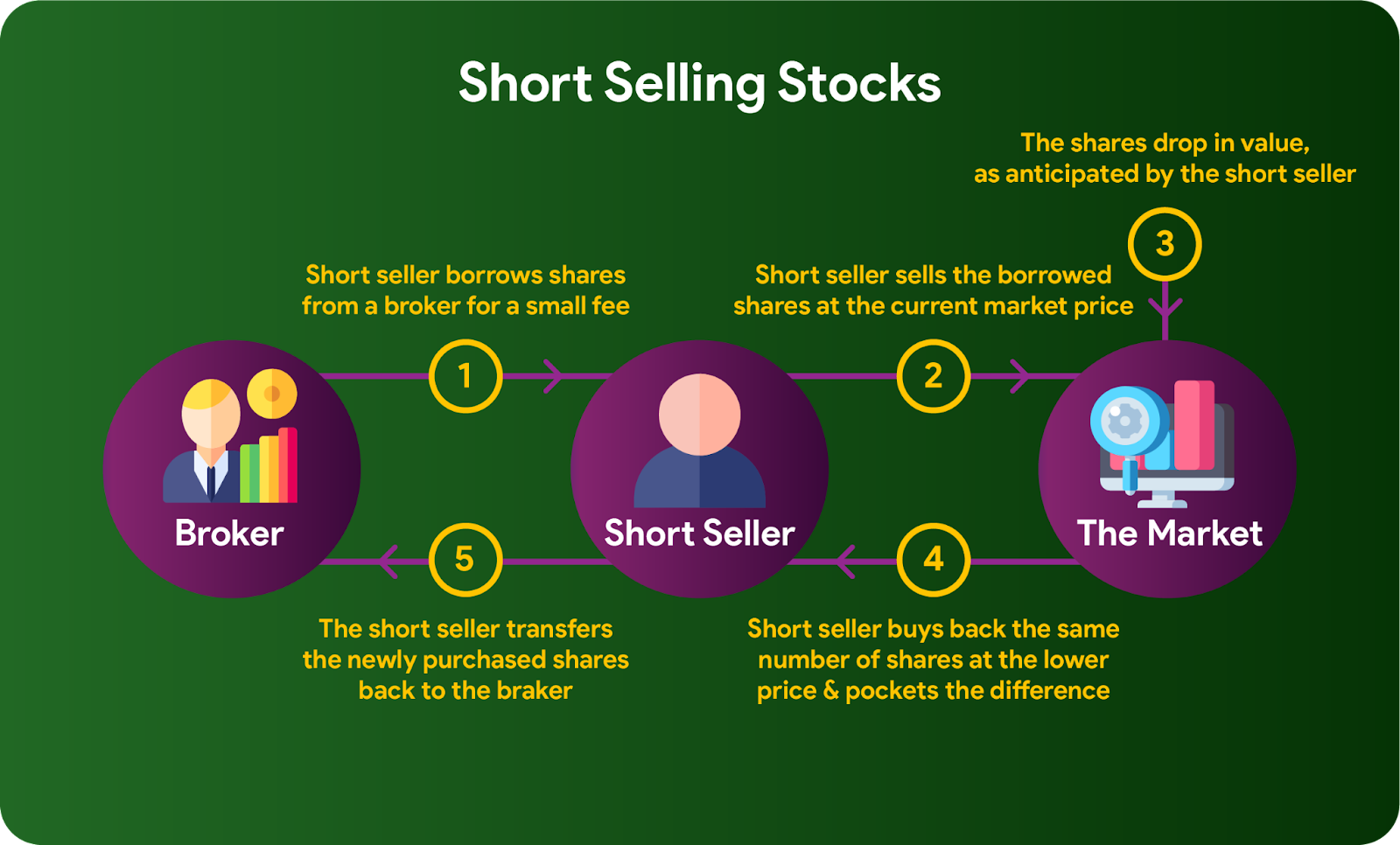
      Short selling is a technique in which an investor/trader borrows securities (like stocks) from a broker and sells it in the market, with the intention of buying them back at a lower price in the future.

      Those who expect share prices to fall on a future date can capitalise on their predictions. The method of shorting stocks is very interesting. Firstly, an individual can sell shares that they do not own. Traders would need to borrow these shares from a broker, thus opening a position. Brokers lend the shares to a trader with a promise that they will be delivered back at the time of settlement. The trader would sell these borrowed stocks at the prevailing market rate and wait for prices to fall. This is referred to as shorting the position. When the prices drop, the traders buy back those shares to close the position. Thus, the objective behind short selling is to “sell high and buy low”.

      If the share prices fall, traders make a profit based on the difference between the selling price and purchasing price. However, if the trader’s study or prediction fails and the share prices go up, they incur a loss.

      How Does Short Selling Work?

      Short selling is an activity that allows market participants to profit from the fall in the price of a financial instrument. It involves borrowing an asset from a broker, selling it in the market, and then repurchasing it later at a hopefully lower price to return it to the lender. Here’s how the process generally works:

      1. Borrowing the Asset

      The trader borrows the asset (usually stocks) from a broker or another trader. This borrowed asset is typically done through a margin account, where the investor agrees to certain terms and pays a fee or interest for the borrowed amount.

      2. Selling the Asset

      After obtaining the borrowed asset, the trader immediately sells it on the market. This is where they take advantage of their belief that the asset’s price will decrease.

      3. Waiting for Price Drop

      The trader waits for the price of the asset to fall. If the price drops as anticipated, the investor can buy back the asset at a lower price.

      4. Repurchasing the Asset

      Once the price has dropped, the trader uses the proceeds from the initial sale to repurchase the same asset at a lower price.

      5. Returning the Borrowed Asset

      Finally, the trader returns the borrowed asset to the lender, typically the broker, from whom they originally borrowed it.

      6. Profit or Loss

      The profit or loss in short selling is the difference between the price at which the asset was sold and the price at which it was repurchased, minus any borrowing fees, interest, or transaction costs.

      what is short selling?

      Short selling can be a risky strategy because there’s a potentially unlimited downside. If the price of the asset increases instead of decreasing, the short seller could incur substantial losses. In the worst-case scenario, if the price rises significantly, the losses can be substantial and may even exceed the initial investment.

      However, brokers have an automatic liquidation system in place that automatically squares off the position if the required margin is not maintained.

      An Example of Short Selling

      Suppose a trader speculates or predicts that the stock price of XYZ is bound to decline after a deep fundamental and technical analysis. He feels that the firm has not performed well during a particular quarter. The current share price of XYZ is Rs 100. He borrows 10 stocks of XYZ from a broker and sells them in the market at Rs 100 each. (He receives Rs 1,000 from this sale). Thus, he is getting “short” by 10 stocks. As predicted, the share price of XYZ falls to Rs 75. He then purchases those 10 shares back at the lower rate of Rs 75 per share. Thus, the overall profit from this transaction is Rs 250 (ie, Rs 750 subtracted from the Rs 1,000 he received initially by selling the shares). He then returns those 10 shares to his broker.

      Now, what if the trader’s analysis failed, and XYZ’s share price went up to Rs 125? He would then have to spend Rs 1,250 (Rs 125 per share x 10) to buy back the shares that he owes to the brokerage. He gets to keep the Rs 1,000 he earned from selling the shares initially. But, he has lost Rs 250 in this scenario.

      How to Short Futures?

      One could also short a stock in the futures segment. In the Indian stock markets, if you want to hold a short position for more than a day, the easiest way is to short a future. Futures represent an agreement to buy or sell a specific quantity of a stock at a set price on a specified date in the future. It derives its value from the actual stock. If the underlying value (stock price) is going down, so would the futures. 

      If you have a bearish view on a stock, you can initiate a short position on its futures and hold on to the position overnight. Similar to depositing a margin while initiating a long position, entering a short position would also require a margin deposit. 

      What are the Advantages of Short Selling?

      • Traders would be able to make significant profits if their predictions become true. It helps you make money in falling (or bearish) markets.
      • Short selling can be used to hedge against any downside risks associated with a stock. Traders can use this method to secure their long-term positions in the market and reduce losses.

      What are the Disadvantages of Short Selling?

      • As mentioned earlier, if the trader’s prediction fails, they are exposed to infinite risk. We would recommend that you stay away from short selling if you are new to trading.
      • In short selling, a trader would have to borrow shares from a broker. There is an interest levied on these borrowed stocks, and the trader also has to maintain a margin. If the margin is not maintained, the trader might need to increase funding or liquidate (exit) their position.
      • Timing is a very important aspect of short selling. If a trader shorts stocks long before the prices drop, they would have to bear the costs associated with short selling for a longer period. If a trader shorts a stock late, they would not be able to catch the fall that was initially predicted.
      • Traders who short stocks could be prone to a short squeeze. This is a situation wherein highly shorted stocks are targeted by certain investors. They would buy these stocks and drive up their prices. Thus, the short sellers would make huge losses when this happens. This is what happened with GameStop, AMC shares in the US. You can read more about it here.

      What are the Risks of Short Selling?

      A few of the risks of short selling are:

      1. Potential for Unlimited Losses

      2. Margin Calls – A margin call is a demand from a broker for an investor/trader to deposit additional funds to cover potential losses in their account.

      3. Limited Availability of Borrowed Shares

      4. Regulatory Restrictions and Market Manipulation

      5. Squeeze Risk

      6. Timing Risk

      Long Position vs Short Position

      • A long position means that the investor has bought the shares and is expecting the price to go up. 
      • A short position means that the investor has short-sold a share and is expecting the prices to fall.
      • A long position makes a profit when the price rises while a short position makes a profit when the price falls.

      Regulations for Short Selling in India

      In order to short stocks, traders need to have a margin account through which they can borrow stocks from a broker. They would need to maintain the margin amount in that account to continue or retain a short position. This margin acts as a security deposit with your broker.

      Traders can place a Margin Intraday Square (MIS) order for short selling. This means that selling and buying the stock (short selling) happens during the market hours (9:15 am to 3:30 pm). Brokers will automatically square off your short position towards the end of market hours.

      The Securities and Exchange Board of India (SEBI) allows traders to short-sell securities only in intraday trade. The entire process of short selling has to take place within the same day. Due to the Covid-19 pandemic and the negative sentiments surrounding it, global markets crashed in March-April 2020. In order to stabilise markets, SEBI imposed a temporary ban on short selling and increased margin requirements. This ban was lifted in November 2020.

      Categories
      Jargons

      Options Greeks: What is Theta?

      Before you go through this article, we request you to go through the basic terms of Options. You can find it here. If you are learning about options, you have to be thorough with the knowledge of Option Greeks. It helps the trader to know how and why the price of the options changes. So let us learn about what theta is, known as an option seller’s friend and an option buyer’s worst enemy.

      We will start this series by explaining one of the most important Option Greeks, which is the Theta or time decaying factor. Both Call and Put options lose value as the expiry date nears. The rate at which they lose value is called Theta. A Theta value of -2 indicates that the option premium will fall by Rs 2 each day which is passed. But why do the options lose value? Let’s find it out here.

      Explaining Theta

      How important is time? Does time have a cost? If yes, how will you associate a price with time? Before you read forward, take a minute and form your own opinion on these three questions.

      Let’s look at an example. Imagine you want to become an established cricketer in the Indian team. How would that happen? You have to put in years of practice and learn many skills. You have to devote your time day in and day out to become a better cricketer. Still, there is no guarantee that if you decide to give 20 hours each day, you will be selected for the national team.

      But, you will surely have a better chance of becoming a cricketer if you spend your time upskilling yourself rather than doing absolutely nothing in the field. Thus, the likelihood of you becoming a cricketer directly correlates with the time you put in. Similarly, you will be more confident about an exam if you have more days to study for it. Why? This is because you would feel that you have an ample amount of time to prepare for it. The longer the time for preparation, the more confident you will be.

      This same logic is followed in the stock market as well. Suppose Nifty 50 is around 13,500. You have two options contracts among which you can buy anyone. Firstly, Nifty 14,000 Call Option which expires in 2 days. Secondly, Nifty 14,000 Call Option which expires in 20 days. Obviously, you will feel safe and confident in buying the second Call Option. Why? This is because more the time, the better the likelihood for the index to move up. In short, more time to expiry leads you to have a better chance of ending your position in profits.

      Risk of an Option Seller

      All the conversations we had above were from the perspective of an option buyer. Now, let’s switch our hats to that of Option sellers/writers. As an Options seller, you don’t want the Nifty to cross 14,000 in the above example. If Nifty crosses above 14,000 then you have to pay money to the option buyer. If Nifty remains below 14,000 points, you will get to retain the option premium you received from the buyer.

      Out of the two Call Options, in which one do you feel the risk for you as an option seller is higher? Yes, it is the second one which is riskier. Nifty crossing 14,000 points in 2 days has a lower probability than it crossing that mark in 20 days. What do you want to compensate for this risk? Money! This concept in the world of finance is known as Time Risk. Options premium is always the summation of the intrinsic value of your option and the time value involved.

      Option Premium = Time value + Intrinsic Value

      Hence, one can easily draw a conclusion from this. If you are buying a call option with a farther expiry date, then you are obliged to pay a higher option premium for it. This higher option premium is paid to compensate for the Options Writers’ time risk.

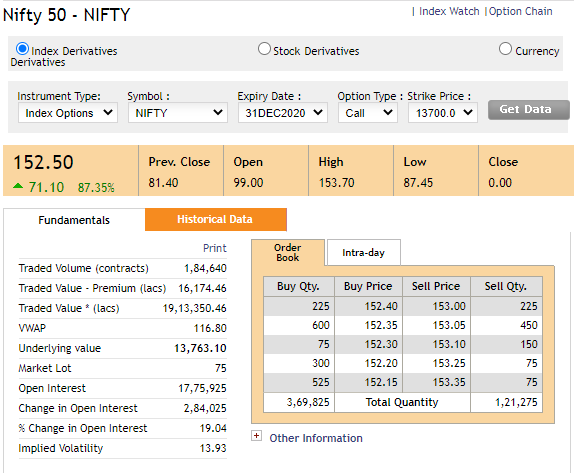
      The chart below shows the Nifty option chart with a strike price of 13,700. The expiry date of this Call Option is 31st December 2020. The Option Premium which the buyer has to pay to the writer is Rs 152.50.

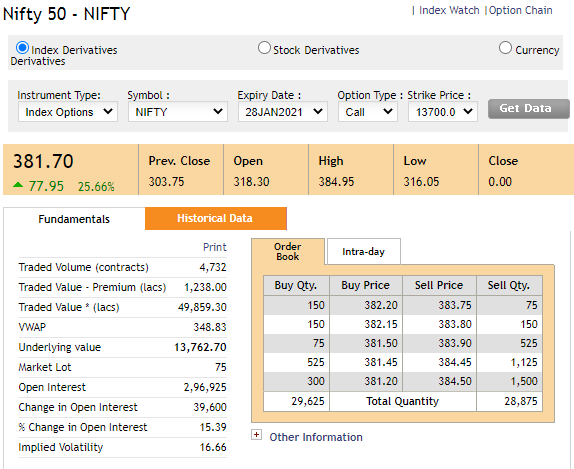
      The second chart shows the Nifty Call Option with the same strike price but with a farther expiry date. The contract has to be closed on 28th January 2021. The Option Premium which the buyer has to pay to the writer is Rs 381.79. Between the two Call Options with the same price, an option buyer has to pay a higher option premium to the option seller/writer for the contract whose expiry date is farther.

      Conclusion

      As the option reaches closer to its expiry date, the time risk of the option seller/writer decreases. Due to this, the option premium loses some of its time value. Thus, decreasing the option premium which has to be paid to the option seller/writer.

      Theta is considered very difficult to understand. But in reality, it is very easy. Just remember that time has an opportunity cost and that cost is reflected in Theta. Wait for the next chapter of this series to get a better idea of what Options Greeks are. Till then, happy trading!

      Categories
      Editorial

      Income Tax Structure for Stock Market Investors & Traders

      Updated: Feb 3, 2025

      Before investing or trading in stock markets, we must clearly understand the risks involved and be aware of the charges or expenses we may incur. Many of you would still be unaware of how income or profits received from the sale of shares are taxed. Let us learn in-depth about the income tax structure that is applicable to stock market investors and traders in India.

      When you buy and hold shares of a listed company, you become a part-owner of the firm (even though it is a very tiny fraction). These stocks will be referred to as your capital asset. When you hold these shares for more than a year, it is known as a long-term capital asset. If you purchase shares and sell them within 12 months, it is known as a short-term capital asset.

      When equity shares are sold within 12 months of purchasing, the seller may obtain a short-term capital gain or incur a short-term capital loss. Similarly, when equity shares listed on a stock exchange are sold after a year of purchasing, the seller may obtain a long-term capital gain or incur a long-term capital loss.

      How are Gains from Equity Shares Taxed?

      • Long-term capital gain (LTCG) on the sale of equity shares is not taxable up to a limit of Rs 1 lakh. If the long-term capital gain received on selling shares or units of mutual funds exceeds Rs 1 lakh, you will attract a flat tax rate of 12.5%.
      • Short-term capital gains (STCG) that you receive from selling shares are taxable at a flat rate of 20%. This is a special tax rate that is levied irrespective of your tax slab. [This may be applicable to swing traders, who buy and hold shares for a few weeks or months]

      Taxation on Intraday Traders

      According to rules specified by the Income Tax Department, the profit or gain received from intraday trading is considered speculative income. While filing your income tax return, intraday income comes under ‘business income’ that you have received during the year. 

      Now, imagine that you own a business. At the end of a particular financial year, you have received a total income of Rs 15 lakh from it. You have also received a profit of Rs 5 lakh from intraday trading during the same period. Thus, the total business income for that financial year will be Rs 20 lakh, and income tax will be levied based on the applicable income tax slab. Since intraday profit is considered as a business income, you can claim expenses while filing income tax return. These expenses could be brokerage charges, broadband charges, purchase of personal computers or laptops for trading, etc. Claiming such expenses will help lower the amount on which you need to pay income tax.

      Taxation on Derivative Traders

      Let us look at how income tax is levied on profits obtained from Futures and Options (F&O) trading. The profits received from F&O trading are also classified as business income (known as non-speculative income). The taxation on derivative traders is similar to that of intraday traders. Thus, you will have to pay tax on income received from such trades based on the applicable tax slab/bracket.

      Loss Incurred on Sale of Equity Shares

      As investors or traders in the stock market, we are all bound to make losses. However, even if you do not belong to any tax slabs and have incurred losses while investing or trading during a particular financial year, it is always recommended to file your Income Tax Return. This is because such losses can be adjusted and carried forward to upcoming financial years. [Those individuals who receive an annual income of less than Rs 12 lakh are exempt from paying taxes] Let us understand this concept with an example. 

      Suppose you incurred a long-term capital loss of Rs 2 lakh in the financial year 2019-2020 (FY20). In the next financial year (FY21), you have obtained a long-term capital gain of Rs 5 lakh. Thus, the loss that you incurred in FY20 can be carried forward (or set off) with the profit made in FY21. Thus, you need to only pay tax on Rs 3 lakh during the financial year ended March 31, 2021.

      The long-term and short-term capital losses that an investor incurs can be carried forward for up to 8 years.  A long-term capital loss can only be set off against long-term capital gains. However, a short-term capital loss can be set off against both LTCG and STCG. Similarly, intraday losses can be carried forward up to 4 years, and losses from F&O trades can be carried forward up to 8 years.

      Current Income Tax Slab Rates (Updated)

      Tax Slab – New RegimeTax RateTax Slab – Old RegimeTax Rate
      ₹0 – ₹4 lakhNil₹0 – ₹3 lakhNil
      ₹4 lakh – ₹8 lakh5%₹3 lakh – ₹7 lakh5%
      ₹8 lakh – ₹12 lakh10%₹7 lakh – ₹10 lakh10%
      ₹12 lakh – ₹16 lakh15%₹10 lakh – ₹12 lakh15%
      ₹16 lakh – ₹20 lakh20%₹12 lakh – ₹15 lakh20%
      ₹20 lakh – ₹24 lakh25%Above ₹15 lakh30%
      Above ₹24 lakh30%

      Categories
      Jargons

      What is Arbitrage Trading & Arbitrage Funds?

      Arbitrage trading is the practice of buying shares of a company in one market and selling them in a different one for a profit. Minor pricing discrepancies and inefficiencies exist in the markets and make arbitrage trading possible. In this article, we will understand what arbitrage trading is, how it works, and the different types.  We will also understand what arbitrage funds are.

      What is Arbitrage Trading?

      Arbitrage trading is the practice of buying shares of a company in one market and selling it in another market for a profit. In other words, it’s a strategy used in the financial markets to profit from price differences/disparities of the same or related assets (stocks, bonds, etc.) in different markets or at different times. The principle behind arbitrage is to buy low in one market and simultaneously sell high in another, thereby locking in a risk-free profit.

      In theory, arbitrage trading is a risk-free practice. However, there are some minor practical risks associated with it, such as execution risk, mismatch, and liquidity risk. Arbitrage trades are executed using highly advanced algo-trading systems. Since arbitrage trading demands sophisticated systems, it is primarily carried out by institutional traders (also called arbitrageurs). This is also due to the substantial capital needed to generate a significant profit.

      For example: If TCS trades at ₹3605.00 on BSE and ₹3605.50 on NSE, then a trader can buy the stock at ₹3605 from BSE and sell at ₹3605.5 on NSE. The trader can achieve a profit of ₹0.5 from the trade. However, this practice cannot be executed using intraday orders in India.

      How Does Arbitrage Trading Work?

      Arbitrage can be done whenever any stock, commodity, bond, currency, or other securities are priced differently across markets. In practice, such situations are very rare. Even if such differences arise, market participants exploit the opportunity and remove the discrepancy instantly. Therefore, arbitrage opportunities only last for seconds or even microseconds. Modern technology and High-Frequency Trading (HFT) systems have made it difficult to profit from pricing inefficiencies.

      When prices are inefficiently priced, the price of a security will be lower than it actually should be. The difference between the fair value and the current price is an opportunity to exploit. In such situations, institutional traders continuously exploit the gap until it goes away and make it efficiently priced.

      Types of Arbitrage Trading Opportunities in India

      • Cash and Carry Arbitrage: This practice is performed in one single market. In Cash and Carry Arbitrage, profit is made from the difference in price in the spot market (equity) and futures price. You BUY a certain number of shares equal to the lot size in the spot market and SHORT the futures of the same amount. The difference in price over a period of time is your profit. To learn more about shorting or short-selling, click here.
      • Reverse Cash and Carry Arbitrage: This follows an opposite mechanism where you SHORT a certain number of shares equal to the lot size in the spot market and BUY futures of the same amount. Your profit is the difference in price over a period of time.
      • Currency Arbitrage: This type of arbitrage is when you take advantage of the price disparity of currency in two markets to book a profit. For example, a bank in New York quotes the currency pair USA/INR 70.20, and a bank in India quotes the same pair 70.94. A trader who is aware of this price difference can perform arbitrage and book profits. There are multiple ways of performing a currency or forex arbitrage, but the essence of it remains the same.
      • Inter-Exchange Arbitrage: In this form, you take advantage of the price difference of the same scrip in two different exchanges. Example: TCS is quoting 1202.00 in BSE and 1202.90 in NSE. There are a total of Nine Exchanges recognised by SEBI in India. In India, inter-exchange arbitrage is not possible on intraday orders.

      What are the Benefits of Arbitrage?

      The benefits of investing in arbitrage funds are:

      Low Risk

      Arbitrage funds offer investors a low level of risk because they buy and sell each security simultaneously. In ideal situations, market participants instantly lock in profits without taking on any market risk.

      Promotes pricing efficiency

      Arbitrage trades exploit pricing inefficiencies. Their activities help reduce pricing discrepancies and inefficiencies in the market. Arbitrage trades converge the difference between fair and unfair prices.

      Price Discovery

      Arbitrageurs play a role in the price discovery process by ensuring that asset prices accurately reflect available information. When prices deviate from their fair values, arbitrageurs step in to correct it.

      What are the Risks or Challenges of Arbitrage Trading?

      As discussed, profiting from arbitrage is extremely difficult. Although arbitrage is risk-free, there are some risks and difficulties with it. 

      Execution Risk

      Arbitrage strategies require precise and rapid execution. Failing to execute trades at the right moment can result in missed opportunities or losses if prices move against the arbitrageur when delayed. 

      Difficulty in Tracking

      In merger arbitrages, developments are difficult to track as they happen instantly and without prior notice. Additionally, if the news isn’t trustworthy and turns out to be wrong, investors who are betting on mergers may lose a lot of money.

      Deal Risk

      Deal risk is the risk that the merger or acquisition deal does not go through. If it fails, the arbitrageur will lose money.

      Arbitrage Funds vs. Other Investment Products

      Arbitrage FundsOther Investments
      Aims to generate low risk-free returns consistentlyOther products have various objects depending on the investment
      It is risk-free or near risk-freeEquity funds have high risk while debt funds have lower risks
      If offers moderately stable and consistent returnsEquity funds offer higher returns but have high volatility. Debt funds have low returns and stability
      Suitable for short to medium-term investmentsEquity funds are suitable for the long term while debt funds are suitable for the short-term

      Arbitrage Trading in Different Financial Markets

      Arbitrage trading can be performed in any financial market to exploit pricing inefficiencies. Traders can execute it in the stock market, forex market, commodity market, cryptocurrency market, bond market, and derivatives market.

      Regulatory, Tax & Legal Considerations for Arbitrage Trading

      Arbitrage trading is legal in India. However, the Securities & Exchange Board of India (SEBI) does not allow buying and selling the same company’s stocks on the same day on different exchanges. Moreover, it is necessary to take delivery of the shares for the trade to be considered legal.

      To perform arbitrage trading in India, you need to have the stocks you want to trade in your Demat account. If you see that the stock prices are different on two stock exchanges, you can sell them to make a profit. Afterwards, you can buy the same shares back from the exchange where they are cheaper so that you can complete the transaction. This way, you make money while following the rules set by SEBI.

      The tax implications of arbitrage trades are complex as well. Arbitrage is sometimes done simultaneously in different types of securities. For example, in convertible arbitrage, the arbitrageur trades in convertible security and equity of a company simultaneously. Therefore, the taxation varies depending on the type of security.

      What are Arbitrage Funds?

      Arbitrage Funds are mutual funds that use arbitrage trading to generate wealth. An arbitrage fund is suitable for those investors who want to take advantage of highly volatile markets but have a reduced risk burden. Volatility is what makes arbitrage profitable. Arbitrage funds are subject to the same tax treatment as equity funds (on capital gains). They may have a high expense ratio and are suitable for investors having a short to medium-term horizon of 3 years to 5 years. 

      In the medium to long term, arbitrage funds are typically known to deliver returns ranging from 7% to 8%. Please make sure you do your own research before investing in an arbitrage fund.

      You can check out a number of arbitrage funds and their performance over here.

      In conclusion, arbitrage is a complex trading strategy that aims to profit from pricing inefficiencies. It can generate consistent and stable profits without much risk. Moreover, it plays an important role in fixing the pricing inefficiencies in the market. However, it’s not feasible for retail traders as arbitrage trading requires sophisticated trading systems to be profitable. You can gain exposure to arbitrage opportunities by investing in an arbitrage fund.

      Categories
      Editorial

      The Barings Bank and the Rogue Trader

      How many times have you heard that a single employee of the bank has caused the whole bank to shut down? How many times have you heard that a single employee was the reason behind the collapse of a 200-year old bank? I am sure, not very often. Today, we bring one such story which amazed the whole financial sector and led everyone to do some deep thinking.

      About Barings Bank

      Barings Bank was a British merchant bank in London which collapsed in 1995. The bank was the second oldest merchant bank (modern banks) which was founded in 1762. It went on to become one of the largest and safest banks in the world. It was a very reputed bank and it even offered personal banking services to Queen Elizabeth. Barings Bank was also popular as it was financing the Napoleonic Wars, Louisiana Purchase by the US and the Erie Canal. 

      In February of 1995, Nick Leeson single-handedly led the bank to bankruptcy. But how did a single man became so significant that it left no option for Barings Bank but to shut down? 

      The best trader in town

      Nick Leeson, the former employee of Morgan Stanley, joined Barings Bank at the age of 28. He was transferred to Jakarta, the capital of Indonesia, and was able to settle £100 million worth of back-office contracts. He performed better than expected as he rectified all problems faced by them in just 10 months. This impressed the bank’s senior management.

      They promoted Leeson to the post of general manager of Barings Securities in Singapore. He was sent to head both front-office and back-office operations. He was also responsible for hiring new staff, including a team of traders which will help him during the market hours.

      Nick Leeson was Baring’s face on the trading floor. He was the person who made all the decisions regarding the trading of the bank’s money in the derivatives market of SIMEX (Singapore International Monetary Exchange). He made unauthorized speculative trades which helped the bank to earn huge profits on a consistent basis. At the end of 1992, more than 10% of the bank’s profits came because of Nick Leeson’s wondrous trading moves. Normally, the contribution of investments in a company’s profit is nowhere near 10%. This earned him unlimited trust from his London bosses. But, they were not aware of the implications their decision will have.

      The Collapse

      Nick Leeson’s good luck in trading didn’t last wrong and soon he started losing money. To hid his incompetency from the management, he created an ‘88888’ account. He hid his losses in this account. In front of the senior managers, Leeson mentioned that these losses were of one of the inexperienced junior traders. Till 1993, the losses in this secret account were around £23 million. But by the end of 1994, the amount had increased exponentially to £208 million. For context, £1 is almost ₹100 today. That means this amount would have been close to ₹2,000 crores.

      On January 16, 1995, Leeson used a short straddle strategy at Singapore and Tokyo stock exchanges. He was sure that the market would not have any significant movement, neither upwards nor downwards. But, he didn’t know what would happen next.

      On January 17, 1995, a big earthquake, registering magnitude 7.2 on the Richter scale hit Japan. This caused a sharp drop in the Asian markets, specifically Tokyo stock exchanges where the Nikkei dropped 1000 points. To cover for his losses, Leeson made more risky trades hoping that the market will lift again. He purchased even more Nikkei futures contracts in hopes that he will be able to drive the market upside alone. But to his dismay, the market fell continuously. 

      Failed and Fooled 

      One question which comes in mind after reading this is, where was the audit committee? Why was there no checks when the single account was recording such huge losses? The review committee ‘failed’ in their checks and were successfully ‘fooled‘ by Nick Leeson. There were multiple factors which played in Leeson’s favour. As he operated in both the front-office and back-office, he had unlimited autonomy. 

      He was making trades through front-office and was in command of the back-office which had the role to keep checks on the trades made by the front-office. Thus, he was making highly risky trades and was approving himself without any restrictions. That means, he had the ability to hide whatever he wanted to hide from the official books. Leeson made false declarations to regulatory authorities to avoid any strict checks on his work. He hid huge amounts of losses and forged the signatures of his seniors to get access to more money.

      The Shutdown and Aftermath

      By the time Barings Bank investigated and discovered the ‘88888’ account, the losses were too big for the company to stay afloat. Nick Leeson was accountable for the losses worth £827 million. This was twice the Barings Bank available trading capital. With no way out to recoup the losses he has incurred, Leeson decided to flee away. He left a note which read “I’m sorry”.

      On February 26, 1995, the 233-year-old Barings Banks bank was declared insolvent. After 10 days, on 6th March 1995, it was officially acquired by a Dutch investment group, ING. They paid a meagre amount of £1 for this acquisition, just imagine buying a bank for ₹100! The collapse caused 1,200 people to lose their jobs in Singapore alone. In 2001, ING Barings was sold to ABN Amro. 

      After flying away to Malaysia and Thailand, Nick Leeson was arrested in Frankfurt, Germany. He was brought back to Singapore after 9 months and was sentenced to a jail term of 6.5 years. Leeson was charged on two grounds: deceiving the bank’s auditors and cheating the Singapore exchange. He served his term in jail during which he was diagnosed with colon cancer. 

      After being released from his prison, Nick Leeson has started a new life. He is now a public speaker and lecturer. He is also a personal trader and gives out regular comments on market performance.