Categories
Editorial

How Adani Group Became India’s Largest Airport Operator

Adani Group is one of the biggest diversified conglomerates in India with a market cap of over ₹19.75 lakh crore. It has established a world-class transportation and utility infrastructure portfolio across our country. 

The group has spent the past few years expanding its businesses and even venturing into the data centers, cement, telecom, and media segments. It now owns India’s largest city-gas distributor, coal miner, private-sector port, and airport operator

Moreover, Adani’s airport business became the second-largest revenue generator for the group. In today’s article, we dive into how the Adani Group aims to transform India’s transit gateways into world-class destinations.

Adani Airport’s Origin

The Adani Group entered the airports industry in 2019 as part of its mission to become a recognised leader in the integrated infrastructure and transportation industries. The group is dedicated to providing travellers with the greatest airport infrastructure possible by delivering seamless and secure airport experiences.

Through Adani Airports Ltd (AAL), the group envisions redefining the city-airport relationship. It aims to build shared facilities that cater to the ever-evolving global travel, life, and work requirements. AAL is a 100% wholly-owned subsidiary of Adani Enterprises Ltd (AEL).

Source: AEL’s Investor Presentation

Adani Airport Holdings

Adani Airport Holdings is the airport management and operations subsidiary of the group. It holds controlling ownership in Mumbai International Airport Ltd (MIAL), which operates the Chhatrapati Shivaji Maharaj International Airport. It also holds a majority stake in Navi Mumbai International Airport (currently under construction). Additionally, the company has a 50-year lease on the international airports of Ahmedabad, Guwahati, Jaipur, Lucknow, Mangalore, and Thiruvananthapuram since January 2021. 

In February 2020, the company signed the Concession Agreement (CA) for three airports and subsequently commenced operations at Mangalore International Airport on October 31, 2020, Chaudhary Charan Singh International Airport (Lucknow) on November 2, 2020, and Sardar Vallabhbhai Patel International Airport (Ahmedabad) on Nov 7, 2020. Furthermore, it will operate, oversee, and expand each of the six airports for the next 50 years. 

Adani Airport’s Strong Growth 

Adani Enterprises Ltd’s (AEL) expansion and growth initiatives for its airports business are paying off! Its airport operations were the conglomerate’s second-highest revenue producer in the past financial year (FY22). 

The integrated resources management (IRM), solar, and mining businesses of the Adani Group are considered “established businesses”. Meanwhile, its airports segment is considered “emerging”. The airport business has grown substantially over the past year, contributing to strong revenue creation. However, the IRM division continues to contribute the most in terms of revenues and profits.

Financial Performance in FY22:

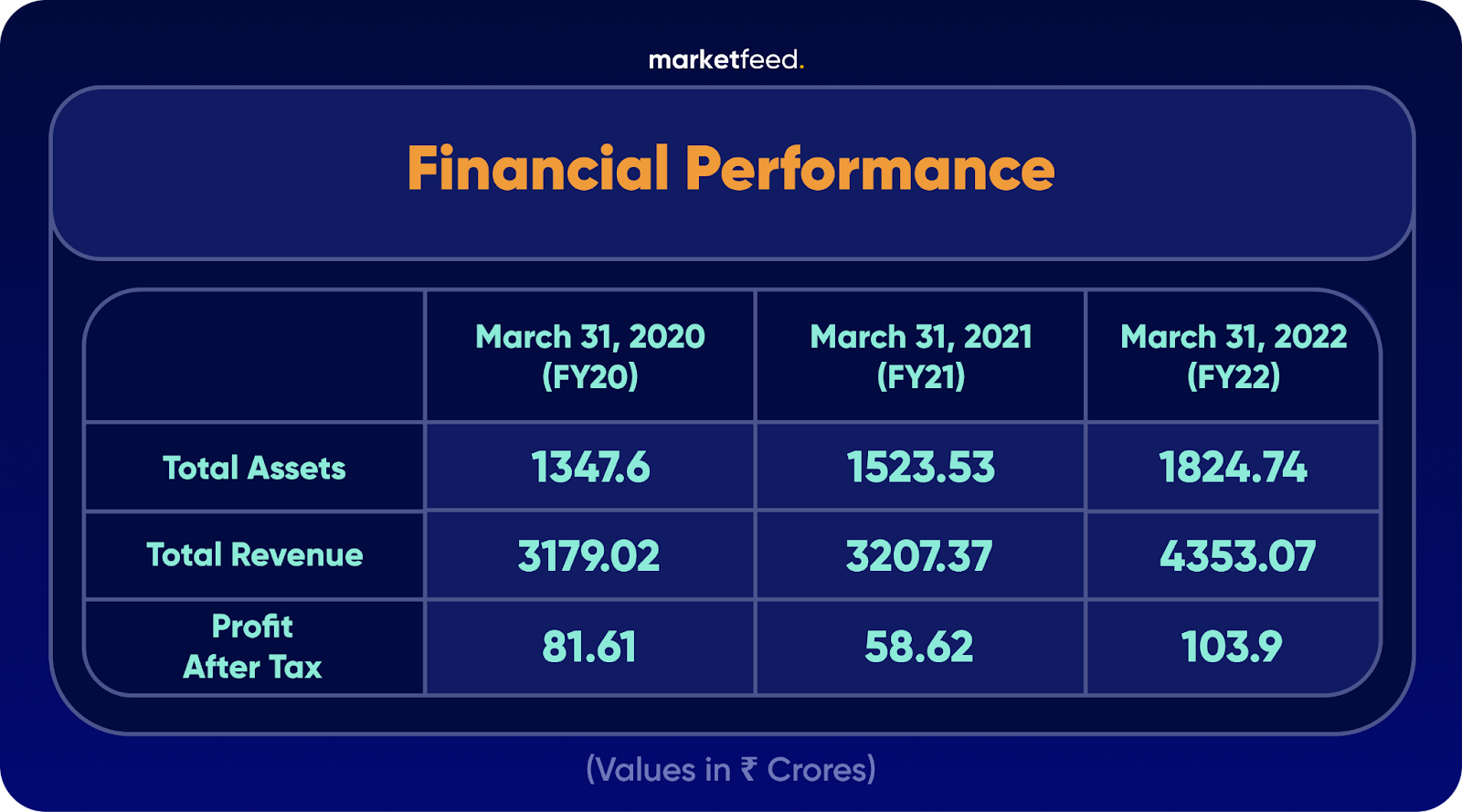
So far, the group has acquired management rights for at least eight airports, including four international and four regional airports. Together, these airports generated revenue of ₹1,165.58 crore in Q4 FY22, compared to ₹89.80 crore in Q4 of FY21. 

The airport business’ net profit stood at ₹75.37 crore in Q4 FY22. It incurred a loss of ₹87.78 crore in the same period last year (Q4 FY21).

As of Q4 FY22, Adani Airports Holdings’ total assets stood at ₹30,937.47 crore, compared to ₹2,062.23 in Q4 FY21. On the other hand, liabilities increased multifold to ₹8,266.30 crore in Q4 FY22, compared to ₹928.16 crore in Q4 FY21.

The group had to borrow huge funds to finance its airport projects.

Recent Developments 

  • AEL’s established businesses have been enhancing their performance, while new businesses like networked airport ecosystems, road & water infrastructure, and green data centres are expected to have a promising future. 
  • Out of the eight airports under AAL, at least seven are operational. Together, the airports handled 36.9 million passengers in FY22, accounting for at least 20% of the overall passenger traffic in India.
  • The company claimed that the next generation of its strategic business investments is centered around airport management and roads.
  • Adani Group is also aiming to build aerotropolises around airports. They plan to develop real estate projects alongside its airports in the country. These “aero cities” will include a variety of accommodations, conference centres, shopping, entertainment, healthcare facilities, logistics units, and business offices. The company is in preliminary talks with hospitality chains such as Marriott International, InterContinental Hotels Group (IHG), and Hilton for developing hotels under this plan. 
  • The company is looking to create ‘lifestyle destinations’ for customers both inside and outside the airport. Adani strives “to dominate the airports’ space with 300 million+ consumer base leveraging network effect and consumer mindset”.

Acquisitions:

  • Adani Airport Holdings acquired AirWorks, the oldest Maintenance, Repair, and Operations (MRO) firm in India, for an enterprise value of ₹400 crore. 
  • According to sources, the group is negotiating to buy a 30% share in a joint venture between US-based MRO provider AAR Corp. and Prajay Patel-owned Indamer Aviation. AAR holds 40% of the MRO business. The Adani Group is in negotiations to acquire half the stake held by Patel. 
  • The company is also poised to make a competitive offer for AI Engineering Services (AIESL), which is the MRO unit of Air India that the government is looking to sell in the first quarter of the next financial year (FY23).

Adani’s Mission 

From a college dropout to a business tycoon, Gautam Adani’s story is nothing short of remarkable. Adani Group, which focuses on large-scale infrastructure development in India, has established itself as the market leader in its transportation logistics and energy utility portfolio industries. 

Adani Group owes its success and leadership position to its core philosophy of ‘Nation Building’ driven by ‘Growth with Goodness’ – a guiding principle for sustainable growth. It is committed to increasing its environmental, social, and governance (ESG) footprint by realigning its businesses with an emphasis on climate protection. The group is also increasing community outreach based on the principles of sustainability, diversity, and shared values.

Adani is a prominent global infrastructure operator with a diversified portfolio of operations, including coal mining, coal trading, ports, power generation, multi-model logistics, renewable energy, and gas transmission and distribution. The group has long been renowned for its capacity for expansion and national-building aspirations. But will it continue to thrive or will it perish with the ‘emerging’ airport sector? 

Will a single entity be able to operate airports more efficiently or is there a danger of a monopoly arising in India’s airport space? Let us know your views in the comments section of the marketfeed app! 
Categories
Editorial

Muhurat Trading 2022: All You Need to Know

Diwali, the Festival of Lights, is widely celebrated all over India. It symbolises the spiritual victory of light over darkness or good over evil. Many traditions are carried out during this auspicious time. One such unique and customary tradition in our stock markets during Diwali is Muhurat Trading. The one-hour special trading session has been carried out every year on Diwali for more than six decades. In this article, learn more about Muhurat Trading and how you can take part in it.

What is Muhurat Trading?

The term ‘Muhurat’ means an auspicious time. According to Hindu customs, Muhurat is a period when planets are aligned favorably to ensure positive results. Muhurat Trading is a one-hour special trading session on the day of Diwali approved by both the NSE and BSE. During the period, investing and trading communities across India pay tribute to the goddess Lakshmi, the deity of wealth and prosperity. It also marks the celebration of ‘Samvat’ or the New Year. 

Thus, according to traditions, it is believed that people who trade during the Muhurat session have a better chance of gaining wealth and prosperity throughout the year. Such a tradition is unique to our Indian stock markets only.

History of Muhurat Trading

When we look at the history of stock markets in India, many stockbrokers started their New Year on the day of Diwali. They would open new settlement accounts for their clients on the Muhurat, or “the auspicious time”.

The concept of Muhurat Trading was officially established in India in 1957 when it was approved by the Bombay Stock Exchange. This tradition can be linked to two prominent business communities: the Gujaratis and the Marwaris. Interestingly, these communities have a century-old tradition of performing pooja of their ledgers and ‘wealth chest’ on Diwali. When the National Stock Exchange was established in 1992, it also permitted trading for one hour on the evening of Diwali day.

Today, Muhurat Trading has become more of a symbolic gesture, and investors even conduct prayers when they purchase shares. Most people buy shares of fundamentally-strong companies that can generate good returns in the long run.

Muhurat Trading Timings for 2022

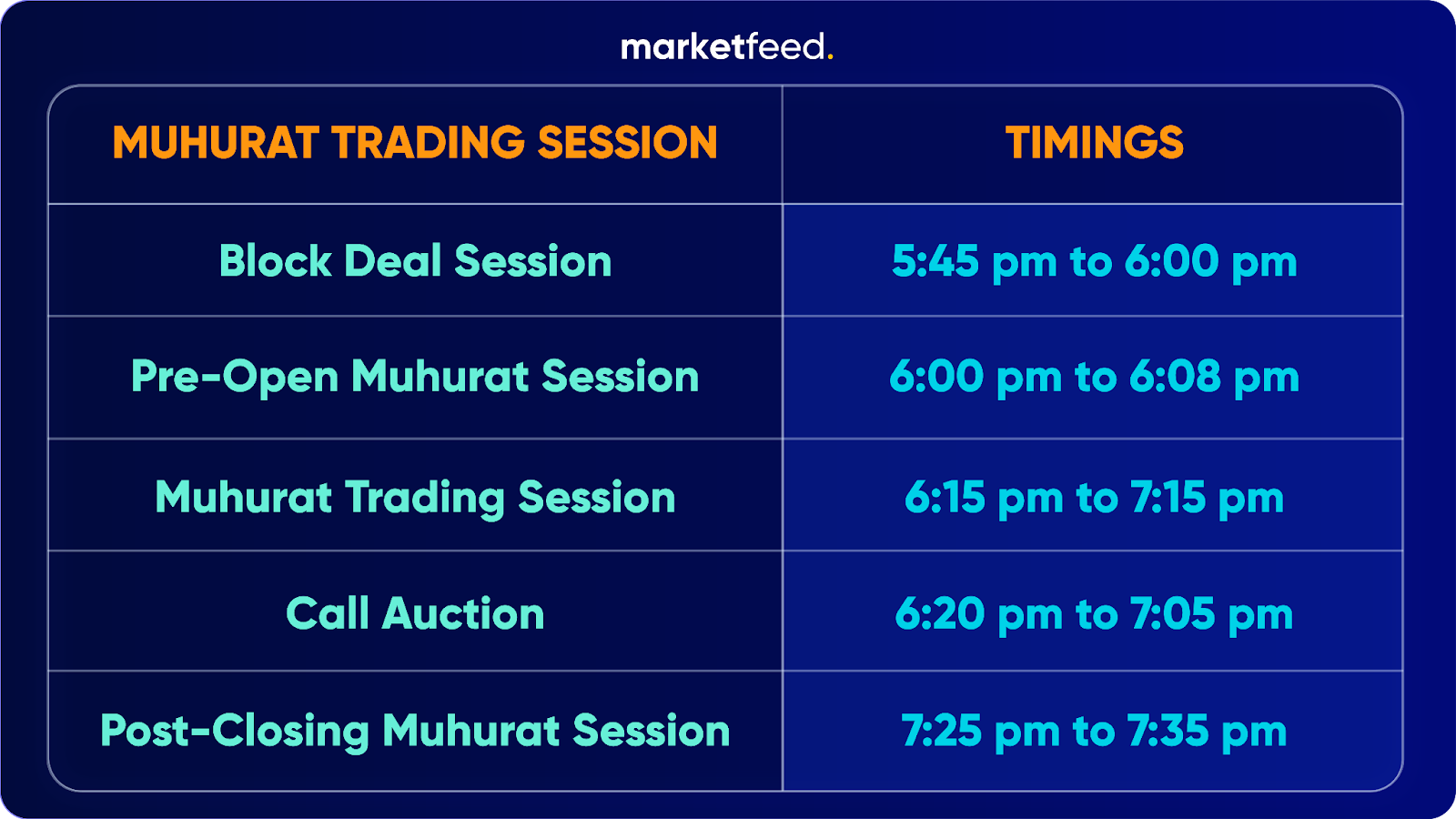
The Muhurat Trading session for this year will be held on October 24, 2022 (Monday). The table given below shows the session timings for Muhurat Trading. The timings are applicable on both NSE and BSE.

1. Block Deal Session – This is when two parties agree to buy/sell a security at a fixed price and inform the stock exchange about it.

2. Pre-Open Session – This is when the stock exchange determines the ideal opening price of a stock for the trading session.

3. Normal Market session – This refers to the one-hour session where the actual trading takes place.

4. Call Auction Session – This is a period when illiquid securities are traded. These are stocks that investors cannot find ready buyers for because of their limited trading. 

5. Closing session – The period when traders can place a market order at a closing price.

Factors to Keep in Mind During Muhurat Trading

When we look at historical records, the Indian stock market has been usually bullish during Muhurat Trading. The BSE Sensex and NIFTY have closed higher in 11 of the last 15 Muhurat sessions.

(Source: NSE Website)

During the session, most investors would prefer to buy stocks that have a potentially higher return on investment (ROI). As always, make sure that the fundamentals of a company are strong before investing in its stock.

Historical records reveal that fast-moving consumer goods (FMCG), textiles, and automobile sectors have a probability to show high growth. This is mainly seen in rural areas, as the festive season is an auspicious time to buy new products. Discount offers and other incentives would also lead to high demand for these goods. Keep a close watch on fundamentally strong companies, and try to add stocks at dips.

At the same time, intraday traders need to be careful as the markets could be volatile in any direction during the Muhurat Trading session. Hence, better trading decisions can be made when the resistance and support levels are given vital importance.

There could also be a lot of fraudulent activities such as free stock tip scams that could be common during this period. marketfeed has prepared a very detailed article on this issue as well. You can read it here. Make sure that you do not fall into any such trap!

As intelligent stock market participants, make sure you watch out for those stocks which could show a potential boom during the festive season. marketfeed wishes all our readers a very Happy and Prosperous Diwali! 🌟

Categories
Editorial

Vedant Fashions: Leading India’s Ethnic Wear Market

The festive and wedding season is upon us! 

Festivals and weddings are an integral part of Indian culture. They represent our core values and traditions. While each community has its own style of festivals and weddings, all religious groups are welcome to participate in these celebrations, which binds us together in a multicultural space. 

Both events are intricately planned, vibrant, culturally rich, and full of tradition and celebration. They have a profound influence on the clothing industry in India and form customer purchasing patterns and design concepts. 

When we think of the ethnic apparel industry, one name pops up in our mind: Manyavar. But did you know that Vedant Fashions Ltd (VFL), the company that owns Manyavar, dominates the market? In today’s article, we dive into Vedant Fashions and its strong growth. 

Vedant Fashions’ Origin 

Vedant Fashions was established by lifestyle tycoon Ravi Modi in 2002. It offers a one-stop destination for a wide range of product offerings for every celebratory occasion in India. The Kolkata-based company is primarily engaged in manufacturing, trading, and sale of readymade ethnic wear for men, women, and children. The company has an extensive retail network of 546 exclusive brand outlets (EBOs), including 58 shop-in-shops globally, and 11 overseas EBOs across the United States, Canada, and the UAE. 

VFL’s ‘Manyavar’ is a category leader in the branded Indian wedding and celebration wear market with a pan-India presence. The company also owns and operates four other brands— Mohey (women’s ethnic wear), Mebaz, Manthan, and Twamev. Vedant Fashions focuses on spreading India’s vibrant culture and traditions through these brands.

You might have come across their impressive ads starring brand ambassadors Amitabh Bachchan, Virat Kohli, Ranveer Singh, and Alia Bhat.

Financial Performance

Big fat weddings and pent-up desire to party after easing Covid-19 restrictions are boosting Vedant Fashions’ numbers: 

(Values in ₹ crore)

Vedant Fashions’ financial performance should give Ravi Modi and its shareholders cause for celebration. In the financial year ended March 31, 2022 (FY22), its total income grew by 84% YoY to ₹1040 crore, and net profit more than doubled to ₹310 crore. The strong results reflect a low base in 2021, hurt by Covid-19-related restrictions that put a lid on celebrations. Nevertheless, the latest revenue was 30% higher than in FY19, while profit was up 79%. 

Over the next two financial years, both revenue and profit are expected to expand at a compound annual growth rate (CAGRs) of almost 30%, according to an Axis Capital report. In the upcoming years, Ravi Modi intends to nearly double the total retail space to 2.4 million square feet.

A “big fat Indian wedding” can last several days. It includes not only the wedding ceremony and reception, but also welcoming parties, religious rites, and other celebrations. Such trends are helping Vedant Fashions to record robust revenues. According to analytics firm CRISIL, weddings are becoming larger, more elaborate, and longer. This trend can be attributed to rising disposable incomes and an increase in discretionary expenditure. CRISIL expects the ethnic clothing industry to expand 15-17% to reach nearly ₹1.38 lakh crore by 2025, driven by an increase in Indians’ preference for traditional attire over Western attire during important events.

Major Competitors 

Vedant Fashions does not have any direct listed rivals in India. However, it faces competition from companies like Tata-owned Trent Ltd., Metro Brands, TCNS Clothing Company, Aditya Birla Fashion & Retail, and others that have a presence in the Indian wedding and celebration wear categories. Brands such as Biba and Soch also predominantly operate in this segment. 

(Values in ₹ crore)

The Challenges

Vedant Fashions has only experienced gains since its IPO in February 2022. Its shares have soared by more than 60%, exceeding brokerages’ estimates. However, the company faces many challenges:

  • High reliance on one type of discretionary goods— wedding and celebration apparel. The number and frequency of marriages determine the demand for Indian wedding and celebration attire. Additionally, this industry is characterised by rapidly-changing customer preferences.
  • The concentration risk comes next. Despite having over 600 exclusive brand shops, 30% of sales are generated by the top five franchisees.
  • VFL engages with third-party manufacturers (generally known as jobbers) for a significant portion of its apparel and accessories. A slowdown or disruption in the operations and performance of third parties (or inability to retain them) could severely impact its business. 
  • The company’s warehouse, factory, and a majority of its jobbers are mainly based in a single geographical region: Kolkata. Vedant Fashions’ operations are more susceptible to regional risks.

Vedant Fashions’ Mission

Amid a growing demand to wear ethnic apparel on special occasions and as the post-Covid climate fuels a desire to party, Ravi Modi amassed a ₹375 crore fortune through his traditional Indian wear design company. In February, VFL listed 15% of its total equity shares on the Indian stock exchanges— the basis of Modi’s fortune that added him to the ranks of India’s richest for the first time in 2022.

The company aims to lead the category toward a global perspective, beyond cultural or ethnic sensibilities. It intends to be a dominant player in Indian wear, across genre, price, and gender. VFL is driven by a collective mission: to be an authority in celebration wear. 

Vedant Fashions is indeed well-positioned to increase its footprint in the domestic and international markets in the near term. The company plans to penetrate deeper into the existing markets and identify inorganic growth opportunities.

Will it continue to enjoy its haven or perish due to its regional risks? Let us know your views in the comments section of the marketfeed app!

Categories
Editorial

The National Logistics Policy 2022: Explained

As we know, a well-functioning logistics sector forms the backbone of domestic and international trade in any country. It connects all vital industries and ensures a smooth supply chain of goods and services. A logistics sector requires efficient transportation systems, inventory management (warehousing), quick & easy flow of data, and reliable customer service.

During strict lockdowns amidst the Covid-19 pandemic, our logistics sector rose to the occasion and delivered essential goods and services with limited resources. Now, the Indian government has introduced an important policy that aims to bring much-needed changes to the logistics sector.

On September 17, Prime Minister Narendra Modi announced the National Logistics Policy (NLP) 2022. It aims to ease the movement of goods and boost the trade sector in our economy. In this article, we dive into the challenges faced by the Indian logistics sector and how this new policy plans to address them.

Key Challenges Faced by the Logistics Sector

  • The Indian logistics market is worth over $200 billion as per government estimates. However, the sector is extremely complicated and inefficient. There are 20 government agencies, 40 government partner agencies, 36 logistics services, 129 inland container depots, 168 container freight stations, and many other intermediaries in between. So it takes a lot of time and money to clear all paperwork in order to transport goods!
  • Currently, if the logistical cost of moving a product from one location to another is $100, customs, paperwork, insurance, and administration costs account for nearly $12. The logistical cost in India is about 13% of our gross domestic product (GDP). This figure is higher than that of the US, Europe, and China
(Source: Statista)
  • Due to high logistical costs, the competitiveness of India’s exports has fallen. Poor infrastructure across our country, increasing fuel costs, and legal complications continue to severely affect the transportation of goods. There are constant delays, and some of our existing networks are under-utilised.

What is the National Logistics Policy?

For nearly three years, the Indian govt has been working on a policy to address the primary concerns of institutions and stakeholders in the logistics sector. Here are the main features of the National Logistics Policy 2022:

  • The policy aims to bring down the logistics cost from 13-14% of the GDP to around 8% of GDP in the next five years.
  • The Indian government will create a roadmap to reduce the country’s dependence on road transport for cargo movement. It will explore more options like railways, shipping, and air transport. The govt also plans to establish logistics parks/hubs strategically across the country.
  • The govt will focus on digital transformation in the logistics sector and bring it in line with global standards. The new policy has four features: Integration of Digital System (IDS), Unified Logistics Interface Platform (ULIP), Ease of Logistics (ELOG), and System Improvement Group (SIG).
  1. Under the IDS, data from the road transport, railways, customs, aviation, and commerce departments will be integrated into a single platform.
  2. A ULIP will bring all the digital services related to the transportation sector into a single portal. 
  3. Industry associations can use ELOGs to reach out to the government and resolve issues.

Thus, all key entities involved in the Indian logistics sector can track real-time movements, access documents digitally, reduce costs, and save valuable time.

The Way Ahead

NLP aims to remove all obstacles and inconsistencies in the logistics sector by re-engineering current processes. The government’s vision is to develop a technologically enabled, cost-efficient, sustainable, and trusted logistics ecosystem for accelerated growth. The fall in logistics costs would improve the competitiveness of Indian goods in domestic and export markets.

However, there’s a long way to go. Our logistics sector is heavily dependent on roadways. The ambitious Bharatmala Project was launched in 2015 to develop a massive highway network across our country by FY22. Sadly, the project is now facing a six-year delay, and the costs of raw materials are surging. Connectivity between roads and ports is another critical issue. We don’t have a dedicated rail corridor for freight transport yet even though it’s the cheapest mode to transport goods.

We can see that logistics companies are now̧ trying to expand their current networks and increase their capacities. The most prominent listed firms in the Indian logistics industry include Blue Dart, Delhivery, Container Corporation of India, VRL Logistics, Allcargo Logistics, Navkar Corp, Aegis Logistics, Mahindra Logistics, and TCI Express. Do keep a close watch on all these companies and further developments in the National Logistics Policy in the near future!

Categories
Editorial

Why Did Reliance Shelve its E-Commerce Marketplace Plans?

Reliance Industries Ltd (RIL) is reportedly postponing its plans to launch a standalone e-commerce platform for third-party sellers and compete with Amazon and Flipkart. The company aimed to create a mega online platform for users to buy groceries, clothes, electronics, home, appliances, and more. Meanwhile, thousands of independent sellers have been integrated into its existing platform (JioMart) already. 

In this article, we explain why the Mumbai-based multinational conglomerate decided to halt its plans to develop its e-commerce platform.

Reliance’s Entry Into the E-Commerce Space:

India’s biggest retailer, Reliance Retail Ventures Ltd, has more than 12,000 stores across India. The company expanded its e-commerce operations in recent years with ventures including Ajio, JioMart, and the webstore of Reliance Digital. Ajio, launched in 2016, is Reliance’s fashion e-commerce venture. JioMart (launched in 2019) is the umbrella marketplace for grocery, value fashion, electronics, and a few other categories. The electronics retail chain, Reliance Digital, operates its own app and webstore. 

Despite the bleak conditions of the pandemic, JioMart, Ajio, and Reliance Digital’s webstore performed well when consumers heavily relied on online channels to make purchases. Reliance Retail also hired more than 65,000 people during the pandemic, out of which more than 53,000 were freshers. Reliance attained e-commerce sales of around ₹3,496 crore in 2021, yet it still lags market leaders (and key rivals) Amazon and Flipkart.

RIL’s Further Expansion in E-Commerce 

In order to compete with industry giants Amazon and Flipkart, the Mukesh Ambani-led business is now developing JioMart as a full-fledged marketplace with a strong presence across all categories. According to reports that surfaced in August 2022, RIL was building a separate online marketplace called JioMarket and onboarding third-party sellers to the platform. This would have allowed Reliance to comply with the Indian government’s draft e-commerce policy. Let’s learn what this policy entails:

The policy proposes to ban marketplace operators from having related parties or associated enterprises as sellers on their platforms. The companies or brands associated with e-market organisations will not be listed in their marketplaces. Only third-party sales are to be permitted. The government is promoting “algorithm fairness,” which forbids e-marketplaces from giving certain sellers preferential consideration. Such a policy would ensure that independent sellers receive fair treatment. E-market organisations are also frequently accused of sharing consumer data and purchasing habits with some preferred sellers. Thus, strict laws will be pushed to safeguard consumer rights.

Now, the government has put the proposed e-commerce policy on hold. So Reliance Industries has abandoned its plan to create a separate e-commerce marketplace for third-party sellers. Instead, it has integrated thousands of independent sellers into its prevailing platform, JioMart. 

JioMarket was designed to adhere to the suggested e-commerce policy standards. RIL intends to establish a single platform, JioMart, which it will construct to the scale of Amazon and Flipkart to compete against them. Now that the policy is taking a backseat, it would have been challenging to grow two platforms to fight against these formidable competitors.

The Way Ahead

JioMart has already onboarded more than 15,000 third-party independent sellers and direct-to-consumer (D2C) brands that Reliance Retail had roped in over the last 3-4 months for JioMarket. The total collection on the platform has gone up 80 times as compared to last year’s Diwali. It has also begun a month-long festive sale with discounts comparable to those offered by Amazon and Flipkart, with some undertaken by third-party sellers and D2C brands.  

E-commerce has revolutionised how businesses operate in India. As per an IBEF report, the Indian e-commerce market is predicted to grow by 21.5% to reach $74.8 billion by the end of 2022! Amazon is hailed as the  #1 e-commerce company in India, while Flipkart is neck-to-neck in competition for supremacy. 

Will JioMart face an uphill task to compete with Amazon and Flipkart, or will it give a tough fight to e-commerce giants like Amazon and Flipkart? Let us know your views in the comments section of the marketfeed app!

Categories
Editorial

Nykaa: The Evolution of India’s Leading Cosmetics Retail Platform

India is undoubtedly evolving as a global centre for entrepreneurs. With over 77,000 startups, India has emerged as the third-largest ecosystem for startups globally.  India is home to 107 unicorns (startups with $1 billion valuation) as of September 2022! PayTM, OYO Rooms, BYJU’s, Ola Cabs, and Zomato are all examples of companies you may know that are unicorns. 

In today’s article, we dive into India’s first women-led profitable unicorn, which has now emerged as one of the leading e-commerce enterprises— Nykaa

Nykaa’s Origin

Falguni Nayar established FSN E-Commerce Ventures (the parent company of Nykaa) in 2012. The e-commerce platform housed only 3 employees and received a mere 60 orders when it was launched initially. With very little experience in the retail industry, technology, or even manufacturing, Nayar built Nykaa into one of India’s leading companies in the cosmetics and personal care market. 

It was the inconsistencies she witnessed in the beauty products market that gave an initial boost to Falguni Nayar to launch her company. Despite the massive demand, the beauty and cosmetics market in India could not match the product range compared to those in other countries like France and Japan. Many products were unavailable in several locations across our nation— all of which contributed to the creation of Nykaa. 

Currently, Nykaa sells beauty, wellness, and fashion products across websites, mobile apps, and 100+ offline stores. It offers products that are manufactured in India as well as internationally. Nykaa aims to create a world where its consumers have access to a finely curated and authentic assortment of products & services.

Recent Acquisitions

Up until this point, Nykaa has successfully acquired six companies. The company recently bought digital content delivery platform Little Black Book (LBB) in an all-cash transaction. On April 22, 2022, it procured New Delhi-based Nudge Wellness and Kica. Nykaa also secured an 18.5% stake in Earth Rhythm (a beauty brand) for ₹44.83 crore and also acquired Dot & Key (a skincare brand).

Nykaa’s IPO

FSN E-Commerce Ventures launched its initial public offering (IPO) on October 28, 2021. Shares of Nykaa made an amazing debut in the Indian stock markets and its market cap surged to almost ₹1,06,942 crore in November! The IPO made Falguni Nayar richer by almost $7 billion (₹52,315.55 crore), and she was crowned India’s wealthiest self-made female billionaire. As of October 2022, Nykaa has a market cap of nearly ₹57,310 crore.

Financial Performance 

Values in ₹ crore

Nykaa is one among the few profitable e-tailers in India. It posted its first net profit of ₹61.94 crore in FY21. The profit after tax stood at ₹41.3 crore in FY22, a decline of 33% year-on-year (YoY). Revenue from operations soared 55% YoY to ₹3,773.9 crore during the same period. Nykaa also grew its store count by 43% YoY to 105 physical stores.

A key indicator in the e-commerce space is the Gross Merchandise Value or GMV. For Nykaa, the GMV is the monetary value of orders inclusive of taxes and gross of discounts. The company’s GMV grew 71% YoY to ₹6,933.2 crore in FY22.

During the quarter ended June 2022 (Q1 FY23), Nykaa’s net profit rose 42% YoY (or 18% QoQ) to ₹5 crore. Revenue stood at ₹1,157 crore, up 41% YoY. It posted a GMV growth of 47% YoY to ₹2,156 crore in Q1.

The Challenges

Over the past few years, Nykaa has launched a range of new products that also incorporate celebrity endorsements. Alongside this, they have also launched fresh collections to include in their personal brand. The platform provides a large selection of beauty products, but its fashion business is not performing too well.

Analysts and industry observers consider Nykaa’s fashion business the greatest distraction. Having entered the business in 2018, Nykaa is clearly a latecomer. It will have to battle it out with the likes of Myntra and Ajio, which have already made considerable inroads. It will also need to create a unique selling proposition (USP) in fashion. According to analysts, many customers say they are not aware that Nykaa has fashion offerings, or that there is anything different that the unicorn offers in fashion that others don’t.

Cosmetics e-commerce company Purplle is Nykaa’s biggest competitor. It is now valued at over a billion dollars after its $33 million fundraising round. With this, Purplle became the 102nd unicorn in India.

The Cosmetics Industry: An Overview

The global cosmetics segment is valued at $5.60 billion in 2022 according to a Statista report. The market is expected to grow at a CAGR of 5.22% during 2022-2026. This astounding expansion of the cosmetic industry is a result of both the industry’s quick digitalization and the rising demand for cosmetic products, mostly driven by young adults. 

One of the major companies in the cosmetics sector is Nykaa, which boasts of its extensive selection of items for beauty, fashion, and health that it offers to both physical and digital customers. Nykaa stands as a leading company in the cosmetics and personal care market with a revenue of ~₹3,800 crore in 2022. It estimates turnover to reach ₹2,74,185 crore by 2027. Its valuation is higher than some of the oldest and the largest Indian businesses like Coal India, Bharat Petroleum, SBI Card, and Godrej Industries.

The company is aiming to expand its offline business. An alliance between Nykaa and Dubai’s Apparel Group too has been formed. The two entities will work together to develop a multi-brand beauty retail company within countries in the Gulf Cooperation Council. Nykaa will hold a 55% stake in the firm, while Apparel Group will hold 45%.

It plans to establish 180 outlets across India by 2024. To improve client experience, Nykaa is now eager to extend its fulfilment centres around the nation. Additionally, it intends to increase its warehousing capacity by 40%.

Nykaa’s Mission!

Since its debut, Nykaa has not only revolutionised and redefined the art of e-retailing beauty and personal care in India, but it has also played a significant role in promoting the development of a still-emerging ecosystem. Nykaa wants all its customer to discover their unique identity and personal style. 

Nykaa’s founder, Falguni Nayar, is the richest self-made woman in India. She served with Kotak Mahindra bank for 18 long years. At the age of 50, she resigned to follow her entrepreneurial dream: Nykaa.com. Nayar’s passion for her business, attention to detail, and engagement in every aspect of the firm can be defined as some of the qualities that made her an excellent leader. She has also set a big example for the entire world and validated the saying, “age is just a number” when it comes to entrepreneurship. 

Nayar is a source of inspiration to everyone in Nykaa and beyond as she continues to strive hard and break stereotypes. Will this omnichannel consumer-tech company further smash all records and secure a prominent space in international markets, or will it be confined to its regional presence? Let us know your views in the comments section of the marketfeed app! 

Categories
Editorial

Can BluSmart EV Cabs be a Threat to Ola, Uber?

An electric vehicle (EV) ride-hailing platform has made a grand entrance at a time when Ola and Uber (who have largely enjoyed a duopoly) are facing the rage of customers over numerous concerns, particularly with how surge pricing is determined. 

In this article, we discuss the challenges faced by online cab service providers and how BluSmart, the newest entrant in the ride-hailing segment, seems to be checking off all the right boxes. 

Transformation of the Indian Taxi Industry 

We have all witnessed a major transition in the Indian taxi industry. Around 2010, we experienced a shift from radio cabs or conventional taxis to online cab services from OLA and Uber.

Before the OLAs and Ubers took over the Indian market, there was a scarcity of good cab services. There was a time when getting a taxi in places like Mumbai and Delhi required a 40-minute wait. Owing to high demand and betterment in the quality of cabs, the organised taxi market grew. The online players were responsible for changing the customer perception of taxi services in India.

“Customer is god”. We all know that, but these online players also strived to keep their driver-partners content. Bonuses, incentives, free training, and health check-ups were provided. These companies knew that if they kept their drivers satisfied, then the riding experience would improve, and that would translate into higher brand value

Challenges Faced by Online Cab Service Providers

With rising fuel prices over the years, driver incentives were eliminated and the earlier no-cancellation policy was now a major curse.

  • App-based taxi aggregator companies had promised their drivers high monetary incentives. However, incentives were drastically cut, resulting in increased driver dissatisfaction.
  • The average wait time for the cab was 2-4 minutes, which has now been increased to 12-15 minutes. 
  • Fare prices have also increased, which is driving customers away.
  • Users have been complaining about the high rates of cancellations and the drivers’ insistence on cash payments.
  • The drivers work 14-16 hours shifts a day to make ends meet.

BluSmart: Disrupting the Disruptors

These shortcomings are exactly what Gurugram-based BluSmart is attempting to address and eradicate!

BluSmart is an electric shared smart mobility platform that offers intelligent, economical, sustainable, and efficient transportation. It was established in 2019 with sustainability being the core foundation of its operations. They have the vision to bring positive environmental changes to Indian cities by establishing a holistic and comprehensive electric on-demand mobility platform. 

As of July 2022, the company announced it had saved 4300+ tonnes of CO2 over 1.8 million rides in Delhi NCR and received Verra accreditation (a standard for certifying carbon emissions reductions) on carbon emissions.  

BluSmart’s drivers don’t have a cancel button in their app! It has also onboarded women drivers. In that sense, it seems to be checking off all the right boxes— spanning higher service levels, environmental awareness, and women empowerment. 

Challenges in Growth

BluSmart’s expansion faces several hindrances. It accepts reservations/bookings for its automobiles and works in accordance with the availability of slots. Since the rider already has a set itinerary, this will not pose a problem. However, it may lose out on rides where spontaneous travel decisions are made. On the same right, BluSmart users have reported that their vehicle usually arrives at the pickup location well before the allotted time frame. 

Also, their vehicles are not driver-owned assets, unlike Ola or Uber. BluSmart possesses ownership of all its vehicles. Its entire fleet is electric and consists of Tata Tigor EVs. This also implies that these vehicles require a location to recharge their batteries. The lack of charging infrastructure in India poses a significant hurdle to the company’s expansion. However, BluSmart has partnered with Jio-BP to set up charging infrastructure across India. 

The Way Ahead 

BluSmart is dedicated to expanding its substantial and competitive presence throughout all of the nation’s megacities. After being Delhi NCR-focused, it has started operations in certain areas in Bengaluru, including Indiranagar, Koramangala, Wilson Garden, Domlur, HSR Layout, Bellandur, and a few more. 

The ride-sharing company also aims to grow its fleet size from 2,200 cars to more than 5,000 by the end of this year. It plans to operate 30,000 EV cabs by the end of 2023!

BluSmart is creating inclusive and equitable economic opportunities for driver-partners who can drive and earn without the hassles of asset ownership. The startup’s goal is to provide economical and environmentally friendly transportation options for metropolitan India.

Will BluSmart outsmart Ola and Uber, or will it face the heat and pressure of the veterans? Let us know your views in the comments section of the marketfeed app!
Categories
Editorial

Tracxn Technologies Ltd IPO: All You Need to Know

Market intelligence provider Tracxn Technologies Ltd has launched its three-day initial public offering today— October 10. Fun fact: the company is backed by Ratan Tata and the promoters of Flipkart, Delhivery. In this article, we analyse the company and its IPO.

Company Profile – Tracxn Technologies Ltd

Tracxn Technologies Ltd (TTL) provides global market intelligence for private company data. The Bengaluru-based firm ranks among the top five players globally in terms of the number of companies profiled. TTL offers detailed information on funding rounds, global competitor benchmarking, valuations, employee counts, financial records, and sector-specific reports. Clients use their data for deal sourcing, identifying mergers & acquisition targets, deal diligence, analysis, and tracking emerging themes across various sectors. 

TTL has an asset-light business model and operates as a software-as-a-service (SaaS)-based platform (called Tracxn). As of June 30, 2022 (Q1 FY23), the platform has scanned over 662 million web domains and profiled over 1.84 million entities across 2,003 feeds— categorized across industries, sectors, sub-sectors, geographies, affiliations, and networks globally. 

The subscription-based platform has 3,271 users, across 1,139 customer accounts, in over 58 countries as of Q1. Its customers include Fortune 500 companies, private equity players, and fund managers. More than 70% of TTL’s revenue comes from outside India, primarily from Europe, the Middle East, and Africa.

About the IPO

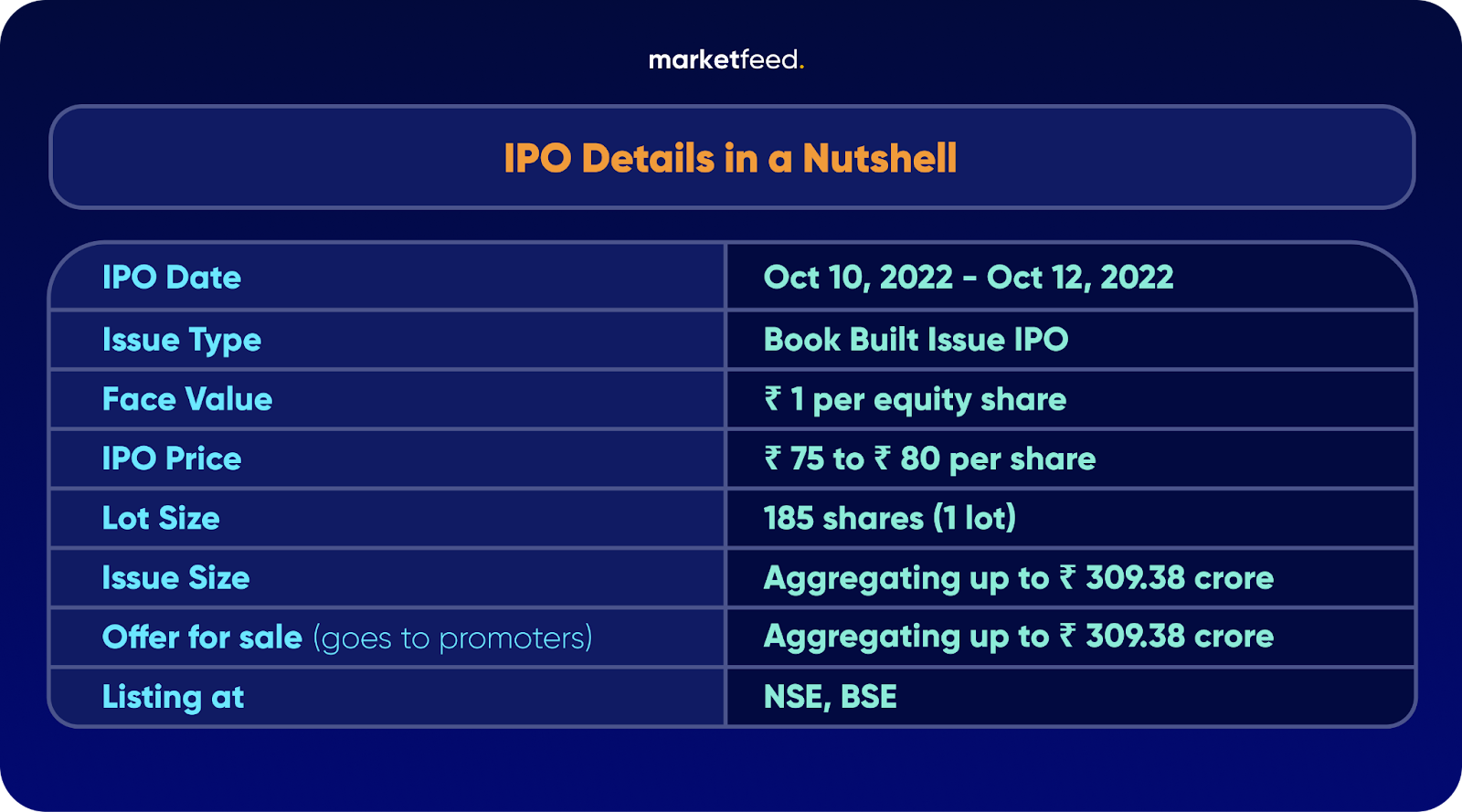
Tracxn Technologies’ public issue opens on October 10 and closes on October 12. The company has fixed ₹75-80 per share as the price band for the IPO.

The IPO is entirely an offer for sale (OFS) of 3.86 crore equity shares by promoters and early investors, aggregating to ₹309.38 crore. Individual investors can bid for a minimum of 185 equity shares (1 lot) and in multiples of 185 shares thereafter. You will need a minimum of ₹14,800 (at the cut-off price) to apply for this IPO. The maximum number of shares that can be applied by a retail investor is 2405 equity shares (13 lots).

The primary objective of the IPO is to provide an exit strategy (or liquidity) for TTL’s promoters. The company aims to achieve the benefits of listing its equity shares on NSE and BSE. The total promoter holding in Tracxn Technologies will decline from 50.93% to 35.65% post the IPO.

Financial Performance

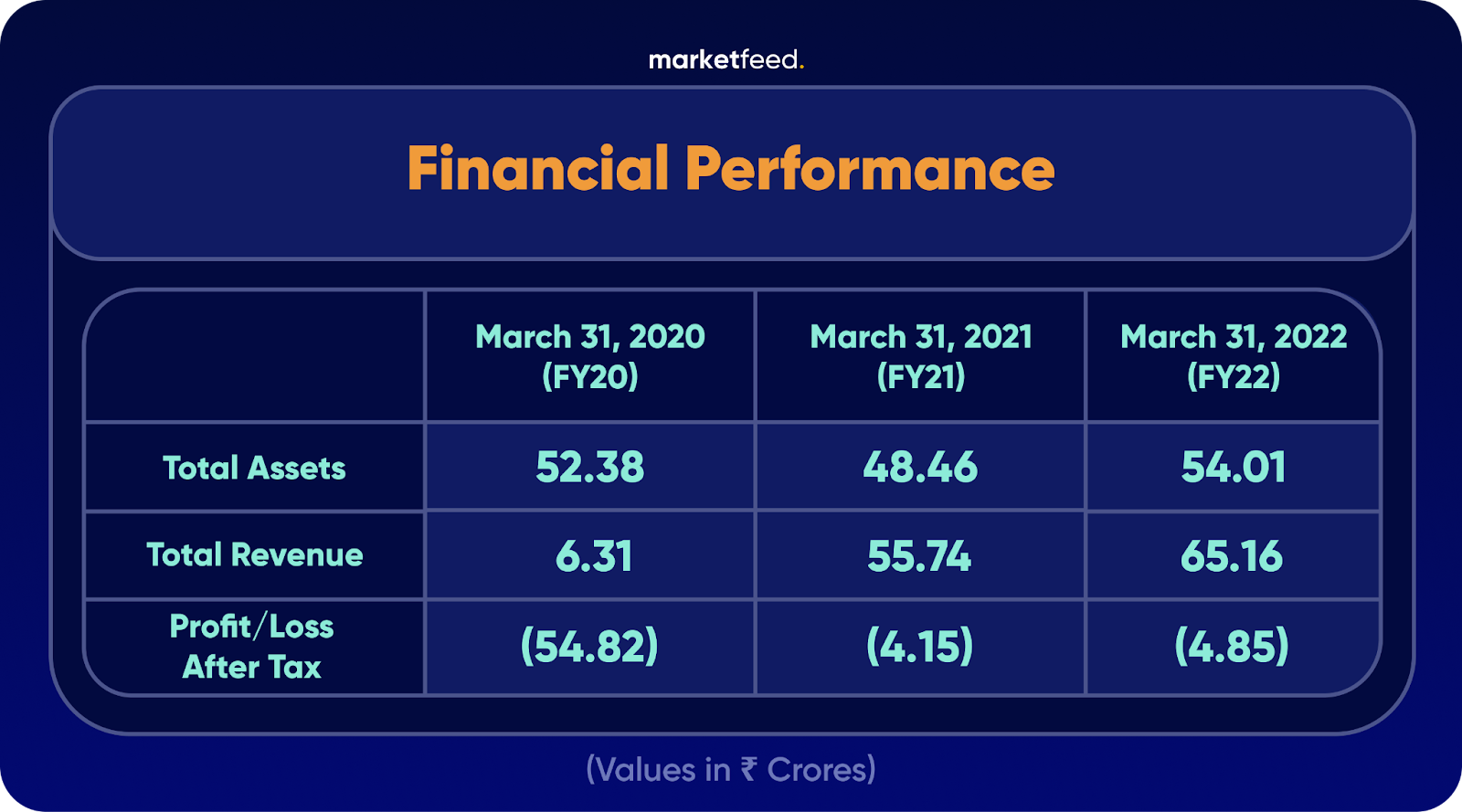
TTL has reported losses over the past three financial years (FY20-22). Revenue has improved and grew at a CAGR of 38.17% during the same period. Tracxn Tech reported negative operating cash flows during FY19 & FY21 and a cash inflow of ₹0.6 crore in FY22. Meanwhile, the company’s customer accounts have increased from 642 in FY20 to 1,092 in FY22. 

The company turned profitable in the first quarter of FY23. Its profit stood at ₹0.92 crore and total revenue at ₹19.08 crore (compared to a loss of ₹0.83 crore and revenue of ₹15.44 crore in Q1 FY22). During Q1 FY23, TTL posted a 22.9% YoY growth in the business, primarily supported by a 20.4% higher customer base. 

Risk Factors

  • The inability to attract new customers or maintain its existing customer base on its platform will severely impact TTL’s revenue growth and profitability.
  • Tracxn Tech’s financial condition may be adversely affected if there are interruptions or performance issues associated with its platform.
  • The company derives most of its operating revenues from customer subscriptions. If customers do not renew or expand their subscriptions or if they renew on less favourable terms, TTL’s future revenue and operating results may be adversely affected.
  • TTL faces heavy competition from its competitors such as Crunchbase, CB Insights, PrivCo, and PitchBook, which are well-established and enjoy better resources.
  • Tracxn Tech’s success mostly depends on its ability to expand its reach to customers globally. Thus, the business is prone to risks associated with international operations and security breaches.

IPO Details in a Nutshell

The book-running lead manager to the public issue is IIFL Securities. TTL filed the Red Herring Prospectus (RHP) for its IPO on October 1. You can read it here. Out of the total offer, 75% is reserved for Qualified Institutional Buyers (QIBs), 15% for Non-Institutional Investors (NIIs), and 10% for retail investors.

Conclusion

The market for business-to-business (B2B) information services is witnessing a gradual evolution. A report from Frost & Sullivan says that the total addressable market for private market data stood at $1,322 million in 2021. It is expected to grow at a CAGR of 12% to reach $2,097 million by FY25. TTL’s growth prospects are likely to continue as businesses are looking to consolidate and investors are exploring new start-ups, private firms, and geographies that align with their business strategies.

However, many analysts feel that investors are likely to avoid the IPO due to its disappointing financials. TTL’s IPO shares are trading at a premium of just ₹6-7 in the grey market. Before applying to this IPO, we will wait to see if the portion reserved for institutional investors gets oversubscribed. As always, consider the risks associated with the company and come to your own conclusion.

What are your views on Tracxn Technologies Lt’s IPO? Will you be applying for it? Let us know in the comments section of the marketfeed app.

Categories
Editorial

Credit Suisse in Trouble: Another Global Financial Crisis Incoming?

As you might have heard, Europe’s second-largest bank, Credit Suisse, is reportedly under severe financial distress. Many analysts are predicting a collapse of the entire global banking system as a result of its situation. In this article, we discuss the crisis brewing at Credit Suisse and its impact.

About Credit Suisse:

Credit Suisse Group AG was established in 1856 to fund the Swiss railway network. Headquartered in Zürich, Switzerland, the company provides private banking, asset management, and wealth management services. At the end of 2021, Credit Suisse reported over 1.6 trillion Swiss francs in assets and 50,000+ employees in the institution.

Why is it in Trouble?

Credit Suisse’s shares have declined nearly 60% since the beginning of 2022. Investor sentiment has fallen due to a series of losses and high-profile managerial malpractices! It made several risky bets and ended up losing a lot of investor money.

  • For example, Credit Suisse convinced customers to invest up to $10 billion in Greensill Capital, which acted as an intermediated between suppliers and clients. It paid suppliers cash upfront and took their place in waiting for the clients to pay. This business attracted a lot of attention and money in its initial stages. 
  • However, in March 2021, Credit Suisse announced that it was closing and liquidating several investor funds provided to Greensill Capital. Greensill filed for bankruptcy, and investors reportedly lost $3 billion!
  • During the same period, Credit Suisse lost nearly $5 billion when Archegoes Capital Management collapsed.
  • In another instance, a massive leak of over 30,000 of Credit Suisse’s clients in February 2022 revealed over $100 billion in wealth held by people who had profited from “torture, drug trafficking, money laundering, corruption, and other serious crimes”.
  • The bank has changed top leadership multiple times since 2019. They also paid nearly $275 million to settle legacy issues with regulators across the US, UK, and Switzerland last year!

The Issue With Credit Default Swaps

Currently, Credit Suisse’s corporate bonds are losing value. The premiums on their Credit Default Swaps (CDS) are very high. Let’s understand what this means:

Banks like Credit Suisse have to borrow large sums of money (via bonds) to conduct their regular operations. But lenders do not always automatically assume that they’ll get paid in full. So they use credit default swaps to limit their risk.

A CDS is a financial instrument that allows a firm to swap or offset its credit risk with another entity (similar to insurance). To swap the risk of default, the lender buys a CDS from a third party that agrees to reimburse them if the borrower defaults (or is not in a position to pay back). Since a CDS functions as a type of insurance, the buyer pays a premium to the seller (the third party).

So the premiums on Credit Suisse’s CDS have surged now, which indicates that the market feels these bonds are more likely of failing. If Credit Suisse can’t pay off its massive debts, its collapse could trigger a downfall of the global banking system as it’s all deeply interconnected.

What Next?

Earlier this week, Credit Suisse Group AG’s CEO Ulrich Koerner wrote a letter to the bank’s employees:

“I know it’s not easy to remain focused amid the many stories you read in the media— in particular, given the many factually inaccurate statements being made. That said, I trust that you are not confusing our day-to-day stock price performance with the strong capital base and liquidity position of the bank”. 

Unfortunately, many analysts have pointed out that this statement is similar to the one made by Lehman Brothers’ Chief Financial Officer (CFO) in 2008, right before the bank collapsed and led to a global economic recession. Credit Suisse is now trying to repair the damage by strengthening its wealth management business and transforming its investment banking division.

Coming to the Indian scenario, most analysts feel that the Indian banking system is quite resilient to such threats. We could see an impact on cash flows and sentiments, and that can bring high volatility in the stock markets. 

Let’s hope such a financial crisis doesn’t occur again. Do you have any views on the current situation of Credit Suisse? Let us know in the comments section of the marketfeed app.

Categories
Editorial

Electronics Mart India Ltd IPO: All You Need to Know

Electronics Mart India has launched its initial public offering (IPO) today— October 4. It is one of the fastest-growing consumer durables and electronics retailers in India. In this article, we take a closer look into the company and its IPO.

Company Profile – Electronics Mart India Ltd

Established in 1980, Electronics Mart India Ltd (EMIL) is the fourth largest consumer durables and electronics retailer in India as of FY21. It is also the largest regional organized player in South India in terms of revenue, with dominance in Telangana and Andhra Pradesh. EMIL offers a diversified range of products such as air conditioners, televisions, washing machines, refrigerators, mobile phones, and small electronic appliances.

So What’s EMIL’s Business Model?

  • The company focuses on securing retail spaces that ensure high visibility and easy accessibility to customers
  • Under the ownership model, EMIL owns the underlying property, including the land and building.
  • In the lease rental model, they enter into long-term lease agreements with property owners.
  • The company operates business activities across three channels: retail, wholesale, and e-commerce.

As of August 31, 2022, EMIL operates 112 stores across 36 cities with a retail business area of 1.12 million sq. ft. The company offers more than 6,000 stock-keeping units (SKUs) from more than 70 consumer durable and electronic brands. EMIL owns brands like Bajaj Electronics, iQ (an authorised Apple reseller), Kitchen Stories, and Audio & Beyond.

About the IPO

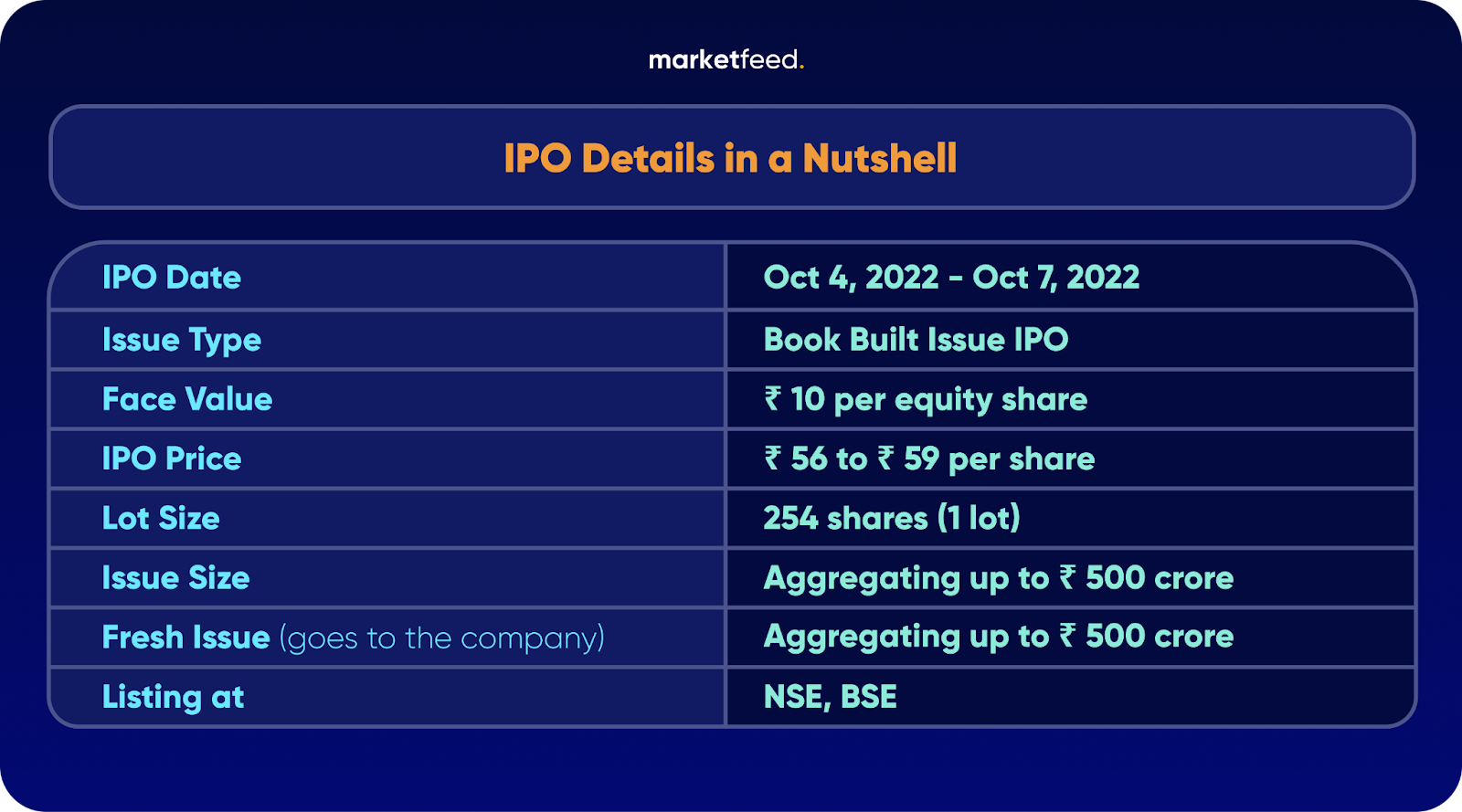
Electronic Mart India’s public issue opens on October 4 and closes on October 7. The company has fixed ₹56-59 per share as the price band for the IPO.

The fresh issue of shares (of the face value of ₹10 each) aggregates to ₹500 crore. Individual investors can bid for a minimum of 254 equity shares (1 lot) and in multiples of 254 shares thereafter. You will need a minimum of Rs 14,986 (at the cut-off price) to apply for this IPO. The maximum number of shares that can be applied by a retail investor is 3,302 equity shares (13 lots).

EMIL will utilise the net proceeds from the IPO for the following purposes:

  • Expansion and opening of stores and warehouses – ₹111.44 crore  
  • Funding incremental working capital requirements – ₹220 crore 
  • Repayment or prepayment of borrowings – ₹55 crore
  • General corporate purposes. 

The total promoter holding in the company will decline from 100% to 77.97% post the IPO.

Financial Performance

Like most firms, the Covid-19 pandemic severely impacted the company’s sales and operations. However, EMIL has been profitable over the past three financial years. Its revenue grew at a healthy CAGR of 17.9% between FY16 and FY21. Net profit in FY22 rose 78% YoY to ₹81.6 crore, while its EBITDA margin increased marginally from 6.4% in FY21 to 6.7% in FY22. E-commerce accounts for nearly 1% of its total sales.

Electronics Mart reported a total income of ₹1410.2 crore and a net profit of ₹40.65 crore in Q1 FY23. It anticipates that margins will remain between 6.5% and 7% in the upcoming quarters.

Risk Factors

  • While Electronics Mart has a strong presence in Telangana and Andhra Pradesh, it is planning to expand to new geographies. This may expose the firm to significant liabilities.
  • The company faces tough competition from online retailers who are able to offer a wide range of products at competitive prices.
  • EMIL derives a majority of its revenues (61%) from its top five brands. The loss of any of these brands or a decline in their supply or volume could adversely affect its financial performance.
  • Any delay or failure from external suppliers or third parties in delivering its products could severely impact the company’s business.
  • The inability to promptly identify and respond to changing customer preferences and trends may lead to a decline in the demand for EMIL’s merchandise. 

IPO Details in a Nutshell

The book-running lead managers to the public issue are JM Financial Ltd, IIFL Securities Ltd, and Anand Rathi Advisors Ltd. EMIL filed the Red Herring Prospectus (RHP) for its IPO on September 23. You can read it here. Out of the total offer, 50% is reserved for Qualified Institutional Buyers (QIBs), 15% for Non-Institutional Investors (NIIs), and 35% for retail investors.

Conclusion

A recent report from CRISIL Research estimated that the size of India’s consumer durables industry (including large consumer durables, mobile phones, and small appliances) stood at ₹2.4 lakh crore as of FY21. The organized segment’s share in this market is likely to grow from 58% in FY21 to 76-78% by FY26. Electronics Mart India is well positioned to benefit from this growth with its diversified portfolio of essential electronics.

EMIL recently entered the National Capital Region (NCR) market with 8 outlets. It plans to open 60+ stories over the next three years with an average size of 10,000-12,000 sq. ft. The company also aims to improve its operating efficiency and ensure efficient supply chain management.

EMIL’s IPO shares are trading at a premium of ~₹31-33 in the grey market today. Before applying to this IPO, we will wait to see if the portion reserved for institutional investors gets oversubscribed. As always, do consider the risks associated with the company and come to your own conclusion.

What are your opinions on this IPO? Will you be applying for it? Let us know in the comments section of the marketfeed app.

Categories
Editorial

5G Officially Launched in India: What Can We Expect?

After a long wait, Prime Minister Narendra Modi officially launched 5G services in India on October 1. Companies involved in the telecom, optic fiber, and network infrastructure segments are gearing up for a pan-India rollout. However, it could take a while for most of us to experience 5G on our phones. In this article, we discuss how 5G would be beneficial for our economy and what we can expect from the 5G revolution.

What are the Benefits of 5G?

The fifth generation of mobile networks won’t just mean ultra-fast internet speeds. It would bring lag-free connectivity, better coverage, and energy efficiency. Internet speeds on 5G could touch 10 gigabits per second (Gbps) at its peak, compared to the 100 megabits per second (Mbps) of 4G. Telecom operators have promised more reliability, massive network capacity, and increased availability of 5G. 

5G offers high bandwidth for quick data transfer. You’ll be able to live stream videos in better quality than before. India’s healthcare, education, automotive, defence, and gaming sectors will get a boost with enhanced augmented reality (AR) & virtual reality (VR) applications and experiences. 5G networks would also improve accessibility to mobile banking.

Jio vs Airtel vs Vi: Preparing for 5G Battle!

  • In the recent 5G spectrum auctions, Reliance Jio emerged as the top bidder with investments of ~₹88,000 crore. It bought 24,740 megahertz (MHz) of bandwidth. The company bought expensive pan-India airwaves to offer better 5G coverage quality and speed. Thus, it has a competitive advantage over rivals. Jio has also promised to offer “the most affordable 5G rates in the world” and roll out services to each corner of India by December 2023.
  • Second-largest telecom operator Bharti Airtel bought 19,867.8 MHz of airwaves worth ₹43,084 crore. It is relying on mid-band spectrum acquisitions to offer essential 5G services. Airtel has become the first telco to provide 5G networks in India. It will roll out 5G in 8 cities, including Mumbai, Delhi, Bengaluru, and Kolkata.
  • Cash-strapped Vodafone Idea (Vi) spent ₹18,799 crore to acquire 6,228 MHz of airwaves. Vi has not announced any vital 5G-related developments yet.

All telecom operators are expected to reveal their 5G plans in the coming weeks. Various reports indicate that 5G plans would be priced similarly to 4G plans currently offered in India. Others say it would be at least 10-12% higher than 4G plans in the initial stage.

What are the Key Challenges?

  • During the initial 5G rollout, telecom companies will not be able to cover the entire length and breadth of India. It will only be available in Tier-1 cities first and gradually expand to Tier-2,3 cities in a couple of years. More transmitters would be needed to cover the same area as current 4G networks.
  • Another issue is that 5G signals can be blocked by walls, glass, or trees due to their shorter wavelengths. Thus, you may not get good signals inside a building or basements. 
  • The high cost of network infra and spectrum could nudge telcos to levy a premium for 5G services. Price-sensitive Indian consumers may be reluctant to adopt the technology.
  • Most 5G smartphones available today tend to consume more battery as it keeps switching between 4G and 5G. Top mobile brands will need to invest in new battery technologies.

The Way Ahead

Over the past year, smartphone brands have advanced swiftly and launched a wide range of 5G smartphones. But if you’re buying a 5G phone now, you may be paying a premium for a feature that you can’t use for at least a year. Moreover, entities involved in the 5G rollout would have to tackle issues such as limited signal range and cybersecurity concerns.

The launch of 5G will pave the way for new economic opportunities and benefits for Indian societies. It will support innovations and transform our country into a more digitally empowered and knowledgeable economy. As per reports, the cumulative economic impact of 5G on India is estimated to reach a whopping $450 billion by 2035, provided that we have a smooth rollout.

 In an early edition, we discussed how we can profit from this new revolution in the world of networking. You can read it here!

 Are you excited for the arrival of 5G in India? Let us know in the comments section of the marketfeed app!
Categories
Editorial

NDTV: Adani’s Toughest Takeover Yet?

Last month, the Adani Group made a surprising announcement: It will indirectly acquire a 29.18% stake in New Delhi Television Ltd (NDTV)! They will also launch an ‘open offer’ to acquire an additional 26% stake in the news media company. Many consider this a hostile takeover, and NDTV claims there had been no discussions or consent regarding the matter.

In this article, we discuss the timeline of events that led to Adani Group’s aggressive proposal to take over NDTV.

The Story…

  • NDTV is regarded as a legacy brand that pioneered independent news broadcasting in India. It is credited with launching the country’s first 24×7 news and lifestyle channel. Way back in 2005, private equity firm General Atlantic (GA) Global Investments acquired an 8% minority stake in NDTV for ₹116 crore in a block deal. 
  • The promoters of NDTV, Prannoy Roy and Radhika Roy, made an offer to buy back shares from the company’s existing investors. Their initial plan was to acquire a 7.73% stake from GA Global Investments. However, this proposal triggered an open offer to other minority shareholders of NDTV.

What is an Open Offer?

Suppose you’re a minority shareholder in a company. You have the right to exit an investment if you believe that a change in ownership structure could harm the company’s future. Thus, the Securities & Exchange Board of India (SEBI) asks promoters/investors to make an additional open offer to minority shareholders when they acquire a sizeable stake in a company from select investors. The open offer will allow you to sell your shares at a specified price and walk away from the investment.

  • Coming back to the story, the Roys’ did not have the money to buy back shares. So they established a firm called RRPR Holding Pvt. Ltd, which borrowed nearly ₹540 crores from Indiabulls Financial Services by pledging NDTV shares as collateral.
  • Unfortunately, their plans got derailed due to the global financial crisis of 2008. NDTV shares crashed, and the collateral backing the loan lost most of their value. 
  • That same year, the promoters took another loan of ₹375 crores from ICICI Bank to repay Indiabulls Financial Services. This loan carried an interest rate of 19%!
  • After the economic slowdown, ICICI Bank settled the loan at ₹350 crore. This amount was funded through a loan RRPR Holding took from Vishvapradhan Commercial Pvt. Ltd. (VCPL) on an interest-free basis. In return, RRPR had to offer convertible warrants to VCPL.

What are Convertible Warrants?

They are financial instruments that will allow you to buy a company’s shares at a fixed price if certain conditions are met. 

  • According to the loan agreement, RRPR had to issue convertible warrants to VCPL representing 99.99% of its share capital when exercised. Thus, VCPL would hold a ~99% stake in RRPR Holding (promoter entity of NDTV).
  • Due to desperate circumstances, Prannoy Roy and Radhika Roy told VCPL that they would hand over RRPR’s entire stake in NDTV (~29%) in the form of warrants. 

This is Where Things Get Interesting…

  • VCPL was established in 2008. The only key transaction they had conducted was the loan made out to NDTV’s promoters! In 2009, VCPL received ₹403.85 crore as an unsecured loan from Shinano Retail Pvt. Ltd. Meanwhile, Shinano received the same amount from various subsidiaries owned by Reliance Industries Ltd (RIL)! So RIL was slyly holding an indirect stake in NDTV as well!
  • In 2012, a firm called Eminent Networks obtained ownership of the loan VCPL took from Shinano Retail. This firm was owned by Mahendra Nahata, a Board Member of Reliance Jio Infocomm! As per company statements in 2012, the new owners of VCPL were NextWave Televenture and Skyblue Buildwell, both firms linked to Nahata.
Source: Tijori Finance Report

Recent Developments

  • On August 23, 2022, AMG Media Networks Ltd, a wholly-owned subsidiary of Adani Enterprises Ltd, acquired VCPL for ₹113.74 crore. Interestingly, AMG Media Networks proceeded to exercise the warrants owned by VCPL to own 29.18% of NDTV! What a tactical move by the Adani Group!
  • AMG Media Networks is obligated to issue an open offer for an additional 26% stake in NDTV at a discount of ₹294 per share. This offer will be launched from October 17 to November 1. This is in compliance with the requirements of SEBI (Substantial Acquisition of Shares and Takeovers) Regulations, 2011.
  • Meanwhile, Prannoy Roy and Radhika Roy (promoters) still hold a 32.26% stake in NDTV, which was not a part of RRPR. They had recently issued a statement saying that the Adani Group had not sought their consent for the takeover. Now, NDTV and the Roys are definitely fighting back against Adani’s takeover.

In a letter to the stock exchanges, NDTV mentioned that the Roys had been found guilty of insider trading in 2020, and were banned from dealing in financial securities. The ban will be lifted by November 26, 2022. So NDTV believes that VCPL can only acquire its shares by overriding the ban. A pretty complicated situation indeed! They even approached SEBI and the Income Tax Dept. to try and stop Adani Group’s acquisition plans. However, Adani is ready with countermeasures to tackle any issues that may come their way.

What are your views on Adani Group’s strategic takeover of NDTV? Let us know in the comments section of the marketfeed app!