Categories
Editorial

Here are the Best Sectors to Look Out For in 2023!

What a thrilling year it’s been! NIFTY50 touched an all-time high of 18,887.60 amidst some heavy volatility. We’ve seen the markets make wild movements in both directions. Fears of an upcoming economic recession and interest rate hikes have spooked most investors. But we’re sure our community continues to be highly bullish on India’s economic growth and are holding on to smart investments. 🚀

In today’s special article, we take a look into some of India’s fastest-growing and promising sectors that could flourish in 2023. You may potentially find better investment opportunities or even your next multibagger!

Green Energy

The Centre, state governments, business groups, and the general public need to recognise the urgency of climate action and advocate it on a wider scale. It’s high time we take coordinated actions to reduce carbon emissions. We need to rapidly increase its renewable energy deployment to meet the rising energy demands:

  • India has pledged to achieve net-zero carbon emissions by 2070
  • The Central Govt. has committed to installing a non-fossil fuel electricity generation capacity of 500 gigawatts (GW) and sourcing 50% of India’s energy requirement from renewable sources by 2030. 
  • It also aims to reduce 1 billion tonnes of projected emissions within the same time frame. As India continues to rely heavily on fossil fuels, it will be a mammoth task to reach these green targets.
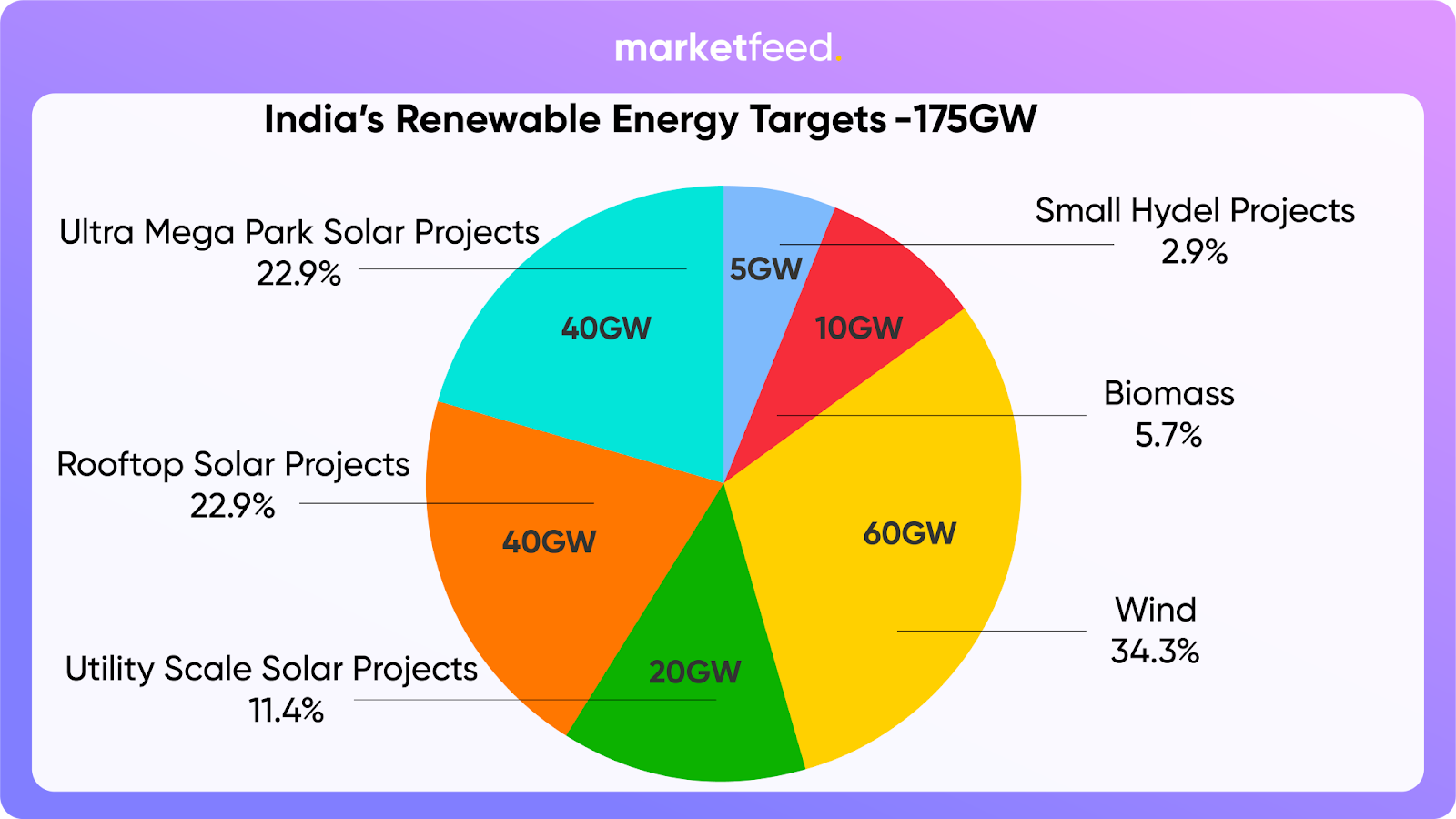
According to India’s Ministry of Power, the Indian renewable energy sector received a total investment of about ₹5.2 lakh crore over the last seven years. By 2028, this sector could reportedly see investments worth $500 billion (~₹37.25 lakh crore). We’re seeing some highly ambitious projects in the solar, wind, green hydrogen, and battery cell manufacturing sectors.

Here are some of the companies that have aligned their business strategies with the government’s green energy targets:

  • Reliance Industries
  • Adani Group (Adani Enterprises, Adani Green Energy)
  • Tata Power
  • Borosil Renewables (solar glass manufacturer)
  • JSW Energy
  • Sterling & Wilson (contract manufacturer of solar power infrastructure)

Speciality Chemicals

India is one of the world’s fastest-growing markets for chemical products of all kinds. According to recent estimates, our country ranks sixth in chemical sales worldwide and contributes 4% to the global chemical industry! Meanwhile, specialty chemicals are a vital segment of chemicals used as finished product ingredients and to improve manufacturing processes. It accounts for 22% of India’s total chemicals market! 

The Indian middle class is showing a significant shift in demand for food, clothing, medicines, and transportation— all of which drive demand for specialty chemicals! As per a report from India Brand Equity Foundation (IBEF), the specialty chemicals sector is expected to grow at a CAGR of 12.4% to $64 billion within the next four years. No wonder there are a large number of players in this industry:

The companies mentioned above have been focusing extensively on enhanced research & development (R&D) capabilities to launch new and improved offerings. The future of the chemical sector is bright indeed. To learn more about leading fertilizer & agrochemical companies, click here

Digital Transformation & Inclusion

We’ve seen the information technology (IT) sector grow to new heights over the past few years, especially in artificial intelligence (AI), data analytics, data science, and big data. Business entities and govt. agencies around the world are shifting from traditional/outdated systems to seamless, customer-driven digital operations. Moreover, government initiatives such as Digital India seek to improve internet connectivity throughout the country. 

5G has been officially launched in India, and telecom operators & network infrastructure providers are gearing up for a pan-India rollout. It will pave the way for new economic opportunities and benefits for Indian societies.

However, there is significant room for expansion as internet penetration is only 47-48% in India, compared to more than 90% in developed countries. Let’s look at some of the listed entities leading the digital revolution:

  • IT majors like Tata Consultancy Services, Infosys, and Wipro
  • Telecom operators like Jio (Reliance Industries), Bharti Airtel
  • Digital payments – SBI Cards & Payment Services, HDFC Bank, IndusInd Bank 
  • Online Communications Services – Route Mobile

Electric Mobility

The Government of India has set a target of achieving sales of 60-70 lakh hybrid and electric vehicles (EVs) every year from 2020 onwards. You may also be aware of several Central and state government initiatives aimed at increasing EV production and sales. The primary goal of such programs is to make a seamless transition from internal combustion engine vehicles (ICEs) to reduce pollution levels. It will also reduce India’s reliance on costly fuel imports.

Source: Bloomberg Green

Several Indian companies have already begun to work toward gaining a foothold in the rapidly evolving EV market:

  • Tata Motors
  • Mahindra & Mahindra
  • JBM Auto Ltd (electric buses for public transportation)
  • Olectra Greentech
  • TVS Motor Company
  • Ashok Leyland (through its UK-based electric mobility arm Switch Mobility)

Make in India! (Or China-Plus-One Strategy) 

For decades, China has been known as the “World’s Factory” as it’s the center of global manufacturing or supply chains. It offered cheap labour and production costs. Unfortunately, China’s Zero-Covid Policy has led to prolonged industrial lockouts and supply chain disruptions. So, large multinational companies are adopting a new strategy to avoid investing only in China and diversify into other countries. It’s called “China Plus One”. 

Thus, Indian firms could benefit from this shift by analysing the demand in global markets and ramping up production capabilities. The government has introduced several initiatives like the Production Linked Incentive (PLI) scheme to offer special subsidies for manufacturers in key sectors.

Many listed companies in our country have a competitive advantage to offer the best speciality chemicals, electronic products (like Dixon Tech, Havells India), and textiles (Trident, Welspun India). 


Now, it’s up to you to figure out the right investment options or themes that fit your profile and financial goals. Go for those investments that you clearly understand from your own research. Let’s hope for a profitable 2023! HAPPY INVESTING

Disclaimer: The stocks mentioned in this article are purely for educational purposes. Invest your hard-earned money only after thorough research.

Categories
Editorial

Major IT Stocks are Falling! Find Out Why!

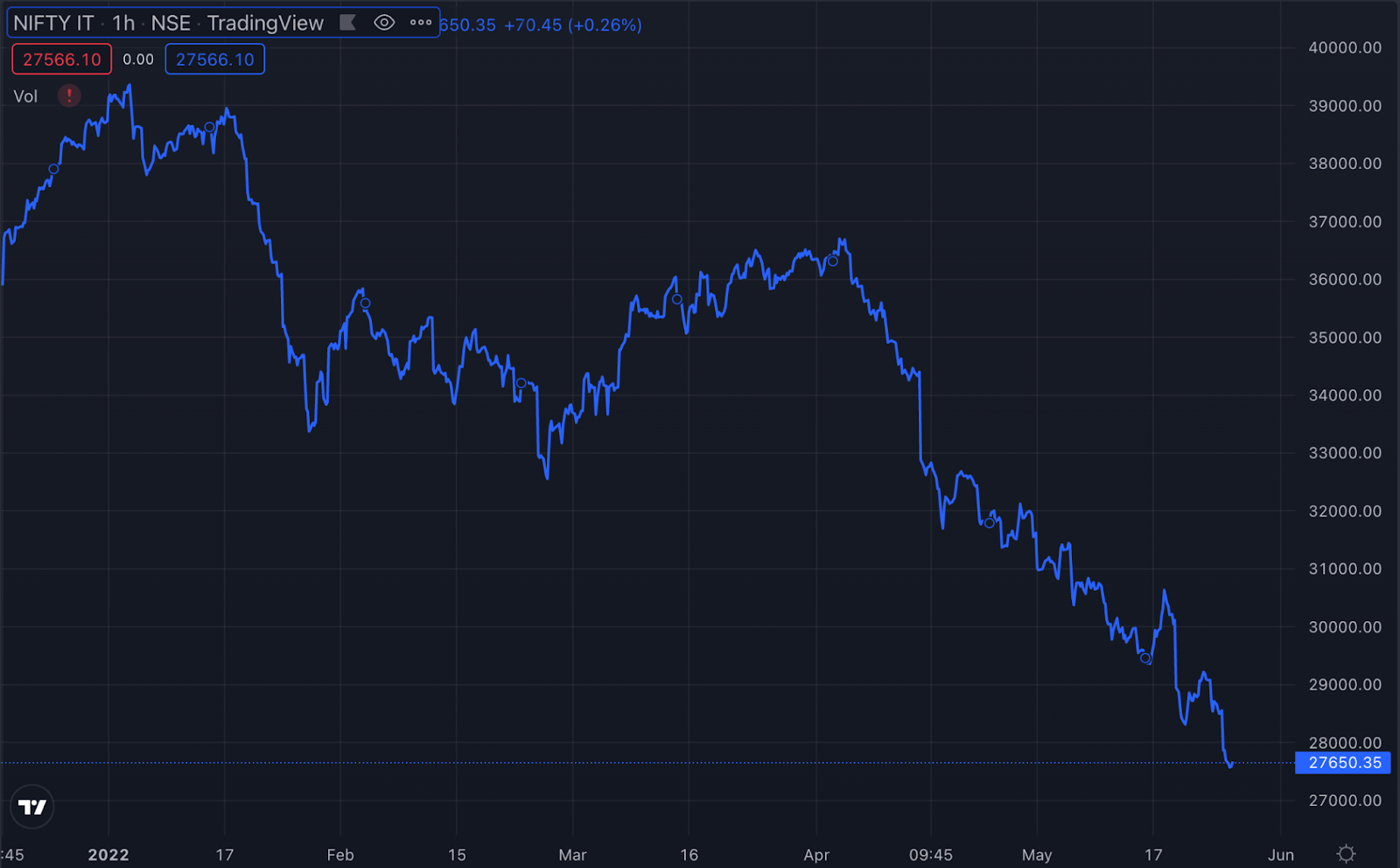
The stock markets have not been kind to investors over the past few months. Foreign institutional investors (FIIs) have pulled out nearly Rs 1.65 lakh crore so far from the Indian equity markets this year. Major IT stocks (mostly considered defensive stocks historically) have been under heavy selling pressure. The NIFTY IT Index has fallen ~24% since the beginning of April. For comparison, the NIFTY50 fell 9% during the same period. TCS, Infosys, and HCL Tech have all plummeted 10% each since mid-April, while Wipro crashed ~17%! 

In this article, we discuss the factors behind the downtrend in IT stocks.

Reasons Behind the Fall in IT Stocks

Rising Inflation:

Globally, inflation rates are at sky-high levels. Goods and services have become expensive. India’s inflation rate has surpassed RBI’s projections due to many global factors, especially the Ukraine-Russia crisis and rising crude oil prices. It is time for the government to withdraw money out of the system.

The US Fed, Reserve Bank of India (RBI), and other central banks have increased interest rates aggressively. Unfortunately, this move could lead to a slowdown in the global economy. Many investors resorted to dumping IT stocks with high valuations in anticipation of a hike in interest rates.

To make matters worse, clients will be willing to spend less on digital projects, thereby affecting the revenues of IT firms.

Disappointing Q4 Results: 

Even though IT giants like Tata Consultancy Services (TCS) and Infosys reported healthy revenue numbers in the March quarter (Q4 FY22), it did not translate into a comparable increase in profits. Most IT firms reported lower-than-expected earnings with weak operating margins. Thus, market participants simply lost confidence in the IT sector.

Decline in Margins

The attrition rate within the IT industry remains at an all-time high. [The rate signifies the number of employees who had either resigned or retired and are not replaced. IT employees often have to endure long working hours and the pressure of meeting targets, leading to burnout.] Moreover, employee and travel costs have been rising rapidly after Covid-19 restrictions were lifted.

As a result of heavy competition and a limited supply of talent in the industry, most prominent IT firms are giving out salary hikes to retain employees. They have also resorted to mass hiring, which is a significant loss of man-hours and other resources. All these increased expenses are adversely impacting margins.

The Way Ahead

Most analysts are expecting IT stocks to drag down the markets further. The slowdown in economic growth, along with revenue and margin pressures, could continue. This phenomenon is not just unique to India. In fact, all major IT and growth stocks in the global stock markets have been severely hit by the prospects of higher interest rates.

On the flip side, this could turn out to be a good opportunity for investors to add or average IT stocks to their portfolios. Look into fundamentally strong companies in the Indian IT industry and buy them at fair valuations.

Have you added IT stocks over the past month? Let us know in the comments section of the marketfeed app.

Categories
Editorial

IT Sector Q1 Result Preview: Performance To Peak in FY21?

The pharma industry has clearly managed to break the glass ceiling throughout the COVID-19 pandemic in terms of revenue generation, profitability, and investor returns. Yet, there is another sector that was less impacted during the COVID-19 period. The IT Services and Software Industry. A close look at the results of big names like TCS, Infosys, WIPRO, L&T Infotech gives you a sense of optimism when it comes to the growth outlook of the sector as a whole. In this piece, we discuss the Q1 results of Financial Year 2021-22, how the pandemic shaped the industry and what lies ahead.

The Big Guns 

TCS

  • The company reported a 18.5% YoY revenue growth to Rs 45,411 crore. The QoQ revenue growth was 3.5%.
  • It has a net profit growth of 28.5% YoY to Rs 9,001 crore. However, the company had a decline in profit of (-)2.8% as compared to last quarter.
  • The company’s share price hasn’t seen consistent growth since the last quarter. The share price has grown ~42% over the past year.
  • The operating expense of the company increased by 5% over the preceding quarter and by 15% as compared to last year. 

INFOSYS

  • Infosys had revenue growth of ~6.2% QoQ. The revenue grew by 18.5% YoY to Rs 25,815 crore. Infosys’ North America business contributed 61.7% to total revenue.
  • Net profit grew by 2.3% over last quarter and 22.73% since last year to Rs 5,195 crore
  • Infosys’ share price has shot up by ~70% over one year and by ~14% in the last three months. 
  • Operating expense for Infosys has risen by 7.48% since last quarter and 16.6% since last year to Rs 20,464 crore

WIPRO

  • The company’s revenue grew by 13.5% QoQ and 22.31% YoY. The company had one of the most outstanding quarters according to news reports, such that it beat its own estimates for the quarter.
  • Wipro scored a net profit growth of 9.09% QoQ and a staggering 35.5% YoY to Rs 3,242 crore  
  • Wipro’s share price has zoomed 121.8% over one year. In the last three months, the stock has returned 23.5% on investment. 

HCL

  • HCL’s revenue grew by 2.2% QoQ and 12.05% YoY to Rs 20,323 crore. The company added 7,500+ employees during the quarter. 
  • The company saw a threefold increase in Net Profit over the last quarter from Rs 1,102 crore to Rs 3,205. The net profit increased by 9.35% YoY.
  • The company’s share price hasn’t seen much momentum over the last 6 months. The share price has increased by 3.30% over the last three months and by ~53% over the last few months. 

Apart from the big guns, the overall market scenario is such that even midcap IT stocks such as MindTree, Oracle, Coforge, Happiest minds have managed to perform better than last year. The midcap IT stocks saw a demand spike right after they announced their results. Yet there are some things common and some things different for the IT industry. 

Bad Operating Margin, Outsourcing and Growth Potential

Almost all companies in the IT sector saw a decline in operating margin. The reason is the same for almost all companies, and that is wage hikes, higher attrition rates, and increase cost of hiring. The end of the year saw IT companies increasing salaries and incentives of employees which impacted the operating margin. The labor market was rather tight, with a loss of resignations and applications which might have increased the cost of recruitment. 

 Another trend was an increase in operating expenses of IT companies. The onset of the pandemic meant that companies needed to be restructured, attrition rate increase, and business took a temporary hit. Nevertheless, the increase in expense is justified by the increase in revenue, net profit, and sales altogether for the industry.  The IT sector on average had double-digit growth numbers, with good results, even the second wave of the COVID-19 in India couldn’t deter the big guns of the IT industry from a good quarterly result.

What Lies Ahead

There are many things that hint at good growth for the IT sector this year. One of them is outsourcing. The cost of labor in India is way lower than in the UK, US, or Europe. Many companies have started outsourcing projects to Indian companies with a good amount of foreign remittances being a part of the revenue stream. Another reason is the return to normalcy in many countries that have high vaccination rates. In countries like the US or UK, employees are being called back to the office, mask mandates are being eased, and life is getting back to normal. Even though the condition in India might not be apt for a complete unlock till the end of the year, and countries opening up could mean good business for Indian IT companies. 

Categories
Editorial

Happiest Minds Technologies: A Strong Pick for the Long Term?

A mid-cap IT company has given stellar returns to its investors ever since its listing in September last year. It had recently posted remarkable growth in earnings as well. They have turned out to be one of the fastest-growing companies in the highly competitive IT industry in India. We are talking about Happiest Minds Technologies. In this article, learn more about the company and its recent performance.

Company Profile – Happiest Minds Technologies

Happiest Minds Technologies Limited is a leading IT solutions and services provider based in Bengaluru. It is a relatively young company (established in 2011), and its shares were listed on the stock exchanges in September 2020. They primarily operate through three segments: 

  1. Infrastructure Management & Security Services (IMSS) – This segment provides cyber and infrastructure security, risk and compliance, data privacy, access management, and threat & vulnerability management services. The infrastructure management services provided by the firm include hybrid cloud services, workspace services, service automation, and software-defined infrastructure services.
  1. Digital Business Solutions (DBS) – This segment offers enterprise applications and customised solutions that include advisory, design & architecture, custom-app development services. It also comprises package implementation, testing, and ongoing support services to IT initiatives. 
  1. Product Engineering Services (PES) – The segment assists software product companies in building products and services that integrate mobile, cloud, and social technologies. Happiest Minds also provides Internet of Things (IoT) solutions, consisting of digital strategy creation consultation, end-to-end system integration on IoT platforms, IoT security and managed services, and implementation of IoT roadmaps.
(Approximate figures)

Other Offerings

Apart from these three verticals, Happiest Minds offers analytics/artificial intelligence (AI) solutions, including the implementation of advanced analytics using AI, machine learning, and statistical models. They also provide digital process automation solutions, such as robotic process automation and intelligent business process management (BPM).

The IT company offers its services across India, the United States, Canada, the United Kingdom, Australia, and the Middle East. Over the years, they have partnered with major players such as Google, Microsoft, Amazon Web Services (AWS), and Salesforce. By leveraging these partnerships, the firm has been able to secure large orders.  As of March 31, 2021 (FY21), they have a total of 173 clients spread across the Banking, Financial Services & Insurance (BFSI), Edutech, Retail, Manufacturing, and Travel, Media & Entertainment sectors.

Ashok Soota, widely recognised as one of the pioneering leaders of the Indian IT industry, is the Executive Chairman and Promoter of Happiest Minds. [He previously led Wipro’s IT business for around 15 years and was a driving force behind its exponential growth]. Moreover, Happiest Minds is considered one of the best places to work in India. They have also launched corporate social responsibility (CSR) initiatives that support poorer sections of society.

Financial Performance

Similar to most companies in the Indian IT & ITeS sector, Happiest Minds has posted a phenomenal increase in its revenue and profits over the past few years. More businesses and even government entities are being forced to adopt digital transformation practices to improve efficiency and cut costs. There has been an increase in demand for the services and products of IT firms, especially amidst the Covid-19 pandemic. 

Happiest Minds reported a 580.19% year-on-year (YoY) jump in consolidated net profit to Rs 36.05 crore for the quarter ended March (Q4 FY21). However, net profit had declined by 14.47% when compared to the previous quarter (Q3 FY21). Its total income in Q4 stood at Rs 223.74 crore, up 17.64% YoY and 11.16% on a quarterly basis.

Net profit for the full financial year 2020-21 (FY21) jumped 126.55% YoY to Rs 162.46 crore. The company’s total income rose 11.68% YoY to Rs 797.65 crore in FY21. They have reported an Earnings Per Share (EPS) of Rs 11.45 in FY21, a 113.6% jump over FY20. The attrition rate declined from 18.7% in FY20 to 12.4% in FY21, which is a great sign that shows increased job satisfaction amongst employees.  

Over the past five years, its revenue has grown at an amazing CAGR of 20.93%, whereas the industry average stood at just 9.78%. EBITDA has grown at a CAGR of 205% between FY18-FY21! However, Happiest Minds has only been able to secure a market share of 0.14%. As we all know, the level of competition in the IT services industry is extremely high. Overall, the fundamentals of the firm look very strong.

The Way Ahead

In March 2021, Happiest Minds announced a change in its shareholding structure. Most of Ashok Soota’s shareholding (~53%) will go into a holding trust and a medical research trust. However, there will not be any decline in total promoter holding. The IT firm has also indicated that it will continue with the Executive Board (EB) structure. Currently, the EB structure consists of three executives under each business segment (instead of a single Chief Executive Officer). This arrangement has proved to work in their favour for years. 

The company has targeted an organic revenue growth of 20% for the current financial year (FY22). Its management has stated that the growth will exceed its medium-term target in FY22 due to a series of acquisitions. In February 2021, they had completed the acquisition of US-based Pimcore Global Services for $8.25 million (~Rs 61 crore). PGS is a leading digital e-commerce and data management solutions firm. It will continue to focus on partnering with leading industry players and improve its offerings across key business segments. Happiest Minds plans to announce its vision for the next decade (2021-2031) before its 10th anniversary on August 29. 

Since its listing in Sept 2020, the shares of Happiest Minds Tech have rallied by ~160%! The strong fundamentals of the company and its future growth prospects could continue to drive up stock prices in the years to come. 

Have you invested in the company? Let us know your views on Happiest Minds in the comments section of the marketfeed app. 

Categories
Editorial

Can IT Firms Maintain Job Satisfaction Rates?

You may have noticed many IT companies hiking salaries and hiring more employees when the rest of India is going through a devastating economic slowdown. These firms have been successful in adopting a strong work-from-home (WFH) model, which has proved to be highly beneficial. However, while most IT firms posted record-breaking results in the previous quarters, a large portion of their workforce have resigned from their posts. We are noticing some of the dark sides of the tech industry. This is causing a state of panic amongst leading players in the IT sector.

Let us find out some of the actual reasons behind this. Is there a deep underlying problem that is affecting the IT industry?

High Attrition Rates a Problem?

When Information Technology (IT) companies posted their results for the January-March quarter (Q4 FY21), many revealed a significant rise in attrition rates. This rate signifies the number of employees who had either resigned or retired, and are not replaced. A higher attrition rate reveals that employees are not satisfied with their roles. The IT industry is prone to high attrition rates as employees have to endure long working hours and pressure of meeting targets. This often leads to burnout and lack of motivation, and they are forced to quit for their own well-being. It signifies a larger systemic issue within the IT sector. This could ultimately affect the overall performance of a company. It is quite difficult to replace employees, and firms often incur high costs for the same.

How to Calculate Attrition Rate – The Formula

India’s largest IT company, Tata Consultancy Services (TCS), said its attrition rate stood at 7.2% in Q4. Infosys reported a jump in attrition rate to 15.2%, compared with 10% in the previous quarter (Q3). Wipro’s voluntary attrition for Q4 rose to 12.1% from 11% in the previous quarter. HCL Technologies reported an attrition rate of 9.9% in the March quarter. The attrition rate of Happiest Minds Technologies stood at 12.4%. All these figures indicate that a large number of employees across the IT industry are quitting their jobs.

Sharp Demand for Talent

Since the onset of the Covid-19 pandemic, there has been a high demand for top digital skills such as cloud engineering, big data, Internet of Things (IoT), cybersecurity, digital transformation, and much more. Tech companies are receiving massive orders from enterprises to accelerate their digital transformation initiatives. As a result, these IT firms are ensuring better pay for their existing employees and offering higher benefits for skilled freshers. 

  • Infosys announced that it will expand its Employee Stock Option Program (ESOP) to include more employees. ESOP is a type of benefit plan that allows employees to acquire shares of the firm at a predetermined price. It is often used as a strategy to align the interest of a company’s employees with those of the shareholders. Infosys plans to use this option to retain its existing employees and boost morale. It would also help them to attract new talent. The IT firm has also set up ‘digital skill tags’ that aim to give bonuses across multiple levels. A salary hike (based on the ongoing review cycle) will be provided in July.
  • Tata Consultancy Services (TCS) had announced salary hikes for all employees in April. Many senior employees received hikes in the range of 6-8%. The company is planning to hire 40,000 freshers in the current financial year (FY22). This will help reduce the workload of its existing employees.
  • Wipro had rolled out salary hikes in January. They are planning to introduce a further hike in June as well. Wipro has also announced plans to hire more freshers in FY22 as compared to the previous year. The Bengaluru-based IT company had onboarded more than 9,000 freshers in the previous year.
  • HCL Tech said it would employ up to 20,000 freshers this year to meet the demand rising from its large deals or projects. The company also offered a skill-based allowance of 25-30% of their salaries to about 16,000 employees.

Will IT Firms Continue to Face Difficulties?

As we can see, all major IT and Business Process Management (BPM) companies are tackling issues related to the alarming demand for a skilled workforce. They are in a race to hire the best talent by providing massive salary packages, bonuses, and employee perks.

Despite these impressive monetary benefits, a large number of employees in the IT industry continue to leave their jobs after a few months of onboarding. According to a report from HAN Digital (an HR consulting firm), around 10 crore IT-BPM employees would potentially resign from their existing posts in 2021. The data from across 100 companies between January and March indicates that the IT sector is likely to face an attrition rate of 22% by the end of 2021. Many seek better working conditions and more opportunities to express their knowledge and creativity. Moreover, people are giving more importance to their physical and mental well-being during these difficult times.

Last year, the technology sector had to shift systems and employees online, which led to higher costs. Now, companies often incur a very high cost when they lose a top-performing employee. Salary hikes would also affect the operating margins of the top firms. Firms will have to focus on creative and interactive strategies to keep their employees satisfied. Apart from monetary benefits, IT professionals require more qualitative benefits and engagements. Let us look forward to seeing how TCS, Wipro, HCL Tech, Infosys, and other prominent IT companies handle these challenges and control extra costs.

Categories
Editorial

Will IT Stocks Boom Ahead of Q3 Results?

The information technology (IT) industry is one of the fastest-growing sectors of India. As we know, companies such as TCS, Infosys, and Wipro have established themselves as the leading IT firms in the world. These companies have spearheaded the digital revolution and have contributed immensely to India’s rapid economic growth. Despite the Covid-19 pandemic causing disruptions across all economic activities, major IT companies have shown a phenomenal increase in their revenue and overall growth. Even after the recent market crash on December 21, the Nifty IT Index showed a very impressive rebound.

Let us take a closer look at specific factors that have led to a sharp increase in the performance of IT companies over the past year. 

Work from Home Model

The lockdowns imposed all over the world did not affect the productivity of the IT sector employees. In India, the IT industry made employees Work from Home (WFH) as per the government’s mandate. About 90% of employees worked from home, with 65% of them from homes in metros and the rest 35% from homes in small towns. They were able to quickly transition into a WFH model and even obtain a better work-life balance. This was supported by better network connectivity across India. Employees could start and end their day as they choose, as long as their work was complete. More importantly, they were able to focus on their health and well-being. According to many surveys that were conducted over the past few months, it was reported that there was a high increase in productivity and efficiency of the IT sector workforce. 

On the other hand, IT companies were able to introduce very efficient cost-cutting measures. Firms did not have to pay for expenses such as transportation and real estate costs. They have realised that working from home is a very effective and viable option that could be continued even after all lockdown restrictions were lifted. 

Amidst the disruptions caused by the pandemic, companies such as Wipro and Infosys had even introduced salary hikes for their employees.  This shows how committed these firms are towards the wellbeing of their employees.

Massive Deals

Every week, we read about certain deals that have been secured by prominent Indian IT companies. Firms all around the world have realized the need for accelerating their digital transformation process. Even though many listed IT companies reported a decline in revenue during Q1 FY21, the new deals and orders helped them to show a massive rebound. This growth was shaped by major demand for cloud-based services, increasing IT spends by the small and medium-sized business segment, and government initiatives for data localisation. 

The table below shows some of the massive deals/orders that had been signed by IT companies in Q3 FY21. 

CompanyClientDeal Size (in USD Million)Deal Type
TCSDeutsche Bank500-1000Acquisition of IT unit
WiproMetro>700Transformational
InfosysDaimler>1000Cloud
InfosysVanguard1500Transformational
InfosysEl Paso WaterNACloud
InfosysRolls RoyceNATransformational
TCSStar AllianceNADigital
TCSKingfisher plcNAService Partner
Source: ET Now

As we can see, the orders placed by very prominent international business groups or government agencies have helped IT companies to show a rapid increase in performance and revenue. According to NITI Aayog CEO Amitabh Kant, India has witnessed $38 billion (~Rs 2.73 lakh crore) investments in tech companies during the past six months. He further stated that artificial intelligence is going to become one of the biggest opportunities for India, with respect to technology applications. The emerging technology is expected to add $957 billion to the Indian economy by 2035.

Strong Financial Performance in Q2

As mentioned above, IT companies had reported a decline in their revenues in Q1. However, their revival was very strong in the next quarter. Let us take a look at the Q2 results of the three major IT companies in India:

  • Tata Consultancy Services reported a 7.05% year-on-year (YoY) decline in its net profit at Rs 7,475 crore for the second quarter ended September 2020. It reported a net profit of Rs 8,042 in the corresponding quarter last year. However, the results had surpassed all street estimates. On a quarterly basis, the consolidated profit rose 6.66% from Rs 7,008 crore in the June quarter of the current financial year 2020-21. The company has been able to secure a total market share of 32.05%.
  • Infosys Ltd reported a 20.50% year-on-year (YoY) rise in net profit at Rs 4,845 crore for the quarter ended September. The figure stood at Rs 4,019 crore in the corresponding quarter last year. Its consolidated revenue from operations increased to Rs 24,570 crore in Q2FY21, up by 8.6% YoY. The operating profit also rose to Rs 6,228 crore, a growth of 26.8% YoY. Infosys has a market share of 18.57% in the Indian IT sector.
  • Wipro Ltd posted a 3.40% year-on-year (YoY) fall in consolidated net profit at Rs 2,465.70 crore for the quarter ended September 30. It had reported a net profit of Rs 2,552.70 crore in the corresponding quarter last year. Consolidated revenue of the company declined marginally 0.07% YoY to Rs 15,114.50 crore, over Rs 15,125.60 crore posted in Q2FY20. However, it showed an impressive rebound on a quarter-on-quarter (QoQ) basis. Wipro’s market share stands at 12.67%.

Due to the massive deals and cost-cutting measures, it is very likely that these companies will post a significant increase in their revenues in the coming quarters.

Conclusion

As you might have read, the shares of major IT companies such as TCS and Infosys hit a 52-week high on Friday after Accenture Plc announced better-than-expected results for its first quarter. (Accenture follows the September-August Financial Calendar). Interestingly, certain financial analysts have stated that large Indian IT firms tend to follow Accenture’s performance with a certain lag. Despite this, we do know that IT companies all over the world have consistently shown great financial performance over the past few years. The Nifty IT Index continues to show a great bull run. Also, do not forget the common saying in the market, “Buy on rumours, sell on news”.

All major businesses and government entities around the world are improving their digital services to cater to the needs of all citizens. The demand for the services and products of IT companies is only going to increase in the years to come. These companies will post their financial results for the October-December (Q3) period soon. The outlook for Indian-based IT firms remains to be very strong. In anticipation of great results, all major IT stocks tend to show a very impressive rally. Let us look forward to the positive results of India’s fastest-growing sector. 

Categories
Editorial

US Tech Giants’ Results and AntiTrust Cases

Global tech giants Alphabet, Amazon, and Facebook reported their third quarter (Q3) results on October 29. Apple released its fourth-quarter results as well. During the current financial year, these companies have exceeded all expectations and have emerged as the world’s top-earning corporations. As we know, there has been a massive transformation and growth in online businesses amidst the Covid-19 pandemic. And, the recent results from these companies have completely crushed all street estimates. Let us find out how they performed during the July-September period.

Alphabet Quarterly Report

Google’s parent company, Alphabet Inc, had its first-ever revenue decline in Q2. However, the company has reported a very impressive 14% year-on-year (YoY) increase in revenue to $46.17 billion, for the quarter ended September (Q3). The company has completely beaten estimates that were made by financial analysts, and has returned to sales growth. A major portion of its revenue comes from advertising through its platforms such as YouTube. During the July-September period, revenue from YouTube ads has seen a 32% YoY jump to $5.04 billion. We can also see more businesses and individuals using Google’s Cloud Platform to perform their daily tasks efficiently. Hence, there has been a major increase in earnings from that segment as well. 

From what we can understand, the company has made a complete rebound in its revenue generation from Google Ads, as compared to the previous two quarters. Businesses around the world had seen a major decline in sales during lockdowns, and are now investing more in advertising through various Google platforms. The Cloud Platform has also helped to provide support to the work-from-home (WFH) model for corporations. Alphabet CEO Sundar Pichai has stated that Q3 has been ‘a strong quarter, consistent with the broader online environment’.

Last month, the US Justice Department filed one of the biggest antitrust lawsuits against Google. The IT company has been accused of partnering with other tech giants for ensuring that its rival companies do not rise to power. Google has also been criticized for using its search platform illegally to maintain its power.

Amazon Quarterly Report

Amazon.com, Inc is another company that completely beat estimates provided by analysts such as Yahoo Finance. The company has reported a 37% year-on-year (YoY) increase in revenue at $96.1 billion, for the quarter ended September (Q3). Even though lockdown restrictions were lifted in most countries, people preferred to get essential commodities through online methods. Third-party merchants also pay Amazon to advertise their products on its online shopping platform. The company has also created more than 4 lakh jobs this year, in order to support the surge in online sales.

The retail giant also receives a major part of its revenue from Amazon Web Services (AWS). It is one of the leading cloud technology platforms in the world, and accounts for a majority of Amazon’s total profits. There has been a 29% YoY increase in revenue from AWS to $11.6 billion, in the third quarter of the current financial year. On the other hand, Amazon’s video streaming service has been constantly registering a massive spike in viewership. Those movies which could not be released in theatres were also launched through Amazon Prime Video.

This year, Amazon has come under the scanner of regulatory authorities over a number of cases. It was found that the prices of essential items were increased in the US. Merchants who sell their products through Amazon have been under massive pressure. These sellers have not received any support from the retail giant. The company was also criticized for its treatment of warehouse workers. Interestingly, amidst all these accusations, it had been reported that Amazon employees were given very high bonuses during the lockdown period.

Apple Quarterly Report

The revenue for Apple Inc. was supported by international sales, which makes up 59% of its overall sales. The company has reported a 1% year-on-year (YoY) increase in revenue to $64.7 billion, for the fourth quarter ended September. The company’s financial year is calculated as the 52-week period that ends on the last Saturday of September. Apple’s iPhone sales were down by 20% YoY to $26.44 billion. Even though there had been strong iPad and Mac sales, it was not enough to make up for the decline of iPhones. 

With the launch of its new iPhone 12 and entry into 5G support, Apple is highly optimistic about a major boost in sales within the next few quarters. The company is also changing its focus to improve its streaming services, which include Apple TV+ and Apple Music.

Over the last few months, the company has been criticized for increasing its cut in Apple Store purchases to 30%, which is very high. Apple has also been accused of anti-competitive behaviour, and illegally maintaining power over its iPhone and iPad apps.

Facebook Quarterly Report

Facebook Inc. has reported a 22% year-on-year (YoY) increase in sales to $21.47 billion. Just like the previous three companies, the social media giant has also beaten street estimates. Facebook, which also owns Instagram and WhatsApp, stated that its daily active user base has increased by 12% YoY to 1.82 billion. With families and friends being separated due to Covid-related restrictions, there had been a spike in the use of these apps in the previous quarters. Interestingly, this growth in user base in the US and Canada has slowed down in Q3. Certain analysts have termed it as a ‘very rare decrease’, and was probably due to TikTok gaining all attention.

Facebook also receives a major part of this revenue from digital advertising, which has shown a great recovery as compared to previous quarters. Last week, the company also added shopping and pricing features to WhatsApp Business, in a move to help small enterprises to boost their sales. Facebook CEO Mark Zuckerberg has announced that the company would be focusing on services related to virtual and augmented reality. As we can see, there is a huge demand for these platforms in the global markets today. 

There had been a lot of criticism aimed at Facebook, especially regarding the handling of political content on its social media platforms. Also, there was an ad boycott movement by major companies to support #StopHateForProfit, over the last few months. However, these issues have not created an impact on the company’s revenue.

The Attack Against US Big Tech

Now, we shall keep these outstanding results aside for a moment. When people found out the methods through which the US Big Tech companies operate, many red flags had been raised. The non-ending competition amongst these companies has made them extremely greedy for more profits. Several institutions and individuals have protested against these ‘monopolistic acts’. Like many who watched ‘The Social Dilemma’ on Netflix, I too was pretty astonished by the various methods by which these companies used to attract more ‘customers’. The use of artificial intelligence (AI) to manipulate the behavior of individuals is evident by the high rise in the number of active users. 

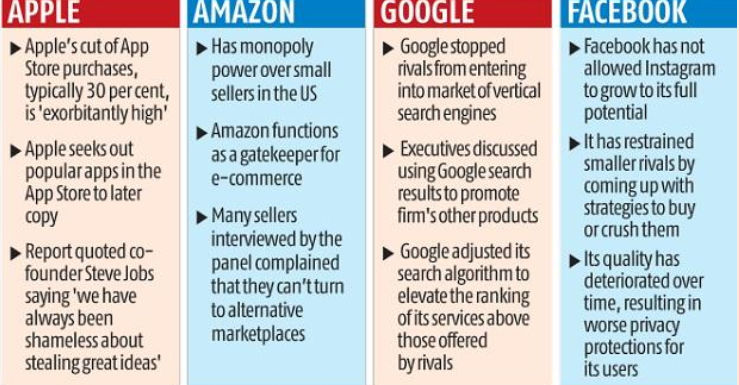
The US legislators have studied the long-standing issues surrounding the matter. They have created a panel to make Amazon, Google, Facebook, and Apple more accountable for their actions. Here are some of the factors for which the companies are under the scanner of US lawmakers:

Source: Business Standard

The Antitrust Subcommittee of the Judiciary Committee in the US is currently looking into the matter. The CEOs of all four companies have already made several appearances before the panel. However, like most cases, these tech companies find loopholes and seem to simply not mind about its consequences. 

With these impressive Q3 results, we can see that no factors seem to affect the growth in their high revenues. At a point when all economic activities were hit, these companies used their position to make the best out of every new possibility. A fine of thousands of crores is okay for these companies when they are making ten thousand crores of profits. Do not forget that these companies are also heavily involved in India, and its development. Let us wait and watch how the Big Tech companies are planning to further dominate in their respective fields.

Categories
Editorial Editorial of the Day

Wipro : A True Long Term Candidate?

Wipro is a leading Indian multinational corporation that provides global information technology, consulting and business process services. The company was incorporated in 1945 as a manufacturer of vegetable and refined oils. In 1970-80, ‘Western India Palm Refined Oil Limited’ (now known as Wipro) shifted its focus towards the Indian IT industry. Under the leadership of Azim Premji, Wipro reached new heights, not only domestically but globally. Today, the company stands as the 4th largest IT company in India based on market capitalisation. 

Decoding Q2 FY21 results

Wipro announced their Q2 FY21 results just after the market hours on 13th October 2020. There was a sense of optimism in the market that the company is going to declare good numbers. And, this is what exactly happened! Wipro reported a decline of 3.4% YoY in net profits. At the same time, their net profits increased by 3.2% as compared to the previous quarter.

The revenues and net profits amassed for this quarter are Rs 15,114.50 crore and Rs 2,465.70 crore respectively. These numbers defeated a few market estimates and were on par with the others. Next day after the result, Wipro’s share price dropped by 7.06% to close at Rs 349.40. This could have happened as the investors look to book profits when the core reason for the rally is achieved. You must have heard the saying, “buy on rumours sell on news”. We believe this is what occurred today with Wipro in the market.

Due to fewer business projects during the pandemic, many big companies are laying off their employees. This leads to a negative sentiment among the market participants. Wipro has done exactly opposite to this! They have hired 12,000 employees including the onboarding of 3,000 employees in the second quarter itself. This speaks how the business of Wipro is expanding even in these testing times.

Operating revenue and profit tells how much a company is able to earn from their core business. If a company’s core business is not performing well, then it’s a red signal for the investors. Wipro’s operating profits have risen by 5.2% YoY and 4.4% QoQ. These are amazing numbers considering how the companies are trying to do business during the COVID-19 times.

Big News!

The major announcement which everyone was waiting for was of the share buyback. And yes! Wipro did officially declare a share buyback of 23.75 million equity share for Rs 400/ share. On 13th October 2020, Wipro closed at Rs 375.75. It means that promoters will buy the shares back at a premium of 6.45%. With this, Wipro became the second IT company to announce a share buyback after TCS in this quarter.

Why does share buyback have this hype? A company conducts a share buyback only when they believe that they are financially stable. This step shows the investors that the company is bullish about the company’s growth. They are willing to buy the shares at a higher price than the market price and are confident enough to take it even higher. Any company cannot be in a position to buy back shares until it has huge cash reserves. Wipro has registered an amazing 37.5% YoY rise in their operating cash flows. To know more about share buyback, click here.

The Price Uptrend

When the fear of coronavirus became real in March, Wipro’s share price faced a steep fall in the market. On 4th March, their share price was trading at Rs 229.70. On March 19, prices dropped to its 52-week low at Rs 162.35. Since then, Wipro’s share price has witnessed a constant rise. 

On 13th October, their share price was last traded at Rs 375.20. Two days back when the rumours of Wipro’s share buyback was heard in the market, their share price touched it’s all-time high at Rs 381.70. You can see the upward movement in the chart below.

(Wipro’s share price making new highs after collapsing from Covid crash)

In the past week itself, Wipro’s price has risen more than 12%! This shows how bullish people are with the stock. If you are following The Stock Market Show on Youtube, you would have realized how Nifty IT has been aiding Nifty 50 to rally upwards. Wipro has been one of the most important players to force that rally. As we mentioned above, post-result a significant fall in the share price was noticed. Yet, we believe that a company like Wipro which is fundamentally very strong will contribute immensely to the future of Indian IT industry.

Expectation in future

Wipro’s board is confident that the company will continue to climb the ladder in the coming future as well. They expect next quarter’s revenue from IT services to be between $2,022 million (Rs 14,815 crore) to $2,062 million (Rs 15,108 crore). That will cumulate to be a QoQ growth of 1.5%-3.5%. 

“I am very excited about the opportunities that are ahead of us and encouraged by the acceleration in business momentum we have seen this quarter. Our strategy is to focus on growth in prioritised sectors and markets led by vertical solution offerings.” – Thierry Delaporte, CEO of Wipro.

The company also announced the acquisition of engineering services company Eximius Design for Rs 586.3 crore. Eximius Design provides end-to-end solutions and services using modern technological tools like Artificial intelligence, Cloud, IoT etc. They are into Product Engineering services, Design & Development services, Maintenance & Value Engineering and System Validation & Test Automation.

This acquisition will help Wipro to expand into newer market segments and strengthen market leadership in VLSI (Very Large Scale Integration) and systems design services. They would be able to enhance their client’s experience of using new-age technologies. The IT sector is one of the very few sectors which is flourishing during these dismal times. Unlike other jobs, people working in IT companies are able to operate from home easily. This helps the companies to save their fixed cost and invest in technological expansion.

During the pandemic, local lockdowns are very frequent. Due to this, most of the non-IT company depends on the services offered by IT companies like Wipro. This is why the IT stocks are giving huge capital appreciation returns to the investors in the market right now. How long will this trend continue? Also don’t forget that in the 21st century, large cap companies can give you multibagger returns in the long run. You can read Wipro’s press release here.

Categories
Market News

What’s up with the IT sector during COVID?

One of the few sectors that didn’t face the wrath of COVID apart from Pharma and Logistics is the IT Sector. Since the IT sector has the advantage of remote work policy, increase digital footprint in the market and e-commerce flourishing the IT sector has outperformed expectations. Let’s have a detailed analysis of the impact of COVID-19 on the IT sector and the opportunities that lie ahead.

How did the IT Sector manage to get back on its feet?

The Government announced a nationwide lockdown on 25th March 2020 across all states in India. The lockdown came as a sudden blow. Since it left many across the nation unemployed, stranded or despaired. The supply chain became dysfunctional. The Law Enforcement across the nation was a hotchpotch. Cash Flows became disrupted as companies across the world defaulted on payments, especially to IT companies where foreign companies outsourced their work to in India. However, this blow was temporary because of the suddenness and uncertainty of COVID.

The IT sector did not take much time to get back on its feet, as the rules for lockdown became more defined, the necessity for eCommerce increased and work-from-home became the norm. Likewise, Meetings and Online classes happened on platforms like Google Meet and Zoom. Moreover, Business communication platforms like Slack gained momentum as well.

Infosys announced in its 39th Annual General Meeting that it was considering a hybrid work-from-home model in the future. Wherein a part of its employees would be working from home permanently and the rest from office.

Colleges and Academic Institutions started investing in online platforms to conduct classes as universities and schools across the globe remained closed. As internet traffic started to increase companies found it necessary to expand their virtual presence. Companies of all sectors all across the world had just one saviour keeping things going , that was the IT sector. Companies started investing in IT Infrastructure to accommodate their increasing online traffic.

How has the IT performed in Q1?

Info Edge (India) Ltd.NIIT Technologies Ltd.MindTree Ltd.TECH MWipro Ltd.
Net Profit QoQ Growth %199.39%-3.35%3.30%-34.71% 2.75%
Net Profit
Quarterly YoY
Growth%
(Between Q1FY20 and Q1FY21)
8.7%13.01%129.77% -37.7% 0.19%

Source:TrendLyne
HCL Technologies Ltd.Infosys Ltd.Larsen & Toubro Info..TCSMphasiS Ltd.
Net Profit QoQ Growth %-7.47%-1.45%-2.60%-12.90% 20.31%
Net Profit
Quarterly YoY
Growth%
(Between Q1FY20 and Q1FY21)
31.61%12.36% 17.06%-13.54% 32.72%
Source:TrendLyne

As expected most players in the IT have declared a decreased quarterly revenue growth(QoQ) and decreased quarterly profit growth(QoQ). This, however, shouldn’t be misinterpreted as the performance for NIFTY YoY is marginally high. Many Force Majeure clauses were triggered which affected the cash flows and balance sheet of many IT players with regards to pending projects.

We expect Tier-1 IT companies to report a revenue decline in the range of 5-8 per cent QoQ in constant currency (CC) terms. This, coupled with a cross-currency headwind of 30-60 bps, will further negatively impact dollar revenue growth,” said ICICI Securities.

Tech MahindraWipro and HCL Technologies are likely to see around 8-9 percent sequential fall in the topline but L&T Infotech may be best among them as well as midcaps, reporting 4.5-5 percent decline in revenue QoQ, according to MoneyControl.

To sum it up, the IT sector managed to save itself from a greater fall but there was a noticeable loss of revenue and profits.

What is the Good, Bad and Ugly for the IT sector?

Good

  • Work from home means decreased fixed costs
  • Remote work policy promoted by many companies
  • Plenty of potential post-COVID-19 once market recovery begins.
  • COVID has given a boost to E-Commerce bridging the gap between Retailers and Customers.
  • The E-Commerce growth boosts prospects in IT, Logistics, Transport and Auto Industry.
  • Mid Caps hold advantage over Tier 1 IT stocks
  • Atmanirbhar Bharat and Reliance’s 5G announcement leave long term investors pretty optimistic.

Bad

  • As Force Majeure clause implementation increases, there is a lot of credit default and rise in bad debts with respect to minor IT contracts. However, the Tier-1 companies remain safe because of Higher Cash Reserves
  • SMEs are impacted the most due to high credit dependency, reduced sub-contracting demand from foreign companies and leveraged projects are impacted the most.

Ugly

  • Mass Layoffs across the world has shaken the IT industry. Companies like Cognizant made mass layoffs, benching almost 18000 staff in Karnataka.
  • The US H1B visa ban prospects for projects in the US remain bleak.
  • Startups with conventional themes were forced to shut shop.

With this, the future prospects for short and medium-term investments remain volatile. In order to book profits in the market, it is necessary to recognize a suitable entry point. Health agencies across the world are fearing the second wave of coronavirus. However, with the preparation done in the first wave, it can be expected that the second wave may not impact the IT sector after all. Companies have already begun with the human trails of the vaccines. There is substantial optimism that the vaccine might be our very soon. If the vaccine indeed does come out you can expect a fair recovery in broad markets and a rally in the IT Sector as well.