Categories
Editorial

Union Budget 2023-24: Key Highlights

Finance Minister Smt. Nirmala Sitharaman presented the Union Budget 2023-24 in Parliament today (February 1, 2023). The budget has brought some much-needed tax relief for citizens and included a set of important schemes that target different sectors of our economy. Let us take a look at some of the key highlights from the Budget presentation and the sectors that could benefit in the long term!

Relief for Taxpayers?

With inflation on the rise and loans getting expensive, we were all hoping for a relaxation in income tax rates. The Finance Minister made a much-anticipated mega announcement: there will be no tax on income of up to ₹7 lakh a year in the NEW REGIME

But bear in mind that there are no changes for taxpayers under the old tax regime! (The old income tax regime will continue with existing tax exemptions and deductions).

Here are some of the changes declared under the new tax regime system:

  • The country’s highest tax bracket has been brought down from 42.74% to 39%.
  • The surcharge on those earning between ₹50 lakh to ₹1 crore has been reduced from 37% to 25% in the new tax regime.
  • A five-slab structure will apply now under the new regime:
(Those earning up to ₹7 lakh per year are entitled to a tax rebate/refund)
  • Say, for example, you earn ₹7.5 lakhs a year. Then you’ll have to pay 5% tax on your income between ₹3 lakh to ₹6 lakh, and 10% between ₹6 lakh and ₹7.5 lakh.
  • Salaried people with an income of ₹15.5 lakh or more can subtract ₹52,500 as Standard Deduction while calculating their taxable income in the new tax regime. Till now, a standard deduction of ₹50,000 was available only under the old tax regime.
  • The new tax regime will be the default choice, but citizens can still opt for the old tax regime. You can make an informed decision after going through the opinions of tax experts.
  • To read about the current income tax structure for stock market investors & traders, click here!

Huge Jump in Capital Expenditure

The Central government will spend ₹10 lakh crore (up 33% YoY) on long-term capital expenditure (capex) in FY2023-24 to enhance growth potential & job creation and boost private investments. This amount is higher than the ₹7.5 lakh crore budgeted in the previous year and the highest on record!

This push in capex is crucial for India’s growth dreams to become the third-largest economy in the world and create sufficient jobs.

Boost for Railways Sector

The Finance Ministry allocated ₹2.40 lakh crore to Indian Railways. This is the largest capital outlay for railways to date and is nine times the amount provided in FY2013-14. This railway budget is likely to prioritise the completion of unfinished projects and development of infrastructure. The govt. will focus on the launch of more Vande Bharat high-speed trains. It will also allocate funds to introduce hydrogen-powered trains and the Ahmedabad-Mumbai bullet train project.

Do look out for stocks related to our railway sector: Indian Railway Catering and Tourism Corporation (IRCTC), Indian Railway Finance Corporation (IRFC), RailTel, Container Corporation of India, RITES, and Rail Vikas Nigam Ltd (RVNL).

Boost for Green Energy Sector

  • India has targeted to reach net-zero carbon emissions by 2070. In a strategic move, the Finance Minister announced ₹35,000 crore for priority capital investment towards energy transition, net zero objectives, and energy security by the Ministry of Petroleum & Natural Gas.
  • The govt. will support the development of battery energy storage of 4,000 megawatt-hours (MWh).
  • In August 2021, our govt launched the National Hydrogen Energy Mission (NHEM) and announced its decision to transform India into a global hub for green hydrogen production and export. This mission will now receive an outlay of ₹19,700 crore to help achieve a target of 5 million metric tonnes (MMT) of green hydrogen production capacity by 2023! 
  • The top 5 companies leading the green hydrogen revolution in India are Reliance Industries Ltd (RIL), NTPC, Indian Oil Corp, and Larsen & Toubro. These firms are also examining methods to bring down the cost of production and find alternate use cases. To learn more about NHEM, click here.

Boost for Agricultural Sector

  • Around ₹20 lakh crore will be allocated towards agricultural credit targeted at animal husbandry, dairy, and fisheries.
  • One crore farmers will get assistance to adopt natural farming over the next three years.
  • An Agriculture Accelerator Fund will be set up to encourage agri-startups by young entrepreneurs.
  • Nearly 63,000 credit societies across the country will be computerised. The Finance Ministry will allocate ₹2,516 crore towards this initiative.
  • Smt. Nirmala Sitharman also announced a new scheme to provide incentives for the adoption of alternative and natural fertilisers. 

The top companies operating in the agricultural sector include UPL, Coromandel International, Rallis India, Avanti Feeds, PI Industries, and Bayer CropScience.

Boost for Defence Sector

The govt. will increase the defence budget for FY2023-24 by 12.95% YoY to ₹5.94 lakh crore. This will allow the military to develop or buy advanced weapons systems, including new fighter jets, submarines and tanks!

Stocks related to the defence sector include Hindustan Aeronautics Ltd, Bharat Dynamics, Zen Technologies, Bharat Electronics, and Paras Defence & Space.

The Way Ahead

The Indian government continues to focus on getting the economy back on track and speeding up growth. The Budget will provide a boost to the ‘Make-in-India’ initiative by focusing on infrastructure, power, railways, defence, and agriculture. The Centre’s extended focus on digitisation through new-age technologies and electric vehicles is highly commendable. The govt. seeks to launch policies that promote fair growth, reduce inequalities, and build a more inclusive society.

Now, let’s look forward to seeing how these strategic policies are implemented! 

What are your views on Union Budget 2023-24? Let us know in the comments section of the marketfeed app!


Disclaimer: The stocks mentioned in the article are solely for educational purposes. Please do your own research before investing.
Categories
Editorial

Mamaearth Files for Rs 2,400Cr IPO: Here’s its Story

There has been a healthy/positive shift in the market for baby care, beauty, and personal care products over the past few years. People are now more cautious about the products they use and are on the lookout for essential items that are free of toxins and dangerous chemicals. Major brands have embraced this shift by promoting healthy beauty and eco-ethical products. 

There’s a Gurugram-based brand that has taken India by storm since 2016. It has redefined standards for baby care products and grown into a manufacturer of organic skin care products loved by Indians.

In today’s article, we look into a brand that has solved a common problem among Indian parents— Mamaearth! Its parent company, Honasa Consumer Ltd, recently filed its papers to launch an IPO.

Mamaearth’s Origin 

When Ghazal Alagh and Varun Alagh were looking for products to treat their infant son’s skin condition, they were shocked to find the Indian market flooded with generic products filled with harmful toxins. Most of the ingredients in such products were banned in the west! They eventually had to order baby care products from the US, which turned out to be costly and inconvenient. They realised that a lot of parents were extremely unhappy with the quality of products available in our country.

The duo set out to create a line of baby care products that were safe, reliable, and affordable. In December 2016, Varun and Ghazal invested ₹90 lakh out of their own pockets to establish Mamaearth! They formed a dedicated research & development (R&D) team that initially looked into natural and toxin-free products for babies. After a rocky start, the team had to revamp some of its marketing strategies to get visible results.

From just six products in the initial phase, Mamaearth offers over 140 toxin-free and natural baby care, skincare, and hair care products. The brand caters to over 50 lakh customers across 500 cities. You can buy Mamaearth products from e-commerce platforms like Amazon, Flipkart, Nykaa, and 30,000 points of sales (PoS) stores in India.

Apart from Mamaearth, Honasa Consumer Ltd (HCL) houses digital-first brands like The Derma Co., Aqualogica, and Ayuga.

Funding & Investors

Honasa Consumer made headlines when it became the first unicorn of 2022. It raised $52 million from leading investors like Sequoia and Sofina Ventures at a valuation of $1.2 billion. As per Crunchbase, the company has raised a total of $111.6 million over 8 funding rounds so far. HCL is also backed by Shilpa Shetty and Evolvence India Fund.

Varun Alagh holds the majority stake (38.72%) in HCL, while Sequoia Capital holds a 15.22% stake.

Mamaearth’s Strong Growth

  • Mamaearth became Asia’s first brand to offer “MadeSafe” certified products that are toxin-free and loaded with natural ingredients.
  • The brand has introduced unique products such as India’s India’s first bamboo-based baby wipes and 100% natural plant-based toothpaste for kids between 0-10 years. It also developed a stretch mark removal serum and the widely popular onion range of products for mothers.
  • The company has been able to focus on customer-specific needs and launch products based on thorough research. Their digital marketing initiatives have worked wonders to drive sales.
  • Mamaearth emerged as the fastest-growing beauty and personal care brand in India to reach an annual revenue of ₹1,000 crore within six years of launch.
  • Honasa Consumer became profitable in FY22 with net earnings of ₹14 crore, compared to deep losses of ₹1,332 crore in FY21 and ₹428 crore in FY20. In the first half of FY23, the company registered a net profit of ₹4 crore. Its gross profit margin (GPM) improved from 66.5% in FY20 to 69.96% in FY22. 

Major Challenges

  • Mamaearth faces heavy competition from large corporations like Himalaya, Johnson & Johnson, Procter & Gamble, and Unilever.
  • Digital-first brands like Mamaearth depend heavily on social media marketing campaigns and e-commerce marketplaces. In fact, the brand’s ad expenses jumped 120% YoY to ₹391 crore in FY22. Its sales commission to e-commerce firms more than doubled to ₹29 crore.
  • They depend on a select few products (around 10) for a significant portion of their sales revenue. So a decline in quality or manufacturing issues will prove costly for the brand.
  • As per its DRHP, Honasa Consumer and its subsidiaries have four criminal and civil litigations active against various individuals/entities. 

The Way Ahead

On Dec 30, Honasa Consumer Ltd filed a Draft Red Herring Prospectus (DRHP) with SEBI to launch an IPO. The company aims to raise ₹2,400 crore, which includes a fresh issue of shares worth ₹400 crore and an offer for sale (OFS) of 4.2 crore shares. It is seeking a valuation of $3 billion (~₹24,000 crore) through the IPO! The IPO proceeds will go towards ad expenses to improve brand visibility and awareness. They will also open new salons through BBlunt (a subsidiary) and plans more inorganic acquisitions.

However, market experts are deeply concerned about the high valuations that HCL is seeking through its IPO. The valuation target is more than 1,000x its profits, which has left many shocked and confused. The failure of Paytm’s IPO comes to mind! An overvalued IPO can only sustain in a bull run. When the bears kick in, the fall can be bloody.

Going forward, HCL and Mamaearth hope to bring new solutions to recurring problems of young parents with safe, toxin-free, and international standard products.

What are your thoughts on Mamaearth? Have you used their products? Let us know in the comments section of the marketfeed app.

Categories
Editorial

Sah Polymers Ltd IPO: All You Need to Know

It’s the last IPO of the year! Rajasthan-based Sah Polymers Ltd has launched its initial public offering (IPO) today— Dec 30. In this article, we shall analyse the company and its IPO.

Company Profile – Sah Polymers Ltd 

Established in 1992, Sah Polymers Ltd (SPL) offers customized bulk packaging solutions to business-to-business (B2B) manufacturers that cater to the agro-pesticides, cement, chemical, fertiliser, textile, and steel industries. They manufacture and sell Polypropylene (PP) or High-Density Polyethylene (HDPE) Flexible Intermediate Bulk Container (FIBC) bags, woven sacks, and HDPE/PP woven fabrics of various weights, sizes, and colors. The company makes customised products based on customers’ requirements. 

SPL has a presence in six states and one union territory in India. It also exports products to 14 countries, including Portugal, France, Italy, Ghana, the United Arab Emirates, USA, and Ireland. The company is a Del Credere Associate cum Consignment Stockist (DCA/CS) of Indian Oil Corporation Ltd (IOCL) and also operates a dealer-operated polymer warehouse of IOCL for its polymer division.

Sah Polymers is promoted by SAT Industries Ltd, which is listed on the NSE and BSE. It has a manufacturing facility at Udaipur, Rajasthan, with an installed production capacity of 3,960 million tonnes per annum (MTPA).

About the IPO

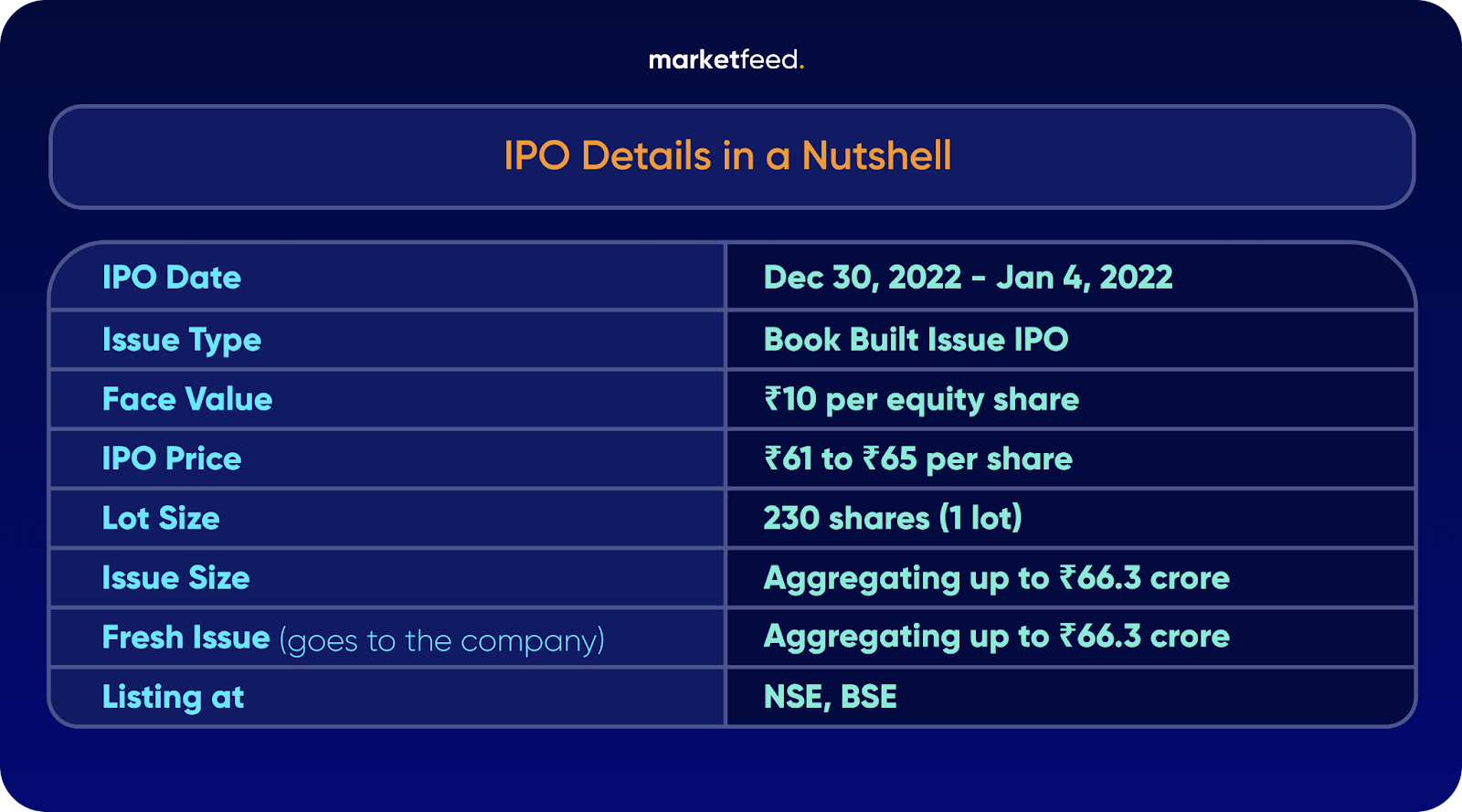
Sah Polymers Ltd’s public issue opens on Dec 30 and closes on Jan 4. The company has fixed ₹61-65 per share as the price band for the IPO.

The fresh issue of shares (of the face value of ₹10 each) aggregates to ₹66.3 crore. Individual investors can bid for a minimum of 230 equity shares (1 lot) and in multiples of 230 shares thereafter. You will need a minimum of ₹14,950 (at the cut-off price) to apply for this IPO. The maximum number of shares that can be applied by a retail investor is 2,990 equity shares (13 lots).

SPL will utilise the net proceeds from the IPO to:

  • Set up a new facility to manufacture a new variant of Flexible Intermediate Bulk Containers (FIBC) – ₹8.18 crore
  • Repayment or prepayment of certain borrowings availed by the company and its subsidiary – ₹19.66 crore
  • Funding working capital requirements – ₹14.95 crore
  • General corporate purposes

The total promoter holding in the company will decline from 100% to 60.46% post the IPO.

Financial Performance

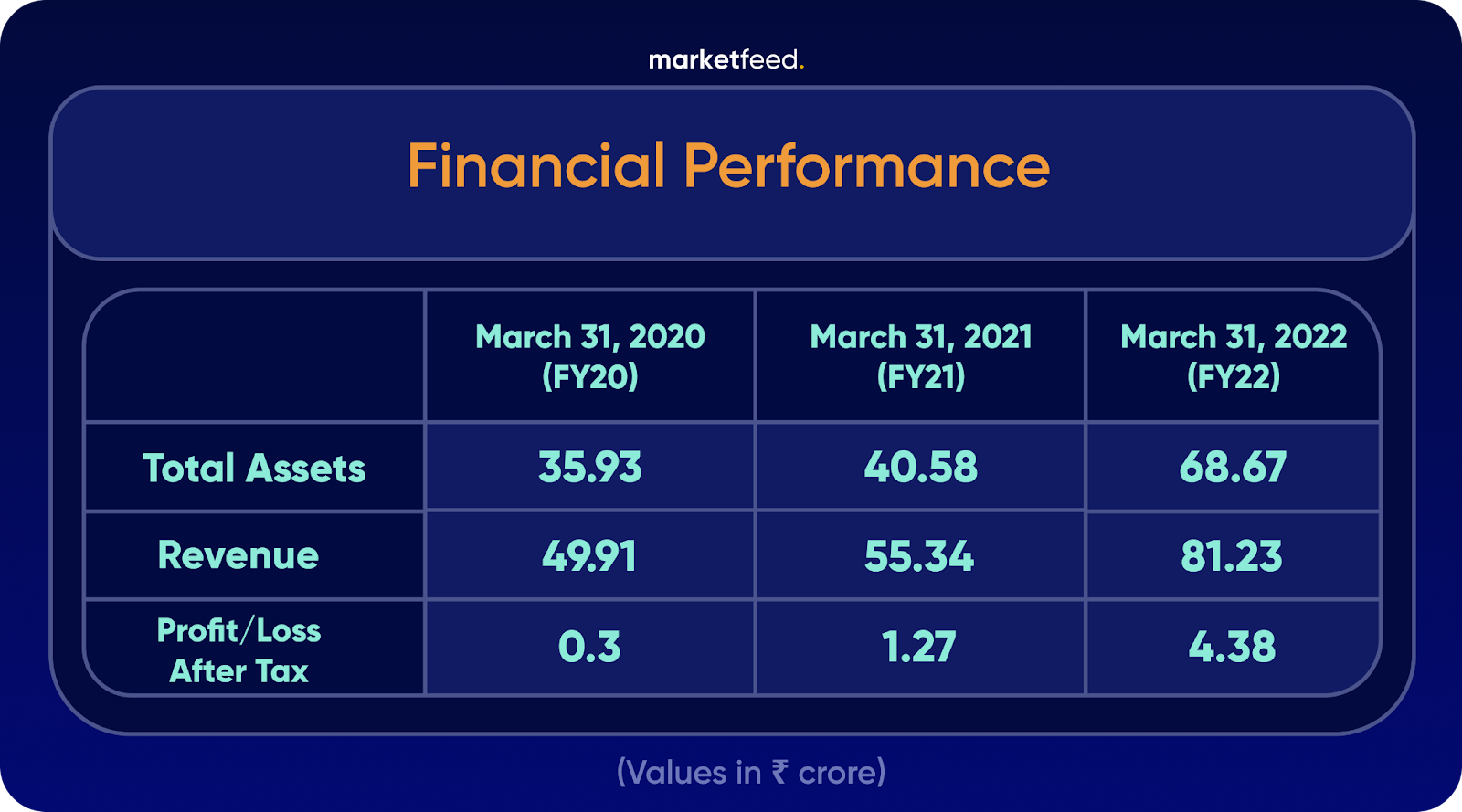
Over the past three financial years (FY20-22), SPL has reported consistent growth in revenue and profits. Its revenue has grown at a CAGR of 27.75% during this period, while profit after tax (PAT) has increased at a CAGR of 284%. EBITDA margins have improved from 3.7% in FY20 to 8.7% in FY22. Meanwhile, total borrowings have increased from ₹10.37 crore in FY20 to ₹30.54 crore in FY22.

The company posted a net profit of ₹1.25 crore and total revenue of ₹27.59 crore for the quarter ended June 2022 (Q1 FY23).

Risk Factors

  • The company has experienced negative cash flow from operations (or cash outflows) in the recent past and may face the same in the future.
  • SPL derives a significant portion of its revenue (~65.83% as of FY22) from its top 10 customers. The loss of any of these customers or a decline in demand from them will adversely affect its business.
  • They face heavy competition from numerous large and small players in the segment.
  • The company requires significant amounts of working capital for trade receivables and inventories. Its inability to meet working capital requirements may harm SPL’s overall business.

IPO Details in a Nutshell

SPL filed the Red Herring Prospectus (RHP) for its IPO on December 20. You can read it here. Out of the total offer, 75% is reserved for Qualified Institutional Buyers (QIBs), 15% for Non-Institutional Investors (NIIs), and 10% for retail investors.

Ahead of the IPO, Sah Polymers raised ~₹30 crore from anchor investors. The marquee investors include Leading Light Fund VCC, Saint Capital Fund, and Maven India Fund.

Conclusion

The packaging industry is one of the largest and most vital sectors of India’s economy. It has reported steady growth over the past several years and shows high potential for expansion, especially in the export market. To meet the growing demand from its existing customers and gain new clients, SPL will expand its manufacturing capacities by establishing a new facility. They also claim to be well-positioned to grow inorganically within their industry and improve customer networks. 

SPL will be directly competing with listed peers such as Rishi Techtex, Jumbo Bag, Emmbi Industries, and Commercial Syn Bags Ltd once it gets listed.

The company has not received much interest in the grey market. SPL’s IPO shares are trading at a premium of ₹6 in the unofficial market today. Before applying to this IPO, we will wait to see if the portion reserved for institutional investors gets oversubscribed. Do consider the risks associated with the company and come to your own conclusion.

What are your opinions on Sah Polymers Ltd’s IPO? Will you be applying for it? Let us know in the comments section of the marketfeed app.

marketfeed wishes all our readers a VERY HAPPY NEW YEAR! Let’s have a profitable year ahead! 🚀

Categories
Editorial

How to Deal With a Recession in 2023?

2022 was a rollercoaster of a year for the global economy! Most sectors had just started showing signs of recovery after two pandemic-hit years. Unfortunately, Russia’s invasion of Ukraine, a cost-of-living crisis triggered by inflationary pressures, and the slowdown in China have hurt economic sentiments again. As we approach 2023, there are talks of an economic recession heading our way. 

In today’s article, we’ll discuss what a recession is, whether we’re really in one, and how we can deal with it intelligently.

What is a Recession?

A recession is a prolonged period of economic downturn. It’s typically indicated by a fall in the gross domestic product (GDP), an increase in unemployment, and a decline in consumer spending. GDP is the total market value of all the finished goods and services produced within a country’s borders during a specific period.

Economists generally agree that a technical recession happens when the real GDP growth (or inflation-adjusted GDP) declines for two quarters consecutively. It can be caused by a decline in consumer confidence, a fall in business investment, or an increase in interest rates. [When interest rates are hiked or the cost of borrowing rises, people will have to pay more to repay debts, thereby reducing their purchasing power. There will be less money in the hands of people to spend, and thus, businesses get less revenue.]

So during a recession, businesses may struggle to stay afloat. It can be difficult for people to keep their jobs or find new ones. Governments may have to provide extra support to citizens and businesses through financial assistance or stimulus packages. Like most countries, India entered a recession in FY21 due to strict lockdowns imposed by the government to curb surging Covid-19 cases. 

Will There Be a Recession in 2023?

Many financial experts and institutions (including the Centre for Economics & Business Research) have predicted a global recession to begin in 2023. WHY? Well, multiple factors such as rising interest rates (to curb inflation), trade tensions, and global political uncertainty can contribute to a prolonged economic downturn.

In fact, the International Monetary Fund’s (IMF) annual economic forecast has predicted sluggish global growth in 2023. It gives attention to three issues: Russia’s invasion of Ukraine and its impact, the long-term effects of the Covid-19 pandemic (especially in China), and high inflation & tight monetary policies. We could be paying the price for trying to bring down inflation to more comfortable levels!

Impact on the Stock Market

Stock prices tend to fall during a recession as companies struggle to maintain profitability and investors quickly withdraw their funds from the market. Such a bear market can help you buy stocks of fundamentally-strong companies at cheap prices! You could essentially take a look at your investment portfolio now and make the necessary adjustments for such a scenario.

How to Deal With a Recession in 2023:

Now, many of you might be freaking out about losing your jobs and life savings. But don’t panic! Here are some simple tips for surviving a recession in 2023:

  • Build an emergency fund: We can’t stress how important this is! An emergency savings fund can provide a buffer against unexpected job losses, expenses, and other financial setbacks that may occur during a recession. Aim to save up to 4-6 months’ worth of living expenses, or more if possible.
  • Manage your debt wisely: High levels of debt are like having a giant weight strapped to your back during a recession. They’ll make it harder to stay afloat if your income takes a hit. So pay down as much debt as possible before the recession hits, and prioritize the debts with the highest interest rates.
  • Cut unnecessary expenses: Look for ways to reduce extravagant expenses ​​ (such as dining out) and find ways to save on necessities like groceries and utilities. 
  • It may become necessary to explore alternative sources of income to help make ends meet during a recession. Consider taking on part-time or freelance work or starting a side hustle. You could even learn to trade and make money consistently from the stock market! (Visit marketfeed.com 🚀)
  • Seek financial assistance: If you’re struggling to make ends meet during a recession, don’t be afraid to ask for help. There are government programs and other resources that can provide financial assistance, such as unemployment benefits and food/grocery stamps.
  • Keep an eye on economic conditions and be ready to adjust your financial plan whenever required. This includes reassessing your budget, adjusting investments, or finding new ways to generate income.

These are just a few pointers on our survival guide for the next recession. It may not be an easy ride for many. But with a little bit of preparation and some flexibility, you’ll be able to weather the economic storm and come out stronger on the other side! 

Are you prepared to face an economic recession? Let us know in the comments section of the marketfeed app!

Categories
Editorial

KFin Technologies Ltd IPO: All You Need to Know

Bengaluru-based KFin Technologies Ltd has launched its initial public offering (IPO) today— Dec 19. The firm was incorporated just five years ago! In this article, we’ll look into the company and its IPO.

Company Profile – KFin Technologies Ltd

Established in 2017, KFin Technologies Ltd (KTL) is a technology-driven financial services platform. It offers comprehensive solutions and services to the Indian capital markets ecosystem, including asset managers and corporate issuers across asset classes (equities, fixed-income securities like bonds, etc). They also provide transaction origination and processing services for mutual funds and private retirement schemes in Malaysia, Hong Kong, and the Philippines.

Here’s how KFin Tech classifies its products and services:

  1. Investors Solutions: Account Setup, Transaction Origination, Redemption of Funds, and Brokerage Calculations.
  2. Issuer Solutions: Transaction Processing for IPOs, Corporate Action Processing, Folio Creation & Maintenance, Customer Communication Management (e-voting systems), and Compliance or Regulatory Reporting.
  3. Value Added Services: Distributor Platforms, Investor Platforms, IT Infrastructure, Web Hosting, and Data Analytics.

Factsheet:

  • KTL is one of the largest investor solutions providers to Indian mutual funds. As of Sept 30, 2022 (Q2 FY23), they provide services to 24 out of 41 asset management companies (AMCs) registered in India.
  • The company services 301 funds of 192 asset managers in India, which represents a 30% market share based on the number of alternative investment funds (AIFs) being serviced.
  • KFin Tech is one of the three operating central record-keeping agencies (CRAs) for the National Pension System (NPS) in India.
  • They provide services to 18 AMC clients in Malaysia and 3 clients across the Philippines and Hong Kong.

About the IPO

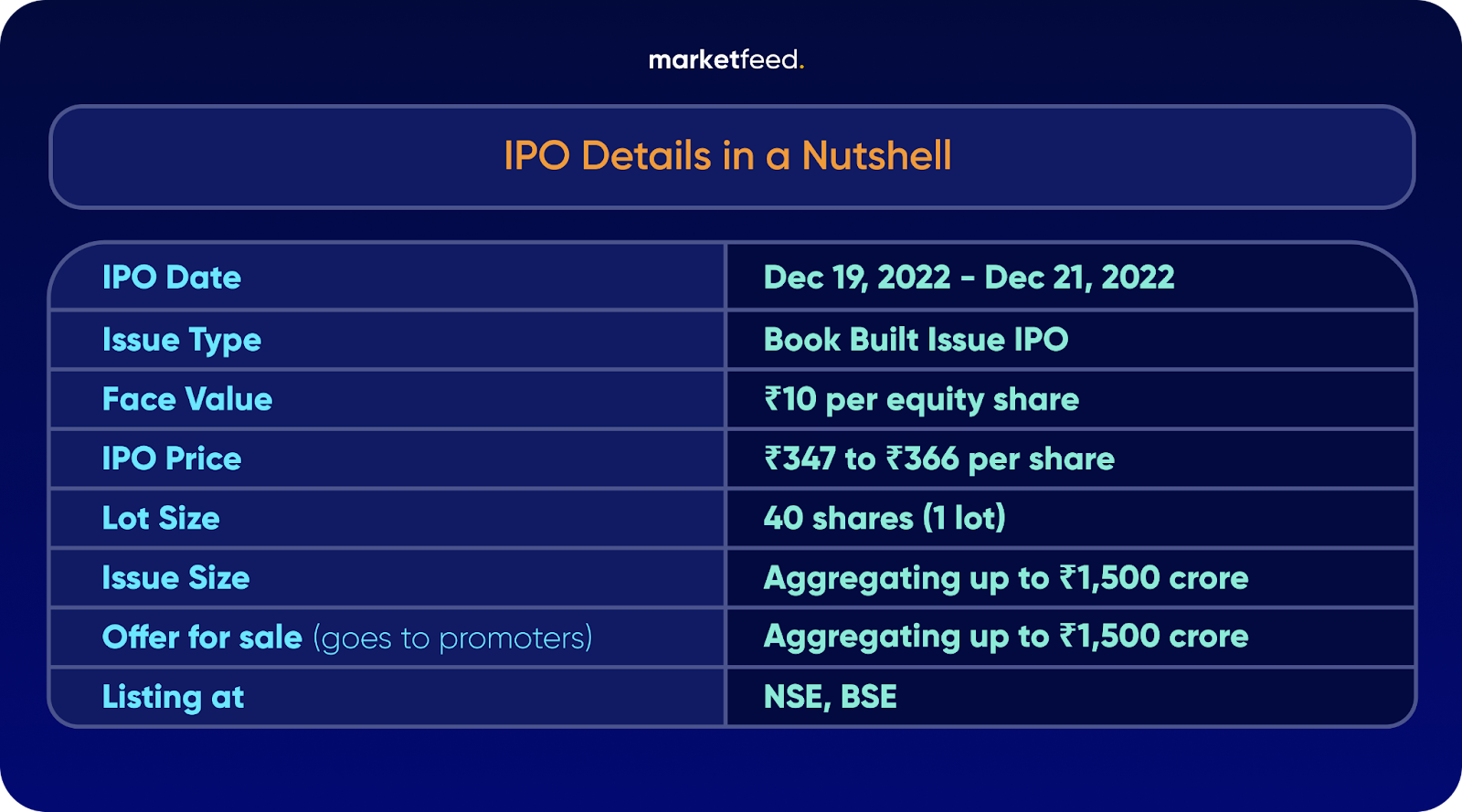
KFin Technologies Ltd’s public issue opens on December 19 and closes on December 21. The company has fixed ₹347-366 per share as the price band for the IPO.

The IPO is purely an offer for sale (OFS) of 4.09 crore equity shares by promoters and early investors, aggregating to ₹1,500 crore. Individual investors can bid for a minimum of 40 equity shares (1 lot) and in multiples of 40 shares thereafter. You will need a minimum of ₹14,640 (at the cut-off price) to apply for this IPO. The maximum number of shares a retail investor can apply is 520 equity shares (13 lots).

The primary objective of the IPO is to provide an exit strategy (or liquidity) for promoters. The company aims to achieve the benefits of listing the equity shares on NSE and BSE. The total promoter holding in KFin Technologies will decline from 74.37% to 49.91% post the IPO.

Financial Performance

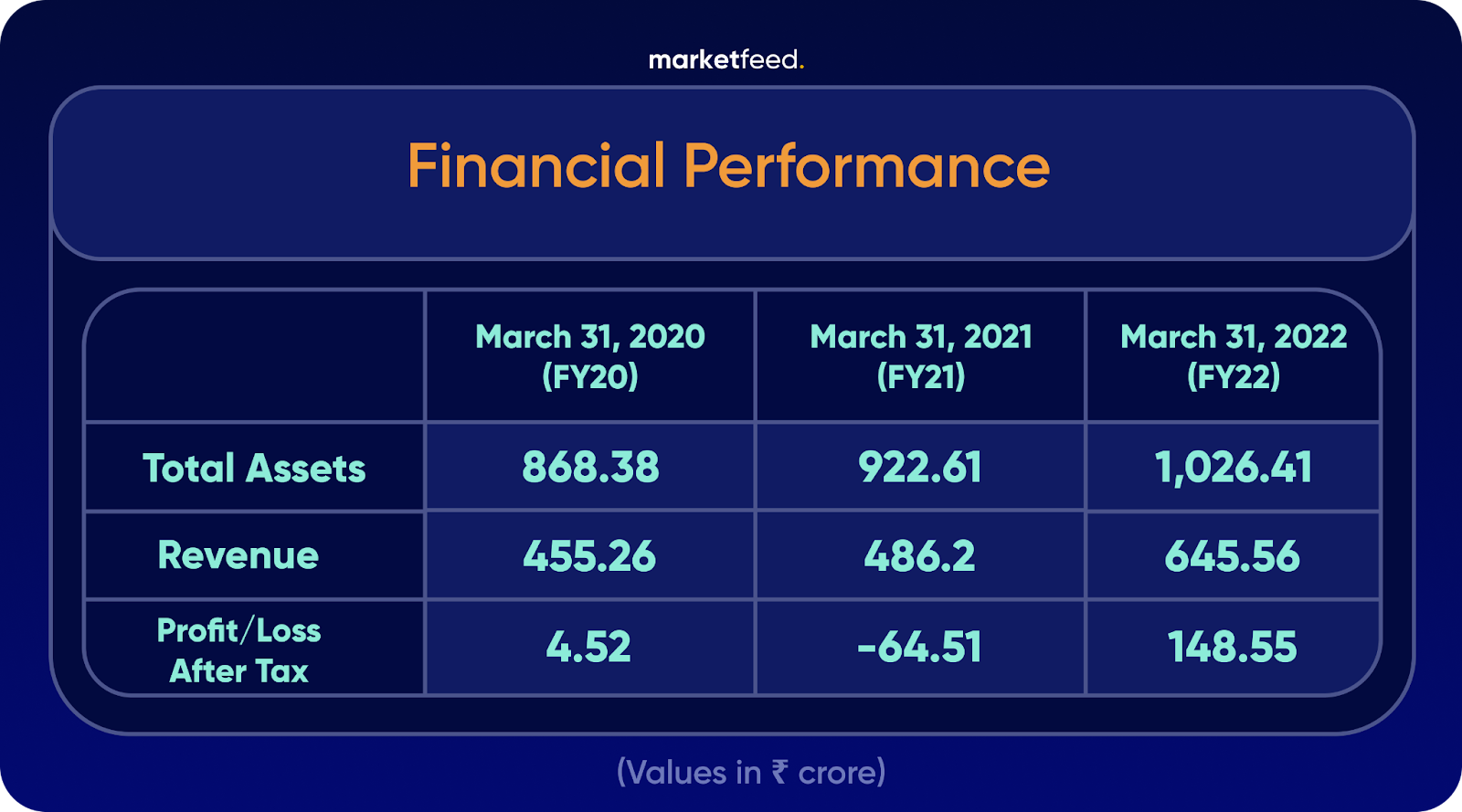
  • KFin Tech suffered a financial setback in FY21 but made a strong comeback in FY22 with a net profit of ₹148.55 crore. 
  • Between FY20 and FY22, the company’s revenue grew by 19.16%. 
  • KTL derives ~65% of its revenues from the domestic mutual fund business, where it earns fees based on average assets under management (AAUM). 
  • The company became debt-free in FY22.

Risk Factors

  • KTL’s promoters are subject to ongoing investigations by the Enforcement Directorate, the Finance Ministry, and the Central govt. The outcome of such investigations may adversely impact the company and its stock price. [SEBI imposed a fine of ₹1.5 crore on KTL for redeeming its units in a mutual fund based on privileged info.]
  • Significant disruptions in information technology (IT) systems or data security breaches could adversely affect the company’s business and reputation.
  • In FY22, KFin Tech derived nearly 55% of its revenue from its top five customers. The loss of any of these clients could severely affect its overall business.
  • A decline in the growth, value, and composition of assets under management (AUM) of the mutual funds managed by KTL’s clients may adversely impact their average revenue from mutual funds. It would also affect the company’s future revenue and profit.

IPO Details in a Nutshell

KFin Technologies Ltd filed the Red Herring Prospectus (RHP) for its IPO on Dec 5. You can read it here. Out of the total offer, 75% is reserved for Qualified Institutional Buyers (QIBs), 15% for Non-Institutional Investors (NIIs), and 10% for retail investors.

Ahead of the IPO, KTL raised ₹675 crore from 44 anchor investors. The marquee investors include Goldman Sachs Funds, Aberdeen Standard SICAV, Pinebridge Global Funds, Citigroup Global Markets Mauritius, Nippon Life India, Axis Mutual Fund, etc.

Conclusion

The average AUM of the Indian mutual fund industry has grown at a healthy pace over the past 10 years. It grew at a CAGR of 18% from ₹6.65 lakh crore as of March 31, 2012, to ₹39.05 lakh crore as of Sept 30, 2022. With better disposable incomes, a large proportion of Indians are increasing their financial savings and investing in stocks and mutual funds. The growth in savings will lead to more investments, which will benefit companies like KFin Tech.

Going ahead, KTL aims to grow the overall share of revenues from the sale of different services to new and existing clients. The company will continue to invest in technological innovations in line with its business growth and to meet client requirements. They plan to develop a co-innovation laboratory with key industry players in exchange-traded funds (ETFs) and index funds to drive research and development in this area. 

KTL will compete directly with Computer Age Management Services (CAMS) once it gets listed.

The company has not received much interest from investors in the grey market. KTL’s IPO shares are trading at a premium of ₹5-8 in the unofficial market. Before applying to this IPO, we will wait to see if the portion reserved for institutional investors gets oversubscribed. Do consider the risks associated with the company and come to your own conclusion.

What are your views on KFin Technologies Ltd’s IPO? Will you apply for it? Let us know in the comments section of the marketfeed app!

Categories
Editorial

Landmark Cars Ltd IPO: All You Need to Know

The second IPO of the week is here! Premium car dealer Landmark Cars has launched its initial public offering (IPO) today— Dec 13. In this article, we analyse the company and its IPO.

Company Profile – Landmark Cars

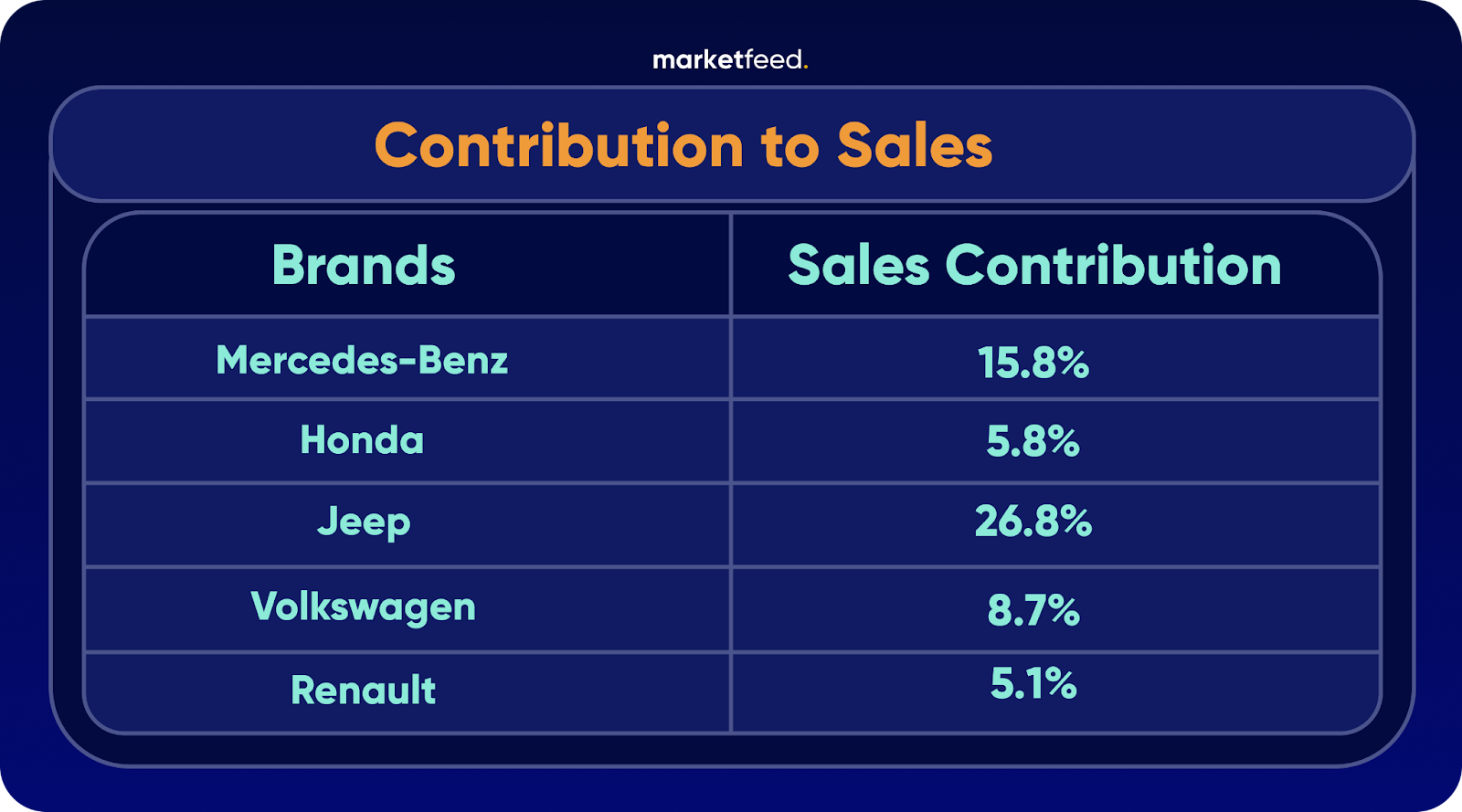
Established in 1998, Landmark Cars Ltd (LCL) is a leading premium automotive retail business in India. It has dealerships for Mercedes-Benz, Honda, Jeep, Volkswagen, Renault, and commercial vehicles of Ashok Leyland. The company has a presence across the automotive retail value chain: 

  • Sales of new vehicles 
  • After-sales service & repairs
  • Sales of pre-owned passenger vehicles 
  • It also facilitates the sales of third-party finance and insurance products.

Landmark Cars was the #1 dealer in India for Mercedes-Benz in terms of retail sales in FY22. The company moved from a dealership model to an agency model for Mercedes cars in October 2021, and earns commissions on the sale of vehicles. LCL was also the top dealer for Honda and Jeep in terms of wholesale sales. They currently operate 112 outlets in 8 Indian states and union territories. It has 59 sales showrooms/outlets and 53 after-sales services and spare outlets.

(As of FY21)

Recently, LCL entered into an agreement with China-based BYD to become its dealer in the National Capital Region (NCR) and Mumbai. 

About the IPO

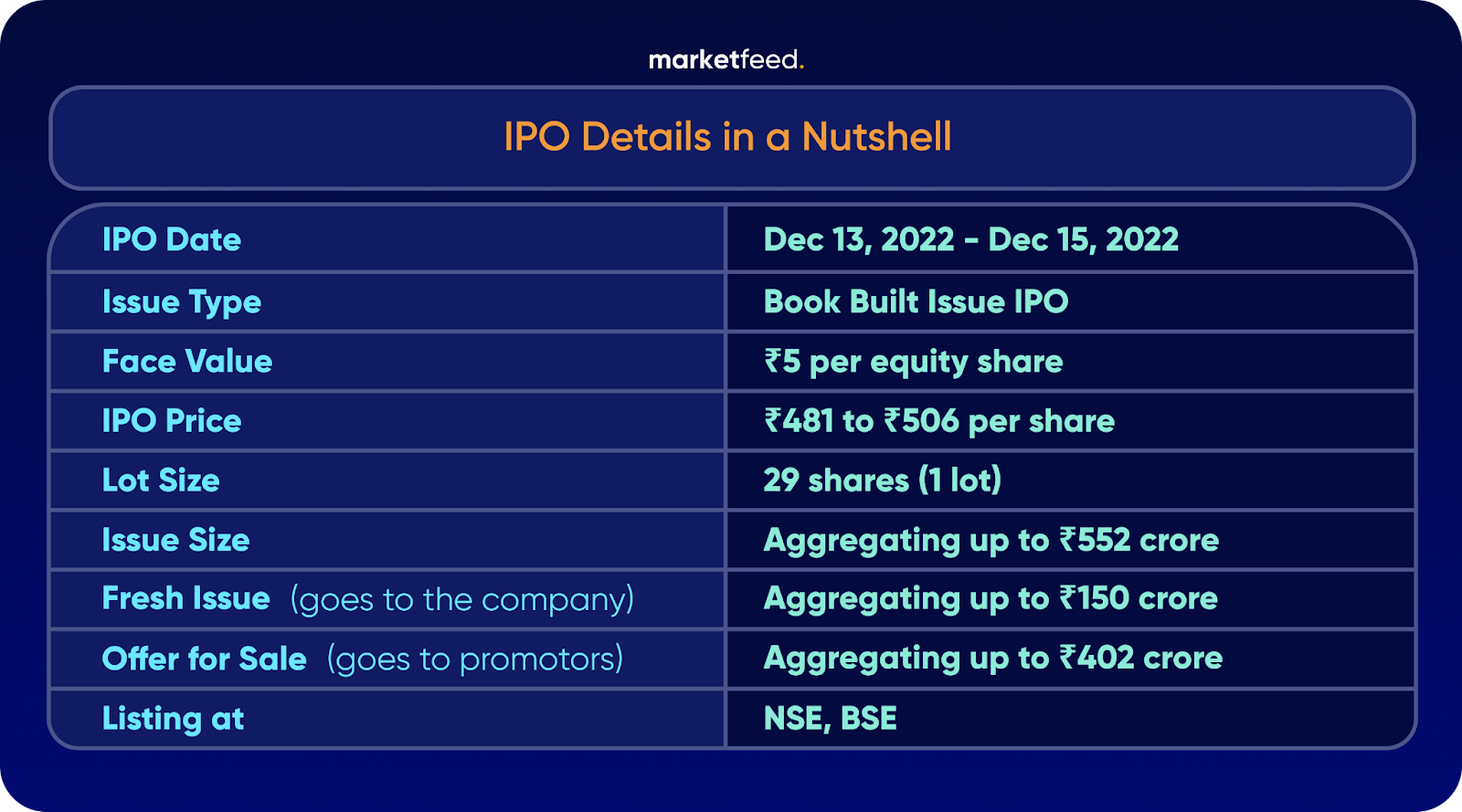
Landmark Cars Ltd’s public issue opens on Dec 13 and closes on Dec 15. The company has fixed ₹481-506 per share as the price band for the IPO.

The fresh issue of shares (of the face value of ₹5 each) aggregates to ₹150 crore. The IPO also includes an offer for sale (OFS) of 79.44 lakh shares by promoters and early investors. Individual investors can bid for a minimum of 29 equity shares (1 lot) and in multiples of 29 shares thereafter. You will need a minimum of ₹14,674 (at the cut-off price) to apply for this IPO. The maximum number of shares that can be applied by a retail investor is 377 equity shares (13 lots).

LCL will utilise the net proceeds from the IPO to repay/pre-pay certain borrowings.

The total promoter holding in the company will decline from 60.24% to 44.61% post the IPO.

Financial Performance

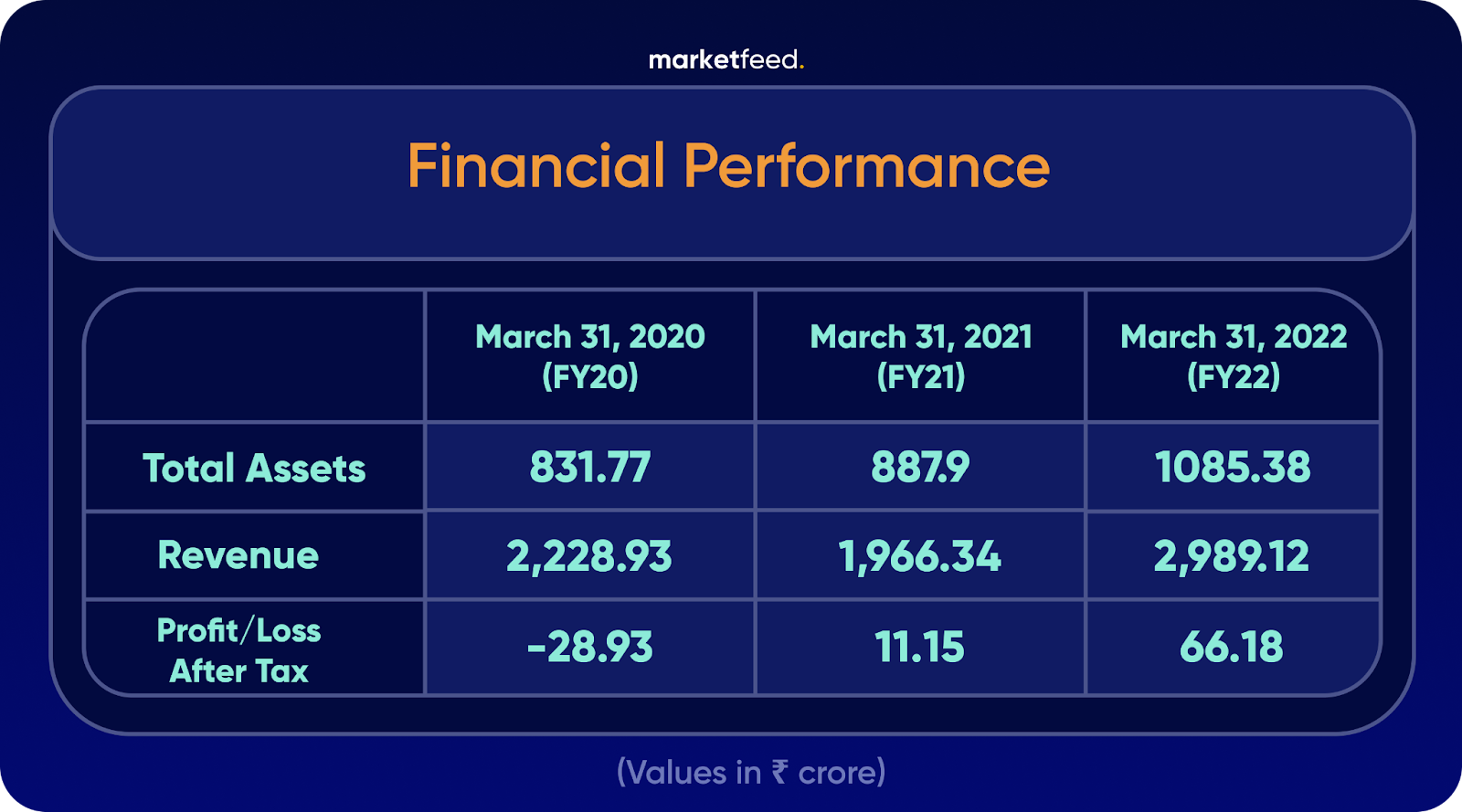
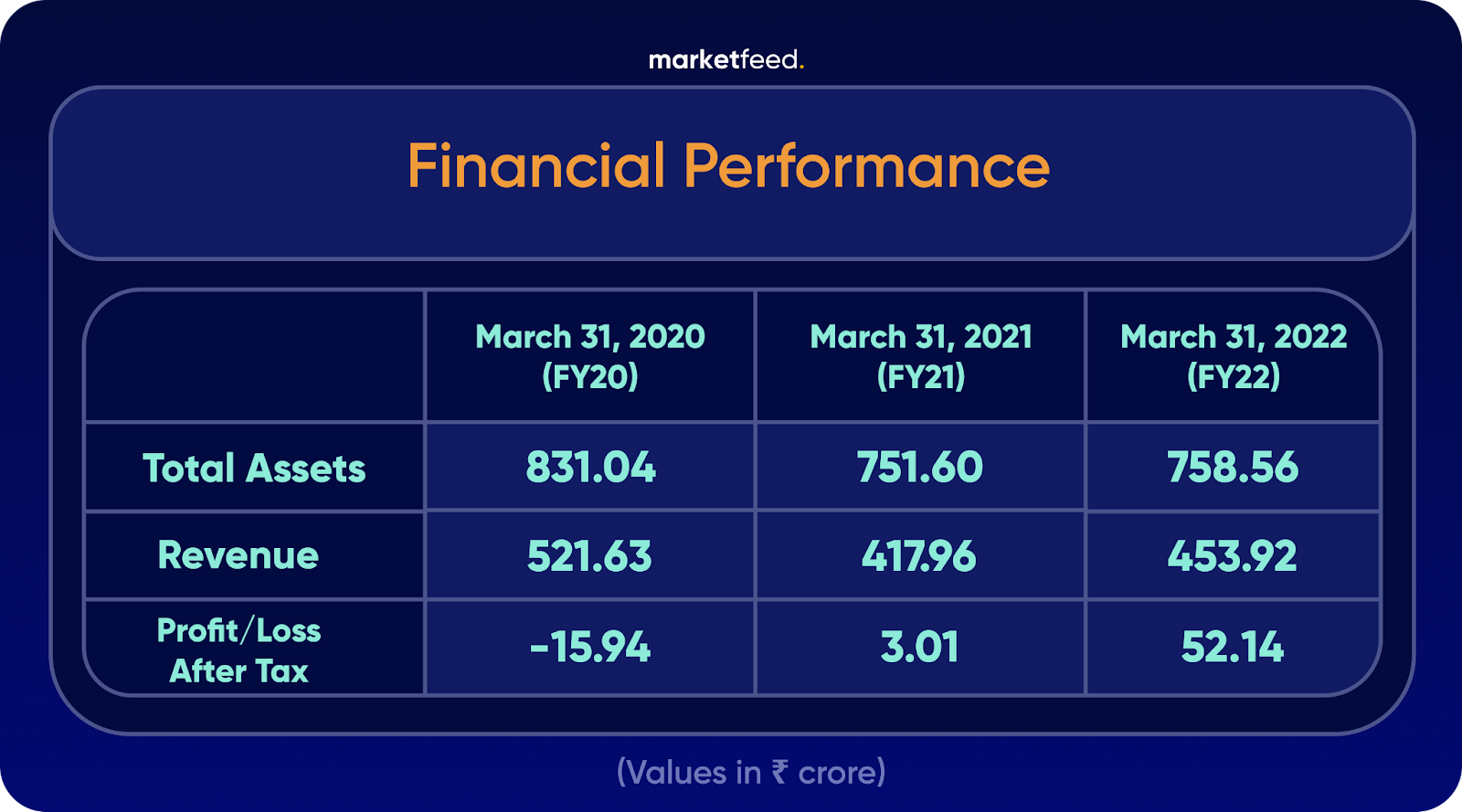
After posting a net loss of ₹28.94 crore in FY20, Landmark Cars turned profitable with increasing EBITDA margins over the next two years. The margins LCL receives for showroom sales are around 3.5%, while those for after-sales services are at ~18%. Meanwhile, revenue has grown at a healthy CAGR of 23.35% from FY20-22.

The company has a high debt-to-equity ratio of 1.25 as of FY22. [For every Rs 1 equity in the company, ₹1.25 exists as debt.] This is probably because the company has to maintain up to 40 days of inventory worth ~Rs 300 crore, and this amount is primarily funded through working capital loans and supplier credit.

The company posted a net profit of ₹18.14 crore and total revenue of ₹801.9 crore in the quarter ended June 2022 (Q1 FY23). 

Risk Factors

  • Landmark Cars is subject to significant influence and restrictions imposed by OEMs based on the terms of dealership or agency agreements that may adversely impact its business.
  • The company’s success depends on the value, marketing, and overall competitiveness of its OEMs’ vehicle brands in India. Any damage to these brands or their failure to compete effectively in India could harm LCL’s overall business.
  • A large portion of the company’s business operations is concentrated in Gujarat and Maharashtra. Any economic downturn, political unrest, or natural disasters in these states may severely affect LCL’s business.
  • LCL may not be able to achieve the expected benefits from its current or future dealership acquisitions.

IPO Details in a Nutshell

LCL filed the Red Herring Prospectus (RHP) for its IPO on Dec 5. You can read it here. Out of the total offer, 50% is reserved for Qualified Institutional Buyers (QIBs), 15% for Non-Institutional Investors (NIIs), and 35% for retail investors.

Ahead of the IPO, Landmark Cars raised ₹165 crore from anchor investors. The marquee investors include HDFC Mutual Fund, Nippon Life India, Goldman Sachs, Aditya Birla Sun Life, and Morgan Stanley.

Conclusion

Demand for luxury and premium cars in India has jumped to new highs over the past year. According to an Economic Times report, at least two Indians have been spending over ₹2-2.5 crore daily on supercars in 2022! For instance, Mercedes Benz posted a 28% jump in sales in India at 11,469 units in Jan-Sept 2022, surpassing what it sold in the whole of 2021. Buyers of premium cars were unaffected by wealth contraction in the last two years of the Covid-19 pandemic!

Going forward, LCL plans to expand its business in the high-growth premium and luxury passenger vehicles segments, including utility vehicles and electric vehicles. It also aims to grow its after-sales service offering to cater to more customers and enhance higher-margin service and repair revenues.

The company has received some interest in the grey market. LCL’s IPO shares are trading at a premium of ₹31 in the unofficial market. Before applying to this IPO, we will wait to see if the portion reserved for institutional investors gets oversubscribed. As always, do consider the risks associated with the company and come to your own conclusion.

What are your opinions on this IPO? Will you apply for it? Let us know in the comments section of the marketfeed app.

Categories
Editorial

Sula Vineyards Ltd IPO: All You Need to Know

Here’s a special IPO for all you wine lovers out there! Popular winemaker Sula Vineyards Ltd has launched its initial public offering (IPO) today— Dec 12. In this article, we’ll dive into the company and its IPO.

Company Profile – Sula Vineyards Ltd

Sula Vineyards Ltd (SVL) is India’s largest wine producer and seller as of March 31, 2022 (FY22). It’s been a market leader (with >50% share) in our country’s wine industry in terms of volume and sales value since the financial year 2008-09. The company’s business can be classified into two:

  1. Production, distribution, and import of wines & spirits.
  2. Sale of services from its wine tourism venues, including vineyard resorts & tasting rooms.

Factsheet:

  • SVL distributes white, red, and sparkling wines under its flagship brand ‘SULA’. It also offers wines under the RASA, Dindori, The Source, Satori, Madera, and Dia brands. 
  • The company produces 56 different wine labels at four owned and two leased production facilities in Maharashtra and Karnataka. [These states offer subsidies for grape production and tax rebates on wine.]
  • The company leads the market in all four price segments: ‘Elite’ (₹950+), ‘Premium’ (₹700-950), ‘Economy’ (₹400-700), and ‘Popular’ (₹400). In FY22, it had a market share of nearly 61% in the ‘Elite’ and ‘Premium’ segments (in terms of sales value).
  • It has built the largest distribution network among Indian wine companies, with nearly 13,000 retail touchpoints
  • They have entered into long-term supply arrangements (of up to 12 years) with grape growers for 2,290 acres as of September 30, 2022.
  • SVL offers its services across 8,000 hotels, restaurants, and caterers.

Sula’s wines and vineyards have a huge fan following on social media!

About the IPO

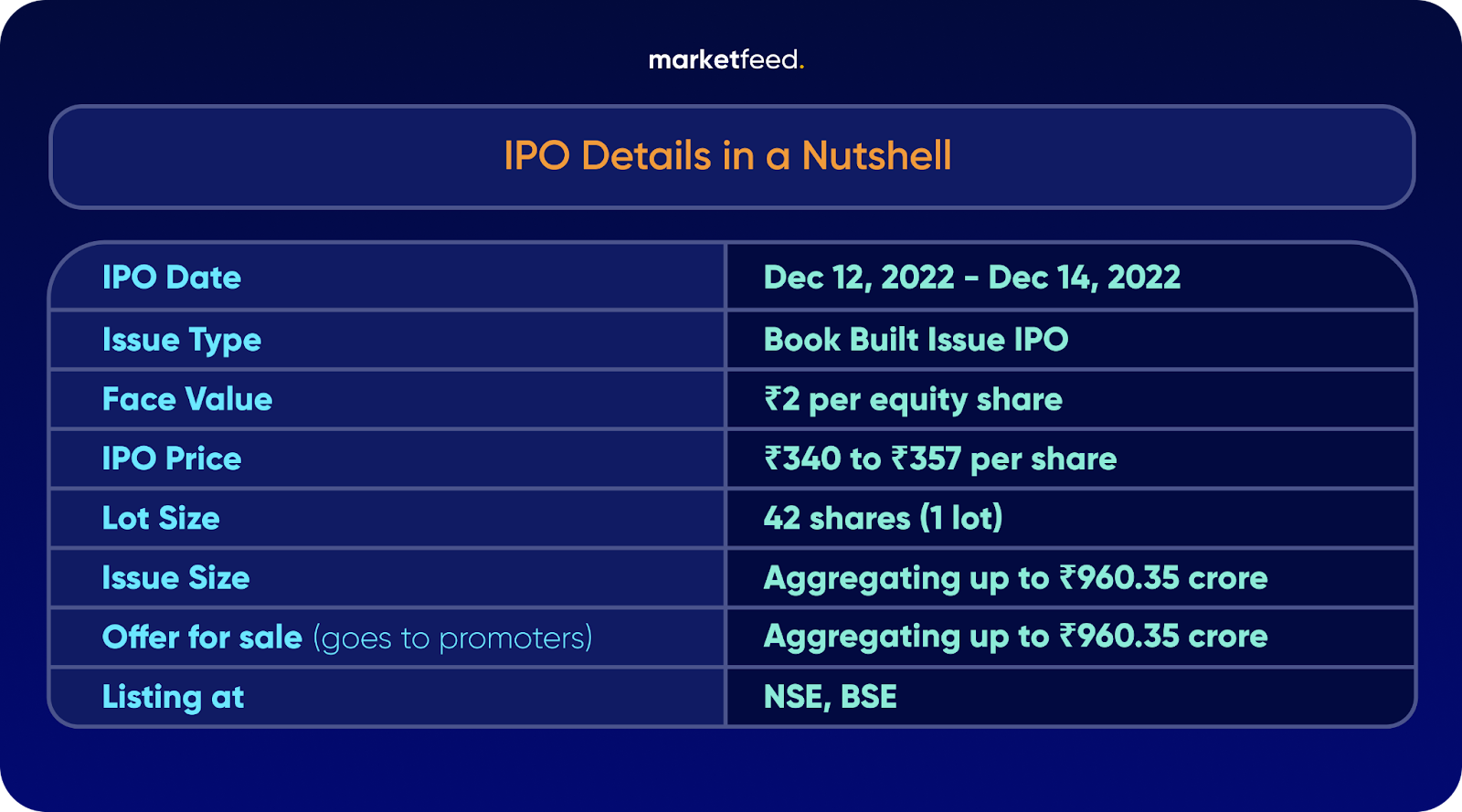
Sula Vineyards Ltd’s public issue opens on December 12 and closes on Dec 14. The company has fixed ₹340-357 per share as the price band for the IPO.

The IPO is purely an offer for sale (OFS) of 2.69 crore equity shares by promoters and early investors, aggregating to ₹960.35 crore. Individual investors can bid for a minimum of 42 equity shares (1 lot) and in multiples of 42 shares thereafter. You will need a minimum of ₹14,994 (at the cut-off price) to apply for this IPO. The maximum number of shares a retail investor can apply is 546 equity shares (13 lots).

The primary objective of the IPO is to provide an exit strategy (or liquidity) for SVL’s promoters. The company aims to achieve the benefits of listing the equity shares on NSE and BSE. The total promoter holding in Sula Vineyards will decline from 28.44% to 27.33% post the IPO.

[The low promoter holding is quite concerning— could indicate that promoters may not have much faith in the company’s future prospects.]

Financial Performance

After posting a loss of ₹15.94 crore in FY20, Sula Vineyards turned profitable with healthy EBITDA margins over the next two years. Its revenue fell nearly 20% YoY in FY21 and increased by 8.6% YoY in FY22. Off-trade sales contributed 72.25% of SVL’s secondary sales during FY22, compared to 61.33% in FY20. SVL has been able to reduce its total borrowings from ₹368.24 crore in FY20 to ₹228.93 crore in FY22.

In the half-year period ended September 2022 (H1 FY23), profit jumped 577% YoY to ₹30.5 crore, and revenue rose 40.8% YoY to ₹224 crore.

Risk Factors

  • All companies operating in India’s alcohol industry are subject to strict licensing and excise regimes. SVL’s business and financial performance could be severely affected due to changes in regulations, tax laws, and legal uncertainties.
  • Any adverse climatic conditions may impact the quality of wine grapes (SVL’s key raw material). 
  • Consumers’ tastes and preferences may change, and they may not prefer wines in the future. SVL’s sales could decline if it fails to adapt to changing market trends and consumer spending patterns. The company may also not be able to maintain its competitive position in the alcohol/wine industry. 
  • The company benefits from high duties imposed on imports of international wines in India. These duties could be reduced or eliminated in the future, adversely impacting SVL’s wine business.
  • SVL depends heavily on its brand portfolio. The success of its business strategy depends on its ability to enhance brands.

IPO Details in a Nutshell

Sula Vineyards filed the Red Herring Prospectus (RHP) for its IPO on Dec 5. You can read it here. Out of the total offer, 50% is reserved for Qualified Institutional Buyers (QIBs), 15% for Non-Institutional Investors (NIIs), and 35% for retail investors.

Ahead of the IPO, SVL raised ₹288.10 crore from anchor investors. The marquee investors include Abu Dhabi Investment Authority (ADIA), Goldman Sachs, Morgan Stanley, BNP Paribas Arbitrage, and Citigroup Global Markets Mauritius.

Conclusion

Let’s look at some facts: Of the ₹2.4 lakh crore alcoholic beverage market, wine only has a mere 1% share! The per capita consumption of wine in India is just 40 ml per year. Even then, Sula has been able to make its wines appealing to Indians, mostly millennials. They’re the pioneer of wine tourism in India. It launched the first wine tasting room in India, the first vineyard resort, the first wine music festival, and the first winery tours at its facility in Nashik! 

Going forward, SVL will continue to focus on its own brands over third-party brands that they import and distribute. It will leverage its distribution capability to launch new products under the ‘Elite’ and ‘Premium’ categories to increase revenue and market share in the Indian wine market.

SVL will be facing competition from listed peers such as United Spirits, Radico Khaitan, and United Breweries. Fratelli and Grover Zampa are two of Sula Vineyards’ unlisted domestic rivals.

The company has received some interest from investors in the grey market. SVL’s IPO shares are trading at a premium of ₹34 in the unofficial market. Before applying to this IPO, we will wait to see if the portion reserved for institutional investors gets oversubscribed. Do consider the risks associated with the company and come to your own conclusion.

What are your views on Sula Vineyards Ltd’s IPO? Will you apply for it? Let us know in the comments section of the marketfeed app!

Categories
Editorial

How Mensa Brands Became India’s Fastest Unicorn!

Getting the status of a unicorn (a valuation of $1 billion) is very special for any startup. At the same time, it’s no cakewalk. It’s extremely difficult to develop a unique product or service, build a purpose-driven team, get financial support, attract customers and, most importantly, scale up. Meanwhile, there are some special Indian startups that make it seem so easy….

Within its first six months, Bengaluru-based Mensa Brands became the fastest Indian startup to become a unicorn. A truly impressive feat! In this article, we throw light on how the company envisioned transforming brands across India and turning profitable in this exciting venture!

Mensa Brands’ Origin

In May 2021, Ananth Narayanan, ex-CEO of Myntra and co-founder of Medlife (an online healthcare platform), set out to establish a new venture— a ‘house of brands’. He noticed that most early-stage brands or startups in India’s fashion and beauty segments could not adopt the right strategies to scale up their business. Many brands failed as they could not effectively promote their products, manage inventory, or drive sales!

Narayanan felt he had the right expertise and connections to scale brands and structure mergers & acquisition (M&A) deals. His four-year term at Myntra helped create a business vision of partnering with and investing in digital-first brands in fashion, beauty, and certain fast-moving consumer goods (FMCG). He called up his friends and drew up an action plan. And thus, Mensa Brands was formed!

So What Does Mensa Brands Actually Do?

  • Mensa looks into promising brands and entrepreneurs across the fashion, beauty, and personal care segments. They would select brands with strong income streams and a fairly growing customer base.
  • It will then work out a deal/business plan with brands and acquire a majority stake (>51%) in them.
  • Then, the founding team or creators of these brands join forces with Mensa Brands to run operations on a larger scale. Mensa will help brands manage and expand their product offerings on their official digital platforms and across all major marketplaces.
  • Mensa would support brands by sharing its expertise in inventory management, technology, e-commerce, supply chain management, and digital marketing.
  • They assist startups involved in tech-led product development by identifying a product that prospective customers are looking for. Mensa will also help such startups launch a new product line based on their findings.

Funding & Investors

In November 2021, Mensa Brands raised $135 million at a valuation of nearly $1.2 billion, making it the fastest Indian startup to reach unicorn status! The company is backed by prominent equity investors like Tiger Global Management, Falcon Edge Capital, Accel, and Norwest Venture Partners. Mukesh Bansal (cult.fit) and Kunal Shah (Cred) are angel investors in Mensa.

Mensa Brands has raised a total of $187 million (~₹1,540 crore) over six rounds!

Mensa Brands’ Strong Growth

  • In the initial days, Mensa Brands found it difficult to approach brands with an unfamiliar concept and build trust among them. Picture this scenario: new entrepreneurs were getting calls from someone they had never heard of before. Executives from Mensa were basically talking to founders about taking over the brand/business they built from the ground up with a lot of pain.
  • But gradually, many brands understood the finer details of Mensa’s business model and the expertise they would bring to the table. 
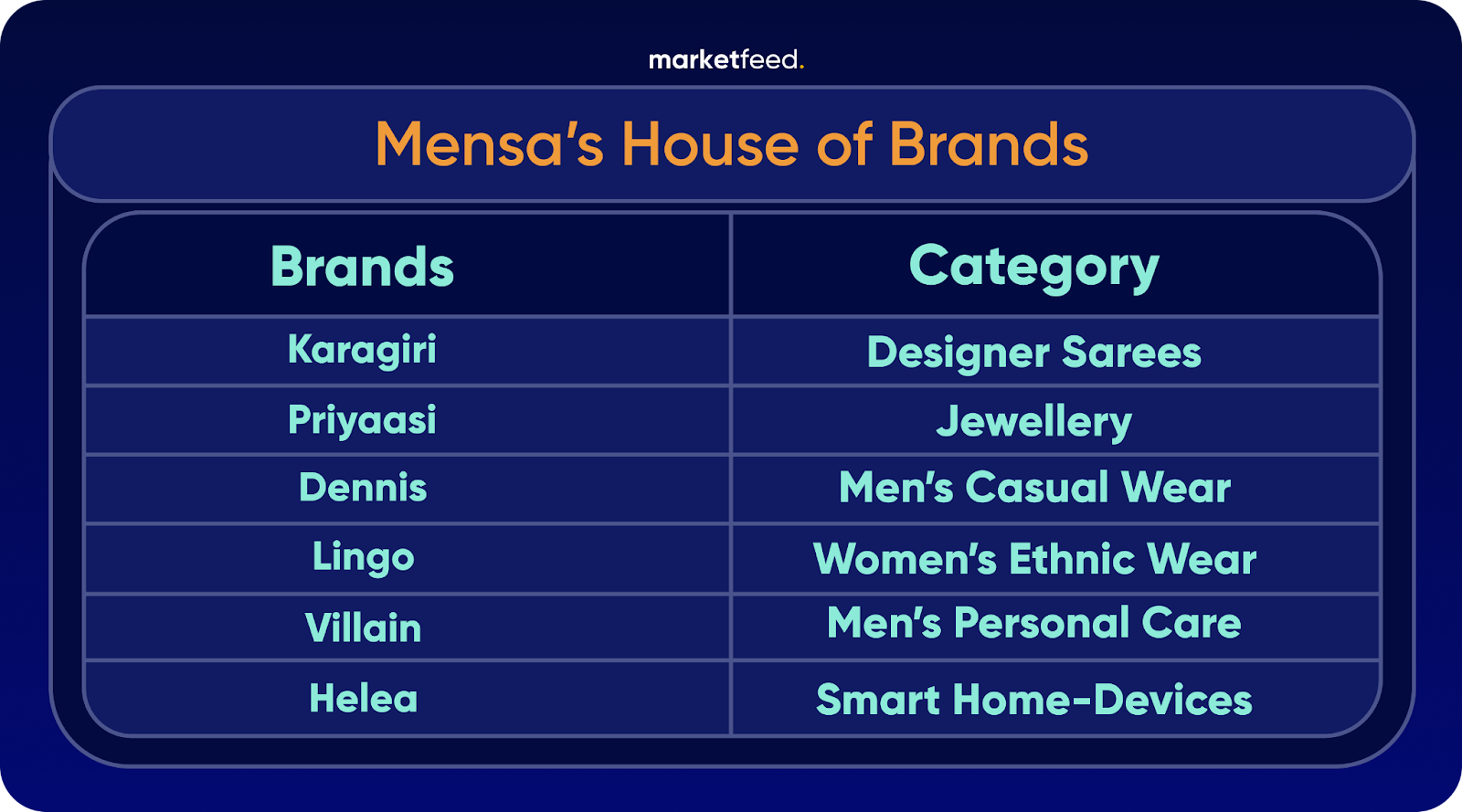
  • By Oct 2021, Mensa acquired a 51-75% stake each in 10 new-age brands! It will also have the option to acquire the remaining stake in these companies/brands over five years if they achieve certain milestones. So once the brands’ valuations grow under Mensa’s expert supervision, its founders could exit comfortably with crores in their pockets!
  • These 10 brands have an average revenue of ₹25-35 crore. According to Ananth Narayanan, these brands have been growing at 70-80% annually. They are estimated to grow by at least 10x over the next five years! More than half of Mensa’s brands are available outside India across the US, Canada, UK, Germany, Singapore, and UAE.
  • In June 2022, Mensa Brands announced it was profitable with projected revenues of ₹1,500 crore in the first 12 months of operations. It has become India’s largest direct-to-consumer (D2C) tech-led house of brands. Currently, Mensa supports around 20 fashion, beauty, and lifestyle brands. And nearly 80% of them are run by women.

Mensa’s Mission

Mensa Brands’ vision is to partner and invest in more digital-first brands and scale them. Going forward, the startup will deploy funds to accelerate growth, ramp up acquisitions, and scale its team across operations, marketing, and technology. The company has close to 60 employees and aims to increase it to 150-200 over the next year or so.

Over the next 2-3 years, Mensa plans to acquire more than 50 brands across the home, garden, apparel, personal care, and beauty categories. They hope to see some of their existing brands become household names! Mensa will also expand its influencer and social media networks to ramp up digital marketing initiatives for brands. The startup’s business model has opened up new opportunities for potential e-commerce growth!

The Indian e-commerce market is becoming increasingly competitive. There would be hundreds of potential brands whose success depends on effective fundraising and expertise to scale effectively. Let us look forward to seeing more brands grow to new heights with the help of Mensa! What are your views on this startup? Let us know in the comments section of the marketfeed app.

Categories
Editorial

Here are the Best Sectors to Look Out For in 2023!

What a thrilling year it’s been! NIFTY50 touched an all-time high of 18,887.60 amidst some heavy volatility. We’ve seen the markets make wild movements in both directions. Fears of an upcoming economic recession and interest rate hikes have spooked most investors. But we’re sure our community continues to be highly bullish on India’s economic growth and are holding on to smart investments. 🚀

In today’s special article, we take a look into some of India’s fastest-growing and promising sectors that could flourish in 2023. You may potentially find better investment opportunities or even your next multibagger!

Green Energy

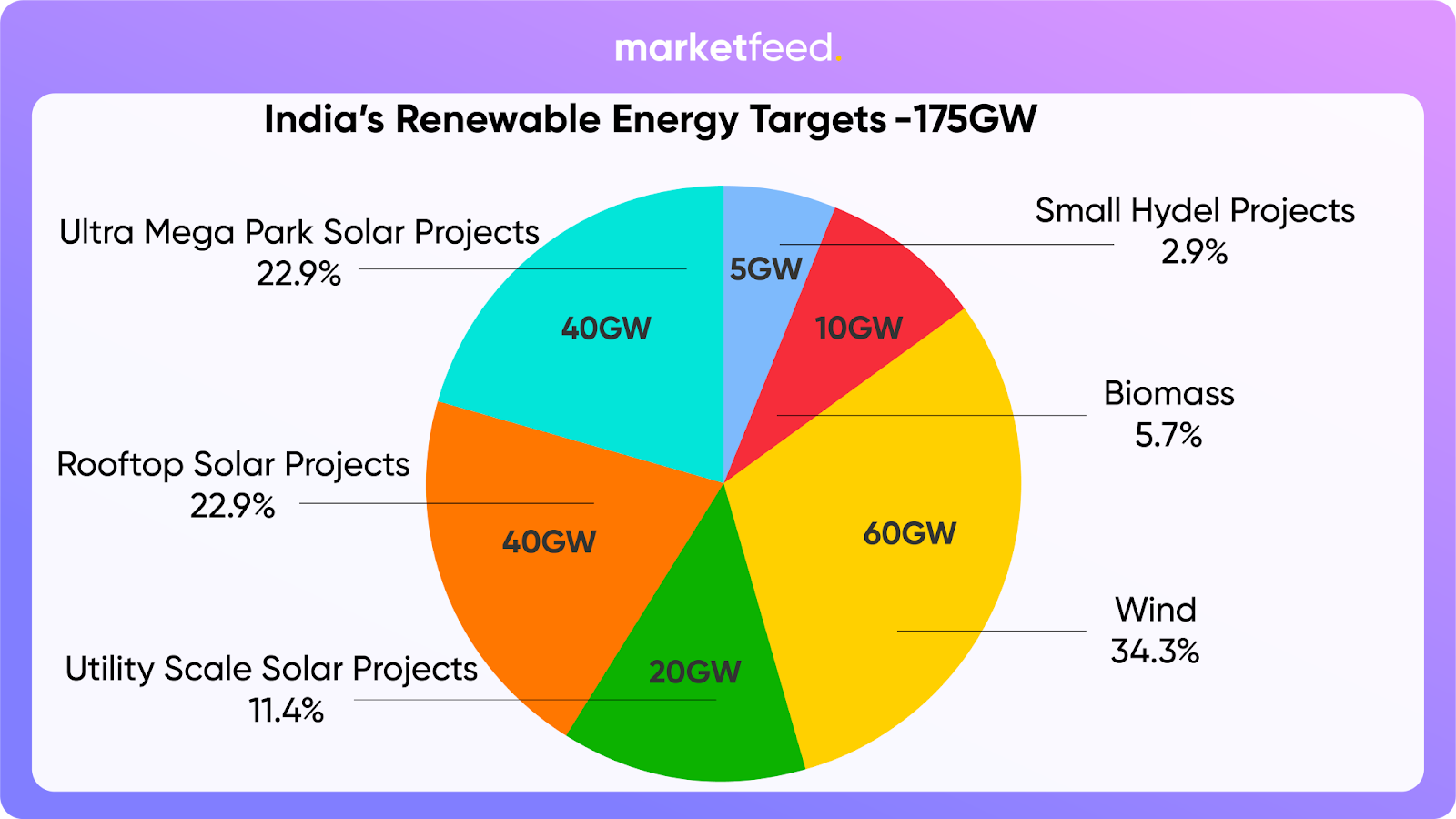
The Centre, state governments, business groups, and the general public need to recognise the urgency of climate action and advocate it on a wider scale. It’s high time we take coordinated actions to reduce carbon emissions. We need to rapidly increase its renewable energy deployment to meet the rising energy demands:

  • India has pledged to achieve net-zero carbon emissions by 2070
  • The Central Govt. has committed to installing a non-fossil fuel electricity generation capacity of 500 gigawatts (GW) and sourcing 50% of India’s energy requirement from renewable sources by 2030. 
  • It also aims to reduce 1 billion tonnes of projected emissions within the same time frame. As India continues to rely heavily on fossil fuels, it will be a mammoth task to reach these green targets.

According to India’s Ministry of Power, the Indian renewable energy sector received a total investment of about ₹5.2 lakh crore over the last seven years. By 2028, this sector could reportedly see investments worth $500 billion (~₹37.25 lakh crore). We’re seeing some highly ambitious projects in the solar, wind, green hydrogen, and battery cell manufacturing sectors.

Here are some of the companies that have aligned their business strategies with the government’s green energy targets:

  • Reliance Industries
  • Adani Group (Adani Enterprises, Adani Green Energy)
  • Tata Power
  • Borosil Renewables (solar glass manufacturer)
  • JSW Energy
  • Sterling & Wilson (contract manufacturer of solar power infrastructure)

Speciality Chemicals

India is one of the world’s fastest-growing markets for chemical products of all kinds. According to recent estimates, our country ranks sixth in chemical sales worldwide and contributes 4% to the global chemical industry! Meanwhile, specialty chemicals are a vital segment of chemicals used as finished product ingredients and to improve manufacturing processes. It accounts for 22% of India’s total chemicals market! 

The Indian middle class is showing a significant shift in demand for food, clothing, medicines, and transportation— all of which drive demand for specialty chemicals! As per a report from India Brand Equity Foundation (IBEF), the specialty chemicals sector is expected to grow at a CAGR of 12.4% to $64 billion within the next four years. No wonder there are a large number of players in this industry:

The companies mentioned above have been focusing extensively on enhanced research & development (R&D) capabilities to launch new and improved offerings. The future of the chemical sector is bright indeed. To learn more about leading fertilizer & agrochemical companies, click here

Digital Transformation & Inclusion

We’ve seen the information technology (IT) sector grow to new heights over the past few years, especially in artificial intelligence (AI), data analytics, data science, and big data. Business entities and govt. agencies around the world are shifting from traditional/outdated systems to seamless, customer-driven digital operations. Moreover, government initiatives such as Digital India seek to improve internet connectivity throughout the country. 

5G has been officially launched in India, and telecom operators & network infrastructure providers are gearing up for a pan-India rollout. It will pave the way for new economic opportunities and benefits for Indian societies.

However, there is significant room for expansion as internet penetration is only 47-48% in India, compared to more than 90% in developed countries. Let’s look at some of the listed entities leading the digital revolution:

  • IT majors like Tata Consultancy Services, Infosys, and Wipro
  • Telecom operators like Jio (Reliance Industries), Bharti Airtel
  • Digital payments – SBI Cards & Payment Services, HDFC Bank, IndusInd Bank 
  • Online Communications Services – Route Mobile

Electric Mobility

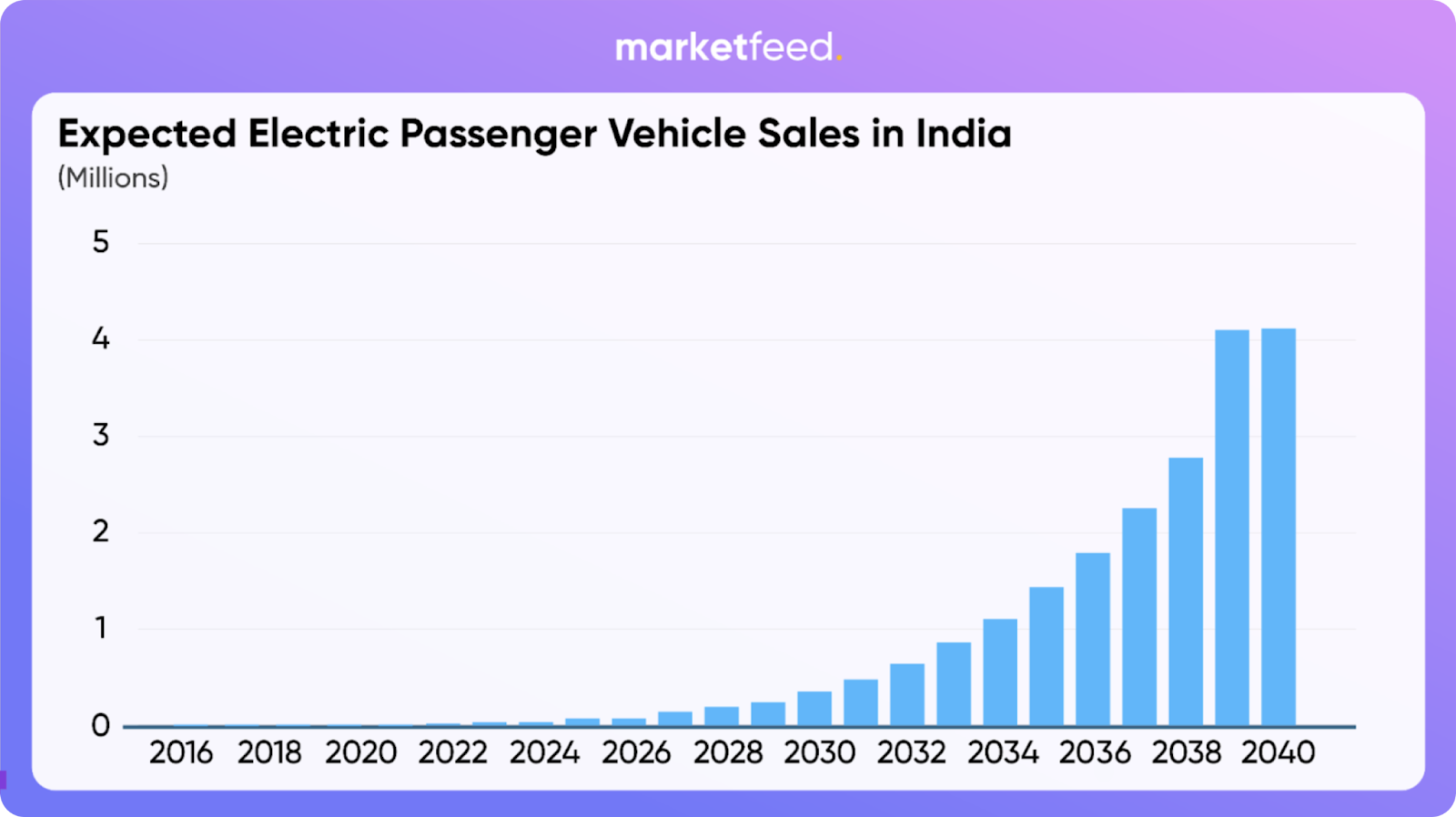
The Government of India has set a target of achieving sales of 60-70 lakh hybrid and electric vehicles (EVs) every year from 2020 onwards. You may also be aware of several Central and state government initiatives aimed at increasing EV production and sales. The primary goal of such programs is to make a seamless transition from internal combustion engine vehicles (ICEs) to reduce pollution levels. It will also reduce India’s reliance on costly fuel imports.

Source: Bloomberg Green

Several Indian companies have already begun to work toward gaining a foothold in the rapidly evolving EV market:

  • Tata Motors
  • Mahindra & Mahindra
  • JBM Auto Ltd (electric buses for public transportation)
  • Olectra Greentech
  • TVS Motor Company
  • Ashok Leyland (through its UK-based electric mobility arm Switch Mobility)

Make in India! (Or China-Plus-One Strategy) 

For decades, China has been known as the “World’s Factory” as it’s the center of global manufacturing or supply chains. It offered cheap labour and production costs. Unfortunately, China’s Zero-Covid Policy has led to prolonged industrial lockouts and supply chain disruptions. So, large multinational companies are adopting a new strategy to avoid investing only in China and diversify into other countries. It’s called “China Plus One”. 

Thus, Indian firms could benefit from this shift by analysing the demand in global markets and ramping up production capabilities. The government has introduced several initiatives like the Production Linked Incentive (PLI) scheme to offer special subsidies for manufacturers in key sectors.

Many listed companies in our country have a competitive advantage to offer the best speciality chemicals, electronic products (like Dixon Tech, Havells India), and textiles (Trident, Welspun India). 


Now, it’s up to you to figure out the right investment options or themes that fit your profile and financial goals. Go for those investments that you clearly understand from your own research. Let’s hope for a profitable 2023! HAPPY INVESTING

Disclaimer: The stocks mentioned in this article are purely for educational purposes. Invest your hard-earned money only after thorough research.

Categories
Editorial

Why Does Everyone Hate the Draft Telecom Bill 2022?

Two months ago, the Indian government released a draft of the Telecommunication Bill, 2022. The Centre believes the time has come to update some of the outdated laws in the telecom sector. While it has some good intentions (well, sort of), the draft bill received a lot of criticism and backlash. If this bill is approved, the government could even indirectly force you to pay for using services like WhatsApp! 

In this article, we dive into the Draft Telecom Bill and see why it has become so controversial.

What is the Draft Telecom Bill 2022?

The Draft Telecommunication Bill, 2022, is an attempt by the Indian government to modernise the existing regulatory framework in the telecom sector. The new bill aims to replace three existing acts: the Indian Telegraph Act (1885), Wireless Telegraphy Act (1933), and Telegraph Wires (Unlawful Possession) Act (1950). 

As we know, India’s telecom sector has gone through a wide range of technological advancements and challenges over the past few decades. So it’s vital to modify outdated regulations and form new ones to keep up with all the rapid changes. According to our government, the new bill aims for “minimum but effective regulation of the telecom sector.”

Key Features of the Draft Telecom Bill, 2022:

  • There’s a proposal to bring over-the-top (OTT) communications services or apps under telecom services. WhatsApp, Telegram, Google Meet, and other internet-based apps/software may have to obtain licenses to operate in our country! However, it’s still not clear what comes under “OTT services.” 
  • The bill brings clarity around spectrum allocation. [A spectrum is a range of radio waves used for communication.] It would strengthen the government’s authority to assign spectrum, with or without auctions. The govt may also relax rules around sharing, trading, and leasing spectrum.
  • The draft bill also includes a provision for the govt to defer, write off, or grant relief to any telecom operator or firm that is facing financial stress. This would benefit struggling firms like Vodafone Idea.
  • There will be strict measures to check and verify documents required to acquire a SIM or create accounts on OTT communication platforms. Know Your Customer (KYC) will become mandatory for user verification. Forging documents may lead to imprisonment of one year or a fine of up to ₹50,000. Telecom operators will have to display the name of the caller when only the phone number is visible (like Truecaller)!
  • The draft bill proposes an efficient way to resolve disputes through arbitration or mediation (settling issues outside courts).

So Why Are People Angry?

Ever since the draft bill was published in September 2022, a large number of stakeholders within the digital ecosystem in India have taken to social media and other platforms to show their outrage against the draft bill! Many feel that the new rules are likely to kill the progress of the government’s own vision of a Digital India. Let’s see how these proposed laws could affect you:

  • Messaging platforms like WhatsApp and Telegram allow crores of Indians to send texts and make video calls via the internet (for free). There are no barriers for such platforms to enter the Indian market and don’t have to pay any fees to provide such services. They don’t have any obligation to share user data with the government.
  • On the other hand, telecom service providers like Reliance Jio and Bharti Airtel have to pay huge fees to the Central govt to use spectrum (airwaves) and provide voice & data services. You and I pay for data packs to access the internet, send messages via WhatsApp, and watch movies/TV shows on OTT platforms like Netflix. 
  • But now, the Central government wants to bring all companies that provide broadcasting services, e-mail services, voice & data services, internet & broadband services, and OTT communication services under its control/purview! It wants such companies/apps to obtain a license to operate in India!
  • Here’s a more shocking proposal mentioned in the draft bill: messaging apps/platforms (which implement end-to-end encryption) may even be required to intercept and disclose any message at the request of the govt! Surely a blatant invasion of privacy.

The Way Ahead

Now, suppose the proposed bill becomes law. The government can essentially levy hefty fees on existing companies (like WhatsApp, Google Meet) to obtain a license and offer services in India. And how would WhatsApp recover these fees? From users like you and me! Such strict laws and fees will also discourage new companies or developers from rolling out path-breaking apps or software to the public! It would kill innovation and digital transformation in our country!

Now, you may wonder why the government has even proposed such strict measures in the telecom sector. Well, they want to improve national security through “lawful” interception! The Centre argues that bringing platforms like WhatsApp and Telegram under its purview could help identify criminals or terrorists. But interestingly, many people have pointed out that there’s already a section in the current Information Technology (IT) Act that allows the government to issue directions to digital communications apps and monitor messages! So realistically, there’s not really a need for new licensing laws! 

The government needs to go back to the drawing board and ensure that the new provisions under the Telecom Bill support all forms of innovation for a greater Digital India! What are your thoughts on the government’s Draft Telecom Bill? Let us know in the comments section of the marketfeed app.

Categories
Editorial

Uniparts India Ltd IPO: All You Need to Know

New Delhi-based Uniparts India Ltd has launched its initial public offering (IPO) today— Nov 30. Interestingly, the company has been trying to launch its IPO since 2014! In this article, we’ll dive into the company and its IPO. 

Company Profile – Uniparts India Ltd

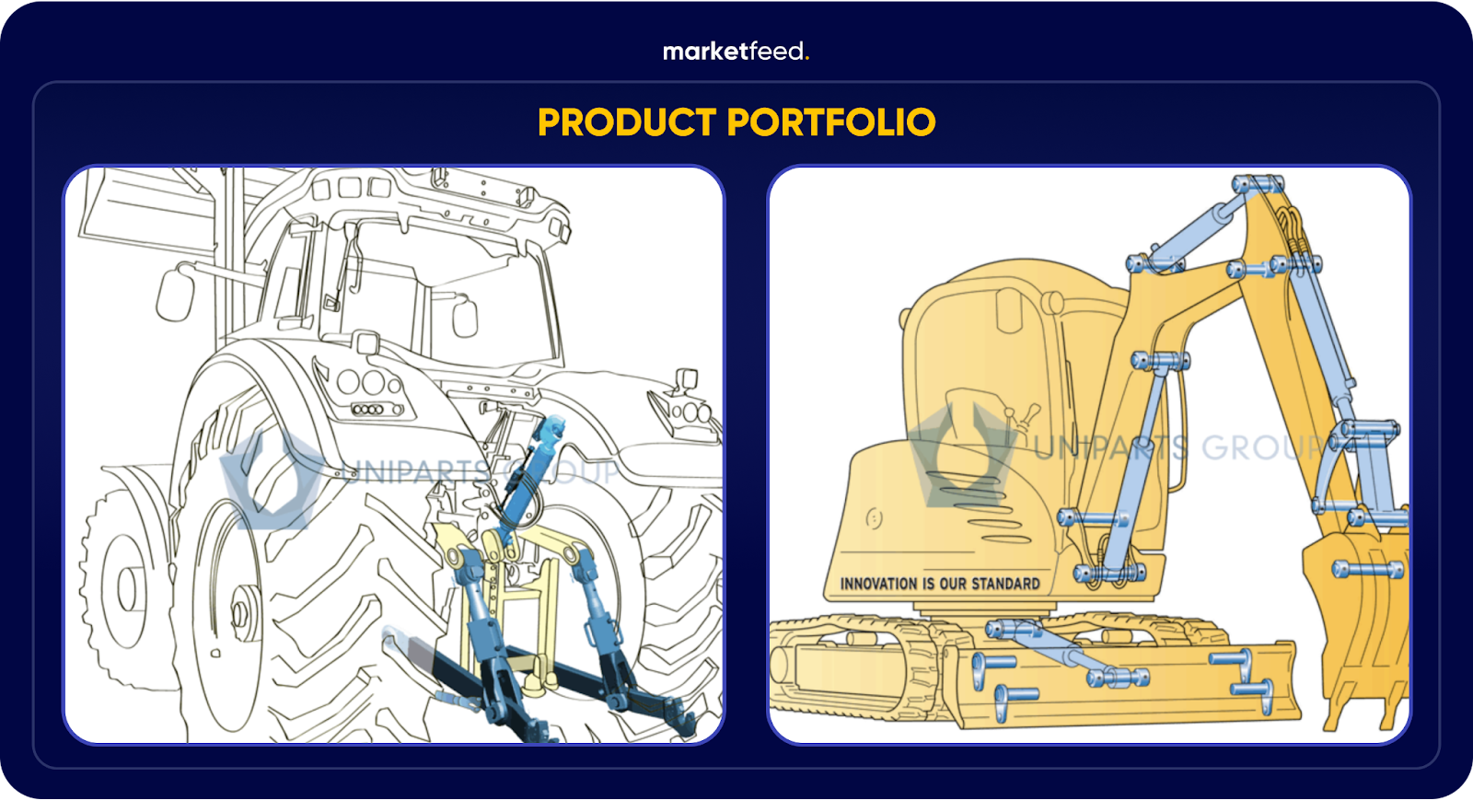
Uniparts India Ltd (UIL) is a global manufacturer of engineered systems and solutions. It is one of the leading suppliers of off-highway systems and components in the agriculture, construction, forestry & mining (CFM), and aftermarket sectors. They design, develop, and manufacture customised products based on each customer’s requirements. The company’s product portfolio includes: 

  1. 3-point linkage systems (3PL) – It is a standardised system used to attach ploughs (a farm tool used for loosening or turning the soil before sowing seed) and other such devices to tractors. 
  2. Precision machined parts (PMP) – These include pins, bushes, and similar components used in articulated joints of various equipment.
  3. Adjacent product verticals of power take-off (PTO), fabrications, and hydraulic cylinders.
Source: Uniparts Group

Most of UIL’s products are structural and load-bearing parts of the equipment and are subject to strict specifications and process controls. The company had an estimated 16.68% market share of the global 3PL market in FY22 in terms of value. It also held a 5.92% market share in the global PMP market in the CFM sector in terms of value in FY22. It has long-term relationships with key global customers, including prominent original equipment manufacturers (OEMs). 

The company has a customer base of over 125 customers across 25 countries. It provides replacements of 3PL parts to organized aftermarket retailers and distributors in North America, Europe, South Africa, and Australia. UIL has five manufacturing facilities: one at Visakhapatnam (Andhra Pradesh), two at Ludhiana (Punjab), and two at Noida (Uttar Pradesh). 

About the IPO

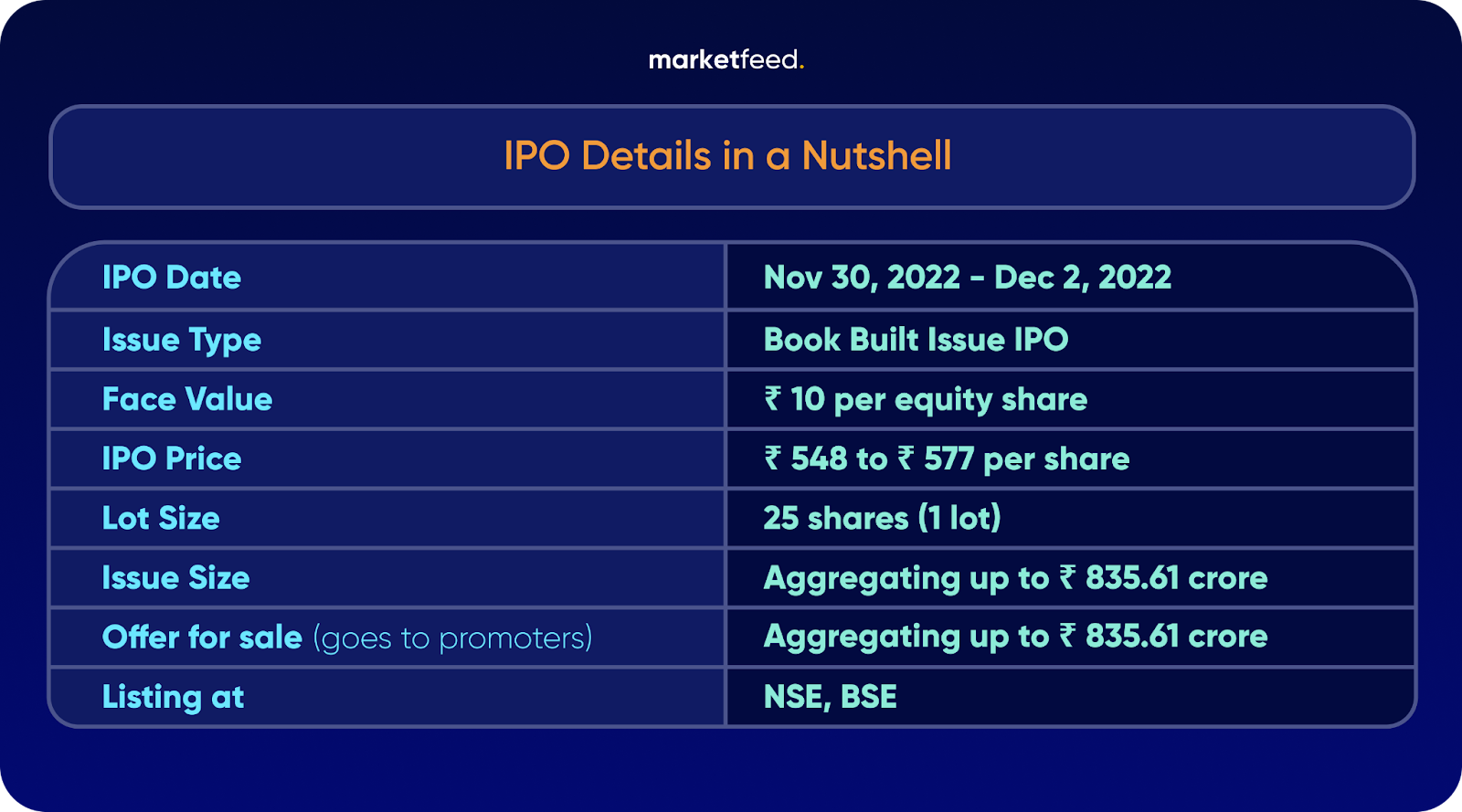
Uniparts India Ltd’s public issue opens on Nov 30 and closes on December 2. The company has fixed ₹548-577 per share as the price band for the IPO.

The IPO is purely an offer for sale (OFS) of 1.44 crore equity shares by promoters and early investors, aggregating to ₹835.61 crore. Individual investors can bid for a minimum of 25 equity shares (1 lot) and in multiples of 25 shares thereafter. You will need a minimum of Rs 14,425 (at the cut-off price) to apply for this IPO. The maximum number of shares that a retail investor can apply is 325 equity shares (13 lots).

The primary objective of the IPO is to provide an exit strategy (or liquidity) for UIL’s promoters. The company aims to achieve the benefits of listing the equity shares on NSE and BSE. The total promoter holding in Uniparts India will decline from 75.54% to 65.79% post the IPO.

Financial Performance

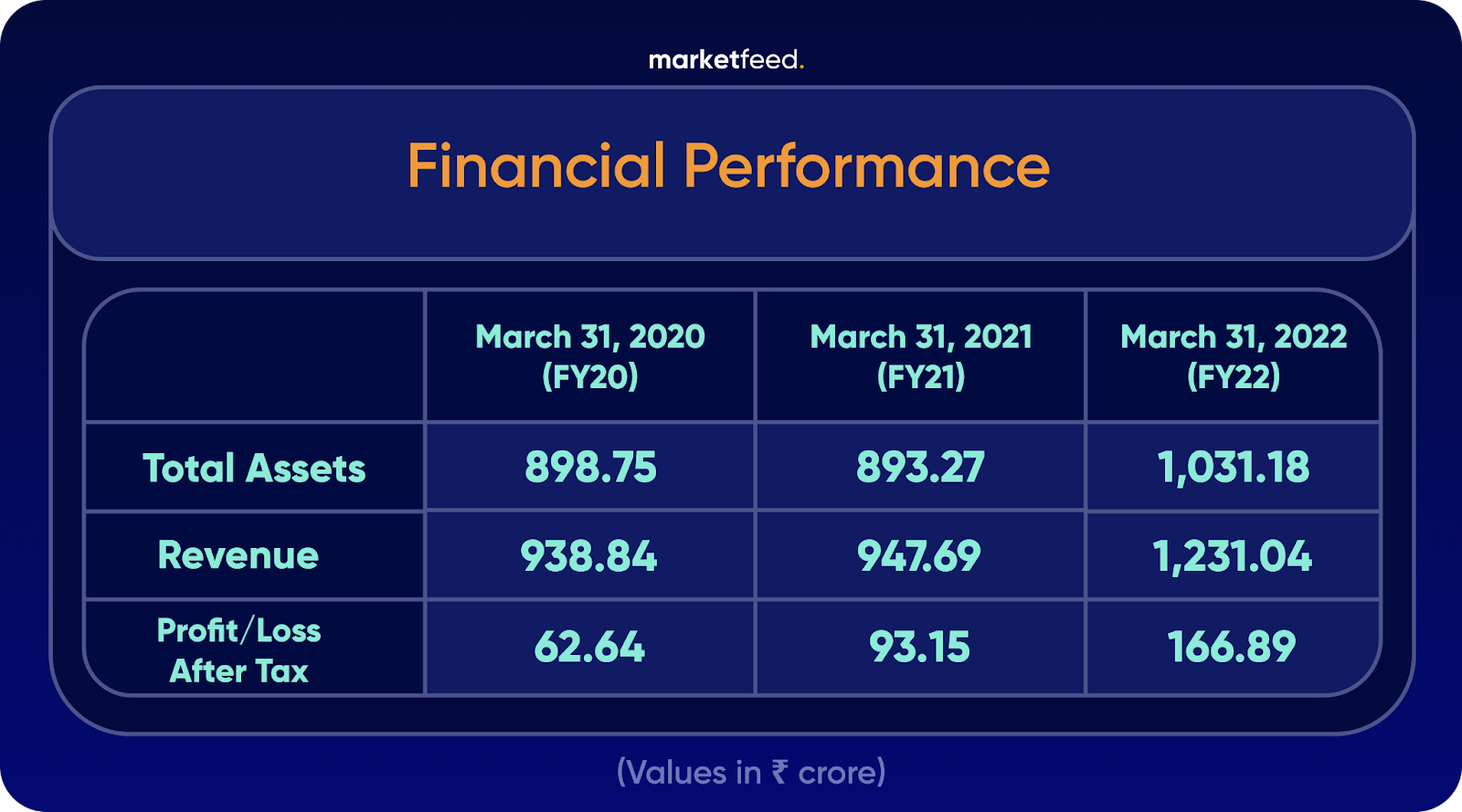
UIL has registered strong growth in both revenue and profits over the past three financial years (FY20-22). The revenue has grown at a CAGR of 16.31% during this period. The company derives nearly 85% of its revenue from exports to international markets, while only 15% is from India. It has also been able to reduce its finance costs substantially.

Consolidated profit stood at ₹50.5 crore for the quarter ended June (Q1 FY23) and revenue at ₹346.84 crore. Meanwhile, total debt declined to ₹114.65 crore in Q1, compared to ₹127.3 crore in March 2022.

Risk Factors

  • Uniparts India derives a significant portion of its revenue (~76.67% as of FY22) from a limited number of customers. Their financial results could be adversely affected if they lose these clients or face a decline in demand from them.
  • The company’s overall business may get severely impacted if they are unable to accurately forecast demand for its products.
  • UIL’s financial condition is heavily influenced by the availability and cost of raw materials, including steel, power, and fuel.
  • They are exposed to foreign exchange rate fluctuations as a result of foreign currency-denominated borrowings and currency mismatches between revenue & expenses.

IPO Details in a Nutshell

UIL filed the Red Herring Prospectus (RHP) for its IPO on Nov 22. You can read it here. Out of the total offer, 50% is reserved for Qualified Institutional Buyers (QIBs), 15% for Non-Institutional Investors (NIIs), and 35% for retail investors.

The company allotted 43.44 lakh shares to anchor investors to raise ₹250.7 crore. The marquee investors include Nomura, Morgan Stanley, BNP Paribas, Nippon Life, and HDFC Mutual Fund.

Conclusion

The global market for three-point linkage (3PL) systems stood at $360-370 million in 2021 and is estimated to grow by 6-8% between 2021 and 2026. Meanwhile, the market for PMP was ₹648 million in 2021, with 80% demand from China, Japan, Europe, and North America. UIL aims to leverage its manufacturing & warehousing infrastructure and global footprint to expand into new geographies and product verticals. The company hopes to acquire new customers and improve revenue from existing customers.

UIL faces heavy competition from listed peers such as Balkrishna Industries, Bharat Forge, and Ramkrishna Forging.

The company has received significant interest from investors in the grey market. UIL’s IPO shares are trading at a premium of ₹71 in the unofficial market. Before applying to this IPO, we will wait to see if the portion reserved for institutional investors gets oversubscribed. Do consider the risks associated with the company and come to your own conclusion.

What are your views on Uniparts India Ltd’s IPO? Will you apply for it? Let us know in the comments section of the marketfeed app!

Categories
Editorial

From ₹4 lakh to ₹7,000Cr: The Story of Bisleri

Water is essential for all life on Earth and is a valuable natural resource. It is all we want during a long day of work or travel. When we need a bottle of water, we often ask shopkeepers, “Bhaiya, Ek Bisleri Dena”: it’s almost instinctive. In fact, some of us may have received an alternate brand when we asked for a Bisleri.

But have you ever wondered what went behind the success of Bisleri? How did it secure a 60% market share in the Indian water bottle industry and dared to be synonymous with water? Well, we’ve got you covered. Here’s everything you need to know about Bisleri, one of the most well-known brands of bottled water.

Bisleri’s Origin

Bisleri was originally an Italian brand created by Felice Bisleri. In 1965, Italian doctor Cesari Rossi and Indian businessman Khushroo Suntook introduced Bisleri bottled water to India by setting up a factory in Thane. It was initially sold only in luxury hotels and restaurants in Mumbai in glass bottles in two varieties— bubbly and still. By 1969, the brand was struggling. It wanted to exit the Indian market and was bought out by Parle Group’s Jayantilal Chauhan for ₹4 lakh (~$50,000 at the time).

Bisleri expanded after 1969 when Parle and Bisleri produced beverages, soft drinks, and soda at the same time. The brand became renowned across India and proposed to expand overseas. The company came up with a unique concept of selling soda in two categories: carbonated and non-carbonated mineral water. This led to a surge in the production of mineral water in India and made it a necessity for the common man.

Bisleri’s Consumer-Friendly Marketing Strategy

  • Product Strategy: Over the years, the company has developed new products in response to growing demand. Bisleri initially started with its packaged water brand. It ran successfully and gave scope to the launch of many other products in the line. Bisleri’s main product (packaged water) has undergone numerous changes and modifications. Later, the company introduced carbonated and non-carbonated soft drinks, energy drinks, soda, iceboxes, etc. Bisleri is also well-known for offering high-quality facial wipes.
  • Pricing Strategy: Bisleri aims to produce safe and affordable products and make them available to all. Its packaged water is priced similarly to its competitors. The differential pricing strategy has been used for the package of larger volumes. The larger the volume, the lesser the price. If the price of the 1L bottle is ₹20 in a specific area, 2L bottle costs ₹30. On the other hand, the company also uses a location-based pricing technique. The prices of products in theatres, restaurants, and shopping malls are higher than in a typical retail shop.
  • Positioning Strategy: Since 1965, the company has been expanding and spreading its reach throughout India. However, not all of its products are available in all regions. The ‘Vedica’ brand is sold in every region apart from Eastern India. This packaged water series is made available in the most remote villages in India.

Promotional Strategy:

Bisleri has adopted several forms of promotional activities such as advertising on television, print forms, personal selling, billboards, and posters. The brand also has a complete website detailing its various products. 

The famous one-liner ‘Biasleri is veri veri extraordinari’ in Bisleri’s first advertisement gave the brand a great deal of exposure. Other notable campaigns include the ‘one nation, one water’, where labelling was done in different languages to connect with people from different regions. ‘Har Pani ki bottle Bisleri Nahi’ promoted the idea that not all water is pure and hygienic like Bisleri.

Challenges Faced

  • Bisleri water bottles are the most popular in the country right now. As a result of its enormous success, several other companies have cloned the water bottle and put it on the market. You can find “Belsri”, “Bilseri”, “Brislei”, or “Bislaar” in local shops. So, be alert when you buy a Bisleri! Bisleri has launched a new integrated 360-degree campaign called ‘Samajhdaar Bisleri Peete Hai‘. It aims to boost customer confidence and promote consumer knowledge about the difference between genuine Bisleri and counterfeit alternatives on the market.
  • Intense competition and new entrants: The Indian market is becoming crowded in the packaged drinking water segment. Many consumer giants monitoring this lucrative industry (such as Tata, Nestle, and HUL) will influence Bisleri’s market share, earnings, and sales. 
  • Repacking Bisleri Bottles: Many locals collect Bisleri bottles and refill them with local unclean water and sell them. This decreases Bisleri’s brand value and can be dangerous for consumption.
  • Local Players: Since there are few barriers to entry in the market for bottled water, there are several competitors who were born and raised in various regions. They are able to give consumers better costs and increase demand since they operate a smaller business than Bisleri.
  • Water Purifiers: The rise in sales of water filters, purifiers, and ROs in the nation can directly affect the business of Bisleri. 
  • Government Rules and Regulations: Government norms for packaged drinking water and the use of plastics can severely impact Bisleri.

Recent Developments

  • Bisleri brand’s turnover for FY23 is estimated at ₹2,500 crore with a profit of ₹220 crore! 
  • On the occasion of Children’s Day, Bisleri International Pvt. Ltd. collaborated with youth changemakers of Delhi to drive the cause of appropriate plastic segregation, disposal, and recycling under its flagship sustainable program— ‘Bottles For Change’.
  • Bisleri International partnered with Ghaziabad Nagar Nigam and IPCA to launch Gazab Street last month, a distinctive street made using recycled plastic waste. The street has been conceptualised to beautify the abandoned street that was once covered in dirt and filth. 
  • Tata Consumer Products Ltd reportedly plans to acquire packaged water giant Bisleri for about ₹7,000 crore! TCPL is aggressive in the fast-moving consumer goods (FMCG) space and aims to be at the top. It also sells packaged mineral water under the Himalayan, Tata Copper Plus Water, and Tata Gluco+ brands. Acquiring Bisleri will help them attain the No. 1 position in the segment. 

Bisleri’s Mission

With the idea that was once called madness, Bisleri has gained a 60% stake in India’s sealed water bottle industry. It has been able to grow its customer base and maintain its lead in the industry.

Today, Bisleri has dominated the Indian market for bottled drinking water for over two decades with a large product line. It has 122 operational plants (13 owned) and a strong distribution network of 4,500 distributors & 5,000 distribution trucks across India and neighbouring countries, Bisleri stands true to its promise of providing safe, pure & healthy mineral water to consumers for the last 50 years.

Almost every shop in India sells Bisleri’s green-capped bottles and has become a trademark of every wholesaler. With TATA taking over, will it be a sweet farewell to the legacy and rule of Bisleri, or will TATA nurture it and help attain new heights? Let us know your views in the comments section of the marketfeed app!