Categories
Editorial

The Pfizer Vaccine – All You Need to Know

A major announcement from the United States on November 9 has completely lifted our hopes and spirits! Since March, scientists around the world have been working tirelessly towards creating an effective vaccine against the novel coronavirus. And now, drugmakers Pfizer and BioNTech have come out with a very positive result. The vaccine developed by the two companies was found to be 90% effective in preventing Covid-19 infections in ongoing Phase-3 trials.

We saw that the announcement made a ripple effect across the world, with the stock markets reaching new highs. Let us dive deep into the details of the vaccine, and recent developments surrounding it.

  1. Pfizer’s Covid-19 Vaccine Trials
  2. What Happened After the Announcement?
  3. Will the Vaccine be Available in India?
  4. Will a Vaccine Solve All Our Problems?

Pfizer’s Covid-19 Vaccine Trials

US-based Pfizer Inc and Germany-based biotechnology firm BioNTech had begun their collaboration in March 2020. Their partnership is aimed at co-developing and distributing a potential Covid-19 vaccine. Here are some important facts about the recent Phase-3 trials of the potential vaccine:

  1. The Phase-3 trials of the vaccine involved 44,000 participants in six countries. Half of them were administered with the vaccine, and the other half were given a placebo- a pill with no effect (like a sugar pill). A participant would not know if he got the vaccine or the placebo, thus helping to analyse the psychological effects.
  1. As per Pfizer’s interim analysis, the vaccine is 90% effective in preventing Covid-19 in participants who had no prior history of a SARS Cov-2 infection. However, Pfizer had not disclosed how many participants from the total number were used to formulate this interim analysis. In this sample, it is not clear how many had received the vaccine, and how many had received the placebo.
  1. Pfizer has stated that protection against the virus is achieved 28 days after the injection of the vaccine.
  1. The announcement made on November 9 offers the first compelling evidence that a vaccine can prevent Covid-19. Pfizer’s report from Phase-3 trials is being welcomed by other scientists around the world. It also puts Pfizer-BioNtech ahead of the other vaccine makers.
  1. Pfizer is planning to approach the United States Food and Drug Administration (USFDA) for emergency authorization of the vaccine later this month. Meanwhile, the Phase-3 trials will continue until there are 164 Covid-19 cases among the volunteers. This final analysis will confirm the actual percentage of effectiveness of the vaccine.
  1. An important factor to be noted is that experts in the field are yet to receive an answer on how much protection the vaccine offers, and for how long it would last. So, we can say that this announcement is being taken with “cautious optimism”.

What Happened After the Announcement?

Ever since Pfizer made the statement on Nov 9, we can see that important decisions are being taken at a very rapid pace. According to a statement from Pfizer, the company has plans to globally produce up to 50 million vaccine doses in 2020, and up to 1.3 billion doses in 2021.

Reports have also stated that many countries have already made deals with the drugmaker and have plans to hoard the vaccine. The US Government has signed a $1.95 billion (~Rs 14,474 crore) deal with Pfizer to buy 100 million doses. According to Alex Azar, the US Health Secretary, their government would begin vaccinating Americans in December. This is only possible if Pfizer submits the initial positive data from its vaccine trials to the USFDA, as soon as possible.

On the day of the announcement, Pfizer CEO Albert Bouria made a very calculated move. As per a regulatory filing, 1,32,508 Pfizer shares were sold by the CEO at a price of $42 per share. This means that he had sold $5.6 million of his shares in the company. This has raised many eyebrows as almost 62% of his entire stock in the company was sold right at the peak. Several questions have also been raised regarding the effectiveness of the vaccine after this high profile stake sale.

Will the Vaccine be Available in India?

Our Indian Government is now in discussions with Pfizer to make the vaccine available in our country. So far, the American firm does not have a distribution pact with any Indian company. It has been reported that India would soon sign an agreement with the US drugmaker. However, India has some significant hurdles to overcome to ensure that we can obtain Pfizer’s vaccine.

In a statement made on November 10, Kiran Mazumdar Shaw, the Managing Director of Biocon, stated that the Pfizer vaccine is unlikely to make its way to India. The reason that she had put forth was that the vaccine requires an ultra-cold chain of minus 70 degrees. This means that the vaccine has to be stored and transported in an ultra-cold facility. Currently, India does not have the necessary logistical support to conduct such a highly specialized task. The cost of the vaccine in India may also become very high due to this reason.

Around the same time, we had also received some positive statements from Snowman Logistics. The company has found an opportunity to improve its business, by creating a super-cold storage facility for Pfizer’s Covid-19 vaccine. Sunil Nair, the CEO of Snowman Logistics, has stated that they will come up with a technology to address these requirements. On November 10, the share price of Snowman Logistics saw a surge of 14% in an intraday movement to Rs 40.95. 

Last month, Apollo Hospitals had announced that they are ready to administer 10 lakh doses of the Covid-19 vaccine per day. Today, the company’s CEO, Sunita Reddy, has said that they have the cold storage chain ready for the Pfizer vaccine.

Will Vaccine Solve All Our Problems?

Scientists have yet again proved to become a worthy opponent in the fight against a deadly virus. We have finally received an amazing update from the vaccine makers. A very effective vaccine would hopefully be available all over the world soon. The news from Pfizer had also created a very positive sentiment around the global markets. We also saw our stock market indices reaching new highs.

Our Indian companies are also preparing to create a possible technology to store and transport the vaccine. All the issues caused by the Covid-19 pandemic would soon be countered. Although a vaccine would not immediately turn around the world economies, it gives hope that there will be a brighter future going ahead. As Indians and as human beings, in the face of a problem such as Covid, we will come back much stronger. The economic conditions could become more stable, and more importantly, things are finally looking very optimistic!

Let us look forward to the latest updates surrounding the vaccines, including many others from India and around the world. We must also be aware of how our country is planning to further gear up to make the vaccine available for all citizens. And as intelligent stock market participants, identify which all sectors will benefit from the announcement of a vaccine.

Categories
Editorial

The UPI Transaction Cap – All You Need To Know

On 5th November, an official notification from the National Payment Corporation of India (NPCI) came as a bitter surprise for digital payment companies. The notice stated that the amount of UPI transactions on third-party applications would be capped at 30%. This would impact firms such as Google Pay and PhonePe, and also consumers like you and me. Let us understand more about why this limit is introduced and what its effects could be.

Why was this Rule Introduced?

Since 2016, India has been seeing a rapid growth of online payment systems. We know that there are many third-party Unified Payments Interface (UPI) apps such as Google Pay, PhonePe, Paytm, and Amazon Pay. These apps dominate the payment services industry. With these apps, we can send or receive money through our bank accounts with great ease. These companies do not charge us for transferring funds, and even provide us with cashback offers as well. Since these apps have a large number of active users, they can be found as a payment option on almost all online platforms.

Source: BloombergQuint

As lockdown restrictions were introduced this year, these UPI apps have reported a sharp increase in its active user base. India’s digital payments ecosystem had registered almost 200 crore monthly transactions through the UPI network in October 2020. At the same time, Google Pay and PhonePe together hold more than 80% of the market share in this industry. In fact, on November 9, the Competition Commission of India (CCI) had ordered a detailed probe against Google Pay. It has been alleged that the company is using unfair anti-competitive practices.

To ensure that these big companies do not control the payments market, NPCI believed that it was time to introduce a strict limit on the number of UPI transactions for each payment app. They have stated that the new rule would create a more competitive market. It would also protect the UPI ecosystem, as it is scaling up at a rapid pace. NPCI has also stated that this limit would bring down transaction risks and failures.

Hence, a 30% cap on the total volume of UPI transactions through third-party app providers (TPAPs) would be imposed from January 2021. The 30% cap will be calculated based on the total volume of transactions processed in UPI during the preceding three months. These companies would get two years to ensure that the new rules are imposed in a phased manner. It would also apply to the new member of the industry- WhatsApp Pay. 

Interestingly, the new limit would not apply to PayTM and Reliance’s Jio Payments Bank. This is because they have payments banking licenses and do not fall under the category of third party apps. If you have noticed, a UPI ID on Google Pay would end with @okicici or @okaxis while it ends with @paytm on PayTM.

How Would it Affect Third-Party Apps?

It is believed that this rule could cause a major effect on the user experience of third-party UPI apps. The main cause of rapid innovations in the UPI platform was only because of the user experience created by Google Pay and PhonePe. If you have noticed, there are options ranging from paying your monthly expenses to even splitting a bill amongst your friends. These are the main features that popularised digital payments in India.

With this new limit, the third-party apps would have to remove small online merchants from their platforms. They would also have to cut back on incentives such as coupons and cashback. These were important features that allowed payment apps to attract more individuals to join the digital movement. More importantly, the number of UPI transactions that an individual can conduct per day would be cut down from these apps. Once the daily limit has been reached, people would have to use less-popular UPI apps to make essential payments. 

“This announcement has come as a surprise and has implications for hundreds of millions of users who use UPI for their daily payments and could impact the further adoption of UPI and the end goal of financial inclusion,”- Sajith Sivanandan, the Business Head at Google Pay India.

The Entry of WhatsApp Pay

Facebook-owned WhatsApp has finally received approval from RBI and NPCI to launch its digital payment platform in India. According to the company’s records, the messaging app has an active user base of almost 40 crore members in our country. This would be a great advantage for the company as it makes its entry into the UPI market. Similar to the existing UPI payment apps, WhatsApp will not be charging a transaction fee. A report from the Times of India suggests that WhatsApp could end up achieving a market share of about 30%. This would automatically lead to a decline in the share of both Google Pay and PhonePe in the UPI industry.

However, they are faced with some major hurdles. Even with such a large user base, the regulators have ensured that WhatsApp Pay will only be launched in a phased manner. What this means is that only 2 crore users will be able to use the platform to conduct transactions in the initial stages. Also, the introduction of the 30% cap would harm the user experience of the app. It seems like the entry of WhatsApp Pay has come at a rather difficult time in this highly competitive industry. 

The Future of UPI in India

The future of payments is digital. India has successfully launched multiple methods (such as NEFT, IMPS, UPI) to support this transformation. According to a report from Crisil in 2019, digital payments in India seem to grow at a CAGR of 12.7%. It may jump to Rs 4,055 lakh crore in FY24 with a five-year CAGR of 20%. Also, the prediction shows that all UPI payments will dominate the payments space with 59% payment transactions. For the first time in India, UPI payments had exceeded ATM cash withdrawals due to lockdown restrictions this year. These are very promising figures that would ultimately help our country to establish a much easier flow of funds.

What we are witnessing now is a complete restructuring of UPI payments. This method was completely free of charge and a much-loved mode of online transactions. Now, banks which offer UPI service in our country have started to charge a specific transaction fee on all UPI transfers. Several banks such as Axis Bank and Kotak Mahindra Bank are already charging Rs 2.5 for amounts of up to Rs 1,000. These charges are levied after a free transaction limit is crossed. So, it would be applicable to all the payment apps we had mentioned earlier.

Even if these small charges are imposed, we could say that the usage of UPI transactions across our country would not decline. It would remain to be one of the most convenient and user-friendly modes of payment for all our needs. Let us look forward to how these payment companies would implement the new rule. Only time will tell if users would react positively to these changes. 

Categories
Editorial

Joe Biden becomes 46th President of The United States of America

Since last Wednesday, the whole world had been eagerly waiting for a final verdict on the US Presidential Election. Due to this, we were sure that our stock markets would be volatile last week. Here at marketfeed, we had analyzed how the elections would affect the stock markets. You can read more about it here

On 7th November, around 10 PM IST, we finally received a verdict on the US Elections. Democrat Joe Biden has beaten Donald Trump to become the 46th President of the United States. It was definitely a long and tiring wait for the result, and would most likely have an impact on our stock markets on Monday. Let us understand why the final result was delayed, and what the next steps would be.

Why was the Vote Count Delayed?

The main reason for the delay has been linked with the postal vote system. Due to the ongoing Covid-19 pandemic, many citizens took a firm decision to mail in their votes. These mail-in ballots had been sent in much before the actual election date. However, each state had received a different timeline and deadline for when they should be tallied. These postal votes usually take longer to count as they have to go through a strict process- to ensure that they are not fraudulent.

Another factor to be considered is that the number of voters has been much larger than ever seen before. It has been estimated that around 99 million people had registered to vote this year. We can imagine the time it would take for the officials to check each vote. Due to these reasons, it took four days to ensure that a clear winner had been announced.

The 46th US President

After two days of election day, it was found that the results which come from the states of Georgia and Nevada would be the final decider. On Friday, Georgia had even announced a recount of votes as the presidential race was too close to call. However, on Saturday, the Democratic party candidate took the lead in Pennsylvania with a very small margin. Soon after this, major channels such as CNN, NBC News, and CBS News called the presidential race in Biden’s favour. 

Thus, Joseph Robinette Biden Jr. has been formally elected as the 46th President of the United States of America. According to the latest updates, it has been estimated that a record 74 million people had voted for him. According to many, Joe Biden has now ended a presidency that had caused political unrest and caused division in the United States. The President-Elect, in his victory speech, has promised to ‘bring stability to the country after four turbulent years under Trump’.

Kamala Harris, who had been chosen by Biden as his running mate, would become the first woman Vice President. She is also the first person of Indian-origin to hold such a powerful position. This is truly a great moment in world history and would be an inspiration for future generations.

The Inauguration Day

Joe Biden is all set to be inaugurated on January 20, 2021. Inauguration Day marks the swearing in of the newly elected President and the Vice President. The newly elected representatives will take the Oath of Office. They would also make their first official address of the term- which is referred to as the inauguration address.

What are Joe Biden’s key policies?

  • Biden has set 2050 as the target year for a 100% clean energy economy and net-zero emissions.
  • He would seek to repair relations with key partner countries that ‘suffered’ in the Trump era. This would mean the re-establishment of treaties with allies in East Asia and NATO partners in Europe.
  • Biden has promised to make sure that corporations and the very wealthy pay ‘their fair share’. He has also stated that he ‘won’t ask a single person making under $400,000 per year to pay a penny more in taxes’.
  • Biden would try to reposition America as a country leading the global charge in confronting the world’s most pressing challenges such as climate change and arms control.

“With full hearts and steady hands, with faith in America and in each other, with a love of country — and a thirst for justice — let us be the nation that we know we can be.” – President-elect Joe Biden in his victory speech on Saturday. Let us hope to see ever better relations between US and India in the future.

Categories
Editorial

The Coal Mine Auction Explained – All You Need to Know

The Indian Government is currently conducting the first-ever commercial auction of its coal mines. Recently, you may have also read that listed companies have won the right to operate these mines. What could have made the Government take such a big step in opening up coal to private players? How will the private companies benefit from it? What will happen to Coal India? Let us dive deep and understand how this process would work.

A Brief History of Our Coal Industry

Our country has been truly blessed with some of the greatest resources known to man. And, one such important and highly useful resource is coal. We have a long history with coal mining that dates back to the 1770s. The British East India Company was one of the first enterprises to tap into the coal industry.  In the 1900s, there was a great demand for coal during the World Wars. As we know, it was used to power steam engines in Indian Railways even into the 1990s.

After Independence, the coal mining sector was largely supported by the Five-Year Development Plans of the Central Government. Technological improvements were also introduced in order to increase the efficiency of coal production. 

There was a dark side to coal mining as well. In the 1970s, it had been found that many private players were adopting unscientific mining practices. The workers were highly exploited with poor work conditions. This became a matter of great concern for the Indian Government. Under the Indira Gandhi administration in the 1970s, it was decided that coal mines will be nationalised. They introduced the Coal Mines (Nationalisation) Act in 1973. In two main phases, operations of most private coal mines were handed over to the state governments. To increase the overall operational efficiency of the coal sector, Coal India Limited (CIL) was established in 1975.

Is the Coal Industry Declining in India?

Let us take a look at some important figures surrounding the coal industry. India has the fifth-largest coal reserves in the world. In 2019, it was estimated that the country had reserves amounting to 106 billion tonnes. The states such as Jharkhand, Chhattisgarh, Odisha, and Telangana have the largest deposits of coal.  India is also the second-largest producer of coal, after China. It is the main source of electricity generation in our country and accounts for more than 70% of the total domestic supply. Coal India Limited contributes around 82% of the total coal production in India. This listed firm has also turned out to be the largest coal-producing company in the world.

Despite these very impressive figures, the coal industry in India has been declining. Even though we have a high reserve of coal, we are actually importing coal from other countries. Over the last few years, it has been estimated that India is importing around 240 million tonnes of coal per year. And, the cost of acquiring this coal has been valued at Rs 1.7 lakh crore

The main requirement for India is coking coal, which is a key raw material that is used in the production of steel. It has been found that the availability of high-quality coking coal is limited in our country, and is almost entirely imported. These are very shocking expenses for a country that has been boasting about its coal reserves for decades. Due to all these reasons, there was no option for the Government, than to introduce concrete steps to discover new reserves and improve domestic production. 

The Coal Mine Auction

The government has now realized that the coal industry should receive another massive boost. Earlier this year, the central government announced plans to open up the country’s coal reserves (mines/blocks) to the private sector. Under the Atmanirbhar Bharat Abhiyan, around 41 coal mines (or coal blocks) will be auctioned off to companies that have a previous history of mining activities. The main priority is to ensure that we limit the import of coal from other countries and become self-sufficient in coal production. 

These auctions invite participants to place bids on the coal mines that are located in different parts of the country. Successful bidders will receive leasing rights for a specific period, from the state governments. The important fact to be noted here is that it would be the first time that private players are allowed to mine coal for commercial purposes, without any restrictions on its end-use. The private companies can also sell the produced coal to other entities. 

The earlier mechanism worked in such a way that companies had to pay a fixed amount of Rs 150 per tonne of coal produced, to the government. Now, as per the specified rules for the takeover, private companies will only have to share a percentage of their sales revenue (from coal production) with the government. The final bid that a private company makes in the auction would be the percentage of their revenue that will be shared with the government. What this means is that higher the percentage of revenue a company is willing to offer the government (in the auction), higher are the chances of them winning a particular coal block/mine.

Will Coal India be Affected?

We learned that Coal India Limited (CIL) accounts for 82% of India’s coal production. With the introduction of the coal auctions, the government has removed the monopoly status of Coal India. However, it was only an unwritten rule that Coal India would be the dominant entity in the coal industry. The lockdown restrictions amidst the Covid-19 pandemic had also caused negative effects for the company. The company’s total production activities had declined by more than 25% this year. It has been facing issues concerning its cash reserves, which means that the company has not been able to obtain cash for its short-term needs. They were also found to be one of the biggest polluters in the country. All these factors have led to the downfall of the company.

Since Coal India is currently not efficient in its operations, some competition from private players will help the industry utilise India’s core resources to its fullest.

Recent Developments

The auction of 41 coal blocks was launched by Prime Minister Narendra Modi in June 2020. However, it received very little interest from private players during the initial stages. This led the government to reduce the number of coal mines for auction to 38. In September, the Coal Ministry announced that it had received 76 bids from various private companies for only 23 coal mines. The remaining coal mines/blocks did not receive any bids. Interestingly, it was reported that the Adani Group placed the highest number of bids as compared to other private companies. They had placed a bid on 12 coal mines. 

On 3rd November, reports came flying about stating that listed companies such as Vedanta and Hindalco had placed the winning bids for acquiring the coal mines. This means that they will be among the first private sector companies to operate coal mines in India with no restrictions on its end-use. Vedanta Ltd has placed the winning bid for the Radhikapur West Coal Block in Odisha. Hindalco has won the right to operate the Chakla Coal Block in Jharkhand. Other companies such as Aurobindo Realty and Infrastructure Pvt Ltd. and JMS Mining Pvt Ltd have also won bids for coal mines in Maharashtra. It certainly seems that the auctioning process of coal mines has seen great demand from many private players.

Conclusion

This new initiative by the government is all set to provide major support to improve the production of coal in India. It is surely of vital importance that we become self-sufficient in this field and cut high import costs. However, some important questions arise here- is the government too late to make these changes? Or, were all these steps necessary in the current scenario?

Our country is currently seeing a shift towards renewable energy sources. The cost of producing power through cleaner sources has become less expensive. This could be one reason why most companies stayed away from placing bids on the coal mines. Another factor to be considered is the health factors surrounding coal mining in India. Most people from villages that have coal mines are facing respiratory issues. All these make us wonder if the government is making the right decision to hand over coal mining operations to the private entities. A system could be kept in place wherein the companies are monitored and held accountable for their actions.

As the auction process goes on, we can see that more publicly-traded companies have won the rights to the coal mines spread across the country. Let us wait and watch for the final results and announcements that will be made in the coming days.

Categories
Editorial

US Tech Giants’ Results and AntiTrust Cases

Global tech giants Alphabet, Amazon, and Facebook reported their third quarter (Q3) results on October 29. Apple released its fourth-quarter results as well. During the current financial year, these companies have exceeded all expectations and have emerged as the world’s top-earning corporations. As we know, there has been a massive transformation and growth in online businesses amidst the Covid-19 pandemic. And, the recent results from these companies have completely crushed all street estimates. Let us find out how they performed during the July-September period.

Alphabet Quarterly Report

Google’s parent company, Alphabet Inc, had its first-ever revenue decline in Q2. However, the company has reported a very impressive 14% year-on-year (YoY) increase in revenue to $46.17 billion, for the quarter ended September (Q3). The company has completely beaten estimates that were made by financial analysts, and has returned to sales growth. A major portion of its revenue comes from advertising through its platforms such as YouTube. During the July-September period, revenue from YouTube ads has seen a 32% YoY jump to $5.04 billion. We can also see more businesses and individuals using Google’s Cloud Platform to perform their daily tasks efficiently. Hence, there has been a major increase in earnings from that segment as well. 

From what we can understand, the company has made a complete rebound in its revenue generation from Google Ads, as compared to the previous two quarters. Businesses around the world had seen a major decline in sales during lockdowns, and are now investing more in advertising through various Google platforms. The Cloud Platform has also helped to provide support to the work-from-home (WFH) model for corporations. Alphabet CEO Sundar Pichai has stated that Q3 has been ‘a strong quarter, consistent with the broader online environment’.

Last month, the US Justice Department filed one of the biggest antitrust lawsuits against Google. The IT company has been accused of partnering with other tech giants for ensuring that its rival companies do not rise to power. Google has also been criticized for using its search platform illegally to maintain its power.

Amazon Quarterly Report

Amazon.com, Inc is another company that completely beat estimates provided by analysts such as Yahoo Finance. The company has reported a 37% year-on-year (YoY) increase in revenue at $96.1 billion, for the quarter ended September (Q3). Even though lockdown restrictions were lifted in most countries, people preferred to get essential commodities through online methods. Third-party merchants also pay Amazon to advertise their products on its online shopping platform. The company has also created more than 4 lakh jobs this year, in order to support the surge in online sales.

The retail giant also receives a major part of its revenue from Amazon Web Services (AWS). It is one of the leading cloud technology platforms in the world, and accounts for a majority of Amazon’s total profits. There has been a 29% YoY increase in revenue from AWS to $11.6 billion, in the third quarter of the current financial year. On the other hand, Amazon’s video streaming service has been constantly registering a massive spike in viewership. Those movies which could not be released in theatres were also launched through Amazon Prime Video.

This year, Amazon has come under the scanner of regulatory authorities over a number of cases. It was found that the prices of essential items were increased in the US. Merchants who sell their products through Amazon have been under massive pressure. These sellers have not received any support from the retail giant. The company was also criticized for its treatment of warehouse workers. Interestingly, amidst all these accusations, it had been reported that Amazon employees were given very high bonuses during the lockdown period.

Apple Quarterly Report

The revenue for Apple Inc. was supported by international sales, which makes up 59% of its overall sales. The company has reported a 1% year-on-year (YoY) increase in revenue to $64.7 billion, for the fourth quarter ended September. The company’s financial year is calculated as the 52-week period that ends on the last Saturday of September. Apple’s iPhone sales were down by 20% YoY to $26.44 billion. Even though there had been strong iPad and Mac sales, it was not enough to make up for the decline of iPhones. 

With the launch of its new iPhone 12 and entry into 5G support, Apple is highly optimistic about a major boost in sales within the next few quarters. The company is also changing its focus to improve its streaming services, which include Apple TV+ and Apple Music.

Over the last few months, the company has been criticized for increasing its cut in Apple Store purchases to 30%, which is very high. Apple has also been accused of anti-competitive behaviour, and illegally maintaining power over its iPhone and iPad apps.

Facebook Quarterly Report

Facebook Inc. has reported a 22% year-on-year (YoY) increase in sales to $21.47 billion. Just like the previous three companies, the social media giant has also beaten street estimates. Facebook, which also owns Instagram and WhatsApp, stated that its daily active user base has increased by 12% YoY to 1.82 billion. With families and friends being separated due to Covid-related restrictions, there had been a spike in the use of these apps in the previous quarters. Interestingly, this growth in user base in the US and Canada has slowed down in Q3. Certain analysts have termed it as a ‘very rare decrease’, and was probably due to TikTok gaining all attention.

Facebook also receives a major part of this revenue from digital advertising, which has shown a great recovery as compared to previous quarters. Last week, the company also added shopping and pricing features to WhatsApp Business, in a move to help small enterprises to boost their sales. Facebook CEO Mark Zuckerberg has announced that the company would be focusing on services related to virtual and augmented reality. As we can see, there is a huge demand for these platforms in the global markets today. 

There had been a lot of criticism aimed at Facebook, especially regarding the handling of political content on its social media platforms. Also, there was an ad boycott movement by major companies to support #StopHateForProfit, over the last few months. However, these issues have not created an impact on the company’s revenue.

The Attack Against US Big Tech

Now, we shall keep these outstanding results aside for a moment. When people found out the methods through which the US Big Tech companies operate, many red flags had been raised. The non-ending competition amongst these companies has made them extremely greedy for more profits. Several institutions and individuals have protested against these ‘monopolistic acts’. Like many who watched ‘The Social Dilemma’ on Netflix, I too was pretty astonished by the various methods by which these companies used to attract more ‘customers’. The use of artificial intelligence (AI) to manipulate the behavior of individuals is evident by the high rise in the number of active users. 

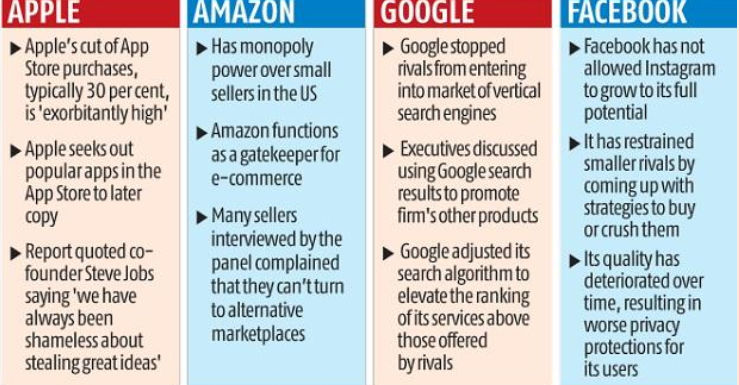
The US legislators have studied the long-standing issues surrounding the matter. They have created a panel to make Amazon, Google, Facebook, and Apple more accountable for their actions. Here are some of the factors for which the companies are under the scanner of US lawmakers:

Source: Business Standard

The Antitrust Subcommittee of the Judiciary Committee in the US is currently looking into the matter. The CEOs of all four companies have already made several appearances before the panel. However, like most cases, these tech companies find loopholes and seem to simply not mind about its consequences. 

With these impressive Q3 results, we can see that no factors seem to affect the growth in their high revenues. At a point when all economic activities were hit, these companies used their position to make the best out of every new possibility. A fine of thousands of crores is okay for these companies when they are making ten thousand crores of profits. Do not forget that these companies are also heavily involved in India, and its development. Let us wait and watch how the Big Tech companies are planning to further dominate in their respective fields.

Categories
Editorial

How Will the US Elections Affect Stock Markets?

The much-awaited U.S. Presidential Election is all set to take place on 3rd November. Over the past few months, this is one major topic that has been discussed extensively. People from all over the world are eagerly waiting to learn about the election’s final result. Who will be the next powerful individual in the world? Will Donald Trump remain in the White House for another four years? Or, will ex-Vice President Joe Biden emerge victorious?

Looking from the point of view of stock markets, it is sure that there would be high volatility. Most investors are worried about the outcome of this election, as they believe that their returns could be affected. Let us look at some important facts surrounding the U.S elections. We shall also find out if it would cause an effect on the stock markets.

What Happens During the Election Period?

High Volatility

Stock market volatility would increase during the election period. In cases where the election is highly competitive or tight, historical data from financial analysts has shown that stock markets are likely to become highly volatile. We had seen this during the last US election in 2016. Hillary Clinton and Trump had faced a very tight election. 

In this particular case, the factor that affects stock markets are the economic policies that are proposed by the two major parties- the Democrats and the Republicans. Interestingly, a research paper from the University of Pennsylvania has stated that stock markets have delivered higher returns when Democrats were in power. However, this keeps changing with time.

When we analyze the general political views amongst American citizens, many believe that stock markets would perform better if Donald Trump is re-elected. This is because his economic policies involve very loose regulations and fewer taxes for corporations. On the other hand, Joe Biden has proposed to raise taxes and put more cash in the hand of normal citizens. This would not work in favour of large businesses. So, we need to understand how these policies will ultimately bring a positive or negative effect on the stock market.

Political Biases

Every individual would have their own political biases or opinions. In the US, many people have shown their support for the views of the Republican Party. Those who do not agree with their policies or views are supporting the Democratic Party. A person who aligns with a particular set of views would think that their parties’ win would be good for the economy and the stock market. In the short run, these opposing views between individuals can have an impact on stock prices.

We have to consider another important factor here. The stock market aggregates the expectations of all participants. Many individuals are not aligned with any political views. Due to this reason, historical data has also shown that the election process or political views have not caused any deep impact on the long-term performance of the stock market.

When we look at past records, market volatility begins to rise about 45 days before the election. The volatility seems to be at its peak within one week before the election date. This was evident during the current election year as well. Global markets had crashed in the last few weeks, due to the uncertainty in the US elections. However, the fall in stock markets was also due to European countries reintroducing lockdowns, as coronavirus cases have been rising rapidly. 

What Happens After the Election?

In order to understand this part, let us look at historical data from the United States Bank. For more than a century, data has shown that bonds or debt instruments have performed better- immediately after an election. Regardless of which individual or party competes in an election, people are likely to take fewer risks in the stock market. They would use bonds to improve the safety of their returns.

Another historical data from the U.S Bank shows the following: if a new political party gets elected to power, there is likely to be a 5% growth in the stock markets. In case the same political party gets to remain in office, there would be a stock market growth of 6.5%. Even if the markets go down, there would be a very rapid rebound or recovery. Let us see if this would turn out to be true after the highly anticipated election result of 2020. 

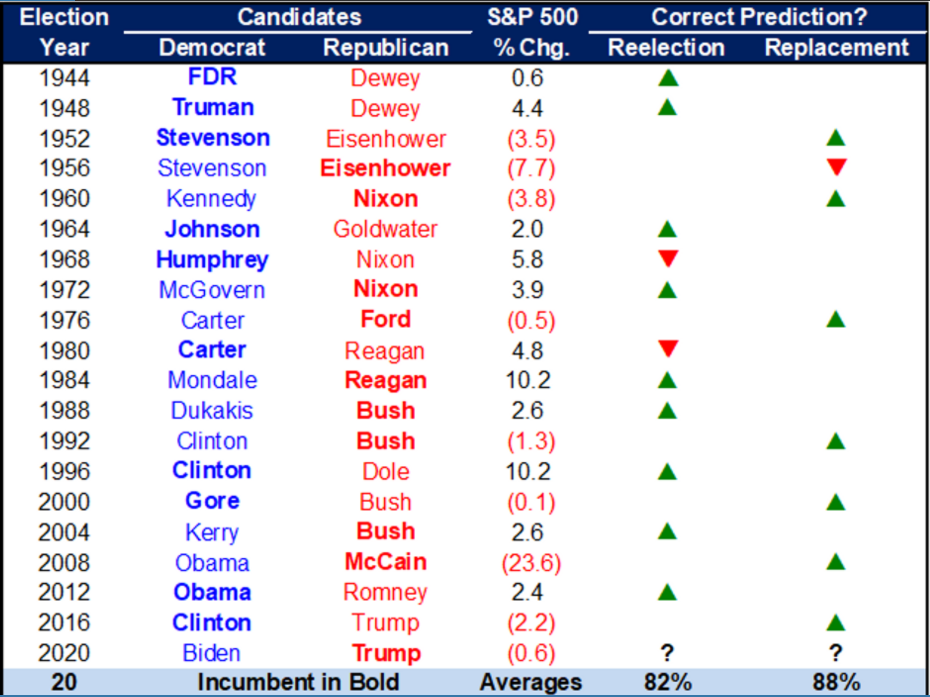
The table provided below shows how the S&P 500 Returns have changed when a new President was elected. The S&P 500 is an index that measures the stock performance of the 500 largest companies listed in American stock markets.

Important Facts about the US Election Day

The voting polls in all states open around 6 am. India is between 11-13 hours ahead of the United States. This means that by Tuesday night in India, around 96 million Americans would have already finished voting. 

Each state runs the election according to their own rules. Some states allow electronic voting methods, while most states use paper ballots. However, the actual counting of votes will not be finalized until weeks later. What happens on Election Night is that major US TV networks would “call” the election in favour of one of the candidates. This is based on the information from exit polls. An exit poll is an opinion poll of people leaving a polling station and asking how they voted. The estimated numbers from the exit polls are usually not contested, and the candidate projected to have lost concedes the election.

How Will This Affect Nifty?

Now, let us understand how our Indian stock markets could get affected. Donald Trump and Narendra Modi have had a love-hate relationship with each other. Trump definitely talks tough on India, regarding our sanctions and lack of action on climate change. He also calls PM Modi his friend, and welcomed our Prime Minister at rallies in the US. Another important fact is that he has imposed a lot of sanctions against China, which have acted as a boost to India’s long-term success. But still, his policies on tight restrictions for IT professionals and restrictive trade policies have not been favourable for India. President Trump may continue to face conflicts in securing a new economic stimulus, and this would not be good for the markets.

On the other hand, if Joe Biden becomes the next US President, many emerging economies could benefit (including India). With his equally tough stand on China, India is bound to benefit. His open approach to trade deals and inclusive plans on migration will greatly benefit Indian manufacturing, as well as IT sector. Biden’s clean-energy plan would deal a blow to the traditional petrochemical industry in America, and the subsequent price rises could help Indian manufacturers get better profits. But the change from fossil to green fuel is an inevitable, and necessary, future for our world. This is why huge corporations like Reliance, who have built their empire on oil, are planning to get into green energy. The big financial stimulus proposed by Team Biden will help push up US markets, along with global peers.

Under either President, Nifty will continue its uptrend in the long run.

Brace Yourself

From what we can understand, the US Presidential election, or any other political event, has very little impact on the share prices of large corporations. Regardless of who gets elected to power, the S&P 500 returns are fairly positive and do not go through big changes. This is even considering the possible tax increases proposed by Joe Biden on large corporations and wealthy individuals. Businesses will factor these increased taxes, and if Biden’s plan of reinvesting this extra tax revenue back to the economy then all will continue to be well and good in the long run.

At the same time, in case there are no clear winners in the election, or if there is any sort of complications arising, we could see a major fall in the global markets. If such a case happens, investors need to be careful. 

When we look at our very own Nifty 50, there have been some major signs of volatility due to global factors. What we can state is that the effects of the US election could be just a temporary issue. And, it would only last a week or so. The main concern we must all look into should be the rise in Covid-19 cases globally and the lockdown restrictions associated with it. We must understand that these are testing times, and market participants have to patiently wait and take safe actions so that losses can be reduced. Stay alert and always remember to follow the latest news!

Categories
Editorial

Can Tata Motors Win in India?

The Indian 4-wheeler industry is currently witnessing a steady recovery in sales. With lockdown restrictions being eased gradually, families across India are looking at the prospects of buying a car again. And the automobile companies are looking to seize this very opportunity with their amazing offers and discounts. And out of all these companies, analysts are reporting that Tata Motors is outperforming in domestic sales. But is this enough? Let us look at some of the new developments surrounding one of our favourite stocks, Tata Motors.

Brief Profile of Tata Motors

Tata Motors initially began as a truck manufacturer. They entered into the passenger vehicle segment in 1988. The initial growth of this company was only possible through the sheer determination and vision of the legend himself, Ratan Tata. Some of its very famous and widely sold cars in the ’90s such as Tata Indica, Tata Sumo, and later the Tata Nano were also built under his leadership.

The company also wanted to make its mark in the commercial vehicles industry and has been largely successful. Look around you, a reasonable number of trucks and buses on the road would be manufactured by Tata Motors. 

One of the biggest deals by Tata Motors was the acquisition of United Kingdom-based Jaguar-Land Rover (JLR) for $2.3 billion (now about Rs 17,000 crores) from Ford, in 2008.

Recently, the company has launched several widely popular cars such as the Tiago, Tigor, Hexa, Harrier, and Altroz. It has been exporting these cars to more than 125 countries. With all these new cars in the market, we would expect the company to perform quite well, right? However, the results have been very underwhelming. 

Fun Fact: Tata Indica was the first-ever car to be fully manufactured using India’s resources. The car was completely based on Indian technology and parts. Within two years since its inception, Indica occupied the number one spot in the Indian market.

Surprising Figures

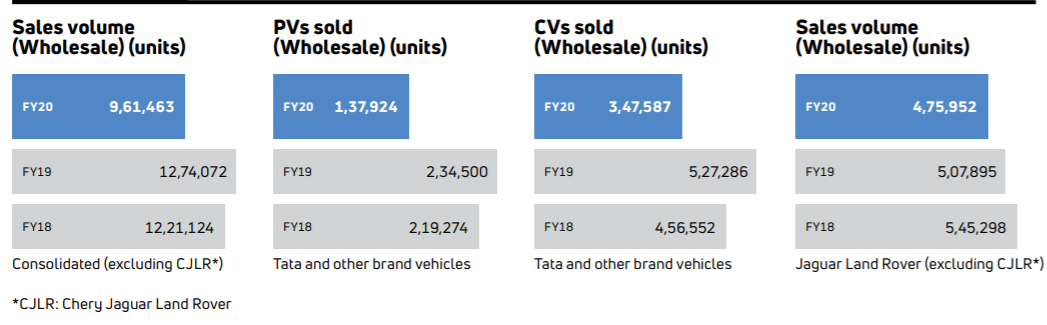
Over the last few years, Tata Motors has been disappointing investors with poor financial performance. Even after the ambitious acquisition of JLR (who is bleeding money) and new car launches, Tata Motors has not been able to improve its sales growth. In fact, it is one of the biggest loss-making enterprises in the Tata Group of Companies. To understand these factors in-depth, let us look at some of the important figures:

As we can see, the sales data reported by Tata Motors over the past 3 years does not seem to be very promising. In fact, the Covid-19 pandemic has caused a major impact on its production and sales activities during the current financial year as well. 

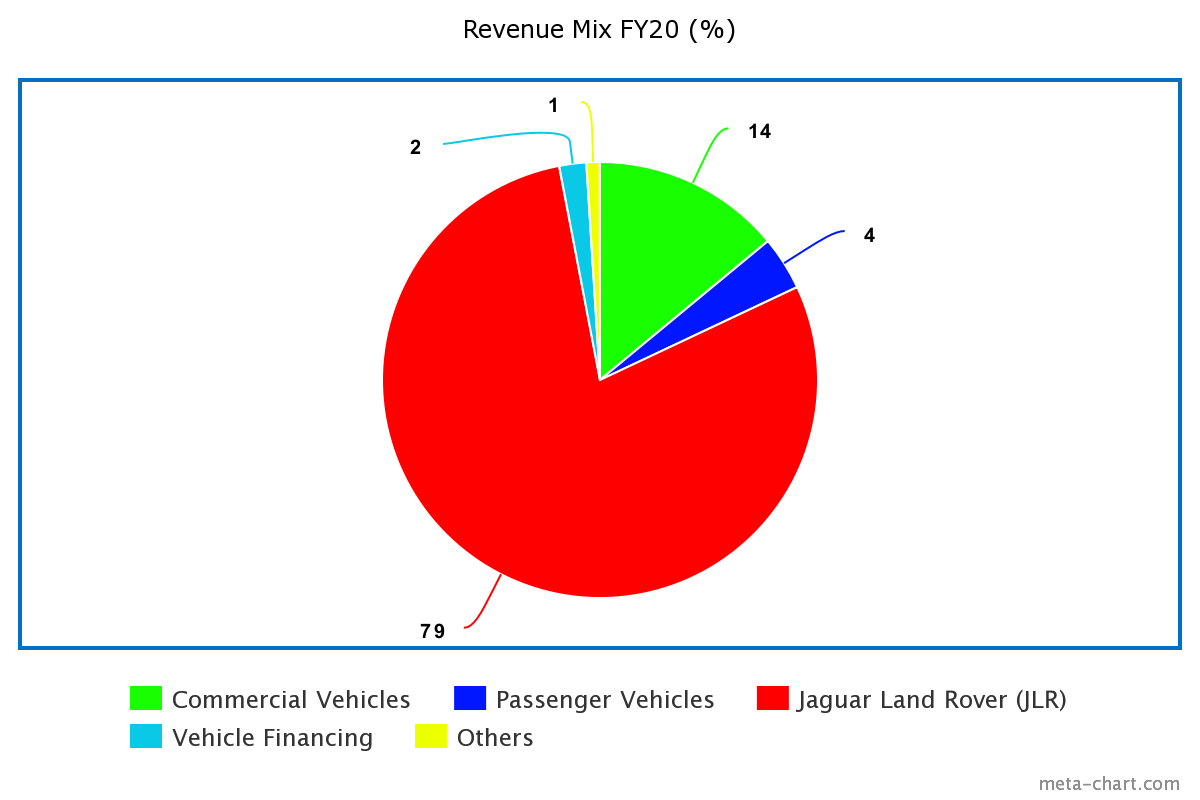
Chery Jaguar Land Rover is the company’s China operation and is a 50-50 partnership between JLR and Chinese state-owned automaker Chery. While the China operations are doing comparatively better, Jaguar Land Rover (JLR) has not been doing great over the last few years elsewhere. At the same time, they are carrying all the burden for Tata Motors, as JLR contributes 79% to the total revenue, as of FY20. The cars of both Jaguar and Land Rover have superior capabilities and are often used as official government cars in many countries. However, their legacy alone is unfortunately not able to sell more cars.

From the graph shown below, we can also understand how small the contribution of its Commercial Vehicles and Passenger Vehicles are. So Tata Harrier, Nexon, Altroz, and many other cars of Tata that you see on the road, contribute only a meagre 4% of Tata’s entire revenue! So no matter how many ever news articles you see about Tata Motors’ domestic sales improving, do not forget that it forms only a tiny fraction of the company’s revenue. 

Jaguar Land Rover. The Loss-Making Enterprise

Jaguar-Land Rover has been the parasite that is actually killing Tata Motors from the inside. The subsidiary of Tata Motors was affected by the impact of falling diesel sales, due to global pollution scandals. The uncertainty of the United Kingdom exiting from the European Union (Brexit) had also led to higher costs, falling sales, and production halts. In May 2019 (FY ’19-’20), JLR had reported a loss of £3.6 billion (~Rs 34,424 crores)! So, the subsidiary that was meant to push Tata Motors to greater heights, has been causing more harm for them.

Since 2017, China has become the biggest market for JLR. As we discussed earlier, the operations there are backed by a Chinese Government-owned entity, Chery. However, even with this support, the sale of vehicles that had been reported from the country had declined by more than 44%, within 2 years. This has caused a lot of panic inside the company, and Tata Motors is finally opening its eyes, and trying to focus on improving JLR’s financial position. 

The very deep losses of JLR have also affected their consolidated figures. Also, the full effects of the lockdown were seen only after the March results. So let us look at how they did between July and September this year. 

Q2 Performance in FY21

Tata Motors reported its Q2 results on 27th October 2020. The consolidated net loss increased to Rs 307.3 crore in the quarter ended September, as compared with a net loss of Rs 187.70 crore in Q2 of the previous year (FY ‘19-’20).  The revenue from operations declined by 18.19% year-on-year (YoY) to Rs 53,530 crore, from Rs 65,431.95 crore a year ago. Many experts have reported that the result has been far better than what was expected, even though the losses increased.

During the July-September quarter this year, the company has reported a growth in passenger vehicle sales by almost 162% YoY. Market share in the passenger vehicle segment has increased to 7.9%, but is still way behind Maruti Suzuki and Hyundai. The sales numbers for October have also increased 79% YoY but volumes are negligible compared to market leaders. The company themselves have attributed this growth to pent-up demand, wherein those people who did not buy cars during the lockdown (as they did not have to travel) are buying cars now. This cannot be considered as the organic growth of the company. Another important fact to be mentioned is that Tata Motors is the only carmaker to register a growth of 2.63% during April-September 2020. The car industry as a whole had fallen by 34% during the same period. This shows how the PV business is currently doing good.

Jaguar Land Rover has also made a strong recovery in Q2. It reported a 53.3% quarter-on-quarter (QoQ) growth in terms of sales. It has sold more than 1 lakh units during the quarter. The Chinese economy is doing well, and hence the company has also improved its sales in China. But the question remains- will they be able to maintain their recovery? 

New Developments

The Tata Group has been continuously aiming to improve its hold in the automobile sector in our country. We know that India’s passenger vehicle sector is dominated by Maruti Suzuki, which has more than 50% market share and is clearly the undisputed king. And even though Maruti Suzuki tries to portray itself as an Indian company, it is Tata and its subsidiaries who have been the Global Indian brand.

Earlier this year, the Board of Directors of Tata Motors had agreed to form a separate entity for its passenger vehicle (PV) business. Within one year, all the relevant assets, intellectual property, and employees would be transferred to this new entity. The production of electric cars will also become a priority for the company.

Following this, a major statement was made by Tata Motors on 25th October. The auto company announced that they are actively looking for a partner, for enhancing its passenger vehicle business. The collaboration will be aimed at reducing costs and improving business with new product launches. For this to become a reality, Tata Motors would require huge investments from outside the company. 

“The whole purpose of subsidiarisation is to actively look for a partner because this is a reality for all of us that a collaboration can unleash a bigger potential in the next decade which is going to see significant investments in new technologies and regulations,” –  Shailesh Chandra, Tata Motors President (Passenger Vehicles Business Unit).

High Hopes

From these new developments, we can see that Tata Motors is gearing up to redefine its position in the automobile industry. The company had announced the restructuring of its passenger vehicle segment almost 3 years ago. But now, concrete steps are being taken. It would take serious planning and execution to cover all losses that have been incurred. The passenger vehicle business would require a huge boost, but this can only be possible through adequate investments and huge collaborations. Through the proposed strategic partnership, Tata Motors would have to make sure that all resources are fully utilized. Also, do bear in mind that JLR is burning cash for the company. This is also the company that is supposed to provide the highest share of the revenue for Tata Motors. 

We do know that the auto industry can be very competitive. It would be very interesting to see how Tata Motors is executing its plans, and trying to bring a positive change to their sales figures. Will they be able to move up on the leaderboard of top car sales in India? Even if they lead in Indian markets, will this make a difference when JLR is still making losses?  Do not forget that Jaguar-Land Rover has always been a bad charm for the companies that owned it. Ford before Tata, and BMW before them. Coming to the conclusion, will Tata be better off cutting losses and selling Jaguar-Land Rover?  

Categories
Editorial

Morgan Stanley Index to Push Markets Up – MSCI Rejig

The last week of October began with a rocky start. On Monday, we saw that Nifty 50 was down by 162.60 points (or 1.36%), and closed at 11,767.75. The fall in Reliance Industries (RIL), decline in the auto sector, and the imposition of lockdown in Spain were three major reasons that caused a sharp fall in Nifty. Click here for our detailed post-market report for Monday. To make matters worse, the European and US market was down by 3% and 2%, respectively. Investors were asked to be very cautious while entering into a trade on Tuesday. 

However, in a surprising turn of events, Nifty went up by 1.03% on Tuesday. Against all odds, Nifty saw a rise of 121.65 points, and closed at 11,889. Let us have a detailed understanding of one major reason as to why there was a great recovery in our Indian market.

The MSCI Index

On Tuesday, most of us did not get a chance to go through a major report that was published in the afternoon. However, the stocks mentioned in this report were the ones that showed a great performance in our markets. The report had details about Morgan Stanley’s Emerging Market Index. 

Morgan Stanley Capitals International (MSCI Inc.) is one of the largest investment banks and financial services companies in the world. The US-based firm is a major index provider and publishes three major indexes. An index usually measures or tracks the performance of a group of assets or securities.

Coming back to the point, the report mentioned that Morgan Stanley is going to restructure or reorganize its Emerging Market Index. What this meant was that India’s weightage in this highly important index would be increased to 8.7%, from the current level of 8.1%. Ultimately, this would result in an additional indirect inflow of about $2.5 billion (~Rs 18,430 crore) to the Indian securities that are included in the index. According to Morgan Stanley, the major companies such as Asian Paints, Bajaj Finance, Britannia, L&T, and Nestle India would highly benefit from this change. These companies could see an increase in investment by approximately $200 million (~Rs 1,474 crores).

How Does this Process Work?

In order to understand this process more clearly, we shall look at an example. In India, we have the Nifty 50 index which includes Nestle India Limited. At a point in time, a major financial company or analyst might say that the weightage of Nestle is going to be increased in the Nifty index. Mutual funds and Exchange Traded Funds (ETFs) who are tracking this index will start pouring more funds into the stock. This confidence from big players will also make small retailers invest more money into the company. Eventually, the share prices of Nestle would have a high chance of increasing. This is exactly one of the major reasons as to why there was a rise in Nifty on Tuesday.

Top Gainers on Tuesday

  1. Kotak Bank – 11.70%  
  2. Nestle India – 5.97%
  3. Asian Paints – 5.69%
  4. Bajaj Finance – 4.38%

Almost all the top gainers are companies that were listed on the report of Morgan Stanley. Certain financial analysts have also stated that companies such as Apollo Hospitals, LIC Housing Finance, Ipca Laboratories, and Kotak Bank may also be included in the MSCI indices

Do bear in mind that the original results of the MSCI Emerging Market Index would be announced on November 11. It would also include the list of stocks that would be added, along with the changes in its weightage. These changes would finally be effective from 1st December 2020. So the point is that even the funds have not actually flowed into these stocks, the positive sentiment around them is what pushed them up.

An important takeaway from this would be to carefully go through relevant market news. Very specific and highly important news (such as this report from a giant like Morgan Stanley) would have a huge impact on how markets perform on a specific day. It is also encouraging to understand how our Indian companies are performing, and would help us achieve handsome profits in the long term and win in the stock market.

Update on November 11:

The revisions to the MSCI Emerging Markets Index was announced on November 11. The following table shows the list of stocks that are added, and the stocks that have been excluded from the standard index.

Stocks that are AddedStocks that are Excluded
1. Kotak Mahindra Bank1. LIC Housing
2. Adani Green2. Bosch
3. Yes Bank
4. Apollo Hospitals
5. MRF
6. IPCA Labs
7. Balkrishna Industries
8. L&T Infotech
9. Trent
10. PI Industries
11. Muthoot Finance
12. ACC
Categories
Editorial

The Government Interest Waiver – All You Need to Know

In normal circumstances, when an individual or a business takes a loan from a bank, they would have to repay the loan amount with interest. More importantly, there would be a specific time period by which they have to make the required payments. What happens to these entities when they fail to repay the banks or other financial institutions? Their credit scores go down, thus, making it difficult for such entities to get essential loans in the future. Or, the property which was used as collateral for the loan would be taken over by the bank and sold off. These are important facts that we already know.

So let us look at the problems faced by different entities in these challenging times of Covid-19. Then we will jump into what this interest waiver means, and how it will affect different parties including consumers like us by understanding what every guideline means.

Problems faced by Businesses:

We need to establish the fact that there is nothing ‘normal’ about this year. The Covid-19 pandemic has definitely caused a huge impact on individuals and businesses all around the world. Small or large businesses would have taken loans to improve production. In order to scale up, the loan amount could have also been used to increase investments in infrastructure. With the lockdown being imposed in late March in India, most businesses had very few customers. Supply chain (network between a firm and its suppliers) disruptions due to the closing of borders had made it very difficult for many businesses to keep their shops open. 

Problems faced by Banks:

An important factor that we must consider is the view of the commercial banks in our country. One of the main sources of income for banks is the interest they receive on loans. In such cases when customers are not in a position to repay the loan interest amount, financial institutions would have a very tough time conducting its normal activities. It could affect the financial result or position of the banks. (There could be exceptions to this. For eg, HDFC Bank reported a high-profit growth of 18% YoY for Q2). Banks and financial institutions are the backbones of any modern economy. To make sure that they do not fail, there should also be a system in place so that all stressed loans do not get classified as bad loans when borrowers fail to repay.

With almost all economic activities being hit, the Government of India had to step in and provide maximum support to its citizens, while maintaining the welfare of banks. The Reserve Bank of India (RBI) had announced a moratorium on repayment of loans (debt) for three months, beginning from March 1, 2020. What this meant was that businesses and individuals would not have to make payments on their loans during this period. The moratorium period was further extended from May 31st for another 3 months. This was mainly because the number of coronavirus cases in India kept on increasing rapidly, and lockdown rules became more strict. 

The Compound Interest Waiver

Even though the RBI had offered a moratorium, the banks continued to build up the compound interest on these loans over the six month period. Interest-on-interest(or compound interest) is the interest on a loan, calculated based on both the initial amount and the piled-up interest from previous periods. On October 3rd, the Government announced that interest-on-interest for loans up to Rs 2 crores during the six-month moratorium period, would be waived off. This would provide relief to many micro, small, and medium enterprises, and individuals. However, do bear in mind that the banks which had provided loans to these enterprises would be largely affected. It had been estimated that the cost of the compound interest waiver could be around Rs 5,000 – 6,000 crores. This loss would be compensated by the Government. 

On 15th October, the Supreme Court asked the Government to speed up the process for implementing the waiver of interest-on-interest. The Court instructed the Centre to implement the waiver by 2nd November. This is to make sure that individuals or businesses would not suffer more financial losses. 

Guidelines for Implementing The Waiver

On 23rd October, the Indian Government issued the important operational guidelines to banks. The guidelines specified how the implementation of the compound interest waiver would go about. Let us look at some of the important aspects of the guidelines:

  1. The interest waiver scheme would be applicable to loans below Rs 2 crores
  1. The amount of relief should be calculated as the difference between simple interest and compound interest. What this means is that compound interest on loans would be covered or paid by the government. The simple interest amount has to be paid by the borrowers themselves. The relief amount will be credited to the customer’s account.
  1. The relief payment would be calculated on loan repayments in the period between March 1, 2020, to August 31, 2020.
  1. The rate of interest while calculating the relief amount would be the same as the rate in the loan agreement. This is to ensure that there is no confusion, in case the interest rate has been increased or decreased by banks during the moratorium period.
  1. The government has identified eight categories of loans under this scheme. The categories include micro, small, and medium enterprises (MSME) loans, educational loans, housing loans, consumer durable loans, credit card dues, auto loans, personal loans to professionals, and consumption loans. People who have taken loans based on any of these 8 categories would be eligible for getting relief. Check with your bank to see if you can avail the scheme.
  1. In the case of credit card dues, the rate of interest will be the weighted average lending rate that is charged by the card company. The scheme will also be applicable only for transactions financed on an EMI basis between March and August. The weighted average is a method of calculating the average, in which some elements carry more importance than others.
  1. In the case of loans that were given as cash, normal interest will be calculated on a daily basis at the rate as of February 29, 2020. The compound interest will be calculated on a monthly basis. The amount that comes as the difference between both these rates will be credited to the customer’s account.
  1. The compound interest waiver applies to all lending institutions such as banks, non-bank finance companies (NBFCs), and housing finance companies.
  1. The scheme can also apply to those who had not utilized the RBI moratorium plan, and had continued with the repayment of loans.

The entire cost of the compound interest waiver would be borne by the government. It has been estimated that the scheme would cost Rs 6,500 crores. The banks (or lenders) have to submit all claims for reimbursement by 15th December 2020. The State Bank of India (SBI) will provide the necessary support to the government for receiving and settling all claims.

Conclusion

During these tough times, it is of very high importance that individuals and businesses get support or relief. The effects of non-repayment of loans can have a huge impact on their future activities. On the other hand, it is also essential that compensation is provided for lenders such as banks and other financial institutions. The new scheme would certainly help to balance the present economic conditions in India.  Let us hope that these guidelines will be implemented accurately, and every entity gets what they deserve. 

Categories
Editorial

‘India’s Own Car Manufacturer’ who is Owned by a Japanese Company – Maruti Suzuki

At some point in our lives, all of us would have had a deep connection with a Maruti Suzuki car. It may have been the very first car in your family. Or, it may have been the one in which you learned how to drive. The growth of this company, from its very origin, is truly a very interesting one. Let us dive deep into its history, and see how it has achieved more than 50% of the market share in India’s automobile sector., as of 2020.

  1. The Golden Days of Maruti
  2. Fast Paced Growth
  3. Entry in to the Stock Market
  4. Suzuki: Showing its Strength
  5. Future Plans

The (G)olden Days of Maruti

During the 1970s and 1980s, there was a very high demand for affordable passenger vehicles amongst middle-class families in India. The number of choices for buying cars was limited to the very famous Hindustan Ambassador and Premier Padmini. Both of these vehicles were not really affordable during those times. The Government of India wanted to address these concerns, and came up with a very promising solution in the form of a new company- Maruti Motors Limited. The incorporation of the automobile company was in June 1971.

Sanjay Gandhi (son of Indira Gandhi) was appointed as the Managing Director of Maruti Motors Limited. Under his leadership, the company did not achieve the launch it deserved. There were allegations of favouring family members and corruption against the new MD. He also did not provide the necessary support and guidance to launch projects. In 1977, the company had to be liquidated, which meant that the firm’s assets were converted into cash to pay off investors or any outside liabilities.

After the sudden death of Sanjay Gandhi in 1980, the Government was looking to collaborate with a major automobile manufacturing company to kickstart its production activities. In order to rescue their image, the Government of India founded Maruti Udyog Limited on 24 February 1981. Around the same time, Suzuki, a Japanese company, saw this as an opportunity to broaden its presence in other countries. In 1982, a license and joint venture agreement (JVA) was signed between Maruti Udyog Limited and Suzuki. Within a few months of their joint venture, production of “The People’s Car” – Maruti 800 had begun. As most know, this car laid the foundation for the growth of Maruti Suzuki India Limited.

Fun fact: According to various sources, Suzuki had not considered partnering with Maruti initially. While on a domestic flight in India, one of the senior directors of Suzuki read an article on a possible tie-up between Daihatsu (another Japanese automobile company) and Maruti. Soon after this, Suzuki immediately bought a stake in Maruti Udyog Ltd.

Fast-paced Growth

By 1988, the company established a new manufacturing plant at Gurgaon, where they could manufacture 1 lakh units every year. Maruti also started exporting its cars to the western markets. Their first export included 500 cars that were sent to Hungary.

When the collaboration had just begun, Suzuki was only a minor partner. In 1992, after the liberalization of the Indian economy, Suzuki increased its stake in Maruti to 50%. The company went on to manufacture back-to-back hits such as the Omni, Zen, Esteem, and most importantly, Alto. The company was able to manufacture these cars with improved Japanese technology, and ultimately sell it at very affordable prices in the Indian market. They also gave immense importance to servicing vehicles, and was one of the first car companies in India to launch dedicated customer service activities. Maruti Insurance and Maruti Finance are two of their subsidiaries launched in 2002, in order to provide a boost to car financing options.

Fun fact: Maruti requires more than 2,40,000 tonnes of steel every year for manufacturing its cars. It has been estimated that 32 Eiffel Towers could be constructed with that amount of steel.

Entry Into The Share Market

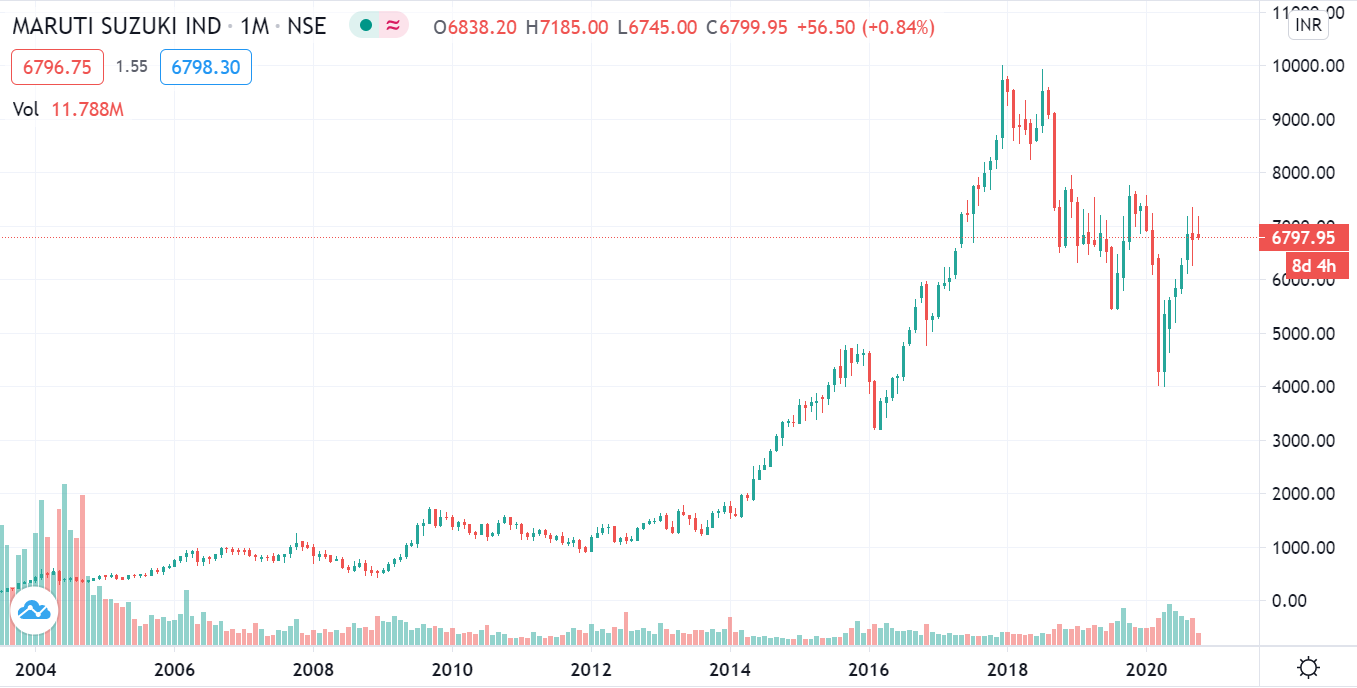
In 2003, the company decided to get listed on the stock exchanges. The Government sold off a 25% stake in Maruti Suzuki (it was still known as Maruti Udyog Limited then) at Rs 125 per share. The initial public offering (IPO) was oversubscribed almost 4.19 times within 2 days. The stock made its debut on 9th July 2003 and started trading at Rs 164 levels. The Government received Rs 993 crore for its sale of 25% in the company, which is peanuts compared to the valuation of the car-maker now.

By 2014, through the introduction of many more cars in various segments, Maruti Suzuki had a market share of 45% in India. The company’s Driving School units, as well as its used car sales units (True Value), have also become a huge hit. Maruti Suzuki also launched NEXA in 2015, a new dealership network for its premium cars (Baleno, S-Cross, Ciaz, etc). 

In 2017, people who had held onto their Maruti Suzuki stock since its entry into the NSE and BSE had received an overwhelming 7,900% return. The share prices crossed Rs 10,000 in intraday levels in December 2017. It became one of the top 5 companies in India, in terms of the highest market capitalization. Market capitalization is calculated as the total number of shares multiplied by its corresponding share price.

Suzuki: Showing its Strength

In March 2020, Suzuki increased its stake in Maruti to 56.21%, therefore having a majority in the company. And recently, in September, Suzuki purchased an additional 2,84,322 shares, thereby increasing the stake to 56.37%. It should be noted that Suzuki never changed the Maruti brand name, even after holding more than 56% in the company. They realized the value of how Indian customers had a deep relationship with their cars. Moreover, ‘Maruti’ was a company that had established the foundation for the automobile sector in our country. 

We can attribute the growth of their company to a major boom in the consumption of passenger vehicles in India. Analysts have stated that competitors in the automobile industry have not been able to match up to what Maruti Suzuki has offered throughout the years. They have superior manufacturing capabilities, and the ability to cover almost every single aspect related to car sales. The firm reported a 30.8% increase in total sales at Rs 1.6 lakh units in September 2020. Between April and September, they have sold a total of 4.6 lakh units.

The company is facing rising pressure from foreign manufacturers in its top-end car segment. As of 16th October 2020, the share price of Maruti Suzuki has been trading at Rs 6894.90. The Q2 results are set to be released on 29th October 2020.

Future Plans

Car subscription plans are considered to have a huge potential market in India. People might require cars for a certain period of time, but not necessarily be in a position to buy them.  

In September 2020, Maruti Suzuki India announced the launch of its new vehicle subscription program for individuals – Maruti Suzuki Subscribe. This new program allows customers to use a Maruti Suzuki vehicle without actually owning it. Instead, they would have to pay an all-inclusive monthly fee, that would cover insurance, maintenance, and roadside assistance. Customers will be able to choose a duration ranging from 12-48 months. The program has been introduced currently in Delhi, Bengaluru, and the National Capital Region of Noida, Ghaziabad, Gurugram. Is this the future of the car industry in India?

You may have also noticed that only the letter ‘S’ is on the logo of all Maruti Suzuki cars that are being sold now. We have begun to notice that the brand name ‘Maruti’ is slowly and gradually being removed from their cars. Since Suzuki does have a 56% stake in the company, they would want to make its brand more recognizable in India. Only time will tell if these changes would be welcomed by the Indian customers.

Maruti Suzuki India has dominated the automobile sector for years now. In a space where competition is high, the company has been able to initiate schemes to address the needs of every type of customer. With such a high market share in India, we can understand that Maruti Suzuki Limited has major plans to deliver the best, and ensure they remain at the top. 

Categories
Editorial

Who is Murari Lal Jalan, the Mystery Man in Jet Airways Revival Plan?

On 17th October, the partnership consisting of Kalrock Capital and Murari Lal Jalan won the bid to revive Jet Airways. The troubled airline will finally be able to fly the skies again after more than a year, by initially kickstarting domestic flights. However, this will have to wait, as all the required formalities have to be completed. That aside, we believe that the name Murari Lal Jalan is one that none of us have heard before. Let us understand what this random stranger does, and why he plans to enter the airline industry.

The Mystery Man

According to many in the business world, Murari Lal Jalan is a very mysterious man. There is not much information about how he was able to create all his wealth. He has always kept a very low profile, and is not popular among the business communities in India or abroad. Totally inexperienced in the field, he has confused a lot of people as to how he was able to enter into the airline industry. Let us look at some of the facts which we know are for certain: 

In the 1980s, Murari Lal Jalan began his career by entering into the paper industry. He started working at his family’s paper trading business in Kolkata. He also worked as a trader for JK Paper and Ballarpur Industries, which were once big paper manufacturing companies. In 2003, he wanted to expand his paper business, and thus, acquired Kolkata-based Kanoi Paper and Industries. He renamed the company to Agio Paper, and currently has a manufacturing facility in Bilaspur (Chattisgarh). However, In 2010, the paper company faced a lawsuit from government agencies, for pollution-related issues. The production activities of Agio Paper have been suspended since then. So almost his whole career, his focus was on the paper industry and even that did not end well either.

After his paper company received backlash, Jalan began plans to enter the real estate and healthcare sector. In 2015, he approached Dr. Naresh Trehan and Associates Health Services. He went on to acquire a stake in the company for Rs 75 crore, through a secondary share sale transaction. A secondary sale means that Jalan bought-out the shares from an existing stockholder. Around the same time as the acquisition, Dr. Trehan’s Medanta Hospital had plans to establish a hospital in Dubai, with the help of Jalan. Unfortunately, this plan was not implemented.

Jalan kept going and began to secure his vision of entering into more businesses. Once he moved his base to the UAE, he quickly expanded to sectors such as real estate, mining, fast-moving consumer goods, and construction. He was chairman of the Agio Image group, which sold and distributed photographic and consumer products of well-known companies such as Sony, Panasonic, and Konica.

He established the real estate development company, MJ Developers. The firm has its headquarters in Dubai, but its main businesses span over countries such as Russia, Brazil, and India. MJ Developers is currently engaged in developing residential and commercial properties in Uzbekistan. Jalan is also contributing to the development of the city of Namangan (in Uzbekistan), which has been termed as a land of investment opportunity in pharmaceuticals, the health sector, automobile, and information technology. Various reports state that he was able to improve his business position through these projects in Uzbekistan. In fact, if you search his name on Google, many shady self-praising articles from Uzbekistan will show up.

It is also interesting to know that Jalan had partnered with his own family relatives to set up Patanjali India Distribution Ltd. Certain documents from the Indian Ministry of Corporate Affairs state that this company would be involved in trading, export, distribution, and marketing of milk products and health foods. The list of products also included herbal medicines and ayurvedic cosmetic items. Regardless of these claims, the company never opened, and the founders never looked back on it. We do know that Patanjali Ayurved is owned by the yoga guru, Baba Ramdev. However, it is not clear whether the two companies are linked in some way.

Entry into Airline Industry

At a time when most airline companies are going through huge losses due to the Covid-19 pandemic, we see that Kalrock Group and Murari Lal Jalan have plans to revive a very troubled airline- Jet Airways. You can read more about why the airline company failed here. Some may question as to why there was a sudden need for Jalan to enter into this field. Many have suspicions whether this deal would really help the airline to bring back its former glory.

Through the bid to revive Jet Airways, it would be the first time that Jalan starts his venture into the airline industry.  “Jet Airways is a renowned Indian aviation company with a strong legacy. The aviation sector underwent substantial correction on account of Covid-19 and created an opportune time to enter the sector. Our vision for Jet Airways is to operate the carrier as a full-service airline, both domestic and international”, he declared in a statement. The point to be noted here is that Jalan has no expertise in this particular sector. However, the management team of Kalrock does have the essential experience from cargo and logistics management through past deals. They have big plans to take Jet Airways to new heights.

Now, we know that Murari Lal Jalan has always been interested in entering into multiple business sectors. His latest entry into the aviation or airline industry can be analysed as part of his plan to speed up the expansion of his empire. The proverb ‘don’t put all your eggs in one basket’  can clearly be attributed to him. 

But now, a major doubt remains to be answered – how was Jalan able to create all this wealth and expand his business to such a large magnitude? We have seen that his initial business in the paper manufacturing industry had failed. Also, when Jalan moved to the UAE, he was not able to contribute effectively towards the implementation of projects in the healthcare sector. He created a company in India that was never launched. Moreover, the fact that most business people don’t know about him, makes everything all the more suspicious. All these facts make us feel very unsure and doubtful about his new deal with Jet Airways. Let us wait and watch for the results of this revival plan.

Categories
Editorial

Can Tata Group be the King of Indian Retail?

The retail sector in our country is filled with a lot of companies that compete with each other to reach the top. And at a time when global players like Amazon and Walmart are competing for customers in India, it is no surprise that India’s biggest business houses would want to get into the scene too. 

During the Covid-19 lockdown, companies such as Reliance Retail, Amazon, and Walmart were preparing for the retail war ahead. The retail segment in India is anyway growing with the increasing population of the country. But what these huge companies want is a piece of the organized retail market in India, which is exploding as more and more young citizens are getting high paying jobs. More specifically, it is a race of giants to become the king of India’s booming e-commerce space.

Interestingly, there are reports flying around, about Tata Group’s plans to expand their online retail presence. Let us understand how Tata is preparing to up its game in this space, and find out if it is too little too late.

  1. Race to the Top
  2. The Super App
  3. Tata to acquire BigBasket?
  4. Tata Consumer Products expanding
  5. Will these plans be enough?

Race to the Top

Based on a report from the Indian Business Equity Foundation (IBEF), the retail industry in India is expected to reach Rs 76.87 lakh crore (USD 1.1 trillion) by 2020. We have seen that the Covid-19 pandemic had a devastating impact on the organized retail sector. However, the situation is projected to get better, as lockdown restrictions have now been lifted. Amazon.in, Reliance Industries, and Walmart have all shown how this particular sector is going to become a battleground in the months to come. 

Over the last few months, we keep hearing about the expansion of Mukesh Ambani’s Reliance Industries Limited (RIL) in the retail sector. Reliance Retail Ventures Limited (RRVL) has raised Rs 37,440 crore this year from private equity firms. Currently, it is the largest retail company in India. All these highly competitive factors could make it difficult for a company like Tata to expand and develop in this particular market. However, over the past few months, we have heard reports stating that Tata Group is not going to back down without a fight. They have come up with solutions to bring about more competition in the organized retail space. Let us look at a few of these:

The Super App

In August, Tata Group stated that it had plans to launch a ‘Super App’ to take on Reliance and Amazon. The app would be a one-stop destination for all of Tata’s products. We hope you can imagine the magnitude of this product. Tata Group sells salt to jewellery and everything in between, including cars and even trucks. Imagine using the Super App could be used by you to order a Fastrack watch, or maybe even to book a Tata Harrier SUV.

It is expected that the Super App will also merge services from food and grocery ordering to fashion, electronics, insurance, healthcare, and bill payments. Currently, the services can be found in Tata CLiQ and Croma for electronics, StarQuick for groceries, and streaming services in Tata Sky. The app is also set to have its own payment system, and the loss-making Tata Teleservices is said to be the one that could provide technical support and enterprise solutions.

The concept of a Super App can be seen from applications such as PayTM and PhonePe. When these apps started in India, they were just payment platforms. However, this model has seen massive growth in terms of the services that they provide, and the customers seem to be giving positive feedback for this new model.

Another report came up in September, stating that retail giant Walmart Inc, (who owns Flipkart and PhonePe) was in talks with Tata Group for a potential investment in the super app for up to $25 billion (~Rs 1.8 lakh crore). The app is likely to be launched between December and January, as a joint venture between the two companies.

Tata to acquire BigBasket?

On 15th October, reports were sent out by major publications stating that Tata Group was in talks to acquire BigBasket. The Bengaluru-based company is one of the best online grocery stores in India. The company delivers groceries in about 26 major cities and towns. As the Covid-19 pandemic hit our country and people were stuck at home, the demand for these online services has seen an all-time high. The company is backed by China’s Alibaba Group, and has reported a valuation of nearly $1.2 billion (~Rs 8,809 crore) as of March. Last month, BigBasket said that the number of new users on its platform had increased by 84%, as compared with the pre-Covid levels. On 25th May, BigBasket had appointed financial services companies Goldman Sachs and Morgan Stanley to help raise funds, and are now looking to increase their valuation to $2 billion (~Rs 14,682 crore). A business valuation is a process of determining the total economic value of a whole business or a company, and raising the valuation would help them sell stake, and raise more funds.

Another report which has come up in the past few weeks is that Tata Group has also made plans to acquire IndiaMart InterMesh Ltd, a business-to-business (B2B) marketplace. It is an e-commerce company that sells to normal consumers and to other small businesses. Basically, the company helps Indian manufacturers to connect with buyers. IndiaMart’s shares have surged almost 142% this year, giving it a market value of about Rs 14,682 crore. According to their website, IndiaMart says it controls almost 60% of the Indian online B2B market, providing a platform for small and medium enterprises. The point to be noted is that Flipkart and Amazon have been expanding their B2B presence as well. You can read about it here. Through this acquisition, the Tata Group would be able to obtain a major hold of the online e-commerce retail market in India.

Tata Consumer Products

The new CEO of Tata Consumer Products Limited (TATACONSUM), Sunil D’Souza, has announced plans to transform the company as the new face of Tata Group’s fast-moving consumer goods (FMCG) company. TATACONSUM had been formed recently through the merger of Tata Global Beverages and Tata Chemicals.

TATACONSUM is also planning to contribute to Tata Group’s ultimate goal to strengthen its retail presence. Currently, the firm’s products include Tata Tea, Tetley, and Tata Salt, and also has a joint venture with Starbucks Corporation in India. In September, they made a non-binding bid for the vending machine business of Coffee Day Enterprises Ltd. Coffee Day is one of the largest coffee chains in India, and has over 60,000 vending machines across malls, public spaces, and schools in India. This could help TATACONSUM obtain more access to the premium coffee platform in India, along with the help of Starbucks.

The company has also declared plans to bring about changes to its entire sales and distribution system. In order to double its reach to customers, they are creating a more direct, active, and digitized system. During the beginning of the financial year, Tata Consumer Products also bought out partner PepsiCo’s stake in NourishCo Beverages Limited, whose products include Himalayan mineral water. This has been seen as an aggressive move by the company. We can see that this trend of acquisitions would largely have a positive impact on the growth of the company.

We see that the shares of Tata Consumer have so far increased 52% this year, thus giving them a market value of about Rs 44,046 crore.

Will these plans be enough?

Through a series of acquisitions, expansion of Tata Consumer Products, and through investments in its new Super App, the Tata Group will be able to compete against India’s retail giants. But, a question arises here-  Is the Tata Group too late to improve on its retail presence? Except for a few companies like Tata Consultancy Services, most of the other subsidiary companies of Tata Group are making huge losses. If the integration of all these new expansion plans is precisely calculated and achieved, the retail business of the Tata Group of Companies will be able to bring in better returns. In order to make a mark on the organized retail sector in India, companies would have to go all out and play the best strategies. 

All eyes are focused on how the Tata Group is planning to execute these huge plans. Will the Super App be as great as it sounds? Let us wait and watch for the results.