Categories
Jargons

What are Depository Receipts?

A Depository Receipt (DR) is a negotiable financial instrument issued by a bank that represents a foreign company’s publicly traded securities. It is a well-established method by which foreign companies or institutions gain access to global markets. DRs allow investors to hold shares of companies that are listed on stock exchanges in foreign countries.

DRs are a more convenient and inexpensive method as compared to purchasing stocks directly from foreign markets. For example, the Depository Receipt of Infosys is listed on the New York Stock Exchange. Through this, investors in the US can easily buy shares of the Indian IT company. 

How Does it Work?

Suppose a company listed in India wishes to raise funds by selling a particular stake to overseas investors. The company will have a local Domestic Custodian that holds certain shares on behalf of it. Now, let us imagine that a firm in the United States is willing to buy or invest in equity shares of this Indian company. The Domestic Custodian will then inform its counterpart in the US, which is known as an Overseas Depository Bank (ODB). An ODB is basically a bank established outside India that acts as a custodian of equity shares of the issuing company (in electronic form).

Thus, the ODB will update/inform the US-based investor and provide an acknowledgement that it will hold a specific quantity of shares of the Indian company on their behalf. This ‘acknowledgement’ that the ODB provides to the foreign investor is known as a Depository Receipt. In this case, the DR will be listed on the US stock exchange and can be traded.

Types of Depository Receipts

1. American Depository Receipt (ADR): An ADR is a negotiable certificate issued by a US depository bank that represents a specified number of shares held of a foreign company’s stock. In simple terms, an ADR represents shares of a foreign company that is being traded in the US stock markets. As of April 16, around 15 Indian ADRs are being traded on the US stock markets. ADRs and their dividends are priced in US Dollars.

2. Global Depository Receipt (GDR): A GDR is a certificate issued by a bank that represents shares of a foreign company on two or more global markets. GDRs usually trade on US stock exchanges, as well as European and Asian exchanges. GDRs and their dividends are priced in the local currency of the exchanges where the shares are traded.

We also have Indian Depository Receipts (IDRs), which are denominated in Indian rupees and are issued by a Domestic Depository in India. [A domestic depository is a custodian of securities registered with market regulator SEBI]. IDRs are issued against the underlying equity of a company to enable foreign firms to raise funds from the Indian market. On the other hand, IDRs allow Indian citizens or firms to invest in the shares of foreign companies.

Advantages of Depository Receipts

  • Depository receipts allow investors to easily diversify their portfolio and purchase shares of foreign companies.
  • DRs provide investors with benefits such as voting rights and dividends. It opens up certain markets that investors would not have access to earlier.
  • Depository receipts offer more convenience and are less expensive than purchasing stocks in foreign markets. They help reduce administrative costs that are levied when investors try to acquire shares of foreign companies.
  • DRs allow large international companies to raise capital very easily from global markets.

Disadvantages of Depository Receipts

  • Many depository receipts may not be listed on a stock exchange. In some cases, only institutional investors would be trading them. 
  • There may not be many buyers and sellers of ADRs, which leads to low liquidity.
  • A country where a foreign company is located may experience a recession or other socio-political issues. Due to these economic risks, the value of a depository receipt (that represents the foreign company’s shares) could fluctuate.
  • Fluctuations in exchange rates (or conversion expenses, foreign taxes) could heavily impact the value of depository receipts.
Categories
Jargons

What is Insolvency? How Do Companies Go Bankrupt?

We often come across reports of companies being declared bankrupt or ‘insolvent’. We also see large investment firms or business groups entering into tough competition to acquire these insolvent companies. Recently, Piramal Capital acquired debt-ridden DHFL for Rs 34,250 crore! Let us have a detailed understanding of what insolvency means and look into the insolvency procedure followed in India.

What is Insolvency?

At some point in time, a company or an individual may not be in a position to pay off their debt or other financial obligations. This may be due to a variety of factors such as a sharp decline in revenue (or income), increase in competition, poor market conditions, bad financial management, lack of proper budgeting, high debt, and failure of debt recovery procedures. The state of being unable to make repayment of debts by a person or company is known as insolvency. Those entities that are in a state of insolvency are said to be insolvent. In most cases, the insolvent company or person has to convert their assets into cash to pay off their lenders.

Types of Insolvency

1. Cash-flow insolvency – This is when a person or a company has enough assets to pay what is owed, but does not have an appropriate form of payment. For example, a person (the debtor) may own a large house or other valuable properties, but may not have enough liquid assets to pay his debts when it falls due. [A liquid asset is anything that can be converted into cash easily, within a very short period of time. Eg- cash, stocks, savings account in banks, etc]

2. Balance sheet insolvency – This is when a person or a company does not have enough assets to pay all of their debts. In most cases, these entities might enter bankruptcy, which is a legal process through which they may seek relief from some or all of their debts. Once a loss is accepted by all creditors (or lenders), the parties would negotiate and resolve the situation.

The Insolvency & Bankruptcy Code, 2016

Until 2015, an insolvency resolution in India took an average of 4.5 years to complete. There were constant delays in court proceedings and a lack of clarity. The entities involved in these cases used to incur very high legal costs. Thus, Indian lawmakers wanted to introduce a more structured and time-bound procedure for completing the entire insolvency process. 

The Insolvency and Bankruptcy Code (IBC) was brought into effect in 2016. It is the one-stop solution for resolving insolvency cases in a very economical manner. The code protects the interests of small investors and makes the process of doing business more efficient. The IBC has over 255 sections and 11 Schedules.  When a default in repayment occurs, creditors (lenders) gain control over the debtor’s assets and must make decisions to resolve insolvency within a 180-day period. The code also provides a framework for creditors and debtors to have detailed discussions on how to resolve the issue.

Insolvency Procedure

Let’s say a company- ABC- is in a poor financial state and is unable to pay off large debts. The lenders of the firm submit a plea for insolvency to the National Company Law Tribunal (NCLT). The NCLT is the adjudicating authority for insolvency proceedings in the case of corporate entities. It looks into the financial records and information provided by the lenders of ABC and must reject/accept their plea within 14 days.

  • If the plea is accepted, the tribunal has to appoint an Interim Resolution Professional (IRP), who will draft a resolution plan for ABC within 180 days (this can be further extended by 90 days).
  • A resolution plan is a proposal that seeks to resolve the company’s insolvency by finding methods to pay off creditors. During this period, the Board of Directors of ABC will be suspended. The promoters do not have a say in the management of the company.
  • The IRP will manage ABC’s assets and provide information to its creditors and assist them in decision-making.
  • The insolvency professional forms a committee of creditors (CoC) who lent money to ABC. The CoC will decide the future of the outstanding debt owed to them. They may choose to revive ABC’s debt by changing the repayment schedule or by selling (liquidating) the assets of the company.

In case the Corporate Insolvency Resolution Procedure (CIRP) fails to revive the company within 180 days, the liquidation process is initiated. This means that all of ABC’s assets will be converted into cash through auctions or direct acquisitions. Proceeds from the sale of these assets will be distributed to the creditors, priority shareholders of ABC, and equity shareholders. The IRP will also receive remuneration for his contribution to the insolvency proceedings.

A Recent Example

Dewan Housing Finance Corporation Ltd (DHFL) was the first financing company in India to go through insolvency proceedings. It had been facing liquidity issues (cash crunch) and had defaulted on loans. Upon further investigation by the Enforcement Directorate (ED), it was found that DHFL had diverted thousands of crores illegally. In November 2019, the Reserve Bank of India (RBI) filed for an insolvency proceeding to be initiated against DHFL. The financial creditors of DHFL submitted claims worth Rs 86,892 crores against the company! The share price of DHFL, which was trading at ~Rs 600 levels in 2018, fell to Rs 15 within a year

The Committee of Creditors (CoC) of DHFL failed to formulate a resolution plan within 180 days. It was decided that the financing company and its assets would be put up for auction. In October 2020, several reports stated that Adani Group, Piramal Enterprises, US-based Oaktree, and Hong Kong’s SC Lowy had placed bids for acquiring DHFL. After months of negotiations and counter-bidding, Piramal Capital emerged as the successful owner of DHFL.

Now, you may wonder why these firms had shown interest in acquiring a company that was poorly managed and involved in illegal activities. The main factor is the cost of the acquisition. Buying a company in the same industry is often time-consuming and expensive. When these investment firms and large corporations want to expand, it is easier and more economical to acquire distressed companies at very discounted prices. Moreover, Piramal took a risk and found value in the DHFL brand- which has a great hold in semi-urban and rural markets. 

Categories
Jargons

What are Partly Paid Shares?

You may have come across various partly paid-up shares while trading in the stock markets. Reliance Industries Partly Paid (PP) shares, Tata Steel PP shares, Aditya Birla PP shares are some of the prominent examples. A partly paid share is a share in a particular company that has only been partially paid compared to the face value. This means that investors like you and I can buy these shares by not paying the full issue price. The balance amount to be paid for PP shares can be made through installments.  

When a company that issued partly paid shares requires more funds, calls will be made to the shareholders (that hold PP shares) from time to time until the shares are fully paid. Thus, investors who hold partly paid shares have a liability to pay as and when the company calls for it. These ‘calls’ will be notified to each shareholder. The notice will contain details regarding the deadline and instructions on how to make the payment. Normally, cheques and demand drafts are the preferred payment options. 

Recently, market regulator SEBI announced that an additional payment mechanism, such as Application Supported by Blocked Amount (ASBA), can be used for making payments of balance money for calls for partly paid shares.

If an investor fails to pay when a call is made by the company, their shares will be forfeited. This means that the allotted shares are canceled by the issuing company because of non-payment of installments.

The amount at which PP shares can be bought and important details regarding the schedule of calls can be found in the company’s prospectus. A prospectus is a legal document that describes the equity or debt securities that have been issued by a company. It clearly states the purpose for which securities have been offered. Moreover, the prospectus contains general details regarding the company’s operations. Calls can also be made at the discretion of the company’s Board of Directors. 

Such a practice was initially conducted by prominent financial institutions. Banks or insurance companies would issue partly paid shares to certain shareholders. Whenever these firms had to raise funds quickly, they would make a call to these shareholders. These investors were obligated to pay what was due for their shares. 

Examples

Suppose the actual stock price of a company is Rs 100. An investor purchased it for Rs 65 per share. At a future date, the company that issued the share can call the shareholder to pay up the balance amount of Rs 35 (or make an installment). If they fail to pay, their shares will be forfeited. 

Last month, the Board of Directors of Tata Steel approved the first and final call of Rs 461 per partly paid shares. The call was made on 7.76 crore outstanding partly paid-up equity shares (of face value Rs 10 each). The call of Rs 461 per partly paid share comprised Rs 7.49 towards face value and Rs 453.50 towards securities premium. (Share premium or securities premium is the difference between the issue price and the face value of the stock) The board had fixed February 19, 2021, as the Record Date to determine the holders of partly paid-up equity shares to whom the call notice will be dispatched for payment. 

At the time of the call, Tata Steel PP was trading at Rs 239.25 per share. 

Categories
Editorial

Union Budget 2021: Expectations

All eyes are focussed on the Union Budget 2021-22 that will be presented by Finance Minister Nirmala Sitharaman on February 1. As we know, the Covid-19 pandemic had led to disruptions in all major economic activities. The upcoming Budget has greater significance, as it would give us a clear picture of how the Central Government plans to allocate essential funds to revive our economy. The Finance Minister had stated that this budget would be unlike anything we have seen over the past 100 years of India’s history.

Over the past few months, there have been multiple reports or rumours that indicate the different sectors of India’s economy that are likely to benefit from the Budget. Let us take a look at some of these sectors.

Agriculture Sector

The agriculture sector had single-handedly supported the Indian economy while other major sectors were at a near standstill amidst the Covid-19-related lockdown. With the ongoing farmers’ agitation in Delhi, the government is expected to send across a positive message to the farmers in the country. It has been reported that the Union Budget would continue to focus on agriculture and allied sectors. In fact, ‘farmer welfare’ could be the central theme of this Budget.

A sharper focus is needed on the development of farm gate infrastructure, formulation, and strengthening of farmer collectives. Experts have suggested that the government could spend more to improve warehousing and cold storage facilities for farmers. There should be a further limit on the price of fertilizers and other chemicals. There are also expectations of providing nominal logistics support to poor farmers.

However, farmers have made their demands clear: a guarantee on the Minimum Support Price (MSP) and permanent withdrawal of the three farm laws. As farmers continue to protest, it will be interesting to see if the government has any plans to put an end to the agitation through its Budget. 

Healthcare Sector

The ongoing Covid-19 pandemic has taught the entire world the importance of having a strong healthcare sector. Increased public spending on healthcare will be one of the primary expectations of the upcoming Budget. We have realised the importance of improving healthcare infrastructure in public hospitals throughout India. More funds will have to be pumped into Ayushman Bharat, which is a scheme that aims to help economically vulnerable Indians who require healthcare facilities. People could expect the government to increase the deduction threshold for medical insurance. 

On the GST front, the government can consider making healthcare more affordable by introducing a ‘zero-rating’ of GST for healthcare services. [Zero rating means that the entire value chain of the supply is exempt from tax]. This will help in keeping the credit chain intact and ensuring that tax is not added to the cost of healthcare services.

One of the critical requirements in the healthcare ecosystem is a skilled workforce. The arrival of new products and technologies makes it imperative that there are continuous learning and skill enhancement for healthcare professionals. It is also important to provide greater investment for preparedness against other health emergencies that may arise in the future. Thus, there should be more investments in diagnostic testing capabilities and contact tracing mechanisms.`

Banking Sector

The financial system has been under severe stress following the Covid-19 outbreak, and the banking system is still facing asset quality issues. In Union Budget 2021, industry experts are hoping that the government will focus on better governance in the banking sector and simplification of compliance and regulation. There is an expectation that the number of public sector banks will be reduced from 12 to 4. This may include merging and also privatisation of banks. 

According to RBI, the gross non-performing assets (NPAs) of banks could increase to 14.8% by September 2021, under the worst-case scenario. Through recent interactions with the media, the Finance Ministry indicated the idea of setting up a ‘bad bank’ to handle the expected influx of bad loans after the Covid-19 pandemic. A bad bank will have the power to purchase bad loans from banks at the market price. It acts as an aggregator of all the stressed assets in the banking system. This will allow the banks to clear their balance sheets and improve their fundraising capabilities.

Automobile Sector

The automobile sector had been witnessing a slowdown even before the pandemic. This was primarily due to regulatory changes, millennial buying preferences, and an increase in the cost of ownership. According to Moody’s, the Indian auto sector is expected to decline by 30% in the calendar year 2020, amid a contraction in GDP and the Covid-19 pandemic. Even though the festive season had provided a boost to vehicle sales, the automakers are worried that the demand would not sustain. Large automobile firms are also increasing the prices of their two-wheelers, passenger vehicles, or commercial vehicles due to an increase in input costs.

The automobile industry has high hopes from Union Budget 2021. Here are a few: 

  • Currently, a bike that costs Rs 50,000 is taxed at 28% GST- which is similar to a passenger car worth lakhs. It has been reported that a 10% GST reduction could boost demand for two-wheelers. 
  • Vehicle loans under Rs 5 lakh could be considered as priority sector lending (PSL) by banks. This will encourage banks to provide more loans to customers and lead to enhanced credit creation. Ultimately, it would also increase the demand for automobiles.
  • A new policy to scrap cars, buses, and trucks that were more than 15-years-old, is expected to be announced in the Budget. It would also incentivise the purchase of new vehicles. You can read more about the vehicle scrappage policy here.
  • Electric mobility is another key priority area for the government. There are many Indian promoters and international groups that are willing to invest in the electric vehicle (EV) segment. To boost demand, India needs to improve upon essential infrastructure such as electric charging stations.

Realty Sector

The contribution of the real estate and construction sector to India’s overall economic activity is quite significant. The Covid-19-related lockdowns had caused severe disruption in sales and construction. With the easing of restrictions, there has been a strong recovery in sales and development activities. However, the housing sector will look forward to additional measures that can support recovery in demand and remove supply-side challenges faced by developers. 

There have been several reports stating that the Union Budget would consider expanding the current income tax benefits available for homeowners. There is an expectation that buyers will get home loans at affordable rates and a moratorium on loan payments. This would encourage more people to buy properties. Realty firms have stated that the government should allow real estate developers to set off Goods & Service Tax (GST) paid on inputs like cement from tax liability on rental income. This would help avoid double taxation and give a boost to the office market to help India maintain its advantage in various sectors like IT and startups. 

Covid Cess

Amidst the Covid-19 pandemic, the Centre should focus on providing more access to basic necessities such as healthcare, drinking water, and housing. More money should be put into the hands of citizens so that consumption receives a push. This is possible through well-defined tax reliefs or exemptions. In order to ensure a V-shaped recovery of the economy, all financial resources must be utilised or allocated judiciously. 

However, the government is likely to impose Covid Cess to fund additional spending due to the pandemic, including that on vaccines. If the government charges an additional 2% Covid cess on income tax, then the total cess amount would go up to 6%. The current 4% cess imposed on income tax was introduced in Union Budget 2018 by ex-finance minister Arun Jaitley. This means that our tax liability would go up (based on the current tax slabs). 

Such a cess will only help the Centre obtain more revenue, while states will gain nothing. Several reports indicate that the Covid-19 cess will be primarily imposed on large corporates and high net-worth individuals (HNIs).

Markets do not like increased taxes. In fact, when Nirmala Sitharaman decreased corporate taxes on 19 September 2019, markets rallied like anything and the candlestick formed was called the Nirmala Sitharaman candle. Will we see a fall like this if an increase in tax is announced?

Conclusion

We have only mentioned a mere five sectors that could receive benefits from the Union Budget 2021-22. Fast-moving consumer goods (FMCG), retail, logistics, power generation, telecommunications, and other essential sectors are also expected to receive a much-needed boost. To attain self-reliance of essential resources, the government is likely to introduce more programmes under the Atmanirbhar Bharat Abhiyan. Production linked incentive (PLI) schemes could be launched for more sectors. These measures would encourage domestic and multinational companies to ramp up their production activities in India. Lakhs of people would be able to obtain employment opportunities. It is also vital that our country gives additional importance to renewable energy sources and the infrastructure surrounding them. 

The Narendra Modi government may also introduce the Cryptocurrency and Regulation of Official Digital Currency Bill, 2021 in the Budget session of the Parliament. This would lead to the ban of private cryptocurrencies in India (such as Bitcoin). Interestingly, the government has plans to launch a digital version of the Indian Rupee.

The Finance Ministry has sought valuable insights from industry experts from all major sectors. They have now prepared one of the most important budgets in India’s recent history, which would set the path for further economic growth. Will all the essential sectors receive the incentives or benefits that they require? We will have to wait and watch.

Categories
Market News Top 10 News

ICICI Bank’s Q3 Profit Rises 19% YoY to Rs 4,940 crore – Top Indian Market News

ICICI Bank Q3 Results: Net profit rises 19% YoY to Rs 4,940 crore

ICICI Bank Ltd reported a 19% YoY increase in net profit to Rs 4,939.6 crore for the quarter ended December (Q3). Net interest income (NII) rose 16% YoY to Rs 9,912 crore during the same period. [NII is the difference between the interest income a bank earns from its lending activities and the interest it pays to depositors] The bank’s gross non-performing asset (NPA) ratio stood at 3.38%, compared with 5.17% in Q2 FY21. ICICI Bank’s total provisions increased by 31% YoY to Rs 2,741.72 crore in Q3.

Read more here.

L&T Finance Holdings to open rights issue on Feb 1

L&T Finance Holdings announced that its Rs 2,998.61 crore rights issue will open on February 1, 2021. [A rights issue is an invitation to existing shareholders to purchase additional new shares in the company] The company will issue up to 46.13 crore equity shares for cash, at Rs 65 per equity share (including a premium of Rs 55 per share). The funds raised through the issue will be used to repay certain commercial papers issued by the company and for infusing funds into its subsidiary. 

Read more here.

Shree Cement Q3 Results: Net profit jumps 102% YoY to Rs 626 crore

Shree Cement Ltd reported a 102% YoY increase in net profit to Rs 626.2 crore for the quarter ended December (Q3). Its revenue rose 16.2% YoY to Rs 3,309.4 crore during the same period. The company has benefited from the pick-up in sales volumes and a strong pricing environment.

Read more here.

Happiest Minds acquires US-based Pimcore Global Services

Happiest Minds Technologies Ltd said it will acquire US-based Pimcore Global Services (PGS) for $8.25 million (~Rs 60 crore). PGS is a digital e-commerce and data management solutions company. Happiest Minds stated that the acquisition will further strengthen its offerings and leadership in the digital transformation space. The deal is subject to customary closing conditions and is expected to close in the quarter ended March 31, 2021 (Q4).

Read more here.

SAIL Q3 Results: Net profit at Rs 1,468 crore

Steel Authority of India Ltd (SAIL) reported a net profit of Rs 1,468.20 crore for the quarter ended December (Q3). It had posted a net loss of Rs 343.57 crore in the corresponding quarter last year. The company’s revenue rose 20% YoY to Rs 19,835 crore during the same period. Total sales including domestic and exports grew 1% YoY to 4.15 million tonnes. SAIL has declared an interim dividend of Rs 1 per share.

Read more here.

Power Grid secures two power transmission projects in Rajasthan

Power Grid Corporation of India has been declared as the successful bidder under tariff-based competitive bidding (TBCB) to establish two power transmission projects in Rajasthan. The projects include the establishment of a new 400/220kV Substation, 400kV D/C transmission lines, and associated Substation extension works in Rajasthan.

Read more here.

Unichem Labs Q3 Results: Net profit at Rs 23 crore

Unichem Laboratories Ltd reported a consolidated net profit of Rs 23.56 crore for the quarter ended December (Q3). The pharma company had posted a net loss of Rs 14.60 crore in the corresponding quarter last year. Its revenue rose 18.72% YoY to Rs 326.28 crore in Q3 FY21.

NSE adds 5 stocks in F&O segment from March series

The National Stock Exchange (NSE) has announced the inclusion of five securities in the futures and options (F&O) segment from the March series. Alkem Laboratories, AU Small Finance Bank, Deepak Nitrite, Indian Railway Catering & Tourism Corporation (IRCTC), and Nippon Life India Asset Management will come under the F&O segment, effective from February 26. These securities have been added to the F&O segment based on the stock selection criteria prescribed by market regulator SEBI.

Read more here.

Zen Technologies Q3 Results: Net profit declines 77% YoY to Rs 2.32 crore

Zen Technologies Ltd reported a 77.32% YoY decline in net profit to Rs 2.32 crore for the quarter ended December (Q3). Its revenue declined 49.77% YoY to Rs 16.57 crore during the same period. Hyderabad-based Zen Technologies designs, develops, and manufactures state-of-the-art combat training solutions for the training of defence and security forces worldwide.

Relaxo Footwears Q3 Results: Net profit jumps 67% YoY to Rs 90 crore

Relaxo Footwears Ltd reported a 67% YoY increase in net profit to Rs 90 crore for the quarter ended December (Q3). Its revenue rose 12% YoY to Rs 672 crore during the same period. Total expense during the quarter increased by 4.7% YoY to Rs 555.10 crore. Relaxo Footwears is engaged in the production of Hawaii slippers, lightweight slippers, canvas shoes, PVC footwear, etc.

Read more here.

Categories
Editorial

Reddit Users vs Hedge Funds: The Entire GameStop – WallStreetBets Saga

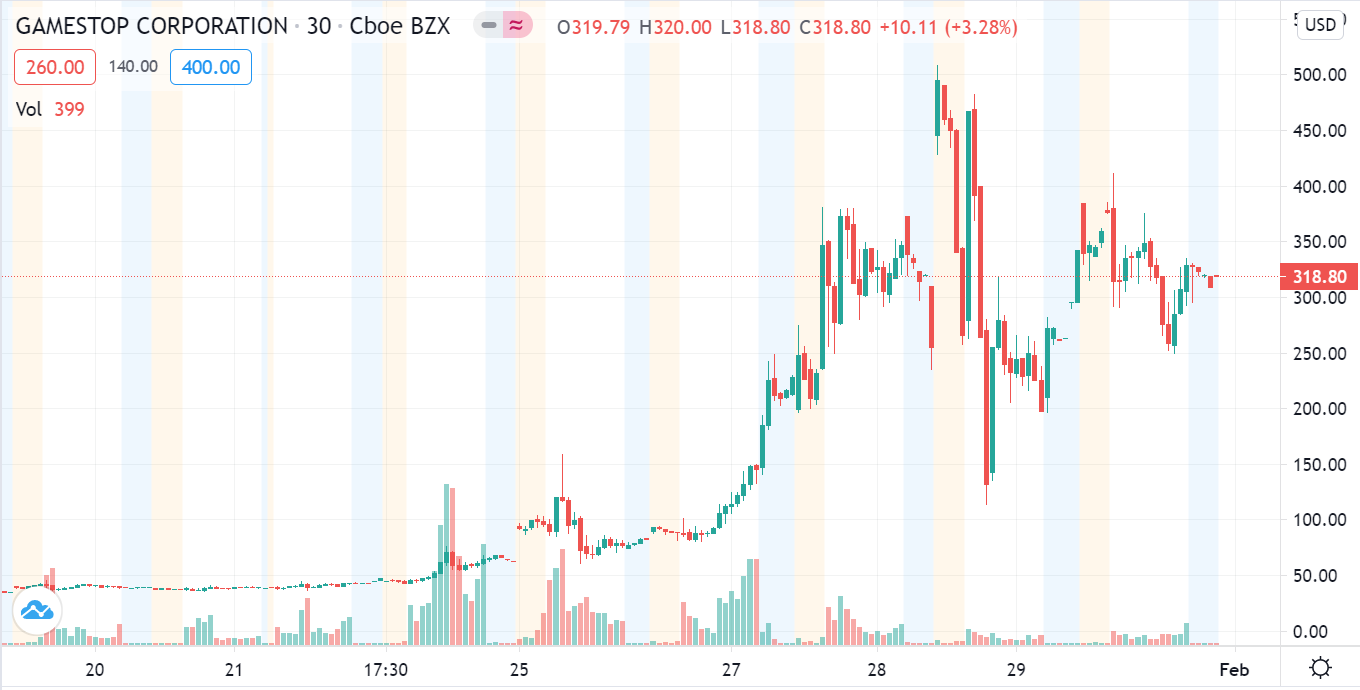
The shares of GameStop Corp, a struggling game retailer in the US, have surged by more than 1,600% since December 31. The reason behind this phenomenal rally can be attributed to the collective power of small investors and social media platforms. It has caused quite a stir in Wall Street and made us realize the importance of having well-defined regulations in stock markets. To understand the logic behind this huge rally in GameStop, we need to learn the concepts of short-selling and short-squeezing. We shall also look into recent developments surrounding this controversial topic.

What is Short Selling?

Short selling or ‘shorting’ refers to when investors try to make money by betting that a company’s share price will fall. In this method, a trader borrows shares of a particular company from a broker and sells them at market price- with the hope that prices will fall. He has an obligation to return these shares to the broker at a future date. The proceeds from the sale of these borrowed shares get credited to the trader’s account.

If the share prices of that company fall, the trader would be able to purchase back the shares from the market at a lower price. Profit is made on the difference between the price at which the shares were borrowed and the price when they are returned. Short selling is primarily conducted by large investment firms (such as hedge funds) and experienced investors. Also, the number of short positions in a company’s stock can be higher than the total number of shares available. The concept of shorting is made easier with the example given below.

An Example 

Suppose a trader expects the stock price of a company named XYZ to crash sometime soon. This assumption could be based on the fundamental and technical analysis he conducts on that particular stock. He would then decide to borrow 10 shares of XYZ stock from a broker and sell them in the market for Rs 50 each. Thus, he receives Rs 500 in cash. He has an obligation to purchase and return the 10 shares of ABC stock at some point in the future. 

In case the stock price of XYZ falls to Rs 10, the trader can purchase the 10 shares (that he owes to the broker) for Rs 100 and make a total profit of Rs 400. [Ie, Rs 100 subtracted from the Rs 500 he received initially by selling the shares]

What if the trader’s analysis failed and the share price of XYZ went up to Rs 250? He would have to spend Rs 2,500 to buy back the 10 shares that he owes to the brokerage. He still gets to keep the Rs 500 he earned from selling the shares initially. However, the trader has lost Rs 2,000 in this scenario. 

What is Short Squeezing?

When a company’s share price starts rising, shorts would panic and be forced to close their position. [Shorts are those traders who bet that the company’s stock would fall] They would buy up the shares that they owe their brokers and return them. More individual investors will start buying shares of that particular company, which leads to a further increase in its share price. Shorts who were too late to act on this would end up facing huge losses. This is referred to as short squeezing. 

Why are GameStop’s shares surging?

Gamestop Corp (GME) is an American video game, consumer electronics, and gaming merchandise retail chain. The company had been struggling since 2016 due to stiff competition from online retailers. As we know, most games can be purchased and downloaded online. Amidst the Covid-19 pandemic, it faced huge losses last year. These factors led the company’s stock to crash. The share price of GME stood at $18.84 as of December 31.

Towards the beginning of January, several amateur day traders on a Reddit group r/wallstreetbets– noticed that America’s top hedge funds were heavily short-selling the GME stock. The shorts included a big hedge fund- Melvin Capital Management LP. The Reddit group managed to convince other people on the thread to join forces and buy as much GameStop stock as possible. There were a lot of memes and posts circling through social media platforms, which made people aware of how they could bring down large hedge funds. These firms had been using the shorting method for ages and were benefiting from low-valued stocks.

This ultimately made the share prices go up astronomically. On January 28, GME’s stock touched an all-time high of $483! GameStop has secured its position in the Fortune 500 list of companies, alongside Alphabet, Apple, Tesla, etc.

The coordinated attack eventually saw hedge funds facing losses of around $19 billion! It had even reached a point where some firms went bankrupt and had to close down. This encouraged investors to look into more stocks that had been shorted by large investment firms. Thus, the share prices of companies such as AMC Entertainment Holdings, BlackBerry, and Tootsie Roll Industries saw a similar rally. And, hedge funds were trapped in the short squeeze. The Reddit Group has also turned to Dogecoin, a cryptocurrency that was started as a joke. Last day, the value of Dogecoin surged 800% in 24 hours. 

Recent Developments

Melvin Capital, who had lost billions of dollars from the GME stock surge, was rescued by Citadel and Point72 Asset Management on Jan 25 (Monday). Both these hedge funds invested $2.75 billion into Melvin. A few days later, popular trading apps such as Robinhood restricted trading for stocks such as GameStop and AMC on their platforms. They only provided an option to sell these stocks, thereby preventing retail investors from purchasing more shares. The officials of NASDAQ (the exchange on which GME is listed) even suggested that trading could be temporarily halted on stocks that were targeted by ‘internet users’. All these factors led GME stock to fall to $231 on Jan 29 (Thursday).

Millions of people turned to social media platforms to show their dissent against Robinhood. They alleged that the broking app and large hedge funds were manipulating the stock market. Many people started questioning the motive behind the platform, which claimed to “democratize finance for all”. Interestingly, several reports started flying around, stating that $39 million of Robinhood’s revenues from equities and options order flow came from Citadel. This meant that Citadel is one of the largest customers of the trading platform. Thus, a connection between Robinhood, Melvin Capital, and Citadel was now clear.

If more solid evidence points to market manipulation, these companies would be in big trouble. The US House of Representatives has conducted discussions on the matter. Three lawmakers have called out an investigation into Robinhood’s actions. Two class-action lawsuits have been filed against the trading platform in New York and Illinois federal courts. The US President’s Office also put out a statement saying it was monitoring the situation.

On Thursday evening, Robinhood announced it was restoring “limited buys” for the restricted stocks, allowing fans of the stock to buy more. This led to a further rally in GME, AMC on Friday. The company also said it has raised $1 billion from its existing investors. The firm had been struggling to handle a surge in trading on the platform.

Conclusion

Now, you may be wondering if such a situation could occur in our Indian stock markets. We have been reading reports of several online forums such as ‘IndianStreetBets’, which aims to send Suzlon Energy’s stock “to the moon”. The group consisting of around 12,000+ members plans to pump up share prices through coordinated buying.

However, financial experts believe that such attempts at buying and holding stocks to trigger short squeezes in our Indian market would not produce any result. This is mainly because investors in India do not hold such large naked positions in an individual stock. The Securities and Exchange Board of India (SEBI) has also introduced several regulations that restrict the shorting of stocks. Traders are allowed to short a stock, but the position cannot be held for more than one trading session. This is why most traders and institutions in our country restrict their short positions to stocks that are part of the derivative segment. [Derivatives are securities that derive their value from an underlying asset or benchmark. Common derivatives include futures contracts, forwards, and options]. Even within the F&O segment, traders would have to pay a high price for holding short positions.

Nithin Kamath, the co-founder of Zerodha, recently posted a blog that gives us a clear idea of why a GameStop-like phenomenon would not happen in Indian stock markets. You can read it here. So long story short, we would not be able to drive up the prices of stocks like how our American counterparts did.

However, this whole situation has brought to light the wide disparity between large financial institutions and normal retail investors. Hedge funds have been constantly trying to outsmart their competitors and get away with billions of dollars from Wall Street. These same investment firms are crying foul over what has happened with GME shares. A market that was meant to be free is heavily influenced by large players. Let us look forward to seeing how this situation unfolds in the days to come. 

Categories
Market News Top 10 News

Economic Survey Projects India’s Real GDP Growth at 11% in FY22 – Top Indian Market News

Economic Survey projects India’s real GDP growth at 11% in FY 2021-22

The Finance Ministry’s Economic Survey projects that India’s real gross domestic product (GDP) would record a growth of 11% in the financial year 2021-22. The nominal GDP growth has been estimated at 15.4%, implying an assumption of 4.4% inflation during the year. The survey states that the fundamentals of the Indian economy remain strong. The gradual scaling back of lockdowns, along with the support of the Atmanirbhar Bharat Mission have placed the economy firmly on the path of revival. It further states that the economy would take two years to reach and go past pre-pandemic levels.

Read more here.

Tata Motors Q3 Results: Net profit rises 67% YoY to Rs 2,906 crore

Tata Motors reported a 67.2% YoY increase in consolidated net profit to Rs 2,906.45 crore for the quarter ended December (Q3). Its revenue rose 5.5% YoY to Rs 75,653.8 crore during the same period. The company’s largest subsidiary, Jaguar Land Rover, reported a profit before tax of £439 million (~Rs 4,394 crore), compared with £121 million (~Rs 1,211 crore) in the corresponding quarter last year. Tata Motors’ overall sales in India rose 24% YoY to 1.50 lakh units.

Read more here.

SSAB withdraws initial interest for Netherlands business: Tata Steel

Tata Steel on Friday confirmed that Swedish steel-maker SSAB AB has withdrawn its initial interest for its Netherlands business. In November 2020, Tata Steel had announced that it was in talks with SSAB on a potential sale of its Netherlands assets, including the Ijmuiden steel mill. Tata Steel said it is committed to finding a strategic resolution for its European portfolio. The company’s European works council said it expected the separation of Tata Steel’s Dutch and British operations to continue.

Read more here.

Cipla Q3 Results: Net profit jumps 113% YoY to Rs 748 crore

Cipla Limited reported a 113% YoY increase in net profit to Rs 748.1 crore for the quarter ended December (Q3). The drugmaker’s revenue rose 18% YoY to Rs 5,168.7 crore during the same period. The company’s sales in India grew 22% YoY to Rs 2,231 crore in Q3. Cipla’s board has approved a scheme of arrangement with two wholly-owned subsidiaries. The company will transfer its India-based US business into Cipla BioTec and transfer consumer business to Cipla Health.

Read more here.

Indian Oil Corp Q3 Results: Net profit rises 62% YoY to Rs 4,359 crore

Indian Oil Corporation Limited (IOCL) reported a 62.41% YoY increase in consolidated net profit to Rs 4,359.11 crore for the quarter ended December (Q3). Its revenue from operations rose 0.57% YoY to Rs 1.47 lakh crore during the same period. The state-owned company sold 21.425 million metric tonnes (MMT) of oil products in domestic markets in Q3. IOCL’s board has approved an interim dividend of Rs 7.50 per share. 

Read more here.

Manappuram Finance Q3 Results: Net profit rises 17% YoY to Rs 483 crore

Manappuram Finance Ltd reported a 16.64% YoY increase in consolidated net profit to Rs 483.19 crore for the quarter ended December (Q3). Its revenue from operations rose 14.46% YoY to Rs 1643.81 crore during the same period. Consolidated assets under management (AUM) grew by 14.70% YoY to Rs 27,642.48 crore in Q3. The company’s board has approved an interim dividend of Rs 0.65 per share.

Read more here.

Dr. Reddy’s Labs Q3 Results: Net profit at Rs 20 crore

Dr. Reddy’s Laboratories reported a consolidated net profit of Rs 19.8 crore for the quarter ended December (Q3). It had posted a net loss of Rs 527.4 crore in the corresponding quarter last year. The company’s consolidated revenue rose 12% YoY to Rs 4,930 crore in Q3 FY21. Dr. Reddy’s stated that it was progressing well on the Phase-3 clinical trials for the Sputnik-V vaccine in India.

Read more here.

Sun Pharma Q3 Results: Net profit jumps two-fold to Rs 1,852 crore

Sun Pharmaceuticals Ltd reported a two-fold YoY jump in consolidated net profit to Rs 1,852.5 crore for the quarter ended December (Q3). The drugmaker’s consolidated revenue rose 8% YoY to Rs 8,837 crore during the same period. Sun Pharma’s global specialty sales have continued to show an improving trend and have crossed pre-Covid levels. The company’s board has declared an interim dividend of Rs 5.50 per share.

Read more here.

IndusInd Bank Q3 Results: Net profit falls 36% to Rs 830 crore

IndusInd Bank Ltd reported a 36.5% YoY decline in net profit to Rs 830.39 crore for the quarter ended December (Q3). Net interest income (NII) rose 11% YoY to Rs 3,406 crore during the same period. The lender’s gross non-performing asset (NPA) ratio stood at 1.74%, compared with 2.21% in Q2 FY21. IndusInd Bank’s total provisions rose 77.6% YoY to Rs 1,853.52 crore in Q3.

Read more here.

L&T bags contract worth up to Rs 2,500 crore for Mumbai-Ahmedabad bullet train project 

Larsen & Toubro (L&T) has received a contract worth up to Rs 2,500 crore for Mumbai-Ahmedabad high-speed rail corridor project. The order is to procure, fabricate, assemble, paint, and transport 28 bridges. L&T said the project was secured through a consortium of L&T and IHI Infrastructure Systems (IIS) of Japan.

Read more here.

UPL Q3 Results: Net profit rises 13% YoY to Rs 794 crore

UPL Limited reported a 13% YoY increase in net profit to Rs 794 crore for the quarter ended December (Q3). Its revenue rose 3% YoY to Rs 9,126 crore during the same period. The company’s India business grew 21% YoY to Rs 906 crore, despite a market slowdown during the quarter. UPL also reported an exceptional loss of Rs 78 crore in Q3 for costs related to restructuring in Europe and provision written back related to litigation costs in North America.

Read more here.

Vedanta Q3 Results: Net profit rises 59% YoY to Rs 4,224 crore

Vedanta Ltd reported a 59% YoY increase in consolidated net profit to Rs 4,224 crore for the quarter ended December (Q3). Its revenue rose to Rs 23,621 crore, compared with Rs 22,007 crore in the corresponding quarter last year. The company’s strong performance in Q3 was mainly on account of increased commodity prices and better sales volumes in Zinc and Iron Ore businesses. Vedanta plans to reduce its debt by Rs 5,000 crore in the January-March quarter (Q4).

Read more here.

Categories
Market News Top 10 News

Maruti Suzuki Q3 Profit Rises 24% YoY – Top Indian Market News

Maruti Suzuki Q3 Results: Net profit rises 24% YoY to Rs 1,941 crore

Maruti Suzuki India Ltd reported a 24% year-on-year (YoY) increase in net profit to Rs 1,941 crore for the quarter ended December (Q3). Its revenue from operations rose 13.3% YoY to Rs 23,458 crore during the same period. The company sold a total of 4.95 lakh units in Q3, up 13.4% YoY. The carmaker said that capacity utilisation in the quarter improved, which reflected in the double-digit volume growth for the company. The operating performance was aided by lower promotional costs and overall cost reduction efforts.

Read more here

Bharti Airtel successfully demonstrates live 5G services in Hyderabad

Bharti Airtel Ltd has announced that it has become the first telecom service provider in the country to successfully ‘demonstrate and orchestrate’ live 5G service. The demonstration took place in the city of Hyderabad. The company used a spectrum block in the 1,800MHz band to operate both 5G and 4G simultaneously on its network. Bharti Airtel said that it will be able to roll out the services across several parts of the country as soon as the Department of Telecommunications (DoT) permits the commercial launch of the 5G and auctions spectrum in the mid-size bands (3,300-3,600MHz).

Read more here.

IndiGo Q3 Results: Net loss at Rs 620 crore

InterGlobe Aviation Ltd (IndiGo) reported a net loss of Rs 620 crore for the quarter ended December (Q3). It had posted a net profit of Rs 496 crore in the corresponding period in FY20. The company’s total revenue declined 50.2% YoY to Rs 5,142.8 crore in Q3 FY21. The airline said that it operated 40.8% less seats during Q3 compared to the same period last year.

Read more here.

Airtel adds 44 lakh subscribers in November; Vodafone Idea loses 29 lakh: TRAI

Bharti Airtel added more subscribers than market leader Reliance Jio for the fourth straight month in November. According to data collected by telecom regulator TRAI, Airtel gained 43.7 lakh subscribers, while Jio added 19.4 lakh subscribers in November 2020. Vodafone Idea (Vi) lost 28.9 lakh subscribers during the same month. Vi’s market share shrunk to 25.10%, while Bharti Airtel’s expanded to 28.97%. At 35.34%, Reliance Jio remains India’s biggest telecom operator by market share. 

Read more here.

Laurus Labs Q3 Results: Net profit jumps 271% YoY to Rs 273 crore

Laurus Labs Ltd reported a 271.33% YoY increase in net profit to Rs 272.85 crore for the quarter ended December (Q3). Its revenue rose 76% YoY to Rs 1,288 crore during the same period. The company’s performance in Q3 was led by its Active Pharmaceutical Ingredient (API) division, which recorded a growth of 100%. Laurus Labs’ board has declared an interim dividend of Rs 0.4 per share.

Read more here.

Dilip Buildcon JV signs pact with NHAI for Rs 1,000 crore highway project in Rajasthan

Dilip Buildcon Limited – Altis Holding Corporation joint venture (JV) has entered into an agreement with the National Highways Authority of India (NHAI) for a Rs 1,000 crore highway project in Rajasthan. The project will be built on an engineering, procurement, and construction (EPC) mode. The completion period for the 8.30 km project is 30 months.

Read more here.

TVS Motor Q3 Results: Net profit at Rs 266 crore

TVS Motor Company Ltd reported its highest-ever net profit of Rs 266 crore for the quarter ended December (Q3). Its revenue rose 31% YoY to Rs 5,404 crore during the same period. TVS Motor’s overall two-wheeler sales were up 23% YoY to 9.52 lakh units. The company’s two-wheelers sales in the domestic market have grown by 21% and in the export market by 31% in Q3. The company’s board has declared an interim dividend of Rs 2.10 per share.

Read more here.

USFDA grants orphan drug designation to Zydus Cadila’s Saroglitazar Mg

The US Food & Drug Administration (USFDA) has granted orphan drug designation (ODD) to Zydus Cadila’s Saroglitazar Mg tablets. The tablets are indicated for the treatment of patients with Primary Biliary Cholangitis (a liver disease). The drugmaker stated that the ODD provides eligibility for certain development incentives, including tax credits for qualified clinical testing, prescription drug user fee exemptions, and seven-year marketing exclusivity.

Read more here.

RBL Bank Q3 Results: Net profit rises 110% YoY to Rs 147 crore

RBL Bank reported a 110% YoY increase in net profit to Rs 147.1 crore for the quarter ended December (Q3). Its total revenue rose 6% YoY to Rs 1,488 crore during the same period. Net interest income (NII) fell 2% YoY to Rs 932 crore. The bank’s gross non-performing assets (NPAs) fell to 1.84% of the gross advances, compared to 3.33% in the corresponding period last year. RBL Bank’s provisions fell by 2% YoY to Rs 609.76 crore.

Read more here.

Tata Power Solar receives letter of award to build GSECL project

Tata Power Solar Systems Ltd (TPSSL) has received a letter of award (LoA) to build a 95 megawatt (MW) solar photovoltaic project for Gujarat State Electricity Corporation Ltd (GSECL). The project’s order value is about Rs 460 crore. The commercial operation date for this project is set for April 2022. With this addition, the order pipeline of TPSSL stands at about 4.2-gigawatt peak (GWp) with a value of about Rs 12,500 crore.

Read more here.

Stove Kraft IPO subscribed 18 times on final day of bidding

The initial public offering (IPO) of Stove Kraft was subscribed 18 times on the final day of bidding (Jan 28). The IPO received bids for 10.59 crore equity shares against an offer size of 58.94 lakh equity shares. The portion set aside for qualified institutional buyers has seen a subscription of 8.02 times, while the reserved portion of non-institutional investors has been subscribed 32.72 times. The portion reserved for retail investors was subscribed 26.4 times.

Read more here.

Categories
Jargons

Who are Foreign Institutional Investors (FII)?

Foreign institutional investors (FIIs) are those investors or funds who make investments in assets located in nations other than their own. The term is most commonly used in India, where it refers to outside entities investing in the nation’s financial markets. 

FIIs can include hedge funds, insurance companies, pension funds, investment banks, and mutual funds. FIIs are important sources of capital in developing economies. However, India has placed limits on the total value of assets an FII can purchase and the number of equity shares they can buy.

Developing economies generally provide investors with higher growth potential, as compared to developed economies. Since our country has a high economic growth rate and many fundamentally strong companies to invest in, you can find many active FIIs here. All FIIs in India must register with the Securities and Exchange Board of India (SEBI) to participate in the market.

You can find a list of prominent FIIs here.

Types of Foreign Institutional Investors

Here are the few types of foreign institutional investors in India:

  • Pension funds
  • Investment trusts
  • Banks
  • Mutual Funds
  • Endowments
  • Sovereign Wealth Funds
  • Foreign Central Banks
  • Asset Management Company
  • Insurance/Reinsurance Companies
  • Foreign Government Agencies
  • Foundations
  • University Funds
  • Charitable Trusts

Role of FIIs in the Indian Market:

Foreign Institutional Investors (FIIs) play a vital role in driving economic growth, and this holds true for India as well. With their considerable resources and extensive knowledge, these international entities have greatly contributed to enhancing the value of the Indian market. Their main roles include: 

  • FIIs play a crucial role in boosting capital/stock markets because they not only contribute funds but also have access and expertise around the globe.
  • Their investments improve market liquidity, efficiency, and confidence, which in turn attracts additional investment.
  • FIIs allow domestic investors (including institutional and individual investors) to diversify their portfolios by providing access to a broader range of international investment opportunities. 
  • Additionally, FII investments have reduced the cost of capital, making it simple to obtain affordable international credit and promoting the economy of the nation.
  • FII investments often involve converting foreign currency into local currency. This creates demand for the Indian rupee and affects the country’s foreign exchange reserves, exchange rates, and balance of payments.

Regulations for FIIs in India

The Indian govt allows FIIs to invest in its primary and secondary capital markets only through the country’s portfolio investment scheme. This scheme allows FIIs to purchase shares and debentures of Indian companies on the nation’s stock exchanges. Let us look at some of SEBI’s current regulations on FIIs.

  • The eligible categories of FIIs can now include university funds, endowments, foundations, charitable trusts, and charitable societies that have a track record of 5 years. All these entities must register themselves with a statutory authority in their country of incorporation.
  • Each FII (or sub-account of an FII) can invest up to 10% of the equity of any one company. The overall limit on investments by all FIIs, Non-Resident Indians (NRIs), and Overseas Corporate Bodies (OCBs) has been set at 24%. This limit can be raised to 30% if a company obtains shareholder approval for the same.
  • FIIs can invest in unlisted securities. [An unlisted security is any financial instrument that is not traded on a stock exchange]. Unlisted securities are traded on the over-the-counter (OTC) market (where assets are traded directly between two parties).
  • FIIs are allowed to invest in proprietary funds. Proprietary funds are used to account for a government’s ongoing organizations and activities that are similar to those found in the private sector.
  • FIIs who obtain specific approval from SEBI can invest up to 100% of their portfolios in debt securities (bonds, debentures, etc). Such investment may be in listed debt securities or dated government securities. It is treated to be part of the overall limit on external commercial borrowing.

What are the Disadvantages of FIIs?

  • The economy could experience inflation due to portfolio investment. There can be high demand for local currency due to a significant inflow of foreign institutional investment. As a result, the central bank (RBI) will have to release more money into the economy, increasing money flow and setting the stage for inflation.
  • When FIIs pour a huge amount into a country, they raise the demand for local currency, causing the domestic currency to become stronger. This makes exports expensive and less appealing in the global market, hurting demand and significantly affecting exports.
  • FIIs occasionally solely look for immediate gains. When they pull their investments, banks could face a shortage of funds.

What are Participatory Notes?

A Participatory Note, often referred to as P-Note or PN, represents a financial instrument issued by a registered foreign institutional investor (FII) to cater to overseas investors or hedge funds who wish to participate in the Indian stock markets. The overseas investors need not register themselves with SEBI. Using PNs, financial institutions in a country invest in securities of another country on behalf of their clients. Any capital gains and dividends accumulated through these PNs will go into the hands of clients. It’s worth noting that the majority of these ‘clients’ primarily consist of individual investors.

P-Notes provide quicker means of raising funds for the benefit of listed companies. Foreign investors can easily infuse funds into Indian securities, as they do not have to go through the hassles of government regulations. In fact, the guidelines set by SEBI for investments through PNs are very minimal. These small foreign investors can also remain anonymous.

Concerns over P-Notes:

Various government agencies and financial analysts have stated that this method could be misused by wealthy Indians. P-Notes can potentially be used to bring in significant volumes of foreign unaccounted funds and manipulate stock prices. It can be difficult to track the parties involved in the diversion or misappropriation of these funds. Thus, SEBI began to tighten restrictions and even imposed a ban on PNs in October 2007. This led to the Sensex dropping nearly 8% or 1,744 points on a single day! However, all restrictions were lifted due to concerns about capital outflows during the global financial crisis in 2008. Due to fears of a major market crash, the government is reluctant to introduce a proper ban on participatory notes.

You may Also Like: Who are Domestic Institutional Investors (DIIs)?

Categories
Editorial

Muhurat Trading 2020 – All You Need to Know

Diwali, the Festival of Lights, is widely celebrated all over India. The festival symbolises the spiritual victory of light over darkness, or good over evil. It is believed to be an auspicious time and many traditions are followed during this period. One such special tradition in our own stock markets is Muhurat Trading. This is a very interesting concept that has been followed for nearly six decades. Let us understand how this tradition was introduced, and the specific details regarding it.

What is Muhurat Trading?

The term ‘Muhurat’ means ‘an auspicious time’. According to Hindu customs, Muhurat is a time when planets are aligned favorably to ensure positive results. Muhurat Trading is a one-hour special trading session on the day of Diwali, that has been approved by both the NSE and BSE. Muhurat is an occasion in which the investing and trading communities pay tribute to goddess Lakshmi, the deity of wealth and prosperity. It also marks the celebration of ‘Samvat’ or the New Year. 

Thus, according to traditions, people who trade during the Muhurat period have a better chance of earning wealth and gaining prosperity throughout the year. This type of tradition is unique to our Indian stock markets only.

History of Muhurat Trading

When we look at the history of stock markets in India, many stockbrokers started their New Year from the day of Diwali. They would open new settlement accounts for their clients on the Muhurat, or the auspicious time.

The concept of Muhurat Trading was officially established in India in 1957 when it was approved by the Bombay Stock Exchange. The main factor for this has been attributed to two prominent business communities- the Gujaratis and the Marwaris. Interestingly, these communities have a century-old tradition of performing pooja of their ledgers and ‘wealth chest’ on the day of Diwali. Ever since the National Stock Exchange was established in 1992, it has also permitted trading for one hour on every Diwali evening.

Today, we can state that Muhurat Trading has become more of a symbolic gesture, and investors even conduct prayers when they purchase shares. It has also been found that during this period, people buy shares of strong companies that can generate good returns in the long-run.

The Muhurat Trading Timings for 2020

The Muhurat Trading session for this year will be held on 14th November 2020 (Saturday). The table below shows the Muhurat Trading Session Timings. The timings are applicable on both NSE and BSE.

Block Deal Session 5:45 pm to 6:00 pm
Pre-Open Muhurat Session6:00 pm to 6:08 pm
Muhurat Trading Session6.15 pm to 7:15 pm
Call Auction6:20 pm to 7:05 pm
Post-closing Muhurat Session7:25 pm to 7:35 pm

1. Block Deal Session – This is when two parties agree to buy/sell a security at a fixed price and inform the stock exchange about it.

2. Pre-Open Session – This is when the stock exchange determines the ideal opening price of a stock for the trading session.

3. Normal Market session – This refers to the one-hour session where the actual trading takes place.

4. Call Auction Session – This is a period when illiquid securities are traded. These are stocks that investors cannot find ready buyers because of their limited trading. 

5. Closing session – The period when traders can place a market order at a closing price.

Factors to Keep in Mind During Muhurat Trading

When we look at past records, the market has been usually bullish during Muhurat Trading. However, investors have to be careful while trading during this period. We must understand that most investors would prefer to buy stocks that have a potentially high return on investment (ROI). As always, investors need to make sure that the fundamentals of a company are strong, before investing in its stock.

Past records have shown that FMCG (fast-moving consumer goods) firms and two-wheeler segments have a probability to show very high growth. This is mainly seen in rural areas, as the festive season is an auspicious time to buy new products. Offers and other incentives would also encourage a high demand for these goods. 

At the same time, investors need to keep a close watch on resistance and support levels of stocks. Historically, it has been noticed that markets could be volatile during Muhurat Trading with no specific direction. Hence, better trading decisions can be made when the resistance and support levels are given high importance.

There could also be a lot of fraudulent activities such as free stock tip scams, which are very common during this period. Marketfeed has prepared a very detailed article on this issue as well. You can read more about it here. Make sure that you do not fall into any trap!

As intelligent stock market participants, make sure you watch out for those stocks which could show a potential boom during the festive season. Marketfeed wishes all our readers a very Happy and Prosperous Diwali!

Categories
Editorial

The Atmanirbhar Bharat Abhiyan 3.0 Explained

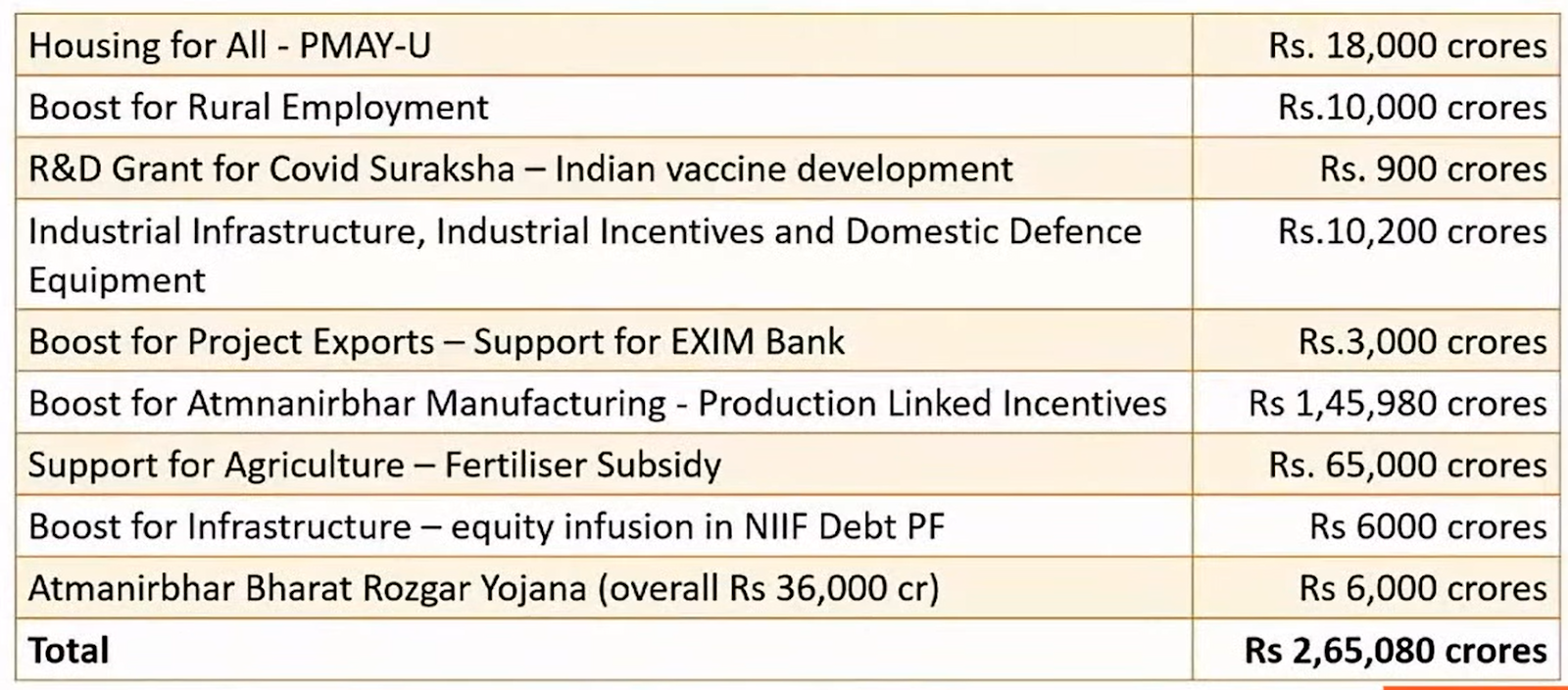
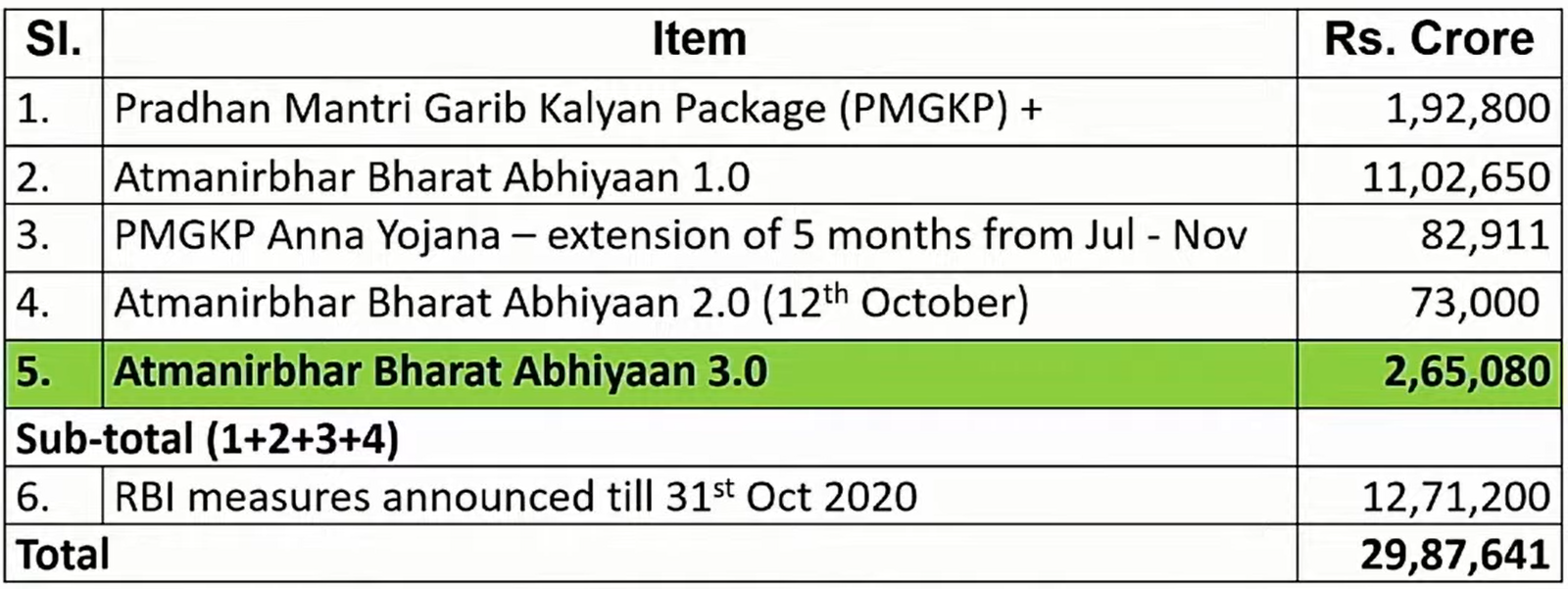
The Finance Ministry on Thursday (November 12) made a series of announcements with respect to a new stimulus package. Named as the Atmanirbhar Bharat Abhiyan 3.0, the package has allocated significant amounts to vital sectors of our economy. The total package has been estimated at Rs 2.65 lakh crore. With a focus on boosting production and becoming self-reliant, the latest economic package has addressed concerns regarding the sectors which need the most support. Let us look at the 12 important announcements that were made by the Finance Minister, Smt. Nirmala Sitharaman.

1. The Atmanirbhar Bharat Rozgar Yojana

In order to boost employment in India, a new scheme by the name of Atmanirbhar Bharat Rozgar Yojana (ABRY) has been created. The main aim of this program would be to create new employment opportunities during the Covid-19 recovery phase. An amount of Rs 6,000 crores has been allocated towards ABRY

Under this scheme, benefits would be given to any new employee that joins an establishment that is registered with the Employees’ Provident Fund Organisation (EPFO). The employees’ monthly salary should be less than Rs 15,000. Any member who had lost their job due to the Covid-19 pandemic between 1st March and 30th September, and is now entering into a new job would also benefit from the scheme. The ABRY scheme would be operational till 30th June 2021.

2. Launch of the ECLGS 2.0

The Emergency Credit Line Guarantee Scheme (ECLGS), worth Rs 3 lakh crore has been extended till 31st March 20201. This scheme provides fully guaranteed, collateral-free loans to business enterprises, MSME units, and individuals for business purposes. According to the new ECLGS 2.0, loans will be provided to an additional 26 “stressed sectors”. These are specific sectors in India that were affected by the Covid-19 pandemic, such as power, steel, and real estate. The scheme would provide support by helping businesses to retain their employees and meet certain liabilities.

3. Production Linked Incentive (PLI) Scheme

On 11 November, the Union Cabinet had approved this particular scheme for an additional 10 key sectors. The main purpose of the PLI scheme is to boost domestic production, by encouraging foreign companies to start their production activities in India. Domestic companies would also get the necessary push to expand their manufacturing units. This scheme will be worth Rs 1.46 lakh crore and would be applicable for 5 years.

The sectors that will benefit from the scheme include automobiles, pharmaceuticals, electronic products, etc.

4. Additional amount for PM Awaas Yojana- Urban

The Prime Minister’s Awaas Yojana- Urban (PMAY-U) is a scheme to revive the Housing and Real Estate Sector. The Finance Ministry has stated that Rs 18,000 crore will be provided over and above the Budget Estimates for 2020-2021 for this particular scheme. This would help around 18 lakh houses to complete construction. It is also expected to generate around 78 lakh additional jobs in urban areas. This scheme is also part of the government’s “Housing for All” mission.

5. Support for Construction & Infrastructure

To provide support to contractors, the performance security on contracts has been reduced to 3%, instead of 5%-10%. Performance security is commonly used in the construction industry. It is a means of insuring a client against the risk of a contractor failing to fulfill contractual obligations to the client. This relaxation will be applicable till 31 December 2021.

6. Income Tax Relief for Developers & Home Buyers

The economic slowdown due to the Covid-19 pandemic has led to a decline in the prices of residential units. At the same time, taxes for these units are significantly higher. To provide a demand boost for residential real estate, new relaxations on the income tax regulations have been introduced. The differential between circle rate and agreement value has been increased from 10% to 20% till June 30, 2021, under the Income Tax Act. This would be applicable only on a primary sale of residential units worth up to Rs 2 crore. This particular move will help middle-class families to buy real estate properties.

7. Equity Infusion in NIIF Debt Platform

The Government will invest Rs 6,000 crore in the National Investment and Infrastructure Fund’s (NIIF) Debt Platform. The NIIF attracts a lot of sovereign funds from other countries and provides major support for the infrastructure activities in our country. It has a target of raising Rs 1.10 lakh crore by 2025 through the debt market, for various infrastructure projects.

8. Fertilizer Subsidies for the Agriculture Sector

The Government has announced Rs 65,000 crore for providing fertilizer subsidies to Indian farmers. This would help farmers to meet the ever-growing consumption needs of our country’s population. According to this particular scheme, 140 million farmers would be provided with subsidized fertilizer. It would be ensured that all farmers receive the proper resources before the upcoming crop season.

The Expenditure Secretary has also clarified that Rs 65,000 crore for this subsidy is over and above the last budget estimate. Total expenditure in this financial year would be in the order of Rs 1.38 lakh crores for fertilizer subsidy.

9. Boost for Rural Employment

Prime Minister Garib Kalyan Rozgar Yojana (PMGKRY) is a very successful scheme that provides guaranteed employment opportunities for members of the rural population in India. It is active in almost 116 districts in India. The Government has allocated an additional amount of Rs 10,000 crore to the PMGKRY scheme. This would help to accelerate the growth of the rural economy.

10. Boost for Exports

The Export-Import Bank of India (EXIM Bank) is a specialized financial institution, wholly owned by the Government of India. It was set up in 1982 for financing, facilitating, and promoting foreign trade in India. The EXIM Bank provides Lines of Credit (LOC), on behalf of the Government, to certain developing countries. A line of credit is a flexible loan from a financial institution that consists of a defined amount of money that you can access as needed, and repay either immediately or over time. This scheme allows Indian exports to receive a boost, as the developing countries must import items worth 75% value of the LOC.

The Government has allocated Rs 3,000 crore to the EXIM Bank for the promotion of exports through the LOC scheme. The sectors that would benefit are railways, power, automobile & auto components, sugar projects, etc.

11. Capital and Industrial Stimulus

The Government believes that public expenditure on infrastructure is important at this period of time. An additional amount of Rs 10,200 crore will be provided towards the Capital and Industrial Expenditure. This amount would be used for domestic defense equipment, industrial incentives, industrial infrastructure, and green energy initiatives.

12. R&D Grant for Covid Vaccine Development

An amount of Rs 900 crore will be provided for Covid Suraksha Mission for research and development activities. This particular mission is headed by the Department of Biotechnology to develop the Covid vaccine in India. This does not include the cost for distribution of the vaccine, once developed.

The following table shows the amount that has been allocated for each scheme that has been announced by the Finance Ministry on November 12, 2020.
The following table shows the total amount that has been allocated for various stimulus packages announced by the Government in the current financial year. 
 “We are yet again proving that the policy that we are taking up even in PLI through which we want manufacturers to come to India is clearly to say we want to build on our strength but yet link with the global value chains.”- Finance Minister Nirmala Sitharaman.

India’s Future

The series of measures included in Atmanirbhar Bharat 3.0 will definitely provide a boost to India’s Covid-hit economy. The most important feature of the package is that it would help towards creating new jobs in India. It has also provided a major push towards the target of ‘housing for all’. Infrastructure activities will also receive adequate incentives. The Government has focused on those sectors that essentially need support for a major recovery, amidst the Covid-19 pandemic. The Production Linked Incentive(PLI) Scheme is also going to give a push to India’s dream of becoming the world’s manufacturing hub.

Pushing rural housing and job creation, along with subsidies on fertilisers is also sure to give a boost to the rural economy. And as we all know, if the rural economy is doing well, it is definitely good for an agriculture-driven economy of India. Tractor sales and two-wheeler sales are expected to go up as the life of a rural Indian gets better.

As investors, we need to keep a close watch on how the measures would be implemented. Also, make sure you take up the mission to find all the listed companies that would benefit from these schemes, both directly and indirectly.

Categories
Editorial

The PLI Scheme – All You Need to Know

One of the most important strategies to improve the economic growth of a country is to promote domestic production and become self-reliant. This is exactly what our Indian Government has been aiming for. The policies such as Make in India and the Atmanirbhar Bharat Abhiyan are prime examples of this. On November 11, the Union Cabinet announced the approval of a Production Linked Incentive (PLI) Scheme for 10 key sectors. This scheme would help to further strengthen the foundation of India’s path towards self-reliance.

Here at marketfeed, we always make sure to fulfill our promises and provide you with the best insights about such important events. Let us understand what this scheme is all about, and which sectors are included in it.

What is the PLI Scheme?

The Production Linked Incentive (PLI) scheme is a relatively new concept that was introduced in India earlier this year. The Government believed that it was time to initiate concrete steps to boost domestic manufacturing and cut down on huge import bills. Through the PLI scheme, companies would be provided with certain incentives to scale up production activities in India. It has three main objectives:

  1. To encourage foreign companies to set up their production activities in India. When this happens, we could see more foreign investments coming into our country.
  2. To provide support towards the existing domestic companies to expand their manufacturing units.
  3. To ensure that more employment opportunities are provided to Indian citizens in the manufacturing sector.

The PLI Scheme for Electronics Manufacturing

This scheme has become an absolute game-changer. Let us find out how our country adopted it initially. In April 2020, the Government introduced a PLI scheme worth Rs 40,000 crore for large-scale electronics manufacturing. The main aim of this particular scheme was to boost domestic manufacturing of mobile phones in India. The eligible companies were promised an incentive of 4%- 6% on incremental sales of goods that were manufactured in our country. This incentive would be applicable for 5 years. 

A total of 22 companies applied for the PLI scheme in August. And, three of these firms were contract manufacturers for Apple iPhones. We could also see that the share price of companies that had applied for the scheme (for eg, Dixon Technologies) had seen a surge during those periods.

According to Ravi Shankar Prasad, the Minister of Electronics and Information Technology, production worth Rs 11.5 lakh crore and exports valuing Rs 7 crore is expected over the next 5 years. It is very reassuring to learn that this scheme had received quite an overwhelming response from companies around the globe. It has become such a huge success.

The Latest PLI Scheme

In the notification made on November 11, the Government stated that it will offer incentives to an additional 10 vital sectors. The Union Cabinet has approved Production Linked Incentive Scheme worth up to Rs 1.45 lakh crore, for a period of 5 years. 

This would ensure that necessary support is provided to make India a global manufacturing hub, and create more jobs in the economy. The domestic companies would get the necessary push to cater to the local demand. The policy has been strategically targeted to very important sectors and would make Indian goods more competitive.

We can also state that the scheme has come at a very perfect time, in relation to the present global scenario. Most companies around the world are planning to shift their manufacturing operations from China. India could grab this opportunity and transform India into one of the best manufacturing centers in the world. The scheme would accelerate the existing plans of foreign companies that were considering to invest in India.

Which Sectors are Included in the PLI Scheme?

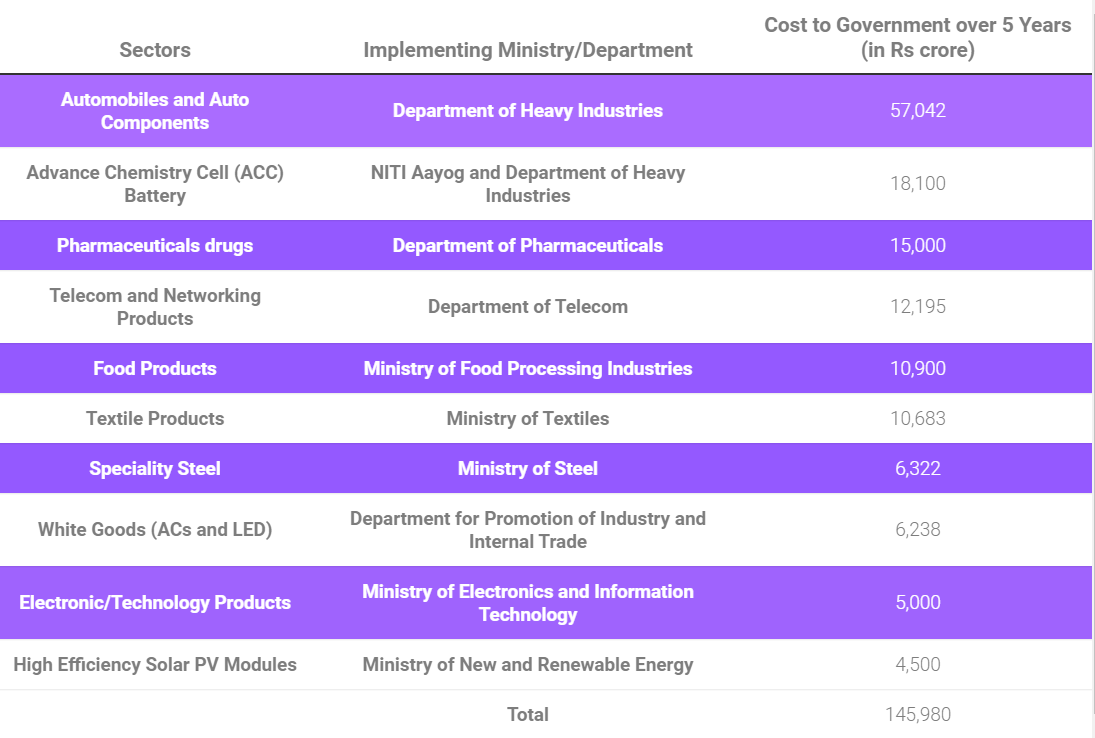
Given below is a table that shows the 10 sectors that will come under the PLI scheme, and the amount allocated to each sector.

Source: BloombergQuint

As we can see, the automobile and auto components sector has been allocated the highest amount in the PLI scheme. This would definitely help the sector to become a large exporter, and reduce import dependence. It has also been ensured that an amount of Rs 18,100 crore has been allocated for advanced chemical cell batteries. This would provide a major boost to the production of electric vehicles, as batteries are a key component of it. 

As per a statement from the Finance Minister, Smt. Nirmala Sitharaman, speciality steel in India could become a potential champion in the country’s exports. Hence, an amount of Rs 6,322 crore has been allocated for incentivizing its production as well.

Similarly, eight other sectors will be provided with sufficient incentives to completely improve the overall manufacturing capacity in India.

India and PLI

India has definitely received a massive Diwali gift from the government. If this scheme goes through precise planning and execution, it could become one of the most vital initiatives that have been adopted in our country. Our producers would certainly get the push to cater to the domestic demand, and foreign firms would be encouraged to invest heavily in India. The citizens of India would obtain more employment opportunities as well. It is a win-win situation for all the parties that would be involved!

At the same time, we would urge our readers to follow the latest updates surrounding this scheme. We could see listed companies applying to get the benefit of these incentives, and ramping up their production activities in India. This would certainly become a factor for many stocks to rally. We would also keep an updated list of the specific stocks that have been selected for the PLI scheme. Let us look forward to a positive outcome and see our country grow into one of the best manufacturing hubs in the world.